Researcher combats bullying of students with disabilities

Students with disabilities are often bullied and socially excluded in school at a far greater rate than their classmates. To help teachers recognize, respond to and prevent bullying toward these students, researchers at the University of Missouri collaborated to develop an evidence-based, online professional development curriculum.
The curriculum highlights the value of teachers building a strong rapport with their students, noticing changes in student behavior as potential warning signs, incorporating social skills and communication skills into classroom learning objectives, as well as practicing behavior-specific praise in a way that showcases students’ strengths and encourages collaboration with peers.
While the online curriculum has recently been successfully received and implemented by 200 elementary school teachers in a pilot study in the southeastern region of the United States, the researchers hope that, with additional federal funding, the online curriculum can be soon accessed by teachers nationwide.
“Teachers often tell us they don’t feel prepared to address bullying issues at school, especially those complicated cases involving at-risk youth or kids with disabilities,” said Chad Rose, an associate professor in the MU College of Education and Human Development. “Students with disabilities often get bullied more than their peers without a disability. For example, kids with a stutter or kids that may walk or talk differently than their neurotypical peers often get mimicked, which could actually be a violation of federal civil rights laws related to disability-based harassment.”
Given the busy schedules of teachers, Rose and colleagues created an evidence-based online curriculum that can be completed in four hours, compared to most bullying-related professional development courses that take place in-person for a full day and don’t always include evidence-based information. The trainings are broken up into different modules, covering how to recognize and respond to bullying, as well as overall strategies to improve classroom climates in a way that reduce or prevent bullying in the first place.
“In the diverse public school district where we piloted this program, the teachers found it enjoyable and relevant. It increased their knowledge in bullying prevention, and it increased their willingness to intervene when they see bullying happening,” Rose said. “One of the easiest, fastest, simplest and most effective things teachers can do is implement social and communication skills as a learning objective into their already-made lesson plans. Instead of just teaching students math or science, tell them you will be monitoring how well they interact with one another.”
Rose encourages teachers to walk around their classroom and praise students who are having positive interactions with others.
Read more →

Inhalable molecules neutralize SARS-CoV-2 in mice, study finds

Nanofitins, which are derived from a protein found in Sulfolobus acidocaldarius — an archaeal microorganism found in hot springs — successfully neutralized SARS-CoV-2 in mice and were well-tolerated. When inhaled by the rodents, the engineered nanofitins, which inhibit the virus by binding to its spike proteins, were observed to quickly reach the lungs in high doses both preventing and clearing early infections, researchers from biotech company Affilogic report August 30th in the journal Molecular Therapy.
“We were able to generate, in few months, anti-SARS-CoV-2 nanofitins inhibiting the viral infection and then genetically fuse them together into a single powerful molecule that could simultaneously block several regions of the virus for enhanced efficacy,” says first author Sébastien Viollet, an R&D project manager at Affilogic. “Classical methods mostly rely on neutralizing a single region of viruses to inhibit their infection. We went beyond this as a means to potentially maintain the blockade efficiency even if one of the regions is mutated.”
Previous treatments for COVID-19 such as monoclonal antibodies were limited by the need for high doses, delays in reaching therapeutic concentrations at the site of infection, and decreased therapeutic efficacy against new SARS-CoV-2 variants. If approved for use in humans, nanofitin technology could offer a noninvasive alternative with immediate inhibition of viral load present in the lung tissues. Because the molecules are relatively small and very thermostable, their resistance to high temperatures and a wide range of pH values could help streamline manufacturing and formulation.
“The nanofitin technology is very adaptive and could be implemented in other infectious respiratory diseases, increasing the number of biologics administered directly into the lung for fast action and ease of use,” Viollet says. “This is of particular interest for populations with limited tolerance to repeated injections, such as infants and elderly people. The cost of such inhaled products is also expected to be lower than current injectables, and they require fewer constraints such as temperature control, therefore achieving higher global accessibility.”
The authors say more work will be needed to achieve cross-reactivity against a broad spectrum of variants while maintaining a speedy development process. In addition, a new efficacy study should be performed to evaluate nanofitins in comparison to other biologics in the same setup, for instance after injection.

Read more →

Brain tumors 'hack' the communication between neurons, pioneering study finds

Nearly half of all patients with brain metastasis experience cognitive impairment. Until now, it was thought that this was due to the physical presence of the tumour pressing on neural tissue. But this ‘mass effect’ hypothesis is flawed because there is often no relationship between the size of the tumour and its cognitive impact. Small tumours can cause significant changes, and large tumours can produce mild effects. Why is this?
The explanation may lie in the fact that brain metastasis hacks the brain’s activity, a study featured on Cancer Cell’s cover shows for the first time.
The authors, from the Spanish National Research Council (CSIC) and the Spanish National Cancer Research Centre (CNIO), have discovered that when cancer spreads (metastasises) in the brain, it changes the brain’s chemistry and disrupts neuronal communication — neurons communicate through electrical impulses generated and transmitted by biochemical changes in the cells and their surroundings.
In this study, the laboratories of Manuel Valiente (CNIO) and Liset Menéndez de La Prida (Cajal Institute CSIC) have collaborated within the EU-funded NanoBRIGHT project, aimed at developing new technologies for the study of the brain, and with the participation of other funding agencies such as MICINN, AECC, ERC, NIH and EMBO.
Demonstration with artificial intelligence
The researchers measured the electrical activity of the brains of mice with and without metastases and observed that the electrophysiological recordings of the two groups of animals with cancer were different from each other. To be sure that this difference was attributable to metastases, they turned to artificial intelligence. They trained an automatic algorithm with numerous electrophysiological recordings, and the model was indeed able to identify the presence of metastases. The system was even able to distinguish metastases from different primary tumours — skin, lung and breast cancer.
These results show that metastasis does indeed affect the brain’s electrical activity in a specific way, leaving clear and recognizable signatures.

Read more →

Enhancing immune defenses: Researchers unveil the secrets of specialized T cells to conquer tumors

Our immune system has an ingenious trick up its sleeve. It remembers past foes, stopping potential sickness in its tracks through a phenomenon known as immunological memory. This is thanks to specialized cells — tissue-resident memory T cells — which reside in vital organs like the small intestine, lungs and other areas. Consider them as frontline guards, stationed exactly where trouble could strike. The endurance of these cells is extraordinary, protecting us from infections we fought decades ago.
Investigations led by University of California San Diego Postdoctoral Scholar Miguel Reina-Campos, Professor Ananda Goldrath and their collaborators at the University of California San Diego and several other institutions have revealed new insights into the metabolism of these specialized immune cells and how they could be enhanced as immune defense weapons against infections and tumors.
“T cells destined for a life-long deployment at barrier tissue sites are professional survivalists,” said Goldrath, a professor in the School of Biological Sciences’ Department of Molecular Biology and senior author of the new paper. “These cells are extremely good at safeguarding tissues across the body, and understanding their unique adaptation strategies teaches us how to design better immune therapeutics.”
The scientific team set out to determine whether these powerful T cells could be tapped for immune system defense and learn more about how such processes unfold. Their findings are published in the journal Nature and include coauthors from the David Geffen School of Medicine at UCLA, UC San Francisco, La Jolla Institute for Immunology, UC San Diego School of Medicine, St. Jude Children’s Research Hospital in Memphis, Tenn. and the University of North Carolina.
“The immune system excels at coping with pathogens and infections, but it struggles against tumors,” said Reina-Campos, the study’s first author. The researchers wondered if these remarkable cells hold the key to unlocking a new era of immune system innovation. This is especially relevant in the battle against stubborn tumors. Picture your immune cells adapting, thriving and evolving within their organ strongholds. The researchers delved deep, investigating the function of thousands of genes fueling these cells’ survival strategy. They ultimately found that T cells in tissue showed a large increase in the complicated production machinery that makes cholesterol molecules. However, a surprising puzzle emerged as the cells appeared primed to make cholesterol, yet a cholesterol-rich diet dampened their effectiveness. It turns out, these clever cells also produce an energy-boosting molecule, coenzyme Q, needed to power the cell’s batteries (mitochondria), as they journey through the intricate process of creating cholesterol.
“What most surprised me is how sensitive and responsive these cells are to the diet,” said Reina-Campos, who noted that cells feature built-in sensor systems that play into their decision-making. “Nature likes cost-effective solutions. If a T cell senses an overabundance of cholesterol, it will shut off the entire internal production line that makes it, the same way you would probably stop grocery shopping and cooking if somebody were to provide free cooked meals daily.” These cells are resourceful and will take what they have available to them, but that is not always in their best interest, he said.
Armed with this new knowledge, the team devised an ingenious way to redirect the cells’ cholesterol-making prowess towards producing more coenzyme Q. Think of it as rerouting a river to nourish different landscapes. Benefitting the research was the existence of a drug that was harnessed to orchestrate this transformative redirection, supercharging the immune cells for a more successful life in tissues. “We are very excited because we found an existing drug that puts this blockade exactly where we need it. When we apply these disruption technologies in the context of tumors, we help T cells maintain fully charged batteries so they can better fight off tumors in mice,” said Reina-Campos.
Another powerful approach to modulating this pathway included statin drugs, which millions use to inhibit the formation of cholesterol and treat cardiovascular disease. The authors found that statins halted the charging of T cell’s batteries; thus, fewer memory cells were found in the tissues. This was because statins block the pathway too far upstream, stopping the production of key molecules for the mitochondria. Although the beneficial cardiovascular effect of statins is undisputable, these results prompt further studies to understand these immunomodulatory effects. On the flip side, statins could offer new insights and tools to dampen unwanted T cell activation in tissues.
The Nature article’s coauthors are: Miguel Reina-Campos, Maximilian Heeg, Kelly Kennewick, Ian Mathews, Giovanni Galletti, Vida Luna, Quynhanh Nguyen, Hongling Huang, J. Justin Milner, Kenneth Hu, Amy Vichaidit, Natalie Santillano, Brigid Boland, John Chang, Mohit Jain, Sonia Sharma, Matthew Krummel, Hongbo Chi, Steven Bensinger and Ananda Goldrath.

Read more →

Researchers identify stem cells in the thymus

Researchers at the Francis Crick Institute have identified stem cells in the human thymus for the first time. These cells represent a potential new target to understand immune diseases and cancer and how to boost the immune system.
The thymus is a gland located in the front part of the chest, the place where thymocytes (the cells in the thymus) mature into T cells, specialised immune cells crucial to fighting disease. The thymus has a unique and complex 3D structure, including an epithelium (a lining of cells able to guide T cell maturation) that forms a mesh throughout the whole organ and around the thymocytes.
As it is relatively inaccessible and shrinks with age — and because its function was discovered only a few decades ago — the thymus has only been investigated for a short period of time compared to other organs. Until now, scientists believed it didn’t contain ‘true’ epithelial stem cells, but only progenitors arising in fetal development.
However, these findings, published today in Developmental Cell, show for the first time the presence of self-renewing stem cells, which give rise to the thymic epithelial cells instructing thymocytes to become T cells. This suggests the thymus plays an important, regenerative role beyond childhood, which could be exploited to boost the immune system.
In the course of their experiments, the researchers examined these stem cells based on the expression of specific proteins in the human thymus. They identified stem-cell niches (areas where stem cells are clustered) in two locations in the thymus: underneath the organ capsule, or outer layer, and around blood vessels in the medulla, the central part.
They demonstrated that thymic stem cells contribute to the environment by producing proteins of the extracellular matrix, which functions as their own support system.
By using state-of-the-art techniques to map gene expression in single cells and tissue sections, they found that these stem cells, named Polykeratin cells, express a variety of genes allowing them to give rise to many cell types not previously considered to have a common origin. They can develop into epithelial as well as muscle and neuroendocrine cells, highlighting the importance of the thymus in hormonal regulation.

Read more →

New 'droplet battery' could pave the way for miniature bio-integrated devices

University of Oxford researchers have made a significant step towards realising miniature bio-integrated devices, capable of directly stimulating cells. The work has been published today in the journal Nature.
Small bio-integrated devices that can interact with and stimulate cells could have important therapeutic applications, including the delivery of targeted drug therapies and the acceleration of wound healing. However, such devices all need a power source to operate. To date, there has been no efficient means to provide power at the microscale level.
To address this, researchers fromthe University of Oxford’s Department of Chemistry have developed a miniature power source capable of altering the activity of cultured human nerve cells. Inspired by how electric eels generate electricity, the device uses internal ion gradients to generate energy.
The miniaturized soft power source is produced by depositing a chain of five nanolitre-sized droplets of a conductive hydrogel (a 3D network of polymer chains containing a large quantity of absorbed water). Each droplet has a different composition so that a salt concentration gradient is created across the chain. The droplets are separated from their neighbours by lipid bilayers, which provide mechanical support while preventing ions from flowing between the droplets.
The power source is turned on by cooling the structure to 4°C and changing the surrounding medium: this disrupts the lipid bilayers and causes the droplets to form a continuous hydrogel. This allows the ions to move through the conductive hydrogel, from the high-salt droplets at the two ends to the low-salt droplet in the middle. By connecting the end droplets to electrodes, the energy released from the ion gradients is transformed into electricity, enabling the hydrogel structure to act as a power source for external components.
In the study, the activated droplet power source produced a current which persisted for over 30 minutes. The maximum output power of a unit made of 50 nanolitre droplets was around 65 nanowatts (nW). The devices produced a similar amount of current after being stored for 36 hours.
The research team then demonstrated how living cells could be attached to one end of the device so that their activity could be directly regulated by the ionic current. The team attached the device to droplets containing human neural progenitor cells, which had been stained with a fluorescent dye to indicate their activity. When the power source was turned on, time-lapse recording demonstrated waves of intercellular calcium signalling* in the neurons, induced by the local ionic current.

Read more →

High mortality in cardiogenic shock despite extracorporeal life support (ECLS)

The use of active mechanical circulatory support is growing rapidly around the world. The hope is that these systems will improve survival after the most severe form of acute heart failure, cardiogenic shock. A recent clinical trial led by heart specialist Professor Holger Thiele has shown that extracorporeal life support (ECLS) does not reduce 30-day mortality after cardiogenic shock. The finding is likely to influence future guidelines. The trial was recently presented at the annual congress of the European Society of Cardiology and published alongside an additional meta-analysis in the two most renowned medical journals, The Lancet and the New England Journal of Medicine.Cardiogenic shock occurs when the heart cannot pump enough blood and is often caused by a heart attack, or myocardial infarction. The heart is no longer able to maintain circulation. The risk of death within 30 days after acute myocardial infarction with cardiogenic shock is almost 50 %. For more than a decade, patients have often been treated with venoarterial extracorporeal membrane oxygenation (VA-ECMO), which is also called extracorporeal life support (ECLS). This mechanical circulatory support helps the diseased heart to pump blood around the body. ECLS can theoretically take over the function of the heart and lungs for a period of time. However, because of the large cannulae used, this type of therapy can also lead to complications such as bleeding or lower limb ischaemia, a sudden restriction in the blood supply to the leg.Heart specialist Professor Holger Thiele, Medical Director of the Heart Center Leipzig at Leipzig University and President of the German Cardiac Society, has now conducted a large clinical trial involving a total of 420 patients at 44 centres in Germany and Slovenia. In patients with acute myocardial infarction and subsequent cardiogenic shock, ECLS therapy plus intensive care unit optimal medical therapy was compared with optimal medical therapy at the intensive care unit alone.Commenting on the main findings of the trial, Professor Thiele says: “Contrary to our hypothesis, ECLS does not reduce 30-day mortality. In contrast to standard therapy, mortality was not statistically significantly different at 47.8 % versus 49 %. There were actually even more complications, such as severe bleeding or lower limb ischaemia, in the ECLS group. This suggests that we need to change our approach and routine ECLS is surely not the way to go. Our new focus should be on reducing the bleeding induced by the mechanical systems as well on reducing the additional inflammatory stimulus. In the situation when cardiogenic shock has developed, less is probably more.” The results were further confirmed by an individual patient-based meta-analysis comparing the results of all four previous studies involving mechanical cardiovascular support with venoarterial extracorporeal membrane oxygenation versus control. Again, ECLS did not improve survival, but it was associated with more complications.“The results of the trial show that there is a need to reduce the frequency of ECLS therapy in Germany and internationally. It is likely that future guidelines will soon take this into account and downgrade the recommendation for active mechanical circulatory support devices or even stop recommending it altogether in routine practice,” says Professor Thiele. The heart specialist is planning many more follow-up trials, including a one-year follow-up to see if there are any differences over time. “Our goal remains to reduce the very high mortality rate from cardiogenic shock. We can only show this through innovative trials,” says Professor Thiele.    Professor Holger Thiele has been Medical Director of the Department for Cardiology at Heart Center Leipzig at Leipzig University since 2017. In addition to his clinical work at the Heart Center Leipzig, Professor Thiele and his team are heavily involved in research and teaching at the Faculty of Medicine of Leipzig University.

Read more →

Covid and flu winter jabs to be brought forward in England

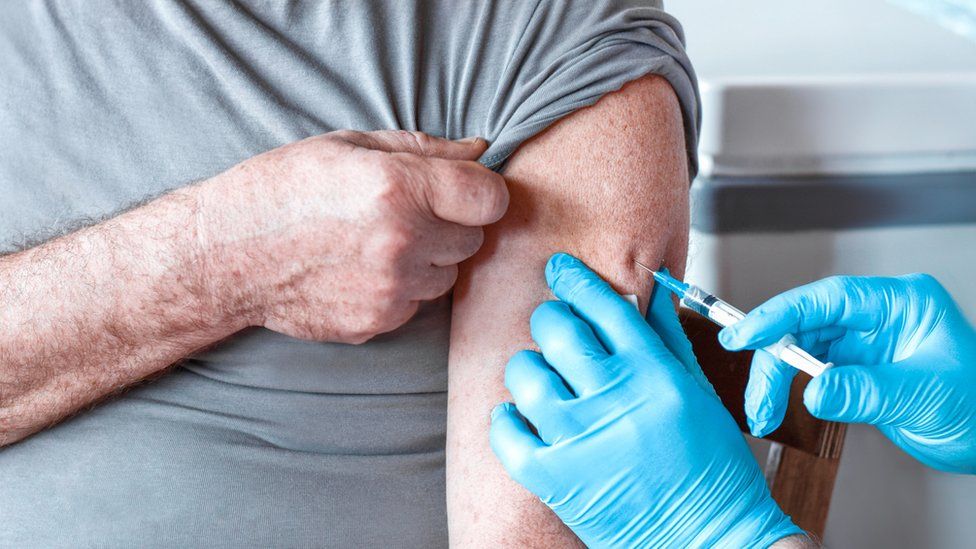
Published14 hours agoShareclose panelShare pageCopy linkAbout sharingImage source, Getty ImagesVaccines to protect at-risk people against Covid and flu this winter will be rolled out a month earlier than planned in England, because of the emergence of a new Covid variant.NHS England bosses said it could be “a very challenging winter” if the variant increased the risk of infection. Anybody over 65, older adult care home residents and immunosuppressed people are to receive jabs from 11 September.The plan is to jab as many eligible people as possible by 31 October.The UK Health Security Agency (UKHSA) says there is limited information available about the new variant BA.2.86, but it has a high number of mutations and has appeared in several countries.It is not classified as a variant of concern but health officials believe speeding up the autumn vaccination programme will protect those at greatest risk of becoming severely ill.It could also reduce the impact on the NHS this winter.But pharmacists are critical of the short-notice changes to the plan, saying it has “created confusion for pharmacy teams trying to make plans”.The vaccination programme usually starts in September, but the government pushed it back to October to produce a shorter gap between the jabs being administered and winter viruses circulating.”The government must plan ahead more decisively next year to avoid such uncertainty,” says Tase Oputu, director of the Royal Pharmaceutical Society.The UK’s vaccine experts, the JCVI, advise that the following groups should be offered a Covid-19 vaccine this autumn:residents in a care home for older adultsall adults aged 65 years and overanyone aged six months to 64 years in a clinical risk groupfront line health and social care workersanyone aged 12 to 64 years who lives in the same house as people with weakened immune systemsPeople eligible for a free flu vaccine are listed on the NHS UK website.Dame Jenny Harries, chief executive of the UKHSA, said new Covid variants were expected to emerge and there was limited information on BA.2.86 at the moment.”As with all emergent and circulating Covid-19 variants – both in the UK and internationally – we will continue to monitor BA.2.86 and to advise government and the public as we learn more. “In the meantime, please come forward for the vaccine when you are called.”In Scotland, the autumn vaccination programme starts on 4 September. Covid jabs will be on offer to anyone over 65, while flu jabs will go to the over-50s.Sign up for our morning newsletter and get BBC News in your inbox.Related Internet LinksCOVID-19 – NHSCOVID-19 vaccination – NHSFlu vaccine – NHSThe BBC is not responsible for the content of external sites.

Read more →

Covid and flu winter jabs to be brought forward

Published30 August 2023Shareclose panelShare pageCopy linkAbout sharingImage source, Getty ImagesVaccines to protect at-risk people against Covid and flu this winter will be rolled out a month earlier than planned in England, because of the emergence of a new Covid variant.NHS England bosses said it could be “a very challenging winter” if the variant increased the risk of infection. Anybody over 65, older adult care home residents and immunosuppressed people are to receive jabs from 11 September.The plan is to jab as many eligible people as possible by 31 October.The UK Health Security Agency (UKHSA) says there is limited information available about the new variant BA.2.86, but it has a high number of mutations and has appeared in several countries.New Covid variant BA.2.86 found in ScotlandIt is not classified as a variant of concern but health officials believe speeding up the autumn vaccination programme will protect those at greatest risk of becoming severely ill.It could also reduce the impact on the NHS this winter.But pharmacists are critical of the short-notice changes to the plan, saying it has “created confusion for pharmacy teams trying to make plans”.The vaccination programme usually starts in September, but the government pushed it back to October to produce a shorter gap between the jabs being administered and winter viruses circulating.”The government must plan ahead more decisively next year to avoid such uncertainty,” says Tase Oputu, chair of the Royal Pharmaceutical Society.As in previous years, the NHS will let people know when bookings open. Adult flu and COVID-19 appointments will be available through the NHS App and website, or by calling 119 for those who can’t get online. Flu vaccines will also be available through local GP practices and pharmacies. Flu vaccinations for children which will be offered in schools from early next month.The UK’s vaccine experts, the JCVI, advise that the following groups should be offered a Covid-19 vaccine this autumn:residents in a care home for older adultsall adults aged 65 years and overanyone aged six months to 64 years in a clinical risk groupfront line health and social care workersanyone aged 12 to 64 years who lives in the same house as people with weakened immune systemsPeople eligible for a free flu vaccine are listed on the NHS UK website.Dame Jenny Harries, chief executive of the UKHSA, said new Covid variants were expected to emerge and there was limited information on BA.2.86 at the moment.”As with all emergent and circulating Covid-19 variants – both in the UK and internationally – we will continue to monitor BA.2.86 and to advise government and the public as we learn more. “In the meantime, please come forward for the vaccine when you are called.”In Scotland, the autumn vaccination programme starts on 4 September. Covid jabs will be on offer to anyone over 65, while flu jabs will go to the over-50s.Sign up for our morning newsletter and get BBC News in your inbox.Related Internet LinksCOVID-19 – NHSCOVID-19 vaccination – NHSFlu vaccine – NHSThe BBC is not responsible for the content of external sites.

Read more →

Newly engineered versions of bacterial enzyme reveal how antibiotics could be more potent

Modern medicine depends on antibiotics to treat infections by disabling targets inside bacterial cells. Once inside these cells, antibiotics bind to certain sites on specific enzyme targets to stop bacterial growth. Randomly occurring changes (mutations) in the genes for these targets occur naturally, in some cases making the target harder for the antibiotic to attach to, and that bacterial version resistant to treatment.
For this reason, the more antibiotics have been used over time, the greater the chances that bacterial populations will evolve to have mutants resistant to existing antibiotics, and the more urgent the call for new approaches to keep the treatments from becoming obsolete. Researchers have for decades studied resistant mutants in hopes that related mechanisms would guide the design of new treatments to overcome resistance. The effort has been limited, however, because naturally occurring resistant mutants represent a small fraction of the mutations that could possibly occur (the complete mutational space), with most drug binding-site mutations to date having been overlooked.
To address this challenge, a new study led by researchers at NYU Grossman School of Medicine applied a technology called MAGE (Multiplex Automated Genome Engineering) to generate the full inventory of mutations in the bacterial species Escherichia coli where the antibiotic rifampicin attaches to and disables an essential bacterial enzyme known as RNA polymerase (RNAP). The study authors created 760 unique RNAP mutants by replacing each of the 38 amino acid building blocks that make up the rifampicin binding site on E. coli with each of the twenty amino acid options present in nature. Growth of this mutant pool was then tested under different conditions, including treatment with rifampicin.
Published online August 30 in the journal Nature, the study found two mutants, L521Y and T525D, that are hyper-sensitive to rifampicin. Not only does the antibiotic prevent these mutants from growing, it nearly obliterates the mutant bacterial populations. This is a remarkable finding, say the authors, because rifampicin normally does not kill E. coli, or many other bacterial pathogens, but only stops their growth.
“This work provides a map of antibiotic-bacterial RNAP interactions that will be of value to chemists working to build on the study effects by changing, not bacterial binding site residues, but instead the structure of rifampicin and other antibiotics so that they bind tighter for increased potency,” says study co-senior investigator Evgeny Nudler, PhD, The Julie Wilson Anderson Professor of Biochemistry, in the Department of Biochemistry and Molecular Pharmacology, at NYU Langone Health. “Our findings also suggest ways of improving rifampicin’s ability to bind to proteobacteria, actinobacter and firmicutes, bacterial groups that include natural RNAP mutations that render them vulnerable to rifampicin.”
How Rifampicin Kills Bacteria
E. coli stores genetic instructions in DNA chains, but then converts them into a related genetic material in RNA, with RNAP building the RNA chains that guide the building of proteins out of amino acids. The mutants created in the new study revealed that rifampicin kills bacteria by stalling RNAP, and so causing collisions between it and cellular machinery that operates in the same molecular space to duplicate DNA as cells divide and multiply. This in turn causes lethal breaks in both strands of bacterial DNA.
In other insights from the study, some of the E. coli RNAP binding site mutations were found to greatly increase the speed with which RNAP builds RNA, and so the speed that it uses up raw materials, including nucleotide building blocks like pyrimidines. The work has significant implications, say the researchers, for the understanding of the mechanism of action used by nucleotide analogues like the anti-cancer drug 5FU. Understanding how nucleotide depletion sensitizes cells to nucleotide supplies may help in the design of new combination therapies, they say.
“These techniques could be applied to map the binding sites of other drug types, and especially to those vulnerable to resistance,” says co-senior study investigator, Aviram Rasouly, PhD, a research scientist at NYU Langone.
Funding support for the study was provided through National Institute of Health grants T32 AI007180 and R01GM126891 and the Blavatnik Family Foundation. The study was led by MD-PhD student Kevin Yang. Other NYU Langone researchers involved in this study were Maria Cameranesi, Criseyda Martinez, Manjunath Gowder, Yosef Shamovsky, Vitaliy Epshtein, Khaled Alzoubi, Zhitai Hao, and Ilya Shamovsky. Evgeny Nudler is also an investigator with the Howard Hughes Medical Institute.

Read more →