The Gamble: Can Genetically Modified Mosquitoes End Disease?

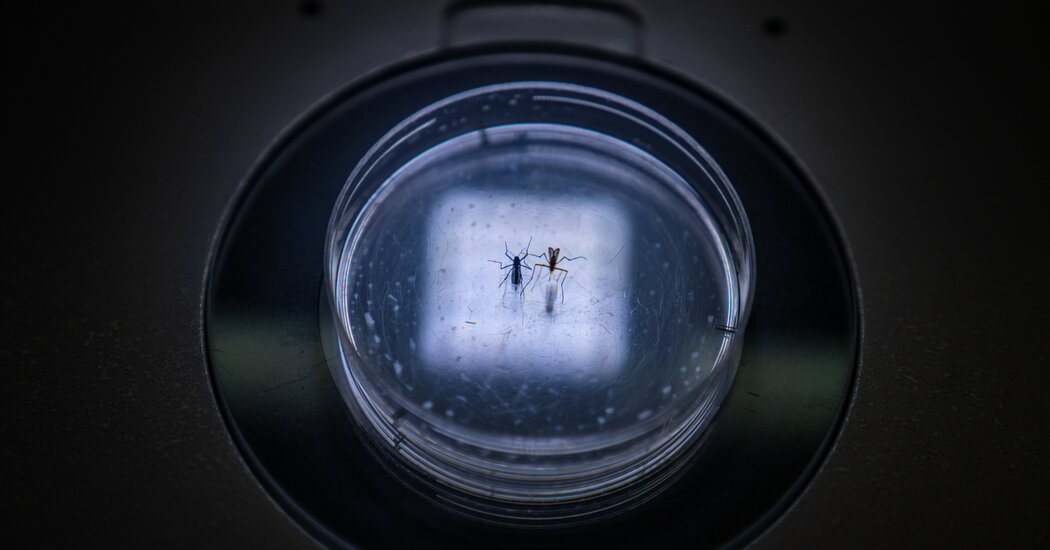
On a muggy evening in July on the island of Príncipe, part of a volcanic archipelago 200 miles off the West African mainland, 11,000 mosquitoes dusted in fluorescent green powder flew together into the heavy equatorial air, tiny volunteers in the service of science.Over the next 10 nights, another group of volunteers, human ones, sat outside their houses in villages nestled in the rainforest, keeping their arms and legs exposed in the damp dark, waiting for the faint tickle of a mosquito in search of blood. Once one alighted, they switched on a headlamp and used a rubber tube attached to a glass vial to suck the insect up and seal it in a cup.The mosquitoes were raised from larvae, dusted green, then set free, by an international team of scientists who are trying to bring cutting-edge genetic science to an ancient fight — that against malaria, the most deadly mosquito-borne disease.For each of the 10 mornings after the mosquito release, the scientists fanned out along the northeastern coast of this remote island, collecting cups humming with mosquitoes. They then took the insects to a makeshift lab in their hotel suite in the island’s one town, Santo Antonio, where they slid them under the light of a fluorescent microscope. Twelve of the 253 mosquitoes that had been caught glimmered with tiny particles of the green powder that clung to their scaly bodies.The recaptured green mosquitoes offered insight into how far they flew and the size of the mosquito population, clues to the dynamics of malaria in this country. And they moved the scientists one step closer to their goal: replacing the mosquitoes that live here now with ones they have genetically modified so that they can no longer transmit the malaria parasite.Their idea is to release a small colony of genetically modified mosquitoes, just the way they did with the green-dusted ones, to mate with wild ones. The gene engineering technology they are using could, in just a few generations — a matter of months when it comes to mosquitoes — make every member of the species that transmits malaria here, the Anopheles coluzzii, effectively immune to the parasite.This team, working with a project called the University of California Malaria Initiative, has already successfully engineered the Anopheles coluzzii to block the parasite in a lab. And the scientists believe they can harness gene drive, a process in which an inherited trait spreads swiftly throughout a population, so that all the species’s offspring will carry it, not just half, which is the way inheritance normally works.How scientists hope a gene drive could work

Read more →

One Village, Two Houses — and a New Tactic to Win the War on Mosquitoes

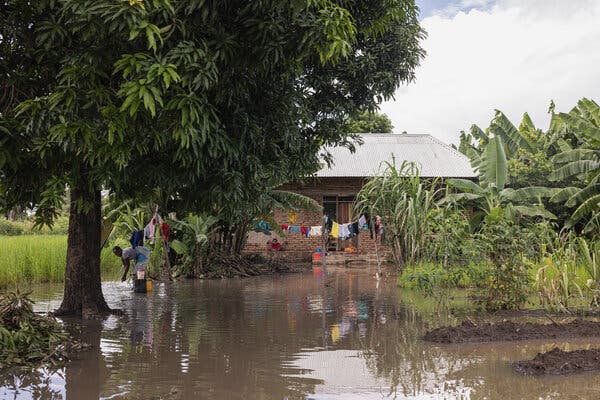
The world spends at least $22 billion every year to kill mosquitoes that spread malaria, dengue and other devastating diseases.That money buys billions of liters of insecticides, millions of kilograms of larvicides and 75 million insecticide-treated bed nets. Hundreds of millions more dollars are poured into research each year on new ways to kill mosquitoes.But as quickly as humans invent new ways to control them, the insects evolve ways to resist.What if we left mosquitoes alone? What if we focused instead on fixing the things that make people vulnerable to getting bitten?Ifakara, TanzaniaIfakara, Tanzania, where frequent flooding creates pools of standing water everywhere, perfect breeding places for mosquitoes.The area around the town of Ifakara has one of the highest malaria rates in the world. The Ifakara Health Institute, a tropical disease research center, has been studying ways to fight the illness for more than a half century. Some scientists there believe that simple, relatively inexpensive changes to people’s homes can make an enormous difference in preventing malaria and other mosquito-borne diseases that sicken millions of people a year.That difference is illustrated by two houses that sit about 200 yards apart in the village of Chikuti, about 30 miles south of Ifakara.One, at the top of a small hill, is home to the Kalalu family. Joram Kalalu, 54, and his wife, Malisa Uchaweli, live there with their 13-year-old daughter, Omega. They are farmers, and Mr. Kalalu also has a part-time job driving a bus to town, which pays the equivalent of $85 a month.The other house, just down the hill and across the main road, belongs to the Mtwaki family: Faustina Mtwaki, 37, her husband, Matias Benjamin, and their seven children. They are farmers, too, and Ms. Mtwaki makes a type of beer out of dried corn that she sells in the neighborhood, earning $65 a month.Malaria takes a huge toll on the Mtwaki family. The children develop its signature high fever and pounding headache every two or three months, and Ms. Mtwaki has to set aside her work to care for them. Trips to the clinic for diagnoses, and pills to kill the parasite, eat up much of the family’s income.Joram Kalalu in his home in Chikuti village.Faustina Mtwaki in her home.But Mr. Kalalu and his family rarely get malaria now. This year, their only bout came after Mr. Kalalu was badly bitten by mosquitoes when he slept in a parking lot on an overnight bus shift.Why has the Mtwaki family been so sick, and the Kalalu family relatively spared?Two Houses, One Huge Health DifferenceBoth the Kalalus and the Mtwakis live in homes they built themselves. The base material of each is composed of bricks, made from local soil. But there are a few key differences between them — and they add up to critical protection.Plaster Walls: $519Mr. Kalalu had worked for years as a miner, living in camps where malaria was a huge problem, and he saw colleagues die from the disease. So malaria-proofing was a top priority when the family set out to build their home. They bought sand and cement to cover the brick walls with plaster and they sealed the gaps where mosquitoes would have flown through.But the Mtwakis stopped at bricks: The walls of their house are made of rough brick with plenty of gaps, and the unplastered walls keep the house dark and damp — a lure for mosquitoes.Screened Windows: $140The Mtwakis have just two small, rough-framed windows at the front of their house. They have no screens. At the sides of the home, gaps have been left in the brick for ventilation, but they also provide easy access for mosquitoes.The windows in the Kalalu home have wood frames and an overlay of metal mesh that provides both security and more stability for a second layer of light-green netting that blocks mosquitoes. The green mesh is cheap — just a few dollars per window — but milled lumber is costly. Each window cost about $35.Doors: $270Esther Ruth Mbabazi for The New York TimesThe Mtwaki door is made out of rough planks with gaps between them that are more than wide enough for a mosquito to pass through.The Kalalu house has two framed wooden doors, which shut tightly when the family closes up at dusk.Iron Roof: $1,310One of the biggest expenses for the Kalalu family was a metal roof, which blocks mosquitoes (and rain) better than the thatch traditionally used in Tanzania. They had to buy the iron sheets ($460) and wood to frame the roof ($500), and pay a carpenter to install it ($250).The Mtwaki roof is made of thatch harvested from the surrounding forest. It’s not mosquito-proof (and has to be changed every year or two). The Mtwakis want a metal roof, and they buy an iron sheet every time they have extra money; over the last three years, they have built up a stack of sheets that is about two-thirds of what they will need.Sealed Eaves: $50Ventilation is important in these houses: It’s hot, and cooking often happens inside over a charcoal fire. An opening where the walls meet the roof can provide crucial air flow — and an entry point for mosquitoes.Sealing the eaves, with screens or brick, keeps out mosquitoes that hide in the rafters and descend on sleepers at night.Because the Kalalu house has large windows, the family did not need the eaves for ventilation.Mr. Kalalu’s sense that he was building a malaria-protected home is borne out by more than just the family’s relative freedom from the disease. Entomology teams from the Ifakara Health Institute are studying Chikuti and its malaria-carrying mosquitoes. In fact, they have taken a nighttime mosquito census of both the Kalalu and Mtwaki homes, counting the insects that are active inside while the family sleeps.There were 133 mosquitoes inside the Mtwaki home on a May evening, but just 54 inside the Kalalu home.All told, the Kalalu family spent $4,203 to build their house.The Mtwaki family would like a similar house: Like most families in the village, and families everywhere, they’ve been saving up money to make improvements when they can.What would it take to turn the Mtwaki home into the Kalalus’?Lina Finda, a researcher at the Ifakara Health Institute, studies the costs and benefits of different ways people try to protect themselves from malaria.Lina Finda, a researcher at the Ifakara Health Institute, has done the math — for hundreds of families in this region.A whole new house: $4,967For the Mtwaki home, the cheapest thing to do would be to start from scratch, she said, building a house with plaster walls, framed doors and windows and a metal roof. The total cost would come in at just under $5,000.That’s way more than the Mtwakis can afford. And Dr. Finda said the government of Tanzania and other national governments in Africa also view the bill as too steep for their malaria budgets.“When we talk to government, they say, ‘Oh no, we can’t pay to build everyone a house,’” Dr. Finda says.But not everyone needs a new home: 80 percent of malaria cases in Tanzania happen within the population that lives in the 20 percent of houses that are of the lowest quality, according to surveys from the health institute.And most homes, Dr. Finda said, don’t need a complete rebuild — in fact almost 90 percent of houses in her surveys needed only framed, mesh-covered windows. Most of the rest of the improvements, families have already done themselves, saving up to make changes one by one. The cost to upgrade the typical house around Ifakara to the point that it provides good malaria protection is just $258.“But when we meet with the big donors, they want a new intervention, a new commodity, a silver bullet,” Dr. Finda said.Mock houses for study at Mosquito City, a research center near Ifakara Health Institute.Compare that with the millions of dollars being thrown into developing insecticides or testing genetically modified mosquitoes. Or with the estimated economic impact of malaria on sub-Saharan Africa: $12 billion a year. Then $258 per house starts to sound more feasible.But subsidizing part or all of the building materials would still be a big bill for governments, or donors, and an expanding one, as populations grow across sub-Saharan Africa.There’s no question that improved housing works, said Sarah Moore, a medical entomologist at the Ifakara Health Institute — it was essential for the elimination of malaria in the Northern Hemisphere. “But in terms of resources, my God, it’s enormous,” she said — while Tanzania’s total health budget annually is just $2 per person.There are experiments with all kinds of mosquito interventions underway around Ifakara, and Dr. Finda has seen some of them help to lower mosquito numbers and malaria cases. But in every village, she meets families such as the Mtwakis, doing their best to save up the money they need to make the changes they know will keep them safe.“When we do surveys in communities about what method people want, they ask: Can the government help us through this last step? I have made this effort, now can we get a little push so that we can install maybe screens on the window or the door?”Produced by

Read more →

Insecticides Can’t Stop These Mosquitoes. Now What?

We need new ways to fight mosquitoes. Dangerous species are spreading to new parts of the world, bringing diseases like malaria and dengue with them. Our old weapons, such as bed nets and insecticides, don’t work well anymore: Mosquitoes have evolved to resist and evade them.

The repellents can last for a year and researchers hope they will be sold for just a few dollars each — about the same price as a bed net — so that families in low-income countries can buy them.

Next, for outdoors: A gizmo with the clunky name of Attractive Targeted Sugar Bait, or ATSB, is a flat packet about the size of a sheet of looseleaf paper that is filled with pouches of a sugary liquid laced with a new kind of insecticide. The bait is sealed under a membrane thin enough for a mosquito to drink through.

Every mosquito, male or female, needs to feed on sugar. ATSBs lures them with fruit syrup, then poisons them. ATSBs are hung about six feet off the ground (out of range of children and goats) on the outside of people’s homes and in places where they gather outdoors.

For both inside and outside, there’s another novel experiment, which makes use of ivermectin, a drug lots of people have heard of. Ivermectin is an endectocide, a medicine usually taken to kill parasites such as head lice. But there is evidence that it may also kill mosquitoes that bite humans who were recently treated with it.

The researchers are waiting for data to see how much this drove down malaria. It’s helpful that people are already familiar with ivermectin, which is safe and cheap (although with delivery, this method costs about $2.75 per person per year). As a bonus, ivermectin significantly reduces cases of scabies, head lice and worms.

Read more →

Study shows how brain tumors make certain immune cells turn traitor

A Ludwig Cancer Research study has for the first time exhaustively analyzed immune cells known as neutrophils that reside in brain tumors, including gliomas, which develop in the brain itself, and cancers that spread there from the lung, breast and skin.
Led by Ludwig Lausanne’s Johanna Joyce and Roeltje Maas, an MD-PhD student in her laboratory, the study also details the key role neutrophils play in ensuring the survival of brain cancers and exposes the mechanisms by which the tumor microenvironment (TME) tweaks their biology to turn them into enablers of malignant growth. Its findings suggest new approaches to the treatment of both gliomas and brain metastases (BrMs).
“Our study shows for the first time how the brain tumor microenvironment draws in and disarms infiltrating neutrophils, stretches out their lifespans — which are otherwise relatively short — and turns them into cells that suppress anti-cancer immune responses while directing the generation of blood vessels that feed the growing cancer,” said Joyce.
Reported in Cell, the study interrogates the preferential spatial niches, dynamics, gene expression patterns and functional states of neutrophils in BrMs and gliomas. Notably, it identifies specific cellular interactions and a pair of molecular factors in the TME that are key to converting neutrophils from potential agents of anti-tumor immunity into abettors of malignancy.
“This is one of the most exciting discoveries of the study because only a small subset of brain metastases respond to currently available immunotherapies, and gliomas have proved especially resistant to all types of treatment,” said Maas. “Our identification of specific cellular and molecular factors that can turn neutrophils into immunosuppressive and pro-tumoral agents in the TME opens the door to developing therapeutic approaches to make brain cancers more susceptible to immunotherapy.”
Cancers depend on a menagerie of noncancerous cells to survive and thrive, and brain tumors are no exception. In exploring this aspect of brain cancer biology, the Joyce lab has in recent years extensively analyzed the immune landscape of gliomas and BrMs, identifying new strategies to address their recurrence and resistance to therapy.
Much of that work has focused on myeloid immune cells, most notably macrophages and their brain-resident versions known as microglia. Joyce and her colleagues observed in these studies that neutrophils — which are also myeloid cells — accumulate in large numbers in brain tumors, especially in the most aggressive types of gliomas and BrMs, raising questions about their potential role in tumor progression.

Read more →

Is a longer reproductive lifespan good for your brain?

People with a higher cumulative estrogen exposure throughout their life may have a lower risk of cerebral small vessel disease, according to a new study published in the September 27, 2023, online issue of Neurology®, the medical journal of the American Academy of Neurology.
Cerebral small vessel disease, a form of cerebrovascular disease, results from damage to small blood vessels in the brain. It raises the risk of cognitive impairment and dementia.
“Previous research has shown that rates of cerebrovascular disease increase after menopause, which is often attributed to the absence of hormones,” said study author Kevin Whittingstall, PhD, of the University of Sherbrooke in Quebec, Canada. “It remains unknown whether the amount of exposure to hormones before menopause extends that window of protection to after menopause.”
Researchers looked at the relationship between lifetime hormone exposure, or the number of times a person has been pregnant and their reproductive lifespan, and white matter hyperintensities, a common biomarker of vascular brain health that develops with age.
The study involved 9,000 postmenopausal female participants with an average age of 64 living in the United Kingdom. They did not have cerebral small vessel disease at the start of the study.
Participants answered questions on reproductive health information, including age at first menstruation and start of menopause, number of pregnancies, oral contraceptive use and hormone therapy.
Participants also had brain scans to look for cerebral small vessel disease by estimating white matter hyperintensities, which indicate injury to the brain’s white matter.

Read more →

Exposure to air pollution linked to increased risk of stroke within 5 days

Short-term exposure to air pollution may be linked to an increased risk of stroke, according to a meta-analysis published in the September 27, 2023, online issue of Neurology®, the medical journal of the American Academy of Neurology. Short-term exposure was defined as occurring within five days of the stroke.
“Previous research has established a connection between long-term exposure to air pollution and an increased risk of stroke,” said study author Ahmad Toubasi, MD, of the University of Jordan in Amman. “However, the correlation between short-term exposure to air pollution and stroke had been less clear. For our study, instead of looking at weeks or months of exposure, we looked at just five days and found a link between short-term exposure to air pollution and an increased risk of stroke.”
The meta-analysis involved a review of 110 studies that included more than 18 million cases of stroke.
Researchers looked at pollutants such as nitrogen dioxide, ozone, carbon monoxide and sulfur dioxide.
They also looked at different sizes of particulate matter, including PM1, which is air pollution that is less than 1 micron (µm) in diameter, as well as PM2.5 and PM10. PM2.5 or smaller includes inhalable particles from motor vehicle exhaust, the burning of fuels by power plants and other industries as well as forest and grass fires. PM10 includes dust from roads and construction sites.
People who had exposure to a higher concentration of various types of air pollution had an increased risk of stroke. Higher concentrations of nitrogen dioxide were linked to a 28% increased risk of stroke; higher ozone levels were linked to a 5% increase; carbon monoxide had a 26% increase; and sulfur dioxide had a 15% increase. A higher concentration of PM1 was linked to a 9% increased risk of stroke, with PM2.5 at 15% and PM10 at 14%.
Higher levels of air pollution were also linked to higher risk of death from stroke. Higher concentrations of nitrogen dioxide were linked to a 33% increased risk of death from stroke, sulfur dioxide, a 60% increase, PM2.5, a 9% increase and PM10, a 2% increase.
“There is a strong and significant association between air pollution and the occurrence of stroke as well as death from stroke within five days of exposure,” Toubasi said. “This highlights the importance of global efforts to create policies that reduce air pollution. Doing so may reduce the number of strokes and their consequences.”
A limitation of the meta-analysis was most of the studies were conducted in high-income countries, while limited data was available from low- and middle-income countries.

Read more →

An advance in cryo-EM could be a significant boon for research on potential cancer therapies

The scientists who received the 2017 Nobel Prize in chemistry were honored for their development of a technique called cryo-electron microscopy, or cryo-EM. The technology was revolutionary because it enabled scientists to see the atomic structure of biological molecules in high resolution.
But cryo-EM still had a catch: It was only effective for imaging large molecules.
Now, UCLA biochemists, working with pharmaceutical industry scientists, have developed a solution that will make it possible for cryo-EM to acquire high-quality images of smaller protein molecules, too. The scientists engineered a 20 nanometer, cube-shaped protein structure, called a scaffold, with rigid tripod-like protrusions that hold the small proteins in place.
The scaffold can be digitally removed from the picture when the imaging is being processed, leaving a composite 3D image of just the small protein scientists are analyzing.
Small and medium-sized proteins are a hot point for research on potential new drugs that might one day be used to fight some of the most intractable human illnesses. The advance, which was tested on a protein that scientists are studying for its possible use in cancer treatments, can be customized for almost any small protein. Researchers expect that expanding cryo-EM’s imaging capabilities will help them identify specific locations on proteins that they can target for therapeutic purposes.
A paper about the new research is published in Proceedings of the National Academy of Sciences.
In cryo-EM, scientists use a cryo-electron microscope to send a beam of electrons through frozen samples of material, leaving behind an image of the thousands of molecules — such as proteins — in the sample. The molecules are imaged exactly as they lie in the sample, producing thousands of 2D photographs of the molecule taken from different angles. Computer processing reconciles all of those photographs to formulate a correct 3D image — separating the background, grouping images with similar orientations together and generating a high-resolution, 3D image of a single molecule.

Read more →

Risk of premature birth from smoking while pregnant more than double previous estimates

Cambridge researchers have found that women who smoke during pregnancy are 2.6 times more likely to give birth prematurely compared to non-smokers — more than double the previous estimate.
The study, published today in the International Journal of Epidemiology, also found that smoking meant that the baby was four times more likely to be small for its gestational age, putting it at risk of potentially serious complications including breathing difficulties and infections.
But the team found no evidence that caffeine intake was linked to adverse outcomes.
Women are currently recommended to stop smoking and limit their caffeine intake during pregnancy because of the risk of complications to the baby. For example, smoking during pregnancy is associated with an increased risk of fetal growth restriction, premature birth and low birthweight, though it has also been linked to a reduced risk of preeclampsia (high blood pressure during pregnancy).
High caffeine intake has also been shown to be associated with lower birthweights and possibly fetal growth restriction. Caffeine is more difficult to avoid than cigarette smoke as is found in coffee, tea, chocolate, energy drinks, soft drinks, and certain medications.
Studies looking at the links between smoking, caffeine and adverse pregnancy outcomes tend to rely on self-reported data to estimate exposure, which is not always reliable. A more objective measure is to look at levels of metabolites in the blood — chemical by-products created when substances such as tobacco and caffeine are processed in the body.
Researchers at the University of Cambridge and the Rosie Hospital, part of Cambridge University Hospitals NHS Foundation Trust, recruited more than 4,200 women who attended the hospital between 2008 and 2012 as part of the Pregnancy Outcome Prediction (POP) study. The team analysed blood samples taken from a subset of these women four times during their pregnancies.

Read more →

Job loss is linked to increased risk of miscarriage and stillbirth

Researchers have found a link between a pregnant woman or her partner losing their job and an increased risk of miscarriage or stillbirth.
The study, which is published today (Thursday) in Human Reproduction, one of the world’s leading reproductive medicine journals, found a doubling in the chances of a pregnancy miscarrying or resulting in a stillbirth following a job loss.
The researchers, led by Dr Selin Köksal from the Institute for Social and Economic Research at the University of Essex, UK, emphasise that their findings highlight an association between job loss and an increased probability of miscarriage or stillbirth and that the study cannot show that losing a job causes the pregnancy loss.
“Further research would need to be carried out to understand if losing one’s job actually causes the increased risk of pregnancy loss,” she said. “I would like to analyse socioeconomic factors influencing pregnancy loss in contexts where data for the entire population are available through administrative records. These data can help clarify whether there are solid causal links between job loss and pregnancy loss, and whether there are certain socioeconomic groups in the population that are particularly at risk, such as economically precarious employees.
“Being able to examine the association between job loss and pregnancy loss among different socioeconomic groups could help us to understand how exactly a job loss is related to higher risk of a miscarriage or a stillbirth. Is it because of economic hardship, or an experience of an unexpected event or is it due to loss of social status? These are the questions that I am hoping to answer in the future.”
The study is based on data from the “Understanding Society” survey of 40,000 households in the UK between 2009 and 2022. It includes 8142 pregnancies for which there was complete information on the date of conception and pregnancy outcome.
Out of these pregnancies, 11.6% miscarried (947), which may be an underestimate because many pregnancies do not survive beyond the first month and pregnancy loss can go undetected. There were 38 stillbirths, representing 0.5% of conceptions, which is in line with the UK’s official statistics for stillbirths.

Read more →