A deep look into the progression of Parkinson's Disease

Parkinson’s disease is a complex neurodegenerative disorder that leads to the deterioration of specific types of neurons in the brain, resulting in a number of motor and non-motor symptoms. It is currently estimated that more than 10 million people in the world are living with Parkinson’s disease, the second most common neurodegenerative disorder after Alzheimer’s. That number is expected to swell up to 14 million by 2040 in what is being referred to as the Parkinson’s pandemic.
One of the key events in Parkinson’s disease is the accumulation of a protein called alpha-synuclein inside neurons. That accumulation disrupts the normal functioning of the cells, giving rise to the symptoms of Parkinson’s and other disorders, and progresses into aggregates called Lewy bodies.
In a new study, researchers from two labs at EPFL have combined their expertise to explore how alpha-synuclein disrupts metabolic processes within neurons. The study is a truly interdisciplinary collaboration between the Bertarelli Platform for Gene Therapy of Bernard Schneider and the group of Anders Meibom at EPFL, with support from EPFL’s Bioelectron Microscopy Core Facility.
The researchers used cutting-edge imaging techniques, including an analytical instrument called NanoSIMS (Nanoscale Secondary Ion Mass Spectrometry). NanoSIMS is an “ion microprobe” that combines high spatial resolution (50-150 nm), high-resolution mass spectrometry, and high analytical sensitivity, which allow it to produce sub-cellular maps of metabolic turnover with extreme sensitivity. Meibom’s lab at EPFL has famously used NanoSIMS for a number of ecological and geological studies.
In this study, the researchers combined NanoSIMS with stable isotope labeling, to visualize isotopic variations within tissues at high resolution, providing insights into the metabolic activity of individual cellular compartments and organelles. They combined this with Electron Microscopy to “see” more information from biological samples.
To model Parkinson’s disease, the team used genetically modified rats that overexpressed human alpha-synuclein in one hemisphere of the brain, leaving the other healthy as a control. By comparing the neurons overexpressing alpha-synuclein to those in the control hemisphere, the scientists uncovered significant changes in the way carbon molecules are incorporated and processed within neurons.
One of the most remarkable findings was the effect of alpha-synuclein on the turnover of carbon within neurons. Neurons overexpressing alpha-synuclein showed a heightened overall turnover of macromolecules, suggesting that the accumulation of alpha-synuclein may lead to increased metabolic demands on these cells.

Read more →

Genes fuelling antibiotic resistance in Yemen cholera outbreak uncovered

Scientists have identified the source of antibiotic resistance that emerged within bacteria driving the ongoing Yemen cholera epidemic.
The findings, published today (28 September) in Nature Microbiology, underscore the importance of ongoing genomic surveillance of pathogens to monitor the emergence of multidrug-resistant strains.
The cholera outbreak in Yemen is the largest in modern history, responsible for more than 2.5 million cases and at least 4,000 deaths since 2016. Cholera is an infectious disease caused by certain strains — genetic types — of bacteria known as Vibrio cholerae (V. cholerae) with epidemic potential.
Antibiotics help shorten the disease’s duration, meaning the patient is less likely to have severe outcomes and remains transmissible for less time, reducing the potential for spread to others. Macrolides, a class of antibiotics, were widely used in Yemen until early 2019 to treat moderate to severe cases of cholera in pregnant women and children, who represented a significant number of cases.
However starting in 2018, healthcare professionals observed a troubling trend: patients were no longer responding to these frontline antibiotic treatments.
In this new study, researchers from the Wellcome Sanger Institute, University of Toronto, Institut Pasteur, Sana’a University and their collaborators set out to uncover the reasons behind this growing drug resistance, analysing 260 V. cholerae DNA samples collected in Yemen between 2016 and 2019.
The team found that a type of V. cholerae containing multidrug-resistant genetic elements took over as the main pathogen during the Yemen outbreak period, likely from the widespread use of antibiotics at the time.

Read more →

A lethal parasite's secret weapon: Infecting non-immune cells

The organisms that cause visceral leishmaniasis, a potentially deadly version of the parasitic disease that most often affects the skin to cause disfiguring disease, appear to have a secret weapon, new research suggests: They can infect non-immune cells and persist in those uncommon environments.
Researchers found the Leishmania donovani parasites in blood-related stem cells in the bone marrow of chronically infected mice — precursor cells that can regenerate all types of cells in the blood-forming system. The finding may help explain why some people who develop visceral leishmaniasis, which is fatal if left untreated, often also have blood disorders such as anemia.
Identifying these cells and other unexpected locations in which these parasites live improves scientists’ understanding of the disease and may lead to new treatment options, said senior study author Abhay Satoskar, professor of pathology in The Ohio State University College of Medicine.
“Treating a patient with leishmania drugs never eliminates every parasite from the body — they persist for the rest of a patient’s life,” Satoskar said. “Perhaps these uncommon cells are the cells responsible for harboring these parasites in low numbers. Some drugs may not reach these cells properly or may not be effective with those parasites, and maybe the parasites in these kinds of cells are different compared to parasites in immune cells because they can adapt. It would be important to eliminate these hidden parasites if we want to stop the transmission of the disease.
“It changes the way we think about this parasite: If uncommon cells are infected, what is the cells’ role? What are the parasites doing there? How did they evade the drug treatment? Are they different from parasites in other cells, or the same? There are lots of questions.”
The research was published recently in the journal Cell Reports.
Cutaneous leishmaniasis is a disfiguring skin disease caused by Leishmania major parasites that affects up to 1.2 million people annually in the tropics, while L. donovani parasites cause the less common visceral leishmaniasis that attacks internal organs, affecting an estimated 100,000 people per year. Scientists have suspected L. donovani may stray beyond their immune cell hosts because they linger in the body, but those suspicions have been difficult to confirm with most conventional technologies because the number of infected cells is low.

Read more →

Malaria: Treatment of Plasmodium falciparum malaria patients under threat in the Horn of Africa

Diagnosis of Plasmodium falciparum malaria using rapid diagnostic tests and treatment with artemisinin derivatives, the main component of the malaria treatments recommended by the World Health Organization (WHO), are under threat in the Horn of Africa. Scientists from the Laboratory of Parasitology and Medical Mycology at the University of Strasbourg and Strasbourg University Hospital, in collaboration with the Eritrean Ministry of Health, the Institut Pasteur, Columbia University in New York and WHO, have detected the emergence and spread in Eritrea of parasites with both artemisinin resistance and genome modifications that prevent their detection with rapid diagnostic tests, thereby jeopardizing malaria control and elimination campaigns in the region and potentially elsewhere in Africa.
The research results were published on September 28, 2023 in the New England Journal of Medicine.
Malaria, a disease caused by parasites of the genus Plasmodium, represents a major public health problem worldwide. Plasmodium falciparum, responsible for severe forms, is found mainly in Sub-Saharan Africa, where a child dies of malaria every two minutes. In 2021, 247 million cases and 619,000 deaths were reported, a 6.4% increase compared with 2019.
Current strategies to fight malaria involve prevention, with the use of insecticide-treated bed nets; diagnosis, with the introduction of rapid diagnostic tests; and treatment, which must be effective. For more than 15 years, treatment for malaria episodes (which alternate between fever, shivering and chills, and severe sweating) caused by Plasmodium falciparum in Sub-Saharan Africa has been based on artemisinin-based combination therapies (ACTs). These highly effective treatments combine a potent, fast-acting artemisinin derivative and a partner drug with a long half-life that acts more slowly to eliminate residual parasites.
Unfortunately, in 2008, the first cases of artemisinin resistance were detected in South-East Asia. Resistance was defined by delayed parasite clearance from the bloodstream of patients treated with an ACT. In recent years, Plasmodium falciparum artemisinin resistance has also been reported in two regions of Sub-Saharan Africa, in Central Africa (Rwanda) and East Africa (Uganda).
In this latest study, the scientists present the results of clinical trials conducted between 2016 and 2019 in Eritrea to assess the efficacy of two ACT treatments (artesunate/amodiaquine and artemether/lumefantrine) recommended for treating uncomplicated P. falciparum malaria. The clinical trials also aimed to estimate the proportion of patients with persistent P. falciparum parasitemia on day 3, the day after the last dose of ACT. In addition, the authors sought to identify molecular signatures in the Pfkelch13 gene associated with artemisinin resistance in parasites and to detect deletions of the hrp2 and hrp3 genes which are known to render rapid diagnostic tests ineffective in detecting parasites.
The data obtained revealed another hotspot of artemisinin resistance, in Eritrea. This novel area of resistance is more worrying than those observed in Rwanda and Uganda as the investigations reveal the emergence and spread of a new artemisinin-resistant variant, Pfkelch13 622I, accompanied by hrp2 and hrp3 gene deletions in around 17% of cases, making it impossible to detect these parasite strains using rapid tests. According to the published data, it seems that the phenomenon is not recent and that these strains have been circulating in western Eritrea for several years.
The findings therefore show how P. falciparum is capable of evading strategies introduced to control and eliminate malaria. “These data are a real cause for concern and undermine the quality of the health management of malaria patients in the region,” warns Dr. Selam Mihreteab, a contributor to the study in Eritrea at the National Malaria Control Program, Ministry of Health. “We need to develop constant surveillance of the evolution of these parasites and their ability to spread,” adds Dr. Lucien Platon, a PhD student at the Institut Pasteur (Malaria Parasite Biology and Vaccines Unit). “The strategies implemented in the Horn of Africa are under threat, not only because artemisinin resistant parasites are not detected by rapid tests but also because of the ability of malaria vectors to resist insecticides and because we have recently seen the arrival of a new mosquito species, Anopheles stephensi, capable of transmitting these strains in urban environments. There is a risk that these biological threats could lead to a rapid spread of these parasites in the region and beyond,” analyzes Professor Didier Ménard, Director of the Institute of Parasitology and Tropical Diseases at the University of Strasbourg and a scientist in the Malaria Parasite Biology and Vaccines Unit at the Institut Pasteur.
Over the past two decades, the proactive strategy pursued by the Eritrean government has led to a significant reduction in malaria-related morbidity and mortality in the country. These new data seem to confirm that monitoring the emergence and spread of drug resistance must be a priority in areas such as Eritrea, where strategies to reduce malaria transmission are being effectively implemented, and that there is an urgent need to develop and introduce innovative control strategies.
This research received support from the Bill and Melinda Gates Foundation (WHO), the Global Fund (Ministry of Health in Eritrea), the Institut Pasteur, the French Government (National Research Agency), the University of Strasbourg (IdEX Program), and the United States Department of Defense and National Institutes of Health.

Read more →

Novel tau PET tracer exhibits high sensitivity and specificity, allowing for earlier identification of Alzheimer's disease

A new tau PET radiotracer, 18F-SNFT-1, has been found to be more effective than existing tau PET radiotracers in identifying Alzheimer’s disease in its earliest stages, according to research published in the September issue of The Journal of Nuclear Medicine. In a head-to-head comparison, 18F-SNFT-1 possessed preferable brain pharmacokinetics and demonstrated higher affinity and selectivity for Alzheimer’s tau lesions compared to clinically used second-generation tau PET tracers.
Tau lesions are the neuropathologic hallmarks of Alzheimer’s disease, and tau accumulation is closely associated with future cognitive decline. PET imaging with specific tau radiotracers provides information on the progression of the tau burden, which can help to assess disease activity, determine treatment, and predict therapeutic outcomes.
“Much effort over the past decade has been focused on generating PET radiotracers to visualize tau lesions in vivo,” said Nobuyuki Okamura, MD, PhD, professor of Division of Pharmacology, Faculty of Medicine at Tohoku Medical and Pharmaceutical University in Sendai, Japan. “While progress has been made, existing tau PET radiotracers have problems with insufficient sensitivity to early lesions and the presence of off-target binding. To address these issues, our research team created an optimized tau PET tracer, 18F-SNFT-1, with high sensitivity and specificity to tau pathology in Alzheimer’s disease.”
In the study, researchers compared the binding profile of 18F-SNFT-1 with those of other reported tau PET radiotracers. In vitro binding properties of 18F-labeled tau tracers were evaluated through the autoradiography of frozen human brain tissues from patients with diverse neurodegenerative diseases. Pharmacokinetics, metabolism, and radiation dosimetry were assessed in normal mice after intravenous administration of 18F-SNFT-1.
In vitro binding assays demonstrated that 18F-SNFT-1 possesses high selectivity and high affinity for tau lesions in the brain tissue of patients with Alzheimer’s disease. Autoradiographic analysis of tau deposits in medial temporal brain sections from patients with Alzheimer’s disease showed a higher signal-to-background ratio for 18F-SNFT-1 than for the other tau PET tracers and no significant off-target binding. 18F-SNFT-1 also showed a high initial brain uptake and rapid washout from the brains of normal mice without radiolabeled metabolites.
“Therapeutic agents targeting tau protein are under development, and treatment with anti-tau drugs should be initiated as early as possible,” noted Okamura. “Early detection of tau lesions using 18F-SNFT-1 may accelerate the initiation of therapy with anti-tau drugs and improve the lives of people with Alzheimer’s disease.”
This study was made available online in June 2023.

Read more →

PFA exposure may delay girls' puberty, research shows

Research from the University of Cincinnati shows that exposure to PFAS may delay the onset of puberty in girls. The research was published in the journal Environmental Health Perspectives.
This study is the first longitudinal research that included the component of the role hormones play in the delay, according to Susan Pinney, PhD, of the Department of Environmental and Public Health Sciences in the UC College of Medicine and corresponding author of the study.
She says the delay of puberty in girls can lead to negative long-term health outcomes, including a higher incidence of breast cancer, renal disease and thyroid disease.
“Puberty is a window of susceptibility,” Pinney says. “Environmental exposures during puberty, not just to PFAS, but anything, have more of a potential for a long-term health effect. What these have done is extended the window of susceptibility, and it makes them more vulnerable for a longer period of time.”
The published research describes the findings from studying a total of 823 girls who were 6 to 8 years old when they were enrolled in the study — 379 were in the Greater Cincinnati area, the other 444 were in the San Francisco Bay Area. Researchers wanted to start the girls in the study before they hit the beginning of breast development. Then they followed them with exams every six to 12 months to see when they experienced the first signs of breast development and pubic hair.
The results found that 85% of the girls in the two cohorts had measurable levels of PFAS. Pinney says this PFAS research is unique because the hormone component was included and they discovered evidence of decreased hormones. The hormones that were decreased with PFAS exposure were consistent with findings of the delay of the onset of puberty.
“The study found that in girls with PFAS exposure puberty is delayed five or six months on average but there will be some girls where it’s delayed a lot more and others that it wasn’t delayed at all,” Pinney says. “We are especially concerned about the girls at the top end of the spectrum where it’s delayed more.”
The study also found that over 99% of the girls in the two cohorts had measurable levels of PFOA, one of the most important of the PFAS.

Read more →

Diabetes may accelerate blood cancer growth, yet survival outcomes differ by race

Patients with multiple myeloma, a blood cancer of plasma cells in the bone marrow, who also have diabetes have a reduced overall survival when compared to those without diabetes. In a subgroup analysis, this difference in survival due to diabetes was seen in white patients but not in Black patients, according to a study published today in Blood Advances.
According to the Centers for Disease Control and Prevention, diabetes affects 13% of the U.S. population, and this prevalence is growing rapidly. Multiple myeloma is the second most common blood cancer in the U.S. and disproportionately affects non-Hispanic Black adults, in whom it is the most common blood cancer.
While investigators have long been aware of the increased risk of multiple myeloma in patients with diabetes, this is the first study to examine racial disparities in survival rates among those living with these comorbid conditions.
“We knew from prior studies that patients with multiple myeloma and diabetes have lower survival rates,” explained Urvi Shah, MD, a multiple myeloma specialist at Memorial Sloan Kettering Cancer Center. “But what we did not know is how these outcomes differ between races. Diabetes is much more common in Black individuals versus white individuals, and we wanted to understand whether this difference may play a role in health outcomes among patients with both conditions.”
Researchers conducted a retrospective study, collecting data from electronic health care records of 5,383 patients with multiple myeloma from two academic medical centers: Memorial Sloan Kettering Cancer Center and Icahn School of Medicine at Mount Sinai. Fifteen percent of patients included had a diabetes diagnosis (12% of white and 25% of Black patients).
Across the board, Dr. Shah and colleagues observed that among patients with myeloma, those with diabetes had poorer survival rates than those without. When analyzing results by race, however, they found that while white patients with myeloma and diabetes had lower survival rates than those without diabetes, they did not observe this finding among Black patients.
“What we did not expect to see here was that diabetes was actually associated with worse survival outcomes among white individuals with myeloma, but not Black individuals,” said Dr. Shah.

Read more →

SARS-CoV-2-associated sepsis was more common, deadly than previously thought, study finds

Using data from Mass General Brigham’s electronic health records, Brigham researchers quantified the burden of SARS-CoV-2-associated sepsis early in the pandemic
New research suggests that the virus responsible for COVID-19 was a more common and deadly cause of sepsis during the initial period of the pandemic than previously assumed. The study, led by investigators from Brigham and Women’s Hospital, a founding member of the Mass General Brigham healthcare system, used electronic health record (EHR) data from five Mass General Brigham hospitals to track the rate of SARS-CoV-2-associated sepsis during the COVID-19 pandemic. The team found that SARS-CoV-2 accounted for approximately 1 in 6 cases of sepsis during the first two and a half years of the COVID-19 pandemic. Their results, published in JAMA Network Open, suggest clinicians should rethink how they treat sepsis while also providing a framework for future surveillance for viral sepsis.
“Most people, including medical professionals, equate sepsis with bacterial infections,” said lead author Claire Shappell, MD, MPH, of the Division of Pulmonary and Critical Care Medicine in the Department of Medicine at Brigham and Women’s Hospital. “This is reflected in treatment guidelines and quality measures that require immediate antibiotics for patients with suspected sepsis. However, viral infections, including the SARS-CoV-2 virus that causes COVID-19, can trigger the same dysregulated immune response that leads to organ dysfunction as in bacterial sepsis.”
Previous research on viral sepsis has been limited. To capture a full and more accurate picture of sepsis cases, the team utilized electronic health records from Mass General Brigham hospitals during the study period.
“Previous efforts to quantify the burden of SARS-CoV-2-associated sepsis have been limited by inconsistent definitions and under-recognition of viral sepsis,” said senior author Chanu Rhee, of the Division of Infectious Diseases in the Department of Medicine at Brigham and Women’s Hospital. “Our prior research has shown that EHR-based surveillance can provide more accurate estimates of sepsis incidence and outcomes compared to administrative datasets, but this method had not previously been applied specifically for sepsis associated with SARS-CoV-2 or other viruses.”
The team quantified the incidence and mortality for SARS-CoV-2-associated sepsis using clinical criteria adapted from the Center for Disease Control and Prevention’s (CDC) sepsis surveillance definition that incorporated positive SARS-CoV-2 tests and clinical signs of organ dysfunction. Using EHR data between March 2020 and November 2022, the team identified 431,017 hospitalizations from 261,595 individuals. During that time, 5.4% of hospitalizations were due to SARS-CoV-2 infections and 28.2% of those hospitalizations had SARS-CoV-2-associated sepsis. The mortality rate for patients with SARS-CoV-2-associated sepsis was initially high — 33% over the first three months of the pandemic. However, it declined over time and eventually became similar to the mortality rate for presumed bacterial sepsis, a rate of about 14.5% that remained stable throughout the study period. The researchers also confirmed their electronic surveillance definition accurately identified cases of viral sepsis caused by SARS-CoV-2 infections using the Mass General Brigham EHR dataset.
The study’s design and utilization of EHR data provides a framework for future research into sepsis associated with other viruses, including influenza and respiratory syncytial virus (RSV). The team hopes to apply this method to larger and nationally representative datasets to report generalizable epidemiologic data on viral sepsis.

Read more →

Mosquitoes Are a Growing Public Health Threat, Reversing Years of Progress

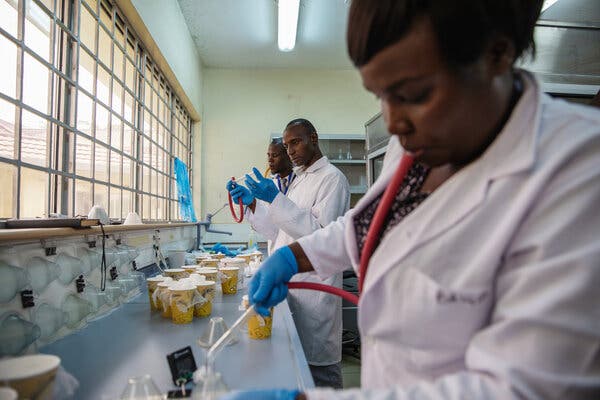
Along hundreds of miles of Lake Victoria’s shoreline in Kenya, a squadron of young scientists and an army of volunteers are waging an all-out war on a creature that threatens the health of more people than any other on earth: the mosquito.They are testing new insecticides and ingenious new ways to deliver them. They are peering in windows at night, watching for the mosquitoes that home in on sleeping people. They are collecting blood — from babies, from moto-taxi drivers, from goat herders and from their goats — to track the parasites the mosquitoes carry.But Eric Ochomo, the entomologist leading this effort on the front lines of global public health, stood recently in the swampy grass, laptop in hand, and acknowledged a grim reality: “It seems as though the mosquitoes are winning.”Less than a decade ago, it was the humans who appeared to have gained the clear edge in the fight — more than a century old — against the mosquito. But over the past few years, that progress has not only stalled, it has reversed.The insecticides used since the 1970s, to spray in houses and on bed nets to protect sleeping children, have become far less effective; mosquitoes have evolved to survive them. After declining to a historic low in 2015, malaria cases and deaths are rising.Climate change has brought mosquitoes carrying viruses that cause dengue and chikungunya, excruciating and sometimes deadly fevers, to places where they have never been found before. Once a purely tropical disease, dengue is now being transmitted in Florida and France. This past summer, the United States saw its first locally transmitted cases of malaria in 20 years, with nine cases reported, in Texas, Florida and Maryland.“The situation has become challenging in new ways in places that have historically had these mosquitoes, and also at the same time other places are going to face new threats because of climate and environmental factors,” Dr. Ochomo said.At the Kenya Medical Research Institute in Kisumu, workers separate male from female mosquitoes trapped overnight at study sites in the surrounding region. A trapped mosquito at the research institute. Only female mosquitoes bite humans, and thus transmit malaria.Technician Celestine Akinyi Ogutu takes mosquitoes from a freezer. The trapped insects are frozen to kill them, then dissected to study whether they have bitten a human and carry the malaria parasite.Scientists around the world are pressing hard for new solutions, including novel technologies that Dr. Ochomo is testing. They have developed some promising approaches, including a new generation of tools that modifies mosquitoes biologically, and genetically, to block disease.But such efforts have been stymied by cost and regulatory hurdles. The process for getting any of these tools to the places where children fall ill with each new season of rain involves years of testing and regulatory reviews that are painfully slow and badly underfunded.“It’s just ridiculous how much time we are wasting before we can get into the field and actually start saving lives,” said Bart Knols, a Dutch vector biologist who runs mosquito-borne disease elimination projects across Africa, Asia and the Caribbean.The biggest killerMalaria has killed more people than any other disease over the course of human history. Until this century, the battle against the parasite was badly one-sided. Then, between 2000 and 2015, malaria cases dropped by a third worldwide, and mortality decreased by nearly half, because of widespread use of insecticide inside homes, insecticide-coated bed nets and better treatments. Clinical trials showed promise for malaria vaccines that might protect the children who make up the bulk of malaria deaths.That success lured new investment and talk of wiping the disease out all together.But malaria deaths, which fell to a historic low of about 575,000 in 2019, rose significantly over the next two years and stood at 620,000 in 2021, the last year for which there is global data.There were more cases of dengue in Latin America in the first half of this year — more than three million — than in all of 2022. Bangladesh is in the grip of its largest-ever dengue outbreak, with 120,000 cases by the end of August. Cases of and deaths from chikungunya and other mosquito-borne infections have started rising, too, in many regions of the world.Entomologists at the Kenya Medical Research Institute testing anti-mosquito technologies in a model village inside a giant mesh cage.Augustine Ochieng, a volunteer in Alego, western Kenya, tracked data on a tablet provided to him by the research institute. He was asked to sit with his bare legs exposed all night, harvest any mosquitoes that try to bite him and log the results.One of the main reasons is that mosquitoes are highly adaptable. As more and more people are protected by nets or sprays at home, mosquitoes have begun to bite more outdoors and in the daytime, instead of indoors and at night, the historic pattern of the malaria vector species in Africa. Because the genetic makeup of mosquitoes evolves quickly in response to changing environmental conditions, they have also developed resistance to the class of insecticides in wide use — while the malaria parasite itself is increasingly resistant to the once highly-effective drugs used to treat it.And a new mosquito that thrives in urban areas has come from Asia to Africa, where the spread of malaria had always been confined largely to the countryside. That change has made more than 100 million additional people vulnerable to mosquito-borne infections, researchers at the University of Oxford recently estimated.The multiplying risks, experts say, mean there’s an urgent need for a method to protect people from all mosquitoes — one that will help defend against malaria, but also dengue, yellow fever and whatever pathogen lurks around the corner. (Only female mosquitoes bite; they need the protein in blood to produce eggs.)But it takes a decade or more to design, develop, test and produce a new technology or intervention. Contrast that with the six-week life spans of mosquitoes, which are constantly evolving to elude the ways we try to kill them.The bulk of the money for these efforts to date has come from high-income nations and private philanthropists, but funding levels have plateaued. Multiple researchers said it was increasingly difficult to motivate the kind of investment they need for large-scale trials of new methods.“Sooner or later, funding bodies are going to divert that money to other things,” Dr. Knols said. “They’re going to say, ‘We’re putting it into agriculture, or into schooling.’”A new problemAmukura in Busia County, Kenya, where the entomologist Eric Ochomo oversees two large clinical trials of new tools to fight mosquitoes.In the towns and villages of Busia County in Kenya, the roads begin to fill while the sky is still the streaky purple of dawn, with farmers on the way to their fields, children in freshly pressed uniforms walking to school and moto-taxi drivers reporting to the market.Dr. Ochomo’s research has found that the mosquito Anopheles funestus is feasting on them: The species, once thought to bite mostly sleepers in their beds at night, now bites outside in the daytime.Four in 10 people on these red-dirt roads are carrying the malaria parasite, even if they don’t have symptoms, studies by Dr. Ochomo and his colleagues have found. Some outdoor and daytime biting was likely happening all along, but no one was really tracking it because the focus was on the vulnerable sleepers.Twenty years ago, in the early days of the mass distribution of bed nets, malaria case rates plunged immediately, and there was an optimism that the nets might be enough, said Audrey Lenhart, the chief of entomology at the U.S. Centers for Disease Control and Prevention. Instead, she said, they have helped to create a new problem.“Think about it: You put bed nets everywhere, then the mosquitoes that bite people inside, they’re going to die out,” Dr. Lenhart explained. “The ones that are going to survive are the ones that are biting people sitting outside, biting livestock, the ones that aren’t in the houses, right? So then those are the ones that are reproducing and keeping the population of mosquitoes there.”Processing blood samples collected from children at the Amukura Health Centre as part of a clinical trial of a new mosquito-control method. Microscope slides with blood collected from children enrolled in the clinical trial.Insecticides that don’t workMost of the current insecticides in use are pyrethroids, which were developed in the 1970s and derived from the chemical compounds in an ancient mosquito deterrent made by crushing aster flowers. They have been used for everything, including bed nets and for spraying on walls.With mosquitoes around the world now highly resistant to them, there is an urgent search for something new.In 2005, the Bill & Melinda Gates Foundation invested $50 million in a project called the Innovative Vector Control Consortium to search for effective insecticide compounds. The consortium asked large agrochemical companies to look in their chemical libraries for molecules that might affect mosquitoes in novel ways and be safe and durable enough.“We started with four-and-a-half-million compounds, and we’re down to four,” said Nick Hamon, who recently retired as the consortium’s chief executive.To work as a new insecticide, compounds have to be safe for humans, come in solid form and not be water soluble. And they have to kill mosquitoes in a substantively different way than pyrethroids do, because mosquitoes develop resistance not just to an individual chemical, but to the way the chemical kills them.Companies must now complete the safety and testing process on the only four compounds that tick all those boxes. It is intensely costly and slow, said Susanne Stutz, the chief chemist at the German chemical company BASF.“It’s always a race with the mosquito, who is faster: Usually, the mosquito wins because it develops the resistance much faster than new products come out,” she said.Dr. Ochomo inspecting a pond near a home in Asembo, a village on the coast of Lake Victoria, for larvae from malarial mosquitoes.The edge of Lake Victoria in Siaya County, western Kenya, the area of the mosquito trials.Hanging up spatial repellent panels in a home. The panels are intended to protect people from mosquito bites when they are awake rather than when they’re sleeping in bed.The World Health Organization requires two large randomized clinical trials, carried out in two different geographic and epidemiological settings, showing a significant positive impact on public health in both, before it will recommend use of a new intervention against mosquitoes. The organization says the policy is designed to make sure that countries with limited means are making the best decisions about where to spend their money and to ensure that products are backed by rigorous evidence. Yet the world’s multiplying mosquito problems increasingly require solutions tailored to specific situations: What works to protect children in the African Sahel won’t be what works to protect loggers in forests in Cambodia.Dr. Ochomo is the principal investigator on two large randomized clinical trials of mosquito interventions. In one $33 million project, researchers are testing the effectiveness of spatial repellents — squares of plastic film that can be hung on the walls inside homes and that dispense low doses of a chemical that confuses mosquitoes and prevents them from biting — in both dengue and malaria risk areas.S.C. Johnson & Son Inc., the Wisconsin-based company that developed the spatial repellent being tried in Kenya, has donated millions of dollars in products for testing. Such largess is unusual — and not a sustainable pathway for vector control research, said John Grieco, a professor of biological sciences at the University of Notre Dame who coordinates the multicountry spatial repellent trial, which is also running in countries including Mali and Sri Lanka.The spatial repellents and most other new tools are commodities: items that have to be bought, then bought again six months or a year later. The protection they offer is temporary, as is the funding that allows for their purchase.The Gates Foundation, the major backer of most of the clinical trials of the commodities, has also had to cover most of the cost of BASF’s testing of new chemicals for use on bed nets, because there is not sufficient profit incentive for a private firm to do it, Dr. Stutz said.“How do you keep the companies that know how to innovate in this space?” Dr. Hamon asked. The Innovative Vector Control Consortium lost one of its key industry partners in 2017.Beryle Etyang prepared to deliver a cooler of spatial repellent panels via motorbike from a refrigerated storage facility at a Kenya Medical Research Institute site in Alupe.“They just said, ‘We can make more money somewhere else,’” Dr. Hamon said.Some experts believe the emergence of dengue fever, and now malaria, in middle- and high-income countries could generate new funding because it creates a wealthier market that may spur new corporate investment.Skeptics in the entomology world look at the race for new commodities, and suggest it ignores a lesson from history: They say that only the same strategies that high-income nations used more than a century ago will once again give humans the edge over mosquitoes. In southern Italy and the American South in the early 1900s, and in Brazil in the 1950s, it was large-scale environmental management that made a difference, said Silas Majambere, a Burundian vector ecologist who has worked all over Africa and Asia.That means draining breeding sites, spraying larvicides (which are biological toxins and don’t cause resistance) on water that can’t be drained and moving homes out of swampy areas. Those steps won’t help combat urban mosquitoes. To protect against them, people need screened windows and solid roofs: better houses.“If we had spent the last 40 years doing these things, with the same budget, where would we be today?” Dr. Majambere said.Hope and challengesMary Oketeti, 55, said her 12-year-old daughter Cynthia had to be hospitalized three times last year with malaria.Sirista Etyeng, 78, said she falls ill with malaria five or six times a year. She was given a spatial repellent in her home as part of a randomized controlled trial.While malaria cases are far lower than they were 20 years ago in the Busia area, the stalled progress means the disease continues to erode family health, income and futures.“When there is a malaria case in the house, it suspends life,” said Mary Oketeti, a farmer who lives about an hour’s drive outside the town of Busia. She gets malaria three times a year, and her 12-year-old daughter twice as often as that. The family then has to spend what is needed for treatment.“If there’s a chicken in the house you sell it,” she said.A chicken might be worth 600 Kenyan shillings, or $5; a trip to the medical clinic, with transport, a diagnostic test and drugs for malaria, will cost at least that much. Repeated bouts of malaria keep children out of school and adults from working; they wipe out savings. Ms. Oketeti said she must stay home from the fields she farms to care for a sick family member for a few days every month.Dr. Ochomo and his team recently received data from the midpoint of the clinical trial of spatial repellents. Malaria cases were significantly lower in families that had them compared to those that had devices that used placebo repellents. If that trend holds, the next challenge will be convincing the W.H.O. to endorse the use of spatial repellents, then the Kenyan government to buy them.It won’t be hard to convince people in Busia to use them, though, he said.“People already know that nets are not enough, they need something more, and they’re happy to see us,” he said. “They say, ‘Finally, someone is coming to try to help with this.’”

Read more →

An Invasive Mosquito Threatens Catastrophe in Africa

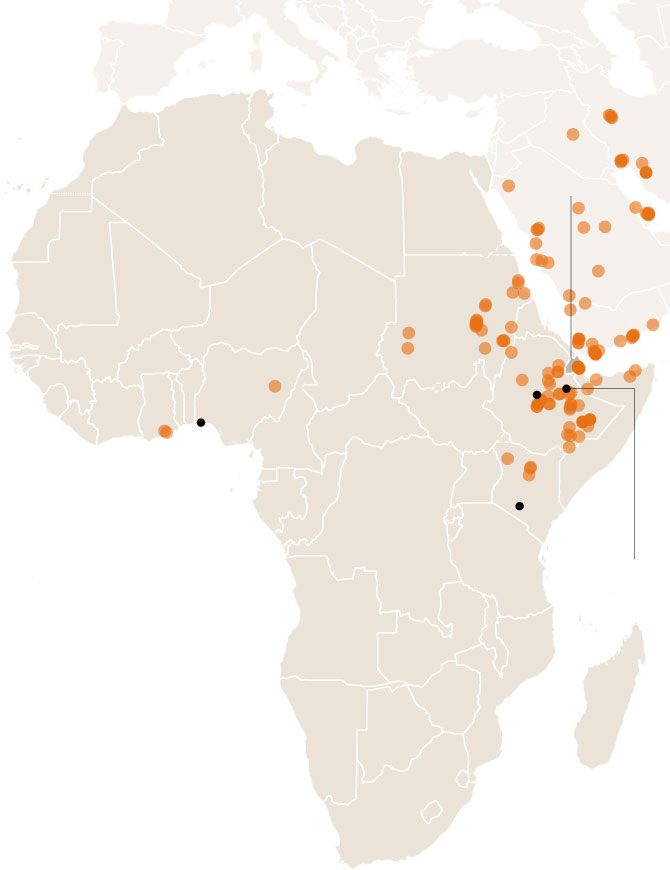
The narrow wooden benches in the student health clinic at Dire Dawa University in Ethiopia’s second-largest city began to fill up in March last year: feverish students slumped against their friends, cradling aching heads in their hands.Helen Asaminew, the presiding nurse, was baffled. The students had the hallmark symptoms of malaria. But people didn’t get malaria in cities, and the students hadn’t traveled anywhere. It was the dry season. There was no malaria for hundreds of miles.Yet when Ms. Asaminew had their blood tested, the telltale ring-shaped parasite signaling malaria turned up in most of the samples. By April, one out of every two students living in the male dormitories had the disease, 1,300 cases in all.The crowded clinic was the starting point of a medical mystery that forewarns an alarming new public health crisis in Africa.At its center is Anopheles stephensi, a malaria-carrying species of mosquito that arrived in the port city of the tiny East African nation of Djibouti a decade ago and was largely ignored by public health officials. It is resistant to all insecticides and has adapted to thrive in urban environments and survive in dry seasons. It is now breeding in locations across the center of the continent, and entomologists say further spread is inevitable.Africa has expertise and strategies to fight malaria as a rural disease but now faces the threat of urban outbreaks, putting vastly more people at risk and threatening to wipe away recent progress against malaria, which still kills 620,000 people each year, mostly in Africa. Although some mosquito experts say it is too soon to be certain of the magnitude of the threat, the potential for outbreaks in cities, they fear, may set up a competition between urban and rural areas for scare resources to fight the disease.Reports of Anopheles stephensi mosquitoes in Africa

Read more →