Wearable sensor to monitor 'last line of defense' antibiotic

Since the discovery of penicillin in 1928, bacteria have evolved numerous ways to evade or outright ignore the effects of antibiotics. Thankfully, healthcare providers have an arsenal of infrequently used antibiotics that are still effective against otherwise resistant strains of bacteria.
Researchers at Sandia National Laboratories have combined earlier work on painless microneedles with nanoscale sensors to create a wearable sensor patch capable of continuously monitoring the levels of one of these antibiotics.
The specific antibiotic they’re tracking is vancomycin, which is used as a last line of defense to treat severe bacterial infections, said Alex Downs, a Jill Hruby Fellow and project lead. Continuous monitoring is crucial for vancomycin because there is a narrow range within which it effectively kills bacteria without harming the patient, she added.
“This is a great application because it requires tight control,” said Philip Miller, a Sandia biomedical engineer who advised on the project. “In a clinical setting, how that would happen is a doctor would check on the patient on an hourly basis and request a single time-point blood measurement of vancomycin. Someone would come to draw blood, send it to the clinic and get an answer back at some later time. Our system is one way to address that delay.”
The researchers shared how to make these sensors and the results of their tests in a paper recently published in the scientific journal Biosensors and Bioelectronics.
Making electrochemical microneedle sensors
The sensor system starts with a commercially available microneedle, commonly used in insulin pens. Adam Bolotsky, a Sandia materials scientist, takes a polymer-coated gold wire about ¼ the thickness of a human hair and trims one end at an angle. He then carefully inserts the gold wire into the needle, solders it to a connector and ensures it is electrically insulated. The researchers also construct reference and counter electrodes in a similar manner, using coated silver and platinum wires inside commercial microneedles, respectively.

Read more →

Jamaica: Children in hospital after eating cannabis sweets

Published1 day agoShareclose panelShare pageCopy linkAbout sharingImage source, Getty ImagesBy Kathryn ArmstrongBBC NewsMore than 60 children have been taken to hospital in Jamaica after eating sweets containing cannabis, the country’s education minister said. Fayval Williams wrote on X (formerly Twitter) that the primary school pupils were from the St Ann’s Bay area – about 80km (50 miles) from the capital, Kingston. She said some children experienced vomiting and hallucinations.None are reported to be in a serious condition. “The doctors & nurses are doing all they can to ensure the students recover,” Ms Williams wrote on X, adding that several of the children had to be put on an intravenous (IV) drip. “One little boy said he only had ONE sweetie. That’s how potent this product is. DANGER!”Ms Williams said the children were from St Ann’s Bay Primary, but local news agencies have reported that students from the nearby Ocho Rios Primary School were affected. The children are thought to be between the ages of seven and 12. The principal of the latter school told the Jamaica Observer that a “lone vendor” had sold the sweets to its students. The head of the St Ann police department, Senior Superintendent Dwight Powell, has urged the person or anyone with information about them to contact the authorities. Ms Williams posted photos of the product packaging which is thought to have contained the sweets, which specifies they are not to be sold to minors. Each is said to contain 100mg of the psychoactive substance Delta-8 tetrahydrocannabinol (THC), which is generally considered to be a high dose for an adult. According to the US Food and Drug Administration (FDA), Delta-8 has “intoxicating effects”. The sweets, which are not FDA-approved, were produced by a company based in the US state of California, where cannabis is legal. Jamaica decriminalised the possession of small amounts of cannabis, also known as marijuana, for personal use in 2015. However, Health Minister Christopher Tufton told the Jamaica Star that the government did not allow the import of edibles containing drugs. The incident comes more than a week after around 90 children fell ill in South Africa after eating drug-laced muffins that officials said they had bought from a street vendor.More on this storyMen charged after ‘drug muffins’ sold to childrenPublished22 SeptemberJamaica decriminalises marijuana usePublished25 February 2015

Read more →

In the Big City, Wildlife Researchers Are On the Prowl

Early one morning last month, Laura Dudley Plimpton found herself in Forest Park, in Queens, staring at a pair of captured raccoons. It was not the first time that Ms. Plimpton, an ecologist at Columbia University, had caught two of them in a cage trap designed for one. But typically when that happened, she would find a mother and a small kit inside.This trap contained two fully grown, rotund adults, two balls of bristly fur that had merged into what one member of the trapping team called a single “big squish.” The raccoons seemed to be unbothered, one resting casually atop the other inside the cage, which had jumbo marshmallows as bait.“You guys are so silly,” Ms. Plimpton said. Her demeanor was improbably cheery, and her French braid was impressively neat for someone who had arrived at the park before dawn. “I really don’t know how they did that,” she added, turning toward a colleague. “They had to have raced each other to the marshmallow.”For their trouble, the raccoons had earned themselves a quick veterinary exam, a rabies vaccine and a spot in Ms. Plimpton’s investigation: a study of urban animals, the pathogens they carry and how they might spread across the city.Although rats receive most of the attention, New York City is crawling with all kinds of creatures — raccoons, skunks, opossums, deer and even the occasional coyote — that are not always visible to people. For these animals, urban living provides some clear opportunities, especially “if they learn to utilize human resources such as trash,” said Maria Diuk-Wasser, who leads Columbia’s eco-epidemiology lab, where Ms. Plimpton is a Ph.D. student.But city life also poses distinct challenges for animals, which often live in close quarters and have frequent interactions with other species, including us. That can raise the risks of disease transmission to people, pets and wildlife.So Ms. Plimpton, Dr. Diuk-Wasser and their colleagues are trying to learn more about these risks, in hopes of safeguarding both human and animal health. They are also shining a light on the way that our lives are intertwined with those of our animal neighbors, even in one of the most urban environments on Earth.“We have all of these such close interactions with each other, whether we know it or not,” Ms. Plimpton said. “It’s always happening around us.”Laura Dudley Plimpton, an ecologist at Columbia University, prepares a workstation for processing raccoons in Forest Park before dawn.Raven Schuman, a wildlife specialist at the U.S. Department of Agriculture, had spent the previous evening placing traps in locations that seemed like promising raccoon territory.Ms. Schuman placed several trapped animals on the back of her truck to take to the field station.Raccoon roundupFor years, Dr. Diuk-Wasser has been investigating how urban environments shape animal communities and how that, in turn, might affect the spread of certain pathogens. She has been especially interested in tick-borne diseases and exploring how landscape features on Staten Island affect the movements of deer, which drop ticks as they bound through the borough. “We have identified a strong correlation between deer visitation and finding ticks in someone’s yard,” Dr. Diuk-Wasser said.The Covid pandemic provided an opportunity to expand the research, especially when it became clear that people were regularly passing SARS-CoV-2, the virus that causes Covid, to deer, cats and other animals. The universe of coronaviruses is vast, and Ms. Plimpton and Dr. Diuk-Wasser wondered whether there were other coronaviruses circulating in the city’s wildlife that might pose a risk to animals or people.“As we started looking for coronaviruses, we started finding all of these other pathogens,” Ms. Plimpton said. “And seeing the burden that some of these populations have in terms of their health.”Last summer, Ms. Plimpton was trapping and swabbing raccoons in Brooklyn’s sprawling Green-Wood Cemetery when she began noticing animals with strange symptoms: hair loss, scabbed paws, vision problems and disorientation. It was an outbreak of canine distemper, a disease that researchers had not been looking for at first. “It just happened in front of our eyes,” Dr. Diuk-Wasser said.Canine distemper is not a health threat to humans, but it is often fatal in raccoons and skunks and can also affect dogs. And because it can be mistaken for rabies, outbreaks can be a drain on city resources, requiring officials to collect and test symptomatic raccoons.The researchers soon confirmed the virus in 11 raccoons, two cats and one skunk. They hope that by sequencing the genomes of the viral samples they collected, they can untangle the chain of transmission and map how distemper spread through the cemetery.Raccoons and opossums wait to be sedated and sampled inside covered cages.“I really don’t know how they did that,” Ms. Plimpton said of the raccoons trapped in a single cage. “They had to have raced each other to the marshmallow.” A sedated raccoon’s paws.That work is ongoing, but the raccoons’ movements, which Ms. Plimpton tracked with GPS collars and Bluetooth sensors, provided clues. The area around the southwestern corner of the cemetery was a hot spot for raccoon interactions. That region contained the cemetery’s service yard, where many employees work and eat, as well as some residential yards where locals were known to leave food out for stray cats.Although the idea remains unproven, Ms. Plimpton hypothesizes that the area might have served as a “super-spreading zone,” with trash, gardens and cat food that attracted hungry raccoons and brought the animals into close contact.The cemetery has already taken action, switching to trash cans that are harder for animals to climb into and encouraging those who live nearby not to leave cat food out at night, said Sara Evans, the senior manager and curator of living collections at Green-Wood. “Establishing healthier or more effective boundaries with the wildlife that inhabit the city, it really just takes the cooperation of literally everyone,” Ms. Evans said.‘All the swabbing’The researchers are also investigating these relationships at a larger, citywide scale, with a collection of biological specimens from about 700 animals, including raccoons, deer, opossums, skunks, cats, shrews and white-footed mice. “I’m starting to get carpal tunnel from all the swabbing,” Ms. Plimpton said.On Sept. 14, she was back in action at Forest Park. Her colleagues at the U.S. Department of Agriculture, who were leading the trapping effort, had traversed the park the previous evening, placing traps in locations that seemed like promising raccoon territory. Large, old-growth oak trees often bring success. “It’s also pretty good to set near large areas of trash,” said Raven Schuman, a wildlife specialist at the U.S.D.A.It was a good night of trapping, yielding 17 raccoons and four opossums. The next morning, the researchers began working through the animals one by one at their pop-up sampling site.Ms. Schuman sedated the first raccoon. As soon as it conked out, the researchers got to work. “Once the animals go down, we have about 10 minutes,” said Ms. Plimpton, who swabbed the raccoon’s nose, mouth and rectum. Dr. Diuk-Wasser ran her fingers through the animal’s wiry hair, looking for ticks. Dr. Julian Rivera, a veterinarian at the Staten Island Zoo who was helping the researchers for the day, conducted a brief physical exam, drew blood and collected a few tiny tissue samples.From left, the veterinarian Julian Rivera, Ms. Plimpton and Maria Diuk-Wasser, the project’s principal investigator, collects samples from a sedated raccoon in the tent station at Forest Hills.Sampling a sedated opossum. An engorged tick found on one of the raccoons.Then the next animal was up, and the three repeated their designated tasks. And so it went, for six nonstop hours. The animals varied widely in size, age and condition. “You are just a perfect specimen of a raccoon,” Ms. Plimpton cooed at one fluffy-eared kit, rubbing a gloved finger over its velvety paw. “This one is remarkably cute,” Dr. Rivera pronounced with veterinary expertise.But an enormous adult, who had initially seemed robust, was not in great shape. He had ticks around his eyes and bald spots on his legs. Some of his teeth were missing and one paw appeared to be swollen. It was hard to know what ailed him, but his samples might provide a clue. His specimens, and all the others, would be sent to the researchers’ collaborators at Cornell and tested for coronaviruses, distemper and tick-borne pathogens.So far, the scientists have not found any coronaviruses in raccoons, but they did isolate a novel coronavirus from a cat last summer. It was a type of coronavirus that had previously been associated with rabbits and rodents. Although it is not clear how the cat was infected, stray cats do sometimes feed on mice, and humans might unwittingly facilitate disease-spreading encounters; feeding stations for feral cats can also attract rodents, the researchers noted in a recent paper, which has not yet been published in a peer-reviewed journal.Now that the specimens have been collected, they can be used for a wide range of future projects. Ms. Plimpton dreams of using an approach known as metagenomics to identify all of the viruses the animals in the city are carrying. “The hardest part is always getting samples from wildlife populations,” she said. “It’s a privilege whenever you get to sample these animals.”When Ms. Plimpton finally finished her swabbing in Forest Park, the animals were released where they had been found. The pair of raccoons that had stumbled into the same trap slept off their sedation in their own individual cages. When they came to, Ms. Schuman carried them into the woods, setting the traps down on a dirt path.The first raccoon, a slightly smaller female, immediately dashed out and tore down the trail. The larger male slowly waddled out. He took a few careful steps toward a small stand of trees as if he were testing the ground beneath his feet. Then, he picked up speed, gamboling into the thicket and, seconds later, out of sight.

Read more →

Brain biometrics help identify sports concussions

Novel brain biometrics could help inform whether an athlete is ready to return to play following a concussion, according to new research from the University of South Australia.
Conducted in partnership with the University of California San Francisco (UCFC), researchers found that changes in micromovements of the brain — termed ‘headpulses’ — could detect the lasting impacts of a concussion.
Using a custom-designed headset* to evaluate headpulse biometrics among 101 amateur male and female Australian Rules Football players in South Australia, researchers identified brain abnormalities in 81% of players inflicted by concussion, signalling sustained injury beyond expected recovery times.
These headpulse alterations lasted 14 days beyond concussion symptoms and were exacerbated by return-to-play or unsupervised physical activity.
UniSA Professor of Exercise Science Kevin Norton says that headpulse measures could complement current return-to-play protocols.
“Traumatic brain injury inflicts more than 60 million people every year, with a third of these being sports-related,” Prof Norton says.
“While we know that Australia’s sports sector takes concussions seriously — via considered return-to-play protocols — we also know that objective measures of concussion recovery are not fully established.

Read more →

Covid Inquiry focuses on government as stakes rise

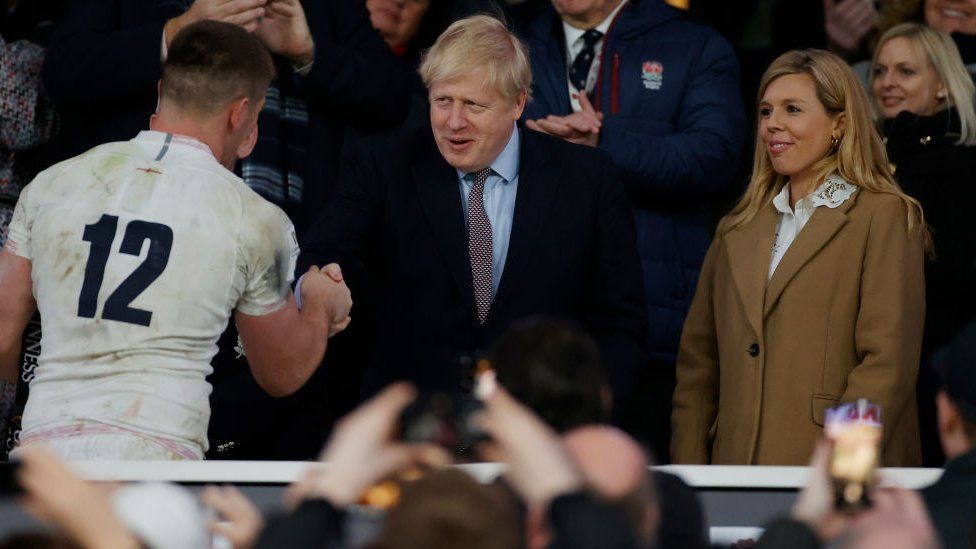
Published8 hours agoShareclose panelShare pageCopy linkAbout sharingImage source, Getty ImagesBy Jim ReedHealth reporterDecisions made by Boris Johnson, his government and his team of scientists in the early days of the pandemic are to come under intense scrutiny as the second part of the Covid inquiry begins.Until Christmas, the spotlight will be on key decisions made to try to control the spread of the virus, from lockdowns to border controls to face masks. But what is at stake for the ex-prime minister and his former team?On 7 March 2020, England beat Wales in front of 82,000 in a Six Nations rugby match at Twickenham. Mr Johnson was in the crowd shaking hands with England captain Owen Farrell.On the same day, newspaper front pages were full of one subject. “Official: It’s an outbreak,” said the Sun. “Millions told: work at home to fight virus,” said the Daily Mail.That weekend, Italian Prime Minister Giuseppe Conte announced a lockdown across the north of the country as Covid cases threatened to overwhelm hospitals.In the UK, where only two deaths had been confirmed, the message was still to wash our hands and carry on – cautiously – with our lives.The next week, horse racing’s Cheltenham Festival went ahead with 250,000 spectators, while 3,000 Atletico Madrid football fans flew to Liverpool for a Champions League match, when Spanish restrictions would have stopped them going to a match at home.Image source, Geoff BodmanGeoff Bodman, 59, was at both Twickenham and Cheltenham that spring and is sure he was infected with Covid at one of those events. Later that month he was put on a ventilator at a hospital in Cardiff, followed by two months in intensive care during which he suffered a stroke.”With hindsight, the government should have acted more decisively and put a block on things,” he says.”It would have been disruptive for a lot of people, but lives would have been saved.”The early responseHundreds of articles and books have already been written about the government’s early response to Covid. An investigation by MPs described it as one of the country’s worst public health failures.Former Health Secretary Matt Hancock published his version of what happened, and then had thousands of his WhatsApp messages leaked to the Daily Telegraph. Now though, the Covid-19 public inquiry, led by former judge Baroness Hallett, is opening its own investigation. The first part of the inquiry, examining just the planning for a pandemic, finished hearing witnesses back in July, with a final report due in 2024. This second part looks at the decisions made after Covid emerged with “particular scrutiny” of the period until 23 March 2020 when the UK went into full lockdown.It will ask:could different decisions have saved lives?if the government’s policy of “following the science” was a fair reflection of what really happenedwhether mandatory lockdowns, face masks and border restrictions really were effective in controlling the spread of Covid It will investigate whether the impact on the economy, education and mental health were ever properly considered.”I didn’t see another human being for 18 months, except for when I went to get my jabs,” says James Hollens, who has two types of autoimmune arthritis and a weakened immune system because of the medication he is taking.New research for the charity Versus Arthritis found there was a “sizeable impact” on the mental health of people – like James – who shielded through the pandemic. “We were told to just stay inside and wait for the next news conference,” he adds.”Not once did anyone reach out and check how we were doing mentally or physically.”This part of the inquiry will look at how at-risk groups were identified and the effect of lockdown and social distancing on those individuals. Crucially it will also examine “public confidence” in the government’s policies “including the impact of alleged breaches of rules and standards by ministers, officials and advisers”.What more can we learn?As a public inquiry, Baroness Hallett and her team have specific powers, including the ability to compel witnesses to give evidence under oath, and force the release of documents. That was seen earlier this year when the government lost a legal challenge to prevent the release of ministers’ WhatsApp messages and diaries in full. Expect those texts to form a key part of the questioning, with Mr Johnson, Mr Hancock and Prime Minister Rishi Sunak all likely to give evidence. There is significant potential for this to be embarrassing for the government, as it will shine a light on their decision-making, who did what, and what was said behind closed doors.Another two weeks is set aside to hear from advisers and civil servants, expected to include Dominic Cummings and former cabinet secretary Sir Mark Sedwill.Groups representing the families of some of the 230,000 who lost their lives are worried they may not have a proper chance to have their say. The UK-wide part of this second module runs until Christmas when the inquiry will then move to Wales, Scotland and Northern Ireland to investigate the way they handled Covid.What happens in the end? A public inquiry is not a court case or a criminal trial and there are no sanctions at the end of the process. The chairperson does not have the power to send anyone to prison or impose a fine. Instead the idea is to establish the facts of what happened and learn lessons for the future. That is still not without risk for the people involved.At the end of each section an official report will be published which may well attach blame to institutions and to individuals.Those findings are likely to be seen by many as a historical verdict on the way the pandemic was handled.They could even – theoretically – trigger future civil or criminal proceedings.In a statement, a government spokeswoman said it was committed to learning lessons from the inquiry. “Throughout the pandemic the government acted to save lives and livelihoods, prevent the NHS being overwhelmed and deliver a world-leading vaccine rollout which protected the nation,” she added.Sign up for our morning newsletter and get BBC News in your inbox.More on this storyCovid Inquiry: What have we learnt so far?Published20 JulyWhat is the UK Covid inquiry and how long will it take?Published5 days ago

Read more →

Greenland women seek compensation over involuntary birth control

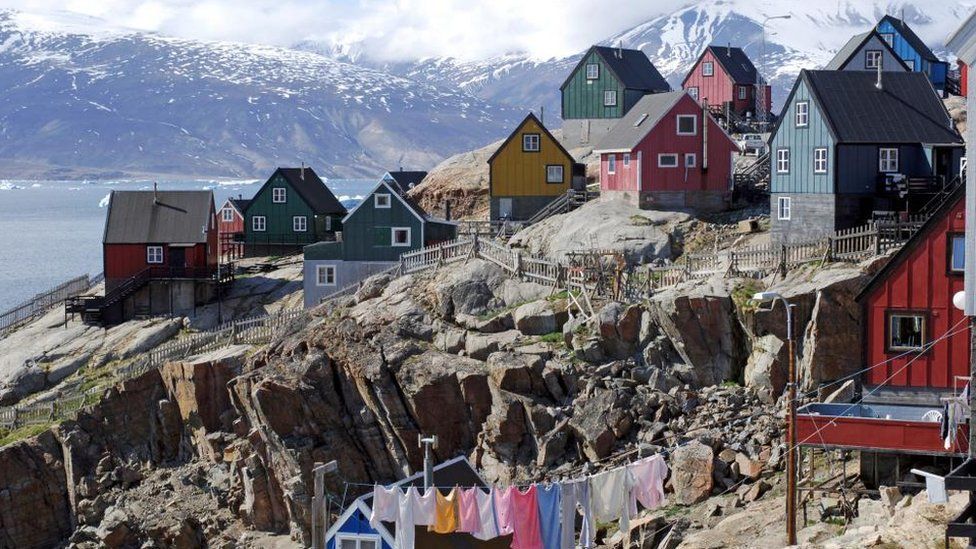
Published8 hours agoShareclose panelShare pageCopy linkAbout sharingBy Christy CooneyBBC NewsA group of 67 women from Greenland are seeking compensation from the Danish government over a campaign of involuntary birth control in the 1960s.At least 4,500 women, some of them teenagers, were fitted with coils under a programme intended to limit birth rates among the indigenous population.An inquiry is due to conclude in 2025, but the women, some of whom are in their 70s, want compensation now.They are seeking 300,000 kroner (£34,880; $42,150) each.Greenland, now a semi-sovereign territory of Denmark, was a Danish colony until 1953.The scale of the campaign was exposed last year in a podcast published by Danish broadcaster DR.Records from the national archives showed that, between 1966 and 1970 alone, intrauterine devices (IUDs) were fitted into the women, some as young as 13, without their knowledge or consent.The government of Greenland estimates that, by the end of 1969, 35% of women in the territory who could potentially have borne children had been fitted with an IUD, according to DR.A commission set up by the Danish and Greenlandic governments to investigate the programme is not due to deliver its findings until May 2025. “We don’t want to wait for the results of the inquiry,” said psychologist Naja Lyberth, who initiated the compensation claim.”We are getting older. The oldest of us, who had IUDs inserted in the 1960s, were born in the 1940s and are approaching 80. We want to act now.”Ms Lyberth said that, in some cases, the devices fitted had been too big for the girls’ bodies, causing serious health complications or even infertility, while in others the women had been unaware of the devices until they were discovered recently by gynaecologists.She accused the Danish government of the time of wanting to control the size of Greenland’s population in order to save money on welfare.”It’s already 100% clear that the government has broken the law by violating our human rights and causing us serious harm,” she said.‘Doctors fitted a contraceptive coil without my consent’Watch: Greenland’s Lost GenerationGreenland profile Mads Pramming, the lawyer representing the women, sent a claim on their behalf to the office of Prime Minister Mette Frederiksen on Monday.Ms Lyberth said she expected the government to refuse the request pending the results of the commission, and that if it did the group would take the matter to court. Last year, Denmark apologised and paid compensation to six Inuit who were taken from their families in the 1950s as part of an attempt to build a Danish-speaking elite within Greenland.Greenland has a population of just 57,000 and is both the largest island and the northernmost area of land in the world. The territory has its own flag, language and prime minister, although its currency, justice system, and foreign and security affairs are still controlled by Denmark.More on this story‘Doctors fitted a contraceptive coil without my consent’Published8 December 2022Children taken from Greenland win Danish apologyPublished8 December 2020Birth control scandal of Greenland’s young womenPublished30 September 2022

Read more →

Study uncovers reasons Americans did not get booster vaccines

In September 2022, new bivalent COVID-19 boosters became available in the United States, but less than 20% of the eligible population ultimately received one. A new study led by researchers in the University of Arizona Mel and Enid Zuckerman College of Public Health identified why so many Americans did not receive a booster.
The paper, “Understanding low bivalent COVID-19 booster uptake among US adults,” was published in the journal Vaccine.
“Our results indicate that we have a lot more work to do in terms of educating the public and health care providers about the importance of staying up to date on COVID-19 boosters,” said first author Elizabeth Jacobs, PhD, professor of epidemiology at the Zuckerman College of Public Health, who led the research with associate professor of epidemiology Kristen Pogreba-Brown, PhD, MPH.
Nearly 40% of survey participants reported they did not get a booster shot because of a prior infection with SARS-CoV-2, the virus that causes COVID-19.
The second-most common reason was concern about vaccine side effects (31.5%), followed by believing that the booster would not provide additional protection over the vaccines already received (28.6%) or that it would not protect from SARS-CoV-2 infection (23.1%).
Some of the answers provided differed by characteristics such as age, ethnicity and education, suggesting that a variety of strategies may be needed to improve vaccination rates.
This project was conducted through Arizona CoVHORT, a longitudinal study launched in May 2020 that tracks the acute and long-term impacts of SARS-CoV-2 infection among Arizonans. The researchers sent a questionnaire to CoVHORT participants asking if they had gotten the booster and, if not, to select the reason or reasons for not having done so.
As the next COVID-19 booster rolls out this fall, the investigators hope the results can help design interventions to ensure that more people are protected from the latest SARS-CoV-2 variants.
“Our results indicate that many people don’t know that a booster provides additional protection even if they have already been infected or that the effectiveness of prior boosters wanes over time due to new variants,” Jacobs said. “So it’s important to get another booster as we head into the fall and winter.”
The Arizona CoVHORT study is continuing to enroll participants in conjunction with a grant from the Centers for Disease Control and Prevention to study the prevalence and symptoms of long COVID.

Read more →

When cells go boom: Study reveals inflammation-causing gene carried by millions

Australian researchers at WEHI have found that a genetic change that increases the risk of inflammation, through a process described as ‘explosive’ cell death, is carried by up to 3% of the global population.
The study may explain why some people have an increased chance of developing conditions like inflammatory bowel disease or suffer more severe reactions to infections with bacteria like Salmonella.
At a glance MLKL is a gene essential to triggering necroptotic cell death — a natural process that protects our body from infection. In some people this process can go awry and trigger severe tissue damage. Study finds a genetic variation, known to enhance the ability of MLKL to kill cells, is carried by up to 3% of the global population. The findings could lead to better personalised treatments for inflammation and other diseases in the future. Immune power of ‘explosive’ cell death
Every minute, millions of cells in our bodies die on purpose. Cell death is an essential process that protects our bodies from disease by removing unwanted, damaged or dangerous cells, and preventing the spread of viruses, bacteria, and even cancer.

Read more →

Nobel Prize for mRNA vaccines: 5 things to know

Editor’s Note: Sign up for CNN’s Wonder Theory science newsletter. Explore the universe with news on fascinating discoveries, scientific advancements and more.

CNN
 — 

Two pioneering scientists who created the technology behind life-saving Covid-19 vaccines have won the Nobel Prize in medicine or physiology.

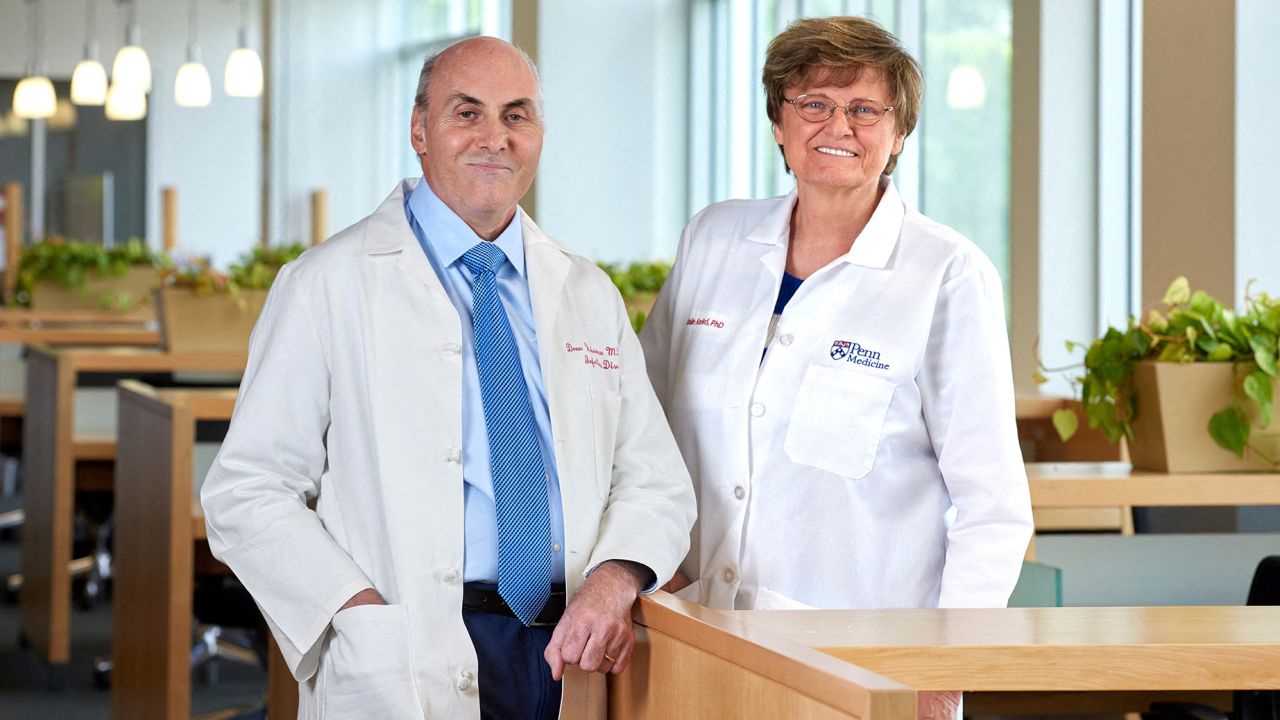
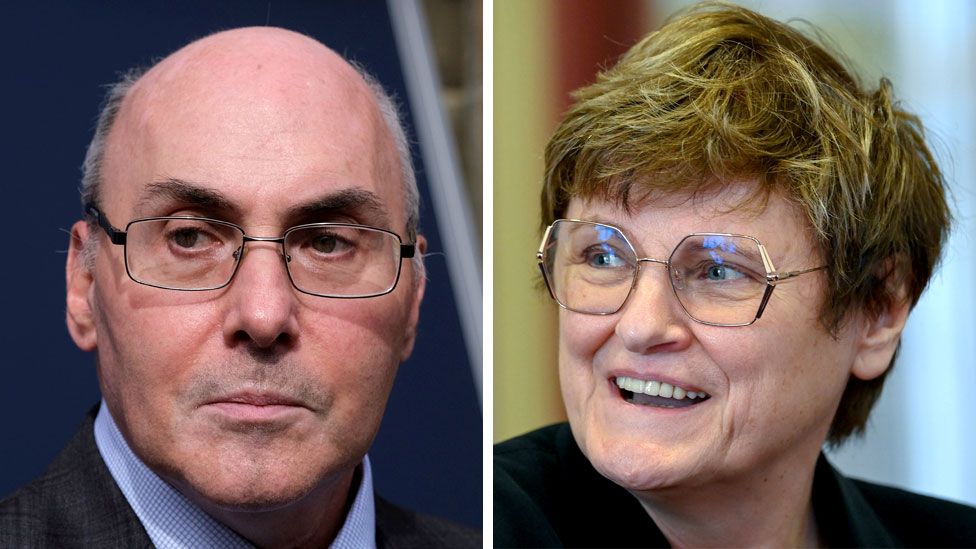
Dr. Katalin Karikó and Dr. Drew Weissman, both of the University of Pennsylvania, achieved their breakthrough by harnessing the power of genetic material known as messenger RNA, or mRNA.

Their discoveries have opened up a new chapter in medicine, paving the way for new vaccines for other infectious diseases, including the flu, and treatments for noninfectious diseases such as cancer.

Here are five things to know about Karikó and Weissman’s game-changing research and mRNA vaccines.

What mRNA does

Messenger RNA, or mRNA, is a form of nucleic acid that tells cells what to do based on the information contained in DNA.

Unlike DNA, which acts as an instruction manual for life contained in every cell, mRNA is a temporary piece of genetic code that can create a protein or repair damage. Researchers often use a cookbook analogy. DNA is a thick recipe book, while RNA is the handwritten copy of an individual recipe that gets scrunched up and thrown away after use.

Scientists have long known about about mRNA, but it was previously thought to be too unstable to have value as a therapeutic tool.

What the Nobel laureates discovered

Karikó and Weissman’s key breakthrough was in finding a way to alter the building blocks of RNA, called nucleotides, in order to make our bodies produce an immune response.

Robin Shattock, a professor of mucosal infection and immunity at Imperial College London, said the pair’s “seminal work” in understanding how to configure RNA was critical to the success of the highly effective mRNA vaccine against Covid-19.

“Their fundamental work in using modified nucleotides, the building blocks of RNA, to avoid activation of the innate immune system will be key to the successful use of future RNA vaccines and new RNA based medicines,” Shattock said.

How mRNA vaccines differ from other vaccines

Many vaccines use weakened or dead versions of the viruses they’re targeting — not enough to make a person sick, but an amount that will make the immune system respond so the body will produce antibodies if it encounters the real virus. These are called vector vaccines.

Another related technique — employed in protein subunit vaccines — uses purified pieces of a virus in order to trigger an immune response.

However, development of those types of vaccines can be lengthy, and it can be difficult to modify them quickly.

Messenger RNA-based vaccine technology doesn’t rely on a modified version of a virus to produce an immune response. It uses modified mRNA to tell the body’s cells to produce proteins that train the immune system to defend the body against a particular disease.

What the team overcame

Karikó’s fascination with the therapeutic potential of mRNA started while she was in grad school in Hungary and never wavered despite multiple setbacks, job losses, doubt and a transatlantic move. Her conviction that it could be used to fight disease drew skepticism, and the grants she applied for were often rejected.

Karikó, now an adjunct professor of neurosurgery at Penn’s Perelman School of Medicine, met Weissman by chance in 1997. The Nobel committee said Weissman’s background in immunology and Karikó’s expertise in RNA biochemistry meant the two scientists complemented each other well.

“I think the important thing is that we couldn’t have come to the result without both of us being involved,” said Weissman, the Roberts Family Professor of Vaccine Research at Perelman School of Medicine, in a video shared Monday by the University of Pennsylvania.

Their groundbreaking study was published in 2005, 15 years before the Covid-19 pandemic began.

Thomas Perlmann, secretary general of the Nobel Assembly for medicine, said that back then there were many roadblocks to overcome before they could use the technology in vaccine form. Those obstacles included manufacturing mRNA in large quantities and refining a delivery method for mRNA into cells. However, he said their seminal work meant that mRNA-based Covid vaccines got off “to a flying start” when the pandemic came along.

Potential beyond fighting Covid-19

The advent of mRNA vaccine technology has led to safe and strong protection against Covid-19. But proponents say this is just the beginning.

Early studies suggest mRNA technology shows promise as a treatment for cancers, including melanoma and pancreatic cancer, and it’s being studied for use in vaccines for seasonal flu, respiratory syncytial virus (RSV) and HIV.

Other avenues of ongoing mRNA research include exploring a new avenue to treat autoimmune diseases. And mRNA technology is also being checked out as a possible alternative to gene therapy for intractable conditions such as sickle cell disease.

Read more →

Nobel Prize goes to scientists behind mRNA Covid vaccines

Published11 hours agoShareclose panelShare pageCopy linkAbout sharingImage source, EPABy James GallagherHealth and science correspondentThe Nobel Prize in Physiology or Medicine has been awarded to a pair of scientists who developed the technology that led to the mRNA Covid vaccines. Professors Katalin Kariko and Drew Weissman will share the prize.The technology was experimental before the pandemic, but has now been given to millions of people around the world to protect them against serious Covid-19.The same mRNA technology is now being researched for other diseases, including cancer. The Nobel Prize committee said: “The laureates contributed to the unprecedented rate of vaccine development during one of the greatest threats to human health in modern times.”Vaccines train the immune system to recognise and fight threats such as viruses or bacteria. Traditional vaccine technology has been based on dead or weakened versions of the original virus or bacterium – or by using fragments of the infectious agent. Warning that Covid will ‘continue to surprise us’In contrast, messenger ribonucleic acid (mRNA) vaccines use a completely differently approach. During the Covid pandemic, the Moderna and Pfizer/BioNTech vaccines were both based on mRNA technology. Professor Kariko and Professor Weissman met in the early 1990s when they were working at the University of Pennsylvania, in the United States, when their interest in mRNA was seen as a scientific backwater. “I would go to meetings and present what I was working on, and people would look at me and say: ‘Well, that’s very nice, but why don’t you do something worthwhile with your time mRNA will never work.’. But Katie and I kept pushing,” Professor Wiseman told the BBC’s Newshour programme.Asked about how the pair first reacted to hearing the news that they had won the prize, Professor Kaliko said she thought it was “just a joke” initially.In a similar vein, Professor Weissman said: “I was you know, sort of overjoyed and then disbelief, and a little bit suspecting that there was some anti-vaxxer playing a prank on us.””But when we saw the announcement, we knew it was real and there was just a fantastic feeling.”An mRNA Covid vaccine contains the genetic instructions for building one component – a protein – from the coronavirus.When this is injected into the body, our cells start producing lots of the viral protein. The immune system recognises these as foreign so it attacks and has learned how to fight the virus, and therefore has a head start when future infections occur. The big idea behind the technology is that you can rapidly develop a vaccine against almost anything – as long as you know the right genetic instructions to use. This makes it far faster and more flexible than traditional approaches to vaccine development.There are even experimental approaches using the technology that are teaching patients’ bodies how to fight their own cancers.Scientists analyse a patient’s tumour, look for abnormal proteins being produced by the cancer that are not in healthy tissue and develop a vaccine to target those and inject that into the patient. Profs Kariko and Weissman made the crucial breakthroughs that made mRNA vaccines happen. The principle taps into normal human biology. RNA’s role in our body is to convert the instructions that are locked away in our genetic code, or DNA, into the proteins that our body is built from.However, there were challenges. But by refining the technology, the researchers were able to produce large amounts of the intended protein without causing dangerous levels of inflammation that had been seen in animal experiments. This paved the way for developing the vaccine technology for use in people. Katalin Kariko is now a professor at Szeged University in Hungary and Drew Weissman is still working as a professor at the University of Pennsylvania. Previous Nobel winners2022 – Svante Paabo for his work on human evolution. 2021 – David Julius and Ardem Patapoutian for their work on how the body senses touch and temperature. 2020 – Michael Houghton, Harvey Alter and Charles Rice for the discovery of the virus Hepatitis C.2019 – Sir Peter Ratcliffe, William Kaelin and Gregg Semenza for discovering how cells sense and adapt to oxygen levels2018 – James P Allison and Tasuku Honjo for discovering how to fight cancer using the body’s immune system2017- Jeffrey Hall, Michael Rosbash and Michael Young for unravelling how bodies keep a circadian rhythm or body clock2016 – Yoshinori Ohsumi for discovering how cells remain healthy by recycling wasteSign up for our morning newsletter and get BBC News in your inbox.More on this storyWarning that Covid will ‘continue to surprise us’Published23 hours agoNobel Prize goes to Neanderthal DNA researchPublished3 October 2022UK plan for national mRNA cancer vaccine advancePublished6 January

Read more →