US sanctions Chinese firms in crackdown on fentanyl supply chain

Published30 minutes agoShareclose panelShare pageCopy linkAbout sharingImage source, Getty ImagesBy Christy CooneyBBC NewsThe US has announced sanctions on 25 China-based firms and individuals allegedly involved in the production of chemicals used to make fentanyl.Fentanyl, a potent opioid used as a painkiller or sedative, plays a major role in the ongoing US drug crisis.Attorney General Merrick Garland said the drug’s supply chain “often starts with chemical companies in China”.China’s embassy in Washington did not immediately respond to a request for comment from Reuters news agency.In April, a spokesperson for the Chinese foreign ministry said there was “no such thing as illegal trafficking of fentanyl” between China and Mexico.This came after Mexican President Andrés Manuel López Obrador called on the Chinese government to help stop the alleged flow of fentanyl and its precursors into his country. The US authorities blame Mexican drug gangs for supplying fentanyl to users across the US.Fentanyl can be legally prescribed by doctors, but a dramatic increase in opioid addiction in the US in recent decades has led to a rise in illegal production and overdoses.In 2022, the drug was linked to a record 109,680 deaths.The US treasury department announced sanctions against what it called a “China-based network responsible for the manufacturing and distribution” of precursors of fentanyl and a number of other illegal drugs. Officials say companies in the fentanyl supply chain routinely use false addresses and mislabelling to avoid their products being identified by law enforcement.Those affected by the sanctions include 12 entities and 13 individuals based in China, as well as two entities and one individual based in Canada, the treasury said.The sanctions will freeze the entities’ US assets and bar Americans from dealing with them.Merrick Garland is due to travel to Mexico with other senior officials for meetings on how to tackle the supply of illegal drugs. “We know who is responsible for poisoning the American people with fentanyl,” Mr Garland told reporters.”We know that this network includes the cartels’ leaders, their drug traffickers, their money launderers, their clandestine lab operators, their security forces, their weapons suppliers, and their chemical suppliers. “And we know that this global fentanyl supply chain, which ends with the deaths of Americans, often starts with chemical companies in China.”Fourth wave of fentanyl crisis hits every corner of USThe Real Story: Why can’t America contain the fentanyl crisis?The justice department has also unsealed indictments charging eight Chinese companies and 12 of their employees with crimes related to fentanyl and methamphetamine production, the distribution of opioids and sales resulting from precursor chemicals.No-one has been arrested and the Chinese government did not work with US authorities on the investigations, Mr Garland said.This video can not be playedTo play this video you need to enable JavaScript in your browser.More on this storyExpert: Fentanyl crisis has ‘only gotten worse’ Video, 00:00:37Expert: Fentanyl crisis has ‘only gotten worse’Published18 September0:37US seizes enough fentanyl to kill every AmericanPublished21 December 2022

Read more →

Human disease simulator lets scientists choose their own adventure

Imagine a device smaller than a toddler’s shoebox that can simulate any human disease in multiple organs or test new drugs without ever entering — or harming — the body.
Scientists at Northwestern University have developed this new technology — called Lattice — to study interactions between up to eight unique organ tissue cultures (cells from a human organ) for extended periods of time to replicate how actual organs will respond. It is a major advancement from current in vitro systems, which can only study two cell cultures simultaneously.
The goal is to simulate what happens inside the body to analyze, for example, how obesity might affect a particular disease; how women metabolize drugs differently than men; or what might be initially driving a disease that eventually impacts multiple organs.
“When something’s happening in the body, we don’t know exactly who’s talking to whom,” said lead scientist Julie Kim, professor of obstetrics and gynecology at Northwestern University Feinberg School of Medicine. “Currently, scientists use dishes that have one or two cell types, and then do in-depth research and analysis, but Lattice provides a huge advancement. This platform is much better suited to mimic what’s happening in the body, because it can simulate so many organs at once.”
A study detailing the new technology will be published Oct. 3 in the journal Lab on a Chip.
Choose-your-own-adventure disease simulator
The microfluidic device has a series of channels and pumps that cause media (simulated blood) to flow between the eight wells. A computer connected to Lattice precisely controls how much media flows through each well, where it flows and when. Depending on which disease or drug the scientist wants to test, they can fill each well with a different organ tissue, hormone, disease or medication.

Read more →

New strategy for eye condition could replace injections with eyedrops

A new compound developed at the University of Illinois Chicago potentially could offer an alternative to injections for the millions of people who suffer from an eye condition that causes blindness.
Wet age-related macular degeneration causes vision loss due to the uncontrolled growth and leakage of blood vessels in the back of the eye. A new paper in Cell Reports Medicine led by UIC researcher Yulia Komarova finds that a small-molecule inhibitor can reverse damage from AMD and promote regenerative and healing processes.
The drug can also be delivered via eyedrops — an improvement over current treatments for AMD, which require repeated injections into the eye.
“The idea was to develop something that can be more patient-friendly and doesn’t require a visit to the doctor’s office,” said Komarova, associate professor of pharmacology at UIC.
Komarova’s compound targets a protein called End Binding-3 in endothelial cells, which line the inside of blood vessels. In the new study, the researchers looked at whether inhibiting EB3 function could stop the damaging leakage associated with wet AMD.
Using computational drug design methods, the team developed a small inhibitor that could be delivered externally via eyedrops instead of by injection. They then tested its effectiveness in animal models of wet AMD, finding that twice-daily treatment reduced eye damage within 2 to 3 weeks.
Further investigation found that the inhibitor worked by rolling back aging-related genetic modifications. Aging causes inflammation and hypoxia in the eye that leads to changes in gene expression associated with the cellular effects and symptoms of wet AMD. Komarova and colleagues found that the EB3 inhibitor they developed reversed these epigenetic changes, restoring gene expression to a normal, healthy state.
“We reduce the effects of the stressor on endothelial cells and we improve regenerative processes, accelerating healing,” Komarova said. “That can be tremendous for the function of the cells.”
Because blood vessel leakage and hypoxic stress also drive many other medical conditions, Komarova’s group is interested in testing the inhibitor in models of acute lung injury, diabetic retinopathy, stroke, heart disease and even the general effects of aging on the brain. They’re also exploring whether an implantable lens, similar to a contact lens, could deliver the drug to the eye more effectively than eyedrops.
In addition to Komarova, UIC authors on the paper include co-first-authors Quinn Lee, Wan Ching Chan and Xinyan Qu, as well as Ying Sun, Jonathan Le, Uzma Saqib, Mitchell Y. Sun, Kevin Kruse, Avik Banerjee, Ben Hitchinson, Melissa Geyer, Fei Huang, Victor Guaiquil, Amelia A. Mutso, Dr. Mark Rosenblatt, Mark Maienschein-Cline, Vadim Gaponenko and Asrar Malik.

Read more →

A promising treatment on the horizon for cancer-related fatigue

Cancer-related fatigue (CRF) is a debilitating yet all-too-common condition, which can severely affect quality of life for patients undergoing treatment. For those struggling with CRF, there have been no effective pharmaceutical treatments for the constellation of symptoms that together define the syndrome.
In a new study led by Yale Cancer Center researchers at Yale School of Medicine, the team found that a metabolism-targeting drug called dichloroacetate (DCA) helped alleviate CRF in mice, without interfering with cancer treatments. The findings are a pathway for future CRF research that may someday lead to a new therapy for patients.
The results were published in American Journal of Physiology-Endocrinology and Metabolism on Oct. 2.
“This study identifies dichloroacetate, an activator of glucose oxidation, as the first intervention, and particularly the first metabolism-focused intervention, to prevent the whole syndrome of cancer-related fatigue in preclinical models,” said senior author Rachel Perry, who is a member of Yale Cancer Center.
Researchers used tumor-bearing mouse models to investigate the effectiveness of DCA in treating cancer-related fatigue for patients living with melanoma. The group found that DCA did not affect the rates of tumor growth or compromise the effectiveness of immunotherapy or chemotherapy in two mouse cancer models. DCA also significantly preserved physical function and motivation in mice with late-stage tumors.
The data suggests that DCA treatment may have several positive effects, including reducing oxidative stress in muscle tissue of tumor-bearing mice. The researchers said DCA could be a practice-changing approach in the future, when used as an adjuvant therapy to treat cancer-related fatigue.
“We hope that this research will provide the bedrock for future clinical trials using dichloroacetate — an FDA-approved drug for another indication (lactic acidosis) — to treat the debilitating syndrome of cancer-related fatigue,” said Perry, who is also an assistant professor of medicine (endocrinology) and of cellular and molecular physiology at Yale School of Medicine.

Read more →

A New Way to Prevent S.T.I.s: A Pill After Sex

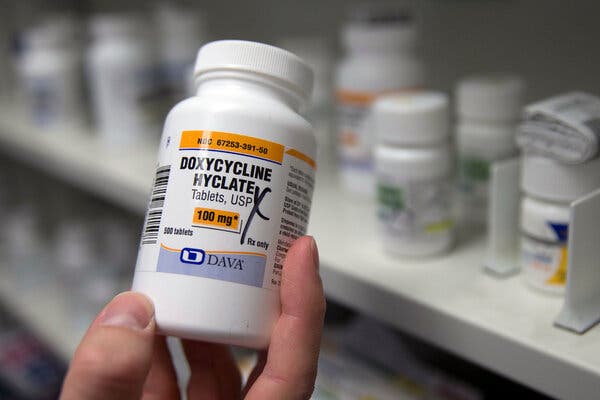
The NewsIn a bid to stem the resurgence of sexually transmitted infections, the Centers for Disease Control and Prevention plans to recommend doxycycline, a widely used antibiotic, for use after an unprotected sexual encounter.The antibiotic would be taken only by gay and bisexual men and transgender women who have had an S.T.I. within the previous year or who may be at risk for one. The scientific evidence is too limited to recommend the strategy, called doxy-PEP, to all people who might be exposed to infection-causing bacteria during sex.The agency released draft guidelines on Monday and plans to finalize them after a 45-day public comment period.“We need game-changing innovations to turn the S.T.I. epidemic around, and this is a major step in the right direction,” an official with the Centers for Disease Control and Prevention said.Rich Pedroncelli/Associated PressWhy It Matters: Rates of S.T.I.s are skyrocketing.In 2021, there were 1.6 million cases of chlamydia, more than 700,000 cases of gonorrhea and nearly 177,000 cases of syphilis in the United States, together tallying up to $1.1 billion in direct medical costs. (Rates of babies born with syphilis also soared that year, with nearly 3,000 affected.)All three S.T.I.s are caused by bacteria and are easily treated with antibiotics. But the closure of sexual health clinics across the country and a drop in public awareness has contributed to a sharp rise in infections.Gonorrhea cases have increased 118 percent since a historical low in 2009, according to the C.D.C. Syphilis was nearly eliminated in the United States about 20 years ago, but cases have risen 74 percent since 2017.On any given day in 2018, about one in five Americans had an S.T.I., the C.D.C. has estimated.“We need game-changing innovations to turn the S.T.I. epidemic around, and this is a major step in the right direction,” Dr. Jonathan Mermin, director of the agency’s National Center for H.I.V., Viral Hepatitis, S.T.D. and TB Prevention, said in an emailed statement.Background: Doxycycline is a powerful deterrent of infection.The C.D.C.’s guidelines are based on studies that show that a single dose of doxycycline taken within 72 hours of unprotected sex dramatically cuts the risk of the infections.Evidence from emerging research was compelling enough that clinics in some cities, such as San Francisco, have been offering doxy-PEP to those at high risk of infection for months. Generally, patients are given a supply of pills and told to take one within three days of an encounter during which they might have become infected.But rates of S.T.I.s are highest among Black people and Native Americans, who are often those with the least access to health care. “No prevention tool — no matter how powerful — will change the S.T.I. epidemic if it doesn’t reach the people who need it most,” Dr. Mermin said.What Critics Say: Wider antibiotic use may pose risks.Doxycycline has been in use for decades, and there are few indications that bacteria have become resistant to it. Syphilis and chlamydia do not often develop resistance, but gonorrhea is another question: Those bacteria have become resistant to multiple classes of antibiotics.Still, the picture may change depending on how many people take doxy-PEP and how often, some experts cautioned.“At the population level, that does worry me,” said Antón Castellanos Usigli, a sexual health expert who is an adjunct lecturer at the Columbia Mailman School of Health.In places like his native Mexico, Dr. Castellanos Usigli said, indiscriminate use of antibiotics has fueled the rise of drug-resistant bacteria, which can alter a person’s gut microbiome.What Happens Next: The C.D.C. will finalize new guidelines.Evidence so far supports doxy-PEP’s use only in men who have sex with men and in transgender women. In those groups, the antibiotic cut rates of syphilis and chlamydia by about 90 percent and gonorrhea by about 55 percent.Men who have sex with men account for nearly half of reported syphilis cases, according to the C.D.C. If studies show the approach to be effective in heterosexual cisgender men and cisgender women, the guidelines may be expanded.The agency said doctors should prescribe doxy-PEP as part of a comprehensive sexual health program that includes counseling, screening and treatment for the infections and for H.I.V.“Doxy-PEP will be a good option for some patients,” Dr. Castellanos Usigli said. “But we will have to do a lot of education with medical providers and patients so that we target the best candidates and prevent misuse and overuse.”

Read more →

Kaiser Permanente Workers Poised to Strike

The health care system provides care for 13 million people in eight states. Union officials say the job action — threatened for Wednesday — could be the largest strike by health care workers in recent U.S. history.More than 75,000 Kaiser Permanente employees are threatening to walk out Wednesday morning if they cannot agree to a new labor contract. The previous contract expired on Saturday. Union leaders say this could be the largest strike by health care workers in recent U.S. history.Kaiser, a large nonprofit health system, provides care for 13 million people in eight states, including California, Colorado and Washington, and the District of Columbia. The job action would involve support and other staff, including X-ray and lab technicians; sanitation workers who disinfect rooms between patients; and pharmacy workers who help dispense medications. These workers attend surgeries, run imaging equipment and assist in outpatient clinics. Doctors and many nurses are not part of the strike, which is set to last three days in some places. Some nurses, therapists and aides could also walk out.Kaiser said it was preparing for a possible strike and would do what it could to minimize any disruptions to patients. “Our hospitals are going to remain open,” including the emergency departments, said Michelle Gaskill-Hames, regional president for Kaiser Permanente in Southern California and Hawaii.But patients could experience delays in getting appointments, or procedures that are not considered urgent could be postponed.The strains of an acute staffing shortage have led union officials to warn that the strike is likely if Kaiser executives ignore their concerns. Workers say the lack of adequate staffing at Kaiser facilities is creating unsafe conditions for patients. The unions say that Kaiser needs better wages to attract workers and that it needs to hire enough people to make up for the exodus of staff during the pandemic.“It’s so disappointing to see them falling down here,” said Caroline Lucas, the executive director of the Coalition of Kaiser Permanente Unions, the collection of a dozen unions that notified Kaiser last month about the possibility of a strike. The coalition represents about half of Kaiser’s unionized work force, largely in California, where Kaiser is based.While the pandemic caused an immediate crisis in which workers were stretched too thin, Ms. Lucas said employees had been concerned about short staffing even before Covid hit. “For years, there has been a crisis on the horizon,” she said.Negotiations are continuing through midday Tuesday. “We are committed to staying at the table as long as we need to,” Ms. Gaskill-Hames said.She said Kaiser was grappling with the same staffing problems as other health systems across the country. The group has fared better than many of its competitors, she said, in limiting turnover and hiring replacement staff. “We have really ramped up on aggressive retention and recruitment strategies,” Ms. Gaskill-Hames said.A nurse was arrested last month during a demonstration outside Kaiser Permanente Los Angeles Medical Center in Hollywood.Damian Dovarganes/Associated PressThe frustrations of health care workers, who feel they are being forced to care for too many patients for too little pay, have been boiling over across the country. Many of the workers who remain feel burned out and are struggling to handle a higher volume of patients. The concern over inadequate staffing resulted in a nurses’ strike in New York City in January, and there were more than a dozen similar strikes this year in California, Illinois, Michigan and elsewhere.The tight labor market has emboldened many unionized workers, leading to the recently averted strike at United Parcel Service and current picket lines among autoworkers. “Unions are flexing their muscles in a bunch of industries,” said Ruth Milkman, a professor of sociology and labor studies at the City University of New York.The pervasive short staffing in health care gives workers significant leverage to demand better working conditions and higher pay, she said.Many nurses are represented by other unions, including the California Nurses Association, which agreed to a new contract in Northern California last December.The high levels of burnout have exacerbated the staffing shortages, said Ethan Ruskin, a health educator at Kaiser Permanente in San Jose, Calif. Patients have to wait longer than usual for appointments, he said, only to face more delays in the waiting rooms.“If they see something on your mammogram and send you for a sonogram, you’re going to be waiting weeks for a scan,” Mr. Ruskin said. “Meanwhile our sonographers have huge injury rates — things like stress fractures — because they are expected to see twice as many patients as they should.”Mr. Ruskin, who works alongside doctors to educate patients about various diagnoses, such as diabetes, said employees in San Jose had been frustrated by their working conditions for more than three years. “The executives could stop the strike today, frankly,” Mr. Ruskin said. “To be clear, nobody wants to go out on strike. But we’re prepared to. We get into this field because we want to help people. We’re not sure what else to do at this point.”Kaiser released a video and other resources in recent weeks to urge workers to push back on union calls for a strike. They argue that, in contrast to other high-profile labor negotiations, such as those among autoworkers and Hollywood actors, the effects of a health worker strike on the public would be immediate and life-threatening. The unions, however, have said that a strike is necessary to protect patient safety.As the talks continue, the sides have yet to agree on a minimum hourly wage for workers and the rate of annual increases over the life of the four-year contract. The union wants a $25 hourly minimum wage and increases of 7 percent in the first two years and 6.25 percent in the two years afterward, according to its latest public proposal.Kaiser has countered with minimum hourly wages of between $21 and $23 next year, increasing by a dollar a year. Raises would vary among locations, with workers in some places, like Northern California, receiving annual increases of 4 percent for four years, while some others would receive an increase of 3.5 percent the first year, followed by 3 percent annual increases.

Read more →

Pregnant women offered new hope for safe and effective gestational diabetes treatment

Researchers at University of Galway have taken a significant step forward in the management of gestational diabetes mellitus after a clinical trial involving pregnant women provided new hope for expectant mothers suffering the condition.
The findings from the trial are being published in JAMA: the Journal of American Medical Association.
Gestational diabetes is a global health issue affecting almost 3 million pregnant women worldwide every year. It is a condition characterised by elevated blood sugar levels during pregnancy, posing increased health risks for both mothers and their babies.
Professor Fidelma Dunne, Professor of Medicine at University of Galway and Consultant Endocrinologist at Saolta University Health Care Group, managed the EMERGE, randomised, placebo-controlled trial, involving more than 500 pregnant women.
It found: Women assigned to metformin were 25% less likely to need insulin, and when insulin was necessary, it was started later in the pregnancy. Metformin is used routinely in the treatment of Type 2 Diabetes and has been widely available for over 60 years. Fasting and post-meal sugar values in the mother were significantly lower in the metformin exposed group at weeks 32 and 38. Women receiving metformin gained less weight throughout the trial and maintained this weight difference at the 12-week post-delivery visit. Importantly, delivery occurred at the same mean gestational age (39.1 weeks) in both groups. There was no evidence of any increase in preterm birth (defined as birth before 37 weeks) among those who received metformin. Infants born to mothers who received metformin weighed, on average, 113g less at birth, with significantly fewer infants classified as large at birth, or weighing over 4kg (8lbs 8ounces). While there was a slight reduction in infant length (0.7cm), there were no other significant differences in baby measurements. There were slightly more babies who were small at birth but this did not reach statistical significance.The study also revealed no differences in adverse neonatal outcomes, including the need for intensive care treatment for new-borns, respiratory support, jaundice, congenital anomalies, birth injuries or low sugar levels.
Additionally there were no variations in rates of labour induction, caesarean delivery, maternal haemorrhage, infection or blood pressure issues during or after birth.

Read more →

Type 2 diabetes diagnosis at age 30 can reduce life expectancy by up to 14 years

An individual diagnosed with type 2 diabetes at age 30 years could see their life expectancy fall by as much as 14 years, an international team of researchers has warned.
Even people who do not develop the condition until later in life — with a diagnosis at age 50 years — could see their life expectancy fall by up to six years, an analysis of data from 19 high-income countries found.
The researchers say the findings, published in The Lancet Diabetes & Endocrinology, highlight the urgent need to develop and implement interventions that prevent or delay onset of diabetes, especially as the prevalence of diabetes among younger adults is rising globally.
Increasing levels of obesity, poor diet and increased sedentary behaviour are driving a rapid rise in the number of cases of type 2 diabetes worldwide. In 2021, 537 million adults were estimated to have diabetes worldwide, with an increasing number diagnosed at younger ages.
Type 2 diabetes increases an individual’s risk of a range of complications including heart attack and stroke, kidney problems, and cancer. Previous estimates have suggested that adults with type 2 diabetes die, on average, six years earlier than adults without diabetes. There is uncertainty, however, about how this average reduction in life expectancy varies according to age at diagnosis.
To answer this question, a team led by scientists at the University of Cambridge and University of Glasgow examined data from two major international studies — the Emerging Risk Factors Collaboration and UK Biobank — comprising a total of 1.5 million individuals.
The earlier an individual was diagnosed with type 2 diabetes, the greater the reduction in their life expectancy. Overall, every decade of earlier diagnosis of diabetes was associated with about four years of reduced life expectancy.

Read more →

Bioengineering breakthrough increases DNA detection sensitivity by 100 times

UMass Amherst researchers have pushed forward the boundaries of biomedical engineering one hundredfold with a new method for DNA detection with unprecedented sensitivity.
“DNA detection is in the center of bioengineering,” says Jinglei Ping, lead author of the paper that appeared in Proceedings of the National Academy of Sciences. Ping is an assistant professor of mechanical and industrial engineering, an adjunct assistant professor in biomedical engineering and affiliated with the Center for Personalized Health Monitoring of the Institute for Applied Life Sciences. “Everyone wants to detect the DNA at a low concentration with a high sensitivity. And we just developed this method to improve the sensitivity by about 100 times with no cost.”
With traditional detection methods, he says, “The challenge is basically finding the needle in a haystack.” There are lots of molecules present in a sample that aren’t the target DNA that can interfere with the result.
That’s where this method is different. The test sample is put within an alternating electric field. Then, “We let the DNA dance,” he says. “When the strands of DNA dance, they have a specific oscillation frequency.” Researchers can then read samples to see if there is a molecule moving in a way that matches the movement of the target DNA and easily distinguish it from different movement patterns. This even works when there is a very low concentration of the target DNA.
This new method has huge implications for speeding up disease detection. First, because it is so sensitive, diagnoses can happen at earlier stages of a disease progression, which can greatly impact health outcomes.
Also, this method takes minutes, not days, weeks or months, because it’s all electric. “This makes it suitable for point of care,” he says. “Usually, we provide samples to a lab and they can provide the results quickly or slowly, depending on how fast they go, and it can take 24 hours or longer.” For instance, he cites how with a diagnosis, a biopsy sample is frozen and then sent to a lab for processing, which can take up to two months. The near-instant results with this new method mean treatment does not have to wait for lab processing times.
Another benefit: it’s portable. Ping describes the device to be similar in size to a blood sugar test tool, which opens the doors to improvements in health on a global scale. “It can be used at places where resources are limited. I went to a country and the doctor usually goes to a village once or twice a year, and now, maybe they can have a base that has this kind of tool and they’ll have the chance to test for it quickly and easily.”
Ping is excited about the breadth of possible applications for this discovery, saying, “The nano-mechanoelectrical approach can be also integrated with other bioengineering technologies, like CRISPR, to elucidate nucleic acid signaling pathways, comprehend disease mechanisms, identify novel drug targets and create personalized treatment strategies, including microRNA-targeted therapies.”
Xiaoyu Zhang, a graduate research assistant from Ping Lab, will deliver an oral presentation relevant to this study at the Biomedical Engineering Society annual meeting on October 13, 2023 in Seattle, WA.
This research was supported by the Trailblazer Award Ping received from the National Institute of Biomedical Imaging and Bioengineering.

Read more →