New organ-on-a-chip model of human synovium could accelerate development of treatments for arthritis

The synovium is a membrane-like structure that lines the knee joint and helps to keep the joint happy and healthy, mainly by producing and maintaining synovial fluid. Inflammation of this tissue is implicated in the onset and progression of arthritic diseases such as rheumatoid and osteoarthritis. Therefore, treatments that target the synovium are promising in treating these diseases. However, we need better models in the laboratory that allow us to find and test new treatments. We have developed an organ-on-a-chip based model of the human synovium, and its associated vasculature, to address this need.
Researchers at Queen Mary University of London have developed a new organ-on-a-chip model of the human synovium, a membrane-like tissue that lines the joints. The model, published in the journal Biomedical Materials, could help researchers to better understand the mechanisms of arthritis and to develop new treatments for this group of debilitating diseases.
In the UK, more than 10 million people live with a form of arthritis, which affects the joints and can cause pain, stiffness, and swelling. There is currently no cure for arthritis and the search for new therapeutics is limited by a lack of accurate models.
The new synovium-on-a-chip model is a three-dimensional microfluidic device that contains human synovial cells and blood vessel cells. The device is subjected to mechanical loading, which mimics the forces applied to the synovium during joint movement.
The developed synovium-on-a-chip model was able to mimic the behaviour of native human synovium, producing key synovial fluid components and responding to inflammation. This suggests that the new platform has immense potential to help researchers understand disease mechanisms and identify and test new therapies for arthritic diseases.
“Our model is the first human, vascularised, synovium-on-a-chip model with applied mechanical loading and successfully replicates a number of key features of native synovium biology,” said Dr Timothy Hopkins, Versus Arthritis Foundation Fellow, joint lead author of the study. “The model was developed upon a commercially available platform (Emulate Inc.), that allows for widespread adoption without the need for specialist knowledge of chip fabrication. The vascularised synovium-on-a-chip can act as a foundational model for academic research, with which fundamental questions can be addressed, and complexity (further cell and tissue types) can be added. In addition, we envisage that our model could eventually form part of the drug discovery pipeline in an industrial setting. Some of these conversations have already commenced.”
The researchers are currently using the synovium-on-a-chip model to study the disease mechanisms of arthritis and to develop stratified and personalized organ-on-a-chip models of human synovium and associated tissues.
“We believe that our synovium-on-a-chip model, and related models of human joints currently under development in our lab, have the potential to transform pre-clinical testing, streamlining delivery of new therapeutics for treatment of arthritis,” Prof. Martin Knight, Professor of Mechanobiology said. “We are excited to share this model with the scientific community and to work with industry partners to bring new treatments to patients as quickly as possible.”

Read more →

Researchers suggest new approach for testing treatments for osteoarthritis

Osteoarthritis (OA) is the most common form of arthritis and is among the top 10 conditions contributing to Years Lived with Disability — a measure reflecting the impact an illness has on quality of life before it resolves or leads to death. To date, no treatments are approved that slow disease progression. Treatment development has been frustrating in part because animal models of disease caused by joint trauma poorly reflect human disease which usually occurs over many years and without preceding trauma.
Researchers from Boston University Chobanian & Avedisian School of Medicine now suggest studying persons after they sustain knee trauma such as anterior cruciate ligament tears (ACL).
“Given the repeated, expensive and discouraging past failures in the development of effective treatments for OA, a new approach is needed that focuses research into effective treatment on those with early disease,” said corresponding author David T. Felson, MD, MPH, professor of medicine and epidemiology at the School of Medicine and Boston University School of Public Health.
While most patients recover after sustaining a major joint injury like an ACL tear, a few experience persistent pain and develop OA. Felson suggests that sufficient numbers of such patients exist and could be identified in advance to form a high-risk group in which treatments to prevent disease could be tested.
Current options for treatments that reduce joint pain such as nonsteroidal anti-inflammatory drugs (NSAIDs) are successful in some patients but their use is limited by their toxicity . Exercise or weight loss are effective but long-term adherence is poor. Rates of total knee replacement surgeries are rising rapidly suggesting that nonsurgical treatments have not successfully alleviated patients’ pain and disability.
BU and Cleveland Clinic researchers reviewed the data from the MOON (Multicenter Orthopaedic Outcomes Network) cohort, a group of 2,340 persons undergoing ACL reconstructions (ACLR) after traumatic tears. The MOON investigators reported that 26% of the ACL reconstruction patients who responded had at least moderate knee pain on daily activities, especially stair climbing and walking. They also found that 16.6% had Knee Injury and Osteoarthritis Outcome Score (KOOS) pain scores of less than80 (0-100 scale where 100 is no pain) suggesting that mild to moderate pain is not rare after ACLR.
By using the MOON risk factors — incorporating pain and structural changes in all joint tissues, especially cartilage loss — to select persons at high risk of later pain, they could assemble a cohort at high risk of substantial post ACLR pain. “This approach offers the opportunity to prevent disease and is especially valuable in targeting young adults who, after a knee injury, may have significant joint pain and disability for many years before they become eligible for joint replacement,” he adds.
These findings appear online in the Annals of the Rheumatic Diseases.
Funding for this study was provided by the Arthritis Foundation and by the national Institutes of Health (NIH P30 AR072571).

Read more →

Omega watch: Researchers develop new blood test for measuring levels of critical omega-3 fatty acids

Researchers at McMaster and the University of Guelph have discovered a convenient new way to track levels of omega-3 fatty acids in the bloodstream, making it much easier to access information that is critical to cardiovascular and cognitive health, but which has previously been challenging to gather.
While the human body can generate most of the fats it needs, it cannot produce adequate levels of omega-3 fatty acids and must obtain them from dietary sources.
Two key omega-3 fatty acids, called EPA (eicosatetraenoic acid), and DHA (docosahexaenoic acid), can be derived only from certain sources, such as fish, seafood, enriched foods, and supplements, but measuring how much gets into the blood has been both difficult and invasive.
In addition to increasing the risk of cardiovascular events, a lack of omega-3 fatty acids has also been associated with inflammation and other health conditions, including cognitive impairment, depression, fetal neurodevelopment, and premature birth.
The newly discovered biomarkers of the Omega-3 Index (O3I) will make it easier for researchers to study omega-3 fatty acid nutrition in support of population health, including vulnerable groups.
“This reflects that you are what you eat. Omega-3 fatty acids are primarily derived from our diet and are incorporated into the membranes of all cells and tissues in your body,” says Philip Britz-McKibbin, lead author of the study and a professor of chemistry and chemical biology at McMaster University. “In general, if you have an O3I below 4 per cent you may have a higher risk for a cardiovascular-related event. Conversely, individuals with an O3I above 8 per cent have a lower risk. But since O3I is a modifiable risk factor, you can change it through diet.
“The body’s response to omega-3 supplementation can vary significantly between individuals, with distinct health benefits reported for patients who consumed only EPA, only DHA, or a mixture,” says Britz-McKibbin.

Read more →

AI just got 100-fold more energy efficient

Forget the cloud.
Northwestern University engineers have developed a new nanoelectronic device that can perform accurate machine-learning classification tasks in the most energy-efficient manner yet. Using 100-fold less energy than current technologies, the device can crunch large amounts of data and perform artificial intelligence (AI) tasks in real time without beaming data to the cloud for analysis.
With its tiny footprint, ultra-low power consumption and lack of lag time to receive analyses, the device is ideal for direct incorporation into wearable electronics (like smart watches and fitness trackers) for real-time data processing and near-instant diagnostics.
To test the concept, engineers used the device to classify large amounts of information from publicly available electrocardiogram (ECG) datasets. Not only could the device efficiently and correctly identify an irregular heartbeat, it also was able to determine the arrhythmia subtype from among six different categories with near 95% accuracy.
The research will be published on Oct. 12 in the journal Nature Electronics.
“Today, most sensors collect data and then send it to the cloud, where the analysis occurs on energy-hungry servers before the results are finally sent back to the user,” said Northwestern’s Mark C. Hersam, the study’s senior author. “This approach is incredibly expensive, consumes significant energy and adds a time delay. Our device is so energy efficient that it can be deployed directly in wearable electronics for real-time detection and data processing, enabling more rapid intervention for health emergencies.”
A nanotechnology expert, Hersam is Walter P. Murphy Professor of Materials Science and Engineering at Northwestern’s McCormick School of Engineering. He also is chair of the Department of Materials Science and Engineering, director of the Materials Research Science and Engineering Center and member of the International Institute of Nanotechnology. Hersam co-led the research with Han Wang, a professor at the University of Southern California, and Vinod Sangwan, a research assistant professor at Northwestern.

Read more →

Younger Women Get Lung Cancer at Higher Rates Than Men

Researchers are struggling to understand what is driving the gender disparity in lung cancer cases among people 35 to 54.Over the last several decades, the rates of new cases of lung cancer have fallen in the United States. There were roughly 65 new cases of lung cancer for every 100,000 people in 1992. By 2019, that number had dropped to about 42.But for all that progress, a disparity is emerging: Women between the ages of 35 and 54 are being diagnosed with lung cancer at higher rates than men in that same age group, according to a report published Thursday by researchers at the American Cancer Society. The disparity is small — one or two more cases among every 100,000 women in that age range than among men — but it is significant enough that researchers want to know more.The report adds to a mounting body of evidence that emphasizes the lung cancer risks for women in particular. Overall, lung cancer remains the leading cause of cancer death in the United States. The Centers for Disease Control and Prevention estimates that, nationwide, around 197,000 people are diagnosed with the disease each year.There’s a common perception that lung cancer occurs only in older men who have smoked for decades, said Dr. Narjust Florez, a thoracic medical oncologist at the Dana-Farber Cancer Institute. But, every day, she said, hundreds of women are “dying of lung cancer in this country.”What do we know about lung cancer disparities?Researchers are trying to make sense of why lung cancer rates are higher among younger women, as well as the best way to help patients. But there aren’t definitive answers. While lung cancer is still far more common in older patients, some doctors say they’re seeing more and more younger patients with the disease, even if they are not smokers — another puzzle they’re working to understand.Cigarette smoking remains the leading cause of lung cancer, and while there have been widespread efforts to reduce smoking, women have generally been slower to successfully quit, said Ahmedin Jemal, senior vice president of surveillance and health equity science at the American Cancer Society and an author on the new study.But about 15 to 20 percent of lung cancer cases in women are among those who have never smoked, he said. It’s tricky to tease out why these women develop the disease. They may be exposed to secondhand smoke. Or women might metabolize carcinogens differently from the way men do, said Dr. Jyoti Patel, medical director of thoracic oncology at the Lurie Cancer Center at Northwestern Medicine.Environmental exposures could also play a role. Air pollution has been linked to lung cancer, and it’s possible that women could be particularly susceptible to it, for reasons researchers are still working to understand, said Dr. Patrick Forde, an associate professor of oncology at Johns Hopkins Kimmel Cancer Center.Additionally, the C.D.C. cites radon — an invisible, naturally occurring gas that can build up in some homes — as the second leading cause of lung cancer. But data on residential radon exposure is mixed, Dr. Florez said.Ultimately, there is no clear-cut explanation for the disparities. “The differences are really not obvious,” said Dr. Humberto Choi, a pulmonary medicine doctor at the Cleveland Clinic. “This is definitely an area for future studies.”What are the early signs of lung cancer? And who should get screened?In 2021, the U.S. Preventive Services Task Force broadened its lung cancer screening recommendation: Anyone ages 50 to 80 who smoked at least a pack of cigarettes a day for 20 years or more, and who currently smokes or who has quit within the last 15 years, should get a CT scan annually. Medicare and most insurance plans fully cover this screening.Still, less than half of those eligible actually get screened, said Dr. Charu Aggarwal, a lung cancer specialist at Penn Medicine’s Abramson Cancer Center. That may be because of barriers to access, stigma associated with lung cancer or fear of what a screening may find.Gender bias can also affect testing, Dr. Florez said. Women, and particularly women of color, are less likely to be offered tests for lung cancer, she said.“I have women that have come with chest pressure and leave the office with Xanax,” she said. “And then when they start coughing up blood, that’s when somebody listens to them.”In light of the disparities, experts urged women to get screened if they qualify. If you have a close family history of lung cancer not associated with smoking, you should also talk to your doctor about evaluating your cancer risk, Dr. Forde said.And everyone should be aware of symptoms of lung cancer. Lung cancer is typically not detected until it is late stage, Dr. Forde said: partly because the symptoms go underrecognized, and partly because screening is underused. Early signs can include a cough that lasts for longer than six weeks, upper back pain, shortness of breath and unexplained weight loss, Dr. Florez said. Some people may also develop a hoarse voice; in severe cases, they may cough up blood, Dr. Patel said.“We’re seeing the demographics change,” Dr. Patel said. “People shouldn’t ignore symptoms that could lead to lung cancer diagnosis.”

Read more →

¿Te sientes mal tras la vacuna contra la covid? Quizás es porque está funcionando

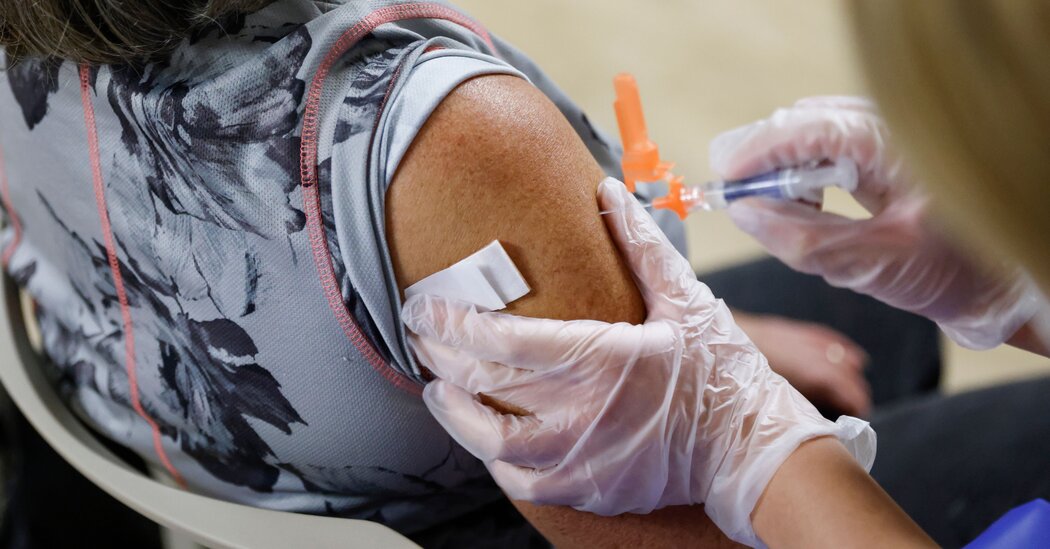
Fiebre, escalofríos y fatiga pueden ser signos de una producción vigorosa de anticuerpos, según un nuevo estudio.Un nuevo estudio ofrece un mensaje alentador para los estadounidenses que evaden las vacunas contra la covid porque les preocupan los efectos secundarios: los escalofríos, la fatiga, el dolor de cabeza y el malestar general que pueden presentarse tras la vacunación quizás sean señales de una respuesta inmunitaria robusta.Según la nueva investigación, las personas que presentaron esos efectos secundarios después de la segunda dosis de la vacuna tenían más anticuerpos contra el coronavirus al mes y seis meses después de la aplicación, en comparación con quienes no tuvieron ningún síntoma. El aumento de la temperatura de la piel y de la frecuencia cardiaca también indicaban niveles más elevados de anticuerpos.“Sabemos que la aceptación de la vacuna puede ser compleja y, en algunos casos, esto puede deberse a que algunas personas experimentan reacciones fuertes”, señaló Aric Prather, un psicólogo clínico de la Universidad de California, campus San Francisco (UCSF, por su sigla en inglés), quien lideró el estudio.“Yo espero que esto en verdad ayude a disipar algunas de esas preocupaciones”, comentó Prather, quien estudia la manera en que los factores del comportamiento afectan el sistema inmunitario. “De hecho, es posible que esos síntomas, aunque desagradables, estén trabajando a nuestro favor”.El estudio se publicó en internet la semana pasada. No ha sido revisado para su publicación en alguna revista científica, pero varios especialistas comentaron que estaba bien hecho y que sus resultados coincidían con los de otras investigaciones.De acuerdo con los especialistas, el aumento relativo de los niveles de anticuerpos entre quienes experimentaron efectos secundarios fue reducido y esto no significa que las personas que no tuvieron síntomas no cuenten con una respuesta inmunitaria robusta.“La ausencia de efectos secundarios no debería tomarse como una señal de que la vacuna no está funcionando”, explicó Alessandro Sette, codirector del Centro para la Innovación de las Vacunas del Instituto de Inmunología de La Jolla, quien no participó en la investigación.Una investigación previa reveló que el 98 por ciento de las personas que no sintieron efectos adversos igual producían grandes cantidades de anticuerpos, en comparación con el 99 por ciento que tuvo síntomas localizados o agravados, señaló Sette.Sin embargo, los nuevos resultados indican que es probable que las personas que se sienten pésimo después de recibir la vacuna estén bien protegidas del virus. “Si te sientes fatal, lo más seguro es que estés desarrollando una respuesta inmunitaria bastante buena”, afirmó Deepta Bhattacharya, un inmunólogo de la Universidad de Arizona que no participó en el nuevo estudio.En una investigación publicada el año pasado, Bhattacharya y sus colegas estudiaron la respuesta a la vacuna de 2354 personas, un grupo en el que casi la mitad tomó un analgésico para aliviar los efectos secundarios de la misma.Se vio en ratones que los medicamentos no esteroideos y antiinflamatorios, como la aspirina y el ibuprofeno, afectaban mucho la respuesta inmunitaria al coronavirus. Pero el equipo de Bhattacharya descubrió que, en las personas, estos medicamentos no desactivaban la respuesta inmunitaria a las vacunas contra la covid.Además, quienes tomaron algún analgésico al parecer tenían más anticuerpos que quienes toleraron los síntomas sin ningún medicamento. La explicación más factible de esto no es que los analgésicos aumenten los niveles de anticuerpos, añadió Bhattacharya.“Más bien es que las personas que presentan síntomas casi siempre tienen una respuesta de anticuerpos un poco mayor que las que no y claro que es más probable que la gente con síntomas tome analgésicos”, aseveró.Otros estudios también revelaron que las personas que reportaron efectos secundarios como fiebre, escalofríos, dolores corporales y fatiga, entre otros, tuvieron un poco más de anticuerpos que quienes no presentaron síntomas.En el nuevo estudio, Prather y sus colegas monitorearon los niveles de anticuerpos a lo largo del tiempo. Cuando, en diciembre de 2020, se empezaron a aplicar las vacunas, los investigadores se apresuraron a reclutar a los participantes en el estudio mediante anuncios en los diarios, la televisión y las redes sociales.En ese momento, una buena parte de la UCSF seguía cerrada, así que utilizaron un taller de pilates ubicado en el gimnasio de la universidad, sacaron los aparatos y trajeron flebotomistas para que extrajeran la sangre de los participantes. Los investigadores excluyeron a todos los que tenían evidencias de alguna infección con coronavirus antes o durante el estudio.“Sabíamos que teníamos este lapso limitado de tiempo en el que la gente iba corriendo a vacunarse”, señaló Prather. “Fue una temporada muy intensa, pero teníamos que hacer lo que teníamos que hacer”.El equipo monitoreó los síntomas de 363 participantes que recibieron la vacuna contra el coronavirus de Pfizer-BioNTech o Moderna durante seis días después de cada dosis y a algunos participantes les dieron dispositivos biométricos para registrar la temperatura, la respiración y la frecuencia cardiaca.Los investigadores descubrieron que quienes tuvieron siete efectos secundarios inconfundibles —como escalofrío, cansancio, malestar general y dolor de cabeza— produjeron casi el doble de anticuerpos que quienes no reportaron síntomas. Además, un cambio en la temperatura corporal de solo un grado Celsius anticipaba niveles de anticuerpos tres veces más elevados a los seis meses de la segunda dosis.El estudio midió el nivel de protección contra la variante de Wuhan, la versión original del coronavirus. Según Prather, sería difícil realizar esta investigación ahora porque las personas ya han tenido varias infecciones o vacunas que afectarían su respuesta inmunitaria.Las vacunas actuales contra la covid están diseñadas para ofrecer protección para la subvariante XBB.1.5 de ómicron, pero los resultados deberían ser válidos para todas las versiones de la vacuna, afirman los especialistas.Este otoño, la puesta en marcha de la vacunación en Estados Unidos ha sido accidentada porque han cancelado citas y ha habido confusión acerca de la cobertura de las aseguradoras. Pero, de acuerdo con el Departamento de Salud y Servicios Humanos, cerca de cuatro millones de estadounidenses recibieron la vacuna el mes pasado.Apoorva Mandavilli es reportera del Times y se enfoca en ciencia y salud global. Formó parte del equipo que ganó el Premio Pulitzer de Servicio Público de 2021 por la cobertura de la pandemia. Más de Apoorva Mandavilli

Read more →

What Is a Fever? Why Your Body Temperature May Be Cooler Than 98.6 Degrees

Here’s why we appear to be getting cooler, and what that could mean when it comes to fevers.Over the past few decades, evidence has been mounting that the average human body temperature is not really 98.6 degrees Fahrenheit. Instead, most people’s baseline is a little bit cooler.The standard of 98.6 was established over 150 years ago by the German physician Dr. Carl Wunderlich, who reportedly took over a million measurements from 25,000 people. Temperatures ranged from 97.2 to 99.5, and the average was 98.6. Dr. Wunderlich also established 100.4 degrees as “probably febrile.”However, a study published in September that evaluated the temperatures of more than 126,000 people between 2008 and 2017 found that the average is closer to 97.9 degrees. Other modern-day studies have reported similar numbers.Experts who study body temperature have differing opinions about why we appear to have gotten cooler over time, and whether that matters when it comes to evaluating fevers and diagnosing infections.Why 98.6 is off baseSome researchers say it could just be a measurement issue — Dr. Wunderlich might have assessed temperatures using different methods and standards than we do today. One account reports that he used a foot-long thermometer that went into a person’s armpit.Many factors can influence a body temperature reading, the most significant being where you take it: Rectal temperatures are reliably higher than oral temperatures, which are reliably higher than readings taken from the skin. Body temperature is also influenced by the time of day, whether it’s hot or cold outside and even whether the person just had something to eat or drink. Readings can also vary from thermometer to thermometer, depending on how they are calibrated.Comparing historical and modern-day data gives you “a hodgepodge mixture of observations,” said Dr. Philip Mackowiak, an emeritus professor of medicine at the University of Maryland School of Medicine, who, in a 1992 paper, was one of the first researchers to scrutinize Dr. Wunderlich’s conclusions. The drop in temperature may be “a true phenomenon,” he added, “but there’s no way of knowing because the data are so varied.”Other experts think humans really have gotten cooler over the past 150 years. Our temperatures may have declined because “we are so lucky to be healthier than we used to be,” said Dr. Julie Parsonnet, a professor of medicine and of epidemiology and population health at Stanford Medicine, who led the September study on body temperature.For instance, it could be that many people in Dr. Wunderlich’s sample had slightly elevated temperatures from low-grade inflammation. Better treatment of infections, improved dental care and the development and use of medications like statins and nonsteroidal anti-inflammatory drugs may all have contributed to a decline in inflammation since the 19th century, which in turn lowered people’s average temperature, Dr. Parsonnet said.Regardless of the reason for the shift, the experts interviewed for this article agreed that 98.6 degrees should no longer be considered the universal human standard. But instead of shifting the average temperature down a degree or so, it should be given as a range, said Dr. Waleed Javaid, a professor of medicine at the Icahn School of Medicine at Mount Sinai, who published a 2019 review paper on body temperature.A range would account for the natural variability in temperature that occurs across gender and age — women tend to run slightly warmer than men, and older adults run cooler than younger people. Additionally, everyone’s body temperature fluctuates throughout the day — it is typically lowest in the morning and highest in the late afternoon.“Like there’s a range for heart rate, there’s a range for blood pressure,” temperature also has a range, Dr. Javaid said.What counts as a feverIf we redefine “normal” human body temperature, then what registers as abnormal?The Centers for Disease Control and Prevention says that temperatures of 100.4 and above qualify as a fever — a roughly two-degree increase from 98.6. But if the average human temperature is lower, it’s possible that the temperature indicating a fever could be lower, as well.Dr. Parsonnet would like to see a personalized approach to fever, where doctors compare each patient against their own baseline so that low-grade fevers aren’t missed in people who run cooler. The mission is somewhat personal for her: Dr. Parsonnet’s mother-in-law has a heart infection that went undiagnosed for months because she never registered as being feverish. Her temperature was around 98.6, but, Dr. Parsonnet said, that “was not normal for her, for her age.”To Dr. Mackowiak, this individualized approach would be ideal, but it’s unrealistic given the time constraints doctors and nurses are already under.He and Dr. Javaid are also not as concerned about the possibility of low-grade fevers being missed because of the current temperature standards. Instead of changing the definition of a fever, they said the solution may be to place less of an emphasis on fever overall, and to think of it as one sign among many — something that many doctors already do. (This advice applies to parents, as well as physicians.)If a temperature is sky-high, that’s important information, Dr. Javaid said, but “the temperature is not the only thing one should look at.”

Read more →

A better 'map' of the lights you see when you close your eyes can improve 'bionic eye' outcomes

Researchers at Monash University have identified a new way of mapping ‘phosphenes’ — the visual perception of the bright flashes we see when no light is entering the eye — to improve the outcome of surgery for patients receiving a cortical visual prosthesis (‘bionic eye’).
Cortical visual prostheses are devices implanted onto the brain with the aim of restoring sight by directly stimulating the area responsible for vision, the visual cortex, bypassing damage to the retina of the eye or the optic nerve.
A typical prosthesis consists of an array of fine electrodes, each of which is designed to trigger a phosphene. Given the limited number of electrodes, understanding how electrodes can best be placed to generate useful perceived images becomes critical.
As part of this researchers from the Department of Electrical and Computer Systems Engineering at Monash University, led by Associate Professor Yan Tat Wong, are honing in on the ideal distribution of phosphenes.
“Phosphenes are likely to be distributed unevenly in an individual’s visual field, and differences in the surface of the brain also affect how surgeons place implants, which together result in a phosphene map unique to each patient,” Associate Professor Wong said.
Published in the Journal of Neural Engineering, ‘A novel simulation paradigm utilising MRI-derived phosphene maps for cortical prosthetic vision’ presents a more realistic simulation for cortical prosthetic vision.
The study used a retinotopy dataset based on magnetic resonance imaging (MRI) scans, consulting with a neurosurgeon about realistic electrode implantation sites in different individuals, and applying a clustering algorithm to determine the most suitable regions to present stimuli.

Read more →

'It's never too late for ADHD diagnosis,” says retired GP

Published2 hours agoShareclose panelShare pageCopy linkAbout sharingImage source, Dr David SmartBy Zoe Applegate & Patrycja Boryka BBC News, NorthamptonshireA former GP has told of his surprise at being diagnosed with ADHD at the age of 62 after the freedom of retirement left him flailing in everyday life.Dr David Smart worked as a GP for 30 years in Northampton and specialised in mental health.ADHD – which stands for “attention deficit hyperactivity disorder” – is a condition that affects behaviour.”I realised the days I wasn’t a GP were much harder than when I was a GP,” said Dr Smart.The disorder is traditionally associated with children and includes symptoms such as restlessness and difficulty concentrating.A short attention span, constant fidgeting and acting without thinking are also seen in the condition.LISTEN: BBC Radio Northampton’s ADHD seriesDr Smart retired from Leicester Terrace Health Care Centre in December 2020 after a rewarding career, but soon found he was struggling without the parameters of a busy work routine.”Being a GP, your life is structured – every 10 minutes you know exactly what you’re going to be doing,” he said.”Out of that into retirement, then ‘whoa, hang on a sec! – and that’s a real paradox, because being a GP is hard work.”Seven-fold increase in adult ADHD prescriptions I don’t have ADHD, but three private clinics say I doWhy women may wait decades for an ADHD diagnosisHe said the realisation he was experiencing problems coping with everyday life, despite his high standards, came after a period of reflection.Dr Smart noticed difficulties in his relationships, while his ability to function and complete important tasks was affected too. A lack of sleep, due to his tendency to over-think, was also causing issues, he said. “I was just so busy trying to practise and cope as a GP – I didn’t realise part of [it] was me coping with the stress of coping with ADHD,” said Dr Smart.”I’m quieter now in retirement yet I’m still trying to cope with life and I’m thinking, ‘That’s not quite normal’.”For me it has been a real surprise. I’ve been a GP for thirty years – and not only that – I’ve been a GP with a special interest in mental health.” Dr Smart said he felt the condition had been easy to miss and could also be confused with mood disorders such as anxiety and depression.ADHD can often be treated with medicines and talking therapies.The cause is not clear, but the condition tends to run in families.’Life is different’Dr Smart said it had now become clear how much he had relied on sport and exercise throughout his life to manage his ADHD.Although he was diagnosed four months ago, he has just started taking medication.”Now I am on treatment my life is incredibly different: I can focus, be present and get things done,” he said.”I think it’s never too late – a diagnosis gives you a frame to do something about it.”Once you can name a condition you can have more control over it.”Follow East of England news on Facebook, Instagram and X. Got a story? Email eastofenglandnews@bbc.co.uk or WhatsApp us on 0800 169 1830More on this storySeven-fold increase in adult ADHD prescriptionsPublished28 AugustCat Burns on autism, ADHD and a lack of researchPublished13 JulyThe good and bad of ADHD content on TikTokPublished3 MayThe video game prescribed by doctors to treat ADHDPublished11 July 2022Around the BBCBBC Bitesize: Jacques O’Neill- ADHD and meRelated Internet LinksNHS: Attention deficit hyperactivity disorderFacebook: Action for Happiness – NorthantsThe BBC is not responsible for the content of external sites.

Read more →