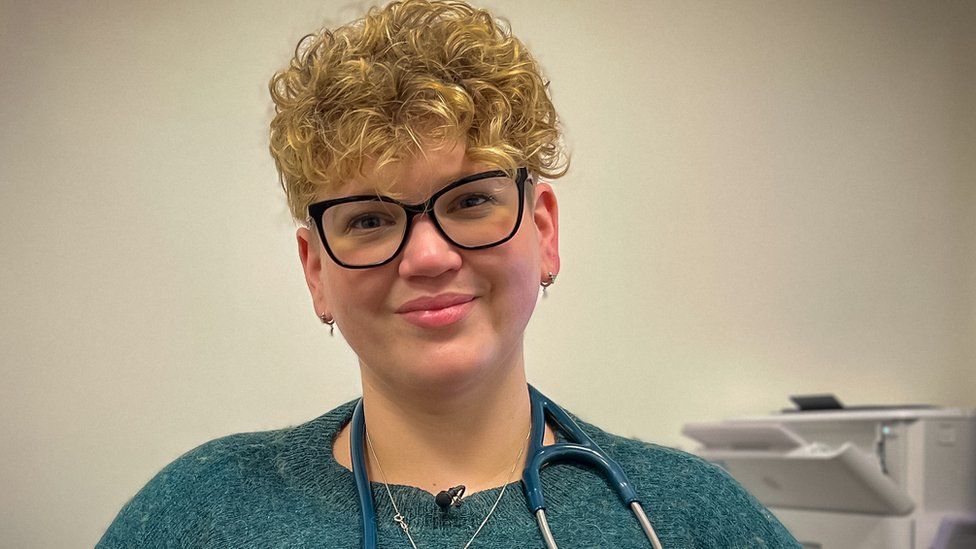
Common drug can improve hand osteoarthritis symptoms

Relief could be on the way for people with painful hand osteoarthritis after a Monash University and Alfred Health-led study found an affordable existing drug can help. Until now there has been no effective treatment.
Published in The Lancet, the paper investigated methotrexate, a low-cost, effective treatment for inflammatory joint conditions such as rheumatoid arthritis and psoriatic arthritis. It has been widely used in Australia and globally since the early 1980s.
Researchers found that methotrexate reduced symptoms in those with hand osteoarthritis (OA). A 20mg weekly oral dose over six months had a moderate effect in reducing pain and stiffness in patients with symptomatic hand OA.
Hand OA is a disabling condition that causes pain and affects function, impeding daily activities such as dressing and eating. It can significantly reduce quality of life. About one in two women and one in four men will experience symptoms from hand OA by the time they turn 85.
About half will have inflamed joints, which cause pain and are associated with significant joint damage. Despite the high prevalence and disease burden, there are no effective medications.
Senior author Professor Flavia Cicuttini, who heads Monash University’s Musculoskeletal Unit and is The Alfred’s Head of Rheumatology, said the study identified the role of inflammation in hand OA and the potential benefit of targeting patients who experience painful hand OA.
“In our study, as with most studies of osteoarthritis, both the placebo group and methotrexate groups’ pain improved in the first month or so,” Professor Cicuttini said.

Read more →

Most accurate test to date developed to measure biological aging

A team of European researchers has developed a new test that can accurately measure biological aging in a clinical setting. The discovery was made while studying patients for the aging effects of chronic kidney disease.
The new test is an epigenetic clock — a type of biochemical assessment that looks at DNA to understand how well the body is aging in contrast to its chronological age — and is the first of these cutting-edge tests to be proven to perform accurately in a clinical setting, in both healthy and unhealthy tissue.
The work was led by a partnership between the University of Glasgow and the Karolinska Institutet, Stockholm, and is published in the Journal of Internal Medicine as part of a study into the aging effects of chronic kidney disease and its associated treatments.
The research team studied more than 400 patients with chronic kidney disease in Sweden alongside around 100 matched population controls, to better understand the impact on ageing of the disease, including during dialysis treatment and after kidney transplant. To do this, researchers used a range of tests including blood biomarkers, skin autofluorescence and epigenetic clocks. The team used the clocks to measure the change in biological age of around 47 patients one year after kidney transplantation, or one year after the start of their dialysis treatment, as well as how the healthy tissue in 48 controls aged by comparison.
The results showed that for patients with chronic kidney disease, their biological clock is ticking faster than the average person’s. This continues to be the case even after dialysis treatment. Indeed, patients’ biological clocks were only shown to slow down following a kidney transplant.
However, while the epigenetic clocks all showed a similar picture, the research team found that none of the current clocks could be shown to be accurate in a clinical setting, and all were found to be inaccurate to differing degrees when tested in healthy tissue over time.
To address this, the team developed a new, more accurate epigenetic clock — the Glasgow-Karolinska Clock — that works on healthy and unhealthy tissue. The results from this new clock matched what doctors saw in patients with chronic kidney disease, and also appeared to accurately assess healthy tissue too. This study is the first real-world test of epigenetic clocks in a normal ageing setting, and against clinical parameters.

Read more →

Novel catalyst for green production of fine chemicals and pharmaceuticals

A team of researchers from the National University of Singapore (NUS) led by Associate Professor Lu Jiong from the Department of Chemistry under the NUS Faculty of Science, together with their international collaborators, have developed a new class of catalysts — known as heterogeneous geminal atom catalysts (GACs) — that promotes greener and more sustainable manufacturing processes for fine chemicals and pharmaceuticals.
Fine chemical and pharmaceutical manufacturing are major sources of air pollution, with recent studies showing the carbon footprint of the pharmaceutical industry to be heavier than the automotive industry. Beyond greenhouse gas emissions, the pharmaceutical industry is also responsible for other serious environmental impacts, such as water pollution from wastewater released by manufacturers.
“Developing alternative catalytic systems capable of achieving atomic-level precision while ensuring recoverability is at the forefront of our mission to revolutionise sustainable manufacturing processes for fine chemicals and pharmaceuticals. This ground-breaking achievement is the outcome of a close collaboration between several institutions,” said Assoc Prof Lu.
The study was a collaboration involving Associate Professor Koh Ming Joo and Assistant Professor Zhu Ye from the Department of Chemistry under the NUS Faculty of Science, Professor Li Jun from Tsinghua University in China, Professor Javier Pérez-Ramírez from ETH Zurich in Switzerland and Dr Xi Shibo from the Agency for Science, Technology and Research (A*STAR) in Singapore.
The research breakthrough was published in the scientific journal Nature on 20 September 2023.
Developing a new class of catalyst
The synthesis of organic compounds requires a series of steps known as transition metal-catalysed coupling reactions. These chemical reactions are indispensable for forming essential chemical bonds during the synthesis of a chemical compound. However, catalysts that are currently used in these reactions pose a number of challenges, such as high production cost, difficulty in catalyst separation for recovery and reuse, and metal contamination which is harmful to the environment. The structural architecture of current catalysts also limits their capacity to carry out complex reactions.

Read more →

Immune system aging can be revealed by CT scan

Thymus, a small and relatively unknown organ, may play a bigger role in the immune system of adults than was previously believed. With age, the glandular tissue in the thymus is replaced by fat, but, according to a new study from Linköping University (LiU) in Sweden, the rate at which this happens is linked to sex, age and lifestyle factors. These findings also indicate that the appearance of the thymus reflects the ageing of the immune system.
“We doctors can assess the appearance of the thymus from largely all chest CT scans, but we tend to not see this as very important. But now it turns out that the appearance of the thymus can actually provide a lot of valuable information that we could benefit from and learn more about,” says Mårten Sandstedt, MD, PhD, at the Department of Radiology in Linköping and Department of Health, Medicine and Caring Sciences, Faculty of Medicine and Health Sciences, Linköping University.
The thymus is a gland located in the upper part of the chest. It has been long known that this small organ is important for immune defence development in children. After puberty, the thymus decreases in size and is eventually replaced by fat, in a process known as fatty degeneration. This has been taken to mean that it loses its function, which is why the thymus has for a long time been considered as being not important in adult life. This view has however been challenged in some minor research studies, mainly on animals, that indicate that having an active thymus as an adult may be an advantage and could provide increased resilience against infectious disease and cancer. Only very few studies so far have examined the thymus in adults.
In the present study, published in Immunity & Ageing, the researchers have examined thymus appearance in chest CT scans of more than 1,000 Swedish individuals aged 50 to 64, who participated in the large SCAPIS study (Swedish cardiopulmonary bioimage study). SCAPIS includes both extensive imaging and comprehensive health assessments including lifestyle factors, such as dietary habits and physical activity. In their sub-study of SCAPIS, the researchers also analysed immune cells in the blood.
“We saw a huge variation in thymus appearance. Six out of ten participants had complete fatty degeneration of thymus, which was much more common in men than in women, and in people with abdominal obesity. Lifestyle also mattered. Low intake of fibres in particular was associated with fatty degeneration of thymus,” says Mårten Sandstedt.
The Linköping researchers study provides new knowledge by associating thymus appearance with lifestyle and health factors, and the immune system. In the development of the immune system, the thymus acts like a school for a type of immune cells known as T-cells (where the T stands for “thymus”). This is where the T-cells learn to recognise bacteria, viruses and other things that are alien to the body. They also learn to be tolerant and not attack anything that is part of the person’s own body, which could otherwise lead to various autoimmune diseases.
In their study, the LiU researchers saw that individuals with fatty degeneration of the thymus showed lower T-cell regeneration.
“This association with T-cell regeneration is interesting. It indicates that what we see in CT scans is not only an image, it actually also reflects the functionality of the thymus. You can’t do anything about your age and your sex, but lifestyle-related factors can be influenced. It might be possible to influence immune system ageing,” says Lena Jonasson, professor at the Department of Cardiology in Linköping and Department of Health, Medicine and Caring Sciences, Faculty of Medicine and Health Sciences, Linköping University.
But more research is needed before it will be possible to know whether thymus appearance, and thereby immune defence ageing, will have any implications for our health. The researchers are now moving on to follow-up studies of the thymus of all 5,000 participants in SCAPIS Linköping to see whether CT scan thymus images can provide information on future risk of disease.
This research was funded by the Heart-Lung Foundation, the Swedish Research Council, the Swedish Grandlodge of Freemasonry, and Region Östergötland and Linköping University through ALF Grants. Mårten Sandstedt is also affiliated with the Center for Medical Image Science and Visualization, CMIV, in Linköping.

Read more →

Cleaner snow boosts future snowpack predictions

Less pollution settling into snow should help cut the decline of snowpack in the Northern Hemisphere later this century. Though the snowpack will still diminish due to rising temperatures, the outlook is less dire when the cleaner snow of the future is considered.
In some scenarios, the researchers predict that the reduction in snowpack will be less than half what has been predicted — good news for the many people who rely on subsequent snowmelt in high mountains for water and food production, as well as for those who depend on winter recreation.
The findings come from scientists at the Department of Energy’s Pacific Northwest National Laboratory who weighed several factors that affect snowpack. These include warming temperatures, pollution, dust and even the shape of snow grains as they pack together on the ground.
The findings were published October 2 in Nature Communications.
Clean snow vs. dirty snow
“Snow is not just snow,” said Dalei Hao, first and corresponding author of the study. “There’s clean snow and there’s dirty snow, and how they respond to sunlight is very different. And then there are the shapes of the snow grains, which are anything but uniform. These all affect the snowpack.”
Of course, the warmer it is, the more snow melts. That’s why the coming decades spell bad news for mountain snowpacks and the people who rely on them. Researchers estimate that 2 billion people rely on spring and summer snowmelt in the mountains to provide fresh water for drinking and food production. If mountain snow melts faster or earlier than usual, that spells trouble — swollen rivers and flooding in the spring, then parched crops and wells in late summer.

Read more →

Kaiser Permanente Reaches Tentative Deal With Health Care Workers

The proposed settlement follows a three-day strike involving thousands of unionized workers in several states.Kaiser Permanente reached a tentative deal with more than 75,000 of its health care workers on Friday, one week after a three-day walkout that disrupted appointments and services at many hospitals and clinics, according to an announcement by union officials.The labor dispute was the latest in a series between health care organizations and their employees, many of whom reported feeling exhausted and frustrated by severe staffing shortages after the pandemic.“The frontline health care workers of the Coalition of Kaiser Permanente Unions are excited to have reached a tentative agreement with Kaiser Permanente. We are thankful for the instrumental support of acting U.S. Labor Secretary Julie Su,” union officials announced on X, the site formerly known as Twitter.Kaiser Permanente officials did not immediately respond to a request for comment.More details were expected later on Friday. The deal was earlier reported by The Wall Street Journal.Kaiser Permanente health plans cover 13 million people in eight states through its own network of hospitals and doctors.A week ago, various low-wage workers took part in a 72-hour strike. The employees included medical assistants, laboratory technicians, receptionists and sanitation staff members who formed picket lines around dozens of Kaiser buildings, waving signs that demanded, “Kaiser: Put Patients First” and “Respect And Value Healthcare Workers.”The work stoppage forced Kaiser to move many appointments online and to postpone procedures that weren’t considered urgent, like colonoscopies or mammograms. The company brought contingency workers into hospitals and urgency care centers, but more than 50 labs in Southern California were shut down, and dozens of other facilities throughout the West Coast either closed or limited their hours. Union leaders called it the largest strike by health care workers in recent U.S. history.Kaiser’s stalemate drew the attention of Ms. Su, the Biden administration’s acting secretary of labor, who traveled to San Francisco to meet with officials from both sides of the negotiations, aiming to help broker a deal. Still, the parties did not return to the negotiation table for over a week after the strike began and talks broke off; the labor coalition threatened another walkout — this one to last a full week — in early November if the two sides could not settle a contract beforehand.Kaiser’s new deal comes at pivotal moment in the health labor market, after a significant exodus of staff members throughout the industry has left the supply of workers far below the demand. The dynamic has created a sense of urgency for both sides: Workers trying to treat patients amid staffing shortages report record levels of burnout, while their employers are under pressure to preserve their workforces and offer packages that attract new workers.Analysts say the situation has most likely provided union workers with leverage to get more at the table, and many are seizing the opportunity. More than a dozen health worker strikes have taken place this year in New York City, California, Illinois, Michigan and elsewhere.About 1,500 health workers began a five-day strike against Prime’s St. Francis Medical Center in Lynwood, Calif., on Oct. 9, citing dangerous short-staffing practices. Pharmacy staff workers at some Walgreens stores in Oregon, Washington, Arizona and Massachusetts walked out on the same day, citing workloads so excessive that they could not safely fill prescriptions. Without a formal union, they organized on Facebook and Reddit.The New York State Nurses Association entered a new contract with Mount Sinai Hospital, which includes an enforcement mechanism for nurse-patient staffing ratios.But companies like Kaiser are under pressure to limit their expenses, and the organization emphasizes that it needs to make sure its care is affordable. The organization, which had operating revenue of $95.4 billion, reported an operating loss of $1.3 billion in 2022. In recent months, Kaiser has returned to profitability.

Read more →

Wheelchairs and weight: 'I haven't been able to weigh myself for 22 years'

Published15 minutes agoShareclose panelShare pageCopy linkAbout sharingBy Beth RoseBBC Access AllWeight management is a sensitive topic. Nevertheless, the measurement is often used as a marker to inform medical decisions or for someone’s personal interest. But for many wheelchair users, accessing scales has proved near impossible. “The last time I was weighed was about 22 years ago, ” Lizzie tells the BBC podcast, Access All. “I think I was about 15.”As a result, now aged 37, Lizzie has been through three successful pregnancies, all without knowing how her body was adapting or how her baby was growing.Based in Devon, she has a degenerative muscle-related impairment and uses a wheelchair. This makes weighing herself on traditional bathroom scales, which require you to stand still and independently on a small platform, a challenge – although she has given it a go.It involves “sitting down really quickly, lifting my feet up, which is like a ridiculous yoga pose, and trying to balance,” Lizzie says. Unsurprisingly, the reading is never accurate.LISTEN: You can hear more from Lizzie, Dr Georgie Budd and Gillian on the latest episode of Access All. There is equipment out there to help wheelchair users, like Lizzie. Chair scales enable someone to sit on a seat which records their weight and there are similar bed and hoist versions too. There are also wheel-on scales which are very large and involve subtracting the weight of the chair afterwards.But none of these seem widely available. It’s not just in medical settings. Over the past 13 years and after serving 100,000 customers, Ability Superstore, which calls itself the “home of mobility aids” in the UK, said it had never been asked for accessible scales. It believes that comes down to cost – with accessible versions often retailing for hundreds of pounds. Comparatively, your average, everyday scales, can be bought for as little as £9.99.It means many disabled people are going without this benchmark a lot of the population take for granted.Dr Georgie Budd, who is based in Merthyr Tydfil, says this worries her. A wheelchair user herself she appreciates how difficult it can be for people to access scales. “There’s a lot of things that we use weight for in health – anaesthetics and drug dosing – and just to keep an eye on it as well for someone’s general health. During pregnancy for example, if someone was losing weight I, as a GP, would actually be really quite concerned,” she says.Although people can keep across their weight by feeling how their clothes fit, Georgie says this can be inaccurate, especially when clothes are rarely tailored with wheelchair users in mind.But Dr Georgie says weight management can be crucial, especially for those who use wheelchairs.”You’re not using your big leg muscles anymore so you’re not burning as many calories and access to actually exercising as a disabled person is less than I would like it to be.”She says another key factor that is lost due to inaccessibility is motivation. Gillian Morphy knows about that. She had her right leg amputated a year ago due to dystonia, which causes uncontrolled and sometimes painful muscle movements. She is trying to lose weight, but was last weighed at her local amputee clinic six months ago.”Every [medical] appointment you go to you’re told ‘you’ve got to lose weight’. But we’re not helped, nobody’s telling me how,” she says.Gillian says losing weight has become even more important to her since the amputation. “I don’t want to be putting so much weight through my left leg because I don’t want to cause any problems there.”She says she would like to be weighed weekly to “know which direction I’m heading in”. Image source, GillianGillian can get weighed at the amputee clinic, but it’s not somewhere she can just drop into plus she relies on patient transport which can involve a lot of waiting around. “For two minutes on the scales, that could take me six hours,” she says. More generally, there seems to be little information out there on how Gillian, Lizzie and their medical teams can measure weight and access scales. Neither NHS England nor the government have guidance for doctors nor advice on what equipment to use and no figures are kept on how many hospitals have access to such equipment and where they are.The National Institute for Health and Care Excellence (NICE) previously considered the issue in 2014 and requested more research be carried out. But so far nothing has been started. Lizzie’s healthcare trust – Devon Integrated Care Board, which covers Devon, Torbay and Plymouth – says it does have equipment which enables weight to be measured “safely and with dignity”. But Lizzie is yet to have been offered the use of it.Gillian wonders if more simple solutions could be found, such as doctor surgeries clubbing together to buy accessible scales for the local area. Her next appointment at the amputee clinic is fast approaching and, unlike many people, she’s looking forward to getting on the scales and seeing what progress she has made with losing weight. “After that it won’t be until Christmas that I get weighed, and then it could be another six months.”You can listen to the podcast and find information and support on the BBC Access All page. If you’ve got a story get in touch with Beth by emailing bethany.rose@bbc.co.uk.

Read more →

Americans will spend half their lives taking prescription drugs, study finds

An American born in 2019 will spend a larger share of their lifetime taking prescription drugs than being married or receiving an education, according to new research by Jessica Ho, associate professor of sociology and demography at Penn State. She found that American males will spend approximately 48% of their lives taking prescription drugs. The number jumped to 60% for females.
Ho reported her findings this week (Oct. 1) in the journal Demography.
“As an American, I’d like to know what medications I’m putting in my body and how long I can expect to take them,” said Ho, who is also an associate of Penn State’s Social Science Research Institute. “The years that people can expect to spend taking prescription drugs are now higher than they might spend in their first marriage, getting an education or being in the labor force. It’s important to recognize the central role that prescription drug use has taken on in our lives.”
Ho used nationally representative surveys conducted by Agency for Healthcare Research and Quality (AHRQ) and the Centers for Disease Control and Prevention (CDC) from 1996 through 2019 to study prescription drug use across the United States. The surveys include information from approximately 15,000 households chosen annually and collect information every five months, offering better recall than surveys taken once a year. In addition, nearly 70% of survey respondents allow the AHRQ and CDC to verify their prescriptions with their pharmacies, affording the surveys higher levels of accuracy.
The researcher then used mortality data from the National Center for Health Statistics and the Human Mortality Database to estimate how long Americans born in 2019 could expect to live. She then combined this information with the survey data to estimate the percent of their lifetimes they could expect to spend taking prescription medications.
She found that the majority of American men are taking prescription drugs by age 40, while most American women are taking prescription drugs by age 15. On average, a newborn boy in 2019 could expect to take prescription drugs for approximately 37 years, or 48% of his life. A newborn girl in 2019 could expect to take them for approximately 47.5 years, or 60% of her life.
“We see that women start taking prescription drugs earlier than men do, and some of that is related to birth control and hormonal contraceptives,” Ho said. “But it is also related to greater use of psychotherapeutic drugs and painkillers among women. If we consider the difference between men and women, excluding contraceptives would only account for about a third of the difference. The remaining two-thirds is primarily driven by the use of other hormone-related drugs, painkillers and psychotherapeutic drugs used to treat conditions such as depression, anxiety and ADHD.”
Men, on the other hand, tend to take more statins and other medications to treat cardiovascular disease, explained Ho. But statin use varies across race and ethnicity, she said.

Read more →

New catalyst could provide liquid hydrogen fuel of the future

Researchers at Lund University in Sweden are investigating a car fuel comprised of a liquid that is converted to hydrogen by a solid catalyst. The used liquid is then emptied from the tank and charged with hydrogen, after which it can be used again in a circular system that is free from greenhouse gas emissions.
In two research articles, Lund researchers have demonstrated that the method works, and while it is still basic research, it has the potential to become an efficient energy-storage system in the future.
“Our catalyst is one of the most efficient around, at least if you look at publicly available research,” says Ola Wendt, professor at the Department of Chemistry at Lund University, and one of the authors.
Finding alternative ways of producing, storing and transforming energy in order to reduce carbon dioxide emissions from fossil fuels is necessary to reduce the impact on the climate. One way involves much-talked-about hydrogen gas, which many see as a future solution for energy storage. Nature stores energy in chemical bonds, and hydrogen contains the highest energy density in relation to its weight.
“However, gas can be difficult to handle, so we are looking at liquid fuel charged with hydrogen that can be delivered at a pump, in a way broadly similar to what happens at petrol stations today,” says Ola Wendt.
The concept is known as LOHC (liquid organic hydrogen carriers) and is not new as such. The challenge is in finding as efficient a catalyst as possible, that can extract the hydrogen from the liquid.
The system is intended to work using a liquid that is “charged” with hydrogen. The liquid is pumped through a solid catalyst which extracts the hydrogen. This can be used in a fuel cell — which converts chemical fuel to electricity — while the “spent” liquid carries on to another tank. The only emission is water.

Read more →

No universal body image experience in pregnancy

A new study has discovered large variations in how pregnancy can affect women’s perceptions of their own body, including experiences of negative body image.
Negative body image during pregnancy is known to have serious adverse effects on both the mother and baby. Overall, average levels of body image dissatisfaction were found to be similar for pregnant women compared to the general female population, but the research discovered large differences — both positive and negative — on an individual basis.
The study, published in the journal BMC Pregnancy and Childbirth, is thought to be the first meta-analysis comparing the two groups of women, and was led by academics from Anglia Ruskin University (ARU) and the University of York.
The researchers initially screened 2,017 separate academic studies, before focusing on 17 studies that provided comparable data. In total, the research included 5,200 responses from women who were pregnant and 4,172 responses from women who were not pregnant.
By synthesising results from multiple studies, the new research found women’s body image dissatisfaction overall was not statistically different during pregnancy compared with when not pregnant. However, when looking at the separate studies that formed part of the meta-analysis, there are significant variations on an individual level.
The researchers believe that body image dissatisfaction in pregnancy is made up of a combination of complex factors related to the experiences of each woman — some positive, some negative.
For some women, body image satisfaction will worsen during pregnancy because of “feeling fat,” while others describe feeling that their body is out of their control because they are aware their body will change but cannot stop it. Unrealistic portrayals of pregnant women in the media, often edited to remove uneven skin tone and stretch marks, are also believed to contribute to body image dissatisfaction.

Read more →