Is Social Media Addictive? Here’s What the Science Says.

A major lawsuit against Meta has placed a spotlight on our fraught relationship with online social information.A group of 41 states and the District of Columbia filed suit on Tuesday against Meta, the parent company of Facebook, Instagram, WhatsApp and Messenger, contending that the company knowingly used features on its platforms to cause children to use them compulsively, even as the company said that its social media sites were safe for young people.“Meta has harnessed powerful and unprecedented technologies to entice, engage and ultimately ensnare youth and teens,” the states said in their lawsuit filed in federal court. “Its motive is profit.”The accusations in the lawsuit raise a deeper question about behavior: Are young people becoming addicted to social media and the internet? Here’s what the research has found.What Makes Social Media So Compelling?Experts who study internet use say that the magnetic allure of social media arises from the way the content plays to our neurological impulses and wiring, such that consumers find it hard to turn away from the incoming stream of information.David Greenfield, a psychologist and founder of the Center for Internet and Technology Addiction in West Hartford, Conn., said the devices lure users with some powerful tactics. One is “intermittent reinforcement,” which creates the idea that a user could get a reward at any time. But when the reward comes is unpredictable. “Just like a slot machine,” he said. As with a slot machine, users are beckoned with lights and sounds but, even more powerful, information and reward tailored to a user’s interests and tastes.Adults are susceptible, he noted, but young people are particularly at risk, because the brain regions that are involved in resisting temptation and reward are not nearly as developed in children and teenagers as in adults. “They’re all about impulse and not a lot about the control of that impulse,” Dr. Greenfield said of young consumers.Moreover, he said, the adolescent brain is especially attuned to social connections, and “social media is all a perfect opportunity to connect with other people.”Meta responded to the lawsuit by saying that it had taken many steps to support families and teenagers. “We’re disappointed that instead of working productively with companies across the industry to create clear, age-appropriate standards for the many apps teens use, the attorneys general have chosen this path,” the company said in a statement.Does Compulsion Equal Addiction?For many years, the scientific community typically defined addiction in relation to substances, such as drugs, and not behaviors, such as gambling or internet use. That has gradually changed. In 2013, the Diagnostic and Statistical Manual of Mental Disorders, the official reference for mental health conditions, introduced the idea of internet gaming addiction but said that more study was warranted before the condition could be formally declared.A subsequent study explored broadening the definition to “internet addiction.” The author suggested further exploring diagnostic criteria and the language, noting, for instance, that terms like “problematic use” and even the word “internet” were open to broad interpretation, given the many forms the information and its delivery can take.Dr. Michael Rich, the director of the Digital Wellness Lab at Boston Children’s Hospital, said he discouraged the use of the word “addiction” because the internet, if used effectively and with limits, was not merely useful but also essential to everyday life. “I prefer the term ‘Problematic Internet Media Use,” he said, a term that has gained currency in recent years.Dr. Greenfield agreed that there clearly are valuable uses for the internet and that the definition of how much is too much can vary. But he said there also were clearly cases where excessive use interferes with school, sleep and other vital aspects of a healthy life. Too many young consumers “can’t put it down,” he said. “The internet is a giant hypodermic, and the content, including social media like Meta, are the psychoactive drugs.”

Read more →
New evidence explains how warming-up enhances muscle performance

Everybody knows the importance of warming up your muscles before a workout. But what is actually going on when we warm our muscles up, and are all muscles the same? You might be surprised to find out that the science behind this routine activity hasn’t always been clear.
Now, in a study recently published in the Journal of General Physiology, a multi-institutional research team, led by Osaka University, The Jikei University School of Medicine and National Institutes for Quantum Science and Technology, has revealed how heating affects the contraction of different muscles, and how this might benefit populations in need of improved exercise performance.
Skeletal muscle contracts in response to electrical signals from the nervous system, which activate proteins in muscle cells and allow us to move. The team previously explored how cardiac muscle contractions are affected by temperature, determining that our heart can contract efficiently within the body temperature range.
Next, using muscle proteins and advanced microscopy, the research team wanted to determine how temperature affects skeletal muscle: do skeletal muscles have similar temperature sensitivity, or are they different from the muscles of the heart?
The research team found that some of the proteins in the muscle cells act as a temperature sensor, and that heating affects skeletal and cardiac contractile systems differently. “Our findings point to differences in the temperature sensitivity of proteins responsible for contraction in skeletal vs. cardiac muscles,” says co-lead author Kotaro Oyama. “Basically, the skeletal muscle that moves our body around is more sensitive to heating than the heart.”
The physiological significance of these findings will become clear when the functional difference between skeletal and cardiac muscle is considered. While skeletal muscle only generates a certain amount of force when required, the heart is meant to beat continuously.
“The higher temperature dependence of skeletal muscle may allow it to contract relatively quickly upon warming up, even from slight warming due to light movement or exercise. This means that the muscle can save energy and rest when not needed. In contrast, the lower temperature sensitivity of the heart may be beneficial for maintaining a continuous beat, regardless of temperature,” explains co-lead author Shuya Ishii.
This study provides new insights into how, at the protein level, warm-up before exercise enhances muscle performance. The discovery that some muscle proteins act as a temperature sensor may lead to a new hyperthermia strategy, in which skeletal muscle performance is improved by warming up the muscle. Incorporating appropriate warm-up routines into the daily lives of individuals, particularly the elderly population, could improve their muscle and exercise performance, thereby reducing the risk of injury and helping to maintain their independence.

Read more →

Defect in fruit fly respiratory system may provide insights into human aortic aneurysms

A team of researchers led by Leipzig University has gained new insights into the respiratory system of fruit flies — the so-called tracheal system — which could be important for future research into aneurysms. Dr Matthias Behr from the Institute of Biology (Department of Cell Biology) at Leipzig University and his team, together with colleagues from the Max Planck Institute for Multidisciplinary Sciences in Göttingen, carried out genetic, cell biological and biochemical studies on Drosophila embryos. They found that the cells in the fruit fly’s tracheal system are connected to the extracellular matrix by the proteins Dumpy and Piopio. They have just published their research findings in the journal eLife.
Similar to the human circulatory system or lungs, the fruit fly’s tracheal system consists of a network of tubes. During the embryonic development of these insects, this network of tubes is filled with a special substance that gives them shape (an extracellular matrix), which is secreted by the surrounding cells. As the organs grow, the cells are closely connected to this extracellular matrix and “shimmy” along it to form the right shape and size of tubes.
The forces between the cells and the extracellular matrix shift during this time, for example due to strong cell growth. This could lead to deformation of the cell membranes because the overlying matrix cannot expand with them. When this happens, the protease Notopleural comes into play. This is an enzyme that cleaves proteins or peptides. The enzyme acts like a pair of scissors, cutting up the Piopio protein and breaking the cell-matrix bonds. “This trick avoids excessive tension and deformation of the cell membranes. If this does not happen, bumps and cracks form in the tube system and the fruit fly’s respiratory system does not function,” says Dr Matthias Behr, senior author of the study.
He explains that similar defects occur in the human circulatory system in the form of aortic aneurysms. Since the proteins that Behr and his colleagues have identified in their study in the fruit fly are also present in very similar form in humans, the mechanism described could support future research into the cause of aortic aneurysms and similar tubular diseases.

Read more →

Breakthrough for 'neglected' rheumatic condition

Scientists have found success in treating a ‘neglected’ inflammatory condition, polymyalgia rheumatica, with a drug that could provide an alternative to steroids for patients.
The study, carried out by Anglia Ruskin University (ARU) and published in the New England Journal of Medicine, describes a successful trial of sarilumab. The drug, which in the UK is approved to treat rheumatoid arthritis, blocked the protein interleukin-6, which can cause inflammation.
Polymyalgia rheumatica (PMR) is characterised by pain and morning stiffness in the shoulder and hips and affects people over the age of 50. It can significantly affect quality of life, and currently is mainly treated with the steroid, glucocorticoids.
Although glucocorticoids can control the condition, more than half of PMR patients suffer relapse of their condition when reducing their steroid medication. Interleukin-6 has been implicated in the pathophysiology of PMR because circulating elevated levels and increased tissue expression of interleukin-6 have been found in PMR patients.
The year-long clinical trial carried out by researchers saw 118 patients either receive injections of sarilumab twice a month, or a placebo. The sarilumab group received a 14-week tapering dose of glucocorticoid in conjunction with twice-monthly injections of sarilumab, while the placebo group received glucocorticoid at a tapering dose for 52 weeks.
The primary outcome at the end of the trial was sustained remission of the condition. This occurred in 28% of people taking the sarilumab, compared to 10% of people taking the placebo. After entering remission after 12 weeks, there were more flare ups of the condition in the placebo group (57%) compared to those receiving sarilumab (24%).
Lead PMR expert and senior author of the study, Professor Bhaskar Dasgupta, from the Medical Technology Research Centre at Anglia Ruskin University (ARU), said: “Polymyalgia rheumatica is a poorly managed and neglected condition for which current treatment is unsatisfactory and can have long-term side effects. Patients can have relapses while tapering their medication, and these relapses currently have very limited treatment options.
“Our findings show promise that sarilumab could be used to treat PMR and improve outcomes for people tapering their steroid medication.
“This is an exciting development that has potential to improve treatment options in a condition that is common among older people. PMR is the most common reason for long-term steroid prescriptions. Any effective medication that can spare the use of steroids should have great impact on reducing the serious side effects of such steroids which can include diabetes, osteoporotic fractures and infections.”
The research was funded by Sanofi and Regeneron Pharmaceuticals.

Read more →

Great news for runners: Improve performance while easing up on sprints

10-20-30 interval training is an effective way to improve running performance and overall health. A new study from the University of Copenhagen demonstrates that this kind of training is just as effective for improving your running times and overall fitness, even if your sprints are only at 80 percent. The researchers hope that the new knowledge can encourage more people to adopt this type of training, which benefits both blood pressure and cholesterol levels.
A group of runners jogs leisurely along a park’s trails. Thirty seconds later, they accelerate to a moderate pace for 20 seconds before blasting into a ten-second sprint. 10-20-30 interval running training is a widespread training concept because it is effective at improving running times and fitness levels, even with marked reduction in the amount of training.
Now, new research from the University of Copenhagen’s Department of Nutrition, Exercise and Sports (NEXS) demonstrates that you do not necessarily need to give it all you’ve got in the final ten-second sprint to get into good shape and improve your times.
In the study, 19 runners replaced their normal training with 10-20-30 workouts for six weeks. The results came as a surprise: Half of the group, whom the researchers had instructed to perform at only 80 percent during the final ten-second sprint, achieved as much progress in their running performance and fitness as the group that sprinted at 100 percent.
“The result of the study really came as a surprise. We think that it is related to the fact that training at 80 percent of one’s maximum still gets the heart rate up significantly higher than a runner’s typical training. A higher heart rate leads to improvements in heart function and circulation, as evidenced in their times and fitness levels,” says Professor Jens Bangsbo of the Department of Nutrition, Exercise and Sports, who headed the study.
Sprint 100 percent to achieve the maximum benefit
Over the five-kilometer distance that the researchers tested the 19 runners on, the “slow” group — who sprinted at only 80 percent of their max — achieved an average improvement in their running time of 42 seconds compared to their original time prior to the six-week interval training. Meanwhile, runners in the “fast” group only shaved an average of 24 seconds off of their times. Both groups of runners improved their overall fitness (maximum oxygen uptake) by seven percent.

Read more →

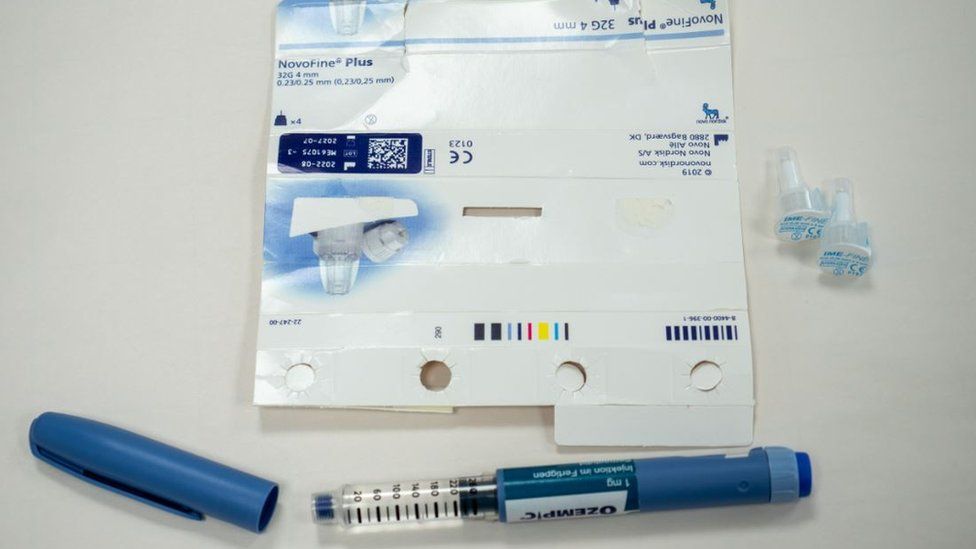
Ozempic: Several taken to hospital in Austria after taking fake drug

Published17 hours agoShareclose panelShare pageCopy linkAbout sharingImage source, Austrian Criminal Intelligence ServiceBy Bethany BellBBC News, ViennaSeveral Austrians have been treated in hospital after using what was believed to be fake weight-loss drug, Ozempic.Austria’s Federal Office for Safety in Health Care, the BASG, said they had reported “serious side effects” including low blood sugar and seizures.This indicated that the drugs “falsely contained insulin” instead of Ozempic’s active ingredient, semaglutide, the BASG said.The drug has become popular as a weight-loss treatment.An investigation is under way.The Austrian Criminal Intelligence Service, the BK, said those affected had received the syringes from a doctor based in Austria.It warned that stocks of the fake drug may still be in circulation. The counterfeit injection pens were coloured a darker blue than the genuine items, it added.Austria’s Federal Office for Safety in Health Care has called on doctors and patients to check their supplies. “Ozempic has been increasingly used as a “weight-loss” medication, for which the medicinal product is not approved,” it saidBoth the Austrian police and the Ministry of Health have warned the public against using so-called weight-loss injections from “dubious sources”.Weight-loss drug semaglutide approved for NHS useDiabetes drug shortage after weight loss useWeight-loss drug approved for use by NHS ScotlandThe European Medicines Agency, the EMA, recently warned that the increase in demand for Ozempic had led to “a shortage situation” for diabetic patients. Last week, the EMA and the UK’s Medicines and Healthcare products Regulatory Agency (MHRA) warned that counterfeit Ozempic injection pens, from suppliers in Austria and Germany, had been identified at wholesalers in the UK and the EU. The MHRA said: “All affected pens have been recalled and accounted for, and none of the pens have been supplied to UK patients.”It was working closely with its regulatory partners internationally “to continue to maintain the security of the wider supply chain, both at home and abroad”, it said.

Read more →

Tai chi may slow Parkinson's symptoms for years, study finds

Published2 hours agoShareclose panelShare pageCopy linkAbout sharingImage source, Getty ImagesBy Philippa RoxbyHealth reporterTai chi may help slow down the symptoms of Parkinson’s disease for several years, a Chinese study suggests. Those who practised the martial art twice a week had fewer complications and better quality of life than those who didn’t, the researchers say.Parkinson’s is a progressive brain disease which leads to tremors and slow movement, and there is no cure.Experts say the findings back up previous studies on the benefits of exercise for those with Parkinson’s.The study, from Shanghai Jiao Tong University School of Medicine, monitored the health of hundreds of Parkinson’s patients for up to five years.One group of 147 people practised regular tai chi while another group of 187 did not.The traditional Chinese exercise combines slow, gentle movements with deep breathing and relaxation.The charity Parkinson’s UK describes tai chi as a low-intensity physical activity that can “help to lift your mood and help you live well”.The researchers found that the disease progressed more slowly in the tai chi group on measurements of symptoms, movement and balance.This group also saw fewer falls, less back pain and dizziness, with memory and concentration problems also lower than in the other group.At the same time, sleep and quality of life continuously improved. Tai chi moves for beginnersDo it yourself – Carrying the moon:Breathe in, turn your body towards the left from the waist Your shoulders are relaxed and your elbows slightly bent Now reach both arms towards the left with your head focusing on your handsBreathe out, bring hands down. Turn to right and repeatDo it yourself – Twisting waist and push palms:Breathe in, draw palms to the waist facing upwards Breathe out, turn your body to the left at the waist. Keep the left elbow and wrist slightly bent and draw the elbow back At the same time, extend the right arm forward and push with the right palm facing forward (as if you are trying to stop traffic)Breathe in, return to the middle and spread your weight evenly before turning to the right, drawing your right arm back and extending your left arm with your palm facing forward.A previous trial of people with Parkinson’s who practised tai chi for six months found greater improvements in walking, posture and balance than those not on the programme.Writing in the Journal of Neurology Neurosurgery & Psychiatry, Dr Gen Li and co-authors say their study shows “that tai chi retains the long-term beneficial effect on Parkinson’s disease”.They say tai chi could be used to manage Parkinson’s on a long-term basis and prolong quality of life, while still helping to keep patients active.But they also acknowledge that the study is relatively small and could not prove that tai chi was the reason for the positive outcomes experienced by one group.’Positive effects’Prof K Ray Chaudhuri, professor of movement disorders and neurology at King’s College London, said: “It is too early to claim any neuroprotection based on this study, although the positive effects on aspects of motor and non-motor functions are impressive.”He said ballet had also been found to have similar effects on Parkinson’s.Prof Alastair Noyce, professor in neurology and neuroepidemiology at Queen Mary University of London, called it “an important study” but said there were limitations in its design, and more trials were needed.”We already recommend tai chi, as well as other forms of exercise, but understanding which forms of exercise are most beneficial is an important goal to enhance the long-term management of patients,” he said.Related Internet LinksParkinson’s disease – NHSTai chi and qigong for Parkinson’s – Parkinson’s UKTai chi and Parkinson’s – video from Parkinson’s UKPhysical activity and exercise – Parkinson’s UKThe Tai Chi & Qigong Union for Great BritainThe BBC is not responsible for the content of external sites.

Read more →

Bush’s Institute Issues an Urgent Plea for Congress to Renew His AIDS Program

The institute founded by President George W. Bush issued an urgent call on Wednesday for Congress to renew the global AIDS program known as PEPFAR, a centerpiece of Mr. Bush’s foreign policy legacy that has become a victim of abortion politics on Capitol Hill.PEPFAR — the President’s Emergency Plan for AIDS Relief — has saved an estimated 25 million lives since Mr. Bush founded it 20 years ago. The $6.9 billion program, which must be reauthorized by Congress every five years, has long had bipartisan support and is often cited as a powerful example of America’s moral leadership in the world.But it faces an uncertain future. The legislation authorizing the program lapsed on Sept. 30 after some House Republicans claimed, without evidence, that the Biden administration was using it to promote abortion overseas. Those Republicans want to attach abortion-related restrictions to PEPFAR that would doom its reauthorization in the Democratic-controlled Senate.The Bush Institute, which is nonpartisan, has thus far been reluctant to step into the debate.But in a bipartisan letter signed by more than 30 retired ambassadors, foreign policy luminaries and organizations — including the Carter Center, founded by former President Jimmy Carter — the institute pleaded with Congress to reauthorize the program. It argued that in addition to saving lives, PEPFAR was countering the rising influence of Russia and China and burnishing America’s reputation as a global leader.“PEPFAR is a model of United States leadership and a source of great national pride,”the letter said. “It is one of the most successful international development programs since World War II. Abandoning it abruptly now would send a bleak message, suggesting we are no longer able to set aside our politics for the betterment of democracies and the world.”For now, at least, PEPFAR is continuing to operate. But advocates fear that, without the underlying authorization, the program will be subject to budget cuts or even elimination in the future. And they say the program is weaker without the bipartisan imprimatur of Congress.“The classic conservative talking point is that we don’t want to fund programs that aren’t authorized,” said Keifer Buckingham, the advocacy director at the Open Society Foundations and a longtime PEPFAR supporter. “It’s also fair to say that in global health and global health politics, optics matter,” she added.Mr. Bush himself did not sign the institute’s letter; people close to him have said he is trying to use his voice judiciously. The lead individual signer is Dr. Deborah L. Birx, a senior fellow at the Bush Institute who ran PEPFAR under Presidents Barack Obama and Donald J. Trump, and also served as Mr. Trump’s coronavirus response coordinator. But Mr. Bush has made no secret that he wants the program reauthorized. Over the summer, he discussed its future with Representative Michael McCaul, a Texas Republican and the chairman of the House Foreign Affairs Committee, over lunch at the Bush family compound in Maine. In mid-September, he published an opinion piece in The Washington Post urging Congress to save it.At that time, PEPFAR’s supporters on Capitol Hill thought they were making progress toward breaking the logjam. Representative Barbara Lee, a California Democrat who is a leading proponent of the program, said in an interview then that she was working with a freshman Republican, Representative John James of Michigan, on a bipartisan reauthorization bill.But the effort was put on hold last month in the face of a threatened government shutdown, and it remains stalled because the House is in a state of dysfunction with Republicans unable to choose a speaker.

Read more →

GP appointments: Man leaves doctor of 77 years over delay

Published6 hours agoShareclose panelShare pageCopy linkAbout sharingBy Will FyfeWales LiveWhen Gwyn John heard he was 32nd in the call queue for his GP, it was the end of a relationship that began in 1945. The 78-year-old widower hung up the call in frustration, booked a private appointment and enrolled at a new NHS GP surgery.Doctors have warned GP practices are in “crisis” after talks broke down over a new financial deal. The Welsh government said its pay offer was at the limit of the finance available.A recent survey from the British Medical Association (BMA) found the number of full-time GPs had fallen in Wales in the past decade, while patient numbers had increased. The survey found 80% of GPs feared their high workload meant they were unable to provide quality care to patients.’I couldn’t take chances'”I’d been with that GP surgery 77 years and 10 months,” said Mr John, who lives in Llantwit Major, Vale of Glamorgan.He also booked regular appointments for his wife Gloria, who had dementia, until she died two years ago.”When my wife was alive, I couldn’t take chances, I had to hold on [in the queue].”But if she needed me, I wouldn’t hesitate, that phone would go down and I would have to start again.”Image source, Family PhotoMr John said he was only able to book same day appointments at his old surgery, which meant calling between 8am to 9am or filling in an online form.He is not someone who makes changes lightly, having lived on the same street for the whole of his life. But he said changing to a GP with a different booking system had left him feeling “refreshed”.His former GP surgery, Llantwit Major & Coastal Vale Medical Practice, said his wait time was “not typical”, with the number of calls it received fluctuating day to day. Age Cymru said many older people reported having to call their GP back the following day if they were unable to get through to the surgery by 9am. The charity found 72% of the 1,200 people who responded to its survey had a negative experience accessing GP services. On this issue, the Welsh government said it was “disappointing” to hear of people have difficulty accessing GP services.A spokesman urged anyone having trouble to contact their local health board or Llais, saying most GP practices had said they were “working to make getting an appointment easier”.’Unsustainable pressure’ It comes after GP leaders said there was growing concern about the financial health of practices. Dr Gareth Oelmann, Chair of BMA Cyrmu Wales’s GP Committee, said the situation would get worse unless the Welsh government could commit to a “rescue package”.”The unsustainable pressure facing GPs is felt up and down the country,” he said.”We have heard from GPs who have been unable to recruit permanent staff for years on end, examples of extreme burnout causing hospitalisation and a rising number of surgeries having to close their doors as they struggle with bills and staffing expenses, leaving thousands of patients having to be treated elsewhere.”Cleona Jones, a practice manager in Barry, said her surgery had recently adopted a call-back system to “stop patients holding on for an hour on the phone”.However, Ms Jones, from The Practice of Health, said she was struggling to keep her reception staff due to poor pay and the difficult nature of manning the phones in the morning. “We’ve always retained our staff and if they left it was because they retired,” said Ms Jones. “In the last six months I’ve lost three receptionists, and I’m one of the lucky ones compared to my colleague practices, they’ve lost a lot more.”Stephanie Squires, who started working on reception at the Practice of Health Surgery three years ago, said Mondays could be the most challenging.”It starts at 8am and it doesn’t stop until 6pm in the night,” she said.Ms Squires said most patients were “lovely,” but frustrated callers could be abusive.”One time I had somebody phone at 18:15 on a Friday,” she said.”They wanted to speak about infertility, and I said they would have to phone back another time. They said: ‘I’m going to take your children from you so you can feel what it’s like’. “It can get very personal just because you can’t deal with them there and then.” The Welsh government said any threats to staff were “completely unacceptable” and, while it understood the “strength of feeling” around talks on pay, the offer was at the limit of the finance available and reflected the pay position reached with other health unions. It also said it was committed to working in partnership with the General Practitioners Committee Wales and was available for further talks at any stage.Wales Live is on BBC One Wales at 22:40 on Wednesday, 25 OctoberMore on this storyGPs and Welsh NHS face collapse, doctors sayPublished28 JuneHuge numbers of A&E waits ‘not counted for a decade’Published16 OctoberAmbulance incident likely to be repeated – FMPublished23 hours agoWales makes ‘crisis’ cuts to prop-up NHS and trainsPublished17 OctoberAmbulance waits 28 hours outside A&E amid delaysPublished1 day ago

Read more →

New clues to early development of schizophrenia

Schizophrenia is a severe neuropsychiatric disease that remains poorly understood and treated. Schizophrenia onset is typically in adolescence or early adulthood, but its underlying causes are thought to involve neurodevelopmental abnormalities. Because human prenatal and postnatal brain tissue is exceedingly difficult to procure and therefore study, researchers have had limited opportunities to identify early disease mechanisms, especially during the critical prenatal period. Now, a pair of studies that appear in Biological Psychiatry, published by Elsevier, use new technology to study schizophrenia in models of early human brain development.
The first study used a unique approach involving three-dimensional brain organoids, which are known to recapitulate fetal brain development. The researchers, led by first author Ibrahim A. Akkouh, PhD, and senior author Srdjan Djurovic, PhD, both at Oslo University Hospital, collected skin cells from 14 patients with schizophrenia and 14 healthy controls and generated induced pluripotent stem cells (iPSCs), which they then manipulated to develop into brain-like cortical spheroids.
The organoids grown from patients and controls differed in their expression of thousands of genes — in line with the finding that the genetic influences on schizophrenia are many and very small. However, among the genes, those associated with neuronal axons stood out as a group.
Dr. Akkouh explained, “We identified persistent axonal dysregulation as an early contribution to disease risk.”
Importantly, the researchers assessed organoid maturation at several time points, which enabled them to establish the persistent nature of the disturbances throughout development.
Dr. Akkouh added, “Our findings provide novel and hitherto inaccessible insights into the molecular basis of schizophrenia during early brain development.”
In the second study, researchers led by Roy H. Perlis, PhD, at Harvard Medical School, focused on a particular genetic risk locus. The schizophrenia risk locus 15q11.2, a particular chromosomal region containing four genes, has a penetrance of over 10%, translating to a doubling of risk for schizophrenia among people carrying an unusual copy number of this genetic region. One gene in the locus, CYFIP1, has been associated with synaptic function in neurons and confers increased risk for neurodevelopmental disorders including schizophrenia and autism.

Read more →