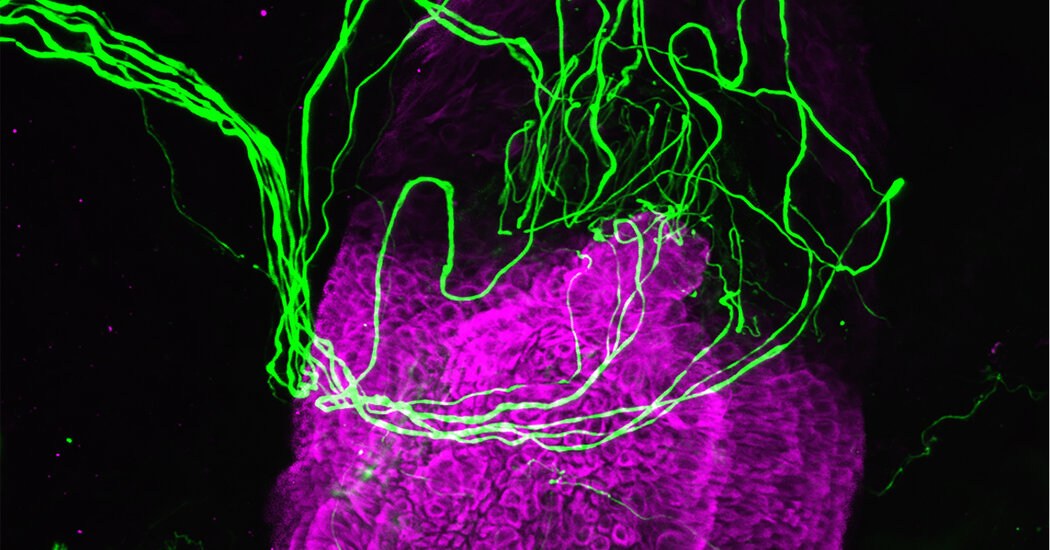
Scientists tame biological trigger of deadly Huntington's disease

Huntington’s disease causes involuntary movements and dementia, has no cure, and is fatal. For the first time, UC Riverside scientists have shown they can slow its progression in flies and worms, opening the door to human treatments.
Key to understanding these advancements is the way that genetic information in cells is converted from DNA into RNA, and then into proteins. DNA is composed of chemicals called nucleotides: adenine (A), thymine (T), guanine (G), and cytosine (C). The order of these nucleotides determines what biological instructions are contained in a strand of DNA.
On occasion, some DNA nucleotides repeat themselves, expanding the DNA strand. In Huntington’s disease, this expansion occurs with three nucleotides, cytosine-adenine-guanine, or CAG.
Expansion into an extraordinary number of repeated CAG sequences of DNA is associated with earlier onset and increased severity of Huntington’s disease symptoms. Similar observations were made for a number of other neurodegenerative diseases.
When these DNA repeats are translated into RNA, there is an insidious side effect. The cell chemically modifies the extra RNA buildup. Wang and his collaborators learned that the modified RNA plays a crucial role in neurodegeneration.
“We are first to discover that a type of chemical modification, called methylation, occurs more frequently with extra repeats in RNA. Then we see abnormal distribution and buildup of a particular protein in cells,” said Yinsheng Wang, distinguished UCR professor of chemistry. “In other words, methylation converts an important cellular protein into waste.”
These findings parallel observations made for the same protein in brain tissues of Huntington’s disease, ALS and frontotemporal dementia patients. Longer RNA repeats mean a higher modification rate, which generates more protein waste and exacerbates disease.

Read more →

Temperature increase triggers viral infection

Researchers at Lund University, together with colleagues at the NIST Synchrotron Facility in the USA, have mapped on an atomic level what happens in a virus particle when the temperature is raised. “When the temperature rises, the virus’s genetic material changes its form and density, becoming more fluid-like, which leads to its rapid injection into the cell,” says Alex Evilevitch a researcher at Lund University who led the study.
Viruses lack their own metabolism and the ability to replicate independently; they are entirely dependent on a host cell to multiply. Instead, the virus hijacks the internal machinery of the infected cell to produce new virus particles, which are then released and spread to infect other cells.
In most cases, the virus’s genetic material, DNA, is enclosed within a protective protein shell called a capsid. A research group at Lund University is working to understand the process by which the virus ejects its genetic material from the capsid and into cells and what causes the virus’s DNA to be released. It all began with a study published in 2014, where the Lund University researchers observed that there seems to be a sudden change in the virus’s genetic material when exposed to the infection temperature, around 37 degrees.
“The more we raised the temperature, the stiffer the virus’s DNA became. And then suddenly, at the infection temperature, something happened. It was as if there was no DNA left in the virus particle — the stiffness disappeared,” says Alex Evilevitch, a professor of cell biology at Lund University.
Can change in the surrounding temperature affect the spread of the virus’s DNA? The study garnered significant attention in the research community, but detailing what occurs has been a challenge and time-consuming. As an experimental model, the researchers examined what happens when exposing phage viruses — viruses that attack bacteria — to temperature increases.
“Observing the appearance of DNA in a virus particle is not something that can be done in a snap. Their genetic material is delicate, difficult to image, and moreover, phage viruses are very small — approximately ten times smaller than a bacterial cell. However, with the help of the synchrotron research facility NIST in Maryland, USA, and thanks to a special grant from the Swedish Research Council, we were ultimately able to use neutron light to image the structure of phage virus DNA and its density inside the capsid and see how these changed at different temperatures,” explained Alex Evilevitch.
In the current study, now published in PNAS, they demonstrate that the ambient temperature plays a crucial role when the capsid opens, and “DNA bursts out” and enters the cell. The cell becomes infected so that phage virus particles can divide and spread to adjacent bacterial cells.

Read more →

Toward new targeted treatments for rheumatoid arthritis

New research led by University of Colorado School of Medicine faculty members Fan Zhang, Ph.D., and Anna Helena Jonsson, M.D., Ph.D., may lead to new targeted treatments for rheumatoid arthritis (RA), an autoimmune disease that causes joint inflammation and destruction.
Published today in the journal Nature, their findings reflect the work of dozens of researchers working together as members of the Accelerating Medicines Partnership: Rheumatoid Arthritis and Systemic Lupus Erythematosus (AMP: RA/SLE) Network, including Michael Holers, M.D., professor of medicine and the site principal investigator at the CU School of Medicine.
The AMP: RA/SLE Network collected inflamed tissue from 70 patients with RA from across the country and the United Kingdom. Jonsson supervised the team of scientists who processed these samples for analysis, and Zhang led the computation analysis of the data. These efforts yielded a cell atlas encompassing more than 300,000 cells from synovial tissue. Further analysis revealed that there are six different subgroups of RA based on their cellular makeup.
“We hope the data will help us discover new treatment targets,” says Jonsson, assistant professor of rheumatology. “We wanted to make it public so that researchers across the country and across the world can continue working on new treatment ideas for rheumatoid arthritis going forward.”
No more guess-and-check
Jonsson, who is a practicing rheumatologist as well as a researcher, knows that RA patients respond differently to different treatments. Until now, she says, rheumatologists used a “guess and check” method to find a treatment that works for an individual patient.
With the new data and powerful computational classification methods developed by Zhang and the computational analysis team, the researchers were able to quantitatively classify RA types into what they call “cell-type abundance phenotypes,” or CTAPs. Developed methods, together with the new cell atlas, can start to identify which patients will respond to which treatments.

Read more →

Head lice evolution mirrors human migration and colonization in the Americas

A new analysis of lice genetic diversity suggests that lice came to the Americas twice — once during the first wave of human migration across the Bering Strait, and again during European colonization. Marina Ascunce, currently at the USDA-ARS, and colleagues, report these findings in a new study published November 8 in the open-access journal PLOS ONE.
The human louse is a wingless, blood-sucking parasite that lives its entire life on its host. It is one of the oldest known parasites to live on humans, and the two species have coevolved for millennia. Due to this intimate relationship, studying lice can offer clues to how humans evolved as well. In the new study, researchers analyzed the genetic variation in 274 human lice from 25 geographic sites around the world.
A genetic analysis based on louse DNA revealed the existence of two distinct clusters of lice that rarely interbred. Cluster I had a worldwide distribution, while cluster II was found in Europe and the Americas. The only lice with ancestry from both clusters are found in the Americas. This distinct group appears to be the result of a mixture between lice descended from populations that arrived with the First People and those descended from European lice, which were brought over during the colonization of the Americas.
The researchers also identified a genetic relationship between lice in Asia and Central America. This supports the idea that people from East Asia migrated to North America and became the first Native Americans. These people then spread south into Central America, where modern louse populations today still retain a genetic signature from their distant Asian ancestors.
The patterns observed in the new study support existing ideas about human migration and provide additional knowledge about how lice have evolved. The researchers point out that they selected genetic markers that evolve quickly and are best suited to recent events. Thus, future studies that use markers that have changed more slowly could shed light on more ancient events. Additionally, the methods developed for this work could guide the development of new analyses to study other host-parasite systems.
The authors add: “Human lice are more than annoying human parasites, they are ‘satellites’ of our evolution. Because human lice feed on human blood, they need us to survive, and over millions of years this resulted in a long co-evolutionary history together.”

Read more →

Diabetes drug for prostate cancer? Study provides clarity

In the years since a 2005 study found that diabetes patients taking metformin had lower rates of cancer, oncologists have been excited by the prospect of using the inexpensive, safe, and widely used diabetes drug to prevent or slow the development of many cancers.
But in studies of prostate cancer, metformin performance has been mixed, with some studies reporting a lower incidence of prostate cancer among men using metformin and others finding no relationship.
Now a new study from Columbia researchers suggests that metformin is indeed a promising drug that could prevent the progression of prostate cancer, but only for tumors with low levels of NKX3.1, which are more likely to develop into aggressive cancers.
The researchers found that metformin restores cancer-fighting mitochondrial activity that is lost when NKX3.1 levels are low, prevents prostate cancer progression in mice, and is associated with better survival in patients with low-NKX3.1 tumors but not high-NKX3.1 tumors.
“Where we see metformin having the biggest impact is in patients who’ve just been diagnosed with prostate cancer,” says Alex Papachristodoulou, Ph.D., associate research scientist, who conducted the research in the lab of Cory Abate-Shen, Ph.D., chair of the Department of Molecular Pharmacology & Therapeutics.
Most patients with new diagnoses of prostate cancer have low-grade tumors that are not treated and are instead monitored by active surveillance. But some of these tumors will become more aggressive and potentially life-threatening.
“Metformin could be given to patients under surveillance with high-risk tumors when there’s still time to prevent progression to advanced disease,” Abate-Shen says.

Read more →

A Hairy Truth About Your Sense of Touch

Researchers showed that cells in your hair follicles release important chemical messengers in response to gentle touches to your skin.When someone brushes a hand across your skin, it’s like a breeze blowing through a forest of countless small hairs. Nerves that surround your hair follicles detect that contact, and very far away in your brain, other cells fire. Some of the neurons responding to light contact might make you shiver and give you goose bumps. Some might tell you to move away. Or they might tell you to move closer.Scientists who study the sense of touch have explored which cells bear these messages, and they have made an intriguing discovery: Follicle cells triggered by hair movements release the neurotransmitters histamine and serotonin, chemical messengers linked to biological phenomena as varied as inflammation, muscle contraction and mood changes. The observation, reported in October in the journal Science Advances, lays the groundwork for tracing how gentle touch makes us feel the way it does.Studying hair follicles is challenging, because they begin to decay soon after being removed from the body, said Claire Higgins, a bioengineering professor at Imperial College London and an author of the study. So she and her colleagues went to a hair transplant clinic. There, they were able to look at freshly harvested follicles, which they gently prodded with a very small rod to simulate touch.The scientists knew from work done by other groups that the neurons in the skin surrounding hair follicles are capable of sensing movement.“When you brush your hair, you feel it because the sensory neurons are directly being stimulated,” Dr. Higgins said.But they were curious whether the cells of the follicle itself — the tube from which a hair sprouts — could be contributing to some of the feelings associated with more gentle touch. Not all of the follicle cells had movement sensors, but some did. The researchers identified these and watched them carefully as the rod touched them.“We found that when we stimulated our hair follicle cells, they actually released mood-regulating neurotransmitters serotonin and histamine,” Dr. Higgins said.Blocking the receptors for these neurotransmitters on nearby neurons meant that they no longer fired when the hair was stroked, confirming the link between the follicle cells and the neurons’ response.Just because these neurotransmitters are associated with mood in the brain does not mean that they are linked to emotion elsewhere in the body, Dr. Higgins said. They are messengers, and the nature of the message they carry depends on which cells they are stimulating.But she points to research by Francis McGlone, a neuroscientist at Liverpool John Moores University in England who has studied the rewarding feelings we get from touch. He and his colleagues have identified nerves in the skin that respond to gentle touch, generating that warm glow we get from human contact.Were the neurotransmitters being released by follicle cells in this study stimulating those nerves specifically? No one knows, but Dr. Higgins hopes future work will illuminate the identity of the cells the neurotransmitters target. She is curious how increasing levels of serotonin or histamine in the skin might change what happens in the brain, at the other end of the transmission. In the tiny sheath of cells containing each hair, there may be answers to questions about something as fundamental as human connection.“The follicle never ceases to amaze me,” she said.

Read more →

FDA Approves Zepbound, A Drug Like Ozempic, for Weight Loss. Here’s What to Know.

The obesity medication contains tirzepatide, the same active ingredient in the diabetes drug Mounjaro.The decision by the Food and Drug Administration on Wednesday to approve the weight loss drug tirzepatide adds a potent new tool to the fast-growing arsenal of obesity drugs.The drug, which will go by the brand name Zepbound, contains the same compound in the sought-after diabetes drug Mounjaro. Many people have used Mounjaro off-label to lose weight since it was initially approved in May 2022, but the move could pave the way for insurance coverage and open the floodgates for more prescriptions.Zepbound is the second drug in a new class of obesity medications to be approved for weight loss, following Wegovy. And it is now likely the most effective treatment to combat obesity besides bariatric surgery, said Dr. Scott Hagan, an assistant professor of medicine at the University of Washington. But for many, Mounjaro has been hard to find in the year since it hit the market.“It’s very similar to what we went through with Ozempic,” said Dr. Andrew Kraftson, a clinical associate professor in the division of metabolism, endocrinology and diabetes at Michigan Medicine, noting that demand for weight loss medications has hit a “fever pitch.” Now, he said, patients will likely be clamoring for this new drug. Here’s what to know.Who qualifies for Zepbound?The F.D.A. approved Zepbound for people who have a body mass index — a much-criticized metric — of 30 or greater, which technically qualifies them as having obesity, or those with a B.M.I. of 27 who also have certain weight-related conditions, such as high blood pressure. Regulators said the drug should be used in combination with a reduced calorie diet and increased physical activity.How does tirzepatide work for weight loss?Zepbound, made by Eli Lilly, is the brand name for tirzepatide when used for weight loss. When the drug is prescribed for diabetes, it is sold under the brand name Mounjaro.Eli LillyLike semaglutide, the compound in Ozempic and Wegovy, tirzepatide slows down the emptying of the stomach. People feel fuller, quicker and for longer. All three drugs also target the area of the brain that regulates appetite, blunting cravings for many people.Semaglutide simulates a single hormone in the body, while tirzepatide mimics two, which experts say may be why it’s often more effective at triggering weight loss. In a 72-week clinical trial, funded by Eli Lilly, participants with obesity taking the highest dose of tirzepatide lost around 18 percent of their body weight on average. If I’m already taking Ozempic or Wegovy, should I switch?Not everyone reacts to these medications in the same way — someone might lose little to no weight on semaglutide, but shed pounds on tirzepatide, and vice versa, said Dr. Janice Jin Hwang, the division chief of endocrinology and metabolism at the University of North Carolina School of Medicine. People whose weight loss may be most closely tied to other health outcomes — such as those at risk for heart failure or liver disease — may benefit more from losing a significant amount of weight on a drug like Zepbound.But some people can lose too much weight taking these drugs, Dr. Hwang cautioned. Older people, in particular, should be mindful about their weight loss, since it can lead to shrinking muscle mass. Physicians need to weigh the risks and benefits for each patient, she said.“There’s no guidelines around any of this,” she said. “We’re just trying to think holistically about the patient.”Will insurance cover it and what is it likely to cost out of pocket?Coverage can differ from plan to plan, but some insurance companies will likely cover it for those who meet the F.D.A.’s criteria. Eli Lilly said in a press release that it expects Zepbound will be available in the U.S. by the end of the year at a list price of $1,059.87. What are the side effects?In an Eli Lilly-funded study of tirzepatide for obesity, gastrointestinal issues were the most common side effects. Roughly one-third of participants taking the highest dose of tirzepatide experienced nauseaand around one-fifth experienced diarrhea. Some participants also reported abdominal pain, vomiting, constipation, headache and dizziness. The F.D.A. approval states that people taking Zepbound may also experience burping, hair loss and gastroesophageal reflux disease.Because tirzepatide is so new, we do not know much yet about its long-term effects, Dr. Hwang said. And people taking these kinds of drugs for weight loss typically are advised to stay on them for the rest of their lives, she said.

Read more →

Disturbances in sensory neurons may alter transient pain into chronic pain

Researchers from the Center for Translational Immunology at University Medical Center Utrecht (the Netherlands) have identified that a transient inflammatory pain causes mitochondrial and redox changes in sensory neurons that persist beyond pain resolution. These changes appear to predispose to a failure in resolution of pain caused by a subsequent inflammation. Additionally, targeting the cellular redox balance prevents and treats chronic inflammatory pain in rodents.
Pain often persists in patients with an inflammatory disease, even after the inflammation has subsided. The molecular mechanisms leading to this failure in pain resolution and the transition from acute to chronic pain are poorly understood. For some time, there have been clues that mitochondrial dysfunction may be involved. In a clinical study, approximately 70 percent of patients with heritable mitochondrial diseases develop chronic pain. However, the exact role of mitochondria in the resolution of inflammatory pain is unclear.
Mitochondrial disturbances
To unravel the role of mitochondria in pain resolution, Hanneke Willemen PhD in the research group lead by Niels Eijkelkamp PhD (Center for Translational Immunology, UMC Utrecht) used a model of hyperalgesic priming. In this model, a transient inflammation causes neuronal plasticity, which results in persistence of pain after a subsequent inflammatory stimulus; a perfect model to study what goes wrong during pain resolution. Hanneke and co-workers identified that hyperalgesic priming in mice causes mitochondrial and metabolic disturbances in sensory neurons. The investigators associate these disturbances with an increase in the expression of a mitochondrial protein (ATPSc-KMT) which in a previous study has been linked to chronic pain in patients. By using genetic and pharmacological approaches they showed that inhibit mitochondrial respiration, ATPSCKMT expression and supplementation of one of the affected metabolites restores resolution of inflammatory pain and prevents chronic pain development. The results of this study- which was performed with several collaborators, including the University of Oslo (Norway) — have been published this week in Cell Reports Medicine.
Hanneke Willemen concludes: “In our study we provide evidence that a peripheral inflammation induces persistent mitochondrial and metabolic changes in sensory neurons, which affects the ability of neurons to resolve from hyperalgesia induced by a subsequent inflammatory trigger. Thus, metabolic changes in sensory neurons result in failure of endogenous pain resolution pathways and drive the transition to chronic pain. Importantly, targeting mitochondrial respiration, scavenging reactive oxygen species or supplementation with nicotinamide riboside (vitamin B3) both represent potential therapeutic strategies to restore failing pain resolution pathways, thereby treating chronic inflammatory pain.”
Transition to chronic pain
Chronic pain is a leading cause of years lived in disability and impaired quality of life, yet treatment options are limited and often induce severe side effects. The current dogma is that pain resolution is the consequence of the dissipation of the drivers that induced the pain. However, in 12-30 percent of rheumatic arthritis patients pain persists while they have minimal joint inflammation or even are in remission. Accumulating evidence indicates that pain resolution after tissue damage or inflammation is not passive, but rather an active process that involves endogenous pain resolution mechanisms. Failing pain resolution pathways may lead to the transition from acute to chronic pain. Although the molecular mechanisms that contribute to failure in pain resolution are still poorly understood and need unraveling, this study fills a part of this void and identifies a potential therapeutic approach to promote pain resolution.

Read more →

A new dawn in the fight against Tuberculosis

TB is a major threat to public health, being among the leading causes of death worldwide. In 2021, the disease claimed the lives of 1.6 million people, making it the second leading infectious killer after COVID-19. Drug-resistant TB and long treatment regimens have increased the urgency for action and investment in TB research.
For people affected by TB, the most important outcome is rapid access to better regimens of shorter treatment duration and with fewer side effects. UNITE4TB is engaging with key societal stakeholders to ensure that its novel regimens will be made available as efficiently as possible.
Exploring new frontiers
UNITE4TB’s innovative phase 2B/C trials will test 14 combinations of nine existing drugs, as well as two newly developed candidates (GSK656 and BTZ-043). The ultimate aim is to create regimens that can further improve multidrug-resistant (MDR) treatment, and also be effective for drug-sensitive TB.
UNITE4TB’s explorative regimens have been constructed by combining the novel compounds GSK656 and BTZ-043 with the most recently licensed drug classes: diarylquinoline (bedaquiline) and nitroimidazoles (delamanid or pretonamid). Apart from DECISION, a BTZ-043 dose evaluation in combination study, the UNITE4TB trial program includes PARADIGM4TB, a phase 2B/C platform trial to evaluate multiple regimens and durations of treatment in Pulmonary Tuberculosis. PARADIGM4TB will establish which fourth drug (either moxifloxacin, linezolid, or pyrazinamide) can be added as the optimal component to a bedaquiline, delamanid, BTZ-043 or GSK656 regimen. The trial will also explore the efficacy of a totally new combination of GSK656 and BTZ-043 together with bedaquiline and delamanid.
Expert insights
Commenting on the trial design, UNITE4TB Scientific Leader, Prof. Michael Hoelscher of LMU University Hospital Munich said: “There are three major steps in TB regimen development: the establishment of the optimal dose for each individual drug, the identification of the right combination of four different drugs and the shortest possible treatment duration of the regimen of choice. In UNITE4TB, we are addressing these aspects via the most efficient trial designs possible.”
The South African trial site, part of the clinical research institute TASK, where the first participant in the UNITE4TB trial program has been enrolled, is one of several selected for the project. The sites were chosen based on TB prevalence. Other high-burden countries on the trial site list include Tanzania, Uganda, Vietnam, and the Philippines.
Prof. Andreas Diacon, Chairman and CSO TASK and CEO TASK Europe, said: “At TASK, we conduct all stages of clinical trials, from first in human trials all the way through to licensing. We are thrilled to be kicking off the UNITE4TB clinical trial program here in Cape Town and are proud to be part of this important clinical research project.”
Reflecting on this latest milestone, Prof. Martin Boeree, UNITE4TB project coordinator from Radboudumc said: “Today’s announcement marks an exciting moment for TB research. The world needs new drugs for TB but also new ways to run clinical studies. Our public-private partnership sets a new standard in this regard. If successful, our work will deliver a new treatment regimen of shorter duration that can be used to fight all types of tuberculosis.”

Read more →

A thyroxine derivative enhances brain drug delivery

A new study from the University of Eastern Finland shows that the delivery of drugs into the brain, and especially into glial cells, can be enhanced with prodrugs that temporarily incorporate thyroxine or a thyroxine-like molecule. The transporter protein OATP1C1, which is found in the brain, can be utilised in the delivery of such prodrugs. The results were published in Journal of Medicinal Chemistry.
For the first time ever, researchers used the organic anion-transporting polypeptide 1C1 (OATP1C1) to enhance drug delivery into the brain. In the study, prodrugs were used to transport anti-inflammatory drugs into the brain, where they were efficiently delivered into glial cells. Glial cells support neurons and are known to be activated in many brain diseases to produce mediators that maintain inflammation. Hence, in order to have an impact on chronic inflammation in the brain, it is crucial to deliver anti-inflammatory drugs into precisely the right cell types. The concept is completely new even on a global scale.
Researchers at the University of Eastern Finland School of Pharmacy have long been attempting to enhance brain drug delivery by using the L-type amino acid transporter 1, i.e., the LAT1 protein and prodrugs that utilise it, amino acid derivatives. However, the OATP1C1 transporter protein used in the new study was found to be far more effective at transporting thyroxine derivatives than LAT1.
The study employed computational molecular modelling to create protein models that were used to design and synthesize new prodrugs.
Drug transport mechanisms remain surprisingly poorly understood
“A surprising observation from our study was that increasing the molecular size of drugs enhanced their delivery into the brain and into glial cells. Up until now, it has been thought that a large molecular size isn’t exactly helpful in brain drug delivery,” says Research Group Director, Associate Professor Kristiina Huttunen of the University of Eastern Finland.
“This study highlights how poorly we still understand drug transport mechanisms in our system. This is also a major reason why many new drugs, especially those intended to affect the central nervous system, unfortunately never make it to the market. The more we know about these transport mechanisms, the better we can take their effects into account when seeking to influence the distribution of drugs in our body. This should also be taken into account very early on in drug development.”
The study constitutes part of a research project funded by the Research Council of Finland.

Read more →