Why do some people get headaches from drinking red wine?

A red wine may pair nicely with the upcoming Thanksgiving meal. But for some people, drinking red wine even in small amounts causes a headache. Typically, a “red wine headache” can occur within 30 minutes to three hours after drinking as little as a small glass of wine.
What in wine causes headaches?
In a new study, scientists at the University of California, Davis, examined why this happens — even to people who don’t get headaches when drinking small amounts of other alcoholic beverages. Researchers think that a flavanol found naturally in red wines can interfere with the proper metabolism of alcohol and can lead to a headache. The study was published in the journal Scientific Reports.
The headache culprit: Quercetin, a flavanol
This flavanol is called quercetin and it is naturally present in all kinds of fruits and vegetables, including grapes. It’s considered a healthy antioxidant and is even available in supplement form. But when metabolized with alcohol, it can be problematic.
“When it gets in your bloodstream, your body converts it to a different form called quercetin glucuronide,” said wine chemist and corresponding author Andrew Waterhouse, professor emeritus with the UC Davis Department of Viticulture and Enology. “In that form, it blocks the metabolism of alcohol.”
Acetaldehyde toxin buildup leads to flushing, headache, nausea
As a result, people can end up accumulating the toxin acetaldehyde, explains lead author Apramita Devi, postdoctoral researcher with the UC Davis Department of Viticulture and Enology.

“Acetaldehyde is a well-known toxin, irritant and inflammatory substance,” said Devi. “Researchers know that high levels of acetaldehyde can cause facial flushing, headache and nausea.”
The medication disulfiram prescribed to alcoholics to prevent them from drinking causes these same symptoms. Waterhouse said that’s because the drug also causes the toxin to build up in the body when normally an enzyme in the body would break it down. About 40% of the East Asian population also has an enzyme that doesn’t work very well, allowing acetaldehyde to build up in their system.
“We postulate that when susceptible people consume wine with even modest amounts of quercetin, they develop headaches, particularly if they have a preexisting migraine or another primary headache condition,” said co-author Morris Levin, professor of neurology and director of the Headache Center at the University of California, San Francisco. “We think we are finally on the right track toward explaining this millennia-old mystery. The next step is to test it scientifically on people who develop these headaches, so stay tuned.”
Sunlight increases headache-causing flavanol in grapes
Waterhouse said levels of this flavanol can vary dramatically in red wine.
“Quercetin is produced by the grapes in response to sunlight,” Waterhouse said. “If you grow grapes with the clusters exposed, such as they do in the Napa Valley for their cabernets, you get much higher levels of quercetin. In some cases, it can be four to five times higher.”
Levels of quercetin can also differ depending on how the wine is made, including skin contact during fermentation, fining processes and aging.

Clinical trial on wine headaches
Scientists will next compare red wines that contain a lot of quercetin with those that have very little to test their theory about red wine headaches on people. This small human clinical trial, funded by the Wine Spectator Scholarship Foundation, will be led by UCSF.
Researchers said there are still many unknowns about the causes of red wine headaches. It’s unclear why some people seem more susceptible to them than others. Researchers don’t know if the enzymes of people who suffer from red wine headaches are more easily inhibited by quercetin or if this population is just more easily affected by the buildup of the toxin acetaldehyde.
“If our hypothesis pans out, then we will have the tools to start addressing these important questions,” Waterhouse said.
Funding for this initial investigation came from people who supported the project via 2022 Crowdfund UC Davis.
Read more →

Proof of concept of new material for long lasting relief from dry mouth conditions

A novel aqueous lubricant technology designed to help people who suffer from a dry mouth is between four and five times more effective than existing commercially available products, according to laboratory tests.
Developed by scientists at the University of Leeds, the saliva substitute is described as comparable to natural saliva in the way it hydrates the mouth and acts as a lubricant when food is chewed.
Under a powerful microscope, the molecules in the substance — known as a microgel — appear as a lattice-like network or sponge which bind onto the surface of the mouth. Surrounding the microgel is a polysaccharide-based hydrogel which traps water. This dual function will keep the mouth feeling hydrated for longer.
Professor Anwesha Sarkar, who has led the development of the saliva substitute, said: “Our laboratory benchmarking reveals that this substance will have a longer-lasting effect.
“The problem with many of the existing commercial products is they are only effective for short periods because they do not bind to the surface of the mouth, with people having to frequently reapply the substance, sometimes while they are talking or as they eat.
“That affects people’s quality of life.”
Results from the laboratory evaluation — “Benchmarking of a microgel-reinforced hydrogel-based aqueous lubricant against commercial saliva substitutes” — are reported today (Monday, November 20) in the journal Scientific Reports.

The performance of the newly developed substance in comparison to existing products is due to a process called adsorption. Adsorption is the ability of a molecule to bind to something, in this case the surface of the inside of the mouth.
Benchmark results
The novel microgel comes in two forms: one made with a dairy protein and the other a vegan version using a potato protein.
The new substance was benchmarked against eight commercially available saliva substitutes including Boots own brand product — Biotene; Oralieve; Saliveze; and Glandosane. All the benchmarking was done in a laboratory on an artificial tongue-like surface and did not involve human subjects.
The testing revealed the Leeds product had a lower level of desorption — the opposite of adsorption — which is how much lubricant was lost from the surface of the synthetic tongue.
With the commercially available products, between 23% to 58% percent of the lubricant was lost. With the saliva substitute developed at Leeds, the figure was just 7%. The dairy version slightly outperformed the vegan version.

Dr Olivia Pabois, a Research Fellow at Leeds and first author in the paper, said: “The test results provide a robust proof of concept that that our material is likely to be more effective under real-world conditions and could offer relief up to five times longer than the existing products.
“The results of the benchmarking show favourable results in three key area. Our microgel provides high moisturisation, it binds strongly with the surfaces of the mouth and is an effective lubricant, making it more comfortable for people to eat and talk.”
The substances used in the production of the saliva substitute — diary and plant proteins and carbohydrates — are non-toxic to humans and non-caloric.
Although testing of the new product has involved just laboratory analysis, the scientific team believe the results will be replicated in human trials.
The authors of the study are looking to translate the lubricant technology into commercially available products, to improve the quality of life of people who experience debilitating dry mouth conditions.
Xerostomia — healthcare burden
A dry mouth or xerostomia, to give it its medical name, is a common condition which affects around one in ten of the population, and is prevalent among older people and people who have had cancer treatment or need to take a mix of medicines.
In severe cases, a dry mouth results in people having discomfort swallowing and leads to malnutrition and dental problems, all of which increase the burden on healthcare systems.

Read more →

More needs to be done to prevent dependence on pain medication

Dependence on pain medication is on the rise due to lack of vigilance by medical professionals, according to a new study from the University of Surrey. Patients dependent on pain medication describe feelings of ‘living in a haze’ and being ignored and misunderstood by the medical profession.
In the first study of its kind in the UK, Louise Norton and Dr Bridget Dibb from the University of Surrey investigated the experiences of patients dependent on medication for chronic pain. Pharmacological treatment for chronic pain usually involves potentially addictive substances such as non-steroidal anti-inflammatory drugs, gabapentinoids, and opioids. Increased prescription levels of such pain relief medications have been associated with heightened levels of overdose and misuse.
Dr Bridget Dibb, Senior Lecturer in Health Psychology at the University of Surrey, said:
“An increasing number of people are experiencing chronic pain, which can interfere with their daily life and lead to depression and anxiety. Medication can help alleviate pain and return a sense of normalcy to a person’s life; however, there is a risk of dependence, which can potentially cause damage to vital organs, including the liver and kidneys.
“The first step to tackle this problem is to learn more about a person’s experience, how they perceive their dependence and how they interact with others, including the medical profession.”
To learn more, interviews were carried out with nine participants who had become dependent on pain medication. Participants spoke about how their dependence on pain medication resulted in them feeling not fully present and removed from their lives due to the side effects of the treatment. Many also expressed frustration about the lack of alternative treatment options available on the NHS to manage their pain, with medications being too readily prescribed.
The majority of participants also spoke about their negative interactions with medical professionals, with some attributing the cause of their dependence on them. Many believed a lack of continuity between doctors led to missed opportunities in spotting their dependence, enabling it to continue.

Louise Norton added:
“Relationships with medical professionals substantially affect the experiences of those with painkiller dependence. Doctors can often be seen as authority figures due to their expertise and so patients may be apprehensive to question their treatment options. However, through providing patients with thorough information, doctors can enable more shared-decision making in which patients feel better supported and equipped to manage their chronic pain.”
Researchers noted participants felt stigmatised when speaking with others about their dependence due to a lack of understanding about their reliance to prescribed pain medications. Such interactions left participants feeling ashamed and critical of themselves.
Dr Dibb added:
“Those with a dependence on prescription painkillers not only have to navigate their reliance on the medication but the shame and guilt associated with such a need. Combining this with feelings of being misunderstood and ignored by medical professionals, they have a lot of emotional needs to be managed alongside their physical pain. To prevent this from happening medical professionals need to be more vigilant when prescribing medication and ensure that their patients are fully aware of the risk of dependence before they begin treatment.”

Read more →

Infection-resistant, 3D-printed metals developed for implants

A novel surgical implant developed by Washington State University researchers was able to kill 87% of the bacteria that cause staph infections in laboratory tests, while remaining strong and compatible with surrounding tissue like current implants.
The work, reported in the International Journal of Extreme Manufacturing, could someday lead to better infection control in many common surgeries, such as hip and knee replacements, that are performed daily around the world. Bacterial colonization of the implants is one of the leading causes of their failure and bad outcomes after surgery.
“Infection is a problem for which we do not have a solution,” said Amit Bandyopadhyay, corresponding author on the paper and Boeing Distinguished Professor in WSU’s School of Mechanical and Materials Engineering. “In most cases, the implant has no defensive power from the infection. We need to find something where the device material itself offers some inherent resistance — more than just providing drug-based infection control. Here we’re saying, why not change the material itself and have inherent antibacterial response from the material itself?”
Titanium materials used for hip and knee replacements and other surgical implants were developed more than 50 years ago and are not well suited to overcoming infections. Although surgeons often treat preemptively with antibiotics, life-threatening infection can occur right after surgery or weeks or months later as a secondary infection. Once an infection sets in as a fuzzy, fine film on an implant, doctors try to treat it with systemic antibiotics. In about 7% of implant surgery cases, though, doctors have to perform a revision surgery, removing the implant, cleaning the area, adding antibiotics and putting in another implant.
Using 3D-printing technology, the WSU researchers added 10% tantalum, a corrosion-resistant metal, and 3% copper to the titanium alloy typically used in implants. When bacteria come into contact with the material’s copper surface, almost all of their cell walls rupture. Meanwhile, the tantalum encourages healthy cell growth with surrounding bone and tissue leading to expedited healing for the patient. The researchers spent three years on a comprehensive study of their implant, assessing its mechanical properties, biology and antibacterial response both in the lab and in animal models. They also studied its wear to make sure that metal ions from the implant won’t wear off and move into nearby tissue causing toxicity.
“The biggest advantage for this type of multifunctional device is that one can use it for infection control as well as for good bone tissue integration,” said co-author Susmita Bose, Westinghouse Distinguished Professor in the school. “Because infection is such a big issue in today’s surgical world, if any multifunctional device can do both things, there’s nothing like it.”
The researchers are continuing the work, hoping to improve the bacterial death rate to the standard of more than 99% without compromising tissue integration. They also want to make sure that the materials offer good performance under real-world loading conditions that patients might use, such as for hiking in the case of a knee replacement.
The researchers are working with WSU’s Office of Commercialization and have filed a provisional patent. The work was funded by the National Institutes of Health and included collaboration with researchers from Stanford University and WSU’s College of Veterinary Medicine.

Read more →

Feeding dogs raw meat increases the risk of antibiotic-resistant E. coli

Feeding dogs raw (uncooked) meat increases their risk of excreting E. coli that cannot be killed by a widely used antibiotic — ciprofloxacin — researchers at the University of Bristol have found from a study of 600 healthy pet dogs.
E. coli, which can cause food poisoning, is also the UK’s most common cause of urinary tract and bloodstream infections, which can be life-threatening. Ciprofloxacin belongs to a group of antibiotics called fluoroquinolones, which are used to treat a range of bacterial infections in humans and animals. The World Health Organisation classes these antibiotics among the highest-priority critically important antibiotics.
The study, published in One Health, looked for ciprofloxacin-resistant E. coli carried in the intestines of 600 healthy pet dogs. The research team asked the dog owners to complete a survey that provided details about their dog, the dog’s diet, environments the dog walked in and if the dog had been treated with antibiotics.
The microbiology data along with the survey data enabled statistical analysis, which showed that feeding uncooked meat to dogs was the only significant risk factor associated with excretion of these resistant bacteria in the dog’s faeces. This work supports other published studies demonstrating associations between dogs being fed raw meat and excreting resistant E. coli.
In the UK, reduced ciprofloxacin use by GPs has led to a decrease in ciprofloxacin resistance in E. coli from human infections. There has also been an almost total cessation of the use of fluoroquinolones to treat farmed animals in the UK. However, fluoroquinolone use, and resistance remains at very high levels around the world.
Dr Jordan Sealey, Research Associate in the School of Cellular and Molecular Medicine (CMM), who carried out the research, said: “Our aim was not to focus on raw dog food, but to investigate what might make a dog more likely to excrete resistant E. coli in its faeces. Our study found a very strong association between excreting ciprofloxacin-resistant E. coli and feeding dogs a raw food diet.”
Matthew Avison, Professor of Molecular Bacteriology in CMM, who led the study, explained: “Raw meat — whether intended for human consumption after cooking or sold as raw dog food — is likely to be contaminated with antibiotic-resistant E. coli. Cooking kills the bacteria and good hand hygiene reduces the immediate risk of these bacteria being swallowed and getting into a person’s intestines.

“Choosing to feed a dog raw meat means a person almost certainly has to handle the raw meat, and our research is clear that raw feeding also means pet owners are likely to be interacting with a pet that is excreting resistant E. coli.”
Dr Sealey added: “Individual measures to reduce the risk of resistant bacteria being excreted by dogs include changing to a non-raw food diet or sourcing good quality raw meat that can be cooked, and then cooking it. Most raw food sold for consumption by dogs is not of a quality that can be cooked, and can cause a serious health hazard to dogs if cooked.
“Choosing to feed a dog meat from animals raised on farms in the UK, or other countries with very low usage of critically important antibiotics in farming, may also decrease the risk of them eating resistant bacteria with their dinner.”
Professor Avison concluded: “As part of our response to the emerging crisis of antibiotic resistance, further incentive should be given to companies joining the raw dog food industry to source meat from farms with appropriate antibiotic usage policies, and to test meat for resistant bacteria before selling. Stricter limits should be set on the numbers of bacteria allowed in meat that is sold to be eaten uncooked than in meat sold to be cooked prior to eating.”
E. coli are found in the intestines of people and animals quite normally and can be passed between them, usually through poor domestic hygiene, e.g. after using the toilet or handling food contaminated with faecal material, including uncooked meat. When dogs excrete resistant bacteria into the environment and home, there is the potential for these bacteria to be passed on to their owners and other people.
Once a person swallows some E. coli, these bacteria can sit in their intestines for years before causing an infection. There are hundreds of thousands of urinary tract infections caused by E. coli in the UK every year, as well as thousands of bloodstream infections which frequently lead to life-threatening sepsis. When E. coli is resistant to important antibiotics like ciprofloxacin, infections are more difficult to treat, meaning patients are more likely to be hospitalised and die.
This study was funded by a grant from the United Kingdom Research and Innovation’s Antimicrobial Resistance Cross Council Initiative and from the Medical Research Foundation National PhD Training Programme in Antimicrobial Resistance Research.

Read more →

Tiny traps can provide new knowledge about difficult-to-treat diseases

Proteins that form clumps occur in many difficult-to-treat diseases, such as ALS, Alzheimer’s, and Parkinson’s. The mechanisms behind how the proteins interact with each other are difficult to study, but now researchers at Chalmers University of Technology, Sweden, have discovered a new method for capturing many proteins in nano-sized traps. Inside the traps, the proteins can be studied in a way that has not been possible before.
“We believe that our method has great potential to increase the understanding of early and dangerous processes in a number of different diseases and eventually lead to knowledge about how drugs can counteract them,” says Andreas Dahlin, professor at Chalmers, who led the research project.
Proteins that form clumps in our bodies cause a large number of diseases, including ALS, Alzheimer’s and Parkinson’s. A better understanding of how the clumps form could lead to effective ways to dissolve them at an early stage, or even prevent them from forming altogether. Today, there are various techniques for studying the later stages of the process, when the clumps have become large and formed long chains, but until now it has been difficult to follow the early development, when they are still very small. These new traps can now help to solve this problem.
Can study higher concentrations for longer time
The researchers describe their work as the world’s smallest gates that can be opened and closed at the touch of a button. The gates become traps, that lock the proteins inside chambers at the nanoscale. The proteins are prevented from escaping, extending the time they can be observed at this level from one millisecond to at least one hour. The new method also makes it possible to enclose several hundred proteins in a small volume, an important feature for further understanding.
“The clumps that we want to see and understand better consist of hundreds of proteins, so if we are to study them, we need to be able to trap such large quantities. The high concentration in the small volume means that the proteins naturally bump into each other, which is a major advantage of our new method,” says Andreas Dahlin.
In order for the technique to be used to study the course of specific diseases, continued development of the method is required.
“The traps need to be adapted to attract the proteins that are linked to the particular disease you are interested in. What we’re working on now is planning which proteins are most suitable to study,” says Andreas Dahlin.
How the new traps work
The gates that the researchers have developed consist of so-called polymer brushes positioned at the mouth of nano-sized chambers. The proteins to be studied are contained in a liquid solution and are attracted to the walls of the chambers after a special chemical treatment. When the gates are closed, the proteins can be freed from the walls and start moving towards each other. In the traps, you can study individual clumps of proteins, which provides much more information compared to studying many clumps at the same time. For example, the clumps can be formed by different mechanisms, have different sizes and different structures. Such differences can only be observed if one analyses them one by one. In practice, the proteins can be retained in the traps for almost any length of time, but at present, the time is limited by how long the chemical marker — which they must be provided with to become visible — remains. In the study, the researchers managed to maintain visibility for up to an hour.

Read more →

Suboptimal follow-up, prevention in geriatric fall-related head trauma

Falls are the leading cause of both fatal and nonfatal injuries in the United States for adults ages 65 and older. With 1 in 4 older adults falling annually, 27,000 deaths, 8 million emergency department (ED) visits, and 800,000 hospitalizations have occurred.
Follow-up after an ED-related fall visit is essential to initiate preventive strategies in these patients who are at very high risk for recurrent falls. Currently, it is unclear how frequently follow up occurs and whether preventive strategies are implemented.
Researchers from Florida Atlantic University’s Schmidt College of Medicine and collaborators explored this issue by investigating the rate of follow-up by older adults who sustain a fall-related head injury resulting in an ED visit, the rate and type of risk assessment and adoption of preventive strategies.
The one-year prospective observational study was conducted at two Southeast Florida hospitals with level-one trauma centers and ED volumes of 50,000 and 68,000 patients. For the study, researchers identified 1,527 patients ages 65 and older who suffered a head trauma associated with a ground-level fall.
Researchers followed up with an initial phone call 14 days after discharge from the hospital and asked the following questions: “Have you followed up with your primary care physician (PCP) since being discharged from the hospital?,” “Did your PCP assess the reason that you fell?,” and “Have you or your PCP started any interventions since your original ED/hospital discharge?”
If participants answered “yes” to starting any interventions, recommendations for specific interventions were categorized into types based on exercise activity, home modification, physical therapy/occupational therapy/rehabilitation, mobility aid, medication change, health aid, medical intervention, and footwear modification. Clinical and demographic characteristics were compared between patients with and without follow up.
Results of the study, published in the American Journal of Emergency Medicine, showed that only about 60 percent of ED patients with fall-related head injury followed up with their PCP, while 72 percent received a fall assessment and only 56 percent adopted a fall prevention strategy. Participants with PCP follow-up were significantly more likely to have a history of cancer or hypertension. Findings indicate an urgent need to promote PCP physician fall assessment and adoption of prevention strategies in these patients.

“We found that older patients treated in the emergency department for a fall-related head injury have suboptimal primary care physician follow-up and inadequate adoption of fall prevention strategies,” said Richard Shih, M.D., senior author and a professor of emergency medicine in FAU’s Schmidt College of Medicine. “Only 59 percent of our study subjects had follow-up with their provider. Of the patients in our study that had primary care physician follow-up, 28 percent reported that there was no fall-risk assessment and 44 percent did not receive fall prevention interventions.”
Findings also show that when a PCP institutes a fall-prevention intervention, physical therapy is the most common (68 percent).
“When referred to physical therapy, patients may be more likely to adopt fall prevention interventions and home safety modifications that have been shown to reduce recurrent fall, hospitalization and mortality,” said Shih. “Given the importance of fall prevention in this high-risk group, we strongly endorse that fall-risk assessment and patient education is performed in the emergency department or by the primary care physician. The physician follow-up should include fall-risk assessment and initiation of any appropriate interventions to prevent subsequent falls and fall-related injury.”
Study co-authors are Joshua J. Solano, M.D., associate professor of emergency medicine; Gabriella Engstrom, Ph.D., senior project coordinator; Maya Khazem, an FAU medical student; Lisa M. Clayton, D.O., chair and associate professor, Department of Emergency Medicine; Michael Wells, Ph.D., research assistant professor, Department of Emergency Medicine; Patrick G. Hughes, D.O., associate professor of emergency medicine; Charles H. Hennekens, M.D., Dr.PH, Sir Richard Doll Professor and senior academic advisor; Joseph Ouslander, M.D., professor of geriatric medicine; Scott M. Alter, M.D., assistant dean for clinical research and an associate professor of emergency medicine, all within FAU’s Schmidt College of Medicine; Leila Posaw, M.D., an emergency medicine physician; and Lara Goldstein, M.D., an emergency medicine physician.
This work was supported by the Dr. Alvin E. Smith Safety of Health Care Services (Grant RFA No. 208-01); the Florida Medical Malpractice Joint Underwriting Association awarded to Shih.

Read more →

In many major crop regions, workers plant and harvest in spiraling heat and humidity

A global study of major crops has found that farmworkers are being increasingly exposed to combinations of extreme heat and humidity during planting and harvest seasons that can make it hard for them to function. Such conditions have nearly doubled across the world since 1979, the authors report, a trend that could eventually hinder cultivation. The most affected crop is rice, the world’s number one staple, followed closely by maize. As temperatures rise, the trend has accelerated in recent years, with some regions seeing 15-day per-decade increases in extreme humid heat during cultivation seasons.
The study appears today in the journal Environmental Research Communications.
“If this affects humans’ ability to grow food, that’s serious,” said lead author Connor Diaz, who did the research as a Columbia University undergraduate student with scientists at the university’s Lamont-Doherty Earth Observatory. “The global food chain is all connected, and the danger is, this will impact crop production.”
Higher temperatures alone are oppressive, but high relative humidity greatly increases the effects. We cool our bodies by expelling sweat, which contains excess body heat; then, when the sweat evaporates, that heat is carried away. But the more the air is laden with moisture, the less efficiently evaporation can take place — the reason muggy days feel so bad. High humidity is especially prevalent in major tropical and subtropical crop regions in river deltas and near coasts, which supply plenty of moisture for the air to soak up.
Multiple recent studies have already documented increases in extreme combinations of heat and humidity across the world. A 2021 study by Columbia scientists found that the number of city dwellers exposed to extreme humid heat has tripled since the 1980s, affecting more than a fifth of the world population. A 2020 study also out of Columbia found that potentially fatal heat-humidity combinations previously not predicted to appear until mid-century are already popping up in many areas. The new study is the first to look at the effects on farmworkers specifically during cultivation seasons.
Combined heat and humidity are gauged on the “wet bulb” scale, which factors in air temperature, water-vapor content and wind conditions. The authors of the new study define 27 degrees Centigrade wet-bulb as the point where farmworkers will begin struggling. Depending on the exact combination of conditions, this would be equivalent to between 86 and 105 degrees F on “real feel” heat indexes used by popular media.
Some earlier studies have defined 30C wet bulb — roughly 106F or more “real feel” — as extreme for everyday tasks, but farmworkers toiling under direct sun many hours a day may crumble well before that.

The new study found that many major agricultural regions already experience three months of 27C conditions or worse during the year as a whole. These include the Amazon, northern Colombia and parts of Mexico; the coasts of the Red Sea and Persian Gulf; southeast Asia; and much of Malaysia and Indonesia. Countries that see two months or more include Senegal, Ivory Coast, Nigeria, Cameroon and the northern region of Australia.
On shorter time scales, during the crucial planting and harvest seasons, close to half of the world’s rice cropland is already subject to extreme conditions at some point each year, according to the study. For maize the number is about a third. (That rice is more affected is not a surprise, said Diaz; it is generally grown in water-saturated conditions in already hot climates, while maize is often raised in drier, more northerly regions.)
For rice, the highest farmworker exposure is in Bangladesh, with more than 60 days of high humid heat during cultivation seasons. Other regions with high exposure include Vietnam’s Mekong Delta, Myanmar’s Irawaddy Delta, much of Indonesia and Malaysia, parts of coastal Mexico, and the Amazon. For the maize seasons, the highest potential worker exposure encompasses much of Pakistan, the Mekong Delta, northern Colombia, Venezuela, the Philippines, and parts of coastal Mexico and coastal Iran.
The researchers identified 10 other major crops affected to lesser but significant extents, including sorghum, soybeans, potatoes, millet and yams.
“In places like the Amazon, these conditions are already common, and sadly, people have adapted to it, because they have to,” said study coauthor Mingfang Ting, a climate scientist at Lamont-Doherty. She noted that areas with the worst heat and humidity tend to be the same ones where conditions are worsening the fastest. If the same rates of increase continue in coming decades, she said, people may not be able to cope any longer. “The curve is going up so fast. It’s the trend that really makes it worse,” she said.
So far, the bulk of research on the future effects of climate change on food production has focused on the crops themselves, especially the results of dry heat and drought. But a 2021 paper led by Purdue University predicts that if average global temperatures go up by 3 degrees C — which some scientists think may happen this century — it would reduce agricultural laborers’ work capacity by 30% to 50% and lead to substantial increases in food prices. That study does not explicitly take in the added effects of high humidity.
Another recent paper looking at heat risk to the over 1 million hired agricultural workers in the United States found that they are already 20 times more likely to die of illnesses related to heat stress than U.S. civilian workers overall. Apart from the nature of their work, their risks are compounded by poverty and lack of access to health care, the study says — conditions that are common in many of the areas covered by the new heat and humidity study.
The most common means of adapting to rising temperatures in the U.S. and most other countries has been to shift work hours into the night. Allowing workers to reduce their pace and effort, and increasing break times can also help, and some U.S. states and countries such as Spain have mandated such measures. But these efforts reduce worker productivity, which may feed into higher food prices. And fancier adaptations, like air-conditioned retreat spaces and air-conditioned tractors are simply not feasible in much of the world.
“The issue of heat and humidity takes on a whole new dimension when you think about someone who has to work outside all day long under the sun,” said Diaz. Many receive a piecework rate, or are simply trying to raise enough to subsist on, he points out. “That kind of incentive pushes people to work harder and longer than is safe, and people will pay,” he said.

Read more →

Sickle-Cell Treatment Created With Gene Editing Wins U.K. Approval

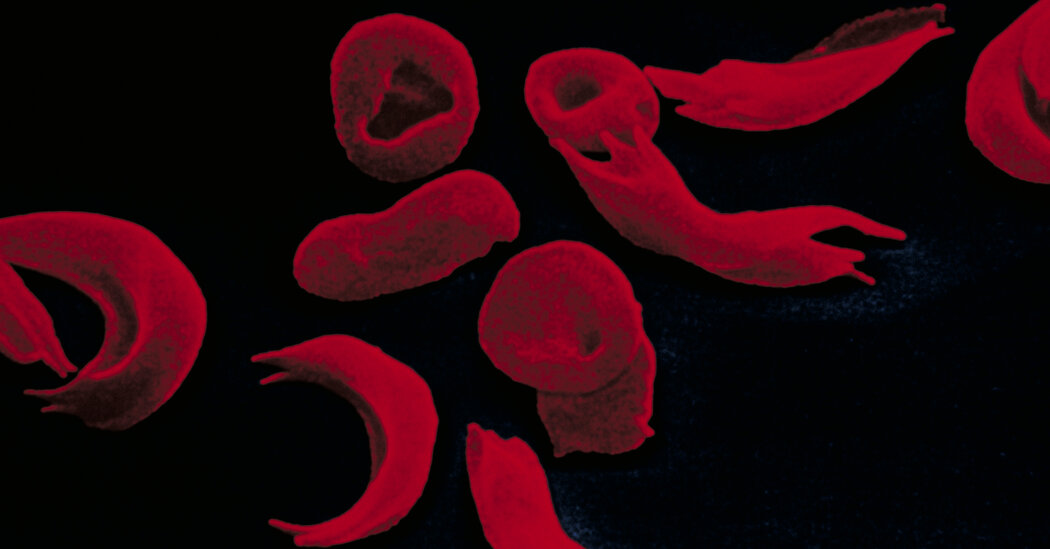
The first treatment that relies on CRISPR is expected to receive U.S. approval next month. But it may cost millions of dollars per patient.Regulators in Britain on Thursday approved the first treatment derived from CRISPR, the revolutionary gene-editing method. Called Casgevy, the treatment is intended to cure sickle-cell disease and a related condition, beta thalassemia.The manufacturers, Vertex Pharmaceuticals, based in Boston, and CRISPR Therapeutics, based in Switzerland, say about 2,000 patients in Britain with sickle-cell disease or beta thalassemia are expected to be eligible for the treatment.The companies anticipate that the Food and Drug Administration will approve Casgevy for sickle-cell patients in the United States in early December. The agency will decide on approval for beta thalassemia next year.In late December, the F.D.A. is expected to approve another sickle cell gene therapy by Bluebird Bio of Somerville, Mass. That treatment does not rely on gene editing, instead using a method that inserts new DNA into the genome.Sickle-cell disease is caused by a defective gene that leads to the creation of abnormal hemoglobin, the oxygen-carrying component in red blood cells. The cells themselves become malformed, causing episodes of extreme pain. About 100,000 Americans, who are mostly Black and Hispanic, are believed to have the illness.In beta thalassemia, the defective gene leads to deficient levels of hemoglobin in red blood cells. The condition is rare.Casgevy relies on CRISPR to nick the DNA, activating a gene that produces an alternative form of hemoglobin. To receive the sickle-cell treatment, patients in Britain must be at least 12 years old and have experienced repeated episodes of extreme pain.There is no upper age limit, nor are patients excluded because they have suffered too much organ damage from sickle-cell disease, said Dr. David Altshuler, Vertex’s chief scientific officer.But the patients must have no other options. Sickle-cell disease can be cured with a bone-marrow transplant, but few patients have compatible donors.For people struggling with the illness, the Vertex and Bluebird treatments have been a long time coming. Pain is not the only complication — people with sickle-cell disease also suffer bone and organ damage and strokes. The misshapen blood cells do not survive long, resulting in anemia.Still, the CRISPR and Bluebird treatments are onerous and will require expertise that most hospitals lack.Patients must receive intense chemotherapy to clear their bone marrow of abnormal stem cells and make room for the genetically altered cells. Then the patients must stay a month or more in a hospital while their marrow regrows.And gene editing is expensive. Vertex and CRISPR Therapeutics have not set a price yet in Britain — that will depend on conversations with those who will be paying for it, said Stuart Arbuckle, executive vice president and chief operating officer at Vertex.The price in the United States, though, is expected to be millions of dollars per patient. Sickle-cell disease itself is expensive, however, costing the U.S. health system an estimated $3 billion a year.In the United States, Bluebird already has a gene therapy approved for beta thalassemia. It costs $2.8 million per patient.Dr. Altshuler said Vertex was testing its sickle-cell treatment in children ages 5 to 11, hoping to prevent the irreversible organ damage that occurs over time.The company’s first sickle-cell patient, Victoria Gray, said on Thursday that the treatment changed her life.Ms. Gray, a Walmart associate in Forest, Miss., was diagnosed with sickle-cell disease when she was 3 months old and had a pain crisis. Those episodes became a part of her life, resulting in frequent hospitalizations.“A lot of my dreams, I couldn’t do,” she said. “The smallest things — cold, changing weather — I would end up in the hospital.”She had the gene editing treatment in 2019, when she was 33. Now, she said, all her symptoms have vanished.“It meant a new beginning,” Ms. Gray said. “It is more than I ever dreamed of, for everything to be gone.”

Read more →

Was This a Recurrence of Non-Hodgkin’s Lymphoma or Something Else?

“Go to the emergency room,” the doctor told him after hearing of his trip and fever, rash and whole-body weakness. “You need to be seen.”The 57-year-old man looked up the long staircase that led to his rooms in the rectory, the residence he shared with three other priests. He gripped the handrail on either side of the stairs and forced his foot onto the first step. Slowly he pulled himself up the two flights of stairs to his rooms. His trip home to Boston from a conference in Asunción, Paraguay, had been rough. It was an overnight trip, but he hadn’t been able to sleep at all. Now all he wanted to do was take off his Roman collar and lie down.When he finally made it to his rooms, he looked into his bathroom mirror. His face was bright red and shiny with sweat. The red continued down his chest and onto his belly. His whole body ached. He crawled gratefully beneath his covers. What he really needed was a good night’s sleep, he told himself. But as sleep continued to elude him, he suddenly felt cold. He shivered uncontrollably. The shaking chills confirmed what he already suspected: He was sick. And that worried him.Six years earlier he felt this bad after a flight. He went to the hospital and was diagnosed with non-Hodgkin’s lymphoma. Treatment had been brutal. The seven months of chemotherapy killed the cancer but also destroyed his body’s ability to make any blood for himself. He was rescued with stem cells — the cells that create the blood he needed — harvested from his own body before he started the treatment. He had been disease-free since then but knew that recurrence was possible. It was a low-level anxiety he faced with every subsequent symptom. Before the cancer, he might have just toughed it out. Not now.He called Dr. Peter Zuromskis, his longtime primary care physician. He hated to bother him on a Saturday, but he thought this was important enough to merit the call. “Go to the emergency room,” the doctor told him after hearing of his trip and fever, rash and whole-body weakness. “You need to be seen.”Photo illustration by Ina JangTrouble Carrying His Suitcase One of his housemates drove him to the emergency department at Beth Israel Deaconess Medical Center. It was dark outside by the time he passed through the busy E.D. and into a room in the hospital. He repeated his story a half-dozen times to various doctors, nurses and trainees as he was poked, prodded, stuck and imaged for hours. The priest was grateful for the quiet of the small room where he was finally able to rest.Dr. Martin Kaminski was the hospitalist on the night shift. He introduced himself and asked the patient to tell his story, listening as the man described his trip, his weakness, his rash, his fever. His temperature was 102 when he arrived at the hospital but had come down with acetaminophen and IV fluids. When the patient got to the end, Kaminski had a few more questions. Had he used insect repellent while in South America? No, the priest recalled. A fellow priest gave him a wristband that was supposed to keep the mosquitoes away. He hadn’t felt any bites while there. He drank only bottled water, he added. Did he leave the city or go for hikes in wooded areas? Had he been in contact with any domestic or farm animals? No, he was too busy to leave the hotel where the conference was held.Kaminski asked if he had any body aches. He did. And earlier, his right hand felt achy and a little weak. He had trouble carrying his suitcase. On the ride home, his neck felt strangely weak, as if his head had suddenly gotten much heavier. His neck still felt sore and stiff. The doctor asked him if he could put his chin on his chest. A stiff neck could suggest meningitis. But the patient demonstrated that he could. He was worried, the priest told Kaminski. He had felt this sick only once in his life — and that time was diagnosed with lymphoma. Could it have come back? In the E.D., the hematology-oncology team recommended a CT scan of his chest, abdomen and pelvis, but he hadn’t had it yet. Kaminsky told the anxious man that he thought an infection was much more likely than cancer. But they would know more after the CT scan.A Bite on His Ankle?As he examined the priest, Kaminski noted that his rash was on his back and arms as well as his chest. It looked like a sunburn, and the red skin paled to near-white when Kaminsky pressed his finger into the bright-colored skin on his chest, indicating that it was some kind of inflammation in the skin rather than blood leaking from the vessels below it. There was a tender red nodule on his ankle — possibly a bite. Otherwise, his exam was unremarkable. The lymph nodes in his neck and groin and those under his arms were not enlarged. If he had lymphoma, it wasn’t obvious. Infection was still the most likely cause of his misery.According to the Centers for Disease Control and Prevention, the doctor told the priest, there was an outbreak of chikungunya fever — a viral infection spread by mosquitoes — in Paraguay. And most of the cases had been reported where he’d been, in Asunción. The disease usually isn’t fatal but can cause an arthritis that can last months or even years after the infection is gone.Of course, there were other possibilities, Kaminski added. It could be dengue, another viral disease — spread by the same mosquito. Dengue can cause high fevers and body aches so severe the illness is called breakbone fever. And it can be deadly. While patients infected the first time are often just miserable, those unlucky enough to catch it a second time are at risk of developing a hemorrhagic version of the infection. Each infection is common throughout South America. Each is a virus, spread by the same mosquito. Chikungunya is famous for its abrupt onset and short incubation period, and so that was first on his list. Another possibility was that it was something he caught before he left his home in the Northeast. Maybe some tick-borne disease — like Lyme or anaplasmosis. They should have the answer within the week.Lingering Aches and FatigueThe patient felt better by the next day and was eager to go home. The fever and weakness were gone, and the rash was fading. Only the achiness remained. His doctors still weren’t sure what he had. The only thing known at that point was that this was not a recurrence of his lymphoma. The CT scan showed a couple of enlarged lymph nodes in his chest, but the radiologist thought those were most consistent with an infection. The scans of his abdomen and pelvis, where his original cancer had been located, looked fine.In the days after the priest’s discharge, Kaminski watched as the test results came back. The test for chikungunya was negative. So was the test for dengue. It wasn’t any of the other diseases that he and the infectious-disease doctors had looked for.As for the patient, although the fever was gone by the time he left the hospital, the fatigue and body aches hung on. His head felt cloudy; even reading was hard. Over the following weeks he felt better, but not well. He went to see Zuromskis and described his persistent malaise. What else could this be? Zuromskis smiled. He was confident this was chikungunya. But the test was negative, the patient reminded him. “That test was negative then,” he replied. If he repeated the test now, the doctor felt certain it would be positive.Those first results showed the priest’s immune response to each of the infections they looked for. If he had ever been exposed to that bug before, the test looking for the antibody would read positive immediately; the template to fight off that bug would have already been made by his immune system and stored away. If, instead, this was a first infection, it would take days for the body to gear up and create the bespoke antibodies, tailored to this specific invader. It might have been negative while he was in the hospital, but Zuromskis was sure it wouldn’t be negative now. He sent the tests for the suspected viruses. The results came back a few days later. Only one was positive. Very positive. He had chikungunya fever.The trip to Paraguay was eight months ago. Full recovery was slow. The stiffness and joint pains lasted for months. It’s only recently that he has been able to take on the stairs with his old vigor and speed. And yet, despite the infection and his history of cancer, he is, he tells me, a healthy man. Lisa Sanders, M.D., is a contributing writer for the magazine. Her latest book is “Diagnosis:Solving the Most Baffling Medical Mysteries.” If you have a solved case to share, write her atLisa.Sandersmdnyt@gmail.com.

Read more →