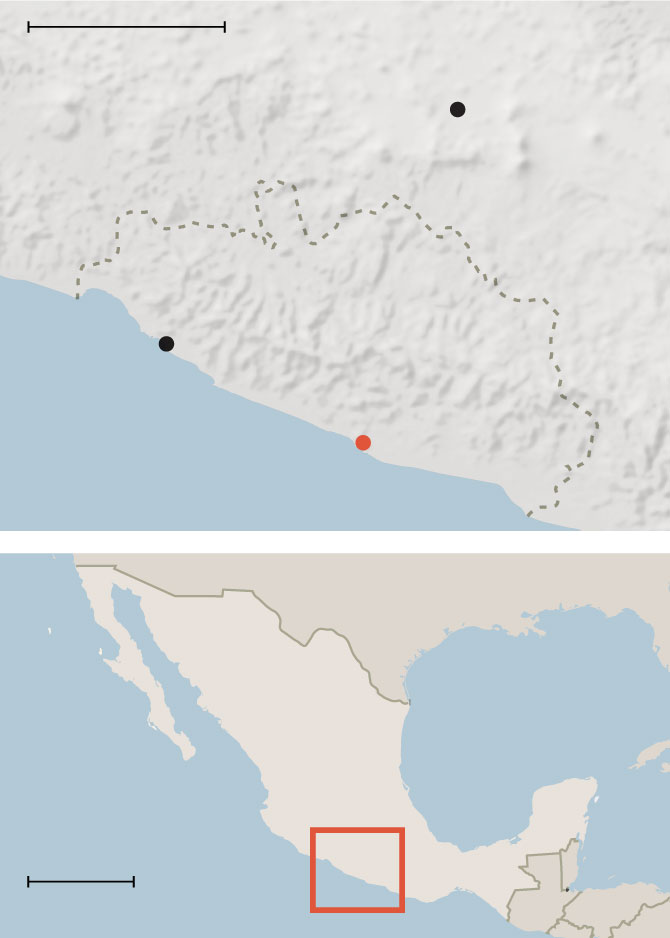
Cockroaches and Mountains of Trash Plague Acapulco After Hurricane

Residents complain of rashes and stomach ailments as 666,000 tons of garbage overwhelm the city. Uncollected waste after natural disasters can lead to illnesses, experts said.Below the shattered windows of the high-rise hotels in downtown Acapulco, people walk alongside towering hills of garbage bags filled with rotting food and debris, from mattresses to Christmas decorations. Volunteer firefighters from distant states clear the waste, wiping away swarms of cockroaches from their arms.Miles from the coastal beachside resorts, Elizabeth Del Valle, 43, listened as her teenage daughter Constanza Sotelo, described the “mountains of trash” still blocking many streets surrounding their home.“We have no way to find face masks to keep ourselves healthy,” said Ms. Del Valle. “We expect that we’re going to get an infection from the smell, from the garbage.”Weeks after Hurricane Otis shocked forecasters and government officials by intensifying rapidly into the strongest storm to hit Mexico’s Pacific Coast and devastate much of Acapulco, residents say they now face an unfolding public health disaster.Many locals, public health officials and emergency responders say they believe that the uncollected garbage is linked to stomach infections, diarrhea and skin rashes and other ailments that people have complained about since the storm.Local business groups this past week called on federal and state officials to declare a sanitary emergency citing “the accumulation of garbage, construction material, lack of potable water and the presence of insects and harmful fauna,” including human remains.As thousands of troops descended on Acapulco after Otis made landfall, authorities first prioritized clearing debris and restoring power to the tourist resort areas, according to city officials, local business leaders and residents. Some hotels in that area have since reopened.But people who live outside the city’s beachfront tourist neighborhoods say they must navigate so many piles of trash and debris that in some places it is hard to reach hospitals and health centers.A crew removing debris from an Acapulco street. Many people who live outside the city’s beachfront tourist destinations say they must navigate a proliferation of piles of garbage.David Guzman/EPA, via ShutterstockEven as the authorities respond to Acapulco’s many needs — providing water to residents, restoring power and finding missing people — federal and local officials are sounding alarms over the hurricane’s longer-term health consequences and say that clearing trash needs to be priority.The city’s mayor estimates that 666,000 tons of garbage are piled across Acapulco. Under normal conditions, local officials said, 700 to 800 tons of waste are picked up every day.

Read more →

Decoding cell fate: Key mechanism in stem cell switch identified

Stem cells can differentiate to replace dead and damaged cells. But how do stem cells decide which type of cell to become in a given situation? Using intestinal organoids, the group of Bon-Kyoung Koo at IMBA and the Institute for Basic Science identified a new gene, Daam1, that plays an essential role, switching on the development of secretory cells in the intestine. This finding, published on November 24 in Science Advances, opens new perspectives in cancer research.
Our bodies are, in some ways, like cars — to keep functioning, they need to be checked and repaired regularly. In the case of our bodies, any cells that are damaged or dead need to be replaced to keep organs functioning. This replacement occurs thanks to tissue-resident adult stem cells. In contrast with embryonic stem cells, which can form any cell type in the body, adult stem cells will only form the cell types that are found in the tissue they belong to. But how do tissue-specific stem cells know which cell type to give rise to? Gabriele Colozza, a postdoctoral researcher in the lab of Bon-Kyoung Koo at IMBA — now director at the Center for Genome Engineering, Institute for Basic Science in South Korea — decided to investigate this question using intestinal stem cells.
Intestines — a constant construction site
“In our intestines, cells are exposed to extreme conditions,” Colozza explains. Mechanical wear and tear, but also digestive enzymes and varying pH values all affect intestinal cells. In turn, stem cells in the intestine’s mucosa differentiate to form new intestinal cells. “Damaged cells have to be replaced, but it is a delicate balance between stem cell renewal and differentiation into other cell types: uncontrolled stem cell proliferation may lead to tumor formation; on the other hand, if too many stem cells differentiate, the tissue will be depleted of stem cells and ultimately unable to self-renew.”
This balance is delicately tuned by signaling pathways and feedback loops, which allow cells to communicate with each other. One important pathway is called Wnt. The Wnt pathway is known for its role in embryonic development, and if left unchecked, an overactive Wnt pathway can lead to excessive cell division and the formation of tumors.
Molecular partner identified
A well-known antagonist of Wnt signalling — keeping Wnt in check — is Rnf43, which was originally identified by Bon-Kyoung Koo. Prior to this study, Rnf43 was known to target the Wnt receptor Frizzled and mark it for degradation. “We wanted to know how Rnf43 works, and also what — in turn — controls Rnf43 and helps it to regulate Wnt signalling.” From earlier research, the scientists knew that Rnf43 on its own was not sufficient to break down the Wnt receptor Frizzled, which sits in the plasma membrane. “In our project, we used biochemical assays to identify which proteins interact with Rnf43.” A key partner of Rnf43 turned out to be the protein Daam1.

To understand how Daam1 regulates Rnf43 and affects the tissues it acts in, Colozza turned to intestinal organoids. “We found that Daam1 is required for Rnf43 to be active, so for Rnf43 to regulate Wnt signaling at all. Further work in cells showed Rnf43 needs Daam1 to move the Wnt receptor Frizzled into vesicles called endosomes. From the endosomes, Frizzled is shuttled to the lysosomes where it is degraded, dampening Wnt signaling,” Colozza adds.
Intestinal organoids are three-dimensional cell cultures grown from adult intestinal stem cells, allowing the researchers to mimic the intestinal mucosa. For Colozza, organoids were an opportunity to understand how Rnf43 and Daam1 affect the delicate balance of stem cell renewal and differentiation in the intestine. “We found that when we knock-out Rnf43 or Daam1, the organoids grow into tumor-like structures. These tumor-like organoids keep on growing, even if we withdraw the growth factors they usually depend on, such as R-spondin.”
Switching on Paneth cell formation
When Colozza followed up this result in mouse tissue, the researchers were in for a surprise. “When Rnf43 was missing, the intestines grew tumors — as expected. But when Daam1 was missing, no tumors grew. We were puzzled by this striking difference: how can the loss of factors in the same pathway, that behave similarly in organoids, lead to such different outcomes?”
Looking closely at the intestines, Colozza saw that intestines lacking Rnf43 were full of a specific type of secretory cells, the Paneth cells. Intestines lacking Daam1, on the other hand, contained no extra Paneth cells. Paneth cells secrete growth factors, such as Wnt, that stimulate cell division. “Daam1 is required for the efficient formation of Paneth cells. When Daam1 is active, stem cells differentiate to form Paneth cells. When Daam1 is not active, the stem cells differentiate into another cell type.”
Tumors modify their niche to grow
This link between the molecular results and Paneth cells explains the puzzling difference between intestines and organoids. “In organoid culture, we scientists provide growth factors, so the knockout of both Rnf43 and Daam1 lead to tumor-like organoids. But in the intestine, there is no little scientist providing growth factors. Instead, Paneth cells provide growth factors, like Wnt, and create the right conditions for stem cells to survive and divide. When Paneth cells are lacking — such as when Daam1 is not active to drive cells into becoming Paneth cells — stem cells will not divide much. But when there are too many Paneth cells — such as in intestines lacking Rnf43 — the excessive growth factors can contribute to the formation of tumors.”
Colozza’s and colleagues’ study is the first genetic proof that Daam1, a member of the non-canonical Wnt pathway, is important for specifying Paneth cells, and directly involved in the development of this crucial secretory cell. The results also shed light on the importance of the stem cell niche. “We show that tumor cells modify their microenvironment, and influence their supporting environment so that they can grow better.”

Read more →

AI recognizes the tempo and stages of embryonic development

Animal embryos go through a series of characteristic developmental stages on their journey from a fertilized egg cell to a functional organism. This biological process is largely genetically controlled and follows a similar pattern across different animal species. Yet, there are differences in the details — between individual species and even among embryos of the same species. For example, the tempo at which individual embryonic stages are passed through can vary. Such variations in embryonic development are considered an important driver of evolution, as they can lead to new characteristics, thus promoting evolutionary adaptations and biodiversity.
Studying the embryonic development of animals is therefore of great importance to better understand evolutionary mechanisms. But how can differences in embryonic development, such as the timing of developmental stages, be recorded objectively and efficiently? Researchers at the University of Konstanz led by systems biologist Patrick Müller are developing and using methods based on artificial intelligence (AI). In their current article in Nature Methods, they describe a novel approach that automatically captures the tempo of development processes and recognizes characteristic stages without human input — standardized and across species boundaries.
Every embryo is a little different
Our current knowledge of animal embryogenesis and individual developmental stages is based on studies in which embryos of different ages were observed under the microscope and described in detail. Thanks to this painstaking manual work, reference books with idealized depictions of individual embryonic stages are available for many animal species today. “However, embryos often do not look exactly the same under the microscope as they do in the schematic drawings. And the transitions between individual stages are not abrupt, but more gradual,” explains Müller. Manually assigning an embryo to the various stages of development is therefore not trivial even for experts and a bit subjective.
What makes it even more difficult: Embryonic development does not always follow the expected timetable. “Various factors can influence the timing of embryonic development, such as temperature,” explains Müller. The AI-supported method he and his colleagues developed is a substantial step forward. For a first application example, the researchers trained their Twin Network with more than 3 million images of zebrafish embryos that were developing healthily. They then used the resulting AI model to automatically determine the developmental age of other zebrafish embryos.
Objective, accurate and generalizable
The researchers were able to demonstrate that the AI is capable of identifying key steps in zebrafish embryogenesis and detecting individual stages of development fully automatically and without human input. In their study, the researchers used the AI system to compare the developmental stage of embryos and describe the temperature dependence of embryonic development in zebrafish. Although the AI was trained with images of normally developing embryos, it was also able to identify malformations that can occur spontaneously in a certain percentage of embryos or that may be triggered by environmental toxins.
In a final step, the researchers transferred the method to other animal species, such as sticklebacks or the worm Caenorhabditis elegans, which is evolutionarily quite distant from zebrafish. “Once the necessary image material is available, our Twin Network-based method can be used to analyze the embryonic development of various animal species in terms of time and stages. Even if no comparative data for the animal species exists, our system works in an objective, standardized way,” Müller explains. The method therefore holds great potential for studying the development and evolution of previously uncharacterized animal species.

Read more →

Particulate pollution from coal associated with double the risk of mortality than PM2.5 from other sources

Exposure to fine particulate air pollutants from coal-fired power plants (coal PM2.5) is associated with a risk of mortality more than double that of exposure to PM2.5 from other sources, according to a new study led by George Mason University, The University of Texas at Austin, and Harvard T.H. Chan School of Public Health. Examining Medicare and emissions data in the U.S. from 1999 to 2020, the researchers also found that 460,000 deaths were attributable to coal PM2.5 during the study period — most of them occurring between 1999 and 2007, when coal PM2.5 levels were highest.
The study was published on November 23, 2023, in Science.
While previous studies have quantified the mortality burden from coal-fired power plants, much of this research has assumed that coal PM2.5 has the same toxicity as PM2.5 from other sources.
“PM2.5 from coal has been treated as if it’s just another air pollutant. But it’s much more harmful than we thought, and its mortality burden has been seriously underestimated,” said lead author Lucas Henneman, assistant professor in the Sid and Reva Dewberry Department of Civil, Environmental, and Infrastructure Engineering at Mason. “These findings can help policymakers and regulators identify cost-effective solutions for cleaning up the country’s air, for example, by requiring emissions controls or encouraging utilities to use other energy sources, like renewables.”
Using emissions data from 480 coal power plants in the U.S. between 1999 and 2020, the researchers modeled where wind carried coal sulfur dioxide throughout the week after it was emitted and how atmospheric processes converted the sulfur dioxide into PM2.5. This model produced annual coal PM2.5 exposure fields for each power plant. They then examined individual-level Medicare records from 1999 to 2016, representing the health statuses of Americans ages 65 and older and representing a total of more than 650 million person-years. By linking the exposure fields to the Medicare records, inclusive of where enrollees lived and when they died, the researchers were able to understand individuals’ exposure to coal PM2.5 and calculate the impact it had on their health.
They found that across the U.S. in 1999, the average level of coal PM2.5 was 2.34 micrograms per cubic meter of air (μg/m3). This level decreased significantly by 2020, to 0.07 μg/m3. The researchers calculated that a one μg/m3 increase in annual average coal PM2.5 was associated with a 1.12% increase in all-cause mortality, a risk 2.1 times greater than that of PM2.5 from any other source. They also found that 460,000 deaths were attributable to coal PM2.5, representing 25% of all PM2.5-related deaths among Medicare enrollees before 2009.
The researchers were also able to quantify deaths attributable to specific power plants, producing a ranking of the coal-fired power plants studied based on their contribution to coal PM2.5’s mortality burden. They found that 10 of these plants each contributed at least 5,000 deaths during the study period. They visualized the deaths from each power plant in a publicly available online tool (https://cpieatgt.github.io/cpie/).

The study also found that 390,000 of the 460,000 deaths attributable to coal-fired power plants took place between 1999 and 2007, averaging more than 43,000 deaths per year. After 2007, these deaths declined drastically, to an annual total of 1,600 by 2020.
“Beyond showing just how harmful coal pollution has been, we also show good news: Deaths from coal were highest in 1999 but by 2020 decreased by about 95%, as coal plants have installed scrubbers or shut down,” Henneman said.
“I see this as a success story,” added senior author Corwin Zigler, associate professor in the Department of Statistics and Data Sciences at UT Austin and founding member of the UT Center for Health & Environment: Education & Research. “Coal power plants were this major burden that U.S. policies have already significantly reduced. But we haven’t completely eliminated the burden — so this study provides us a better understanding of how health will continue to improve and lives will be saved if we move further toward a clean energy future.”
The researchers pointed out the study’s continuing urgency and relevance, writing in the paper that coal power is still part of some U.S. states’ energy portfolios and that global coal use for electricity generation is even projected to increase.
“As countries debate their energy sources — and as coal maintains a powerful, almost mythical status in American energy lore — our findings are highly valuable to policymakers and regulators as they weigh the need for cheap energy with the significant environmental and health costs,” said co-author Francesca Dominici, Clarence James Gamble Professor of Biostatistics, Population, and Data Science at Harvard Chan School and director of the Harvard Data Science Initiative.
Funding for the study came from the National Institutes of Health (grants R01ES026217, R01MD012769, R01ES028033, 1R01ES030616, 1R01AG066793, 1R01MD016054-01A1, 1R01ES 034373-01, 1RF1AG080948, and 1R01ES029950); the Environmental Protection Agency (grant 835872); the EmPOWER Air Data Challenge (grant LRFH); the Alfred P. Sloan Foundation (grant G-2020-13946); and the Health Effects Institute (grants R-82811201 and 4953).

Read more →

Deaths From Coal Pollution Have Dropped, but Emissions May be Twice as Deadly

Deaths linked to coal exhaust have dropped but coal exhaust is twice is likely to contribute to deaths as other air pollution, a new study found.Coal, the dirtiest of fossil fuels, is far more harmful to human health than previously thought, according to a new report, which found that coal emissions are associated with double the mortality risk compared with fine airborne particles from other sources.The research, published Thursday in the journal Science, linked coal pollution to 460,000 deaths among Medicare recipients aged 65 and older between 1999 and 2020.Yet the study also found that during that period the shuttering of coal plants in the United State, coupled with the installation of scrubbers in the smokestacks to “clean” coal exhaust, has had salubrious effects. Deaths attributable to coal plant emissions among Medicare recipients dropped from about 50,000 a year in 1999 to 1,600 in 2020, a decrease of more than 95 percent, the researchers found.“Things were bad, it was terrible,” Lucas Henneman, the study’s lead author, and an assistant professor in environmental engineering at George Mason University, said in an interview. “We made progress, and that’s really good.”Researchers from six universities collected emissions data from 480 coal power plants between 1999 and 2020. They used atmospheric modeling to track how sulfur dioxide converted into particulate matter and where it was carried by wind, and then examined millions of Medicare patient deaths by ZIP code.Though the researchers could not identify exact causes of death, the statistical model showed that areas with more airborne coal particulates had higher death rates.Some 138 coal plants each contributed to at least 1,000 excess deaths, and 10 plants were linked to more than 5,000 deaths apiece, the researchers found.While fine particulate matter, known as P.M. 2.5, is frequently examined for its health risks, the researchers found that inhaling those fine particles from coal exhaust was especially deadly.Breathing in coal exhaust was associated with more than double the mortality risk compared with inhaling fine particulates from other sources, the researchers determined.They also published an online tool showing deaths attributed to individual coal-fired power plants.“We can’t say how long these people would’ve lived without exposure,” Dr. Henneman said. “But we are saying they died earlier than they otherwise would have because of this coal pollution.”Requirements that coal-fired power plants “scrub” the pollutants they emit, by removing sulfur dioxide using a cloud of water droplets, proved a game changer for public health.After scrubbers were installed in 2009 and 2010 at the Keystone power plant in Pennsylvania, the average number of annual deaths linked to the plant dropped to 80 from 640, the researchers found. They also found that the average level of coal P.M. 2.5 across the United States dropped to 0.07 micrograms in 2020 from 2.34 micrograms per cubic meter of air in 1999.“People today are living longer without as much of this coal pollution in the air,” Dr. Henneman said. “It’s this major success story.” Coal use is declining in the United States, but is increasing worldwide. It is projected to peak in 2025, at which point renewable energy sources are forecast to become the largest source of electricity production.The new study in Science adds to mounting evidence of the health benefits that come from moving away from the burning of fossil fuels, especially for vulnerable populations.In California, the addition of 20 zero emission vehicles for every 1,000 people in a given ZIP code correlated to a 3.2 percent drop in the rate of asthma-related emergency room visits, according to a study published earlier this year in the journal Science of the Total Environment.In Chicago, the closure of three coal-fired plants was followed by a 12 percent decrease in asthma-related emergency room visits for children aged 4 and under living in the area relative to rates in places farther away, according to research published in 2021 in the American Journal of Public Health.And after a large coal-processing plant shut down in Pittsburgh in 2016, there was an immediate 42 percent drop in weekly hospital visits for heart-related problems for nearby residents, another study found. The health benefits continued, with 33 fewer hospitalizations for heart disease on average for each of the three years after the plant’s closure compared with the three years before.In May, the Environmental Protection Agency proposed new rules that would cap the amount of pollutants that power plants could pump out, and estimated there’d be up to $85 billion in climate and health benefits. But given how deadly coal particulates have been found to be, Dr. Hennemen said the benefits would likely be far greater. Stronger curbs on tiny airborne particles could also result in a 7 percent drop in death rates for Black and low-income older people who have long been subjected to the country’s most polluted air, according to research published earlier this year.

Read more →

China: WHO seeks data on 'pneumonia clusters' in children

PublishedJust nowShareclose panelShare pageCopy linkAbout sharingImage source, Mayur KakadeBy Phelan Chatterjee & Fergus WalshBBC NewsThe World Health Organization (WHO) has asked China for more information on “clusters of undiagnosed pneumonia” reportedly spreading among children in the north of the country.Non-state media reports say paediatric hospitals in parts of the country are overwhelmed with sick children. Chinese authorities have attributed a spike in flu-like illnesses this winter to the lifting of Covid measures.The WHO is urging people in China to take measures to reduce transmission.In a statement, the UN health agency says it wants more information on reports in the media and from ProMed – a global outbreak surveillance system – of “clusters of undiagnosed pneumonia in children in northern China”.After the WHO statement was released, state-run Xinhua news agency published an article on Thursday which quoted officials of the National Health Commission as saying they were paying close attention to the diagnosis and care of children with respiratory illnesses.While mentions of China and a wave of infection can get people jittery as it brings memories of the coronavirus pandemic, it’s good practice for the WHO to ask for clarity. But until Beijing responds, there is no way of knowing why this spike of infections has come.Relics of zero-Covid dot China as life moves on Since October, northern China has reported an “increase in influenza-like illness” compared to the same period over the past three years, the WHO adds.Last week, China’s National Health Commission said there had been a rise in several respiratory diseases across the country – in particular influenza, Covid, mycoplasma pneumoniae – a common bacterial infection affecting younger children – and respiratory syncytial virus (RSV).Officials attributed the rise to the lifting of Covid restrictions.Other countries, including the UK and the US, saw similar surges in flu-like illnesses once pandemic restrictions were lifted.”China is likely experiencing a major wave of childhood respiratory infections now as this is the first winter after their lengthy lockdown, which must have drastically reduced the circulation of respiratory bugs, and hence decreased immunity to endemic bugs,” said Prof Francois Balloux of the University College of London Genetics Institute.The WHO says it is unclear if the reported pneumonia outbreak and overall increase in respiratory infections reported by Beijing are linked – and has made an official request for more detailed information.It has urged people in China to take basic precautions like getting vaccinated, wearing masks and hand-washing.More on this storyIs Covid now just a regular winter bug?Published31 October’Long colds’ can be a thing, like long CovidPublished6 October

Read more →

New clues into the head-scratching mystery of itch

Scientists at Harvard Medical School have shown for the first time that a common skin bacterium — Staphylococcus aureus — can cause itch by acting directly on nerve cells.
The findings, based on research in mice and in human cells, are reported Nov. 22 in Cell. The research adds an important piece to the long-standing puzzle of itch and helps explain why common skin conditions like eczema and atopic dermatitis are often accompanied by persistent itch.
In such conditions, the equilibrium of microorganisms that keep our skin healthy is often thrown off balance, allowing S. aureus to flourish, the researchers said. Up until now, the itch that occurs with eczema and atopic dermatitis was believed to arise from the accompanying inflammation of the skin. But the new findings show that S. aureus single-handedly causes itch by instigating a molecular chain reaction that culminates in the urge to scratch.
“We’ve identified an entirely novel mechanism behind itch — the bacterium Staph aureus, which is found on almost every patient with the chronic condition atopic dermatitis. We show that itch can be caused by the microbe itself,” said senior author Isaac Chiu, associate professor of immunology in the Blavatnik Institute at HMS.
The study experiments showed that S. aureus releases a chemical that activates a protein on the nerve fibers that transmit signals from the skin to the brain. Treating animals with an FDA-approved anti-clotting medicine successfully blocked the activation of the protein to interrupt this key step in the itch-scratch cycle. The treatment relieved symptoms and minimized skin damage.
The findings can inform the design of oral medicines and topical creams to treat persistent itch that occurs with various conditions linked to an imbalance in the skin microbiome, such as atopic dermatitis, prurigo nodularis, and psoriasis.
The repeated scratching that is a hallmark of these conditions can cause skin damage and amplify inflammation.

“Itch can be quite debilitating in patients who suffer from chronic skin conditions. Many of these patients carry on their skin the very microbe we’ve now shown for the first time can induce itch,” said study first author Liwen Deng, a postdoctoral research fellow in the Chiu Lab.
Identifying the molecular spark plug that ignites itch
Researchers exposed the skin of mice to S. aureus. The animals developed intensifying itch over several days, and the repeated scratching caused worsening skin damage that spread beyond the original site of exposure.
Moreover, mice exposed to S. aureus became hypersensitive to innocuous stimuli that would not typically cause itch. The exposed mice were more likely than unexposed mice to develop abnormal itching in response to a light touch.
This hyperactive response, a condition called alloknesis, is common in patients with chronic conditions of the skin characterized by persistent itch. But it can also happen in people without any underlying conditions — think of that scratchy feeling you might get from a wool sweater.
To determine how the bacterium triggered itch, the researchers tested multiple modified versions of the S. aureus microbe that were engineered to lack specific pieces of the bug’s molecular makeup. The team focused on 10 enzymes known to be released by this microbe upon skin contact. One after another, the researchers eliminated nine suspects — showing that a bacterial enzyme called protease V8 was single-handedly responsible for initiating itch in mice. Human skin samples from patients with atopic dermatitis also had more S. aureus and higher V8 levels than healthy skin samples.

The analyses showed that V8 triggers itch by activating a protein called PAR1, which is found on skin neurons that originate in the spinal cord and carry various signals — touch, heat, pain, itch — from the skin to the brain. Normally, PAR1 lies dormant but upon contact with certain enzymes, including V8, it gets activated. The research showed that V8 snips one end of the PAR1 protein and awakens it. Experiments in mice showed that once activated, PAR1 initiates a signal that the brain eventually perceives as itch. When researchers repeated the experiments in lab dishes containing human neurons, they also responded to V8.
Interestingly, various immune cells implicated in skin allergies and classically known to cause itch — mast cells and basophils — did not drive itch after bacterial exposure, the experiments showed. Nor did inflammatory chemicals called interleukins, or white cells, which are activated during allergic reactions and are also known to be elevated in skin diseases and even in certain neurologic disorders.
“When we started the study, it was unclear whether the itch was a result of inflammation or not,” Deng said. “We show that these things can be decoupled, that you don’t necessarily have to have inflammation for the microbe to cause itch, but that the itch exacerbates inflammation on the skin.”
Interrupting the itch-scratch cycle
Because PAR1 — the protein activated by S. aureus — is involved in blood-clotting, researchers wanted to see whether an already approved anticlotting drug that blocks PAR1 would stop itch. It did.
The itchy mice whose skin was exposed to S. aureus experienced rapid improvement when treated with the drug. Their desire to scratch diminished dramatically, as did the skin damage caused by scratching.
Moreover, once treated with PAR1 blockers, the mice no longer experienced abnormal itch in response to innocuous stimuli.
The PAR1 blocker is already used in humans to prevent blood clots and could be repurposed as anti-itch medication. For example, the researchers noted, the active ingredient in the medicine could become the basis for anti-itch topical creams.
One immediate question that the researchers plan to explore in future work is whether other microbes besides S. aureus can trigger itch.
“We know that many microbes, including fungi, viruses, and bacteria, are accompanied by itch but how they cause itch is not clear,” Chiu said.
Beyond that, the findings raise a broader question: Why would a microbe cause itch? Evolutionarily speaking, what’s in it for the bacterium?
One possibility, the researchers said, is that pathogens may hijack itch and other neural reflexes to their advantage. For example, previous research has shown that the TB bacterium directly activates vagal neurons to cause cough, which might enable it to spread more easily from one host to another.
“It’s a speculation at this point, but the itch-scratch cycle could benefit the microbes and enable their spread to distant body sites and to uninfected hosts,” Deng said. “Why do we itch and scratch? Does it help us, or does it help the microbe? That’s something that we could follow up on in the future.”
The work was funded by the National Institutes of Health (grants R01AI168005, R01AI153185, R01NS065926, R01NS102161, R01NS111929, R37AI052453, R01AR076082, U01AI152038, UM1AI151958, R01AI153185, R01JL160582, F32AI172080, T32AI049928, 1R21AG075419), Food Allergy Science Initiative (FASI), Burroughs Wellcome Fund, Drako Family Fund, Jackson-Wijaya Research Fund, Canadian Institutes of Health Research (CIHR) (grants 376560 and 469411), and ANR-PARCURE (PRCE-CE18, 2020).
Chiu serves on the scientific advisory board of GSK Pharmaceuticals. Provisional patent application Serial No. 63/438,668, in which some coauthors are listed as inventors, was filed based on these findings.

Read more →

Lowering a form of brain cholesterol reduces Alzheimer's-like damage in mice

In Alzheimer’s disease and related dementias, cognitive decline is driven by the overaccumulation of a normal brain protein known as tau. Wherever tau builds up, nearby brain tissue starts to degenerate and die.
Now, researchers at Washington University School of Medicine in St. Louis have found — in mice — that Alzheimer’s-like tau deposits in the brain lead to the accumulation of a form of cholesterol known as cholesteryl esters, and that lowering cholesteryl ester levels helps prevent brain damage and behavioral changes.
“This has important therapeutic implications,” said senior author David M. Holtzman, MD, the Barbara Burton and Reuben M. Morriss III Distinguished Professor of Neurology. “The compound we used in this study has side effects that make it unsuitable for use in people. But if you could develop a therapy that reduces cholesteryl esters inside brain cells without unacceptable side effects, it would be a promising candidate to test in neurodegenerative diseases.”
The findings are published Nov. 22 in the journal Neuron.
The link between cholesterol and dementia is not as far-fetched as it might seem. The biggest genetic risk factor for Alzheimer’s is APOE, a gene involved in activating the brain’s immune cells. When such cells are activated in the wrong way or at the wrong time, they can damage brain tissue. But APOE also has another important job in the body: It carries cholesterol and other lipids around in the blood. In this capacity, it plays a role in atherosclerosis.
To investigate the connections between APOE, lipids and brain damage, Holtzman and first author Alexandra Litvinchuk, PhD, a postdoctoral researcher, studied mice with a high-risk tau gene that predisposes them to accumulate tau in their brains. Such mice start developing signs of neurodegeneration around 6 months of age. By 9½ months, their brains are severely damaged, and they no longer are able to complete ordinary tasks of mouse life such as properly building a nest. The mice also carried a second genetic modification: Their own APOE genes had been removed and either replaced with a variant of the human APOE gene — APOE3, which confers an average risk of Alzheimer’s; or APOE4, which doubles or triples the risk of Alzheimer’s — or not replaced at all.
Investigation revealed that APOE4 is linked to distorted lipid metabolism in the brain. In 9½-month-old tau mice carrying APOE4, the same brain areas that became atrophied and damaged also amassed excess lipids, and in a strange pattern. Levels of more than 180 kinds of lipids were altered. Among the most striking differences was that immune cells known as microglia in those areas were filled to the brim with cholesteryl esters. APOE3 did not have the same effect. The measurement of the brain lipids was done in collaboration with scientists at the company Denali Therapeutics led by Gilbert Di Paolo, PhD.

“Microglia filled up with lipids become hyperinflammatory and start secreting things that are not good for the brain,” Holtzman said.
Therefore, clearing out lipids potentially could reduce brain inflammation and neurodegeneration, he said. To find out, Litvinchuk and Holtzman used an LXR agonist, a member of an experimental class of drugs that lowers lipid levels in cells. The researchers fed the drug, called GW3965, to tau mice carrying APOE4, starting at 6 months of age. The mice were assessed at 9½ months, by which point their brains normally would have sustained considerable damage. Mice that had received the drug retained significantly more brain volume than those that had received a placebo. They also had lower levels of tau, fewer inflammatory cells and less inflammation, less loss of synapses in their brains, and were better at building nests.
Further investigation revealed that the LXR agonist works by upregulating a gene called Abca1 that helps move cholesterol and other lipids out of cells. Using genetic methods to increase Abca1 levels had the same effect as drug treatment: less lipid accumulation, lower levels of tau, less inflammation and reduced neurodegeneration.
“What’s exciting is that we see all these effects in an animal model that shares a lot of features with human neurodegenerative diseases,” Holtzman said. “It shows that this kind of approach could have a lot of promise.”
One major obstacle stands in the way of translating this approach to people, Holtzman added. LXR agonists also affect lipid metabolism in the liver, and so they tend to cause fatty liver disease. Chemists are hard at work trying to design LXR agonists without that side effect. If they succeed, the resulting drugs may have benefits for heart disease as well as brain disease.
“There’s a lot of similarity between the mechanism that’s driving immune cells to damage the brain in Alzheimer’s disease and the one that’s driving the same kinds of immune cells to cause vascular damage in atherosclerosis,” Holtzman said. “In both cases, lipids accumulate in immune cells, causing them to become hyperinflammatory and damage nearby tissues. Getting rid of that lipid accumulation may have double benefits for human health.”

Read more →

Chemists use oxygen, copper 'scissors' to make cheaper drug treatments possible

Drugs to treat cancer are often very expensive to produce, resulting in high costs for the patients who need them. Thanks to pathbreaking research by UCLA chemists, led by organic chemistry professor Ohyun Kwon, the price of drug treatments for cancer and other serious illnesses may soon plummet.
One chemical used in some anti-cancer drugs, for example, costs pharmaceutical companies $3,200 per gram — 50 times more than a gram of gold. The UCLA researchers devised an inexpensive way to produce this drug molecule from a chemical costing just $3 per gram. They were also able to apply the process to produce many other chemicals used in medicine and agriculture for a fraction of the usual cost.
This feat, published in the journal Science, involves a process known as “aminodealkenylation.” Using oxygen as a reagent and copper as a catalyst to break the carbon-carbon bonds of many different organic molecules, the researchers replaced these bonds with carbon-nitrogen bonds, converting the molecules into derivatives of ammonia called amines.
Because amines interact strongly with molecules in living plants and animals, they are widely used in pharmaceuticals, as well as in agricultural chemicals. Familiar amines include nicotine, cocaine, morphine and amphetamine, and neurotransmitters like dopamine. Fertilizers, herbicides and pesticides also contain amines.
Industrial production of amines is therefore of great interest, but the raw materials and reagents are often expensive, and the processes can require many complicated steps to complete. Using fewer steps and no expensive ingredients, the process developed at UCLA can produce valuable chemicals at a much lower cost than current methods.
“This has never been done before,” Kwon said. “Traditional metal catalysis uses expensive metals such as platinum, silver, gold and palladium, and other precious metals such as rhodium, ruthenium and iridium. But we are using oxygen and copper, one of the world’s most abundant base metals.”
The new method uses a form of oxygen called ozone, a potent oxidant, to break the carbon-carbon bond in hydrocarbons called alkenes, and a copper catalyst to couple the broken bond with nitrogen, turning the molecule into an amine. In one example, the researchers produced a c-Jun N-terminal kinase inhibitor — an anti-cancer drug — in just three chemical steps, instead of the 12 or 13 steps previously needed. The cost per gram can thus be reduced from thousands of dollars to just a few dollars.
In another example, the protocol took just one step to convert adenosine — a neurotransmitter and DNA building block that costs less than 10 cents per gram — into the amine N6-methyladenosine. The amine plays crucial roles in controlling gene expression in cellular, developmental and disease processes, and its production cost has previously been $103 per gram.
Kwon’s research group was able to modify hormones, pharmaceutical reagents, peptides and nucleosides into other useful amines, showing the new method’s potential to become a standard production technique in drug manufacturing and many other industries.
The research was funded by the National Institutes of Health.

Read more →

Researchers develop new method for prenatal genetic testing

A team of investigators from Massachusetts General Hospital (MGH), Brigham and Women’s Hospital (BWH), and the Broad Institute of MIT and Harvard have developed a non-invasive genetic test that can screen the blood of pregnant individuals to survey all genes for fetal DNA sequence variants. The team evaluated the test by examining blood samples from 51 pregnant persons, finding that the test was able to capture variants that were inherited from the mother as well as new variants that were not present in the mother and associated with prenatal diagnoses. Results from their proof-of-principle analysis are published in the New England Journal of Medicine.
“Our study suggests that it is feasible to screen most genes across the fetal genome using a blood test rather than requiring an invasive procedure such as amniocentesis,” explains senior author Michael E. Talkowski, PhD, director of MGH’s Center for Genomic Medicine, an associate professor of Neurology at Harvard Medical School (HMS), and Institute Member of the Broad Institute.
Non-invasive prenatal testing (NIPT), also known as prenatal-cell-free DNA-screening, allows a pregnant individual to receive a blood test that screens for very large changes in fetal chromosomes such as an extra copy of chromosome 21, known as Down syndrome (trisomy 21); the gain or loss of entire copies of other chromosomes; the presence and number of X and Y sex chromosomes (indicating the sex of the fetus), and, more recently, for a small number of variants that are relevant for some fetal conditions.
For many prenatal genetic diagnoses, however, it is necessary to determine individual nucleotide changes across the protein coding sequence of the genome, known as the ‘exome.’ Exome screening currently requires genetic testing with an invasive medical procedure such as amniocentesis that involves significant cost and carries some inherent risks to the mother and fetus. The newly developed test could offer the capacity to discover and interpret variants across the fetal exome from DNA circulating in the mother’s blood. The method is referred to by the team as non-invasive fetal sequencing (NIFS).
This high-resolution NIFS approach enabled the research team to survey the exome, discover sequence changes, and distinguish potentially pathogenic variants from likely benign variants inherited from the mother. They tested their NIFS approach on 51 pregnancies that spanned all three trimesters and were representative of the pregnant population receiving care at Massachusetts General Hospital and Brigham and Women’s Hospital, the founding members of the Mass General Brigham healthcare system.
The NIFS screening method used a maternal blood draw without the need for a separate genetic test on the mother or father. The research team found that the method was highly sensitive for discovering single-base DNA changes and small insertions and deletions that were present in the fetal genome but not in the maternal genome, irrespective of the amount of fetal DNA detected. “In our retrospective analysis, we were able to accurately discover and predict fetal sequence variants from the NIFS approach with >99% sensitivity from the raw data and >90% sensitivity after filtering using our analysis methods,” said co-lead author Harrison Brand, PhD, an investigator in the department of Neurology at MGH and an assistant professor at HMS.
In 14 pregnancies referred for the current standard-of-care genetic testing that were also evaluated with the NIFS approach, NIFS detected all of the clinically relevant variants that were reported from invasive testing in the same individuals.

The authors conducted this initial test on 51 pregnancies, but the findings suggest that the test could potentially be done on many samples. “The clinical implications of this research are potentially profound, particularly for pregnancies in which a fetal anomaly is suspected from ultrasound and an invasive test is indicated,” says co-senior author Kathryn Gray, MD, PhD, an obstetrician and clinical geneticist at Brigham and Women’s Hospital and assistant professor of Obstetrics and Gynecology at HMS at the time of the study who is currently an associate professor at the University of Washington.
“It has long been known that fetal sequence variants can be obtained from cell-free fetal DNA, and exome sequencing is already part of the standard-of-care, but it currently requires an invasive procedure,” adds Talkowski, who is also the Desmond and Ann Heathwood MGH Research Scholar 2015-2020, “These results suggest that non-invasive sequencing can likely capture the same genetic information from the fetal exome that is already being obtained in the standard-of-care, but from a blood test alone without the invasive procedure.”
The team is currently working with other researchers to expand and validate these findings and to further develop the methods. “Our benchmarking suggests there is more room for optimization and that most variants currently captured in a standard exome test may be accessible to NIFS with further methods development,” says co-lead author Christopher Whelan, PhD, a computational scientist at the Broad Institute and the Talkowski laboratory.
The team emphasizes that this is not currently a clinical test and that these early studies will need to be replicated in much larger samples. While this work is ongoing, Talkowski, Gray and their colleagues are already planning for how best to support patients as they navigate testing options and test results during pregnancy. As Dr. Gray notes, “We understand the fear and uncertainty that patients experience during pregnancy. In instances where a current standard-of-care test identifies an abnormality during prenatal diagnostic testing, we ensure that patients have access to a multi-disciplinary team, including maternal-fetal medicine and pediatric specialists, genetic counselors, and social workers to help patients understand complicated test results. Non-invasive tests, including currently available NIPT screening methods, will require the same support network.”

Read more →