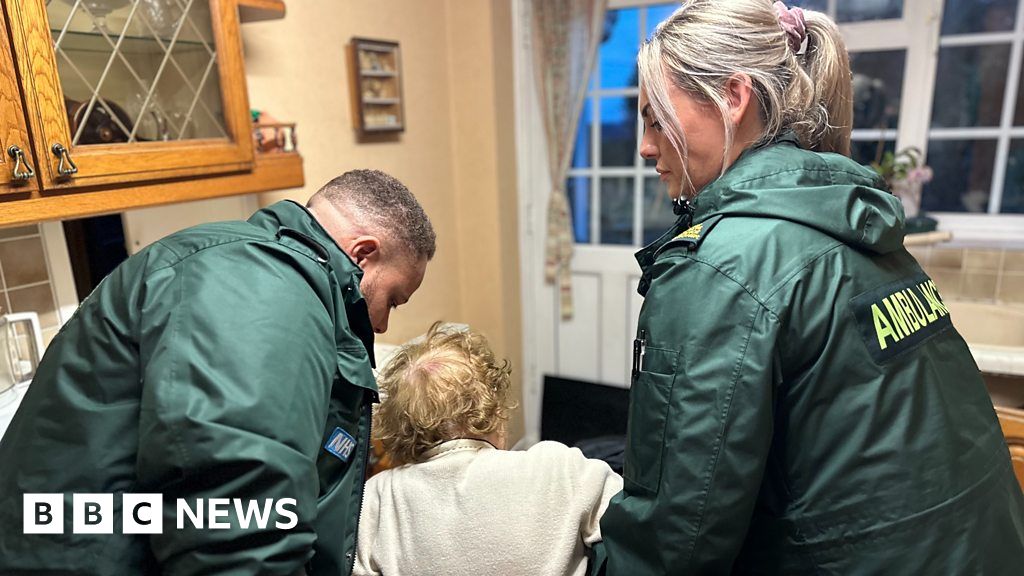
Watch: A day in the life of a South East paramedic

An ambulance crew invited the BBC to a drive along to experience a day on the front line of the NHS as the winter pressure ramps up.Lee Carr, a paramedic, and Beth Sutton, a trainee ambulance practitioner, attended a number of calls including a man having a seizure at Gatwick Airport railway station, a 96-year-old man with breathing problems and a 101-year-old woman who needed help after slipping in her kitchen.Mr Carr said: “You come into work, you don’t know what you’re going to go to that day. Every day is an opportunity just to help someone, make a difference to someone’s day.”

Read more →

Laura Kenny: Women struggle to get pregnant because of athlete lifestyle

By Holly BaconBBC SportLast updated on 4 hours ago4 hours ago.From the section CyclingGreat Britain’s most successful female Olympian Dame Laura Kenny believes women athletes can struggle to get pregnant because of their lifestyle.Kenny, 31, won five gold medals and one silver across three Olympic Games at London 2012, Rio 2016 and Tokyo 2020.The mum-of-two is targeting a fourth Games in Paris next year.Kenny says she has had “many conversations” with athletes suffering with Relative Energy Deficiency in Sport.Known as Red-S, the condition occurs when athletes expend more energy in training than they consume through food and drink and one of the key symptoms in women is the absence of periods.Several sportswomen have spoken about their experience with Red-S, including athletes Anna Boniface, Bobby Clay and Pippa Woolven and mountain bike racer Evie Richards.”There are females that have struggled and will struggle to get pregnant because of the lifestyle of being an athlete,” Kenny, who does not have the condition, told BBC Radio 5 Live Breakfast.”We’ve all heard of Red-S – being females losing their periods. You’re not going to be able to fall pregnant if you haven’t got a period. “It’s actually a really unhealthy lifestyle that these females can’t have kids and it’s actually really sad.”I’ve always consistently had a period but the amount of conversations I’ve heard of people having Red-S. “Red-S is actually really dangerous… these people are giving up lots of things that really deep down they want.”Kenny had her first child in 2017 and gave birth to her second child six months ago – but had a miscarriage and then an ectopic pregnancy in between.What is Red-S?It is a condition of low energy availability which has a serious impact on long-term health and performance. It can impact oestrogen levels leading to missed periods.Of the UK athletes surveyed, 36% have knowingly ignored missed periods in the belief that this is normal for an active person, according to the Female Athlete Health Report 2023external-link from Project Red-S and Kyniska Advocacy who surveyed 769 people. Kenny, who believes periods are still a taboo subject among some people, added: “For me our coach was brilliant, if you were on your period you could openly say as long as you felt comfortable but I do know there are a lot of coaches that I think still struggle with it and even to talk about it – they struggle to say the word.”‘It would be one hell of a comeback’Kenny, who had her first child Albie in 2017 with fellow Olympian husband Jason, became pregnant after the Tokyo Games but miscarried in November. Two months later, she suffered an ectopic pregnancy which is when a fertilised egg implants itself outside of the womb, usually in one of the fallopian tubes.Kenny is eyeing up a return to the track in the new year with hopes of adding to her hoard of medals at the Paris Games.”I think I realised that when we had the miscarriage and the ectopic, I knew deep down that it would be one hell of a comeback [to return to cycling], obviously delaying it because I still wanted to have another baby,” Kenny, who gave birth again six months ago, said.”I knew that time would be short before the next Olympics and it wasn’t about this big fairytale it was about what my heart so desperately wanted and it was to have him. I just wanted another one. “It consumed me for a long time because I felt that sense of one, loss and two, this missing piece.”

Read more →

People who see climate change as a health threat show more interest in cancer screening

Brigham researchers’ findings support developing public health interventions that incorporate components of environmental health literacy alongside cancer screening efforts.
The world’s climate crisis has wide ranging implications for human health. But how do our perceptions about climate change influence our intentions when it comes to personal health? A new study by investigators from Brigham and Women’s Hospital, a founding member of the Mass General Brigham healthcare system, used the National Cancer Institute’s annual Health Information and National Trends Survey (HINTS) to analyze adults’ views on climate change and their interest in cancer screening. The study found that individuals who saw climate change as a personal health threat were also more likely to endorse interest in cancer screening. The results are published in the Journal of the National Cancer Institute.
“Our findings suggest that individuals who are more aware of the potential health impacts of climate change may also be more overall health conscious, which may drive their interest in preventive healthcare measures, such as cancer screening,” said senior author Alexander P. Cole, MD, assistant professor in the Department of Urology and the Center for Surgery and Public Health at Brigham and Women’s Hospital. “Awareness of climate change impacts could also prompt individuals to take more proactive steps to protect their health in the face of environmental threats.”
Previous studies have uncovered both direct and indirect links between cancer and climate change. Certain climate change consequences, such as ozone depletion and the emergence of more environmental carcinogens, can cause cancer. And extreme weather events can disrupt cancer care as well as access to health care in general.
In the current study, Cole and colleagues analyzed responses from adults who completed the HINTS survey in 2021. Each respondent’s perceived risk of climate change to their personal health was categorized as “no harm” or “little harm” versus “some harm or “a lot of harm.” Researchers also assessed each respondent’s interest in getting screened for cancer the following year, categorized as “not at all” and “a little” versus “somewhat” and “very.”
The study found that 54 percent of survey respondents felt that climate change would cause “some” or “a lot” of harm to their health. Respondents also showed 73 percent higher odds of being interested in cancer screening when they felt that climate change posed “some” risk to their health and 84 percent higher odds when they perceived that climate change could harm their health “a lot.”
Other findings showed that respondents who were younger, female, and more educated were more likely to perceive climate change as a health threat. And that non-Hispanic Black and Hispanic populations expressed a higher interest in cancer screening than non-Hispanic White populations.

“We see room for improvement in climate change awareness overall as well as some racial disparities underlying some of the differences in awareness,” said first author Zhiyu Qian, MD, a urology resident in the Department of Urology and research fellow at the Center for Surgery and Public Health at Brigham and Women’s Hospital. “There are a lot of ways to interpret this and one could be that more vulnerable populations are already feeling more of the impacts from climate change.”
The authors note that their study is retrospective and does not prove causation, but future studies could explore whether climate change awareness directly impacts screening behavior. The research team is continuing to investigate specific ways that cancer care can be impacted by climate change, such as in the relationship between extreme weather events and cancer care. They are also working to improve sustainability in cancer care and adaptability of the healthcare system, such as by increasing the accessibility and quality of telehealth.
Moreover, addressing the root causes of climate change can yield advantages in lowering cancer risk. A prominent example is the reduction of meat consumption, which not only diminishes greenhouse gas emissions but also mitigates a significant cancer risk factor. Additionally, lifestyle modifications like active commuting and preserving greenspace have been associated with decreased cancer risks, while also supporting environmental health.
“Cancer care is multidisciplinary and extremely complex. You need a well-functioning healthcare system for it to work,” said Cole. “Raising awareness is a big piece as is changing the healthcare system. There are so many exciting opportunities to do this through public awareness, healthcare delivery, and lifestyle and diet modifications where you can do things that are great for planetary health as well as for patients’ health and cancer risk.”
Authorship: Additional authors include Edoardo Beatrici, Quoc-Dien Trinh, Adam S. Kibel, Stacy Loeb, and Hari S. Iyer.
Disclosures: QDT reports personal fees from Astellas, Bayer, and Janssen, outside the submitted work. QDT reports research funding from the American Cancer Society, the Defense Health Agency, and Pfizer Global Medical Grants. APC reports research funding from the American Cancer Society and Pfizer Global Medical Grants.
Funding: APC reports research funding from the American Cancer Society and Pfizer Global Medical Grants (Prostate Cancer Disparities #63354905), by the Bruce A. Beal and Robert L. Beal surgical fellowship of the Brigham and Women’s Hospital Department of Surgery and a Physician Research Award from the Department of Defense (#PC220342).

Read more →

NHS vaccinations to be booked online in drive to increase uptake

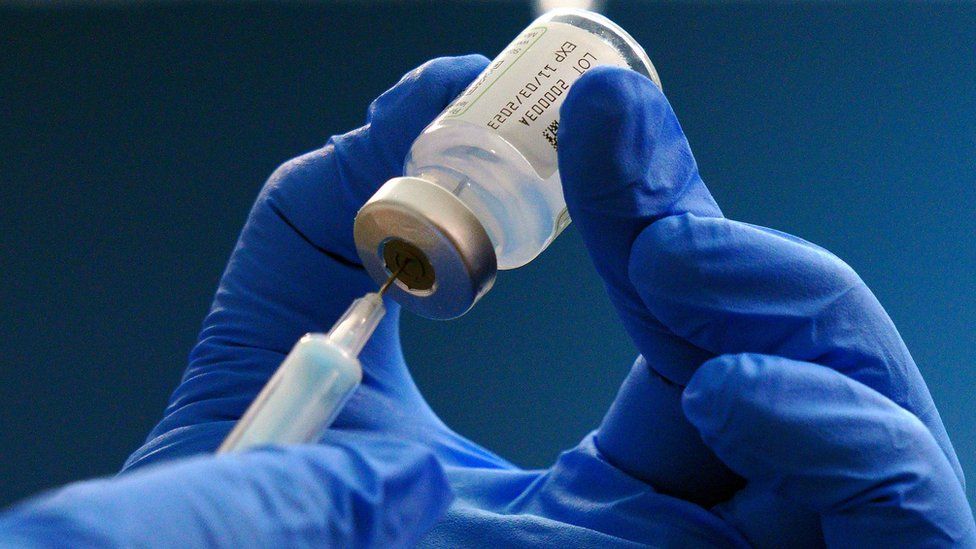
Published1 hour agoShareclose panelShare pageCopy linkAbout sharingImage source, PA MediaBy Aurelia FosterHealth reporterPeople in England will be able to book all their routine vaccinations on a mobile app or online within the next three years under NHS plans.Health bosses want to build on the Covid vaccination programme in order to increase uptake of other potentially life-saving jabs.Currently, jabs other than for flu and Covid must be booked over the phone. NHS England also wants to increase community outreach in areas where the take-up of some jabs is low.Under the plans, 16 jabs for vaccine-preventable diseases, including measles, mumps and rubella (MMR) and human papillomavirus (HPV), will be available to book online by the end of 2026.The new booking system will generate vaccination invitations and appointment alerts. It will also allow people to view their, and their children’s, medical and vaccination records online. Health Minister Maria Caulfield said: “To ensure as many people get vaccinated as possible, we need to make sure the programme fits around people’s lives.”She said the plans also aimed “to reach people who would not typically come forward for their jabs”.MMR vaccine rates dipHPV jabs to help eliminate cervical cancer, NHS saysVaccine bus to target hard-to-reach peopleImage source, NHS Greg Fell, president of the Association of Directors of Public Health, said vaccinations were one of the biggest defences against disease and ill-health, so it was vital that everyone eligible could access them. “We saw during the Covid-19 pandemic that this is not always as straightforward as sending out an invitation, and also saw the devastating impact low vaccination rates can have on communities,” he said.Under the strategy, health professionals will undertake community work to improve “vaccine confidence”, following a drop in uptake of some vaccinations – including the MMR jab – in some areas.Additionally, vaccines will be offered more widely in non-NHS settings, such as sports centres, shopping centres and people’s homes, NHS England said.Innovative approachesProf Dame Jenny Harries, chief executive of the UK Health Security Agency, welcomed the plans. She said: “The link between uptake rates and vaccine confidence and accessibility is critical and I welcome this renewed focus by NHS England on innovative delivery approaches responding to local need.”Around nine in 10 children in England have received their pre-school immunisations, with flu vaccination rates among the highest in the world, NHS England said. However, this strategy is aimed at increasing rates still further.Currently, more then 33 million people have signed up to the NHS app. This autumn so far, 5.1 million NHS flu and Covid vaccines been booked in total online – 1.2 million via the app.More on this storyWatch for child measles, UK doctors warnedPublished21 NovemberNHS promises to eliminate cervical cancer by 2040Published15 NovemberCovid and flu winter jabs to be brought forwardPublished30 AugustCovid-19 vaccination bus for hard-to-reach peoplePublished1 February 2021Related Internet LinksNHS EnglandThe BBC is not responsible for the content of external sites.

Read more →

Protein study could one day advance Parkinson's, breast cancer care

New research from Oregon Health & Science University could one day lead to therapies that prevent or treat diseases and infections tied to a protein that’s found in all human cells.
A study published today in the journal Molecular Cell describes how the protein ubiquitin is modified during a bacterial infection. The study details the steps taken to create a form of the protein known as lysine 6 polyubiquitin, where a long chain of ubiquitin molecules are linked through the amino acid lysine. This form of ubiquitin helps cells communicate by sending a molecular message — communication that remains poorly understood.
Previous research has indicated that this form of ubiquitin may be linked to the development of Parkinson’s disease and breast cancer. However, the details of how lysine 6 polyubiquitin is formed or how it is involved in disease aren’t yet clear.
To explore this, OHSU scientists turned their attention to illness-causing bacteria and how they manipulate lysine 6 polyubiquitin during infection. Researchers isolated enzymes used by E. coli and Salmonella to cause food poisoning and other illnesses, and observed how the enzymes interacted with ubiquitin.
The team learned that one particular enzyme was central to building up lysine 6 polyubiquitin.
In earlier, related research that was published in January, the same scientists found that a different enzyme from a different illness-causing bacteria, Legionella pneumophila — which causes a type of pneumonia called Legionnaires’ disease — actively breaks apart the same molecule during infection.
This means different enzymes have different impacts on the same lysine 6 polyubiquitin during infection.
“Knowing how lysine 6 polyubiquitin is regulated is an important first step,” said the study’s senior researcher, Jonathan Pruneda, Ph.D., an assistant professor of molecular microbiology and immunology in the OHSU School of Medicine. “We’ll use this knowledge as a foundation for future research, including exploring how bacteria take advantage of ubiquitin while infecting cells.
“One day, I hope we can harness this research to develop new ways to prevent and treat infections and disease.”
Pruneda and colleagues are currently digging into how the regulation of lysine 6 polyubiquitin is involved in Parkinson’s disease and breast cancer.

Read more →

Caregiving can be stressful, but it could also lower risk of depression

Becoming a caregiver to an aging parent or spouse can be stressful, but a new study from a researcher at The University of Texas at Austin is questioning the idea that family caregiving is also a risk factor for depression.
The study, published in the journal Advances in Life Course Research, found that depression in adult caregivers is mostly driven by having a loved one experiencing serious health problems, while becoming a caregiver is associated with fewer symptoms of depression.
“Decades of research on this topic indicate that there are positive and negative aspects to being a caregiver,” said Sae Hwang Han, an assistant professor in the Department of Human Development and Family Sciences who is the author of the paper. “It’s widely assumed the negatives far outweigh the positives, that caregiving is a chronic stressor and that it contributes to worse health and well-being. But the evidence doesn’t always bear that out.”
Recent studies have found that caregivers live longer than noncaregivers and that many caregivers describe caregiving as a positive experience that gives them meaning and purpose. It was these contradictions that led Han to conduct the study.
“Most previous studies start by identifying caregivers and compare their well-being to noncaregivers,” Han said. “But having a loved one experience a serious health problem in later life is itself a very depressing event. It’s unsurprising that these studies would find a heightened risk of depression in caregivers compared to noncaregivers, who often do not have serious health problems in the family. That’s a misleading comparison, just as it would be misleading to compare the well-being of someone going through chemotherapy to someone who doesn’t have cancer.”
Han followed a group of adult children over the age of 50 who had a living mother. He tracked changes in their mental health as some of the mothers became disabled or cognitively impaired and the adult children became caregivers. Han found that adult children became more depressed as their mothers’ health deteriorated but found no evidence that becoming a caregiver worsened their depression.
“Rather, I found that caregiving alleviated the extent to which adult children became depressed in response to their mothers’ health problems, suggesting that there may be something protective about being able to help others we care about,” Han said.

A 2021 study by Han and colleagues found that spouses providing caregiving to their partners saw similar effects.
About 1 in 5 Americans are providing caregiving to an adult with health and functional needs, and about half of people over 50 are caregivers to older adults. Many people can expect to enter the caregiving role at some point in their lives, Han pointed out. While emphasizing the importance of social and policy interventions that continue to support caregivers, Han also said that this role does not have to be a source of dread and depression.
“There is no disputing that caregiving can be a very stressful experience,” he said. “But some stressful experiences also make you more resilient and help you grow.”
The research was supported by the Center on Aging and Population Sciences and the Population Research Center at UT, the National Institute on Aging and the Eunice Kennedy Shriver National Institute of Child Health and Human Development.

Read more →

New AI-powered algorithm could better assess people's risk of common heart condition

A new artificial intelligence (AI) model designed by Scripps Research scientists could help clinicians better screen patients for atrial fibrillation (or AFib) — an irregular, fast heartbeat that is associated with stroke and heart failure. The model picks up on tiny variations in a person’s normal heartbeat that signify AFib risk, which standard screening tests cannot detect.
The findings, described in the journal npj Digital Medicine on December 12, 2023, used data on nearly half a million people who had each worn an electrocardiogram (ECG) patch to record their heart rhythms for two weeks — a routine screening test for AFib and other heart conditions. An AI model then analyzed this data to find patterns, other than AFib itself, that distinguished people with AFib from those without. This new model holds the potential to better detect those who are at risk for AFib and ultimately prevent this heart condition’s severe side effects, including stroke and heart failure.
“With this new tool, we can better identify patients at high risk of AFib for further tests and interventions,” says senior author Giorgio Quer, PhD, director of artificial intelligence at Scripps Research Translational Institute and an assistant professor of digital medicine at Scripps Research. “Long term, this can help drive the right resources to the right people and potentially reduce the incidence of stroke and heart failure.”
The irregular heartbeat due to AFib can cause blood to pool in the heart and form blood clots, which can then contribute to strokes. AFib is also associated with an increased risk of heart failure or death. To prevent these complications in people with known AFib, clinicians often prescribe anticoagulants — drugs that prevent blood clots — as well as other lifestyle and medical therapies. However, diagnosing AFib can be tricky because many with the condition only have occasional bouts of the irregular heartbeat, or few symptoms.
In some people, AFib causes heart palpitations, lightheadedness, shortness of breath and chest pain. For patients who have these symptoms, cardiologists usually record the heart rhythms for about ten seconds in their office using a very detailed ECG that includes ten electrodes placed on the body. If nothing seems immediately amiss, they recommend continued, at-home monitoring for one or two weeks with a simpler, wearable ECG patch that has just a single electrode. But even over a two-week span, people with very occasional AFib may not have an episode picked up by this device.
That is why Quer, in collaboration with iRhythm Technologies (the maker of a wearable electrocardiogram patch called the Zio®XT), set out to find other patterns in the ECG data of people with AFib.
“We believe the electrical activity of the heart is slightly different for people who have AFib, but the differences are so subtle that cardiologists can’t look at a printout of heart rhythms and identify these differences,” says Quer.

The team developed a machine learning model to analyze data that iRhythm had collected on 459,889 people who wore the company’s at-home ECG patch for two weeks. From each ECG, the model used one day of data which contained no AFib. However, it was able to distinguish people who had later AFib from those who didn’t.
Even when the researchers integrated all known AFib risk factors into their own, manual models — including demographic data and ECG measures such as the variability between different heart beats — the machine learning model was more accurate at predicting AFib risk.
“There was a gap between what we could achieve with any known ECG features and what the model could achieve,” says Matteo Gadaleta, PhD, a professional scientific collaborator at the Translational Institute and first author of the paper. “It was significantly better.”
Importantly, the model remained accurate for both an older population, who are at higher risk of AFib, and people under the age of 55, who are at much lower risk and are usually excluded from general AFib screening.
While the model is not intended for the diagnosis of AFib, it is a first step towards the design of a screening test for people who are at increased risk of AFib or those showing symptoms. This way, they could wear an ECG patch for just one day to determine whether longer testing is recommended. Alternatively, the model could analyze one- or two-week ECG data to pinpoint patients who, even without any AFib in that timeframe, should have a repeat test.
“Patients with frequent AFib episodes can be identified easily with an ECG recorded over at least a week,” says Quer. “But this AI model could really help with people who have very infrequent AFib episodes yet could still benefit from diagnosis and intervention.”
Quer and his colleagues hope to plan a prospective study, as well as integrate other sources of data — such as electronic medical records — into their models to improve them even more.
This work was funded by the National Institute on Aging (R21AG072349) and the National Center for Advancing Translational Sciences (UL1TR002550) at the NIH.

Read more →

New technique for photon detection

University of Central Florida researcher Debashis Chanda, a professor at the NanoScience Technology Center, has developed a new technique to detect photons — elementary particles that span from visible light to radio frequencies and are instrumental in carrying cellular communication.
The advancement could lead to more precise and efficient technologies in various fields, from improving medical imaging and communication systems to enhancing scientific research and even potentially bolstering security measures.
Photon detection has typically relied on change/modulation of voltage or current amplitude. But Chanda has developed a way to detect photons by modulating the frequency of an oscillating circuit, paving the path for ultra-sensitive photon detection.
Chanda’s method uses a special, phase-change material (PCM) that changes its form when light touches it, making an electrical rhythm that stays steady, or a stable electrical circuit oscillation. When a light photon hits the material, it changes how fast the rhythm goes, or shifts the oscillation frequency. How much the rhythm changes depends on how strong the light is, similar to how a person’s voice changes the sound on the radio.
The new development was published recently in Advanced Functional Materials.
Long Wave Infrared (LWIR) detection in the 8 to 12 micrometer wavelength range is extremely important in astronomy, climate science, materials analysis and security. However, LWIR detection at room temperature has been a long-standing challenge due to the low energy of photons.
LWIR detectors that are currently available can be broadly categorized into two types: cooled and uncooled detectors, with both having their own limitations.

While cooled detectors offer excellent detectivity, they require cryogenic cooling — making them expensive and limiting their practical utility. On the other hand, uncooled detectors can operate at room temperature but suffer from low detectivity and slow response due to the higher thermal noise intrinsic to room temperature operation. A low-cost, highly sensitive, fast infrared detector/camera continues to confront scientific and technological challenges.
This is the main reason LWIR cameras are not widely used except in Department of Defense and space-specific applications.
“Unlike all present photon detection schemes where light power changes the amplitude of voltage or current (amplitude modulation — AM), in the proposed scheme hits, or incidents of photons, modulate the frequency of an oscillating circuit and are detected as a frequency shift, offering inherent robustness to noises, which are AM in nature,” Chanda says.
“Our FM-based approach yields an outstanding room temperature noise equivalent power, response time and detectivity,” Chanda says. “This general FM-based photon detection concept can be implemented in any spectral range based on other phase-change materials.”
“Our results introduce this novel FM-based detector as a unique platform for creating low-cost, high-efficiency uncooled infrared detectors and imaging systems for various applications such as remote sensing, thermal imaging and medical diagnostics,” Chanda says. “We strongly believe that the performance can be further enhanced with proper industry-scale packaging.”
This concept developed by the Chanda group provides a paradigm shift to high sensitive, uncooled LWIR detection as noise limits detection sensitivity. This result promises a novel uncooled LWIR detection scheme that is high sensitive, low cost, and can be easily integrated with electronic readout circuitry, without the need for complex hybridization.
The fundamental research is funded under a U.S. National Science Foundation grant #ECCS-2015722. The camera technology is under development with funding from Chanda’s Samsung Global Research Outreach Award 2022.

Read more →

Smoking causes brain shrinkage, study finds

Smoking shrinks the brain, according to a study by researchers at Washington University School of Medicine in St. Louis. The good news is that quitting smoking prevents further loss of brain tissue — but still, stopping smoking doesn’t restore the brain to its original size. Since people’s brains naturally lose volume with age, smoking effectively causes the brain to age prematurely, the researchers said.
The findings, published in Biological Psychiatry: Global Open Science, help explain why smokers are at high risk of age-related cognitive decline and Alzheimer’s disease.
“Up until recently, scientists have overlooked the effects of smoking on the brain, in part because we were focused on all the terrible effects of smoking on the lungs and the heart,” said senior author Laura J. Bierut, MD, the Alumni Endowed Professor of Psychiatry. “But as we’ve started looking at the brain more closely, it’s become apparent that smoking is also really bad for your brain.”
Scientists have long known that smoking and smaller brain volume are linked, but they’ve never been sure which is the instigator. And there is a third factor to consider: genetics. Both brain size and smoking behavior are heritable. About half of a person’s risk of smoking can be attributed to his or her genes.
To disentangle the relationship between genes, brains and behavior, Bierut and first author Yoonhoo Chang, a graduate student, analyzed data drawn from the UK Biobank, a publicly available biomedical database that contains genetic, health and behavioral information on half a million people, mostly of European descent. A subset of over 40,000 UK Biobank participants underwent brain imaging, which can be used to determine brain volume. In total, the team analyzed de-identified data on brain volume, smoking history and genetic risk for smoking for 32,094 people.
Each pair of factors proved to be linked: history of smoking and brain volume; genetic risk for smoking and history of smoking; and genetic risk for smoking and brain volume. Further, the association between smoking and brain volume depended on dose: The more packs a person smoked per day, the smaller his or her brain volume.
When all three factors were considered together, the association between genetic risk for smoking and brain volume disappeared, while the link between each of those and smoking behaviors remained. Using a statistical approach known as mediation analysis, the researchers determined the sequence of events: genetic predisposition leads to smoking, which leads to decreased brain volume.
“It sounds bad, and it is bad,” Bierut said. “A reduction in brain volume is consistent with increased aging. This is important as our population gets older, because aging and smoking are both risk factors for dementia.”
And unfortunately, the shrinkage seems to be irreversible. By analyzing data on people who had quit smoking years before, the researchers found that their brains remained permanently smaller than those of people who had never smoked.
“You can’t undo the damage that has already been done, but you can avoid causing further damage,” Chang said. “Smoking is a modifiable risk factor. There’s one thing you can change to stop aging your brain and putting yourself at increased risk of dementia, and that’s to quit smoking.”

Read more →

Mammogram rates increase when patients schedule themselves

Having the ability to self-schedule mammograms was associated with a 15 percentage point increase following through with getting the screening, according to research from the Perelman School of Medicine at the University of Pennsylvania. The paper was published today in the American Journal of Preventive Medicine.
“Self-scheduling helps make the path to mammogram completion a little smoother, where you don’t have to find the time to call a scheduling line, wait on hold, or go back and forth trying to find an appointment that works for your schedule,” said the study’s lead author, Kimberly Waddell, PhD, MSCI, an assistant professor of Physical Medicine and Rehabilitation. “Simple changes like these can have an outsized impact on preventive health screenings.”
As one in every eight women are affected by breast cancer, mammograms are recommended to regularly be completed for women. However, though mammograms are tied to early detection of cancer and a better prognosis for treatment, many remain overdue for their screenings.
For their study, Waddell and senior author Shivan Mehta, MD, MBA, an associate professor of Gastroenterology and the associate chief innovation officer of Penn Medicine, along with their colleagues, analyzed data from 2016-2019 when the University of Pennsylvania Health System opened up the opportunity for patients to schedule their own mammograms through their personal online patient portals and compared it to data from 2014 until 2016, before this was possible. To schedule their mammograms, all patients needed was an order — initiated after seeing their primary care provider — and to log in to the patient portal and click through to a scheduling link. They also received a reminder e-mail message to self-schedule through their portal.
Before this, patients referred for mammograms received no reminders and had to make calls during regular business hours to schedule. By using the behavioral science concept of “nudging,” which entails making small changes that make it easier and more likely for people to accomplish the desired task, the health system was able to encourage completion of what could have previously served as a barrier to screening.
“Self-scheduling functionality provides the right kind of prompt since it allows patients to immediately schedule their screening in just a few steps,” said Mehta. “Removing barriers is key in behavioral science, and we were able to demonstrate the value of it firsthand here.”
Data from roughly 35,000 patient visits showed that, overall, mammogram completions roughly doubled over the study period, going from approximately 22 percent to 50. Within that, the self-scheduling was directly associated with an approximate 13 percentage point increase in screening completions, according to the researchers. At scale, when applied to the 35,000 patients in the study, that translates to roughly 4,500 more people getting screened.

Among those who were specifically active in their online patient portals — meaning they’d logged into the portal at least once in the previous year — the self-scheduling intervention was associated with a 13 percentage point increase in screenings compared to those who didn’t use their patient portal previously.
Strikingly, the intervention that was studied was so simple and, importantly, inexpensive.
“Low-cost interventions are particularly appealing because they require fewer resources. This function was scaled across the health system in a matter of months, did not require significant clinical or staff resources, is durable over time, and was associated with the gains we saw,” Waddell said. “That all checks several boxes in terms of improving patient care without requiring much in terms of additional staff time or financial commitment.”
Ease of use for any new patient-facing system is also critical.
“Patients want options on ways to schedule their appointment, and the self-scheduling feature provides another, easy 24/7 pathway to schedule when it’s convenient to them,” said study co-author Jake Moore, MBA, director of Access Optimization at Penn Medicine.
Moving forward, the researchers are conducting a clinical trial with nudges directed both at patients and their clinicians to improve mammogram completion. They plan to deliver an additional, targeted text message nudge to patients in demographics who are at higher risk for not completing a mammogram.
The current study was funded by the National Institute on Aging (R61AG068947).

Read more →