The key NHS targets that have never been met

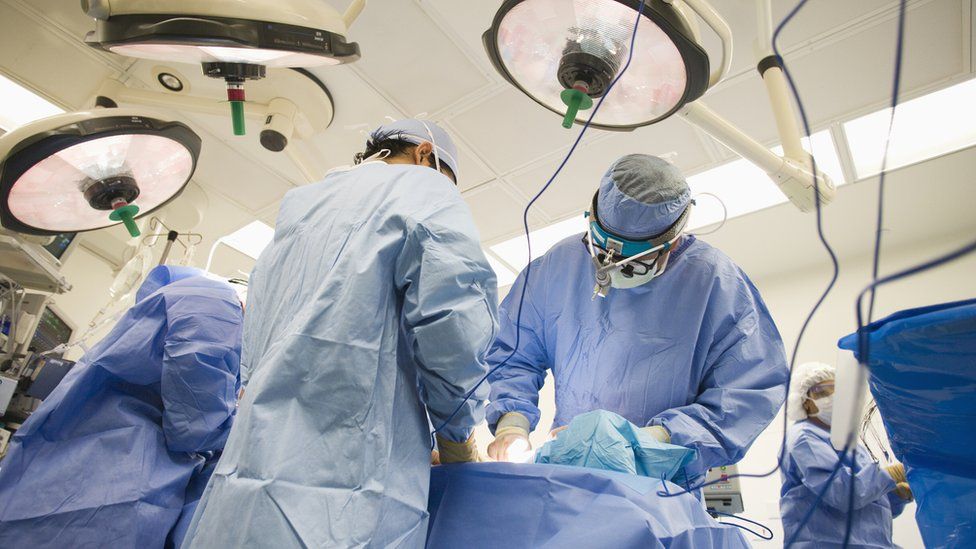
Published34 minutes agoShareclose panelShare pageCopy linkAbout sharingImage source, Getty ImagesBy Nick TriggleHealth correspondentMost key NHS targets have been missed for at least seven years across the UK, BBC News research shows.The review of records going back 20 years also reveals Northern Ireland and Wales have never met the four-hour accident-and-emergency (A&E) target.The analysis focused on the three key hospital targets, covering A&E, cancer and waiting times for planned care.Combined, the length of time during which the targets have been missed tops 100 years.In the past seven, the only one to have been met is the A&E target in Scotland – and that was during lockdown in 2020, when the number of visits to A&E plummeted. All four nations said improving waiting times was a priority and investment was being made.But King’s Fund think tank chief analyst Siva Anandaciva said the findings should “act as a wake-up call”.”These are the key totemic targets,” he said. “The length of time they have been missed is incredible.”Patients groups warned the delays were putting patients at risk.Patients Association chief executive Rachel Power said the analysis showed the NHS was in “permacrisis”.”The health of many deteriorates while they await treatment and their problems become more complex,” she said. “This means they will need more time and resources to treat them when they are finally seen, at great cost to the patient and NHS.”

A modern browser with JavaScript and a stable internet connection are required to view this interactive.

Kate Seymour, of Macmillan Cancer Support, said: ”The impact this is having on people living with cancer, their families and friends is nothing short of heartbreaking. They deserve better.” British Medical Association leader Prof Philip Banfield said the figures showed the “dire decline” of the NHS during the years of austerity. Services were “stretched beyond their limits” across the UK, he said.”Front-line staff are unable to provide the care they’ve trained so hard to undertake and that patients so desperately need,” Prof Banfield added.Can the NHS survive to 100?The NHS backlog: Who are the 7 million?’Worst time of my life’Whether waiting in A&E or for cancer care to begin or an operation, the impact of significant delays on patients is immense.Ian Binns waited four months for cancer treatment for bowel cancer – twice as long as he should have.During this time the 66-year-old, from Nottingham, went from stage one to late stage four.He described the wait as the “worst time of my life”.”I would wake up every morning wondering if I had a future.”Image source, OtherHis cancer is now incurable as it has spread. “Our greatest tools are rapid diagnosis and timely treatment. Where was the help when I needed it?”David Corbitt’s wait did not have such a devastating effect.But he still described the experience as awful when he went to A&E because of concerns over a potential heart problem.He was advised by an out-of-hours GP to seek help after feeling unwell – he was light-headed and was struggling with his coordination.The 66-year-old, from County Tyrone in Northern Ireland, got a friend to drive him straight to hospital. “I hadn’t been to an A&E unit for a few years and I was surprised how busy it was. There were people everywhere.”It was an evening and I spent 13 hours – the whole night – sitting there on a chair before I was seen. It was awful.”He eventually underwent tests and was discharged home.”The staff were doing their best, but there was not enough of them. It should not be like this, he added.””Unacceptable waits’The Department of Health in Northern Ireland acknowledged the waiting times were “unacceptable” and work was under way to tackle them.But it said significant progress would require sustained additional investment and the lack of a devolved government meant it was unable to plan for the long-term.A Welsh Government spokeswoman said extra money was being invested, adding: “We have placed a clear focus on those patients with an urgent need and who have waited the longest.”A spokeswoman for NHS England said progress was being made, with the numbers facing really long waits falling and signs the NHS was coping better this winter than last.Labour has promised it will achieve the key waiting time targets by the end of the next parliament if it wins the election.Image source, Getty ImagesThe three targets were all rolled out during the 2000s and have been used to track performance ever since.Each nation decides how they are measured.The four-hour A&E target is similar between each – but there are significant differences for planned hospital treatment.For example, in England it is meant to be within 18 weeks of a referral 92% of the time – and that covers everything from knee and hip operations for which patients are admitted through to outpatient appointments.In Northern Ireland, the target is 13 weeks 55% of the time – but that is just for patients who need to be admitted.More on this storyPostcode check: How’s the NHS coping in your area?Published5 days ago

Read more →

Lloyd Austin’s Hidden Diagnosis: Why Some People Keep Serious Illnesses Private

Defense Secretary Lloyd J. Austin III is under scrutiny for concealing his prostate cancer diagnosis and treatment. But experts say it can be a common coping mechanism.The U.S. defense secretary is facing scrutiny after failing to immediately disclose to the White House his recent prostate-cancer diagnosis and a related hospitalization, a breach of protocol for which he has apologized.But while the secretary, Lloyd J. Austin III, as a cabinet member, faces certain expectations about what he must disclose publicly regarding his health, and when he should do it, mental health experts who work with patients who have serious illnesses, such as cancer, say that reticence is common — even in the era of oversharing online.“I see it with my patients all the time,” said Dr. Andrew Esch, senior education adviser at the Center to Advance Palliative Care, a national health care advocacy organization based in New York City. “It’s very human to not want to have yourself sort of flayed open for the world to see.”There are many reasons people might opt to keep their illness to themselves in certain contexts, experts said, but some are more common than others. Privacy can be a coping strategy, said Dr. Itai Danovitch, chairman of the department of psychiatry and behavioral neurosciences at Cedars-Sinai in Los Angeles, particularly in the early days following a diagnosis, when patients are deluged with new information.We are having trouble retrieving the article content.Please enable JavaScript in your browser settings.Thank you for your patience while we verify access. If you are in Reader mode please exit and log into your Times account, or subscribe for all of The Times.Thank you for your patience while we verify access.Already a subscriber? 

Read more →

Women With Depression During or After Pregnancy Face Greater Suicide Risk, Even Years Later

The newsWomen who experience depression during pregnancy or in the year after giving birth have a greater risk of suicide and attempted suicide — risks that persist for years, two new studies report.Travis Dove for The New York TimesWhat the research showsA research team analyzed records of nearly a million women in Sweden’s national medical registries from 2001 through 2017, comparing 86,551 women who had perinatal depression with 865,510 women who did not. The groups were matched by age and year they gave birth.In two studies, the team found that depression that begins in pregnancy or soon after can have troubling implications for as long as 18 years.One study, published on Tuesday in JAMA Network Open, found that women with perinatal depression had three times the risk of suicidal behavior, defined as attempted or completed suicide, than women who did not experience perinatal depression. Risks were greatest in the year following their diagnosis, but, while they lessened over time, years later the risks were still twice as high compared with women without the disorder.The other study, published on Wednesday in BMJ, found that women with perinatal depression were more than six times at risk of dying by suicide as those without that diagnosis. The number of suicides was small, but it accounted for a large share of the deaths of women diagnosed with perinatal depression: 149 of the 522 deaths in that group, or 28.5 percent. For women without perinatal depression, there were 117 suicides out of 1,568 deaths or 7.5 percent.Suicide was a major reason women with perinatal depression were twice as likely to die from any cause over the 18-year period of the study compared with women without the disorder.The researchers also compared more than 20,000 women with perinatal depression to their biological sisters who gave birth during the same time frame and did not have the disorder. The risk of suicidal behavior for the sisters with perinatal depression was nearly three times that of their sisters without the diagnosis — almost as high as the difference between women with the illness and those without it to whom they were not related. That suggests depression plays a greater role in these outcomes than genetics or childhood environment, the researchers wrote.Behind the numbersThe average age at which women experienced perinatal depression was 31. They were more likely than those without the illness to live alone, to have lower income and less formal education, to have smoked recently and to have not given birth before, among other characteristics, the researchers reported.We are having trouble retrieving the article content.Please enable JavaScript in your browser settings.Thank you for your patience while we verify access. If you are in Reader mode please exit and log into your Times account, or subscribe for all of The Times.Thank you for your patience while we verify access.Already a subscriber? 

Read more →

Neuropsychological effects of rapid-acting antidepressants may explain their clinical benefits

Rapid-acting antidepressants, including ketamine, scopolamine and psilocybin, have been found to have immediate and lasting positive effects on mood in patients with major depressive disorder but how these effects arise is unknown. New research led by the University of Bristol explored their neuropsychological effects and found that all three of these drugs can modulate affective biases associated with learning and memory.
The paper, published in Science Translational Medicine today [10 January] was carried out in collaboration with researchers at Compass Pathways, Boehringer Ingelheim, and the University of Cambridge.
Negative affective biases are a core feature of major depressive disorder. Affective biases occur when emotions alter how the brain processes information and negative affective biases are thought to contribute to the development and continuation of depressed mood.
The research team used an affective bias test, based on an associative learning task, to investigate the effects of rapid-acting antidepressants (RAADs) in rats. They found that all the treatments were able to reduce negative affective biases associated with past experiences but there were additional characteristics of the dissociative anaesthetic, ketamine, and the serotonergic psychedelic, investigational COMP360 psilocybin (Compass Pathways’ proprietary formulation of synthetic psilocybin), which could explain why the effects of a single treatment can be long-lasting.
The findings suggest that these sustained effects are due to adaptive changes in the brain circuits which control affective biases, and these can influence how past experiences are remembered. The effects at low doses were very specific to affective bias modulation and were localised to the prefrontal cortex of the brain, a region known to play an important role in mood.
Emma Robinson, Professor of Psychopharmacology in the School of Physiology, Pharmacology & Neuroscience at Bristol, and lead author, said: “Using a behavioural task we showed that drugs that are believed to have rapid and sustained benefits in depressed patients, specifically modulate affective biases associated with past experiences, something which we think is really important for understanding why they can improve a patient’s mood so quickly.
“We also found differences in how ketamine, scopolamine and COMP360 psilocybin interact with these neuropsychological mechanisms which may explain why the effects of a single treatment in human patients can be long-lasting, days (ketamine) to months (psilocybin).

“By using an animal model, we have been able to investigate these important interactions with learning and memory processes and neural plasticity and propose a two-stage model that may explain the effects we observe.”
In the task, each animal learnt to associate a specific digging material with a food reward under either treatment or control conditions. The treatment condition is designed to generate a change in the animal’s affective state and a choice test is used to quantify the affective bias this generates.
Acute treatment with the RAADs ketamine, scopolamine, or psilocybin prevented the retrieval of the negative affective bias induced in this model. However, the most exciting finding was at 24 hours after treatment when low, but not high, doses of ketamine and psilocybin led to a re-learning effect where the negatively biased memory was retrieved with a more positive affective valence. Only psilocybin, but not ketamine or scopolamine treatment also positively biased new experiences.
Exploring in more detail the re-learning effects of ketamine in our studies, the researchers found they were protein synthesis-dependent, localised to the medial prefrontal cortex and could be modulated by cue-reactivation, consistent with their predictions of experience-dependent neural plasticity.
The study’s findings propose a neuropsychological mechanism that may explain both the immediate and sustained effects of RAADs, potentially linking their effects on neural plasticity with mood.

Read more →

Natural compounds derived from soy and other plants reduce breast cancer recurrence and improve survival

Soy compounds called isoflavones are among the plant-derived compounds that may significantly reduce the risk of breast cancer recurrence or death, according to a new meta-analysis co-directed by investigators from the Johns Hopkins Kimmel Cancer Center. The results were published Jan. 10 in the journal JNCI Cancer Spectrum.
Investigators in Australia, Denmark, England, Norway and the U.S. reviewed 22 published observational studies that examined the impact of dietary intake of soybeans, lignans (compounds found in a variety of plants including seeds and nuts), cruciferous/cabbage-family vegetables, and green tea — and these substances’ phytonutrients (natural compounds derived from plants) — on breast cancer recurrence and mortality, as well as on mortality from all causes. This included 11 studies of soy isoflavones, three of cruciferous vegetables, two of green tea, three of lignans, and three of enterolactone, which is formed in the gut when lignans are digested.
Soy isoflavones were associated with a 26% reduced risk of breast cancer recurrence, according to a meta-analysis that included six of the studies (of 11,837 women) reviewed by investigators. The results were most notable among post-menopausal survivors. The greatest risk reduction was seen at 60 milligrams per day. This is equivalent to two to three servings per day, where one serving equates to a cup of soy milk, three ounces of tofu or a half-cup of cooked soybeans. However, the effect of soy consumption on risk of mortality was smaller (12%) and not statistically significant, and was seen mostly at 20-40 mg per day, or one to two servings.
Another finding, reported for the first time in a meta-analysis, relates to enterolactone, a compound metabolized from lignans. Lignans are found in a wide variety of plants, such as seeds, nuts, legumes, whole grains, fruit and vegetables. High levels are found in flaxseeds, cashew nuts, broccoli and brussels sprouts, among other sources. Enterolactone was found to reduce the risk of breast cancer-specific mortality by 28% and death from any cause by 31%, particularly in post-menopausal women (35% reduction in death from any cause). It is not possible to calculate the effective dose of lignans in the diet from these enterolactone findings, because the gut microbiome that plays a role in metabolism of lignans varies among individuals.
“These findings were graded probable, which means there is strong research showing that they contributed to the results we are seeing,” says lead study author Diana van Die, Ph.D., of NICM Health Research Institute at Western Sydney University, Australia.
The review also found some suggestive results, which means the results are generally consistent but rarely strong enough to justify recommendations: Consumption of green tea suggests an effect of reducing the risk of breast cancer recurrence by 44% in women with stage I or II breast cancer. The greatest effect was seen from consuming three to five cups per day and from five or more cups per day, as documented in two Japanese studies . Among those who consumed lignans prior to breast cancer diagnosis, there was a non-significant 34% risk reduction in cancer-specific mortality and 19% reduction in all causes of death in post-menopausal women. However, consumption of lignans by pre-menopausal women suggests an increased risk of mortality. This result indicates that the effects of lignans are dependent on the hormonal environment, although it was likely driven by one large study and needs further investigation. The highest intake was nine or more servings per day in the studies reviewed. The impact of cruciferous vegetables was inconclusive, possibly influenced by the average intake being quite low (less than a half-cup per day) in the studies reviewed.Investigators also looked into whether consuming soy, lignans, cruciferous vegetables and green tea, or their phytonutrients in the diet before or after breast cancer diagnosis made a difference. However, the data did not provide a concrete answer. All studies on green tea and lignans measured pre-diagnosis intake, while soy results came from studies that measured intake before and after diagnosis.
“It is critically important to stress that these studies were conducted on women who received medical and/or surgical treatment for breast cancer, and that these foods and phytonutrients should not be considered as alternatives to treatment,” says senior study author Channing Paller, M.D., director of prostate cancer clinical research and an associate professor of oncology at Johns Hopkins.
“This research highlights the need for more robust studies in this area looking at the most effective dosages of these compounds, and whether starting to consume them after diagnosis has the same effect as a lifelong dietary habit before diagnosis. This is what patients are looking for,” Paller added .
Kala Visvanathan, M.D., M.H.S., director of the Clinical Cancer Genetics and Prevention Service at the Kimmel Cancer Center, was a co-author of the review. Additional co-authors were from Integria (MediHerb) in Australia, the Danish Cancer Institute, Imperial College London, Oslo New University College and The Cancer Registry of Norway.

Read more →

Genetics may influence the body's response to low oxygen

University of Pittsburgh Schools of Medicine researchers uncovered a fundamental mechanism that controls the body’s response to limited oxygen and regulates blood vessel disease of the lung.
By combing through genomes of more than 20,000 individuals in the U.S., France, England and Japan and combining the results with molecular studies in the lab, the team discovered a shared genetic trait that could predict a higher risk of small lung vessel disease called pulmonary hypertension and its more severe form, pulmonary arterial hypertension, and influence the development of drug therapies that target the body’s response to limited oxygen. The findings were published this week in Science Translational Medicine.
“This new level of knowledge will help identify people who may be at a higher genetic risk of pulmonary hypertension and jump-start precision medicine practices to offer customized treatments,” said senior author Stephen Chan, M.D., Ph.D., a cardiologist who serves as the Vitalant Chair in Vascular Medicine and director of the Vascular Medicine Institute at Pitt.
Pulmonary hypertension encompasses a range of conditions of various causes that manifest in high blood pressure in the arteries of the lung and the right side of the heart. The disease is accompanied by a decreased supply of oxygen to the lung tissue and the blood, is chronic and deadly, and its molecular origins and genetic background remain unsolved.
Using a combined approach of genomics and biochemistry, the Chan lab found a gene pair that had an important function in regulating blood vessel metabolism and disease. This gene pair included a long non-coding RNA molecule — a messenger that facilitates the transformation of the body’s genetic code into protein products — and a protein binding partner, and their interaction was frequently active in cells exposed to low oxygen compared to normal cells.
Taking the findings a step further, the team discovered that a single DNA letter change directing expression of this RNA-protein pair under low oxygen conditions was associated with a higher genetic risk of pulmonary hypertension across diverse patient populations.
According to Chan, pulmonary hypertension is a borderline orphan disease, and the limited number of patients with pulmonary hypertension makes it challenging to find genetic variations that are rare but still impactful enough to eclipse individual differences.
With that in mind, Pitt scientists turned to collaborators around the globe and to public research datasets such as All of Us — a nationwide health registry funded by the National Institutes of Health — to ensure that the findings are relevant across a diverse global population.
Chan hopes that his findings will spur the development of targeted therapies relevant to oxygen sensitivity in blood vessel lining and that their pending patent application will contribute to the growth on an entirely new field of epigenetic and RNA drug therapeutics that work not by manipulating the genome but by changing how it is being read.
Other authors of the study include Yi-Yin Tai, M.S., Qiujun Yu, M.D., Ph.D., Ying Tang, M.S., Wei Sun, M.D., Neil J. Kelly, M.D., Ph.D., Jingsi Zhao, M.S., Yassmin Al Aaraj M.D., M.P.H., Vinny Negi, Ph.D., Mingjun Liu, Ph.D., Catherine G. Corey, Frances Belmonte, Taijyu Satoh, M.D., Yingze Zhang, Ph.D., Dennis McNamara, M.D., Gang Li, Ph.D., Bing Wang, M.D., Ph.D., Sruti Shiva, Ph.D., Brett Kaufman, Ph.D., Delphine Gomez, Ph.D., Mehdi Nouraie, Ph.D., all of Pitt, as well as centers from the Indiana University School of Medicine, University of Arizona College of Medicine, NHS Blood and Transplant (UK), CNRS (France), and Tohoku University Graduate School of Medicine (Japan).

Read more →

mRNA technology could be possible treatment for rare diseases

By exploiting the technology used in Covid-19 vaccines, a team led by UCL, King’s College London and Moderna scientists has created an effective therapy for a rare disease, in a study in mice, demonstrating the technology’s potential therapeutic use in people.
The research, published in Science Translational Medicine, found that messenger RNA (mRNA) could be used to correct a rare liver genetic disease known as argininosuccinic aciduria in a mouse model of the disease.
Argininosuccinic aciduria is an inherited metabolic disorder that affects how the body breaks down protein — potentially leading to high levels of ammonia in the blood. Patients affected by the disease are found to also experience an imbalance of glutathione regulation, which is important for liver detoxification. The condition occurs in approximately one in 100,000 newborns.
Over the coming years, the team aims to trial the therapy in people. Messenger RNA therapies are also currently being investigated in other rare inherited metabolic diseases — propionic and methylmalonic acidaemias — in global clinical trials sponsored by Moderna, including at Great Ormond Street Hospital for Children.
Co-lead Principal Investigator, Dr Julien Baruteau (UCL Great Ormond Street Institute of Child Health), said: “Messenger RNA has revolutionised the field of vaccines during the COVID-19 pandemic. We believe it can now do the same for rare diseases.”
Rare diseases usually result from errors in the patient’s DNA and affect around 300 million people worldwide.
However, fewer than 5% of these conditions have approved therapies. Most of these treatments use gene therapy to switch out the faulty gene and replace it with a normal functioning one, to alleviate the disease.

Until recently, gene therapy employed modified viruses to bring the therapeutic gene to the disease cells. However, these viral systems can cause severe adverse effects, such as reactions from the patient’s own immune system, meaning that they can’t be rolled out widely.
Consequently, the team wanted to investigate the possibility of using mRNA technology as an alternative solution.
Messenger RNA is a molecule that contains instructions that direct the cells to make proteins. By protecting the mRNA in a microdroplet of lipids, scientists were able to inject the mice intravenously with the therapy and target their liver cells.
The researchers tested the therapy on 31 mice both from birth and at a late stage of the disease as a rescue therapy in older mice that had argininosuccinic aciduria. They also used an equal number of untreated mice as a control (comparison) group.
For the mice, the benefit of each mRNA treatment only lasted around seven days, so the procedure was performed weekly over the course of up to eight weeks. However, the researchers expect that translation to humans will allow for longer gaps between treatments.
Over the course of the trial, the mice were given positron emission tomography (PET) scans as a non-invasive way to track the correction of glutathione regulation and the success of the treatment.

Researchers found that the treatment corrected the lethal consequences of the disease. All mice with the disease at birth left untreated died within the first two weeks of life, while the mice that received the mRNA treatment at birth survived for over three months. Additionally, six out of seven mice who received mRNA treatment as rescue therapy survived, while all those that were left untreated died.
The researchers also noted that, mRNA-treated organs were very similar to those in the unaffected, control mice.
Dr Baruteau said: “We have shown that mRNA holds an unprecedented therapeutic potential for incurable genetic diseases, in particular liver conditions. We aim to apply this approach to other inherited liver diseases and translate mRNA therapy to patients, especially in children.”
Dr Tim Witney, Co-lead PI (School of Biomedical Engineering & Imaging Sciences, King’s College London), said: “This is a great example of collaborative science across multiple areas of expertise, which has yielded remarkable results. By understanding what goes wrong in this disease, we can not only correct the error, but follow this correction in real-time using imaging. We are looking forward to bringing these advances to patients in the near future.”
Dr Paolo Martini, Chief Scientific Officer for International Therapeutics Research Centres at Moderna, said: “This collaboration has exemplified how academia and industry can work in synergy to explore how mRNA technology can be harnessed against rare diseases and may potentially lead to a treatment for a severe and debilitating disease such as argininosuccinic aciduria.”
The research was funded by Moderna, the Medical Research Council, the consortium London Advanced Therapies, Wellcome, Cancer Research UK, and the National Institute for Health and Care Research (NIHR) Great Ormond Street Hospital Biomedical Research Centre.

Read more →

Feeling depressed linked to short-term increase in bodyweight

Increases in symptoms of depression are associated with a subsequent increase in bodyweight when measured one month later, new research from the University of Cambridge has found.
The study, published today in PLOS ONE, found that the increase was only seen among people with overweight or obesity, but found no link between generally having greater symptoms of depression and higher bodyweight.
Research has suggested a connection between weight and mental health — with each potentially influencing the other — but the relationship is complex and remains poorly understood, particularly in relation to how changes in an individual’s mental health influence their bodyweight over time.
To help answer this question, researchers at Cambridge’s Medical Research Council (MRC) Epidemiology Unit examined data from over 2,000 adults living in Cambridgeshire, UK, who had been recruited to the Fenland COVID-19 Study.
Participants completed digital questionnaires on mental wellbeing and bodyweight every month for up to nine months during the COVID-19 pandemic (August 2020 — April 2021) using a mobile app developed by Huma Therapeutics Limited.
Questions assessed an individual’s symptoms of depression, anxiety and perceived stress. A higher score indicated greater severity, with the maximum possible scores being 24 for depression, 21 for anxiety and 40 for stress. The team then used statistical modelling to explore whether having poorer mental wellbeing than usual was related to changes in bodyweight one month later.
The researchers found that for every increment increase in an individual’s usual score for depressive symptoms, their subsequent weight one month later increased by 45g. This may seem small but would mean, for example, that in an individual whose depressive symptoms score rose from five to 10 (equal to an increase from ‘mild’ to ‘moderate’ depressive symptoms) it would relate to an average weight gain of 225g (0.225kg).

This effect was only observed in those individuals with overweight (defined as BMI 25-29.9kg/m2) or with obesity (BMI of over 30kg/m2). Individuals with overweight had on average an increase of 52g for each increment point increase from their usual depressive symptoms score and for those with obesity the comparable weight gain was 71g. The effect was not seen in those individuals with a healthy weight.
First author Dr Julia Mueller from the MRC Epidemiology Unit said: “Overall, this suggests that individuals with overweight or obesity are more vulnerable to weight gain in response to feeling more depressed. Although the weight gain was relatively small, even small weight changes occurring over short periods of time can lead to larger weight changes in the long-term, particularly among those with overweight and obesity.
“People with a high BMI are already at greater risk from other health conditions, so this could potentially lead to a further deterioration in their health. Monitoring and addressing depressive symptoms in individuals with overweight or obesity could help prevent further weight gain and be beneficial to both their mental and physical health.”
The researchers found no evidence that perceived stress or anxiety were related to changes in weight.
Senior author Dr Kirsten Rennie from the MRC Epidemiology Unit said: “Apps on our phones make it possible for people to answer short questions at home more frequently and over extended periods of time, which provides much more information about their wellbeing. This technology could help us understand how changes in mental health influence behaviour among people with overweight or obesity and offer ways to develop timely interventions when needed.”
Although previous studies have suggested that poor mental health is both a cause and consequence of obesity, the research team found no evidence that weight predicted subsequent symptoms of depression.
The research was supported by the Medical Research Council.

Read more →

Single-cell atlas of the placenta during term labor

An atlas revealing the activity of individual placental cells during childbirth offers insight on what happens at the maternal-fetal interface during term labor, according to a study supported by the National Institutes of Health (NIH). The atlas provides a single-cell analysis of the human placenta and its surrounding membranes and is the first to use this method to understand the communication that occurs between maternal and fetal cells during the process of labor. Studying these processes aids understanding of typical labor and delivery at term, as well as preterm labor and delivery, which occurs before 37 weeks of pregnancy and is a leading cause of infant death and long-term disability. The work, led by researchers at NIH’s Eunice Kennedy Shriver National Institute of Child Health and Human Development (NICHD), is published in the latest issue of Science Translational Medicine.
The study team created the placental atlas by using single-cell RNA sequencing (also called single-cell transcriptomics), which examines the activity and signaling patterns of individual cells. The atlas, which is based on samples from 42 term pregnancies, describes changes in gene expression patterns among the different cell types in the placenta and its surrounding membranes, which include both maternal and fetal-derived cells.
The researchers found that cells most affected by labor were in the chorioamniotic membranes, which surround the fetus and rupture as part of the labor and delivery process. They also found that fetal stromal and maternal decidual cells were particularly active in generating inflammatory signaling. These findings are consistent with previous research showing that inflammation (unrelated to infection) is important for sustaining labor.
The study is also a proof-of-concept that placental biomarkers present in maternal blood may be used to identify pregnancies at risk for preterm birth. The researchers used the atlas to classify cell-specific signatures of labor, which were detectable in maternal blood samples from term and preterm pregnancies. However, additional validation is needed in larger studies.
This work was conducted by NICHD’s Pregnancy Research Branch and led by Roberto Romero, M.D., D.Med.Sci., NICHD; Nardhy Gomez-Lopez, Ph.D., Washington University School of Medicine; and Roger Pique-Regi, Ph.D., Wayne State University.

Read more →

Peanut death inquest told of restaurant's blank allergy forms

Published14 hours agoShareclose panelShare pageCopy linkAbout sharingImage source, FAMILY HANDOUTA restaurant that prepared the food that led to the death of a man failed to complete food safety documents on allergens, an inquest heard.James Atkinson, 23, died from a peanut allergy after eating pizza from Dadyal in Newcastle, on 10 July 2020.Allergen sections of the restaurant’s food safety management documents were later found to be blank, an inquest into his death heard.There is no evidence to suggest Mr Atkinson alerted staff to his allergy.The 23-year-old, originally from Leeds, had ordered takeaway pizza from Dadyal via the Deliveroo app, and became unwell shortly afterwards.Image source, GoogleThe inquest at Newcastle Civic Centre heard that the computer programmer died at Newcastle’s Royal Victoria Infirmary an hour after ingesting peanuts.Examination of the uneaten takeaway food also detected the presence of peanuts, as did analysis of a “nut mix” at the Dadyal restaurant which supplied it, the inquest was told.An inspection of the restaurant after Mr Atkinson’s death showed that peanut powder had been used in the preparation of the chicken tikka masala pizza.On Wednesday, environmental health officer Claire George told the hearing that the allergen section of Dadyal’s food safety management documents was blank.Allergy diagnosisMr Atkinson’s flatmate, Luke Isley, previously gave evidence saying that the Newcastle University graduate had raised concerns about what he was eating as little as 30 seconds after beginning to eat his pizza, which sparked panic among his friends when he mentioned peanuts.Image source, FAMILY HANDOUTBy the time paramedics arrived, Mr Atkinson was “gasping for air”, according to Home Office pathologist Dr Jennifer Bolton, who said he was “profoundly unconscious” by the time he was helped downstairs. He died in hospital less than an hour later.Dr Bolton said Mr Atkinson had been diagnosed with a peanut allergy ten years ago and had been “very good” at monitoring the allergy.Mr Atkinson’s parents, Jill and Stuart, said their son “had a gift of making others happy”, and they added that his death had left an “insurmountable hole” in their hearts.The inquest, which is expected to conclude within two weeks, continues.Follow BBC North East on Facebook, X (formerly Twitter), and Instagram. Send your story ideas to northeastandcumbria@bbc.co.uk.More on this storyMan ‘failed to tell restaurant of nut allergy’Published1 day agoMan died from peanut reaction after pizza – inquestPublished2 days agoRelated Internet LinksHM Courts ServiceThe BBC is not responsible for the content of external sites.

Read more →