Covid Pandemic Forces Families to Rethink Nursing Home Care
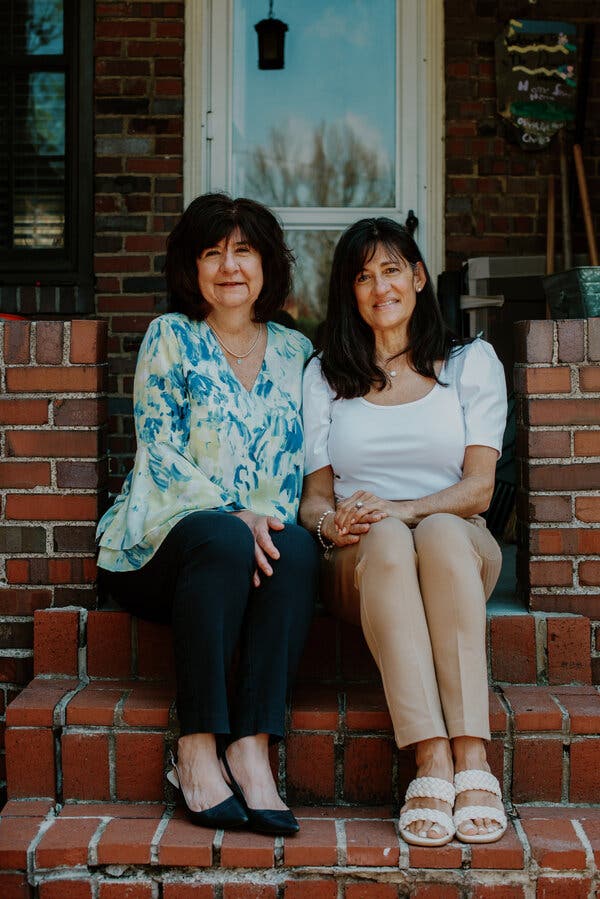
Even with vaccines, many older people and their relatives are weighing how to manage at-home care for those who can no longer live independently.At 86, Diane Nixon, living in an apartment at the back of a daughter’s house, no longer drives and has trouble getting around.When her health worsened last year before the coronavirus pandemic, she and all four of her daughters talked about whether a nursing home would be the next step. She worried that she had become a burden to her children.“She was very adamant about not wanting her daughters to be caregivers,” said Jill Cooper, one of her daughters, who lives nearby in the Pittsburgh area.But as infections began to tear through nursing homes across the country, killing tens of thousands of residents last year, Ms. Nixon and her family realized a group home was no longer a viable choice. Especially after most of them barred visitors to help contain outbreaks.“Not to be able to see her was not an option for us,” Ms. Cooper said, so the family contacted a local home health agency to hire someone to help her during the day.“It made us look at an alternative that we might not have looked at as hard,” she said.The pandemic’s toll on nursing homes drove occupancy down significantly — not just from the 132,000 deaths but also because of a decline in admissions. The 14,000 skilled nursing facilities in the United States now have on average a vacancy rate of slightly more than 25 percent, according to figures from the National Investment Center for Seniors Housing & Care.But as immunization campaigns inside them began taking priority in the winter this year, with nearly three million residents and staff members fully vaccinated, the outlook improved somewhat. Nursing homes point to the steep decrease in Covid-related deaths, saying they have dropped by 91 percent since December.While the industry has received $21 billion in federal funding under the CARES Act as part of congressional efforts to help health care facilities during the pandemic, nursing homes are lobbying for more federal aid to cover the higher cost of personal protective equipment, testing and staffing at their facilities. They say that they are losing tens of billions of dollars in revenue because of the pandemic and that many homes are at risk of closing.But the deaths of so many elderly residents, captive in those homes, has deepened levels of anxiety and guilt among many families planning the next phase of care for an aging relative. Experts say rethinking the purpose of nursing homes is long overdue.Even before the pandemic began 14 months ago, nursing homes had become the source for rampant, antibiotic-resistant infections. The facilities also faced systemic problems like high turnover among nursing home staff and the gaming of the federal government’s rating system, which made it hard for families to judge the quality of homes.For years, federal health officials and some insurers have tried to encourage more stay-at-home care, and the pandemic has created a sense of urgency.“It’s really changed the paradigm on how older adults want to live,” said Dr. Sarita Mohanty, the chief executive of the SCAN Foundation, a nonprofit group focused on issues facing older adults. The vast majority of those adults would prefer to stay at home as they age, she said.“What’s happened is a welcome sort of market correction for nursing homes,” said Tony Chicotel, a staff attorney for California Advocates for Nursing Home Reform in San Francisco. Some families, he said, “ended up agreeing to a nursing home without giving it a lot of deliberation.” But after trying home care during the pandemic, many families found keeping an older relative at home was a viable alternative, he said.Nursing homes rose from the almshouses in England and America that cared for the poor. In the United States, passage of the Social Security Act in 1935 provided money for states to care for the elderly. Thirty years later, the Medicaid program expanded funding, making long-term care homes central to elder care, said Terry Fulmer, the president of the John A. Hartford Foundation, an advocacy group for older adults. “If you pay the nursing homes, that’s where you go,” Dr. Fulmer said.It wasn’t until the 1970s that some programs began to pay for home care, and the number of nursing home residents nationwide started to slowly decline, with occupancy levels in recent years flattened to about 80 percent, according to data from the Kaiser Family Foundation.New technology makes it easier to monitor someone at home, said Dr. Fulmer, who thinks the pandemic might be a “tipping point.”Heidi Dolan, left, and Jill Cooper, Ms. Nixon’s daughters. They have not ruled out eventually placing Ms. Nixon in a nursing home. “We’re continuing the journey,” Ms. Cooper said.Kristian Thacker for The New York TimesBeth Kreisman, a nurse who works at Debra D. Feldman & Associates in Buffalo Grove, Ill., helping families navigate these issues, faced the same dilemma with her stepmother, now 89. Her stepmother had been showing signs of dementia, and a hospital stay last spring “took a lot out of her,” Ms. Kreisman said.“She couldn’t go home by herself,” she said. “We were really in a quandary if she should go to skilled nursing or go home with a caregiver.”But concern about her contracting the virus at a facility persuaded the family to opt for home care. “We were absolutely convinced that if she got Covid, she would die,” Ms. Kreisman said.Now that her stepmother is vaccinated, the family has renewed discussions about whether she would be best served in a nursing home. Her stepmother doesn’t want to leave the home where she spent decades with Ms. Kreisman’s late father. “In her mind, if she moves out of her place, then she is leaving my dad,” she said.“We’ve decided for the time being to keep her home,” she said. Many of her clients are also choosing home care in lieu of a nursing home.“I think people are going to be more cautious and ask more questions before they place a loved one in a nursing home or choose one to go to themselves,” said Lori O. Smetanka, the executive director for the National Consumer Voice for Quality Long-Term Care, a nonprofit group. “People are still worried, to some extent, about their safety.”While the availability of a Covid vaccine has lessened the risk of a resident becoming ill, some residents and staff members are refusing to be vaccinated, making the environment still potentially dangerous. In Kentucky, an unvaccinated worker recently set off an outbreak, according to a study released last month by the Centers for Disease Control and Prevention.And some individuals may not need nursing home care. Debra Feldman, the founder of the Chicago agency, said she made the decision to have one client with dementia leave the facility where she was recovering from surgery for a broken hip because of the coronavirus restrictions imposed last spring.“It was really nice outside. She was being shut in her room, and she couldn’t understand what was going on,” said Ms. Feldman, who said her client was becoming increasingly agitated. The nursing home would not allow her to go outside on the patio.The woman, in her mid-80s, recovered well at home. “Now she’s walking without a walker,” Ms. Feldman said. “She is pretty solid on her feet.”The backyard of Ms. Dolan’s home, where Ms. Nixon has an apartment adjoining an outdoor sitting area.Kristian Thacker for The New York TimesBut many people don’t have a choice because of their financial situation or physical needs. “There’s limited wiggle room in avoiding nursing home care,” said Richard Mollot, the executive director of the Long Term Care Community Coalition, a nonprofit group in New York. “You’re not given a lot of time and choices when you leave the hospital,” he said.And many families know circumstances can change. Ms. Nixon’s family has not ruled out some day having her move into a nursing home. “We’re continuing the journey,” Ms. Cooper said, emphasizing that they still viewed long-term nursing homes positively.Home care costs can be prohibitive. If a person is reliant on Medicaid, the federal-state program, what services are available within the community or at home vary widely, depending on the individual state. In some places, paid home care is capped. “We are already seeing that people with low incomes have fewer choices because of the way the system is structured,” Ms. Smetanka said.The Biden administration has proposed spending $400 billion to address some of the gaps in long-term care by providing more funding under Medicaid for these alternatives, but prospects for President Biden’s $2 trillion package are unclear.In some areas of the country, staff shortages may also limit the available options, said Liz Barlowe, the former president of the Aging Life Care Association, a nonprofit representing senior care professionals. Even with seemingly low occupancy rates, nursing homes may be slow to accept new long-term residents because they do not have enough staffing, and home health agencies have difficulty finding enough aides if people need round-the-clock care. “That is a huge challenge, not only for facilities but also home care,” said Ms. Barlowe, who advises families in Seminole, Fla.Still, she says she has sensed a shift in views on long-term care among families, even as some of the worst of the experiences in nursing homes fade.The crisis laid bare how poorly equipped many facilities were to handle a pandemic, she said. It also underscored that the industry needs to make fundamental changes to restore the confidence of the country.“The damage is done,” Ms. Barlowe said. “Now we all know it can happen. We need to be looking at system change.”

Read more →

Dynamic View of Spike Protein Reveals Prime Targets for COVID-19 Treatments

Credit: Sikora M, PLoS Comput Biol, 2021

This striking portrait features the spike protein that crowns SARS-CoV-2, the coronavirus that causes COVID-19. This highly flexible protein has settled here into one of its many possible conformations during the process of docking onto a human cell before infecting it.

This portrait, however, isn’t painted on canvas. It was created on a computer screen from sophisticated 3D simulations of the spike protein in action. The aim was to map its many shape-shifting maneuvers accurately at the atomic level in hopes of detecting exploitable structural vulnerabilities to thwart the virus.

For example, notice the many chain-like structures (green) that adorn the protein’s surface (white). They are sugar molecules called glycans that are thought to shield the spike protein by sweeping away antibodies. Also notice areas (purple) that the simulation identified as the most-attractive targets for antibodies, based on their apparent lack of protection by those glycans.

This work, published recently in the journal PLoS Computational Biology [1], was performed by a German research team that included Mateusz Sikora, Max Planck Institute of Biophysics, Frankfurt. The researchers used a computer application called molecular dynamics (MD) simulation to power up and model the conformational changes in the spike protein on a time scale of a few microseconds. (A microsecond is 0.000001 second.)

The new simulations suggest that glycans act as a dynamic shield on the spike protein. They liken them to windshield wipers on a car. Rather than being fixed in space, those glycans sweep back and forth to protect more of the protein surface than initially meets the eye.

But just as wipers miss spots on a windshield that lie beyond their tips, glycans also miss spots of the protein just beyond their reach. It’s those spots that the researchers suggest might be prime targets on the spike protein that are especially promising for the design of future vaccines and therapeutic antibodies.

This same approach can now be applied to identifying weak spots in the coronavirus’s armor. It also may help researchers understand more fully the implications of newly emerging SARS-CoV-2 variants. The hope is that by capturing this devastating virus and its most critical proteins in action, we can continue to develop and improve upon vaccines and therapeutics.

Reference:

[1] Computational epitope map of SARS-CoV-2 spike protein. Sikora M, von Bülow S, Blanc FEC, Gecht M, Covino R, Hummer G. PLoS Comput Biol. 2021 Apr 1;17(4):e1008790.

Links:

COVID-19 Research (NIH)

Mateusz Sikora (Max Planck Institute of Biophysics, Frankfurt, Germany)

The surprising properties of the coronavirus envelope (Interview with Mateusz Sikora), Scilog, November 16, 2020.

Read more →

Otro efecto de la COVID-19: la miopía entre los niños

La disminución de la exposición a la luz exterior parece ser un factor importante en el aumento de los índices de miopía en los niños de todo el mundo.Mira y verás: una generación de miopes está creciendo ante tus ojos. Una epidemia de miopía, en gran parte no reconocida, afecta los ojos de los niños.Las personas con miopía pueden ver con claridad los objetos cercanos, como las palabras en el papel, pero su visión de lejos es borrosa y es probable que necesiten corregirla con gafas o lentes de contacto para ver el pizarrón claramente, andar en bicicleta, conducir o reconocer rostros en la calle.La creciente incidencia de la miopía está relacionada con los cambios en el comportamiento de los niños, en especial con el poco tiempo que pasan al aire libre y la frecuencia con la que miran pantallas en el interior en vez de disfrutar de actividades iluminadas por la luz del día. Atrás quedaron los días en que la mayoría de los niños jugaban al aire libre entre el final de la jornada escolar y la hora de la cena, y la pandemia devastadora del año pasado puede estar empeorando las cosas.La propensión a la miopía está determinada por la genética y el entorno. Los niños con uno o ambos padres miopes tienen más probabilidades de serlo; sin embargo, aunque los genes tardan muchos siglos en cambiar, la prevalencia de la miopía en Estados Unidos ha pasado del 25 por ciento a principios de los años 70 a casi el 42 por ciento solo tres décadas después. El aumento de la miopía no se limita a los países altamente desarrollados. La Organización Mundial de la Salud calcula que la mitad de la población mundial podría ser miope para 2050.Como los genes no cambian con tanta rapidez, los expertos creen que la causa probable de este aumento de la miopía son los factores ambientales, en especial la menor exposición de los niños a la luz exterior. Por ejemplo, tengamos en cuenta los factores que mantienen a los niños modernos en el interior de las casas: el énfasis en los estudios académicos y las tareas resultantes, la atracción irresistible de los dispositivos electrónicos y las preocupaciones de seguridad que exigen la supervisión de un adulto durante los juegos al aire libre. Todos estos factores limitan drásticamente el tiempo que los niños pasan ahora al aire libre con la luz del día, en detrimento de la claridad de su visión a distancia.Investigaciones recientes sugieren que los meses de confinamiento provocado por la covid pueden estar acelerando la progresión silenciosa de la miopía entre los niños pequeños. Un estudio canadiense que analizó la actividad física de los niños, el tiempo al aire libre, el tiempo frente a la pantalla y el uso de las redes sociales durante el confinamiento por covid a principios de 2020 reveló que los niños de 8 años pasaban un promedio de más de cinco horas al día frente a las pantallas dedicadas al entretenimiento, además del tiempo frente a la pantalla necesario para las tareas escolares.Este informe y un estudio nuevo sobre niños en edad escolar en China tras cinco meses de encierro por la COVID-19 inspiraron el título de un artículo, “El 2020 como el año de la miopía de la cuarentena”, en la edición del 14 de enero de JAMA Ophthalmology. Investigadores de la Universidad de Emory de Atlanta, la Universidad de Michigan de Ann Arbor y el Hospital Oftalmológico de la Universidad Médica de Tianjín, China, describieron un descenso sustancial de la agudeza visual entre 123.535 niños de primaria tras el cierre de las escuelas el año pasado desde enero hasta junio.En comparación con los resultados de las revisiones anuales previas, la capacidad de ver con claridad los objetos lejanos se había reducido de manera vertiginosa, en especial entre los niños cuyas edades oscilan entre los 6 y los 8 años. Los niños se volvieron mucho más miopes de lo esperado, con base en los cambios de agudeza que se midieron al inicio de los cursos escolares de 2015 a 2019, pero no se encontró una caída igualmente drástica en la agudeza visual entre los niños mayores.“Dado que a los niños más pequeños se les asignaron menos tareas de aprendizaje en línea que a los mayores, es poco probable que la miopía que progresa con rapidez en los niños más pequeños haya sido causada por un tiempo de pantalla más intenso o una tarea que requiere de visión cercana”, como leer, escribir a máquina, hacer la tarea o jugar videojuegos, escribió el equipo de investigación en JAMA Ophthalmology. La explicación más probable es la falta de exposición a la luz del exterior.Como sugieren los redactores del Centro Médico de la Universidad Erasmus de los Países Bajos, “los niños pequeños pueden ser más sensibles a los desencadenantes de la miopía derivados del entorno”. Un estudio oftalmológico anterior realizado entre niños de Sídney también reveló que solo los más jóvenes que se volvieron miopes habían pasado más tiempo en trabajos que requerían ver de cerca en lugar de estar a la luz del día.Aunque, desde hace tiempo, mucha gente ha creído que el exceso de lectura fomenta la miopía en los niños, la idea actual es que el exceso de tiempo que se pasa en los espacios interiores tiene mayores consecuencias y probablemente explica mejor cualquier asociación posible que exista entre el trabajo que requiere ver de cerca o el tiempo de pantalla y la miopía.Neil M. Bressler, oftalmólogo afiliado a las Instituciones Médicas Johns Hopkins, afirma que la elevada intensidad de la luz exterior influye de manera importante en la forma del ojo, lo que a su vez afecta a la posibilidad de ver las imágenes con claridad.Para enfocar, los rayos de luz de una imagen tienen que converger en la retina. En los ojos miopes, la convergencia se produce delante de la retina y se necesita un lente corrector para redirigir los rayos entrantes de modo que los objetos lejanos estén enfocados.La mayoría de los niños nacen ligeramente hipermétropes. Sus ojos tienen forma de balón parcialmente desinflado, lo que hace que las imágenes converjan detrás de la retina pero, a medida que crecen, sus ojos se alargan hasta formar una esfera, lo que permite que las imágenes converjan de manera directa en la retina. Sin embargo, si el alargamiento no se detiene en algún momento, los ojos se vuelven más ovalados y las imágenes convergen entonces por delante de la retina, lo que constituye la definición de miopía. La luz exterior estimula la liberación de dopamina, que puede frenar el alargamiento del ojo, según Bressler.Aunque el aumento de la miopía está sucediendo en todo el mundo, la epidemia causa estragos en el este y el sureste de Asia, donde entre el 80 y el 90 por ciento de los alumnos de secundaria ya son miopes.La preocupación por el aumento de la prevalencia de la miopía va más allá de la creciente necesidad de utilizar gafas, lentes de contacto o, para quienes lo deseen y puedan costearlo, tratamiento con láser para redirigir las imágenes cambiando la forma de la córnea. En general, las personas con miopía son más propensas a desarrollar complicaciones que amenazan la vista más adelante como cataratas, glaucoma y degeneración de la mácula, el centro de la retina.Si la afección se vuelve extrema, señaló Bressler, “puede ser difícil de corregir”. El ojo se estira, la retina puede extenderse y formar tejido cicatricial y el gel del centro del ojo puede quedarse pegado a los lados de este, provocando desgarros o desprendimientos de retina, explicó.Estos riesgos están estimulando los estudios de tratamientos que podrían evitar que la miopía se convierta en algo patológico. Uno de los métodos que se están estudiando es el uso de lentes de contacto multifocales con gran poder de aumento para intentar frenar la progresión de la miopía en los niños.Otro método, que en la actualidad se considera más prometedor, es el uso de gotas de atropina para minimizar el alargamiento indebido del ojo. Una tercera estrategia, llamada ortoqueratología, consiste en usar lentes de contacto por la noche para cambiar la forma de la córnea, hacer que los bordes del ojo sean más hipermétropes y quizás frenar el alargamiento del ojo.“La pandemia ha echado leña al fuego”, comentó Bressler, “pero aún no tenemos un tratamiento”. Actualmente, la prevención más eficaz tal vez sea que los niños pequeños pasen menos tiempo frente a las pantallas y mucho más tiempo al aire libre.Jane Brody es columnista de salud personal desde 1976. Ha escrito más de una decena de libros, incluidos Jane Brody’s Nutrition Book y Jane Brody’s Good Food Book.

Read more →

See Fewer People. Take Fewer Showers.

Robin Harper, an administrative assistant at a preschool in Martha’s Vineyard, grew up showering every day.“It’s what you did,” she said. But when the coronavirus pandemic forced her indoors and away from the general public, she started showering once a week.The new practice felt environmentally virtuous, practical and freeing. And it has stuck.“Don’t get me wrong,” said Ms. Harper, 43, who has returned to work. “I like showers. But it’s one thing off my plate. I’m a mom. I work full-time, and it’s one less thing I have to do.”Robin Harper outside her home on Martha’s Vineyard. She said she began taking showers once a week during the pandemic.Elizabeth Cecil for The New York TimesThe pandemic upended the use of zippered pants and changed people’s eating and drinking habits. There are now indications that it has caused some Americans to become more spartan when it comes to ablutions.Parents have complained that their teenage children are forgoing daily showers. After the British media reported on a YouGov survey that showed 17 percent of Britons had abandoned daily showers during the pandemic, many people on Twitter said they had done the same.Heather Whaley, a writer in Reading, Conn., said her shower use had fallen by 20 percent in the past year.After the pandemic forced her into lockdown, Ms. Whaley, 49, said she began thinking about why she was showering every day.“Do I need to? Do I want to?” she said. “The act of taking a shower became less a matter of function and more of a matter of doing something for myself that I enjoyed.”Ms. Harper, who still uses deodorant and does a daily wash of “the parts that need to be done” at the sink, said she was confident she was not offending anyone. Her 22-year-old daughter, who is fastidious about bathing and showers twice a day, has not made any comments regarding her new hygiene habit. Nor have the children at her school.“The kids will tell you if you don’t smell good,” Ms. Harper said, “3-, 4- and 5-year-old children will tell you the truth.”Plumbing and upward mobility changed everythingDaily showers are a fairly new phenomenon, said Donnachadh McCarthy, an environmentalist and writer in London who grew up taking weekly baths.“We had a bath once a week and we washed under at the sink the rest of the week — under our armpits and our privates — and that was it,” Mr. McCarthy, 61, said.As he grew older, he showered every day. But after a visit to the Amazon jungle in 1992 revealed the ravages of overdevelopment, Mr. McCarthy said he began reconsidering how his daily habits were affecting the environment and his own body.“It’s not really good to be washing with soap every day,” said Mr. McCarthy, who showers once a week.Doctors and health experts have said that daily showers are unnecessary, and even counterproductive. Washing with soap every day can strip the skin of its natural oils and leave it feeling dry, though doctors still recommend frequent hand-washing.The American obsession with cleaning began around the turn of the 20th century, when people began moving into cities after the Industrial Revolution, said Dr. James Hamblin, a lecturer at Yale University and the author of “Clean: The New Science of Skin and the Beauty of Doing Less.”Cities were dirtier so residents felt they had to wash more frequently, Dr. Hamblin said, and soap manufacturing became more common. Indoor plumbing also began to improve, giving the middle class more access to running water.To set themselves apart from the masses, wealthy people began investing in fancier soaps and shampoos and started bathing more frequently, he said.“It became a sort of arms race,” Dr. Hamblin said. “It was a signifier of wealth if you looked like you could bathe every day.”Bathing less = better skin and a cleaner planetKelly Mieloch, 42, said that since the pandemic began she had showered only “every couple of days.”What is the point of daily showers, she said, when she rarely leaves the house except to run errands like taking her 6-year-old daughter to school?“They’re not smelling me — they don’t know what’s happening,” Ms. Mieloch said. “Most of the time, I’m not even wearing a bra.”What’s more, she said her decision to stop daily showers had helped her appearance.“I just feel like my hair is better, my skin is better and my face is not so dry,” said Ms. Mieloch, a mortgage loan closer in Asheville, N.C.Andrea Armstrong, an assistant professor of environmental science and studies at Lafayette College in Easton, Pa., said she was encouraged as more people rethink the daily shower.An eight-minute shower uses up to 17 gallons of water, according to the Water Research Fund. Running water for even five minutes uses as much energy as running a 60-watt light bulb for 14 hours, according to the Environmental Protection Agency. And frequent washing means going through more plastic bottles and using more soap, which is often made with petroleum.Nina Arthur, who owns Nina’s Hair Care in Flint, Mich., shampooing a client’s hair. Allison Farrand for The New York TimesThe individual choice to stop showering or bathing daily is a critical one to make at a time when environmentalists are calling on countries to take more action against climate change, Mr. McCarthy, the environmentalist, said.“There is nothing like soaking in a deep warm bath,” he said. “There is pleasure there that I absolutely accept and understand. But I keep those pleasures as treat.”Still, Professor Armstrong said, it would take a huge number of people changing their bathing habits to make a difference in carbon emissions. To make a real impact, local and federal governments have to invest in infrastructure that makes showering and water use in general less harmful for the environment.“It pains me to think of fracking every time I take a shower and use my hot water heater in the home,” Professor Armstrong said. “I’m in Pennsylvania. There is not much of a choice.”Social mores versus scienceDespite the compelling science, it is difficult to imagine Americans as a whole embracing infrequent showers and baths, said Lori Brown, a professor of sociology at Meredith College in Raleigh, N.C.“We’ve been told so much about not smelling and buying products,” she said. “You’re dealing with culture. You’re not dealing with biology. You can tell people all day that this is not doing any good for them, and there are still going to be people who say: ‘I don’t care. I’m going to take a shower.’”Nina Arthur, who owns Nina’s Hair Care in Flint, Mich., said she had many clients who were going through menopause and were so uncomfortable that they felt they needed to shower twice a day.Ms. Arthur outside her salon, Nina’s Hair Care, in Flint, Mich. She said she had clients who were going through menopause and were showering twice a day. Allison Farrand for The New York Times“I’ve had women who are having hot flashes in my chair,” she said.One client was sweating so much, she asked Ms. Arthur to come up with a hairstyle that could withstand constant perspiration.The pandemic has not swayed the bathing habits of such clients, Ms. Arthur said.“When you have menopause, the smells are really different,” she said. “They’re not your normal smelling smells. I don’t think there is any woman who would want that smell on them.”Ms. Arthur, 52, said she understood the environmental argument for showering less, but it would not move her to change her bathing habits.“Nope,” she said. “I’m not that woman.”Susan Beachy contributed research.

Read more →

How Food May Improve Your Mood

The sugar-laden, high-fat foods we often crave when we are stressed or depressed, as comforting as they are, may be the least likely to benefit our mental health.As people across the globe grappled with higher levels of stress, depression and anxiety this past year, many turned to their favorite comfort foods: ice cream, pastries, pizza, hamburgers. But studies in recent years suggest that the sugar-laden and high-fat foods we often crave when we are stressed or depressed, as comforting as they may seem, are the least likely to benefit our mental health. Instead, whole foods such as vegetables, fruit, fish, eggs, nuts and seeds, beans and legumes and fermented foods like yogurt may be a better bet.The findings stem from an emerging field of research known as nutritional psychiatry, which looks at the relationship between diet and mental wellness. The idea that eating certain foods could promote brain health, much the way it can promote heart health, might seem like common sense. But historically, nutrition research has focused largely on how the foods we eat affect our physical health, rather than our mental health. For a long time, the potential influence of food on happiness and mental well-being, as one team of researchers recently put it, was “virtually ignored.”But over the years, a growing body of research has provided intriguing hints about the ways in which foods may affect our moods. A healthy diet promotes a healthy gut, which communicates with the brain through what is known as the gut-brain axis. Microbes in the gut produce neurotransmitters like serotonin and dopamine, which regulate our mood and emotions, and the gut microbiome has been implicated in mental health outcomes. “A growing body of literature shows that the gut microbiome plays a shaping role in a variety of psychiatric disorders, including major depressive disorder,” a team of scientists wrote in the Harvard Review of Psychiatry last year.Large population studies, too, have found that people who eat a lot of nutrient-dense foods report less depression and greater levels of happiness and mental well-being. One such study, from 2016, that followed 12,400 people for about seven years found that those who increased their consumption of fruits and vegetables during the study period rated themselves substantially higher on questionnaires about their general levels of happiness and life satisfaction.Large observational studies, however, can show only correlations, not causation, which raises the question: Which comes first? Do anxiety and depression drive people to choose unhealthy foods, or vice versa? Are people who are happy and optimistic more motivated to consume nutritious foods? Or does a healthy diet directly brighten their moods?The first major trial to shed light on the food-mood connection was published in 2017. A team of researchers wanted to know whether dietary changes would help alleviate depression, so they recruited 67 people who were clinically depressed and split them into groups. One group went to meetings with a dietitian who taught them to follow a traditional Mediterranean-style diet. The other group, serving as the control, met regularly with a research assistant who provided social support but no dietary advice.At the start of the study, both groups consumed a lot of sugary foods, processed meats and salty snacks, and very little fiber, lean proteins or fruits and vegetables. But the diet group made big changes. They replaced candy, fast food and pastries with whole foods such as nuts, beans, fruits and legumes. They switched from white bread to whole grain and sourdough bread. They gave up sugary cereals and ate muesli and oatmeal. Instead of pizza, they ate vegetable stir-fries. And they replaced highly processed meats like ham, sausages and bacon with seafood and small amounts of lean red meats.Importantly, both groups were counseled to continue taking any antidepressants or other medications they were prescribed. The goal of the study was not to see if a healthier diet could replace medication, but whether it could provide additional benefits like exercise, good sleep and other lifestyle behaviors.After 12 weeks, average depression scores improved in both groups, which might be expected for anyone entering a clinical trial that provided additional support, regardless of which group you were in. But depression scores improved to a far greater extent in the group that followed the healthy diet: roughly a third of those people were no longer classified as depressed, compared to 8 percent of people in the control group.The results were striking for a number of reasons. The diet benefited mental health even though the participants did not lose any weight. People also saved money by eating the more nutritious foods, demonstrating that a healthy diet can be economical. Before the study, the participants spent on average $138 per week on food. Those who switched to the healthy diet lowered their food costs to $112 per week.The recommended foods were relatively inexpensive and available at most grocery stores. They included things like canned beans and lentils, canned salmon, tuna and sardines, and frozen and conventional produce, said Felice Jacka, the lead author of the study.“Mental health is complex,” said Dr. Jacka, the director of the Food & Mood Centre at Deakin University in Australia and the president of the International Society for Nutritional Psychiatry Research. “Eating a salad is not going to cure depression. But there’s a lot you can do to lift your mood and improve your mental health, and it can be as simple as increasing your intake of plants and healthy foods.”A number of randomized trials have reported similar findings. In one study of 150 adults with depression that was published last year, researchers found that people assigned to follow a Mediterranean diet supplemented with fish oil for three months had greater reductions in symptoms of depression, stress and anxiety after three months compared to a control group.Still, not every study has had positive results. A large, yearlong trial published in JAMA in 2019, for example, found that a Mediterranean diet reduced anxiety but did not prevent depression in a group of people at high risk. Taking supplements such as vitamin D, selenium and omega-3 fatty acids had no impact on either depression or anxiety.Most psychiatric professional groups have not adopted dietary recommendations, in part because experts say that more research is needed before they can prescribe a specific diet for mental health. But public health experts in countries around the world have started encouraging people to adopt lifestyle behaviors like exercise, sound sleep, a heart-healthy diet and avoiding smoking that may reduce inflammation and have benefits for the brain. The Royal Australian and New Zealand College of Psychiatrists issued clinical practice guidelines encouraging clinicians to address diet, exercise and smoking before starting patients on medication or psychotherapy.Individual clinicians, too, are already incorporating nutrition into their work with patients. Dr. Drew Ramsey, a psychiatrist and assistant clinical professor at the Columbia University College of Physicians and Surgeons in New York, begins his sessions with new patients by taking their psychiatric history and then exploring their diet. He asks what they eat, learns their favorite foods, and finds out if foods that he deems important for the gut-brain connection are missing from their diets, such as plants, seafood and fermented foods.Dr. Ramsey published a book in March, “Eat to Beat Depression and Anxiety,” and founded the Brain Food Clinic in New York to help people struggling with mood disorders improve their diets. He often recites a jingle so people can remember the basics of his dietary advice: “Seafood, greens, nuts and beans — and a little dark chocolate.”Dr. Ramsey said these foods help to promote compounds like brain-derived neurotrophic factor, or BDNF, a protein that stimulates the growth of new neurons and helps protect existing ones. They also contain large amounts of fiber, unsaturated fat, antioxidants, omega-3 fatty acids and other nutrients that have been shown to improve gut and metabolic health and reduce inflammation, all of which can affect the brain.Dr. Ramsey said he does not want people to think that the only factor involved in brain health is food. “Lots of people get their food exactly right, live very active lives, and still have significant troubles with their mental health,” he said.But he also teaches people that food can be empowering. “We can’t control our genes, who our parents were, or if random acts of trauma or violence happen to us,” he said. “But we can control how we eat, and that gives people actionable things that they can do to take care of their brain health on a daily basis.”

Read more →

Parents Are Reluctant to Get Their Children Vaccinated for Covid-19, Poll Shows

The new survey also found that only 9 percent of adults who hadn’t gotten the shot planned to do so, suggesting the country is nearing the limit of people planning to get immunized.The American public’s willingness to get a Covid vaccine is reaching a saturation point, a new national poll suggests, one more indication that achieving widespread immunity in the United States is becoming increasingly challenging.Only 9 percent of respondents said they hadn’t yet gotten the shot but intended to do so, according to the survey, published in the April edition of the Kaiser Family Foundation’s Vaccine Monitor. And with federal authorization of the Pfizer vaccine for adolescents ages 12 through 15 expected imminently, the eagerness of parents to let their children be vaccinated is also limited, the poll found.Overall, slightly more than half of those surveyed said they had gotten at least one dose of the vaccine, a finding that matches data from the Centers for Disease Control and Prevention.“We’re in a new stage of talking about vaccine demand,” said Mollyann Brodie, executive vice president of Kaiser’s Public Opinion and Survey Research Program. “There’s not going to be a single strategy to increase demand across everyone who is left. There will be have to be a lot of individually targeted efforts. The people still on the fence have logistical barriers, information needs, and lots don’t yet know they are eligible. Each strategy might move a small number of people to get vaccinated, but all together, that could matter a lot.”With a growing number of scientists and public health experts concluding that it is unlikely that the country will reach the threshold of herd immunity, the Biden administration has stepped up efforts to reach those who are still hesitant. On Tuesday, the administration announced steps to encourage more pop-up and mobile vaccine clinics and to distribute shots to primary care doctors and pediatricians as well as local pharmacies.The survey also showed that confidence in the Johnson & Johnson vaccine had suffered a significant blow after the 10-day pause in dispensing it while the authorities examined rare incidents of life-threatening blood clots in people who had taken it. While 69 percent of people said they had confidence in the safety of the vaccines made by Pfizer and Moderna, only 46 percent felt confident about the safety of the Johnson & Johnson vaccine. Among adults who have not been vaccinated, one in five said that the news about the Johnson & Johnson shot had prompted them to change their minds about getting a Covid-19 vaccine.The survey did show that there had been some progress among Republicans, who have been among the firmest holdouts. Among that group, 55 percent said they had gotten a shot or intended to do so, up from 46 percent in March. The percentage who will “definitely not” get the vaccine is shrinking as well, down to 20 percent from 29 percent in March.The results were based on telephone surveys of a nationally representative sample of 2,097 adults from April 15 through April 29.The so-called “wait and see” group — people who are seeking more information before deciding — inched down slightly, to 15 percent from 17 percent in March. The proportion of people who said they would get vaccinated only if required to do so by employers or schools dipped to 6 percent from 7 percent.A vaccination event at AmericanAirlines Arena near Miami.Saul Martinez for The New York TimesThe Pfizer vaccine is expected to be authorized for children ages 12 through 15 within days. Among parents who were surveyed, three in 10 said they would get their children vaccinated right away, and 26 percent said they wanted to wait to see how the vaccine was working. Those figures largely mirrored the eagerness with which those parents themselves sought to get vaccinated.Commensurately, 18 percent said they would do so only if a child’s school required it, and 23 percent said they would definitely not get their children vaccinated.A consortium of universities that includes Harvard, Northeastern and Rutgers has been conducting online polls during the pandemic and recently focused on parents. The group’s latest survey, conducted throughout April and reaching 21,733 adults across 50 states, found that the divide between mothers and fathers in views about the vaccine for children had widened.Fathers are becoming more accepting, with their resistance falling to 11 percent from 14 percent since February. But over a quarter of mothers, researchers said, still say they are “extremely unlikely” to vaccinate their children. Both genders are more resistant to the vaccine for younger children than for teenagers. Other research shows that mothers tend to have more sway over the final decision than fathers.The responses from parents may well change over time, experts say. Just as adults were far more reluctant last summer when the vaccine was still a concept, parents surveyed several weeks ago, when imminent authorization for children under 16 had not been widely discussed, might also have been reacting to a hypothetical situation rather than a reality.But pediatricians and others who are seen as trusted sources of information are already aware that they have considerable work to do to instill vaccine confidence in this latest cohort.Dr. Sean O’Leary, a pediatrician in Denver who is vice chairman of the committee on infectious diseases for the American Academy of Pediatrics, predicted that just as adults had swarmed Covid vaccine providers during the initial weeks of distribution, parents and pent-up young teenagers would rush for it at the start, too.But Dr. O’Leary, who often gives talks to pediatricians about how to motivate patients to accept vaccinations, worries that a slowdown will inevitably follow. To persuade hesitant parents, he said, “we have to make the vaccine available in as many places as possible.”He added, “If parents and patients are in the pediatrician’s office and the doctor can say, ‘Hey, I’ve got it,’ that may be enough of a nudge for them to say, ‘Let’s go ahead and do this.’”

Read more →

Poll Shows Parents Are Reluctant to Get Their Children Vaccinated for Covid-19

The new survey also found that only 9 percent of adults who hadn’t gotten the shot planned to do so, suggesting the country is nearing the limit of people planning to get immunized.The American public’s willingness to get a Covid vaccine is reaching a saturation point, a new national poll suggests, one more indication that achieving widespread immunity in the United States is becoming increasingly challenging.Only 9 percent of respondents said they hadn’t yet gotten the shot but intended to do so, according to the survey, published in the April edition of the Kaiser Family Foundation’s Vaccine Monitor. And with federal authorization of the Pfizer vaccine for adolescents ages 12 through 15 expected imminently, the eagerness of parents to let their children be vaccinated is also limited, the poll found.Overall, slightly more than half of those surveyed said they had gotten at least one dose of the vaccine, a finding that matches data from the Centers for Disease Control and Prevention.“We’re in a new stage of talking about vaccine demand,” said Mollyann Brodie, executive vice president of Kaiser’s Public Opinion and Survey Research Program. “There’s not going to be a single strategy to increase demand across everyone who is left. There will be have to be a lot of individually targeted efforts. The people still on the fence have logistical barriers, information needs, and lots don’t yet know they are eligible. Each strategy might move a small number of people to get vaccinated, but all together, that could matter a lot.”With a growing number of scientists and public health experts concluding that it is unlikely that the country will reach the threshold of herd immunity, the Biden administration has stepped up efforts to reach those who are still hesitant. On Tuesday, the administration announced steps to encourage more pop-up and mobile vaccine clinics and to distribute shots to primary care doctors and pediatricians as well as local pharmacies.The survey also showed that confidence in the Johnson & Johnson vaccine had suffered a significant blow after the 10-day pause in dispensing it while the authorities examined rare incidents of life-threatening blood clots in people who had taken it. While 69 percent of people said they had confidence in the safety of the vaccines made by Pfizer and Moderna, only 46 percent felt confident about the safety of the Johnson & Johnson vaccine. Among adults who have not been vaccinated, one in five said that the news about the Johnson & Johnson shot had prompted them to change their minds about getting a Covid-19 vaccine.The survey did show that there had been some progress among Republicans, who have been among the firmest holdouts. Among that group, 55 percent said they had gotten a shot or intended to do so, up from 46 percent in March. The percentage who will “definitely not” get the vaccine is shrinking as well, down to 20 percent from 29 percent in March.The results were based on telephone surveys of a nationally representative sample of 2,097 adults from April 15 through April 29.The so-called “wait and see” group — people who are seeking more information before deciding — inched down slightly, to 15 percent from 17 percent in March. The proportion of people who said they would get vaccinated only if required to do so by employers or schools dipped to 6 percent from 7 percent.A vaccination event at AmericanAirlines Arena near Miami.Saul Martinez for The New York TimesThe Pfizer vaccine is expected to be authorized for children ages 12 through 15 within days. Among parents who were surveyed, three in 10 said they would get their children vaccinated right away, and 26 percent said they wanted to wait to see how the vaccine was working. Those figures largely mirrored the eagerness with which those parents themselves sought to get vaccinated.Commensurately, 18 percent said they would do so only if a child’s school required it, and 23 percent said they would definitely not get their children vaccinated.A consortium of universities that includes Harvard, Northeastern and Rutgers has been conducting online polls during the pandemic and recently focused on parents. The group’s latest survey, conducted throughout April and reaching 21,733 adults across 50 states, found that the divide between mothers and fathers in views about the vaccine for children had widened.Fathers are becoming more accepting, with their resistance falling to 11 percent from 14 percent since February. But over a quarter of mothers, researchers said, still say they are “extremely unlikely” to vaccinate their children. Both genders are more resistant to the vaccine for younger children than for teenagers. Other research shows that mothers tend to have more sway over the final decision than fathers.The responses from parents may well change over time, experts say. Just as adults were far more reluctant last summer when the vaccine was still a concept, parents surveyed several weeks ago, when imminent authorization for children under 16 had not been widely discussed, might also have been reacting to a hypothetical situation rather than a reality.But pediatricians and others who are seen as trusted sources of information are already aware that they have considerable work to do to instill vaccine confidence in this latest cohort.Dr. Sean O’Leary, a pediatrician in Denver who is vice chairman of the committee on infectious diseases for the American Academy of Pediatrics, predicted that just as adults had swarmed Covid vaccine providers during the initial weeks of distribution, parents and pent-up young teenagers would rush for it at the start, too.But Dr. O’Leary, who often gives talks to pediatricians about how to motivate patients to accept vaccinations, worries that a slowdown will inevitably follow. To persuade hesitant parents, he said, “we have to make the vaccine available in as many places as possible.”He added, “If parents and patients are in the pediatrician’s office and the doctor can say, ‘Hey, I’ve got it,’ that may be enough of a nudge for them to say, ‘Let’s go ahead and do this.’”

Read more →

India Covid: Government says new variant linked to surge

SharecloseShare pageCopy linkAbout sharingimage copyrightReutersIndia has said a new variant of the coronavirus first discovered there in March may be linked to a deadly second wave.Samples containing the “double mutant”- or B.1.617 variant – have been found in several states with high case numbers.An official with the National Centre for Disease Control said, however, that they had still been unable to fully establish a correlation.A double mutant is when two mutations come together in the same virus.What is the India Covid variant?India is a Covid disaster – it didn’t have to beMeanwhile, India reported a record 412,000 cases in the space of 24 hours on Wednesday, and 3,980 deaths. The government’s top scientific adviser also warned a third wave is inevitable.Speaking at a health ministry news briefing, K VijayRaghavan admitted that experts had not anticipated the “ferocity” of the surge in cases. “Phase three is inevitable, given the high levels of circulating virus,” he added during a news briefing. “But it is not clear on what timescale this phase three will occur… We should prepare for new waves.”The current surge of the virus has already overwhelmed the healthcare system with hospital beds, oxygen and even crematorium space in short supply.Several states are under localised lockdowns and curfews, but the government is reluctant to impose a national lockdown, for fear of the impact on the economy. Where has the ‘double mutant’ variant been found?Out of roughly 13,000 samples sequenced, more than 3,500 were found to be variants of concern – including B.1.617 – across eight states. The B.1.617 variant was reported in several states reporting surges including Maharashtra, Karnataka, West Bengal, Gujarat and Chhattisgarh.For more than a month, Delhi insisted that the variant had no link to the current surge. Virologist Dr Shahid Jameel told the BBC’s Vikas Pandey earlier that India started seriously looking at mutations fairly late, with sequencing efforts only “properly started” in mid-February 2021.India is sequencing just over 1% of all samples at the moment. “In comparison, the UK was sequencing at 5-6% at the peak of the pandemic. But you can’t build such capacity overnight,” he said.Indians’ desperate wait for Covid jab to get longerUS backs waiver on vaccine patents to boost supplyAnd although the central government now says there is a correlation, it added the link is not “fully established”.”Its epidemiological and clinical correlation is not fully established… without the correlation, we cannot establish direct linkage to any surge. However, we have advised states to strengthen public health response – increase testing, quick isolation, prevent crowds, vaccination,” Sujeet Singh, National Centre for Disease Control said.image copyrightGetty ImagesWhere are we with case numbers?A number of states reported their highest fatalities in a single day on Wednesday – including the northern states of Uttar Pradesh, Haryana and Punjab and Tamil Nadu and Karnataka in the south.The western state of Maharashtra, which has had the highest caseload throughout the pandemic, reported 920 deaths.However, experts say the tally could be far higher due to reduced testing, and under-reporting of deaths. In a weekly report, the World Heath Organization said that India accounted for nearly half the coronavirus cases reported worldwide last week, and a quarter of deaths. Indian delegates in UK for G7 talks self-isolateCovid cases at Everest raise fears of outbreakAn Indian delegation that travelled to the G7 Foreign Ministers’ meeting in London this week, is self-isolating after two of its members tested positive for Covid-19. India’s foreign minister Subrahmanyam Jaishankar travelled with the delegation to London, and says he will attend the rest of the summit virtually. What about vaccines?India has been unable to meet an ambitious vaccination programme – it initially wanted to vaccinate 300 million people by July – and there’s been a dramatic drop in jabs because of a shortage of doses.Just 269 million people out of a population of 1.4 billion have received both shots, and about 128 million have only received a single dose. Vaccine stocks in the country have nearly dried up, with the latest age bracket to become eligible – adults under the age of 45 – struggling to register and secure appointments.Experts say lockdowns and vaccinations are the only way out, but that the government would need to act now in order to break the chain.

Read more →

Covid: US backs waiver on vaccine intellectual property

SharecloseShare pageCopy linkAbout sharingimage copyrightReutersThe US has thrown its support behind an initiative at the World Trade Organization (WTO) to waive intellectual property protections for coronavirus vaccines.India and South Africa proposed the move, which they said would increase vaccine production around the world. But drugs manufacturers argue it may not have the desired effect.US Trade Representative Katherine Tai said that “extraordinary times call for extraordinary measures”. And she warned that it would take time for WTO members to reach a consensus decision on the matter.India and South Africa were the leading voices in a group of about 60 countries which for the last six months has been trying to get the patents on vaccines set aside. However, they met with strong opposition from the previous US administration of Donald Trump, the UK and the EU. But Mr Trump’s successor as US President, Joe Biden, has taken a different tack. He backed a waiver during the 2020 presidential campaign and reiterated his support on Wednesday. The head of the World Health Organization (WHO) called the move a “monumental moment” in the fight against Covid-19. How will we know Covid vaccines are safe?Vaccine makers ‘should work with poorer countries’Covid map: Where are cases the highest?image copyrightReutersWhat would the waiver mean?If approved, supporters say, the waiver would allow production of vaccines to be ramped up and provide more affordable doses for less wealthy countries.Many developing countries have argued that rules requiring countries to protect patents and other forms of intellectual property are an obstacle to ramping up the production of vaccines and other products needed to tackle the pandemic.The US had previously helped block WTO negotiations about the waiver proposal led by India and South Africa aimed at helping developing countries to produce vaccines using the intellectual property of pharmaceutical companies.Ms Tai said the US would now embark on negotiations at the WTO to try and secure the waiver. This could take time as WTO decisions require a consensus of all 164 members.An extraordinary momentIt is a truly extraordinary moment. President Biden’s trade representative released a statement saying the White House would support a waiver on the intellectual property rights owned by the makers of Covid-19 vaccines during the pandemic. The campaign for this has been going on amongst NGOs, some US Congressional Democrats and some developing countries such as India and South Africa. And as recently as March the US, the UK and the EU were resisting the moves in negotiations at the WTO in Geneva. Katherine Tai has been seeing top pharmaceutical companies and also raised the issue with UK International Trade Secretary Liz Truss at a virtual meeting last month. In an interview with the BBC last month, WTO chief Ngozi Okonjo-Iweala told the BBC that if vaccine manufacturers failed to supply the world, they would have to transfer the know-how. Drugs companies are adamant that the patents are not the bottleneck here, it is manufacturing capacity. But the Indians and South Africans have disagreed, with South African President Cyril Ramaphosa decrying what he called “vaccine apartheid”, saying his country and some in South America could ramp up production.The US move does tilt the balance of power in the WTO towards a waiver. But the position of both the UK and the European Union will now also come under careful scrutiny. What has the reaction been?Tedros Adhanom Ghebreyesus, head of the WHO, called the US decision “historic” and marked “a monumental moment in the fight against Covid-19”.But pharmaceutical companies have voiced their opposition, insisting that patents are not the primary obstacle, and cautioned that the move could stifle innovation.The International Federation of Pharmaceutical Manufacturers and Associations called the move “disappointing”.”A waiver is the simple but the wrong answer to what is a complex problem,” the Geneva-based lobby group said.Dr Amesh Adalja, senior scholar at the Johns Hopkins Center for Health Security, told the Reuters news agency that the waiver “amounts to the expropriation of the property of the pharmaceutical companies whose innovation and financial investments made the development of Covid-19 vaccines possible in the first place”.

Read more →