Elon Musk reveals he has Asperger's on Saturday Night Live

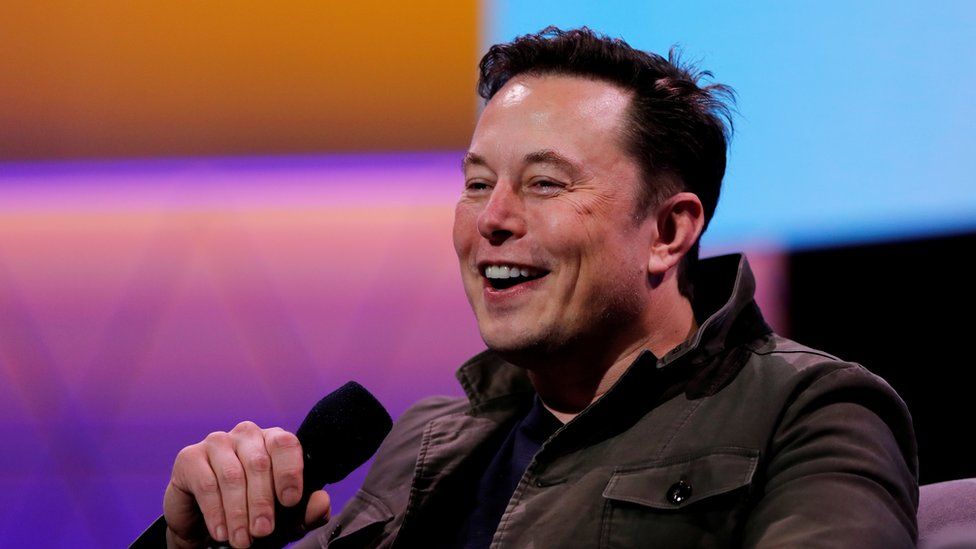
SharecloseShare pageCopy linkAbout sharingimage copyrightReutersTech entrepreneur Elon Musk has revealed he has Asperger’s syndrome while appearing on the US comedy sketch series Saturday Night Live (SNL).The 49-year-old told viewers he was “the first person with Asperger’s” to host the long-running programme – to loud cheers from the audience.People with Asperger’s interpret the environment around them differently to other people.It is thought to be the first time Mr Musk has spoken about his condition.The tech boss was guest hosting the sketch show – a coveted role that has been filled by an array of celebrities since SNL’s inception in the 1970s. These include Adele, Chris Rock, Ringo Starr, and Will Ferrell.What is Saturday Night Live?Lesser-known things about Asperger’s syndromeWhat is Elon Musk’s Starship?”I don’t always have a lot of intonation or variation in how I speak… which I’m told makes for great comedy,” he joked in his opening monologue. “I’m actually making history tonight as the first person with Asperger’s to host SNL.”His comment prompted a round of applause from the studio audience.Mr Musk, who has more than 53 million followers on Twitter, also joked about his use of social media. He has faced criticism and even legal threats over his tweets in the past.”Look, I know I sometimes say or post strange things, but that’s just how my brain works,” he said.”To anyone who’s been offended, I just want to say I reinvented electric cars, and I’m sending people to Mars in a rocket ship. Did you think I was also going to be a chill, normal dude?”The billionaire also joked about his son’s unusual name – he and the singer Grimes announced the birth of their first child, X Æ A-12 Musk, last year. “It’s pronounced cat running across keyboard,” Mr Musk said.Later in the programme, the SpaceX CEO spoke about the cryptocurrency Dogecoin. The currency was created in 2013 by a pair of software workers, and earlier this year it jumped in value by 50% after Mr Musk dubbed it “the people’s crypto”. It uses a Shiba Inu dog as its mascot and is based on a meme featuring the animal.Guest starring … pic.twitter.com/buM3bTOWbX— Elon Musk (@elonmusk) May 7, 2021
The BBC is not responsible for the content of external sites.View original tweet on TwitterMr Musk described the currency as “an unstoppable vehicle that’s going to take over the world” – but later said it was a “hustle” which prompted an almost immediate fall in value.With no intrinsic value like gold or land, and no ability to generate an income, cryptocurrencies are extremely volatile and can crash as fast as they rise. This makes them hard to value and makes their prices susceptible to tips from backers such as Mr Musk.NBC, which airs SNL, said the episode was streamed live on YouTube to more than 100 countries.WATCH: The many adventures of Elon Musk

Read more →

Junior doctors in India's Covid crisis: 'We've grown up really fast'

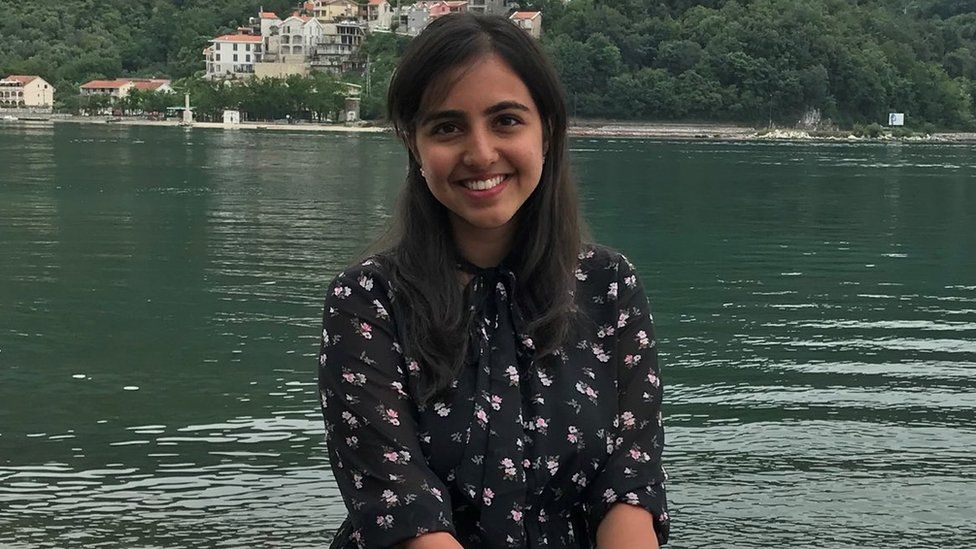
SharecloseShare pageCopy linkAbout sharingimage copyrightDr Pankti Pandya”We’ve had to grow up a lot in one month… as fresh interns we’ve been thrown into a crisis-like situation.”It’s often said that jumping in at the deep end is the best way to start a new job. And as Covid cripples India’s healthcare system, it’s sink or swim for junior doctors fresh out of university.On 26 February, 22-year-old Dr Pankti Pandya had just finished her final year of undergraduate study in her home state of Gujarat, on India’s west coast.There were 424 Covid cases that day in Gujarat.That daily number had risen to 1,580 by 22 March, when Pankti started her internship – the final phase of medical training before officially graduating – at Shree Krishna Hospital, in the district of Anand.And by the time she had finished her first month of work, Gujarat’s daily cases had soared to more than 12,500.”It is a lot of work and you cannot sit for even a moment,” Pankti tells Radio 1 Newsbeat.India Covid aid ‘not reaching those in need”It feels like we’re back to square one’India is a Covid disaster – it didn’t have to beInstead of spending the year doing placements in lots of different areas of medicine, this year’s interns are needed on the Covid front line.Pankti and her peers have been put on a constantly changing shift pattern that includes periods of seven consecutive days of 12-hour shifts – night or day – on a Covid ward.”We’ve been thrown into that field, into the thick of things,” she says.Pankti describes one shift where she had to look after about 60 patients with only two more doctors – also junior – on shift. They were on a non-critical Covid ward, where patients are considered “stable” – which means fewer doctors get allocated per ward.”We could feel the shortage of workforce,” Pankti says.She says it can feel “very scary” to work in critical care units when there are so many patients that “there’s no way that you can look after all of them”.image copyrightGetty ImagesDeciding how to prioritise patients and seeing lots of people die are things doctors usually take years to learn to manage, Pankti says.But in the face of the pandemic, the interns “have grown up really fast”.”A lot of my friends have had to deal with death at a very early time in their internship, almost on their first day or first night – which is always something which affects you a lot when you are first training.”That’s a feeling shared by Dr Simran Agrawal, 24, who began her internship at Nair Hospital in Mumbai in March 2020.”It was difficult for us to cater to the mental health needs of our patients when we ourselves were physically and mentally drained and burnt out,” she tells Newsbeat.image copyrightDr Simran AgrawalSimran says the “level of fear” among patients and staff was “the most challenging thing” during her internship.”I saw patients who were isolated from their families… they would cry and they would try to run away.”In a separate conversation on the BBC’s OS programme, Simran adds: “You know being a doctor will not be candies and roses… but to start your training with such a disheartening and heart-breaking atmosphere – that’s quite challenging.”Between shifts on Covid wards, interns have been given some seemingly less demanding jobs, such as monitoring medical supplies across hospitals to combat shortages.But these behind-the-scenes jobs can be just as draining.Simran says one of her toughest jobs as an intern was managing a Covid helpline, which often involved finding hospital beds for callers and arranging ambulances for them.In December and January, Simran began to feel burnt out, both physically and mentally, but felt there was “no option” to take a step back from her work.”I would have loved to have a small break at that time, but there was no time for it,” she says.Back in Anand, Pankti also prefers the “exhausting” Covid ward shifts to the deskbound ones.”Maybe because we’re fresh trainees and we’ve just started out, we kind of feel the adrenaline rush. “We see that this is a situation which needs help, and we feel like we can do our bit in helping – so we actually like to go there and we like to take care of patients.”It’s an exciting job – I actually cannot wait to get back.”Another junior doctor who is trying to focus on the positives is Dr Kamna Kakkar.Kamna, 29, graduated as an anaesthetist last summer, but after spending a year treating critically-ill Covid patients in Rohtak, Haryana, she is thinking about changing her career path to stay in ICU.”Despite all the sadness around us, despite all the devastation that’s happening, I think when I’m able to save even one patient or two patients, that feeling of satisfaction is just so rewarding,” she says.”Maybe I was destined to be here.”However, Kamna admits the latest wave has been “devastating”.image copyrightDr Kamna KakkarShe works lots of double shifts because many colleagues are catching Covid, which leaves the wards understaffed.A week ago, she became upset after seeing the “super crowded” emergency room full of Covid patients waiting for an ICU bed.”It just broke my heart,” says Kamna, who spoke to Newsbeat in a personal capacity.A visual guide to the Covid crisis in IndiaIndia says new variant linked to Covid surgeSince that moment, Kamna is trying not to think about “the number of dead bodies piling up”, so that she can focus on the people she can save.”I hope I don’t come across as someone inhuman, but this is the kind of life we live,” she says.”I think I’ve gotten used to these highs and lows of working in ICU and, hopefully, I’ll be able to cope with it better in the coming days.”image copyrightAFP/Getty ImagesFollow Newsbeat on Instagram, Facebook, Twitter and YouTube.Listen to Newsbeat live at 12:45 and 17:45 weekdays – or listen back here.

Read more →

Cruise Line Threatens to Skip Florida Ports Over Proof-of-Vaccination Ban

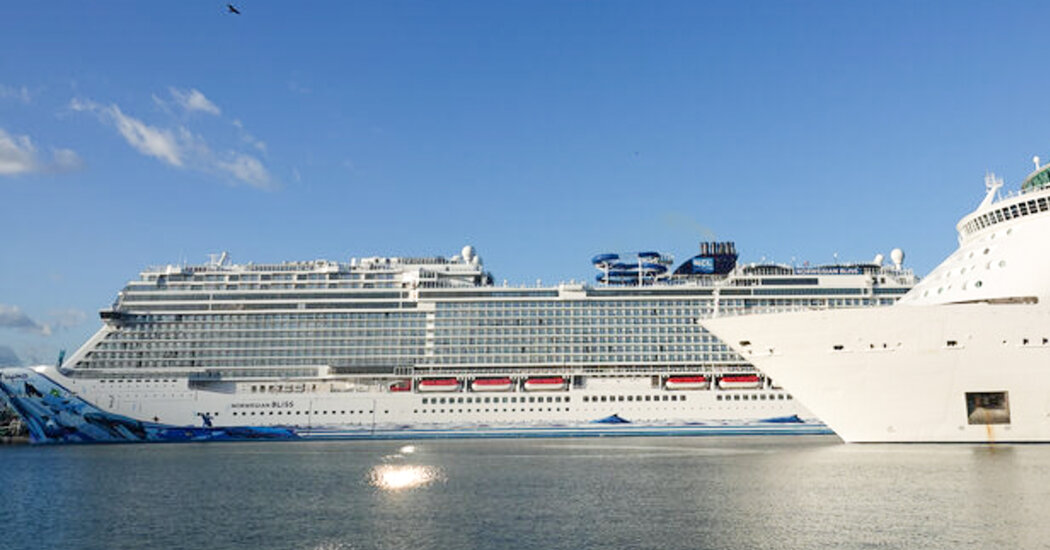
Norwegian Cruise Line plans to require Covid-19 vaccine documentation from its crew members and customers, but Florida recently enacted a law that bars businesses from doing so.Norwegian Cruise Line is threatening to keep its ships out of Florida ports after the state enacted legislation that prohibits businesses from requiring proof of vaccination against Covid-19 in exchange for services.The company, which plans to have its first cruises available to the Caribbean and Europe this summer and fall, will offer trips with limited capacity and require all guests and crew members to be vaccinated on bookings through at least the end of October.During a quarterly earnings call on Thursday, Frank Del Rio, chief executive of Norwegian Cruise Line, said the issue had been discussed with Florida’s governor, Ron DeSantis, a Republican. Mr. Del Rio said if the cruise line had to skip Florida ports, it could operate out of other states or the Caribbean.“We certainly hope it doesn’t come to that,” Mr. Del Rio said. “Everyone wants to operate out of Florida. It’s a very lucrative market.”The clash between Norwegian Cruise Line and Florida is one of the many that are likely to surface about how states and businesses address whether proof of vaccination will be required. While some states have yet to take a position on businesses requiring vaccines, others are already operating with such protocols in place.At many events in New York, such as Major League Baseball and National Basketball Association games, state health and safety guidelines require that fans provide proof of vaccination or of a negative coronavirus test within 72 hours of attendance.“We hope that this hasn’t become a legal football or a political football,” Mr. Del Rio said on the call.Norwegian Cruise Line is headquartered in Florida along with Royal Caribbean Cruises and Carnival Corporation. In 2019, about 60 percent of all U.S. cruise embarkations were from Florida ports, according to an economic analysis prepared last year for the Cruise Lines International Association.In a business update on Thursday, Norwegian Cruise Line said it was experiencing “robust future demand” with bookings for the first half of 2022 that were “meaningfully ahead” of 2019 bookings. Through the end of the first quarter of 2021, the company said it had $1.3 billion of advance ticket sales.In addition to prohibiting businesses to require proof of vaccination, the Florida law also prevents state and local governments from closing businesses or schools for in-person learning unless there is a hurricane emergency.“I have refused to take the same approach as other lockdown governors,” Mr. DeSantis said in a statement on Monday when he signed the bill. “In Florida, your personal choice regarding vaccinations will be protected and no business or government entity will be able to deny you services based on your decision.”His office did not immediately respond to a request for comment on Saturday, and Norwegian Cruise Line could not be reached for comment.“We hope that everyone is pushing in the same direction, which is we want to resume cruising in a safe manner, especially at the beginning,” Mr. Del Rio said on the earnings call. “Things might be different six months from now or a year from now.”The latest guidance from the Centers for Disease Control and Prevention allows for cruise ships to conduct “simulated voyages” with volunteer passengers to see how cruise lines can safely resume operations with measures such as testing and potential quarantines.The C.D.C. requires cruise lines to complete the test runs before they can be cleared to sail with passengers this summer.“It is not possible for cruising to be a zero-risk activity for spread of Covid-19,” the C.D.C. said this week. “While cruising will always pose some risk of Covid-19 transmission, C.D.C. is committed to ensuring that cruise ship passenger operations are conducted in a way that protects crew members, passengers and port personnel.”The latest guidance recommends, but does not require, that travelers and crew members on cruise lines receive a vaccine when it is available to them.On the earnings call this week, Mr. Del Rio said Norwegian Cruise Line had submitted a proposal to the C.D.C. that includes requiring proof of vaccines from all of its crew members and passengers.It is unclear how much business Norwegian Cruise Line could stand to lose by avoiding Florida ports. Of the dozens of ports listed on its website, Norwegian Cruise Line has Florida ports listed in Tampa, Miami and Key West.Mr. Del Rio said “pent-up demand” had helped fill bookings quickly.“I believe it’s the No. 1 destination for Americans to the Caribbean,” Mr. Del Rio said. “Who knows? That vessel might prove to be so profitable there that it never returns back to U.S. waters.”

Read more →

Joseph D. Mount Was Charged For Organizing a Hike of More Than 150 people to the Grand Canyon.

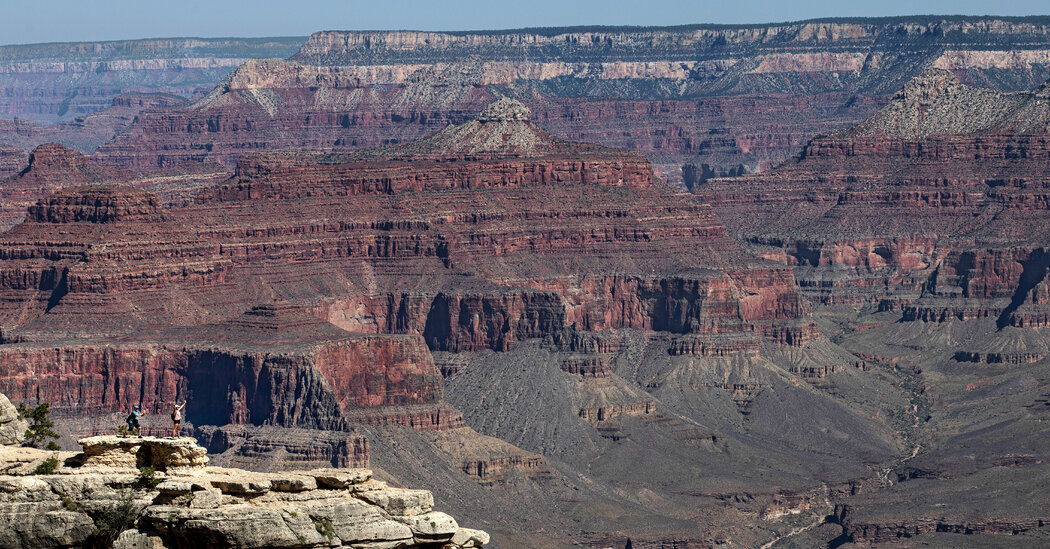
Prosecutors said at least 150 people showed up, astounding rangers and overwhelming visitors who struggled to steer clear of the hikers, many of whom were not wearing masks or social distancing.The organizer of a Grand Canyon adventure described it as a chance to trek along the South Rim, “one of the greatest hikes in the planet.”By September, at least 100 people from 12 different states had signed up on Facebook for the one-day hike. The organizer, Joseph Don Mount, said on Facebook he hoped more people would sign up for the hike.“If you want to keep inviting friends, I am determined to make this work for as many who want to go,” Mr. Mount said, according to federal court documents.A tipster sent the Facebook post to officials at the Grand Canyon National Park, where hikes had been limited to no more than 11 people per group in response to the pandemic.When a park official contacted Mr. Mount, he denied that he was planning a large-scale trip.Yet, he continued to advertise the hike and to organize cabin stays and shuttle rides for dozens of people, according to court documents. By Oct. 24, the day of the hike, more than 150 people had paid $95 to register for the trip, the documents show.That morning, at least 150 people showed up the North Kaibab Trail, astounding rangers and overwhelming other visitors who struggled to steer clear of the hikers, many of whom were not wearing masks or social distancing, according to the documents.On Tuesday, Mr. Mount was charged in the U.S. District Court in Arizona with five separate counts, including giving a false report, interfering with a government employee or agent acting in an official duty, soliciting business in a federal park without a permit, and violating restrictions for group sizes for park visits and restrictions related to Covid-19.Mr. Mount did not immediately return messages seeking comment. It was unclear from federal court records whether he had a lawyer.In an interview with The Daily Beast, Mr. Mount said he had arranged the trip because “with Covid and everything, people were just itching to get out.”“I didn’t do it for profit,” he said.Timothy Hopp, a U.S. park ranger, said in an affidavit that Mr. Mount collected $15,185 from participants for the hiking event.Mr. Mount planned to use the money to pay for two buses, three passenger vans, hotel lodging and about $2,900 for the drivers’ tips, meals, fuel, car pool drivers and other expenses, according to the affidavit.Mr. Mount “knowingly profited from leading this commercially organized” event, Mr. Hopp said. “J. Mount admitted he would be receiving a net profit of $65.11 and it would be enough to buy a new pair of hiking poles.”Mr. Hopp said he contacted Mr. Mount in October after receiving the tip, and Mr. Mount told him at the time that he was taking a “small group of close rugby associates and family friends.”Mr. Hopp said he repeatedly told Mr. Mount that the limit for group tours of the rim were 11 people and that groups could not be split up to circumvent the size limit because of the pandemic.Mr. Mount’s planned hike exceeded the limit set even during normal times, when up to 30 people are allowed in a group, Mr. Hopp said.After the conversation, Mr. Mount told hikers that he was backing down as trip leader but said the transportation plans remained in place and cabins and hotels were still booked.“Remember — there is nothing stopping you from hiking the Grand Canyon on this day,” he wrote, according to court documents. “However, there is now a target on my back and this is the best way I know to still hike” and “not be tied to any of you.”He told the hikers he would be in his own group and advised them to travel in groups of no more than 11 people.“Ranger Hopp — this is my plausible deniability,” Mr. Mount wrote on Facebook. “I am no longer leading a group through Grand Canyon on 10/24.”At 5 a.m. that day, a caravan of cars arrived at the trailhead. A ranger on the trail saw at least 150 people walk through the area between 7:30 a.m. and 8 a.m.The ranger, Cody Allinson, said that in seven months of work he had never seen “so many individuals traveling in the same direction in such a condensed period of time and space,” according to the affidavit.When park rangers approached them, many hikers were evasive.“It was obvious they had been coached not to identify with their fellow participants,” one ranger said, according to court documents.Hikers who were not with the group later complained to the park service about the sheer number of people they encountered on the trail.“There was no social distancing, nobody was wearing masks,” one of the visitors complained, according to court documents. “The group size was way out of control,”The day after the hike, some of the participants praised Mr. Mount on Facebook and suggested everyone send him a “bonus for all the extra hard work he did planning a weekend of memories.”It was not clear from the affidavit whether Mr. Mount received the bonus.

Read more →

Covid: Macron calls on US to drop vaccine export bans

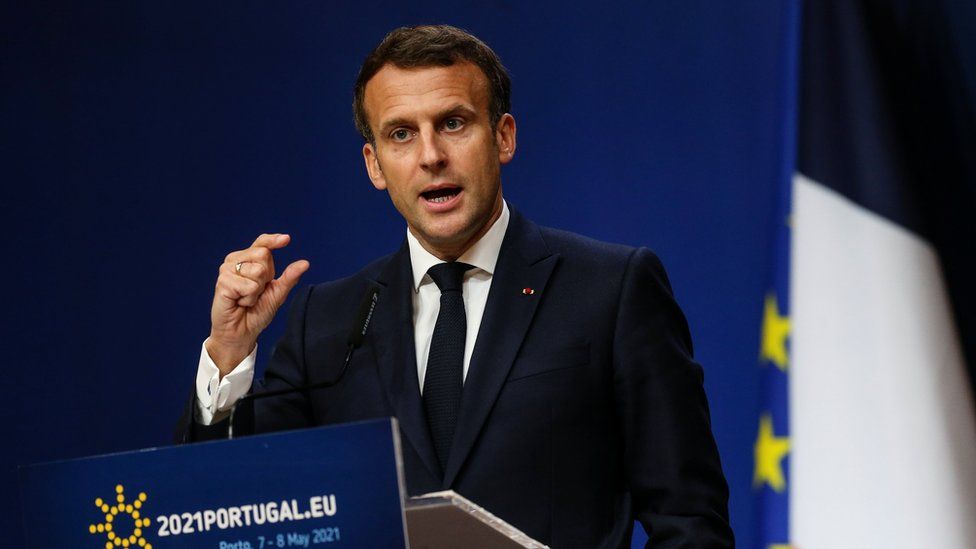
SharecloseShare pageCopy linkAbout sharingimage copyrightReutersFrench President Emmanuel Macron has called on the US to drop its restrictions on the export of Covid-19 vaccines and ingredients.His words came as a divide emerged between parts of Europe and the US over how best to increase global vaccine production.Currently, around 1.25bn doses have been administered around the world. However, less than 1% have been given to the world’s 29 poorest countries, according to news agency AFP.South Africa and India argue that surrendering patents would mean the secret vaccine recipes would be released so other countries could start producing the life-saving jabs, and potentially lowering the cost. India is currently in the grip of a devastating second wave, which yesterday alone left more than 4,000 people dead.This week, the US – where more than 250m doses have been administered so far – backed the proposed waiver.Covid vaccines: How fast is worldwide progress?Could lifting patents mean vaccines for all?The plan also has the support of the World Health Organization (WHO) and Pope Francis, who said on Saturday the world was infected with the “virus of individualism”, with “the laws of… intellectual property” put “over the laws of love and the health of humanity”.However, Mr Macron argued increasing exports and production was the best way to solve the crisis.”The key to produce vaccines more rapidly for all poor countries or intermediate countries is to produce more,” Mr Macron told fellow European Union leaders at a virtual meeting in Portugal on Saturday.Mr Macron singled out the US in particular, calling on it to “put an end to export bans not only on vaccines but on vaccine ingredients, which prevent production”. On Friday, Mr Macron had pointed to the fact that, so far, “100% of the vaccines produced in the United States are for the American market”. The US – which has pledged to donate 60 million doses from its stockpile of AstraZeneca in the coming months – has imposed curbs on the export of the raw materials needed to produce the vaccines.Mr Macron noted the UK had also placed restrictions on vaccine exports. Prime Minister Boris Johnson has previously denied there is a ban, however publicly available information suggests vaccines are not being exported from the UK. Germany and European Commission President Ursula von der Leyen have voiced opposition to a waiver.Ms von der Leyen told reporters waiving intellectual property patents would “not bring a single dose of vaccine in the short- and medium-term”, while Germany said it was not patents which were hindering production.Others have pointed to other issues with the waiver plan, which critics say strips financial rewards from cutting-edge drug developers.For example, BioNTech, the German company which partnered with Pfizer, say validating production sites to produce its vaccine can take up to a year.What is intellectual property?Intellectual property describes creations, such as inventions, which are protected by patents, copyrights and trademarks. These prevent copying and allow the originator to be financially rewarded.Patents give innovating firms a short-term monopoly on production to cover the costs of development and encourage investment.Biotech firms argue that such protection has provided incentives to produce Covid vaccines in record times.

Read more →

Mild COVID-19 infection is very unlikely to cause lasting heart damage, study finds

Mild Covid-19 infection is very unlikely to cause lasting damage to the structure or function of the heart, according to a study led by UCL (University College London) researchers and funded by the British Heart Foundation (BHF) and Barts Charity.
The researchers say the results, published in JACC Cardiovascular Imaging, should reassure the public, as they relate to the vast majority of people who had Covid-19 infections with mild or no symptoms.
This study of 149 healthcare workers recruited from Barts Health and Royal Free London NHS Trusts is the largest and most detailed study to date into mild Covid-19 infection and its longer-term impact on the heart. It follows concerns that because severe hospitalised Covid-19 infections are associated with blood clots, inflammation of the heart and heart damage, mild infections may cause similar complications. However, up until now, there has been little information specifically looking at this group of people and the effects on the heart further down the line after infection.
Researchers identified participants with mild Covid-19 from the COVIDsortium, a study in three London hospitals where healthcare workers had undergone weekly samples of blood, saliva and nasal swabs for 16 weeks. Six months after mild infection, they looked at the heart structure and function by analysing heart MRI scans of 74 healthcare workers with prior mild Covid-19 and compared them to the scans of 75 healthy age, sex and ethnicity matched controls who had not previously been infected.
They found no difference in the size or amount of muscle of the left ventricle — the main chamber of the heart responsible for pumping blood around the body — or its ability to pump blood out of the heart. The amount of inflammation and scarring in the heart, and the elasticity of the aorta — which is important for blood to easily flow out of the heart — remained the same between the two groups.
When the researchers analysed blood samples, they found no differences in the two markers of heart muscle damage — troponin and NT-proBNP — six months after mild Covid-19 infection.

Read more →

Covid: Pakistan enters partial lockdown as Eid nears

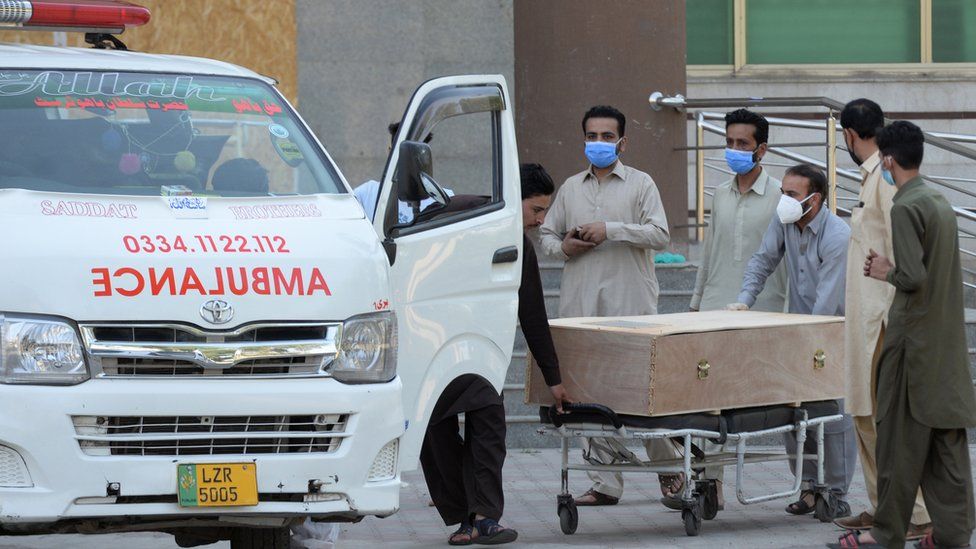
SharecloseShare pageCopy linkAbout sharingimage copyrightEPAPakistan has declared an eight-day partial lockdown ahead of the celebration of Eid al-Fitr next week. Non-essential businesses and tourism sites must close and travel across the country is restricted from 8-16 May. The country is currently battling a third wave of coronavirus infections, recording more than 140,000 cases and 3,000 deaths in April. Officials had warned restrictions could be necessary given neighbouring India’s devastating surge in cases.Pakistan recorded an additional 4,109 positive cases on Saturday, according to the health ministry. The actual number of infections is likely to be higher because of under-reporting.Under Pakistan’s partial lockdown, all but essential shops, businesses and markets will close until 16 May. Transport in and between regions and cities is restricted to private vehicles, taxis and trains, all with reduced capacity. All markets, businesses and shops will remain closed from 8 to 16 May except essential services which include grocery stores, pharmacies, meat shops, bakeries, food takeaways etc.#StayHomeStaySafe pic.twitter.com/JwFjf5gFq5— Government of Pakistan (@GovtofPakistan) May 7, 2021
The BBC is not responsible for the content of external sites.View original tweet on TwitterOfficials are keenly aware that people could spread the virus as they gather to celebrate Eid with their families this week. On Friday Dr Faisal Sultan, who advises Prime Minister Imran Khan on health, said that the country was facing a “critical period” as the holy month of Ramadan draws to a close.While he said there were “very initial signs of some stability” in cases, infections could again surge if measures were not taken now.Fears of ‘impending doom’ as Covid threatens PakistanCovid map: Where are cases the highest?While local authorities have been imposing restrictions to try to contain the spread of the virus, Prime Minister Imran Khan has resisted another nationwide lockdown, saying last month he wanted to avoid such measures because of the harm it could cause to the economy. But Pakistani officials are mindful of neighbouring India’s ongoing battle with a deadly second wave. Countries around the world are sending medicines, oxygen and ventilators by the planeload to try to ease the crisis gripping India’s health system. The country has recorded hundreds of thousands of new cases each day for weeks, and infections are now spreading from cities to the countryside. Asad Umar, Pakistan’s federal minister for planning, posted a series of tweets on Saturday warning that “the entire region is exploding with cases & deaths”. “The need for caution is clear,” he tweeted. “The danger is higher than ever and knocking at our doors.”Thousands of people would normally travel to Pakistan from all over the world for Eid, however travel restrictions are in place for many countries.For those travelling to Pakistan from abroad, countries have been categorised into three tiers, from those deemed low risk and not requiring a Covid-19 test, to others restricted from entering Pakistan.It is currently on the UK’s red list, which means anyone travelling to Pakistan must pay to quarantine in a designated hotel upon returning to the UK.

Read more →

The misinformation bubble threatening Brazil's indigenous people

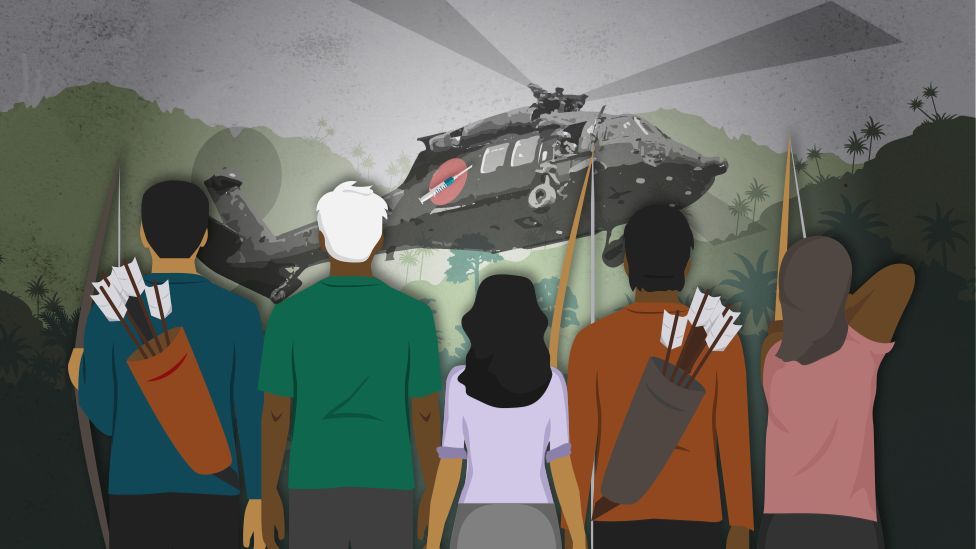
SharecloseShare pageCopy linkAbout sharingimage copyrightCecilia Tombesi/BBCFalse information from the mouths of politicians and preachers is reaching remote villages in the Amazon via WhatsApp, reports BBC News Brasil’s Juliana Gragnani.A helicopter loaded with health workers and coronavirus vaccine doses took off from Labrea, in the southern part of the Amazon, heading to a village some 50km away. But the villagers, part of the indigenous Jamamadi group, greeted the chopper armed with bows and arrows – and demanded that it leave. They’d been hearing false rumours about vaccines and wanted reassurances from a religious missionary – not doctors – before getting jabbed. The helicopter left without administering any of the doses. Fragile relationshipThe incident in early February was described to BBC News Brasil by several sources who asked not to be identified for fear of upsetting the fragile relationship between health teams and indigenous people. The people we spoke to say that armed welcoming parties are very rare, but they are worried about vaccine rumours being spread to indigenous people through mobile phones.image copyrightREUTERS/Bruno KellyMany mobile phone operators in Brazil include free use of Facebook and Facebook-owned Instagram and WhatsApp in their payment plans, whereas use of other networks and websites incurs a cost. WhatsApp – a common source of community and family news – presents a particular problem, experts say.Information on chat apps tends to come from people closer to us, who we instinctively trust – but data packages discourage people, particularly the cash-strapped, from double-checking health information.Indigenous journalist Anapuaka Tupinamba says WhatsApp enabled “a leap” for indigenous people in the areas of politics and education, but calls technology “a double-edged sword”. “What we have today is a ‘fake’ internet. When you see fake news, you can’t check it,” Anapuaka says. “So it feels like I’m on the internet, but not really. I’m almost on the intranet of a large company.”Anapuaka cites one recent example circulated on the app – a story about 900 indigenous Xingu people dying after receiving a vaccine. It was false. Sources of infoMuch of the bad vaccine information circulating on WhatsApp originates not from the villagers themselves but from politicians and religious leaders. image copyrightAndyara Machado Rodrigues/DivulgaçãoThis includes Brazil’s President. “Nobody can force me to get the vaccine,” Jair Bolsonaro said in September. The following month, he declared: “The Brazilian people will not be anyone’s guinea pig”. He wasn’t going to get the vaccine, he said, “and that’s it.”He appeared to echo bizarre and false claims, common in anti-vaccine groups online, about Covid vaccines altering people’s DNA.”If you become an alligator, it’s your problem … if a woman grows a beard or a man starts to speak with a thin voice, they [pharmaceutical companies] will have nothing to do with it.”It was those kinds of statements that resonated most with indigenous communities, says Indianara Machado, a nurse from Brazil’s Central-West region.”People in the village ask themselves: ‘If the president didn’t take it [the vaccine], how are we going to take it?'” she says.’The beast’s chip’Religious missionaries and evangelical churches have influence in indigenous territories, and some – though certainly not all – have also spread vaccine falsehoods. Indianara Machado says that many of the videos that went viral were of indigenous pastors holding services telling people not to get the vaccine, declaring it was “the beast’s microchip” – calling to mind fake rumours that vaccines include chips that can track and enslave people. Pastor Henrique Terena, president of the National Council of Evangelical Indigenous Pastors and Leaders, admits that in the Central-West region there is “a neo-Pentecostal segment that says that vaccines are not good, that they are from the devil, and they tell their members they shouldn’t get the jab.”But he says his members are by and large not the problem, and he says anti-vaccine pastors only “claim” to be evangelical. The Anti-Vax FilesThe Anti-Vax Files: A new series from BBC Trending, on the World Service from 05:30 GMT Saturday. Download the podcast or listen online Video disinformationOnline misinformation convinced Joel Paumari’s parents that Covid vaccines were unsafe. He’s a teaching coordinator in the Amazon region, and his concern for his parents grew as he saw a rise in the number of deaths of indigenous people. According to official figures, more than 650 indigenous people living in villages have died due to Covid-19 out of a total population of 517,000. Across Brazil, around 400,000 people have died. In raw numbers, the country’s death toll is second only to the United States.image copyrightJoel PaumariJoel says that his parents saw videos that included false claims about drugs, about vaccines “distancing” people from God, and those rumours about DNA and genetic codes. All of them were untrue.It took three days of pleading WhatsApp voice notes to convince his parents to take the jab – and while they did in the end, Joel’s brother did not.image copyrightAdriano Gambarini/OPANLimited forwardingAudio, text and videos with disinformation have spread across Brazilian WhatsApp groups for years, and played a part in the 2018 elections.Since then, the company has limited message sharing to five times and inserted a tag that shows when a message has been forwarded multiple times. WhatsApp told BBC News Brasil that since it’s encrypted, the company doesn’t have access to the content of the messages. And the company says it has acted to combat misinformation, for instance by launching free services with information about Covid-19 within the app.Vaccine hesitation Still, disinformation appears to be having an impact on vaccine uptake in indigenous villages. The villagers are a priority group when it comes to Covid vaccination, and statistics indicate that 75% have received at least one vaccine dose.But that lags behind other recent vaccine drives.BBC News Brasil obtained, via Brazil’s Access to Information law, data on the immunisation of indigenous people in Brazil since 2011. We found that virtually all previous vaccines drives had a 90% take-up rate. After a decade-long campaign to build trust, take-up of the flu vaccine reached 90% in 2019. What’s more, that level was reached within a month. By contrast, the current Covid-19 campaign began in mid-January – more than three months ago.The government remains optimistic, however. The office of Brazil’s Special Secretary for Indigenous Health noted that it has a workforce of 14,000 indigenous health professionals. “Indigenous vaccination continues at a favourable pace,” it said. image copyrightAdriano Gambarini/OPANMissionariesThe Jamamadi – who met the helicopter armed with bows and arrows – are one group who’ve been strongly influenced by missionaries from the United States in recent decades. By contrast, according to anthropologist Miguel Aparicio, the Banawa people, who are neighbours to the Jamamadi, have been fully vaccinated. The difference? “The missionary presence within the Banawa is not strong,” he says.But a few days after the rejection of the jabs, a Jamamadi chief made contact with health officials saying he wanted to get the vaccine. The team returned and vaccinated some villagers. But that’s not quite the end of the story – most of the Jamamadi have not yet had a jab.Follow Juliana on TwitterListen to The Anti-Vax Files from BBC Trending, on the World Service. Download the podcast or listen online.

Read more →

Philippines Covid surge throws country into disarray

In the Philippines, a second surge in Covid-19 cases is putting renewed pressure on the healthcare system. The country currently has the second highest number of cases in South East Asia behind Indonesia. And with one of the longest and hardest lockdowns in the world, a crippling recession has forced thousands on to the streets in search of food. Howard Johnson reports.

Read more →

Sleep disorders tally $94.9 billion in health care costs each year

Sleep disorders are associated with significantly higher rates of health care utilization, conservatively placing an additional $94.9 billion in costs each year to the United States health care system, according to a new study from researchers at Mass Eye and Ear, a member hospital of Mass General Brigham.
In their new analysis, published in the Journal of Clinical Sleep Medicine, the researchers found the number of medical visits and prescriptions filled were nearly doubled in people with sleep disorders such as sleep apnea and insomnia, compared to similar people without. Affected patients were also more likely to visit the emergency department and have more comorbid medical conditions.
Costly medical care for sleep disorder patients
The researchers sought out to determine the true diagnostic prevalence of sleep disorders and how expensive these conditions were to the health care system. They examined differences in health expenditures in similar patients with and without a sleep disorder diagnosis, as determined by their ICD-10 diagnosis code. The study included data from a nationally-representative survey of more than 22,000 Americans called the 2018 Medical Expenditure Panel Survey, which is administered by the Department of Health and Human Services’ Agency for Healthcare Research and Quality.
They found 5.6 percent of respondents had at least one sleep disorder, which translated to an estimated 13.6 million U.S. adults. This likely represents a significant underestimate, according to the authors, as insomnia alone is felt to conservatively affect 10 to 20 percent of the population. These individuals accumulated approximately $7,000 more in overall health care expenses per year compared to those without a sleep disorder — about 60 percent more in annual costs. This equates to a conservative estimate of $94.9 billion in health care costs per year attributable to sleep disorders.
The analysis revealed that patients with sleep disorders attended more than 16 office visits and nearly 40 medication prescriptions per year, compared to nearly 9 visits and 22 prescriptions for those without a sleep disorder. The study did not quantify non-health care related costs, but the authors noted it can be assumed that more doctors’ appointments means more time off from work, school or other social obligations, not to mention decreased productivity associated with symptoms, only exacerbating costs to society.
Sleep disorders raise risk for other conditions
Sleep disorders can take a toll on health and quality of life in numerous ways. Individuals with certain sleep disorders experience decrease daytime functionality related to sleepiness, mental fog and an increased risk of motor vehicle accidents, for instance. Obstructive sleep apnea is one of the most common sleep disorders and if untreated, can increase risk for neurocognitive issues, such as difficulty concentrating and mood disorders, as well as cardiovascular conditions including heart attacks, strokes, high blood pressure and irregular heart rhythms.
Getting a proper diagnosis at the sign of asleep problem can lead to an effective treatment for a sleep disorder.
“Fortunately, studies have demonstrated that treating certain sleep disorders effectively reduces health care utilization and costs. Therefore, sleep issues should not be ignored. Greater recognition of sleep disorders and an early referral to a sleep specialist are essential,” said Dr. Huyett. “Your sleep is important, and if there’s an issue with your sleep, seek help for it.”
Story Source:
Materials provided by Massachusetts Eye and Ear Infirmary. Note: Content may be edited for style and length.

Read more →