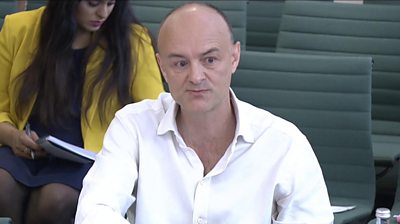
Dominic Cummings: Five things he told MPs about Covid response

Dominic Cummings has been speaking to MPs about the UK government’s handling of Covid-19.The former chief aide said Boris Johnson had initially dismissed Covid as a “scare story” and the UK had been too slow to lock down.Mr Johnson hit back at some of his allegations, insisting that the government’s priority had always been to “save lives”.

Read more →

Hundreds of antibiotic resistant genes found in the gastrointestinal tracts of Danish infants

Hundreds of antibiotic resistant genes found in the gastrointestinal tracts of Danish infants.
Danish one-year-olds carry several hundred antibiotic resistant genes in their bacterial gut flora according to a new study from the University of Copenhagen. The presence of these genes is partly attributable to antibiotic use among mothers during pregnancy.
An estimated 700,000 people die every year from antibiotic resistant bacterial infections and diseases. The WHO expects this figure to multiply greatly in coming decades. To study how antibiotic resistance occurs in humans’ natural bacterial flora, researchers from the University of Copenhagen’s Department of Biology analysed stool samples from 662 Danish one-year-old children.
Within the samples, the researchers discovered 409 different genes, providing bacteria with resistance to 34 types of antibiotics. Furthermore, 167 of the 409 genes found are resistant to multiple types of antibiotics, including those classified as ‘critically important’ by the WHO for being able to treat serious diseases in the future.
“It’s a wake-up call that one-year-old children are already carrying gut bacteria that are resistant to very important types of antibiotics. New resistant bacteria are becoming more widespread due to increased antibiotic consumption. The horror scenario is that we will one day lack the antibiotics needed to treat life-threatening bacterial infections such as pneumonia or foodborne illnesses,” explains Department of Biology professor Søren Sørensen, who led the study.
Antibiotic use during pregnancy is an important factor
The important factor for whether an infant had more antibiotic-resistant genes in bacteria in the gut was if the child’s mother had been administered antibiotics during late pregnancy or if the year-old infant had received antibiotics in the months prior to the collection of their stool samples.

Read more →

New tools to battle cancer, advance genomics research

University of Virginia School of Medicine scientists have developed important new resources that will aid the battle against cancer and advance cutting-edge genomics research.
UVA’s Chongzhi Zang, PhD, and his colleagues and students have developed a new computational method to map the folding patterns of our chromosomes in three dimensions from experimental data. This is important because the configuration of genetic material inside our chromosomes actually affects how our genes work. In cancer, that configuration can go wrong, so scientists want to understand the genome architecture of both healthy cells and cancerous ones. This will help them develop better ways to treat and prevent cancer, in addition to advancing many other areas of medical research.
Using their new approaches, Zang and his colleagues and students have already unearthed a treasure trove of useful data, and they are making their techniques and findings available to their fellow scientists. To advance cancer research, they’ve even built an interactive website that brings together their findings with vast amounts of data from other resources. They say their new website, bartcancer.org, can provide “unique insights” for cancer researchers.
“The folding pattern of the genome is highly dynamic; it changes frequently and differs from cell to cell. Our new method aims to link this dynamic pattern to the control of gene activities,” said Zang, a computational biologist with UVA’s Center for Public Health Genomics and UVA Cancer Center. “A better understanding of this link can help unravel the genetic cause of cancer and other diseases and can guide future drug development for precision medicine.”
Bet on BART
Zang’s new approach to mapping the folding of our genome is called BART3D. Essentially, it compares available three-dimensional configuration data about one region of a chromosome with many of its neighbors. It can then extrapolate from this comparison to fill in blanks in the blueprints of genetic material using “Binding Analysis for Regulation of Transcription,” or BART, a novel algorithm they recently developed. The result is a map that offers unprecedented insights into how our genes interact with the “transcriptional regulators” that control their activity. Identifying these regulators helps scientists understand what turns particular genes on and off — information they can use in the battle against cancer and other diseases.
The researchers have built a web server, BARTweb, to offer the BART tool to their fellow scientists. It’s available, for free, at http://bartweb.org. The source code is available at https://github.com/zanglab/bart2. Test runs demonstrated that the server outperformed several existing tools for identifying the transcriptional regulators that control particular sets of genes, the researchers report.
The UVA team also built the BART Cancer database to advance research into 15 different types of cancer, including breast, lung, colorectal and prostate cancer. Scientists can search the interactive database to see which regulators are more active and which are less active in each cancer.
“While a cancer researcher can browse our database to screen potential drug targets, any biomedical scientist can use our web server to analyze their own genetic data,” Zang said. “We hope that the tools and resources we develop can benefit the whole biomedical research community by accelerating scientific discoveries and future therapeutic development.”
The work was supported by the National Institutes of Health, grants R35GM133712 and K22CA204439; a Phi Beta Psi Sorority Research Grant; and a Seed Award from the Jayne Koskinas Ted Giovanis Foundation for Health and Policy.
Story Source:
Materials provided by University of Virginia Health System. Note: Content may be edited for style and length.

Read more →

How 'non-professional' cells can trigger immune response

Included in the vast fallout stemming from the COVID-19 pandemic, scientists are paying closer attention to microbial infections and how life forms defend against attacks from pathogens.
Research led by University of California San Diego scientists has shed new light on the complex dynamics involved in how organisms sense that an infection is taking place.
UC San Diego Assistant Project Scientist Eillen Tecle in Professor Emily Troemel’s laboratory (Division of Biological Sciences) led research focusing on how cells that are not part of the conventional immune system respond to infections when pathogens attack. Scientists have conducted extensive research on so-called “professional” immune cells that are defensive specialists. Much less is known about how “non-professional” cells handle such threats.
Tecle, Troemel and their colleagues at Pennsylvania State University focused their research on roundworms (Caenorhabditis elegans), animals that lack dedicated immune cells, to help decipher details of such dynamics.
As described in the journal PLOS Pathogens, the researchers conducted experiments involving roundworms under attack by viruses and microsporidia, which are natural pathogens of worms and humans. The results indicate that roundworms may sense changes in their metabolism in order to unleash protective defenses, even if they don’t directly sense the pathogen incursion.
In their study, the researchers examined how hosts may respond when pathogens such as viruses and microsporidia steal key compounds from C. elegans cells known as nucleotides. Pathogens like these are required to pilfer such components from their hosts in order to survive. The study’s results focused on biological pathways related to the breakdown of chemical compounds known as purine nucleotides. This purine metabolism pathway is key to the cells’ ability to sense alterations as a way to induce an immune response.
“We hypothesize that the host has ways to surveil what’s going on inside of its cells in an active process,” said Tecle. “Our results suggest that the host has developed ways to sense the theft of purine metabolites. It seems that when these key cellular building blocks are stolen by the pathogen, the host senses this theft to mount an immune response to the pathogen.”
This research may shed light on why purine-related compound mutations have been found to underlie many human diseases, including adenosine deaminase deficiency, which damages the immune system, and Lesch-Nyhan syndrome, which involves neurological and behavioral abnormalities. While these mutations result in various disorders in humans, they may persist in the human population to provide some protection against infections, for example during viral pandemics.
“Particularly in the context of the COVID-19 pandemic, it’s so important that we continue to study these questions of immunity in lots of different systems to build new tools so that we can learn how to prevent and treat infections,” said Troemel.
The authors included: Eillen Tecle, Crystal Chhan, Latisha Franklin, Ryan Underwood, Wendy Hanna-Rose and Emily Troemel.
This research was supported by the National Institutes of Health (R01 AG052622 and GM114139). The research includes data generated at the UC San Diego IGM Genomics Center utilizing an Illumina NovaSeq 6000. Some strains were provided by the CGC. Tecle was a fellow of the San Diego Institutional Research and Academic Career Development Award, a National Institutes of Health/National Institute of General Medical Sciences-sponsored program.
Story Source:
Materials provided by University of California – San Diego. Original written by Mario Aguilera. Note: Content may be edited for style and length.

Read more →

Deciphering structure of a toxic matter that destroys the nerves in the brain

Alzheimer’s disease — also called dementia — where memory and cognitive functions gradually decline due to deformation and death of neurons, and Parkinson’s disease that causes tremors in hands and arms impeding normal movement are major neurodegenerative diseases. Recently, a research team at POSTECH has identified the structure of the agent that causes Alzheimer’s and Parkinson’s diseases to occur together.
A research team led by Professor Joon Won Park and Ph.D. candidate Eun Ji Shin of the Department of Chemistry at POSTECH investigated the surface structure of hetero-oligomers found in the overlap of Alzheimer’s disease and Parkinson’s disease, using an atomic force microscopy (AFM) to reveal their structural identity. This study was featured as the front cover paper in the latest issue of Nano Letters.
It is known that the pathological overlap of Alzheimer’s disease and Parkinson’s disease is associated with the formation of hetero-oligomers derived from amyloid-beta and alpha-synuclein. However, it was difficult to study the treatment due to technical limitations in observing their structure.
To this, the researchers used the AFM to observe the surface characteristic of the hetero-oligomer nano-aggregates derived from amyloid-beta, known as the biomarker of Alzheimer’s disease, and alpha-synuclein, known as the biomarker of Parkinson’s disease, at the single-molecule level.
When the research team investigated with four AFM tips immobilized with antibodies that recognize N-terminus or C-terminus of each peptide, it was confirmed that all aggregates were hetero-oligomers. In addition, in the case of hetero-oligomer, it was confirmed that the probability of recognizing the end of the peptide is higher than that of the homo-oligomer.
This result indicates that the end of each peptide has a bigger tendency to be located on the surface of hetero-oligomers than homo-oligomers, or that the ends of the peptides located on the surface have more degrees of freedom. That is, it can be confirmed that the aggregation between peptides is more loosely packed in the hetero-oligomer than in the homo-oligomer.
This study is the first study to observe the structure of protein disordered nano-aggregates, which has never been identified before, using the quadruple mapping with four AFM tips. It serves as experimental grounds to verify the hypothesis of hetero-oligomer aggregation. It can also be used in studies related to the overlapping phenomena of various neurodegenerative diseases other than Alzheimer’s and Parkinson’s.
“Until now, there was no adequate method to analyze the nano-aggregates, making it impossible to elucidate the structural identity of heterogeneous aggregates,” explained Professor Joon Won Park. “As the analysis method developed in this study is applicable to other amyloid protein aggregates, it will help to identify the cause of diseases such as Alzheimer’s or the mad cow disease.”
Story Source:
Materials provided by Pohang University of Science & Technology (POSTECH). Note: Content may be edited for style and length.

Read more →

Resetting the biological clock by flipping a switch

The biological clock is present in almost all cells of an organism. As more and more evidence emerges that clocks in certain organs could be out of sync, there is a need to investigate and reset these clocks locally. Scientists from the Netherlands and Japan introduced a light-controlled on/off switch to a kinase inhibitor, which affects clock function. This gives them control of the biological clock in cultured cells and explanted tissue. They published their results on 26 May in Nature Communications.
Life on Earth has evolved under a 24-hour cycle; of light and dark, hot and cold. ‘As a result, our cells are synchronized to these 24-hour oscillations,’ says Wiktor Szymanski, Professor of Radiological Chemistry at the University Medical Center Groningen. Our circadian clock is regulated by a central controller in the suprachiasmatic nucleus, a region in the brain directly above the optic nerve, but all our cells contain a clock of their own. These clocks consist of an oscillation in the production and breakdown of certain proteins.
Light switch
‘It is becoming increasingly clear that these clocks can be disrupted in organs or tissues, which may lead to disease,’ adds first author Dušan Kolarski, a PhD student from the group led by Ben Feringa, Professor of Organic Chemistry. And, of course, we all know about jet lag, which is caused by travel across time zones, or problems that are caused by the switch to or from daylight saving time. ‘We know very little about how our cells coordinate these oscillations, or how it affects the body if, for example, one kidney is out of phase with the rest of the body,’ he adds.
To study these effects, it would be useful to have a drug that affects the clocks and that can be activated locally. The latter is something that the groups of Szymanski and Feringa have done before. They created several compounds, such as antibiotics or anticancer drugs, that could be switched on and off with light. Previously, circadian biologist Tsuyoshi Hirota, associate professor at the Institute of Transformative Bio-Molecules at Nagoya University, Japan, developed a kinase inhibitor, longdaysin, which slows down the circadian clock to a cycle that lasts up to 48 hours. Kolarski fitted this longdaysin with a light switch that allowed him to activate or deactivate the compound with violet and green light, respectively.
Time zone
Developing this adaptation took Kolarski several years, but the result was well worth the effort. ‘It was a real scientific “Tour de Force” and a beautiful example of interdisciplinary cooperation’, adds Feringa. Together with their Japanese colleagues at Nagoya University, the scientists from the University of Groningen showed how the cycle of cultured cells was extended from 24 to 28 hours by treatment with the longdaysin derivative. Deactivation with green light brought the cycle back to just over 25 hours and subsequent reactivation with violet light returned it to 28 hours. ‘We also used it in tissue slices from the mouse suprachiasmatic nucleus,’ says Kolarski. ‘The oscillations slowed to a 26-hour cycle after treatment for several days with the longdaysin derivative and returned to a 24-hour cycle after deactivation with green light.’ ‘This reversible regulation will provide a new approach to analysing how the clock in each cell is organized at the tissue level to gain a deeper understanding of the complex circadian clock system,’ Hirota adds.
The scientists also adjusted the phase of the cycles in cultured cells: a three-day activation of the longdaysin derivative followed by deactivation caused a shift in the 24-hour cycle by up to six hours. This is as if the cells were synchronized with a different time zone. The experiments are a proof of principle and will allow scientists to study the circadian clock in much more detail. A next step would be to use longdaysin in animals. Kolarski: ‘The original longdaysin, without the switch, has been used before in zebrafish. We would very much like to test it in mice. The aim is not to fix jet lag but to study the effect of longdaysin on physiology.’
Organs
A light-activated drug such as longdaysin will probably only be used to treat serious conditions. ‘We can actually reach quite a few organs with light, for example with an endoscope. The gastrointestinal tract and the respiratory system are easily reached, while other tissues may require small incisions to insert optic fibres,’ comments Szymanski. There are also several emerging options to generate light inside organs or tissues, through techniques such as bioluminescence or sonoluminescence. Although these levels of light are still several orders of magnitude below what we need to flick a switch. We will work hard to increase sensitivity in the coming years, emphasize both Szymanski and Feringa. Kolarski adds: ‘We have now opened a new field of study. Eventually, all this will allow us to locally disrupt or repair the circadian oscillations.’
Story Source:
Materials provided by University of Groningen. Note: Content may be edited for style and length.

Read more →

The Best Time of Day to Exercise for Metabolic Health

Late-day exercise had unique benefits for cholesterol levels and blood sugar control, a study of overweight men eating a high-fat diet found.Evening exercise may be more potent than morning workouts for improving metabolic health, according to a helpful new study of exercise timing. The study, which looked at high-fat diets and overweight men, found that late-day workouts moderated the undesirable health effects of a greasy diet, while morning exercise did not.The study involved only men who were eating a fatty diet, but adds to growing evidence that exercise timing matters and, for many of us, working out later might have particular advantages.Although we may be only dimly aware of this, operations inside our bodies follow busy, intricate and mutable circadian schedules. All of our tissues contain molecular clocks that coordinate biological systems, prompting our blood sugar to rise and dip throughout the day, along with our hunger, heart rates, body temperature, sleepiness, gene expression, muscle strength, cell division, energy expenditure and other processes.The full workings of these internal clocks remain mysterious. But scientists know they recalibrate themselves, based on complex cues from inside and outside of our bodies. Most obviously, they synchronize to light and sleep. But they also set themselves by meals, meaning that when we eat, as well as what we eat, may influence our health and metabolism.Most researchers believe exercise timing likewise tunes internal clocks. But the results of relevant past studies have been inconsistent. Some suggest morning workouts, before breakfast, incinerate more fat than evening exercise. Others find the opposite. And some recent experiments indicate that early exercise, if it is intense, actually impairs blood-sugar control, while the same workouts, performed later, smooth blood-sugar spikes and improve metabolic health, which may have particular benefits for heart health and controlling Type 2 diabetes.Most of those studies, though, focused on one type of exercise and rarely controlled people’s meals during the experiments, making it difficult to tease apart the effects of exercise timing from those of what and when people eat.So, for the new study, which was published in May in Diabetologia, scientists affiliated with the Mary MacKillop Institute for Health Research at Australian Catholic University in Fitzroy, Australia, and other institutions, set out to control people’s diets while tinkering with their workout timing.They began by recruiting 24 sedentary, overweight Australian men (not including women to avoid issues related to women’s menstrual cycles). The scientists invited these volunteers to the lab, checked their aerobic fitness, cholesterol, blood-sugar control and other aspects of health, asked about current eating habits, and then set them up with meal deliveries.The meals consisted of about 65 percent fat, since the researchers wished to learn how exercise timing might affect fat metabolism, as well as blood-sugar control. The volunteers ate the unctuous foods, and nothing else, for five days and visited the lab for more tests. Then the scientists divided them into three groups. One would start exercising every day at 6:30 a.m., another at 6:30 p.m., and the last would remain sedentary, as a control.The exercise routines were identical, intermingling brief, intense intervals on stationary bicycles one day with easier, longer workouts the next. The exercisers worked out for five consecutive days, while continuing the high-fat diet. Afterward, the researchers repeated the original tests.The results were somewhat disturbing. After the first five days of fatty eating, the men’s cholesterol had climbed, especially their LDL, the unhealthiest type. Their blood also contained altered levels of certain molecules related to metabolic and cardiovascular problems, with the changes suggesting greater risks for heart disease.Early-morning exercise, meanwhile, did little to mitigate those effects. The a.m. exercisers showed the same heightened cholesterol and worrisome molecular patterns in their blood as the control group.Evening exercise, on the other hand, lessened the worst impacts of the poor diet. The late-day exercisers showed lower cholesterol levels after the five workouts, as well as improved patterns of molecules related to cardiovascular health in their bloodstreams. They also, somewhat surprisingly, developed better blood-sugar control during the nights after their workouts, while they slept, than either of the other groups.The upshot of these findings is that “the evening exercise reversed or lowered some of the changes” that accompanied the high-fat diet, says Trine Moholdt, an exercise scientist at the Norwegian University of Science and Technology, who led the study in Australia as a visiting researcher. “Morning exercise did not.”This study does not tell us how or why the later workouts were more effective in improving metabolic health, but Dr. Moholdt suspects they have greater impacts on molecular clocks and gene expression than morning exertions. She and her colleagues hope to investigate those issues in future studies, and also look at the effects of exercise timing among women and older people, as well as the interplay of exercise timing and sleep.For now, though, she cautions that this study does not in any way suggest that morning workouts aren’t good for us. The men who exercised became more aerobically fit, she says, whatever the timing of their exercise. “I know people know this,” she says, “but any exercise is better than not exercising.” Working out later in the day, however, may have unique benefits for improving fat metabolism and blood-sugar control, particularly if you are eating a diet high in fat.

Read more →

UK government clarifies advice for Covid-hit areas

SharecloseShare pageCopy linkAbout sharingimage copyrightPA MediaAdvice for eight areas in England worst-hit by the Indian coronavirus variant has been updated after the government clarified that it was not imposing local restrictions.The amended advice asks people to minimise travel into and out of Bolton, Blackburn, Kirklees, Bedford, Burnley, Leicester, Hounslow and North Tyneside.Earlier advice had asked people to avoid non-essential travel altogether.Bank holiday plans were plunged into disarray as a result.Many people called off plans at short notice when that initial advice emerged without an announcement, and local leaders said they had not been consulted.As well as minimising travel, people in the affected areas are being asked to meet outdoors and stay 2m apart from anyone in other households, wherever those things are possible.The updated advice also refers people to their local authorities’ Covid guidance and says anyone travelling to red or amber list countries should arrange “a testing or managed quarantine package”.Commenting on the updated advice on Tuesday evening, a government spokesperson said ministers wanted to “make it clearer we are not imposing local restrictions” in areas where the new variant was spreading.”Instead, we are providing advice on the additional precautions people can take to protect themselves and others in those areas where the new variant is prevalent,” the spokesperson said.Can I travel in an area affected by the Indian variant?Who can book their Covid vaccine now?Where is the Indian variant and how is it spreading?On Monday, it emerged that advice specifically for the eight areas had been published the previous week without any government announcement, which included asking people to avoid non-essential travel.Among those considering cancelling plans as a result was Julie Suttar, from Aberdeen, who told the BBC on Tuesday that she had booked a non-refundable hotel in Leicester to visit family she had not seen for more than a year.”I can’t believe it, I’ve been on the phone to my sister, in tears. Where’s this come from? Where’s the notice?” she asked.image copyrightPA Media’No local lockdowns’The uncertainty prompted a denial from Downing Street that it was imposing local lockdowns by stealth.The prime minister’s official spokesman said the government wanted to encourage the public “to exercise their good judgement”, rather than issuing “top-down edicts”. Several of the local authorities affected by the new advice said they had not been consulted about it and only learned of its existence through media reports.On Tuesday afternoon, local councils for the eight areas – which together represent more than two million people – emerged from a meeting with government officials and insisted there were no restrictions on travel in their areas and “no local lockdowns”.They said they were working to increase vaccination and testing – with Kirklees the latest area to announce door-to-door testing – as well as to support people self-isolating.”There are sensible public health precautions people can take as individuals in line with the sorts of advice we have all been following throughout the pandemic,” the councils said.’Major communications error’Greater Manchester’s Labour mayor Andy Burnham said the confusion over the advice was a “major communications error” which had a “major effect on people’s lives”.Norma Redfearn, Labour mayor of North Tyneside, said “after a day of confusion” it had been confirmed the area was “at the same stage of the road map as the rest of the country”.Labour’s shadow health secretary Jonathan Ashworth said the messaging had been “completely contradictory” at a time “when clarity is everything”.He said: “If you’ve got a holiday booked for half term next week, does the government want you to cancel it or not? If you’ve got a wedding organised, do you have to cancel your wedding now?”Bolton Council’s Conservative leader David Greenhalgh said there had been a “fear” the town would be singled out for a local lockdown. He said: “As long as they follow the guidance I don’t believe residents in Bolton should be cancelling holidays.”Overall cases of Covid are at their highest rate for six months in Bolton, at 452.1 cases per 100,000 people. The Royal Bolton Hospital said it would take “urgent action” to manage an increase in Covid patients.Meanwhile, the UK reported 15 new deaths within 28 days of a positive test and 2,493 new confirmed cases. Tuesday’s figures for reported deaths are sometimes higher due to weekend reporting delays.The original guidance, published on a page titled “what you can and cannot do”, advised people in the eight areas of England to:Meet outside rather than inside where possibleKeep 2m apart from people who you do not live with (unless you have formed a support bubble with them), this includes friends and family you don’t live withAvoid travelling in and out of affected areas unless it is essential, for example for work (if you cannot work from home) or education It was first published on 14 May to cover Bolton, Blackburn with Darwen and Bedford, before being updated to include the six other areas on Friday.But Mohammad Yasin, Labour MP for Bedford and Kempston, questioned why there was no announcement, calling it “guidance, which astonishingly no-one was actually guided to”.”Why put out advice, then tell people they don’t have to follow it? Surely these restrictions are needed or they are not?” he said.Following a meeting with government officials, some of the local councils said they hoped the advice would be withdrawn.Wendy Burke, director of public health for North Tyneside Council, told BBC Radio Newcastle “we think it would be helpful if it was removed”, adding that it was “very, very confusing”.SHE’S DOING THINGS HER WAY!: Shrill’s Annie is done being a wallflower and is ready to be herselfOUR RELATIONSHIP WITH OUR BODIES: How has the pandemic impacted how we view ourselves?Related Internet LinksGovernment Coronavirus RestrictionsThe BBC is not responsible for the content of external sites.

Read more →

France puzzled by mystery anti-Pfizer campaign offer

SharecloseShare pageCopy linkAbout sharingimage copyrightReutersSeveral French social media influencers say they have received a mysterious financial offer to spread negative publicity about the Pfizer vaccine.They say an agency claiming to be based in the UK has contacted them by email offering a “partnership”.Léo Grasset, who has 1.17m YouTube subscribers, tweeted (in French) that a “colossal budget” was promised from a client “who wants to remain incognito”.He said that the address the agency had given appeared to be bogus.He said the LinkedIn profiles of the agency’s alleged employees he had managed to find later disappeared, but not before he noticed that “everybody there has worked in Russia”.The vaccine misinformation battle raging in France ‘How my foot became anti-vaccine propaganda’How Russia’s Sputnik vaccine is dividing EuropeLéo Grasset posted what he said were instructions from the agency, urging him not to use such words as “advertising” or “sponsored video” if he were to agree to the partnership offer.”Present the material as your own independent view,” the email said.It also asked him to spread among his followers a false claim that the death rate among the vaccinated by Pfizer is almost three times higher than among those who have received AstraZeneca. C’est étrange. J’ai reçu une proposition de partenariat qui consiste à déglinguer le vaccin Pfizer en vidéo. Budget colossal, client qui veut rester incognito et il faut cacher la sponso.Éthique/20. Si vous voyez des vidéos là dessus vous saurez que c’est une opé, du coup. pic.twitter.com/sl3ur9QuSu— Léo Grasset (@dirtybiology) May 24, 2021
The BBC is not responsible for the content of external sites.View original tweet on TwitterSeveral other French social media influencers, all of whom are involved in the health and science field, said they had been contacted with a similar offer.Et Ça Se Dit Médecin, a hospital intern with more than 85,000 Instagram followers, told France’s BFMTV that he was offered €2,050 ($2,510; £1,775) for a 30-second story on his account.Meanwhile, French Health Minister Olivier Véran told BFMTV: “I do not know where this [partnership offer] comes from, from France or abroad. “It is pathetic, it is dangerous, it is irresponsible and it does not work.”The two-dose Pfizer vaccine (full name Pfizer-BioNTech) is the most commonly administered vaccine in France. It is produced by America’s Pfizer and Germany’s BioNTech companies.AstraZeneca, also a two-dose vaccine being used in France, is manufactured by a UK-Swedish pharmaceutical company.In April, a European Union report said Russian and Chinese state-run media were systematically trying to sow public mistrust in Western Covid vaccines – a claim denied in Moscow.

Read more →

Geology helps map kidney stone formation from tiny to troublesome

Advanced microscope technology and cutting-edge geological science are giving new perspectives to an old medical mystery: How do kidney stones form, why are some people more susceptible to them and can they be prevented?
In a new paper published in the journal Nature Reviews Urology, researchers from the University of Illinois Urbana-Champaign, Mayo Clinic and other collaborators described the geological nature of kidney stones, outlined the arc of their formation, established a new classification scheme and suggested possible clinical interventions.
“The process of kidney stone formation is part of the natural process of the stone formation seen throughout nature,” Illinois geology professor Bruce Fouke said. “We are bringing together geology, biology and medicine to map the entire process of kidney stone formation, step by step. With this road map in hand, more effective and targeted clinical interventions and therapies can now be developed.”
Kidney stones are a painful problem that will strike one in 10 adults in their lifetime and send half a million people in the United States to emergency rooms each year, according to the National Kidney Foundation. Yet little is understood about the geology behind how kidney stones form, Fouke said.
Previous work from Fouke’s group found that kidney stones form in the same way as geological stones in nature: Rather than crystalizing all at once, they partially dissolve and re-form multiple times, contrary to doctors’ belief that they form suddenly and intact.
In the new work, the research team — brought together by the Mayo Clinic and Illinois Alliance for Technology-Based Healthcare — describes in detail the multiple phases kidney stones go through in forming, dissolving and re-forming, documented through high-resolution imaging technologies. The findings defy the typical classification schemes doctors use, which are based on bulk analyses of the type of mineral and the presumed location of formation in the kidney. Instead, the researchers developed a new classification scheme based on which phase of formation the stone is in and which chemical processes it is undergoing.

Read more →