Study finds ongoing evolution in Tasmanian Devils' response to transmissible cancer

University of Idaho researchers partnered with other scientists from the United States and Australia to study the evolution of Tasmanian devils in response to a unique transmissible cancer.
The team found that historic and ongoing evolution are widespread across the devils’ genome, but there is little overlap of genes between those two timescales. These findings, published in Proceedings of the Royal Society B, suggest that if transmissible cancers occurred historically in devils, they imposed natural selection on different sets of genes.
Tasmanian devils suffer from a transmissible cancer called devil facial tumor disease (DFTD). Unlike typical cancers, tumor cells from transmissible cancers are directly transferred from one individual to another like an infectious disease. DTFD is most commonly transmitted from host to host as devils bite each other during mating season. The tumors become malignant and can kill their hosts within six months.
DFTD was first discovered in 1996, and the recent discovery of a second transmissible cancer in Tasmanian devils in 2016 suggests that they may be prone to this unique type of disease. The threat of these two cancers has prompted conservation efforts.
“For the conservation of Tasmanian devils, our work adds to the growing list of genes that we have observed to be evolving in response to DFTD,” said Paul Hohenlohe, U of I Department of Biological Sciences associate professor, Institute for Bioinformatics and Evolutionary Studies (IBEST) principal investigator and senior author on the paper. “We can monitor genetic diversity of these genes in wild populations to understand whether and how these populations can adapt and survive in the face of DFTD.”
Using genomic sequencing and data analysis, the research team tested for natural selection in Tasmanian devils in response to DFTD to find out whether they are evolving as a result of the disease. They also looked for evidence of natural selection in the devils’ evolutionary history to test whether the genes that are evolving under DFTD show evidence of historical natural selection.
Finding little overlap in what genes are involved at historical and modern timescales, the team determined that if transmissible cancers have occurred historically in devils, they caused natural selection on different sets of genes. Their results and analysis of historical selection suggest that DFTD is a newly emerging selective force that distinctly shapes today’s wild devils.
This information can be used to inform conservation efforts by identifying targets for genetic monitoring and guiding maintenance of adaptive potential in Tasmanian devil populations.
“Our work suggests that maintaining genetic diversity across a wide set of functionally important genes is critical to make sure Tasmanian devils are able to adapt to transmissible cancers and other threats to their survival,” Hohenlohe said.
Story Source:
Materials provided by University of Idaho. Note: Content may be edited for style and length.

Read more →

Salmonella use intestinal epithelial cells to colonize the gut

The immune system’s attempt to eliminate Salmonella bacteria from the gastrointestinal (GI) tract instead facilitates colonization of the intestinal tract and fecal shedding, according to National Institutes of Health scientists. The study, published in Cell Host & Microbe, was conducted by National Institute of Allergy and Infectious Diseases (NIAID) scientists at Rocky Mountain Laboratories in Hamilton, Montana.
Salmonella Typhimurium bacteria (hereafter Salmonella) live in the gut and often cause gastroenteritis in people. The Centers for Disease Control and Prevention estimates Salmonella bacteria cause about 1.35 million infections, 26,500 hospitalizations and 420 deaths in the United States every year. Contaminated food is the source for most of these illnesses. Most people who get ill from Salmonella have diarrhea, fever and stomach cramps but recover without specific treatment. Antibiotics typically are used only to treat people who have severe illness or who are at risk for it.
Salmonella bacteria also can infect a wide variety of animals, including cattle, pigs and chickens. Although clinical disease usually resolves within a few days, the bacteria can persist in the GI tract for much longer. Fecal shedding of the bacteria facilitates transmission to new hosts, especially by so-called “super shedders” that release high numbers of bacteria in their feces.
NIAID scientists are studying how Salmonella bacteria establish and maintain a foothold in the GI tract of mammals. One of the first lines of defense in the GI tract is the physical barrier provided by a single layer of intestinal epithelial cells. These specialized cells absorb nutrients and are a critical barrier that prevent pathogens from spreading to deeper tissues. When bacteria invade these cells, the cells are ejected into the gut lumen — the hollow portion of the intestines. However, in previous studies, NIAID scientists had observed that some Salmonella replicate rapidly in the cytosol — the fluid portion — of intestinal epithelial cells. That prompted them to ask: does ejecting the infected cell amplify rather than eliminate the bacteria?
To address this question, the scientists genetically engineered Salmonella bacteria that self-destruct when exposed to the cytosol of epithelial cells but grow normally in other environments, including the lumen of the intestine. Then they infected laboratory mice with the self-destructing Salmonella bacteria and found that replication in the cytosol of mouse intestinal epithelial cells is important for colonization of the GI tract and fuels fecal shedding. The scientists hypothesize that, by hijacking the epithelial cell response, Salmonella amplify their ability to invade neighboring cells and seed the intestine for fecal shedding.
The researchers say this is an example of how the pressure exerted by the host immune response can drive the evolution of a pathogen, and vice versa. The new insights offer new avenues for developing novel interventions to reduce the burden of this important pathogen.
Story Source:
Materials provided by NIH/National Institute of Allergy and Infectious Diseases. Note: Content may be edited for style and length.

Read more →

Good bacteria can temper chemotherapy side effects

In the human gut, good bacteria make great neighbors.
A new Northwestern University study found that specific types of gut bacteria can protect other good bacteria from cancer treatments — mitigating harmful, drug-induced changes to the gut microbiome. By metabolizing chemotherapy drugs, the protective bacteria could temper short- and long-term side effects of treatment.
Eventually, the research could potentially lead to new dietary supplements, probiotics or engineered therapeutics to help boost cancer patients’ gut health. Because chemotherapy-related microbiome changes in children are linked to health complications later in life — including obesity, asthma and diabetes — discovering new strategies for protecting the gut is particularly important for pediatric cancer patients.
“We were really inspired by bioremediation, which uses microbes to clean up polluted environments,” said Northwestern’s Erica Hartmann, the study’s senior author. “Usually bioremediation applies to groundwater or soil, but, here, we have applied it to the gut. We know that certain bacteria can breakdown toxic cancer treatments. We wondered if, by breaking down drugs, these bacteria could protect the microbes around them. Our study shows the answer is ‘yes.’ If some bacteria can break down toxins fast enough, that provides a protective effect for the microbial community.”
The research will be published on May 26 in the journal mSphere.
Hartmann is an assistant professor of environmental biology at Northwestern’s McCormick School of Engineering. Ryan Blaustein, a former postdoctoral fellow in Hartmann’s laboratory, is the paper’s first author. He is now a postdoctoral fellow at the National Institutes of Health.

Read more →

Embryos of many species use sound to prepare for the outside world

It’s well known that reptiles depend on temperature cues while in the egg to determine a hatchling’s sex. Now, researchers writing in the journal Trends in Ecology & Evolution on May 26 say that embryos of many different animal species also rely on acoustic signals in important ways. They call this phenomenon “acoustic developmental programming.”
“Acoustic developmental programming occurs when a sound informs embryos about the environment they’ll encounter postnatally and changes their development to better suit this environment,” said Mylene Mariette (@MyleneMariette) of Deakin University in Australia.
Because this is a newly discovered phenomenon, the evidence is just beginning to accumulate. And, yet, it seems to be rather widespread among animals.
“We have found evidence of this happening in birds, where parental calls can warn embryos about heatwaves or predators,” Mariette says. “Before that, there was also evidence that cricket nymphs use male songs to predict the level of competition for mates. However, what is most striking from the evidence we’ve gathered is how common it is for embryos across species to rely on sound information.
“For example,” she adds, “across all animal groups that lay eggs, such as insects, frogs, reptiles and birds, embryos use sound or vibration to know when the best time is to hatch. This suggests that acoustic developmental programming is likely to happen in many animal species and for a whole range of conditions. But, until recently, we did not know it was happening.”
Mariette got interested in acoustic developmental programming while studying how zebra finch parents communicate with each other through calls to coordinate parental care duties. “I noticed that when a parent was alone incubating, it would sometimes produce a strange high-pitched call,” she says.

Read more →

AI with swarm intelligence

Communities benefit from sharing knowledge and experience among their members. Following a similar principle — called “swarm learning” — an international research team has trained artificial intelligence algorithms to detect blood cancer, lung diseases and COVID-19 in data stored in a decentralized fashion. This approach has advantage over conventional methods since it inherently provides privacy preservation technologies, which facilitates cross-site analysis of scientific data. Swarm learning could thus significantly promote and accelerate collaboration and information exchange in research, especially in the field of medicine. Experts from the DZNE, the University of Bonn, the information technology company Hewlett Packard Enterprise (HPE) and other research institutions report on this in the scientific journal Nature.
Science and medicine are becoming increasingly digital. Analyzing the resulting volumes of information — known as “big data” — is considered a key to better treatment options. “Medical research data are a treasure. They can play a decisive role in developing personalized therapies that are tailored to each individual more precisely than conventional treatments,” said Joachim Schultze, Director of Systems Medicine at the DZNE and professor at the Life & Medical Sciences Institute (LIMES) at the University of Bonn. “It’s critical for science to be able to use such data as comprehensively and from as many sources as possible.”
However, the exchange of medical research data across different locations or even between countries is subject to data protection and data sovereignty regulations. In practice, these requirements can usually only be implemented with significant effort. In addition, there are technical barriers: For example, when huge amounts of data have to be transferred digitally, data lines can quickly reach their performance limits. In view of these conditions, many medical studies are locally confined and cannot utilize data that is available elsewhere.
Data Remains on Site
In light of this, a research collaboration led by Joachim Schultze tested a novel approach for evaluating research data stored in a decentralized fashion. The basis for this was the still young “Swarm Learning” technology developed by HPE. In addition to the IT company, numerous research institutions from Greece, the Netherlands and Germany — including members of the “German COVID-19 OMICS Initiative” (DeCOI) — participated in this study.
Swarm Learning combines a special kind of information exchange across different nodes of a network with methods from the toolbox of “machine learning,” a branch of artificial intelligence (AI). The linchpin of machine learning are algorithms that are trained on data to detect patterns in it — and that consequently acquire the ability to recognize the learned patterns in other data as well. “Swarm Learning opens up new opportunities for collaboration in medical research, as well as in business. The key is that all participants can learn from each other without having to share confidential data,” said Dr. Eng Lim Goh, Senior Vice President and Chief Technology Officer for artificial intelligence at HPE.

Read more →

Ultrafast, on-chip PCR could speed diagnosis during current and future pandemics

Reverse transcription-polymerase chain reaction (RT-PCR) has been the gold standard for diagnosis during the COVID-19 pandemic. However, the PCR portion of the test requires bulky, expensive machines and takes about an hour to complete, making it difficult to quickly diagnose someone at a testing site. Now, researchers reporting in ACS Nano have developed a plasmofluidic chip that can perform PCR in only about 8 minutes, which could speed diagnosis during current and future pandemics.
Rapid diagnosis of COVID-19 and other highly contagious viral diseases is important for timely medical care, quarantining and contact tracing. Currently, RT-PCR — which uses enzymes to reverse transcribe tiny amounts of viral RNA to DNA, and then amplify the DNA so that it can be detected by a fluorescent probe — is the most sensitive and reliable diagnostic method. But because the PCR portion of the test requires 30-40 cycles of heating and cooling in special machines, it takes about an hour to perform, and samples must typically be sent away to a lab, meaning that a patient usually has to wait a day or two to receive their diagnosis. Ki-Hun Jeong and colleagues wanted to develop a plasmofluidic PCR chip that could quickly heat and cool miniscule volumes of liquids, allowing accurate point-of-care diagnosis in a fraction of the time.
The researchers devised a postage stamp-sized polydimethylsiloxane chip with a microchamber array for the PCR reactions. When a drop of sample is added to the chip, a vacuum pulls the liquid into the microchambers, which are positioned above glass nanopillars with gold nanoislands. Any microbubbles, which could interfere with the PCR reaction, diffuse out through an air-permeable wall. When a white LED is turned on beneath the chip, the gold nanoislands on the nanopillars quickly convert light to heat, and then rapidly cool when the light is switched off. The researchers tested the device on a piece of DNA containing a SARS-CoV-2 gene, accomplishing 40 heating and cooling cycles and fluorescence detection in only 5 minutes, with an additional 3 minutes for sample loading. The amplification efficiency was 91%, whereas a comparable conventional PCR process has an efficiency of 98%. With the reverse transcriptase step added prior to sample loading, the entire testing time with the new method could take 10-13 minutes, as opposed to about an hour for typical RT-PCR testing. The new device could provide many opportunities for rapid point-of-care diagnostics during a pandemic, the researchers say.
The authors acknowledge funding from the Korea Advanced Institute of Science and Technology (KAIST) and the National Research Foundation of Korea.
Story Source:
Materials provided by American Chemical Society. Note: Content may be edited for style and length.

Read more →

Tokyo Olympic Games: When are they and will they go ahead despite Covid?

SharecloseShare pageCopy linkAbout sharingimage copyrightAFPThe Tokyo Olympics are due to start in less than two months, despite a surge of Covid cases in Japan.The International Olympic Committee (IOC) insists the games will go ahead, even though Tokyo is in a state of emergency.When and where are the Olympics?The 2020 Summer Olympic Games are scheduled to take place in the Japanese capital, Tokyo, between 23 July and 8 August. The Paralympic Games are between 24 August and 5 September. They were postponed last year because of Covid. The Olympics involve 33 competitions and 339 events, held across 42 venues. The Paralympics feature 539 events, across 22 sports, at 21 venues.Most events are in the Greater Tokyo area. Some football games and the marathon are due to take place in Sapporo in Hokkaido, which also has a state of emergency. What’s happening with Covid in Japan?Japan has had relatively low numbers of Covid cases. Since last year there have been about 720,000 cases and 12,200 deaths.But a new wave of infections began in April and some areas face restrictions until 20 June.Japan only began vaccinating people in February, later than most other developed nations. So far, only about 2.9m people – or 2.3% of the Japanese population – are fully vaccinated. In Tokyo and Osaka, the two cities hit hardest by the surge, authorities hope over-65s will be fully vaccinated by the end of July. image copyrightReutersWhat Covid measures are in place for the Olympics?Japan’s borders are shut to foreigners, so no international fans can travel to the games. Domestic spectators will be allowed, though it’s possible a worsening Covid situation could mean competitions go ahead with no spectators.International athletes and support staff will be tested before departure and on arrival in Japan. They won’t have to quarantine, but must stay in bubbles and avoid mixing with locals. Athletes don’t have to be vaccinated, though IOC officials expect around 80% will be. Participants will be tested for Covid daily.Do people in Japan want the Olympics? Recent polls suggest nearly 70% of the population are opposed to the Games.Several towns set to host the athletes have reportedly pulled out over fears it could spread Covid and put pressure on the healthcare system.Earlier in May, a doctors union told the government it was “impossible” to hold the Games, given the pandemic.In late May, the leading Asahi Shimbun newspaper called for the Games to be cancelled. What have athletes’ representatives said?A number of bodies and experts have expressed concern. The World Players Association – which represents 85,000 athletes in over 60 countries – said the IOC must do more to ensure athletes’ safety, with stricter physical distancing and more rigorous testing. Japanese athletes have largely kept a low profile, but the country’s biggest sports star, tennis champion Naomi Osaka, said there should be a debate. What have other countries said about taking part?No major countries have spoken out against the Games. The US issued a travel warning for Japan following the surge, but officials say they’re confident their athletes will take part. Team GB remains “fully committed to sending our full team to the Tokyo Olympic Games”. Chinese President Xi Jinping has also pledged his support. China is due to host the next Winter Games in February 2022. Could the Olympics be cancelled?Yes, but normally only under very exceptional circumstances like war or civil disorder.The contract between the IOC and host city Tokyo makes it clear only the IOC can cancel the event.The IOC is thought to make around 70% of its money from broadcast rights, and 18% from sponsorship. If the Games don’t go ahead, it could severely damage its finances, and the future of the Olympics. Given that the IOC has repeatedly insisted the Games can go ahead safely, even under a state of emergency, it seems there’s little chance it will pull the plug.Why doesn’t Japan cancel the Tokyo Olympic Games?image copyrightPhotoshotIf Tokyo was to break the contract and cancel, the risks and losses would fall on the Japanese side. The budget for Tokyo 2020 was set at $12.6bn (£8.9bn), although it’s been reported that the actual cost could be double that. Even though all sides involved in the Olympics are heavily insured, losses would still be high.

Read more →

Covid: Russia starts vaccinating animals

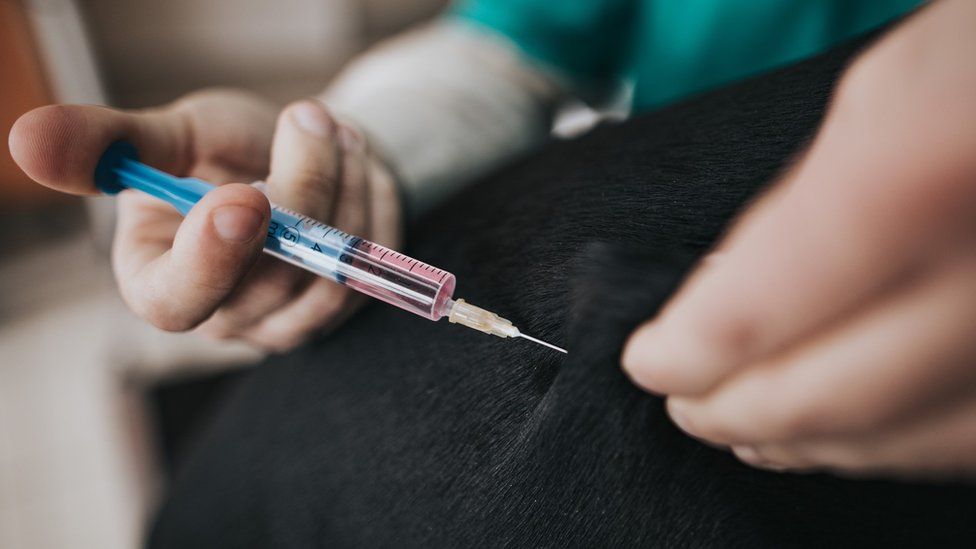
SharecloseShare pageCopy linkAbout sharingimage copyrightGetty ImagesRussia has started vaccinating animals against coronavirus, officials say.In March, Russia announced it had registered what it said was the world’s first animal-specific jab.Several regions have now started vaccinations at veterinary clinics, Russia’s veterinary watchdog, Rosselkhoznadzor, told local media.Interest has been shown in the Carnivak-Cov vaccine by the EU, Argentina South Korea and Japan, the agency said. While scientists say there is currently no evidence that animals play a significant role in spreading the disease to humans, infections have been confirmed in various species worldwide.These include dogs, cats, apes and mink.Will your pet need a coronavirus vaccine?The period of immunity after a Carnivak-Cov jab is an estimated six months.Julia Melano, adviser to the head of Rosselkhoznadzor, said clinics were seeing an increase in vaccination requests from “breeders, pet-owners who travel frequently and also citizens whose animals roam freely”, according to the RIA news agency.Another vaccine is being developed by the US veterinary pharmaceutical company Zoetis.Covid-19 has been a serious problem for mink – semi-aquatic mammals farmed for their fur. Multiple countries have reported infections in farmed mink which, in some cases, have fallen severely ill or died.The largest mink outbreak happened in Denmark, which culled millions of animals and shut down the industry completely until 2022.There is also some evidence that mink have passed the virus back to humans in a mutated form.You may also be interested in:

Read more →

Proteomics reveals how exercise increases the efficiency of muscle energy production

Mitochondria are the cell’s power plants and produce the majority of a cell’s energy needs through an electrochemical process called electron transport chain coupled to another process known as oxidative phosphorylation. A number of different proteins in mitochondria facilitate these processes, but it’s not fully understood how these proteins are arranged inside mitochondria and the factors that can influence their arrangement.
Now, scientists at the University of Copenhagen have used state-of-the-art proteomics technology to shine new light on how mitochondrial proteins gather into electron transport chain complexes, and further into so-called supercomplexes. The research, which is published in Cell Reports, also examined how this process is influenced by exercise training.
“This study has allowed for a comprehensive quantification of electron transport chain proteins within supercomplexes and how they respond to exercise training. These data have implications for how exercise improves the efficiency of energy production in muscle,” says Associate Professor Atul S. Deshmukh from the Novo Nordisk Foundation Center for Basic Metabolic Research (CBMR) at the University of Copenhagen.
Traditional methods provide too little detail
It is already well established that exercise training stimulates mitochondrial mass and affects the formation of supercomplexes, which allows mitochondria in skeletal muscle to produce energy more efficiently. But questions remain about which complexes cluster into supercomplexes and how.
To better understand supercomplex formation, particularly in response to exercise, the team of scientists studied two groups of mice. One group was active, and given an exercise wheel for 25 days, and the second group was sedentary, and was not provided the exercise wheel. After 25 days, they measured the mitochondrial proteins in skeletal muscle from both groups to see how the supercomplexes had changed over time.
When scientists typically analyze how supercomplexes form, they use antibodies to measure one or two proteins per electron transport chain complex. But as there can be up to 44 proteins in a complex, this method is both time consuming and provides limited information about what happens to the remainder of the proteins in each complex.
As a result, there is a lack of detailed knowledge in the field.
Proteomics helps supercomplexes give up their secrets
To generate much more detailed data, the team applied a proteomic technology called mass spectrometry to measure the mitochondrial proteins. By applying proteomics instead of antibodies, the scientists were able to measure nearly all of the proteins in each complex. This provided unprecedented detail of mitochondrial supercomplexes in skeletal muscle and how exercise training influences their formation. Their approach demonstrated that not all of the proteins in each complex or a supercomplex respond to exercise in the same manner.
“Mitochondrial protein content is known to increase with exercise, thus understanding how these proteins assemble into supercomplexes is crucial to decipher how they work. Our research represents a valuable and precious resource for the scientific community, especially for those studying how the mitochondrial proteins organize to be better at what they do best: produce energy under demand,,” explains Postdoc Alba Gonzalez-Franquesa.
The interdisciplinary project was a collaboration between the Deshmukh, Treebak and Zierath Groups at CBMR, and the Mann Group at the Novo Nordisk Foundation Center for Protein Research.

Read more →

How antibiotic-filled feces helps 'bessbug' beetles stay healthy

The lifestyle of the horned passalus beetle, commonly known as the bessbug or betsy beetle, might seem downright disgusting to the average human: Not only does this shiny black beetle eat its own poop, known as frass, but it uses its feces to line the walls of its living space and to help build protective chambers around its developing young.
Gross as it may seem, a new study suggests that this beetle’s frass habits are actually part of a clever strategy for protecting the insect’s health — and could help inform human medicine, too.
Researchers at the University of California, Berkeley, have discovered that the frass of the horned passalus beetle is teeming with antibiotic and antifungal chemicals similar to the ones that humans use to ward off bacterial and fungal infections. These compounds are produced by a host of beneficial bacteria called actinomycetes that live in the beetle’s frass and that appear to be passed from beetle to beetle, and from colony to colony, via the process of coprophagy — the technical term for eating poop.
Understanding the symbiotic relationship between bessbug beetles, actinomycetes and their antimicrobial compounds could help speed the search for new antibiotic drugs, and help doctors create better strategies for preventing the rise of antibiotic-resistant infections, the researchers said.
“Most of the antibiotics and antifungals that humans take are actually made by microbes, and we’re really interested in how microbes are using these molecules in the environment,” said study senior author Matthew Traxler, an assistant professor of plant and microbial biology at UC Berkeley. “When scientists discover a new antibiotic and bring it into the clinic, it often only takes a few years before the pathogen population starts to develop antibiotic resistance. But these microbes have been using the same molecules for millions of years, and that tells us that the way the microbes are using them is different from how we use them.”
With the discovery, bessbug beetles join a handful of other insects, including leaf-cutter ants, southern pine beetles and beewolves, or bee-killer wasps, that benefit from symbiotic relationships with actinomycete bacteria. Leaf-cutter ants and beewolves have even evolved special structures in their bodies — in their thoraxes and antennae, respectively — to carry these microbes.

Read more →