How retroviruses become infectious

Viruses are perfect molecular machines. Their only goal is to insert their genetic material into healthy cells and thus multiply. With deadly precision, they thereby can cause diseases that cost millions of lives and keep the world on edge. One example for such a virus, although currently less discussed, is HIV that causes the ongoing global AIDS-epidemic. Despite the progress made in recent years, 690,000 people died in 2019 alone as a result of the virus infection. “If you want to know the enemy, you have to know all its friends,” says Martin Obr, postdoc at the Schur group at IST Austria. Together with his colleagues, he therefore studies a virus belonging to the same family as HIV — the Rous sarcoma virus, a virus causing cancer in poultry. With its help, he now gained new insights into the important role a small molecule plays in the assembly of these type of viruses.
Protecting the virus blueprint
In their study, published in the journal Nature Communications, the team together with collaborators at Cornell University and the University of Missouri focused on the late phase of retrovirus replication. “It is a long way from an infected cell to the mature virus particle that can infect another cell,” explains first author Martin Obr. A new particle buds from the cell in an immature, non-infectious state. It then forms a protective shell, a so-called capsid, around its genetic information and becomes infectious. This protective shell consists of a protein, which is organized in hexamers and a few pentamers. The team discovered that a small molecule called IP6 plays a major role in stabilizing the protein shell within the Rous sarcoma virus.
“If the protective shell is not stable, the genetic information of the virus could be released prematurely and will be destroyed, but if it’s too stable the genome can’t exit at all and, therefore, becomes useless,” says Assistant Professor Florian Schur. In a previous study, he and his colleagues were able to show IP6 is important in the assembly of HIV. Now, the team proved it to be as important in other retroviruses showing just how essential the small molecule is in the virus life cycle. “When building a car, you have all these big metal parts, like the hood, the roof and the doors — the screws are connecting everything. In our case, the big parts are the capsid proteins and the IP6 molecules are the screws,” says Obr.
Unexpected flexibility
Further developing cryo-electron tomography, a technique that allows scientists to look at extremely small samples in their natural state, the team was able to see how variable the shapes formed by capsid proteins are. “Now we ask ourselves: Why does the virus change the shape of its capsid? What is it adapting to?” says postdoc Martin Obr. Different capsid shapes within the same type of virus could point to differences in the infectivity of virus particles. “Whatever happens, happens for a reason but there is no clear answer yet,” says Florian Schur. Further developing the technology to get to the bottom of these highly optimized pathogens remains a challenging and fascinating task for the scientists.
Story Source:
Materials provided by Institute of Science and Technology Austria. Note: Content may be edited for style and length.

Read more →

Helping doctors manage COVID-19

Artificial intelligence (AI) technology developed by researchers at the University of Waterloo is capable of assessing the severity of COVID-19 cases with a promising degree of accuracy.
A study, which is part of the COVID-Net open-source initiative launched more than a year ago, involved researchers from Waterloo and spin-off start-up company DarwinAI, as well as radiologists at the Stony Brook School of Medicine and the Montefiore Medical Center in New York.
Deep-learning AI was trained to analyze the extent and opacity of infection in the lungs of COVID-19 patients based on chest x-rays. Its scores were then compared to assessments of the same x-rays by expert radiologists.
For both extent and opacity, important indicators of the severity of infections, predictions made by the AI software were in good alignment with scores provided by the human experts.
Alexander Wong, a systems design engineering professor and co-founder of DarwinAI, said the technology could give doctors an important tool to help them manage cases.
“Assessing the severity of a patient with COVID-19 is a critical step in the clinical workflow for determining the best course of action for treatment and care, be it admitting the patient to ICU, giving a patient oxygen therapy, or putting a patient on a mechanical ventilator,” Wong said.
“The promising results in this study show that artificial intelligence has a strong potential to be an effective tool for supporting frontline healthcare workers in their decisions and improving clinical efficiency, which is especially important given how much stress the ongoing pandemic has placed on healthcare systems around the world.”
A paper on the research, “Towards computer-aided severity assessment via deep neural networks for geographic and opacity extent scoring of SARS-CoV-2 chest X-rays,” appears in the journal Scientific Reports.
Story Source:
Materials provided by University of Waterloo. Original written by Brian Caldwell. Note: Content may be edited for style and length.

Read more →

70 Percent Covid Vaccination Rate May Be in Reach, New Poll Suggests

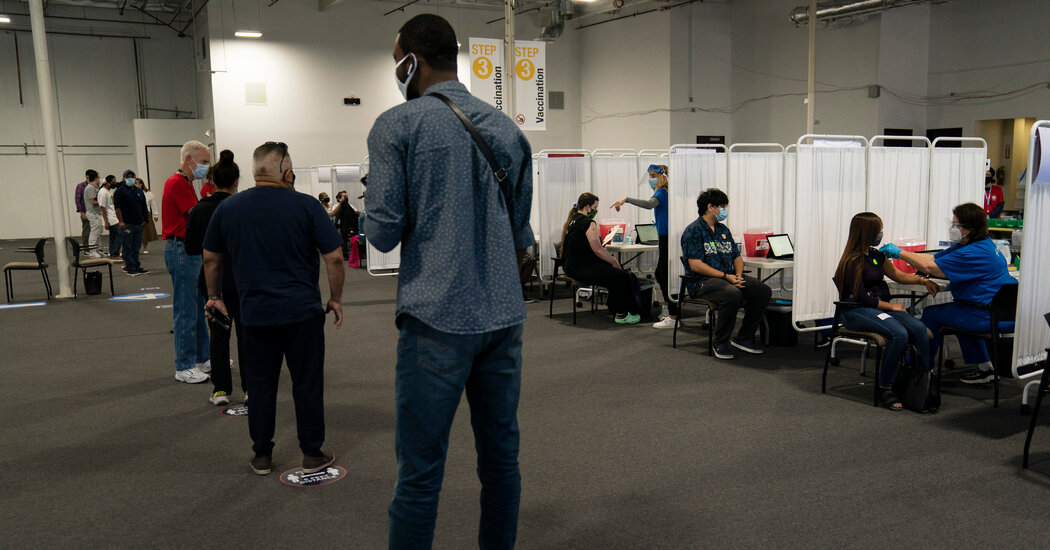
The survey found big increases over last month in Latinos getting the shot and in unvaccinated people who say they have made an appointment.A new poll suggests the United States could be on track to vaccinate at least 70 percent of the adult population against Covid-19 by this summer. In the latest survey by the Kaiser Family Foundation, 62 percent of respondents said they had received at least one dose of a vaccine, up from 56 percent in April. At the same time, about a third of those categorized as “wait and see” reported that they had already made vaccine appointments or planned to do so imminently.Dr. William Schaffner, medical director of the National Foundation for Infectious Diseases and a vaccine expert, found the results encouraging.“I think there are many people who were on the fence who were worried about things moving too rapidly and about possible side effects, but those concerns are being allayed as they see more of their friends and acquaintances celebrating getting vaccinated,” said Dr. Schaffner, who was not involved in the monthly survey, the Covid-19 Vaccine Monitor.“They’re getting that growing sense of comfort and reassurance that ‘people like me’ are getting vaccinated,” which, he said, was essential to instilling confidence in the vaccines.The two demographic groups reporting the greatest increase in vaccination rates from April to May were Latino adults (from 47 percent to 57 percent) and adults without college degrees (from 48 percent to 55 percent).The telephone survey of 1,526 adults was conducted in English and Spanish from May 18 through May 25.On May 10, the Food and Drug Administration authorized the vaccine made by Pfizer and BioNTech for children ages 12 and older. The survey found that 40 percent of parents said that either their child had already gotten at least one dose or would be getting one soon.But parents of younger children were notably more guarded, with only about a quarter expressing a willingness to get their children vaccinated as soon as the shots become authorized for them.The finding suggests that efforts to protect as many young students as possible from Covid-19 by the start of the school year could face barriers.While public health experts welcomed the continuing improvement in vaccination rates, they noted that it meant the pool of the most willing adults was shrinking.“At this point, there’s almost no low-hanging fruit, but there’s a path toward a slow-but-steady increase in vaccination rates through improved access, information, persuasion and incentives,” said Drew Altman, the president and chief executive of the Kaiser Family Foundation.President Biden set a goal of 70 percent vaccine coverage for adults by July 4. Dr. Schaffner said he thought the goal was possible. “We have to work harder,” he said.The authors of the survey said the goal was realistic, because in addition to 62 percent of adults who had received at least one dose, another 4 percent said they wanted the shot as soon as possible, and still another 4 percent — representing a third of the “wait-and-see” group — said they had scheduled an appointment or intended to do so within three months.But despite the positive news, vaccination rates among adults who have previously reported significant hesitancy (7 percent) or outright refusal (13 percent) have remained static for several months. And a third of the “wait-and-see” group said they would wait at least a year before getting the shots.The survey also looked at attitudes about vaccination incentives as well as the impact of government messaging about the shots. Financial enticements, such as Ohio’s million-dollar lottery for the newly vaccinated, are receiving some derisive pushback.But the survey found that such rewards can be successful motivators for people to get the shots. Fifteen percent of unvaccinated adults in the survey said that being offered $100 by their state might make them reconsider, as would free transportation and free tickets to a sporting event or concert.Earlier this month, people who showed up to be vaccinated at an event at the Talladega Superspeedway in Alabama could take two victory laps around the track. (Cars and trucks, yes; motorcycles, no.) Similar incentives are being offered around the country.About 20 percent of the unvaccinated workers said they would be more likely to get the shots if their employer gave them paid time off for the appointments and for any time needed to recover from side effects.The report also showed that the public has some confidence in government health-related messages, though many were confused by the announcement this month by the Centers for Disease Control and Prevention saying that vaccinated people could largely eschew face masks and social distancing. Over half said that the C.D.C.’s guidance was generally clear and accessible, but about 40 percent found it confusing and murky.Strikingly, 85 percent of unvaccinated people said that the C.D.C.’s new guidance did not make them more willing to get vaccinated.But another cohort looked to government approval as a potential starting gun. The survey found that a third of unvaccinated adults, including 44 percent in the “wait-and-see” group, said they would be more likely to get a vaccine once it received full approval from the Food and Drug Administration. The makers of the Moderna and the Pfizer-BioNTech vaccines have recently said that they are making progress toward that goal.

Read more →

Versatile coronavirus antibody may be starting point for broader-acting vaccines

Even before the COVID-19 pandemic, most people in the United States already had been sick with a coronavirus, albeit a far less dangerous one. That’s because at least four coronaviruses in the same general family as SARS-CoV-2 cause the benign yet annoying illness known as the common cold.
In a new study that appears in Nature Communications, scientists from Scripps Research investigated how the immune system’s previous exposure to cold-causing coronaviruses impact immune response to COVID-19. In doing so, they discovered one cross-reactive coronavirus antibody that’s triggered during a COVID-19 infection.
The findings will help in the pursuit of a vaccine or antibody treatment that works against most or all coronaviruses, says senior author Raiees Andrabi, PhD, an investigator in the Department of Immunology and Microbiology.
“By examining blood samples collected before the pandemic and comparing those with samples from people who had been sick with COVID-19, we were able to pinpoint antibody types that cross reacted with benign coronaviruses as well as SARS-CoV-2,” says Andrabi, who works closely with the laboratory of professor Dennis Burton, PhD.
In later tests, the antibody also neutralized SARS-CoV-1, the coronavirus that causes SARS, or severe acute respiratory syndrome.
“We were able to determine that this type of cross-reactive antibody is likely produced by a memory B cell that’s initially exposed to a coronavirus that causes the common cold, and is then recalled during a COVID-19 infection,” Andrabi says.

Read more →

U.S. Is Said to Have Unexamined Intelligence to Pore Over on Virus Origins

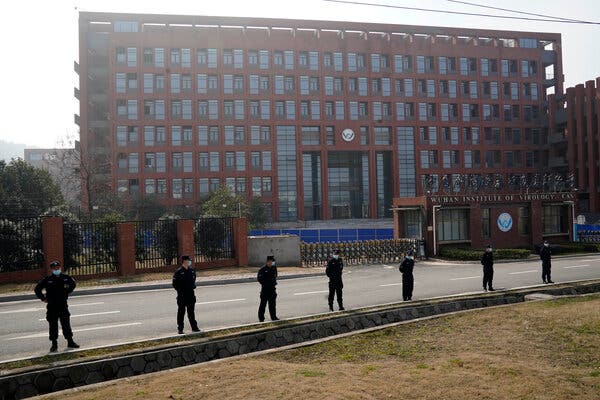
Intelligence officials have told the White House that computer analysis may shed light on the mystery.WASHINGTON — President Biden’s call for a 90-day sprint to understand the origins of the coronavirus pandemic came after intelligence officials told the White House they had a raft of still-unexamined evidence that required additional computer analysis that might shed light on the mystery, according to senior administration officials.The officials declined to describe the new evidence. But the revelation that they are hoping to apply an extraordinary amount of computer power to the question of whether the virus accidentally leaked from a Chinese laboratory suggests that the government may not have exhausted its databases of Chinese communications, the movement of lab workers and the pattern of the outbreak of the disease around the city of Wuhan.In addition to marshaling scientific resources, Mr. Biden’s push is intended to prod American allies and intelligence agencies to mine existing information — like intercepts, witnesses or biological evidence — as well as hunt for new intelligence to determine whether the Chinese government covered up an accidental leak.Mr. Biden committed on Thursday to making the results of the review public, but added a caveat: “unless there’s something I’m unaware of.”His call for the study has both domestic and international political ramifications. It prompted his critics to argue that the president had dismissed the possibility that the lab was the origin until the Chinese government this week rejected allowing further investigation by the World Health Organization. And, administration officials said, the White House hopes American allies will contribute more vigorously to a serious exploration of a theory that, until now, they considered at best unlikely, and at worst a conspiracy theory.So far, the effort to glean evidence from intercepted communications within China, a notoriously hard target to penetrate, has yielded little. Current and former intelligence officials say they strongly doubt anyone will find an email or a text message or a document that shows evidence of a lab accident.One allied nation passed on information that three workers in the Wuhan virological laboratory were hospitalized with serious flulike symptoms in the autumn of 2019. The information about the sickened workers is considered important, but officials cautioned that it did not constitute evidence that they caught the virus at the laboratory — they may have brought it there.The White House is hoping that allies and partners can tap their networks of human sources to find additional information about what happened inside the laboratory. While the United States has been rebuilding its own sources in China, it has still not fully recovered from the elimination of its network inside the country a decade ago. As a result, having allies press their informants about what went on inside the Wuhan Institute of Virology will be a key part of the intelligence push ahead.The inquiry has not reached a dead end, a senior Biden administration official said. Officials would not describe the kind of computational analysis they want to do.Administration and intelligence officials say it will be as much the work of scientists as spies in trying to unravel how the pandemic was unleashed. The Biden administration has been working to improve its scientific expertise on the National Intelligence Council. Senior officials have told the spy agencies that their science-oriented divisions, which have been working on the issue for months, will play a prominent role in the revitalized inquiry.The new inquiry will also tap the national labs and other scientific resources of the federal government that previously have not been directly involved in the intelligence effort, the senior administration official said.Mr. Biden’s announcement that he will require a report from the intelligence community had elements of showmanship. In terms of domestic politics, he is trying to take the initiative on an issue Republicans have long focused on. Senator Tom Cotton of Arkansas, who has long argued the coronavirus could have emerged accidentally from the Wuhan lab, said Mr. Biden’s order was “better late than never, but far from adequate.”And on an international front, Mr. Biden called out Chinese recalcitrance to cooperate on investigations both to pressure Beijing to reverse course but also to push allies to focus their own intelligence efforts on examining the theory that the coronavirus might have accidentally leaked from the lab.Like scientists and the broader public, the intelligence community remains uncertain about the origins of the coronavirus. No definitive intelligence has emerged, and some current and former officials expressed caution that much more can be gathered in 90 days. While the Office of the Director of National Intelligence will deliver a report before summer’s end, the inquiry will most likely have to be extended.On Thursday, Gen. Mark A. Milley, the chairman of the Joint Chiefs of Staff, told reporters he had not seen any conclusive evidence about what was the cause of the pandemic, but supported the effort to look deeper. “The amount of death, pain and suffering that was experienced in this pandemic is huge,” he said. “We need to know the origin, how this happened.”The effort to uncover the origins of the coronavirus began more than a year ago, during the Trump administration. But some officials were wary of President Donald J. Trump’s motives, arguing that his interest in the origins of the pandemic was either to deflect blame from his administration’s handling of it or to punish China.Some allies, including British intelligence services, have been skeptical of a leak at the Wuhan Institute of Virology in China.Ng Han Guan/Associated PressCurrent officials say the central goal of the new intelligence push is to improve preparations for future pandemics. As a result, Mr. Biden’s message this week was calibrated to leave open the possibility of future cooperation with China.The White House’s frustration with China has risen after its announcement this week that Beijing would not participate in additional investigations by the World Health Organization. A Biden administration official said if the new inquiry failed to yield an answer, it would be because China had not been transparent.But the administration is not trying to isolate China, and instead attempting to walk a careful line between pressuring Beijing to cooperate and demonstrating that in its absence, the United States will intensify its own investigation.Administration officials also believe the new inquiry and Chinese obstruction of the World Health Organization will create the opportunity for stepped-up intelligence cooperation with allies.Allies have been providing information since the beginning of the pandemic, one official said. But some, including British intelligence services, have been skeptical of the lab leak theory. Others, including Australia, have been more open to it.As members of the so-called Five Eyes partnership, Britain and Australia already broadly share intelligence with the United States. But the new intelligence review, along with growing frustration with China’s failure to cooperate with the World Health Organization, could prod allies to focus more on the question of the lab leak.A British official declined to comment. A request for comment from the Australian government was not immediately returned.In his announcement on Wednesday, Mr. Biden said two intelligence agencies believed the virus most likely occurred naturally, while at least one other favored the theory that it leaked accidentally from a lab in China. None had high confidence in their assessments, the president noted.In a statement on Thursday, Amanda J. Schoch, the spokeswoman for the Office of the Director of National Intelligence, said the intelligence agencies had come together around the two likely scenarios, but there were so far no high-confidence assessments of the virus’s origins.“The U.S. intelligence community does not know exactly where, when or how the Covid-19 virus was transmitted initially,” Ms. Schoch said.While 18 agencies make up the intelligence community, only a handful have been major players in assessing the likely origins of the virus. Most of the broader intelligence community, including the C.I.A. and the Defense Intelligence Agency, believe there is not yet sufficient information to draw a conclusion, even with low confidence, about the origins.The intelligence community “continues to examine all available evidence, consider different perspectives, and aggressively collect and analyze new information to identify the virus’s origins,” Ms. Schoch said.Eric Schmitt

Read more →

Brighton artist turns coma hallucinations into graphic novel

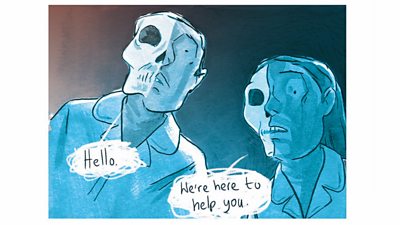
Zara Slattery’s illness started as a sore throat, but she was eventually fighting for her life as a flesh-eating bug attacked her body.The artist, from Brighton, East Sussex, was placed in a medical coma for over a fortnight and her husband was told to prepare for the worst.Ms Slattery recovered but lost a leg, and has now turned the drug-induced visions of her coma into a graphic novel.Journalist: Mark NormanProduced by: Bob Dale and Tom Darby

Read more →

WHO virologist urges US to share Covid origins info

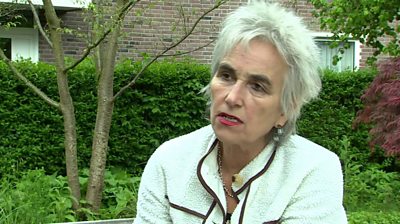
Marion Koopmans, a virologist who was on the WHO field visit to Wuhan to investigate the origins of Covid-19, has said that it is unlikely the virus came from a lab. This comes after the US President Joe Biden has decided to further investigate Covid’s origins, putting a strain on US-China relations. Ms Koopmans said that if the US had any information they should share it with the global community.

Read more →

Key early steps in gene expression captured in real time

On scales too small for our eyes to see, the business of life happens through the making of proteins, which impart to our cells both structure and function. Cellular proteins get their marching orders from genetic instructions encoded in DNA, whose sequences are first copied and made into RNA in a multi-step process called transcription.
A research collaboration at Colorado State University specializes in high-resolution fluorescence microscopy and computational modeling to visualize and describe such stuff-of-life processes in exquisite detail, in real time, at the level of single genes. Now, scientists led by postdoctoral researcher Linda Forero-Quintero have, for the first time, observed early RNA transcription dynamics by recording where, when and how RNA polymerase enzymes kick off transcription by binding to a DNA sequence.
The breakthrough technology, detailed in the journal Nature Communications, has countless possible outshoots; these include sharpening understanding of basic biological processes, to unveiling the genetic underpinnings of certain diseases.
“This is the first time someone has looked at RNA polymerase phosphorylation dynamics in a single-copy gene,” said Forero, who is a postdoctoral researcher co-advised by Tim Stasevich, Monfort Professor and associate professor in biochemistry, and Brian Munsky, associate professor in chemical and biological engineering. In the past, such early transcription activity could only be visualized using gene arrays, which are artificial structures composed of hundreds of copies of a gene and not commonly found in the cell nucleus.
Stasevich and Munsky lead a collaboration funded by the W.M. Keck Foundation and the National Institute of General Medical Sciences (through two Maximizing Investigators’ Research Awards) that’s seeking to unveil and quantify real-time genetic expression in living, single cells. Forero, who works in both labs under the auspices of the collaboration, had previously studied proteins and transporters in cell membranes associated with neurological conditions.
Early transcription activity
As described in Nature Communications, Forero et al. designed a method using an established mammalian cell line, engineered fluorescent antibody fragments, and a custom super resolution microscope to capture the process of early transcription in vivid colors: blue, green and red. More specifically, they observed the start of the transcription cycle that happens when the RNA polymerase II (RNAP2) transcription enzyme becomes phosphorylated, or decorated with phosphate groups, on its amino acid tail.

Read more →

NFTs Linked to Nobel Prizes Are Being Auctioned by Berkeley

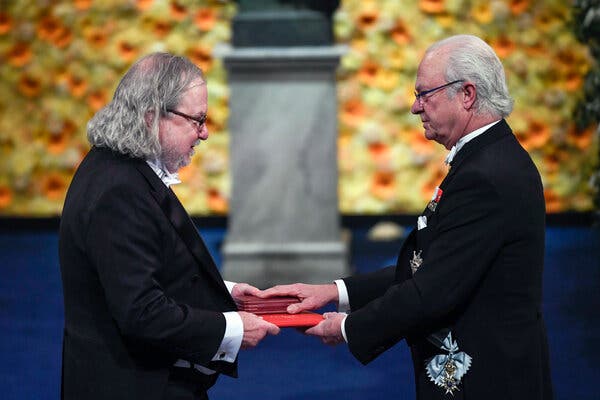
What would you pay for the invention disclosure forms filed by the creators of CRISPR or cancer immunotherapy?How much will someone be willing to pay for a few pages of quarter-century-old bureaucratic university paperwork that have been turned into a blockchain-encoded piece of digital art?The University of California, Berkeley, hopes quite a bit, and it is about to find out.Berkeley announced on Thursday that it will auction the first of two digital art pieces known as nonfungible tokens, or NFTs, next week. The object being offered is based on a document called an invention and technology disclosure. That’s the form that researchers at Berkeley fill out to alert the university about discoveries that have potential to be turned into lucrative patents.The title of the invention, from 1996, is “Blockade of T-Lymphocyte Down-Regulation Associated with CTLA-4 Signalling.”The university hopes that potential bidders will be attracted to an early description of a revolutionary approach to treating cancer developed by James P. Allison, then a professor at Berkeley. He found a way to turn off the immune system’s aversion to attacking tumors and he showed that it worked in mice.That advance eventually led to the creation of Yervoy, a drug for the treatment of metastatic melanoma, and Dr. Allison, who is now at the MD Anderson Cancer Center at the University of Texas, shared the Nobel Prize in Medicine in 2018.Thus, the Berkeley disclosure form could be thought of as the scientific equivalent of Mickey Mantle’s rookie baseball card — a memento of the beginnings of greatness.“I think of it almost as a history of science artifact,” said Richard K. Lyons, the chief innovation and entrepreneurship officer at Berkeley. “Imagine somebody saying, ‘I want to own the NFTs for the 10 most important scientific discoveries of my lifetime.’”A 24-hour auction of the NFT of Dr. Allison’s invention disclosure will take place as early as June 2 using Foundation, an NFT auction marketplace that uses Ethereum, the cryptocurrency network of choice for NFT collectors.Eighty-five percent of the proceeds will go to Berkeley to finance research, the remainder to Foundation. If the piece is later resold, Berkeley will receive 10 percent of the sale and Foundation 5 percent.Because the making of an NFT requires a lot of computing power, part of the money the university earns from the NFT sale will be used for carbon offsets to compensate for the energy consumed, Berkeley officials said.Dr. Allison, left, receiving the Nobel Prize in 2018 from King Carl Gustaf of Sweden.Pool photo by Pontus LundahlThe second NFT that Berkeley plans to auction in the coming weeks will be the disclosure form describing the CRISPR-Cas9 gene editing invention by Jennifer A. Doudna, a professor of molecular and cell biology at Berkeley. She shared the 2020 Nobel Prize in Chemistry with Emmanuelle Charpentier of the Max Planck Unit for the Science of Pathogens for their work on the technique.NFTs have become trendy collectibles in recent months. A unique code embedded in a digital image or video serves as a record of its authenticity and is stored on a blockchain, the same technology that underlies digital currencies like Bitcoin. NFTs can then be bought and sold, just like baseball cards, and the blockchain ensures they cannot be deleted or counterfeited.A dizzying array of documents, far beyond traditional works of art, have been sold as NFTs. Jack Dorsey, the founder of Twitter, sold an NFT of his first tweet for $2.9 million. Kevin Roose, a New York Times columnist, sold an NFT of his article about NFTs for more than half a million dollars. (The money went to The Times’s Neediest Cases Fund.)The pages of Dr. Allison’s disclosure form, drawn from the Berkeley archives, make for mostly dry reading. There is a July 11, 1995, letter from Carol Mimura, a licensing associate at Berkeley, thanking Dr. Allison for contacting the university’s office of technology licensing and asking him to fill out some forms. Another page includes Berkeley’s patent policy.The documents reflect quaintly archaic technologies used in the mid-1990s — typewriters, fax machines and handwritten notes. “I am scrambling to protect patentable matter before late July,” reads a memo from Dr. Mimura, now the assistant vice chancellor for intellectual property and industry research alliances.A fax from Dr. Allison to Dr. Mimura includes a simple chart with three lines and 21 data points. “Carol — This is the data that has got us excited,” Dr. Allison has scribbled.His research group was experimenting with colon cancer in mice, and blocking CTLA-4 — a protein receptor that acts as an on-off switch for the immune system — “led to the rejection of the tumor in 5/5 mice,” Dr. Allison wrote.A fax from James Allison that is included in the NFT being auctioned by the University of California, Berkeley. “Carol — this is the data that has got us excited.”University of California, BerkeleyUntil now, these forms, filed away, unseen, have had no value, Dr. Allison concedes.“That very first exposure to the world is sort of like, ‘This is the invention disclosure,’” he said. “But once they’ve served that purpose, historically, they get no attention.”The NFT idea was the brainstorm of Michael Alvarez Cohen, director of innovation ecosystem development in Berkeley’s intellectual property office. He said part of the idea came after the publication of “The Code Breaker” by Walter Isaacson, a biography of Dr. Doudna. His friends and relatives told him that they had not known that much of the gene editing technology had originated at Berkeley.“So I was kind of like, Maybe we should post excerpts from the invention disclosure to help promote this,” he said.At the same time, he was following news about blockchain and NFTs.“Then about a month ago, I put the two together,” Mr. Cohen said. Take the invention disclosures about Nobel-winning research like CRISPR, turn them into NFTs, “and drive awareness and also fund research by auctioning the NFTs.”He sat on the idea for a while.“I come up with a lot of ideas,” Mr. Cohen said. “Some of them are bone-headed and everything.”Just over two weeks ago, he started discussing it with his colleagues, and quickly a plan fell into place. In addition to CRISPR, they decided to highlight Dr. Allison’s work.The Allison NFT is more than a simple digital document. “It’s a combination of a lab notebook and digital art,” Mr. Cohen said. A single image includes 10 pages but one can zoom in and read the documents. “I really wanted to preserve the ability to read the history in addition to viewing the beauty of the image,” he said.The designers of the NFT also included subtle nods to the initial resistance to Dr. Allison’s ideas. The pages are all slightly tilted, because “people looked at him askew,” Mr. Cohen said. “There’s a lot of little things like that in the art.”Dr. Lyons was reluctant to predict how much the artwork would fetch at auction. “I’d be surprised if it went for less than $100,000,” he said. “It could go into seven figures. This is a new category, and it’s hard to price anything that is a new category.”

Read more →

Parasites as fountains of youth: Study finds infected ants live much longer

Ant workers that are infected with a tapeworm live much longer than their uninfected nest-mates. Parasitic infections are usually harmful to their hosts, but there are some exceptions. According to the results of a multi-year scientific study, ants of the species Temnothorax nylanderi show exceptionally high survival rates when infected with a tapeworm. “The lifespan of the infected ants is significantly prolonged. According to our observations, such workers have a survival rate similar to that of queens,” said Professor Susanne Foitzik of Johannes Gutenberg University Mainz (JGU), leader of the study. Queens of this species can live for up to 20 years, while female workers rarely reach the age of two. Among possible explanations for this extended lifespan are the change in the physiology of infected ants caused by the parasites and the fact that infected workers are better supplied with food.
Social care in the nest linked to longer life
In the case of ants, there is a stark divergence in lifespan between female castes. Many ant queens can survive for several decades. They spend almost all their lives safely in the nest where they are cared for by the workers, their daughters. In contrast, ant workers live for only a few weeks or months or, in rare cases, a few years. The infertile workers carry out all tasks in the nest, starting in brood care and progressing to riskier activities outside the colony as they grow older, such as foraging for food. The high life expectancy of queens is due to their low mortality rate, which is attributable to the high levels of social care they receive, their safe environment, and the activation of physiological repair mechanisms.
These factors may also contribute to the extremely high survival rates of Temnothorax-nylanderi workers infected with a tapeworm. This species of ant is common in Central Europe and forms small colonies on the forest floor, inside acorns or wooden branches. The insects are relatively small, with a body length of just two to three millimeters. They serve as an intermediate host for the tapeworm Anomotaenia brevis, whereby a single ant can be infected by up to 70 parasitic larvae. The parasites survive in the hemolymph, the body fluid of insects. Their complex life cycle is completed once they have been ingested by a woodpecker that feeds on the ants.
The research team led by Professor Susanne Foitzik looked at the long-term consequences of the parasitic infection by collecting ant colonies from forests around Mainz and observing them in the laboratory. “We tracked the survival rate of the workers and queens in both infected and uninfected ant colonies over three years, until more than 95 percent of the uninfected workers had died,” explained Foitzik. At that point, over half of the infected workers were still alive — exhibiting a survival rate practically identical to that of the long-lived queens. “It is quite extraordinary that a parasite can trigger such a positive change in its host. This lifespan extension is very unusual,” emphasized the JGU-based evolutionary biologist.
Infected workers differ in appearance, behavior, and physiology
The infected ants are easily distinguished from their brown nest-mates due to their lighter, yellow color, an effect that results from their cuticle being less pigmented. They are also less active and receive enhanced care from other workers in the nest. “The infected insects get more attention and are fed, cleaned, and looked after better. They even benefit from slightly more care than the nest’s queen,” explained Professor Susanne Foitzik. The tests also revealed that infected ants have metabolic rates and lipid levels similar to those of younger ants. It would seem that these ants remain in a permanent juvenile stage as a result of the infection. This is likely down to both the tapeworm larvae altering the expression of ant genes that affect aging and to the parasites’ release of proteins containing antioxidants into the ants’ hemolymph.
Even though the mystery of their long life has not yet been fully resolved, the behavior of the infected ants themselves does not seem to be the decisive factor. The research team, which included scientists from the Max Planck Institute for Biology of Ageing and Tel Aviv University, found no evidence that the insects actively beg for better care. However, chemical signals on the cuticle of infected ants were found to elicit more attention of their nest-mates. “The infected insects live a life of luxury, but the fact that they receive more social care cannot alone account for their prolonged lifespan,” concluded Foitzik. The scientists will undertake further research in order to identify the factors, particularly on the molecular and epigenetic level, behind the infected workers death-defying attributes.
Story Source:
Materials provided by Johannes Gutenberg Universitaet Mainz. Note: Content may be edited for style and length.

Read more →