Overweight or obesity worsens liver-damaging effects of alcohol

Led by the University of Sydney’s Charles Perkins Centre, the study looked at medical data from nearly half a million people and found having overweight or obesity considerably amplified the harmful effects of alcohol on liver disease and mortality.
“People in the overweight or obese range who drank were found to be at greater risk of liver diseases compared with participants within a healthy weight range who consumed alcohol at the same level,” said senior author and research program director Professor Emmanuel Stamatakis from the Charles Perkins Centre and the Faculty of Medicine and Health.
“Even for people who drank within alcohol guidelines, participants classified as obese were at over 50 percent greater risk of liver disease.”
The researchers drew upon data from the UK Biobank — a large-scale biomedical cohort study containing in-depth biological, behavioural, and health information from participants in the United Kingdom (UK).
According to the researchers, this is one of the first and largest studies looking at increased adiposity (overweight or obesity) and level of alcohol consumption together, in relation to future liver disease.
Information was examined from 465,437 people aged 40 to 69 years, with medical and health details collected over an average of 10.5 years.

Read more →

Seeds of economic health disparities found in subsistence society

No billionaires live among the Tsimane people of Bolivia, although some are a bit better off than others. These subsistence communities on the edge of the Amazon also have fewer chronic health problems linked to the kind of dramatic economic disparity found in industrialized Western societies.
For a study in the journal eLife, a research team led by Aaron Blackwell of Washington State University and Adrian Jaeggi of University of Zurich tracked 13 different health variables across 40 Tsimane communities, analyzing them against each person’s wealth and the degree of inequality in each community. While some have theorized that inequality’s health impacts are universal, the researchers found only two robustly associated outcomes: higher blood pressure and respiratory disease.
“The connection between inequality and health is not as straightforward as what you would see in an industrialized population. We had a lot of mixed results,” said Blackwell, a WSU associate professor of anthropology. “These findings suggest that at this scale, inequality is not at the level that causes health problems. Instead maybe it’s the extreme inequality in a lot of modern environments that causes health problems since it’s unlike any inequality we’ve ever had in our evolutionary history.”
Anthropologists are particularly interested in studying the Tsimane because their traditional lifestyle better resembles the conditions humans lived under for many centuries before the modern era. The Tsimane eat very little processed food — instead they forage, hunt, fish and grow crops. They also get plenty of exercise through their daily activities and have few health conditions associated with modern societies like obesity, diabetes, and heart disease. They do not have easy access to modern health care so do have to contend with parasites and many respiratory conditions ranging from the common cold to pneumonia.
Starting in 2001, a team of health care workers and researchers have visited these communities annually to provide care and collect data as part of a larger Tsimane Health and Life History Project. For this study, Blackwell, Jaeggi and their colleagues were able to analyze data from different points in time, extending to 2015.
Tsimane communities are smaller and more egalitarian than most industrialized societies but some of the communities have more inequality than others. The researchers found that for several health variables, including body mass index, gastrointestinal disorders and depression, there was not a clear connection to disparity.
However, in communities where inequality was high, many individuals had higher blood pressure, whether they were at the top or the bottom of the economic pecking order, compared to their peers in communities that were less stratified. The highest blood pressure was found among poor Tsimane men, no matter where they lived.
“Basically, it’s bad to be poor, but it’s also bad to be poorer,” said Jaeggi. “If you feel like you’re worse off than other people, that’s stressful. In Western industrialized societies, it’s associated with many negative health consequences like high blood pressure, cardiovascular problems and infectious disease as COVID-19 has shown. In the Tsimane communities, we did find some negative effects of living in a more unequal community, but it definitely wasn’t on all of the outcomes, so it seems like it’s less of a universal pattern.”
This study was conducted before the pandemic, so COVID-19 impacts weren’t included, but the researchers did find some connection with increased risk of respiratory disease like influenza and pneumonia to inequality. The authors said it was unclear what the exact mechanisms for that connection might be, as there wasn’t a clear connection with stress, unlike in Western societies.
Blackwell also noted that while increased high blood pressure was found in more unequal communities, it hadn’t developed into worse conditions such as hypertension and cardiovascular disease which are more prevalent in industrialized societies.
“I think this study tells us that there are some of the seeds of why inequality is bad for us, even in relatively egalitarian societies without huge economic differences,” he said. “So perhaps if we want to increase health for everybody, then trying to reduce inequality is one route to do that.”
Story Source:
Materials provided by Washington State University. Original written by Sara Zaske. Note: Content may be edited for style and length.

Read more →

For Sleep Apnea, a Mouth Guard May be a Good Alternative to CPAP

People with sleep apnea who can’t tolerate the noise and discomfort of a CPAP machine might benefit from a mouth guard or surgery.Many people wear a CPAP machine at night to treat the interrupted breathing of obstructive sleep apnea, a condition that affects an estimated 22 million Americans. But CPAP machines can be noisy, cumbersome and uncomfortable, and many people stop using the devices altogether, which can have dire long-term consequences.Mouth guards may be a more comfortable and easy-to-use alternative for many people with obstructive sleep apnea, according to a new report. The study, published in Laryngoscope, looked at 347 people with sleep apnea who were fitted with a mouth guard by an otolaryngologist. Two-thirds of patients reported they were comfortable wearing the devices, and the devices appeared to be effective in helping to relieve the disordered breathing of obstructive sleep apnea.The lead author of the study, Dr. Guillaume Buiret, head of otolaryngology at Valence Hospital in Valence, France, said that if he had sleep apnea, he would choose an oral appliance first.“It’s easy to tolerate, effective and it costs a lot less than CPAP,” he said. “Thirty to 40 percent of our patients can’t use CPAP, and these patients almost always find the dental appliance helpful. I would recommend it as a first-line treatment”Loud snoring may be the most obvious consequence of sleep apnea, but the condition, if left untreated, can lead to a broad range of complications, including high blood pressure, heart disease, liver dysfunction and Type 2 diabetes.The problem develops when the soft tissue at the back of the throat collapses during sleep, blocking the airway. This leads to breathing cessation for brief periods, gasping for air, difficulty staying asleep, and all the problems of daytime sleepiness, from poor job performance to fatal accidents. Animals can have it too — bulldogs, for example, have a narrow airway and a soft palate that can easily block it. Their sleep apnea is almost identical to the human version.The severity of the condition varies widely from a very mild problem that may need no treatment at all to severe or even life-threatening disease. Dr. Sara E. Benjamin, a neurologist and sleep specialist at Johns Hopkins, said that spending a night in a sleep laboratory monitored by a technician is the best way to diagnose apnea. A lab study offers the most thorough analysis, and can detect many other sleep problems besides apnea, but there are home test kits that are easy to use and cost-effective. They test breathing effort and oxygen levels, but not the brain waves, muscle tone and leg movements that a lab test records.How can you know that you need a sleep assessment? “It’s a low standard to get evaluated, either by home testing or in a sleep lab,” Dr. Benjamin said. “If a person feels sleep problems are impacting daily activities, that’s enough to go and get evaluated. If the cause is a breathing problem, you don’t want to ignore it.”A CPAP — continuous positive airway pressure — machine is usually the first option for treating sleep apnea. The device has a motor that delivers pressurized air through a tube attached to a mask that covers the nose, or both the nose and the mouth. This keeps the airway open. Some machines can automatically change the pressure to compensate for changes in sleep position; others require manual adjustment. Headgear varies, but all have adjustable straps to get the right fit. There are newer models that can deliver heated or humidified air, depending on the patient’s preferences, and there are small travel models as well.But many patients find sleeping with a mouth guard less awkward or unpleasant than using a CPAP machine. The technical term for these appliances is mandibular advancement devices, so named because they work by pushing the lower jaw forward, which in most people helps keep the airway open. There are many variations of these gadgets available in drugstores, but a dentist can design a more effective personalized appliance, and modify or adjust it when necessary. The patients in the Laryngoscope study were all re-examined after the first fitting, and most needed adjustments over a two- to four-week period.“We recommend a custom device made by a dentist,” Dr. Benjamin said. “And you should be retested to see how well it’s working. There’s subjective and objective improvement that should be tracked.”But there are people for whom neither CPAP nor dental appliances work, either because they cannot use them consistently or correctly, or because the devices themselves do not solve the problem even when used properly. For these patients, there are various effective surgical procedures.The most common is soft tissue surgery, which involves modifying or excising tissue at the back of the mouth. Depending on the structures and musculature of the mouth, the surgeon can trim the soft palate and the uvula, remove the tonsils, shrink tissues with a heated instrument, straighten a deviated septum, or alter the position of the tongue muscles, all with the aim of improving air flow.There are also bone surgeries that move the jaw forward to make the entire breathing space larger, a procedure that can involve a protracted recovery period.In 2014, the Food and Drug Administration approved a device called Inspire Upper Airway Stimulation. This is a small appliance implanted under the skin like a heart pacemaker. Using two electrical leads, it senses the breathing pattern and stimulates the nerve that controls the tongue to move it out of the way and allow air to pass freely. Implanting it is a day surgery procedure that takes about two hours.“It doesn’t change the anatomy, and recovery is easier than with other surgeries,” said Dr. Maria V. Suurna, an associate professor of otolaryngology at Weill Cornell Medicine who specializes in surgery for sleep apnea. “It’s effective. It has the lowest complication rate of all the surgeries.“But it’s not for everyone. It’s approved only for adults 18 and older who are not overweight and who have moderate to severe apnea.” Some people may be ineligible because of the structure of their anatomy.“Surgery is tricky,” Dr. Suurna said. “But there’s no ideal treatment for apnea. Each has pros and cons, benefits and risks.”

Read more →

The Covid Vaccine Is Free, but Not Everyone Believes That

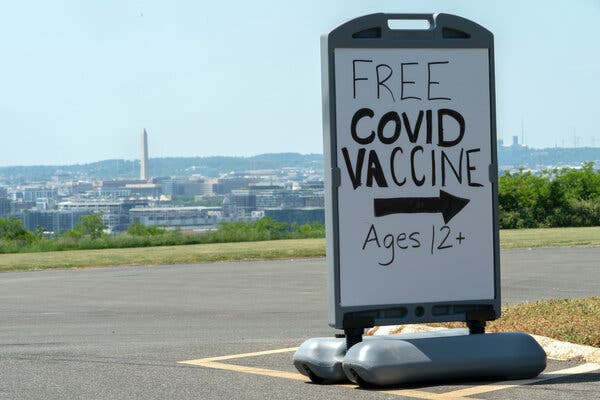
Concern over unexpected bills was one of the reasons given by survey respondents for hesitation about getting the shot.Overlooking the Washington Monument, encouragement to get vaccinated. Jacquelyn Martin/Associated PressWhen Paul Moser considers getting a coronavirus vaccine, he also thinks about his outstanding medical debt: $1,200 from a few urology visits that he has been unable to pay off.Mr. Moser, a 52-year-old gas station cashier in New York State, has friends who were surprised by bills for coronavirus tests, and worries the same could happen with the vaccine. For now, he’s holding off on getting his shot.“We were told by the legislators that all the testing was supposed to be free, and then surprise, it’s $150,” he said. “I agree it’s important to get vaccinated, but I don’t have a sense of urgency around it.”Congress passed laws barring pharmacies and hospitals from billing patients for coronavirus vaccines. Signs at vaccination sites advertise that the shot is free. From the beginning, health officials and government leaders have told the public it won’t cost anything. And there have been few reports of people experiencing charges.Even so, some unvaccinated adults cite concerns about a surprise bill as a reason for not getting the shot. Many of them are accustomed to a health system in which the bills are frequent, large and often unexpected.A recent Kaiser Family Foundation poll found that about a third of unvaccinated adults were unsure whether insurance covered the new vaccine and were concerned they might need to pay for the shot. The concern was especially pronounced among Hispanic and Black survey respondents.“The conversations we have are like: ‘Yes, I know it’s good. Yes, I want it, but I don’t have insurance,’” said Ilan Shapiro, medical director of AltaMed, a community health network in Southern California that serves a large Hispanic population. “We’re trying to make sure everyone knows it’s free.”The confusion may represent a lack of information, or skepticism that a bill won’t follow a visit to the doctor. Liz Hamel, director of survey research at Kaiser, said it could reflect people’s experience with the health system: “People may have heard it’s available for free, but not believe it.”Congress has tried to protect patients from bills for coronavirus vaccines and tests. Early in the pandemic, it mandated that insurers waive co-payments and deductibles for both services, and set up a fund to reimburse doctors seeing uninsured patients.Even so, patients found themselves facing bills for testing — some for over $1,000. Some doctors billed uninsured patients for tests rather than the new, federal fund. Others tacked on unexpected fees and services to the testing visit.The rules for vaccine billing were made even stricter. To become vaccinators, doctors and pharmacies had to sign a contract promising not to bill patients for shots.The stronger protections appear to have worked. While many patients have encountered coronavirus bills for testing — The New York Times has documented dozens of cases in bills submitted by readers — there have been only a handful involving vaccines.Still, some unexpected charges have slipped through: Patients in Illinois, North Carolina and Colorado have mistakenly received vaccine bills. In all cases, vaccine providers reversed the charge and apologized for the errors.The federal government has received some complaints about unexpected charges, and recently warned doctors against billing patients.Surprise bills for coronavirus vaccines, tests and other medical care can leave an impression on patients. Americans with medical debt are more likely to skip needed care than people who hold other types of debt, like outstanding credit card bills or student loans, according to a 2013 study by Lucie Kalousova, an assistant professor of sociology at the University of California, Riverside.“For someone who has incurred medical debt, they may be told by the media and everyone else that the vaccine is cost-free, but they’ve also had this very negative, prior encounter with the medical system that has created feelings of mistrust,” she said.Some patients who worried about the cost of a coronavirus vaccine said they always expect a bill to follow a doctor’s appointment. They cited stories from friends or family members who ended up with expensive coronavirus testing and treatment bills, and wondered why the vaccine would be any different.“This is America — your health care is not free,” said Elizabeth Drummond, a 42-year-old mother in Oregon who is unvaccinated. “I just feel like that is how the vaccination process is going to go. They’re going to try to capitalize on it.”It’s also possible that survey research overstates how many Americans fear getting a surprise vaccine bill. When The Times, through Kaiser’s help, conducted follow-up interviews, some poll respondents who voiced this concern said it didn’t actually matter much to them.Instead, they said they responded that way to express frustration with the vaccine or the wider American health system.“The cost is the smallest detail,” said Cody Sirman, a 32-year-old who works in manufacturing in Texas and who has decided to go unvaccinated. He said he wouldn’t mind paying for the vaccine if he trusted it — but he doesn’t: “I think the vaccine is a complete sham. It was just a way to see how much control the government can have over the population.”A public bus turned mobile vaccination clinic in Foley, Minn., this month. Health officials are finding inventive ways to make getting a shot simpler, yet it’s clear that some reluctance is a result of other factors.Liam James Doyle for The New York TimesFor many, the potential cost of a vaccine is only part of a constellation of reasons for remaining unvaccinated. It can often be hard for pollsters to know — or even patients to identify — the decisive factor. Separate research from the Census Bureau last month found that Americans were more worried about vaccine side effects than about potential charges.“Most people aren’t saying they’re just concerned about one thing; it’s usually a lot of things,” said Ms. Hamel of the Kaiser Family Foundation.Tiffany Addotey, a 42-year-old school bus driver in North Carolina, does cite a concern about cost. That stems mostly from her experience trying to get a coronavirus test.“It concerns me that some places were charging like $200 for coronavirus tests,” she said. “I didn’t pay. I went home. I have enough bills as it is.”There are other things that concern her, like the safety of the vaccine given its fast development, as well as the recent Johnson & Johnson vaccine pause.When Ms. Addotey was informed that federal law makes the vaccine free for all Americans, she responded, “So I’ll just have to pay my co-pay?”Learning that it really would be free, with no co-payment, “helped a little bit,” she said. But it wasn’t enough to put her mind at ease about getting vaccinated, at least not yet.“I’m going to try and wait for it to be on the market a little longer,” she said. “I feel like I will get it, after a little more research and a little more time.”

Read more →

How to Rearrange Your Post-Pandemic ‘Friendscape’

Re-entry offers an opportunity to choose which relationships we wish to resurrect and which are better left dormant.Any traumatic experience — like a breakup, health scare, death in the family or financial crisis — has a way of destabilizing social networks. We instinctively gravitate toward those who provide comfort and support and reflexively withdraw from those who drain and drag us down.It was no different at the height of the pandemic, except that the risk of infection meant we had to be more intentional, and maybe even a little calculating, about who we allowed in our orbit. For many, the pruning process was illuminating, if not a little liberating. Covid-19 provided an excuse to shed unsatisfying and unfulfilling relationships, while giving people the time and space to strengthen bonds with those they truly cared about.As pandemic restrictions ease in the United States and we may once again belly up to an all-you-can-eat buffet of social activity, the question is: Will we pile our plates and gorge, or be more selective and stick to what nourishes and sustains us? Psychologists, sociologists and evolutionary anthropologists say it behooves us to take a more curatorial approach when it comes to our friends because who you hang out with determines who you are.“We take it for granted, but having friends is exceedingly rare in the animal kingdom,” said Dr. Nicholas Christakis, a professor of social and natural science at Yale University and author of “Apollo’s Arrow,” a book about the impact of Covid-19 and past plagues on society. (Other members of the friendship club include chimpanzees, elephants and dolphins.)Friendship is an evolutionary advantage, he said, that allows us to form alliances, cooperate, exchange ideas and learn from one another. Having friends who encourage, stimulate and support you is associated with improved immunity, lower blood pressure and higher cognitive function. Having no friends, toxic friends or superficial friends not only can make you feel insecure, lonely or depressed, but also can accelerate cellular aging and increase your risk of premature death.It seems as if it should be easy to distinguish between true and false friends, but that’s not always the case. Research shows that only half of our friendships are mutual. That is, only half of those who we think are our friends feel the same way about us. Blame egoism, optimism or, perhaps, the fact that social media has turned “friend” into a verb.Or it could be that we are socially slothful. Friendships take a significant amount of time and effort to develop and maintain, so we often settle for whoever happens to be around or is pinging us online. It’s inertia that keeps you tied to friends whom you find tiresome because it’s easier and less anxiety-producing to keep them around than it is to cultivate new friendships.The pandemic shook us out of our social ruts, and now we have an opportunity to choose which relationships we wish to resurrect and which are better left dormant. Ask yourself: “Who did I miss?” and “Who missed me?” Also think about friendships forged during the crisis — maybe with people in your pandemic pod or neighbors who regularly came by to commiserate. If you thrived and found solace in their company, commit to keeping them close.Rather than thinking about who you want to keep or purge from your social network, Suzanne Degges-White, a professor of counseling at Northern Illinois University, suggested imagining how you want to arrange your “friendscape,” where people inhabit the foreground, middle ground or background depending on how much time and emotional energy you invest in them.It requires daily or weekly attention to maintain foreground friends, so there are necessarily a limited number of slots (four to six, maximum). Some of those may be filled by your romantic partner, parent, sibling or child. Because they are front and center, foreground friends are the ones who have the most profound impact on your health and well-being, for good or ill.Indeed, depressed friends make it more likely you’ll be depressed, obese friends make it more likely you’ll become obese, and friends who smoke or drink a lot make it more likely you’ll do the same. The reverse is also true: You will be more studious, kind and enterprising if you consort with studious, kind and enterprising people. That is not to say that you should abandon friends when they are having a hard time. But it’s a good idea to be mindful of who you are spending the majority of your time with — whether on- or off-line — because your friends’ prevailing moods, values and behaviors are likely to become your own.What are the hallmarks of good foreground friends? Foremost, they make you feel better about the world and about yourself. They are there for you, listen to you and, while they may not always agree with you, they get you. There’s a sense of mutuality and reciprocity in terms of helping and engagement. And crucially, you fundamentally enjoy being with them, just as they enjoy being with you.People who do not belong in your foreground are those who don’t seem genuinely pleased when something good happens to you and show a glint of schadenfreude when things go wrong. Another clue is they are boastful, self-righteous, faultfinding or prickly in conversation — or they always shift the conversation back to themselves. And steer well clear of anyone who doesn’t defend you when someone else maligns you, or worse, piles on.Susan Heitler, a psychologist and author of “The Power of Two,” which looks at friendship in the context of marriage, cautioned that you also want to look at yourself when making decisions about who you want to populate your post pandemic world: “It may be you, not necessarily the other person, who’s making the relationship asymmetrical” and unsatisfying.You can’t have good friends if you aren’t a good friend yourself. Do you get in touch only when you want something or have nothing better to do? Are you the one who is argumentative or always talking about yourself? Are you saying or doing things to diminish your friend’s joy? Are you too demanding? Judgmental? Emotionally unavailable?Certainly, no one is a perfect friend all the time. We all have our less than admirable moments. But a solid and good friendship is one where both of you are able to work through intentional and unintentional slights.“It’s not the lack of conflict that determines a relationship’s success,” said Mahzad Hojjat, a professor of psychology who studies friendship at the University of Massachusetts, Dartmouth. “It’s how the conflict is resolved.”In fact, repaired rifts are the fabric of relationships rather than patches on them. “As you go through issues and resolve them, you become closer because you get to know each other better,” Dr. Hojjat said. You figure out each other’s lines in the sand, what in your histories makes certain offenses particularly hurtful, as well as what needs to happen for healing to occur.Sometimes all it takes is just letting the other person know you don’t like it when things aren’t right between you — that you care.But sometimes you’re just not feeling it. It happens. And usually it’s not because of some breathtaking betrayal. More often it’s an accumulation of dings that wore you down over time. Or, possibly, you and your friend may have just outgrown each other. This occurred during the pandemic when people reflected on what was meaningful in their lives and found it diverged from what mattered to others in their circle.“As a person, I’m growing, so if a relationship can’t flex, it can’t survive, it can dissolve, or just snap,” said Dr. Degges-White from Northern Illinois University. “You feel guilty but you have to remember, if you’re changing, so is the friend, and they may be having similar feelings.”Of course, your personality and your history with the other person will determine how you disengage, but often the best course is to just slowly back off. Politely decline the other person’s invitations and don’t extend any of your own. Ghosting is almost never a good strategy. Unless someone is irredeemably toxic, it is better to be gracious. Let the person gradually recede into the background, rather than erasing them entirely from your friendscape.You never know. Just as you can outgrow friendships, you can also grow back into them.

Read more →

Why Teens Need a Break This Summer

The pandemic has been the psychological workout of their lives. The next few months can be a time of recovery.In the more than two decades I’ve spent as a psychologist working with adolescents, I have never seen teenagers so worn down at the end of an academic year as they are right now. Whether classes have been online, in-person or hybrid, young people are dragging themselves to the finish line of a frustrating, depressing and, for some, unbearably isolating year of school.But now, with the number of new infections headed down and vaccinations widely available to ages 12 and up, most teenagers in the United States can anticipate a truly post-Covid summer. What should they look to make of it? For me, the answer is not “recover lost ground,” or even “put the past year behind them.” With the stress and constant adaptation of the pandemic now largely in the past, young people can enjoy the payoff of converting that experience into increased maturity and psychological strength.To that end, it’s important to remember that building psychological muscle is a lot like building physical muscle. Any kid who has spent time in a gym knows that you gain strength when a period of exertion is followed by an interval of sufficient recovery.For most teenagers, the pandemic has been the psychological workout of their lives. To put that workout to use, they need time for recovery so that they can enjoy increased emotional resilience by fall. For adults on board with that plan, here are a few guidelines to help.Give teenagers room to process what they’ve been through.For adolescents, as for many of us, the pandemic has been characterized by deep feelings of loss. They’ve missed sports seasons, holidays with grandparents, milestone birthday parties and other plans that are beyond rescheduling. Some have stepped back from friendships that won’t be rekindled. Many have had to experience the deaths of people dear to them.As adults, our loving instinct might be to steer our teenagers away from dwelling on the anguish of the pandemic and toward taking advantage of the now brightening future and expanding opportunities. But we should remember that grieving, though a painful process, ultimately helps us move forward when allowed to run its course.Teenagers may do some of their most productive grieving in the company of their friends. Colin Mooney, 15, of Highland Heights, Ohio, recently got together with several peers whom he hadn’t seen in person since their eighth grade year was derailed by lockdown in March, 2020. Sitting in a circle in one friend’s backyard, they talked about what they lost, including “our field day, our graduation and a special Mass where each eighth grader passes a candle to a seventh grader to make them eighth graders.” Talking through what they’d all missed offered much needed closure. “Sharing as a group,” he said, “really helped ease our minds and remember that everyone was going through the same thing.”Other adolescents may mourn in a more private fashion. Arielle Green, 15, of Brooklyn, N.Y., writes poems to make sense of her feelings. Her recent poetry has centered on “how the pandemic sucks, and how things are still going on in the world that are really horrible.” She said that her poems offer a way “to let it all out.”However your teenager goes about it, expect grief to be part of the summer. Give adolescents time and space to come to terms with the impact of Covid-19 on their lives so that they can, over time, savor what remains and embrace what lies ahead.Be open to negotiating the “must dos.”As with any summer, there will be some non-negotiables when it comes to how young people spend their days. Teenagers may need to get jobs, take over chores or brush up academically. Required activities can certainly be part of a recovery-focused summer, but when possible, let teens have some say in the details.Ava Vestergaard, a 17-year-old senior at Sunset High School in Portland, Ore., needs to earn money for college, but she’s really hoping for the kind of job that will help her fill her emotional tank after a draining academic year. “When there’s a job I like, I enjoy the work and getting to know my co-workers.” For her, a job that’s gratifying might be worth much more in the long run than one that pays a few dollars per hour more but offers little of what she finds restoring.And, of course, ambitious, self-improving pursuits can also fit the bill, so long as they’re more wanted than mandated. Ezekiel Salama, 17, of Shelbyville, Ky., can’t wait to attend the Governor’s School for Entrepreneurs, a selective summer program for teenagers in Kentucky. He’s expecting his constructive summer plans to leave him fresher than ever for the coming school year.That said, everyone has different emotional settings. What energizes one person might leave another spent. Should an adolescent be fortunate enough to have some choices about how she spends her summer, adults may be able to help by tuning in to how much, and what, she wants to do. If you can tell that your teenager is genuinely eager to learn a new language, start a business or write a novel, stay out of her way. But if you get the sense that she’s crafting a punishing improvement regimen in an anxious attempt to compensate for a stripped-down school year, you might invite her to reconsider this approach so as not to risk returning to school feeling more depleted than she left it.In a similar vein, parents may have their own concerns that their teenager has fallen behind academically this year. But if the school hasn’t called for an intervention, it may be best to let it go.Don’t let guilt ruin restoration.Given how much the pandemic upended expectations for what adolescents were supposed to be achieving, teenagers themselves might feel uneasy about the idea of making recovery a priority this summer. “Covid was a lot of doing nothing,” said Kari Robinson, age 14, of Evanston, Ill. “I think I might feel a little guilty if I use my summer freedom to relax.” Help your young people see past this way of thinking. The point of recovery is not to relax, but to grow. And if downtime is soaked in guilt, that growth is going to suffer.Don’t underestimate the value of whatever they turn to — even if it’s “just hanging out” — as they go through the quiet work of rebuilding themselves.There aren’t many upsides to having a virus wreak havoc with one’s adolescence, but on that very short list might be coming to appreciate the growth-giving practice of following stressful periods with deliberate recovery. This may be especially true at this moment in time, and it’s also how we want young people to be thinking about stress, recovery and growth long after the pandemic is over.

Read more →

Something Bothering You? Tell It to Woebot.

“I understand that you’re experiencing a relationship problem, is that right?”Yes.“Okay, I’m delighted that you want to work on this K. I’ve good and bad news for you… Which do you want to hear first?”Good news.“The good news is, I have very powerful skills that I can teach you! These skills have really helped a lot of people build better relationships.”And the bad news?“The bad news is that you would have to be willing to accept 100% of the responsibility for changing the relationship.”Why?“Because you’re only ever going to be able to have control over your part of it.”This conversation may sound like a fairly typical therapist’s session, but in this case, it was directed by Woebot, a therapeutic chatbot, with the psychiatrist’s couch swapped for a smartphone screen.The app presents itself as an automated therapist when finding a real one can feel like a logistical and financial impossibility. At the same time, the need for therapists is only growing.During the pandemic, about four in 10 adults in the United States reported that they had symptoms of anxiety or depression, according to the Kaiser Family Foundation. At the same time, the federal government warns of a critical shortage of therapists and psychiatrists. According to the advocacy group Mental Health America, almost 60 percent of those with mental illness last year did not get treatment.Woebot Health says the pandemic has driven up demand for its services. The number of its daily users doubled and is now in the tens of thousands, said Alison Darcy, a psychologist and the founder and president of the company.Digital mental health has become a multibillion-dollar industry and includes more than 10,000 apps, according to an estimate by the American Psychiatric Association. The apps range from guided meditation (Headspace) and mood tracking (MoodKit) to text therapy by licensed counselors (Talkspace, BetterHelp).But Woebot, which was introduced in 2017, is one of only a handful of apps that use artificial intelligence to deploy the principles of cognitive behavioral therapy, a common technique used to treat anxiety and depression. Woebot aims to use natural language processing and learned responses to mimic conversation, remember past sessions and deliver advice around sleep, worry and stress.“If we can deliver some of the things that the human can deliver,” Dr. Darcy said, “then we actually can create something that’s truly scalable, that has the capability to reduce the incidence of suffering in the population.”Almost all psychologists and academics agree with Dr. Darcy on the problem: There is not enough affordable mental health care for everyone who needs it. But they are divided on her solution: Some say bot therapy can work under the right conditions, while others consider the very concept paradoxical and ineffective.At issue is the nature of therapy itself. Can therapy by bot make people understand themselves better? Can it change long-held patterns of behavior through a series of probing questions and reflective exercises? Or is human connection essential to that endeavor?Hannah Zeavin is the author of the forthcoming book “The Distance Cure: A History of Teletherapy.” The health care system is so broken, she says, that “it makes sense that there’s space for disruption.”But, she added, not all disruption is equal. She calls automated therapy a “fantasy” that is more focused on accessibility and fun than actually helping people get better over the long term.“We are an extraordinarily confessing animal; we will confess to a bot,” she said. “But is confession the equivalent of mental health care?”Alison Darcy, a psychologist and Woebot Health’s founder and president. The idea, Dr. Darcy says, is not to replace human therapists with bots; she thinks it’s important to have both.Paulo Nunes dos Santos for The New York TimesEli Turns to WoebotEli Spector seemed like the perfect client for A.I. therapy.In 2019, Mr. Spector was a 24-year-old college graduate, working in a neuroscience lab in Philadelphia. Having grown up with an academic father who specialized in artificial intelligence, he considered himself something of a technologist.But Mr. Spector’s job was isolating and tedious, and after four stimulating years in academia, he felt bored and lonely. He couldn’t sleep well and found that his moods were consistently dark.“I was just having a really hard time adjusting and I didn’t have any co-workers I liked,” he said. “It was just a tough period for me.”But he wasn’t sure he wanted to bare his soul to a real person; he didn’t want to worry about anyone’s judgment or try to fit around someone else’s schedule.Besides, he didn’t think he could find a therapist on his parents’ insurance plan that he could afford, as that could run from $100 to $200 a session. And Woebot was free and on his phone.“Woebot seemed like this very low-friction way to see, you know, if this could help.”Therapy by AlgorithmWoebot’s use of cognitive behavioral therapy has a philosophical and practical logic to it. Unlike forms of psychotherapy that probe the root causes of psychological problems, often going back to childhood, C.B.T. seeks to help people identify their distorted ways of thinking and understand how that affects their behavior in negative ways. By changing these self-defeating patterns, therapists hope to improve symptoms of depression and anxiety.Because cognitive behavioral therapy is structured and skill-oriented, many mental health experts think it can be employed, at least in part, by algorithm.“You can deliver it pretty readily in a digital framework, help people grasp these concepts and practice the exercises that help them think in a more rational manner,” said Jesse Wright, a psychiatrist who studies digital forms of C.B.T. and is the director of the University of Louisville Depression Center. “Whereas trying to put something like psychoanalysis into a digital format would seem pretty formidable.”Dr. Wright said several dozen studies had shown that computer algorithms could take someone through a standard C.B.T. process, step by step, and get results similar to in-person therapy. Those programs generally follow a set length and number of sessions and require some guidance from a human clinician.But most smartphone apps don’t work that way, he said. People tend to use therapy apps in short, fragmented spurts, without clinician oversight. Outside of limited company-sponsored research, Dr. Wright said he knew of no rigorous studies of that model.And some automated conversations can be clunky and frustrating when the bot fails to pick up on the user’s exact meaning. Dr. Wright said A.I. is not advanced enough to reliably duplicate a natural conversation.“The chances of a bot being as wise, sympathetic, empathic, knowing, creative and being able to say the right thing at the right time as a human therapist is pretty slim,” he said. “There’s a limit to what they can do, a real limit.”John Torous, director of digital psychiatry for Beth Israel Deaconess Medical Center in Boston, said therapeutic bots might be promising, but he’s worried they are being rolled out too soon, before the technology has caught up to the psychiatry.“If you deliver C.B.T. in these bite-size parts, how much exposure to bite-size parts equals the original?” he said. “We don’t have a good way to predict who’s going to respond to them or not — or who it’s good or bad for.”These new apps, Dr. Torous said, risk setting back other advances in digital mental health: “Do we in part end up losing trust and credibility because we’re promising what is not yet possible by any machine or any program today?”Other mental health professionals say that therapy should simply not be delivered by machine. Effective treatment involves more than just cognitive skill-building, they say. It needs a human-to-human connection. Therapists needs to hear nuances, see gestures, recognize the gap between what is said and unsaid.“These apps really shortchange the essential ingredient that — mounds of evidence show — is what helps in therapy, which is the therapeutic relationship,” said Linda Michaels, a Chicago-based therapist who is co-chair of the Psychotherapy Action Network, a professional group.Dr. Darcy of Woebot says a well-designed bot can form an empathetic, therapeutic bond with its users, and in fact her company recently published a study making that claim. Thirty-six thousand Woebot users responded to statements like, “I believe Woebot likes me,” “Woebot and I respect each other” and “I feel that Woebot appreciates me.”Eli Spector tried Woebot, when he was reluctant to bare his soul to a therapist. “Woebot seemed like this very low-friction way to see, you know, if this could help,” he said.Hannah Yoon for The New York TimesThe study’s authors — all with financial ties to the company — concluded that a significant percentage of participants perceived a “working alliance” with Woebot, a term that means the therapist and patient have formed a cooperative rapport. The study did not measure whether there actually was a working alliance.Sherry Turkle, a clinical psychologist at the Massachusetts Institute of Technology who writes about technology and relationships, is not swayed by such evidence. For therapy to heal, she said, the therapist must have a lived experience and the ability to empathize with a patient’s pain. An app cannot do that.“We will humanize whatever seems capable of communicating with us,” Dr. Turkle said. “You’re creating the illusion of intimacy, without the demands of a relationship. You have created a bond with something that doesn’t know it is bonding with you. It doesn’t understand a thing.”Eli Pours Out His ProblemsEli Spector started with Woebot in the summer of 2019.He liked that he could open the app whenever he felt like it and pour out his thoughts of distress on his own schedule, for even a few minutes at a time. Most of the words coming out had to do with how unhappy he felt at his job.He also took advantage of Woebot’s other features, including tracking his mood and writing in an online journal. It helped him realize how depressed he really was.But he had doubts about the algorithm. The bot’s advice often felt generic, like a collection of “mindfulness buzzwords,” he said. “Like, ‘Can you think more about that feeling, and what you could do differently?’”And worse, the advice could be nonsensical.“I would type in, like, ‘My boss doesn’t appreciate the work I do’ and ‘I can’t seem to get her approval,’” Mr. Spector said. “And Woebot would be like: ‘That sounds difficult. Does this happen more in the morning or at night?’”“It felt sort of silly,” he said.Is It Really Therapy?Much of the debate over therapeutic bots comes down to expectations. Do patients and clinicians understand the limitations of chatbots? Or are they expecting more than even the companies say they deliver?On its website, Woebot promises to “automate both the process and content of therapy,” but Dr. Darcy is careful not to call Woebot medical treatment or even formal therapy.Instead, she says, the bot delivers “digital therapeutics.” And Woebot’s terms of service call it a “pure self-help” program that is not meant for emergencies. In fact, in the event of a severe crisis, Woebot says that it is programmed to recognize suicidal language and urge users to seek out a human alternative.In that way, Woebot does not approach true therapy — like many mental health apps, the current, free version of Woebot is not subject to strict oversight from the Food and Drug Administration because it falls under the category of “general wellness” product, which receives only F.D.A. guidance.But Woebot is striving for something more. With $22 million of venture capital in hand, Woebot is seeking clearance from the F.D.A. to develop its algorithm to help treat two psychiatric diagnoses, postpartum depression and adolescent depression, and then sell the program to health systems.And it is here that Woebot hopes to make money, using its practical advantage over any human therapist: scale.While other virtual therapy companies, like BetterHelp or Talkspace, must keep recruiting therapists to join their platforms, A.I. apps can take on new users without paying for extra labor. And while therapists can vary in skills and approach, a bot is consistent and doesn’t get stressed out by back-to-back sessions.“The assumption is always that, because it’s digital, it’ll always be limited,” Dr. Darcy of Woebot said. “There’s actually some opportunities that are created by the technology itself that are really challenging for us to do in traditional treatment.”One advantage of an artificial therapist — or, as Dr. Darcy calls it, a “relational agent” — is 24-hour-a-day access. Very few human therapists answer their phone during a 2 a.m. panic attack, as Dr. Darcy pointed out. “I think people have probably underestimated the power of being able to engage in a therapeutic technique in the moment that you need to,” she said.But whether Woebot can be involved in medical diagnosis or treatment is up to the F.D.A., which is supposed to make sure the app can back up its claims and not cause harm, an agency spokesperson said.One possible harm, the spokesperson said, is a “missed opportunity” where someone with mental illness fails to get more effective treatment or delays treatment. “And what the consequences of those delays would look like — that’s something we’d worry about,” the spokesperson said.Artificial intelligence can be problematic in other ways. For instance, Dr. Zeavin worries that racial and gender bias or privacy breaches could simply get translated into bots.“Therapy has enough problems on its own,” Dr. Zeavin said. “And now they’ve brought all of the problems of algorithmic technology to bear.”But even some skeptics of chatbot therapy believe it has the potential to complement the human-guided mental health system, as long as it comes with serious research.“As the market gets saturated, the bar for evidence will get higher and higher and that’s how people will compete,” Dr. Torous said. “So maybe we’re just in such early stages and we don’t want to punish people for being innovative and kind of trying something.”The idea, Dr. Darcy says, is not to replace human therapists with bots; she thinks it’s important to have both. “It’s like saying if every time you’re hungry, you must go to a Michelin star restaurant, when actually a sandwich is going to be OK,” she said. “Woebot is a sandwich. A very good sandwich.”Eli Breaks Up With WoebotAfter about a month, Eli Spector deleted Woebot from his phone.He was unimpressed by the bot’s advice for beating back loneliness and despair, but he is not entirely sorry that he tried it out.The mere act of typing out his problems was helpful. And through the process, he pinpointed what he actually needed to feel better.“So maybe this was just evidence that I needed to, like, actually address this,” he said. “It was enough to inspire me to just take the plunge and find a flesh-and-blood therapist.”Now, Mr. Spector pays a human psychotherapist in Philadelphia $110 a session.They’ve been meeting on Zoom since the pandemic began, so the flesh-and-blood part is somewhat theoretical. But it’s close enough.

Read more →

Coronavirus Variant Discovered in India is Renamed Delta

If you haven’t yet mastered the name of the latest coronavirus variant to set nations on edge — B.1.617.2, as evolutionary biologists call it — then fear not: The World Health Organization has proposed a solution.The group said on Monday that it had devised a less technical, and more easily pronounceable, system for naming variants — the mutated versions of the virus that have driven new surges of infections around the world.Variants will be assigned letters of the Greek alphabet in the order in which they are designated potential threats by the W.H.O.B.1.617.2, for example, which has contributed to a deadly surge in India, has been named Delta under the new system. That variant may spread even more quickly than B.1.1.7, the variant discovered in Britain that has contributed to devastating waves of cases globally. (B.1.1.7’s new name is Alpha.)Scientists will keep assigning long strings of letters and numbers to new variants for their own purposes, but they hope that Greek letters will roll off the tongues of nonscientists more easily.There is also a deeper motivation: The letters-and-numbers system was so complicated that many people were referring to variants by the places they were discovered instead (“the Indian variant” for B.1.617.2, for example). Scientists worry that those informal nicknames can be both inaccurate and stigmatizing, punishing countries for investing in the genome sequencing necessary to sound an alarm about new mutations that may well have emerged somewhere else.Whether the Greek letters will stick is another matter. It has been months since experts convened by the W.H.O. began discussing the issue, allowing labels like “the British variant” and “the South African variant” to proliferate in the news media.The experts said they had considered a number of alternatives, like taking syllables from existing words to make new words. But too many of those syllable combinations were already recognizable names of places or businesses, they said.And as it happens, the Greek letters had just been freed up from another task: The World Meteorological Organization said in March that it would no longer use them to name hurricanes.

Read more →

Covid: Horse therapy for NHS nurse is 'magical'

A horse therapy centre has been helping frontline NHS workers recover from the trauma of caring for coronavirus patients during the pandemic.Equine centre The Way of the Horse runs Project Pony in Lutterworth, Leicestershire.Intensive care sister Amanda White, who lost her 24-year-old nephew to the virus while caring for hundreds of patients in wards, described the time she spent with the horses as “magical”.”They’re very good at helping you to read yourself, to reset yourself… to move forward in a calm and compassionate way,” she said.Follow BBC East Midlands on Facebook, Twitter, or Instagram. Send your story ideas to eastmidsnews@bbc.co.uk.

Read more →

Lockdown album written by Bungay singer, 16, after cancer diagnosis

A 16-year-old singer-songwriter has said cancer treatment and lockdown gave her “the best opportunity” to make a first album.Pearll wrote and recorded Volatile in her bedroom in Bungay, Suffolk, after she was diagnosed with Hodgkin lymphoma in summer 2020 and hopes it will raise money for the Teenage Cancer Trust.She said: “It was something I always wanted to do and I thought, if you don’t do it now, you might not get the chance and I thought, this lockdown, a lot of spare time, is the best opportunity.”The cancer stuff played into my emotions, which did inspire quite a bit of my writing.”Her cancer is now in remission, she has returned to school and said she hoped to be able to perform live soon.

Read more →