Extensive study identifies over a dozen existing drugs as potential COVID-19 therapies

Mining the world’s most comprehensive drug repurposing collection for COVID-19 therapies, scientists have identified 90 existing drugs or drug candidates with antiviral activity against the coronavirus that’s driving the ongoing global pandemic.
Among those compounds, the Scripps Research study identified four clinically approved drugs and nine compounds in other stages of development with strong potential to be repurposed as oral drugs for COVID-19, according to results published June 3 in the journal Nature Communications.
Of the drugs that prevented the coronavirus from replicating in human cells, 19 were found to work in concert with or boost the activity of remdesivir, an antiviral therapy approved for treatment of COVID-19.
“While we now have effective vaccines against COVID-19, we still lack highly effective antiviral drugs that can prevent COVID-19 infections or stop them from worsening,” says Peter Schultz, PhD, president and CEO of Scripps Research.
“Our results raise the possibility of a number of promising avenues for repurposing existing oral medications with efficacy against SARS-CoV-2,” he adds. “We have identified promising existing drugs and are also leveraging our findings to develop optimized antivirals that will be more effective against SARS-CoV-2, including variants and drug resistant strains, as well as against other coronaviruses that currently exist or might emerge in future.”
In a collaboration between Calibr, the drug discovery division of Scripps Research, and a team of researchers in the institute’s Department of Immunology and Microbiology, the study tested more than 12,000 drugs in two different types of human cells infected with SARS-CoV-2.

Read more →

Coronavirus: Germany fights trade in fake Covid vaccine certificates

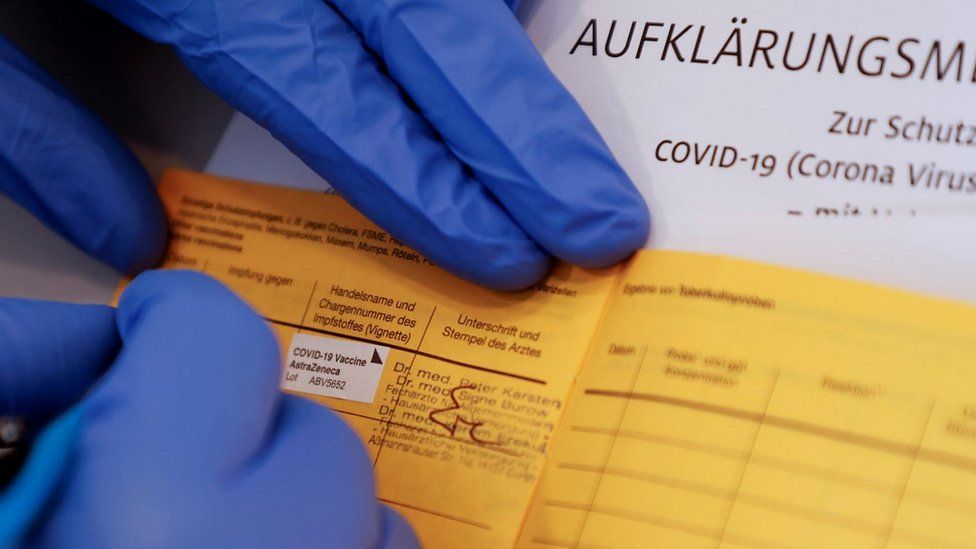
SharecloseShare pageCopy linkAbout sharingimage copyrightReutersA German police force has set up a special team to combat a growing black market in forged vaccine certificates.Police in Cologne told the broadcaster ARD that fraudsters were communicating via an encrypted messenger service which makes investigations difficult.They are still trying to determine the scale of the problem nationally. Some people are duped into paying about €100 (£86; $122), then get nothing. Covid “passports” to ease travel are being rolled out now across the EU.Of the Covid vaccinations approved by the European Medicines Agency (EMA) all but one – the Johnson & Johnson (Janssen) one – require two jabs, several weeks or months apart.In Germany, more than 44% of adults have had at least one jab and more than 18% of the population has been fully vaccinated against Covid-19, Our World in Data reports.The certificate fraud, which takes place on the Telegram messenger service, involves both real traffic in fake certificates and fake offers which simply lure people into paying. Often cryptocurrency is used, like in the online black markets in drugs and weapons.Data in photos onlineA specialist in this new type of crime, Miro Dittrich, said Telegram had become a hub for anti-vaxxers who are suspicious of vaccines and often deny the official data about the pandemic. But proving you are Covid-free opens access to restaurants, leisure facilities, foreign travel and many other things.What is happening with the EU vaccine rollout?How is Europe lifting lockdown restrictions?Spain to lift restrictions for UK travellersSix suspected fraudsters are being investigated by the new unit, Cologne police spokeswoman Nicole Gentner said. Those proven to have issued or used fake certificates face stiff penalties, including possible prison terms.Last month, police searched the clinic of a Munich doctor suspected of fraud concerning vaccine certificates, the German website Merkur reported.A state prosecutor, Juliane Grotz, said blank certificates could be ordered easily on the internet and doctors’ stamps were also easy to get online. She said fraudsters were also finding the individual vaccination numbers – part of the certificate – in photos posted by vaccinated people on social media.An investigation by German broadcaster MDR revealed fake certificates being offered for vaccination centres in Weimar, Kamenz, Munich and Hamburg. One Telegram offer quoted by MDR read: “The order with stamp – already available – takes 1-3 days. We will give you a certificate, stamp, BioNTech or Astra sticker and signature on the stamp. Two certificates cost €150.”What about the EU ‘Covid passport’?The EU says its new EU Digital Covid Certificate is secure because the data is contained in a QR code which has to be scanned. The holder is then checked electronically in a central EU database. An EU regulation on the certificate – nicknamed a “Covid passport” – will enter into force on 1 July, meaning all 27 member states will start using the system. The aim is for EU citizens to travel throughout the EU without having to take repeated Covid tests or go into quarantine. The technology has been rushed through in the hope of salvaging some of the vital summer tourism business. Seven countries began issuing the EU certificates on 1 June: Bulgaria, Croatia, the Czech Republic, Denmark, Germany, Greece and Poland. The UK is developing its own digital Covid certificate but does not yet have a deal with the EU on mutual recognition.In the EU, national health authorities will hold their citizens’ data, but the QR code verification will not transmit personal data to the central electronic “gateway” in Luxembourg, the EU Commission says.The digital certificate will show the bearer’s vaccination status, whether they have immunity from a Covid infection they have recovered from, or a Covid test result.The EMA has approved the following vaccines: Pfizer-BioNTech, Oxford-AstraZeneca, Moderna and Janssen.

Read more →

The Disease Detective

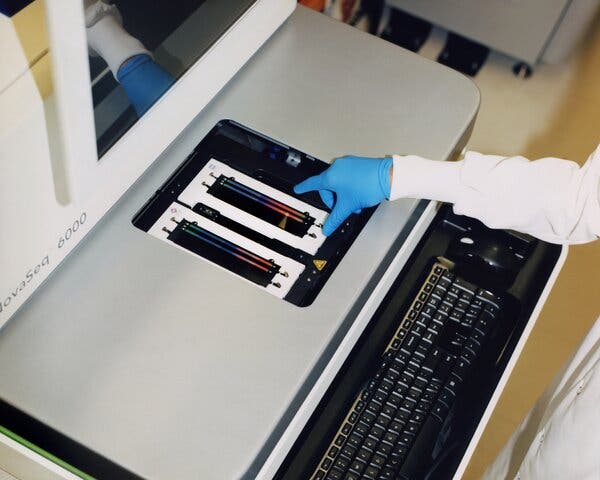
Joe DeRisi remembers very clearly when his obsession with mystery diseases began. As a teenager in the 1980s, growing up outside Sacramento, he was riveted by news reports about the AIDS epidemic, which in its early years was spreading around the world and killing thousands of people while scientists struggled to establish the cause. “I mean, what is it?” DeRisi says. “Is it a virus? Nobody knew! That whole concept, that we could have an epidemic or pandemic but couldn’t figure out what was behind it — that stuck with me my whole life.” Today DeRisi is a professor of biochemistry who studies infectious diseases at the University of California, San Francisco, and co-president of the Chan Zuckerberg Biohub, a research institute in the city’s Mission Bay neighborhood. Lean and white-haired at 51, he tends to talk in rapid bursts, sometimes inflected with a California-stoner vibe. When I met him at the Biohub in May, he, like many geneticists, had just come off a harried year of working on Covid-19, during which he transformed his lab into a facility that could process more than 2,600 rapid tests a day. “Things have definitely calmed down,” DeRisi said, as he led me inside the Biohub. “It was pretty intense for a while there.” As we made a lightning tour of the lab, DeRisi waved his hand at a series of expensive genetic sequencers, including one the size of a refrigerator. “Boring gray boxes,” he announced, before moving on. On a table near the back was a much smaller unit, plain white and roughly the size of a milk crate, with a simple touch-screen. Not long after becoming president of the Biohub in 2016, DeRisi started a project designed to spot unfamiliar diseases well before they would normally be detected. The white box, when connected to an elaborate analysis system DeRisi had designed, allowed researchers from around the world to piece together all the different DNA or RNA recovered from just about any sample — throat swabs, blood draws or other material — and scan it for unidentified pathogens.The medical word for such diseases is “idiopathic”: conditions whose symptoms can be described but that have no known cause. Before germs were understood, most illnesses were idiopathic by definition, including the Black Death, which we now know was caused by a bacterium (Yersinia pestis) but which doctors at the time hypothesized might be caused by staring at someone who was ill, the alignment of the planets, bad smells or wearing pointed shoes. What’s startling is how many mystery infections still exist today. More than a third of acute respiratory illnesses are idiopathic; the same is true for up to 40 percent of gastrointestinal disorders and more than half the cases of encephalitis (swelling of the brain). Up to 20 percent of cancers and a substantial portion of autoimmune diseases, including multiple sclerosis and rheumatoid arthritis, are thought to have viral triggers, but a vast majority of those have yet to be identified. Globally, the numbers can be even worse, and the stakes often higher. “Say a person comes into the hospital in Sierra Leone with a fever and flulike symptoms,” DeRisi says. “After a few days, or a week, they die. What caused that illness? Most of the time, we never find out. Because if the cause isn’t something that we can culture and test for” — like hepatitis, or strep throat — “it basically just stays a mystery.” While the cause of Covid-19 was quickly identified as a coronavirus, DeRisi notes, that won’t necessarily be the case with whatever germ creates the next pandemic. And past strategies for detecting potentially dangerous viruses haven’t always been very systematic. “Different prevention projects in the past have just sort of picked up random roadkill on the side of the road and looked for viruses in it,” DeRisi told me. “Or they’ll look for all the viruses in bats.” While there’s a place for that sort of sampling, DeRisi said, it’s hard to know which of the many organisms discovered actually poses a risk. “Like, we have a project that’s examining the slurry in swine farms,” he went on. “And we’ve identified at least 200 novel viruses so far. Which is great! But we have no idea which of those, if any, have the ability to jump into humans — or how bad it would be if they did.” It would be better, DeRisi says, to watch for rare cases of mystery illnesses in people, which often exist well before a pathogen gains traction and is able to spread. Based on a retrospective analysis of blood samples, scientists now know that H.I.V. emerged nearly a dozen times over a century, starting in the 1920s, before it went global. Zika was a relatively harmless illness before a single mutation, in 2013, gave the virus the ability to enter and damage brain cells. Cristina Tato, an immunologist who runs the Biohub’s Rapid Response Team, points out that months before Zika exploded in Brazil, causing developmental issues and microcephaly in infants, researchers in the South Pacific noticed an increase in neurological symptoms, a missed clue that Zika was changing.“With pathogens, we’re much better at watching for things that we already know are out there,” DeRisi said. “Ebola, we know. Zika, we know. The beauty of this approach” — running blood samples from people hospitalized all over the world through his system, known as IDseq — “is that it works even for things that we’ve never seen before, or things that we might think we’ve seen but which are actually something new.” Biological samples being prepared for sequencing.Carlos Chavarría for The New York TimesTraditionally, the way that scientists have identified organisms in a sample is to culture them: Isolate a particular bacterium (or virus or parasite or fungus); grow it in a petri dish; and then examine the result under a microscope, or use genomic sequencing, to understand just what it is. But because less than 2 percent of bacteria — and even fewer viruses — can be grown in a lab, the process often reveals only a tiny fraction of what’s actually there. It’s a bit like planting 100 different kinds of seeds that you found in an old jar. One or two of those will germinate and produce a plant, but there’s no way to know what the rest might have grown into.And because different types of bacteria require specific conditions in order to grow, you also need some idea of what you’re looking for in order to find it. The same is true of genomic sequencing, which relies on “primers” designed to match different combinations of nucleotides (the building blocks of DNA and RNA). Even looking at a slide under a microscope requires staining, which makes organisms easier to see — but the stains used to identify bacteria and parasites, for instance, aren’t the same. The practice that DeRisi helped pioneer to skirt this problem is known as metagenomic sequencing. Unlike ordinary genomic sequencing, which tries to spell out the purified DNA of a single, known organism, metagenomic sequencing can be applied to a messy sample of just about anything — blood, mud, seawater, snot — which will often contain dozens or hundreds of different organisms, all unknown, and each with its own DNA. In order to read all the fragmented genetic material, metagenomic sequencing uses sophisticated software to stitch the pieces together by matching overlapping segments. The assembled genomes are then compared against a vast database of all known genomic sequences — maintained by the government-run National Center for Biotechnology Information — making it possible for researchers to identify everything in the mix. In this scenario, an undiscovered or completely new virus won’t trigger a match but will instead be flagged. (Even in those cases, the mystery pathogen will usually belong to a known virus family: coronaviruses, for instance, or filoviruses that cause hemorrhagic fevers like Ebola and Marburg.)Metagenomic sequencing is especially good at what scientists call “environmental sampling”: identifying, say, every type of bacteria present in the gut microbiome, or in a teaspoon of seawater. Such studies have revealed just how vast the microbial world is, and how little we know about it. One study found more than 1,000 different kinds of viruses in a tiny amount of human stool; another found a million in a couple of pounds of marine sediment. And most were organisms that nobody had seen before. In 2002, as an assistant professor, DeRisi and his collaborator David Wang created the first medical version of this tool, a DNA microarray called the ViroChip that was designed to identify any known virus from a patient’s blood or tissue, and also detect any new or unknown virus. In the years after developing the ViroChip, DeRisi used it mostly to hunt for unknown pathogens connected to respiratory diseases, including asthma. One of his early successes was helping to identify a mystery disease from Hong Kong that would turn out to be SARS. He also solved medical mysteries; in one case, he figured out that a construction worker’s encephalitis was caused not by tuberculosis, as doctors thought for more than a year, but by a tapeworm from infected pork that had migrated to the patient’s brain.He dabbled in animal epidemics as well. Along with diagnosing a fatal neurological disease in snakes, he investigated an infection that was killing cockatiels and parrots, and solved a bizarre rash of deaths among sharks and bat rays in San Francisco Bay. At one point, he even investigated a case of encephalitis in a polar bear, although the cause turned out to be an autoimmune disorder. (DeRisi now studies the same illness in humans.)After the Biohub opened in 2016, one of DeRisi’s goals was to turn metagenomics from a rarefied technology used by a handful of elite universities into something that researchers around the world could benefit from. Unlike regular genomic sequencing, which is now cheap, metagenomics requires enormous amounts of computing power, putting it out of reach of all but the most well-funded research labs. The tool DeRisi created, IDseq, made it possible for researchers anywhere in the world to process samples through the use of a small, off-the-shelf sequencer, much like the one DeRisi had shown me in his lab, and then upload the results to the cloud for analysis. DeRisi isn’t alone in this cloud-based approach to metagenomics — a growing number of start-ups are doing the same. But he’s the first to make the process so accessible, even in countries where lab supplies and training are scarce. DeRisi and his team tested the chemicals used to prepare DNA for sequencing and determined that using as little as half the recommended amount often worked fine. They also 3-D print some of the labs’ tools and replacement parts, and offer ongoing training and tech support. The metagenomic analysis itself — normally the most expensive part of the process — is provided free. But DeRisi’s main innovation has been in streamlining and simplifying the extraordinarily complex computational side of metagenomics. “Most metagenomics programs are really hard to use,” a former collaborator noted. “They take a lot of practice and training.” IDseq is also fast, capable of doing analyses in hours that would take other systems weeks. “What IDseq really did was to marry wet-lab work — accumulating samples, processing them, running them through a sequencer — with the bioinformatic analysis,” says Jennifer Bohl, a researcher who worked at the Laboratory of Malaria and Vector Research in Phnom Penh. “Without that, what happens in a lot of places is that the researcher will be like, ‘OK, I collected the samples!’ But because they can’t analyze them, the samples end up in the freezer. The information just gets stuck there.” Through a tool DeRisi created, it is now possible for researchers anywhere in the world to process samples through the use of a small, off-the-shelf sequencer and then upload the results to the cloud for analysis. Carlos Chavarría for The New York TimesIt wasn’t long after DeRisi completed the prototype for IDseq that he performed his first test of it as a global health tool — a trial run that delivered some fascinating results. It all began in fall 2017, when he ran into Farhad Imam, a pediatrician and senior program officer at the Gates Foundation, at a global health conference in Washington. As they discussed the challenges of deploying the system in the developing world, Imam hit on the idea of enlisting Senjuti Saha, a microbiologist at the Child Health Research Foundation in Dhaka, Bangladesh, to see if IDseq might help shed some light on a mystery there. Earlier that year, the C.H.R.F. noticed a sharp uptick in cases of meningitis in children. Some of these were fatal; many left patients disabled. “In Bangladesh, when a child is disabled, the entire family completely falls apart,” Saha told me. “The mother doesn’t go to work anymore. The siblings fall out of school. They get into this vicious cycle of debt.”Meningitis itself isn’t a disease, just a description meaning that the tissues around the brain and spinal cord have become inflamed. In the United States, bacterial infections can cause meningitis, as can enteroviruses, mumps and herpes simplex. But a high proportion of cases have, as doctors say, no known etiology: No one knows why the patient’s brain and spinal tissues are swelling.This was the case with the Dhaka outbreak. C.H.R.F. is one of the premier microbiology labs in Southeast Asia and is in charge of tracking meningitis in the country for the World Health Organization. “Every meningitis case that comes in, we culture,” Saha told me. “We do antigen tests for pneumococcus, Neisseria meningitidis, Hemophilus influenzae and G.B.S.,” or Group B streptococcus — the four infections most likely to cause meningitis. “Then we do a much more sensitive and specific test for Streptococcus pneumoniae bacteria, since that causes the highest proportion of cases. And then we also do real-time P.C.R. looking for fragments of DNA from any of these pathogens.” When the outbreak began, it was assumed that the cause would again be bacterial, but none of the tests could pinpoint a pathogen. Over the next year, Saha worked to solve the mystery, at times in collaboration with other labs. One partnership, with an organization in China, fell apart when the group wasn’t willing to share its techniques. Another set of researchers, in Canada, ran their own tests on the meningitis samples, but couldn’t figure out the cause either. Not long after, Saha attended a conference at the British Museum, where she gave a presentation titled “The Dark Side of Meningitis.” “It was a negative talk,” Saha recalls. “Like: Why does everybody talk only about the successful cases? We need to talk about the thousands of cases every year where we have no idea what’s causing the disease.” Before meeting DeRisi, Saha was skeptical about yet another collaboration. But the two instantly hit it off. Though DeRisi could be impatient, Saha liked that he was direct, and appreciated that his “ethics are very strong. In his head, he’s like: This is right; this is wrong; this is what I’m going to do.” Still, she proceeded carefully. “Because IDseq was new, and because I am very meticulous, I included a lot of controls,” she told me. Of the 97 samples of cerebrospinal fluid, only 25 were from actual mystery-meningitis cases. The rest were either from cases for which Saha’s lab had already identified the cause, or weren’t meningitis at all. Several were simply water. “The idea was that all of these would be tested, and the process would be blinded,” Saha says. “Because I had to see whether the platform worked or not.” When Saha and her team ran the mystery meningitis samples through IDseq, though, the result was surprising. Rather than revealing a bacterial cause, as expected, a third of the samples showed signs of the chikungunya virus — specifically, a neuroinvasive strain that was thought to be extremely rare. “At first we thought, It cannot be true!” Saha recalls. “But the moment Joe and I realized it was chikungunya, I went back and looked at the other 200 samples that we had collected around the same time. And we found the virus in some of those samples as well.” Until recently, chikungunya was a comparatively rare disease, present mostly in parts of Central and East Africa. “Then it just exploded through the Caribbean and Africa and across Southeast Asia into India and Bangladesh,” DeRisi told me. In 2011, there were zero cases of chikungunya reported in Latin America. By 2014, there were a million. Ordinary chikungunya can cause lasting neurological damage and lifelong joint pain. DeRisi called the disease “hugely devastating” and noted that chikungunya, in the Kimakonde language, spoken in Tanzania, means “to become contorted.” But a neuroinvasive version that caused brain damage and primarily affected children and infants was especially alarming. Chikungunya is a mosquito-borne virus, but when DeRisi and Saha looked at the results from IDseq, they also saw something else: a primate tetraparvovirus. Primate tetraparvoviruses are almost unknown in humans, and have been found only in certain regions. Even now, DeRisi is careful to note, it’s not clear what effect the virus has on people. “Maybe it’s dangerous, maybe it isn’t,” DeRisi says. “But I’ll tell you what: It’s now on my radar. So this thing that would have been totally invisible, that nobody even knew to look for — now we’re watching for it.” That sort of discovery matters, Farhad Imam observes, partly because it can head off a new epidemic, but also because it reveals a landscape of potentially dangerous viruses that we would otherwise never find out about. “What we’ve been missing is that there’s an entire universe of pathogens out there that are causing disease in humans,” Imam notes, “ones that we often don’t even know exist.” “We’re not telling you what to do with it. But it’s also true that if we have enough people using this, spread out all around the world, then it does become a global network for detecting emerging pandemics,” says DeRisi.Carlos Chavarría for The New York TimesAfter finishing the meningitis pilot study, DeRisi and Imam started to roll out IDseq more widely. “The plan was, Let’s let researchers around the world propose studies, and we’ll choose 10 of them to start,” DeRisi recalls. “We thought we’d get, like, a couple dozen proposals, and instead we got 350.” A group in Madagascar wanted to compare the organisms found in bats against those found in patient blood samples, as a way to see what viruses might be spilling over. A research institute in Brazil, which often sees patients with mysterious fevers, wanted to know the cause. “The selling point for researchers is: ‘Look, this technology lets you investigate what’s happening in your clinic, whether it’s kids with meningitis or something else,’” DeRisi said. “We’re not telling you what to do with it. But it’s also true that if we have enough people using this, spread out all around the world, then it does become a global network for detecting emerging pandemics. Because maybe you’re focused on childhood meningitis in Dhaka, but suddenly you have all these adults showing up with a weird respiratory illness. You’re going to turn your attention to that.”At the lab, DeRisi pulled up the IDseq results for some of Saha’s meningitis samples, drawn from patients’ cerebrospinal fluid. “This is a heat map,” DeRisi said, pointing at what looked like an erratically filled-in grid, with some white squares and others in gradations of yellow or red. At the top, a stretch of dark red-purple blocks showed the presence of chikungunya, but there were also dozens of lighter squares, reflecting everything from secondary infections to garden-variety bacteria that live on the skin. Each row, DeRisi explained, represented a different microbe that the system had detected with the color representing the amount of virus that had been found. Some of these were familiar: Alphapapillomavirus causes warts; Saccharomyces cerevisiae is a fungus found in bread and beer. Making it possible for countries to do their own metagenomic testing, regularly and in real time, could increase pathogen detection in places where new pandemics are most likely to emerge. But the heat map also showed how hard it can be to determine which organism, out of many, is the one making a person ill. One hazard of metagenomics is that it amplifies all the genetic material in a sample indiscriminately, making it challenging to know which of the various bacteria or viruses the process detects are actually significant. Nasal swabs, for example, routinely pick up signs of influenza and respiratory viruses — as well as dozens, or even hundreds, of types of bacteria. That’s especially true in the parts of the world where DeRisi would like to offer IDseq. As David Relman, a microbiologist at Stanford University, notes, “When you draw blood from someone who has a fever in Ghana, you really don’t know very much about what would normally be in their blood without fever — let alone about other kinds of contaminants in the environment. So how do you interpret the relevance of all the things you’re seeing?” Such criticisms have led some to say that metagenomics simply isn’t suited to the infrastructure of developing countries. Along with the problem of contamination, many labs struggle to get the chemical reagents needed for sequencing, either because of the cost or because of shipping and customs holdups. Even uploading data can be fraught. “In Cambodia, we have problems with the internet, and we have big problems with power outages,” Bohl says. “So the constant fear is that I’ll wake up after a 48-hour run and there’ll be no information, because the power went out in the middle of the night.” When I mentioned this to Saha, she said that such conditions were not an argument for limiting access. Imam agrees. “Before now, a researcher would literally have to send their samples to a lab in the global north — to what I call ‘one of the two Cambridges,’ Boston or England — just to answer a question about a disease in their own country,” he says. “So this really represents a change in terms of who has access to metagenomic technology, and what can be done with it.” A lab technician at Chan Zuckerberg Biohub, a research institute in California. The lab lets doctors worldwide spot emerging pathogens. “The beauty of this approach,” says DeRisi, “is that it works even for things that we’ve never seen before.”Carlos Chavarría for The New York TimesSoon after the first Covid lockdowns began in the United States in March 2020, DeRisi and his group set up Slack channels to talk with IDseq teams around the world, nearly all of which had started using the technology to track coronavirus variants as they emerged. In Cambodia, Bohl’s team sequenced the virus’s genome from a patient who had recently returned from Wuhan — one of the earliest sequences to be posted on Gisaid, an open-access database for disease variants. In Bangladesh, Saha and her group did the same, and discovered a strain with two unfamiliar mutations. “That’s one of the beauties of the system,” DeRisi observes. “It allows you to pivot on a dime.” By that point, the SARS-CoV-2 virus, which causes Covid-19, had been identified using electron microscopy; there was no need to use metagenomic sequencing to find a mystery agent. But as one infectious-disease specialist, David Patrick at the University of British Columbia, told me: “What if that hadn’t worked? It would have been nice to have an extra tool in the kit.” As the coronavirus spread around the world, the Africa Centers for Disease Control and Prevention, which oversees a continentwide Pathogen Genomics Initiative (P.G.I.), also reached out, hoping to expand the IDseq program to additional labs around the continent. Tato, the researcher who oversaw that process in Senegal, Ethiopia, Egypt and Nigeria, says that while tracking Covid was part of what motivated the Africa C.D.C.’s interest, the expansion was also aimed at ongoing epidemics like yellow fever, Ebola and Lassa fever. (Nigeria’s yellow-fever infections, in particular, were growing more severe, leading researchers to wonder whether the virus had evolved in ways that made it more virulent.) But the P.G.I. also urged countries to begin using metagenomics more broadly — for instance, to investigate the vast repository of samples collected over the years by Dakar’s Institut Pasteur, from patients as well as wildlife and birds. Even just as a public-health tool, IDseq has the potential to be illuminating. In Nepal, Tato told me, projects are underway to determine the causes of both idiopathic pediatric encephalitis and a mysterious infection that causes blindness in infants and children, which is thought to be transmitted by moths. (The infectious agent carried by the moths — bacteria, fungus or some other toxin — is still unknown.) “They’ve got this new technology, and they’re just running with it,” Tato adds. “They keep finding new things they want to investigate.”Using IDseq to tackle regional health problems is part of the point, DeRisi says. “Look, most of the stuff that people find with IDseq will never turn into a pandemic,” he went on. “But that doesn’t mean it’s useless. We’ll still be learning what pathogens are out there, how they’re changing, when they’re becoming more dangerous. All of which makes it more likely that we’ll be able to spot an emerging pandemic before it takes off.” Discovering a contagious disease early makes it easier to contain, but widespread sampling also means that we’re less likely to be caught off-guard. “With Ebola, there’s always an issue: Where’s the virus hiding before it breaks out?” DeRisi explains. “But also, once we start sampling people who are hospitalized more widely — meaning not just people in Northern California or Boston, but in Uganda, and Sierra Leone, and Indonesia — the chance of disastrous surprises will go down. We’ll start seeing what’s hidden.”Jennifer Kahn is a contributing writer for the magazine and the Narrative Program lead at the U.C. Berkeley Graduate School of Journalism. She last wrote about using drugs to prevent the next pandemic.

Read more →

Virtual Reality Therapy Plunges Patients Back Into Trauma. Here Is Why Some Swear by It.

When a Veterans Affairs therapist first suggested that Chris Merkle try a virtual reality simulation that would mimic his days in combat, he was horrified. “I was like, you want to put me in a virtual world, reliving my worst days, my worst nightmares?” he said.It was the winter of 2013, and after three tours in Iraq and four in Afghanistan, Mr. Merkle had spent years struggling with the invasive symptoms of post-traumatic stress disorder. He felt constantly on edge, bracing for an attack. He got angry easily. He avoided thinking or talking about his time as a Marine; he tried traditional talk therapy, but didn’t feel ready to discuss his past.Months later, after his symptoms intensified and he felt desperate for a salve, he decided to give virtual reality exposure therapy a try at a Department of Veterans Affairs hospital in Long Beach, Calif. The treatment uses V.R. technology to immerse a patient in a three-dimensional environment that mimics a traumatic memory. He strapped into a headset and sank into the past.The details in the simulation were extremely precise, Mr. Merkle said: the military-issue truck, the weight of the model gun in his hand, the dark swath of sand in the night. He narrated one particularly troubling incident out loud to a clinician, who adjusted the simulation as he spoke. “I was seeing that person shooting at me, that I hadn’t thought about in 10-plus years,” he said. His muscles tensed. His heart raced. He was terrified.“My body was physically reacting, because my mind was saying, this is happening to us.” But when he took the goggles off, he said, the sense of accomplishment became its own form of comfort. For years, his memories had terrified him. Confronting the past in V.R. proved to him that he could survive revisiting his memories. “That was the biggest leap,” he said.After about seven runs through the simulation, Mr. Merkle started uncovering fragments of memory his mind had blacked out, which is a common response to trauma. He remembered the name of the soldier who had been next to him in a truck during combat. He remembered the clear feeling that he was going to die. Mr. Merkle walked out in the hall after he was done, grappling with what his brain had revealed.He felt like he was in a fantasy novel, he said. As he left the session, he imagined that “there was this black smoke pouring out of my mouth, oozing out of me. Like this evil, for lack of a better word for it, was slipping out” of his body. He got to the parking lot and sat in his car for an hour. The treatment was working, he thought. He was less scared of his memories, less scared of himself. He was getting better.Why V.R.? Why Now?The most significant disorders that virtual reality therapy has shown success in treating — PTSD, anxiety, phobias — are on the rise. An April survey by the Centers for Disease Control and Prevention cited significant increases in respondents showing symptoms of anxiety disorders. Health care workers have reported high rates of PTSD during the pandemic — a February study of 1,000 frontline workers reported that nearly one-quarter showed likely signs of the disorder. In contrast, only 6.8 percent of the general population ever experiences PTSD in their lifetime, according to National Institute of Mental Health estimates.“Covid has been traumatizing to so many people in so many ways,” said Dr. Nomi Levy-Carrick, a psychiatrist who leads outpatient psychiatric services at Brigham and Women’s Hospital in Boston. Grief, isolation, economic upheaval, housing and food insecurity, the “toxic stress” of lockdown and the surge in domestic violence during the pandemic can all be traumatic stressors, she said. And the constant uncertainty of the past pandemic year created conditions for widespread anxiety.Academics have studied virtual reality’s potential to treat anxiety disorders since the ’90s, and the practice has incrementally gathered momentum, as the technology has improved and headsets have become more affordable. JoAnn Difede, a psychology professor at Weill Cornell Medicine in New York and one of the leading experts in virtual reality treatment for PTSD, said the headset she used for research with Sept. 11 survivors cost $25,000 at the time and weighed 10 pounds. Now, an average headset retails under $300.A virtual reality mindfulness exercise to soothe anxiety.By CenteredVRRecreational V.R. headset sales to the general public have grown during the pandemic, but the technology has yet to fully enter the mainstream. Experts who study the therapy argue that’s about to change for the medical establishment, as clinicians look for effective and accessible ways to treat anxiety disorders.Mr. Merkle likened his experience in the virtual reality simulations to a child confronting imaginary monsters in a closet. Each time you open the door, he said, you see there’s nothing to fear. Your body whirs down from fight or flight mode. And each time, the virtual reality treatment gets easier.Many V.R. therapies build on a sometimes-divisive therapeutic technique called prolonged exposure, developed by Edna Foa, a professor of psychiatry at the University of Pennsylvania Perelman School of Medicine. Prolonged exposure is a cognitive intervention therapy; patients first describe a traumatic event to a therapist, in detail and in the present tense, and then confront triggers of the traumatic event in the real world. While some experts have worried the practice might overwhelm or re-traumatize patients, prolonged exposure is now widely accepted as an effective tool to treat chronic PTSD. Patients become desensitized to their memories; they prove to themselves that their thoughts can be safe.“If you overcome something in V.R., you overcome it in real life,” said Daniel Freeman, a professor of clinical psychiatry at Oxford University who runs virtual reality therapies at 10 public clinics across England.Direct-to-consumer virtual reality therapy products, for now, remain rare, and only a few are covered by insurance. Companies that sell V.R. therapy software often explicitly state their products should only be used in the presence of a clinician. Experts like Andrew Sherrill, an assistant professor of psychiatry at Emory University in Atlanta who specializes in virtual reality therapy., worry that, as virtual reality expands, people seeking treatment might try out a program for themselves and not consult a therapist. They might shrug off the treatment after not getting results or aggravate trauma symptoms. “It’s the closest thing our field has to just making opioids available over the counter,” he said.“V.R. is not going to be the solution,” said Jonathan Rogers, a researcher at University College London who has studied rates of anxiety disorders during the pandemic. “It may be part of the solution, but it’s not going to make medications and formal therapies obsolete.”Does V.R. Therapy Work?Virtual reality treatments aren’t necessarily more effective than traditional prolonged exposure therapy, saidDr. Sherrill. But for some patients, V.R. offers convenience and can immerse a patient in scenes that would be hard to replicate in real life. For some people, the treatment can mimic video game systems they’re already familiar with. There’s also a dual awareness in patients who use virtual reality — the images on the screen are almost lifelike, but the headset itself functions as proof that they’re not real.Months after the Sept. 11 terrorist attacks, Dr. Difede and Dr. Hunter Hoffman, who is the director of the Virtual Reality Research Center at the University of Washington, tested virtual reality treatments in one survivor with acute PTSD, one of the first reported applications of the therapy. Dr. Difede said that the first time the patient put on the headset, she started crying. “I never thought I’d see the World Trade Center again,” she told Dr. Difede. After six hourlong sessions, the patient experienced a 90 percent decrease in PTSD symptoms. Dr. Difede later tested V.R. exposure therapy in Iraq War veterans; 16 out of the first 20 patients no longer met the diagnostic criteria for PTSD after completing treatment.At the University of Central Florida, a team called U.C.F. Restores has been building trauma therapies using V.R. that allows clinicians to control the level of detail in a simulation, down to the color of a bedspread or a TV that can be clicked on or off, in order to more easily trigger traumatic memories. The program offers free trauma therapy, often using V.R., to Florida residents and focuses on treating PTSD.Dr. Deborah Beidel, a professor of psychology and executive director of U.C.F. Restores, has broadened the treatments beyond visuals, customizing sounds and even smells to create an augmented reality for patients.Jonathan Tissue, 35, a former Marine, sought treatment at U.C.F. Restores in early 2020 after talk therapy and medication failed to alleviate his PTSD symptoms, which included flashbacks, anxiety and mood swings. In the end, it was the smells pumped into the room while he described his military service to a clinician that helped unlock his memories. There was the stench of burning tires, diesel fumes, the smell of decaying bodies. He heard the sounds of munitions firing. His chair rumbled, thanks to the center’s simulated vibrations.“It unlocked certain doors that I could start speaking about,” he said. He talked through his newly uncovered memories with a therapist and a support group, processing the terror that had built in his body for years.Within three days, he said, he started feeling better; by the end of the three-week treatment, his symptoms had mostly faded. “It made me comfortable in my own self,” he said.‘Ready for Prime Time’While a significant amount of funding — and consequentially, the bulk of research — on virtual reality’s therapeutic potential has focused on military veterans, “we’re ready for prime time to treat civilian trauma,” said Albert “Skip” Rizzo, a clinical psychologist who specializes in virtual reality and worked with Mr. Merkle at the Department of Veterans Affairs.Several companies and clinicians are using V.R. to treat other disorders. During the pandemic, Johns Hopkins researchers have used it to reduce stress and burnout in medical workers. In one unpublished study, 50 nurses from a Covid-19 ward tested virtual reality mindfulness exercises — guided meditations beside animated fields and waterfalls — and all but one participant reported reduced stress levels.Researchers are also testing whether they can alleviate childhood social anxiety with virtual reality programs, one of which uses animated artificial intelligence bullies that growl things like, “Give me your lunch money.” BehaVR, which currently sells therapeutic software on pre-loaded headsets to health care providers, plans to expand to direct-to-consumer products for social anxiety and other stress-related disorders, anticipating widespread post-pandemic fears, Aaron Gani, the company’s founder and chief executive said in an interview.Virtual reality looks promising for treating phobias, according to Dr. Howard Gurr, a psychologist in Long Island, N.Y. He’s been interested in virtual reality for more than 20 years, since he saw Dr. Rizzo discuss a virtual classroom environment to diagnose and treat childhood attention-deficit/hyperactivity disorder. But the technology has improved drastically in recent years, he said.In 2016, Dr. Gurr tried a simulation to treat patients’ fear of heights that convinced him of V.R.’s therapeutic potential. A glass elevator steadily rose over a city, the roofs of the buildings below growing smaller and smaller. A balcony appeared, and he was supposed to take a step onto it, over the chasm. Even though he didn’t have a phobia of heights, Dr. Gurr couldn’t do it. “Part of my brain was hijacked,” he said. “I was like, ‘I got it. This works.’”Before he found virtual reality, Dr. Gurr would accompany a patient with a phobia of flying on an actual flight — a short distance, like New York to Philadelphia, over and over again. Now, he said, it’s more efficient and convenient to talk them through a virtual plane ride five or six times in a given session, on and off a pixelated runway. About one-third of his patients now come to his psychology practice specifically for virtual reality, he said, referred from other clinicians who don’t offer the treatment.That number may grow as the pandemic wanes in the United States, he said, and more people grapple with its aftermath. He expects anxiety disorders will continue to rise, that the demand for effective treatments to tackle fear and trauma will only expand. Mr. Merkle, who’s in the process of getting a degree in clinical psychology, mostly relies on traditional talk therapy these days. PTSD has no clear end point; even in recovery, it can trap you, cycling and churning. But for now, he said, thanks to the V.R. treatment, he feels something close to free.

Read more →

When Your Job Harms Your Mental Health

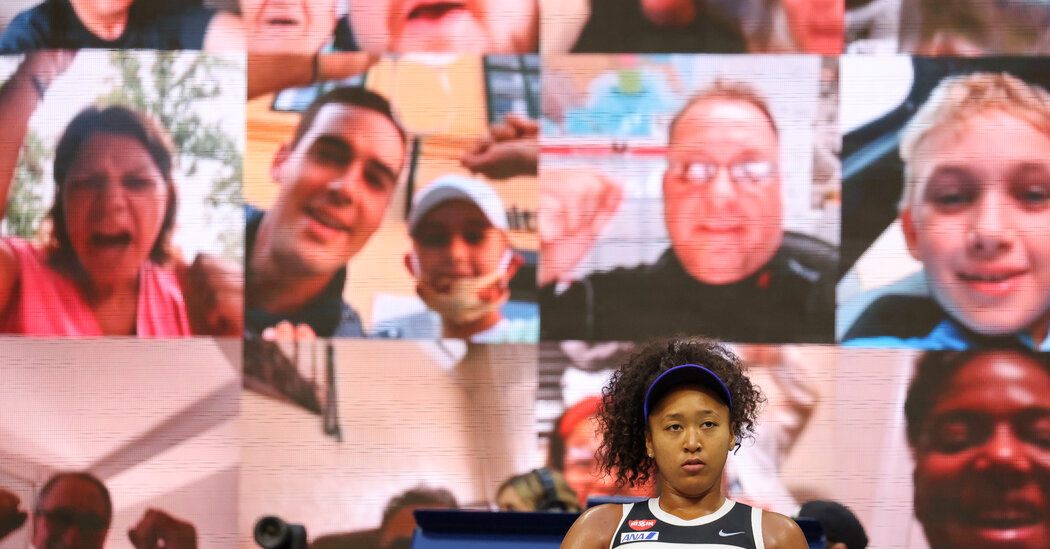
Naomi Osaka advocated for her well-being at work. Here’s how you can too.Haven’t we all been Naomi Osaka at some point in our lives?OK, we may never know what it’s like to be the second-ranked woman in tennis, or the world’s highest-paid female athlete.But like the sports star, many of us have been stuck in situations that were detrimental to our mental health — at work or in our personal lives — feeling torn between societal expectations and self-preservation.Ms. Osaka chose to care for herself ahead of the French Open, when she announced she would not “do any press” because the news conferences could be damaging to the mental health of the players. True to her word, after winning her first-round match on Sunday, she skipped her postmatch news conference. As she later explained in an Instagram post, she was feeling vulnerable and anxious, and press events give her “huge waves of anxiety.”Her decision to avoid the press did not go over well with tennis officials. Ms. Osaka was fined $15,000, and the leaders of the four Grand Slam tournaments — the Australian, French and United States Opens, and Wimbledon — threatened to expel her from the French Open.Instead, Ms. Osaka announced she would withdraw from the tournament. “The truth is that I have suffered long bouts of depression since the U.S. Open in 2018 and I have had a really hard time coping with that,” she wrote in her social media post.Regardless of the type of work you do, your job can affect your mental health and vice versa. And like Ms. Osaka, you have choices when it comes to preserving and improving your well-being.“We would not fault her if she had a sprained ankle,” said Benjamin F. Miller, the chief strategy officer for Well Being Trust, a national foundation focusing on mental health and well-being. “But when it comes to mental health — which we know is equally, if not more, important than your physical health — we have this arbitrary standard of what’s acceptable and what’s not.”A survey of over 5,000 employees conducted last year by the advocacy group Mental Health America found that 83 percent of respondents felt emotionally drained from work and 71 percent strongly agreed that the workplace affects their mental health. While the respondents were not representative of the general population — they most likely found the survey when visiting the organization’s mental health screening tools — their responses show just how anxious some workers have become.Women and people of color may shoulder a disproportionate amount of emotional stress both in and outside of the workplace. Women are at least twice as likely to have had depression as men, according to federal data. And Black people are less likely than non-Hispanic white people to receive treatment for depression or prescription medications for mental health. A 2020 report from Lean In and McKinsey & Company noted that Black women were less likely to get the support they needed to advance in their fields than white women.Ms. Osaka, who is of Black and Asian descent, acted admirably when she stood up for her needs, several mental health experts said. It can benefit all of us to be on the lookout for signs that we might need to make changes at work or get professional help, they added.Evaluate your feelings.“Everyone has some awareness of their baseline functioning at work,” said Dr. Jessi Gold, a psychiatrist at Washington University in St. Louis. So if you start to notice you’re losing interest in your job or your productivity plummets, it’s an indication that something is off, she said.For example, you might notice that you dread starting work each day, or you feel so anxious that you have trouble thinking about everything that you’re supposed to do. Perhaps your emails are piling up and you aren’t communicating with people as much as you typically would. If you’re feeling ineffective in your job, you may also start to engage in more negative self-talk, like: “I’m no good at my job anyway. I’m useless,” Dr. Gold said.An even bigger warning sign that work is affecting your mental health is if work tanks your mood to the point that it starts to damage your personal relationships, she added. For example, you might find that you’re picking more fights with your partner, becoming more irritated by your children or avoiding social activities in ways that you normally wouldn’t.Think about what might be causing these feelings. Is there one aspect of your job responsibilities that is causing most of your distress? Do you have an underlying health problem like depression that has not been treated? Is it some combination of the two?Get support.Once you realize you need help, seek out a trusted friend, mentor, co-worker, peer group or therapist, said Inger Burnett-Zeigler, an associate professor of psychiatry and behavioral sciences at Northwestern University Feinberg School of Medicine who researches Black women’s mental health.This should be a place “where you can feel seen, heard and validated, a place where you are able to be your fully authentic self without fear of judgment or negative repercussions,” she added.Many employers also offer employee assistance programs that have a variety of services, including short-term counseling from licensed therapists or referrals to outside experts who can help with the specific problem you’re having. (These services are often touted as confidential, but even so, some employees may feel uncomfortable using them.)Your company may also have partnerships with other organizations that provide wellness classes or free career coaching. It’s worth investigating all the options, the experts said.“Employers have become much more aware and frankly progressive in how they’ve been managing and treating issues of mental health over the last several years,” said Michael Thompson, president and chief executive of the National Alliance of Healthcare Purchaser Coalitions. “The pandemic has actually reinforced that in spades.”Mr. Thompson’s organization recently did an online survey of 151 employers who buy health care services and found that 72 percent were seeking to improve mental health access for their employees and 16 percent were considering doing this in the next one to two years.Set boundaries.Once you’ve found a supportive person to hear you out, together you can start to come up with a game plan to improve your work life and emotional well-being.Think about what you need most: Is it an accommodation like a short-term disability leave, or would it simply help to have more flexibility in your work schedule? Do you need to set limits as to when and how often you respond to work messages? Before addressing any of this with your supervisor, be sure to consider how your proposed solution would work within the context of your team, because that’s what your employer will want to know as well. In other words, show how your idea will benefit the group as a whole.“If you’re really stressed out and have a mental heath issue that you’re wrestling with, it’s very difficult to think about the team more broadly,” said John Quelch, dean of the Miami Herbert Business School in Coral Gables, Fla., and co-author of the book “Compassionate Management of Mental Health in the Modern Workplace.” Even so, he added, “you have to try to get in the head of your employer.”During the pandemic, mental health problems have been pervasive. A Centers for Disease Control and Prevention report concluded that in June of 2020, 40 percent of adults in the United States had been struggling with mental health or substance abuse issues.It’s OK to be open and admit to yourself and those you trust that you’re struggling right now, said Paul Gionfriddo, the president and chief executive of Mental Health America. In fact, he added, “Most good employers are going to be asking, ‘What can I do to help you?’”You may also decide to keep your concerns private and address them with your therapist, and that’s OK, too. Creating healthy work boundaries is vital, experts said.“Remember that you are a worthy and valuable human being, separate from your job function, productivity and even how you might be evaluated by others,” Dr. Burnett-Zeigler said. “When feelings of self-doubt and not belonging show up, don’t lose sight of the unique talents and ideas that you bring to the workplace.”But say your efforts to address your emotional well-being at your job have fallen flat, or the work environment has become toxic. In that case, the experts said, it’s probably best to start looking for another job, especially if you have become the target of ridicule, threats or abusive comments by a manager. It is illegal for an employer to discriminate against you simply because you have a mental health condition. And according to the U.S. Equal Employment Opportunity Commission, if you have a qualifying condition like major depression or post-traumatic stress disorder, you have a legal right to a reasonable accommodation that would help you do your job — for example, the ability to schedule work around therapy appointments, a quiet office space or permission to work from home.“What we need to do is to recognize that anxiety is real, depression is real,” Mr. Gionfriddo said. “This is a really good time for people to do that personal assessment, because there are opportunities to find more meaningful work out there.”

Read more →

Declining fish biodiversity poses risks for human nutrition

All fish are not created equal, at least when it comes to nutritional benefits.
This truth has important implications for how declining fish biodiversity can affect human nutrition, according to a computer modeling study led by Cornell and Columbia University researchers.
The study, “Declining Diversity of Wild-Caught Species Puts Dietary Nutrient Supplies at Risk,” published May 28 in Science Advances, focused on the Loreto region of the Peruvian Amazon, where inland fisheries provide a critical source of nutrition for the 800,000 inhabitants.
At the same time, the findings apply to fish biodiversity worldwide, as more than 2 billion people depend on fish as their primary source of animal-derived nutrients.
“Investing in safeguarding biodiversity can deliver both on maintaining ecosystem function and health, and on food security and fisheries sustainability,” said the study’s first author Sebastian Heilpern, a presidential postdoctoral scholar in the Department of Natural Resources and the Environment at Cornell University.
Practical steps could include establishing and enforcing “no-take zones” — areas set aside by the government where natural resources can’t be extracted — in critical habitat; making sure that fishers adhere to fish size limits; and an increased investment in gathering species data to inform fisheries management policies, especially for inland fisheries.

Read more →

Culture drives human evolution more than genetics

In a new study, University of Maine researchers found that culture helps humans adapt to their environment and overcome challenges better and faster than genetics.
After conducting an extensive review of the literature and evidence of long-term human evolution, scientists Tim Waring and Zach Wood concluded that humans are experiencing a “special evolutionary transition” in which the importance of culture, such as learned knowledge, practices and skills, is surpassing the value of genes as the primary driver of human evolution.
Culture is an under-appreciated factor in human evolution, Waring says. Like genes, culture helps people adjust to their environment and meet the challenges of survival and reproduction. Culture, however, does so more effectively than genes because the transfer of knowledge is faster and more flexible than the inheritance of genes, according to Waring and Wood.
Culture is a stronger mechanism of adaptation for a couple of reasons, Waring says. It’s faster: gene transfer occurs only once a generation, while cultural practices can be rapidly learned and frequently updated. Culture is also more flexible than genes: gene transfer is rigid and limited to the genetic information of two parents, while cultural transmission is based on flexible human learning and effectively unlimited with the ability to make use of information from peers and experts far beyond parents. As a result, cultural evolution is a stronger type of adaptation than old genetics.
Waring, an associate professor of social-ecological systems modeling, and Wood, a postdoctoral research associate with the School of Biology and Ecology, have just published their findings in a literature review in the Proceedings of the Royal Society B, the flagship biological research journal of The Royal Society in London.
“This research explains why humans are such a unique species. We evolve both genetically and culturally over time, but we are slowly becoming ever more cultural and ever less genetic,” Waring says.
Culture has influenced how humans survive and evolve for millenia. According to Waring and Wood, the combination of both culture and genes has fueled several key adaptations in humans such as reduced aggression, cooperative inclinations, collaborative abilities and the capacity for social learning. Increasingly, the researchers suggest, human adaptations are steered by culture, and require genes to accommodate.
Waring and Wood say culture is also special in one important way: it is strongly group-oriented. Factors like conformity, social identity and shared norms and institutions — factors that have no genetic equivalent — make cultural evolution very group-oriented, according to researchers. Therefore, competition between culturally organized groups propels adaptations such as new cooperative norms and social systems that help groups survive better together.
According to researchers, “culturally organized groups appear to solve adaptive problems more readily than individuals, through the compounding value of social learning and cultural transmission in groups.” Cultural adaptations may also occur faster in larger groups than in small ones.
With groups primarily driving culture and culture now fueling human evolution more than genetics, Waring and Wood found that evolution itself has become more group-oriented.
“In the very long term, we suggest that humans are evolving from individual genetic organisms to cultural groups which function as superorganisms, similar to ant colonies and beehives,” Waring says. “The ‘society as organism’ metaphor is not so metaphorical after all. This insight can help society better understand how individuals can fit into a well-organized and mutually beneficial system. Take the coronavirus pandemic, for example. An effective national epidemic response program is truly a national immune system, and we can therefore learn directly from how immune systems work to improve our COVID response.”
Story Source:
Materials provided by University of Maine. Note: Content may be edited for style and length.

Read more →

F.D.A. Approves New Drug to Treat Vaginal Yeast Infections

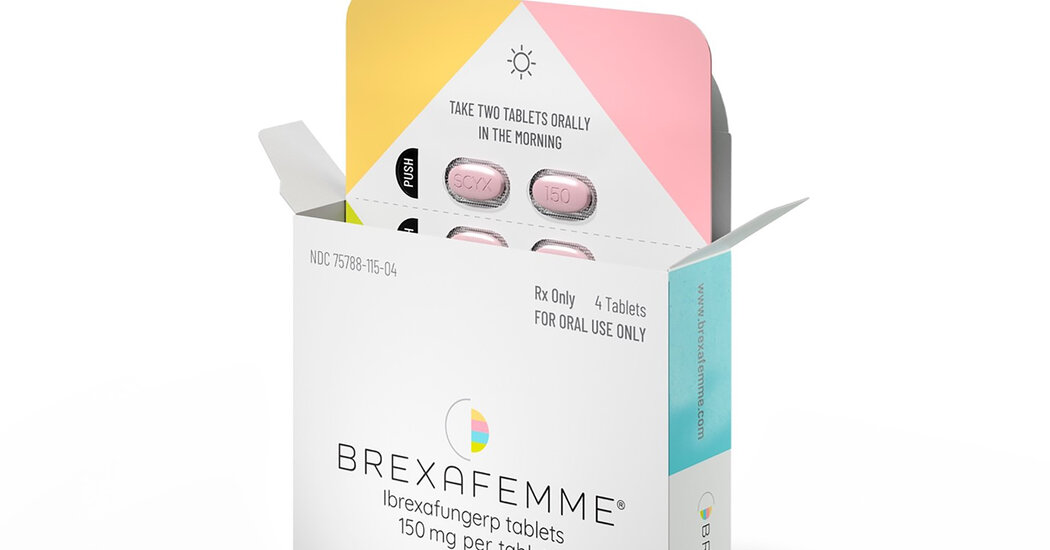
Regulators OK’d a new antifungal treatment, but critics say it is unneeded and costs too much.The Food and Drug Administration on Tuesday approved a new drug to treat a vaginal yeast infection that is especially common in women who are pregnant, using birth control pills or taking antibiotics.The drug, Brexafemme (ibrexafungerp) made by SCYNEXIS, is a one-day oral treatment and the first of a new class of triterpenoid antifungal drugs. The company said the new drug kills candida — the yeast that can cause an infection.The standard oral medication, Diflucan (fluconazole), inhibits the growth of yeast but does not kill it.But the treatment most likely wouldn’t be prescribed widely at first for common vaginal yeast infections. Dr. David Angulo, the company’s chief medical officer, estimated that the list price of the drug would range from $350 to $450 for the four-tablet treatment. By comparison, GoodRx lists the average retail price of fluconazole as $29.81.He said Brexafemme was approved as a first-line treatment, but could also be prescribed for patients whose infections don’t clear up easily.“There has been nothing new that can be provided to patients who can’t tolerate it, don’t respond well or develop resistance,” Dr. Angulo said.Dr. Sumathi Nambiar, director of the F.D.A.’s division of anti-infectives said: “This approval for a new antifungal drug provides an additional treatment option for patients with vulvovaginal candidiasis, or vaginal or vulvar yeast infections, and represents another step forward in the F.D.A.’s overall efforts to ensure safe and effective antifungal drugs are available to patients.”Dr. Denise Jamieson, chair of gynecology and obstetrics at Emory University School of Medicine, said she wasn’t sure the new drug was needed.“I don’t see a tremendous amount of resistance,” she said. “I can’t really comment on whether this is going to be a large addition or not. It’s always helpful to have another option, and then you have to consider things like cost and tolerability.”According to Dr. Angulo, one clinical trial used to support the application showed 50 percent efficacy — meaning complete resolution of all signs and symptoms — at 10 days after treatment and 60 percent 25 days after treatment. The other trial showed 64 percent efficacy at day 10 and 73 percent at day 25.Dr. Michael Carome, director of Public Citizen’s Health Research Group, was not impressed by the F.D.A.’s approval of Brexafemme.“This drug is not necessary and few women should need it,” Dr. Carome said. “Fluconazole is available at very low cost and in general is very effective. The cost of this is just outrageous.”The F.D.A. is requiring SCYNEXIS to conduct several post-market studies, including one to assess the risks to pregnant women, the developing fetus and newborns; and another to study how much of the product goes into the breast milk of lactating women.The drug will go on sale later this year.

Read more →

Zika virus RNA found in free-ranging African bats

A team of Colorado State University scientists, led by veterinary postdoctoral fellow Dr. Anna Fagre, has detected Zika virus RNA in free-ranging African bats. RNA, or ribonucleic acid, is a molecule that plays a central role in the function of genes.
According to Fagre, the new research is a first-ever in science. It also marks the first time scientists have published a study on the detection of Zika virus RNA in any free-ranging bat.
The findings have ecological implications and raise questions about how bats are exposed to Zika virus in nature. The study was recently published in Scientific Reports, a journal published by Nature Research.
Fagre, a researcher at CSU’s Center for Vector-Borne Infectious Diseases, said while other studies have shown that bats are susceptible to Zika virus in controlled experimental settings, detection of nucleic acid in bats in the wild indicates that they are naturally infected or exposed through the bite of infected mosquitoes.
“This provides more information about the ecology of flaviviruses and suggests that there is still a lot left to learn surrounding the host range of flaviviruses, like Zika virus,” she said. Flaviviruses include viruses such as West Nile and dengue and cause several diseases in humans.
CSU Assistant Professor Rebekah Kading, senior author of the study, said she, Fagre and the research team aimed to learn more about potential reservoirs of Zika virus through the project.

Read more →