Space travel weakens our immune systems: Now scientists may know why

Microgravity in space perturbs human physiology and is detrimental for astronaut health, a fact first realized during early Apollo missions when astronauts experienced inner ear disturbances, heart arrhythmia, low blood pressure, dehydration, and loss of calcium from their bones after their missions.
One of the most striking observations from Apollo missions was that just over half of astronauts became sick with colds or other infections within a week of returning to Earth. Some astronauts have even experienced re-activation of dormant viruses, such as the chickenpox virus. These findings stimulated studies on the effects of weak gravity, or “microgravity,” on the immune system, which scientists have been exploring for decades of manned rockets launches, shuttle travel and space station stints, or sometimes by simulating space gravity in earthbound labs.
In the last study led by one of the first women astronauts, Millie Hughes-Fulford, PhD, researchers at UCSF and Stanford University now have shown that the weakening of an astronaut’s immune system during space travel is likely due in part to abnormal activation of immune cells called T regulator cells (Tregs).
Tregs normally are triggered to ramp down immune responses when infection no longer threatens and are important regulators of immune responses in diseases ranging from cancer to COVID-19. In microgravity conditions, however, the researchers found changes in Tregs that prepared them to go to work even before the immune system was challenged. When they stimulated an immune response in human immune cells from blood samples in microgravity, with a chemical often used in research to mimic a disease pathogen, they found that Tregs helped suppress the immune response that was triggered. This unanticipated discovery is published online June 7 in the journal Nature Scientific Reports.
Hughes-Fulford became the first female payload specialist to orbit Earth with her experiments in 1991, and for decades, until her death due to leukemia in February, she studied the effects of microgravity on health, first with an emphasis on osteoporosis and later with a focus on the immune system. As a researcher at the San Francisco Veterans Affairs Medical Center and a UCSF faculty member long affiliated with the Department of Medicine, Hughes-Fulford mentored aspiring space scientists, including the co-principal investigators of this latest immunology study.
Jordan Spatz, PhD, a space scientist and UCSF medical student who became co-PI of the study after Hughes-Fulford’s death, noted that as space travel becomes increasingly commercialized and more common, concerns over the health status of space travelers are likely to grow.
“Early in the space program, most astronauts were young and extremely healthy, but now they tend to have much more training and are older,” Spatz said. “In addition, apart from astronauts, with the commercialization of space flight there will be many more older and less healthy individuals experiencing microgravity. From a space medical perspective, we see that microgravity does a lot of bad things to the human body, and we are hoping to gain the ability to mitigate some of the effects of microgravity during space travel.”
The new study advanced earlier research led by Hughes-Fulford, confirming some of her previous findings from experiments in space and in simulated microgravity, while contributing additional molecular discoveries. Hughes-Fulford earlier had found weaker responses from T lymphocytes of the immune system, some of which attack specific pathogens directly and some of which help orchestrate the immune response.
“It’s a double whammy,” said co-PI Brice Gaudilliere, MD, PhD, an associate professor in the Department of Anesthesia at Stanford University School of Medicine. “There is a dampening of T lymphocyte immune activation responses, but also an exacerbation of immunosuppressive responses by Tregs.” The researchers also found that “natural killer” lymphocytes were less active under simulated microgravity, while antibody-producing B cells appeared to be unaffected.
The researchers simulated microgravity in blood samples with a specialized, cylindrical, cell-culture vessel with motor-driven rotation, a long established microgravity research tool, but the method of single-cell analysis was unique. The scientists identified individual immune cells by specific type and used metal tags and mass spectroscopy to simultaneously detect and quantify dozens of proteins that play a role in immune function, in addition to confirming previously identified patterns of altered gene activation.
Read more →

Alzheimer drug: 'I'm heading in the right direction'

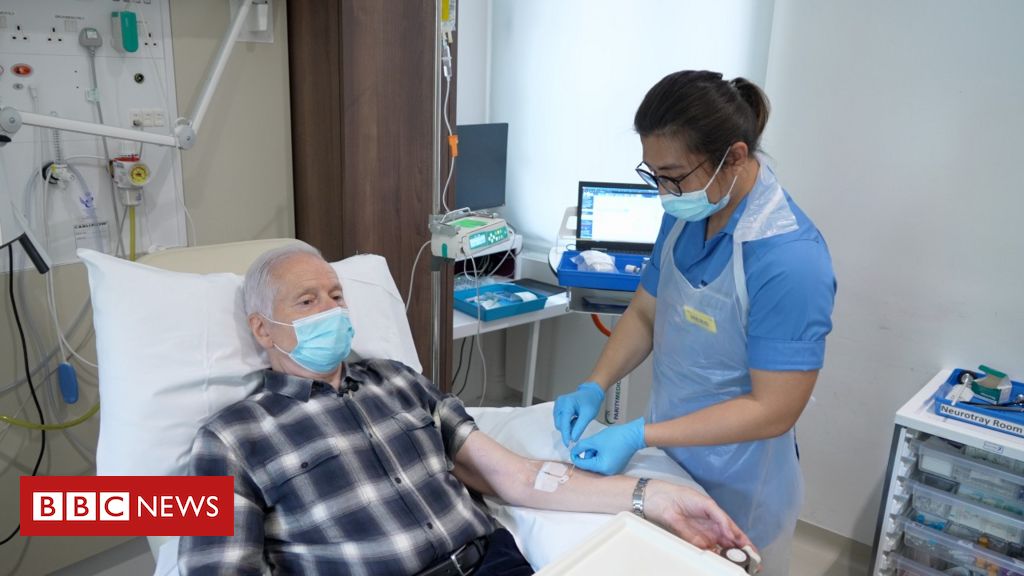
Aducanumab is the first new treatment for Alzheimer’s in nearly two decades, and has just been approved by regulators in the United States.This approval will pave the way for its use in the UK, where Aldo Ceresa was one of just a handful of patients in the country able to take part in a trial for the drug. Speaking to the BBC’s Fergus Walsh, the 68-year-old said he felt the drug helped him.Read more: US approves first new Alzheimer’s drug in 20 years

Read more →

US approves first new Alzheimer's drug in 20 years

SharecloseShare pageCopy linkAbout sharingThe first new treatment for Alzheimer’s disease for nearly 20 years has been approved by regulators in the United States, paving the way for its use in the UK.Aducanumab targets the underlying cause of Alzheimer’s, the most common form of dementia, rather than its symptoms. Charities have welcomed the news of a new therapy for the condition.But scientists are divided over its potential impact because of uncertainty over the trial results.At least 100,000 people in the UK with a mild form of the disease could be suitable for the drug if it were to be approved by the UK regulator. The US Food and Drug Administration (FDA) said there was “substantial evidence that aducanumab reduces amyloid beta plaques in the brain” and that this “is reasonably likely to predict important benefits to patients”.Controversial trialIn March 2019, late-stage international trials of aducanumab, involving about 3,000 patients, were halted when analysis showed the drug, given as a monthly infusion, was not better at slowing the deterioration of memory and thinking problems than a dummy drug.But later that year, the US manufacturer Biogen analysed more data and concluded the drug did work, as long as it was given in higher doses. The company also said it significantly slowed cognitive decline.Aducanumab targets amyloid, a protein that forms abnormal clumps in the brains of people with Alzheimer’s that can damage cells and trigger dementia, including:memory and thinking problemscommunication issues confusion’Heading in right direction’Aldo Ceresa, who took part in the trial, first noticed problems differentiating between left and right 10 years ago.After his diagnosis, the 68-year-old, who is originally from Glasgow and now lives in Oxfordshire, close to his family, had to give up his job as a surgeon. Mr Ceresa took aducanumab for two years before the trial was halted – and then had to wait almost as long for another trial, at the National Hospital for Neurology and Neurosurgery, in London, to begin.”I’m quite happy to volunteer,” he says.”I really, really enjoy this journey that I’m going through – and obviously the benefits I’m getting from it, which I’m very, very grateful for.”He is convinced the drug has helped him.”I feel like I’m not quite as confused. Although it’s still there, it’s not quite as bad. “And I’m just getting that bit more confident now.”Mr Ceresa says his family has noticed improvements too.”Before, if I was going to get something, I couldn’t remember, you know, where to find things in the kitchen. “That has become less of a problem,” he says.”I haven’t caught up to the level that I was before – but I’m heading in the right direction.”More than 30 million people around the world are thought to have Alzheimer’s, with most aged over 65.For around 500,000 people affected in the UK, those eligible for aducanumab will be mostly in their 60s or 70s and at an early stage of the disease.’Very cautious celebration’We need to keep our feet on the ground. This is not a miracle drug, nor a cure for Alzheimer’s but it is the first treatment which tackles the destructive mechanism in the brain that drives the destruction of neurons.And that makes this a landmark moment.But scientific opinion both here and the United States is divided. While some have welcomed approval, calling it a milestone for millions living with Alzheimer’s, others believe the drug will only have marginal benefits. Alzheimer’s charities say they will be pressing for an early decision in the UK – but that could take another year.Lastly, we don’t know how much aducanumab will cost – it could be tens of thousands of pounds per patient each year. And if approved, access will be limited to those who’ve had specialist brain scans to confirm their diagnosis.Despite all the caveats, this is moment for very cautious celebration. Prof Bart De Strooper, director of the UK Dementia Research Institute, said the decision to approve aducanumab marked “a hugely significant milestone” in the search for treatments for Alzheimer’s disease.In the past decade, more than 100 potential Alzheimer’s treatments have flopped. But while he hoped it would prove a turning point for millions of people with the condition, he said there were “still many barriers to overcome”. Prof John Hardy, professor of neuroscience at University College London, said: “We have to be clear that, at best, this is a drug with marginal benefit which will help only very carefully selected patients.”‘Grave error’And Prof Robert Howard, professor of old age psychiatry at UCL, went further calling the drug’s approval “a grave error” that could derail the ongoing search for meaningful dementia treatments “for a decade”. He said the FDA had ignored data from the trial which showed no slowing of decline in cognition or function.However, Alzheimer’s Society said the drug was “promising” but added it was “just the beginning of the road to new treatments for Alzheimer’s disease”.Another charity, Alzheimer’s Research UK, said it had written to the Health Secretary Matt Hancock asking the government to prioritise the fast-track approval process for the drug in the UK.Chief executive Hilary Evans, said: “People with dementia and their families have been waiting far too long for life-changing new treatments. “It is now essential that regulatory authorities assess the evidence to decide whether they believe the drug is safe and effective for use in the UK.” Although many doctors are doubtful of aducanumab’s benefits, its US approval could be a huge boost to dementia research, which is traditionally underfunded compared with cancer or heart disease.Related Internet LinksAlzheimer’s Research UK – the UK’s leading Alzheimer’s research charityAlzheimer’s Society – United Against DementiaCauses of dementia – NHSBiogen – HomeThe BBC is not responsible for the content of external sites.

Read more →

Covid vaccine: 25 to 29-year-olds in England invited

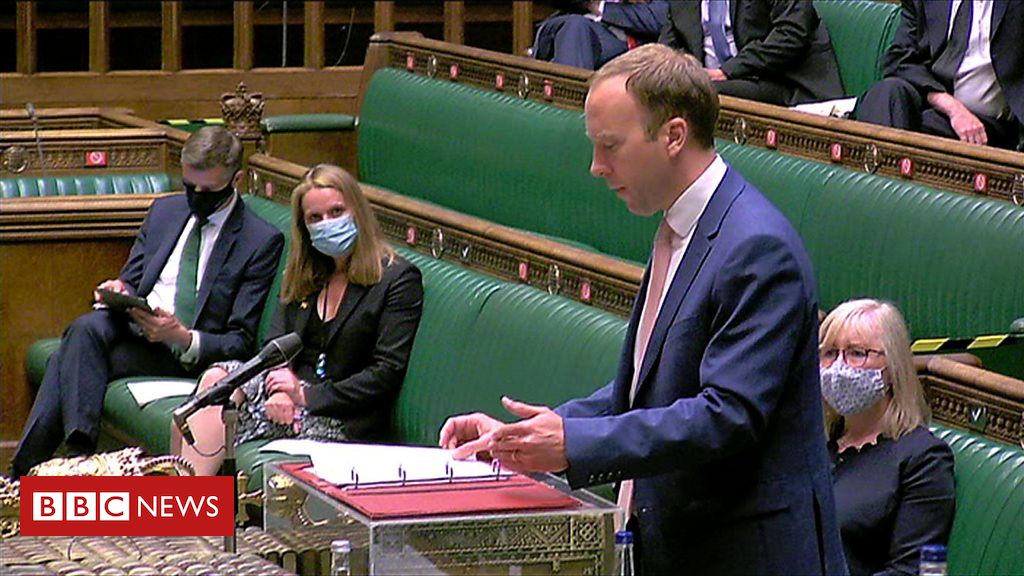
SharecloseShare pageCopy linkAbout sharingimage copyrightGetty ImagesAll adults aged 25 to 29 in England who have not yet had a Covid vaccine will be able to book their first dose from Tuesday.The move brings the UK a step closer to meeting the target to offer all adults a vaccine by the end of July. Health secretary Matt Hancock said vaccines were breaking the link between infections, hospitalisations and deaths.But he said it was too soon to decide the next steps of unlocking.That’s because Covid cases are rising again, linked to a new variant first found in India, also known as B.1.617.2 or Delta. It is now the dominant type in circulation and surge testing is taking place to try to stop it spreading further.Under the government’s proposed timetable remaining restrictions are due to removed on 21 June – the so-called step four of the road map back to normality.Mr Hancock told MPs: “It is too early to make decisions on step four, the road map has always been guided by the data.”So we’ll assess the data and announce the outcome a week today on 14 June.”He said jabs were still working though, “breaking the link between infections, hospitalisations and deaths, a link that was rock solid back in the autumn”.”Despite the rise in cases, hospitalisations have been broadly flat. The majority of people in hospital with Covid appear to be those who haven’t had the vaccine at all.”Of the 12,383 new cases as of 3 June, 464 went on to present at emergency care and 126 were admitted to hospital.Of those, 83 were unvaccinated, 28 had one dose of vaccine and three had both doses, he said.He also urged secondary school children to continue to take twice-weekly lateral flow tests, stressing cases were rising fastest among older schoolchildren. Vaccine rolloutIn England, people aged 25 and older can go online or call 119 to book.In Scotland, people aged 30 and over are eligible for a vaccine. Wales is six weeks ahead of schedule and is vaccinating over 18s. In Northern Ireland, people 18 and over are invited to book.What do under-30s need to know about the vaccine?NHS England chief executive, Sir Simon Stevens, said: “Getting the lifesaving Covid-19 jab is the most important thing you can do, with NHS staff vaccinating at over 1,600 sites including vaccine buses, places of worship, sport stadiums and other convenient locations. “So, when you get that text, book your appointment and join the millions who are already protected.”People aged 39 and under who are eligible and pregnant women will be offered the Pfizer or Moderna vaccine, in line with guidance.A total of 40,460,576 people in the UK have now received at least one vaccine dose, while 27,921,294 have received both.Meanwhile, the UK has recorded more than 5,000 new Covid cases over the past 24 hours.And there have been a further 154 hospital admissions. There are currently 932 people being treated for Covid in hospital.

Read more →

Covid vaccines for 25 to 29-year-olds offered in England

People aged 25 and older in England will be able to book a Covid vaccine from Tuesday morning, the health secretary has announced.And Matt Hancock said that would bring “us ever closer to the goal” of everyone in the UK being offered one by the end of June. He was updating MPs on the vaccination figures, saying the pace has been “extraordinary”.Mr Hancock said the jabs had saved 39,000 people going to hospital, and more than 13,000 deaths.

Read more →

Fundamental advance in understanding T cell immunity

Monash University researchers have provided a fundamental advance regarding how T cells become activated when encountering pathogens such as viruses.
The recent study published in Science, co-led by Professor Nicole La Gruta, Professor Jamie Rossjohn and Professor Stephanie Gras with first author Dr Pirooz Zareie from the Monash Biomedicine Discovery Institute, have found that T Cells need to recognise pathogens in a particular orientation in order to receive a strong activating signal.
T cells play a key role in the immune system by eliminating invading pathogens, such as viruses, and it is crucial to understand the factors that determine how and why T cells become activated after recognizing these pathogens.
T cells express on their surface a T cell receptor (TCR) that recognizes and binds to virus fragments (antigens) presented by infected cells. This recognition event can lead to T cell activation and killing of infected cells.
“The central issue is that there are millions of different T cell receptors (TCRs) in the human body, and a vast array of viruses, making it difficult to understand the rules around how T cell receptor recognition of a virus drives T cell activation. Indeed, it is a problem that has remained contentious for over 25 years” says Professor La Gruta.
“Our study has shown that the orientation in which the T cell receptor binds is a primary factor determining whether the T cell receives an activating signal,” Professor La Gruta said.
“This is an advance in our fundamental understanding of how a T cell needs to ‘see’ pathogenic antigens in order to be activated,” she said. “It has clarified a critical mechanism essential for effective T cell immunity. It is also relevant to the ongoing development of immunotherapies that aim to boost the activation of T cells.”
Dr Pirooz Zareie stated: “a combination of technologies, including super-resolution microscopy, X-ray crystallography at the Australian Synchrotron, biochemical assays and using in vitro and in vivo experimental models from a variety of labs led to the findings.”
The study represented a cross-disciplinary collaboration between researchers from the University of Utah, National University of Singapore, University of New South Wales and Monash University.
Story Source:
Materials provided by Monash University. Note: Content may be edited for style and length.

Read more →

How coronavirus aerosols travel through our lungs

When we inhale isolated coronavirus particles, more than 65% reach the deepest region of our lungs where damage to cells can lead to low blood oxygen levels, new research has discovered, and more of these aerosols reach the right lung than the left.
Lead author of the study Dr Saidul Islam, from the University of Technology Sydney, said while previous research has revealed how virus aerosols travel through the upper airways including the nose, mouth and throat — this study was the first to examine how they flow through the lower lungs.
“Our lungs resemble tree branches that divide up to 23 times into smaller and smaller branches. Due to the complexity of this geometry it is difficult to develop a computer simulation, however we were able to model what happens in the first 17 generations, or branches, of the airways,” said Dr Islam.
“Depending on our breathing rate, between 32% and 35% of viral particles are deposited in these first 17 branches. This means around 65% of virus particles escape to the deepest regions of our lungs, which includes the alveoli or air sacs,” he said.
The alveolar system is critical to our ability to absorb oxygen, so significant amounts of virus in this region, along with inflammation caused by our body’s immune response, can cause severe damage, reducing the amount of oxygen in the blood and increasing the risk of death.
The study also revealed that more virus particles are deposited in the right lung, especially the right upper lobe and the right lower lobe, than in the left lung. This is due to the highly asymmetrical anatomical structure of the lungs and the way air flows through the different lobes.

Read more →

New drug to halt dementia after multiple head injuries

A world-first international study led by the University of South Australia has identified a new drug to stop athletes developing dementia after sustaining repeated head injuries in their career.
The link between concussion and neurogenerative diseases is well established, but new research findings could halt the progression of chronic traumatic encephalopathy (CTE) in sportspeople who sustain repeated blows to the head.
CTE is a progressive and fatal brain disease associated with the accumulation of a protein known as hyperphosphorylated tau which affects cognition and behaviour.
In a paper published in Scientific Reports, UniSA Emeritus Professor Bob Vink and colleagues show how repeated concussions can cause CTE and a way to block it with a specially developed drug.
The findings will potentially have significant implications for athletes who play contact sports — such as boxers and footballers — as well as military veterans sustaining head injuries in conflict.
The team of researchers from Adelaide, Melbourne and the United States say the brain releases a neurotransmitter called substance P in the event of a head injury, causing abnormal amounts of the tau protein to collect inside neurons.
“Tau protein tangles are a feature of CTE, which reportedly leads to memory problems, confusion, personality changes, aggression, depression and suicidal thinking,” Prof Vink says.
“Our research shows that by blocking substance P with a specific drug, we can prevent the tau protein tangles from developing in the brain and causing neurological problems.”
The treatment was successfully tested in animal models, giving hope that CTE can be prevented in humans.
Prof Vink says the next step is human clinical trials, but that could take several years given that currently CTE can only be diagnosed post-mortem.
A study of 14,000 Americans over 25 years, published in Alzheimer’s and Dementia in March, showed that people who sustained even one head injury were 25 per cent more likely to develop dementia later in life. This risk increased with multiple traumatic brain injuries.
The Guardian also reported in April that an analysis of late AFLW player Jacinta Barclay’s brain uncovered neurological damage at age 29, highlighting the risks of repeated concussions to both sexes. Previous research has focused on the impact of brain injuries in male athletes, but females are more likely to sustain concussions.
Story Source:
Materials provided by University of South Australia. Note: Content may be edited for style and length.

Read more →

Regulation of protein homeostasis by cardiac glycosides

In the present study, Dr. Hidetoshi Hayashi (Professor, Nagoya City University) and collaborators screened small-molecule compounds that suppress UPR, using Myanmar wild plant extracts library. The screening system to track X-box binding protein 1 (XBP1) splicing activity revealed that the ethanol extract of the Periploca calophylla stem inhibited the inositol-requiring enzyme 1 (IRE1)-XBP1 pathway.
They isolated and identified periplocin as a potent inhibitor of the IRE1-XBP1 axis. Periplocin also suppressed other UPR axes, protein kinase R-like endoplasmic reticulum kinase (PERK), and activating transcription factor 6 (ATF6). Examining the structure-activity relationship of periplocin revealed that cardiac glycosides, basically used for cardiac insufficiency therapy, also inhibited UPR.
Moreover, periplocin suppressed the constitutive activation of XBP1 and exerted cytotoxic effects in the human multiple myeloma cell lines, AMO1 and RPMI8226.
These results reveal a novel suppressive effect of periplocin or the other cardiac glycosides on UPR regulation, suggesting that these compounds will contribute to the understanding of the pathological or physiological importance of UPR signaling.
Story Source:
Materials provided by Nagoya City University. Note: Content may be edited for style and length.

Read more →

Researchers identify a molecule critical to functional brain rejuvenation

Recent studies suggest that new brain cells are being formed every day in response to injury, physical exercise, and mental stimulation. Glial cells, and in particular the ones called oligodendrocyte progenitors, are highly responsive to external signals and injuries. They can detect changes in the nervous system and form new myelin, which wraps around nerves and provides metabolic support and accurate transmission of electrical signals. As we age, however, less myelin is formed in response to external signals, and this progressive decline has been linked to the age-related cognitive and motor deficits detected in older people in the general population. Impaired myelin formation also has been reported in older individuals with neurodegenerative diseases such as Multiple Sclerosis or Alzheimer’s and identified as one of the causes of their progressive clinical deterioration.
A new study from the Neuroscience Initiative team at the Advanced Science Research Center at The Graduate Center, CUNY (CUNY ASRC) has identified a molecule called ten-eleven-translocation 1 (TET1) as a necessary component of myelin repair. The research, published today in Nature Communications, shows that TET1 modifies the DNA in specific glial cells in adult brains so they can form new myelin in response to injury.
“We designed experiments to identify molecules that could affect brain rejuvenation,” said Sarah Moyon, Ph.D., a research assistant professor with the CUNY ASRC Neuroscience Initiative and the study’s lead author. “We found that TET1 levels progressively decline in older mice, and with that, DNA can no longer be properly modified to guarantee the formation of functional myelin.”
Combining whole-genome sequencing bioinformatics, the authors showed that the DNA modifications induced by TET1 in young adult mice were essential to promote a healthy dialogue among cells in the central nervous system and for guaranteeing proper function. The authors also demonstrated that young adult mice with a genetic modification of TET1 in the myelin-forming glial cells were not capable of producing functional myelin, and therefore behaved like older mice.
“This newly identified age-related decline in TET1 may account for the inability of older individuals to form new myelin,” said Patrizia Casaccia, founding director of the CUNY ASRC Neuroscience Initiative, a professor of Biology and Biochemistry at The Graduate Center, CUNY, and the study’s primary investigator. “I believe that studying the effect of aging in glial cells in normal conditions and in individuals with neurodegenerative diseases will ultimately help us design better therapeutic strategies to slow the progression of devastating diseases like multiple sclerosis and Alzheimer’s.”
The discovery also could have important implications for molecular rejuvenation of aging brains in healthy individuals, said the researchers. Future studies aimed at increasing TET1 levels in older mice are underway to define whether the molecule could rescue new myelin formation and favor proper neuro-glial communication. The research team’s long-term goal is to promote recovery of cognitive and motor functions in older people and in patients with neurodegenerative diseases.
Story Source:
Materials provided by Advanced Science Research Center, GC/CUNY. Note: Content may be edited for style and length.

Read more →