'Wonder material' can be used to detect COVID-19 quickly, accurately

Researchers at the University of Illinois Chicago have successfully used graphene — one of the strongest, thinnest known materials — to detect the SARS-CoV-2 virus in laboratory experiments. The researchers say the discovery could be a breakthrough in coronavirus detection, with potential applications in the fight against COVID-19 and its variants.
In experiments, researchers combined sheets of graphene, which are more than 1,000 times thinner than a postage stamp, with an antibody designed to target the infamous spike protein on the coronavirus. They then measured the atomic-level vibrations of these graphene sheets when exposed to COVID-positive and COVID-negative samples in artificial saliva. These sheets were also tested in the presence of other coronaviruses, like Middle East respiratory syndrome, or MERS-CoV.
The UIC researchers found that the vibrations of the antibody-coupled graphene sheet changed when treated with a COVID-positive sample, but not when treated with a COVID-negative sample or with other coronaviruses. Vibrational changes, measured with a device called a Raman spectrometer, were evident in under five minutes.
Their findings are published in the journal ACS Nano.
“We have been developing graphene sensors for many years. In the past, we have built detectors for cancer cells and ALS. It is hard to imagine a more pressing application than to help stem the spread of the current pandemic,” said Vikas Berry, professor and head of chemical engineering at the UIC College of Engineering and senior author of the paper. “There is a clear need in society for better ways to quickly and accurately detect COVID and its variants, and this research has the potential to make a real difference. The modified sensor is highly sensitive and selective for COVID, and it is fast and inexpensive.”
“This project has been an amazingly novel response to the need and demand for detection of viruses, quickly and accurately,” said study co-author Garrett Lindemann, a researcher with Carbon Advanced Materials and Products, or CAMP. “The development of this technology as a clinical testing device has many advantages over the currently deployed and used tests.”
Berry says that graphene — which has been called a “wonder material” — has unique properties that make it highly versatile, making this type of sensor possible.
Graphene is a single-atom-thick material made up of carbon. Carbon atoms are bound by chemical bonds whose elasticity and movement can produce resonant vibrations, also known as phonons, which can be very accurately measured. When a molecule like a SARS-CoV-2 molecule interacts with graphene, it changes these resonant vibrations in a very specific and quantifiable way.
“Graphene is just one atom thick, so a molecule on its surface is relatively enormous and can produce a specific change in its electronic energy,” Berry said. “In this experiment, we modified graphene with an antibody and, in essence, calibrated it to react only with the SARS-CoV-2 spike protein. Using this method, graphene could similarly be used to detect COVID-19 variants.”
The researchers say the potential applications for a graphene atomic-level sensor — from detecting COVID to ALS to cancer — continue to expand.
A provisional patent has been submitted based on this work.
Additional co-authors of the paper include Ngoc Hoang Lan Nguyen and Sungjoon Kim of UIC. The work has been funded by Ramaco Carbon and their affiliate CAMP, and partly by the Office of Naval Research.
Story Source:
Materials provided by University of Illinois at Chicago. Note: Content may be edited for style and length.

Read more →

Omega-3s may hold key to unlocking blood-brain barrier

Spectacular images of a molecule that shuttles omega-3 fatty acids into the brain may open a doorway for delivering neurological therapeutics to the brain.
“We’ve managed to obtain a three-dimensional structure of the transporter protein that provides a gateway for omega-3s to enter the brain. In this structure, we can see how omega-3s bind to the transporter. This information may allow for the design of drugs that mimic omega-3s to hijack this system and get into the brain,” says first author Rosemary J. Cater, PhD, a Simons Society Fellow in the Mancia Lab at Columbia University Vagelos College of Physicians and Surgeons.
The study was published online on June 16 in the journal Nature.
A major challenge in treating neurological diseases is getting drugs across the blood-brain barrier — a layer of tightly packed cells that lines the brain’s blood vessels and zealously blocks toxins, pathogens, and some nutrients from entering the brain. Unfortunately, the layer also blocks many drugs that are otherwise promising candidates to treat neurological disorders.
Essential nutrients like omega-3s require the assistance of dedicated transporter proteins that specifically recognize them and get them across this barrier. “The transporters are like bouncers at a club, only letting molecules with invites or backstage passes in,” Cater says.
The transporter — or bouncer — that lets omega-3s in is called MFSD2A and is the focus of Cater’s research. “Understanding what MFSD2A looks like and how it pulls omega-3s across the blood-brain barrier may provide us with the information we need to design drugs that can trick this bouncer and gain entry passes.”
To visualize MFSD2A, Cater used a technique called single-particle cryo-electron microscopy.

Read more →

Graphene 'camera' captures real-time electrical activity of beating heart

Bay Area scientists have captured the real-time electrical activity of a beating heart, using a sheet of graphene to record an optical image — almost like a video camera — of the faint electric fields generated by the rhythmic firing of the heart’s muscle cells.
The graphene camera represents a new type of sensor useful for studying cells and tissues that generate electrical voltages, including groups of neurons or cardiac muscle cells. To date, electrodes or chemical dyes have been used to measure electrical firing in these cells. But electrodes and dyes measure the voltage at one point only; a graphene sheet measures the voltage continuously over all the tissue it touches.
The development, published online last week in the journal Nano Letters, comes from a collaboration between two teams of quantum physicists at the University of California, Berkeley, and physical chemists at Stanford University.
“Because we are imaging all cells simultaneously onto a camera, we don’t have to scan, and we don’t have just a point measurement. We can image the entire network of cells at the same time,” said Halleh Balch, one of three first authors of the paper and a recent Ph.D. recipient in UC Berkeley’s Department of Physics.
While the graphene sensor works without having to label cells with dyes or tracers, it can easily be combined with standard microscopy to image fluorescently labeled nerve or muscle tissue while simultaneously recording the electrical signals the cells use to communicate.
“The ease with which you can image an entire region of a sample could be especially useful in the study of neural networks that have all sorts of cell types involved,” said another first author of the study, Allister McGuire, who recently received a Ph.D. from Stanford and. “If you have a fluorescently labeled cell system, you might only be targeting a certain type of neuron. Our system would allow you to capture electrical activity in all neurons and their support cells with very high integrity, which could really impact the way that people do these network level studies.”
Graphene is a one-atom thick sheet of carbon atoms arranged in a two-dimensional hexagonal pattern reminiscent of honeycomb. The 2D structure has captured the interest of physicists for several decades because of its unique electrical properties and robustness and its interesting optical and optoelectronic properties.

Read more →

Vaccine Maker Earned Record Profits but Delivered Disappointment in Return

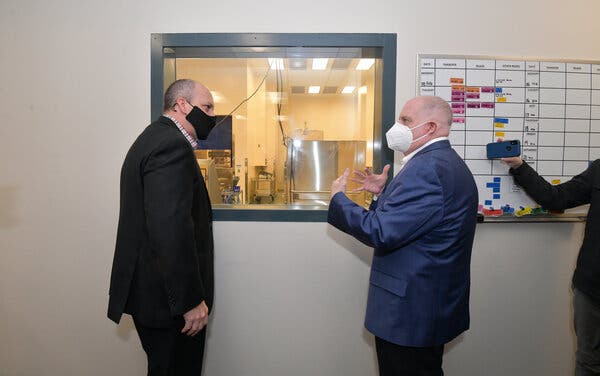
Record profits warranted record bonuses. That was the recommendation in January by executives at the biotech firm Emergent BioSolutions. The board of directors agreed, signing off on nearly $8 million in cash and stock awards for five company leaders.The bonuses arrived this spring even as Congress was investigating the company’s production of Covid-19 vaccines in Baltimore, where manufacturing mistakes have rendered 75 million doses unusable and forced a two-month-long shutdown of operations.Emergent has nonetheless enjoyed the best financial year in its two-decade history, thanks largely to the government’s largess and decision to sidestep the usual contracting rules, interviews and previously undisclosed documents show.Without seeking competitive bids, federal officials in May 2020 not only committed to reserve production space at the troubled Baltimore plant, but also booked two Emergent facilities nearby to bottle and package vaccines and coronavirus drugs. Regulators have criticized those sites for quality shortcomings in recent years, according to previously unreported inspections, including one just this April when health investigators found that a factory was not taking adequate steps to prevent contamination.The two additional facilities have seen little use, while the company has collected tens of millions of dollars in fees for keeping production lines largely on standby — with “minimal costs” to the company, Emergent’s chief financial officer said to investors last summer.The lucrative agreement with Emergent reflects the early chaotic days of the pandemic when the Trump administration was engaged in what one government official called “panic buying” with little outside scrutiny.Emergent was in a good position to benefit. A longtime federal contractor based in Gaithersburg, Md., the company had effectively cornered the market for federal biodefense contracts, building a successful business over the past two decades atop its sales of anthrax vaccines to the nation’s emergency medical stockpile, The New York Times reported in March.Even though it had never won regulatory approval to mass-produce anything at its main Baltimore plant, the politically connected company was tasked with making two Covid-19 vaccines there.The Times previously disclosed contamination problems with that vaccine production, but the new documents and interviews show the government also enlisted the two other Emergent facilities despite a record of quality concerns. Taken together, payments for the three plants helped propel the company to its banner year.Emergent and the Department of Health and Human Services told The Times that the generous deal was meant to compensate Emergent for giving up other work at the three plants. The government’s cost “was based on the comparable reservation fees that commercial parties were willing to pay if Emergent had contracted with them,” the company said in a statement. “Suggestions that Emergent improperly inflated prices are not accurate.”But a review of the company’s filings with the Securities and Exchange Commission shows that its entire contract manufacturing business, which includes the three Maryland factories and others elsewhere, had never brought in anything close to the amount the federal government paid in 2020. Those payments exceeded the revenue the company had earned from all of its contract manufacturing in the previous three years combined.The 2020 agreement with the government, which was among the documents recently made public by congressional investigators, promised Emergent $542 million to reserve the three plants for periods ranging from three to 20 months. Until last week, the suspended factory in Baltimore’s Bayview section had failed to deliver a single usable vaccine dose, and then only with a special warning from the Food and Drug Administration. In addition, the production lines at the two other sites — in the Camden section of Baltimore and in Rockville, Md. — have mostly sat idle.Gov. Larry Hogan of Maryland, right, toured Emergent in February before its manufacturing problems came to light.Joe Andrucyk/Office of Governor Larry HoganA memo from June last year suggests that the government paid to reserve substantially more capacity at the Camden plant than Emergent had used the previous year for its commercial clients. Carlo de Notaristefani, the Trump and Biden administrations’ top manufacturing expert for the pandemic response, wrote that the Camden plant had bottled about three million vials of pharmaceuticals in 2019. The government reserved enough space to bottle about 4.3 million vials on an annual basis, more than a 40 percent increase in business.A half-dozen industry executives and consultants said the terms of Emergent’s deal would be highly unusual among private companies. Typically, a customer pays part of the manufacturing cost up front and the rest when the job is done, they said. But in Emergent’s case, the government agreed to pay the full estimated cost of manufacturing even if none took place.As some other companies vied for similar bottling and packaging work in a competitive bidding process, the federal health officials skirted regular contracting rules and appended the new business to an existing deal with Emergent made eight years earlier, documents show. While not the norm, such amendments are sometimes used to expedite contracts.Under the agreement, The Trump administration agreed to set aside $97 million to reserve two production lines at the Camden plant that Mr. de Notaristefani soon after characterized as out of date and capable of handling only small volumes of Covid-19 drugs. The two lines, booked through the end of this year, have been used only “sparingly,” according to a senior health department official who spoke on the condition of anonymity to discuss what the agency called sensitive contracting issues.Health department officials declined to specify how many vials Emergent had bottled for the government, saying only that it had performed some of that work on Covid-19 treatments developed by Humanigen and Regeneron Pharmaceuticals.President Donald J. Trump’s Operation Warp Speed enlisted pharmaceutical manufacturers like Emergent in the battle against Covid-19. Anna Moneymaker for The New York TimesAnother $16 million reserved a small bottling line for five months at the Rockville plant. The line has never been used, apparently because vaccine developers have preferred partners that can handle bigger volumes, according to two federal officials.In addition, the government committed $78 million for Emergent to build a new production line in Rockville and nearly $10 million to reserve it for the last three months of this year, when it is expected to be completed.A cornerstone of Operation Warp Speed, the Trump administration’s Covid-19 initiative, was to pay for large-scale manufacturing of promising vaccines or therapeutics, even if they might fail in clinical trials. The government went beyond those terms with its Emergent deal, however, agreeing to pay the company regardless of whether it produced anything.Two senior health department officials, speaking on the condition of anonymity, said the deal was necessary to prepare for unexpected developments throughout the pandemic. At least one other company was also paid for backup manufacturing capacity that turned out to be unnecessary, they said.After awarding Emergent the no-bid contract, the Trump administration reverted to traditional contracting rules and sought competitive proposals for additional bottling and packaging, known in the industry as fill-finish work, the documents show. Ology Bioservices, based in Alachua, Fla., agreed to provide essentially the same services as Emergent’s Camden and Rockville plants for three-quarters to nearly one-third of the cost, according to a calculation based on the contracts.Under an agreement reached in August, Ology would charge the government fees equating to $6.83 per vial. By comparison, Emergent’s existing lines would cost it between $9.03 and $18.40 a vial.A health department spokeswoman said Ology was cheaper in part because it can bottle more than 100,000 vials in a single batch, as much as five times what Emergent can handle. That “lowers the per vial price by spreading the fixed costs over more vials,” she said in an email.Even after bringing on Ology, the government has continued its agreement with Emergent, at the higher cost, to ensure “additional capacity is available if or when needed to fill vaccines or therapeutics,” she said. At the time of the contract, former and current federal officials said, the government wanted to secure as much manufacturing power as possible before commercial ventures snapped it up.Over the years, Emergent has grown by getting the government to fund expansions of its manufacturing sites and amass reserves of its products.In November 2019, the company announced a plan to double its revenue, in part by expanding its contract manufacturing business. A senior vice president, Syed Husain, outlined a “game plan” that included “cross-selling additional services” to existing customers, including the federal government. Six months later, Emergent struck the deal that broadened its existing government contract to include work at the Camden and Rockville sites.Dr. Robert Kadlec, a former Trump administration official who oversaw the agency that awarded Covid-19 contracts, had previously worked as a consultant for Emergent. Dr. Kadlec has said that he did not negotiate the Emergent deal but did approve it. Emergent said it negotiated the agreement with career government officials.In the case of Camden, the government stood by the payments despite concerns raised by Mr. de Notaristefani, its manufacturing expert.After visiting the Camden plant last year, he wrote that its production lines were “obsolete” and relied too heavily on manual labor instead of automated systems, heightening the risk of contamination. If the government turned to the plant, he wrote, a new line, then under construction, “should be used exclusively.”The two senior health department officials said Mr. de Notaristefani’s concerns were noted but did not warrant changing the contract. “Folks can walk through the site and say, ‘Oh, wow, this equipment was state of the art 20 years ago,’” one of them said. “But I can also walk through many sites for many biopharmaceutical companies out there and say exactly the same thing.”Nor were officials unduly concerned by F.D.A. inspection reports that cited quality control problems, which have also plagued Emergent’s Baltimore vaccine-making factory. While the fill-finish process draws far less notice than the production of vaccines and therapeutics, it is highly sophisticated and tightly regulated because violations of manufacturing standards pose a risk of harming the public.The regulatory reports, obtained by The Times, detail a series of failings at the Camden plant over the past seven years, the most serious of which were identified in 2018. The manufacturing for one pharmaceutical product was “not within a state of control,” inspectors found, noting a recurring issue with broken vials. They wrote that the facility was “not maintained in a good state of repair,” and that its crowded setup increased the risk of mixing up materials.

Read more →

Richard R. Ernst, Nobelist Who Paved Way for M.R.I., Dies at 87

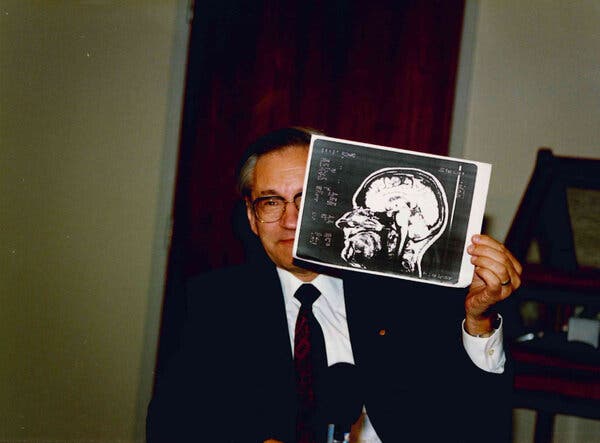
His development of advanced analytical techniques formed the basis for M.R.I. technology used in hospitals and helped chemists determine the structure of complex molecules.Richard R. Ernst, a Swiss chemist who won the Nobel Prize in 1991 for his work refining nuclear magnetic resonance, or N.M.R., spectroscopy, the powerful method of chemical analysis behind M.R.I. technology, died on June 4 in Winterthur, in northern Switzerland. He was 87.The Swiss Federal Institute of Technology Zurich (E.T.H. Zurich), where Dr. Ernst had spent almost his entire career, announced the death on its website. No cause was given.Dr. Ernst — whose work and interests spanned chemistry, physics, math, music and art — helped develop N.M.R. from a niche, time-intensive technique into a critical scientific tool routinely used in local hospitals and undergraduate chemistry labs.As a chemist he was pre-eminent.“To compare him to Einstein would offend physicists,” said Jeffrey A. Reimer, an N.M.R. expert at the University of California, Berkeley. “But in terms of his impact in the discipline, Ernst is foundational.”Dr. Ernst was driven and demanding — of himself above all others — and even as his stature grew, he had remarkably little ego, his colleagues and former students said. He was quick to give credit to collaborators and described his own contributions in modest terms.“I’m not really what one would imagine to be a scientist who wants to understand the world,” he said in a 2001 Nobel interview. He continued, “I’m a toolmaker and not really a scientist in this sense, and I wanted to provide other people these capabilities of solving problems.”N.M.R. spectroscopy was first developed in the 1940s and early ’50s by Felix Bloch and Edward Mills Purcell, who shared the 1952 Nobel Prize in Physics for the achievement. Using this technique, scientists place a substance in a magnetic field, which brings the nuclei of its atoms into alignment. They then bombard it with radio pulses, which force the nuclei out of alignment. As the nuclei return to alignment, the atoms give off unique electromagnetic signals that can be analyzed to determine the chemical composition and molecular structure of the material.When Dr. Ernst began studying N.M.R. as a graduate student in the late 1950s, the method required researchers to scan a substance in a magnet slowly and apply continuous radio waves. It suffered, Dr. Ernst wrote in an autobiographical sketch on the Nobel website, “from a disappointingly low sensitivity that severely limits its applications.”Dr. Ernst in 1991. His work paved the way for M.R.I. technology, which allowed doctors to take images of the internal structures of the human body.Boo-JonssonInstead of slowly scanning a substance, Dr. Ernst hit it with a short but intense pulse of radio waves. Then, with the help of a computer, he applied a complex mathematical operation to analyze the signal. This method, known as Fourier Transform N.M.R., or F.T.-N.M.R., was far more sensitive, allowing scientists to study more kinds of atoms and molecules, particularly those that were in low abundance.“That was a very big invention which was ahead of his time,” said Matthias Ernst, a physical chemist at E.T.H. Zurich who was a former student of Dr. Ernst’s (and is of no relation). This was the 1960s, and the personal computing era had not yet begun; instead, Dr. Ernst and his colleagues had to transfer their data from punch tape to punch cards and then carry them to a computer center for processing. In the 1970s, Dr. Ernst developed two-dimensional N.M.R. In this technique, samples are bombarded with sequences of radio pulses over time. The resulting signals provide more information about the sample and allow scientists to determine the precise composition and structure of large and complex biological molecules.“It was beautiful,” said Dr. Reimer, who was an undergraduate chemistry student when Dr. Ernst published his results. “Richard really pushed the envelope.”Two-dimensional N.M.R. is the basis of M.R.I., a medical advancement that allowed doctors to create detailed images of the body’s internal structures. “He made N.M.R. the powerful technique that it is today in chemistry, biochemistry and biology,” said Robert Tycko, a physical chemist at the National Institutes of Health and the president of the International Society of Magnetic Resonance, in a phone interview.Dr. Ernst was on a trans-Atlantic flight when his Nobel Prize in Chemistry was announced in October 1991; he learned of the honor from the pilot. But in keeping with his characteristic modesty, he was unsettled to discover that he was the sole winner of the prize.“He was very happy for the recognition,” said Beat H. Meier, a physical chemist at E.T.H. “But he also was a little disturbed by the fact that he got it alone and that he was singled out when a lot of people have also contributed.”Dr. Ernst in 1990. He taught at the Swiss Federal Institute of Technology Zurich, where students said he took an interest in the work of young scientists.ETH-Bibliothek Zürich, BildarchivRichard Robert Ernst was born on Aug. 14, 1933, in Winterthur to Robert Ernst, an architect, and Irma Ernst-Brunner. As a child, he developed a passion for music and chemistry. When he was 13, he found a case of chemicals in the attic of his home and learned that it had belonged to an uncle of his.“I became almost immediately fascinated by the possibilities of trying out all conceivable reactions with them, some leading to explosions, others to unbearable poisoning of the air in our house, frightening my parents,” he wrote in the Nobel sketch. He began devouring chemistry books and abandoned plans to become a composer.He earned his undergraduate degree in chemistry at E.T.H. Zurich in 1956 and then briefly served in the Swiss military before returning to E.T.H. for a doctorate in physical chemistry, which he earned in 1962.He married Magdalena Kielholz the next year. Survivors include his wife and their three children, Anna, Katharina and Hans-Martin. Matthias Ernst, his former student, said Dr. Ernst died in a retirement home.In 1963, Dr. Ernst joined the technology company Varian Associates in Palo Alto, Calif., as a scientist. It was there that he developed F.T.-N.M.R.He returned to E.T.H. in 1968 and taught and conducted research there until his retirement in 1998. In addition to the Nobel, he received the Wolf Prize for Chemistry, the Horwitz Prize, the Marcel Benoist Prize and 17 honorary doctorates.Dr. Ernst was a self-confessed “work-addict,” as he put it.“He had supper with his wife, and then went back to his desk and worked late in the night,” said Alexander Wokaun, a retired chemist and professor emeritus at E.T.H. who had been one of Dr. Ernst’s Ph.D. students. “But in that total devotion to science, I think he showed us what can be achieved.”Dr. Ernst gave his students freedom and took an interest in the work of young scientists who had not yet made names for themselves. “At gatherings of scientists or scientific conferences,” Dr. Tycko said, “he would sit in the front row and take careful notes listening to other people describe their work, which is very unusual, actually, for someone of his stature.”Dr. Ernst retained his love of music and also developed a passion for Tibetan scroll paintings, amassing an enormous collection of them with his wife and adorning nearly every wall of their home with them, Dr. Wokaun said. He used advanced laboratory techniques to examine the pigments of the paintings to learn where and when they had been created.After receiving his Nobel, he traveled and gave lectures about the responsibility that he believed scientists had in contributing to society.“He always told me, ‘It’s not just enough for a scientist to accumulate knowledge, just for the sake of it,’” Dr. Wokaun said. “‘For what good, for what purpose, are you doing that?’”

Read more →

Brigitte Gerney, ‘Crane Lady’ Who Survived Collapse, Dies at 85

Her legs were crushed when she was trapped for six hours in Manhattan in 1985, touching off a media frenzy. Miraculously, she was able to walk again.Brigitte Gerney, whose legs were crushed when a construction crane collapsed on the Upper East Side of Manhattan in 1985, trapping her for six hours, freezing midtown traffic and touching off a media frenzy, died on Friday at her home in Southampton, N.Y. She was 85.The cause was heart failure, a complication of Alzheimer’s dementia, her son, Arkadi Gerney, said.Miracle microsurgery and skin grafting after 13 operations enabled Mrs. Gerney to walk again, but given the catalog of other tragedies she had already suffered, it was remarkable that, as Mr. Gerney said, “Count your blessings” remained his mother’s mantra.Mrs. Gerney’s first son drowned when he was a toddler. She was seriously injured in 1982 when the cable car she was riding at a Swiss ski resort disengaged and plunged to the ground. She survived lung cancer in 1980. Her husband died of colon cancer in 1983. After the crane accident, a doctor who had treated her, and whom she planned to marry, was shot dead by a retired fireman who had been awaiting a decision on his medical disability claim.“Her reaction to this horrible litany of misfortune?” her son said. “She would say: ‘On the one hand, only in a place like New York does a crane fall on you when you are walking home from the dentist. On the other hand, only in New York would they shut down half the city, have these crazy, brave people crawl under a teetering crane to save you, and then have the best doctors in the world somehow rebuild your smashed legs.’”The city held its breath as Mrs. Gerney, the 49-year-old mother of two children, ages 11 and 14, was suspended between life and death during a rescue operation that was captured live on television on the afternoon of May 30, 1985.Mrs. Gerney was suspended between life and death during a rescue operation that was captured live on television on the afternoon of May 30, 1985.Jose R. Lopez/The New York Times“They had lost their father and I was the mother,” Mrs. Gerney recalled later. “Children need their mother. I knew I had to live.”Traffic stood still in Midtown as she was brought to Bellevue Hospital, where the “Crane Lady,” as she became known, would recuperate until July 24. President Ronald Reagan called. Nancy Reagan visited. Hero cops were commended.James Essig of the 19th Precinct, among the first on the scene, was awarded a medal for valor. Paul Ragonese of the Emergency Service Unit was elevated to detective, retired from the bomb squad in 1988 and now handles security for the Durst Organization.“What kept me alive is that he held my hand,” Mrs. Gerney said of Detective Ragonese.“She is the most courageous man or woman I ever met,” the detective said at the time.“There’s a point where a lot of people would have given up,” Mr. Ragonese said by phone this week. “She had a strong belief in God. The only thing she worried about was her children. She wanted them to know that their mother loved them.”The aftermath of the accident was front-page news for more than a year. The contracting company and the construction foreman were convicted of assault and endangerment. The foreman was fined $5,000 and placed on five years’ probation. The unlicensed crane operator, who had been ordered by the foreman to take over after the regular operator had left for the day, pleaded guilty to second-degree assault and was spared a prison sentence after Mrs. Gerney recommended compassion.In 1988, Mrs. Gerney was awarded $10 million in damages, to be paid in monthly installments.Brigitte Risch was born on March 14, 1936, in Vaduz, Liechtenstein, the second of eight children of Dr. Martin Risch, a physician and a member of the Liechtenstein parliament, and Josephine Risch, a homemaker.After graduating from high school, Brigitte attended secretarial school in Switzerland and worked as a secretary for a Russian émigré businessman. In 1966 she married Arkadi Gerney, the son of her boss and a trade representative for Blaw-Knox, a manufacturer of paving equipment. They moved to New York, where he had been based.Their son managed the Mayors Against Illegal Guns coalition for Mayor Michael R. Bloomberg of New York and wrote about the shooting of his mother’s fiancé, Dr. Peter Rizzo, for The New Yorker.“My mother was 50 when Peter was murdered,” Mr. Gerney wrote. “She never remarried. She never even dated again.”In addition to her son, Mrs. Gerney is survived by a daughter, Christina Maria Kilroe, known as Nina; six grandchildren; and all seven of her siblings in Lichtenstein.Mrs. Gerney in 2019. The aftermath of her accident remained front-page news for more than a year.via Gerney familyMrs. Gerney was walking home to United Nations Plaza from her dentist’s office on East 69th Street, past the foundation for a 42-story apartment building on Third Avenue between 64th and 63rd Streets, when the 35-ton base of the crane tipped over onto the sidewalk, trapping her at the edge of the excavation.“It was like an earthquake,” she testified a year later. “The pavement cracked up under me. I remember my bag flying out of my hands; I heard the noise of all the bones cracking in my legs. I’m sure I screamed, ‘Help me, help me, get me out!’ But I was alone.”She continued: “I said, ‘Can’t you cut my legs off and take me out? I have two children. I have to live.’ But they said they couldn’t do that, that I would bleed to death.”“I never believed I would get out,” she said. “I thought I was dying.”She was asked if she wanted a priest, she added, “and I said yes.”Three cranes were dispatched to help stabilize the toppled one while rescue workers extricated Mrs. Gerney, who remained conscious the entire time.Years later, she was asked by The New York Times whether she had ever walked again on the Third Avenue block where the accident occurred.“I certainly don’t walk on that side of the street,” she replied.

Read more →

Scientists demonstrate promising new approach for treating cystic fibrosis

UNC School of Medicine scientists led a collaboration of researchers to demonstrate a potentially powerful new strategy for treating cystic fibrosis (CF) and potentially a wide range of other diseases. It involves small, nucleic acid molecules called oligonucleotides that can correct some of the gene defects that underlie CF but are not addressed by existing modulator therapies. The researchers used a new delivery method that overcomes traditional obstacles of getting oligonucleotides into lung cells.
As the scientists reported in the journal Nucleic Acids Research, they demonstrated the striking effectiveness of their approach in cells derived from a CF patient and in mice.
“With our oligonucleotide delivery platform, we were able to restore the activity of the protein that does not work normally in CF, and we saw a prolonged effect with just one modest dose, so we’re really excited about the potential of this strategy,” said study senior author Silvia Kreda, PhD, an associate professor in the UNC Department of Medicine and the UNC Department Biochemistry & Biophysics, and a member of the Marsico Lung Institute at the UNC School of Medicine.
Kreda and her lab collaborated on the study with a team headed by Rudolph Juliano, PhD, Boshamer Distinguished Professor Emeritus in the UNC Department of Pharmacology, and co-founder and Chief Scientific Officer of the biotech startup Initos Pharmaceuticals.
About 30,000 people in the United States have CF, an inherited disorder in which gene mutations cause the functional absence of an important protein called CFTR. Absent CFTR, the mucus lining the lungs and upper airways becomes dehydrated and highly susceptible to bacterial infections, which occur frequently and lead to progressive lung damage.
Treatments for CF now include CFTR modulator drugs, which effectively restore partial CFTR function in many cases. However, CFTR modulators cannot help roughly ten percent of CF patients, often because the underlying gene defect is of the type known as a splicing defect.

Read more →

Developing countries pay steep economic and health costs because of high car air pollution

In an international study published by the journal Environment International, the University of Surrey led an international team of air pollution experts in monitoring pollution hotspots in 10 global cities: Dhaka (Bangladesh); São Paulo (Brazil); Guangzhou (China); Medellín (Colombia); Cairo (Egypt); Addis Ababa (Ethiopia); Chennai (India); Sulaymaniyah (Iraq); Blantyre (Malawi); and Dar-es-Salaam (Tanzania).
Surrey’s Global Centre for Clean Air Research (GCARE) set out to investigate whether the amount of fine air pollution particles (PM2.5) drivers inhaled is connected to the duration drivers spend in pollution hotspots and socio-economic indicators such as gross domestic product (GDP).
Across all the cities in the study, researchers found that drivers only needed to spend a short amount of time in high-pollution hotspots to inhale a significant amount of PM2.5 particles. For example, drivers in Guangzhou and Addis Ababa spent 26 and 28 per cent of their commute in hotspot areas, which contributed to 54 and 56 per cent of the total amount of air pollution inhaled on their trip.
The researchers found that the cities where drivers were exposed to the highest levels of PM2.5 pollution — Dar-es-Salaam, Blantyre and Dhaka — also experienced higher death rates per 100,000 commuting car population per year. The low PM2.5 levels in Medellín, São Paulo and Sulaymaniyah corresponded with very low death rates.
The international study assessed economic losses by measuring a city’s death rate caused by PM2.5 car exposure against its GDP per capita. It found that, for most cities, lower GDP linked directly to more significant economic losses caused by in-car PM2.5 exposure — with Cairo and Dar-es-Salaam being impacted the most (losses of 8.9 and 10.2 million US dollars per year, respectively).
The team also found that, except for Guangzhou, cities with higher GDP per capita have less hotspot areas during an average route trip, thus decreasing the risk to drivers.
Professor Prashant Kumar, Principal Investigator of CArE-Cities Project, Associate Dean (International) and Founding Director of GCARE at the University of Surrey, said: “Our global collaborative project has confirmed that air pollution disproportionately affects developing countries. Many countries are caught in a vicious cycle where their low GDP leads to higher pollution exposure rate for drivers, which leads to poorer health outcomes, which further damages the economy of those cities. This is discouraging news — but it should galvanise the international community to find and deploy measures that mitigate the health risks faced by the world’s most vulnerable drivers.”
Professor Shi-Jie Cao, a collaborative partner from the Southeast University, said: “If we are ever to make a world where clean air is available to all, it will take a truly global collaborative effort — such as CArE-Cities. We hope to continue to work closely with Surrey and other global partners, sharing knowledge and expertise that will make a cleaner future a reality.”
Professor Adamson Muula, a collaborative partner from formerly University of Malawi and now Head of Public Health at the Kamuzu University of Health Sciences (KUHeS), said: “If developing countries are to not be left behind in the struggle against air pollution and climate change, it is important that we build the capacity and knowledge to gather on-the-ground data. This project is a small but a significant step in the right direction for Malawians; a direction which will lead to better decisions and cleaner air for Malawi.”
The study was part of the Clean Air Engineering for Cities (CArE-Cities) project and builds upon our previous work around car exposure. CArE-Cities is a seed funding project awarded by the University of Surrey under the Research England’s Global Challenge Research Funds. CArE-Cities involves 11 Development Assistance Committee (DAC) listed countries and aspires to bring cleaner air to cities by building a knowledge exchange platform. Its activities include joint workshops, researchers exchange and pilot studies to address urban development and health impact assessment agendas in ODA countries.
Story Source:
Materials provided by University of Surrey. Note: Content may be edited for style and length.

Read more →

Contraception data 'blind spot' could hide pandemic impact on women's reproductive health

Limited data on the uptake of contraception prior to and during crises such as the Covid-19 pandemic could mean unforeseen issues for sexual and reproductive health services, research from the University of Warwick concludes.
It identifies additional barriers that women faced in accessing contraception during the Covid-19 lockdown, including disruption to sexual health services and fears about contracting the virus, as well as a pressing need to ensure that access to contraception is maintained to avoid the health and social impacts of unplanned pregnancies beyond the pandemic.
The research, published in the European Journal of Contraception and Reproductive Health Care, is a scoping review of existing research into the impact of disasters on contraception in higher income countries such as the United Kingdom to assist in disaster response planning. It aims to establish existing knowledge from previous disasters and epidemics, with a significant focus on the Covid-19 pandemic.
Previous research has shown that disasters are associated with increased rates of early pregnancy loss, stillbirth and premature birth, as well as with increased birth rates. However, until now there has not been a review of how the uptake of contraception is affected, and what impact this may have on women’s reproductive health.
Policies on accessing contraception vary by country and include access to: Oral contraceptive pills Contraceptive injection Intrauterine device (IUD) or Intrauterine system (IUS)In the United Kingdom contraception is free through the NHS but requires a prescription. However, the Covid-19 pandemic created new barriers that may have prevented women from accessing contraception. They might avoid going to a healthcare provider due to the fear of contracting Covid-19, or concerns about travelling, especially if relying on public transport.
However, the research highlighted examples of good practice in overcoming these barriers, such as drive-through or kerbside provision of contraception. Some health providers were able to maintain access to contraception using telehealth (i.e. video or phone consultations), however these presented safeguarding and privacy issues. Evidence from outside the UK also showed that making emergency contraception prescription-free rather than cost-free has a greater impact on unplanned pregnancies.
As data were not collected on the uptake of contraception prior to the pandemic, it is unclear how successful these methods have been, nor how women’s access to contraception has been affected. The researchers recommend collecting more data on the uptake of contraception, awareness of the benefits and pitfalls of telehealth methods, and a move to making more contraception prescription-free, as is currently being considered for the progestogen-only pills.
Co-author Dr Julia Gauly from Warwick Medical School said: “We don’t have a clear picture of how the uptake of contraception changes during disasters or the Covid-19 pandemic, because we don’t have enough data from before, during and after the crisis to compare. Collecting better data would put us in a better position in the future to predict things like birth rates.
“It’s important that women can access contraception and have a choice, especially during disasters. Many people lost their jobs during the pandemic or they became sick with Covid, so the needs of women for contraception may have changed. Someone who was planning to start a family might change their mind during a crisis or pandemic, due to financial or health reasons. So it’s important that women and their partners have a choice in their family planning.”
Story Source:
Materials provided by University of Warwick. Note: Content may be edited for style and length.

Read more →

Tailored optical stimulation for the blind

Stimulation of the nervous system with neurotechnology has opened up new avenues for treating human disorders, such as prosthetic arms and legs that restore the sense of touch in amputees, prosthetic fingertips that provide detailed sensory feedback with varying touch resolution, and intraneural stimulation to help the blind by giving sensations of sight.
Scientists in a European collaboration have shown that optic nerve stimulation is a promising neurotechnology to help the blind, with the constraint that current technology has the capacity of providing only simple visual signals.
Nevertheless, the scientists’ vision (no pun intended) is to design these simple visual signals to be meaningful in assisting the blind with daily living. Optic nerve stimulation also avoids invasive procedures like directly stimulating the brain’s visual cortex. But how does one go about optimizing stimulation of the optic nerve to produce consistent and meaningful visual sensations?
Now, the results of a collaboration between EPFL, Scuola Superiore Sant’Anna and Scuola Internazionale Superiore di Studi Avanzati, published today in Patterns, show that a new stimulation protocol of the optic nerve is a promising way for developing personalized visual signals to help the blind — that also take into account signals from the visual cortex. The protocol has been tested for the moment on artificial neural networks known to simulate the entire visual system, called convolutional neural networks (CNN) usually used in computer vision for detecting and classifying objects. The scientists also performed psychophysical tests on ten healthy subjects that imitate what one would see from optic nerve stimulation, showing that successful object identification is compatible with results obtained from the CNN.
“We are not just trying to stimulate the optic nerve to elicit a visual perception,” explains Simone Romeni, EPFL scientist and first author of the study. “We are developing a way to optimize stimulation protocols that takes into account how the entire visual system responds to optic nerve stimulation.”
“The research shows that you can optimize optic nerve stimulation using machine learning approaches. It shows more generally the full potential of machine learning to optimize stimulation protocols for neuroprosthetic devices,” continues Silvestro Micera, EPFL Bertarelli Foundation Chair in Translational Neural Engineering and Professor of Bioelectronics at the Scuola Superiore Sant’Anna.

Read more →