CureVac’s Covid-19 Vaccine Disappoints in Clinical Trial
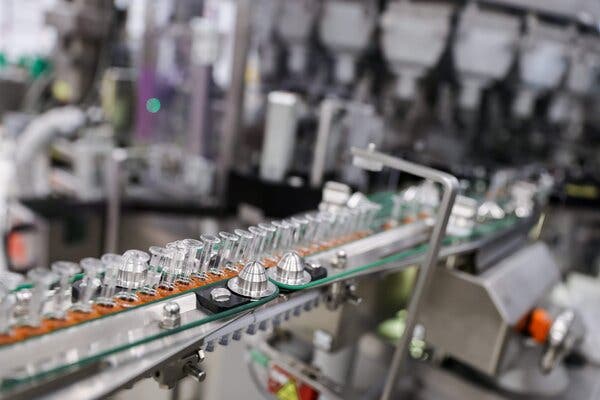
A preliminary analysis showed that CureVac’s mRNA vaccine had an efficacy of just 47 percent. “This is pretty devastating for them,” one expert said.The German company CureVac delivered disappointing preliminary results on Wednesday from a clinical trial of its Covid-19 vaccine, dimming hopes that it could help fill the world’s great need.The trial, which included 40,000 volunteers in Latin America and Europe, estimated that CureVac’s mRNA vaccine had an efficacy of just 47 percent, among the lowest reported so far from any Covid-19 vaccine maker. The trial will continue as researchers monitor volunteers for new cases of Covid-19, with a final analysis expected in two to three weeks.“We’re going to full speed for the final readout,” Franz-Werner Haas, CureVac’s chief executive, said in an interview. “We are still planning for filing for approval.”The company plans to apply for authorization initially to the European Medicines Agency. The European Union reached an agreement last year to purchase 405 million doses of the vaccine if the agency authorizes it.Independent experts, however, said it would be difficult for CureVac to recover. Natalie Dean, a biostatistician at the University of Florida, said that the vaccine’s efficacy rate might improve somewhat by the end of the trial. But because most of the data is already in, it’s unlikely the vaccine will turn out to be highly protective. “It’s not going to change dramatically,” she said.And with an efficacy rate that low — far lower than the roughly 95 percent of competing mRNA vaccines made by Pfizer-BioNTech and Moderna — the results do not bode well for CureVac’s shots getting adopted.“This is pretty devastating for them,” said Jacob Kirkegaard, a vaccine supply expert at the Peterson Institute for International Economics, a think tank in Washington.The news was disappointing to experts who had hoped the company could provide vaccines for low- and middle-income countries that don’t have nearly enough. CureVac had some advantages over the other mRNA vaccines, such as keeping stable for months in a refrigerator. What’s more, compared with its competitors, CureVac’s vaccine used fewer mRNA molecules per jab, lowering its cost.The trial results released on Wednesday were based on data from 135 volunteers who got sick with Covid-19. An independent panel compared the number of sick people who had received a placebo with those who had received the vaccine. Although the vaccine did seem to offer some protection, the statistical difference between the two groups was not stark, working out to an efficacy rate of 47 percent.Annual flu shots, by comparison, can reach 40 to 60 percent effectiveness. Both the World Health Organization and the Food and Drug Administration set a threshold of 50 percent efficacy to consider Covid-19 vaccines for emergency authorization. If CureVac were to stay at 47 percent in the final analysis, it would fail to meet that standard.CureVac’s vaccine is made from engineered mRNA, the same technology used by the Pfizer-BioNTech and Moderna vaccines. Kenzo Tribouillard/Agence France-Presse — Getty ImagesThe results caught scientists by surprise. The vaccine is made from engineered mRNA, the same technology used by the Pfizer-BioNTech and Moderna vaccines. And CureVac’s shots yielded promising results in animal experiments and early clinical trials.“This one’s a bit of a head-scratcher,” Dr. Dean said.Dr. Haas blamed the disappointing results on the high number of virus variants in the countries where the vaccine was tested. Out of 124 of the Covid-19 cases that the company’s scientists genetically sequenced, only one was caused by the original version of the coronavirus.More than half of the cases were caused by variants that have been shown to be more transmissible or able to blunt the effectiveness of vaccines. CureVac’s volunteers were also infected by variants that have yet to be studied carefully. Lambda, which has come to dominate Peru in recent weeks, accounted for 21 percent of the samples.Dr. Haas said that the results should serve as a wake-up call for the threat that new variants can pose to the effectiveness of vaccines. CureVac is searching for new RNA molecules that can work against many variants at once, as well as combining RNA molecules tailored to different variants in a single dose. “It’s a new Covid reality, that’s for sure,” he said.Moderna and Pfizer-BioNTech were tested last year before variants had emerged, which could partially account for their much higher efficacy rates. Even so, studies have found that their real-world effectiveness only drops moderately in the face of variants. In a study in Qatar, for example, the Pfizer-BioNTech was 87 to 89.5 percent effective against the Alpha variant first identified in Britain and 72.1 to 75 percent effective against Beta, which was first found in South Africa.Dr. Haas also noted that in the preliminary findings, older people appear to get less protection from the vaccine than younger volunteers. “The elderly are not benefiting,” he said. But it isn’t clear if the final results of the trial will allow CureVac to be confident about any difference between the two groups.Prashant Yadav, a health care supply chain expert at the Center for Global Development in Washington, said the disappointing results challenge the assumption that all mRNA vaccines are alike.“We’ve had this question mark since very start of research on mRNA vaccines,” he said. It’s possible, Dr. Yadav said, that CureVac’s design may be partly to blame for the low efficacy, not just the variants.Although many vaccine experts had seen promise for CureVac’s shots in much of the unvaccinated world, the new results cloud their outlook.Dr. Kirkegaard predicted it would be a challenge for CureVac to compete with another second-wave Covid-19 vaccine, made by Novavax. On Monday, Novavax reported that its vaccine, which doesn’t have to be kept frozen, reached an efficacy of 90 percent in a trial in the United States and Mexico.“I suspect it will be difficult for them to really get a significant developing-country market,” Dr. Kirkegaard said.

Read more →

CureVac’s Covid Vaccine Performed Badly in Trial, In Part Due to Variants

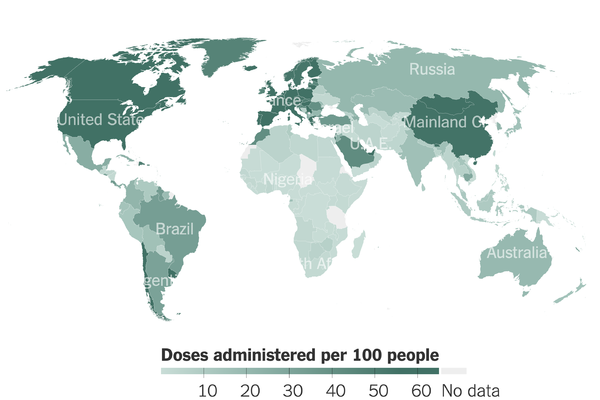
The German company CureVac delivered disappointing preliminary results on Wednesday from a clinical trial of its Covid-19 vaccine, dimming hopes that it could help fill the world’s great need.The trial, which included 40,000 volunteers in Latin America and Europe, estimated that CureVac’s mRNA vaccine had an efficacy of just 47 percent, among the lowest reported so far from any Covid-19 vaccine maker. The trial will continue as researchers monitor volunteers for new cases of Covid-19, with a final analysis expected in two to three weeks.“We’re going to full speed for the final readout,” Franz-Werner Haas, the chief executive of CureVac, said in an interview. “We are still planning for filing for approval.”The company plans to apply initially to the European Medicines Agency. The European Union reached an agreement last year to purchase 405 million doses of the vaccine if the agency authorizes it.Independent experts, however, said it would be difficult for CureVac to recover. Natalie Dean, a biostatistician at the University of Florida, said that the vaccine’s efficacy rate might improve somewhat by the end of the trial. But because most of the data is already in, it’s unlikely the vaccine would turn out to be highly protective. “It’s not going to change dramatically,” she said.And with an efficacy rate that low — far less than the roughly 95 percent of competing mRNA vaccines made by Pfizer-BioNTech and Moderna — the results did not bode well for CureVac’s shots getting adopted.“This is pretty devastating for them,” said Jacob Kirkegaard, a vaccine supply expert at the Peterson Institute for International Economics, a think tank in Washington.The news was disappointing to experts who had hoped the company could provide vaccines for low- and middle-income countries that don’t have nearly enough. CureVac had some advantages over the other mRNA vaccines, such as keeping stable for months in a refrigerator. What’s more, compared with its competitors, CureVac’s vaccine used fewer mRNA molecules per jab, lowering its cost.The trial results released on Wednesday were based on data from 135 volunteers who got sick with Covid-19. An independent panel compared the number of sick people who had received a placebo with those who had received the vaccine. Although the vaccine did seem to offer some protection, the statistical difference between the two groups was not stark, working out to an efficacy rate of 47 percent.Annual flu shots, by comparison, can reach 40 to 60 percent effectiveness. Both the World Health Organization and the Food and Drug Administration set a threshold of 50 percent efficacy to consider Covid-19 vaccines for emergency authorization. If CureVac were to stay at 47 percent in the final analysis, it would fail to meet that standard.The results caught scientists by surprise. The vaccine is made from engineered mRNA, the same technology used by the Pfizer-BioNTech and Moderna vaccines. And CureVac’s shots yielded promising results in animal experiments and early clinical trials.“This one’s a bit of a head-scratcher,” Dr. Dean said.Dr. Haas blamed the disappointing results on the high number of virus variants in the countries where the vaccine was tested. Out of 124 of the Covid-19 cases that the company’s scientists genetically sequenced, only one was caused by the original version of the coronavirus.More than half of the cases were caused by variants that have been shown to be more transmissible or able to blunt the effectiveness of vaccines. CureVac’s volunteers were also infected by variants that have yet to be studied carefully. Lambda, which has come to dominate Peru in recent weeks, accounted for 21 percent of the samples.Dr. Haas said that the results should serve as a wake-up call for the threat that new variants can pose to the effectiveness of vaccines. “It’s a new Covid reality, that’s for sure,” he said.Moderna and Pfizer-BioNTech were tested last year before variants had emerged, which could partially account for their much higher efficacy rates. Even so, studies have found that their real-world effectiveness only drops moderately in the face of variants.Although many vaccine experts had seen promise for CureVac’s shots in much of the unvaccinated world, the new results cloud their outlook.Dr. Kirkegaard predicted it would be a challenge for CureVac to compete with another second-wave Covid-19 vaccine, made by Novavax. On Monday, Novavax reported that its vaccine, which doesn’t have to be kept frozen, reached an efficacy of 90 percent in a trial in the United States and Mexico.“I suspect it will be difficult for them really get a significant developing-country market,” Dr. Kirkegaard said.Tracking Coronavirus Vaccinations Around the WorldMore than 2.42 billion vaccine doses have been administered worldwide, equal to 31 doses for every 100 people.

Read more →

Having a strong life purpose eases loneliness of COVID-19 isolation, study finds

Why can some people weather the stress of social isolation better than others, and what implications does this have for their health? New research from the Communication Neuroscience Lab at the Annenberg School for Communication at the University of Pennsylvania found that people who felt a strong sense of purpose in life were less lonely during the COVID-19 pandemic. Did they achieve less loneliness by flouting public health guidance? No. Although lonelier people were less likely to want to follow public health guidance, people with a stronger sense of purpose also expressed more willingness to engage in social distancing, hand washing, and other COVID-19 protective behaviors.
Purpose in life, or a sense that your life is guided by personally meaningful values and goals — which could involve family ties, religion, activism, parenthood, career or artistic ambitions, or many other things — has been associated in prior research with a wide range of positive health outcomes, both physical and psychological.
“In the face of adversity, people with a stronger sense of purpose in life tend to be more resilient because they have a clear sense of goals that motivate actions that are aligned with personal values,” says Yoona Kang, Ph.D., lead author and a Research Director of the Communication Neuroscience Lab. “People with strong purpose may also experience less conflict when making health decisions. We felt that the COVID-19 pandemic was an important context to test whether purpose in life relates to individuals’ willingness to engage in behaviors to protect themselves and others.”
Based on their prior research, Kang and her collaborators expected that people with higher sense of purpose would be more likely to engage in COVID-19 prevention behaviors than individuals with a lower sense of purpose. In order to test their theory, the researchers surveyed more than 500 adult participants to capture their levels of purpose in life, their current and pre-pandemic levels of loneliness, and the degrees to which they intended to engage in behaviors known to prevent the spread of COVID-19.
They found that higher levels of loneliness made people be less focused on protecting themselves from COVID-19, and more skeptical that behaviors to prevent COVID-19 would be effective. However, having a stronger sense of purpose was associated with lower levels of loneliness and a greater desire to take action to protect themselves from COVID-19. Those with a higher sense of purpose also expressed a stronger belief that COVID-19 prevention behaviors would work. Even when people who had a strong sense of purpose did report being lonely, they still felt strongly about taking precautions to prevent COVID-19.
“When faced with extreme loneliness and social isolation, like during the COVID-19 pandemic, wanting to connect with other people, despite the health risks, is a natural response,” Kang says. “And yet, amidst this drastic shift in social life, we found that people with a higher sense of purpose were more likely to engage in prevention behaviors. This is striking because it shows that purpose in life can empower people to make life-saving health decisions that protect their own health and those around them.”
Additionally, the researchers found that older people expressed less loneliness during the COVID-19 pandemic than younger people. Kang sees this as a sign of the resilience of older adults, and she hopes to further study how to enhance purpose in life and resilience in aging populations.
“Having a stronger sense of purpose was associated with really important, positive outcomes across the lifespan,” says Emily Falk, senior author, Director of the Communication Neuroscience Lab, and Professor of Communication, Psychology, and Marketing. “Our upcoming work will test interventions to increase their sense of purpose, in hopes of bringing these benefits to more people.”
The study, published this month in The Gerontologist, is entitled “Purpose in Life, Loneliness, and Protective Health Behaviors during the COVID-19 Pandemic.” In addition to Kang and Falk, authors include Danielle Cosme, Ph.D.; Rui Pei, Ph.D.; Prateekshit Pandey; and José Carreras-Tartak.
Story Source:
Materials provided by University of Pennsylvania. Original written by Ashton Yount. Note: Content may be edited for style and length.

Read more →

Bats in Switzerland harbor diverse viruses, some potentially zoonotic

An analysis of 18 species of stationary and migratory bats living in Switzerland has discovered that they harbor viruses from 39 different viral families — including some viruses with the potential risk of jumping to other animals, including humans, and causing disease. Isabelle Hardmeier of the University of Zurich, Switzerland, and colleagues present these findings in the open-access journal PLOS ONE on June 16, 2021.
While there are few known instances of disease-causing viruses jumping directly from bats to humans, some viruses carried by bats may jump to other animals and then become transmitted to humans. For instance, SARS-CoV-2, the virus behind the ongoing COVID-19 pandemic, is thought to have originated from a virus that was transmitted from a bat to another animal before infecting humans.
Monitoring the viruses harbored by bats around the world could improve understanding and detection of those that pose risk to humans. However, while previous research has investigated viruses carried by bats in several different countries, none have focused on Switzerland.
To fill that knowledge gap, Hardmeier and colleagues investigated viruses carried by more than 7,000 bats living in Switzerland. Specifically, they analyzed DNA and RNA sequences of viruses found in organ, fecal, or stool samples collected from the bats.
This genomic analysis revealed the presence of 39 different families of viruses, including 16 families previously found to be able to infect other vertebrates, and which therefore could potentially be transmitted to other animals or humans. Further analysis of viruses with this risk revealed that one of the studied bat colonies harbored a near-complete genome of a virus known as Middle East respiratory syndrome (MERS)-related coronavirus (CoV). While the MERS-CoV-related virus is not known to cause disease in humans, MERS-CoV has been responsible for an epidemic in 2012.
The authors note that genomic analysis of bat stool samples could be a useful tool to continuously monitor viruses harbored by bats, including the MERS-CoV-related virus. This type of tracking could potentially detect accumulations of viral genetic mutations that could increase the risk of transmission to other animals, enabling earlier detection of viruses that pose danger to humans.
The authors add: “Metagenomic analysis of bats endemic to Switzerland reveals broad virus genome diversity. Virus genomes from 39 different virus families were detected, 16 of which are know to infect vertebrates, including coronaviruses, adenoviruses, hepeviruses, rotaviruses A and H, and parvoviruses.”
Story Source:
Materials provided by PLOS. Note: Content may be edited for style and length.

Read more →

Genetically engineered nanoparticle delivers dexamethasone directly to inflamed lungs

Nanoengineers at the University of California San Diego have developed immune cell-mimicking nanoparticles that target inflammation in the lungs and deliver drugs directly where they’re needed. As a proof of concept, the researchers filled the nanoparticles with the drug dexamethasone and administered them to mice with inflamed lung tissue. Inflammation was completely treated in mice given the nanoparticles, at a drug concentration where standard delivery methods did not have any efficacy.
The researchers reported their findings in Science Advances on June 16.
What’s special about these nanoparticles is that they are coated in a cell membrane that’s been genetically engineered to look for and bind to inflamed lung cells. They are the latest in the line of so-called cell membrane-coated nanoparticles that have been developed by the lab of UC San Diego nanoengineering professor Liangfang Zhang. His lab has previously used cell membrane-coated nanoparticles to absorb toxins produced by MRSA; treat sepsis; and train the immune system to fight cancer. But while these previous cell membranes were naturally derived from the body’s cells, the cell membranes used to coat this dexamethasone-filled nanoparticle were not.
“In this paper, we used a genetic engineering approach to edit the surface proteins on the cells before we collected the membranes. This significantly advanced our technology by allowing us to precisely overexpress certain functional proteins on the membranes or knockout some undesirable proteins,” said Zhang, who is a senior author of the paper.
Joon Ho Park, a graduate student in Zhang’s lab and first author of the paper, said the researchers noticed that when endothelial cells become inflamed, they overexpress a protein called VCAM1, whose purpose is to attract immune cells to the site of inflammation. In response, the immune cells express a protein called VLA4, which seeks out and binds to VCAM1.
“We engineered cell membranes to express the full version of VLA4 all the time,” said Park. “These membranes constantly overexpress VLA4 in order to seek out VCAM1 and the site of inflammation. These engineered cell membranes allow the nanoparticle to find the inflamed sites, and then release the drug that’s inside the nanoparticle to treat the specific area of inflammation.”
While the nanoparticle won’t directly enhance the efficacy of the drug — dexamethasone in this case — concentrating it at the site of interest may mean a lower dosage is required. This study showed that the dexamethasone accumulated at the site of interest at higher levels, and faster, than standard drug delivery approaches.

Read more →

Several persistent chemicals found in fetal organs

Researchers at Karolinska Institutet in Sweden found industrial chemicals in the organs of fetuses conceived decades after many countries had banned the substances. In a study published in the journal Chemosphere, the researchers urge decision makers to consider the combined impact of the mix of chemicals that accumulate in people and nature.
“These are important findings that call for regulators to consider the collective impact of exposure to multiple chemicals rather than evaluating just one chemical at a time,” says first author Richelle Duque Björvang, PhD student at the Department of Clinical Science, Intervention and Technology at Karolinska Institutet.
The researchers studied concentrations of 22 persistent organic pollutants (POPs). These are toxic chemicals that remain in the environment for long periods of time and accumulate in humans through food, drinking water and air particles. EU’s members and many other countries have signed a treaty that prohibits or restricts manufacturing and use of these chemicals.
In the study, the researchers examined samples of fetal fat tissue, liver, heart, lung and brain from 20 pregnancies that for various reasons had ended in stillbirth in the third trimester in 2015-2016. The researchers identified at least 15 of the 22 POPs in every organ. Four chemicals were found in all tissues in all fetuses. The most pervasive chemicals were: HCB, a pesticide previously used to protect food crops from fungi; DDE, a metabolite of DDT, an insect killer used in the mid-1900s; Variants of PCBs, chemicals formerly used in a range of electrical products.Most current methods for estimating fetal exposure to chemicals rely on maternal blood and placenta samples as proxies. The new study found that, for some of the chemicals, the concentrations in the fetal tissues exceeded those found in the maternal blood and placenta. This can be explained by the fact that these chemicals tend to accumulate in fat tissue due to their structure. However, levels in fetal liver and lung also exceeded those found in the mother. Some pesticides — PeCB, ?-HCH, ?-HCH and oxychlordane — were detected in fetal tissue even when they were not quantified in maternal blood samples or the placenta. According to the researchers, these latest findings suggest that blood and placenta samples may give a misleading picture on the diversity and concentration of chemicals that babies are exposed to during early development.
This study only investigated the presence and concentration of the various chemicals but not their links to potential health risks. However, the researchers point out that several previous studies have linked early life exposure to POPs to adverse health outcomes such as low birth weight, gestational diabetes, ADHD, infertility, obesity and reduced sperm production. For example, the European Food Safety Authority (EFSA) recently revised their risk assessment of dioxins and dioxin-like PCBs, and concluded that the dietary intake in Europe is currently at a level that can disrupt fertility in men.
“Getting an accurate picture of chemical exposure in early human development is critical to assessing both short and long-term health consequences for future generations,” says last author Pauliina Damdimopoulou, researcher in the Department of Clinical Science, Intervention and Technology at Karolinska Institutet. “Therefore, we believe today’s approaches estimating fetal chemical exposure, for example in birth cohort studies, need to be updated to better reflect the likelihood that for some chemicals, fetal exposure is actually greater than what the blood and placenta samples show.”
Thirteen of the pregnancies also had data from an earlier study on PFAS (chemicals used in frying pans, food packaging and firefighting foam). By combining these data, the researchers were able to assess the proportion of chemicals in each type of tissue. While pesticides and PCBs were significantly overrepresented in fat tissue, more than half of the chemicals in the fetal lung, brain, liver and heart was due to PFAS. Overall, the highest concentration of a mix of chemicals were found in fat tissue and the lowest in the brain. The study found that the relative exposure of baby boys was higher compared to baby girls.
“Studies conducted in the 1960s and 1970s, when POPs were widely in use, found higher levels compared to ours,” Richelle Duque Björvang says. “This shows that political action leading to restrictions in the use of chemicals has an impact on population exposures, although in the case of persistent chemicals it will take multiple generations to get rid of the exposure.”
The researchers recognize that the study has some limitations, including a relatively modest sample size and that it only included fetuses who had died in the womb late in the pregnancy. Thus, it may not be fully representative of babies born alive.
The tissue samples were collected from the Stockholm Medical Biobank. The researchers have received funding from the Swedish Research Council for Sustainable Development (FORMAS), Jane & Aatos Erkko Foundation, and Women’s Department in Sundsvall Development Fund.
Facts on POPs: Persistent organic pollutants (POPs) are toxic human-made chemicals that once released into the environment remain intact for exceptionally long periods of times and become widely distributed through air, soil and water. Currently, there are 30 POPs listed under the so-called Stockholm Convention on Persistent Organic Pollutants, an international environmental treaty initiated by the United Nations to eliminate or restrict the production and use of POPs. More than 150 countries have ratified the agreement. The list includes pesticides, industrial chemicals and by-products, many of which were long banned by countries around the world but continue to affect the environment and animal and human health.

Read more →

Pursuing safer, cheaper pharmaceuticals via electromagnetic control at the atomic level

Commonplace pharmaceuticals, such as ibuprofen, can carry with them an inherent flaw in their atomic structure, which pairs the active, beneficial ingredient with a potentially ineffective — or even toxic — counterpart. New research could hold the key to more easily isolating the good while removing the unwanted.
Dr. Shoufeng Lan, assistant professor in the J. Mike Walker ’66 Department of Mechanical Engineering at Texas A&M University, is leading a team investigating the use of electromagnetic control over the synthesis of chiral compounds at an atomic level — a process that could lead to a plethora of practical applications, including in the pharmaceutical industry. The team’s research was recently published in the journal Nature Communications.
“Mysteriously, all living organisms on the Earth consist of only left-handed amino acids and right-handed sugars, but not their mirrored counterparts,” Lan said. “The phenomenon is the so-called homochirality of life and it is the ultimate form of asymmetric synthesis.”
Lan used the example of a human hand to demonstrate the concept of chirality, noting that if you were to create a mirror image of your hand, it could not be perfectly superimposed over the original.
By identifying a successful method of using asymmetrical synthesis to create new versions of structures for items like ibuprofen, Lan said better versions of generic pharmaceuticals with reduced toxicity could be created at a lower cost than currently available due to the current purification process.
However, to achieve success, the researchers will first need to overcome the practical need to implement this magnetic effect on asymmetric synthesis at room temperature. Currently, this effect is relatively weak, even with a strong magnetic field or at a low temperature or — 450 degrees.
Lan said the topic of addressing chirality was the basis of the 2001 Nobel Prize in chemistry, which uses an existing chiral object — a catalyst molecule — to transfer chirality to the desired mirror image form as the final product.
“This Nature Communications paper demonstrated a giant atomic-scale magneto-chiral effect that is orders of magnitude stronger,” Lan said. “By applying this effect, it is arguably possible to master an asymmetric synthesis or asymmetric self-assembling.”
Lan said his team’s research could prove revolutionary to the field by creating a new iteration of biomedical, chemical and pharmaceutical applications. For example, by asymmetrically synthesizing only the active component of racemic Lexapro — the most common medication in the United States with more than 25 million prescriptions — the research might reduce the drug’s side effects.
“We anticipate that our demonstration could lead to the creation of chiral seeds at the atomic scale,” Lan said. “Upon them, we hope to transfer the chirality using cutting-edge technologies, such as a metal-organic framework, to create chiral materials from nanoscales to macroscales.” 
Story Source:
Materials provided by Texas A&M University. Original written by Steve Kuhlman. Note: Content may be edited for style and length.

Read more →

A distinctive inflammatory signature found in a genetic form of ALS

Amyotrophic lateral sclerosis (ALS), also known as Lou Gehrig’s disease, is a neurodegenerative disease that strikes nearly 5,000 people in the U.S. every year. About 10% of ALS cases are inherited or familial, often caused by an error in the C9orf72 gene. Compared to sporadic or non-familial ALS, C90rf72 patients are considered to have a more aggressive disease course. Evidence points to the immune system in disease progression in C90rf72 patients, but we know little of what players are involved. New research from the Jefferson Weinberg ALS Center identified an increased inflammatory signal in C90rf72 patients compared to other ALS patients, pointing to immune characteristics that distinguish this subgroup of ALS patients and informing potential anti-inflammatory therapies. The study was published in Amyotrophic Lateral Sclerosis and Frontotemporal Degeneration on April 30th, 2021.

advertisement

Read more →

Machine learning can now reduce worry about nanoparticles in food

While crop yield has achieved a substantial boost from nanotechnology in recent years, alarms over the health risks posed by nanoparticles within fresh produce and grains have also increased. In particular, nanoparticles entering the soil through irrigation, fertilizers and other sources have raised concerns about whether plants absorb these minute particles enough to cause toxicity.
In a new study published online in the journal Environmental Science and Technology, researchers at Texas A&M University have used machine learning to evaluate the salient properties of metallic nanoparticles that make them more susceptible for plant uptake. The researchers said their algorithm could indicate how much plants accumulate nanoparticles in their roots and shoots.
Nanoparticles are a burgeoning trend in several fields, including medicine, consumer products and agriculture. Depending on the type of nanoparticle, some have favorable surface properties, charge and magnetism, among other features. These qualities make them ideal for a number of applications. For example, in agriculture, nanoparticles may be used as antimicrobials to protect plants from pathogens. Alternatively, they can be used to bind to fertilizers or insecticides and then programmed for slow release to increase plant absorption.
These agricultural practices and others, like irrigation, can cause nanoparticles to accumulate in the soil. However, with the different types of nanoparticles that could exist in the ground and a staggeringly large number of terrestrial plant species, including food crops, it is not clearly known if certain properties of nanoparticles make them more likely to be absorbed by some plant species than others.
“As you can imagine, if we have to test the presence of each nanoparticle for every plant species, it is a huge number of experiments, which is very time-consuming and expensive,” said Xingmao “Samuel” Ma, associate professor in the Zachry Department of Civil and Environmental Engineering. “To give you an idea, silver nanoparticles alone can have hundreds of different sizes, shapes and surface coatings, and so, experimentally testing each one, even for a single plant species, is impractical.”
Instead, for their study, the researchers chose two different machine learning algorithms, an artificial neural network and gene-expression programming. They first trained these algorithms on a database created from past research on different metallic nanoparticles and the specific plants in which they accumulated. In particular, their database contained the size, shape and other characteristics of different nanoparticles, along with information on how much of these particles were absorbed from soil or nutrient-enriched water into the plant body.
Once trained, their machine learning algorithms could correctly predict the likelihood of a given metallic nanoparticle to accumulate in a plant species. Also, their algorithms revealed that when plants are in a nutrient-enriched or hydroponic solution, the chemical makeup of the metallic nanoparticle determines the propensity of accumulation in the roots and shoots. But if plants are grown in soil, the contents of organic matter and the clay in soil are key to nanoparticle uptake.
Ma said that while the machine learning algorithms could make predictions for most food crops and terrestrial plants, they might not yet be ready for aquatic plants. He also noted that the next step in his research would be to investigate if the machine learning algorithms could predict nanoparticle uptake from leaves rather than through the roots.
“It is quite understandable that people are concerned about the presence of nanoparticles in their fruits, vegetables and grains,” said Ma. “But instead of not using nanotechnology altogether, we would like farmers to reap the many benefits provided by this technology but avoid the potential food safety concerns.”
Story Source:
Materials provided by Texas A&M University. Original written by Vandana Suresh. Note: Content may be edited for style and length.

Read more →