Eating whole grains linked to smaller increases in waist size, blood pressure, blood sugar

Middle- to older-aged adults who ate at least three servings of whole grains daily had smaller increases in waist size, blood pressure, and blood sugar levels over time compared to those who ate less than one-half serving per day, according to new research.
Published July 13, 2021, in the Journal of Nutrition, the study by researchers at the Jean Mayer USDA Human Nutrition Research Center on Aging at Tufts University examined how whole- and refined-grain intake over time impacted five risk factors of heart disease: Waist size, blood pressure, blood sugar, triglyceride, and HDL (“good”) cholesterol.
Using data from the Framingham Heart Study Offspring Cohort, which began in the 1970s to assess long-term risk factors of heart disease, the new research examined health outcomes associated with whole- and refined-grain consumption over a median of 18 years. The 3,100 participants from the cohort were mostly white and, on average, in their mid-50s at the start of data collection.
The research team compared changes in the five risk factors, over four-year intervals, across four categories of reported whole grain intake, ranging from less than a half serving per day to three or more servings per day. According to the Dietary Guidelines for Americans 2020-2025, the recommended amount of whole grains is three or more servings daily. An example of a serving is one slice of whole-grain bread, a half cup of rolled oats cereal, or a half cup of brown rice.
The results showed that for each four-year interval: Waist size increased by an average of over 1 inch in the low intake participants, versus about ½ inch in the high intake participants.

Read more →

Bacteria are key to vaginal health, study finds

Bacterial vaginosis is the most common and recurrent gynecological condition affecting nearly 30% of women between the ages of 15 and 44, according to the U.S. Centers for Disease Control and Prevention. A University of Arizona Health Sciences-led study recently identified a specific bacteria family and uncovered how it contributes to bacterial vaginosis, paving the way for new insights into disease prevention and treatment.
Led by Melissa Herbst-Kralovetz, PhD, a member of the BIO5 Institute and associate professor of basic medical sciences at the College of Medicine — Phoenix, researchers found that members of the Veillonellaceae bacteria family contribute to an increase in inflammation and cell death, and alter the acidity of the cervical microenvironment. These changes support bacterial vaginosis and create favorable conditions for subsequent gynecological diseases, such as sexually transmitted infections and cancer.
“Bacterial vaginosis is an enigma,” said Dr. Herbst-Kralovetz, who is also director of the Women’s Health Research Program. “We know many factors contribute to this disease, but little is known about the functional impact of the major players and how they’re changing the local landscape.”
The paper, “Veillonellaceae family members uniquely alter the cervical metabolic microenvironment in a human three-dimensional epithelial model,” published July 6 in the journal npj Biofilms and Microbiomes, found that Veillonellaceae family members contribute to disease by altering inflammation and metabolism in the cervicovaginal region.
The female reproductive tract is typically colonized by bacteria that promote health, such as Lactobacillus. While these bacteria are considered friendly, an imbalance can lead to the creation of a biofilm — a consortium of many different harmful microbes — that promotes disease.
Last year, Dr. Herbst-Kralovetz and colleagues described a hypothetical model in which the interactions between microbes and human cells alter the vaginal microenvironment and ultimately influence the balance between health and disease. This study is the first to define a definitive role for this bacterial family in bacterial vaginosis.

Read more →

'Long COVID': More than a quarter of COVID-19 patients still symptomatic after 6 months

In a new study of adults from the general population who were infected with COVID-19 in 2020, more than a quarter report not having fully recovered after six to eight months. Those findings are described this week in the open-access journal PLOS ONE by Milo Puhan and colleagues at the University of Zurich, Switzerland.
While initial public health responses to the SARS-CoV-2 virus focused on reducing the acute burden of COVID-19, a growing body of evidence indicates that the infection can also result in longer-term physical and mental health consequences. These long-term consequences, currently referred to as “post-COVID-19 syndrome” or “Long Covid” are of increasing concern for healthcare systems.
In the new study, researchers recruited 431 participants from within the contact tracing system in Zurich, Switzerland. All participants had tested positive for SARS-CoV-2 between February and August 2020, and completed an online questionnaire about their health a median of 7.2 months after their diagnosis. Symptoms had been present at diagnosis in 89% of the participants and 19% were initially hospitalized. Compared to individuals not participating in the study, participants were younger — with an average age of 47.
Overall, 26% of participants reported that they had not fully recovered at six to eight months after initial COVID-19 diagnosis. 55% reported symptoms of fatigue, 25% had some degree of shortness of breath, and 26% had symptoms of depression. A higher percentage of females and initially hospitalized patients reported not having recovered compared to males and non-hospitalized individuals. A total of 40% of participants reported at least one general practitioner visit related to COVID-19 after their acute illness. The authors say that their findings underscore the need for the timely planning of resources and patient services for post-COVID-19 care.
The authors add: “This cohort study based on a respresentative, population-based sample of SARS-CoV-2 infected individuals found that 26% did not fully recover within 6-8 months after diagnosis and 40% had at least one further healthcare contact related to COVID-19. These findings underline the need for the timely planning of healthcare resources and services tailored to the needs of individuals suffering from post-COVID-19 syndrome.”
Story Source:
Materials provided by PLOS. Note: Content may be edited for style and length.

Read more →

Species of gut bacteria linked to enhanced cognition and language skills in infant boys

The University of Alberta-led research followed more than 400 infants from the CHILD Cohort Study (CHILD) at its Edmonton site. Boys with a gut bacterial composition that was high in the bacteria Bacteroidetes at one year of age were found to have more advanced cognition and language skills one year later. The finding was specific to male children.
“It’s well known that female children score higher (at early ages), especially in cognition and language,” said Anita Kozyrskyj, a professor of pediatrics at the U of A and principal investigator of the SyMBIOTA (Synergy in Microbiota) laboratory. “But when it comes to gut microbial composition, it was the male infants where we saw this obvious connection between the Bacteroidetes and the improved scores.”
“The differences between male and female gut microbiota are very subtle, but we do know from CHILD Cohort Study data that girls at early ages are more likely to have more of these Bacteroidetes. So perhaps most girls have a sufficient number of Bacteroidetes and that’s why they have improved scores over boys,” added Kozyrskyj.
The researchers, led by Kozyrskyj and associate professor of pediatrics Piush Mandhane, studied bacteria found in fecal samples from the infants and identified three different groups exhibiting similar dominant clusters of bacteria. They then evaluated the infants on a variety of neural developmental scales. Of those groups, only the male infants with Bacteroidetes-dominant bacteria showed signs of enhanced neurodevelopment.
The research replicates similar findings from a U.S. study that also showed an association between Bacteroidetes and neural development.
According to Kozyrskyj, Bacteroidetes are one of a very few bacteria that produce metabolites called sphingolipids, which are instrumental for the formation and structure of neurons in the brain.
“It makes sense that if you have more of these microbes and they produce more sphingolipids, then you should see some improvement in terms of the formation of neuron connections in our brain and improved scores in cognition and language,” she said.
According to Kozyrskyj, caesarean birth is one factor that can significantly deplete Bacteroidetes. Factors that positively influence gut microbiota composition in infants include breastfeeding, having a high-fibre diet, living with a dog and being exposed to nature and green spaces.
While the findings don’t necessarily mean children with a lower proportion of Bacteroidetes will remain behind their peers in later childhood or adulthood, the researchers believe the study offers early promise as a way to potentially identify children at risk of neurodevelopmental disorders.
The team will continue to follow the infants participating in CHILD to determine whether the findings can be predictive of autism or attention deficit/hyperactivity disorder. Moving forward, the researchers are also examining several other factors that may have an impact on neurodevelopment in infants, including stress and gut colonization by the bacterium Clostridium difficile.
“Over the first one to two years of life, your brain is very malleable,” said Kozyrskyj. “Now we’re seeing a connection between its malleability and gut microbiota, and I think that is very important.”
Story Source:
Materials provided by University of Alberta Faculty of Medicine & Dentistry. Original written by Ross Neitz. Note: Content may be edited for style and length.

Read more →

Preventing lung cancer's unwelcome return

When a doctor gives a patient antibiotics for a bacterial infection, they usually require them to finish the entire treatment, even when symptoms go away. This is to ensure the drugs kill off any remaining bacteria. Cold Spring Harbor Laboratory (CSHL) Visiting Scientist Raffaella Sordella investigated a similar problem that occurs in some lung cancers.
Approximately 15% of non-small cell lung cancers have a mutation in a growth receptor called EGFR, causing tumor cells to grow uncontrollably. Researchers developed an effective drug that inhibits EGFR and kills cancer cells, but the tumor grows back later. Sordella wanted to understand the molecular mechanisms behind this relapse and how to prevent it.
Sordella and her team discovered that a small percentage of drug-resistant cancer cells were already present before treatment. Instead of relying on EGFR, these cells are dependent on another gene (AXL) for survival. Furthermore, they observed that the cells could transition between these drug-sensitive and drug-resistant “states.” When patients finish EGFR treatment, random modifications constantly occur in the remaining cells, causing both types of cells to grow back.
Sordella and her team worked with clinicians at Northwell Health and former CSHL Professor Gregory Hannon, now at the Cancer Research UK Cambridge Institute. Hannon’s research focuses on microRNA, a molecule that regulates cells by managing transcribed (copied) genes. Sordella explains:
“The genome is like a library. So when you have to do a recipe to bake something, you go there, you transcribe your recipe, you take it out from the library, you go in the kitchen. What these microRNAs do, they intercept all the recipes that are getting out from your library. And then, they decide whether this is a recipe that the cell should care about or not. So they are what they call ‘gatekeepers’ of a cell state.”
The researchers discovered that a certain microRNA called miR335 determines the “state” of the cancer cell. If the cancer cell loses miR335, a cascade of events is triggered that allows cells to use the alternative AXL pathway; the cells are not killed by drugs that target EGFR. These drug-resistant cells survive and eventually, the tumor grows back.
Understanding how resistance arises in lung cancer is key to figuring out how to eliminate a tumor. Sordella hopes that these findings could help develop treatments to wipe out both AXL- and EGFR-dependent cells from the start.
Story Source:
Materials provided by Cold Spring Harbor Laboratory. Original written by Jasmine Lee. Note: Content may be edited for style and length.

Read more →

What you say in the first minute after a vaccine can be key in reducing a child's distress

New pain research finds what you say in the first minute after a vaccine can be key in reducing a child’s distress. As we look forward to a fall with hopefully one of the most important vaccination uptakes of children in a generation, a new study provides insights to help parents with reducing post-vaccination distress in younger kids. The study, published in PAIN, looked at preschool children who were at least four-to-five years old and what their parents said that could help reduce distress during their vaccination. This study is part of the largest study in the world looking at caregivers and children during vaccinations from birth to the age of five — coined the OUCH Cohort. The OUCH Cohort originally followed 760 caregiver-child dyads from three pediatric clinics in the Greater Toronto Area and were observed during vaccinations during the first five years of a child’s life.
“What we found is that in the first minute after the needle, the more parents said coping-promoting statements, such as ‘you can do this’ and ‘it will be over soon’ or tried to distract them with talking about something else, the higher distressed the children were. This really surprised us,” said Rebecca Pillai Riddell, senior author, professor in the department of psychology, Faculty of Health and Director at the OUCH Lab at York University. “We found however, during the second minute after the vaccine, when the child was calmer, these same coping promoting statements resulted in them calming down faster. On the other hand, distress-promoting statements, such as criticizing the child, or reassuring them they were fine, had no relationship with child distress in minute-one but and in minute-two, the distress-promoting comments were strongly predictive of higher distress in kids. We also showed with preschoolers that the more distressed they were prior to the needle, the more distressed they were after the needle — like a domino effect of previous pain.”
“Previous research has shown that the vast majority of preschoolers calm down within two minutes after a vaccination, however, about 25 per cent of children did not. We wanted to determine what parents were saying before or during the vaccination appointment that could be leading to these children feeling distressed during and after a vaccination,” said Ilana Shiff, first author and master’s student in Pillai Riddell’s lab.
Based on their findings, the researchers recommend that in first minute after a vaccine parents should not start encouraging coping right away, but rather keep them calm by using physical strategies such as hugging, cuddling or hand-holding. This should be done instead of trying to give a child verbal direction on how to cope when they are in peak distress. Once children get over that initial minute of high distress, Pillai Riddell says, they think children are more able to get benefit from parents’ coping-promoting statements. The findings also provide insight for health-care providers and caregivers on how to support children during immunization appointments.
Researchers say because preschool children show the prior pain ‘domino-effect,’ it is critical for health-care providers to try to vaccinate calm preschoolers. Routinely adopting techniques that allow the child to be approached without distressing them prior to the needle (e.g., allowing a child to stay close to their caregiver while viewing a video on a smartphone as a distraction) will help minimize the pain ‘domino effect’ these findings suggest. Moreover, for both groups, supporting caregivers to avoid distress-promoting behaviours before and during the vaccination will be critical.
“This type of data has never been found in preschoolers before. It’s important to understand post-needle reactions at this age because needle phobia and phobias in general start coming on at five to 10 years of age, so understanding how children can be coached and how parents can have a really powerful role in reducing stress post a vaccination is key,” said Pillai Riddell.
Story Source:
Materials provided by York University. Note: Content may be edited for style and length.

Read more →

Mosquito-resistant clothing prevents bites in trials

North Carolina State University researchers have created insecticide-free, mosquito-resistant clothing using textile materials they confirmed to be bite-proof in experiments with live mosquitoes. They developed the materials using a computational model of their own design, which describes the biting behavior of Aedes aegypti, the mosquito that carries viruses that cause human diseases like Zika, Dengue fever and yellow fever.
Ultimately, the researchers reported in the journal Insects that they were able to prevent 100 percent of bites when a volunteer wore their clothing — a base layer undergarment and a combat shirt initially designed for the military — in a cage with 200 live, disease-free mosquitoes. Vector Textiles, an NC State startup company, has licensed the related patent rights and intends to make clothing for commercial sale in the United States.
The researchers think their computational model could be used more widely to develop clothing to reduce transmission of diseases.
“The fabric is proven to work — that’s the great thing we discovered,” said study co-author Andre West, associate professor of fashion and textile design at NC State and director of Zeis Textiles Extension for Economic Development. “To me, that’s revolutionary. We found we can prevent the mosquito from pushing through the fabric, while others were thick enough to prevent it from reaching the skin.”
To develop the computational model to design textile materials that could prevent A. aegypti bites, researchers investigated the dimensions of the head, antenna and mouth of A. aegypti, and the mechanics of how it bites. Then, they used the model to predict textile materials that would prevent bites, depending on their thickness and pore size. Researchers said they believe the materials could be effective against other mosquito species in addition to A. aegypti because of similarities in biology and biting behavior.
“There are different uses for clothing,” said the study’s first author Kun Luan, postdoctoral research scholar of forest biomaterials at NC State. “The idea is to have a model that will cover all possible garments that a person would ever want.”
To test the accuracy of their model, the researchers tested the materials predicted to be bite-proof. In experiments with live, disease-free mosquitoes, the researchers surrounded a blood reservoir with plastic materials made according to parameters predicted by the model. They then counted how many mosquitoes became engorged with blood.
One material they initially tested was very thin — less than one millimeter thick — but had a very small pore size to prevent the mosquito from sticking its mouth parts, or proboscis, through the material. Another material had a medium pore size to prevent the mosquito from inserting its head through the textile far enough to reach the skin; and a third material had larger pores, but was sufficiently thick that the mosquito’s mouth still couldn’t reach the skin.
In a subsequent test, the researchers chose a series of knitted and woven fabrics that met the bite-proof parameters determined by the model, and validated they worked in experiments using both the blood reservoir and human volunteers. The researchers tested the number of bites received by volunteers when study participants inserted an arm covered by a protective sleeve into a mosquito cage. The researchers also compared the fabrics’ ability to prevent bites and repel mosquitoes to fabrics treated with an insecticide.
From what they learned in early experiments, researchers developed the bite-resistant, form-fitting undergarment made with a thin material, as well as a long-sleeved shirt, which was initially envisioned as a combat shirt for the military.
When a volunteer wore the garments sitting for 10 minutes and standing for 10 minutes in a walk-in cage with 200 hungry mosquitos, the volunteer found the combat shirt was 100 percent effective at preventing bites. In the first trial testing the base layer, the volunteer received bites on the back and shoulders — seven bites for 200 mosquitoes. The researchers attributed the bites to the fabric stretching and deforming, so they doubled the material layer around the shoulders, and were ultimately able to prevent 100 percent of bites. They also tested the clothing for comfort, and to see how well it trapped heat and released moisture.
“The final garments that were produced were 100 percent bite-resistant,” said Michael Roe, William Neal Reynolds Distinguished Professor of Entomology at NC State. “Everyday clothing you wear in the summer is not bite-resistant to mosquitoes. Our work has shown that it doesn’t have to be that way. Clothes that you wear every day can be made bite-resistant. Ultimately, the idea is to have a model that will cover all possible garments that person would ever want — both for the military as well as for private use.”
Story Source:
Materials provided by North Carolina State University. Original written by Laura Oleniacz. Note: Content may be edited for style and length.

Read more →

COVID-causing coronavirus following predictable mutational footsteps

New research from the University of Nebraska-Lincoln has shown that the mutations arising in the COVID-19-causing SARS-CoV-2 virus seem to run in the family — or at least the genus of coronaviruses most dangerous to humans.
After comparing the early evolution of SARS-CoV-2 against that of its closest relatives, the betacoronaviruses, the Nebraska team found that SARS-CoV-2 mutations are occurring in essentially the same locations, both genetically and structurally.
The mutational similarities between SARS-CoV-2 and its predecessors, including the human-infecting SARS-CoV-1 and MERS-CoV, could help inform predictions of how the COVID-causing virus will continue to evolve, the researchers said.
“The problem of looking at only one virus at a time is that you lose the forest for the trees,” said Katherine LaTourrette, a doctoral student in the Complex Biosystems program at Nebraska. “By looking at this big picture, we were able to predict the mutational nature of SARS-CoV-2.
“That gets into these questions of: Are vaccines going to be effective long term? Which variants are going to sneak by? Do we need that booster shot? Are vaccinated people going to be infected a second time?”
‘You’re more likely to be hitting that bull’s-eye’
The genetic code of a virus determines its ability to infect cells and direct them to churn out more copies of itself. That code consists of fundamental compounds, or nucleotides, with mutations occurring wherever those nucleotides get added, subtracted or swapped for one another. Many mutations have little or no effect, in the same way that trying to hack an intricate password by changing just one character will likely fail.

Read more →

Electric signals between individual cardiac cells regulate heartbeat

The rhythm in a working heart is regulated by electrical impulses. Disturbances of this bioelectrical process can result in cardiac arrhythmias, or irregularities in heartbeat — a common ailment that can lead to illness and death.
In Biophysics Reviews, by AIP Publishing, researchers from Harvard Medical School provide a state-of-the-art update on how electrical impulses in the heart travel from cell to cell.
A functioning heart contracts to pump blood to the body and the lungs. Within the heart, a pacemaker acts as an electrical clock, sending out a signal that tells the heart when to contract. The whole muscle moves together, because each individual cell inside of it contracts in a coordinated manner and within a short time interval.
In order to do so, the initial electrical impulse, sent by the pacemaker, rapidly spreads through cells across the heart.
“If one cell is excited electrically and the other is not, the excited cell becomes positively charged inside, and the resting cell is still negatively charged inside. As a consequence, a voltage gradient builds up between the cells,” said author André Kléber. “If you have a voltage gradient and a pathway with a low electrical resistance, a local current will flow.”
The connections between cells forming the low resistance pathway and facilitating the current flow are called gap junctions. Each consists of many channels, which are formed when specific proteins from one cell dock and fuse to the proteins from another cell. Kléber said the fusing proteins look like placing the tips of your fingers on one hand to the fingers on the other hand.
The scientists delve into the properties of gap junctions and their constituent proteins, the so-called connexins. Kléber said one reason gap junction channels are interesting is because they are a highly dynamic system in equilibrium. The creation, or synthesis, of the channels equals the destruction.
“The turnover is very short,” he said. “On one hand, the system is very stable during your whole life. On the other hand, if you measure it, it is constantly cycling in periods of a few hours.”
The proteins found in gap junctions are important for processes not directly related to cell-cell connections, like mitochondrial function, which creates energy, and trafficking, which transports molecules from the site of synthesis to their site of action in the cell interior.
“You have to refrain from the idea that if you define the role of a protein in the body, that it has only a single function,” said Kléber. “Nature is much, much smarter than human beings.”
Story Source:
Materials provided by American Institute of Physics. Note: Content may be edited for style and length.

Read more →

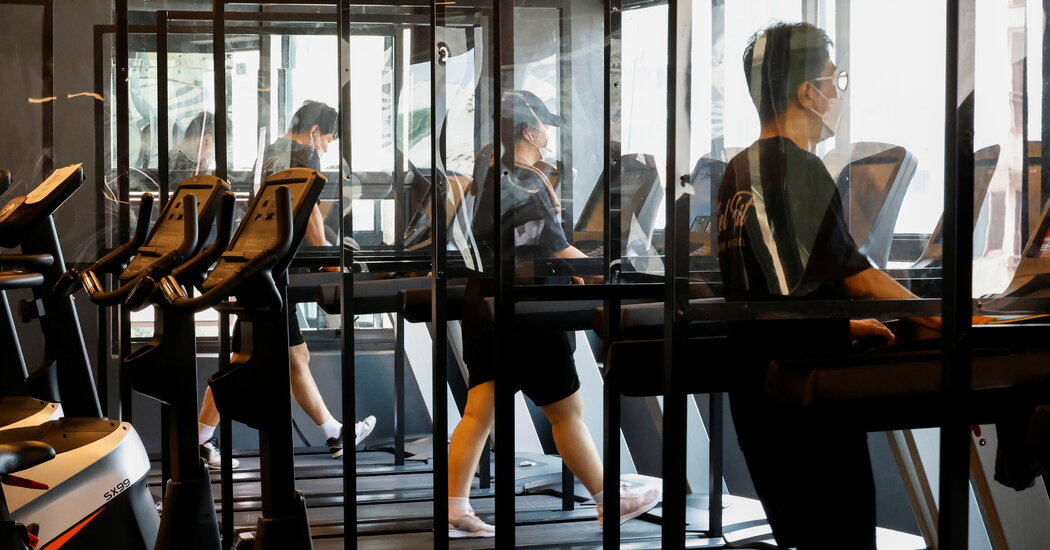
As Virus Cases Speed Up, Seoul Tells Gym Users to Slow Down

Treadmills can go no faster than a brisk walk, and songs must fall below 120 beats per minute, under new regulations that confused some exercisers in South Korea. “It seems weird to me,” one said.As South Korea endures its worst wave of the coronavirus yet, government officials rolled out a plan for Seoul on Monday that would limit social gatherings and close nightclubs, some of the routine steps that health officials around the world have taken to limit the spread of the virus.It also included some not-so-routine restrictions.Under the regulations, which are in effect through July 25, gyms can remain open, but the treadmills must run no higher than 3.7 miles per hour. And the music played at the gyms must be no faster than 120 beats per minute, roughly the speed of “Call Me Maybe” by Carly Rae Jepsen.Health officials said the measures were to prevent people from breathing too hard or sweating on other people. But gym-goers, epidemiologists and other observers were confused by the specific guidelines.Dr. Kim Woo-joo, an infectious disease specialist at Korea University Guro Hospital in Seoul, said the gym policies were “absurd” and “ineffective.”“I wish people would listen to the experts,” Dr. Kim said.Other songs around 120 beats per minute include “Born in the U.S.A.” by Bruce Springsteen, “Bad Romance” by Lady Gaga, “Respect” by Aretha Franklin and, appropriately, “The New Workout Plan” by Kanye West. (In K-pop terms, “Boombayah” by Blackpink comes in just over the line at 123 beats per minute, while the BTS hit “Boy With Luv” is barely permissible at 120.)A standard walking pace is a bit more than three miles per hour, putting 3.7 at roughly the speed one might move if someone else were holding a door open ahead.The restrictions are meant to battle a wave of virus cases that has alarmed many in South Korea, which had succeeded at maintaining low levels of infections throughout the pandemic but is now contending with the Delta variant and a flagging vaccination drive. Just 11 percent of the population is fully vaccinated, with 30 percent having had one dose, and appointments have been halted because of a lack of vaccine supply.Tuesday was the seventh straight day that South Korea recorded more than 1,000 new infections.Gyms, especially those offering group fitness classes, can present chances for the virus to spread, but the risk can be lowered by improving ventilation, distancing from other exercisers and wearing masks. The Centers for Disease Control and Prevention found that heavy breathing during intense exercise in confined indoor spaces increased chances of transmission.On Tuesday, some gym-goers in Seoul said they were relieved that facilities weren’t shut down entirely, as the government has mandated several other times during the pandemic, but they were confused by the new rules. Exercisers were also required to wear masks, even if fully vaccinated, and class sizes were limited.Kang Seung hyun, a teacher and former rugby player preparing for a fitness photo shoot, said his gym had elected to shut off the treadmills instead of enforcing the slow pace. The bikes, however, remained open for reasons he didn’t understand.“So we can’t run or use the treadmills, but we can bike? It seems weird to me,” he said.Ralph Yun, a CrossFit coach who has been teaching for the past five months, said listening to music at a similar pace to your heart rate could increase performance, but it doesn’t necessarily make you work out harder.“You could be listening to slow music and exercising just as intensely,” he said.Costas Karageorghis, a professor at Brunel University in London who has studied the effects of music on exercise for 30 years, was amused by the recommendations, calling them “ludicrous.”“If people are motivated enough to work out at a high intensity, there’s nothing about the music that’s going to stop them,” he said.That said, research has shown that music can significantly alter one’s workout, even if not in the way Korean authorities had intended.Dr. Karageorghis said the sweet spot for aerobic exercise, like running on a treadmill or cycling, was 120 to 140 beats per minute. The music can distract the mind from feelings of fatigue, lowering your perception of how hard the body is working and improving your mood. Louder music, above 75 decibels, can intensify a workout, though very loud music creates the risk of hearing problems like tinnitus.He said he was unsurprised the health officials chose 120 beats, as there has been research suggesting it was a “key cutoff” in some ways. It’s roughly twice the low end of a healthy resting heart rate, and 120 steps per minute is a common rate of walking, he said. Wedding D.J.s have told him they’ll use a 120-beat song to entice people onto the dance floor (Whitney Houston’s “I Wanna Dance With Somebody” checks in at about 120).But there’s much more to the energizing properties of music than the tempo, Dr. Karageorghis said, including inspiring lyrics. And while syncing strides with the music can increase intensity, most people don’t do that, Dr. Karageorghis said.Even if exercisers do sync their strides, keeping songs under 120 beats wouldn’t necessarily help: Some of the athletes he works with will choose a slower rap song and fit two strides into each beat.“There are many pieces of music that are far slower than 120 that are extremely energizing,” he said.

Read more →