Llama 'nanobodies' could hold key to preventing deadly post-transplant infection

Scientists have developed a ‘nanobody’ — a small fragment of a llama antibody — that is capable of chasing out human cytomegalovirus (HCMV) as it hides away from the immune system. This then enables immune cells to seek out and destroy this potentially deadly virus.
Around four out of five people in the UK are thought to be infected with HCMV, and in developing countries this can be as high as 95%. For the majority of people, the virus remains dormant, hidden away inside white blood cells, where it can remain undisturbed and undetected for decades. If the virus reactivates in a healthy individual, it does not usually cause symptoms. However, for people who are immunocompromised — for example, transplant recipients who need to take immunosuppressant drugs to prevent organ rejection — HCMV reactivation can be devastating.
At present, there is no effective vaccine against HCMV, and anti-viral drugs often prove ineffective or have very serious side-effects.
Now, in a study published in Nature Communications, researchers at Vrije Universiteit Amsterdam in the Netherlands and at the University of Cambridge have found a way to chase the virus from its hiding place using a special type of antibody known as a nanobody.
Nanobodies were first identified in camels and exist in all camelids — a family of animals that also includes dromedary, llamas and alpacas. Human antibodies consist of two heavy and two light chains of molecules, which together recognise and bind to markers on the surface of a cell or virus known as antigens. For this special class of camelid antibodies, however, only a single fragment of the antibody — often referred to as single domain antibody or nanobody — is sufficient to properly recognize antigens.
Dr Timo De Groof from Vrije Universiteit Amsterdam, the study’s joint first author, said: “As the name suggests, nanobodies are much smaller than regular antibodies, which make them perfectly suited for particular types of antigens and relatively easy to manufacture and adjust. That’s why they’re being hailed as having the potential to revolutionise antibody therapies.”
The first nanobody has been approved and introduced onto the market by biopharmaceutical company Ablynx, while other nanobodies are already in clinical trials for diseases like rheumatoid arthritis and certain cancers. Now, the team in The Netherlands and the UK have developed nanobodies that target a specific virus protein (US28), one of the few elements detectable on the surface of a HCMV latently infected cell and a main driver of this latent state.
Dr Ian Groves from the Department of Medicine at the University of Cambridge said: “Our team has shown that nanobodies derived from llamas have the potential to outwit human cytomegalovirus. This could be very important as the virus can cause life threating complications in people whose immune systems are not functioning properly.”
In laboratory experiments using blood infected with the virus, the team showed that the nanobody binds to the US28 protein and interrupts the signals established through the protein that help keep the virus in its dormant state. Once this control is broken, the local immune cells are able to ‘see’ that the cell is infected, enabling the host’s immune cells to hunt down and kill the virus, purging the latent reservoir and clearing the blood of the virus.
Dr Elizabeth Elder, joint first author, who carried out her work while at the University of Cambridge, said: “The beauty of this approach is that it reactivates the virus just enough to make it visible to the immune system, but not enough for it to do what a virus normally does — replicating and spreading. The virus is forced to put its head above the parapet where it can then be killed by the immune system.”
Professor Martine Smit, also from from the Vrije Universiteit Amsterdam, added: “We believe our approach could lead to a much-needed new type of treatment for reducing — and potentially even preventing — CMV infectious in patients eligible for organ and stem cell transplants.”
The research was funded by the Dutch Research Council (NWO), Wellcome and the Medical Research Council, with support from the NIHR Cambridge Biomedical Research Centre.

Read more →

Researchers automate brain MRI image labeling, more than 100,000 exams labelled in under 30 minutes

Researchers from the School of Biomedical Engineering & Imaging Sciences at King’s College London have automated brain MRI image labelling, needed to teach machine learning image recognition models, by deriving important labels from radiology reports and accurately assigning them to the corresponding MRI examinations. Now, more than 100,00 MRI examinations can be labelled in less than half an hour.
Published in European Radiology, this is the first study allowing researchers to label complex MRI image datasets at scale.
The researchers say it would take years to manually perform labelling of more than 100,000 MRI examinations.
Deep learning typically requires tens of thousands of labelled images to achieve the best possible performance in image recognition tasks. This represents a bottleneck to the development of deep learning systems for complex image datasets, particularly MRI which is fundamental to neurological abnormality detection.
Senior author, Dr Tom Booth from the School of Biomedical Engineering & Imaging Sciences at King’s College London said: “By overcoming this bottleneck, we have massively facilitated future deep learning image recognition tasks and this will almost certainly accelerate the arrival into the clinic of automated brain MRI readers. The potential for patient benefit through, ultimately, timely diagnosis, is enormous.”
Dr Booth said their validation was uniquely robust. Rather than evaluating their model performance on unseen radiology reports, they also evaluated their model performance on unseen images.
“While this might seem obvious, this has been challenging to do in medical imaging because it requires an enormous team of expert radiologists. Fortunately, our team is a perfect synthesis of clinicians and scientists,” Dr Booth said.
Lead Author, Dr David Wood from the School of Biomedical Engineering & Imaging Sciences said: “This study builds on recent breakthroughs in natural language processing, particularly the release of large transformer-based models such as BERT and BioBERT which have been trained on huge collections of unlabeled text such as all of English Wikipedia, and all PubMed Central abstracts and full-text articles; in the spirit of open-access science, we have also made our code and models available to other researchers to ensure that as many people benefit from this work as possible.”
The authors say that while one barrier has now been overcome, further challenges will be, firstly, to perform the deep learning image recognition tasks which also have multiple technical challenges; and secondly, once this is achieved, to ensure the developed models can still perform accurately across different hospitals using different scanners.
Dr Booth said: “This study was possible thanks to a very broad team of experts who are working on these challenges. There is a huge base of supporting organisers and facilitators who are equally important in delivering this research. Obtaining clean data from multiple hospitals across the UK is an important step to overcome the next challenges. We are running an NIHR portfolio adopted study across the UK to prospectively collect brain MRI data for this purpose.”
Story Source:
Materials provided by King’s College London. Note: Content may be edited for style and length.

Read more →

Scientists harness the naturally abundant CRISPR-Cas system to edit superbugs with the hope of treating infections caused by drug resistant pathogens

A research team led by Dr Aixin YAN, Associate Professor from the Research Division for Molecular & Cell Biology, Faculty of Science, in collaboration with Honorary Clinical Professor Patrick CY WOO from the Department of Microbiology, Li Ka Shing Faculty of Medicine, the University of Hong Kong (HKU), reported the development of a transferrable and integrative type I CRISPR-based platform that can efficiently edit the diverse clinical isolates of Pseudomonas aeruginosa, a superbug capable of infecting various tissues and organs and a major source of nosocomial infections. The technique can accelerate the identification of resistance determinants of multidrug resistant (MDR) pathogens and the development of novel anti-resistance strategies.
The research opened a new avenue to genomically edit those wild bacterial species and isolates, such as those with clinical and environmental significance and those forming human microbiome. It also provided a framework to harness other CRISPR-Cas systems widespread in prokaryotic genomes and expand the CRISPR-based toolkits. The research has been published in the leading science journal Nucleic Acids Research.
Background
CRISPR-Cas system comprises the adaptive immune system in prokaryotes that disarms invading viruses by cleaving their DNA. Owing to its unique capability of targeting and altering DNA sequences, CRISPR-Cas has been exploited as the next-generation genome editing method. The method is based on the Class 2 type II CRISPR/Cas9 system, which has revolutionised genetics and biomedical research in a plethora of organisms and was awarded the 2020 Nobel Prize in Chemistry. However, the Class 2 CRISPR-Cas systems represent only ?10% of the CRISPR-Cas systems encoded naturally in prokaryotes. Their applications to edit bacterial genomes are rather limited.
Remarkably, CRISPR-Cas systems belonging to different classes and types are continuously identified, and they serve as a deep reservoir for the expansion of the CRISPR-based toolkits. The most diverse and widely distributed CRISPR-Cas systems is the type I system which accounts for 50% of all CRISPR-Cas systems identified and has the potential to expand the CRISPR-based toolkits with distinctive advantages not accessible with the class 2 systems, such as high specificity, minimal off-targeting, and capable of large fragment deletions. However, type I CRISPR-Cas system hinges on a multi-component effector complex termed as Cascade to interfere DNA which is not readily transferrable to heterologous hosts, hindering the widespread application of these naturally abundant CRISPR for genome editing and therapeutics.
Key findings
Previously, the team has identified a highly active type I-F CRISPR-Cas system in a clinical multidrug resistant P. aeruginosa strain PA154197 which was isolated from a bloodstream infection case in Queen Mary Hospital. They characterised this CRISPR-Cas system and successfully developed a genome-editing method applicable in the MDR isolate based on this native type I-F CRISPR-Cas system. The method enabled rapid identification of the resistance determinants of the MDR clinical isolate and the development of a novel anti-resistance strategy (Cell Reports, 2019, 29, 1707-1717).
To overcome the barrier of transferring the complex type I Cascade to heterologous hosts, in this study, the team cloned the entire type I-F cas operon into an integration proficient vector mini-CTX and delivered the cassette into heterologous hosts by conjugation, a DNA transfer approach common in nature. The mini-CTX vector enabled the integration of the entire Cascade onto the conserved attB genetic locus in the genome of the heterologous hosts, enabling them to harbour a “native” type I-F CRISPR-Cas system that can be stably expressed and function. The team showed that the transferred type I-F Cascade displays a significantly greater DNA interference capacity and higher strain stability than the transferrable Cas9 system and can be employed for genome editing with efficiency ( >80%) and simplicity, i.e. by a one-step transformation of a single editing plasmid.
Furthermore, they developed an advanced transferrable system that includes both a highly active type I-F Cascade and a recombinase to promote the application of the system in strains with a poor homologous recombination capacity, wild P. aeruginosa isolates without genome sequence information, and in other Pseudomonas species. Lastly, the introduced type I-F Cascade genes can be readily removed from the host genomes through the I-F Cascade-mediated deletion of large DNA fragments, resulting in scarless genome editing in the host cells. The application of the transferrable system for gene repression was also demonstrated, highlighting the robust and diverse applications of the developed transferrable type I-F CRISPR system.
Dr Aixin Yan predicted that this novel method will be extended to editing not only pathogens but also microbiome to promote human health, she said: “We believe that CRISPR-based technology and therapies will bring new hopes to combatting superbugs in the future.”
Story Source:
Materials provided by The University of Hong Kong. Note: Content may be edited for style and length.

Read more →

Informing policy for long-term global food security

More than 820 million people in the world don’t have enough to eat, while climate change and increasing competition for land and water are further raising concerns about the future balance between food demand and supply. The results of a new IIASA-led study can be used to benchmark global food security projections and inform policy analysis and public debate on the future of food.
Despite the fact that food supply has increased dramatically since the 1960s, the question of how to eradicate global hunger — one of the Sustainable Development Goals — and feed the growing world population in years to come, remains a major challenge. Climate change and increasing competition for land and water are further exacerbating the problem, making the need for effective policies to ensure global food security and a better understanding of the main driving forces of global hunger ever more urgent.
Scientists typically use quantified global scenarios and projections to assess long-term future global food security under a range of socioeconomic and climate change scenarios. However, due to differences in model design and scenario assumptions, there is uncertainty about the range of food security projections and outcomes. To address this uncertainty, IIASA guest researcher Michiel van Dijk and colleagues conducted a systematic literature review and meta-analysis to assess the range of future global food security projections to 2050. Their study, which has been published in the journal Nature Food, focused on two key food security indicators: future food demand, which is a key driver of a required increase in food production, and associated impacts on land use change, biodiversity and climate change, and population at risk of hunger — an indicator of the number of people that face chronic food insecurity.
“Our study aimed to determine the range of future global food demand and population at risk of hunger projections to 2050. To answer this question, we analyzed 57 studies published between 2000 and 2018. We harmonized all projections and mapped them into the five highly divergent but plausible socioeconomic futures, including sustainable, business-as-usual, divided world, inequality, and conventional development scenarios,” van Dijk explains.
The study’s findings provide strong support for the view that food demand will increase by between 35% and 56% over the period 2010-2050, mainly due to population growth, economic development, urbanization, and other drivers. If climate change is taken into account, the range changes slightly, but overall with no statistical differences. Although less dramatic than the need to double current production as commonly stated in many other studies, the increase in demand may still have negative impacts on the environment and lead to biodiversity loss. In order to prevent such impacts, increases in food production would need to be accompanied by policies and investments that promote sustainable intensification and incorporate ecological principles in agricultural systems and practices, while also reducing food loss and waste and encouraging a shift towards more plant-based diets.
In the most negative scenarios, the population at risk of hunger is expected to increase by 8% (30% when the impact of climate change is considered) over the 2010-2050 period, which implies that the Sustainable Development Goal of ending hunger and achieving food security will not be achieved. To prevent this, the researchers urge policymakers to work proactively to develop adequate long-term measures, including stimulating inclusive growth.
“Our study can fuel the public debate on the future of food by inviting every citizen to imagine and discuss a wider range of food future scenarios, rather than just a binary choice between business-as-usual and the universal adoption of organic agriculture or vegan diets. To think responsibility and creatively about the future, we need to envision multiple plausible scenarios and evaluate their consequences,” notes study co-author Yashar Saghai, a researcher at the University of Twente, Enschede, the Netherlands.
Although the study did not explicitly investigate the impacts of the COVID-19 pandemic, the researchers say that it is plausible that their range also includes the now more likely negative COVID-induced futures that are associated with an increase in the population at risk of hunger, instead of a decrease of around 50% that was considered the pre-COVID business-as-usual.
“While it is too early to oversee and understand the full impact and consequences of the coronavirus pandemic, current developments show some resemblance to the most negative archetype scenarios in our analysis, which is characterized by slow economic development, a focus on domestic security and national sovereignty, and increasing inequality. This implies a potential significant increase in the number of population at risk of hunger between 2010 and 2050 in the worst case. Recent developments, underscore the need for (quantitative) scenario analysis and comparison as a tool to inform policy analysis, coordination, and planning for the future of food as well as wider societal issues,” van Dijk concludes.

Read more →

MRI, clear cell likelihood score correlate with renal mass growth rate

According to ARRS’ American Journal of Roentgenology (AJR), the standardized non-invasive clear cell likelihood score (ccLS) — derived from MRI — correlates with the growth rate of small renal masses (cT1a, 4 cm) and may help guide personalized management.
Extracted from clinical reports, “the ccLS scores the likelihood that the small renal mass represents clear cell renal cell carcinoma, from 1 (very unlikely) to 5 (very likely),” explained corresponding author Ivan Pedrosa from the University of Texas Southwestern Medical Center at Dallas. “Small renal masses with lower ccLS may be considered for active surveillance, whereas small renal masses with higher ccLS may warrant earlier intervention.”
Pedrosa and colleagues’ retrospective study included consecutive small renal masses assigned a ccLS on clinical MRI examinations performed between June 2016 and November 2019 at an academic tertiary-care medical center or its affiliated safety net hospital system. Tumor size measurements were extracted from available prior and follow-up cross-sectional imaging examinations, through June 2020.
Among 389 small renal masses in 339 patients (198 men, 141 women; median age, 65 years) on active surveillance that were assigned a ccLS on clinical MRI examinations, those with ccLS4-5 grew significantly faster (9% diameter, 29% volume yearly) than those with ccLS1-2 (5% diameter, p

Read more →

AI breakthrough could spark medical revolution

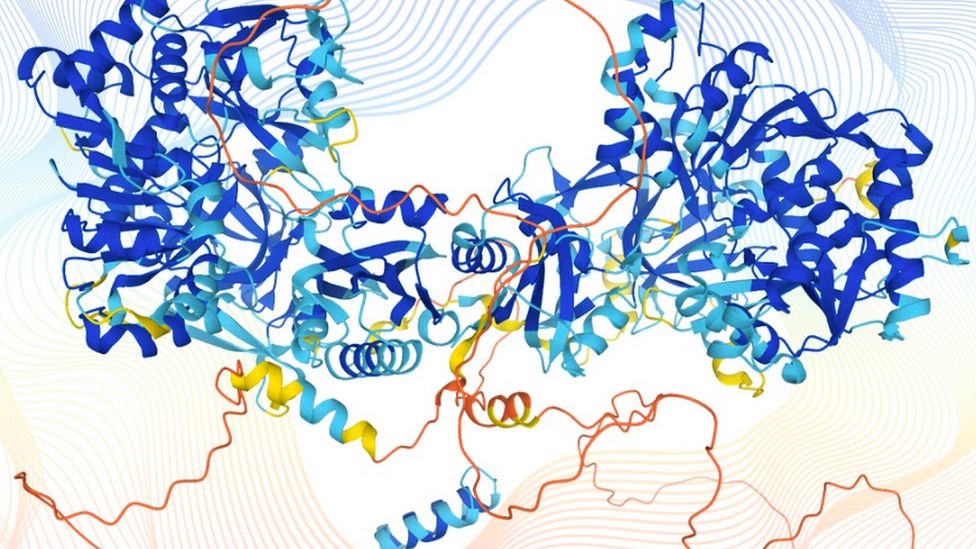
SharecloseShare pageCopy linkAbout sharingimage copyrightKaren ArnottArtificial intelligence has been used to predict the structures of almost every protein made by the human body.The development could help supercharge the discovery of new drugs to treat disease, alongside other applications.Proteins are essential building blocks of living organisms; every cell we have in us is packed with them.Understanding the shapes of proteins is critical for advancing medicine, but until now, only a fraction of these have been worked out.Researchers used a program called AlphaFold to predict the structures of 350,000 proteins belonging to humans and other organisms.The instructions for making human proteins are contained in our genomes – the DNA contained in the nuclei of human cells.There are around 20,000 of these proteins expressed by the human genome. Collectively, biologists refer to this full complement as the “proteome”.Commenting on the results from AlphaFold, Dr Demis Hassabis, chief executive and co-founder of artificial intelligence company Deep Mind, said: “We believe it’s the most complete and accurate picture of the human proteome to date.One of biology’s biggest mysteries ‘largely solved’ AI conquers challenge of 1980s platform games”We believe this work represents the most significant contribution AI has made to advancing the state of scientific knowledge to date. “And I think it’s a great illustration and example of the kind of benefits AI can bring to society.” He added: “We’re just so excited to see what the community is going to do with this.”image copyrightGetty ImagesProteins are made up of chains of smaller building blocks called amino acids. These chains fold in myriad different ways, forming a unique 3D shape. A protein’s shape determines its function in the human body. The 350,000 protein structures predicted by AlphaFold include not only the 20,000 contained in the human proteome, but also those of so-called model organisms used in scientific research, such as E. coli, yeast, the fruit fly and the mouse.This giant leap in capability is described by DeepMind researchers and a team from the European Molecular Biology Laboratory (EMBL) in the prestigious journal Nature.AlphaFold was able to make a confident prediction of the structural positions for 58% of the amino acids in the human proteome. The positions of 35.7% were predicted with a very high degree of confidence – double the number confirmed by experiments.Traditional techniques to work out protein structures include X-ray crystallography, cryogenic electron microscopy (Cryo-EM) and others. But none of these is easy to do: “It takes a huge amount of money and resources to do structures,” Prof John McGeehan, a structural biologist at the University of Portsmouth, told BBC News.Therefore, the 3D shapes are often determined as part of targeted scientific investigations, but no project until now had systematically determined structures for all the proteins made by the body.In fact, just 17% of the proteome is covered by a structure confirmed experimentally.Commenting on the predictions from AlphaFold, Prof McGeehan said: “It’s just the speed – the fact that it was taking us six months per structure and now it takes a couple of minutes. We couldn’t really have predicted that would happen so fast.””When we first sent our seven sequences to the DeepMind team, two of those we already had the experimental structures for. So we were able to test those when they came back. It was one of those moments – to be honest – where the hairs stood up on the back of my neck because the structures [AlphaFold] produced were identical.”image copyrightGetty ImagesProf Edith Heard, from EMBL, said: “This will be transformative for our understanding of how life works. That’s because proteins represent the fundamental building blocks from which living organisms are made.””The applications are limited only by our understanding.”Those applications we can envisage now include developing new drugs and treatments for disease, designing future crops that can resist climate change, and enzymes that can break down the plastic that pervades the environment. Prof McGeehan’s group is already using AlphaFold’s data to help develop faster enzymes for degrading plastic. He said the program had provided predictions for proteins of interest whose structures could not be determined experimentally – helping accelerate their project by “multiple years”.Dr Ewan Birney, director of EMBL’s European Bioinformatics Institute, said the AlphaFold predicted structures were “one of the most important datasets since the mapping of the human genome”.DeepMind has teamed up with EMBL to make the AlphaFold code and protein structure predictions openly available to the global scientific community.Dr Hassabis said DeepMind planned to vastly expand the coverage in the database to almost every sequenced protein known to science – over 100 million structures.Follow Paul on Twitter.

Read more →

A.I. Predicts the Shapes of Molecules to Come

DeepMind has given 3-D structure to 350,000 proteins, including every one made by humans, promising a boon for medicine and drug design.For some years now John McGeehan, a biologist and the director of the Center for Enzyme Innovation in Portsmouth, England, has been searching for a molecule that could break down the 150 million tons of soda bottles and other plastic waste strewn across the globe.Working with researchers on both sides of the Atlantic, he has found a few good options. But his task is that of the most demanding locksmith: to pinpoint the chemical compounds that on their own will twist and fold into the microscopic shape that can fit perfectly into the molecules of a plastic bottle and split them apart, like a key opening a door.Determining the exact chemical contents of any given enzyme is a fairly simple challenge these days. But identifying its three-dimensional shape can involve years of biochemical experimentation. So last fall, after reading that an artificial intelligence lab in London called DeepMind had built a system that automatically predicts the shapes of enzymes and other proteins, Dr. McGeehan asked the lab if it could help with his project.Toward the end of one workweek, he sent DeepMind a list of seven enzymes. The following Monday, the lab returned shapes for all seven. “This moved us a year ahead of where we were, if not two,” Dr. McGeehan said.Now, any biochemist can speed their work in much the same way. On Thursday, DeepMind released the predicted shapes of more than 350,000 proteins — the microscopic mechanisms that drive the behavior of bacteria, viruses, the human body and all other living things. This new database includes the three-dimensional structures for all proteins expressed by the human genome, as well as those for proteins that appear in 20 other organisms, including the mouse, the fruit fly and the E. coli bacterium.This vast and detailed biological map — which provides roughly 250,000 shapes that were previously unknown — may accelerate the ability to understand diseases, develop new medicines and repurpose existing drugs. It may also lead to new kinds of biological tools, like an enzyme that efficiently breaks down plastic bottles and converts them into materials that are easily reused and recycled.“This can take you ahead in time — influence the way you are thinking about problems and help solve them faster,” said Gira Bhabha, an assistant professor in the department of cell biology at New York University. “Whether you study neuroscience or immunology — whatever your field of biology — this can be useful.”Rich Evans, a DeepMind research scientist, at work on the project at the company’s London office.DeepMindThis new knowledge is its own sort of key: If scientists can determine the shape of a protein, they can determine how other molecules will bind to it. This might reveal, say, how bacteria resist antibiotics — and how to counter that resistance. Bacteria resist antibiotics by expressing certain proteins; if scientists were able to identify the shapes of these proteins, they could develop new antibiotics or new medicines that suppress them.In the past, pinpointing the shape of a protein required months, years or even decades of trial-and-error experiments involving X-rays, microscopes and other tools on the lab bench. But DeepMind can significantly shrink the timeline with its A.I. technology, known as AlphaFold.When Dr. McGeehan sent DeepMind his list of seven enzymes, he told the lab that he had already identified shapes for two of them, but he did not say which two. This was a way of testing how well the system worked; AlphaFold passed the test, correctly predicting both shapes.It was even more remarkable, Dr. McGeehan said, that the predictions arrived within days. He later learned that AlphaFold had in fact completed the task in just a few hours.AlphaFold predicts protein structures using what is called a neural network, a mathematical system that can learn tasks by analyzing vast amounts of data — in this case, thousands of known proteins and their physical shapes — and extrapolating into the unknown.This is the same technology that identifies the commands you bark into your smartphone, recognizes faces in the photos you post to Facebook and that translates one language into another on Google Translate and other services. But many experts believe AlphaFold is one of the technology’s most powerful applications.“It shows that A.I. can do useful things amid the complexity of the real world,” said Jack Clark, one of the authors of the A.I. Index, an effort to track the progress of artificial intelligence technology across the globe.As Dr. McGeehan discovered, it can be remarkably accurate. AlphaFold can predict the shape of a protein with an accuracy that rivals physical experiments about 63 percent of the time, according to independent benchmark tests that compare its predictions to known protein structures. Most experts had assumed that a technology this powerful was still years away.“I thought it would take another 10 years,” said Randy Read, a professor at the University of Cambridge. “This was a complete change.”But the system’s accuracy does vary, so some of the predictions in DeepMind’s database will be less useful than others. Each prediction in the database comes with a “confidence score” indicating how accurate it is likely to be. DeepMind researchers estimate that the system provides a “good” prediction about 95 percent of the time.A protein expressed by the E. coli bacterium. Researchers are using A.I. to understand how pathogens like E. coli and salmonella develop resistance to antibiotics, and to find ways of countering it.DeepMindAs a result, the system cannot completely replace physical experiments. It is used alongside work on the lab bench, helping scientists determine which experiments they should run and filling the gaps when experiments are unsuccessful. Using AlphaFold, researchers at the University of Colorado Boulder, recently helped identify a protein structure they had struggled to identify for more than a decade.The developers of DeepMind have opted to freely share its database of protein structures rather than sell access, with the hope of spurring progress across the biological sciences. “We are interested in maximum impact,” said Demis Hassabis, chief executive and co-founder of DeepMind, which is owned by the same parent company as Google but operates more like a research lab than a commercial business.Some scientists have compared DeepMind’s new database to the Human Genome Project. Completed in 2003, the Human Genome Project provided a map of all human genes. Now, DeepMind has provided a map of the roughly 20,000 proteins expressed by the human genome — another step toward understanding how our bodies work and how we can respond when things go wrong.The hope is also that the technology will continue to evolve. A lab at the University of Washington has built a similar system called RoseTTAFold, and like DeepMind, it has openly shared the computer code that drives its system. Anyone can use the technology, and anyone can work to improve it.Even before DeepMind began openly sharing its technology and data, AlphaFold was feeding a wide range of projects. University of Colorado researchers are using the technology to understand how bacteria like E. coli and salmonella develop a resistance to antibiotics, and to develop ways of combating this resistance. At the University of California, San Francisco, researchers have used the tool to improve their understanding of the coronavirus.The coronavirus wreaks havoc on the body through 26 different proteins. With help from AlphaFold, the researchers have improved their understanding of one key protein and are hoping the technology can help increase their understanding of the other 25.If this comes too late to have an impact on the current pandemic, it could help in preparing for the next one. “A better understanding of these proteins will help us not only target this virus but other viruses,” said Kliment Verba, one of the researchers in San Francisco.The possibilities are myriad. After DeepMind gave Dr. McGeehan shapes for seven enzymes that could potentially rid the world of plastic waste, he sent the lab a list of 93 more. “They’re working on these now,” he said.

Read more →

Why Everyone Has the Worst Summer Cold Ever

As pandemic restrictions begin to relax, common viruses that cause drippy noses, stuffy heads and other cold symptoms have roared back to taunt your immune system.Yes, the summer cold and cough season really is worse than usual.“I’ve had bad colds, but I’ve never experienced a virus like this,” said Holly Riddel, 55, an entrepreneur in Redondo Beach, Calif., who has been suffering from congestion, clogged ears and a raspy throat for about two weeks. “I want this gone. I haven’t been able to work out. I’m just not feeling like myself.”Months of pandemic restrictions aimed at Covid-19 had the unintended but welcome effect of stopping flu, cold and other viruses from spreading. But now that masks are off and social gatherings, hugs and handshakes are back, the run-of-the-mill viruses that cause drippy noses, stuffy heads, coughs and sneezes have also returned with a vengeance.“It was a bad chest cold — chest congestion, a rattling cough,” said Laura Wehrman, 52, a wardrobe supervisor for film and television, who caught a weeklong bug after flying to New York from Austin in late June to visit friends. Although she’s fully vaccinated against Covid-19, she took multiple tests to be sure she wasn’t infected. Eventually a doctor confirmed it was a rhinovirus, a common cold virus. She said several of her other friends also have been sick with colds and coughs as well.“I was staying with one of my best friends, and it got tense for a minute because she had started a new job, and she didn’t want to be sick,” said Ms. Wehrman. “I actually went and checked into a hotel for the last two days so I could just cough away by myself.”Infectious disease experts say there are a number of factors fueling this hot, sneezy summer. While pandemic lockdowns protected many people from Covid-19, our immune systems missed the daily workout of being exposed to a multitude of microbes back when we commuted on subways, spent time at the office, gathered with friends and sent children to day care and school.Although your immune system is likely as strong as it always was, if it hasn’t been alerted to a microbial intruder in a while, it may take a bit longer to get revved up when challenged by a pathogen again, experts say. And while some viral exposures in our past have conferred lasting immunity, other illnesses may have given us only transient immunity that waned as we were isolating at home.“Frequent exposure to various pathogens primes or jazzes up the immune system to be ready to respond to that pathogen,” said Dr. Paul Skolnik, an immunovirologist and chair of internal medicine at the Virginia Tech Carilion School of Medicine. “If you’ve not had those exposures, your immune system may be a little slower to respond or doesn’t respond as fully, leading to greater susceptibility to some respiratory infections and sometimes longer or more protracted symptoms.”The U.S. Centers for Disease Control and Prevention says that cases of common respiratory viruses, including respiratory syncytial virus (R.S.V.) and human parainfluenza viruses, which cause typical cold and flu symptoms, are on the rise this summer. The spike in R.S.V., which can be especially risky to the very young and very old, is particularly unusual for this time of year, said a spokeswoman at the C.D.C., which plans to release a report this week about the pandemic’s effect on a variety of respiratory viruses. The surge in R.S.V. was most notable in several southern states, but the virus has begun to crop up all over the country. Its spread has been tracked primarily in young children, some of whom have been hospitalized with severe symptoms.The R.S.V. surge, which has been seen in Europe, South Africa, Australia and New Zealand as well, is likely the result of pandemic lockdowns, which created a much larger population of susceptible young children. A cohort of babies, now toddlers, were largely protected from the virus when few of us were out and about. Since then, a new group of infants has been born — giving the virus the opportunity to infect roughly twice as many vulnerable children and creating more vectors to spread it to older children and adults, who typically have milder symptoms.Sue Huang, director of the World Health Organization’s National Influenza Centre at the Institute of Environmental Science and Research, New Zealand, said the country’s strict restrictions not only stopped Covid-19 but also wiped out R.S.V. and influenza as well, a finding Dr. Huang and colleagues published in the journal Nature in February.But as the country opened its borders to Australia, cases of R.S.V. spiked in a matter of weeks, as the virus preyed on a larger-than-usual group of susceptible children, many of whom were admitted to hospitals.“I haven’t seen anything like this in 20 years of working as a virologist,” said Dr. Huang. “There’s usually a degree of pre-existing immunity due to the previous winter. When you don’t have that kind of protection, it’s a bit like a wildfire. The fire can just continue, and the chain of transmission keeps going.”While doctors may test young children to confirm a case of R.S.V., and many people who have cold symptoms will be tested to rule out Covid-19, most people probably won’t know the specific respiratory virus causing their symptoms, said Dr. Kathyrn M. Edwards, professor of pediatrics at Vanderbilt University Medical Center.“We’re seeing each other again and sharing our viruses, and I think maybe we are all a little more susceptible to viruses we haven’t seen,” said Dr. Edwards. “To know exactly what each person has is hard to say. In adults, the symptoms by and large are the same, and you can’t tell if it’s R.S.V., rhinovirus, parainfluenza or another cold virus.”Satya Dandekar, an expert in viral infections and mucosal immunology, said that while isolation measures didn’t weaken our immune system, other factors, including stress, poor sleep habits and increased alcohol consumption, could play a role in how an individual immune system responds to a respiratory virus.“There is going to be a tremendous variable response in the community for who is going to respond and deal with infections well and who will get sick,” said Dr. Dandekar, chair of the department of medical microbiology and immunology at the University of California-Davis School of Medicine. “When a person gets exposed to a pathogen, there has to be a rapid ramp up of the response from the immune system and immune cells. With stress and other factors, the army of immune cells is a little hampered and slows down and may not be able to react fast enough to attack, giving enough time for the pathogen to get a hold on the host.”Allison Agwu, an infectious disease specialist at Johns Hopkins Children’s Center, said that even though many pandemic restrictions have been loosened, people should be mindful about taking precautions to prevent the spread of all respiratory illnesses.“Do the things we tell fifth graders: Wash your hands, cover your sneeze, get rest, all those things,” said Dr. Agwu. “And do your best to get vaccinated against the things you can. Get your Covid vaccine so you’re less paranoid when you get a cold.”The higher rate of R.S.V. and other respiratory viruses this summer was largely predicted in a paper last winter published in the Proceedings of the National Academy of Sciences. But what’s not clear is when the flu virus will re-emerge and what effect it will have. Rachel Baker, the study’s lead author and an epidemiologist and research scholar at Princeton University, said a potential worry will be if the flu, R.S.V. and Covid-19 all circulate at the same time.“The big puzzle is where is the flu?” said Dr. Baker. “I think it’s a very uncertain flu season. It’s not necessarily going to be worse, but when is it going to come back? And what is it going to look like?”Dr. Baker noted that she is currently struggling with her own summer cold, which she assumes she picked up when she ventured out to a local pub to watch the recent England versus Italy soccer match, which she felt safe doing after being fully vaccinated against Covid-19.“This was a very crowded pub, everyone was shouting at the TV and no one was wearing a mask apart from me,” she said. “I tried to stand near the door for better circulation. A few days later I got the cold. I can’t believe I wrote the paper on this, and I got the summertime cold.”

Read more →