Chronic health issues for third in late 40s – study

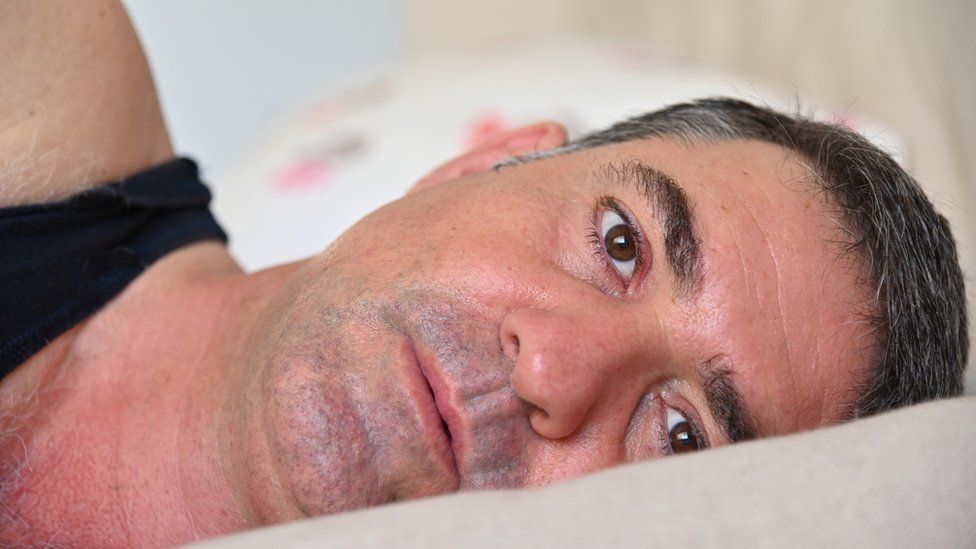
SharecloseShare pageCopy linkAbout sharingimage copyrightGetty ImagesAbout one in three middle-aged people has multiple chronic health issues, a long-running British study suggests. The 1970 British Cohort Study has been periodically tracking the lives of about 17,000 people born in England, Scotland and Wales in a single week.Nearly 8,000 of them were surveyed for the University College London work, published in journal BMC Public Health. And 34% had two or more chronic health problems, such as high blood pressure and mental ill-health, at age 46-48. The most commonly recorded health problems were: high-risk drinking – 26%recurrent back problems – 21%mental-health problems – 19%high blood pressure – 16%Arthritis, diabetes and asthma or bronchitis also featured.Lead researcher Dr Dawid Gondek said he was surprised and worried to see how many had health issues while “still relatively young”.”A substantial proportion of the population are already suffering from multiple long-term physical and mental-health problems in their late 40s. “It is not a good prospect for an aging population that you can expect to live longer but many in poor health.”Quitting smokingDiabetes and high blood pressure were both more common among those who were obese.Those from poorer backgrounds or who experienced mental ill health as a teenager were also more likely to have poor health. And the researchers suggest targeted public health interventions in childhood and adolescence might improve the outcomes of future generations. Even in later life, experts advise, a good diet, limiting alcohol intake, quitting smoking and taking regular exercise can make a difference. Related Internet LinksBMC Public HealthThe BBC is not responsible for the content of external sites.

Read more →

Indians turn to crowdfunding to pay Covid bills

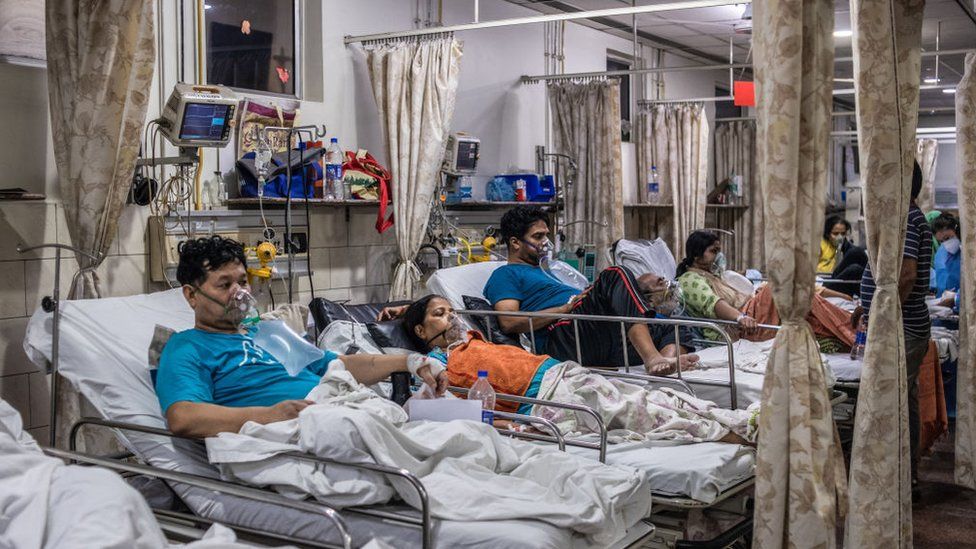
SharecloseShare pageCopy linkAbout sharingimage copyrightGetty ImagesHospitalisations soared in India during a deadly second Covid wave. Now, hobbled by patchy insurance, Indians are turning to crowdfunding to pay the steep medical bills, reports Astha Rajvanshi.Supraja Reddy Yeruva was unable to breathe properly for days after giving birth to her second child in June. The 27-year-old began showing Covid-19 symptoms during her pregnancy, shortly after visiting a hospital for a routine check-up.Soon, she contracted a severe lung infection and was admitted in the ICU at a private hospital in the southern city of Hyderabad. A month on, she is still there.With their six-year-old daughter and newborn son, her husband, Vijaya Yeruva, now anxiously waits for her recovery.Mr Yeruva is also scrambling to pay a hefty medical bill of nearly 6m rupees (£58,636; $80,615) for his wife’s treatment. And the amount goes up by the day.He used his health insurance, maxed out his credit cards and borrowed from the bank. After exhausting every other option, the 35-year-old turned to Ketto, a crowdfunding platform, and launched a fundraiser.image copyrightAlamyAn engineer with a steady monthly income of $2,960. Mr Yeruva said he never imagined asking strangers for money. “I worked hard to support my family and never asked anyone for help,” he said. “Even now, I’m embarrassed to tell people about this fundraiser.”His desperation reflects the plight of thousands of Indian families who now face the collateral damage from India’s devastating second Covid wave: crushing medical debt.Many have turned to crowdfunding to foot the hospital bills – and it has quickly emerged as a substitute for health insurance and government support. Experts said three of the biggest crowdfunding sites – Ketto, Milaap and Give India – have collectively raised around$161m with the help of 2.7 million donors so far during the pandemic. Ketto, where Mr Yeruva launched his fundraiser, said it grew four times during both waves, raising more than $40m for some 12,000 Covid-relief campaigns.”In many cases, crowdfunding became an alternate safety net to fill the existing gaps in the healthcare system,” said Ravina Banze and Irfan Bashir, co-authors of the book, Crowdfunding: The Story of People.Even before the pandemic, the greatest need for crowdfunding manifested in the lives of millions of sick people in India.Out-of-pocket healthcare expenses drove 38 million into poverty in 2011-2012, according to a 2018 study by the British Medical Journal and the Public Health Foundation of India (PHFI).There’s no data on how many more were pushed to financial ruin by medical debt during the pandemic, but a preliminary study by the Duke Global Health Institute and the PHFI estimates that two-thirds of India’s self-employed and half of its salaried workforce could not afford to pay for critical care.image copyrightGetty ImagesThe burden falls heaviest on India’s poorest, a group that last year increased by an additional 230 million Indians, according to researchers at Azim Premji University. More than 90% borrowed a median amount of $201 to pay off debts.India’s public spending on healthcare accounts for just 1.2% of its GDP – it’s among the lowest in the world, with roughly two-thirds of Indians going without any health insurance. “Having unexpected medical emergencies is a recipe for disaster when most people live under the constant threat of financial instability,” Mr Bashir said.In 2018, Prime Minister Narendra Modi promised free coverage to half a billion of India’s poorest citizens by launching “Modicare”, the world’s biggest health insurance scheme.But an analysis by Proxima Consulting found that only 13% of those eligible under the scheme were able to claim insurance when hospitalised for Covid treatment in public and private hospitals. The scheme does not cover outpatient costs either, which make up for a large part of medical expenses.In Nagpur city, Chinmayi Hiwase went from hospital to hospital for three days to beg for oxygen and a vacant bed for her 57-year-old father, Rajesh Hiwase. She thought her struggle with Covid was over.image copyrightChinmayi HiwaseBut an MRI scan of her father later detected an auto-immune disorder and mucormycosis or “black fungus”. The additional treatment, which includes daily injections costing $94 each, has added to the total cost of $33,633. It’s an unimaginable amount for the 25-year-old, who is a single child and recently graduated. “We were shocked when we saw the bills,” she said.Her father, who worked at a private engineering college, supported the family on a monthly salary of $605.Without health insurance, medical bills have eaten into Ms Hiwase’s savings, forcing them to borrow money from friends and, eventually, start an online fundraiser.So far, the family has raised $11,956, almost half the amount they requested. “I didn’t realize how helpful [crowdfunding] could be,” Chinmayi Hiwase said, sighing with relief.”Crowdfunding has essentially given those individuals who can’t afford private hospitals an opportunity to get themselves admitted,” Ms Banze said.Donors are often family and friends of those who start fundraisers, but there are also NGOs, celebrities and strangers, in India and abroad, who feel compelled to give.But donations are often directed towards the most heart-wrenching stories or patients with strong social networks. Ms Banze and Mr Bashir worry that this fosters an environment where people are empathising only with the most severe cases.”Not everyone is a great storyteller, and not everyone has the most extreme story,” they said. With half the country unable to access the internet, crowdfunding can also create “information asymmetry” by preventing those on the lowest rungs of society from tapping into its power. Despite donations, Ms Hiwase’s financial troubles are far from over. Loans still need to be repaid, and her father’s treatment will also take a long time.”We could barely afford an injection without the help of others,” she said. “I don’t know what those who don’t have that kind of support would do.”In Hyderabad, Mr Yeruva is contemplating selling his assets and even his house to pay for his wife’s treatment. “It will take years for things to go back to normal, but I want to make sure our kids have their mother,” he said.Astha Rajvanshi is a freelance journalist and fellow at the Institute of Current World Affairs, based in Delhi.You may also be interested in:

Read more →

Global dementia cases forecasted to triple by 2050

Positive trends in global education access are expected to decrease dementia prevalence worldwide by 6.2 million cases by the year 2050. Meanwhile, anticipated trends in smoking, high body mass index and high blood sugar are predicted to increase prevalence by nearly the same number: 6.8 million cases. Both according to new global prevalence data reported at the Alzheimer’s Association International Conference® (AAIC®) 2021 in Denver and virtually.
With these forecasts incorporated, researchers with the Institute for Health Metrics and Evaluation at the University of Washington School of Medicine reported at AAIC 2021 that they estimate the number of people with dementia will nearly triple to more than 152 million by 2050. The highest increase in prevalence is projected to be in eastern sub-Saharan Africa, North Africa and the Middle East.
“Improvements in lifestyle in adults in developed countries and other places — including increasing access to education and greater attention to heart health issues — have reduced incidence in recent years, but total numbers with dementia are still going up because of the aging of the population,” said Maria C. Carrillo, Ph.D., Alzheimer’s Association chief science officer. “In addition, obesity, diabetes and sedentary lifestyles in younger people are rising quickly, and these are risk factors for dementia.”
The U.S. National Institute on Aging estimates people over the age of 65 will make up 16% of the world’s population by 2050 — up from 8% in 2010.
Also reported at AAIC 2021 were two other prevalence/incidence studies. Key findings include: Each year, an estimated 10 in every 100,000 individuals develop dementia with early onset (prior to age 65). This corresponds to 350,000 new cases of early onset dementia per year, globally. From 1999 to 2019, the U.S. mortality rate from Alzheimer’s in the overall population significantly increased from 16 to 30 deaths per 100,000, an 88% increase. Among all areas of the U.S., mortality rates for Alzheimer’s were highest in rural areas in the East South Central region of the U.S., where the death rate from Alzheimer’s is 274 per 100,000 in those over 65.Global Prevalence of Dementia Expected to Grow Rapidly through 2050
To more accurately forecast global dementia prevalence and produce country-level estimates, Emma Nichols, MPH, a researcher with the Institute for Health Metrics and Evaluation at the University of Washington School of Medicine, and colleagues leveraged data from 1999 to 2019 from the Global Burden of Disease (GBD) study, a comprehensive set of estimates of health trends worldwide. This study also aimed to improve on prior forecasts by incorporating information on trends in dementia risk factors.

Read more →

Plastic, the Trojan Horse

A new study has found plastic accumulation in foods may be underestimated. There is also concern these microplastics will carry potentially harmful bacteria such as E. coli, which are commonly found in coastal waters, up the food chain.

Read more →

Patients report long-term favorable effects of weight loss surgery in their daily lives

A new analysis from the STAMPEDE trial shows that over the course of five years, patients who had bariatric and metabolic surgery to treat uncontrolled type 2 diabetes reported greater physical health, more energy, less body pain, and less negative effects of diabetes in their daily lives, compared with patients who had medical therapy alone for their diabetes.
Long-term changes in psychosocial and emotional quality of life measures were not significantly different between the surgical and medical groups. The research was published in the Annals of Surgery.
“Chronic diseases, such as severe obesity and diabetes, can negatively affect quality of life,” said Ali Aminian, M.D., director of Cleveland Clinic’s Bariatric & Metabolic Institute and lead author of the study. “It is important to study the effects of different treatments on the well-being of patients in their daily lives.”
The Cleveland Clinic-led STAMPEDE study (Surgical Therapy and Medications Potentially Eradicate Diabetes Efficiently) was the first randomized controlled clinical trial that compared head-to-head bariatric surgery with intensive medical therapy for the treatment of type 2 diabetes in patients with poorly controlled diabetes and obesity.
The trial initially involved 150 participants, who were divided into three groups: 1) Fifty patients received intensive medical therapy only, including counseling and medications; 2) Fifty patients underwent Roux-en-Y gastric bypass surgery and received medical therapy; 3) Fifty patients underwent sleeve gastrectomy and received medical therapy. Effectiveness was gauged by the percentage of patients who achieved blood sugar control, defined in this study as HbA1c level of less than or equal to 6.0 percent — a more aggressive target than the American Diabetes Association’s guidelines. HbA1c is a standard laboratory test that reflects average blood sugar over three months.
The study’s initial results showed that metabolic surgery is superior to medical therapy alone for achieving weight loss and diabetes control with less reliance on anti-diabetic medications. The five-year results showed that the benefits of metabolic surgery persist over time.

Read more →

Model can predict how drug interactions influence antibiotic resistance

Scientists have proposed a modelling framework which could predict how antibiotic resistance will evolve in response to different treatment combinations, according to a study published July 22 in eLife.
The research could help doctors optimise the choice, timing, dose and sequence of antibiotics used to treat common infections, helping to halt the growing threat of antibiotic resistance to modern medicine.
“Drug combinations are a particularly promising approach for slowing resistance, but the evolutionary impacts of combination therapy remain difficult to predict, especially in a clinical setting,” explains first author Erida Gjini, Researcher at the Department of Mathematics, Instituto Superior Tecnico, University of Lisbon, Portugal. “Interactions between antibiotics can accelerate, reduce or even reverse the evolution of resistance, and resistance to one drug might also influence resistance to another. These interactions involve genes, competing evolutionary pathways and external stressors, making it a complex scenario to pick apart.”
In their study, Gjini and co-author Kevin Wood of the University of Michigan, US, sought to simplify things. They took a fundamental measurement of microbe fitness — their growth rate, measured by a simple growth curve over time — and linked this to resistance to two theoretical drugs. In the model, they assumed that drug-resistant mutants respond to a high concentration of drug in exactly the same way that drug-sensitive cells respond to a low concentration of drug. This rescaling assumption means that the growth behaviour of mutants can be inferred from the behaviour of the ancestral (sensitive) cells, simply by measuring their growth over a range of concentrations. The team then connected this assumption to a famous statistical relationship, called the Price equation, to explain how drug interactions and cross-resistance impact the way populations evolve resistance quantitatively and adapt to drug combinations.
This rescaling model showed that the selection of resistance traits is determined by both the drug interaction and by cross-resistance (where cells develop resistance to one of the drugs and become resistant to the second drug at the same time). A mixture of two drugs in the model leads to markedly different growth trajectories and rates of growth adaptation, depending on how the drugs interact. For example, growth adaptation can be slowed by drugs that mutually weaken one another — drugs that interact ‘antagonistically’ — but the effect can be tempered or even reversed if resistance to one drug is highly correlated with resistance to the other. The predictions of the model help explain counterintuitive behavior observed in past experiments, such as the slowed evolution seen when combinations of tigecycline and ciprofloxacin — two antibiotics commonly used in clinical settings — are applied simultaneously to the opportunistic pathogen Enterococcus faecalis.
Having established the basic model, the team then added in the effect of mutations on drug resistance. They looked at two different routes to accumulating mutations: in the first, there was a uniform pathway between the ancestral genetics and all possible mutation combinations. In the second, they assumed that mutations must arise in a specific sequence. They used a theoretical combination of two drugs, one at a higher dose than the other, and found that the sequential pathway leads to slower adaptation of growth, reflecting its evolution to the first fittest mutant before adapting further.
In addition to being able to include mutations in the model, the team also tested whether they could predict the effects of different timings and sequences of antibiotic treatment. They studied two sequential regimes, A and B, based on different dosage combinations of tigecycline and ciprofloxacin. They found that both the resistance levels to the two drugs and the growth rate increases during treatment, as they anticipated. But the dynamics of this increase depends on the relative duration of each treatment and the total treatment length.
“We have built a model that incorporates drug interactions and cross-resistance to predict how microbes will adapt over time in a way that can then be experimentally measured,” concludes co-author Wood, who is an Associate Professor at U-M’s Departments of Biophysics and Physics. “In contrast to the classical genetics-based approaches to studying drug resistance, we used simple scaling assumptions — something commonly used in physics — to dramatically reduce the complexity of the problem. The approach helps us unravel a number of competing evolutionary effects and may eventually offer a framework for optimising time-dependent, multidrug treatments.”
This study has been published as part of Evolutionary Medicine: A Special Issue from eLife. To view the Special Issue, visit https://elifesciences.org/collections/8d9426aa/evolutionary-medicine-a-special-issue.
The study was supported by Fundação Luso-Americana para o Desenvolvimento (FLAD) grant 274/2016 and partly by Instituto Gulbenkian de Ciência (to Erida Gjini), and by the National Institutes of Health (1R35GM124875 to Kevin Wood) and the National Science Foundation (1553028, also to Wood).
Story Source:
Materials provided by eLife. Note: Content may be edited for style and length.

Read more →

Black American women with vitamin D insufficiency more likely to test positive for COVID-19, study finds

Can vitamin D protect Black women from COVID-19? According to research led by Boston University’s Slone Epidemiology Center, the answer may be yes. In a recent study of Black American women, low levels of vitamin D appeared to be related to increased incidence of COVID-19 infection.
Researchers from Boston University’s Slone Epidemiology Center assessed levels of vitamin D (deficient, insufficient and sufficient) among women who had been tested for COVID-19 using data from the Black Women’s Health Study (BWHS), a prospective cohort study established in 1995, when 59,000 black women ages 21 through 69 years enrolled by completing health questionnaires.
These findings appear online in the journal PLOS ONE.
The study estimated that Black American women with deficient levels of vitamin D had a 69 percent greater risk of COVID-19 infection than women with sufficient vitamin D levels. The association between low serum vitamin D and higher risk of infection was strongest among women with obesity, an important finding given the higher prevalence of obesity among Black women compared to other American women.
A few other studies have reported inverse associations between vitamin D and COVID-19 infection, but these were largely in Whites or did not provide estimates according to either race or BMI. As the first published analysis on the relation of serum vitamin D and COVID-19 infection in Black women, these findings may help to explain why Black women are overrepresented among COVID-19 cases, as this population commonly experiences vitamin D insufficiency. The study also shows that a number of important factors related to risk of COVID-19 infection, including number of people in the household, years of education and residential neighborhood socioeconomic status, did not account for the association.
It is widely known that vitamin D deficiency and obesity are associated with risk of chronic diseases like osteoporosis, cancer, and cardiovascular disease. These findings add COVID-19 to that list.
“Nearly one out of four people have vitamin D blood levels that are too low or inadequate for bone and overall health,” says lead author Yvette Cozier, DSc, associate professor of epidemiology at Boston University School of Public Health and an investigator on the Black Women’s Health Study at BU’s Slone Epidemiology Center. “Our study provides another reason why adequate levels of vitamin D are important — the possibility of lowering risk of COVID-19 infection.”
Clinical trials now are underway to determine whether vitamin D helps reduce the risk of COVID-19 or helps reduce symptoms in people who have COVID-19, but results are not yet available.
Further research is needed to confirm these findings and determine the optimal level of vitamin D for a beneficial effect against COVID-19.
Story Source:
Materials provided by Boston University School of Medicine. Note: Content may be edited for style and length.

Read more →

Emphasize personal health benefits of COVID-19 vaccination, experts say

Messages emphasizing the personal health benefits of COVID-19 vaccines have the best chance of increasing vaccination levels across the nation, according to research conducted by University of Wyoming economists.
“Our findings suggest that several forms of public messages can increase vaccination intentions, but messaging that emphasizes personal health benefits had the largest impact,” says UW Ph.D. student Madison Ashworth, lead author of a paper that appears today in the Proceedings of the National Academy of Sciences.
The new research is the latest in a series of coronavirus-related studies conducted by UW College of Business economists Ashworth, Linda Thunstrom, Todd Cherry, Stephen Newbold and David Finnoff.
The researchers were among the first to identify vaccine hesitancy as a potential stumbling block in the effort to end the COVID-19 pandemic, and vaccine hesitancy has turned out to be prevalent. Recent surveys suggest that 60-70 percent of U.S. adults intend to be vaccinated for COVID-19, which falls short of the threshold identified by public health experts to achieve herd immunity.
To examine the impact on vaccine intentions of a variety of public health messages, the researchers surveyed a representative sample of 3,048 adults in the United States. The economists compared three messages that described the benefits of taking the vaccine: benefits to personal health; benefits to the health of family, friends and community members; and benefits to local and national economies — as well as a fourth message that emphasized the rigor and safety protocols of the vaccine development process. They also examined the effect of combining multiple messages.
The message about private health benefits increased intended vaccinations by 16 percentage points, significantly more than the other messages.

Read more →

Early signs: Perceptual distortions in late-teens predict psychotic symptoms in mid-life

Schizophrenia is often diagnosed well into adulthood, typically from the late teens to early 40s. Are there early indicators that could help predict which individuals will go on to develop this serious mental illness?
Researchers in clinical psychology and psychiatry have long sought to answer this question. New research by Distinguished Professor Mark F. Lenzenweger at Binghamton University and Weill Cornell Medical College could point the way.
In “Schizotypy 17 years on: Psychotic symptoms in midlife,” recently published in the Journal of Abnormal Psychology, Lenzenweger explored the development of psychotic symptoms in 191 individuals with no prior history of psychosis; first assessed in their young adulthood (age 17-18), study participants were assessed a second time in their mid-30s.
Lenzenweger found that subtle differences in perception during their late-teen years predicted the development of hallucinations, delusions, and, in some instances, psychosis later in life. These early perceptual distortions included a heightened awareness of sound or color, uncertainty about the boundaries of one’s body, feeling that the world around them is tilting, and similar experiences.
“We discovered that people, who were free of psychotic illness at age 18, would show hallucination and delusion symptoms in mid-life if they showed many very subtle disturbances in their perception early on,” he said.
Anxiety and depression played no role in the development of psychotic symptoms in mid-life, he added.
The precise causes of illnesses such as schizophrenia are largely unknown, although genetics and brain-based factors are known to play an essential role. Approximately 3.5 million people have the illness in the United States, with an estimated annual healthcare cost of more than $155 billion.
“These new findings point to a specific focus for future research to drill more deeply into the biological factors driving psychotic illness and real-world experiences in the form of perceptual disturbances,” Lenzenweger said. “Understanding the nature of such perceptual aberrations might provide more clues as to what is going on in the development of schizophrenia and other similar conditions.”
Story Source:
Materials provided by Binghamton University. Note: Content may be edited for style and length.

Read more →