China Covid: China targets school students to control case surge

SharecloseShare pageCopy linkAbout sharingimage sourceGetty ImagesChinese authorities are targeting students as part of their latest vaccination campaign, as China sees its biggest virus surge in months. The government reported 71 new domestic cases on Wednesday – the highest daily count since January. A vaccination campaign for minors aged 12 to 17 is being expanded to try and combat the spread of the highly contagious delta variant.The latest cases have now spread to at least 16 provinces and municipalities.It is unclear how many in China are fully vaccinated, although authorities say more than 1.6 billion doses have been administered so far.China’s Ministry of Education has asked local authorities to implement a programme targeting vaccinations of school students. Several provinces are already giving school students the jab, but the pressure is on to achieve the government’s target of having 80 to 85 percent of the entire population vaccinated by the end of the year. However, local media pointed to doubts over whether current prevention measures to combat the virus are still working.Experts quoted said the outbreak was under control but more efforts were needed to “plug the loopholes” in controlling the virus, alongside vaccinations and social distancing.The latest outbreak started in Nanjiang in the eastern Jiangsu province before spreading to the tourist destination of Zhangjiajie in central Hunan province. From there, tourists carried the virus to at least a dozen cities, including large hubs like Beijing and Chongqing.The city of Yangzhou, which is also in Jiangsu and has a population of more than 4.5 million people, has been put under restrictions after 40 cases were detected.It’s thought a 64-year-old woman, who travelled from Nanjiang to Yangzhou and visited popular parlours to play cards, is responsible for the spike in the city. She is now being investigated by police for hiding her travel itinerary from authorities. Wuhan to test whole population as virus resurfacesConcerns in China as Delta Covid outbreak spreadsAuthorities in Wuhan have also started testing the entire population of 11 million people after a handful of cases were detected.image sourceGetty ImagesThe city was thrown into the spotlight after the coronavirus first emerged there in 2019.The gambling hub of Macau is also testing all 600,000 residents, after the city recorded four new coronavirus cases.Local media has reported that some of the people who have tested positive were fully vaccinated, leading to discussion online about the threat of breakthrough infections and whether a booster shot is needed.Officials say vaccines continue to be effective against all the variants so far, and can protect people from severe symptoms and hospitalisations, according to The Global Times.

Read more →

Long-lasting Covid-19 symptoms rare in children

SharecloseShare pageCopy linkAbout sharingimage sourceGetty ImagesChildren who become ill with coronavirus rarely experience long-term symptoms, with most recovering in less than a week, research suggests.King’s College London scientists say that while a small group may experience prolonged illness, they were “reassured” that number was low.Headaches and tiredness were the most common symptoms seen.A Royal College of Paediatrics and Child Health expert said the data reflected what doctors saw in clinics.Long Covid: What is it and what are the symptoms?Long Covid: Will I ever get better?Covid: Children’s extremely low risk confirmed by studyCompared to adults, children are far less at risk of coronavirus. Many who are infected do not develop symptoms and those that do, tend to have a mild illness.This peer-reviewed study, published in the Lancet Child and Adolescent Health journal, wanted to understand how Covid affected children and how it compared to other respiratory diseases.It used data provided by parents or carers to the UK Zoe Covid Study app.The study looked at 1,734 children, aged between five and 17, who were reported to have developed symptoms and tested positive for Covid between September 2020 and February 2021.Fewer than one in 20 of those with Covid experienced symptoms for four weeks or more, with one in 50 having symptoms for more than eight weeks.On average, older children were typically ill for slightly longer than primary school children, with those aged between 12 and 17 taking a week to recover while for younger children the illness lasted five days.The most common symptoms reported were headaches and tiredness. Other common symptoms included a sore throat, and loss of smell. There were no reports of neurological symptoms such as fits or seizures. ‘Listen to families’The team also looked at an equal number of children who had symptoms but tested negative for Covid.Only a few children – 15 out of 1,734 – had symptoms for at least 28 days, fewer than one in 100. Emma Duncan, professor of clinical endocrinology at King’s College London who worked on the research, said the “takeaway message” was: “Can children have prolonged illness after Covid-19? Yes they can, but it’s not common and most of these children get better with time. “Children can also have prolonged symptoms from other illnesses as well. We need to be looking after all children who have protracted illnesses, irrespective of whether that illness is Covid-19 or anything else.”Dr Michael Absoud, a consultant in paediatric neurodisability at Evelina London Children’s Hospital and a senior author of the study, says it’s important to listen to families who say their children have symptoms.”If you are concerned about your child, the first thing you need to do is go to your GP and describe your particular symptoms,” he explains. “They can provide information or refer you to a paediatrician. It’s important to remember there may be something else going on.”If they think it is related to Covid, there are NHS clinics dedicated to providing advice on how to approach this. Hopefully they will be properly funded to support this small proportion of children.”Dr Liz Whittaker, infectious disease lead at the Royal College of Paediatrics and Child Health who was not involved in the research, said: “This study is reassuring for the majority of children and young people who develop Sars-CoV-2 infection, and reflects what paediatricians are seeing in clinical practice.”

Read more →

F.D.A. Aims to Give Final Approval to Pfizer Vaccine by Early Next Month

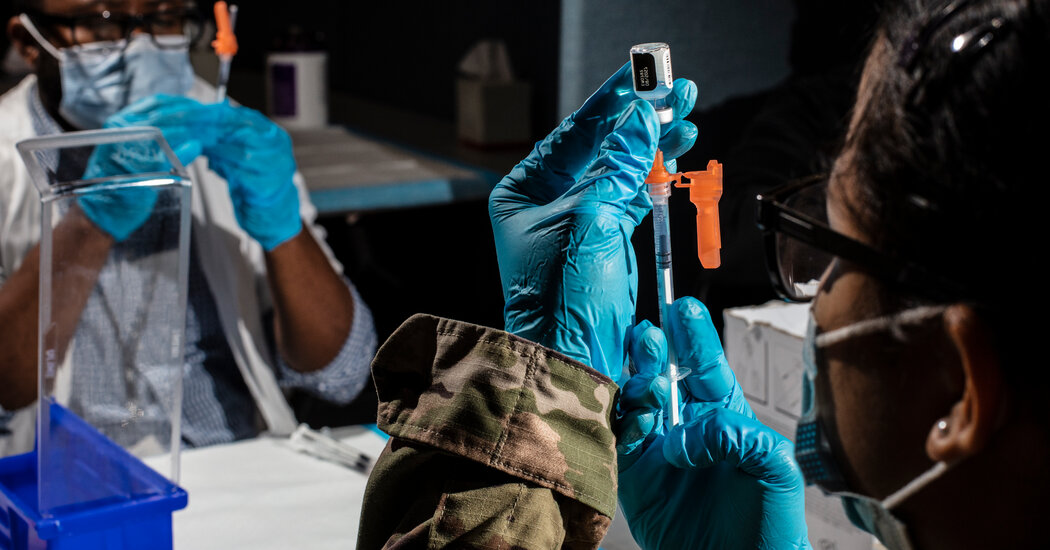
The Food and Drug Administration’s move is expected to kick off more vaccination mandates for hospital workers, college students and federal troops.WASHINGTON — With a new surge of Covid-19 infections ripping through much of the United States, the Food and Drug Administration has accelerated its timetable to fully approve Pfizer-BioNTech’s coronavirus vaccine, aiming to complete the process by the start of next month, people involved in the effort said.President Biden said last week that he expected a fully approved vaccine in early fall. But the F.D.A.’s unofficial deadline is Labor Day or sooner, according to multiple people familiar with the plan. The agency said in a statement that its leaders recognized that approval might inspire more public confidence and had “taken an all-hands-on-deck approach” to the work.Giving final approval to the Pfizer vaccine — rather than relying on the emergency authorization granted late last year by the F.D.A. — could help increase inoculation rates at a moment when the highly transmissible Delta variant of the virus is sharply driving up the number of new cases.A number of universities and hospitals, the Defense Department and at least one major city, San Francisco, are expected to mandate inoculation once a vaccine is fully approved. Final approval could also help mute misinformation about the safety of vaccines and clarify legal issues about mandates.Federal regulators have been under growing public pressure to fully approve Pfizer’s vaccine ever since the company filed its application on May 7. “I just have not sensed a sense of urgency from the F.D.A. on full approval,” Dr. Ashish K. Jha, the dean of the Brown University School of Public Health, said in an interview on Tuesday. “And I find it baffling, given where we are as a country in terms of infections, hospitalizations and deaths.”Although 192 million Americans — 58 percent of the total population and 70 percent of the nation’s adults — have received at least one vaccine shot, many remain vulnerable to the ultracontagious, dominant Delta variant. The country is averaging nearly 86,000 new infections a day, an increase of 142 percent in just two weeks, according to a New York Times database.Recent polls by the Kaiser Family Foundation, which has been tracking public attitudes during the pandemic, have found that three of every 10 unvaccinated people said that they would be more likely to get a shot with a fully approved vaccine. But the pollsters warned that many respondents did not understand the regulatory process and might have been looking for a “proxy” justification not to get a shot.Moderna, the second most widely used vaccine in the United States, filed for final approval of its vaccine on June 1. But the company is still submitting data and has not said when it will finish. Johnson & Johnson, the third vaccine authorized for emergency use, has not yet applied but plans to do so later this year.Full approval of the Pfizer vaccine will kick off a patchwork of vaccination mandates across the country. Like most other employees of federal agencies, civilians working for the Defense Department must be vaccinated or face regular testing. But the military has held off on ordering shots for 1.3 million active-duty service members until the F.D.A. acts.The City of San Francisco has said its roughly 44,500 employees must be fully vaccinated within 10 weeks of F.D.A. approval. The State University of New York, with roughly 400,000 students, is on a parallel track.A number of health care systems have issued similar mandates to employees, including Beaumont Health, the largest health provider in Michigan, with 33,000 employees, and Mass General Brigham in Massachusetts, with about 80,000 workers.Full approval typically requires the F.D.A. to review hundreds of thousands of pages of documents — roughly 10 times the data required to authorize a vaccine on an emergency basis. The agency can usually complete a priority review within six to eight months and was already working on an expedited timetable for the Pfizer vaccine. The F.D.A.’s decision to speed up was reported last week by Stat News.In a guest essay in The Times last month, Dr. Peter Marks, the agency’s top vaccine regulator, wrote that undue haste “would undermine the F.D.A.’s statutory responsibilities, affect public trust in the agency and do little to help combat vaccine hesitancy.”The regulators want to see real-world data on how the vaccine has been working since they authorized it for emergency use in December. That means verifying the company’s data on vaccine efficacy and immune responses, reviewing how efficacy or immunity might decline over time, examining new infections in participants in continuing clinical trials, reviewing adverse reactions to vaccinations and inspecting manufacturing plants.At the same time, senior health officials at the F.D.A. and other agencies are grappling with whether at least some people who are already vaccinated need booster shots. Several officials are arguing that boosters will be widely needed before long, while others contend that the scientific basis for them remains far from settled.Two people familiar with the deliberations, speaking on the condition of anonymity, said that if booster shots are needed, the administration wants a single strategy for all three vaccines currently authorized for emergency use.Different recommendations on boosters for different vaccines, they said, could confuse the public. Fully approving a vaccine and then authorizing a booster for it soon after might also offer conflicting messages about its effectiveness..css-1xzcza9{list-style-type:disc;padding-inline-start:1em;}.css-3btd0c{font-family:nyt-franklin,helvetica,arial,sans-serif;font-size:1rem;line-height:1.375rem;color:#333;margin-bottom:0.78125rem;}@media (min-width:740px){.css-3btd0c{font-size:1.0625rem;line-height:1.5rem;margin-bottom:0.9375rem;}}.css-3btd0c strong{font-weight:600;}.css-3btd0c em{font-style:italic;}.css-w739ur{margin:0 auto 5px;font-family:nyt-franklin,helvetica,arial,sans-serif;font-weight:700;font-size:1.125rem;line-height:1.3125rem;color:#121212;}#NYT_BELOW_MAIN_CONTENT_REGION .css-w739ur{font-family:nyt-cheltenham,georgia,’times new roman’,times,serif;font-weight:700;font-size:1.375rem;line-height:1.625rem;}@media (min-width:740px){#NYT_BELOW_MAIN_CONTENT_REGION .css-w739ur{font-size:1.6875rem;line-height:1.875rem;}}@media (min-width:740px){.css-w739ur{font-size:1.25rem;line-height:1.4375rem;}}.css-9s9ecg{margin-bottom:15px;}.css-uf1ume{display:-webkit-box;display:-webkit-flex;display:-ms-flexbox;display:flex;-webkit-box-pack:justify;-webkit-justify-content:space-between;-ms-flex-pack:justify;justify-content:space-between;}.css-wxi1cx{display:-webkit-box;display:-webkit-flex;display:-ms-flexbox;display:flex;-webkit-flex-direction:column;-ms-flex-direction:column;flex-direction:column;-webkit-align-self:flex-end;-ms-flex-item-align:end;align-self:flex-end;}.css-12vbvwq{background-color:white;border:1px solid #e2e2e2;width:calc(100% – 40px);max-width:600px;margin:1.5rem auto 1.9rem;padding:15px;box-sizing:border-box;}@media (min-width:740px){.css-12vbvwq{padding:20px;width:100%;}}.css-12vbvwq:focus{outline:1px solid #e2e2e2;}#NYT_BELOW_MAIN_CONTENT_REGION .css-12vbvwq{border:none;padding:10px 0 0;border-top:2px solid #121212;}.css-12vbvwq[data-truncated] .css-rdoyk0{-webkit-transform:rotate(0deg);-ms-transform:rotate(0deg);transform:rotate(0deg);}.css-12vbvwq[data-truncated] .css-eb027h{max-height:300px;overflow:hidden;-webkit-transition:none;transition:none;}.css-12vbvwq[data-truncated] .css-5gimkt:after{content:’See more’;}.css-12vbvwq[data-truncated] .css-6mllg9{opacity:1;}.css-qjk116{margin:0 auto;overflow:hidden;}.css-qjk116 strong{font-weight:700;}.css-qjk116 em{font-style:italic;}.css-qjk116 a{color:#326891;-webkit-text-decoration:underline;text-decoration:underline;text-underline-offset:1px;-webkit-text-decoration-thickness:1px;text-decoration-thickness:1px;-webkit-text-decoration-color:#326891;text-decoration-color:#326891;}.css-qjk116 a:visited{color:#326891;-webkit-text-decoration-color:#326891;text-decoration-color:#326891;}.css-qjk116 a:hover{-webkit-text-decoration:none;text-decoration:none;}While research is continuing, senior administration officials increasingly believe that at the least, vulnerable populations like those with compromised immune systems and older people will need them, according to people familiar with their thinking. But when to administer them, which vaccine to use and who should get shots are all still being discussed.In a study posted online last week, Pfizer and BioNTech scientists reported that the effectiveness of Pfizer’s vaccine against symptomatic disease fell from about 96 percent to about 84 percent four to six months after the second shot, but continued to offer robust protection against hospitalization and severe disease.Administration officials said Moderna and Johnson & Johnson needed to present data as well and Moderna had been asked to do so quickly. Officials have said other studies will also influence their decision-making, including data that the government is collecting on the rate of breakthrough infections among tens of thousands of people, including health care workers.Pfizer is expected to submit an application for a booster shot to the F.D.A. this month. While the F.D.A. could authorize such shots, the Centers for Disease Control and Prevention would need to recommend them after a meeting of its outside committee of experts.A decision to fully approve Pfizer’s vaccine will give doctors more latitude to prescribe additional shots at least for certain Americans, including those with weakened immune systems. The C.D.C. had been exploring possible special programs for that group, but administration officials said it became clear that by the time any such initiative got underway, the Pfizer vaccine would already be fully approved and doctors could prescribe a third shot.Roughly 3 percent of Americans — or about 10 million people, by some estimates — have compromised immune systems as a result of cancer, organ transplants or other medical conditions, according to the C.D.C. While studies indicate that the vaccines work well for some of them, others do not produce the immune response that would protect them from the virus.Some people are trying to get booster shots from pharmacies or other providers on their own, without waiting for the federal government’s blessing. Officials in Contra Costa County, home to 1.1 million people in Northern California, were so eager to offer boosters that on July 23 they told vaccine providers to give extra shots to people who asked for them “without requiring further documentation or justification.”Then, realizing that policy violated the F.D.A. rules on vaccines authorized for emergency use, the county reversed it this week.Jennifer Steinhauer

Read more →

Is the Delta Variant Making Younger Adults ‘Sicker, Quicker’?

Many doctors on the front lines say unvaccinated patients in their 20s and 30s are becoming more severely ill, and more quickly. But comprehensive data is lacking.Recently, a 28-year-old patient died of Covid-19 at CoxHealth Medical Center in Springfield, Mo. Last week, a 21-year-old college student was admitted to intensive care.Many of the patients with Covid-19 now arriving at the hospital are not just unvaccinated — they are much younger than 50, a stark departure from the frail, older patients seen when the pandemic first surged last year.In Baton Rouge, La., young adults with none of the usual risk factors for severe forms of the disease — such as obesity or diabetes — are also arriving in E.R.s, desperately ill. It isn’t clear why they are so sick.Physicians working in Covid hot spots across the nation say that the patients in their hospitals are not like the patients they saw last year. Almost always unvaccinated, the new arrivals tend to be younger, many in their 20s or 30s. And they seem sicker than younger patients were last year, deteriorating more rapidly.Doctors have coined a new phrase to describe them: “younger, sicker, quicker.” Many physicians treating them suspect that the Delta variant of the coronavirus, which now accounts for more than 80 percent of new infections nationwide, is playing a role.Studies done in a handful of other countries suggest that the variant may cause more severe disease, but there is no definitive data showing that the new variant is somehow worse for young adults.Some experts believe the shift in patient demographics is strictly a result of lower vaccination rates in this group.As of Sunday, more than 80 percent of Americans ages 65 to 74 were fully vaccinated, compared with fewer than half of those ages 18 to 39, according to figures from the Centers for Disease Control and Prevention.The vaccines are powerfully effective against severe illness and death after infection with any variant of the virus, including Delta. A vast majority of hospitalized patients nationwide — roughly 97 percent — are unvaccinated.“I don’t think there’s good evidence yet about whether it causes more severe disease,” Dr. Adam Ratner, associate professor of pediatrics and microbiology at the New York University Grossman School of Medicine, said of the Delta variant.“This may be behavioral — a combination of the fact that we’re opening things up, and in some places they’re wide open and there are no masks, which is different from a year or 15, 16 months ago,” he added.But recently the Delta variant has offered up a series of unpleasant surprises to scientists, and questions about the variant’s virulence and capacity to cause more severe disease are taking on new urgency.An internal C.D.C. document obtained last week by The New York Times described the Delta variant as being as contagious as chickenpox and said it “may cause more severe disease than Alpha or ancestral strains.”A patient was helped into Houston Methodist Hospital on July 16. Brandon Bell/Getty ImagesPeople ages 65 and over represented half of all hospitalized patients at the end of January, while adults under 50 represented 22 percent, according to the C.D.C. Now, older people make up just over a quarter of hospitalized patients, while those ages 18 to 49 account for 41 percent.“Something about this virus is different in this age group,” said Dr. Catherine O’Neal, chief medical officer at Our Lady of the Lake Regional Medical Center in Baton Rouge, La. “We always saw some people who we just said, ‘Why the heck did this get them?’ But that was rare. Now we’re seeing it more commonly.”“I think it is a new Covid,” she added.Dr. Cam Patterson, chancellor of the University of Arkansas for Medical Sciences, said the average age of patients admitted to UAMS Medical Center during the winter was 60; now, it’s 40. “Our sense is that younger, healthier people are more susceptible to the Delta variant than those that were circulating earlier,” Dr. Patterson said.The first Delta variant case was detected at the university hospital on May 1, and by June 17 almost all of the infections were caused by the variant. “The transition we saw toward younger patients and toward people getting sick more quickly coincided almost precisely with the emergence of Delta here in Arkansas,” Dr. Patterson said. “This to us feels like an entirely different disease.”Donald McAvoy, 33, a bodybuilder known as Frue who manages a gym in Jacksonville, Fla., didn’t bother to get the Covid vaccine because he thought the virus affected only older people with health problems.But toward the end of June, he had a runny nose, which he thought was a cold or allergies. His girlfriend insisted he get a coronavirus test. It was positive, and he was sent home with a small device called a pulse oximeter to monitor his blood oxygen levels.Within days, his condition deteriorated, and he collapsed on the floor of the bedroom. His blood oxygen levels were at rock bottom: 56. A normal reading is 95 or higher.At Baptist Medical Center Beaches, he was put on oxygen and admitted to the intensive care unit, where he spent 11 days, an ordeal that he described as “the scariest thing I ever went through, not only physically but mentally.” His doctor told Mr. McAvoy that he had been infected with the Delta variant.He was discharged on July 8, tethered to an oxygen tank. He has lost 25 pounds, and has been warned it will take four to six weeks of rest and respiratory therapy before he can return to work. He fears it may be longer.Donald McAvoy at Baptist Medical Center Beaches in Jacksonville Beach, Fla. Hospitalization was “the scariest thing I ever went through,” he said.Donald McAvoy“This is much more of an equal-opportunity virus now,” said Dr. Angie Honsberg, director of the intensive care unit at University Medical Center in Las Vegas..css-1xzcza9{list-style-type:disc;padding-inline-start:1em;}.css-3btd0c{font-family:nyt-franklin,helvetica,arial,sans-serif;font-size:1rem;line-height:1.375rem;color:#333;margin-bottom:0.78125rem;}@media (min-width:740px){.css-3btd0c{font-size:1.0625rem;line-height:1.5rem;margin-bottom:0.9375rem;}}.css-3btd0c strong{font-weight:600;}.css-3btd0c em{font-style:italic;}.css-w739ur{margin:0 auto 5px;font-family:nyt-franklin,helvetica,arial,sans-serif;font-weight:700;font-size:1.125rem;line-height:1.3125rem;color:#121212;}#NYT_BELOW_MAIN_CONTENT_REGION .css-w739ur{font-family:nyt-cheltenham,georgia,’times new roman’,times,serif;font-weight:700;font-size:1.375rem;line-height:1.625rem;}@media (min-width:740px){#NYT_BELOW_MAIN_CONTENT_REGION .css-w739ur{font-size:1.6875rem;line-height:1.875rem;}}@media (min-width:740px){.css-w739ur{font-size:1.25rem;line-height:1.4375rem;}}.css-9s9ecg{margin-bottom:15px;}.css-uf1ume{display:-webkit-box;display:-webkit-flex;display:-ms-flexbox;display:flex;-webkit-box-pack:justify;-webkit-justify-content:space-between;-ms-flex-pack:justify;justify-content:space-between;}.css-wxi1cx{display:-webkit-box;display:-webkit-flex;display:-ms-flexbox;display:flex;-webkit-flex-direction:column;-ms-flex-direction:column;flex-direction:column;-webkit-align-self:flex-end;-ms-flex-item-align:end;align-self:flex-end;}.css-12vbvwq{background-color:white;border:1px solid #e2e2e2;width:calc(100% – 40px);max-width:600px;margin:1.5rem auto 1.9rem;padding:15px;box-sizing:border-box;}@media (min-width:740px){.css-12vbvwq{padding:20px;width:100%;}}.css-12vbvwq:focus{outline:1px solid #e2e2e2;}#NYT_BELOW_MAIN_CONTENT_REGION .css-12vbvwq{border:none;padding:10px 0 0;border-top:2px solid #121212;}.css-12vbvwq[data-truncated] .css-rdoyk0{-webkit-transform:rotate(0deg);-ms-transform:rotate(0deg);transform:rotate(0deg);}.css-12vbvwq[data-truncated] .css-eb027h{max-height:300px;overflow:hidden;-webkit-transition:none;transition:none;}.css-12vbvwq[data-truncated] .css-5gimkt:after{content:’See more’;}.css-12vbvwq[data-truncated] .css-6mllg9{opacity:1;}.css-qjk116{margin:0 auto;overflow:hidden;}.css-qjk116 strong{font-weight:700;}.css-qjk116 em{font-style:italic;}.css-qjk116 a{color:#326891;-webkit-text-decoration:underline;text-decoration:underline;text-underline-offset:1px;-webkit-text-decoration-thickness:1px;text-decoration-thickness:1px;-webkit-text-decoration-color:#326891;text-decoration-color:#326891;}.css-qjk116 a:visited{color:#326891;-webkit-text-decoration-color:#326891;text-decoration-color:#326891;}.css-qjk116 a:hover{-webkit-text-decoration:none;text-decoration:none;}Earlier in the pandemic, patients would come into the hospital after spending a week or two at home with symptoms. Often they were treated on a regular floor for some time before needing intubation or intensive care.Like Mr. McAvoy, her younger patients are getting sick much more quickly, Dr. Honsberg said. “My suspicion is that the Delta variant probably does behave somewhat differently,” she said.In Springfield, Mo., Dr. Terrence Coulter, director of critical care at CoxHealth, a 500-bed hospital, said Covid-19 patients at the hospital were younger and sicker than they were in the previous wave.“They thought in the first round that young patients and kids would get it and not even know they had it, or have mild disease,” Dr. Coulter said. “With the Delta variant, it’s not like that. It’s much more severe, without a doubt, than the original variant.”Many patients being hospitalized have underlying health conditions like diabetes, obesity or high blood pressure that are risk factors for severe disease, he said. But some younger patients have none of those risk factors.“That’s what really frightens me,” he said. “It’s hitting younger healthy people that you wouldn’t think would have such a bad response to the disease.” They often face prolonged recoveries, Dr. Coulter added, and some will have lasting lung damage.In the United States, the Delta variant is a relatively new arrival, and evidence on whether and how it behaves differently is still accumulating. It is more contagious, experts agree. People who are infected may carry the variant in high amounts in their airways, a few studies have found.The variant may also cause more severe disease, some researchers have suggested. A study in Scotland, which was published in The Lancet, examined Covid cases in the spring, when Delta became the dominant strain in that country.Patients infected with the variant were at nearly twice the risk of being hospitalized, compared with those infected with the earlier Alpha variant. The patients also were younger, presumably because they were last in line to be vaccinated, the authors said.In a preliminary study posted online and not yet peer-reviewed, Canadian researchers found the risk of being admitted to intensive care was nearly four times as high in patients with the Delta variant, compared with patients infected with other variants. Patients with the Delta variant were at twice the risk of hospitalization or death.Research in Singapore, which is to be published in The Lancet, concluded that patients with the Delta variant faced higher odds of requiring oxygen, needing intensive care, or dying. And a study in India, which was also posted online and not yet peer-reviewed, found that in the second wave of infection, when the Delta variant was dominant, patients faced a greater risk of dying, especially those under the age of 45.But what appears to be greater virulence may be simply the result of the Delta variant’s greater contagiousness, some experts say. As more people are infected, the sheer number of severely ill is bound to increase, even if the variant itself does not cause more severe disease than previous versions of the virus.“I haven’t seen evidence that Delta selectively is targeting kids and adolescents and young adults,” said Dr. Peter Hotez, dean of the National School of Tropical Medicine at Baylor College of Medicine. “My impression has been that this virus is so highly transmissible that anyone who is unvaccinated is getting swept up in this, and that includes young people.”Mr. McAvoy was relieved to see his 2-year-old daughter again. But with no income for over a month, he has fallen behind on rent and utility payments, and medical fees not covered by his insurance are piling up. Friends have set up a GoFundMe page for him.Mr. McAvoy, who has become an ardent champion of vaccines, has been urging his friends and family to wear masks and be immunized. “The virus does not discriminate,” he said.

Read more →

Kids With Covid Recover Fast, but a Few Have Long-Term Symptoms

Although most children with Covid-19 recover within a week, a small percentage experience long-term symptoms, according to a new study of more than 1,700 British children. The researchers found that 4.4 percent of children have symptoms that last four weeks or longer, while 1.8 percent have symptoms that last for eight weeks or longer.The findings suggest that what has sometimes been called “long Covid” may be less common in children than adults. In a previous study, some of the same researchers found that 13.3 percent of adults with Covid-19 had symptoms that lasted at least four weeks and 4.5 percent had symptoms that lasted at least eight weeks.“It is reassuring that the number of children experiencing long-lasting symptoms of Covid-19,” is low, Dr. Emma Duncan, an endocrinologist at King’s College London and lead author of the study, said in a statement. “Nevertheless, a small number of children do experience long illness with Covid-19, and our study validates the experiences of these children and their families.”The study, published on Tuesday in the journal The Lancet Child & Adolescent Health, is based on an analysis of data collected by the Covid Symptom Study smartphone app. The paper focuses on 1,734 children between the ages of 5 and 17 who tested positive for the virus and developed symptoms between Sept. 1 and Jan. 24. Parents or caregivers reported the children’s symptoms in the app.In most cases, the illness was mild and short. Children were sick for six days, on average, and experienced an average of three symptoms. The most common symptoms were headache and fatigue.But a small subset of children experienced lingering symptoms, including fatigue, headache and a loss of smell. Children between 12 and 17 were sicker for longer than younger children and more likely to experience symptoms that lasted at least four weeks.“We hope our results will be useful and timely for doctors, parents and schools caring for these children — and of course the affected children themselves,” Dr. Duncan said.The researchers also compared children who tested positive for the coronavirus with those who reported symptoms in the app but tested negative for the virus. Children who tested negative — and may have had other illnesses, such as colds or the flu — recovered more quickly and were less likely to have lingering symptoms than those with Covid. They were ill for three days, on average, and just 0.9 percent of children had symptoms that lasted at least four weeks.

Read more →

Near-atomic look at three ways to thwart SARS-CoV-2 variants

SARS-CoV-2 nanobodies — microscopic molecules developed at the University of Pittsburgh School of Medicine that neutralize the virus in animals — are remarkably active against mutations found in variants, including Delta, according to new research by Pitt and Case Western Reserve University scientists.
The findings, announced today in Nature Communications, describe three different mechanisms by which the nanobodies disarm the virus, blocking it from infecting cells and causing COVID-19. The near-atomic-level structural analysis provides guidance for the development of future vaccines and therapeutics that may work against a wide variety of coronaviruses — including variants not yet in circulation.
“This is the first time anyone has systematically classified ultrapotent nanobodies based on their structure,” said senior author Yi Shi, Ph.D., assistant professor of cell biology at Pitt. “By doing this, we’ve not only provided details on the mechanisms our nanobodies use to defeat SARS-CoV-2, but also revealed directions for how to design future therapeutics.”
Late last year, Shi and his team announced that they’d extracted tiny, but extremely powerful, SARS-CoV-2 antibody fragments from llamas, which could be fashioned into inhalable therapeutics to prevent and treat COVID-19. Since then, preclinical studies have verified that the potent nanobodies prevent and treat severe COVID-19 in hamsters, reducing virus particles in their respiratory tracts by a million-fold compared to placebo.
In this latest study, Shi partnered with Pitt structural biologists Cheng Zhang, Ph.D., and James Conway, Ph.D., as well as pharmacologists, structural biologists and biochemists at Case Western Reserve, to use high-resolution cryoelectron microscopy to observe exactly how the nanobodies interact with the SARS-CoV-2 virus to stop it from infecting cells and discover how mutations found in variants may affect nanobody interactions.
“Cryoelectron microscopy has been demonstrated many times to be an extremely useful tool to see high-resolution structural information,” said co-senior author Wei Huang, Ph.D., research scientist in the Department of Pharmacology at the Case Western Reserve School of Medicine. “And nanobodies are versatile and stable biologics that can be used in other research, such as cancer.”
The team selected eight potent nanobodies for further examination. First, they confirmed through observations that several of the nanobodies work against Alpha (a variant associated with the U.K.), Delta (which is associated with India) and several other SARS-CoV-2 variants of concern.
They also classified the nanobodies into three main groups based on how they interact with the spike proteins, which are the protrusions that encircle the spherical coronavirus and act as “keys” that grant the virus entry to human cells: Class I outcompetes the part of the human cell that the spike protein binds to, preventing the virus from gaining entry to cells. Class II binds to a region on the spike protein that has persisted through several permutations of coronaviruses — including the original SARS-CoV-1. This means it may neutralize SARS-CoV-2 and its variants, but also other coronaviruses. Class III latches on to a specific region of the spike protein that larger antibodies cannot access. By binding to this area, the nanobody prevents the protein from folding in the way it needs to for entry into human cells.”Describing all these vulnerabilities and ways to thwart SARS-CoV-2 and coronaviruses in general has huge potential,” said Shi. “It will not only help our team select and refine nanobodies to treat and prevent COVID-19, but it also may lead to a universal vaccine, preventing not just COVID-19, but SARS, MERS and other diseases caused by coronaviruses.”
Additional authors on this research are Dapeng Sun, Ph.D., Yong Joon Kim, Yufei Xiang, Anna K. Belford and Alexis Huet, all of Pitt; Zhe Sang, Ph.D., of Pitt and Carnegie Mellon University; Tomer Cohen and Dina Schneidman-Duhovny, Ph.D., both of The Hebrew University of Jerusalem; Ji Sun, Ph.D., of St. Jude Children’s Research Hospital; and Derek J. Taylor, Ph.D., of Case Western Reserve.
This research was supported by National Cancer Institute contract HSSN261200800001E, National Institutes of Health grants R35 GM137905, R35 GM128641, K99 HL143037, R01 GM133841 and R01 CA240993, Pitt’s Clinical and Translational Science Institute, the American Lebanese Syrian Associated Charities and the Israel Ministry of Science and Technology.

Read more →

An overactive sweet tooth may spell trouble for our cellular powerplants

The average American eats roughly 22 teaspoons of added sugar a day — more than three times the recommended amount for women and more than double the recommended amount for men.
Although this overconsumption is known to contribute to Type 2 diabetes and other disorders, the exact ways in which eating too much sugar sets the stage for metabolic diseases on a cellular level has been less clear.
Now, a team led by Van Andel Institute scientists has found that surplus sugar may cause our cellular powerplants — called mitochondria — to become less efficient, reducing their energy ouput.
The findings, published today in Cell Reports, highlight the cellular implications of excessive sugar consumption and provide an important new model to study the initial metabolic events that may contribute to diabetes development.
“The body needs sugar, or glucose, to survive, but, as the saying goes: ‘All good things in moderation,'” said Ning Wu, Ph.D., an assistant professor at Van Andel Institute and corresponding author of the study. “We found that too much glucose in cells, which is directly linked to the amount of sugar consumed in one’s diet, affects lipid composition throughout the body, which in turn affects the integrity of mitochondria. The overall effect is a loss of optimal function.”
Using their new model, Wu and her colleagues demonstrated that excess glucose reduces the concentration of polyunsaturated fatty acids (PUFAs) in the mitochondrial membrane and makes mitochondria less efficient. PUFAs are vital players in supporting mitochondrial function and mediating a host of other biological processes such as inflammation, blood pressure and cellular communication.
Instead, excess glucose is synthesized into a different form of fatty acid that isn’t as efficient or as flexible as PUFAs. This upends the lipid composition of the membrane and puts stress on the mitochondria, damaging them and impacting their performance.
Wu and her colleagues were able to reverse this detrimental effect by feeding their mouse models a low-sugar ketogenic diet, which suggests that reducing glucose and restoring normal membrane lipid composition supports healthy mitochondrial integrity and function. They also found that consuming excess carbohydrates reduces the beneficial effect of PUFA supplements.
“Although we may not always notice the difference in mitochondrial performance right away, our bodies do,” Wu explained. “If the lipid balance is thrown off for long enough, we may begin to feel subtle changes, such as tiring more quickly. While our study does not offer medical recommendations, it does illuminate the early stages of metabolic disease and provides insights that may shape future prevention and therapeutic efforts.”
Other authors include Althea N. Waldhart, Brejnev Muhire, Ph.D., Ben Johnson, Ph.D., Dean Pettinga, Zachary B. Madaj, M.S., Emily Wolfrum, MPH, Vanessa Wegert, and J. Andrew Pospisilik, Ph.D., of VAI; and Xianlin Han, Ph.D., of the Sam and Ann Barshop Institute for Longevity and Aging Studies and the Department of Medicine at UT Health San Antonio.
Research reported in this publication was supported by Van Andel Institute; the National Institute of General Medical Sciences of the National Institutes of Health under award no. R01GM120129 (Wu); and the National Institute on Aging of the National Institutes of Health under award no. RF1AH061872 (Han).

Read more →

High-dose gait training with robotic exoskeleton may improve function after acute stroke

Preliminary findings by Kessler researchers show that the use of a robotic exoskeleton during inpatient rehabilitation for acute stroke may improve function. Gait training in the robotic exoskeleton can provide high-dose therapy soon after stroke, when it is likely to have its maximal effect on functional ambulation. The article, “Effect of robotic exoskeleton gait training during acute stroke on functional ambulation,” was published June 16, 2021 in NeuroRehabilitation.
The authors are Kiran K. Karunakaran, PhD, Sharon Gute, Gregory R. Ames, Kathleen Chervin, and Karen J. Nolan, PhD, of the Center for Mobility and Rehabilitation Engineering Research at Kessler Foundation, and Christina M. Dandola, PT, of Kessler Institute for Rehabilitation. Kessler scientists and clinicians have faculty appointments at Rutgers New Jersey Medical School.
Stroke-related disability is one of the major problems in the U.S., with half of stroke survivors experiencing residual deficits in walking, balance, and coordination even after one year. Functional ambulation deficits limit their ability to perform activities of daily living, participate in the community, and live independently. One promising approach is to use robotic devices to provide therapy early after stroke when neuroplasticity allows for maximal gains. For this study, the Kessler team analyzed the ability of the robotic device (Ekso GT by Ekso Bionics, Inc.) to provide gait training to restore functional gait in individuals with stroke.
Participants included 14 individuals (mean age 61.24 years ± 1.98) who received inpatient rehabilitation at Kessler Institute for Rehabilitation for moderate to severe hemiplegia caused by stroke. Their physical therapy sessions (45-90 min) included conventional standard of care (SOC) and overground gait training in the robotic exoskeleton (RE). All participants received both therapies and the same overall amount of therapy time. At baseline and follow up, functional ambulation was assessed by 10-Meter Walk Test, (10MWT), Timed Up and Go (TUG), and 6-Minute Walk Test (6MWT). Data collected during SOC and RE sessions included distance walked and number of steps taken.
Results showed that total distance walked was higher during RE sessions compared with SOC sessions. The number of steps walked during RE sessions correlated to walking distance during physical therapy. Participants also increased their walking distance during physical therapy with increased use of RE. At follow up, there were improvements in speed, balance, and endurance compared with baseline. There were no complications or falls related to RE gait training.
“These improvements in functional ambulation have important implications for recovery following stroke,” said Dr. Nolan, assistant director of the Center for Mobility and Rehabilitation Engineering Research at Kessler Foundation. “Regaining functional ambulation means spending more time in the community, which correlates with better quality of life for individuals recovering from stroke,” she noted. “We anticipate that the increased dosing provided by training in the robotic exoskeleton may contribute to improvements in balance and quality of gait, as well as improved functional ambulation.”
The study also has implications for the timing of gait training after stroke. Previous research shows that early intervention with higher dose may confer long-lasting effects. Dr. Karunakaran foresees improvement in long-term outcomes: “We have seen that individuals treated soon after their stroke have better function at six months than their counterparts with delayed rehabilitation. Administered early, higher dose gait training can make a significant difference in the lives of individuals recovering from stroke.”
Story Source:
Materials provided by Kessler Foundation. Note: Content may be edited for style and length.

Read more →

New study yields insights into chronic rejection after lung transplantation

A study of lung tissue from patients with end-stage bronchiolitis obliterans syndrome (BOS) as a complication of lung transplantation yielded molecular and morphologic insights into the development of chronic rejection. These insights may help develop therapies to optimize long-term outcomes for lung transplantation patients, report investigators in The American Journal of Pathology.
BOS, a common form of chronic lung allograft dysfunction, limits long-term survival after lung transplantation. This study improves our understanding of the formation of obliterative bronchiolitis (OB) lesions in small airways. Identification of early processes leading to BOS and improved understanding of the underlying mechanisms will help us develop tools to manage BOS.
“Lung transplantation can be the last option for some end-stage patients with various underlying lung diseases. Therefore, improving transplantation outcomes may have a significant impact on their survival,” explained lead investigator Gunilla Westergren-Thorsson, PhD, Lung Biology Unit, Department of Experimental Medical Science, Lund University, Lund, Sweden. “Identifying the underlying initial cause of OB lesions in patients undergoing lung transplantation is key to developing therapies to reduce the chance of chronic allograft dysfunction.”
Investigators examined the protein composition in lung tissue from four patients with end-stage BOS as a complication of lung transplantation using laser-capture microdissection and optimized sample preparation protocols for mass spectrometry. Immunohistochemistry and immunofluorescence were used to determine the spatial distribution of commonly identified proteins at the tissue level. Protein signatures were established for 14 OB lesions, which showed variations in their protein content as well as exhibited common features.
The study concluded that the OB lesions were heterogeneous and differed within and among patients. The protein patterns in the lesions were correlated to pathways of extracellular matrix organization, tissue development, and wound healing processes. These results encourage further research into ways to affect modulating these cellular pathways and events.
“This study shows a link between the morphological appearance of OB lesions in remodeled airways in lungs from patients suffering from end-stage BOS and their respective protein content, providing molecular and morphological insights into the development of chronic rejection after lung transplantation,” noted Dr. Westergren-Thorsson.
Although a multitude of proteins (up to 89 proteins per lesion) were identified by mass spectrometry, basement membrane proteins were overrepresented and accumulated outside the usual epithelial basement membrane. Since basement membranes provide cell and tissue support and act as a platform for complex cell signaling, these results suggest an epithelial/mesenchymal imbalance in the OB lesion.
“The aberrant accumulation of extracellular matrix proteins results in an increased stiffness of the microenvironment in OB lesions that creates a vicious circle in which mesenchymal cells respond to the reduced compliance and increase in rigidity by producing an excess amount of extracellular matrix. These structural changes contribute to the lesions and further propagate the obliterations,” Dr. Westergren-Thorsson said.
These findings are particularly important because survivors of COVID-19 who have developed chronic lung fibrosis and have a poor prognosis may need lung transplantation.
“The global impact of the pandemic will propagate over several years to come with long-term lung fibrosis following the initial COVID-19 infection. Our study encourages research into ways to affect these cellular pathways and events to optimize the long-term outcome for lung transplantation,” Dr. Westergren-Thorsson concluded.
BOS is defined as a progressive airway obstruction causing more than a 20 percent decline in forced expiratory volume in one second with no obvious reason such as infection or other macroscopic lesions.
Story Source:
Materials provided by Elsevier. Note: Content may be edited for style and length.

Read more →

Study reports repair of mitochondrial recycling defect linked to Parkinson’s disease

Treating mice that have a Parkinson’s disease-causing mutation with a small molecule compound restores the removal of damaged mitochondria from their brain cells, shows a study published today in eLife.
The findings may help explain what goes wrong in dopamine-producing brain cells in people with mutations that cause Parkinson’s disease.
Parkinson’s disease is caused by the progressive loss of brain cells that produce dopamine. This causes the hallmark symptoms of the disease, including tremors, rigid movements, sleep problems and dementia.
“Scientists believe the death of these cells in people with Parkinson’s disease is caused, in part, by the failure of a quality control mechanism that removes damaged energy-producing structures in the cells called mitochondria,” explains first author Francois Singh, Postdoctoral Research Assistant at the Medical Research Council Protein Phosphorylation and Ubiquitylation Unit (MRC PPU), University of Dundee, Scotland, UK. “This failure to recycle damaged mitochondria is detrimental to the health of brain cells.”
To learn more, Singh and colleagues teamed up with scientists from the Division of Signal Transduction Therapy, a consortium of academia and pharmaceutical companies. Together they used cutting-edge techniques to observe mitochondria recycling in the brains of mice that have the most common Parkinson’s disease-causing mutation in a gene called LRRK2.
Their experiments showed that damaged mitochondria are not efficiently removed in the animals’ dopamine-producing brain cells, and that damaged components in other types of brain cells are recycled. This may explain why dopamine-producing brain cells are selectively lost in Parkinson’s disease and why the symptoms are all linked to a lack of dopamine.
The mutation in the LRRK2 gene results in the production of a hyperactive version of the protein. Given this, the team treated the mice with a small molecule that inhibits the hyperactive protein and found that it restored mitochondria recycling in the animals’ dopamine-producing brain cells.
The authors say these results are an exciting step forward in the quest to understand mechanisms responsible for this currently incurable disease. These results should help drive and focus research in this area.
“Not only have we discovered new biology, but we have also shown that an LRRK2 inhibitor can rescue a mitochondrial defect related to Parkinson’s disease,” concludes senior author Ian Ganley, MRC Investigator and Scientific Programme Leader at MRC PPU, University of Dundee. “These findings highlight the significant benefit of academic-industrial collaborations that will hopefully accelerate the development of new treatments for Parkinson’s disease.”
Story Source:
Materials provided by eLife. Note: Content may be edited for style and length.

Read more →