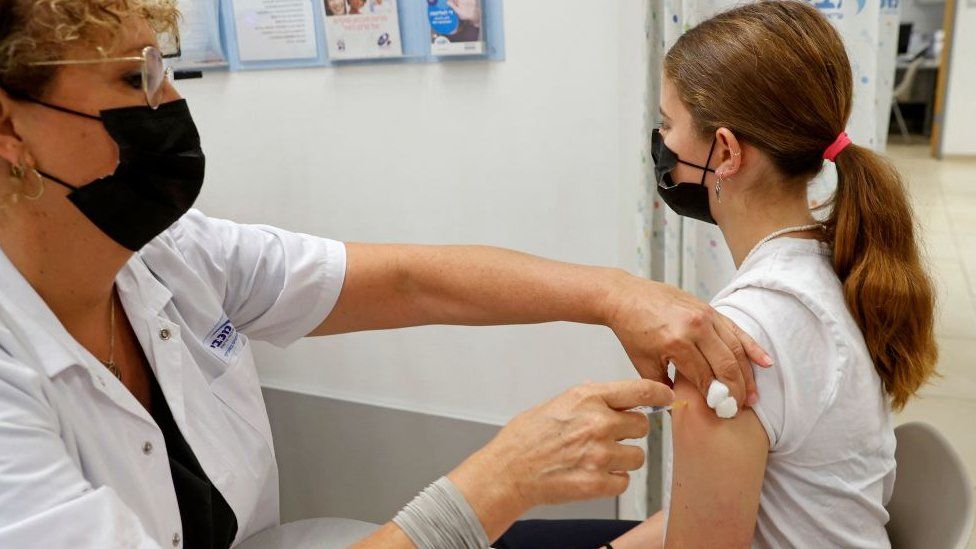
Toward a COVID-19 breathalyzer for kids

Adults infected with SARS-CoV-2 exhale different metabolites in their breath than uninfected people, and dogs and diagnostic devices can detect these changes. Now, researchers reporting in ACS Infectious Diseases have shown that children infected with SARS-CoV-2 also show breath metabolite changes, but they’re largely different from the ones in adults. Someday, this information could be used to quickly and easily screen children for infection, the researchers say.
Currently, COVID-19 is diagnosed through the detection of specific viral nucleic acids or antigens, but these techniques are slow, relatively expensive, sometimes uncomfortable and prone to false-negative results. Scientists have observed that dogs can detect volatile organic compounds (VOCs) in human biological samples and distinguish certain diseases, including COVID-19. Researchers have also developed a sensor array to detect COVID-19-related VOCs in the exhaled breath of adults. Audrey Odom John and colleagues wondered if children infected with SARS-CoV-2 would also show changes in breath metabolites. If so, a breathalyzer-type device might someday quickly and comfortably screen large numbers of children in settings such as schools.
The researchers collected breath samples from children who were given routine COVID-19 tests prior to being admitted to the Children’s Hospital of Pennsylvania for other conditions. Fifteen children were SARS-CoV-2 negative, whereas 10 tested positive. The team analyzed 84 VOCs in the breath samples by 2D gas chromatography and time-of-flight mass spectrometry, identifying six candidate biomarkers that were significantly elevated in the breath of children with COVID-19. Two of these markers (octanal and heptanal) were also elevated in the breath of adults with the disease, while the others were unique to infected children. Then, the researchers measured these VOCs in breath samples from a different group of 24 children, half of whom were positive for the disease. The six biomarkers could predict infection with 91% sensitivity and 75% specificity. These preliminary results suggest that breathalyzer testing could be an inexpensive, noninvasive, quick and sensitive alternative for the frequent screening of large numbers of children, the researchers say. Those who test positive could then be given more specific, nucleic-acid based tests to confirm the screening results.
The authors acknowledge funding from the National Institutes of Health and the Burroughs Wellcome Fund. Two of the authors are co-inventors on a preliminary patent of SARS-CoV-2 biomarkers.
Story Source:
Materials provided by American Chemical Society. Note: Content may be edited for style and length.

Read more →

Breakthrough in understanding genesis of fibroids

Scientists at the University of Helsinki and Helsinki University Hospital have made a breakthrough in understanding the genesis of uterine leiomyomas, also called fibroids.
Fibroids are extremely common tumors. They are a major burden for women’s health worldwide, and the most common cause of hysterectomy. The Finland Myoma Study published in Nature found that the part of the human genome that controls expression of genes, is of major importance in fibroid development.
The findings of the new study represent a significant advance in fibroids research. Without detailed knowledge on the mechanisms of tumorigenesis involved, it would be difficult to develop targeted therapies for this condition affecting hundreds of millions of women.
Genes that are poised to change expression level are important for fibroid development.
The researchers discovered that multiple tumors carried mutations in genes that were involved in trafficking certain type of histones, proteins that are important for the structure and functional properties of the genome. They next found that mutations in these same genes were important in hereditary predisposition to the disease.
The work also documented the many changes in the regulatory genome that these mutations exerted, and finally showed a strong effect on gene expression levels.
“In particular, genes that are poised to frequently turn on and off seem affected in fibroids,” says Academy Professor Lauri Aaltonen.
This might explain why this new mechanism of tumorigenesis frequently affects the uterine muscle wall but rarely other tissue types, as the uterus needs to adjust to many changing external cues such as those governing the menstrual cycle and pregnancy.
“Thus, disturbances in genes that need to be poised to change expression level might harm the uterus more easily than other organs,” explains Aaltonen.
“Some of the overexpressed genes might provide clues for development of new fibroid treatment options,” Aaltonen points out.
Story Source:
Materials provided by University of Helsinki. Note: Content may be edited for style and length.

Read more →

Marijuana-like brain substance calms seizures but increases aftereffects, study finds

Epileptic seizures trigger the rapid synthesis and release of a substance mimicked by marijuana’s most psychoactive component, Stanford University School of Medicine investigators have learned. This substance is called 2-arachidonoylglycerol, or 2-AG, and has the beneficial effect of damping down seizure intensity.
But there’s a dark side. The similarly rapid breakdown of 2-AG after its release, the researchers found, trips off a cascade of biochemical reactions culminating in blood-vessel constriction in the brain and, in turn, the disorientation and amnesia that typically follow an epileptic seizure.
The Stanford scientists’ findings, reached in collaboration with colleagues at other institutions in the United States, Canada and China, are described in a study to be published Aug. 4 in Neuron. Ivan Soltesz, PhD, professor of neurosurgery, shares senior authorship with G. Campbell Teskey, PhD, professor of cell biology and anatomy at the University of Calgary in Alberta, Canada. The study’s lead author is Jordan Farrell, PhD, a postdoctoral scholar in Soltesz’s group.
The researchers’ discoveries could guide the development of drugs that both curb seizures’ strength and reduce their aftereffects.
Electrical storm in the brain
About one in every hundred people has epilepsy. Epileptic seizures can be described as an electrical storm in the brain. These storms typically begin at a single spot where nerve cells begin repeatedly firing together in synchrony. The hyperactivity often spreads from that one spot to other areas throughout the brain, causing symptoms such as loss of consciousness and convulsions. It’s typical for the person experiencing a seizure to need tens of minutes before becoming clearheaded again.

Read more →

New genes linked to longer reproductive lifespan in women

The age at which women go through menopause is critical for fertility and impacts healthy ageing in women, but reproductive ageing has been difficult for scientists to study and insights into the underlying biology are limited.
Now, scientists have identified nearly 300 gene variations that influence reproductive lifespan in women. Additionally, in mice, they have successfully manipulated several key genes associated with these variants to extend their reproductive lifespan.
Their findings, published today in Nature, substantially increase our knowledge of the reproductive ageing process, as well as providing ways to improve the prediction ofwhich women might reach menopause earlier than others.
While life expectancy has increased dramatically over the past 150 years, the age at which most women go through natural menopause has remained relatively constant at about 50 years old. Women are born with all the eggs they will ever carry, and these are gradually lost with age. Menopause occurs once most of the eggs have gone, however natural fertility declines substantially earlier.
Co-author Professor Eva Hoffmann, of the University of Copenhagen, said: “It is clear that repairing damaged DNA in eggs is very important for establishing the pool of eggs women are born with and also for how quickly they are lost throughout life. Improved understanding of the biological processes involved in reproductive ageing could lead to improvements in fertility treatment options.”
This research has been achieved by a global collaboration involving academics from more than 180 institutions, and jointly led by the University of Exeter, the MRC Epidemiology Unit at the University of Cambridge, the Institute of Biotechnology and Biomedicine at the Universitat Autònoma de Barcelona, and the DNRF Center for Chromosome Stability at the University of Copenhagen. Their findings identify new genetic variations linked to reproductive lifespan, increasing the number known from 56 to 290.

Read more →

Study reveals how smell receptors work

All senses must reckon with the richness of the world, but nothing matches the challenge faced by the olfactory system that underlies our sense of smell. We need only three receptors in our eyes to sense all the colors of the rainbow — that’s because different hues emerge as light-waves that vary across just one dimension, their frequency. The vibrant colorful world, however, pales in comparison to the complexity of the chemical world, with its many millions of odors, each composed of hundreds of molecules, all varying greatly in shape, size and properties. The smell of coffee, for instance, emerges from a combination of more than 200 chemical components, each of which are structurally diverse, and none of which actually smells like coffee on its own.
“The olfactory system has to recognize a vast number of molecules with only a few hundred odor receptors or even less,” says Rockefeller neuroscientist Vanessa Ruta. “It’s clear that it had to evolve a different kind of logic than other sensory systems.”
In a new study, Ruta and her colleagues offer answers to the decades-old question of odor recognition by providing the first-ever molecular views of an olfactory receptor at work.
The findings, published in Nature, reveal that olfactory receptors indeed follow a logic rarely seen in other receptors of the nervous system. While most receptors are precisely shaped to pair with only a few select molecules in a lock-and-key fashion, most olfactory receptors each bind to a large number of different molecules. Their promiscuity in pairing with a variety of odors allows each receptor to respond to many chemical components. From there, the brain can figure out the odor by considering the activation pattern of combinations of receptors.
Holistic recognition
Olfactory receptors were discovered 30 years ago. But scientists have not been able to actually see them up close and decipher their structural and mechanistic workings, in part because these receptors didn’t lend themselves to commonly available molecular imaging methods. Complicating the matter, there seems to be no rhyme or reason to the receptors’ preferences — an individual odor receptor can respond to compounds that are both structurally and chemically different.

Read more →

New therapeutic target discovered for a number of aggressive cancers

A protein in tumour cells could be targeted to treat some types of aggressive cancer including brain, blood, skin, and kidney, new research has shown.
The scientists, from the Wellcome Sanger Institute, University of Cambridge and Harvard University, have identified a protein that plays a key role in transforming normal tissue into cancer, as a possible target for drug development. Inhibiting this protein effectively destroys cancer cells in laboratory models, including in cell lines and mice, while leaving healthy cells unharmed.
The research, published today (4 August 2021) in Molecular Cell, provides strong evidence that developing drugs that block the RNA-modifying protein known as METTL1 could give people with aggressive brain, blood, skin, and kidney cancers new treatment options.
RNA-modifying proteins, in particular the METTL family, are involved heavily in cell replication. These proteins have been found in higher levels in certain cancer cells, including some brain, blood, pancreatic, and skin cancers, and are associated with poorer outcomes*.
Previously, Dr Tzelepis, along with his team at the University of Cambridge, and their collaborators at the Wellcome Sanger Institute, used CRISPR-Cas9 gene-editing technology to screen cancer cells for vulnerable points. The researchers identified the METTL1 gene — a gene that produces the RNA-modifying METTL1 protein — as a target for drug development**.
In a new study that builds on that research, researchers at the Wellcome Sanger Institute, University of Cambridge, and Harvard University have now found that mutations in the METTL1 gene which lead to higher levels of the METTL1 protein, cause the cells to replicate faster and transform into a cancerous state, producing highly aggressive tumours.

Read more →

Fine particulate air pollution associated with higher risk of dementia

Using data from two large, long-running study projects in the Puget Sound region — one that began in the late 1970s measuring air pollution and another on risk factors for dementia that began in 1994 — University of Washington researchers identified a link between air pollution and dementia.
In the UW-led study, a small increase in the levels of fine particle pollution (PM2.5 or particulate matter 2.5 micrometers or smaller) averaged over a decade at specific addresses in the Seattle area was associated with a greater risk of dementia for people living at those addresses.
“We found that an increase of 1 microgram per cubic meter of exposure corresponded to a 16% greater hazard of all-cause dementia. There was a similar association for Alzheimer’s-type dementia,” said lead author Rachel Shaffer, who conducted the research as a doctoral student in the UW Department of Environmental & Occupational Health Sciences.
“The ACT Study is committed to advancing dementia research by sharing its data and resources, and we’re grateful to the ACT volunteers who have devoted years of their lives to supporting our efforts, including their enthusiastic participation in this important research on air pollution,” said Dr. Eric Larson, ACT’s founding principal investigator and a senior investigator at KPWHRI.
The study, published Aug. 4 in the journal Environmental Health Perspectives, looked at more than 4,000 Seattle-area residents enrolled in the Adult Changes in Thought (ACT) Study run by Kaiser Permanente Washington Health Research Institute in collaboration with UW. Of those residents, the researchers identified more than 1,000 people who had been diagnosed with dementia at some point since the ACT Study began in 1994.
Once a patient with dementia was identified, researchers compared the average pollution exposure of each participant leading up to the age at which the dementia patient was diagnosed. For instance, if a person was diagnosed with dementia at 72 years old, the researchers compared the pollution exposure of other participants over the decade prior to when each one reached 72. In these analyses, the researchers also had to account for the different years in which these individuals were enrolled in the study, since air pollution has dropped dramatically in the decades since the ACT study began.

Read more →

Covid: 'No time to waste' in vaccinating 16-17 year olds

Children aged 16-17 should be vaccinated “as fast as practically possible”, England’s deputy chief medical officer has said.All 16 and 17-year-olds in the UK will start being offered a first dose of the Covid vaccine within weeks, after a recommendation from vaccine experts.”Children are going to start going back to colleges and sixth forms… so there is no time to waste,” Prof Jonathan Van-Tam told a Downing Street briefing.Read more: Jabs for 16 and 17-year-olds to start within weeks

Read more →

The Making of an Olympian

The best world-class athletes often dabble in a range of sports when young before rising to the top of their game in one, a new analysis found.The world’s top athletes, including Olympians, rarely start competing at a young age or specialize early in the sport that will make them champions, according to a provocative new study of the athletic backgrounds of thousands of successful athletes. Instead, the study finds, most world champions sample one sport after another as children and gain mastery in their chosen activities considerably later than other, more focused young athletes whom they eventually go on to defeat.The study, which involved male and female competitors in a wide range of sports, offers lessons and cautions for parents, coaches and child athletes about how to understand talent, manage expectations, build an athletic career and recalibrate the long-term importance for 7- or 8-year-olds of making — or missing out on — select teams in children’s leagues.If you are a sports parent, though, it is difficult not to believe that athletic success for your children requires early specialization. Most of us are all too familiar with the tropes about tiny sports prodigies and their outsize success, such as Tiger Woods making tee shots at age 2 or Venus and Serena Williams slamming tennis aces while still in elementary school.The belief that early specialization and frequent repetition contribute to physical mastery was likewise bolstered by research in the 1990s into expertise by psychologist K. Anders Ericsson, who died in 2020. He and his colleagues found that youthful musicians who choose an instrument at a young age and spend multiple hours in tutoring and rehearsals — sessions that he called “deliberate practice” — gain the greatest musical mastery. In this research, innate talent plays less of a role in achievement than practice, practice, practice.But other scientists since have questioned the advisability of shunting youngsters into one activity early on, especially in sports, because early specialization and intense practice can increase the risk of injuries and burnout. In this estimation, children are better off playing multiple sports, with an emphasis on play, not competition, to gain enthusiasm, coordination and, eventually, trophies and medals.However, few large-scale studies have looked into the backgrounds of successful athletes at all levels of sports to see whether early specialization generally bolsters or hinders someone’s chances of earning a podium spot at the Olympics or starring on a high school team.So, for the new study, which was published in July in Perspectives on Psychological Science, a group of exercise scientists and sports psychologists from Germany and the United States decided to gather as much intelligence as possible about how great athletes got that way.They began by combing databases for research that documented successful athletes’ training histories via extensive interviews or questionnaires. They wound up with 51 relevant studies covering 6,096 athletes, including 772 Olympic or world champions. Some of the athletes competed in team sports and others in individual events. Some collected victories and accolades as children or teenagers; others as adults; few as both. Some peaked with wins at international events; others at local or regional contests. The athletes represented, in essence, the gamut of sporting careers, from supernova prodigies to late bloomers to flameouts.The researchers then aggregated the data from the studies and started comparing athletes’ pasts and results. They quickly realized that early sports specialization benefited certain athletes, but only briefly.World-class junior competitors, the scientists found, who stockpiled international medals while still in their teens tended to have settled on a single sport before about age 12, a year or two earlier than most of their competitors, including other young athletes who excelled at the regional and national levels. What separated great young athletes in this group from the good, in other words, was picking a sport young and practicing it fiercely.But at the senior or adult-sports level, the impacts of specialization flip-flopped, the data showed. (Most senior athletes are in their 20s or 30s, although each sport sets its own age cutoff for junior and senior divisions.) The world’s best adult athletes, including Olympic and world champions, typically took up competitive sports of any kind a year or two later than other players, and practiced fewer hours throughout their careers. Most also dabbled with multiple sports, usually three or four a year, often not settling on a primary activity until their midteens or so, several years after most of their later competitors. And few garnered much immediate attention or acclaim from coaches and officials, rarely joining select teams at the start of their careers.“Most of the adult, world-class performers were not prodigies as kids,” said Arne Güllich, the director of the Institute of Applied Sports Science at the Kaiserslautern University of Technology in Germany, who conducted the new study with his American colleagues Brooke N. Macnamara of Case Western Reserve University in Cleveland and David Zach Hambrick of Michigan State University.These patterns held true for men and women, boys and girls, and in team and individual sports.The results do not explain, though, how a slow start and early sports sampling might contribute to later athletic excellence. But Dr. Güllich believes late bloomers probably experience less stress and burnout than single-sport young superstars and gain a greater ability to learn and progress physically by training in a variety of sports.The study has other limitations. It is associational, meaning it shows that top adult athletes rarely specialize early but it does not prove that approach caused their success. In addition, it did not consider genetic, familial, financial, psychological or other factors that could influence athletic careers. It also focused, by and large, on the world’s premier athletes, a group that is unlikely ever to include most of us or our offspring.But, still, the results seem cheering for all those young athletes who enthusiastically dabble in a variety of sports. “Kids should do the sport they most enjoy doing, in which they are looking forward to each session, to having a good time with friends and the coach,” Dr. Güllich said. “If enjoyment constantly declines, perhaps it’s time to try another sport.”

Read more →

Covid jabs set to be offered to UK 16 and 17-year-olds

SharecloseShare pageCopy linkAbout sharingimage sourceGetty ImagesUK experts are set to recommend all 16 and 17-year-olds should be offered a Covid vaccine, the BBC has been told.The Joint Committee on Vaccination and Immunisation stopped short of making the move last month, saying it was still assessing the benefits and risks.About 1.4 million teenagers will be included in the new rollout but it is not known when the jabs will start.They are only offered now to those over-12s who have underlying conditions or live with others at high risk. But some countries, including the US, Canada and France, are routinely vaccinating people aged 12 years old and over.Across England, 223,755 under-18s have received a first vaccine dose, according to NHS data to 25 July.It was previously announced that under-18s would be eligible if they had certain health conditions, lived with someone with a low immune system, or were approaching their 18th birthday.Whitehall sources say ministers in England are expected to accept the advice of the JCVI, following an announcement on Wednesday.It comes after Scotland’s First Minister Nicola Sturgeon said on Tuesday she was “hoping” to receive updated advice from the JCVI on the vaccination of 16 and 17-year-olds.Ms Sturgeon said the UK’s four chief medical officers had written to the JCVI, asking them to look again at vaccination advice for young people.Which children are being vaccinated and why?Should all children get a vaccine?Decisions on vaccinations are based on recommendations from the independent JCVI. Ministers in England, Wales, Scotland and Northern Ireland each then approve the plans. The only Covid jab currently authorised in the UK for under-18s is the Pfizer-BioNTech vaccine. Last month, the JCVI extended its recommendation on Covid jabs to children aged over 12 who are at higher risk of getting ill and to those on the verge of turning 18.However, it said it would not extend the rollout as it examined reports of rare adverse events such as inflammation of heart muscles among young adults. Speaking ahead of the July decision, England’s chief medical officer Prof Chris Whitty said the JCVI was confident vaccines would protect children to a high degree. He added that more research was taking place as children did not tend to suffer severely from Covid, and the experts wanted to ensure the benefits of the jab outweighed any potential risks.Prof Paul Elliott, chair of epidemiology and public health at Imperial College London, told BBC Radio 4’s Today programme vaccinating younger age groups could help drive down infections.With the highest rates of infection seen in young people under 24, he said “anything we can do to reduce transmission in that group would be helpful”.Infections and hospital cases down – is Covid over?Long-lasting Covid symptoms rare in childrenShadow health secretary Jonathan Ashworth said ministers should “ensure plans are in place to roll out this vital next stage of vaccination while ensuring parents have all the facts and information they need”.A Department of Health and Social Care spokesperson said it kept the vaccination of children and young people “under review and will be guided by the advice of the independent Joint Committee on Vaccination and Immunisation”.All over-18s have now been offered a vaccination against coronavirus. The latest government data shows 88.7% of people in the UK have now had one dose of vaccine, while 73% have had two jabs.And a further 21,691 cases of people testing positive for coronavirus were recorded in the UK on Tuesday. It was the fifth day in a row that infections have fallen, and the lowest daily total since late June.SHOULD YOU GET BACK WITH YOUR EX?: Can a relationship with an ex ever really work?THE BEST OF BROADWAY: Listen to musical classics with the BBC Proms

Read more →