
Weekly Health Quiz: Delta Symptoms, Fermented Foods and Metabolism


Immigrants to Canada have a 33% lower rate of stroke than long-term residents, according to a study published in the August 18, 2021, online issue of Neurology®, the medical journal of the American Academy of Neurology.
“Other studies have shown that immigrants tend to have better health than long-term residents, which is thought to be because healthy people are more likely to choose to immigrate,” said study author Manav V. Vyas, MBBS, MSc, PhD, of the University of Toronto and a member of the American Academy of Neurology. “Studies have found that immigrants have a lower rate of cancer and heart attack, but we wanted to know if this was also true of stroke.”
For the study, researchers looked at the medical records of 8 million people who lived in Ontario, Canada, on January 1, 2003, and had no history of stroke or transient ischemic attack, also called TIA or mini-stroke. Of those, 15% were immigrants. Most of the immigrants were considered economic immigrants, versus refugees or people joining family members. Immigrants had been living in Ontario for an average of nine years.
The participants were followed for an average of 15 years. During that time, there were 235,336 strokes or TIAs, with 1.5% of immigrants having a stroke or TIA, compared to 3.2% of long-term residents. Taking into account the number of people in the study as well as the amount of time spent in the study, immigrants had a rate of 10.9 cases per every 10,000 person-years, compared to 23.4 cases per 10,000 person-years for long-term residents.
When researchers adjusted for other factors that could affect stroke risk, such as age, sex and conditions such as high blood pressure and diabetes, they found that immigrants were 33% less likely to have a stroke than long-term residents.
The results varied based on factors such as age, the country where immigrants came from and immigration class. Immigrants who were older than 50 at the time of immigration had a greater reduction in stroke risk compared to long-term residents than people who immigrated when they were younger than 25. The difference in stroke rates was less pronounced for refugees than for people who immigrated for economic or family reasons. Immigrants from Africa, the Caribbean and Latin America had smaller differences in stroke rates with long-term residents than immigrants from other parts of the world.
“These results should help us to develop targeted preventative measures to reduce the risk of stroke in both immigrants and long-term residents,” Vyas said. “Future studies should also look at why immigrants have a lower risk of stroke and what factors mediate that effect.”
A limitation of the study was that immigrants were classified as those who moved to Ontario after 1985, so the results reflect only people who immigrated in the past three decades.
The study was supported by the Heart and Stroke Foundation of Canada.
Story Source:
Materials provided by American Academy of Neurology. Note: Content may be edited for style and length.
The final results of the Clinical Trial of COVID-19 Convalescent Plasma in Outpatients (C3PO) demonstrate that COVID-19 convalescent plasma did not prevent disease progression in a high-risk group of outpatients with COVID-19, when administered within the first week of their symptoms. The trial was stopped in February 2021 due to lack of efficacy based on a planned interim analysis. The formal conclusions from the trial, which was funded primarily by the National Heart, Lung, and Blood Institute (NHLBI), part of the National Institutes of Health, and by the Biomedical Advanced Research and Development Authority (BARDA), part of the Office of the Assistant Secretary for Preparedness and Response at the U.S. Department of Health and Human Services, appear in the current online issue of The New England Journal of Medicine.
“We were hoping that the use of COVID-19 convalescent plasma would achieve at least a 10% reduction in disease progression in this group, but instead the reduction we observed was less than 2%,” said Clifton Callaway, M.D., Ph.D., the contact principal investigator for the C3PO trial and professor of emergency medicine at the University of Pittsburgh. “That was surprising to us. As physicians, we wanted this to make a big difference in reducing severe illness and it did not.”
COVID-19 convalescent plasma, also known as “survivor’s plasma,” is blood plasma derived from patients who have recovered from COVID-19. Last year, the U.S. Food and Drug Administration issued an Emergency Use Authorization to allow use of convalescent plasma in hospitalized patients with COVID-19. Researchers wanted to know whether administering COVID-19 convalescent plasma might also be beneficial in persons who were recently infected with SARS-CoV-2, the virus that causes the disease, but who were not severely ill and could be treated as outpatients. The objective was to prevent progression to severe COVID-19 illness.
The C3PO trial, launched in August 2020, was designed to answer that question. The randomized, controlled clinical trial involved adult outpatients who presented to emergency departments with mild COVID-19 symptoms during their first week post-infection. The trial was conducted by the SIREN clinical trials network, and enrolled more than 500 participants from 48 emergency departments across the United States. The participants were racially and ethnically diverse with a median age of 54 years, and slightly more than half were women. Participants also had at least one risk factor for progression to severe COVID-19, such as obesity, hypertension, diabetes, heart disease, or chronic lung disease. The researchers randomly assigned the participants to receive treatment with either high-titer COVID-19 convalescent plasma (containing anti-COVID-19 antibodies) or placebo (salt solution infused with multivitamins and lacking antibodies).
Researchers compared outcomes in both groups within 15 days of treatment, looking specifically at whether the patients needed to seek further emergency or urgent care, were admitted to the hospital, or died. The researchers found no significant difference in disease progression between the two groups. Of the 511 participants, disease progression occurred in 77 (30%) in the COVID-19 plasma group compared with 81 patients (31.9%) in the placebo group. The plasma intervention did not cause harm, the researchers found.
“The results show that convalescent plasma does not appear to benefit this particular group,” said Nahed El Kassar, M.D., Ph.D., one of the study’s co-authors and medical officer in the Blood Epidemiology and Clinical Therapeutics branch of the NHLBI’s Division of Blood Diseases and Resources. “But the findings answer an important clinical question and may help bring researchers a step closer to finding more effective treatments against this devastating disease.”
The reason the intervention did not produce the expected results is unclear, Callaway said. Researchers are continuing to look at possible explanations, including insufficient plasma dose, timing of plasma administration, host-related factors, or other aspects of the host tissue responses to the infection, he added.
Additional studies of COVID-19 convalescent plasma are ongoing or planned in different populations. These included the Pass It On trial, a nationwide, NIH-funded randomized clinical trial using convalescent plasma to treat hospitalized adult patients with COVID-19 infection to see if the treatment can help them recover faster. Other trials include one in outpatients who are recovering at home and one in individuals with high risk of exposure to COVID-19 to see if COVID-19 convalescent plasma can prevent infection.
“We need the results of these other convalescent plasma studies to get a clearer, more conclusive picture of its value for future treatments of COVID-19,” said Simone Glynn, M.D., M.P.H., chief of the NHLBI’s Blood Epidemiology and Clinical Therapeutics branch, who is coordinating the trial.
This work was supported by awards 1OT2HL156812-01 from the NHLBI, U24NS100659 and U24NS100655 from the National Institute of Neurological Disorders and Stroke of the National Institutes of Health, and contract 75A50120C00094 from BARDA. For a more complete funding disclosure and list of authors, please see the full NEJM research article.
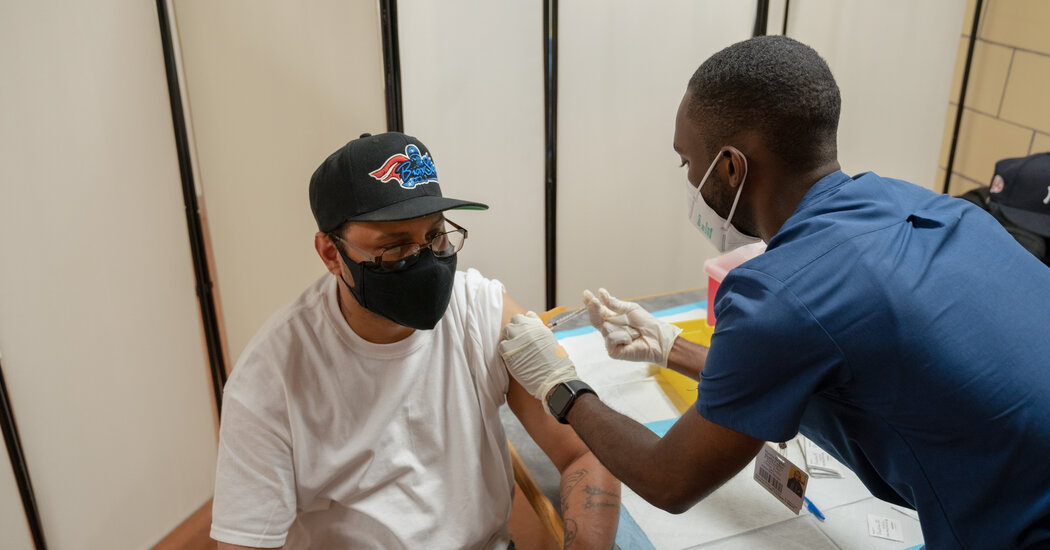
The new strategies — including encouraging booster shots for most vaccinated Americans — reflect concerns that the Delta variant is erasing progress against the pandemic.WASHINGTON — The Biden administration moved on multiple fronts on Wednesday to fight back against the surging Delta variant, strongly recommending booster shots for most vaccinated American adults and using federal leverage to force nursing homes to vaccinate their staffs.In remarks from the East Room of the White House, President Biden also directed his education secretary to “use all of his authority, and legal action if appropriate,” to deter states from banning universal masking in classrooms. That move is destined to escalate a fight with some Republican governors who are blocking local school districts from requiring masks to protect against the virus.The shifts in strategy reflect the administration’s growing concern that the highly contagious Delta variant is erasing its hard-fought progress against the pandemic and thrusting the nation back to the more precarious point it was at earlier in the year.Thus far, Mr. Biden has been reluctant to use the federal government’s power to withhold funding as a means of fighting the pandemic. But that changed Wednesday, when he said his administration would make employee vaccination a condition for nursing homes to receive Medicare and Medicaid funding. Officials said the decision would affect more than 15,000 nursing homes that employ 1.3 million workers.“The threat of the Delta virus remains real, but we are prepared, we have the tools, we can do this,” Mr. Biden said in the East Room, adding, “This is no time to let our guard down.”He accused politicians who were banning local school districts from requiring masks in the classroom of setting a “dangerous tone,” adding, “We’re not going to sit by as governors try to block and intimidate educators from protecting our children.” The administration is sending letters to eight states — Arizona, Florida, Iowa, Oklahoma, South Carolina, Tennessee, Texas and Utah — challenging their efforts to ban universal masking in schools.For many Americans, the booster strategy will affect them the most. The government plans to offer third shots to adults who received the Pfizer-BioNTech or Moderna vaccines eight months after they received their second dose. About 150 million Americans have been fully immunized with one of those two vaccines.“We are concerned that the current strong protection against severe infection, hospitalization and death could decrease in the months ahead, especially among those who are at higher risk” or who were inoculated in the early months of the vaccination campaign, Dr. Rochelle P. Walensky, the director of the Centers for Disease Control and Prevention, said.Assuming that regulators decide third shots are safe and effective, the effort will start Sept. 20. Officials said they were waiting on more data to decide whether the 14 million Americans who received Johnson & Johnson’s single-dose vaccine should also receive an additional shot, but suggested that they would be included as well. Although some public health experts have said booster shots were prudent and expected, not all scientists are convinced it is the right move. And advocates for global health said it was morally wrong — and shortsighted — for the administration to give booster shots to Americans when so many people around the world were still waiting to be vaccinated.“The threat of the Delta virus remains real, but we are prepared, we have the tools, we can do this,” President Biden said on Wednesday.Stefani Reynolds for The New York TimesFor state officials and health care providers, already exhausted from an 18-month battle against a novel virus that seems to shift its shape the moment it seems under control, the booster-vaccination campaign will bring a fresh round of logistical challenges. Some worried it could sidetrack efforts to vaccinate the roughly 85 million Americans who were eligible for shots but remained unvaccinated.“We now have to fight a war on two fronts,” said Dr. José R. Romero, the Arkansas secretary of health. “We have to continue to press the vaccine into those groups that have not accepted it, and then have another effort to vaccinate those at high risk.”The move to make employee vaccination a condition for nursing homes to receive Medicare and Medicaid funding reflects months of frustration with the low vaccination rates among nursing assistants and other workers who care for highly vulnerable people.Officials described it as the first time that Mr. Biden had threatened to withhold federal funding in order to force vaccinations.In an interview before the president spoke, Education Secretary Miguel A. Cardona described another major turning point: his department will use its civil rights enforcement arm to allow schools to require masks. The move comes as many educators and parents fear a surge in cases as the school year is about to start and as pediatric Covid cases climb.The C.D.C. has recommended that everyone in schools wears masks, regardless of their vaccination status, but some states and localities are refusing to issue rules requiring masks or preventing schools from imposing them.“The president is appalled, as I am, that there are adults who are blind to their blindness, that there are people who are putting policies in place that are putting students and staff at risk,” Dr. Cardona said in the interview.“At the end of the day,” he said, “we shouldn’t be having this conversation. What we’re dealing with now is negligence.”Administration officials made clear that booster shots would depend upon a determination by the Food and Drug Administration that third shots are safe and effective — a ruling expected in the coming weeks. Whether those under the age of 18 will be eligible will also be up to the F.D.A. and a federal advisory committee of experts, they said.Aside from some people with weakened immune systems who have already been authorized for third shots, officials advised that fully vaccinated people wait for what they promised would be a speedy but orderly national rollout of booster shots.“Here’s what you need to know: If you are fully vaccinated, you still have a high degree of protection from the worst outcomes of Covid-19 — severe disease, hospitalization and death,” Dr. Vivek H. Murthy, the surgeon general, said at a White House briefing. “We are not recommending that you go out and get a booster today.”Dr. Walensky presented a series of studies at the briefing that, she said, showed the vaccines’ efficacy wanes over time. Some doctors applauded the decision to offer booster shots.“Given the prevalence we have of the Delta variant, doing everything we can to keep people out of the hospital — especially those at high risk — does make sense,” said Dr. Paul Biddinger, the director of the Center for Disaster Medicine at Massachusetts General Hospital.But some scientists criticized the policy as overly broad, arguing that it is not clear that the general population needs a third shot.Jennifer B. Nuzzo, an epidemiologist at Johns Hopkins University’s Bloomberg School of Public Health, said the studies cited by administration officials showed that the vaccines were doing what they were intended to do — protect against severe disease and hospitalization.“I don’t think the metric of, ‘We’re seeing more infection’ is the right metric to be judging the efficacy of the vaccines,” she said. “The right metric is, ‘Does it prevent severe disease?’ ”The administration’s move follows similar actions by Israel, Germany and France but goes against the recommendation of the World Health Organization, which is arguing extra vaccine supply should go to countries that have vaccinated far fewer of their residents.“Vaccine injustice is a shame on all humanity and if we don’t tackle it together, we will prolong the acute stage of this pandemic for years when it could be over in a matter of months,” Dr. Tedros Adhanom Ghebreyesus, the organization’s director general, said at a news conference before the White House’s briefing.Medical workers intubating a patient in Lake Charles, La., last week. Assuming that regulators decide third shots are safe and effective, the effort will start Sept. 20. Mario Tama/Getty ImagesJeffrey D. Zients, the White House pandemic coordinator, said the administration was already donating 600 million doses of vaccines to needy countries and would continue that effort — a point Mr. Biden reiterated in the East Room.“We can take care of America and help the world at the same time,” Mr. Biden said.Administration experts said the booster policy was the result of dual, disturbing trends: a decline in the vaccines’ potency over time and the apparent ability of the Delta variant to somehow bypass their protection better than its predecessors.One study they cited found the vaccines’ effectiveness at preventing infections among nursing home residents dropped to about 53 percent from 75 percent between spring and summer, when the Delta variant became dominant..css-1xzcza9{list-style-type:disc;padding-inline-start:1em;}.css-3btd0c{font-family:nyt-franklin,helvetica,arial,sans-serif;font-size:1rem;line-height:1.375rem;color:#333;margin-bottom:0.78125rem;}@media (min-width:740px){.css-3btd0c{font-size:1.0625rem;line-height:1.5rem;margin-bottom:0.9375rem;}}.css-3btd0c strong{font-weight:600;}.css-3btd0c em{font-style:italic;}.css-w739ur{margin:0 auto 5px;font-family:nyt-franklin,helvetica,arial,sans-serif;font-weight:700;font-size:1.125rem;line-height:1.3125rem;color:#121212;}#NYT_BELOW_MAIN_CONTENT_REGION .css-w739ur{font-family:nyt-cheltenham,georgia,’times new roman’,times,serif;font-weight:700;font-size:1.375rem;line-height:1.625rem;}@media (min-width:740px){#NYT_BELOW_MAIN_CONTENT_REGION .css-w739ur{font-size:1.6875rem;line-height:1.875rem;}}@media (min-width:740px){.css-w739ur{font-size:1.25rem;line-height:1.4375rem;}}.css-9s9ecg{margin-bottom:15px;}.css-16ed7iq{width:100%;display:-webkit-box;display:-webkit-flex;display:-ms-flexbox;display:flex;-webkit-align-items:center;-webkit-box-align:center;-ms-flex-align:center;align-items:center;-webkit-box-pack:center;-webkit-justify-content:center;-ms-flex-pack:center;justify-content:center;padding:10px 0;background-color:white;}.css-pmm6ed{display:-webkit-box;display:-webkit-flex;display:-ms-flexbox;display:flex;-webkit-align-items:center;-webkit-box-align:center;-ms-flex-align:center;align-items:center;}.css-pmm6ed > :not(:first-child){margin-left:5px;}.css-5gimkt{font-family:nyt-franklin,helvetica,arial,sans-serif;font-size:0.8125rem;font-weight:700;-webkit-letter-spacing:0.03em;-moz-letter-spacing:0.03em;-ms-letter-spacing:0.03em;letter-spacing:0.03em;text-transform:uppercase;color:#333;}.css-5gimkt:after{content:’Collapse’;}.css-rdoyk0{-webkit-transition:all 0.5s ease;transition:all 0.5s ease;-webkit-transform:rotate(180deg);-ms-transform:rotate(180deg);transform:rotate(180deg);}.css-eb027h{max-height:5000px;-webkit-transition:max-height 0.5s ease;transition:max-height 0.5s ease;}.css-6mllg9{-webkit-transition:all 0.5s ease;transition:all 0.5s ease;position:relative;opacity:0;}.css-6mllg9:before{content:”;background-image:linear-gradient(180deg,transparent,#ffffff);background-image:-webkit-linear-gradient(270deg,rgba(255,255,255,0),#ffffff);height:80px;width:100%;position:absolute;bottom:0px;pointer-events:none;}.css-uf1ume{display:-webkit-box;display:-webkit-flex;display:-ms-flexbox;display:flex;-webkit-box-pack:justify;-webkit-justify-content:space-between;-ms-flex-pack:justify;justify-content:space-between;}.css-wxi1cx{display:-webkit-box;display:-webkit-flex;display:-ms-flexbox;display:flex;-webkit-flex-direction:column;-ms-flex-direction:column;flex-direction:column;-webkit-align-self:flex-end;-ms-flex-item-align:end;align-self:flex-end;}.css-12vbvwq{background-color:white;border:1px solid #e2e2e2;width:calc(100% – 40px);max-width:600px;margin:1.5rem auto 1.9rem;padding:15px;box-sizing:border-box;}@media (min-width:740px){.css-12vbvwq{padding:20px;width:100%;}}.css-12vbvwq:focus{outline:1px solid #e2e2e2;}#NYT_BELOW_MAIN_CONTENT_REGION .css-12vbvwq{border:none;padding:10px 0 0;border-top:2px solid #121212;}.css-12vbvwq[data-truncated] .css-rdoyk0{-webkit-transform:rotate(0deg);-ms-transform:rotate(0deg);transform:rotate(0deg);}.css-12vbvwq[data-truncated] .css-eb027h{max-height:300px;overflow:hidden;-webkit-transition:none;transition:none;}.css-12vbvwq[data-truncated] .css-5gimkt:after{content:’See more’;}.css-12vbvwq[data-truncated] .css-6mllg9{opacity:1;}.css-qjk116{margin:0 auto;overflow:hidden;}.css-qjk116 strong{font-weight:700;}.css-qjk116 em{font-style:italic;}.css-qjk116 a{color:#326891;-webkit-text-decoration:underline;text-decoration:underline;text-underline-offset:1px;-webkit-text-decoration-thickness:1px;text-decoration-thickness:1px;-webkit-text-decoration-color:#326891;text-decoration-color:#326891;}.css-qjk116 a:visited{color:#326891;-webkit-text-decoration-color:#326891;text-decoration-color:#326891;}.css-qjk116 a:hover{-webkit-text-decoration:none;text-decoration:none;}Dr. Walensky said preliminary data from another study of more than 4,000 frontline workers suggested that the vaccines might not work as well against the Delta variant than against prior variants. In that study, a decline in vaccine efficacy against infection appeared related to the variant, not to how long ago the workers were vaccinated, she said.She also cited data from Israel showing a worsening in the infection rate among vaccinated people over time. Israel vaccinated much of its population faster than other countries, making it a potential harbinger of what is to come for the United States.Dr. Murthy said there was “nothing magical” about the eight-month timeline for allowing boosters, describing it simply as the best judgment of health experts. He and other officials emphasized that the overwhelming majority of hospitalizations and deaths from Covid continued to occur among the unvaccinated.“Protection against severe disease and hospitalization is currently holding up pretty well,” Dr. Walensky said.First in line for booster shots will be health care workers, nursing home residents and other older adults, followed by the rest of the general population. Officials envision offering the extra shots at pharmacies and other sites where initial vaccinations are already underway, rather than reopening mass vaccination sites. More than five million people could be eligible for the shots as of late September.Dr. Anthony S. Fauci, the director of the National Institute of Allergy and Infectious Diseases and the president’s top medical adviser for the pandemic, said studies had shown that third shots of the Moderna and Pfizer vaccines could boost the levels of antibodies that fight the virus tenfold — an increase he called “remarkable.”A group waiting to get a vaccine in Queens last week. Administration officials envision offering the extra shots at sites where initial vaccinations are already underway. Byron Smith for The New York TimesAlthough they promised the booster rollout would be orderly and thoughtful, federal officials are clearly racing against the clock to offer extra shots before those who were vaccinated earliest could be more vulnerable to the threat of severe disease.The F.D.A. must first authorize third doses, and an advisory committee of the C.D.C. must review the evidence and make recommendations. But neither Pfizer nor Moderna have yet submitted all the necessary data showing that third shots are safe and effective.Pfizer is expected to finish submitting its data this month. Moderna and the National Institutes of Health are studying whether a half dose or full dose works best. The company plans to submit its data next month.On the plus side, federal and state health officials said that much of the infrastructure for a rollout was already in place. Tens of thousands of pharmacies and other sites are already offering shots on a daily basis, and many state officials said they could easily expand their work.The nation’s vaccine surplus also makes it unlikely that Americans will experience the kind of frenzy seen in the early weeks of the vaccine effort last winter, when older Americans desperate for shots flooded mass vaccination sites. “The bottom line is that we are prepared for boosters, and we will hit the ground running,” Mr. Zients said.Some state officials sounded less sure of a smooth operation. “It’s hard even to predict how strong the demand will be,” said Dr. Marcus Plescia, the chief medical officer for the Association of State and Territorial Health Officials, which was briefed on the administration’s plans Wednesday morning by C.D.C. experts.“The big question is, do we do community vaccination clinics again, which worked very well in the initial run,” he said, “or is the demand going to be a little bit more spaced out over time?”Apoorva Mandavilli
Read more →
SharecloseShare pageCopy linkAbout sharingimage sourceGetty ImagesHaving two doses of Covid vaccine remains the best way to protect against the Delta variant, first identified in India and now dominant in the UK.The Oxford-AstraZeneca jab, though initially less effective, offers the same high protection as the Pfizer-BioNTech after four to five months, the largest study of its kind suggests.But neither is as effective as it is against the Alpha variant, responsible for most UK infections last winter.There is insufficient data for Moderna.But researchers believe it “almost certainly at least as good as the others”.They analysed two and a half million tests results from 743,526 participants in the UK’s Covid-19 household-infection survey – led by Oxford University and the Office for National Statistics.’Very high’The Pfizer-BioNTech vaccine had 93% effectiveness against symptomatic infection two weeks after the second dose, compared with Oxford-AstraZeneca’s 71%.Over time, however, the Pfizer-BioNTech’s effectiveness dropped while the Oxford-AstraZeneca’s remained largely the same.But there was no cause for alarm, Prof Sarah Walker, at the University of Oxford, said because “when you start very very high, you’ve got a long way to go”.”The World Health Organization set the bar at 50% and we’re way above that,” she said. “Both of these vaccines are still doing very well against Delta.”How many people have been vaccinated so far?Will I get a booster jab?What do under-30s need to know about the vaccine?Other key points from the research include:People who have had Covid-19 gain even more antibodies when fully vaccinatedThe time between first and second doses does not affect the vaccines’ effectivenessYounger people gain more protection from vaccination than older The study also echoes previous research showing fully vaccinated people who do become infected with the Delta variant have similar levels of the virus to those unvaccinated.With the Alpha variant, in contrast, their viral loads were much lower.”We don’t yet know how much transmission can happen from people who get Covid-19 after being vaccinated,” Prof Walker said.”For example, they may have high levels of virus for shorter periods of time.”They definitely have the potential to transmit as much.”But the fact that they can have high levels of virus suggests that people who aren’t yet vaccinated may not be as protected from the Delta variant as we hoped.”This means it is essential for as many people as possible to get vaccinated – both in the UK and worldwide.”OXFORD JAB: What is the Oxford-AstraZeneca vaccine?SYMPTOMS: What are they and how to guard against them?VACCINE: When will I get the jab?NEW VARIANTS: How worried should we be?COVID IMMUNITY: Can you catch it twice?
Read more →
Since Americans first began rolling up their sleeves for coronavirus vaccines, health officials have said that those who are immunized are very unlikely to become infected, or to suffer serious illness or death. But preliminary data from seven states hint that the arrival of the Delta variant in July may have altered the calculus.Breakthrough infections in vaccinated people accounted for at least one in five newly diagnosed cases in six of those states and higher percentages of total hospitalizations and deaths than had been previously observed in all of them, according to figures gathered by The New York Times.The absolute numbers remain very low, however, and there is little doubt that the vaccines remain powerfully protective. This continues to be “a pandemic of the unvaccinated,” as federal health officials have often said.Still, the trend marks a change in how vaccinated Americans might regard their risks.“Remember when the early vaccine studies came out, it was like nobody gets hospitalized, nobody dies,” said Dr. Robert Wachter, chairman of the department of medicine at the University of California, San Francisco. “That clearly is not true.”The figures lend support to the view, widely held by officials in the Biden administration, that some Americans may benefit from booster shots in the coming months. Federal officials plan to authorize additional shots as early as mid-September, although it is not clear who will receive them.“If the chances of a breakthrough infection have gone up considerably, and I think the evidence is clear that they have, and the level of protection against severe illness is no longer as robust as it was, I think the case for boosters goes up pretty quickly,” Dr. Wachter said.The seven states — California, Colorado, Massachusetts, Oregon, Utah, Vermont and Virginia — were examined because they are keeping the most detailed data. It is not certain that the trends in those states hold throughout the United States.In any event, scientists have always expected that as the population of vaccinated people grows, they will be represented more frequently in tallies of the severely ill and dead.“We don’t want to dilute the message that the vaccine is tremendously successful and protective, more so than we ever hoped initially,” said Dr. Scott Dryden-Peterson, an infectious disease physician and epidemiologist at Brigham & Women’s Hospital in Boston.“The fact that we’re seeing breakthrough cases and breakthrough hospitalizations and deaths doesn’t diminish that it still saves many people’s lives.”The C.D.C. declined to comment on the states’ numbers. The agency is expected to discuss breakthrough infections, hospitalizations and vaccine efficacy at a news briefing on Wednesday.Most analyses of breakthrough infections have included figures collected through the end of June. Based on the cumulative figures, the C.D.C. and public health experts had concluded that breakthrough infections were extremely rare, and that vaccinated people were highly unlikely to become severely ill.The states’ data do affirm that vaccinated people are far less likely to become severely ill or to die from Covid-19.
Read more →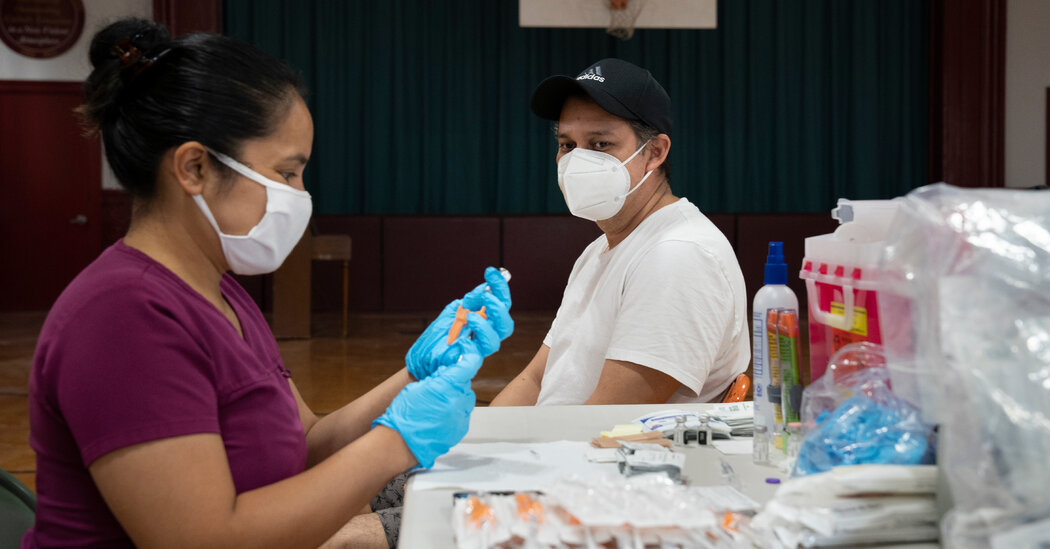
Federal health officials said the new data justified a campaign of booster shots. But some scientists disagreed, saying not every American needs another dose.The Centers for Disease Control and Prevention released three studies on Wednesday that federal officials said provided evidence that booster shots of the Pfizer-BioNTech and Moderna coronavirus vaccines would be needed in the coming months.But some experts said the new research did not back up the decision to recommend booster shots for all Americans.Taken together, the studies show that although the vaccines remain highly effective against hospitalizations and deaths, the bulwark they provide against infection with the virus has weakened in the past few months.The finding accords with early data from seven states, gathered this week by The New York Times, suggesting a rise in breakthrough infections and a smaller increase in hospitalizations among the vaccinated as the Delta variant spread in July.The decline in effectiveness against infection may result from waning vaccine immunity, a lapse in precautions like wearing masks or the rise of the highly contagious Delta variant, experts said — or a combination of all three.“We are concerned that this pattern of decline we are seeing will continue in the months ahead, which could lead to reduced protection against severe disease, hospitalization and death,” Dr. Vivek Murthy, the surgeon general, said at a White House news briefing on Wednesday.Citing the data, federal health officials outlined a plan for Americans who received the two vaccines to get booster shots eight months after receiving their second doses, starting Sept. 20.People who received the Johnson & Johnson vaccine may also require additional doses. But that vaccine was not rolled out until March 2021, and a plan to provide boosters will be made after reviewing new data expected over the next few weeks, officials said.Some scientists were skeptical of the administration’s new initiative.“These data support giving additional doses of vaccine to highly immunocompromised persons and nursing home residents, not to the general public,” said Dr. Céline Gounder, an infectious disease specialist at Bellevue Hospital Center and a former adviser on the pandemic to the administration.Boosters would only be warranted if the vaccines were failing to prevent hospitalizations with Covid-19, she said.“Feeling sick like a dog and laid up in bed, but not in the hospital with severe Covid, is not a good enough reason” for a campaign of booster shots, Dr. Gounder said. “We’ll be better protected by vaccinating the unvaccinated here and around the world.”Pharmacists prepared to give vaccinations at a nursing home in Brooklyn in January. Dr. Gounder said the data supported boosters for nursing home residents and immunocompromised people, not the general public.Yuki Iwamura/ReutersIt’s unclear whether a third dose would help people who did not produce a robust immune response to the first two doses, said Bill Hanage, an epidemiologist at the Harvard T.H. Chan School of Public Health.And the recommendation for boosters may also end up undermining confidence in the vaccines, he warned: “A third shot will add to skepticism among people yet to receive one dose that the vaccines help them.”Together, the new studies indicate overall that vaccines have an effectiveness of roughly 55 percent against all infections, 80 percent against symptomatic infection, and 90 percent or higher against hospitalization, noted Ellie Murray, an epidemiologist at Boston University.“Those numbers are actually very good,” Dr. Murray said. “The only group that these data would suggest boosters for, to me, is the immunocompromised.”The apparent reduction in vaccine effectiveness against infection could instead have been caused by increased exposure to the highly contagious Delta variant during a period of unfettered social interactions, she added: “This seems to me like a real possibility, since many early vaccinated were motivated by a desire to see friends and family and get back to normal.”Dr. Murray said a booster shot would undoubtedly boost immunity in an individual, but the added benefit may be minimal — and obtained just as easily by wearing a mask, or avoiding indoor dining and crowded bars.The administration’s emphasis on vaccines has undermined the importance of building other precautions into people’s lives in ways that are comfortable and sustainable, and bolstering capacity for testing, Dr. Murray and other experts said.“This is part of why I think the administration’s focus on vaccines is so damaging to morale,” she added. “We probably won’t be going back to normal anytime soon.”Dr. Vivek Murthy, the surgeon general, last month. “We are concerned that this pattern of decline we are seeing will continue in the months ahead,” he said Wednesday.Doug Mills/The New York TimesBefore people can begin to receive boosters, the Food and Drug Administration must first authorize a third dose of the vaccines made by Pfizer-BioNTech and Moderna, and an advisory committee of the C.D.C. must review the evidence and make recommendations.One of the new C.D.C. studies analyzed the effectiveness of vaccines among residents of nearly 4,000 nursing homes from March 1 to May 9, before the Delta variant’s emergence, and nearly 15,000 nursing homes from June 21 to Aug. 1, when the variant dominated new infections in the country.The vaccines’ effectiveness at preventing infections dropped from about 75 percent to 53 percent between those dates, the study found. It did not evaluate the vaccines’ protection against severe illness.Nursing homes were required to report the number of immunized residents only after June 6, which “makes comparisons over time very challenging,” Dr. Murray said. “It’s fully possible that the vaccine effectiveness reported here hasn’t actually declined over time.”.css-1xzcza9{list-style-type:disc;padding-inline-start:1em;}.css-3btd0c{font-family:nyt-franklin,helvetica,arial,sans-serif;font-size:1rem;line-height:1.375rem;color:#333;margin-bottom:0.78125rem;}@media (min-width:740px){.css-3btd0c{font-size:1.0625rem;line-height:1.5rem;margin-bottom:0.9375rem;}}.css-3btd0c strong{font-weight:600;}.css-3btd0c em{font-style:italic;}.css-w739ur{margin:0 auto 5px;font-family:nyt-franklin,helvetica,arial,sans-serif;font-weight:700;font-size:1.125rem;line-height:1.3125rem;color:#121212;}#NYT_BELOW_MAIN_CONTENT_REGION .css-w739ur{font-family:nyt-cheltenham,georgia,’times new roman’,times,serif;font-weight:700;font-size:1.375rem;line-height:1.625rem;}@media (min-width:740px){#NYT_BELOW_MAIN_CONTENT_REGION .css-w739ur{font-size:1.6875rem;line-height:1.875rem;}}@media (min-width:740px){.css-w739ur{font-size:1.25rem;line-height:1.4375rem;}}.css-9s9ecg{margin-bottom:15px;}.css-16ed7iq{width:100%;display:-webkit-box;display:-webkit-flex;display:-ms-flexbox;display:flex;-webkit-align-items:center;-webkit-box-align:center;-ms-flex-align:center;align-items:center;-webkit-box-pack:center;-webkit-justify-content:center;-ms-flex-pack:center;justify-content:center;padding:10px 0;background-color:white;}.css-pmm6ed{display:-webkit-box;display:-webkit-flex;display:-ms-flexbox;display:flex;-webkit-align-items:center;-webkit-box-align:center;-ms-flex-align:center;align-items:center;}.css-pmm6ed > :not(:first-child){margin-left:5px;}.css-5gimkt{font-family:nyt-franklin,helvetica,arial,sans-serif;font-size:0.8125rem;font-weight:700;-webkit-letter-spacing:0.03em;-moz-letter-spacing:0.03em;-ms-letter-spacing:0.03em;letter-spacing:0.03em;text-transform:uppercase;color:#333;}.css-5gimkt:after{content:’Collapse’;}.css-rdoyk0{-webkit-transition:all 0.5s ease;transition:all 0.5s ease;-webkit-transform:rotate(180deg);-ms-transform:rotate(180deg);transform:rotate(180deg);}.css-eb027h{max-height:5000px;-webkit-transition:max-height 0.5s ease;transition:max-height 0.5s ease;}.css-6mllg9{-webkit-transition:all 0.5s ease;transition:all 0.5s ease;position:relative;opacity:0;}.css-6mllg9:before{content:”;background-image:linear-gradient(180deg,transparent,#ffffff);background-image:-webkit-linear-gradient(270deg,rgba(255,255,255,0),#ffffff);height:80px;width:100%;position:absolute;bottom:0px;pointer-events:none;}.css-uf1ume{display:-webkit-box;display:-webkit-flex;display:-ms-flexbox;display:flex;-webkit-box-pack:justify;-webkit-justify-content:space-between;-ms-flex-pack:justify;justify-content:space-between;}.css-wxi1cx{display:-webkit-box;display:-webkit-flex;display:-ms-flexbox;display:flex;-webkit-flex-direction:column;-ms-flex-direction:column;flex-direction:column;-webkit-align-self:flex-end;-ms-flex-item-align:end;align-self:flex-end;}.css-12vbvwq{background-color:white;border:1px solid #e2e2e2;width:calc(100% – 40px);max-width:600px;margin:1.5rem auto 1.9rem;padding:15px;box-sizing:border-box;}@media (min-width:740px){.css-12vbvwq{padding:20px;width:100%;}}.css-12vbvwq:focus{outline:1px solid #e2e2e2;}#NYT_BELOW_MAIN_CONTENT_REGION .css-12vbvwq{border:none;padding:10px 0 0;border-top:2px solid #121212;}.css-12vbvwq[data-truncated] .css-rdoyk0{-webkit-transform:rotate(0deg);-ms-transform:rotate(0deg);transform:rotate(0deg);}.css-12vbvwq[data-truncated] .css-eb027h{max-height:300px;overflow:hidden;-webkit-transition:none;transition:none;}.css-12vbvwq[data-truncated] .css-5gimkt:after{content:’See more’;}.css-12vbvwq[data-truncated] .css-6mllg9{opacity:1;}.css-qjk116{margin:0 auto;overflow:hidden;}.css-qjk116 strong{font-weight:700;}.css-qjk116 em{font-style:italic;}.css-qjk116 a{color:#326891;-webkit-text-decoration:underline;text-decoration:underline;text-underline-offset:1px;-webkit-text-decoration-thickness:1px;text-decoration-thickness:1px;-webkit-text-decoration-color:#326891;text-decoration-color:#326891;}.css-qjk116 a:visited{color:#326891;-webkit-text-decoration-color:#326891;text-decoration-color:#326891;}.css-qjk116 a:hover{-webkit-text-decoration:none;text-decoration:none;}The decline in effectiveness also could have resulted from the spread of the Delta variant, Dr. Gounder said.“It makes sense to give an extra dose of vaccine to vaccinated nursing home residents, but what will have an even bigger impact on protecting those nursing home residents is to vaccinate their caregivers,” she said. Many heath aides in long-term care facilities remain unvaccinated.A second study evaluated data from New York State from May 3 to July 25, when the Delta variant grew to represent more than 80 percent of new cases. The effectiveness of vaccines in preventing cases in adults declined from 91.7 percent to 79.8 percent during that time, the study found. But the vaccines remained just as effective at preventing hospitalizations.During those weeks, New York recorded 9,675 breakthrough infections — roughly 20 percent of total cases in the state — and 1,271 hospitalizations in vaccinated people, which accounted for 15 percent of all Covid-19 hospitalizations.Although fully immunized people of all ages got infected with the virus, vaccine effectiveness showed the sharpest drop, from 90.6 percent to 74.6 percent, in people aged 18 through 49 — who are often the least likely to take precautions and the most likely to socialize.A pop-up Pfizer-BioNTech vaccination site in Corona, Queens, this month. Byron Smith for The New York TimesData from Israel has suggested that immunity against infection has waned in vaccinated adults who are 65 or older. But in the New York data, the effectiveness of the vaccines in that group barely budged.Adults ages 65 or older were more likely to be hospitalized than other age groups, regardless of vaccination status. But the vaccines did not show a decline in effectiveness against hospitalizations in any of the age groups.The third study from the C.D.C. found that the vaccines showed 90 percent effectiveness against hospitalizations in the country, “which is excellent,” Dr. Gounder noted.The vaccines were less protective against hospitalization in immunocompromised people. “But not all immunocompromised persons will respond to an additional dose of vaccine,” Dr. Gounder noted.To protect these vulnerable individuals, everyone around them should be vaccinated and should continue to wear masks, she added.The vaccines may appear to be less effective than they did in the trials that led to their authorization because those studies were conducted before the emergence of the Delta variant.Statistically, the vaccines can appear to lose relative effectiveness as more unvaccinated people become infected, recover and gain natural immunity. And scientists always expected that as more people became vaccinated, the proportions of vaccinated people among the infected would rise.If preventing infection is the goal, it would be wiser to develop a booster of a nasal spray vaccine, which is better at inducing immunity in the nose and throat, where the virus enters the body, Dr. Gounder said.
Read more →
The agency will reverse a Trump-era decision to keep chlorpyrifos, one of the most common pesticides, in use. WASHINGTON — The Biden administration announced on Wednesday that it is banning a common pesticide, widely used since 1965 on fruits and vegetables, from use on food crops because it has been linked to neurological damage in children.The Environmental Protection Agency said this week it would publish a regulation to block the use of chlorpyrifos on food. One of the most widely used pesticides, chlorpyrifos is commonly applied to corn, soybeans, apples, broccoli, asparagus and other produce.The new rule, which will take effect in six months, follows an order in April by the Ninth Circuit Court of Appeals that directed the E.P.A. to halt the agricultural use of the chemical unless it could demonstrate its safety.Labor and environmental advocacy groups estimate that the decision will eliminate more than 90 percent of chlorpyrifos use in the country. In an unusual move, the new chlorpyrifos policy will not be put in place via the standard regulatory process, under which the E.P.A. first publishes a draft rule, then takes public comment before publishing a final rule. Rather, in compliance with the court order, which noted that the science linking chlorpyrifos to brain damage is over a decade old, the rule will be published in final form, without a draft or public comment period.The announcement is the latest in a series of moves by the Biden administration to re-create, strengthen or reinstate more than 100 environmental regulations.“Today E.P.A. is taking an overdue step to protect public health,” the agency’s head, Michael S. Regan, said. “Ending the use of chlorpyrifos on food will help to ensure children, farmworkers, and all people are protected from the potentially dangerous consequences of this pesticide.”Environmental organizations, health advocates and groups representing farm workers have long sought to stop the use of the chlorpyrifos, after studies showed exposure to the pesticide was linked to lower birth weights, reduced I.Q.s and other developmental problems in children. Studies traced some of those health effects to prenatal exposure to the pesticide.Several of those groups last year petitioned the E.P.A. to reverse a Trump-era decision not to ban the use of the chemical.“Pesticides like chlorpyrifos haunt farm workers, especially parents and pregnant women,” said Elizabeth Strater, director of strategic campaigns for United Farm Workers of America, one of the groups on the petition. “They don’t hug their kids until they change clothes, they wash their laundry separately. When they miscarry, or when their children have birth defects or learning disabilities, they wonder if their work exposures harmed their children.”“It took far too long, but children will no longer be eating food tainted with a pesticide that causes intellectual learning disabilities,” said Patti Goldman, an attorney at Earthjustice, another group that signed on to the federal petition. “Chlorpyrifos will finally be out of our fruits and vegetables.” Several states — including California, Hawaii, New York and Maryland — have banned or restricted the use of chlorpyrifos, and the attorneys general of those states, as well as those of Washington, Vermont and Massachusetts, joined the petition.An orange grove sprayed with chlorpyrifos in California in 2012.Jim West/Alamy The Obama administration began the process of revoking all uses of the pesticide in 2015 but, in 2020, the Trump administration ignored the recommendations of E.P.A. scientists and kept chlorpyrifos on the market. That set off a wave of legal challenges.Those challenges concluded with the court order in April, which gave the E.P.A. a deadline of Aug. 20 to either demonstrate that chlorpyrifos does not harm children or to legally end its use on food crops.“It is very unusual,” Michal Freedhoff, the E.P.A. assistant administrator for chemical safety and pollution prevention, said of the court’s directive. “It speaks to the impatience and the frustration that the courts and environmental groups and farmworkers have with the agency.” “The court basically said, ‘Enough is enough,’” Ms. Freedhoff said. “Either tell us that it’s safe, and show your work, and if you can’t, then revoke all tolerances.”The decision is expected to lead to criticism by the chemical industry and farm lobby, which worked closely with the Trump administration ahead of its decision to keep chlorpyrifos in use.“The availability of pesticides, like chlorpyrifos, is relied upon by farmers to control a variety of insect pests and by public health officials who work to control deadly and debilitating pests like mosquitoes,” said Chris Novak, the chief executive of CropLife America, an agricultural chemical company, at the time of Trump decision.Pesticide products that include chlorpyrifos include the brands Hatchet, manufactured by Dow AgroSciences; Eraser, manufactured by Integrated Agribusiness Professionals; and Govern, manufactured by Tenkoz. Chlorpyrifos will still be permitted for nonfood uses such as on golf courses, turf, utility poles and fence posts as well as in cockroach bait and ant treatments.In a withering attack on the Trump administration E.P.A., Judge Jed S. Rakoff of the Ninth Circuit wrote on behalf of the court that, rather than ban the pesticide or impose restrictions, the agency “sought to evade, through one delaying tactic after another, its plain statutory duties.”
Read more →
A major crisis that accompanied the rise of the pandemic was lack of availability of the nasopharyngeal swab — necessary for testing for COVID-19, which in turn, was necessary to get a grip on the pandemic. An account of how one group addressed that crisis is published this week Journal of Clinical Microbiology, a journal of the American Society for Microbiology.
“We met the challenge by creating all-new swabs, which were ready and clinically tested in just three weeks,” said Ramy Arnaout, M.D., D.Phil., Associate Professor of Pathology, Beth Israel Deaconess Medical Center and Harvard Medical School, and Associate Director of the Clinical Microbiology Laboratories, Beth Israel Deaconess Medical Center (BIDMC).
“Handling crises successfully requires a different set of skills than the everyday,” said Dr. Arnaout. “Competition and secrecy are out. Cooperation and openness are in. Resolving the swab crisis was a case study in these and other valuable lessons.”
As the first wave of COVID-19 broke out across the United States, BIDMC, which had the largest in-house COVID-19 testing center in Boston, found themselves with only a week’s supply of swabs. “More manufacturing was the only lasting solution,” Dr. Arnaout said. He and his colleagues began reverse engineering swabs, to determine if they could make them from scratch.
Swabs must be engineered to be neither too stiff, nor too flexible, and must be individually packaged and sterile. BIDMC needed around ten thousand a week; the country needed roughly ten million.
The first week, group members floated, shot down, resurrected, and repurposed various ideas, said Dr. Arnaout. Ultimately, the team saw two options: to find a scalable means to assemble swabs, or else to “find a way to make a stripped-down swab in a single go, without the need for assembly.” 3D printing had “advantages in speed of development and in the variety of structures it can make.”
Dr. Arnaout had previously demonstrated that open and collaborative crowdsourcing is a viable route to solving complex computational problems, specifically his work in computational immunology. He put this lesson to work in the COVID crisis.
A team led by researchers at Massachusetts General Hospital (MGH) has generated premature cells that support early heart development but vanish soon after birth. The investigators hope that the advance, which is described in Nature Communications, will help bring them closer to achieving their goal of using patients’ cells to generate functioning heart tissue that could be transplanted, similar to donor organs, for the treatment of heart failure.
The cells, called pre-epicardial cells, form the epicardium, a membrane that covers the outer surface of the heart. This membrane generates a variety of cells needed to support heart development before birth. Harald Ott, MD, a thoracic surgeon at MGH and an associate professor in surgery at Harvard Medical School, and his colleagues developed a recipe to generate pre-epicardial cells from human induced pluripotent stem cells, which are embryo-like cells derived from reprogrammed mature cells such as a patient’s skin cells.
When placed in contact with heart muscle cells (or cardiomyocytes), the pre-epicardial cells developed further to become epicardial cells and took on their important role of supporting embryonic heart formation — for example, by enhancing the maturation of nearby cardiomyocytes.
Ott notes that scientists are able to retrace early stages of heart development and generate millions of cardiomyocytes from a single blood draw, but forming the structure of the heart is very complex. “It has been difficult to retrace later stages of tissue development due to the many cell types involved and the complexity of the three-dimensional environment of the developing heart,” he explains. “Our study introduces a cell type that is much closer to later stages of human cardiac development than what we have been able to generate so far.”
Producing cells that play key roles in forming the structure of the heart is necessary for regenerative medicine strategies for heart disease. “While there are many more steps still required to complete the puzzle of heart development, this work adds an important piece that will hopefully help us and others in recapitulating cardiac development to generate novel therapies for heart failure,” says Ott. He envisions that such cell- or tissue-based therapies will provide “on demand” treatments to restore or replace lost organ function in patients suffering from chronic organ failure such as heart failure, end stage lung disease, and kidney disease.
Story Source:
Materials provided by Massachusetts General Hospital. Note: Content may be edited for style and length.