Vision: Novel approach reverses amblyopia in animals

Amblyopia is the most common cause of vision loss in children, according to the U.S. National Eye Institute. It arises when visual experience is disrupted during infancy, for example by a cataract in one eye. Even after the cataract is removed, vision through the affected eye is impaired because of a failure of this eye to develop strong connections in the brain. The current treatment of covering the “good” eye with a patch to strengthen the amblyopic one, is only partially effective and cannot help after a “critical period” ends before age 8.
In a new study, MIT and Dalhousie University neuroscientists demonstrate that by temporarily anesthetizing the retina of the good eye, they could lastingly improve vision in the amblyopic one even after the critical period in two different mammal species.
The encouraging results support further preclinical testing of the novel therapy, in which the non-amblyopic eye’s retina is temporarily and reversibly silenced by an injection of tetrodotoxin (TTX), said Mark Bear, Picower Professor of Neuroscience in The Picower Institute for Learning and Memory at MIT and corresponding author of the study published in eLife.
“We observed a recovery in every animal,” said Bear, a faculty member of MIT’s Department of Brain and Cognitive Sciences. “We’ve done much better than anyone would have anticipated.”
The results provide hope that the approach can eventually be translated to people, added Kevin Duffy, Professor in the Department of Psychology and Neuroscience at Dalhousie.
“These are remarkable data that demonstrate an unequaled profile of recovery,” said Duffy, who co-led the study with Ming-fai Fong, a postdoc in Bear’s Picower Institute lab. “I am hopeful and optimistic that this study can provide a pathway for a new and more effective approach to amblyopia treatment. I am very proud to have been part of this rewarding collaboration.”
A new approach to amblyopia

Read more →

Confusing mishmash of newborn bathing practices at US hospitals

A nationwide survey of hospitals has revealed a wide variety of approaches to newborn skincare — including the timing of the first bath — that could ultimately have lasting effects on a baby’s health and wellbeing.
Believed to be the first of its kind, the survey sought to document newborn skincare practices at hospitals around the country. Doctors have increasingly come to appreciate the importance of infant exposure to natural skin microbes, but there are no clear evidence-based guidelines for hospitals to follow.
The result, the researchers found, is a mishmash of practices that sometimes break down along regional lines.
“The variation in what hospitals are doing for newborn skincare is a direct result of previously not having a good understanding of what really is the best way to care for a baby’s skin,” said researcher Ann L. Kellams, MD, of UVA Children’s. “The hope now is that this work will challenge us all to take a look at the evidence and incorporate practices that protect babies the most.”
Newborn Skincare: What’s Best for Baby?
The skincare babies receive in the hours and days after birth has long-term effects, shaping breastfeeding outcomes, infant skin health and even infection rates. For example, children who are birthed vaginally are known to have decreased rates of childhood allergies compared with those born by caesarian section.

Read more →

Watercooler parts could be a source of organophosphate ester exposure

Watercoolers have become a staple in homes, offices and schools, but their tanks and parts are made of materials that could release unwanted or potentially harmful compounds into drinking water. In a preliminary study, researchers in ACS’ Environmental Science & Technology Letters report that organophosphate esters (OPEs) were found in water dispensed from these systems, but they estimated that daily consumption would be far below the levels associated with health problems.
As drinking water from freestanding dispensers has become wildly popular, some concern has been raised about the quality of the water coming out of these systems. For example, OPEs have been found in various types of drinking water, including tap, well and bottled water, in some locations in the U.S., South Korea and China. These compounds are used widely worldwide, replacing harmful brominated flame retardants and as additives in plastics, and now researchers are finding that OPEs are also associated with poor health outcomes. Because these substances are applied to materials or used as additives, which are not strongly bonded to plastic polymers, they can easily contaminate dust or leach into water. So, Yali Shi, Guangshui Na and colleagues wanted to see if water dispensers could contribute to OPE exposure, estimating the amount someone would consume on a daily basis if they only drank water from these types of systems.
The researchers collected water from 53 water dispensers in office buildings in China, both from the storage tanks and dispensed through room temperature and hot water taps. They analyzed the samples for 22 OPEs and detected eight of them in the majority of samples, with tris(2-chloroisopropyl) phosphate (TCIPP) being the most abundant. The water dispensed from the hot and room temperature taps had higher amounts of these compounds than water held in the tanks. Upon closer inspection, the researchers found that the plastic dispenser and the tubing contained these compounds, and the tubing could accumulate OPEs from the air. Finally, the team calculated that if people drank water dispensed solely from these systems, their total daily exposure to TCIPP — a potential carcinogen and endocrine disruptor — was far less than is considered to cause harm to humans. The researchers say that while their study was small, it identifies a need for future research to examine whether silicone is the most suitable tubing material for watercoolers.
Story Source:
Materials provided by American Chemical Society. Note: Content may be edited for style and length.

Read more →

Switching to green cleaning reduces users’ exposure to potentially harmful chemicals

Jessica Cabrera knows the recipe for homemade window cleaner by heart — and is more than happy to share it.
“All you have to do is mix vinegar, water and dish soap, and there you have it,” Cabrera said.
Cabrera, who grew up in California’s Salinas Valley, just started her first year as an undergraduate student at the University of California, Berkeley. And while it may seem unusual for a new college student to have a passion for window cleaner, Cabrera has good reason for knowing the ins and outs of DIY cleaning products.
For the past three years, Cabrera has been part of a group of Salinas Valley teens working alongside UC Berkeley researchers to investigate whether housecleaning products expose their users to potentially harmful chemicals — and whether making the switch to cleaning products marketed as lower chemical, or “green,” can help reduce these exposures.
Cabrera is now a co-author of a peer-reviewed study, published Sept. 1 in the journal Environmental Health Perspectives, showing that making the switch to green cleaning products can reduce users’ exposure to up to 17 different carcinogenic and endocrine-disrupting chemicals, including chloroform and benzene.
“What I found the most interesting was that there was an 86% decrease in chloroform exposure after switching from conventional cleaning products to green cleaning products,” Cabrera said. “And it really put into perspective how cleaning products can serve as potential carcinogens and hormone disruptors. It’s something that you don’t really think about when you clean because you think cleaning is a good thing. And it is, but it also can have some detrimental effects to your health in the long term.”
Cabrera and her peers carried out the research as part of the Center for the Health Assessment of Mothers and Children of Salinas (CHAMACOS) Youth Council, a group of 10 to 15 high school students who gain hands-on experience in environmental health research by helping to design and carry out their own studies under the guidance of UC Berkeley public health experts.

Read more →

Antibiotics linked to increased risk of colon cancer

There is a clear link between taking antibiotics and an increased risk of developing colon cancer within the next five to ten years. This has been confirmed by researchers at Umeå University, Sweden, after a study of 40,000 cancer cases. The impact of antibiotics on the intestinal microbiome is thought to lie behind the increased risk of cancer.
“The results underline the fact that there are many reasons to be restrictive with antibiotics. While in many cases antibiotic therapy is necessary and saves lives, in the event of less serious ailments that can be expected to heal anyway, caution should be exercised. Above all to prevent bacteria from developing resistance but, as this study shows, also because antibiotics may increase the risk of future colon cancer,” explains Sophia Harlid, cancer researcher at Umeå University.
Researchers found that both women and men who took antibiotics for over six months ran a 17 per cent greater risk of developing cancer in the ascending colon, the first part of the colon to be reached by food after the small intestine, than those who were not prescribed any antibiotics. However, no increased risk was found for cancer in the descending colon. Nor was there an increased risk of rectal cancer in men taking antibiotics, while women taking antibiotics had a slightly reduced incidence of rectal cancer.
The increased risk of colon cancer was visible already five to ten years after taking antibiotics. Although the increase in risk was greatest for those taking most antibiotics, it was also possible to observe an admittedly small, but statistically significant, increase in the risk of cancer after a single course of antibiotics.
The present study uses data on 40,000 patients from the Swedish Colorectal Cancer Registry from the period 2010-2016. These have been compared to a matched control group of 200,000 cancer-free individuals drawn from the Swedish population at large. Data on the individuals’ antibiotic use was collected from the Swedish Prescribed Drug Register for the period 2005-2016. The Swedish study broadly confirms the results of an earlier, somewhat smaller British study.
In order to understand how antibiotics increase the risk, the researchers also studied a non-antibiotic bactericidal drug used against urinary infections that does not affect the microbiome. There was no difference in the frequency of colon cancer in those who used this drug, suggesting that it is the impact of antibiotics on the microbiome that increases the risk of cancer. While the study only covers orally administered antibiotics, even intravenous antibiotics may affect the gut microbiota in the intestinal system.
“There is absolutely no cause for alarm simply because you have taken antibiotics. The increase in risk is moderate and the affect on the absolute risk to the individual is fairly small. Sweden is also in the process of introducing routine screening for colorectal cancer. Like any other screening programme, it is important to take part so that any cancer can be detected early or even prevented, as cancer precursors can sometimes be removed,” says Sophia Harlid.
Story Source:
Materials provided by Umea University. Original written by Ola Nilsson. Note: Content may be edited for style and length.

Read more →

Another Hidden Covid Risk: Lingering Kidney Problems

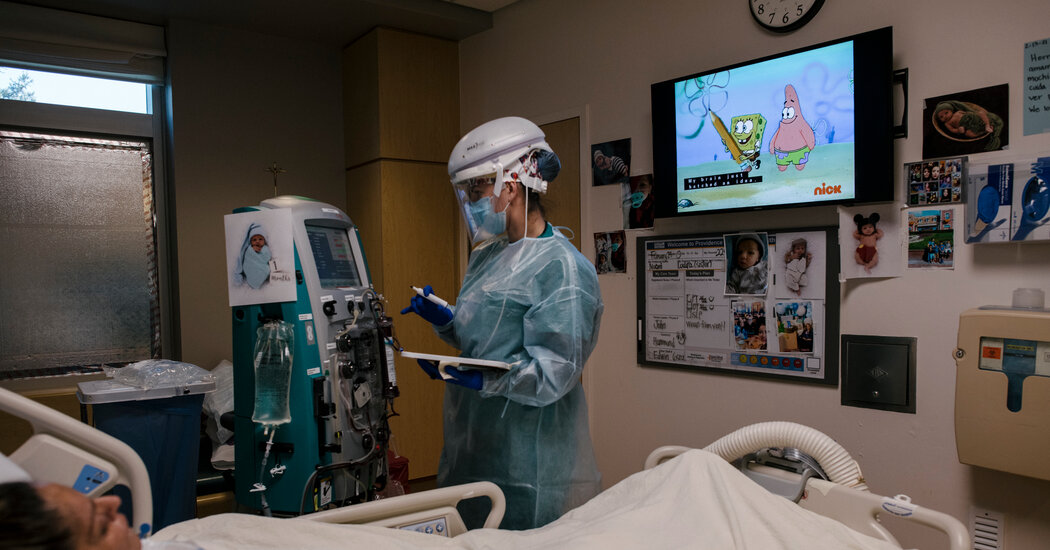
In a study of veterans, Covid survivors were 35 percent more likely than other patients to have long-term kidney damage or declines in kidney function.Since the beginning of the pandemic, doctors have found that people who become very ill with Covid-19 often experience kidney problems, not just the lung impairments that are the hallmark of the illness.Now, a large study suggests that kidney issues can last for months after patients recover from the initial infection, and may lead to a serious lifelong reduction of kidney function in some patients.The study, published Wednesday in the Journal of the American Society of Nephrology, found that the sicker Covid patients were initially, the more likely they were to experience lingering kidney damage.But even people with less severe initial infections could be vulnerable.“You see really, across the board, a higher risk of a bunch of important kidney-associated events,” said Dr. F. Perry Wilson, a nephrologist and associate professor of medicine at Yale, who was not involved in the study. “And what was particularly striking to me was that these persisted.”Kidneys play a vital role in the body, clearing toxins and excess fluid from the blood, helping maintain a healthy blood pressure, and keeping a balance of electrolytes and other important substances. When the kidneys are not working properly or efficiently, fluids build up, leading to swelling, high blood pressure, weakened bones and other problems.The heart, lungs, central nervous system and immune system can become impaired. In end-stage kidney disease, dialysis or an organ transplant may become necessary. The condition can be fatal.The new study, based on records of patients in the Department of Veterans Affairs health system, analyzed data from 89,216 people who tested positive for the coronavirus between March 1, 2020, and March 15, 2021, as well as data from 1,637,467 people who were not Covid patients.Between one and six months after becoming infected, Covid survivors were about 35 percent more likely than non-Covid patients to have kidney damage or substantial declines in kidney function, said Dr. Ziyad Al-Aly, chief of the research and development service at the V.A. St. Louis Health Care System and senior author of the study.“People who have survived the first 30 days of Covid are at risk of developing kidney disease,” Dr. Al-Aly, a nephrologist, said.Because many people with reduced kidney function do not experience pain or other symptoms, “what’s really important is that people realize that the risk is there and that physicians caring for post-Covid patients really pay attention to kidney function and disease,” he said.The two sets of patients in the study differed, in that members of one group had all been infected with Covid and members of the other group may have had a variety of other health conditions. Experts cautioned that there were limitations to the comparisons.The researchers tried to minimize the differences with detailed analyses that adjusted for a long list of demographic characteristics, pre-existing health conditions, medication usage and whether people were in nursing homes.Another limitation is that patients in the V.A. study were largely male and white, with a median age of 68, so it is unclear how generalizable the results are.One strength of the research, experts said, is that it involves over 1.7 million patients with detailed electronic medical records, making it the largest study so far on Covid-related kidney problems.While the results most likely would not apply to all Covid patients, they show that for those in the study, “there’s a pretty notable impact on kidney health in survivors of Covid-19 over the long term, particularly those who were very sick during their acute illness,” said Dr. C. John Sperati, a nephrologist and associate professor of medicine at Johns Hopkins, who was not involved in the study.Other researchers have found similar patterns, “so this is not the only study suggesting that these events are transpiring after Covid-19 infection,” he added.He and other experts said that if even a small percentage of the millions of Covid survivors in the United States developed lasting kidney problems, the impact on health care would be great.To assess kidney function, the research team evaluated levels of creatinine, a waste product that kidneys are supposed to clear from the body, as well as a measure of how well the kidneys filter the blood called the estimated glomerular filtration rate.Healthy adults gradually lose kidney function over time, about 1 percent or less a year, starting in their 30s or 40s, Dr. Wilson said. Serious illnesses and infections can cause more profound or permanent loss of function that may lead to chronic kidney disease or end-stage kidney disease.The new study found that 4,757 Covid survivors had lost at least 30 percent of kidney function in the year after their infection, Dr. Al-Aly said.That is equivalent to roughly “30 years of kidney function decline,” Dr. Wilson said.Covid patients were 25 percent more likely to reach that level of decline than people who had not had the illness, the study found.Smaller numbers of Covid survivors had steeper declines. But Covid patients were 44 percent more likely than non-Covid patients to lose at least 40 percent of kidney function and 62 percent more likely to lose at least 50 percent.End-stage kidney disease, which occurs when at least 85 percent of kidney function is lost, was detected in 220 Covid patients, Dr. Al-Aly said. Covid survivors were nearly three times as likely to receive the diagnosis as patients without Covid, the study found.Dr. Al-Aly and his colleagues also looked at a type of sudden renal failure called acute kidney injury, which other studies have found in up to half of hospitalized Covid patients. The condition can heal without causing long-term loss of kidney function.But the V.A. study found that months after their infection, 2,812 Covid survivors suffered acute kidney injury, nearly twice the rate in non-Covid patients, Dr. Al-Aly said.Dr. Wilson said the new data supported results of a study of 1,612 patients that he and colleagues conducted that found that Covid patients with acute kidney injury had significantly worse kidney function in the months after leaving the hospital than people with acute kidney injuries from other medical conditions.In the new study, researchers did not directly compare Covid survivors with people infected with other viruses, like the flu, making it hard to know “are you really any sicker than if you just had another bad infection,” Dr. Sperati said.In a previous study by Dr. Al-Aly’s team, however, which looked at many post-Covid health issues, including kidney problems, people hospitalized with Covid-19 were at significantly greater risk of developing long-term health problems in virtually every medical category, including cardiovascular, metabolic and gastrointestinal conditions, than were people hospitalized with the flu.Every type of kidney impairment measured in the new study was much more common in Covid patients who were sicker initially — those in intensive care or who experienced acute kidney injury in the hospital.People who were less ill during their Covid hospitalization were less likely to have lingering kidney problems, but still considerably more likely than non-Covid patients.“People who are at highest risk are the people who really had it bad to start with,” Dr. Al-Aly said. “But really, no one is spared the risk.”The study also found that even Covid patients who never needed hospitalization had slightly higher risk of kidney trouble than the general V.A. patient population. But the risk seemed so small, Dr. Sperati said, that “I don’t know that I would hang my hat on” those results.Dr. Wilson noted that some Covid patients who did not need hospitalization were nonetheless quite ill, needing to stay in bed for days. He said it’s possible that those were the ones who developed long-term kidney dysfunction, rather than people at the mildest end of the Covid spectrum.Doctors are unsure why Covid can cause kidney damage. Kidneys might be especially sensitive to surges of inflammation or immune system activation, or blood-clotting problems often seen in Covid patients may disturb kidney function, experts said.Dr. Sperati said Covid patients in the hospital seemed to have greater need for dialysis, and more protein and blood in their urine, than patients hospitalized with other severe illnesses.“Covid is probably a little more of a kidney-toxic virus,” Dr. Wilson said. “I do think that the Covid syndrome has some long-term adverse effects on the kidney.”

Read more →

Long Covid in children – time to be reassured

SharecloseShare pageCopy linkAbout sharingimage sourceGetty ImagesThe risk of “long Covid” in children is much lower than many had feared, leading child-health experts have said.After the world’s biggest study into the issue, the researchers, led by the Great Ormond Street Institute of Child Health, said they were “reassured”.They surveyed every 11- to 17-year-old testing positive for coronavirus in England between September and March.And their research suggests somewhere between 1.7% and 14% still had symptoms caused by Covid-19 15 weeks later.The researchers said it was important those with persistent symptoms, which included headaches, tiredness and breathing difficulties, received support.But there was little evidence huge numbers had sought NHS help for symptoms that had left them bedridden or unable to attend school.Long Covid: What is it and what are the symptoms?Long Covid: Will I ever get better?Covid: Children’s extremely low risk confirmed by studyThe study also surveyed young people who had never tested positive.And 53% of them had at least one symptom after 15 weeks, simply because they are common in the general population.But among those who had tested positive, this proportion was 65%.And 30% had three or more symptoms, compared with 16% of those who had never tested positive, suggesting 32,000 of the nearly 235,000 positive cases had developed long Covid.But only 13% of those 235,000 had responded to the survey – and if all those with long Covid were among those who did so, that would suggest their actual number was just 4,000.’Taken seriously’The research team – including Prof Sir Terence Stephenson, from the Great Ormond Street Institute of Child Health, Royal College of Paediatrics and Child Health infectious-disease lead Dr Liz Whittaker, and Public Health England officials – will continue to follow the children in the coming months.But Sir Terence said he was already “reassured” suggestions, at the height of the pandemic, half of children could develop long Covid cases were wrong.Although, the numbers were still “not trivial” and the issue needed to be taken seriously.image sourceGetty ImagesMost likely to report persistent symptoms were older girls who already had poorer physical and mental healThose struggling emotionally and mentally could be more attuned to even minor physical illnesses, the researchers said, and a positive coronavirus test could help trigger that.Of all the children in the study, 40% reported feeling sad, worried or unhappy.And the researchers said it was clear the pandemic had had a damaging effect on young people because of:the closure of schoolsnot seeing their friends concern about the risk from the virusThis showed how important it was to get “back to normal” and have schools open, Dr Whittaker added.SCHOOLS: When will they reopen?SYMPTOMS: What are they and how to guard against them?YOUR QUESTIONS: We answer your queriesTREATMENTS: What progress are we making to help people?COVID IN SCHOOL: What are the risks?

Read more →

Pandemics Get Forgotten. But Not at This Museum.

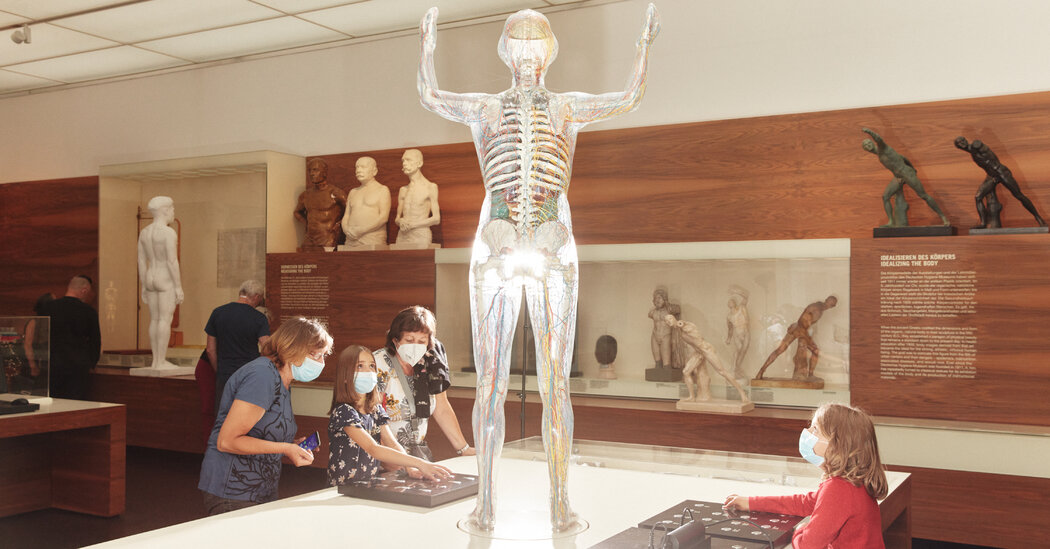
The collection of the German Hygiene Museum shows that the same debates recur whenever disease breaks out, even if we don’t remember them.DRESDEN, Germany — In a display case at the German Hygiene Museum here is a pretty, blue glass bottle whose daintiness belies its purpose. Manufactured in 1904, it is a flask for tuberculosis patients to wear at the hip, so they could spit up infectious phlegm with relative discretion. (In Thomas Mann’s 1924 novel “The Magic Mountain,” residents of a sanitarium nickname this device Blue Heinrich.)Using a pocket spittoon rather than spitting on the floor was considered courteous at a time before TB could be treated with antibiotics, Carola Rupprecht, the head of the museum’s education department, explained on a recent tour, just as mask-wearing or coughing into your elbow are points of etiquette during the current pandemic. “The idea was to take hygienic measures to avoid the spread of the disease,” she said.The museum, in the Eastern city of Dresden, has long sought to escape the idea that it is narrowly focused on medicine, and has worked hard instead to promote itself as “the museum of the human being and of the human body,” said Klaus Vogel, its director, who has staged exhibitions at the institution on everything from food to friendship.Part of this effort to rebrand comes from wanting distance from the German Hygiene Museum’s own dark history of promoting eugenicist conceptions of “racial hygiene” in the Nazi era. The museum has a deep ambivalence toward its own collection that causes it to approach some health topics with caution. But as the coronavirus has given disease prevention a new and lethal urgency, the museum is grappling with how to address the very thing it’s named after.There are lessons to learn from the museum’s hygiene-related holdings, Rupprecht said, particularly about how often the same debates recur throughout the history of medicine: Often, these debates turn on questions of privacy, individual freedom and the best way to communicate health information to a skeptical public.“Here and Today,” a 2020 sculpture by Sebastian Wien, is an artistic representation of the SARS-CoV-2 virus.Andrew White for The New York TimesFor instance, the museum has more than 10,000 posters relating to the prevention of H.I.V. and other sexually transmitted diseases — a handful of which are now on display in the permanent exhibition. They represent a wide variety of communication strategies, some threatening, others playful: “Small encounter, great danger,” reads one poster from 1949, which shows a man and woman dancing in an ominous shadow. Another poster, from 1987, shows a sultry man in a raincoat and boots, above the type, “Good boys always wear their rubbers.”Posters about preventing H.I.V. transmission hang in the “Sexuality” section of the museum’s permanent exhibition.Andrew White for The New York TimesAlso in the permanent exhibition are posters encouraging people to get inoculated against smallpox, the first disease for which there was an effective vaccine. “Right from the beginning, we had a problem persuading people to be vaccinated,” Rupprecht said.Smallpox vaccination was eventually made mandatory in many places, including in parts of the United States and what is now Germany. “We’re very happy today that smallpox doesn’t exist any more,” Ruprecht said. “Because, really, millions, mostly children, died.” But this was only achieved by making vaccination compulsory, she added, which was controversial at the time, much as proposed vaccine mandates are today. The arguments are still the same, she added. “The main question is: What is to be regarded as more important? The assumed protection of the whole society by vaccination, or the freedom of each individual to decide for himself?”Some objects are more fraught — one, because of its history. The museum’s famous “Transparent Woman,” a clear, life-size model, has arms uplifted and organs visible through plastic. She is slender and classically beautiful. When visitors press buttons at her feet, different organs light up. “It shows you in a very clear and simple way, where the organs are, arteries, veins, nerves,” Vogel said, in an interview. “Everything is in the right position, you can explain it to children, they understand it immediately.”Klaus Vogel, the director of the German Hygiene Museum. The museum’s relationship with the Nazis is a “very heavy thing to take on,” he said. “You have to carry it all the time.”Andrew White for The New York TimesBut the woman makes him uneasy, he said, because of its use in the Nazi era, when it was on an elevated platform — a model for what a healthy National Socialist should look like at a time when health was considered a civic duty. “It was like an idol,” he said, representing “the perfect human being, with no wrinkles, no age, no sweat, no tears, no blood, no illness, no pain.”The museum, founded by the mouthwash magnate Karl August Lingner, grew out of the International Hygiene Exhibition, a carnivalesque 1911 show that drew 5.5 million visitors, attracted by novelties like the chance to view bacteria through a microscope. Lingner established the museum with the money he raised from the event.The German Hygiene Museum was founded by the mouthwash magnate Karl August Lingner.Andrew White for The New York TimesThere were traces of eugenics in the museum’s programming from the beginning, said Vogel, including a “race hygiene” section at the 1911 exhibition. Under the Nazis, the museum became an arm of a propaganda machine, and the idea of race hygiene was central to the Nazis’ genocidal agenda.An established scientific institution with a highly developed public outreach apparatus, the museum was a valuable tool for the Nazis in spreading false claims about Jews, disabled people and other victims of the regime..css-1xzcza9{list-style-type:disc;padding-inline-start:1em;}.css-3btd0c{font-family:nyt-franklin,helvetica,arial,sans-serif;font-size:1rem;line-height:1.375rem;color:#333;margin-bottom:0.78125rem;}@media (min-width:740px){.css-3btd0c{font-size:1.0625rem;line-height:1.5rem;margin-bottom:0.9375rem;}}.css-3btd0c strong{font-weight:600;}.css-3btd0c em{font-style:italic;}.css-w739ur{margin:0 auto 5px;font-family:nyt-franklin,helvetica,arial,sans-serif;font-weight:700;font-size:1.125rem;line-height:1.3125rem;color:#121212;}#NYT_BELOW_MAIN_CONTENT_REGION .css-w739ur{font-family:nyt-cheltenham,georgia,’times new roman’,times,serif;font-weight:700;font-size:1.375rem;line-height:1.625rem;}@media (min-width:740px){#NYT_BELOW_MAIN_CONTENT_REGION .css-w739ur{font-size:1.6875rem;line-height:1.875rem;}}@media (min-width:740px){.css-w739ur{font-size:1.25rem;line-height:1.4375rem;}}.css-9s9ecg{margin-bottom:15px;}.css-16ed7iq{width:100%;display:-webkit-box;display:-webkit-flex;display:-ms-flexbox;display:flex;-webkit-align-items:center;-webkit-box-align:center;-ms-flex-align:center;align-items:center;-webkit-box-pack:center;-webkit-justify-content:center;-ms-flex-pack:center;justify-content:center;padding:10px 0;background-color:white;}.css-pmm6ed{display:-webkit-box;display:-webkit-flex;display:-ms-flexbox;display:flex;-webkit-align-items:center;-webkit-box-align:center;-ms-flex-align:center;align-items:center;}.css-pmm6ed > :not(:first-child){margin-left:5px;}.css-5gimkt{font-family:nyt-franklin,helvetica,arial,sans-serif;font-size:0.8125rem;font-weight:700;-webkit-letter-spacing:0.03em;-moz-letter-spacing:0.03em;-ms-letter-spacing:0.03em;letter-spacing:0.03em;text-transform:uppercase;color:#333;}.css-5gimkt:after{content:’Collapse’;}.css-rdoyk0{-webkit-transition:all 0.5s ease;transition:all 0.5s ease;-webkit-transform:rotate(180deg);-ms-transform:rotate(180deg);transform:rotate(180deg);}.css-eb027h{max-height:5000px;-webkit-transition:max-height 0.5s ease;transition:max-height 0.5s ease;}.css-6mllg9{-webkit-transition:all 0.5s ease;transition:all 0.5s ease;position:relative;opacity:0;}.css-6mllg9:before{content:”;background-image:linear-gradient(180deg,transparent,#ffffff);background-image:-webkit-linear-gradient(270deg,rgba(255,255,255,0),#ffffff);height:80px;width:100%;position:absolute;bottom:0px;pointer-events:none;}.css-uf1ume{display:-webkit-box;display:-webkit-flex;display:-ms-flexbox;display:flex;-webkit-box-pack:justify;-webkit-justify-content:space-between;-ms-flex-pack:justify;justify-content:space-between;}.css-wxi1cx{display:-webkit-box;display:-webkit-flex;display:-ms-flexbox;display:flex;-webkit-flex-direction:column;-ms-flex-direction:column;flex-direction:column;-webkit-align-self:flex-end;-ms-flex-item-align:end;align-self:flex-end;}.css-12vbvwq{background-color:white;border:1px solid #e2e2e2;width:calc(100% – 40px);max-width:600px;margin:1.5rem auto 1.9rem;padding:15px;box-sizing:border-box;}@media (min-width:740px){.css-12vbvwq{padding:20px;width:100%;}}.css-12vbvwq:focus{outline:1px solid #e2e2e2;}#NYT_BELOW_MAIN_CONTENT_REGION .css-12vbvwq{border:none;padding:10px 0 0;border-top:2px solid #121212;}.css-12vbvwq[data-truncated] .css-rdoyk0{-webkit-transform:rotate(0deg);-ms-transform:rotate(0deg);transform:rotate(0deg);}.css-12vbvwq[data-truncated] .css-eb027h{max-height:300px;overflow:hidden;-webkit-transition:none;transition:none;}.css-12vbvwq[data-truncated] .css-5gimkt:after{content:’See more’;}.css-12vbvwq[data-truncated] .css-6mllg9{opacity:1;}.css-qjk116{margin:0 auto;overflow:hidden;}.css-qjk116 strong{font-weight:700;}.css-qjk116 em{font-style:italic;}.css-qjk116 a{color:#326891;-webkit-text-decoration:underline;text-decoration:underline;text-underline-offset:1px;-webkit-text-decoration-thickness:1px;text-decoration-thickness:1px;-webkit-text-decoration-color:#326891;text-decoration-color:#326891;}.css-qjk116 a:visited{color:#326891;-webkit-text-decoration-color:#326891;text-decoration-color:#326891;}.css-qjk116 a:hover{-webkit-text-decoration:none;text-decoration:none;}This legacy was a “very heavy thing to take on,” Vogel said. “You have to carry it all the time.”The museum’s permanent collection also deals with medical subjects like fertilization and genetic modification.Andrew White for The New York TimesAfter the fall of the Third Reich, the museum became a state institution in the socialist German Democratic Republic (G.D.R.) and became an Eastern equivalent to West Germany’s Federal Agency of Health Education. Its aim was promoting a healthy socialist citizenry. After German reunification in 1990, the museum took a hard turn away from its previous incarnations, retaining its name but shying away from hygiene as a subject, and expanding into other medical, historical and cultural fields.A 1920s anatomical model known as “Muskelkopf,” or “Muscle Head.”Andrew White for The New York TimesA detail from “Scream,” a series produced by the German photographer Herlinde Koelbl from 2009 to 2014.Andrew White for The New York Times“They didn’t want to have too much connection to their own past in the G.D.R. and Nazi time,” said Thomas Macho, a cultural historian who was previously part of the museum’s advisory board.He added that anti-Semitism and a fear of foreigners were recurring themes in every pandemic, pointing to conspiracy theories involving Jews and a rise in anti-Asian rhetoric during the latest. “Even in times of the Spanish Flu, more than 100 years ago, we had the discussion of the national quality of the flu,” he added. “Was it the Spanish flu? Or was it the Belgian flu, or was it the Flemish flu, or was it the Russian flu?”At the same time that humans re-enact the tendencies and debates from prior health crises, Macho said, there is also an odd kind of cultural amnesia that makes it difficult to learn from them. Twice as many people died of the Spanish flu than were killed in World War I, he said, and yet one plays a vastly bigger role in historical memory than the other.“Why do we forget these things? Why will we know a lot about 1969 and 1970, but nothing about the Hong Kong flu, which was very important during those years? We would remember Woodstock and maybe Charles Manson,” he said, but not a pandemic that killed millions around the world. This makes it even more important for cultural institutions such as the German Hygiene Museum to do some of the work of remembrance, Macho said. “We are always forgetting pandemics.”A section of the permanent exhibition called, “Memory, Thinking and Learning.”Andrew White for The New York Times

Read more →

Life-saving cholesterol jab recommended on NHS

SharecloseShare pageCopy linkAbout sharingimage sourceGetty ImagesAn expensive but “game-changing” anti-cholesterol drug could soon be offered to hundreds of thousands of people in England and Wales on the NHS. NHS England says inclisiran, given as a twice-a-year injection, could save about 30,000 lives within a decade.It normally costs nearly £2,000 per dose but Novartis, which makes it, has agreed an undisclosed discount.It can lower bad fat in the blood when other cheaper drugs, like statins, have not done enough, says draft advice.The health watchdog NICE is recommending it as an option for people who have already had a stroke or heart attack and are not responding to other cholesterol-lowering treatments. Experts hope it will help to cut their risk of further life-threatening cardiovascular events.Although there is no long-term proof of this yet from studies, they believe it is worth recommending based on existing evidence. It will bring England and Wales in line with guidance for Scotland. More than two in five people in England are thought to have high cholesterol and around 6.5 million adults are taking medicines, called statins, to help lower it.’Gives me hope’Zena Forster, 65, from Newcastle, has had a stroke and a heart attack and been diagnosed with an inherited condition that means her cholesterol levels are always high, despite taking statins.”I’m on my fourth statin now,” she told the BBC One’s Breakfast programme.”Heart disease is relentless and there is no cure – and I just aim to slow the progress.”The new drug was “good news” for people like herself, Ms Forster said, and offered hope as another treatment option.And taking it twice a year would be no burden compared with remembering to take a daily pill.What is cholesterol? Cholesterol is a fatty substance – a lipid – found in some foods and also produced in the liverThere are different types, but too much “bad” low-density lipoprotein (LDL) cholesterol can clog the arteries, increasing the risk of heart problems and strokeIt’s mainly caused by eating fatty food, not exercising enough, being overweight, smoking and drinking alcohol. It can also run in familiesYou might need medication to lower your cholesterol if it has not gone down after changing your diet and lifestyleWhile statins – which are taken daily – slow down the production of cholesterol in the liver, inclisiran works in a different way. It uses gene-silencing to help the liver remove harmful cholesterol. Listen: The Silence of the GenesIt turns off, or silences, a gene called PCSK9, which results in the liver absorbing more “bad” LDL cholesterol from the blood and breaking it down.It can be used on its own or alongside statins. Meindert Boysen, NICE deputy chief executive and director of the Centre for Health Technology Evaluation, said: “Inclisiran represents a potential game-changer in preventing thousands of people from dying prematurely from heart attacks and strokes. “We’re therefore pleased to be able to recommend it as a cost effective option on the NHS.” Amanda Pritchard, chief executive of the NHS, said heart disease was still “one of the major killer conditions”.”It is fantastic that we now have such an effective and convenient treatment for those living with dangerously high cholesterol levels.”She said the rollout of inclisiran would save lives and benefit hundreds of thousands of people.Related Internet LinksNICE advice on inclisiranStatins – NHSThe BBC is not responsible for the content of external sites.

Read more →

Air pollution may reduce life expectancy of Indians by nine years, says study

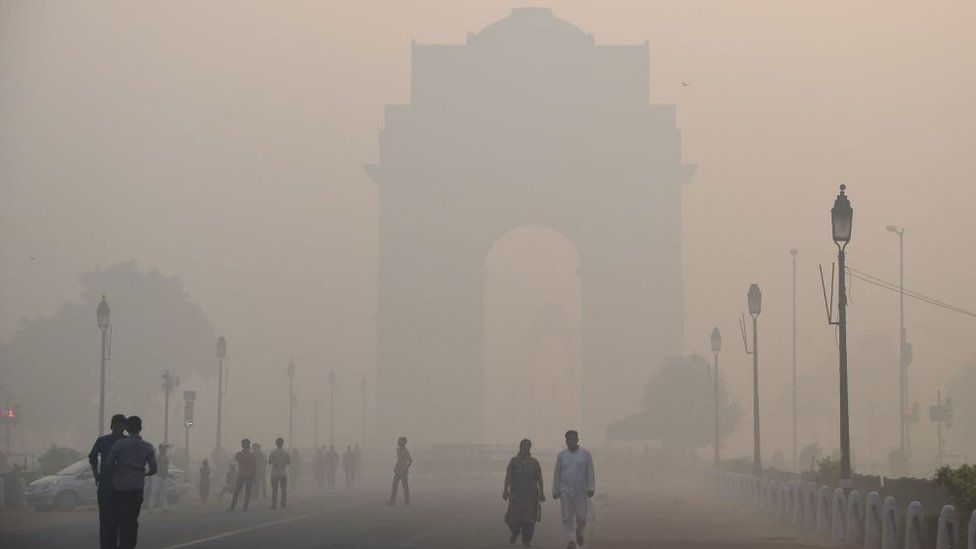
SharecloseShare pageCopy linkAbout sharingimage sourceGetty ImagesAir pollution can reduce the life expectancy of Indians by nine years, says a report by a US research group.The study says 480 million people in northern India face the “most extreme levels of air pollution in the world” and, over time, these high levels have expanded to cover other parts too.Strong clean air policies can add up to five years to people’s lives, it adds.Indian cities routinely dominate global pollution rankings and bad air kills more than a million people every year.The report by The Energy Policy Institute at the University of Chicago (EPIC) says that north India breathes “pollution levels that are 10 times worse than those found anywhere else in the world”. This air pollution has spread over decades beyond the region to western and central Indian states such as Maharashtra and Madhya Pradesh where the average person is now losing between two and a half-to-three years of life expectancy as compared to early 2000, it adds.New data from the Air Quality Life Index report by EPIC says that residents in the capital, Delhi, could see up to 10 years added to their lives if air pollution was reduced to meet the World Health Organisation (WHO) guideline of 10 µg/m³. In 2019, India’s average particulate matter concentration was 70.3 µg/m³ – the highest in the world. The report says that Bangladesh, India, Nepal and Pakistan, which together account for nearly a quarter of the global population, consistently figure in the top five most polluted countries on earth.EPIC acknowledges certain policy changes made by the Indian government to fight air pollution, such as the 2019 National Clean Air Programme (NCAP), which aims to reduce dangerous particulate pollution in the country. “Achieving these goals would have a major impact on the life expectancy levels of Indians – it would increase the national life expectancy level by nearly two years, and three-and-a-half years for residents of Delhi,” it says.China, the report says, is one example of how effective policy can produce “sharp reductions in pollution in short order”. Since 2013, the country has reduced its particulate production by 29%.

Read more →