F.D.A. Delays Decision on Juul’s E-Cigarettes but Orders Others Off the Market

The agency had faced a Sept. 9 deadline to decide whether the products could stay on the market but said it needed more time to review evidence.The Food and Drug Administration on Thursday put off a long-anticipated ruling on whether Juul Labs and other major e-cigarette companies could continue to sell their products in the United States.The companies are at the center of a review of the vaping industry that the agency has been conducting for the past year. The F.D.A. said on Thursday that it had so far denied the applications of 946,000 flavored e-cigarette products to remain on the market, mostly made by small companies.No e-cigarettes have been approved through the application process, an agency official said.“The F.D.A. is committed to completing the review of the remaining products as quickly as possible,” the agency said in a statement Thursday afternoon.The F.D.A. had earlier signaled that it would rule on the larger companies by Thursday, one year after applications to stay on the market were due. Many public health experts had hoped a ruling on the market leaders would clarify the conditions under which companies could operate.“They still haven’t made any of the tough decisions,” said Eric Lindblom, a tobacco policy expert at the Georgetown University Law Center. “I expected a little bit more, and I’m not an optimist.”In a response to the agency’s move, Juul said in a statement that it “respects the central role of the F.D.A.” in concluding a “thorough” review of its applications.Advocates of e-cigarettes see the products as a way to wean smokers from traditional cigarettes, which are more toxic, while critics say they are just another nicotine delivery system and one that is luring young people to the drug.Juul, the market leader, whose sleek devices led to a surge in vaping among teenagers who had never smoked, has been at the center of the debate. By pushing back its decision on the company, the F.D.A. appears to be delaying a larger decision about whether the agency sees these devices as creating more harm than good.The F.D.A. is considering applications for e-cigarette products from around 500 companies, many of them small. Companies have to show that their vaping products are less harmful than traditional cigarettes, and that their usefulness in helping smokers quit outweighs the risk that some people will start using nicotine through the products.Matthew Myers, president of the Campaign for Tobacco-Free Kids, said that the F.D.A.’s inaction on Juul and other companies could bring additional court action. “The decisions the F.D.A. still has to make are more important than the ones they’ve made already,” Mr. Myers said. “If they don’t commit to making them promptly, then we have no choice but to ask a court to intervene.”While overall smoking rates have fallen sharply since the mid-1960s, smoking remains the leading cause of preventable death in the United States, contributing to the deaths of nearly half a million Americans each year. E-cigarettes, which deliver vaporized nicotine without many of the carcinogens inhaled with combustible cigarettes, have been marketed as a safer alternative despite unsettled science about their broader public health impact.Since e-cigarettes came on the market in the United States in the mid-2000s, youth vaping has increased steadily. By 2019, more than 27 percent of high school students reported in surveys that they vaped. That figure dropped to less than 20 percent during the coronavirus pandemic, which experts said could partly reflect the fact that teenagers were isolated and less likely to use social drugs.The fate of Juul and other market leaders also is part of a larger conversation about the best way to further discourage cigarette use. Some experts believe the most effective step would be to limit the amount of nicotine levels in traditional cigarettes, making them less appealing. Juul initially pitched itself as a foe of Big Tobacco. But in December 2018, the company sold a 35 percent stake to Altria, one of the world’s largest cigarette companies, for $12.8 billion.Critics have argued that Juul’s initial marketing campaigns and flavors like cool cucumber and crème brûlée lured a new generation of young people to nicotine, many of whom became addicted.The company recently agreed to pay $40 million to settle a lawsuit with the State of North Carolina over its marketing practices, allowing Juul to avoid public testimony from aggrieved teenagers and families. The company still faces thousands of other lawsuits.Juul officials have long said that the company never sought a youth market. They have argued that Juul has taken aggressive steps to discourage youth use, including suspending its advertising in the United States.Under pressure from the F.D.A., the company pulled almost all its flavors from the market in 2019. It has since submitted applications for only menthol- and tobacco-flavored products. It is seeking approval for its nicotine pods in two strengths: 5 percent, which is equivalent to the nicotine in an average pack of cigarettes, and 3 percent.As part of its request to gain approval for its nicotine pods, Juul filed a 125,000-page application to the F.D.A., making the case that its products have public health benefits. Research that the company funded has suggested that the devices can be effective at helping smokers quit. A study that began with 55,000 adult Juul users found that 58 percent of the 17,000 smokers who stayed in the study had stopped smoking at 12 months. Another 22 percent continued to smoke both e-cigarettes and traditional ones but cut their cigarette smoking by at least half.Several major health organizations — the American Heart Association, the American Lung Association, the American Academy of Pediatrics and the American Cancer Society Cancer Action Network — have asked the F.D.A. to reject Juul’s application.On Thursday, the American Heart Association said that it was disappointed by the F.D.A.’s inaction on big companies like Juul, which the heart association said “has targeted our nation’s teens for years and contributed to the epidemic of tobacco use among youth.”

Read more →
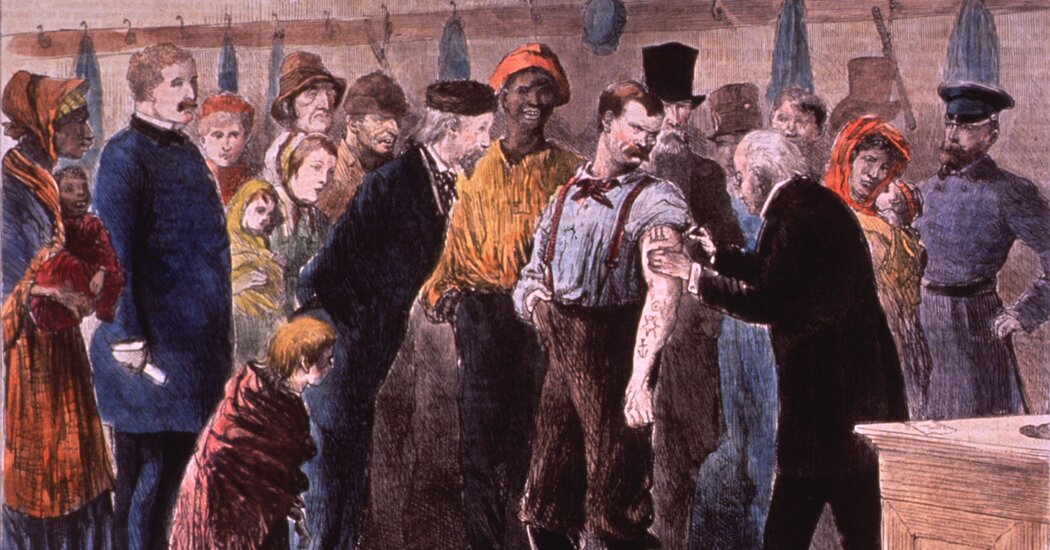
Vaccination Mandates Are an American Tradition. So Is the Backlash.

The roots of U.S. vaccine mandates predate both the U.S. and vaccines.Sign up here to get On Politics in your inbox every weekday.As disease and death reigned around them, some Americans declared that they would never get vaccinated and raged at government efforts to compel them. Anti-vaccination groups spread propaganda about terrible side effects and corrupt doctors. State officials tried to ban mandates, and people made fake vaccination certificates to evade inoculation rules already in place.The years were 1898 to 1903, and the disease was smallpox. News articles and health board reports describe crowds of parents marching to schoolhouses to demand that their unvaccinated children be allowed in, said Michael Willrich, a professor of history at Brandeis University, with some even burning their own arms with nitric acid to mimic the characteristic scar left by the smallpox vaccine.“People went to some pretty extraordinary lengths not to comply,” said Professor Willrich, who wrote “Pox: An American History,” a book about the civil liberties battles prompted by the epidemic.If it all sounds familiar, well, there is nothing new under the sun: not years that feel like centuries, not the wailing and gnashing of teeth over masks, and not vaccine mandates either.As the coronavirus overwhelms hospitals across the South and more than 650,000 Americans — an increasing number of them children — lie dead, the same pattern is emerging. On Thursday, President Biden announced that he would move to require most federal workers and contractors to be vaccinated and, more sweepingly, that all employers with 100 or more employees would have to mandate vaccines or weekly testing. Colleges, businesses and local governments have enacted mandates at a steady pace, and conservative anger has built accordingly.On Monday, Representative Jim Jordan, Republican of Ohio, tweeted that vaccine mandates were “un-American.” In reality, they are a time-honored American tradition.But to be fair, so is public fury over them.“We’re really seeing a lot of echoes of the smallpox era,” said Elena Conis, an associate professor and historian of medicine at the University of California, Berkeley. “Mandates elicit resistance. They always have.”The roots of U.S. vaccine mandates predate both the U.S. and vaccines. The colonies sought to prevent disease outbreaks by quarantining ships from Europe and sometimes, in the case of smallpox, requiring inoculations: a crude and much riskier predecessor to vaccinations in which doctors rubbed live smallpox virus into broken skin to induce a relatively mild infection that would guard against severe infection later. They were a source of enormous fear and anger.In January 1777, George Washington mandated inoculations for the soldiers under his command in the Continental Army, writing that if smallpox were to break out, “we should have more to dread from it, than from the Sword of the Enemy.” Notably, it was in large part the soldiers’ desires that overcame his resistance to a mandate.“They were the ones calling for it,” said Andrew Wehrman, an associate professor of history at Central Michigan University who studies the politics of medicine in the colonial and revolutionary eras. “There’s no record that I have seen — and I’ve looked — of any soldier turning it down, protesting it.”Buoyed by the success of the mandate, Washington wrote to his brother in June 1777 that he was upset by a Virginia law restricting inoculations. “I would rather move for a Law to compell the Masters of Families to inoculate every Child born within a certain limitted time under severe Penalties,” he wrote.Over the next century, many local governments did exactly that. Professor Wehrman this week tweeted an example of what, in an interview, he said was a “ubiquitous” phenomenon: The health board in Urbana, Ohio, Jordan’s hometown, enacted a requirement in 1867 that in any future epidemic, “the heads of families must see that all the members of their families have been vaccinated.”But by the end of the 1800s, opposition was louder and more widespread. Some states, particularly in the West, introduced laws prohibiting vaccine mandates. Others narrowly passed mandates after intense debate.The reasons for resistance were myriad: Some Americans opposed mandates on the grounds of personal liberty; some because they believed lawmakers were in cahoots with vaccine makers; and some because of safety concerns that were, to be fair, more grounded in reality than the modern equivalent. Vaccines then were not regulated the way they are now, and there were documented cases of doses contaminated with tetanus.The government’s response resembled what, today, are wild conspiracy theories. Contrary to the assertions of some on the far right, the Biden administration has never suggested going door to door to force people to take coronavirus vaccines. But in the 1890s and 1900s, that actually happened: Squads of men would enter people’s homes in the middle of the night, breaking down doors if necessary, to inject people with smallpox vaccines.Legally speaking, the Supreme Court resolved the issue of mandatory vaccinations in 1905, ruling 7-2 in Jacobson v. Massachusetts that they were constitutional.The Constitution “does not import an absolute right in each person to be, at all times and in all circumstances, wholly freed from restraint,” Justice John Marshall Harlan, known for defending civil liberties, wrote. “Real liberty for all could not exist under the operation of a principle which recognizes the right of each individual person to use his own, whether in respect of his person or his property, regardless of the injury that may be done to others.”.css-1xzcza9{list-style-type:disc;padding-inline-start:1em;}.css-3btd0c{font-family:nyt-franklin,helvetica,arial,sans-serif;font-size:1rem;line-height:1.375rem;color:#333;margin-bottom:0.78125rem;}@media (min-width:740px){.css-3btd0c{font-size:1.0625rem;line-height:1.5rem;margin-bottom:0.9375rem;}}.css-3btd0c strong{font-weight:600;}.css-3btd0c em{font-style:italic;}.css-w739ur{margin:0 auto 5px;font-family:nyt-franklin,helvetica,arial,sans-serif;font-weight:700;font-size:1.125rem;line-height:1.3125rem;color:#121212;}#NYT_BELOW_MAIN_CONTENT_REGION .css-w739ur{font-family:nyt-cheltenham,georgia,’times new roman’,times,serif;font-weight:700;font-size:1.375rem;line-height:1.625rem;}@media (min-width:740px){#NYT_BELOW_MAIN_CONTENT_REGION .css-w739ur{font-size:1.6875rem;line-height:1.875rem;}}@media (min-width:740px){.css-w739ur{font-size:1.25rem;line-height:1.4375rem;}}.css-9s9ecg{margin-bottom:15px;}.css-16ed7iq{width:100%;display:-webkit-box;display:-webkit-flex;display:-ms-flexbox;display:flex;-webkit-align-items:center;-webkit-box-align:center;-ms-flex-align:center;align-items:center;-webkit-box-pack:center;-webkit-justify-content:center;-ms-flex-pack:center;justify-content:center;padding:10px 0;background-color:white;}.css-pmm6ed{display:-webkit-box;display:-webkit-flex;display:-ms-flexbox;display:flex;-webkit-align-items:center;-webkit-box-align:center;-ms-flex-align:center;align-items:center;}.css-pmm6ed > :not(:first-child){margin-left:5px;}.css-5gimkt{font-family:nyt-franklin,helvetica,arial,sans-serif;font-size:0.8125rem;font-weight:700;-webkit-letter-spacing:0.03em;-moz-letter-spacing:0.03em;-ms-letter-spacing:0.03em;letter-spacing:0.03em;text-transform:uppercase;color:#333;}.css-5gimkt:after{content:’Collapse’;}.css-rdoyk0{-webkit-transition:all 0.5s ease;transition:all 0.5s ease;-webkit-transform:rotate(180deg);-ms-transform:rotate(180deg);transform:rotate(180deg);}.css-eb027h{max-height:5000px;-webkit-transition:max-height 0.5s ease;transition:max-height 0.5s ease;}.css-6mllg9{-webkit-transition:all 0.5s ease;transition:all 0.5s ease;position:relative;opacity:0;}.css-6mllg9:before{content:”;background-image:linear-gradient(180deg,transparent,#ffffff);background-image:-webkit-linear-gradient(270deg,rgba(255,255,255,0),#ffffff);height:80px;width:100%;position:absolute;bottom:0px;pointer-events:none;}.css-uf1ume{display:-webkit-box;display:-webkit-flex;display:-ms-flexbox;display:flex;-webkit-box-pack:justify;-webkit-justify-content:space-between;-ms-flex-pack:justify;justify-content:space-between;}.css-wxi1cx{display:-webkit-box;display:-webkit-flex;display:-ms-flexbox;display:flex;-webkit-flex-direction:column;-ms-flex-direction:column;flex-direction:column;-webkit-align-self:flex-end;-ms-flex-item-align:end;align-self:flex-end;}.css-12vbvwq{background-color:white;border:1px solid #e2e2e2;width:calc(100% – 40px);max-width:600px;margin:1.5rem auto 1.9rem;padding:15px;box-sizing:border-box;}@media (min-width:740px){.css-12vbvwq{padding:20px;width:100%;}}.css-12vbvwq:focus{outline:1px solid #e2e2e2;}#NYT_BELOW_MAIN_CONTENT_REGION .css-12vbvwq{border:none;padding:10px 0 0;border-top:2px solid #121212;}.css-12vbvwq[data-truncated] .css-rdoyk0{-webkit-transform:rotate(0deg);-ms-transform:rotate(0deg);transform:rotate(0deg);}.css-12vbvwq[data-truncated] .css-eb027h{max-height:300px;overflow:hidden;-webkit-transition:none;transition:none;}.css-12vbvwq[data-truncated] .css-5gimkt:after{content:’See more’;}.css-12vbvwq[data-truncated] .css-6mllg9{opacity:1;}.css-qjk116{margin:0 auto;overflow:hidden;}.css-qjk116 strong{font-weight:700;}.css-qjk116 em{font-style:italic;}.css-qjk116 a{color:#326891;-webkit-text-decoration:underline;text-decoration:underline;text-underline-offset:1px;-webkit-text-decoration-thickness:1px;text-decoration-thickness:1px;-webkit-text-decoration-color:#326891;text-decoration-color:#326891;}.css-qjk116 a:visited{color:#326891;-webkit-text-decoration-color:#326891;text-decoration-color:#326891;}.css-qjk116 a:hover{-webkit-text-decoration:none;text-decoration:none;}In the court of public opinion, there was no such resolution.The polio vaccine was less controversial, mainly because it wasn’t initially mandated and because it had been funded by a widely respected nonprofit: the National Foundation for Infantile Paralysis, now called the March of Dimes. This reduced opposition based on mistrust of pharmaceutical companies, and most parents willingly got their children vaccinated. The measles vaccine, too, was not particularly controversial because mandates were not initially enforced.“Nobody was enforcing vaccination, and so it simply didn’t elicit that mistrust,” Professor Conis said. In the smallpox era, by contrast, “skeptical people said, ‘Well, why are we doing this? It just benefits the companies making the vaccine and the doctors administering the vaccine, and why should we trust any of them?’”But the fear and anger came roaring back with the introduction of childhood vaccination mandates in the 1970s. By 1980, all 50 states required schoolchildren to be vaccinated against an array of diseases.None of it is new, but one thing distinguishes today’s anti-vaccination protesters from those of the past. The opposition was always political. It wasn’t always partisan.“There are plenty of echoes today: There are liberty claims, there are strong sentiments about parental rights, there are concerns about the science, there are concerns about the profit involved,” Professor Willrich said. “But this party divide in terms of who is most likely to be hesitant or refuse a vaccine mandate is really, I think, something of our own 21st-century moment.”On Politics is also available as a newsletter. Sign up here to get it delivered to your inbox.Is there anything you think we’re missing? Anything you want to see more of? We’d love to hear from you. Email us at onpolitics@nytimes.com.

Read more →

Impaired T cell function precedes loss of natural HIV control

HIV is a master of evading the immune system, using a variety of methods to prevent the body from being able to find and kill it. The vast majority of people living with HIV require daily medication to suppress the virus and therefore prevent the development of AIDS.
But for a small subset of people, this battle between the immune system and the virus looks quite different. Known as controllers, they have immune systems that can suppress the virus without any need for medication. While most controllers can suppress the virus indefinitely, some eventually lose control over the virus and require medication to achieve viral suppression. In a paper recently published in Immunity, researchers at the Ragon Institute of MGH, MIT and Harvard reported that, in these cases, control is lost after a type of immune cell, called a cytotoxic T cell, loses the ability to proliferate and kill HIV-infected cells.
In order to find these differences, the researchers, led by Ragon Research Fellow David Collins, PhD, compared samples collected over several years from cohorts of HIV controllers at Ragon and the University of California at San Francisco. The study included 17 subjects with aborted control and 17 with durable control, whose immune systems continued to suppress HIV over years of observation.
In a successful immune response, cytotoxic T cells recognize small pieces of HIV, called antigens, which are found on the surface of infected cells. The T cells then kill the infected cells, destroying the virus inside. If mutations in HIV were changing the antigens, the T cells may no longer be able to recognize them. Therefore, the most likely difference, the team thought, may be in the antigens themselves.
First, the team compared what type of antigens were presented by infected cells. Ragon Member and co-author Gaurav Gaiha, MD, DPhil had previously shown that in controllers, cytotoxic T cells often recognize HIV antigens that are unlikely to mutate. When the team compared the two groups, they found that both sets of T cells responded to the same types of unlikely-to-mutate antigens, meaning they were starting from similar immune responses.
Working with Ragon Core Member and co-author Todd Allen, PhD, and his team, the researchers next sequenced HIV from before and after loss of control, looking for mutations that could cause changes in the antigens the T cells recognized. Even though HIV constantly mutates, within their cohort of 17 patients, they found only one mutation that allowed the antigen to escape T cell recognition. Mutational escape wasn’t the answer, either. There was also no evidence of superinfection, the term for contracting a second, separate HIV infection, another theory that had been suggested in case studies. The difference, therefore, was likely in the immune response itself, instead of being driven by the virus.

Read more →

Breaking Down the ‘Wellness-Industrial Complex,’ an Episode at a Time

The “Maintenance Phase” podcast interrogates the science behind health food trends, fad diets and popular nutritional advice.Aubrey Gordon collects vintage diet books. She has amassed almost 100 titles, including the 1973 volume “Slimming Down,” written by Johnny Carson’s sidekick, Ed McMahon. “Slimming Down” — which featured chapter titles like “The Breadstick Conspiracy” and “Two Martinis Into Connecticut” — is the book that began Ms. Gordon’s collection.And while the idea of mixology as nutritional strategy might seem absurd to a reader today, Ms. Gordon said that so much of the current thinking about what is now known as wellness is just as “hilarious and wacky.”On the podcast “Maintenance Phase,” named after the concept of sustaining post-diet weight loss, Ms. Gordon and the journalist Michael Hobbes spend each episode exploring what they call the “wellness-industrial complex,” debunking health fads and nutritional advice.While health, weight and wellness are important issues, much of what Americans understand about them is actually hollow marketing, Mr. Hobbes said.“Most of us have confidence that we understand these wellness issues, but we don’t realize that we’re literally just regurgitating things that we saw in a Nike commercial,” Mr. Hobbes added. “And wellness is the perfect encapsulation of that. A lot of the things under wellness are just rebranded or misconstrued data being sent back to us by a company, basically.”The Maintenance Phase podcast is nearly a year old, and is listed as one of Apple Podcasts’ top 100 shows. Maintenance PhaseWellness has two definitions, Ms. Gordon said: One is new language being used by weight-loss companies that have figured out that “dieting is less popular than it used to be,” and the other lives as “a very amorphous term that we attach all kinds of things to.”“Vitamin companies are selling wellness,” Ms. Gordon said. “Mattress companies are selling wellness. Your work now has a wellness program. It’s sort of seen as this uncontroversial way to talk about health.”The show is No. 1 in the health and fitness category on Apple podcasts. Episodes investigating the obesity epidemic and the problematic history of the body mass index led the podcast to its first million downloads on the listening app last month.Since the podcast began in October 2020, the hosts have examined popular diet foods, like SnackWell’s Cookies, Moon Juice and Halo Top Ice Cream (which is the 2010s’ answer to SnackWell’s, Ms. Gordon said on that episode). They’ve done deep dives into anti-fat bias, eating disorders and the roles both Dr. Mehmet Oz and Oprah Winfrey have played in the weight-loss industry. They have also investigated popular diets, such as keto, Weight Watchers, celery juice and the master cleanse (“You’re basically drinking very tart, very spicy sugar water,” Ms. Gordon said). One episode even explored how the quest for good health can even lead people to QAnon and other conspiracy theories.One episode of the podcast “Maintenance Phase” dives into the science behind a handful of brands, including Moon Juice.Samuel Bristow for The New York TimesIn the show’s introductory episode, the hosts talk about how few health-focused podcasts are skeptical of wellness. For Ms. Gordon, 37, her skepticism grew out of her personal experience of “20-plus years of straight dieting and mostly staying the same size.”“Being a fat lady and trying to do all the things that fat ladies are supposed to do took me right there,” Ms. Gordon said. “I’ve been doing all the things, and it’s not really producing the result that I’ve been promised for, you know, the majority of my life. And I’m also seeing other people who have been in search of that promise for the majority of their lives also not getting what they thought was going to happen. At a certain point, you kind of got to go, well, maybe it just doesn’t work.”For Mr. Hobbes, 39, who has done extensive reporting on obesity, watching his mother’s struggles led to an interest in weight fixation.“It was, like, this defining thing of my childhood that she was always on some completely nuts, unsustainable diet,” Mr. Hobbes said. “She was always trying so hard, like swimming five times a week and eating a bowl of carrots. The discourse around obesity was always like, well, they’re not trying hard enough. I know other people that are trying pretty hard and not succeeding.”The show presents “relatively radical ideas about this issue,” Mr. Hobbes said, but still tries to avoid alienating listeners. One way the hosts do this is by turning the narrative on themselves, taking on topics and ideas they have personal experience with.“At some point we’ll do CBD,” Ms. Gordon said. “I have been a CBD person, and I’ll be made uncomfortable by my own research. It feels important to the show and important to me as a person, to be like, we’re not actually above anyone. We’re not smarter than this. We’re not better than this.”Ms. Gordon says she and Mr. Hobbes have nearly 100 ideas for future “Maintenance Phase” episodes, many of them suggested by listeners.Ruth Fremson/The New York TimesMs. Gordon and Mr. Hobbes said they receive lots of positive feedback, but the emails they get from researchers and clinicians are some of the most meaningful.Lisa DuBreuil, a clinical social worker at Massachusetts General Hospital, in Boston, also operates a private practice in Salem, Mass. She uses the weight-inclusive Health At Every Size approach with her clients, who include people with substance-use disorders, eating disorders, mental health issues and those who’ve developed problems after weight-loss surgeries and chronic dieting.She heard about “Maintenance Phase” on social media, and became a regular listener. She’s not hearing anything she doesn’t already know, but said she loves how the show makes those topics more approachable and “really fun to listen to.”“To be able to have these kinds of resources and get information in an entertaining, interesting, but also very factual way is wonderful,” said Ms. DuBreuil, who is in recovery from an eating disorder.Ms. DuBreuil added that the ideas and research on “Maintenance Phase” are concepts that many women, people of color and L.G.B.T.Q. people have been talking about for more than 20 years, but that “it is delightful to see new people discover it.”Halo Top Ice Cream and its history is explored on one episode of “Maintenance Phase.”Richard Levine / Alamy Caitlin McDonald, a nonprofit administrator in Salt Lake City, said that when she started listening to the show, it felt like being seen for the first time.“It was just sort of a revelation,” she said. “It was such a relief to be in a space where I was being talked about as a human, and not a number or a statistic.”Scott Cave, who lives in the Appalachian Mountains region of Virginia with his wife and infant, is a historical researcher and stay-at-home father. He started listening to “Maintenance Phase” after learning about it on Mr. Hobbes’s other podcast, “You’re Wrong About.” As someone with a doctoral degree in history, Mr. Cave said he appreciates the way the podcast examines and evaluates primary sources in a way that’s fun.In an episode on the obesity epidemic, the show laid out some of the consequences of weight stigma, including people’s delaying medical care for fear of doctors’ offices. That resonated for Mr. Cave: Once, after injuring his finger, he went to an urgent care clinic where he said he was told: “We don’t think your finger is broken. It might be, but you’re very fat, so you should probably deal with that.”As a result, Mr. Cave said he spent years ignoring the symptoms of his autoimmune disease, just to avoid another doctor visit. “So I left with a big swollen finger and a real blow to my self-regard and my relationship with the medical profession,” he said. “When they brought it up on the podcast, I realized, ‘Oh yes, I didn’t complain about my symptoms for a long time because they were wrapped up in the shape of my body, in fatness.’”The pandemic has only intensified America’s decades-long moral panic about fatness, Ms. Gordon said. But it has also intensified a counternarrative. She has noticed more conversations centered on body positivity and more health professionals spreading the message that “it’s actually OK if you gain weight while you’re surviving a pandemic.”“It’s been a really fascinating moment of everyone sort of processing their own body image stuff and their own weird beliefs about fatness and health in this very public way.”Follow NYT Food on Twitter and NYT Cooking on Instagram, Facebook, YouTube and Pinterest. Get regular updates from NYT Cooking, with recipe suggestions, cooking tips and shopping advice.

Read more →

Fauci Says U.S. Virus Cases Are More Than Ten Times Too High

Coronavirus infections are more than ten times higher than they need to be in order to end the pandemic, Dr. Anthony S. Fauci, the nation’s top infectious disease doctor, told the political news site Axios.There are currently roughly 150,000 new infections a day in the United States. “That’s not even modestly good control,” Dr. Fauci told Axios.He added, “In a country of our size, you can’t be hanging around and having 100,000 infections a day. You’ve got to get well below 10,000 before you start feeling comfortable.”Case rates did fall to almost that level in June, when there were roughly 12,000 new infections per day, on average.But that was before the highly infectious Delta variant spread widely throughout the country, causing a major surge in cases and hospitalizations, especially in areas of the country with low vaccination rates.Although concerns have been growing about breakthrough infections, which officials acknowledge are not as rare as they once indicated, the vaccines continue to provide robust protection against the worst outcomes, including hospitalization and death.Vaccination remains the best path out of the pandemic, experts and health officials have repeatedly said. “The endgame is to suppress the virus,” Dr. Fauci told Axios. “Right now, we’re still in pandemic mode.”

Read more →

Decreased mortality for patients with complex aortic aneurysms treated by fenestrated-branched endovascular aortic repair

A recent study revealed that endovascular repair of complex aortic aneurysms using fenestrated and branched endografts provides a safe and effective alternative to open surgical repair, with the lowest ever reported mortality rate in this patient population, according to researchers at The University of Texas Health Science Center at Houston (UTHealth Houston) and Memorial Hermann Heart and Vascular Institute Aortic Center.
The study, “Midterm Outcomes of a Prospective, Nonrandomized Study to Evaluate Endovascular Repair of Complex Aortic Aneurysms Using Fenestrated-Branched Endografts,” led by senior author Gustavo S. Oderich, MD, was published in the September 2021 Annals of Surgeryand presented at the American Surgical Association meeting. Oderich is professor of surgery, chief of vascular and endovascular surgery, and director of the Advanced Endovascular Aortic Program at McGovern Medical School at UTHealth Houston.
The study focused on treatment of complex aortic aneurysms, including pararenal and thoracoabdominal aortic aneurysms, which affect the aorta and the branches to the kidneys and intestines. These aneurysms are areas of bulge and weakening of the aorta, and are associated with high risk of rupture and death. While most aortic aneurysms are not associated with symptoms, if undiagnosed, progressive enlargement can lead to rupture with a high fatality rate.
Fenestrated and branched endovascular aortic repair is performed with small puncture holes in the arteries of the groin and does not require an incision into the abdomen or chest. The device is manufactured to fit the anatomy of the patient with specialized fabric tube “windows” (fenestrations) or side arms (“branches”) supported by a structure of stainless steel or nickel-titanium alloy wires. The stent is inserted through the groin arteries using X-ray guidance and is placed in the precise location in the aorta. Once this is done, the fenestrations or branches are connected to the arteries of the kidneys and intestine using side stents. The goal is to divert blood flow from the aneurysm, which is excluded from the circulation by the new stent structure.
The researchers reported that endovascular repair using fenestrated and branched endografts was associated with a 1% risk of mortality at 30 days, which compares to a mortality of 21% in a recent study of over 14,000 patients treated by open surgical repair in the United States. The improvement in mortality also compares favorably to mortality rates of open repair in large aortic centers, which range between 9% to 17%.
“When we began the study, we had no idea the rate of mortality would be so much lower than the historical results of open surgical repair,” Oderich said.
The study, which included 430 patients with an average age of 74, also showed better outcomes regarding major adverse events, including paralysis and paraplegia caused by spinal cord injury. Spinal cord injury affected 6% of patients enrolled in the FB-EVAR study, which is similar to contemporary open surgical studies in which the rate of spinal cord injuries reported was 5% to 10%.
The most common symptom of an aortic aneurysm is pain in the abdomen, chest, or back. The disease has a genetic component and can run in families. Men are far more likely to be at risk than women. Other important risk factors are smoking, and hypertension.
Aortic aneurysms kill around 15,000 people a year and abdominal aortic aneurysm is the third leading cause of death in men over 60. Oderich is hopeful that the final outcomes of the continuing study will show the procedure is an effective remedy for those individuals living with complex aortic diseases.
Story Source:
Materials provided by University of Texas Health Science Center at Houston. Original written by Jaelyn Lyles. Note: Content may be edited for style and length.

Read more →

Free radicals linked to heart damage caused by cancer

A new study in animal models shows that the presence of a cancer tumor alone can lead to cardiac damage, and suggests the culprits are molecules called free radicals interacting with specific cells in the heart.
Tumors in mice and fruit flies led to varying degrees of cardiac dysfunction — particularly a decrease in the heart’s blood-pumping capabilities.
Adding specific types of antioxidants to food consumed by fruit flies with tumors reversed the damage to their hearts — a finding suggesting that harm caused by free radicals was the likely link between cancer and cardiac dysfunction.
“Cancer becomes a systemic disease. It’s not just a tumor doing one thing,” said co-lead author Shubha Gururaja Rao, assistant professor of pharmacology at Ohio Northern University and an adjunct faculty member in physiology and cell biology at The Ohio State University.
Most of what is known about cancer’s link to heart damage relates to chemotherapy’s toxic effects and muscle wasting commonly experienced by cancer patients.
This is the first study to use a genetic model to investigate cancer’s direct effect on cardiac dysfunction. The researchers found that different cancer-associated genes affect the heart in different ways — a sign that genetic information could one day guide heart-protective treatment decisions in cancer patients.

Read more →

Mothers’ diabetes may induce premature aging of neural tissue leading to birth defects

More than 3 million women of birthing age in the U.S. and 60 million in the world have diabetes — a disease that occurs when blood sugar is too high. Even when controlled with insulin, and blood sugar levels are kept mostly in check, maternal diabetes can cause permanent damage to the fetus. About 300,000 to 400,000 fetuses per year from mothers with diabetes develop neural tube defects — when the tissue that eventually forms the brain and spinal cord fails to form properly — which can lead to miscarriage or profound disability.
Now using studies in mice, University of Maryland School of Medicine (UMSOM) researchers have identified the mechanism behind these structural birth defects, which they say is due to the neural tissue aging prematurely, halting its growth before it has made enough cells to finish forming the neural tube.
The study, published on June 30 in Science Advances, was conducted by the UMSOM Center for Birth Defects Research, led byPeixin Yang, PhD, Professor of Obstetrics, Gynecology and Reproductive Sciences, Director of the Center for Birth Defects Research, and Vice Chair of Research in the Department, and E. Albert Reece, MD, PhD, MBA, Executive Vice President for Medical Affairs, UM Baltimore, and the John Z. and Akiko K. Bowers Distinguished Professor and Dean of UMSOM.
“Although diabetes is a disease generally associated with an older population, the modern diabetes epidemic in young people is largely fueled by obesity and inactivity. At the same time, many aging-related diseases are impacted by diabetes, and we now know that high blood glucose seems to induce or enhance premature embryonic aging,” said Dr. Yang. “For many decades, our hypothesis was that premature aging, known as senescence, was occurring in the fetuses of mothers with diabetes, and was, in part, inducing these birth defects. It was only recently that we have had the tools and technology to be able to test our hypothesis.”
Finding the precise mechanism for how maternal diabetes leads to these and other kinds of birth defects in the fetus is the first step to identifying a way to prevent these abnormalities from occurring. In the study, the researchers were able to delay the aging process in the tissue by using a cancer drug, allowing the neural tube to fully form in mouse pups born from mice with mutations mimicking diabetes.
Their findings suggest that more specialized therapies could be developed to prevent miscarriages or birth defects in babies born from mothers with diabetes.
First, the research team showed that the neural tube tissue in 8-day old mouse pups from mothers with diabetes contained markers of premature aging. These markers were not found in pups from mothers that did not have diabetes. Researchers then found that the cells with premature aging markers secreted a flurry of other chemical signals that caused the neighboring cells to die.
Next, the researchers treated the mouse pups from mothers with diabetes with the cancer drug rapamycin, known to prevent the toxic chemical signals from being released by the prematurely aging cells. They found that mouse pups treated with rapamycin had neural tubes that were fully formed like those found in pups born from mothers without diabetes.
“This drug essentially made the senescent cells behave normally,” said Dr. Yang. Unfortunately, rapamycin affects too many other cell processes and can be toxic, so it would not be a viable treatment for preventing neural tube defects in human infants.
“Our next step is to see if birth defects of the heart and kidney found in fetuses born from mothers with diabetes are caused by the same senescence mechanism. If so, it would suggest that we can develop a single treatment more specialized to these developmental processes to prevent this spectrum of birth defects,” said Dean Reece. “As mothers with diabetes have children with five times the birth defect rate compared to the general population and incidence of diabetes is ever increasing, it is imperative that we develop ways to prevent disability and promote healthy births.”
Additional authors include Cheng Xu, PhD, Research Associate in the Department of Obstetrics, Gynecology and Reproductive Sciences; Wei-Bin Shen, PhD, Assistant Professor of Obstetrics, Gynecology and Reproductive Sciences and Christopher Harman, MD, the Sylvan Frieman, MD Endowed Professor and Chair in Obstetrics, Gynecology & Reproductive Sciences at UMSOM, along with Sunjay Kaushal of Ann & Robert H. Lurie Children’s Hospital of Chicago, and Hidetoshi Hasuwa of Keio University.
This research was supported by several grants funding by the National Institutes of Health and Eunice Kennedy Shriver National Institute of Child Health and Human Development (NICHD) (HD100195, R01HD102206, R01HD099843), National Institute of Diabetes and Digestive and Kidney Diseases (NIDDK) (R01DK083243, R01DK101972, R01DK103024), and National Heart, Lung, and Blood Institute (NHLBI) (R01HL131737, R01HL134368, R01HL139060).

Read more →

Brain molecule helps 'wake up' cells that could help tackle MS and similar diseases

An immunological molecule called fractalkine can boost the production of brain cells that produce myelin, a key factor in diseases such as multiple sclerosis, according to recent research from the University of Alberta.
Myelin is an insulating layer around nerves that is gradually worn away by inflammation in multiple sclerosis and similar diseases. Without this layer, the nerve impulses that travel through the body are slowed, causing neurological problems.
Though there are therapies that manage symptoms or attempt to slow the progression of neurodegenerative diseases, effective treatments would require restoring lost myelin. Finding methods to kick the myelination process into high gear is a crucial step in the quest for treatment.
Anastassia Voronova, assistant professor in the Department of Medical Genetics and Canada Research Chair in Neural Stem Cell Biology, explains that neural stem cells produce a variety of brain cells, including oligodendrocytes, a type of cell in the central nervous system and peripheral nervous system. Oligodendrocytes are the only brain cells that produce myelin.
“During development, these neural stem cells build the brain. In the adult brain, part of the reason they exist is to replenish damaged or lost cells, including oligodendrocytes,” said Voronova, who is also a member of the Neuroscience and Mental Health Institute.
“However, especially in humans, replacement of oligodendrocytes is very inefficient. The goal of my lab is to identify molecules that are capable of ‘waking up’ those neural stem cells we all have in our brain to replenish those oligodendrocytes.”
Voronova’s study showed that fractalkine — a molecule previously thought to have a role only in the immune system — noticeably stimulated the transformation of neural stem cells into oligodendrocytes.
“The [fractalkine] molecule and receptor work together to elicit a signalling cascade inside of the cell,” said Voronova.
“This is a really interesting era to be doing this science in,” noted Voronova. “I think we’re just starting to appreciate the full spectrum of what these oligodendrocytes can do.”
Voronova’s team is now investigating the remyelination capacity of fractalkine in a mouse model of MS. Voronova also plans to examine whether fractalkine could affect myelination in other neurodegenerative disorders. She added that the immunological nature of fractalkine could also be important for future drug development, as MS and neurodegenerative disorders have a strong immune component.
“Myelin is diminished in a variety of neurodegenerative disorders, which makes the idea of enhancing oligodendrocyte production, and therefore repair of the myelin, so exciting.”
The work was funded by the Natural Sciences and Engineering Research Council of Canada, a European Research Area Network team grant funded through the Canadian Institutes of Health Research, the Canada Research Chairs program and an MS Society of Canada operating grant. First author Adrianne Eve Scovil Watson was supported with graduate studentships by the MS Society of Canada and by the Stollery Children’s Hospital Foundation through the Women and Children’s Health Research Institute.
Story Source:
Materials provided by University of Alberta Faculty of Medicine & Dentistry. Original written by Adrianna MacPherson. Note: Content may be edited for style and length.

Read more →

Smart dental implants

More than 3 million people in America have dental implants, used to replace a tooth lost to decay, gum disease, or injury. Implants represent a leap of progress over dentures or bridges, fitting much more securely and designed to last 20 years or more.
But often implants fall short of that expectation, instead needing replacement in five to 10 years due to local inflammation or gum disease, necessitating a repeat of a costly and invasive procedure for patients.
“We wanted to address this issue, and so we came up with an innovative new implant,” says Geelsu Hwang, an assistant professor in the University of Pennsylvania School of Dental Medicine, who has a background in engineering that he brings to his research on oral health issues.
The novel implant would implement two key technologies, Hwang says. One is a nanoparticle-infused material that resists bacterial colonization. And the second is an embedded light source to conduct phototherapy, powered by the natural motions of the mouth, such as chewing or toothbrushing. In a paper in the journal ACS Applied Materials & Interfaces and a 2020 paper in the journal Advanced Healthcare Materials, Hwang and colleagues lay out their platform, which could one day be integrated not only into dental implants but other technologies, such as joint replacements, as well.
“Phototherapy can address a diverse set of health issues,” says Hwang. “But once a biomaterial is implanted, it’s not practical to replace or recharge a battery. We are using a piezoelectric material, which can generate electrical power from natural oral motions to supply a light that can conduct phototherapy, and we find that it can successfully protect gingival tissue from bacterial challenge.”
In the paper, the material the researchers explored was barium titanate (BTO), which has piezoelectric properties that are leveraged in applications such as capacitators and transistors, but has not yet been explored as a foundation for anti-infectious implantable biomaterials. To test its potential as the foundation for a dental implant, the team first used discs embedded with nanoparticles of BTO and exposed them to Streptococcus mutans, a primary component of the bacterial biofilm responsible for tooth decay commonly known as dental plaque. They found that the discs resisted biofilm formation in a dose-dependent manner. Discs with higher concentrations of BTO were better at preventing biofilms from binding.

Read more →