Gut bacteria might be an indicator of colon cancer risk

A study published today in the journal Cell Host & Microbe reported that the increased presence of certain bacteria in a gut biome indicates a greater likelihood that colon polyps will become cancerous.
In his research, William DePaolo, associate professor at the University of Washington School of Medicine, tracked 40 patients who had undergone routine colonoscopies and had biopsies taken near the polyps to identify bacteria present at relatively higher levels compared with those of patients who were polyp-free. All the patients were between the ages 50 and 75, and 60% were women.
“The rising incidence of colorectal cancer is a major health concern, but little is known about the composition and role of microbiota associated with precancerous polyps,” the study states.
DePaolo’s research team found that a common bacteria, non-enterotoxigenic Bacteroides fragilis, was elevated in the mucosal biopsies of patients with polyps.
The research also found distinct microbial signatures distinguishing patients with polyps from those without polyps, and established a correlation between the amount of B. fragilis in the samples and the inflammation of small polyps.
Upon closer examination, DePaolo found that the B. fragilis from patients with polyps differed in its ability to induce inflammation compared to the B. fragilis from polyp-free individuals.

Read more →

Faster research through automation: New way to count micronuclei in cells

Micronuclei, which are small nucleus-like structures within cells, are commonly associated with tumors. Now, researchers from Tsukuba, Japan have developed an automated computer program that can accurately and reproducibly count these structures from microscope images, which will increase the speed and accuracy of micronuclei research.
In a recently published study, researchers from the University of Tsukuba reported their new MATLAB-based program, named CAMDi (Calculating Automatic Micronuclei Distinction), which automatically counts the micronuclei from images of stained cells. Micronuclei can be stained the same way as regular nuclei, but they are differentiated from nuclei by their much smaller size. However, identifying them is easier said than done, because automatic systems for counting micronuclei have traditionally used images taken from just a single level of tissue. To understand why this is important, imagine cutting a cross-section through a ball that is fixed in space. If you cut a slice closer to the top or bottom areas of the ball, the size of the cross-section would be much smaller than if you chose a slice closer to the center — so a cross-section close to the periphery of a nucleus can easily be mistaken for a micronucleus.
To combat this problem, researchers at the University of Tsukuba took photos at different levels through cells or tissue and created a program capable of analyzing the resulting three-dimensional information. In this way, they ensured that what the program counted as micronuclei were, in fact, micronuclei. They then used this program to look at micronuclei in mouse neurons and tested the effects of neuroinflammation on micronucleus numbers.
“A link has been reported between inflammation and micronuclei in cancer cells,” says corresponding author of the study Dr. Fuminori Tsuruta. “We decided to test whether neuroinflammation in the brain might affect the numbers of micronuclei in neurons.”
To do this, the researchers first introduced inflammatory factors into mouse neurons grown in culture, but they found no changes in micronuclei number using their CAMDi program. However, when they gave mice injections of lipopolysaccharides, which caused inflammatory cells in the hippocampal region to become activated, there was an increase in micronuclei in the hippocampal neurons.
“These results were surprising,” explains Dr. Tsuruta. “They suggest that the formation of micronuclei in neurons is induced by inflammatory responses from nearby cells.”
Given that micronuclei are markers of a range of pathologies, the development of this new computer program could be very important for pathological diagnoses and the tracking of treatment responses. Research into micronuclei, to better understand their formation and roles in disease, will also be enhanced by the use of CAMDi.
This work was supported by a Grant-in-Aid from the Ministry of Education, Science, Sports and Culture of Japan JSPS KAKENHI (16KK0158) to FT and JSPS Research Fellowship for Young Scientists (19J20619) to SY.
Story Source:
Materials provided by University of Tsukuba. Note: Content may be edited for style and length.

Read more →

Cutting-edge 3D facial scans could give genetic clues to autism

New Australian research is using high-tech 3D facial scans to give us a better understanding of the genetic causes of autism.
Researchers from Edith Cowan University (ECU) used sophisticated machine learning techniques to analyse 5000 points on faces to measure facial asymmetry in parents of children on the autism spectrum.
The research team from ECU, UWA and Telethon Kids Institute have previously found children on the autism spectrum were more likely to have greater facial asymmetry than non-autistic children.
This is important because better understanding of facial characteristics of autistic people contribute to efforts for early identification and help to understand hereditary (or genetic) causal links.
Genetic factors are known to play a major role in autism however there is growing evidence that environmental factors, such as hormones or maternal health, could also influence development of the condition.
In the current study researchers compared the facial asymmetry of 192 parents of autistic children to 163 adults with no known history of autism.

Read more →

Sickle cell: 'Did our son have to die to change things?'

Sickle cell disease is the fastest-growing genetic condition in the UK but some feel the illness, which mostly affects black people, isn’t taken seriously. Nurse Gildé Nsianguana has the condition and has interviewed the parents of Evan Nathan Smith for Radio 1 Newsbeat.After being denied oxygen, Evan called 999 from his hospital bed but died shortly after. An inquest found that if hospital workers had a better understanding of the condition his life might have been saved. Evan’s mum, Betty, tells Newsbeat that Evan “led a very normal life”, and he enjoyed reading and watching football. You can watch the full documentary Sickle Cell: Fighting for Care here. Produced by Kesewaa Browne and Woody MorrisFollow Newsbeat on Instagram, Facebook, Twitter and YouTube.Listen to Newsbeat live at 12:45 and 17:45 weekdays – or listen back here.

Read more →

When organoids meet coronaviruses

Researchers from the group of Hans Clevers in collaboration with the group of Bart Haagmans (Erasmus MC) established an organoid biobank to search for the genes that are essential for the spreading of a SARS-CoV2 infection. Their study was published in Nature Communications on 17 September and highlights the usefulness of organoids for basic research into coronaviruses, as well as highlighting potential drug targets.
Organoids are tiny 3D structures grown from stem cells that mimic organ function. Researchers have previously succeeded in developing organoid models for various organs, including the gut, lung, uterus and even the snake venom gland. The organoids have proven useful for diagnostic purposes, predicting therapy responses in patients and unlocking secrets about the development of tissues and rare cell types.
Host factors
Researchers can add levels of complexity to the organoid cultures for specific purposes. They can for example add immune cells to tumor organoids to study the efficacy of therapy, or inject pathogens into organoids to model their effect on the cells. The latter approach has recently been used to model coronavirus infections in human cells. One of the key questions about the coronavirus — and viruses in general — is what factors it uses to enter human cells and replicate. These so-called host factors could be appealing drug targets to influence viral replication and -spreading.
Biobank of intestinal organoids
To find out more about the host factors that are specifically important for the replication and spreading of coronaviruses, the groups of Hans Clevers and Bart Haagmans developed a biobank of mutant intestinal organoids. This means that the organoids, that mimic the biology of the intestine, contained various mutations in the host factors that were previously discovered to be relevant for coronaviruses. These mutations cause changes in the activity of the host factors.
TMPRSS2 as therapeutic target
Consequently, the researchers injected the mutant organoids with SARS-CoV-2 — the virus responsible for COVID-19 — to study the effect of the mutations on the replication and spreading of the virus. Among other things, they identified the gene TMPRSS2 to be involved in this process: organoids with non-functioning TMPRSS2 showed reduced replication and spreading of the virus. This gene may therefore be an attractive therapeutic target for this coronavirus. Specific inhibitors for TMPRSS2 have recently been developed.
Relevance of human models
Previously, studies used cell lines of animals (most importantly, of the African green monkey) to identify therapeutic targets for the coronavirus. These cell lines are easy to work with, but do not fully recapitulate the biology of human cells that are targets of SARS-CoV-2. This is illustrated by the anti-malaria drug Chloroquine, which was found to be effective against SARS-CoV-2 infection in these cell lines, butturned out to be ineffective in clinical trials with patients. This indicates that the cell lines cannot sufficiently predict the effectiveness of therapeutics in humans. When repeating the Chloroquine-experiments using the mutant organoids instead of previously used cell lines, the research groups observed no therapeutic effect. In other words, the results in organoids were similar to the results in clinical trials, suggesting that — compared to animal cell lines — the organoids could be better suited to predict the effectiveness of therapeutics in humans.
Future viruses
With their study, published in Nature Communications, the groups of Hans Clevers and Bart Haagmans underscore the relevance of organoids for research into coronaviruses. Furthermore, they identify TMPSS2 as a potential therapeutic target for SARS-CoV2. Their newly developed biobank could also aid in screening future emerging viruses to rapidly identify therapeutic targets.
Story Source:
Materials provided by Hubrecht Institute. Note: Content may be edited for style and length.

Read more →

Research on Covid Booster Shots is Conflicting

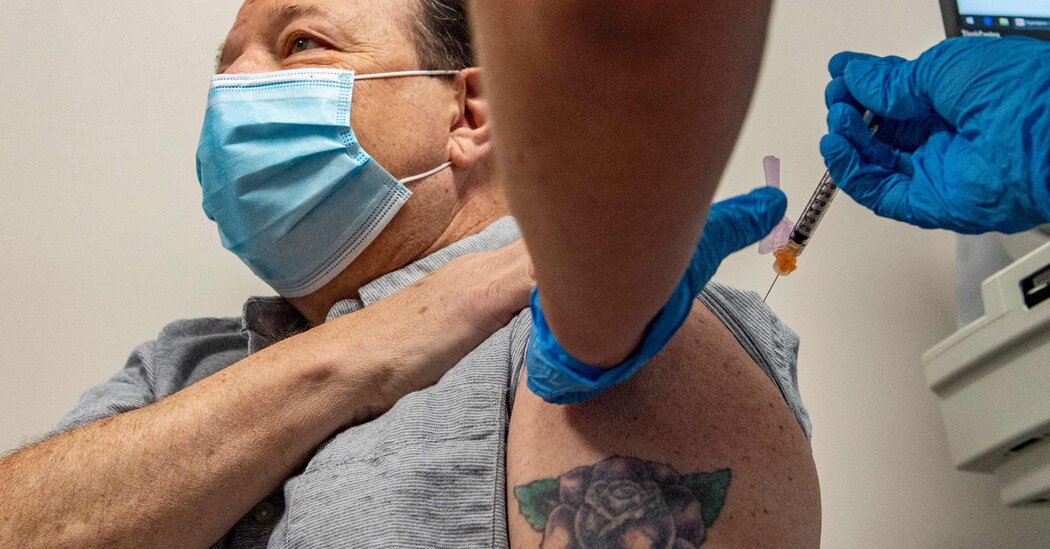
Advisers to the Food and Drug Administration on Friday must confront a range of bewildering scientific questions before deciding whether to authorize coronavirus vaccine booster shots — and if so, for whom.Three important pieces of research landed just this week. On Monday, in the journal The Lancet, an international team of scientists analyzed dozens of studies and concluded that boosters are not yet needed by the general population, and that the world would be better served by using vaccine doses to protect the billions of people who remain unvaccinated.Two of the authors are vaccine experts at the F.D.A. itself, and both had already announced plans to resign over what they felt was undue pressure from the Biden administration to approve booster shots.On Wednesday, scientists at the agency posted an assessment online hinting that they, too, are unconvinced that there’s enough evidence that boosters are needed. “Overall, data indicate that currently U.S.-licensed or authorized Covid-19 vaccines still afford protection against severe Covid-19 disease and death in the United States,” according to their executive summary.White House officials have said they are particularly worried by data from Israel, where officials have said that vaccinated people are seeing waning immune responses and higher rates of infection. Alarmed by the rise in cases, Israeli officials offered third doses of the vaccine to everyone older than 12.Researchers from Israel published early results from that rollout on Wednesday in the New England Journal of Medicine — but few outside scientists found the findings convincing.The team collected data on the effects of booster shots from the health records of more than 1.1 million people over age 60. At least 12 days after the booster, rates of infection were elevenfold lower — and rates of severe disease nearly twentyfold lower — in those who received a booster compared with those who had received only two doses, the researchers found.The results are unsurprising, experts said, and do not indicate long-term benefit.Dr. Celine Gounder, an infectious disease expert at Bellevue Hospital in New York and a former member of the Biden-Harris Covid-19 advisory council.Amr Alfiky/The New York Times“We have known for some time that the vaccines elicit less robust immune responses in the elderly,” said Dr. Celine Gounder, an infectious disease specialist at Bellevue Hospital Center and a former adviser to the Biden administration. “Recommending additional doses of vaccine for the elderly isn’t controversial.”Vaccination remains powerfully protective against severe illness and hospitalization in the vast majority of people in all of the studies published so far, experts said. But the vaccines do seem less potent against infections in people of all ages, particularly those exposed to the highly contagious Delta variant.The cumulative data so far suggest that only older adults will need boosters — and maybe not even them. But White House officials have said that they do not want to wait for hospitalizations to begin rising — if they ever do — among the vaccinated before taking action..css-1xzcza9{list-style-type:disc;padding-inline-start:1em;}.css-3btd0c{font-family:nyt-franklin,helvetica,arial,sans-serif;font-size:1rem;line-height:1.375rem;color:#333;margin-bottom:0.78125rem;}@media (min-width:740px){.css-3btd0c{font-size:1.0625rem;line-height:1.5rem;margin-bottom:0.9375rem;}}.css-3btd0c strong{font-weight:600;}.css-3btd0c em{font-style:italic;}.css-w739ur{margin:0 auto 5px;font-family:nyt-franklin,helvetica,arial,sans-serif;font-weight:700;font-size:1.125rem;line-height:1.3125rem;color:#121212;}#NYT_BELOW_MAIN_CONTENT_REGION .css-w739ur{font-family:nyt-cheltenham,georgia,’times new roman’,times,serif;font-weight:700;font-size:1.375rem;line-height:1.625rem;}@media (min-width:740px){#NYT_BELOW_MAIN_CONTENT_REGION .css-w739ur{font-size:1.6875rem;line-height:1.875rem;}}@media (min-width:740px){.css-w739ur{font-size:1.25rem;line-height:1.4375rem;}}.css-9s9ecg{margin-bottom:15px;}.css-16ed7iq{width:100%;display:-webkit-box;display:-webkit-flex;display:-ms-flexbox;display:flex;-webkit-align-items:center;-webkit-box-align:center;-ms-flex-align:center;align-items:center;-webkit-box-pack:center;-webkit-justify-content:center;-ms-flex-pack:center;justify-content:center;padding:10px 0;background-color:white;}.css-pmm6ed{display:-webkit-box;display:-webkit-flex;display:-ms-flexbox;display:flex;-webkit-align-items:center;-webkit-box-align:center;-ms-flex-align:center;align-items:center;}.css-pmm6ed > :not(:first-child){margin-left:5px;}.css-5gimkt{font-family:nyt-franklin,helvetica,arial,sans-serif;font-size:0.8125rem;font-weight:700;-webkit-letter-spacing:0.03em;-moz-letter-spacing:0.03em;-ms-letter-spacing:0.03em;letter-spacing:0.03em;text-transform:uppercase;color:#333;}.css-5gimkt:after{content:’Collapse’;}.css-rdoyk0{-webkit-transition:all 0.5s ease;transition:all 0.5s ease;-webkit-transform:rotate(180deg);-ms-transform:rotate(180deg);transform:rotate(180deg);}.css-eb027h{max-height:5000px;-webkit-transition:max-height 0.5s ease;transition:max-height 0.5s ease;}.css-6mllg9{-webkit-transition:all 0.5s ease;transition:all 0.5s ease;position:relative;opacity:0;}.css-6mllg9:before{content:”;background-image:linear-gradient(180deg,transparent,#ffffff);background-image:-webkit-linear-gradient(270deg,rgba(255,255,255,0),#ffffff);height:80px;width:100%;position:absolute;bottom:0px;pointer-events:none;}.css-uf1ume{display:-webkit-box;display:-webkit-flex;display:-ms-flexbox;display:flex;-webkit-box-pack:justify;-webkit-justify-content:space-between;-ms-flex-pack:justify;justify-content:space-between;}.css-wxi1cx{display:-webkit-box;display:-webkit-flex;display:-ms-flexbox;display:flex;-webkit-flex-direction:column;-ms-flex-direction:column;flex-direction:column;-webkit-align-self:flex-end;-ms-flex-item-align:end;align-self:flex-end;}.css-12vbvwq{background-color:white;border:1px solid #e2e2e2;width:calc(100% – 40px);max-width:600px;margin:1.5rem auto 1.9rem;padding:15px;box-sizing:border-box;}@media (min-width:740px){.css-12vbvwq{padding:20px;width:100%;}}.css-12vbvwq:focus{outline:1px solid #e2e2e2;}#NYT_BELOW_MAIN_CONTENT_REGION .css-12vbvwq{border:none;padding:10px 0 0;border-top:2px solid #121212;}.css-12vbvwq[data-truncated] .css-rdoyk0{-webkit-transform:rotate(0deg);-ms-transform:rotate(0deg);transform:rotate(0deg);}.css-12vbvwq[data-truncated] .css-eb027h{max-height:300px;overflow:hidden;-webkit-transition:none;transition:none;}.css-12vbvwq[data-truncated] .css-5gimkt:after{content:’See more’;}.css-12vbvwq[data-truncated] .css-6mllg9{opacity:1;}.css-qjk116{margin:0 auto;overflow:hidden;}.css-qjk116 strong{font-weight:700;}.css-qjk116 em{font-style:italic;}.css-qjk116 a{color:#326891;-webkit-text-decoration:underline;text-decoration:underline;text-underline-offset:1px;-webkit-text-decoration-thickness:1px;text-decoration-thickness:1px;-webkit-text-decoration-color:#326891;text-decoration-color:#326891;}.css-qjk116 a:visited{color:#326891;-webkit-text-decoration-color:#326891;text-decoration-color:#326891;}.css-qjk116 a:hover{-webkit-text-decoration:none;text-decoration:none;}The Biden administration has said that booster doses could be rolled out quickly, should the F.D.A. and the Centers for Disease Control and Prevention deem them necessary. An advisory committee to the C.D.C. is scheduled to meet next week to take up the question.British scientists have recommended giving third doses to adults over 50 and other medically vulnerable people. France, Germany, Denmark and Spain are also considering boosters for older adults or have already begun administering them. Israel is already contemplating fourth doses for its population.But recent history leaves many experts leery of adding the United States to the list.Dr. Luciana Borio, a former acting chief scientist at the F.D.A., criticized the Biden administration for announcing a plan for boosters before federal scientists could review the evidence.The Trump administration pressured scientists at the F.D.A. to authorize hydroxychroloquine and convalescent plasma, for example, without enough evidence to support either treatment. “It seems to me that there’s been a process foul in how we go about making those decisions,” Dr. Borio said.“We need an F.D.A. that has people making these decisions and retaining that ability to make those decisions independently and based on science alone. If this changes, we all lose.”

Read more →

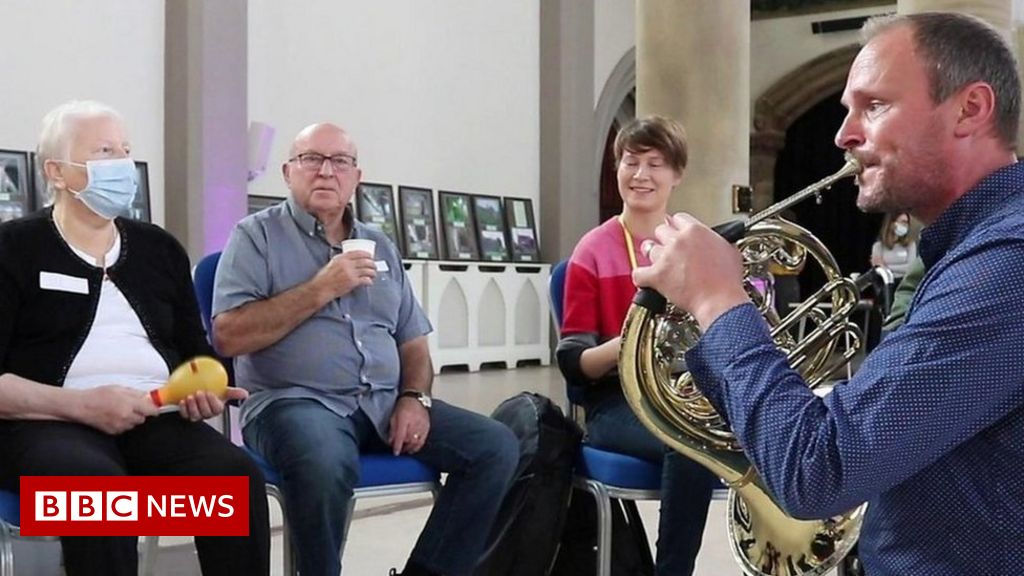
Manchester music cafe brings joy to people with dementia

A music cafe is helping people with dementia sing, play instruments and even dance after coronavirus lockdowns. Manchester Camerata is offering free music therapy workshops to people with dementia and their carers as part of its Music in Mind initiative. David Tollington, a french horn player, said some people taking part do not “remember what they have had for breakfast but they remember the entire lyrics to a song”. He said it shows “the power of music”.Evidence shows music therapy can help people with dementia soothe their symptoms and improve their quality of life.Why not follow BBC North West on Facebook, Twitter and Instagram? You can also send story ideas to northwest.newsonline@bbc.co.uk

Read more →

The Wanted's Tom Parker opens up about his cancer diagnosis

Tom Parker from boy band The Wanted says he refuses to let cancer dominate his life, almost a year on from being diagnosed with an inoperable brain tumour.The star was speaking exclusively to BBC Breakfast ahead of a special Stand Up to Cancer Concert on Monday.The fundraiser at the Royal Albert Hall will feature Ed Sheeran, Liam Payne and McFly as well as the first appearance for more than seven years by The Wanted.

Read more →

U.S. Seeks to Block Bankruptcy Plan That Would Free Sacklers From Opioid Claims

The Justice Department has been appealing the deal, approved earlier this month.WASHINGTON — The Justice Department moved on Thursday to block a bankruptcy plan that grants broad legal immunity to the pharmaceutical company Purdue Pharma, whose drug OxyContin has been at the heart of the nation’s opioid epidemic.William K. Harrington, the U.S. trustee for the Justice Department, filed a motion in federal court to halt confirmation of the settlement while the department appeals the judge’s decision to approve the deal.Mr. Harrington said that the court should grant his request for a stay because the federal government “has a substantial possibility of success on appeal and because the harm that would result from denying a stay outweighs any potential harm from granting one.”The contentious deal was approved this month by Judge Robert Drain, a federal judge in White Plains, N.Y. Among other things, it could release the Sackler family, which owns Purdue Pharma, from future legal liability in exchange for a $4.3 billion financial contribution from the family’s own fortune.Mr. Harrington argued in his filing that the appellate court decided that the deal takes away the rights of those with a valid legal claim against the Sacklers “without their knowing and informed consent, adequate notice or an opportunity to be heard.”He also said that the federal government’s case was supported by previous Supreme Court rulings.The Justice Department filing is the latest in the yearslong battle to hold the Sackler family to account for creating, marketing and selling OxyContin, a highly addictive painkiller.Some experts have argued that OxyContin helped fuel an opioid addiction epidemic that has killed more than 500,000 people nationwide and still grips the United States 15 years after the drug was introduced to the market.But OxyContin made the Sackler family incredibly wealthy. From 2008 to 2017, the family withdrew $10.4 billion from Purdue Pharma.As more people died from opioid use, plaintiffs began to sue Purdue. By the time the company filed for bankruptcy in September 2019, it faced 2,900 lawsuits, more than 600 of which named the Sacklers. The bankruptcy proceedings put a pause on those legal claims.Judge Drain approved the settlement plan after painstaking negotiations among the family, local governments, hospital systems and others who had sued the company and were likely to be involved in costly litigation for years to come.Those who supported the deal, including a majority of states and some of the plaintiffs, argued that it would provide much-needed funding for drug treatment programs.Steve Miller, the chairman of Purdue’s board, said that the settlement “ensures that billions of dollars will be devoted to helping people and communities who have been hurt by the opioid crisis.” And some members of the Sackler family called the resolution an important step in addressing the public health crisis.But critics said that the terms unfairly shielded the Sacklers. It gave the family protections typically afforded to companies that have filed bankruptcy, but not to the company owners if they themselves have not declared bankruptcy.The Justice Department and some states appealed Judge Drain’s ruling.

Read more →

Six stages of engagement in ADHD treatment revealed in new, diverse study

Six stages of engagement in treatment of Attention-Deficit/Hyperactivity Disorder (ADHD) have been reported by researchers at Boston Medical Center based on a diverse study, inclusive of parents of predominantly racial and ethnic minority children with ADHD. Published in Pediatrics, this new framework has been informed by the experiences of parents throughout the various stages that families navigate from diagnosis to the treatment process, and the interplay between themselves, their families, communities and the systems serving their child, including healthcare and education.
ADHD is one of the most common neurodevelopmental disorders of childhood, a chronic pediatric condition that can persist into adulthood. The condition is treatable, but racial and/or ethnic minority families experience disproportionate barriers to treatment engagement.
This study is a first to provide a comprehensive framework with a developmental trajectory navigated by parents and providers together. Researchers suggest that typical measures of treatment engagement, such as missed appointments or prescriptions filled, do not capture the full extent of family engagement in care.
“This framework is family-centered, focused on breaking down the barriers that families face from before diagnosis to preparing children with ADHD for the future,” says Andrea Spencer, MD, director of the Reach for ADHD Research Program, director of Pediatric Integrated Behavioral Health, and a child, adolescent and adult psychiatrist at Boston Medical Center. “This framework can help serve as a model to develop engagement interventions that will be more beneficial to families.”
The six stages of engagement that the research team identified are: Normalization & Hesitation Stigmatization & Fear Action & Advocacy Communications & Navigation Care & Validation Preparation & TransitionThese stages of engagement unfold in families in a similar way to a typical developmental process, hampered by providers and parents being at different stages in the process. Known as stage mismatch, this can cause difficulty and conflict, interfering with the engagement in treatment. Researchers found that any difficulty patients feel in resolving earlier stages in the engagement process could interfere with successfully navigating later stages of the process.
Within each stage, interventions could be offered to support families in that phase and help them journey successfully to the next. During Stage Two, parents explained that discrimination based on race or ethnicity intersected with ADHD stigma in their community, which led to delays in care. Interventions would target discrimination and bias among healthcare providers, as well as address misconceptions about ADHD within families and communities.
“Parents were successful when support was provided in a way that matches their own stage of engagement,” says Spencer, also an assistant professor of psychiatry at Boston University School of Medicine. “Using the Six Stages framework could allow the health system to better match the needs of children with ADHD whose families are at different stages of their engagement process.”
This study included 41 diverse, urban, low-income families with racial and ethnic minority youth, who are most likely to experience difficulty engaging in care. Families who speak English, Spanish and Haitian Creole who engaged in a pediatric setting at a safety-net hospital answered questions to help researchers understand how families came to engage in treatment for their children. In-depth interviews were conducted with families whose children aged three to 17 years old were in treatment for ADHD between June 2018 and October 2019. Open-ended questions were also asked to explore the journey of ADHD diagnosis and treatment, community attitudes about ADHD, and other factors influencing treatment access and decision-making.
Future research should include the perspectives from families with undiagnosed and untreated children, with the inclusion of the years of treatment and age of diagnosis, and study how families of specific racial or ethnic groups may progress differently through the stages, which could be used to further inform this model.
This study was supported by the Gordon and Betty Moore Foundation, grant 5300, and the National Institute of Mental Health, grant K23MH118478.
Story Source:
Materials provided by Boston Medical Center. Note: Content may be edited for style and length.

Read more →