Malaria vaccine 'will change African lives forever'

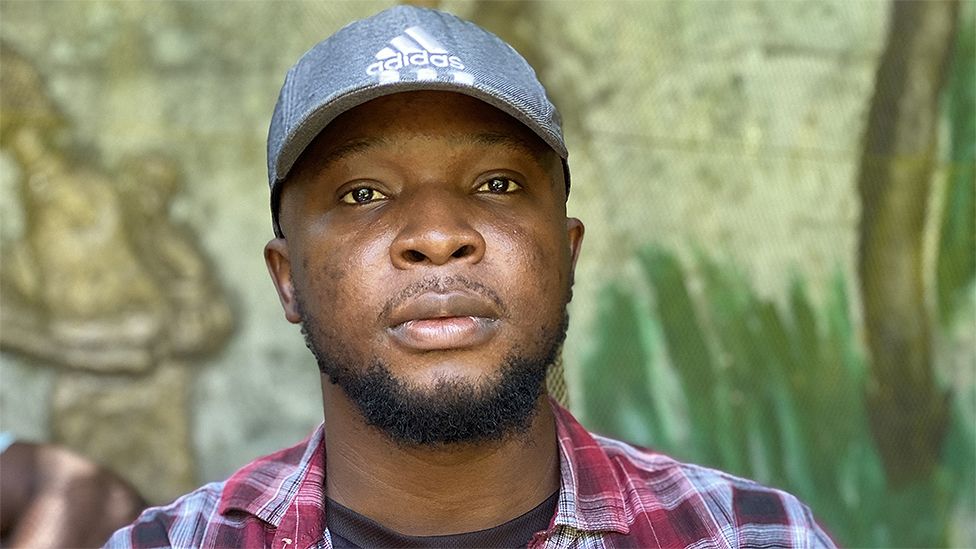
SharecloseShare pageCopy linkAbout sharing”I was surrounded by malaria. All of my friends had it, I had it, my siblings and parents.”Bello Abdul Hakeem Bolaji is one of the millions of people across Africa who’ve grown up with malaria.The 25-year-old from Nigeria reckons the historic decision for children across most of the continent to be vaccinated is “life-changing”. The disease is now under control in most continents, apart from in Africa, where more than 260,000 children died from it in 2019.”It’s game-changing news,” says Bello, who works in artificial intelligence.”When I first heard, it was so exciting. Technology defines the modern world and solutions like vaccines have saved the world before from polio, measles and even Covid-19.”Malaria is a parasite spread by mosquitos, and mostly kills babies and infants. Developing a vaccine after 100 years of trying is seen as one of medicine’s biggest achievements.Bello had to look after his younger sister when she caught malaria at the age of 12. She has sickle cell disease – which affects red blood cells – and really struggled.”My parents were out of the country and I was the only one, and I was around 17 or 18,” he says.”It was the middle of the night, she started crying, vomiting, her temperature was high and she couldn’t even see me.”So many things going on, I was very scared, I started screaming for the neighbours to help me.”I rushed to the hospital and they placed her on oxygen, fluids, did tests.”Bello says he’s one of the lucky ones as his family could pay the money needed to start treatment – but many others can’t afford it.Bello says many of the friends and classmates died of malaria – some were as young as five years old.”I would say it’s traumatic looking back now and thinking about all the people I grew up with, cousins and extended family, classmates and friends.”These are people that we love and want to spend time with, whose life gets cut short by the menace of a disease.”These are people who could have become great doctors, great engineers, and scientists, great innovators, great leaders that could have forged or changed our environment or our community. “But they never even had that chance.”‘There are two outcomes: death or poverty’Bello says that for many families who live below the poverty line, it just isn’t possible to afford hospital treatment.”The difficult part is so many families cannot afford to catch malaria, they can’t pay hospital bills, pay for food or oxygen. In so many cases those children end up dying.”There’s two outcomes from malaria – death or poverty. When most families should be spending money to support businesses or their children’s tuition, they are spending money in treating malaria.”When will the new malaria vaccine be available?That’s why, for Bello, the vaccine will be a game-changer.”So many of the kids I grew up with couldn’t afford to pay tuition, or buy uniforms and in some cases couldn’t afford to eat because most of the money is spent in hospital.”At the end of the day, this leads to many of them dropping out of school and then going into a life of crime or low-paying jobs.”‘It needs to be accessible for all'”I don’t know how to express my excitement,” says Ndifanji Namacha, a doctor based in Malawi.”From a young age, we thought malaria wasn’t preventable. You grow up and hear your classmates can’t come to school because they are sick.”Ndifanji both treats Malaria and campaigns for more awareness in the country.”Africa loses a lot of their finances to malaria.”That money they were spending to go to hospital, they can now use for their own development.”The new vaccine has been developed by the British pharmaceutical company GlaxoSmithKline, and was first found to be effective six years ago.”Being trained in a Malawi hospital, especially in the malaria season, you see mothers coming in with convulsing children because of severe malaria,” explains Ndifanji.”You see pregnant women who are suffering, even miscarriages that are resulting from malaria, low-birth-weight babies because of malaria. You’re sort of accustomed to it.”Despite the vaccine being approved for use, Ndifanji isn’t going to stop campaigning to her government.”We need that vaccine to be accessible for all, and that is only when we can talk about uptake and people’s responses to it.”Follow Newsbeat on Instagram, Facebook, Twitter and YouTube.Listen to Newsbeat live at 12:45 and 17:45 weekdays – or listen back here.

Read more →

Stealthing: California bans non-consensual condom removal

SharecloseShare pageCopy linkAbout sharingImage source, Getty Images/BBCAbout 30 years ago, just months after starting work as a prostitute, Maxine Doogan became pregnant. She had been with a new client at a massage parlour in Anchorage, Alaska, when she realised he had removed his condom surreptitiously during intercourse. Shocked, she ran to the bathroom. When she returned the client was gone. Doogan, then in her mid-twenties, went to a nearby health clinic for a round of tests for sexually transmitted infections and later gave a silent thanks for each negative result.Six weeks later, Doogan sought an abortion. It cost her around $300 (about £220 at today’s conversion rate) and after the procedure she couldn’t work for a month. What the client did was wrong. But as far as she knew it wasn’t illegal. “There’s just no recourse for something like that,” she said.Now, in one US state there is. Last Thursday, California Governor Gavin Newsom signed into law a bipartisan bill that outlaws non-consensual condom removal, known as “stealthing”. The new legislation adds the act to the state’s civil definition of sexual battery, making California the first US state to render stealthing illegal. The law gives victims a clear legal remedy for the assault that Doogan, who now lives in San Francisco, suffered decades ago. And advocates say it marks a sea change for other survivors who, unlike Doogan, might now have their day in court. “We wanted to make sure that it’s not only immoral, but illegal,” said California Assemblywoman Cristina Garcia who introduced the bill. Image source, Getty Images/BBCGarcia has been working on some version of this legislation for years. In 2017 and again in 2018, she introduced a bill that would have made stealthing a criminal offence, and allowed prosecutors to seek jail time for perpetrators. These bills either died on the floor or did not get a hearing. This new version, which amends just the civil code, passed in the California legislation with no opposition. Survivors can sue offenders for damages but no criminal charges can be brought forward. “I still think this should be in the penal code,” Garcia told the BBC. “If consent was broken, isn’t that the definition of rape, or sexual assault?” Legislative analysts have said that stealthing could be considered misdemeanour sexual battery, even though it is not explicitly named in the criminal code. But Garcia’s new law removes any ambiguity for civil claims which, experts say, will make it easier for survivors to pursue their cases. “We can start to talk about it in a way where we have a common language,” Garcia said.’I didn’t know stealthing is rape – until it happened’The US case that could change how rape is chargedSpanish women filmed urinating say judge’s ruling humiliated themGarcia said she was inspired to bring the topic of stealthing to the House floor after reading a 2017 Yale Law School research paper by then-student Alexandra Brodsky – who is now widely credited with bringing the term into popular use. Brodsky, who now works as a civil rights lawyer and is the author of Sexual Justice – which looks at how to respond fairly to sexual assault – detailed a number of stories in her paper from survivors in the context of otherwise consensual romantic or sexual relationships. Their accounts often started the same way, Brodsky wrote. “I’m not sure this is rape but…” They detailed their fear of sexually transmitted infections and pregnancy, as well as intense feelings of violation and betrayal. But the survivors Brodsky spoke to – many of whom reported being raped previously – did not describe stealthing as equivalent to sexual assault. People weren’t making that connection yet, Brodsky said. “I think a big part of the problem was that a lot of people thought they were the only person this had happened to,” she said. Image source, Getty Images/BBCBut research shows stealthing is “depressingly common”, according to analysis from California’s Senate judiciary committee in assessing Garcia’s bill. A 2019 paper published in the National Library of Medicine found that 12% of women ages 21 to 30 reported experience with stealthing. That same year, researchers with Monash University in Australia, found that one in three women and one in five men who have sex with men had been subjected to the practice. And another 2019 study found that almost 10% of men reported removing a condom during sex without consent. In her paper, Brodsky quoted a well-known stealthing blogger, who used his now-defunct site to give advice to other men on how to secretly remove condoms without attracting attention. It’s a woman’s duty to spread their legs, commenters wrote, and a man’s right to “spread his seed”. But while awareness of stealthing has grown, the legislative response has lagged. Even in countries where stealthing has been deemed sexual assault – including the UK, New Zealand and Germany – it’s rarely prosecuted, in part because of difficulties in proving intent. This is the advantage of civil suits. The burden of proof is lower than in criminal cases, and the decision to pursue a claim rests with survivors, not prosecutors.And both Brodsky and Garcia said there’s inherent significance in the state officially labelling stealthing as an illegal act. “Imagine what it’s going to feel like when they [survivors] see that the state of California thinks that they don’t deserve to be treated this way,” Brodsky said. “That it deserved a legal solution.” The bill was supported by the Erotic Service Providers Legal, Educational and Research Project (ESPLERP), an advocacy organisation founded and run by Doogan.The law will allow sex workers to sue clients who remove condoms, she said, and hopefully pave the way for further legal protection for sex workers and other groups typically marginalised by the criminal justice system.Image source, Getty Images/BBC”[Stealthing] can happen to anybody,” Doogan said. There’s still the problem of sexual assault cases being taken up at all. Those who make these claims are often met with “scrutiny and scepticism”, according to Brodsky. And when it comes to stealthing, this response is intensified because, “by definition, the harm happens after they’ve consented to sex”. But the move has been celebrated as an important first step, especially after recent efforts to pass similar legislation in New York and Wisconsin failed. “I’m proud that California is the first in the nation, but I’m challenging other state legislators to follow and to follow quickly,” Garcia said. “One down, 49 to go.” Graphics by Angélica Casas

Read more →

The Hot New Back-to-School Accessory? An Air Quality Monitor

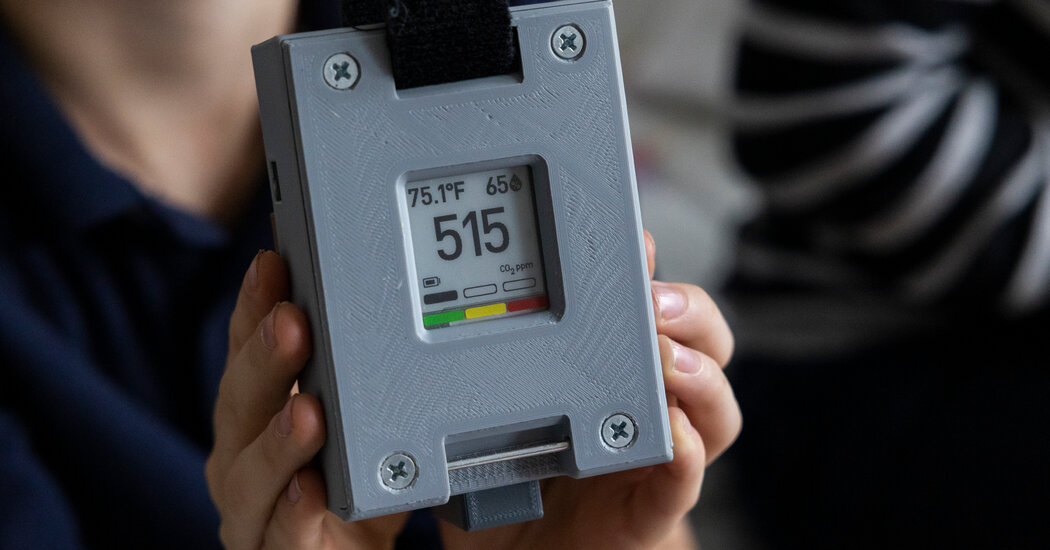
Parents are sneaking carbon dioxide monitors into their children’s schools to determine whether the buildings are safe.When Lizzie Rothwell, an architect in Philadelphia, sent her son to third grade this fall, she stocked his blue L.L. Bean backpack with pencils, wide-ruled paper — and a portable carbon dioxide monitor.The device gave her a quick way to assess how much fresh air was flowing through the school. Low levels of CO2 would indicate that it was well-ventilated, reducing her son’s odds of catching the coronavirus.But she quickly discovered that during lunch, CO2 levels in the cafeteria rose to nearly double those recommended by Centers for Disease Control and Prevention. She shared what she’d learned with the principal and asked if students could eat outside instead.“He expressed surprise that I had any data at all,” she said.Ms. Rothwell is one of a growing number of parents who are sneaking CO2 monitors into schools in a clandestine effort to make sure their children’s classrooms are safe. Aranet, which makes a monitor popular with parents, says orders have doubled since the new school year began.Some school systems have made the monitors part of their official pandemic precautions. New York City has distributed the devices to every public school, and the British government hasannounced plans to do likewise.But elsewhere, parents are taking matters into their own hands, sneaking in the monitors — which can cost a hundred dollars or more — in their children’s backpacks or pants pockets.Although the devices, which can be set to take readings every few minutes, work best when exposed to the open air, they can generate informative data as long as they are not completely sealed away, said Dr. Alex Huffman, an aerosol scientist at the University of Denver who has sent the monitors to school with his children. (He recommended leaving backpacks or pants pockets unzipped, or tucking the monitor into the mesh water-bottle pouch that is now standard on many backpacks.)Ms. Rothwell and her son, Luke, at home in Philadelphia. Citing the CO2 monitor’s data, Ms. Rothwell has asked if Luke’s school could move lunch outdoors.Rachel Wisniewski for The New York TimesMany of these parents have forged a community on Twitter, where they are using the hashtag #CovidCO2 to trade tips about how to smuggle the monitors into the classroom, how to interpret the data they are collecting and how to approach the school with their findings.Some school officials have frowned upon these guerrilla air-monitoring efforts, but parents say the devices have armed them with data to advocate for their children.“It’s possible that the school district may not be all that happy with this because I think it gives us a window into the fact that they may not actually be treating ventilation as seriously as they should be,” Dr. Huffman said.A window into indoor airThe coronavirus spreads through tiny, airborne droplets known as aerosols. Improving indoor ventilation reduces the concentration of these aerosols and the risk of infection in an indoor space, but there is no easy way for members of the public to measure the ventilation rate — let alone the accumulation of viral aerosols — in shared spaces.“Ideally there’d be some machine that cost $100 and it starts beeping if the virus is in the air,” said Jose-Luis Jimenez, an aerosol scientist at the University of Colorado Boulder, who is sending a carbon dioxide monitor to school with his son. But in the absence of such a device, he said, “CO2 is something that provides an affordable and very meaningful shortcut.”Every time we exhale, we expel not just aerosols but also carbon dioxide; the worse the ventilation, the more carbon dioxide builds up in an occupied room.“If we see the CO2 rising, then that also implies that the concentration of aerosols are rising,” Dr. Huffman said. “Even just bringing sensor for a day or two can give you a really interesting and useful window into the world of the ventilation of that space.”Jeanne Norris, who lives in the St. Louis area, said that she bought her monitor after losing confidence in officials in her son’s school district.“They just hadn’t been very transparent about their ventilation,” she said. “They say that it’s fine and that they did their own testing but then they wouldn’t share that data with me.”Ms. Norris and her husband are both science teachers, and so far their data suggest that the ventilation is excellent in both of their classrooms. But CO2 levels in her son’s classroom sometimes surpass 1300 parts per million. The C.D.C. recommends that indoor carbon dioxide levels remain below 800 p.p.m.After she collects more data, she plans to take her findings to school officials and ask them to improve the ventilation. “I’m willing to be creative and brainstorm with them,” she said.A reading from the device that Luke took to school on Sept. 8. The school’s principal has said he is committed to improving the cafeteria’s ventilation.via Lizzie RothwellA readout from the device Jeremy Chrysler sent to school with his 13-year-old daughter. It reported CO2 levels above 4,000 p.p.m. when the school’s HVAC system was broken.via Jeremy ChryslerSome parents have gotten results. When Jeremy Chrysler, of Conway, Ark., sent a monitor in with his 13-year-old daughter, this fall, the CO2 readings were a sky-high 4,000 p.p.m.He brought his findings to district officials, who discovered that two components of the school’s HVAC system were not working properly. After the units were fixed, CO2 levels plummeted.“What my measurements showed was, hey, measuring CO2 can identify problems and sometimes those problems are easy to fix,” he said.Although Ms. Rothwell has not convinced her son’s school to move lunch outdoors, the principal has said he is committed to improving the ventilation in the cafeteria, she said.Results may vary“There are some success stories,” said Kimberly Prather, an atmospheric chemist at the University of California, San Diego. “Unfortunately I’ve heard more parents rejected.”After Shanon Kerr, of Waterloo, Canada, found high CO2 levels in some of her daughter’s school spaces, she asked district officials to monitor indoor air quality throughout the building, even offering up her own CO2 monitor. “They’ve been very dismissive,” she said.In an email to The Times, Loretta Notten, director of education of the Waterloo Catholic District School Board, said that follow-up testing in the classrooms Ms. Kerr identified revealed that carbon dioxide levels “were within acceptable parameters.”Air quality testing is done on an as-needed basis, she said: “The Board does not intend on performing ongoing monitoring of carbon dioxide.”(Ms. Kerr has also run into resistance closer to home. Her daughter no longer wants to take the monitor to school. “I’ve been bribing her with KitKat chocolate bars but it’s not working anymore,” she said.)Graham Freeman, the father of two boys in Santa Cruz, Calif., said his request to send CO2 monitors to school with his sons was denied.Kris Munro, the superintendent of Santa Cruz City Schools, said she is confident in the ventilation upgrades the district performed last winter and that it would be inappropriate to put individual students in the position of monitoring school air quality.Luke carries his monitor in a Minecraft-inspired 3-D printed case.Rachel Wisniewski for The New York Times“It’s our responsibility to assure every space is safe,” she said. “Not just to have individuals coming on campus to find out: Is a specific space safe?”Mr. Freeman has been sending the monitors into school anyway, tucked into the pockets of his sons’ cargo pants. He’s been pleasantly surprised by the readings, which have remained under 700 p.p.m. as long as the classroom doors and windows have been open.But the monitors did capture a small spike, when CO2 rose above 900 p.p.m., during a lockdown drill at his son’s middle school, when the teacher closed the classroom door.So his sons will continue taking the devices to school for the indefinite future. “We’re going to be wearing a lot of REI cargo pants and CO2 monitors in the pockets,” he said.A monitor in every classroomThere are limitations to the monitoring. Some devices are more reliable than others, and the readings can be skewed by a variety of factors, including where the monitor is placed.Children can still catch the virus in spaces with low CO2 levels and good ventilation. And high-quality air filters can trap viral aerosols, but have no effect on carbon dioxide levels. So in schools that have installed these filters, CO2 readings alone may overestimate the risk of viral transmission.But even in the absence of the virus, reducing indoor carbon dioxide levels can have benefits. Studies show that even moderately high levels of the gas may muddle thinking and that improving ventilation can boost performance on cognitive tasks.Of course, many families cannot afford a $100 air quality monitor — and they should not have to, parents and scientists said.Mr. Chrysler, whose CO2 readings prompted his Arkansas district to repair its HVAC system, is now lobbying officials to buy air quality monitors for every classroom in the district.Pointing to Belgium, which has mandated CO2 monitors in restaurants, gyms and other buildings, Dr. Jimenez said he would like all public indoor spaces to provide permanent real-time displays of the carbon dioxide levels: “This is something that we should do permanently in schools but also in all places where we share air.”

Read more →

Shannen Doherty Reveals Ravages of Breast Cancer in Candid Photos

The actress, 50, who has Stage 4 cancer, said she posted the photos to help raise awareness about breast cancer prevention.One picture shows the actress Shannen Doherty completely bald, a bloody cotton ball in her nose as she stares straight at the camera, looking almost confrontational.Another is more playful — Ms. Doherty, 50, is in bed wearing Cookie Monster pajamas and a Cookie Monster eye mask. She confesses to how exhausted she is, how the chemotherapy she has had to undergo for Stage 4 breast cancer has left her plagued by bloody noses.“Is it all pretty? NO but it’s truthful and my hope in sharing is that we all become more educated, more familiar with what cancer looks like,” Ms. Doherty wrote on Instagram this week.The images are unsettling to any member of Generation X who remembers her as Brenda Walsh, the feisty, polarizing teenager she played for four years on the hit 1990s show “Beverly Hills, 90210,” which brought her international fame and infamy.Ms. Doherty said she was posting the images as part of Breast Cancer Awareness Month in the hopes that they will jar people into getting mammograms and regular breast exams and help people cut through “the fear and face whatever might be in front of you.”The unvarnished photos align with the frank nature of an actress who never seemed interested in being universally liked and are likely to resonate with a public that is reconsidering how female celebrities were treated in the 1990s and early 2000s, said Kearston Wesner, an associate professor of media studies at Quinnipiac University who teaches celebrity culture.“The photos aren’t touched up,” Professor Wesner said. “They’re not presented in any way than the reality she’s going through. There is some feeling that when she is communicating with you, she is coming from an authentic place.”Ms. Doherty said she learned she had breast cancer in 2015. Since then, she said she has had a mastectomy, as well as radiation and chemotherapy treatment.The photos, which have been viewed about 280,000 times, have elicited comments of sympathy, admiration and praise on her Instagram account, which has more than 1.8 million followers.“Love you Shan,” wrote Ian Ziering, one of her former co-stars on “Beverly Hills, 90210.”“You are a force, Sister!” wrote Kelly Hu, an actress.Ms. Doherty did not often get such adulation when she was younger.In the early 1990s, Ms. Doherty, who was only 19 when she started acting on “90210,” was eviscerated by the press and many in the public who criticized her for smoking in clubs, her tumultuous love life and reports that she was difficult on set.Her character was an outspoken, headstrong and temperamental teenager who had sex with her boyfriend, fought with her friends and rebelled against her father.Brenda Walsh was “relatable in an uncomfortable way,” said Kat Spada, a host of “The Blaze,” a podcast devoted to discussing “90210.”In hindsight, the backlash from fans against the character of Brenda Walsh, and by extension Ms. Doherty, may have been a result of seeing themselves in both women, said Lizzie Leader, the other host of the podcast.“We always ask guests about their ‘90210’ journey and we ask which character they most relate to or identify with,” Ms. Leader said. “Everyone is almost always a Brenda.”But back when the show was airing, some fans became so consumed with vitriol for the character that they began calling for Ms. Doherty to be fired.They formed an “I Hate Brenda” club. MTV News dedicated a three-plus-minute segment to the sentiment, quoting people who mocked her looks and her decision to attend the Republican National Convention in 1992. One clip in the MTV segment showed a group of partygoers hitting a “Brenda piñata.”She left “Beverly Hills, 90210” in 1994, then went on to appear in the 1995 movie “Mallrats” and several television movies and shows. In 2019, she appeared in a brief reboot of the original “90210” called “BH90210.”In an interview with The New York Times in 2008, Ms. Doherty said that the bad publicity around her was often based on exaggerations or “completely false” stories.“I really could care less about it anymore,” she said in the interview. “I have nothing to apologize for. Whatever I did was my growing-up process that I needed to go through, that anybody my age goes through. And however other people may have reacted to that is their issue.”If you were a fan of Ms. Doherty, the headlines hurt, said Professor Wesner, 45, who watched Ms. Doherty grow from a child actor in “Little House on the Prairie” into roles like Heather Duke in the 1988 movie “Heathers,” and Brenda Walsh.“She meant a lot to me,” said Professor Wesner. “I myself was an outspoken girl and I’ve gotten slammed for it, too. For me, seeing someone who was also outspoken and also a ‘difficult woman’ was satisfying.”The coverage of Ms. Doherty was reflective of a time “when publications would attack, would fat shame, would ugly shame, would anorexia shame,” said Stephen Galloway, the dean of the Dodge College of Film and Media Arts at Chapman University in Orange, Calif., and a former executive editor of The Hollywood Reporter. “There was no line between taste and vulgarity. It was anything goes.”And it severely damaged Ms. Doherty’s career, he said.Her decision to document the effects of cancer is “a great step toward redemption and meaningfulness” that could help people, said Mr. Galloway, who said he learned about a week ago that he was in the early stages of cancer.He said Ms. Doherty’s openness had made him feel more comfortable talking about his own diagnosis.“I looked at her and I thought, ‘what courage,’” Mr. Galloway said.

Read more →

A visit from a social robot improves hospitalized children’s outlook

A new study from UCLA finds a visit from human-controlled robot encourages a positive outlook and improves medical interactions for hospitalized children.
Robin is a social companion robot that stands at about 4 feet tall and has the capabilities to move, talk and play with others while being remotely controlled by humans. Specialists from UCLA Mattel Children’s Hospital’s Chase Child Life Program conducted hour-long video visits with young patients using Robin, comparing it to interactions using a standard tablet, from October 2020 to April 2021. At the conclusion of the study period, children and their parents were interviewed about their experiences and child life specialists provided feedback in a focus group. Researchers then used a transcript of the discussion to identify recurrent and salient themes.
Ninety percent of parents who had a visit with Robin indicated they were “extremely likely” to request another visit, compared to 60% of parents whose children interacted with the tablet. Children reported a 29% increase in positive affect — described as the tendency to experience the world in a positive way, including emotions, interactions with others and with life’s challenges — after a visit with Robin and a 33% decrease in negative affect. Children who had a tablet visit reported a 43% decrease in positive affect and a 33% decrease in negative affect.
Parents whose children had a visit from Robin reported their children had no change in positive affect and a 75% decrease in negative affect. Parents whose children had a tablet visit reported their children had a 16% increase in positive affect and no change in negative affect.
The study is being presented on October 11 at the American Academy of Pediatrics (AAP) National Conference.
Child life specialists who oversaw visits with Robin reported benefits that included a greater display of intimacy and interactivity during play, increased control over their hospital experience and the formation of a new, trusting friendship.
“Our team has demonstrated that a social companion robot can go beyond video chats on a tablet to give us a more imaginative and profound way to make the hospital less stressful,” said Justin Wagner, MD, a pediatric surgeon at UCLA Mattel Children’s Hospital and senior author of the study. “As the pandemic continues, our patients are still feeling anxious and vulnerable in a variety of ways, so it’s critical that we be as creative as possible to make their experiences easier when they need our help.”
“We saw the positive effect in children, their families and healthcare workers,” adds Wagner. The analysis also suggests benefits to staff, including an increased sense of intimacy with and focus on the patient, increased staff engagement in social care and relative ease in maintaining infection control practices.
In the study, child life specialists also reported the challenges of limited time for patient encounters and a learning curve for operating Robin.
The authors say the evidence illustrates benefits for young patients and supports the incorporation of a social robot like Robin in an inpatient pediatric multidisciplinary care setting.
The study’s other authors are Dr. Gabriel Oland, Joseph Wertz, W. Scott Comulada, Valentina Ogaryan, Megan Pike, and Dr. Shant Shekherdimian of UCLA.

Read more →

How Covid Vaccine Technology Could Improve Flu Vaccines

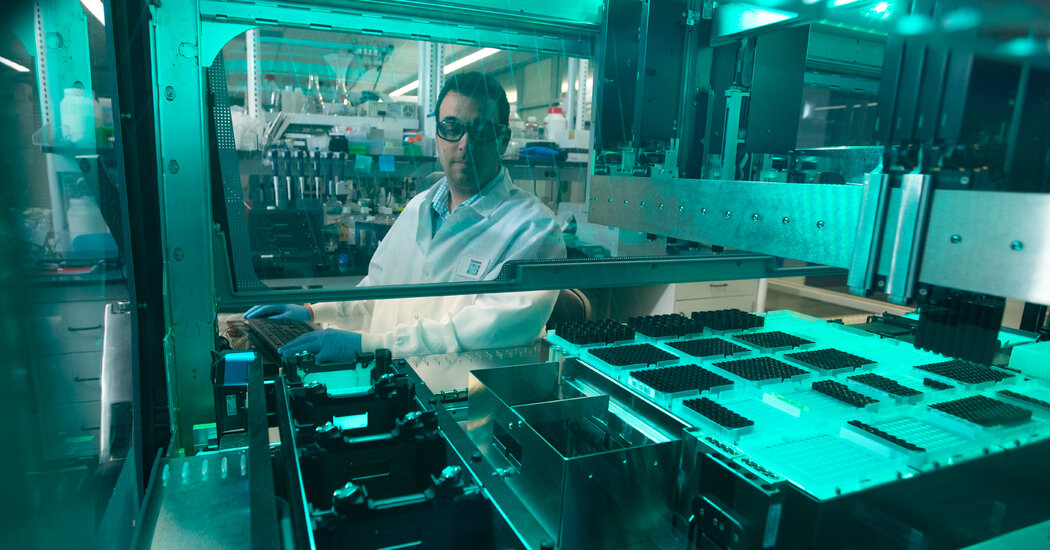
Vaccine makers are betting that the mRNA technology powering two successful Covid vaccines will help curb the tragic global death toll from the flu.As the world grapples with Covid-19, influenza isn’t getting much attention these days. But the flu’s global impact is staggering: three million to five million cases of severe illness every year, and up to 650,000 deaths. Every few decades, a new flu strain spills over from animals and leads to a pandemic.The deadly toll of influenza is all the more striking when you consider that we have had vaccines to fight it for eight decades. But they remain mediocre. A flu shot is good for only one flu season, and its effectiveness typically reaches somewhere between 40 and 60 percent. In some years it’s as low as 10 percent.But a new generation of highly effective flu vaccines may emerge in the next few years, based on the same mRNA technology that has protected hundreds of millions of people against Covid-19.While traditional influenza vaccines are grown for months in chicken eggs, mRNA vaccines are manufactured relatively quickly from scratch. In theory, their faster production may make them better matched to each season’s flu strains. And when they’re injected into people, they may provoke a stronger immune response than traditional flu vaccines do.Two companies — Moderna, the Massachusetts biotech company that produced one of the authorized mRNA vaccines for Covid-19, and Sanofi, a French vaccine maker — began trials for mRNA flu vaccines this summer. Pfizer and BioNTech, the companies that produced the other mRNA Covid-19 vaccine, started their own flu trial last month. And Seqirus, a vaccine producer based in England, is planning to test another mRNA vaccine for the flu early next year.No one can say for sure how well any of these four seasonal flu vaccines will turn out, but many experts are optimistic. And further down the line, mRNA technology may be tailored to make vaccines that work for years against a wide range of influenza strains.“I am beyond excited for the future of flu vaccination,” said Jenna Bartley, an immunologist at the University of Connecticut.Not good enoughPeople lined up for a vaccine during the 1918 flu pandemic in Pueblo, Colo. The vaccines were mistakenly designed for bacteria, not for the flu virus, which would not be discovered for 15 years.Vintage Space/Alamy The 1918 influenza pandemic was the worst in modern history, killing somewhere between 50 million and 100 million people. As the death toll climbed, doctors responded by inoculating people by the thousands with an assortment of experimental vaccines. None of them worked.Scientists at the time wrongly believed that disease was caused by bacteria, not viruses. That error led them to make vaccines from the microbes they gathered in the sputum of flu patients. The vaccines were useless at mounting an immune defense against the viral disease.It was not until 1933 that British virologists isolated the influenza virus, finally making it possible to design an effective vaccine. Researchers injected influenza viruses into chicken eggs, where they multiplied. Once they had extracted and purified the new viruses, they killed them with chemicals, and injected the inactivated viruses into people.The United States licensed the first commercial influenza vaccine in 1945. The Nobel-prize-winning virologist Wendell Stanley hailed the milestone, declaring that the vaccine would prevent influenza from ever again becoming “one of the great destroyers of human life.”But the vaccine didn’t quite live up to Dr. Stanley’s hopes. Influenza outfoxed it with an awesome power to mutate.During an influenza infection, cells in our airway begin copying the virus’s genome, allowing it to proliferate. The copying process results in lots of genetic errors. Sometimes these mutations will enable the virus to escape the body’s immune response spurred by a vaccine.Flu viruses also have another route to rapid evolution. If two types of flu viruses infect the same cell, it can produce a genetic hybrid, which may evade vaccine-triggered immunity even more successfully.This extraordinary capacity for change also explains why several strains of flu may circulate in a single flu season, and new strains may rise to dominance the following year.“The flu virus, for lack of a better word, is just kind of a jerk,” Dr. Bartley said.Vaccine makers have responded by including up to four different strains in their annual formulations. But because producing vaccines in chicken eggs is such a slow process, scientists must choose which strains to include several months before a flu season, often leading to a mismatch when the shape-shifting virus actually arrives.“It’s an educated guessing game,” said Dr. Alicia Widge, an immunologist at the National Institutes of Health’s Vaccine Research Center. “We’re always catching up with the virus.”A technician marked eggs to prepare them for H1N1 flu vaccine production in Wuhan, China, in 2009.China Daily/ReutersBetween 2004 and 2019, the effectiveness of the flu vaccine ranged from as high as 60 percent to as low as 10 percent. Even that modest protection translates into a lot of benefit, however, because so many people get the flu every year. In addition to lowering the odds of getting infected, the vaccine also lowers the chances that people sick with the flu have to go to the hospital.In the 2018-19 flu season, the flu vaccine — with an effectiveness of just 29 percent — prevented an estimated 4.4 million illnesses in the United States alone, plus 58,000 hospitalizations and 3,500 deaths, according to one study.If scientists could make more robust flu vaccines, they could potentially save thousands of additional lives.“The bottom line is that the flu vaccines we have aren’t good enough,” said Nicholas Heaton, a virologist at Duke University School of Medicine.Immune factoriesIn the 1990s, a few researchers set out on an entirely new course, making flu vaccines from mRNA.The idea behind the technology was radically different than the chicken-egg approach. In effect, the new shots would turn people’s own cells into vaccine factories.Scientists would create an mRNA molecule with the instructions for making an influenza protein, then deliver it into cells. Those cells would then make copies of the viral protein, some of which would end up on their surface. Immune cells passing by would detect the alien proteins and respond with a defense against the virus.In 1993, a team of French scientists conducted the first experiments on an mRNA vaccine for the flu. The vaccines produced promising responses in mice, but were still primitive. For one thing, the animal’s cells sometimes responded to the vaccine’s mRNA by destroying it, as if it belonged to a foreign enemy. It took more than two decades of additional lab work before mRNA vaccines were ready for human trials.Moderna’s headquarters in Cambridge, Mass.Tony Luong for The New York TimesWhen Moderna formed in 2010 to bring mRNA vaccines to the clinic, influenza was one of the first diseases it tackled. The company started with vaccines for two flu strains that normally infected birds but sometimes sickened people — exactly the kind of viruses that might give rise to new pandemics.Their first clinical trial results, in 2016, were encouraging. The volunteers produced antibodies against the viruses, though they also had side effects like fever and fatigue. The results spurred Moderna to build a new factory in Norwood, Mass., where the company could make large quantities of mRNA for more clinical trials.The company began developing a new flu vaccine, this one for seasonal influenza rather than for pandemics. And the researchers worked on making the side effects of the vaccine less severe.“You want folks to feel comfortable strolling into CVS and getting their shot, and not be worried about adverse events,” said Rose Loughlin, vice president for research and development strategy at Moderna..css-1kpebx{margin:0 auto;font-family:nyt-franklin,helvetica,arial,sans-serif;font-weight:700;font-size:1.125rem;line-height:1.3125rem;color:#121212;}#NYT_BELOW_MAIN_CONTENT_REGION .css-1kpebx{font-family:nyt-cheltenham,georgia,’times new roman’,times,serif;font-weight:700;font-size:1.375rem;line-height:1.625rem;}@media (min-width:740px){#NYT_BELOW_MAIN_CONTENT_REGION .css-1kpebx{font-size:1.6875rem;line-height:1.875rem;}}@media (min-width:740px){.css-1kpebx{font-size:1.25rem;line-height:1.4375rem;}}.css-1gtxqqv{margin-bottom:0;}.css-k59gj9{display:-webkit-box;display:-webkit-flex;display:-ms-flexbox;display:flex;-webkit-flex-direction:column;-ms-flex-direction:column;flex-direction:column;width:100%;}.css-1e2usoh{font-family:inherit;display:-webkit-box;display:-webkit-flex;display:-ms-flexbox;display:flex;-webkit-box-pack:justify;-webkit-justify-content:space-between;-ms-flex-pack:justify;justify-content:space-between;border-top:1px solid #ccc;padding:10px 0px 10px 0px;background-color:#fff;}.css-1jz6h6z{font-family:inherit;font-weight:bold;font-size:1rem;line-height:1.5rem;text-align:left;}.css-1t412wb{box-sizing:border-box;margin:8px 15px 0px 15px;cursor:pointer;}.css-hhzar2{-webkit-transition:-webkit-transform ease 0.5s;-webkit-transition:transform ease 0.5s;transition:transform ease 0.5s;}.css-t54hv4{-webkit-transform:rotate(180deg);-ms-transform:rotate(180deg);transform:rotate(180deg);}.css-1r2j9qz{-webkit-transform:rotate(0deg);-ms-transform:rotate(0deg);transform:rotate(0deg);}.css-e1ipqs{font-size:1rem;line-height:1.5rem;padding:0px 30px 0px 0px;}.css-e1ipqs a{color:#326891;-webkit-text-decoration:underline;text-decoration:underline;}.css-e1ipqs a:hover{-webkit-text-decoration:none;text-decoration:none;}.css-1o76pdf{visibility:show;height:100%;padding-bottom:20px;}.css-1sw9s96{visibility:hidden;height:0px;}.css-1in8jot{background-color:white;border:1px solid #e2e2e2;width:calc(100% – 40px);max-width:600px;margin:1.5rem auto 1.9rem;padding:15px;box-sizing:border-box;font-family:’nyt-franklin’,arial,helvetica,sans-serif;text-align:left;}@media (min-width:740px){.css-1in8jot{padding:20px;width:100%;}}.css-1in8jot:focus{outline:1px solid #e2e2e2;}#NYT_BELOW_MAIN_CONTENT_REGION .css-1in8jot{border:none;padding:10px 0 0;border-top:2px solid #121212;}What to Know About Covid-19 Booster ShotsThe F.D.A. authorized booster shots for a select group of people who received their second doses of the Pfizer-BioNTech vaccine at least six months ago. That group includes: Pfizer recipients who are 65 or older or who live in long-term care facilities; adults who are at high risk of severe Covid-19 because of an underlying medical condition; health care workers and others whose jobs put them at risk. People with weakened immune systems are eligible for a third dose of either Pfizer or Moderna four weeks after the second shot.Regulators have not authorized booster shots for recipients of the Moderna and Johnson & Johnson vaccines yet, but an F.D.A. panel is scheduled to meet to weigh booster shots for adult recipients of the Moderna and Johnson & Johnson vaccines.The C.D.C. has said the conditions that qualify a person for a booster shot include: hypertension and heart disease; diabetes or obesity; cancer or blood disorders; weakened immune system; chronic lung, kidney or liver disease; dementia and certain disabilities. Pregnant women and current and former smokers are also eligible.The F.D.A. authorized boosters for workers whose jobs put them at high risk of exposure to potentially infectious people. The C.D.C. says that group includes: emergency medical workers; education workers; food and agriculture workers; manufacturing workers; corrections workers; U.S. Postal Service workers; public transit workers; grocery store workers.It is not recommended. For now, Pfizer vaccine recipients are advised to get a Pfizer booster shot, and Moderna and Johnson & Johnson recipients should wait until booster doses from those manufacturers are approved.Yes. The C.D.C. says the Covid vaccine may be administered without regard to the timing of other vaccines, and many pharmacy sites are allowing people to schedule a flu shot at the same time as a booster dose.But then in early 2020, just as they were hoping to begin a new flu trial, the scientists had to shelve the plan. A new coronavirus was exploding in China.Combo shotsOver the next year, Moderna made and tested a Covid mRNA vaccine in record speed. And its shot, like that of its primary competitor, Pfizer-BioNTech, was remarkably protective, with an efficacy rate around 95 percent.The success of mRNA vaccines delivered huge revenues to both companies. The Pfizer-BioNTech vaccine is on track to become the best-selling medicine of all time. And Moderna’s market cap since the beginning of the pandemic increased 19-fold to around $123 billion.Riding the mRNA wave, these companies, along with Sanofi and Seqirus, are moving on to seasonal flu projects.Jean-François Toussaint, Sanofi Pasteur’s head of global research and development, cautioned that the success of mRNA vaccines against Covid did not guarantee similar results for influenza.“We need to be humble,” he said. “The data will tell us if it works.”But some studies suggest that mRNA vaccines might prove more potent than traditional ones. In animal studies, mRNA vaccines seem to provide a broader defense against influenza viruses. They prompt the animals’ immune systems to make antibodies against the virus, and also train immune cells to attack infected cells.mRNA antigen design and screening at Translate Bio in Lexington, Mass.SanofiBut perhaps most important for the flu, mRNA vaccines can be made rapidly. The speed of mRNA manufacturing may allow vaccine makers to wait a few extra months before picking which influenza strains to use, potentially leading to a better match.“If you could guarantee 80 percent every year, I think that would be a major public health benefit,” said Dr. Philip Dormitzer, Pfizer’s chief scientific officer.The technology also makes it easier for mRNA vaccine makers to create combination shots. Along with mRNA molecules for different strains of influenza, they can also add mRNA molecules for entirely different respiratory diseases.At a Sept. 9 presentation for investors, Moderna shared results from a new experiment in which researchers gave mice vaccines combining mRNAs for three respiratory viruses: seasonal flu, Covid-19 and a common pathogen called respiratory syncytial virus, or RSV. The mice produced high levels of antibodies against all three viruses.Other researchers have been searching for a universal flu vaccine that could protect people for many years by fending off a broad range of influenza strains. Rather than an annual shot, people might need only a booster every few years. In the best-case scenario, one vaccination might even work for a lifetime.At the University of Pennsylvania, a team of researchers led by Norbert Pardi is developing mRNA vaccines that encode proteins from influenza viruses that mutate only rarely. Experiments in animals hint that these vaccines could remain effective from year to year.Although Moderna isn’t working on a universal flu vaccine at the moment, “it’s absolutely something we’d be interested in for the future,” said Dr. Jacqueline Miller, the company’s head of infectious disease research.Even if mRNA flu vaccines live up to expectations, they will probably need a few years to gain approval. Trials for mRNA flu vaccines won’t get the tremendous government support that Covid-19 vaccines did. Nor will regulators be allowing them to get emergency authorization. Seasonal flu is hardly a new threat, and it can already be countered with licensed vaccines.So the manufacturers will have to take the longer path to full approval. If the early clinical trials turn out well, vaccine makers will then have to move on to large-scale trials that may need to stretch through several flu seasons.“It should work,” said Dr. Bartley of the University of Connecticut. “But obviously that’s why we do research — to make sure ‘should’ and ‘does’ are the same thing.”

Read more →

More severely COVID-19 infected mothers more likely to have preterm birth, study finds

Researchers at the Wayne State University School of Medicine and the National Institutes of Health’s Perinatology Research Branch in Detroit have discovered that the more severely infected with COVID-19 a mother is, the more likely she is to experience preterm birth.
In “SARS-CoV-2 and the subsequent development of preeclampsia and preterm birth: evidence of a dose response relationship supporting causality,” published in the American Journal of Obstetrics and Gynecology, the researchers reported that the rate of preterm birth in about 1,000 pregnant women who tested positive for SARS-CoV-2, the virus that causes COVID-19, was a function of the severity of infection.
“The more severe the SARS-CoV-2 infection, the greater the risk of preterm birth,” said Roberto Romero, M.D., DMedSci, chief of the Perinatology Research Branch and professor of Molecular Obstetrics and Genetics at the Wayne State University School of Medicine. “There was a dose-dependent relationship between the severity of SARS-CoV-2 infection and the risk of prematurity.”
The WSU/PRB researchers conducted the study in collaboration with the Fetal Medicine Foundation of London, finding that the rate of preterm birth in about 1,000 pregnant women who tested positive for COVID-19 depended on the severity of their infection. The excess rate of premature birth, they report, is largely due to medically-induced preterm birth brought about by concerns for the health of the mother, such as preeclampsia.
Preterm birth, the leading cause of perinatal morbidity and mortality worldwide, is defined as one that occurs before 37 weeks of gestation. Two-thirds of preterm births are due to spontaneous onset of preterm labor. The remaining third is due to medical conditions that affect either the mother or the unborn baby that necessitate delivery.
The more severe the COVID-19 infection, the greater the risk of preeclampsia, a sudden increase in blood pressure after the 20th week of pregnancy. The condition is responsible for 76,000 maternal deaths and more than 500,000 infant deaths every year. Some mothers develop seizures (eclampsia) and suffer intracranial hemorrhage, the main cause of death in those who develop the disorder. Some women develop blindness. The babies of preeclamptic mothers are affected by the condition and may develop intrauterine growth restriction or die in utero.
Doctors appear to be medically inducing early delivery to save the lives of mothers infected with COVID-19 in the cohort studied.
Regardless of those medically induced preterm births, the researchers said, the possibility that COVID-19 infection causes preeclampsia must be considered.
“The principal finding is that there is a dose-response relationship between the severity of SARS-CoV-2 infection and the risk of subsequent development of preeclampsia and preterm birth,” Dr. Romero said. “Patients with severe COVID-19 have a five-fold greater risk of preeclampsia than asymptomatic patients. Moreover, the relative risk of developing preeclampsia in women with moderate or severe COVID-19 was 3.3-fold higher than in those with asymptomatic or mild infection.”
In addition to Dr. Romero, the research team included Adi Tarca, Ph.D., professor of Obstetrics and Gynecology, and adjunct professor of Computer Science at Wayne State University and a member of the PRB; Jonathan Lai, M.D., Fetal Medicine Research Institute, King’s College Hospital, London; Stamatina Iliodromiti, M.D., Centre for Women’s Health, Institute of Population Health, Queen Mary University of London, London; Anoop Rehal, M.D., Department of Obstetrics and Gynaecology, Birmingham Heartlands Hospital, Birmingham, West Midlands; Anita Banerjee, M.D., Women’s Services Department, St. Thomas’ Hospital, London; Christina Yu, M.D., Department of Fetal Medicine, St. Mary’s Hospital, Imperial College National Health Services Trust, London; Gergana Peeva, M.D., Department of Fetal Medicine, Homerton University Hospital, London; Vadivu Palaniappan, M.D., Department of Obstetrics and Gynaecology, Queen Elizabeth Hospital, London; Linda Tan, M.D., Department of Obstetrics and Gynaecology, University Hospital Lewisham, London; Mahishee Mehta, M.D., Department of Obstetrics and Gynaecology, Northwick Park Hospital, London; and Kypros Nicolaides, M.D., Fetal Medicine Research Institute, King’s College Hospital, London.
This research was supported by a grant from the Fetal Medicine Foundation (charity no: 1037116 ). In addition, this research was supported, in part by the Perinatology Research Branch, Division of Obstetrics and Maternal-Fetal Medicine, Division of Intramural Research, Eunice Kennedy Shriver National Institute of Child Health and Human Development, National Institutes of Health, U.S. Department of Health and Human Services (NICHD/NIH/DHHS); and in part with Federal funds from NICHD/NIH/DHHS under contract no. HHSN275201300006C.

Read more →

A rare feat: Material protects against both biological and chemical threats

A Northwestern University research team has developed a versatile composite fabric that can deactivate both biological threats, such as the novel coronavirus that causes COVID-19, and chemical threats, such as those used in chemical warfare. A material that is effective against both classes of threats is rare.
The material also is reusable. It can be restored to its original state after the fabric has been exposed to threats by a simple bleach treatment.The promising fabric could be used in face masks and other protective clothing.
“Having a bifunctional material that has the ability to deactivate both chemical and biological toxic agents is crucial since the complexity to integrate multiple materials to do the job is high,” said Northwestern’s Omar Farha, an expert in metal-organic frameworks, or MOFs, which is the basis for the technology.
Farha, a professor of chemistry in the Weinberg College of Arts and Sciences, is a co-corresponding author of the study. He is a member of Northwestern’s International Institute for Nanotechnology.
The MOF/fiber composite builds on an earlier study in which Farha’s team created a nanomaterial that deactivates toxic nerve agents. With some small manipulations, the researchers were able to also incorporate antiviral and antibacterial agents into the material.
MOFs are “sophisticated bath sponges,” Farha said. The nano-sized materials are designed with a lot of holes that can capture gases, vapors and other agents the way a sponge captures water. In the new composite fabric, the cavities of the MOFs have catalysts that can deactivate toxic chemicals, viruses and bacteria. The porous nanomaterial can be easily coated on textile fibers.
The study was published recently in the Journal of the American Chemical Society (JACS).
The researchers found that the MOF/fiber composite exhibited rapid activity against SARS-CoV-2 and both gram-negative bacteria (E. coli) and gram-positive bacteria (S. aureus). Also, the active chlorine-loaded MOF/fiber composite rapidly degraded sulfur mustard gas and its chemical simulant (2-chloroethyl ethyl sulfide, CEES). The nanopores of the MOF material coated on the textile are wide enough to allow sweat and water to escape.
The composite material is scalable, Farha added, as it only requires basic textile processing equipment currently used by industry. When incorporated into a facemask, the material should be able to work both ways: protecting the mask wearer from virus in his or her vicinity as well as protecting individuals who come into contact with an infected person wearing the mask.
The researchers also were able to develop an understanding of the material’s active sites down to atomic level. This allows them and others to derive structure-property relationships that can lead to the creation of other MOF-based composites.
The title of the paper is “Immobilized Regenerable Active Chlorine within a Zirconium-Based MOF Textile Composite to Eliminate Biological and Chemical Threats.” Yuk Ha Cheung of The Hong Kong Polytechnic University and Kaikai Ma of Northwestern University are first authors of the paper. Ma also is a co-corresponding author.
Note: Omar Farha has a financial interest in the startup company NuMat Technologies, which is seeking to commercialize metal-organic frameworks.
Story Source:
Materials provided by Northwestern University. Original written by Megan Fellman. Note: Content may be edited for style and length.

Read more →

Engineers 3D-print personalized, wireless wearables that never need a charge

Wearable sensors to monitor everything from step count to heart rate are nearly ubiquitous. But for scenarios such as measuring the onset of frailty in older adults, promptly diagnosing deadly diseases, testing the efficacy of new drugs or tracking the performance of professional athletes, medical-grade devices are needed.
University of Arizona engineers have developed a type of wearable they call a “biosymbiotic device,” which has several unprecedented benefits. Not only are the devices custom 3D-printed and based on body scans of wearers, but they can operate continuously using a combination of wireless power transfer and compact energy storage. The team, led by Philipp Gutruf, assistant professor of biomedical engineering and Craig M. Berge Faculty Fellow in the College of Engineering, published its findings today in the journal Science Advances.
“There’s nothing like this out there,” said Gutruf, a member of the university’s BIO5 Institute. “We introduce a completely new concept of tailoring a device directly to a person and using wireless power casting to allow the device to operate 24/7 without ever needing to recharge.”
Custom Fit Enables Precise Monitoring
Current wearable sensors face various limitations. Smartwatches, for example, need to be charged, and they can only gather limited amounts of data due to their placement on the wrist. By using 3D scans of a wearer’s body, which can be gathered via methods including MRIs, CT scans and even carefully combined smartphone images, Gutruf and his team can 3D-print custom-fitted devices that wrap around various body parts. Think a virtually unnoticeable, lightweight, breathable, mesh cuff designed specifically for your bicep, calf or torso. The ability to specialize sensor placement allows researchers to measure physiological parameters they otherwise couldn’t.
“If you want something close to core body temperature continuously, for example, you’d want to place the sensor in the armpit. Or, if you want to measure the way your bicep deforms during exercise, we can place a sensor in the devices that can accomplish that,” said Tucker Stuart, a doctoral student in biomedical engineering and first author on the paper. “Because of the way we fabricate the device and attach it to the body, we’re able to use it to gather data a traditional, wrist-mounted wearable device wouldn’t be able to collect.”
Because these biosymbiotic devices are custom fitted to the wearer, they’re also highly sensitive. Gutruf’s team tested the device’s ability to monitor parameters including temperature and strain while a person jumped, walked on a treadmill and used a rowing machine. In the rowing machine test, subjects wore multiple devices, tracking exercise intensity and the way muscles deformed with fine detail. The devices were accurate enough to detect body temperature changes induced by walking up a single flight of stairs.

Read more →

Taking steps toward more effective fitness trackers, more physical activity

As the popularity of fitness trackers has increased, so have the opportunities to use such devices to not only track fitness goals but also increase the motivation to meet those goals. Researchers in the College of Engineering and the College of Health and Human Development at Penn State have teamed up to use control systems engineering tools to tailor motivational messages sent to individual device users.
The results of their study were published today (Oct. 7) in Health Psychology.
“One of the really exciting advances of the last 15 years has been the advent of wearable and portable consumer technology that can be used to help promote physical activity,” said David Conroy, professor of kinesiology and human development and family studies, and co-principal investigator on the paper. “You can get real-time feedback from these devices and monitor your goals, and you can even push people messages, depending on what their goals are and what their behavior is. We know that those messages work well for improving behavior on average. But nobody is average, and we don’t know how to make sure each individual consistently gets the greatest benefit from a limited number of messages.”
Conroy said that researchers have tried several strategies, including messages that are specific to certain population segments; messages based on recent behavior — for example, sending one of two different messages depending on if a user did or did not meet their goals the previous day; and customizing the messages by putting in a person’s name or something they might like. So far, none of these approaches has proven to be consistently effective in improving the messages’ effects.
The new messaging approach developed by Conroy and Constantino Lagoa, co-principal investigator and professor of electrical engineering, applies tools used regularly in controlled systems engineering to behavior science.
“Essentially, we’re using the same mathematical tools that people in control engineering usually use to model behaviors as differential equations,” Lagoa said. “We’re using those models to design feedback controllers that take into account the current state of the person and together with the model decide what is the best time to send the messages.”
Conroy emphasized that establishing the correct dosing — meaning the type of message and its timing, frequency and context — is a critical part to this approach.

Read more →