Next Year Some Immunocompromised People Can Get 4th Covid Shot, C.D.C. Says

Some American adults with weakened immune systems who received a third dose of either the Pfizer-BioNTech or Moderna coronavirus vaccine authorized just for them will become eligible for a fourth shot as a booster next year, according to updated guidelines from the Centers for Disease Control and Prevention.“In such situations, people who are moderately and severely immunocompromised may receive a total of four vaccine doses,” with the fourth coming at least six months after the third, the C.D.C.’s guidelines said.In August, federal regulators cleared a third dose of the Pfizer-BioNTech and Moderna vaccines for some immunocompromised recipients of those vaccines, instructing them to get it at least 28 days after their second shot. Federal agencies said that studies have shown that those people may not be adequately protected by just two shots.The earliest that immunocompromised people who received that third mRNA vaccine shot can get a fourth shot as a booster would be February. The agency said that people could select that booster from any of the three coronavirus vaccines available in the United States.The C.D.C. also recommends that moderately and severely immunocompromised adults who received Johnson & Johnson’s one-dose vaccine get another dose of any one of the three vaccine brands, at least two months after their initial shot.The agency updated its guidelines on Monday, adding the possibility of a booster dose for many immunocompromised people, including those undergoing chemotherapy, recovering from a solid organ transplant or facing certain other medical issues, like infection with H.I.V.The new recommendations also specified that a fourth dose of Moderna’s vaccine should be half the size of a normal dose.Many health officials and experts in the United States and other countries have made a distinction between additional shots for immunocompromised people, who may not have mounted a strong immune response after their initial doses, and broader booster programs intended to shore up other peoples’ immunity, which can wane against infection naturally over time.The World Health Organization has supported additional doses for people with weakened immune systems while calling for a global moratorium until the end of the year on booster programs for otherwise healthy people, so that more doses can be allocated to lower-income countries with low rates of vaccination.The call for a moratorium has not stopped countries like Israel, the United States and Germany from moving ahead with booster programs.

Read more →
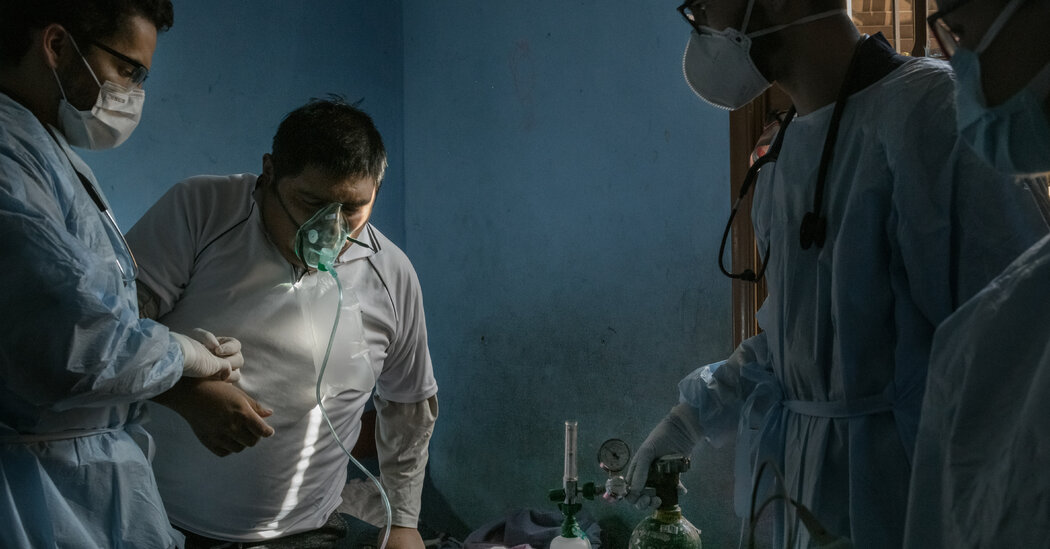
Fluvoxamine Helps Lower Risk of Hospitalization From Covid, Study Finds

A large clinical trial has found that a common and inexpensive antidepressant lowered the odds that high-risk Covid-19 patients would be hospitalized. The results, published on Wednesday, could open the door to new guidelines for the drug’s use both in the United States and globally.The drug, fluvoxamine, has been safely prescribed for nearly 30 years as a treatment for obsessive-compulsive disorder. But when the coronavirus started spreading, researchers were drawn to the medication because of its ability to reduce inflammation, potentially allowing it to quell the body’s overwhelming response to a coronavirus infection.Several smaller studies of fluvoxamine earlier in the pandemic showed promising results, but none was as large or persuasive as the one published on Wednesday by a group of researchers in Canada, the United States and Brazil, outside scientists said. Among nearly 1,500 Covid patients in Brazil given either fluvoxamine or a placebo, the drug reduced the need for hospitalization or prolonged medical observation by one-third, the study found. It was published in The Lancet Global Health.Some patients struggled to tolerate the drug and stopped taking it, the study said, raising a question among outside scientists about whether they had yet identified the ideal dose. But among those who had largely followed doctors’ orders, the benefits were even more striking. In those patients, the drug reduced the need for hospitalization by two-thirds and slashed the risk of dying: One Covid patient given fluvoxamine died, compared with 12 given a placebo.“That’s really good,” said Dr. David Boulware, an infectious disease scientist at the University of Minnesota who worked on a smaller, real-world study of the drug in Covid patients in California. Plus, he added, “it’s not a shiny new, expensive drug. The nice thing about this is it has a known safety profile.”Beyond proper dosing, the study left other questions unresolved, scientists said. Penny Ward, a visiting professor in pharmaceutical medicine at King’s College London, noted that part of the drug’s benefit appeared to come from reducing the need for extended medical observation, which the study tracked alongside hospital admissions. And most patients in the study were unvaccinated, Professor Ward said, so it’s unclear how well the drug would work in the vaccinated.The new study, coming nearly a year after smaller trials of the drug, was a reminder of the difficulty that many researchers have had running large tests of Covid treatments. The Biden administration has made more funding available for such trials, scientists said, but enrolling enough patients has only gotten more difficult: Most high-risk Americans are vaccinated, and vaccine-averse people may be less likely to participate in trials.Because fluvoxamine is already approved for treating O.C.D., doctors can already prescribe it “off label” for Covid. But Dr. Boulware said that prescriptions of the drug had increased only slightly during the pandemic, unlike other repurposed drugs with far less scientific support, like hydroxychloroquine and ivermectin.“It hasn’t really gotten any cult following,” he said.Federal treatment guidelines say that larger trials are necessary to evaluate the use of fluvoxamine for Covid, and scientists said they expected those recommendations to change on the basis of the new study.The new findings are also expected to boost the popularity of the drug in less wealthy countries: A 10-day course of the drug costs about $4.

Read more →

Burning and tingling in your feet? You may have small fiber neuropathy

The number of people experiencing numbness, tingling and pain in their feet with no known cause has been increasing over the last two decades, according at a new study published in the October 27, 2021, online issue of Neurology®, the medical journal of the American Academy of Neurology. Called small fiber neuropathy, the condition has different symptoms than large fiber neuropathy, which can cause weakness and balance issues. But in many cases people have both types of neuropathy.
For the study, researchers looked at records for everyone diagnosed with small fiber neuropathy in Olmsted County, Minn., and the adjacent counties during a 20-year period. They then compared those 94 people with 282 people of similar age and sex who did not have neuropathy. Participants were followed for an average of six years.
The study found that the condition occurred in 13.3 per 100,000 people, with the rate increasing during the study.
“This increase could be due in part to greater awareness,” said study author Christopher J. Klein, MD, of the Mayo Clinic in Rochester, Minn., and a Fellow of the American Academy of Neurology. “Another possibility is that increasing levels of overweight and obesity in our area could be a factor in the higher rates of small fiber neuropathy. Higher body mass index, or BMI, is a risk factor for diabetes and high triglycerides, which may also lead to neuropathy.”
The people in the study with neuropathy had an average BMI of 30.4, compared to 28.5 for the people who did not have neuropathy. A BMI of 18.5 to 24.9 is considered healthy; 25.0 to 29.9 is considered overweight; and 30.0 and higher is considered obese.
About 50% of the people with neuropathy had diabetes, compared to 22% of those without neuropathy.

Read more →

Researchers evaluate whether lactate sensors can contribute to sports physiology

While there are a growing number of wearable lactate sensors available for sports and fitness, there hasn’t necessarily been an improvement in the understanding of this nascent technology — and the debate continues over the usefulness of monitoring lactate in sweat. A recent article in ACS Sensors, a journal of the American Chemical Society, says that despite a recent history of contradictory — and incomplete — evidence, sports physiology is zeroing in on whether this technology can improve performance while preventing injury.
The article’s co-authors Gaston Crespo and Maria Cuartero, associate and assistant professors at KTH Royal Institute of Technology, say that the promise of lactate sensor technology — being able to determine in real-time whether an athlete is exerting themselves too much or too little — remains just out of reach for a few basic reasons.
“There isn’t enough evidence about the connection between sport performance and lactate concentration,” Crespo says. “There is also a lack of understanding about the link between lactate in the sweat and lactate in the bloodstream, as well as the connections with other biomarkers.”
Lactate, or lactic acid, is a byproduct of anaerobic respiration, when muscle cells convert glucose to energy without oxygen. Sampling athlete’s blood helps sports scientists and coaches evaluate an athlete’s conditioning and fitness. But the elusive gold standard would be a sensor that monitors lactate in real-time.
In the researchers’ review of existing research, they point out that are yet no universally-accepted approaches for sweat collection and analysis which provide reliable data for identifying a correlation between sweat lactate and blood lactate. The article offers an analysis of the current state of electrochemical lactate sensors integrated in wearables, and it lists key features to be improved or changed toward the final success of the technology.
Among these is the researchers’ own technology, which was published in the same journal during July: an epidermal patch containing a lactate biosensor, as well as pH and temperature sensors. The paper was highlighted in ACS Sensors as one of the journal’s most read articles since its publication.
Temperature and pH typically influence electrochemical readings of lactate, resulting in measurements that are far below what one would expect. So the researchers developed a way to isolate the lactate in sweat using a specially-designed polymer layer in the outer part of the sensor. The polymer protects the reactive enzyme in the sensor from responding to anything but lactate, and it enables the sensor to read higher lactate concentrations than electrochemical sensors typically do.
The system’s future is two-fold: commercial and experimental.
Crespo says it is being developed commercially through a new company, IDRO BV, which the researchers founded with a grant from the European Institute of Innovation and Technology (EIT).
Furthermore, a collaboration with researchers at Dalarna University in Sweden is using the technology to conduct on-body tests, in which blood and sweat measurements are being correlated with the sport performance of athletes. In addition, sweat samples are being collected for a laboratory-based validation of the sensor performance.
The KTH researchers are collaborating with Dalarna University in Sweden to conduct full-body tests, in which they aim to answer key questions brought up in their recent paper, such as whether lactate production is dependent on active muscles rather than passive ones.
Story Source:
Materials provided by KTH, Royal Institute of Technology. Note: Content may be edited for style and length.

Read more →

Infections from respiratory viruses follow a predictable seasonal pattern, researchers find

A clear-cut seasonal pattern of respiratory viruses has been identified by University of Alberta researchers, and could help hospitals plan ahead for waves of sick patients.
Bouts of respiratory illness from six viruses that were analyzed by the U of A team all peak in January and hit a low in June, and the peaks are worse every second year, according to lead researcher Michael Hawkes, a pediatrics professor in the Faculty of Medicine & Dentistry.
“Knowing these patterns ahead of time provides a heads-up that can help the health-care system,” suggested Hawkes, a member of the Women and Children’s Health Research Institute and a Stollery Science Lab Distinguished Researcher.
The study, published in JAMA Network, was launched to explore a constant trend being noticed by pediatricians for a particular virus that strikes babies, said Hawkes.
“It’s a well-known fact (among the medical community) that in December and January, the hospital wards are packed with infants with respiratory syncytial virus (RSV).” The virus is responsible for sending one per cent of infants worldwide to hospital. “It strikes like clockwork in the winter months, so we wanted to examine this behaviour more deeply.”
The seasonal pattern was discovered in more than 10,000 Alberta babies hospitalized for RSV. As well, the study showed that babies born in January had a higher risk of hospitalization for the virus than those born in June, and that infants born in severe peak years were more likely to be infected and hospitalized.

Read more →

ALS and dementia attacked by an RNA-hunting compound that recruits cell's own virus fighter

One of the most commonly inherited forms of ALS and frontotemporal dementia is referred to as C9 ALS/FTD, so named for the repeated section of DNA on chromosome 9 that causes it. A collaboration led by scientists at Scripps Research in Florida has successfully treated the genetic disease in mice, with a potential drug molecule engineered in the lab of chemist Matthew Disney, PhD. The compound works in a new way, by directing the cell’s own immune machinery to degrade and eliminate the disease-causing RNA.
The team’s study is published Wednesday in the journal Science Translational Medicine. Collaborators include Leonard Petrucelli, PhD, of the Mayo Clinic in Jacksonville, and Jeffrey Rothstein, MD, PhD, of Johns Hopkins University in Baltimore.
Also known as Lou Gehrig’s disease, ALS causes progressive loss of motor neurons, the elongated nerve cells that connect muscles to the central nervous system. As motor neurons die, paralysis, muscle loss, swallowing and eventually, breathing difficulties develop, leading ultimately to death. Scientists are learning that ALS has multiple causes, some of them sporadic, and some inherited or familial.
Frontotemporal dementia similarly has both familial and sporadic causes. It involves progressive damage to neurons in the brain’s frontal and temporal lobes. Symptoms may include difficulty walking or odd behavioral and emotional states. Like ALS, there is no cure for frontotemporal dementia.
One disease, many symptoms
While people with FTD appear outwardly to have a completely different illness than people with ALS, those whose condition is caused by the C9 genetic repeat have the same disease. Manifestations differ according to cell types affected. The more times the sequence repeats, the earlier and more severe the disease symptoms.

Read more →

Promising new antimalarial compound discovered

A study out of the Michael G. DeGroote Institute for Infectious Disease Research at McMaster University has resulted in the discovery of a promising new antimalarial compound.
Co-led by Gerry Wright, professor of biochemistry & biomedical sciences, the discovery opens the door to the development of new drugs targeting malaria, one of the deadliest infectious diseases on the planet.
Collaborating with professor Tim Gilberger of the University of Hamburg in Germany, the researcher teams performed a screen of soil bacteria extracts for antimalarials and identified an extremely potent inhibitor of malaria development.
“We’ve shined a new light here,” said Wright, the inaugural lead of Canada’s Global Nexus for Pandemics and Biological Threats at McMaster. “We’re looking at a part of chemistry that nobody has ever looked at before.”
This breakthrough, published today in Cell Chemical Biology, comes at a pivotal time in global malaria management, Wright said.
Drug resistance in malaria is becoming “a huge problem,” he said, and climate change is pushing malaria-carrying mosquitoes to new places, broadening the disease’s spread. The World Health Organization estimates that malaria was responsible for more than 400,000 deaths and 229 million infections in 2019 alone.

Read more →

New study explicitly links protection of water access with lower COVID-19 infection and death rates

A new analysis finds US states that prevented utilities from turning off water service to households that were behind on their payments during the COVID-19 pandemic experienced significantly lower rates of infection and death from the pandemic while the moratoria were in effect. The study in the American Journal of Preventive Medicine, published by Elsevier, underscores the importance of water equity and the need for government actions to create more uniform protections from water shutoff across all states.
During the COVID-19 epidemic, 34 states enacted moratoria on water shutoffs from most water utilities so that people could access clean water. Among the 34 states, 20 states imposed a comprehensive moratorium covering both public and private water systems, while the rest issued moratoria covering only public water systems. Only 11 states still had an active moratorium by the end of 2020, and this number decreased to three by September 2021.
“This study shows the importance of state governments’ leadership in public health,” said lead investigator Xue Zhang, PhD, Departments of City and Regional Planning and Global Development, Cornell University, Ithaca, NY, USA. “Using modeling typical of other public health studies, we found states with moratoria on water shutoffs had lower infection and death growth rates. We hope what we learned from the pandemic can contribute to universal access to water in the future.”
The researchers used event study analysis, a common epidemiological model, to estimate the impacts of state water policy on public health. The study looked at daily infection and death growth rates from April 17 to December 31, 2020 in every state. Data from Food and Water Watch were used to determine if states had a water shutoff moratorium in place on each day of the study period. The study controlled for mask mandates, at-risk groups, and percentage of health insurance coverage.
Across all 50 states, on average, a moratorium was in place about 42% of the time, and comprehensive coverage about 22% of the time. For the days in states with a moratorium on water shutoffs, daily infection growth rate was 0.235% lower, and the death growth rate was 0.135% lower. For states with comprehensive moratoria there was an additional 0.169% decrease in the infection growth rate and a 0.228% decrease in the death growth rate. The study also found that states with a higher percentage of minorities and essential workers had higher COVID-19 daily infection and death rates.
A related analysis of the data suggests that a nationwide moratorium on water shutoff might have prevented as many as half a million people from COVID-19 infections and nearly 9,000 deaths.
“Access to water is absolutely critical during the pandemic,” said co-investigator Mildred Warner, PhD, Departments of City and Regional Planning and Global Development, Cornell University, Ithaca, NY, USA. “This study shows the importance of a national standard for access to water, especially for low-income households. The COVID-19 pandemic has revealed so many structural inequities in our society, and access to drinking water is one that demands our attention.”
The investigators observed that while Congress acted to prevent housing evictions during the pandemic, national leadership is absent in protecting equitable access to water. They noted that in the US, water bills have increased faster than inflation. Research suggests that 35.6% of US households may not be able to afford their water bills over the next five years. They propose payment plans and arrearage management programs for low-income households. Better data collection and reporting are necessary to help inform policy and solutions.
“The study confirms that water shutoff moratoria are an important public health tool to help prevent the spread of disease,” said co-investigator Mary Grant, Food and Water Watch and Food and Water Action, Baltimore, MD, USA. “Since March 2020, we have called on all levels of government to suspend water shutoffs, so that people would have the water necessary to stay safe at home. Now, during the Delta wave, nearly all of the protections that were in place have expired. This research should help inform policy solutions to improve water access to protect public health.”
Story Source:
Materials provided by Elsevier. Note: Content may be edited for style and length.

Read more →

A mathematical model to help optimize vaccine development

When it comes to the design of a novel vaccine against viral infection, vaccine developers have to make several major decisions. One of them is the choice of what type of immune response they wish to induce.
In a recent Forum article in Trends in Immunology a group of researchers at UPF and the Marchuk Institute of Numerical Mathematics in Moscow, Russia, led by Andreas Meyerhans and Gennady Bocharov, provides a theoretical paper that might help with this issue. The researchers have used a mathematical model to better understand the immune response to vaccines. This could help improve vaccine design and simplify the associated technical challenges.
Viruses are intracellular parasites that need host cells to multiply. Thus, for a virus to infect a human, it has to get access to some of the body’s cells that will enable viruses to multiply. Progeny viruses will be assembled within the infected cells and, upon release, will infect other target cells in the surroundings. Without any immune response to counteract the virus, it will continue to spread and may cause organ damage.
The researchers have used a mathematical model to better understand the immune response to vaccines. This could help improve vaccine design and simplify the associated technical challenges.
Vaccines are the most cost-effective way to provide a host with virus-specific immunity that will then help it to keep an infectious virus below pathogenic levels. To do so, vaccines may induce antibodies that help to neutralize assembled free viruses and virus-specific cytotoxic T cells that will kill infected cells and thus reduce the number of virus-producing cells.
While both arms of the immune response are considered of major importance for vaccine efficacy, the question is how do they cooperate? Are their actions simply additive or more than additive? The researchers have now addressed these fundamental questions by examining the contribution of antibodies and cytotoxic T cells using a model based on virus infection dynamics. They show that these two primary control factors of virus infection are cooperating multiplicatively rather than additively. While this relationship might appear rather abstract, it has very practical consequences for vaccine development.
For example, f to be efficient a virus vaccine needs to increase the basic immune response by a factor of 10,000, this may be achieved in two ways. Either antibodies or cytotoxic T cells are increased by a factor of 10,000 or each of these responses is increased by only a factor of 100. The latter might be easier to obtain in practical terms and thus provide vaccine developers with different options for their design.
Although these considerations are based only on theoretical grounds and require experimental validation, the first data in this direction are emerging. “We hope that our conceptional work will positively help with vaccine design,” says Bocharov. And Meyerhans, the last author of the study, adds that “our considerations may help to simplify the technical challenges for novel vaccines and thus be of some practical use for healthcare.”
Story Source:
Materials provided by Universitat Pompeu Fabra – Barcelona. Note: Content may be edited for style and length.

Read more →

Not all acne is equal: Scientists reveal strains of C. acnes that promote skin health

Cutibacterium acnes, a bacteria that is known to cause acne, is also widely spread on people with healthy skin. Recent advances in gene sequencing have shown that differences in the genetic background between strains of bacteria may lead to differing roles in the skin. A new study, done without animal (mammal) testing, shows that the nonpathogenic strain of C. acnes improves the skin’s resistance against the infection-causing bacteria Staphylococcus aureus.
The report appears in Microbiology Spectrum of the American Society for Microbiology.
“It is likely that C. acnes maintains skin health by inhibiting common pathogens like S. aureus from invading skin tissue,” said lead author Ayano Tsuru, a graduate student at the Graduate School of Human Life Science, Osaka City University. “Instead of using mammals, we explored this with Caenorhabditis elegans, a 1mm nematode that has basic animal parts like a nervous system, muscles, and digestive tract, as well as a body surface barrier equivalent to human skin.”
In this joint study between the Osaka City University and Okayama University, researchers used C. elegans to investigate the biological effects of several strains of C. acnes isolated from human skin.
Results showed that ribotype (RT) 4 and 8 strains, a classification of bacteria strains based on polymorphisms in rRNA, which are often detected in the skin of individuals suffering from acne, shortened the lifespan of the nematode, while RT6 strains that are often found in the skin of people without acne, did not.
“This means that,” explains supporting author Yumi Hamazaki also a graduate student at the OCU Graduate School of Human Life Science, “ribotype strains of C. acnes that cause acne in humans correlated with virulence, or a shortening the C. elegans lifespan.”
The team further clarified this finding by investigating the effect of healthy skin-associated strains of C. acnes on the nematode’s susceptibility to S. aureus. Results showed the survival period of nematodes infected with the pathogen to be longer than the control group.
Also, RNA sequencing analysis of changes in the gene expression revealed that strains of C. acnes behind healthy skin activated a group of genes related to innate immunity and biological defense responses in C. elegans. “Further analysis of nematode gene mutants” states Professor Shuta Tomida of the Center for Comprehensive Genomic Medicine at Okayama University Hospital, “suggests this resistance to S. aureus was mediated by TIR-1 and p38 MAPK pathways that are responsible for innate immunity and not by suppressing the growth of the S. aureus pathogen.
The implications of this study are wide and exciting.
By focusing on ribotypes related to the absence of acne, this study revealed there are beneficial aspects of acne bacteria, which have had a generally negative image.
As advisor to the study, Eriko Kage-Nakadai, professor at the OCU Graduate School of Human Life Science puts it, “this reminds us that when evaluating the biological effects of certain bacteria, there is a need for a discussion at the strain level. Also,” the professor continues, “the fact that we succeeded in detecting the effects of skin indigenous bacteria using C. elegans illustrates the usefulness of this nematode as an alternative model in the field of epidemiology.”
Lastly, in the landscape of probiotic research currently dominated by bifidobacteria and lactobacillus, the team is excited at the expectation that this study may lead to the application of healthy skin-related strains of C. acnes as a “non-drinking probiotic.”
Story Source:
Materials provided by Osaka City University. Note: Content may be edited for style and length.

Read more →