F.D.A. Expected to Clear First Coronavirus Vaccine for Young Children
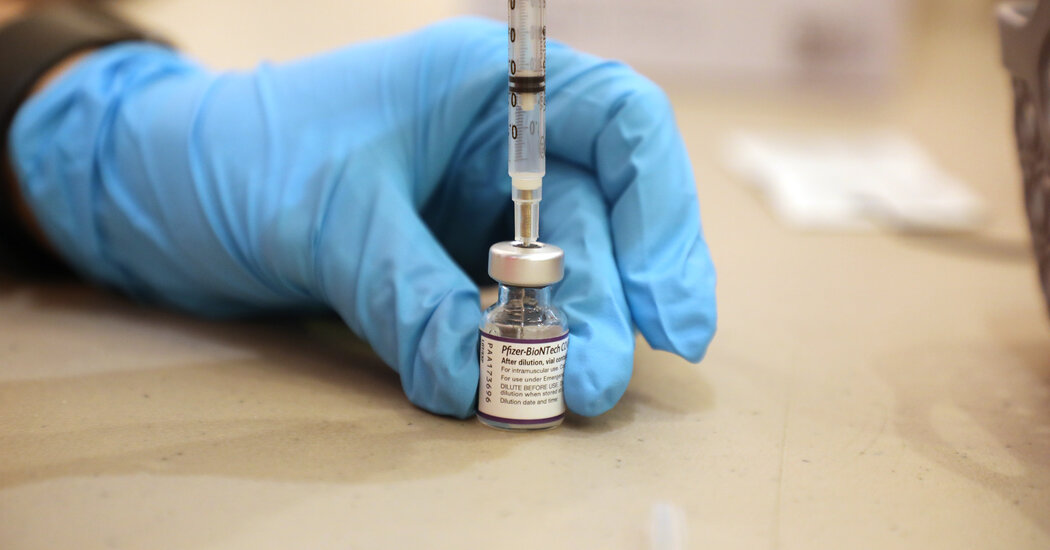
Experts said the shot could bring relief to parents anxious about their children getting sick, though some worry that those most at risk may slip through the cracks.WASHINGTON — The Food and Drug Administration is expected to authorize Pfizer-BioNTech’s coronavirus vaccine for emergency use in children 5 to 11 on Friday, people familiar with the agency’s planning said, a move eagerly anticipated by millions of families looking to protect some of the only remaining Americans left out of the vaccination campaign.About 28 million children in the group would be eligible to receive one-third of the adult dose, with two injections three weeks apart. If the Centers for Disease Control and Prevention signs off, as is expected, they could start getting shots as early as Wednesday.The Biden administration has promised that children’s shots will be easily accessible at pediatrician offices, community health centers, children’s hospitals and pharmacies, with 15 million doses ready to ship immediately. States started ordering doses last week, under a formula based on how many children they have in the age group. While the school year is already well underway, the pediatric dose is arriving in time for the holidays, giving more comfort to families looking to gather older and younger people together for the first time since the early months of 2020.“It’s an incredibly important tool in the return to normalcy,” said Dr. Larry Corey, a virologist at the Fred Hutchinson Cancer Research Center and a leader of the Covid-19 Prevention Network. “To be able to know that your child is protected and not going to get severely ill by going to school is an incredible psychological relief.”In a clinical trial, the vaccine was shown to generate significant protection in children against the virus. But whether it will help substantially to curb the pandemic is unclear. As of this week, 8,300 children ages 5 to 11 have been hospitalized with Covid-19 and at least 94 have died, out of more than 3.2 million hospitalizations and 740,000 deaths overall, according to the C.D.C.The biggest determinant of how much more sickness and death lies ahead is whether the more than 60 million adolescents and adults who are already eligible for shots get vaccinated, said Dr. Jennifer Nuzzo, an epidemiologist at Johns Hopkins Coronavirus Resource Center.Some vaccine experts warn that the same inequities that plagued the vaccine rollout for adults earlier this year could hinder the one for children.“We cannot see what we saw in the earliest stages of rolling out the vaccines for adults, in which advantaged persons and persons of means figure out a way to be first in line,” said Dr. James E.K. Hildreth, the president of Meharry Medical College, a historically Black institution.He said that school nurses, churches and local health officials would be key in reaching some children and families who might not have insurance or access to pediatricians. The vaccinations are free to everyone.While the pandemic has generally hit people of color hardest, the racial disparities are especially stark among children.Black and Hispanic children are less likely to be tested for the virus but more likely to be infected, get hospitalized and die from Covid-19 than white children, according to the Kaiser Family Foundation. Hospitalization rates in the 5 to 11 age group are three times as high for Black, Hispanic and Native American children as for white children, according to the C.D.C.In the 5-11 age group, more than half are children of color and nearly four in 10 come from households with incomes below 200 percent of the federal poverty level, according to Kaiser.At Children’s National Hospital in Washington, officials have devised a plan to make sure families and children at greater risk have immediate access to shots, said Dr. Lee Ann Savio Beers, the hospital’s medical director for community health and advocacy and the president of the American Academy of Pediatrics.Marisol Gerardo, 9, getting a dose of the Pfizer-BioNTech coronavirus vaccine during a clinical trial for children at Duke Health in Durham, N.C., in April.Shawn Rocco/Duke Health, via ReutersThe hospital plans to notify its most at-risk patients, based on medical diagnosis and the neighborhood where they reside, about the shots by directly contacting parents, she said.A survey from the Kaiser Family Foundation released on Thursday found 27 percent of parents of 5- to 11-year-olds were eager to vaccinate their children right away, while a third said they would wait and see how the vaccine rollout went. The uptake among adolescents has been slower than public health experts hoped: Pfizer’s vaccine became available to children 12 to 15 in May, but only roughly 40 percent of that age group is now fully vaccinated, compared to 69 percent of adults.State and local health officials are girding not just for more vaccine hesitancy, but for possible fights over vaccine mandates in schools.“I think the contention we have seen over the mask issue is likely to pale in comparison to what we’re going to see over the idea of a vaccine mandate” for school children, Dr. Jessica Snowden, chief of the infectious disease division at Arkansas Children’s Hospital, said. At a meeting this week of the F.D.A.’s expert advisory panel on vaccines, several members came out strongly against school vaccine mandates..css-1kpebx{margin:0 auto;font-family:nyt-franklin,helvetica,arial,sans-serif;font-weight:700;font-size:1.125rem;line-height:1.3125rem;color:#121212;}#NYT_BELOW_MAIN_CONTENT_REGION .css-1kpebx{font-family:nyt-cheltenham,georgia,’times new roman’,times,serif;font-weight:700;font-size:1.375rem;line-height:1.625rem;}@media (min-width:740px){#NYT_BELOW_MAIN_CONTENT_REGION .css-1kpebx{font-size:1.6875rem;line-height:1.875rem;}}@media (min-width:740px){.css-1kpebx{font-size:1.25rem;line-height:1.4375rem;}}.css-1gtxqqv{margin-bottom:0;}.css-k59gj9{display:-webkit-box;display:-webkit-flex;display:-ms-flexbox;display:flex;-webkit-flex-direction:column;-ms-flex-direction:column;flex-direction:column;width:100%;}.css-1e2usoh{font-family:inherit;display:-webkit-box;display:-webkit-flex;display:-ms-flexbox;display:flex;-webkit-box-pack:justify;-webkit-justify-content:space-between;-ms-flex-pack:justify;justify-content:space-between;border-top:1px solid #ccc;padding:10px 0px 10px 0px;background-color:#fff;}.css-1jz6h6z{font-family:inherit;font-weight:bold;font-size:1rem;line-height:1.5rem;text-align:left;}.css-1t412wb{box-sizing:border-box;margin:8px 15px 0px 15px;cursor:pointer;}.css-hhzar2{-webkit-transition:-webkit-transform ease 0.5s;-webkit-transition:transform ease 0.5s;transition:transform ease 0.5s;}.css-t54hv4{-webkit-transform:rotate(180deg);-ms-transform:rotate(180deg);transform:rotate(180deg);}.css-1r2j9qz{-webkit-transform:rotate(0deg);-ms-transform:rotate(0deg);transform:rotate(0deg);}.css-e1ipqs{font-size:1rem;line-height:1.5rem;padding:0px 30px 0px 0px;}.css-e1ipqs a{color:#326891;-webkit-text-decoration:underline;text-decoration:underline;}.css-e1ipqs a:hover{-webkit-text-decoration:none;text-decoration:none;}.css-1o76pdf{visibility:show;height:100%;padding-bottom:20px;}.css-1sw9s96{visibility:hidden;height:0px;}.css-1in8jot{background-color:white;border:1px solid #e2e2e2;width:calc(100% – 40px);max-width:600px;margin:1.5rem auto 1.9rem;padding:15px;box-sizing:border-box;font-family:’nyt-franklin’,arial,helvetica,sans-serif;text-align:left;}@media (min-width:740px){.css-1in8jot{padding:20px;width:100%;}}.css-1in8jot:focus{outline:1px solid #e2e2e2;}#NYT_BELOW_MAIN_CONTENT_REGION .css-1in8jot{border:none;padding:10px 0 0;border-top:2px solid #121212;}What to Know About Covid-19 Booster ShotsThe F.D.A. has authorized booster shots for millions of recipients of the Pfizer-BioNTech, Moderna and Johnson & Johnson vaccines. Pfizer and Moderna recipients who are eligible for a booster include people 65 and older, and younger adults at high risk of severe Covid-19 because of medical conditions or where they work. Eligible Pfizer and Moderna recipients can get a booster at least six months after their second dose. All Johnson & Johnson recipients will be eligible for a second shot at least two months after the first.Yes. The F.D.A. has updated its authorizations to allow medical providers to boost people with a different vaccine than the one they initially received, a strategy known as “mix and match.” Whether you received Moderna, Johnson & Johnson or Pfizer-BioNTech, you may receive a booster of any other vaccine. Regulators have not recommended any one vaccine over another as a booster. They have also remained silent on whether it is preferable to stick with the same vaccine when possible.The C.D.C. has said the conditions that qualify a person for a booster shot include: hypertension and heart disease; diabetes or obesity; cancer or blood disorders; weakened immune system; chronic lung, kidney or liver disease; dementia and certain disabilities. Pregnant women and current and former smokers are also eligible.The F.D.A. authorized boosters for workers whose jobs put them at high risk of exposure to potentially infectious people. The C.D.C. says that group includes: emergency medical workers; education workers; food and agriculture workers; manufacturing workers; corrections workers; U.S. Postal Service workers; public transit workers; grocery store workers.Yes. The C.D.C. says the Covid vaccine may be administered without regard to the timing of other vaccines, and many pharmacy sites are allowing people to schedule a flu shot at the same time as a booster dose.A C.D.C. study suggests that 42 percent of children aged 5 to 11 have coronavirus antibodies from prior infection, prompting some F.D.A. advisers to ask if one dose would be sufficient for children. Use of that study has been questioned by some scientists. F.D.A. panelists also asked whether only those with high-risk medical conditions, such as obesity, should get the vaccine, since it is clear they are most vulnerable to getting very ill with Covid-19.But C.D.C. officials said it would be hard to narrow eligibility, and the F.D.A.’s advisory panel endorsed offering the pediatric dose to the entire age group by a 17-0 vote, with one abstention.Dr. Snowden said the Delta variant wiped out any notion that children are impervious to the virus. At the height of the most recent surge, she said, the Arkansas Children’s Hospital was treating as many as 30 children a day for Covid, including some with fully vaccinated parents. While that number has shrunk, “it is still not back to where we were before Delta,” she said.Much of the burden of the rollout of children’s shots is expected to fall on pediatricians and family physicians, many of whom are strained by staffing shortages and pent-up demand for care at this point in the pandemic but have deep relationships with parents and children. Dr. Sterling Ransone, the president of the American Academy of Family Physicians and a physician in rural Deltaville, Va., said that he would keep his office open later on weekdays and on Saturdays to accommodate demand for pediatric shots.“We know who to prioritize — asthmatics, those with heart disease, people who are obese,” he said.Dr. Victor Peralta, a pediatrician in the racially diverse neighborhood of Jackson Heights, Queens, said uptake might be a bit slower at first among his patients, most of whom are poor enough to have Medicaid coverage. But he predicted the pediatric dose would catch on and ultimately help slow transmission of the virus. “I have no doubt that this will make a difference beyond just the worried well,” he said.Dr. Kathryn M. Edwards, a professor of pediatrics at Vanderbilt University School of Medicine, said pediatricians will help public health officials monitor side effects, such as myocarditis, or inflammation of the heart muscle. Regulators have been carefully watching the higher incidence of that condition in young males who are vaccinated.“Doctors and pediatricians know myocarditis,” Dr. Edwards said. “We give a lot of vaccines, and know how to report adverse events.”Another challenge will be ensuring that parents have time and transportation to get their children to vaccine providers. Dr. Beers said that the pediatric academy was already consulting with business groups about giving employees, especially those on hourly schedules, paid time off so they do not lose income taking their children to get a shot.In Vermont, which has one of the highest adult vaccination rates in the country, health officials may “barnstorm” rural and more isolated regions of the state that had lower uptake of shots in earlier stages of the vaccination campaign, hoping to get 80 percent of children between 5 and 11 vaccinated, said Kelly Dougherty, the state’s deputy health commissioner.Pediatric vaccines will be incorporated at community sites already doing first and second doses and booster shots, she said. Vaccinations at school-based clinics are set to begin in the state in the second week of November.Kitty Bennett

Read more →

Innovative chip resolves quantum headache

Quantum physicists at the University of Copenhagen are reporting an international achievement for Denmark in the field of quantum technology. By simultaneously operating multiple spin qubits on the same quantum chip, they surmounted a key obstacle on the road to the supercomputer of the future. The result bodes well for the use of semiconductor materials as a platform for solid-state quantum computers.
One of the engineering headaches in the global marathon towards a large functional quantum computer is the control of many basic memory devices — qubits — simultaneously. This is because the control of one qubit is typically negatively affected by simultaneous control pulses applied to another qubit. Now, a pair of young quantum physicists at the University of Copenhagen’s Niels Bohr Institute -PhD student, now Postdoc, Federico Fedele, 29 and Asst. Prof. Anasua Chatterjee, 32,- working in the group of Assoc. Prof. Ferdinand Kuemmeth, have managed to overcome this obstacle.
Global qubit research is based on various technologies. While Google and IBM have come far with quantum processors based on superconductor technology, the UCPH research group is betting on semiconductor qubits — known as spin qubits.
“Broadly speaking, they consist of electron spins trapped in semiconducting nanostructures called quantum dots, such that individual spin states can be controlled and entangled with each other,” explains Federico Fedele.
Spin qubits have the advantage of maintaining their quantum states for a long time. This potentially allows them to perform faster and more flawless computations than other platform types. And, they are so miniscule that far more of them can be squeezed onto a chip than with other qubit approaches. The more qubits, the greater a computer’s processing power. The UCPH team has extended the state of the art by fabricating and operating four qubits in a 2×2 array on a single chip.
Circuitry is ‘the name of the game’
Thus far, the greatest focus of quantum technology has been on producing better and better qubits. Now it’s about getting them to communicate with each other, explains Anasua Chatterjee:

Read more →

High availability of fast-food restaurants across all US neighborhood types linked to higher rates of type 2 diabetes

An increasing number of studies suggest a link between a neighborhood’s built environment and the likelihood that its residents will develop chronic diseases such as heart disease, type 2 diabetes (T2D) and certain types of cancers. A new nationwide study led by researchers from NYU Grossman School of Medicine published online today in JAMA Network Open suggests that living in neighborhoods with higher availability of fast-food outlets across all regions of the United States is associated with higher subsequent risk of developing type 2 diabetes.
Findings also indicated that the availability of more supermarkets could be protective against developing T2D, particularly in suburban and rural neighborhoods.
The study — notable for its large geographic breadth — uses data from a cohort of more than 4 million veterans living in 98 percent of U.S. census tracts across the country. It counted fast-food restaurants and supermarkets relative to other food outlets, and is the first, according to the researchers, to examine this relationship in four distinct types of neighborhoods (high-density urban, low-density urban, suburban, and rural) at the hyperlocal level nationwide.
“Most studies that examine the built food environment and its relationship to chronic diseases have been much smaller or conducted in localized areas,” said Rania Kanchi, MPH, a researcher in the Department of Population Health at NYU Langone and lead author of the study. “Our study design is national in scope and allowed us to identify the types of communities that people are living in, characterize their food environment, and observe what happens to them over time. The size of our cohort allows for geographic generalizability in a way that other studies do not.”
How the Study was Conducted
The research team used data from the U.S. Veterans Health Administration (the largest single-payer healthcare system in the country) that captures more than 9 million veterans seen at more than 1,200 health facilities around the country. Using this data, the researchers then constructed a national cohort of more than 4 million veterans without diabetes from the VA electronic health records (EHR) between 2008 and 2016. Each veteran’s health status was followed through 2018 or until the individual either developed diabetes, died, or had no appointments for more than two years.

Read more →

Why do humans possess a twisted birth canal?

In most women, the upper part, or inlet, of the birth canal has a round or transversely (left-to-right) oval shape, which is considered ideal for parturition, but it is unknown why the lower part of the birth canal has a pronounced longitudinally (front-to-back) oval shape. This twisted shape typically requires the Baby to rotate when passing through the narrow birth canal, which further increases the risk of birth complications.
In comparison with humans, apes have a relatively easy birth pattern that does not require rotation of the baby thanks to the longitudinally oval shape of the birth canal both at its inlet and the outlet. “For giving birth, it would be much easier to have a uniformly shaped birth canal also in our species,” says Katya Stansfield, a specialist in biomechanics. Instead, the twisted human shape requires a complex, rotational birth mechanism: The baby needs to rotate to align the longest dimension of its head with the widest dimension of each plane of the birth canal. Misalignment can lead to obstructed labour and result in health risks for both mother and baby.
A research team of evolutionary biologists and engineers from the University of Vienna, the Konrad Lorenz Institute for Evolution and Cognition Research in Klosterneuburg and the University of Porto hypothesised that the support function of the pelvic floor muscles, which are suspended across the lower pelvis and also play an important role in sexual function and continence, may have influenced the evolution of the shape of the birth canal. The team carried out extensive biomechanical modelling of the pelvic floor and found that the highest deformation, stress, and strain occur in pelvic floors with a circular or transverse-oval shape, whereas a longitudinally oval elongation increases pelvic floor stability. “Our results demonstrate that the longitudinally oval lower birth canal is beneficial in terms of stability,” says Katya Stansfield. “However, this outcome prompted us to ask why the pelvic inlet in humans is not also elongated longitudinally,” elaborates Barbara Fischer, an evolutionary biologist.
Traditionally, it has been assumed that the transverse dimension of the human pelvis is constrained by the efficiency of upright locomotion. “We argue that the transverse elongation of the pelvic inlet has evolved because of the limits on the front-to-back diameter in humans imposed by balancing upright posture, rather than by the efficiency of the bipedal locomotion,” says Philipp Mitteroecker, who was also involved in this study. A longitudinally deeper inlet would require greater pelvic tilt and lumbar lordosis, which would compromise spine health and the stability of upright posture. These different requirements of the pelvic inlet and outlet likely have led to the evolution of a twisted birth canal, requiring human babies to rotate during birth.
Story Source:
Materials provided by University of Vienna. Note: Content may be edited for style and length.

Read more →

Uncovering how injury to the pancreas impacts cancer formation

Pioneering research from scientists at the Vanderbilt University School of Medicine Basic Sciences and the Salk Institute for Biological Studies shows that acinar cells in the pancreas form new cell types to mitigate injury but are then susceptible to cancerous mutations.
This research, led by Kathy DelGiorno, assistant professor of cell and developmental biology at the School of Medicine Basic Sciences, Geoffrey Wahl, professor in the Gene Expression Laboratory and holder of the Daniel and Martina Lewis Chair at the Salk Institute, and first author Zhibo Ma, postdoctoral fellow in the Wahl lab, was published in Gastroenterology on October 22.
The findings establish a “better understanding of the mechanisms of healing in the pancreas and when these processes go awry,” DelGiorno said. The team used a multidisciplinary approach that combined single-cell RNA sequencing, ultrastructural microscopy, genetically engineered models, and patient samples to identify the cell types that form in response to pancreatic injury. Vanderbilt contributions included computational analysis by Ken Lau, associate professor of cell and developmental biology, and various microscopy approaches by Dylan Burnette, associate professor of cell and developmental biology, and Rafael Arrojo e Drigo, assistant professor of molecular physiology and biophysics.
From this approach, “we compared our dataset to published datasets of gastric injury, oncogene-induced pancreatic neoplasia, and human pancreatitis to identify conserved processes across species and organ systems,” said DelGiorno. According to Wahl, the findings of this paper “support our long-held thesis that tissue inflammation causes cells to reprogram to a more primitive, developmentally plastic state that under normal circumstances contributes to tissue repair. When subverted by oncogenes like RAS in pancreas cancer, it causes one of the most incalcitrant cancers known to medical science.”
Why It Matters
Pancreatic cancer is a major public health burden and is slated to become the second-leading cause of cancer-related deaths in the U.S. by the year 2030. Currently, the average five-year survival rate for pancreatic cancer is only 10 percent, one of the worst of any cancer type. New and innovative treatments are greatly needed to change these outcomes for pancreatic cancer patients.
“Our work captured how these acinar cells change in response to injury with incredible resolution. We’ve been able to identify multiple diverse cells generated by the acinar cells and uncover where they came from. Our findings provide a valuable resource to the field of pancreatic cancer research for understanding the processes that happen early in pancreas injury and tumorigenesis,” Ma said.
“We hope to co-opt and/or target these processes for the benefit of patients needing treatment for pancreatitis and cancer,” DelGiorno said.
What’s Next?
The Vanderbilt team has received a National Institute of General Medical Sciences Maximizing Investigators’ Research Award to follow up on this work. “We will be using genetically engineered models to study the lineage trajectories and functional role of the cell types identified in this study,” DelGiorno said. “We will identify the physiological role of these cell types in pancreatic injury, regeneration, and tumorigenesis.”
Story Source:
Materials provided by Vanderbilt University. Original written by Aaron Conley. Note: Content may be edited for style and length.

Read more →

New potential drug target for pneumonia

Researchers at Karolinska Institutet in Sweden report that a recently discovered inflammatory mediator, interleukin-26, appears to have an important role in pneumonia and contribute to the killing of bacteria. The study is published in the scientific journal Frontiers in Immunology — Microbial Immunology.
Bacterial lung infection affects both children and adults worldwide and pneumonia remains a common cause of premature death in many parts of the world, with millions of people dying from it every year. To facilitate the development of more effective therapies, researchers at Karolinska Institutet are trying to characterise the immunological mechanisms involved in pneumonia.
The new study demonstrates that an inflammatory mediator called interleukin-26 (IL-26) is critically involved in bacterial pneumonia in humans. During the last decade, IL-26 has emerged as an important player in the so-called innate immune response, our first line of defence against pathogens. It is abundant in the airways of healthy humans, and bacterial exposure stimulates an increased release of IL-26 by lung cells and white blood cells.
Studying human lung tissue and airway samples from patients with bacterial pneumonia, the researchers were able to show that IL-26 exerts complex modulatory effects on the immune system and that the protein directly kills bacteria known to cause pneumonia.
“Antibiotics are not sufficient to treat pneumonia and antibiotic resistance is an increasing problem, highlighting the need for biological treatments of this global killer disease. Our findings position IL-26 as a new potential target for biological treatment and emphasise that its role in pneumonia deserves to be further evaluated,” says lead author Karlhans Che, a researcher at the Institute of Environmental Medicine, Karolinska Institutet.
The research was financed by the Swedish Heart-Lung Foundation, The Swedish Research Council, Region Stockholm (ALF funding), and The Swedish Society for Medical Research.
Story Source:
Materials provided by Karolinska Institutet. Note: Content may be edited for style and length.

Read more →

Drug-like molecule points to novel strategies for cancer therapy

A decade ago, genome sequencing revealed a big surprise: about 50 percent of human cancers are linked to mutations in what are known as epigenetic regulators, which control the activity of genes.
In a new study in Cell Chemical Biology, a team of scientists led by Oliver Bell from USC and Stephen V. Frye from the University of North Carolina at Chapel Hill developed a new drug-like molecule that can counteract the effects of mutated epigenetic regulators, which are known to drive certain types of cancer including lymphoma.
How epigenetic regulators control gene activity
In healthy cells, epigenetic regulators play an essential role: turning on and off the activity of hundreds of genes in the precisely orchestrated sequence that directs normal human development.
One of these epigenetic regulators, EZH2, controls the transient inactivation of specific? genes in order to permit the maturation of immune cells. However, mutated EZH2 may cause persistent repression of these genes, thus preventing the immune cells from developing normally and ultimately leading them to transform into cancerous malignancies.
The good news is that in contrast to many other types of mutations, cancer-causing mutations in epigenetic regulators are potentially reversible by therapeutic drugs. With this in mind, first author Junghyun L. Suh and the research team set out to design a drug-like molecule to reverse the cancer-causing gene repression by EZH2.

Read more →

Non-thermal atmospheric plasma stimulates new bone formation in critical bone defects of animal model

Recent technological innovations which have allowed plasma to be generated at room temperature and at ambient atmosphere in what is called non-thermal atmospheric pressure plasma (NTAPP) have given scientists from Japan the opportunity to apply the therapeutic properties of this “fourth state of matter” to bone regeneration.
In a study published in PLOS ONE, researchers from the Graduate School of Medicine and the Graduate School of Engineering at Osaka City University found a usefulness of NTAPP in healing of bone fractures using a pencil-type NTAPP in animal bone defect models.
“NTAPP is considered a new therapeutic method,” states first author Akiyoshi Shimatani, “as it has been shown to accelerate cell growth when applied at low enough levels.” In an ambient atmosphere it can generate highly reactive oxygen and nitrogen species (RONS) which can be directly exposed to biological targets like cells and tissues, according to the researcher.
Indirect treatments have shown the potential advantages of plasma in supporting the creation of stem cells that cause reactive oxygen species and in inducing osteogenic differentiation and bone formation, however, as the team points out there is no report on directly using NTAPP for bone fracture therapy. “Direct exposure of NTAPP is a key part of this study” states Jun-Seok Oh, professor at the OCU Graduate School of Engineering and advisor to the study, “It required a device specifically designed to generate and deliver RONS to areas of the bone defect ‘effectively’.”
The research group developed a pencil-type plasma device that can effectively generate and deliver RONS to an animal model with a well-established critical bone defect, allowing the team to search for the optimal irradiation conditions. Comparing groups that were irradiated with NTAPP for 5, 10, and 15 minutes to control groups with no plasma administered, micro-CT images at eight weeks showed the 10-minute treatment time as the most successful bone regeneration with 1.51 times larger bone volume than the control group.
“However, micro-CT images cannot determine whether a bone defect has been filled with new bone, tissue, or both,” says Hiromitsu Toyoda, associate professor at the Graduate School of Medicine and supporting author to the study. Therefore, the team also ran a histological analysis and confirmed “bone defects in the groups treated with plasma were filled with new bone and there was no inclusion, such as fiber tissue and gap that was observed in the control group,” continues the professor.
Like other forms of therapy, the biological effect of plasma depends on the treatment dose delivered into the targets. Although future research will be needed to clarify why the study saw the most bone regeneration during the 10-minute treatment period, it is understood that surface wettability promotes greater cell spreading and adhesion to biomaterials and implants. “We wondered if something similar was occurring where we saw a strong generation of new bone.” says Hiroaki Nakamura, professor at the Graduate School of Medicine and advisor to the study, “and we found that compared to the control group, bone surface of the plasma-treated group as statistically and significantly more hydrophilic.”
While there is still much to be explored and understood in terms of treatment dose, for the first time ever, the direct application of room temperature, atmospheric plasma to a living body has seen a positive result. The research team hopes the plasma device they developed can become something used during surgery to bring the bone regeneration effect of NTAPP to various medical fields.
Story Source:
Materials provided by Osaka City University. Note: Content may be edited for style and length.

Read more →

SARS-CoV-2 virus can infect the inner ear, study finds

Many Covid-19 patients have reported symptoms affecting the ears, including hearing loss and tinnitus. Dizziness and balance problems can also occur, suggesting that the SARS-CoV-2 virus may be able to infect the inner ear.
A new study from MIT and Massachusetts Eye and Ear provides evidence that the virus can indeed infect cells of the inner ear, including hair cells, which are critical for both hearing and balance. The researchers also found that the pattern of infection seen in human inner ear tissue is consistent with the symptoms seen in a study of 10 Covid-19 patients who reported a variety of ear-related symptoms.
The researchers used novel cellular models of the human inner ear that they developed, as well as hard-to-obtain adult human inner ear tissue, for their studies. The limited availability of such tissue has hindered previous studies of Covid-19 and other viruses that can cause hearing loss.
“Having the models is the first step, and this work opens a path now for working with not only SARS-CoV-2 but also other viruses that affect hearing,” says Lee Gehrke, the Hermann L.F. von Helmholtz Professor in MIT’s Institute for Medical Engineering and Science, who co-led the study.
Konstantina Stankovic, a former associate professor at Harvard Medical School and former chief of otology and neurotology at Massachusetts Eye and Ear, who is now the Bertarelli Foundation Professor and chair of the Department of Otolaryngology — Head and Neck Surgery at Stanford University School of Medicine, co-led the study. Minjin Jeong, a former postdoc in Stankovic’s laboratory at Harvard Medical School, who is now at Stanford Medical School, is the lead author of the paper, which appears today in Communications Medicine.
Models of ear infection
Before the Covid-19 pandemic began, Gehrke and Stankovic began working together on a project to develop cellular models to study infections of the human inner ear. Viruses such as cytomegalovirus, mumps virus, and hepatitis viruses can all cause deafness, but exactly how they do so is not well-understood.

Read more →

Lower antibiotic resistance in intestinal bacteria with forgotten antibiotic

A forgotten antibiotic, temocillin, led to lower selection of resistant bacteria than the standard treatment for febrile urinary tract infection, in a study published in The Lancet Infectious Diseases. Thus, temocillin may be useful in treating severe urinary tract infections that give rise to fever, and contribute to a reduced spread of resistant bacteria in hospitals.
The bacterial species Escherichia coli (E. coli) constitutes a large fraction of the normal bacterial flora in the intestine. But if E. coli gets into the wrong places in the body, such as the blood or urinary tract, it can cause serious illness. E. coli is the most common cause of urinary tract infections. These can often be treated with antibiotics in tablet form, but some patients become so ill that they must be admitted to hospital and treated with intravenous antibiotics.
“It has long been standard procedure to use the antibiotic cefotaxime for such intravenous treatment. But as time has passed, an increasing fraction of bacteria have become less susceptible to this antibiotic, both in Sweden and the rest of the world, and this has made it necessary to seek an alternative,” says Håkan Hanberger, professor at Linköping University and consultant in infectious diseases at Linköping University Hospital. He has been principal investigator and medically responsible for the study.
The study now published is the result of the Public Health Agency of Sweden being requested by the Swedish government to study how already existing antibiotics can be used in the best way. The researchers have investigated temocillin, a member of the penicillin group of antibiotics that has been known for several decades. It is used in some other European countries, but is not marketed in Sweden. Temocillin acts specifically against E. coli and other intestinal bacteria that can cause urinary tract infections. It is positive that temocillin does not have a broad effect against many different bacteria, since it reduces the risk that the treatment will act against the normal intestinal bacterial flora. This led the researchers to investigate whether temocillin gives less resistance among intestinal bacteria than treatment with the standard antibiotic, cefotaxime.
They studied 152 patients with urinary tract infection that gave rise to fever, also known as pyelonephritis, that required intravenous antibiotics.
“We saw clearly that the intestinal flora was less affected in the group treated with temocillin. The main reason for this is that temocillin gives less selection of resistant intestinal bacteria,” says Charlotta Edlund, professor of microbiology and specialist investigator at the Public Health Agency of Sweden.
The clinical effect of temocillin was as good as the standard treatment with cefotaxime, and the undesired effects were equivalent. The fact that temocillin is less aggressive against the bacterial flora in the intestine suggests that starting to use this forgotten antibiotic for urinary tract infections will have advantages for both patients and society.
“The consequence will be that we see less selection of resistant intestinal bacteria in hospitals, which may contribute to reducing hospital-related infections from these bacteria,” says Håkan Hanberger.
The study has been funded by the Public Health Agency of Sweden within the framework of a commission from the Swedish government.
Story Source:
Materials provided by Linköping University. Original written by Karin Söderlund Leifler. Note: Content may be edited for style and length.

Read more →