Lung capacity tests found to be accurate precursor of co-morbidities

One of the largest studies to investigate whether Preserved Ratio Impaired Spirometry (PRISm), an understudied low lung function state, is an early predictor of co-morbidities has found it is strongly associated with an increased risk of death. The analysis, led by University of Bristol researchers and published in The Lancet Respiratory Medicine, evaluated results of lung spirometry tests in over 350,000 UK adults and followed them up over 12 years.
Previous research has suggested that a particular pattern of low-scoring lung capacity tests known as a PRISm, calculated from forced expiration into a spirometer, is a precursor of chronic obstructive pulmonary disease (COPD). However, these findings are based on relatively small selective cohorts with short follow-up. Researchers from Bristol Medical School aimed to determine the prevalence, risk factors, clinical implications, and mortality of low-scoring PRISm in a large adult general population.
Using data from 351,874 UK Biobank participants, comprising 189247 women and 162627 men, the team found 38639 (11 per cent) of 351874 participants were identified as having PRISm and this was strongly associated with obesity, smoking and patient reported doctor-diagnosed asthma. PRISm was strongly associated with symptoms and comorbidity including increased risk of breathlessness and cardiovascular disease.
Longitudinal analysis showed that 241 (12·3 per cent) of 1973 participants who had PRISm at baseline transitioned to airflow obstruction consistent with COPD. The team found that PRISm was associated with increased all-cause mortality.
Dr James Dodd, Consultant Senior Lecturer in Respiratory Medicine at Bristol Medical School: (THS) and North Bristol NHS Trust, said: “Our results found that PRISm was associated with breathlessness, multimorbidity, and increased risk of death, which does not seem to be explained by smoking, obesity, or existing lung disease.”
, the study’s first author from Bristol Medical School, added: “Our analysis is an example of the power of large population cohorts like UK Biobank in allowing us to more accurately describe the epidemiology and implications of abnormal lung function by accounting for sample size and selection bias.”
Dr Dodd continued: “Although for many patients PRISm is transient, it is important to understand which individuals are at risk of progressive lung function abnormalities. Further research into the genetic, structural and functional pathophysiology of PRISm is warranted.”
The study was funded by the National Institute for Health Research (NIHR) and the Medical Research Council (MRC).
Story Source:
Materials provided by University of Bristol. Note: Content may be edited for style and length.

Read more →

Prostate cancer urine test identifies good prognosis patients

Researchers at the University of East Anglia have shown that a prostate cancer urine test can identify men at ‘intermediate risk’ who can safely avoid immediate treatment and benefit from ‘active surveillance’ instead.
A new pilot study published today reveals how urine biomarkers can show the amount of significant cancer in a prostate, highlighting with more certainty which men need treatment.
Previously, the team’s Prostate Urine Risk (PUR) test could identify men with high and low risk cancers.
But thanks to some fine-tuning, it can now help men with intermediate-risk disease — for whom treatment options had been less clear.
Prostate cancer is the most common cancer in men in the UK. It usually develops slowly and the majority of cancers will not require treatment in a man’s lifetime.
The most commonly-used tests for prostate cancer include blood tests, a physical examination known as a digital rectal examination (DRE), an MRI scan and an invasive biopsy.

Read more →

Deep brain stimulation surgery for treatment-resistant depression: Brain rhythm changes fast

Deep brain stimulation (DBS) has been demonstrated to be an effective treatment for many patients suffering with treatment-resistant depression, but exactly how it works is not known. Scientists worldwide are racing for objective biomarkers of DBS treatment efficacy so that this experimental approach can be optimized, approved and disseminated to those in need. New research published November 3 in Translational Psychiatry, presents new evidence that brief intraoperative exposure to therapeutic stimulation at the time of implantation surgery induces rapid and consistent electrophysiological brain state change — indexed by a decrease in beta power measured at the site of stimulation. These intraoperative brain state changes are seen in individual subjects and are correlated with a significant and sustained decrease in depressive symptoms outside of the operating room without additional stimulation, establishing reduction in beta power as a novel biomarker for DBS treatment optimization.
The data presented are from a collaborative study at Emory University and the Icahn School of Medicine at Mount Sinai. Led by Helen S. Mayberg, MD, Mount Sinai Professor in Neurotherapeutics and Founding Director of the Nash Family Center for Advanced Circuit Therapeutics at Mount Sinai, this research is part of an ongoing National Institutes of Health (NIH) BRAIN Initiative-funded grant.
Deep brain stimulation is approved by the U.S. Food and Drug Administration to treat essential tremor, Parkinson’s disease, epilepsy and obsessive-compulsive disorder. It is a neurosurgical procedure involving placement of a neurostimulator (sometimes referred to as a “brain pacemaker”), which sends high-frequency electrical impulses through implanted electrodes deep in the brain to specific areas responsible for the symptoms of each disorder. While still an experimental treatment, DBS of the subcallosal cingulate (SCC, Area 25), a brain area that has been implicated as playing a major role in depression, has been repeatedly demonstrated as a promising intervention for patients suffering from treatment-resistant depression..
Acute behavioral changes and long-term antidepressant response can be reliably elicited with stimulation of this well-defined, surgically-targeted depression circuit, using individualized neuroimaging guidance. While the clinical effectiveness of DBS over the course of six months of treatment has been repeatedly demonstrated, there are differences in the timeline of recovery across different patients. Understanding the mechanisms of these initial rapid and reproducible behavioral effects and their role in predicting the more critical long-term response trajectories will be key to effective treatment and future study design.
“What we found was that within minutes of stimulation inside the operating room, there was a change in the beta brain rhythm. Patients who showed larger changes then experienced greater relief from their depression in the week after surgery,” said Allison C. Waters, PhD, Assistant Professor of Psychiatry, and Neuroscience, at Icahn Mount Sinai and co-first author of the paper. “The beta rhythm is conventionally associated with the brain’s determination of whether to stop or keep going with a course of action, which is why neurologists target beta with DBS to treat disorders of movement. We haven’t had a clear signal to target with DBS for depression, but now we can speculate as to how the beta signal might function in this context: a release of the brake that generates fatigue and slowness, or interrupting a habitual cycle of negative self-focused thought.”
“We were able to leverage machine learning and explainable artificial intelligence approaches to explore unknown (hidden) changes in brain state that would explain the obvious behavioral changes previously observed,” said Mohammad Sendi, MSc, PhD candidate in the Biomedical Engineering Department of Emory University and Georgia Institute of Technology and co-first author of the paper.
Eight treatment-resistant depression patients underwent electrophysiological recording in the operating room during their DBS lead implantation surgeries. Using patient-specific tractography models prior to surgery, investigators identified the “optimal” target within the SCC for lead placement. Stimulation was then delivered in the operating room over the course of an hour while local field potentials (LFPs) — electrical signals between neurons deep in the brain — were simultaneously recorded. A machine learning classification method was subsequently used to discriminate between intracranial LFPs recorded at baseline (stimulation-naïve) and after the first exposure to stimulation inside the operating room. Spectral inputs (theta, 4-8Hz; alpha, 9-121Hz; beta, 13-30Hz) to the model were then evaluated for importance to classifier success and tested as predictors of the antidepressant response. A decline in depression scores by 45.6 percent was observed after one week and this early antidepressant response correlated with a decrease in the SCC LFP beta power, which most contributed to classifier success.
“We generally think of depression treatment as taking weeks to months to show stable and meaningful changes in core clinical features of the illness,” said Dr. Mayberg. “This study shows reproducible and consistent changes in a brain readout over the first minutes of optimized stimulation in the operating room in individual patients. This provides new mechanistic understanding of the ‘depression switch’ that moves a patient from a state of sustained mental pain and immobility to relief and the renewed capacity to move and engage.”
“This research provides individuals who have struggled with depression a sense of hope through advancements in existing technology,” said John Ngai, PhD, Director of the NIH BRAIN Initiative. “We are making immense strides in better understanding debilitating brain and mental health conditions through these discoveries and look forward to seeing how deep-brain stimulation will continue to improve people’s lives.”
Studies that continue to track these brain state biomarkers during ongoing DBS therapy are ongoing at the Nash Family Center for Advanced Therapeutics at Mount Sinai West in New York. Phase II of this 5-year NIH BRAIN Initiative grant is currently recruiting new subjects.

Read more →

US mothers divided on vaccines for young children

Everyone in the Simon family contracted Covid-19, but their nine-year-old daughter McKenna went to hospital. She developed pneumonia and anaemia after getting the virus. While McKenna’s parents say an earlier vaccine authorisation could have helped her, a rising group called Moms for Liberty have reservations about the vaccine’s safety.

Read more →

CDC Panel Recommends Pfizer Vaccine for Children Ages 5 to 11

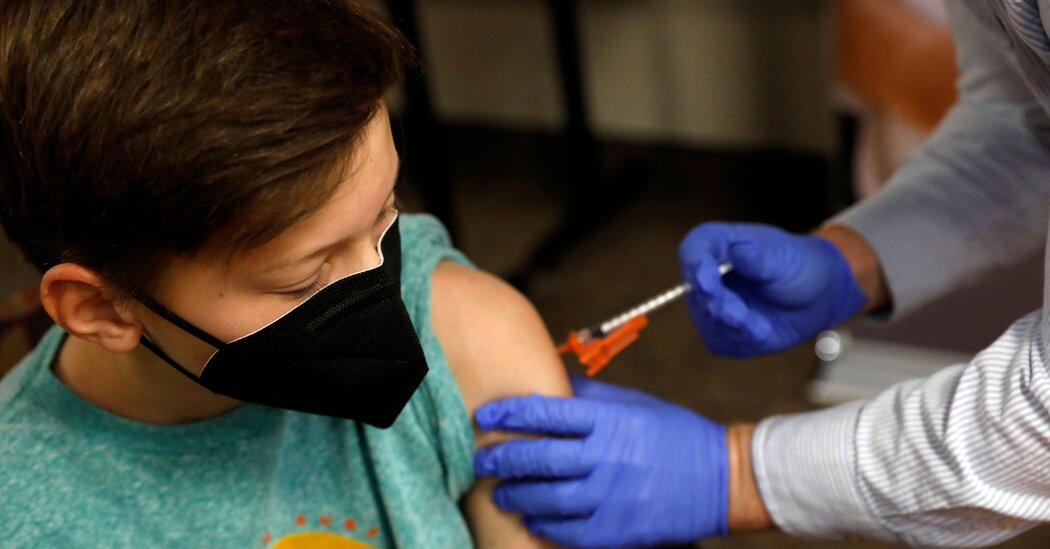
Scientific advisers to the Centers for Disease Control and Prevention on Tuesday unanimously endorsed the Pfizer-BioNTech coronavirus vaccine for children ages 5 through 11, a move that will buttress defenses against a possible surge as winter arrives and ease the worries of tens of millions of pandemic-weary parents.If Dr. Rochelle Walensky, the agency’s director, formally accepts the recommendation, as expected, inoculations for these children could begin as soon as this week. Dr. Walensky made a brief appearance as the meeting began, noting that the day was “one that many of us have been very eager to see.”The C.D.C. panel’s endorsement arrives just as Americans prepare for a potentially risky holiday season. Cases in the United States have been falling steadily for weeks, but experts have warned that indoor gatherings may send the rates soaring again. Many Americans seem determined to celebrate; already airlines are bracing for what may be the busiest travel season since the start of the pandemic.While relatively few of the 29 million children in this age group will be fully immunized a month from now, even partial vaccination will provide some protection against the coronavirus. Every million doses given to children ages 5 to 11 would prevent about 58,000 cases and 226 hospitalizations in that group, according to the C.D.C.Immunizing these children is expected to prevent about 600,000 new cases from November 2021 to March 2022. And rising immunity may reduce the chances that young children will transmit the virus to vulnerable adults in their families and communities, health officials noted.Vaccinations of younger children are likely to help keep schools open. Virus outbreaks forced about 2,300 schools to close between early August and October, affecting more than 1.2 million students, according to data presented at the committee meeting.The pandemic has also stalled routine immunizations, widened education gaps and escalated rates of anxiety and depression among children. “Vaccination of children ages 5 to 11 years will not only help prevent Covid-19 infection and serious consequences of infection in this age group, but will also help children emotionally and socially,” said Dr. Pamela Rockwell, who represents the American Academy of Family Physicians on the C.D.C. panel.Still, about three in 10 parents say they will definitely not get the vaccine for their 5- to 11-year-old child, according to the most recent poll by the Kaiser Family Foundation. Only about three in 10 parents said they would immunize their child “right away,” a percentage that has barely budged since similar polls in July and September.Many other parents are eager to see their children vaccinated as quickly as possible. Anticipating the C.D.C.’s decision, the Biden administration has enlisted more than 20,000 pediatricians, family doctors and pharmacies to administer the shots. About 15 million doses are already being shipped to vaccination sites across the country, federal officials said on Monday.Daniel E. Slotnik contributed reporting.

Read more →

Artificial intelligence to detect colorectal cancer

A Tulane University researcher found that artificial intelligence can accurately detect and diagnose colorectal cancer from tissue scans as well or better than pathologists, according to a new study in the journal Nature Communications.
The study, which was conducted by researchers from Tulane, Central South University in China, the University of Oklahoma Health Sciences Center, Temple University, and Florida State University, was designed to test whether AI could be a tool to help pathologists keep pace with the rising demand for their services.
Pathologists evaluate and label thousands of histopathology images on a regular basis to tell whether someone has cancer. But their average workload has increased significantly and can sometimes cause unintended misdiagnoses due to fatigue.
“Even though a lot of their work is repetitive, most pathologists are extremely busy because there’s a huge demand for what they do but there’s a global shortage of qualified pathologists, especially in many developing countries” said Dr. Hong-Wen Deng, professor and director of the Tulane Center of Biomedical Informatics and Genomics at Tulane University School of Medicine. “This study is revolutionary because we successfully leveraged artificial intelligence to identify and diagnose colorectal cancer in a cost-effective way, which could ultimately reduce the workload of pathologists.”
To conduct the study, Deng and his team collected over 13,000 images of colorectal cancer from 8,803 subjects and 13 independent cancer centers in China, Germany and the United States. Using the images, which were randomly selected by technicians, they built a machine assisted pathological recognition program that allows a computer to recognize images that show colorectal cancer, one of the most common causes of cancer related deaths in Europe and America.
“The challenges of this study stemmed from complex large image sizes, complex shapes, textures, and histological changes in nuclear staining,” Deng said. “But ultimately the study revealed that when we used AI to diagnose colorectal cancer, the performance is shown comparable to and even better in many cases than real pathologists.”
The area under the receiver operating characteristic (ROC) curve or AUC is the performance measurement tool that Deng and his team used to determine the success of the study. After comparing the computer’s results with the work of highly experienced pathologists who interpreted data manually, the study found that the average pathologist scored at .969 for accurately identifying colorectal cancer manually. The average score for the machine-assisted AI computer program was .98, which is comparable if not more accurate.
Using artificial intelligence to identify cancer is an emerging technology and hasn’t yet been widely accepted. Deng’s hope is that the study will lead to more pathologists using prescreening technology in the future to make quicker diagnoses.
“It’s still in the research phase and we haven’t commercialized it yet because we need to make it more user friendly and test and implement in more clinical settings. But as we develop it further, hopefully it can also be used for different types of cancer in the future. Using AI to diagnose cancer can expedite the whole process and will save a lot of time for both patients and clinicians.”
Story Source:
Materials provided by Tulane University. Note: Content may be edited for style and length.

Read more →

Unexpected antibody type found in people with malaria infections

Malaria, a pathogen transmitted into blood by mosquitoes in tropical climates, is typically thought of as a blood and liver infection. However, in a newly published study, researchers at the University of Maryland School of Medicine (UMSOM) have detected antibodies primarily made in response to infections in the mucous membranes — in such areas as the lungs, intestines, or vagina — in study participants with malaria.
The researchers say that their unexpected finding provides new insight into how the human body responds to malaria infection and may ultimately help to identify new ways to treat malaria or develop vaccines.
The study was published on September 13 in NPJ Vaccines.
More than 400,000 people die each year of malaria infections, with more than two-thirds of these deaths in children under 5 years old, according to the World Health Organization (WHO). In early October 2021, the WHO recommended widespread use of a new malaria vaccine in children who live in regions with moderate to higher malaria transmission rates, the first human vaccine to be recommended for a parasite infection. While the vaccine would prevent millions of infections and save thousands of lives, the researchers are actively pursuing the next generation of malaria vaccines that may be even more effective.
“We’ve made progress in treating and preventing deaths due to malaria infections, but progress has plateaued, and we need new ideas,” said pediatric infectious disease physician and study author Andrea Berry, MD, Associate Professor of Pediatrics at UMSOM and scientist at UMSOM’s Center for Vaccine Development and Global Health (CVD). “Not much had been done to study IgA antibodies in malaria infections, because people had not thought that they were important. Yet, because we were not looking for them, we may have missed a whole avenue of research that we can now explore.”
The body’s immune system creates different kinds of antibodies to help clear infections and to prevent reinfection. In an earlier small study, the research team was studying other antibody responses in patients with malaria infection. While they detected the IgM antibody, which appears early in many infections, along with IgG, which is the most abundant antibody, they also found IgA antibodies. Researchers decided to follow up with a new study to examine more samples to confirm what they had observed and to study additional groups of people.

Read more →

Pfizer, Moderna Covid Shots Less Effective for Immunocompromised, Study Shows

Coronavirus vaccines were significantly less effective in protecting people with weakened immune systems than they were for other people, the Centers for Disease Control and Prevention reported on Tuesday, buttressing the agency’s call for immunocompromised adults to receive third or fourth doses of vaccines.Two doses of either the Pfizer-BioNTech or Moderna vaccines were 77 percent effective against Covid-related hospitalization for immunocompromised people. That was a significant degree of protection, the agency said, but far lower than the shots’ benefit to people without immune deficiencies: In those people, the agency said, the vaccines were 90 percent effective against Covid hospitalizations.The Moderna vaccine also offered more protection to people with weakened immune systems than did the Pfizer shot, mirroring results seen across American adults. And certain people with immune deficiencies — especially organ or stem cell transplant recipients, who often take drugs to suppress their immune systems and prevent rejection of the transplant — showed weaker responses to Covid vaccines than other categories of immunocompromised people did.The study did not examine recipients of the Johnson & Johnson vaccine.To help immunocompromised people mount a more aggressive immune response, the C.D.C. suggests that they be given three doses of Pfizer or Moderna vaccines, plus an additional booster shot six months after the third dose. In addition, the agency’s scientists wrote, they should take precautions like wearing masks, and be considered for treatments like monoclonal antibody therapy as early as possible after a Covid diagnosis.The study released on Tuesday used a circuitous experimental design. The researchers examined roughly 20,000 immunocompromised adults and 70,000 people without immune deficiencies hospitalized this year with Covid-like illness. Of the immunocompromised patients in the study, 43 percent were fully vaccinated. Of the other participants, 53 percent were vaccinated.The researchers then determined how many of those hospitalized patients were indeed infected with the coronavirus, and compared the odds of a positive test results between fully vaccinated and unvaccinated patients.The immunocompromised patients included those with cancer, inflammatory disorders, organ or stem cell transplants and other immune deficiencies.The study’s authors cautioned that there could have been cases in which patients were misclassified as immunocompromised, and that there could have been biases in which patients sought out coronavirus tests.

Read more →

Forest fires linked to low birth weight in newborns

Women exposed to smoke from landscape fires during pregnancy are more likely to give birth to babies with low or very low birth weights, according to findings published in eLife.
The study is the first to report a link between low birth weight and exposure to fire smoke in low and middle-income countries (LMICs), where 90% of low birth weight infants are born and landscape fires are prevalent.
Landscape fires, such as wildfires, tropical deforestation fires and agricultural biomass burning, play an important role in maintaining terrestrial ecosystems. Yet, landscape fire smoke is triggering a costly and growing global public health problem, causing recurrent episodes of pollution mostly affecting LMICs.
Previous studies have shown that exposure to fire smoke during pregnancy is linked to low birth weight, which itself is a public health problem in LMICs. Reducing the risk of low birth weight is one of the World Health Organization’s global targets for 2025.
“Babies with low birth weights are at higher risk of a range of diseases in later life compared to normal weight newborns,” explains co-first author Jiajianghui Li, a PhD student at the Institute of Reproductive and Child Health, School of Public Health Science Centre, Peking University, China. “Several studies have shown the effects of landscape fire smoke on acute lung and heart conditions, but the health impacts of these pollutants on susceptible pregnant women are not well known. We wanted to explore the association between birth weight and exposure to fire source pollution across several countries and over a long time period.”
The researchers conducted a case-control study in 54 LMICs where they matched 108,137 groups of siblings to their mothers. They used surveys conducted by the US Agency for International Development between 2000 and 2014 to find out information about sibling birth weights and other health and demographic factors. They then assessed exposure to landscape fire pollutants using data on fire emissions from the Global Fire Emission Database and a model that converted this data into ground-surface concentrations of particulate matter in different regions.
Their analysis showed that an increase in exposure of one microgram per cubic metre of fire-sourced particulate matter was associated with a 2.17-gram reduction in birth weight. “The effect was even more pronounced when we looked at whether exposure to fire smoke was linked to low or very low birth weight; for every microgram per cubic metre increase in particulate matter exposure, the risks of low and very low birth weight increased by around three and 12 per cent, respectively,” says co-first author Tianjia Guan, an assistant professor at the Department of Health Policy, School of Health Policy and Management, Chinese Academy of Medical Sciences and Peking Union Medical College, China.
The researchers found that very low birth weight was most strongly linked to the pollution. To find out why, they developed a model that looked at the average birth weight of infants within single families. Newborns in families that had lower birth weights on average were more susceptible to the risks of fire smoke pollution than those who had moderate baseline birthweights. “This suggests that other factors affecting maternal and foetal health, such as nutrition or maternal employment status, might make mothers and their developing infants even more susceptible to the risks of pollution,” says co-first author Qian Guo, a PhD student at the School of Energy and Environmental Engineering, University of Science and Technology, China.
“Our global, sibling-matched study has identified a link between exposure in pregnancy to landscape fire pollution and reduced birth weight in low and middle-income countries,” concludes senior author Tao Xue, Assistant Professor at the Institute of Reproductive and Child Health, School of Public Health Science Centre, Peking University. “Newborns from families where lower birth weights were more common were the most susceptible. It is essential to develop steps that reduce the frequency of landscape fires, for example through climate change mitigations, to protect maternal and infant health in these vulnerable populations.”
Story Source:
Materials provided by eLife. Note: Content may be edited for style and length.

Read more →

A commonly found parasite could treat certain types of cancer, say scientists

Scientists have discovered that a deadly parasite, known to cause ill health in pregnant women and immunocompromised patients, could potentially be used to treat various types of tumours.
The research, published today in the Journal for ImmunoTherapy Cancer, was carried out by experts from the University of Nottingham, Ningbo University and Shanxi Agricultural University in China.
Improving the effectiveness of treatments against certain types of tumours is vital in order to beat certain cancers, stop tumour progression, and prolong the lives of patients. In this new study, scientists revealed that a parasite found commonly across the globe, is able to sensitise cold tumours — tumours that are not likely to trigger a strong immune response by the body — to immune checkpoint blockade therapy.
Scientists leading the study believe that this finding could have broader therapeutic implications for many types of cancers.
The team managed to ‘tame’ the parasite Toxoplasma gondii — a single-celled opportunistic protozoan capable of infecting a broad range of warm-blooded animals and has been reported in nearly one-third of the world’s human population.
Toxoplasma gondii must live inside the cells of its host and secretes many proteins to counter the host’s immune defences and to facilitate their own invasion and colonisation of the host cells. The researchers first built a Toxoplasma gondii mutant strain with a limited ability to grow, in cultured cells or to cause disease in mice, but at the same time is able to manipulate the host immune system.
The researchers have shown that direct injection with this mutant parasite in solid tumours, induces inflammatory responses in the injected tumours and even in tumours located in a distant location in the mouse body. They have also shown that this treatment approach has made tumours more responsive to treatment with immune checkpoint inhibitor.
This dual treatment significantly extended the survival of mice and reduced tumour growth in mouse models of melanoma, Lewis lung carcinoma, and colon adenocarcinoma.
Dr Hany Elsheikha, Associate Professor in the School of Veterinary Medicine and Science at the University of Nottingham, and one of the lead authors of the study, said: “The use of a mutant version of Toxoplasma gondii in the treatment of certain tumours in mice models has been previously reported. What makes this study different is the confirmation that intratumoral injection with mutant Toxoplasma gondii strain boosts antitumor immunity and the effectiveness of checkpoint inhibition therapy.
“These are significant findings and are relevant to future tumour therapy. The marked reduction in tumour size and the significant improvement in the survival of mice that received this novel combinational therapy is promising but should be interpreted with caution as further research is needed.”
Story Source:
Materials provided by University of Nottingham. Note: Content may be edited for style and length.

Read more →