New symptoms identified that could help doctors diagnose pancreatic cancer

Researchers have identified a series of symptoms associated with pancreatic cancer, including two previously unrecognised symptoms — feeling thirsty and having dark urine — in a study presented today (Monday) at the NCRI Festival.
The study has confirmed a further 21 signs of pancreatic cancer and shown that patients often have some symptoms of the disease up to a year before their cancers are diagnosed, and other alarming symptoms three months before diagnosis.
The researchers hope their findings could improve survival by helping GPs diagnose the disease earlier, especially when patients present with several seemingly non-specific symptoms.
Pancreatic cancer has the lowest survival among all common cancers, with five-year survival around 7% in the UK. Unfortunately, most people with pancreatic cancer are diagnosed at a late stage.
Researchers want to better understand the early signs of pancreatic cancer because if patients and GPs are more aware of symptoms, they could be diagnosed earlier when their chance of survival is better.
The research is presented by Dr Weiqi Liao, a data scientist at the University of Oxford, UK. He and his colleagues looked at data from 24,236 patients who were diagnosed with pancreatic cancer in England between 2000 and 2017 using a large electronic database (QResearch). The researchers looked at patients’ symptoms at different time points before they were diagnosed with cancer and compared them to other patients’ symptoms who were not diagnosed with pancreatic cancer.

Read more →

COVID-19: The older you are, the more antibodies you have, study finds

With the emergence of SARS-CoV-2 variants worldwide, the pandemic’s spread is accelerating. A research team led by Joelle Pelletier and Jean-François Masson, both professors in Université de Montréal’s Department of Chemistry, wanted to find out whether natural infection or vaccination led to more protective antibodies being generated.
In their study published today in Scientific Reports, they observe that those who received the Pfizer BioNTech or AstraZeneca vaccine had antibody levels that were significantly higher than infected individuals. These antibodies were also effective against the Delta variant, which wasn’t present in Quebec when the samples were collected in 2020.
Masson, a biomedical instruments specialist, and Pelletier, a protein chemistry expert, were interested in an understudied group: people who have been infected by SARS-CoV-2 but were not hospitalized as a result of the infection.
32 non-hospitalized COVID-19 positive Canadian adults
Consequently, 32 non-hospitalized COVID-19 positive Canadian adults were recruited by the Centre hospitalier de l’Université Laval 14 to 21 days after being diagnosed through PCR testing. This was in 2020, before the Beta, Delta and Gamma variants emerged.
“Everyone who had been infected produced antibodies, but older people produced more than adults under 50 years of age,” said Masson. “In addition, antibodies were still present in their bloodstream 16 weeks after their diagnosis.”
Antibodies produced after an infection by the original, “native” strain of the virus also reacted to SARS-CoV-2 variants that emerged in subsequent waves, namely Beta (South Africa), Delta (India) and Gamma (Brazil), but to a lesser extent: a reduction of 30 to 50 per cent.

Read more →

Covid-19: US reopens border to UK travellers after almost two years

SharecloseShare pageCopy linkAbout sharingImage source, Getty ImagesUK visitors are now able to travel to the US for the first time in nearly two years.The border reopened at 05:01 GMT and the first flights take off from Heathrow at 08:30 – but all UK visitors over 18 will have to provide proof of vaccination to enter the US. American travellers have been able to travel to the UK since 28 July. Transport Secretary Grant Shapps has called this a “significant moment” for UK-US travel. Transatlantic flights, he added, are “at the heart of UK aviation”.In addition to the UK, the travel ban is being lifted for people from Brazil, China, India, Ireland, South Africa, Iran and the Schengen countries – a group of 26 European nations.What are the rules for travelling to the US now?New York gears up for tourists’ returnUntil now, only US citizens, residents and a small selection of other exempt groups have been allowed entry to the US from the UK.The new rules will apply to all individuals that have received vaccines approved by the US Food and Drug Administration (FDA) and vaccines Listed for Emergency Use (EUL) by the World Health Organization. The White House’s assistant press secretary, Kevin Munoz, confirmed on 15 October that double vaccinated foreign nationals would be able to visit the US from 8 November. The US’ new travel policy that requires vaccination for foreign national travelers to the United States will begin on Nov 8. This announcement and date applies to both international air travel and land travel. This policy is guided by public health, stringent, and consistent. https://t.co/uaDiVrjtqi— Kevin Munoz (@KMunoz46) October 15, 2021
The BBC is not responsible for the content of external sites.View original tweet on TwitterThe UK has been on the Centers for Disease Control and Prevention (CDC)’s highest risk category for Covid, level 4 or “very high” since 19 July.The CDC said that vaccines approved by the US FDA and WHO’s EUL vaccines will be accepted. Therefore, travellers that have received one dose of the Johnson & Johnson vaccine or two doses of the following vaccines will be allowed to enter the US:Pfizer-BioNTechModerna AstraZeneca,CovaxinCovishieldBIBP/SinopharmSinovacTravellers must provide proof of vaccination via their vaccine passport. Certificates including the NHS Covid Pass will be accepted. As well as being double vaccinated, travellers will have to provide proof of either a negative Covid test result – taken no more than three days before travelling – or show that they have recovered from the virus in the previous three months.Children are exempt from the vaccination requirement, but all those aged between two and 17 will have to take a Covid-19 test three to five days after arrival.Fully jabbed American visitors travelling to the UK need to take a test on or before the second day of their arrival. After a difficult 21 months, airlines have increased UK-US flight schedules to meet the higher demand. US to lift travel ban on 8 NovemberTo celebrate the end of the travel ban, British Airways and Virgin Atlantic will have a synchronised departure from Heathrow Airport.’Missed two weddings’One woman who had not seen her parents, brother or sister in nearly two years as they live in California, said the ban had been a “nightmare” for her family.Nadine Beasley missed the weddings of both her siblings, which had been scheduled to take place at the same time so she could attend with her husband and nine-year-old daughter.”Obviously the pandemic scuppered that,” she told BBC Breakfast.Image source, Nadine Beasley Unfortunately for Mrs Beasley, her brother’s wedding took place in May and her sister’s was just over a week before the ban was lifted.She has finally been able to book a flight to December to see them, but said the opening up of travel left her with with mixed feelings, as it felt a bit “too late for us”.Mrs Beasley said: “I bawled my eyes out and I think it was a mixture of elation and also frustration and honestly a bit of grief.”Grieving the loss of knowing I’ve missed out on massive life events with everybody.”What are the rules for travelling back to the UK?Before travelling, fully jabbed passengers entering the UK no longer have to take a Covid test before travelling. This applies to all individuals that have been vaccinated in the UK, the EU, the US and several other countries – Brazil, India, Pakistan and South Africa are some of the countries included in the list.However, passengers have to prove they have been vaccinated before travelling. In addition to this, they have to take a lateral flow test two days after arrival in the UK. Read more on Covid travel rules here.WE ARE FAMILY, AREN’T WE?: What makes someone part of the familyPEAKY BLINDERS’ CILLIAN MURPHY: Listen to his perfect after-dark playlistForeign travel advice – GOV.UKThe BBC is not responsible for the content of external sites.

Read more →

Flame retardants linked to autistic-like behavior, research finds

Polybrominated diphenyl ethers, or PBDEs, are a class of fire-retardant chemicals that are ubiquitous. They are found on upholstery, carpets, curtains, electronics, and even infant products. Flame retardants migrate out of products into dust that humans contact and can ingest. Considered to be global environmental pollutants, they have been detected in water, soil, air, food products, animals, and human tissues. They are found, too, in breast milk of women all over the world.
A research team led by scientists at the University of California, Riverside, has found that when female mice exposed to PBDEs pass on these neuroendocrine-disrupting chemicals to their developing offspring, the female offspring show traits relevant to autism spectrum disorders, or ASD. Their short-term social-recognition ability and long-term social memory is reduced significantly and the offspring show exaggerated “marble burying” behavior — repetitive behavior reminiscent of human compulsive behavior, a core symptom of ASD.
“Our data support a link between maternal toxicant exposures and abnormal social and repetitive behavior in mice offspring that is relevant to ASD,” said Margarita Curras-Collazo, a professor of neuroscience, who led the study published in the journal Archives of Toxicology.
The research team also found that the female offspring’s olfactory — or smell — discrimination of social odors is significantly compromised.
“Humans mostly rely on faces to recognize people and most autistics show deficits in face-identity processing,” Curras-Collazo explained. “Mice, on the other hand, rely on smell for social recognition. The female offspring of mother mice exposed to PBDEs showed olfactory deficits that dampened their ability to recognize other mice. In effect, these offspring do not distinguish new mice from familiar ones. Humans with ASD also show abnormal olfactory ability.”
In their experiments, the researchers exposed the mother mice orally to flame retardants; their offspring acquired PBDEs in their brains through blood during gestation and mother’s milk during lactation. They then measured social and repetitive behavior and olfactory discrimination in female offspring in adulthood.

Read more →

She Died With Long Covid. Should Her Organs Have Been Donated?

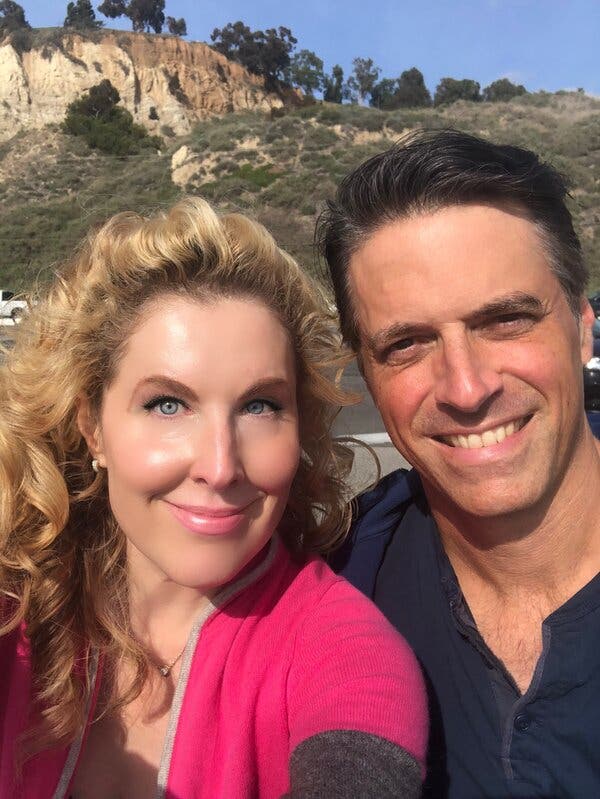
Covid-19 ravaged Heidi Ferrer’s body and soul for over a year, and in May the “Dawson’s Creek” screenwriter killed herself in Los Angeles. She had lost all hope.“I’m so sorry,” she said in a goodbye video to her husband and son. “I would never do this if I was well. Please understand. Please forgive me.”Her husband, Nick Guthe, a writer and director, wanted to donate her body to science. But the hospital said it was not his decision to make because Ms. Ferrer, 50, had signed up to be an organ donor. So specialists recovered several organs from the body before disconnecting her from a ventilator.Mr. Guthe worried that following his wife’s lengthy illness, her organs may not have been safe to donate to other patients. “I thought that they would kill the people they gave these organs to,” he said in an interview.The case highlights an urgent debate among medical professionals about whether the organs of people who survived Covid, and even of those who died with the illness, are really safe and healthy enough to be transplanted.Potential donors are routinely screened now for coronavirus infections before their organs are removed. Generally, the organs are considered safe for transplantation if the test is negative, even if the donor has recovered from Covid. But there is no universally accepted set of recommendations regarding when organs can be safely recovered from virus-positive bodies and transplanted to patients in need.Complicating the question is the fact that people with long Covid, whose debilitating symptoms may persist for months, mostly do not test positive for the infection. Some researchers fear the virus may be present nonetheless, hiding in so-called reservoirs within the body — including some of the very organs given to transplant patients.Ms. Ferrer and Mr. Guthe, who said he promised his wife that he would work to educate people about the burden of long Covid. “Heidi was a very giving person, but she would not have wanted this,” he said.via Nick GutheThe risk is that surgeons may “give the patient Covid, along with the organ,” said Dr. Zijian Chen, medical director of the Center for Post-Covid Care at the Mount Sinai Health System. “It’s a tough ethical question. If the patient assumes the risk, should we do it?”Disease transmission is always a concern when organs are transplanted, but there is tremendous demand for lifesaving organs in the United States and a limited supply. More than 100,000 people are on waiting lists, and 17 people die each day while they wait.In recent years, rules for accepting organs from deceased donors who may have infections like H.I.V. or hepatitis C have been relaxed.Organ recovery practices vary widely from one center and region to the next, influenced by local availability of donor organs. There is pressure on procurement centers to keep their numbers up, and transplant centers must perform a certain number of procedures each year to maintain certification.When Covid initially started spreading in the United States, the approach toward organ recovery was very conservative. But that is changing.“At the beginning of the pandemic, if you were positive, you just weren’t going to be a donor. We didn’t know enough about the disease,” said Dr. Glen Franklin, medical adviser to the Association of Organ Procurement Organizations.Now, however, the country’s major organ transplant organizations have taken varying approaches.Generally, surgeons have avoided transplanting the lungs of patients who died of Covid, because it is a respiratory illness that can cause long-term lung damage.A woman was infected with the coronavirus last year after receiving the lungs of a donor who had tested negative for the virus after a nasal swab, according to a case report published in the American Journal of Transplantation.A few similar cases were reported, and now additional tests are conducted on samples of tissues taken from the lower respiratory tracts of potential lung donors; the transplant proceeds only if all the tests are negative for the infection.But other organs may also be affected by the disease. Scientists in Germany performed autopsies on the bodies of 27 patients who died of Covid and found the virus in the kidney and heart tissues of more than 60 percent of the decedents. The researchers also found the infection in lung, liver and brain tissue.Nonetheless, abdominal organs below the diaphragm, like kidneys or livers, are recovered for transplantation even if donors test positive for the virus, so long as they were asymptomatic, said Dr. Franklin, of the organ procurement association.Dr. David Klassen, chief medical officer at the United Network for Organ Sharing, which administers the nation’s organ procurement network, said decisions must be made on a “case by case” basis.“It is really a risk-benefit calculation,” he said. “Many people waiting for organs are deathly ill. Their life span may be down to a few days. If they don’t get a transplant, they will not survive.”Physicians with yet another group, the American Society of Transplantation, said they would not procure any organs from any patient who had shown signs of illness and had a positive test for the infection.“If somebody has active Covid and they’re testing positive, we would not procure organs from that donor, none at all,” said Dr. Deepali Kumar, president-elect of the society.If a deceased donor may have had long Covid and tested negative for Covid, however, the organs would be taken, Dr. Kumar said: “If we start turning down everyone who has had Covid in the past, we’d be turning down a lot of organs.”A recently updated report, by a committee of the Organ Procurement and Transplantation Network, summarized the evidence about organ recovery from donors with a history of Covid. The authors emphasized the dearth of information about the long-term outcomes for recipients.The document examines the recovery of organs from deceased donors who test positive for the coronavirus, from deceased donors who survived Covid-19 and test negative, and from living donors who survived Covid.In all of these instances, the report said, the long-term outcomes for the recipients — and living donors, in some cases — are “unknown.”“I tried to explain that ‘long haul’ and Covid are not the same things,” Mr. Guthe said. “I thought that they would kill the people they gave these organs to.”Alex Welsh for The New York TimesTransplantation of organs from donors who test positive for the coronavirus “should proceed with caution,” the authors warned.The report also noted that the Delta variant — which now accounts for almost all infections in the United States — is more infectious than previous versions of the virus, and so the duration of infectivity “has not been comprehensively assessed.”The report makes no mention of long Covid. Doctors who specialize in the care of these patients say that even though they report a wide range of persistent symptoms, the vast majority appear to have normally functioning organs.“For people who did have end-organ damage as a result of Covid, we have ways of detecting that,” said Dr. Jennifer D. Possick, an associate professor at the Yale School of Medicine, who runs a long Covid recovery clinic at Yale New Haven Hospital.But organ function tests aren’t perfect, she cautioned. “We’re only as good as our existing tests,” she said. “This is sort of uncharted territory.”Dr. Chen, of the Mount Sinai Health System, agreed that the organs from long Covid patients usually perform normally on tests of function, but said that recipients should be informed of the risks.One concern is that patients who receive transplanted organs are usually required to take medications that suppress the immune system to prevent rejection of the organs.“If they get Covid, they’ll be susceptible to infections and poor healing,” Dr. Chen said. “I think, ethically, you need to let the patient know the risk is very real.”Before she died, Ms. Ferrer chronicled her ordeal in meticulous notes left on her phone: “Covid toes” that made her feet so sore she could not walk. A tremor that made her body shake violently. Pain in every limb. Relentless insomnia and despair.Her heart raced. Her blood sugar levels fluctuated. Worst of all, she couldn’t think straight.The hospital thought she would be a suitable donor anyway.“I tried to explain that ‘long haul’ and Covid are not the same things,” said Mr. Guthe, her husband. “People get Covid and get better. This affected every system in her body.”Two California men with end-stage kidney disease received her kidneys, he said. No matches were found for her other organs. Her liver was severely compromised, as Mr. Guthe had warned the hospital, because she had been treating herself with large doses of ivermectin, an antiparasitic drug falsely said to cure long Covid, and an alternative diet that included nearly two-thirds of a cup of olive oil each day.For Mr. Guthe, his son and other family members and friends, the five-day wait until the hospital disconnected Ms. Ferrer from the ventilator was excruciating. Mr. Guthe said he had promised her that he would educate people about the burden of long Covid.Now he has another mission.“Heidi was a very giving person, but she would not have wanted this,” he said. “We need to create guidelines for what is safe and what isn’t.”

Read more →

Biden Administration Is ‘Prepared to Defend’ Vaccine Rules, Surgeon General Said

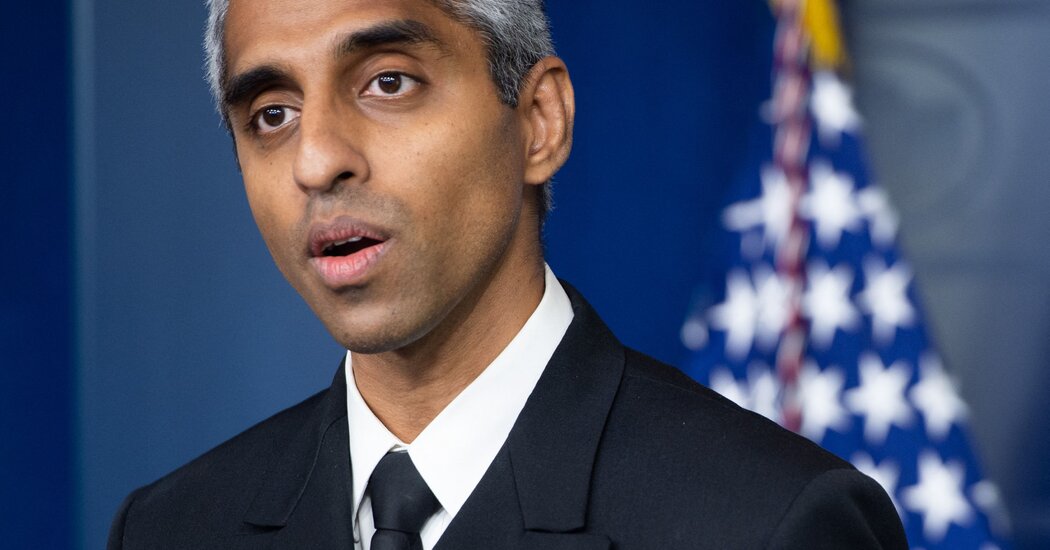
The Biden administration is “prepared to defend” sweeping new coronavirus vaccine rules for large companies amid new legal challenges, Dr. Vivek Murthy, the surgeon general, said on Sunday.The administration last week set Jan. 4 as the deadline for companies with 100 or more employees to mandate Covid vaccinations or implement weekly testing of workers. The mandate would allow for medical or religious exemptions, and companies that fail to comply may be fined.“The president and the administration wouldn’t have put these requirements in place if they didn’t think that they were appropriate and necessary,” Dr. Murthy said on ABC’s “This Week.”Dr. Murthy pointed to the nation’s history as precedent: George Washington required troops to be inoculated against smallpox in 1777.The sweeping move already has raised legal challenges, with opponents arguing that the requirement is unconstitutional. One coalition of businesses, religious groups, advocacy organizations and several states filed a petition on Friday with the U.S. Court of Appeals for the Fifth Circuit in Louisiana, arguing that the administration overstepped its authority.On Saturday, a panel of the court temporarily blocked the new mandate, writing “the petitions give cause to believe there are grave statutory and constitutional issues with the mandate.”The stay does not have immediate impact, as the first major deadline in the rule is Dec. 5, when companies with at least 100 employees must require unvaccinated employees to wear masks indoors. But the move provides momentum for the mandate’s opponents.The legal challenge questions whether the Occupational Safety and Health Administration has the authority to issue the rule, or whether such a mandate must be passed by Congress.It was unclear whether the stay will be a procedural blip for the Biden administration, or the first step in the unwinding of the mandate. A separate lawsuit against the mandate was filed on Friday in the U.S. Court of Appeals for the Eighth Circuit in St. Louis by 11 Republican-led states.So far, legal challenges to vaccine mandates have fallen short.On Sunday, the White House chief of staff Ron Klain said he was “quite confident” the mandate would be upheld in an interview on NBC’s “Meet the Press.”“If OSHA can tell people to wear a hard hat on the job, to be careful around chemicals, it can put in place these simple measures to keep our workers safe,” Mr. Klain said.

Read more →

Stephen Karpiak, Pathbreaking H.I.V. Researcher, Dies at 74

His work helped change people’s attitude toward older people living with the virus that causes AIDS.Stephen Karpiak, whose research into the lives of New Yorkers aging with H.I.V. revealed a scarcity of support networks and high rates of depression, leading to changes in the care of older people living with the virus, died on Oct. 16 at a hospital in Manhattan. He was 74. His brother, Michael, said the cause was kidney damage that resulted from an infection.AIDS had a devastating impact on gay men in the 1980s, especially in New York. The advent of antiretroviral drugs in the 1990s marked the beginning of a hopeful shift, and a decade later, after an era of despair, gay life reclaimed its vibrancy in the city. But Dr. Karpiak at the time was starting to conduct research about older adults living with H.I.V. and he was troubled by what he was learning.The landmark study launched by Dr. Karpiak interviewed 1,000 New Yorkers over 50 about their quality of life and mental health; it eventually also included San Francisco, Oakland and Chicago. The data was stark.Dr. Karpiak learned that his subjects struggled with fragile support networks and inadequate health care, and that 70 percent of those infected by H.I.V. lived alone; this social isolation resulted in substantially higher rates of depression. His study, “Research on Older Adults With H.I.V.,” was published in 2006, and he dedicated the rest of his career to building on it.“There was a core message that you would detect in the focus group data: ‘You abandoned us,’” Dr. Karpiak said in a 2020 interview. “They say, ‘Gee, you saved our lives, but at what cost? You gave us extended life, but at the cost of impoverishment, continued rejection, ageism, and stigma.’”“We gave them a pill,” he added, “then said goodbye to them.”Dr. Karpiak, who witnessed the AIDS crisis as a gay man in New York in the 1980s, became an impassioned advocate for those aging with the disease and railed against ageism.“They encounter programs where the emphasis on prevention of H.I.V. in high-risk youth and young-adult populations often dominates,” he wrote in a 2019 article for Positively Aware magazine. “We live in a society where youth receive the highest premium. Aging is seen as a disease rather than an inevitable process of living.”Dr. Karpiak championed his cause at the AIDS Community Research Initiative of America, where he worked as a lead researcher for years.He built caregiving networks for older people with H.I.V., trained health care providers in treatment strategies and became a skilled fund-raiser who dealt with supporters like Donna Karan and Calvin Klein. His research was also backed by large grants from pharmaceutical giants like Gilead. ​​Dr. Karpiak sought to reach his research subjects directly. As executive director of the Pride Senior Network, which he joined in 1999, he ran and edited The Networker, a free quarterly newspaper aimed at older gay New Yorkers that was distributed in bars and doctors’ offices. Its inaugural issue, in 2000, featured a manifesto about age discrimination by the novelist Patricia Nell Warren.In 2010, he participated in a conference on H.I.V. and aging at the White House, and he also helped start National H.I.V./AIDS and Aging Awareness Day.Dr. Karpiak was an advocate as well as a researcher and served as executive director of the Pride Senior Network in New York. He is pictured in 2000 with the network’s founding director, Ellen Ensig-Brodsky; on the screen is the organization’s newspaper.Diane Bondareff/Associated Press“As Stephen grew older as a gay man himself, because he was a scientist, he couldn’t help but notice disparities around him,” said Tonya Taylor, an assistant professor at SUNY Downstate Health Sciences University in Brooklyn who was mentored by Dr. Karpiak, and studies women aging with H.I.V. “He gave visibility to this topic and brought it out from the darkness.”Stephen Edward Karpiak Jr. was born on Aug, 13, 1947, in Hartford, Conn. His father was a fire captain. His mother, Olga (Yanenko) Karpiak, was a judicial secretary.He graduated from the College of the Holy Cross with a degree in psychology in 1969 and earned his doctorate in experimental psychology at Fordham University in 1972. He joined Columbia University’s medical school as a researcher studying seizures and behavioral disorders.In his 30s, Dr. Karpiak lived in the West Village and was immersed in the city’s gay nightlife. He partied until dawn at clubs like the Saint and the leather bar Ramrod, and he fell in love with a schoolteacher, who became his partner. When the AIDS crisis began, he started receiving messages on his answering machine from friends desperately seeking his medical advice. He also began attending funerals constantly.“Losing all those people was never far from his mind,” said his brother, who is his only immediate survivor. “And it tied deeply into his personal life. He lost his lover, who was his soul mate.”His partner’s death stirred something in him.“When he finally saw those who survived, he saw they weren’t surviving well,” he added. “So Stephen thought, ‘How can I do something about this?’ He couldn’t do anything when it was happening in the 1980s, but then he got his chance.”Dr. Karpiak left Columbia University in the mid-1990s and moved to Phoenix to run a clinic for people living with H.I.V. He also managed an agency there that provided housing for homeless men living with the virus.Dr. Karpiak returned to New York in 1999 to lead the Pride Senior Network. One day at a health fair he gave out a simple questionnaire that asked: If you are older and were to suddenly fall ill, do you have someone who would care for you? After studying the responses, he undertook his research.Dr. Karpiak joined the faculty of New York University’s College of Nursing in his 60s and later worked for G.M.H.C. (formerly Gay Men’s Health Crisis), where he founded its National Resource Center on H.I.V. and Aging.When the coronavirus pandemic gripped New York, Dr. Karpiak grew concerned about how older people living with H.I.V. would be affected by lockdown. Sequestered in his Hell’s Kitchen apartment, he took part in web conferences with medical experts to address the topic. He always encouraged his research subjects to tune in, so they could hear that someone was looking out for them.“The Covid-19 pandemic showed us that we are an ageist society,” Dr. Karpiak said in 2020. “We hear misinformation constantly: ‘This virus only affects old people,’ so most people, ‘don’t need to worry about it so much.’”“I have heard many older adults say, ‘The worst thing in the world is to feel abandoned,’” he continued. “Even more unsettling is hearing from them, ‘There is something worse than AIDS, like loneliness.’”

Read more →

Michael Rutter, Pioneering Child Psychiatrist, Is Dead at 88

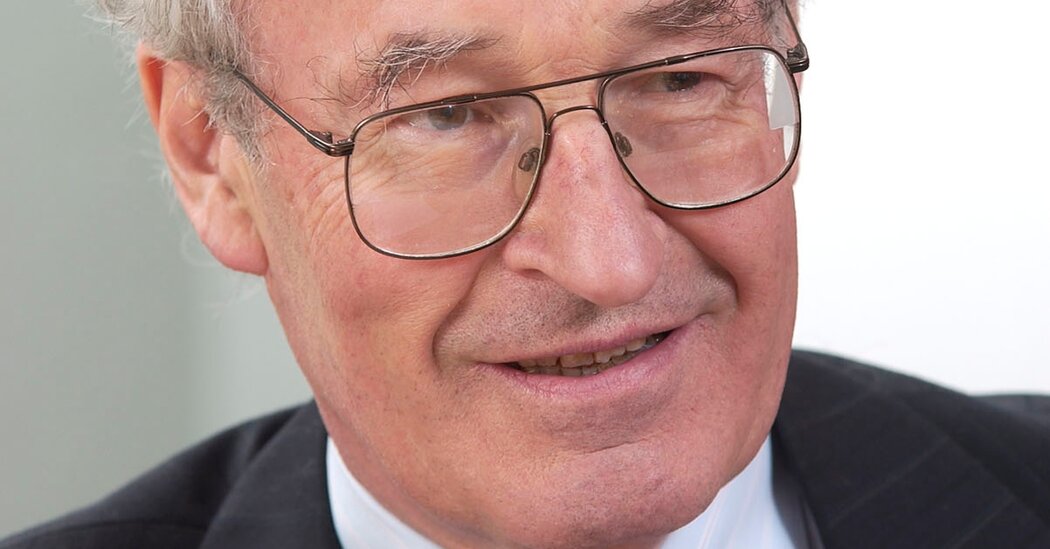
His wide-ranging research helped transform his field, a colleague said, by “insisting on using data to drive thinking about diagnosis and treatment.”Dr. Michael Rutter, a British child psychiatrist whose many transformative studies included one that demonstrated the genetics of autism and another that assessed how poor treatment suffered by Romanian children in orphanages affected them after they were adopted by English families, died on Oct. 23 at his home in Dulwich, a suburb of London. He was 88.The cause was cancer, said Sandra Woodhouse, his personal assistant at King’s College London.In more than a half-century at what is now the Institute of Psychiatry, Psychology and Neuroscience at King’s College, Dr. Rutter was known for his clinical expertise in treating children with mental health problems, and for his ambitious research. In 1973, he was awarded Britain’s first professorship in child psychiatry.“He really created modern child psychiatry by insisting on using data to drive thinking about diagnosis and treatment,” Bennett Leventhal, a professor of psychiatry at the University of California, San Francisco, said in a phone interview. “If you go back to the 1950s, ’60s and ’70s, the focus of psychiatry came out of psychoanalysis, which was built largely on case vignettes. That’s not bad — it’s what we had — but Rutter said we can do better.”In the 1960s and ’70s, Dr. Rutter and his research team conducted what Dr. Leventhal said were the first epidemiological studies in child and adolescent psychiatry. They established that psychiatric problems were fairly common among children on the rural Isle of Wight and an inner borough of London, and that the children’s feelings of misery and depression affected, among other things, how well or poorly they did in school.Dr. Rutter also discovered that emotional, behavioral and reading problems were twice as common among the children in London as they were on the Isle of Wight, but that children in both areas were affected by family discord, their parents’ psychiatric problems and criminality, and overcrowding in their homes.The studies “played a major role in understanding how biological brain pathology influenced development,” Dr. Rutter told The Annual Review of Developmental Psychology this year. “It’s not that it had not been thought of before, but it was the first time it had been systematically studied.”Dr. Rutter challenged the idea that autism was caused by the impact of distant parents — more specifically, so-called refrigerator mothers — and the idea that it was a form of schizophrenia.In a 1977 study, Dr. Rutter and Susan Folstein examined why there was a higher incidence of autism between identical twins, who share the same set of genes, than between fraternal twins, who share half of their genes. They concluded that autism was largely genetic. It was a stunning finding at the time, but it has since been validated in molecular studies.“Before Rutter, the heritability of autism was doubted,” Manuel Casanova, a professor of biomedical sciences at the University of South Carolina, said in an email. “Rutter brought it to the forefront and implied that it was larger than previously suspected.”In 1998, when a paper in the medical journal The Lancet suggested a link between autism and the measles, mumps and rubella vaccine, Dr. Rutter set out to disprove its finding. He looked at the incidence of autism in countries that had stopped using the vaccine, particularly Japan.“And what our findings showed is that the rate continued going on up — that the withdrawal of a supposed risk factor had not made a difference, and if anything it had got worse, not better,” he said in 2008 in an interview for a video project called “Today’s Neuroscience, Tomorrow’s History.” (The Lancet retracted the paper in 2010.)Dr. Rutter in an undated photo. Studies he conducted, he said, “played a major role in understanding how biological brain pathology influenced development.” via Institute of Psychiatry, Psychology & Neuroscience, King’s College LondonMichael Llewellyn Rutter was born on Aug. 15, 1933, in Broumana, Lebanon, near Beirut, where his father, Dr. Llewellyn Rutter, worked at a hospital. His mother, Winifred (Barber) Rutter, was a homemaker.A few years later, Michael and his family moved to Wolverhampton, in the West Midlands, England, where his father worked as a general practitioner.But in 1940, his parents, fearful that Germany might invade England, sent Michael and his sister, Priscilla, to the United States, where they lived with separate foster families in the same small town.“My new foster parents were punctilious in not taking over from my parents,” he told The Journal of the Canadian Academy of Child and Adolescent Psychiatry in 2010. After four enjoyable years — his sister, in contrast, had a difficult time, especially after being rejected by her first foster family — he returned, he said, “as an ebullient American teenager” whose grandmother asked his mother, “Do you think we’ve got the right ones back?”He entered the University of Birmingham Medical School in 1950, planing to be a general practitioner and join his father’s practice. But he became fascinated by neurology and neurosurgery and then by psychiatry, inspired by a professor, Wilhelm Mayer-Gross, a prominent psychiatrist who had fled Nazi Germany. Dr. Rutter worked at various British hospitals after graduating from medical school in 1955 and was a pediatrics fellow at the Albert Einstein College of Medicine, in the Bronx, from 1961 to 1962. He joined the social psychiatry research unit at Maudsley Hospital in London in 1962, and the Institute of Psychiatry, also in London, in 1966. He was knighted in 1992.Dr. Rutter wrote or co-wrote more than 400 papers and 40 books, including “Fifteen Thousand Hours: Secondary Schools and Their Effects on Children” (1979), based on a study of the problems faced by London schoolchildren during 12 years of education.He also wrote “Maternal Deprivation Reassessed” (1972), which suggested that children can develop strong attachments not just to their mothers but also to other people, both inside and outside their families, who will affect heir mental health and development. It was a challenge to the work of John Bowlby, a British psychiatrist whose “attachment theory” argued that a mother’s love is absolutely critical to a child and that its deprivation can have dire results.Survivors include Dr. Rutter’s wife, Marjorie (Heys) Rutter, a nurse and the co-author with him of “Developing Minds: Challenge And Continuity Across The Lifespan” (1993); his daughters, Sheila and Christine; his son, Stephen; his sister, Priscilla, and seven grandchildren.As increasing numbers of Romanian orphans were adopted by families in Britain in the early 1990s, Dr. Rutter and several colleagues began a long-term study to determine how well the children recovered from the difficult conditions they had experienced in orphanages.Many of them, he found, adapted quickly to their new homes, but some who were adopted after they were six months old had higher rates of autism spectrum disorder, overactivity and poor personal engagement than a control group of children who had been adopted within Britain. By age 15, some of the Romanian children’s emotional, conduct, cognitive and social relationship problems could be traced to their early privations.“Mike interviewed the children himself,” Dr. Leventhal said. “He needed to hear their voices.”Edmund Sonuga-Barke, a professor of developmental psychology, psychiatry and neuroscience at King’s College who collaborated on the study, said it had been Dr. Rutter’s innovative idea to “stratify” the sample of Romanian children into how long each had been in an institution.“That’s really important if you’re going to go past a mere correlation to say, ‘Yeah, there might be a causal relationship here,’” he said in a video made by King’s College to celebrate Dr. Rutter’s retirement this year. “So you can show what they call in pharmacology the ‘dose effect.’ Is there an effect of the dose of deprivation on young people’s outcomes?”

Read more →

US court blocks Biden's vaccine mandate for companies

SharecloseShare pageCopy linkAbout sharingImage source, Getty ImagesA US appeals court has temporarily blocked President Joe Biden’s plans for a vaccine mandate for businesses.The law would require workers at private companies with more than 100 employees to get fully vaccinated against Covid-19 or be tested weekly.But the court found “grave statutory and constitutional” issues with the rule, set to be introduced in January. It said it was suspending the mandate and gave the Biden administration until Monday to respond.Five Republican-led states – Texas, Louisiana, Mississippi, South Carolina and Utah – as well as private companies and religious groups, had filed legal challenges against the mandate.They accused the president of overstepping his authority.Louisiana’s Attorney General Jeff Landry tweeted that the court’s decision was a “major win for the liberty of job creators and their employees”.The US workers refusing to get jabbedIf enforced, the ruling by the the fifth US circuit court of appeals would be a blow to the Biden administration’s sweeping measures to extend vaccination.Mr Biden says the mandate, which would cover more than two-thirds of the nation’s workers, would set a national standard of safety at work.On Thursday, the president said employees at large companies would have to be fully vaccinated by 4 January, calling vaccination “the single best pathway out of this pandemic”.This video can not be playedTo play this video you need to enable JavaScript in your browser.Many businesses in the US already require their employees to be vaccinated. There are also requirements for military and federal contractors.But opponents say it is not constitutional for a president to impose such a sweeping nationwide rule.Republican Texas Governor Greg Abbott, who has opposed government mandates on vaccines and masks, applauded the court’s decision.”We will have our day in court to strike down Biden’s unconstitutional abuse of authority,” he said.But Labor Department solicitor Seema Nanda said it was “confident in its legal authority” to issue the rule.”We are fully prepared to defend this standard in court,” she said.

Read more →