Mechanisms of drug side effects uncovered

Researchers at Weill Cornell Medicine have discovered how drugs can affect various membrane-spanning proteins in addition to their intended target, potentially causing unwanted side effects. The results illuminate one of the central problems of drug discovery and point to new strategies for solving it.
Any class of drug can have side effects, but those that interact directly with cellular membranes have been especially problematic. “Those drugs tend to affect many membrane proteins, and we suspected that there’s some kind of non-specific mechanism at work,” said first author Dr. Radda Rusinova, assistant professor of research in physiology and biophysics at Weill Cornell Medicine. “We wanted to see whether it could be linked to the cell membrane.”
In the study, published Nov. 9 in PNAS, Dr. Rusinova and her colleagues used sensitive assays that allowed them to compare how different drugs affected the activities of two channel proteins that span membranes: the gramicidin ion channel and a potassium channel called KcsA. Gramicidin was used to measure the magnitude of drugs’ effect on the membrane while KcsA reflected effects these drugs could have on typical membrane proteins. They found that membrane-associated drugs can affect KcsA in at least three ways: by interacting directly with the proteins, by interfering with the proteins’ structural connections to the membrane, or by causing broad changes in membrane characteristics such as thickness or elasticity.
Changes in membrane characteristics have well-known effects on the gramicidin ion channel, an antibiotic isolated from bacteria that has long been used as a standard tool for studying such changes. “Gramicidin is a probe essentially for changes in bilayer and membrane properties, and will report on the magnitude of the changes,” said Dr. Rusinova.
“But we needed to go further to see how a more typical cell membrane protein would react,” Dr. Rusinova said. KcsA belongs to a class of proteins — potassium channels — that drive many aspects of cell physiology in everything from bacteria to humans, making it a good comparative probe.
Results from the comparative assays revealed a more nuanced process than the straightforward model currently in use for explaining how membrane-binding drugs can affect membrane-spanning proteins.
“The more data that Dr. Rusinova got, the more it became apparent that this simple model did not actually cover the full spectrum of effects that we saw,” said Dr. Olaf Andersen, professor of physiology and biophysics and senior author on the study.
“The investigators who are looking into molecules that can move into the cell membrane need to worry about at least three mechanisms for off-target effects,” Dr. Rusinova said.
The news isn’t all bad, though. In some cases, off-target effects at the cellular level cause no trouble to the organism, while in a few instances they can even be beneficial. To highlight the diversity of possible outcomes, Dr. Rusinova points to two of the drugs her team tested: amiodarone, a heart medication whose membrane-mediated effects actually boost its efficacy, and troglitazone, an anti-diabetic drug whose side effects included liver toxicity, ultimately forcing regulators to pull it from the market.
The investigators hope to extend their work by developing more predictive models for such off-target effects. “We would like to determine the structural characteristics of a membrane protein that would make it more or less sensitive to bilayer effects,” Dr. Rusinova said.
Story Source:
Materials provided by Weill Cornell Medicine. Note: Content may be edited for style and length.
Read more →

New tests track sources of lead contamination in urban soils and assess its risks

Duke University scientists have developed a suite of isotope-based tests that can be used to identify the origin of lead contamination in urban soils and assess the risk it poses to children who inhale or ingest contaminated dirt or dust.
“These tests give public health officials reliable new ways to track the legacy of contamination that still persists in some urban soils decades after federal bans ended the widespread use of lead-based paint and gasoline,” said Avner Vengosh, Distinguished Professor of Environmental Quality at Duke’s Nicholas School of the Environment.
“We developed these tests to assess lead contamination in soils around Durham, N.C., but they could be used in similar cities anywhere,” Vengosh said.
The new study builds upon another Duke-led study of lead contamination in Durham soils, published earlier this year, that showed while lead levels in urban soils around Durham are declining overall, hotspots of contamination remain, especially in foundation soils around older houses and apartment buildings — likely the legacy of lead paint use in these homes.
The new tests can distinguish between the isotopic ratio, or unique geochemical “fingerprint,” of lead contamination from different sources, including pre-1970s vehicle exhaust fumes, lead paint from that era, or lead from more recent atmospheric sources. Measuring the radioactive isotope Caesium-137 — caused by fallout from Cold War-era atomic tests — in the lead provides an added indication if the lead pre-dates the 1970s and stems from legacy contamination rather than recent sources.
This allows health officials to zero in on the origin of the contamination even at sites where there are many potential sources, said Zhen Wang, a doctoral student in Vengosh’s lab who was lead author of the study.

Read more →

Research uncovers new insights on ALS and points to a potentially promising treatment strategy

New research provides a better understanding of the mechanisms behind the development of amyotrophic lateral sclerosis (ALS), or Lou Gehrig’s disease, and points to a potential treatment strategy. The work was led by investigators at the Healey Center for ALS at Massachusetts General Hospital (MGH) and is published in Molecular Neurobiology.
ALS, a degenerative condition without a cure, attacks brain and spinal cord nerve cells to progressively affect individuals’ ability to move, speak, eat, and even breathe. Previous studies have implicated dysfunction within mitochondria, which generate energy within cells, as playing an important role in the development of ALS. Also, studies in Alzheimer’s disease have linked changes in mitochondrial function to interactions between an abnormal form of tau, which accumulates in the brains of patients with Alzheimer’s disease, and a mitochondrial protein called dynamin-related protein 1 (DRP1). Piecing these bits of information together, Ghazaleh Sadri-Vakili, PhD, director of the NeuroEpigenetics Laboratory at the MassGeneral Institute for Neurodegenerative Disease and the Healey Center for ALS at MGH, and her colleagues examined whether interactions between this abnormal tau with DRP1 might also promote mitochondrial dysfunction in ALS, and whether reducing tau could be a novel and promising therapeutic approach to fight the disease.
The team found that in brain tissue from deceased patients who had ALS, the abnormal form of tau is present, is located where tau is not normally found, and interacts with DRP1. When cells were grown in contact with deceased ALS patients’ brain tissue that contained abnormal tau, the cells’ mitochondria fragmented and oxidative stress increased. Importantly, reducing tau with a specific degrader reversed these effects, reducing mitochondrial fragmentation and lowering oxidative stress.
“We demonstrated for the first time that targeting tau with a new class of small molecules that selectively degrade it can reverse the ALS-induced changes in mitochondria’s shape and function, highlighting tau as a potential therapeutic target,” says Sadri-Vakili.
Co-authors include Tiziana Petrozziello, Evan A. Bordt, Alexandra N. Mills, Spencer E. Kim, Ellen Sapp,Benjamin A. Devlin, Abigail A. Obeng-Marnu,Sali M.K. Farhan, Ana C. Amaral, Simon Dujardin, Patrick M. Dooley,Christopher Henstridge,Derek H. Oakley, Andreas Neueder, Bradley T. Hyman, Tara L. Spires-Jones, Staci D. Bilbo, Khashayar Vakili, Merit E. Cudkowicz, James D. Berry, Marian DiFiglia, M. Catarina Silva, and Stephen J. Haggarty.
Funding for the study was provided by the Judith and Jean Pape Adams Charitable Foundation; the Byrne Family Endowed Fellowship in ALS Research; the ALS Canada Tim E. Noël Postdoctoral Fellowship; the Alzheimer’s Association; the Jack Satter Foundation; the Dr. and Mrs. E. P. Richardson, Jr Fund for Neuropathology at MGH; the Alzheimer’s Association/Rainwater Foundation Tau Pipeline Enabling Program; and the Stuart & Suzanne Steele MGH Research Scholars Program.
Story Source:
Materials provided by Massachusetts General Hospital. Note: Content may be edited for style and length.

Read more →

Covid-resistant people inspire new vaccine tactic

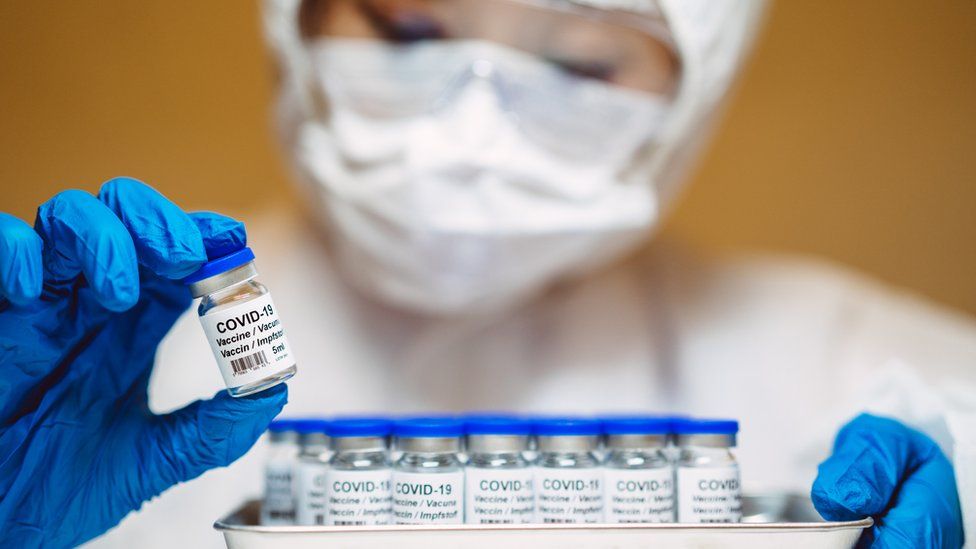
SharecloseShare pageCopy linkAbout sharingImage source, Getty ImagesUnderstanding how some people naturally resist Covid infection, despite clearly being exposed to the virus, could lead to better vaccines, say researchers. A team at University College London said some people had a degree of Covid-immunity before the pandemic started.This likely came from the body learning how to fight viruses that are related to the one which has swept the world. Upgrading vaccines to copy this protection, could make the jabs even more effective, the team said. The scientists were closely monitoring hospital staff during the first wave of the pandemic – including by taking regular blood samples. Despite being in a high-risk environment, not everyone in the study came down with Covid. The results, published in the journal Nature, showed some people just managed to avoid the virus.But around one-in-10 had signs of being exposed, but never had symptoms, never tested positive and never developed Covid-fighting antibodies in their blood. Part of their immune system was able to get on top of the virus before it managed to take hold – what’s known as an “abortive infection”.Image source, Getty ImagesBlood samples showed these people already had (as in before the pandemic) protective T-cells, which recognise and kill cells infected with Covid. Dr Leo Swadling, one of the researchers, said their immune systems were already “poised” to fight the new disease. These T-cells were able to spot a different part of the virus than the bit most of the current vaccines train the immune system to find. Vaccines are largely aimed at the spike protein, which covers the outer surface of the Covid virus. However, these rare T-cells were able to look inside the virus and find the proteins that are necessary for it to replicate. “The healthcare workers that were able to control the virus before it was detectable were more likely to have these T-cells that recognise the internal machinery before the start of the pandemic,” Dr Swadline added. These internal proteins are very similar in all related species of coronavirus, including the ones that are widespread and cause common cold symptoms. It means targeting these proteins with a vaccine could give some protection against all coronaviruses and new Covid variants. The team said the current vaccines were doing an excellent job of preventing people from becoming severely ill, but were not as good at stopping them catching Covid.Prof Mala Maini told me: “I think we could all see that they could do better.”What we’re hoping, by including these T-cells, is that they might be able to protect against infection as well as disease, and we hope they would be better at recognising new variants that arise.”While nearly everyone will have caught these common cold coronaviruses, not everyone will have developed the right kind of protective T-cells. It may be that healthcare workers are more regularly exposed to the viruses through their work and that is why some of them had protection. Dr Alexander Edwards, from the University of Reading, said: “Insights from this study could be critical in the design of a different type of vaccine. “Hopefully this study will lead to further advances in vaccine development, as we need all the types of vaccine we can get.”Follow James on Twitter

Read more →

New computer model is a key step toward low-temperature preservation of 3D tissues, organs

Medical science is a key step closer to the cryopreservation of brain slices used in neurological research, pancreatic cells for the treatment of diabetes and even whole organs thanks to a new computer model that predicts how tissue’s size will change during the preservation process.
Findings of the study led by Adam Higgins of the Oregon State University College of Engineering were published in Biophysical Journal.
“Cryopreservation of tissues would be useful for biomedical research and for transplantation medicine, but it’s difficult to cryopreserve tissues for various reasons,” said Higgins, associate professor of bioengineering. “A major reason is that formation of ice can break apart a tissue from the inside. Folks who cook are probably already familiar with this — a tomato that has been frozen and thawed becomes mushy.”
Cryopreservation has long been widely used in comparatively simpler applications such as preserving semen, blood, embryos and plant seeds. A barrier to other uses has been damage from ice crystallization and the harmful nature of the compounds added to prevent ice formation.
Vitrification, Higgins explains, is a cryopreservation strategy that thwarts ice crystal damage through chemicals known as cryoprotectants, or CPAs, that can keep ice from forming. An example of a CPA is ethylene glycol, used in automobile antifreeze.
In tissues, a high enough concentration of CPAs causes a solid “glass” to form rather than ice crystals when tissue temperature is reduced to liquid nitrogen levels; liquid nitrogen boils at minus-320 degrees Fahrenheit.

Read more →

Plant-based gummy candy helps vegans and vegetarians get their vitamins

Worldwide, millions of people follow vegan and vegetarian diets for religious, ethical, environmental or economic reasons. While these diets have purported health benefits, they can also lack essential nutrients, such as vitamins B12 and D3, if not well-planned or supplemented correctly. Now, researchers reporting in ACS Food Science & Technology have packed a strawberry-flavored gummy with these vitamins, formulating it without any animal products so vegans and vegetarians can reach their recommended daily allowances (RDA).
Some essential vitamins and minerals, such as vitamin B12, are found exclusively in animal products, while others can be obtained from other sources. For example, humans can make vitamin D3 when their skin is exposed to sunlight, but many people aren’t outside enough to meet the requirement for this vitamin. Therefore, it is primarily consumed through fish, eggs and organ meats, which are not eaten by vegans and some vegetarians. To avoid the pitfalls of vitamin deficiencies, people who adhere to plant-based diets often take supplements, but it’s been challenging to put both vitamin B12 and vitamin D3 in one pill because of their differing solubilities. One solution could be to put them into emulsion-filled gels, such as gummy candies. Previous researchers have shown that pectin, a plant-based polysaccharide, can be used as a gelling agent in animal product-free foods. So, Samantha Pinho and colleagues wanted to see if they could use only plant-based ingredients, such as pectin, to produce a gummy candy enriched with vitamins B12 and D3 that would be acceptable to consumers.
The researchers first made an emulsion, combining citrate buffer, inulin, gum arabic, flaxseed oil and vitamin D3, and separately made the pectin gel, dissolving a type of pectin, calcium chloride and vitamin B12 in a citrate buffer. Then, by rapidly stirring the emulsion into the pectin gel with sugar, the team produced an emulsion-filled gel. The gel became a reddish gummy material after it dried. To develop this into a suitable food product, the researchers added a natural strawberry flavor and molded the gel into half-inch-wide candies. In sensory tests, 120 untrained panelists gave the gummies high scores for taste, color, aroma and overall acceptability. About half of the panelists said they would buy the enriched gummy, with another 36% saying they might buy the product. The researchers say their results pave the way to make food products more nutritious.
Story Source:
Materials provided by American Chemical Society. Note: Content may be edited for style and length.

Read more →

Baby teeth may one day help identify kids at risk for mental disorders later in life

The team analysed 70 primary teeth collected from 70 children enrolled in the Children of the 90s study (also known as the Avon Longitudinal Study of Parents and Children) based at the University of Bristol. Parents donated primary teeth (specifically, the pointed teeth on each side of the front of the mouth known as canines) that naturally fell out of the mouths of children aged 5 to 7.
The results of this study could one day lead to the development of a much-needed tool for identifying children who have been exposed to early-life adversity, which is a risk factor for psychological problems, allowing them to be monitored and guided towards preventive treatments, if necessary.
The origin of this study traces back several years, when senior author Erin C. Dunn, ScD, MPH, learned about work in the field of anthropology that could help solve a longstanding problem in her own research. Dunn is a social and psychiatric epidemiologist and an investigator in MGH’s Psychiatric and Neurodevelopmental Genetics Unit. She studies the effects of childhood adversity, which research suggests is responsible for up to one-third of all mental health disorders. Dunn is particularly interested in the timing of these adverse events and in uncovering whether there are sensitive periods during child development when exposure to adversity is particularly harmful. Yet Dunn notes that she and other scientists lack effective tools for measuring exposure to childhood adversity. Asking people (or their parents) about painful experiences in their early years is one method, but that’s vulnerable to poor recall or reluctance to share difficult memories. “That’s a hindrance for this field,” says Dunn.
However, Dunn was intrigued to learn that anthropologists have long studied the teeth of people from past eras to learn about their lives. “Teeth create a permanent record of different kinds of life experiences,” she says. Exposure to sources of physical stress, such as poor nutrition or disease, can affect the formation of dental enamel and result in pronounced growth lines within teeth, called stress lines, which are similar to the rings in a tree that mark its age. Just as the thickness of tree growth rings can vary based on the climate surrounding the tree as it forms, tooth growth lines can also vary based on the environment and experiences a child has in utero and shortly thereafter, the time when teeth are forming. Thicker stress lines are thought to indicate more stressful life conditions.
Dunn developed a hypothesis that the width of one variety in particular, called the neonatal line (NNL), might serve as an indicator of whether an infant’s mother experienced high levels of psychological stress during pregnancy (when teeth are already forming) and in the early period following birth.
To test this hypothesis, Dunn and two co-lead authors — postdoctoral research fellow Rebecca V. Mountain, PhD, and data analyst Yiwen Zhu, MS, who were both in the Psychiatric and Neurodevelopmental Genetics Unit at the time of the study — led a team that analysed the teeth. The width of the NNL was measured using microscopes. Mothers completed questionnaires during and shortly after pregnancy that asked about four factors that are known to affect child development: stressful events in the prenatal period, maternal history of psychological problems, neighbourhood quality (whether the poverty level was high or it was unsafe, for instance), and level of social support.
Several clear patterns emerged. Children whose mothers had lifetime histories of severe depression or other psychiatric problems, as well as mothers who experienced depression or anxiety at 32 weeks of pregnancy, were more likely than other kids to have thicker NNLs. Meanwhile, children of mothers who received significant social support shortly after pregnancy tended to have thinner NNLs. These trends remained intact after the researchers controlled for other factors that are known to influence NNL width, including iron supplementation during pregnancy, gestational age (the time between conception and birth) and maternal obesity.
No one is certain what causes the NNL to form, says Dunn, but it’s possible that a mother experiencing anxiety or depression may produce more cortisol, the “stress hormone,” which interferes with the cells that create enamel. Systemic inflammation is another candidate, says Dunn, who hopes to study how the NNL forms. And if the findings of this research can be replicated in a larger study, she believes that the NNL and other tooth growth marks could be used in the future to identify children who have been exposed to early life adversity. “Then we can connect those kids to interventions,” says Dunn, “so we can prevent the onset of mental health disorders, and do that as early on in the lifespan as we possibly can.”
Dunn is also an associate professor of Psychiatry at Harvard Medical School. Mountain is now a postdoctoral research fellow at Maine Medical Center Research Institute. Zhu is now a doctoral student at the Harvard T.H. Chan School of Public Health.
Story Source:
Materials provided by University of Bristol. Note: Content may be edited for style and length.

Read more →

How gene mutation boosts cancer risk

Researchers at the University of Virginia School of Medicine have discovered how a common gene mutation robs people of natural cancer protection.
Hao Jiang, PhD, of UVA Cancer Center, and his collaborators have revealed why a mutation in the UTX gene disrupts cells’ ability to suppress tumors. The gene product, they found, forms tiny droplets in cells that help prevent tumor formation. But the mutation throws a wrench in that important process, leaving affected people vulnerable.
The new understanding of this vulnerability will help scientists and doctors as they seek better ways to battle and prevent cancer.
“How UTX inactivation causes human cancers remained elusive, as we did not know its key molecular activity that is critical for tumor suppression, posing a barrier to cancer therapies targeting UTX-related pathways,” said Jiang, of UVA’s Department of Biochemistry and Molecular Genetics. “Our work largely solved this mystery. Moreover, it suggests that disruption or alterations of these droplets can profoundly affect how our cells fight cancer. Forming proper droplets is likely to be a fundamental mechanism that maintains cellular health, and we are just beginning to understand.”
Preventing Cancer Tumors
Jiang’s work gives us a fascinating glimpse into an important way our bodies keep us safe from cancer. The UTX gene, he found, plays a vital role by directing the formation of “condensates” inside cells to prevent tumor formation. These little droplets condense from material in cells sort of like how water droplets condense on the outside of a cold glass. Once the droplets have formed, important biological processes can take place.
The droplets are important not just for suppressing tumors, Jiang and his team found, but for directing embryonic stem cells, generalized cells that can turn into highly specialized cells. For example, a stem cell might turn into a nerve cell or become bone.
For tumor suppression, the researchers found, the droplets control the activity of chromatin, the genetic material contained in our chromosomes. This ensures chromatin’s “optimal activity,” the scientists write in a new paper in the scientific journal Nature. The interaction, they note, “ensures efficient and correct chromatin modifications and interactions to orchestrate a proper tumour-suppressive transcriptional program.”
Mutation of the UTX gene, however, robs cells of this important ability, putting people with the mutation at risk for cancer, the researchers conclude.
Another interesting finding in this work is that UTY, the Y-chromosome counterpart of UTX in men, forms condensates with more solid-like properties, making it less effective in suppressing cancer. This may contribute to the widely observed phenomenon that men are more likely to get cancer than women.
“We are very interested in how the condensate properties of UTX are regulated in cells and how other proteins may control cancer through forming droplets,” Jiang said. “These studies will likely open up new approaches to cancer treatment by regulating these droplets.”

Read more →

Identifying individual proteins using nanopores and supercomputers

The amount and types of proteins our cells produce tell us important details about our health and how our bodies work. But the methods we have of identifying and quantifying individual proteins are inadequate to the task. Not only is the diversity of proteins unknown, but often, amino acids are changed after synthesis through post-translational modifications.
In recent years, much progress has been made in DNA reading using nanopores — minute membranes large enough to let an unspooled DNA strand through, but just barely. By carefully measuring the ionic voltage of the nanopore as DNA crosses over, biologists have been able to rapidly identify the order of base pairs in the sequence. In fact, this year, nanopores were used to finally sequence the entire human genome — something that was not previously possible with other technologies.
In new research out in Science magazine, researchers from Delft University of Technology in the Netherlands and the University of Illinois at Urbana-Champaign (UIUC) in the U.S. have extended these DNA nanopore successes and provided a proof-of-concept that the same method is possible for single protein identification, characterizing proteins with single-amino-acid resolution and a vanishingly small (10^-6 or 1 in a million) margins of error.
“This nanopore peptide reader provides site-specific information about the peptide’s primary sequence that may find applications in single-molecule protein fingerprinting and variant identification,” the authors wrote.
The workhorses of our cells, proteins are a long peptide strings made of 20 different types of amino acids. The researchers utilized an enzyme called helicase Hel308 that can attach to DNA-peptide hybrids and pull them, in a controlled way, through a biological nanopore known as MspA (mycobacterium smegmatis porin A). They chose the Hel308 DNA helicase because it can pull peptides through the pore in half-nucleotide observable steps, which correspond closely to single amino acids.
Each step through the narrow gate theoretically produces a unique current signal as the amino acid partially blocks an electrical current carried by ions through the nanopore.

Read more →

Biological studies often misinterpret sex-based data, analysis finds

An analysis of published studies from a range of biological specialties shows that, when data are reported by sex, critical statistical analyses are often missing and the findings are likely to be reported in misleading ways.
The journal eLife published the analysis, done by neuroscientists at Emory University, encompassing studies from nine different biological disciplines that involved either human or animal subjects.
“We found that when researchers report that males and females respond differently to a manipulation such as a drug treatment, 70 percent of the time the researchers have not actually compared those responses statistically at all,” says senior author Donna Maney, a professor of neuroscience in Emory’s Department of Psychology. “In other words, an alarming percentage of claims of sex differences are not backed by sufficient evidence.”
In the articles missing the proper evidence, she adds, sex-specific effects were claimed in nearly 90 percent of the cases. In contrast, authors that tested statistically for sex-specific effects reported them only 63 percent of the time.
”Our results suggest that researchers are predisposed to finding sex differences and that sex-specific effects are likely over-reported in the literature,” Maney says.
This particular problem is common and pertains to Maney’s own previous work. “Once I realized how prevalent it is, I went back and checked my own published articles and there it was,” she says. “I myself have claimed a sex difference without comparing males and females statistically.”
Maney stresses that the problem should not be discounted just because it is common. It is becoming increasingly serious, she says, because of mounting pressure from funding agencies and journals to study both sexes, and interest from the medical community to develop sex-specific treatments.

Read more →