Do-It-Yourself artificial pancreas given approval by team of experts

More than 40 healthcare professionals and legal experts have issued the first guidance of its kind to support people with type 1 diabetes using Do-it-Yourself (DIY) technology driven systems to manage their condition.
The paper was co-led by King’s College London and Guy’s and St Thomas’ NHS Foundation Trust. It sets out recommendations that allow health-care professionals to support DIY artificial pancreas systems as a safe and effective treatment option for type 1 diabetes.
The work is published today in The Lancet Diabetes & Endocrinology and endorsed by nine professional diabetes organisations including the International Diabetes Federation. Patients say using the technology has been a “revolution and a revelation” which has had positive impacts on their wider health.
Study co-lead Dr Sufyan Hussain, a consultant diabetologist and honorary senior lecturer from King’s College London, who has lived with type 1 diabetes for over 30 years says: “The medical and legal position of do-it-yourself and citizen science approaches have been subject to a lot of debate and uncertainty. This paper not only clarifies the position for do-it-yourself artificial pancreas systems in diabetes as a safe and effective treatment but sets a precedent for achieving an international professional consensus for other treatments based on user-driven do-it-yourself technologies and innovations.”
Traditional monitoring of type 1 diabetes involves taking blood samples from the fingertips several times a day and calculating precise injections of insulin to maintain blood sugar levels. This can be a time-consuming and stressful method, but according to the paper’s authors, more than 10,000 people worldwide are choosing a different approach, and the number is growing.
The DIY systems, also known as open-source Automated Insulin Delivery (AID) systems, automatically adjust insulin dosing in response to continuous sensor glucose, insulin pump data and additional information using community generated algorithms. It means that the algorithm can calculate the dosage and administer the dose automatically through conventional insulin pumps.

Read more →

How surviving cancer as a child affects lifelong health

People who survive cancer early in their life have higher risks of ill health as they grow older, and these risks vary according to the cancer type and how the cancer was treated, a new study by researchers at University College London has found.
The researchers are now calling for these long-term health effects to be considered when young people and their families discuss treatment options with their healthcare team initially.
The study, published in The Lancet Regional Health — Europe, found that people who survived cancer had five times as many GP or hospital visits relating to cardiovascular disease by age 45, as a matched control group of people who had not had cancer early in life. They also had much higher numbers of healthcare visits relating to infections, disorders of the immune system, and subsequent cancers.
Looking at treatment type, researchers found that the burden of late health effects was highest for people treated with both chemotherapy and radiotherapy, and lowest for cancer survivors who only had surgery.
For instance, people treated with chemotherapy and radiotherapy had more than twice the number of hospital admissions overall by aged 45 than those who just had surgery, and seven times the number of GP or hospital visits relating to cardiovascular disease by the same age (an average of seven healthcare encounters per person, compared to one per person). They also had an increased risk of getting cancer for the second time, and developing more aggressive (metastatic) cancer.
Senior author Dr Alvina Lai (UCL Institute of Health Informatics) said: “Over 80% of children and young people diagnosed with cancer survive, but they face unique healthcare needs because of late effects brought on by cancer or its treatment.

Read more →

Mouse cell studies show that correcting DNA disorganization could aid diagnosis and treatment of rare inherited diseases

In a study with lab-grown mouse cells, Johns Hopkins Medicine researchers say they have found that a protein that helps form a structural network under the surface of the cell’s “command center” — its nucleus — is key to ensuring that DNA inside it remains orderly. The new experiments distinguish the role of the protein, called lamin C, revealing its usefulness in diagnostics and treatments for a variety of genetic disorders linked to DNA disorganization, such as the rapid aging disease known as progeria, muscular dystrophy and heart disorders related to mutations in these and related proteins.
“The impact of these findings could extend beyond the known laminopathic diseases, since it appears that lamin C is important for genome organization generally. We just don’t know at this point how lamin C is behaving in other diseases with dysregulation of the genome,” says Karen Reddy, Ph.D., assistant professor of biological chemistry at the Johns Hopkins University School of Medicine.
She continues, “many people are familiar with the idea that gene mutations — or errors in the genetic code — cause inherited diseases. However, genes that are highly disorganized could be as impactful as mutations in causing disease.”
Reddy notes that genetic tests generally do not consider the mechanics of how DNA is organized, which may be an important foundation to understanding genetic diseases.
Reddy and her research team published results of their study published Nov. 14 in Genome Biology.
Each human cell’s nucleus packs about 6 feet of tightly coiled DNA that holds the genetic instructions for every structure and function in the body. To keep the cell working, these threads of DNA must be organized into useable parts. The lamin proteins, which attach to the surface of the nucleus, do that by grabbing onto segments of the DNA, keeping them separate and tidy.

Read more →

New approach provides potential vaccine and treatment for Alzheimer’s

A promising new approach to potentially treat Alzheimer’s disease — and also vaccinate against it — has been developed by a team of UK and German scientists.
Both the antibody-based treatment and the protein-based vaccine developed by the team reduced Alzheimer’s symptoms in mouse models of the disease. The research is published today in Molecular Psychiatry.
The work is a collaboration between researchers at the University of Leicester, the University Medical Center Göttingen and the medical research charity LifeArc.
Rather than focus on the amyloid beta protein in plaques in the brain, which are commonly associated with Alzheimer’s disease, the antibody and vaccine both target a different soluble — form of the protein, that is thought to be highly toxic. Amyloid beta protein naturally exists as highly flexible, string-like molecules in solution, which can join together to form fibres and plaques. In Alzheimer’s disease, a high proportion of these string-like molecules become shortened or ‘truncated’, and some scientists now think that these forms are key to the development and progression of the disease.
Professor Thomas Bayer, from the University Medical Center Göttingen, said: “In clinical trials, none of the potential treatments which dissolve amyloid plaques in the brain have shown much success in terms of reducing Alzheimer’s symptoms. Some have even shown negative side effects. So, we decided on a different approach. We identified an antibody in mice that would neutralise the truncated forms of soluble amyloid beta, but would not bind either to normal forms of the protein or to the plaques.”
Dr Preeti Bakrania and colleagues from LifeArc adapted this antibody so a human immune system wouldn’t recognise it as foreign and would accept it. When the Leicester research group looked at how and where this ‘humanised’ antibody, called TAP01_04, was binding to the truncated form of amyloid beta, the team had a surprise. They saw the amyloid beta protein was folded back on itself, in a hairpin-shaped structure.
Professor Mark Carr, from the Leicester Institute of Structural and Chemical Biology at the University of Leicester, explained: “This structure had never been seen before in amyloid beta. However, discovering such a definite structure allowed the team to engineer this region of the protein to stabilise the hairpin shape and bind to the antibody in the same way. Our idea was that this engineered form of amyloid beta could potentially be used as a vaccine, to trigger someone’s immune system to make TAP01_04 type antibodies.”
When the team tested the engineered amyloid beta protein in mice, they found that mice who received this ‘vaccine’ did produce TAP01 type antibodies.
The Göttingen group then tested both the ‘humanised’ antibody and the engineered amyloid beta vaccine, called TAPAS, in two different mouse models of Alzheimer’s disease. Based on similar imaging techniques to those used to diagnose Alzheimer’s in humans, they found that both the antibody and the vaccine helped to restore neuron function, increase glucose metabolism in the brain, restore memory loss and — even though they weren’t directly targeted — reduce amyloid beta plaque formation.
LifeArc’s Dr Bakrania said: ”The TAP01_04 humanised antibody and the TAPAS vaccine are very different to previous antibodies or vaccines for Alzheimer’s disease that have been tested in clinical trials, because they target a different form of the protein. This makes them really promising as a potential treatment for the disease either as a therapeutic antibody or a vaccine. The results so far are very exciting and testament to the scientific expertise of the team. If the treatment does prove successful, it could transform the lives of many patients.”
Professor Mark Carr added: “While the science is currently still at an early stage, if these results were to be replicated in human clinical trials, then it could be transformative. It opens up the possibility to not only treat Alzheimer’s once symptoms are detected, but also to potentially vaccinate against the disease before symptoms appear.”
The researchers are now looking to find a commercial partner to take the therapeutic antibody and the vaccine through clinical trials.
Story Source:
Materials provided by University of Leicester. Note: Content may be edited for style and length.

Read more →

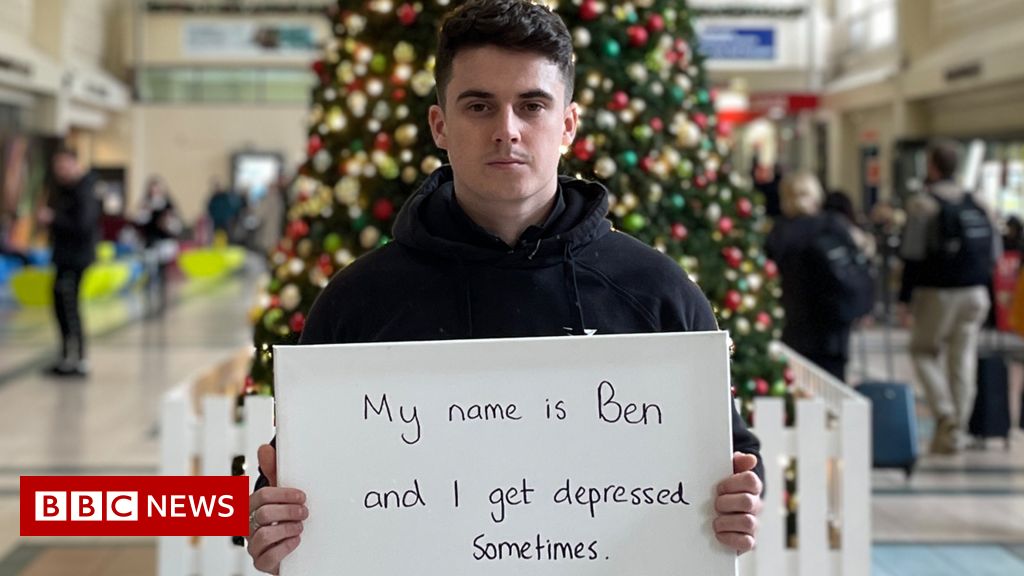
Mental health: Man's train station sign aims to change lives

A 23-year-old man who stands at Leeds Railway Station with a sign explaining that “It’s OK to talk” said one conversation could change a life.Ben Ogden, from Skipton, said his mental health had worsened over the course of the pandemic but by speaking out he was able to move forward.The 23-year-old added there were times when he just “didn’t want to go out in to the world” but that “it’s 2021 and it’s so important to talk about this”.His friend, 21-year-old Matthew Payne, was also struggling with anxiety around the same time and, after opening up to Ben, said “one conversation just changed my life”.If you have been affected by the issues in the video above, contact the BBC Action Line.

Read more →

U.S. Surgeon General Says Blocking Vaccine Rules a 'Setback'

Dr. Vivek Murthy, the U.S. surgeon general, said on Sunday that if courts continue to block the Biden administration’s efforts to soon compel large companies to require a Covid vaccine or face weekly testing, it would be “a setback for public health.”A federal appeals court issued a ruling on Friday that continued to block the administration’s rule, saying the federal agency that drafted the order had “grossly” exceeded its purview.The Occupational Safety and Health Administration, an agency within the Labor Department, issued a rule earlier this month saying that companies with 100 or more employees must put a vaccine mandate in place by Jan. 4 or comply with weekly testing, as well as mandatory masking in December.The administration’s attempts, which could affect 84 million private-sector workers, 31 million of whom were believed to be still unvaccinated, have met with considerable resistance. A diverse group of states and business organizations immediately contested the order and the Court of Appeals for the Fifth Circuit in New Orleans issued a stay. The ruling by a three-judge panel on Friday affirmed the stay, turning aside a challenge by the Justice Department.On “Fox News Sunday,” Dr. Murthy said that vaccine mandates are well-established and highly successful in achieving more widespread vaccination. Schools, the military and workplaces such as hospitals have long required vaccines. Many companies have leapt ahead of a federal order, he noted, and imposed one on their own employees.At the heart of the vaccine mandate strategy, he said, is the creation of “safer workplaces for workers, for customers and to increase vaccination rates overall, because that’s ultimately how we’re going to end this pandemic.”But Ken Paxton, the attorney general of Texas, one of the plaintiffs that challenged the mandate, said on the same news program that the ruling was a victory against the Biden administration’s attempt at what he has called “bullying” of businesses. Texas employers, he has stated, should be allowed to make their own decisions about the vaccine.Chris Wallace, the host of the program, pointed out that Gov. Greg Abbott of Texas has banned businesses from ordering vaccine mandates. He asked Mr. Paxton to address the seeming incompatibility between his attack on the federal mandate and his support of the state ban of individual employers’ vaccine mandates.Mr. Paxton refused to say whether he thought that, unlike the federal government, a state had the right to tell a private business what to do. He replied: “The federal government has limited authority.”He continued: “States have a lot of authority to deal with what’s going on in their states.”

Read more →

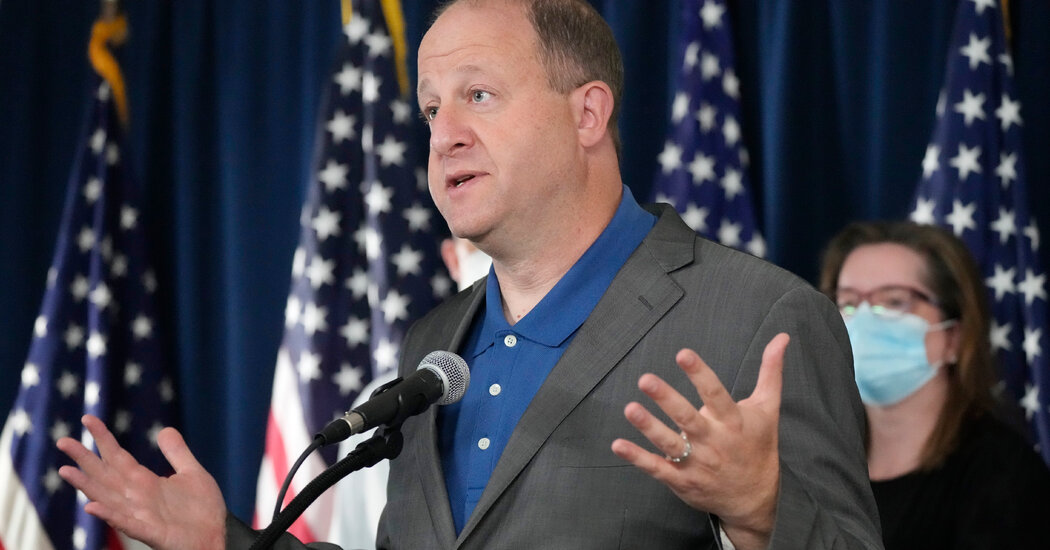
Colorado Governor Says He Is ‘Frustrated’ With Federal Regulators On Boosters

As federal regulators consider a request to expand eligibility of Pfizer-BioNTech’s coronavirus vaccine boosters to all adults, three states decided this past week to broaden access on their own.Colorado, New Mexico and California are allowing adults to seek out boosters, provided individuals are at least six months past the second dose of the Pfizer-BioNTech or Moderna vaccines, or two months past the single-dose Johnson & Johnson vaccine.“I’ve been very frustrated with the convoluted messaging out of the C.D.C. and the F.D.A.,” said Gov. Jared Polis of Colorado on Sunday on the CBS show “Face the Nation,” referring to the Centers for Disease Control and Prevention as well as the Food and Drug Administration.Federal regulators have said that adults who received the Pfizer-BioNTech or Moderna vaccines are eligible for a booster if they are 65 or older, or if they are at increased risk because of medical conditions or where they work or live. People who got the Johnson & Johnson shot, which is available only to adults, are eligible. Those getting boosters can select any of the three vaccine brands.On Tuesday, Pfizer and BioNTech asked the F.D.A. to expand eligibility for their boosters to all adults. If the regulators sign off on that request, it would make official what health authorities say they already see happening frequently — that many people appear to be getting boosters whether or not they are technically eligible. In mid-August, President Biden announced plans to make boosters available to all adults, but the beginning of the campaign was delayed after regulators insisted they needed more time to review data.Mr. Polis signed an executive order this week on boosters, citing the significant spread of the virus across Colorado. As of Saturday, the state’s daily average of hospitalizations had increased 13 percent over the past two weeks to about 1,500, according to a New York Times database.As winter bears down, Mr. Polis said he wanted to safeguard residents as well as ski tourists.“Everybody should get the booster after six months,” he said, emphasizing its ability to help with personal protection. “That’s why my parents got it,” he added, as did he..css-1xzcza9{list-style-type:disc;padding-inline-start:1em;}.css-3btd0c{font-family:nyt-franklin,helvetica,arial,sans-serif;font-size:1rem;line-height:1.375rem;color:#333;margin-bottom:0.78125rem;}@media (min-width:740px){.css-3btd0c{font-size:1.0625rem;line-height:1.5rem;margin-bottom:0.9375rem;}}.css-3btd0c strong{font-weight:600;}.css-3btd0c em{font-style:italic;}.css-1kpebx{margin:0 auto;font-family:nyt-franklin,helvetica,arial,sans-serif;font-weight:700;font-size:1.125rem;line-height:1.3125rem;color:#121212;}#NYT_BELOW_MAIN_CONTENT_REGION .css-1kpebx{font-family:nyt-cheltenham,georgia,’times new roman’,times,serif;font-weight:700;font-size:1.375rem;line-height:1.625rem;}@media (min-width:740px){#NYT_BELOW_MAIN_CONTENT_REGION .css-1kpebx{font-size:1.6875rem;line-height:1.875rem;}}@media (min-width:740px){.css-1kpebx{font-size:1.25rem;line-height:1.4375rem;}}.css-1gtxqqv{margin-bottom:0;}.css-16ed7iq{width:100%;display:-webkit-box;display:-webkit-flex;display:-ms-flexbox;display:flex;-webkit-align-items:center;-webkit-box-align:center;-ms-flex-align:center;align-items:center;-webkit-box-pack:center;-webkit-justify-content:center;-ms-flex-pack:center;justify-content:center;padding:10px 0;background-color:white;}.css-pmm6ed{display:-webkit-box;display:-webkit-flex;display:-ms-flexbox;display:flex;-webkit-align-items:center;-webkit-box-align:center;-ms-flex-align:center;align-items:center;}.css-pmm6ed > :not(:first-child){margin-left:5px;}.css-5gimkt{font-family:nyt-franklin,helvetica,arial,sans-serif;font-size:0.8125rem;font-weight:700;-webkit-letter-spacing:0.03em;-moz-letter-spacing:0.03em;-ms-letter-spacing:0.03em;letter-spacing:0.03em;text-transform:uppercase;color:#333;}.css-5gimkt:after{content:’Collapse’;}.css-rdoyk0{-webkit-transition:all 0.5s ease;transition:all 0.5s ease;-webkit-transform:rotate(180deg);-ms-transform:rotate(180deg);transform:rotate(180deg);}.css-eb027h{max-height:5000px;-webkit-transition:max-height 0.5s ease;transition:max-height 0.5s ease;}.css-6mllg9{-webkit-transition:all 0.5s ease;transition:all 0.5s ease;position:relative;opacity:0;}.css-6mllg9:before{content:”;background-image:linear-gradient(180deg,transparent,#ffffff);background-image:-webkit-linear-gradient(270deg,rgba(255,255,255,0),#ffffff);height:80px;width:100%;position:absolute;bottom:0px;pointer-events:none;}.css-1g3vlj0{font-family:nyt-franklin,helvetica,arial,sans-serif;font-size:1rem;line-height:1.375rem;color:#333;margin-bottom:0.78125rem;}@media (min-width:740px){.css-1g3vlj0{font-size:1.0625rem;line-height:1.5rem;margin-bottom:0.9375rem;}}.css-1g3vlj0 strong{font-weight:600;}.css-1g3vlj0 em{font-style:italic;}.css-1g3vlj0{margin-bottom:0;margin-top:0.25rem;}.css-19zsuqr{display:block;margin-bottom:0.9375rem;}.css-12vbvwq{background-color:white;border:1px solid #e2e2e2;width:calc(100% – 40px);max-width:600px;margin:1.5rem auto 1.9rem;padding:15px;box-sizing:border-box;}@media (min-width:740px){.css-12vbvwq{padding:20px;width:100%;}}.css-12vbvwq:focus{outline:1px solid #e2e2e2;}#NYT_BELOW_MAIN_CONTENT_REGION .css-12vbvwq{border:none;padding:10px 0 0;border-top:2px solid #121212;}.css-12vbvwq[data-truncated] .css-rdoyk0{-webkit-transform:rotate(0deg);-ms-transform:rotate(0deg);transform:rotate(0deg);}.css-12vbvwq[data-truncated] .css-eb027h{max-height:300px;overflow:hidden;-webkit-transition:none;transition:none;}.css-12vbvwq[data-truncated] .css-5gimkt:after{content:’See more’;}.css-12vbvwq[data-truncated] .css-6mllg9{opacity:1;}.css-qjk116{margin:0 auto;overflow:hidden;}.css-qjk116 strong{font-weight:700;}.css-qjk116 em{font-style:italic;}.css-qjk116 a{color:#326891;-webkit-text-decoration:underline;text-decoration:underline;text-underline-offset:1px;-webkit-text-decoration-thickness:1px;text-decoration-thickness:1px;-webkit-text-decoration-color:#326891;text-decoration-color:#326891;}.css-qjk116 a:visited{color:#326891;-webkit-text-decoration-color:#326891;text-decoration-color:#326891;}.css-qjk116 a:hover{-webkit-text-decoration:none;text-decoration:none;}A growing body of early global research has shown that the vaccines available in the United States have remained highly protective against the disease’s worst outcomes over time.A number of published studies show that their protection against infection, with or without symptoms, has fallen. Public health experts say it does not mean the vaccines are not working. But the significance of waning effectiveness — and whether it suggests that all adults should be eligible for a booster — is still up for debate.Dr. Scott Gottlieb, a former head of the F.D.A. who now sits on Pfizer’s board, was blunt on “Face the Nation” in his criticism of the Biden administration’s approach to booster recommendations. “I think the confusing message around the boosters may end up being one of the biggest missed opportunities in this pandemic,” he said.“Anyone who’s eligible for a booster, and most Americans probably are eligible at this point, should be going out and seeking it,” he added.And on “Fox News Sunday,” Dr. Vivek Murthy, the U.S. surgeon general, tried to walk a line between acknowledging the moves of those three states and defending the slower approaches by federal regulators.“What they’re going to do is take a close look at the data,” he said of the F.D.A., to assure that the booster is safe and effective for people currently not eligible for it.He continued: “The bottom line is that millions of people can get boosted right now and we want them to get boosted, because that will both extend and enhance the protection that they’ve already been getting from the vaccine.”Giulia Heyward contributed reporting.

Read more →

Researchers find benefits and drawbacks to two-step surgical approach for 'leaky heart valves'

Patients with mitral and tricuspid valve regurgitation, a condition sometimes called “leaky heart valves,” appeared to do better after two years if they had a tricuspid valve repair at the time of mitral valve surgery, according to a study supported by the National Heart, Lung, and Blood Institute (NHLBI), a part of the National Institutes of Health. The primary findings were released at the American Heart Association’s Scientific Sessions and published in the New England Journal of Medicine.
Researchers found patients who had the mitral valve surgery with the tricuspid annuloplasty were less likely to die, need a tricuspid valve reoperation, or have tricuspid regurgitation advance to a severe stage during a two-year period after treatment, compared to those who had the mitral valve surgery alone. However, patients who had both procedures were more likely to need a permanent pacemaker.
The surgical protocol aims to prevent regurgitation, which occurs when flaps on the heart valves don’t close properly and blood flows backward into the heart. This can make it harder for blood to move efficiently throughout the body. In severe cases, regurgitation can increase the risk for an irregular heart rhythm, stroke, or heart failure.
More than 8 million Americans are diagnosed with some form of heart valve disease each year. A standard procedure for regurgitation that affects the mitral and tricuspid valves typically involves mitral valve surgery — which usually starts with minor tissue repair but could advance to valve repair or replacement. Decisions for adding a tricuspid annuloplasty vary widely. In this procedure, surgeons use a ring to reshape or resize a widening valve. While many patients, about 78%, with severe tricuspid regurgitation pair a tricuspid annuloplasty with mitral valve surgery, only about 4% with mild tricuspid regurgitation and 35% with moderate tricuspid regurgitation do so.
To help health professionals and patients make informed decisions about what to do in these cases, researchers from the Cardiothoracic Surgical Trials Network (CTSN), which is supported by NHLBI, launched a multi-year randomized clinical trial in 2016 with patients being treated for worsening mitral valve regurgitation with mild to moderate tricuspid regurgitation. The surgical procedures took place at 39 medical centers in the United States, Canada and Germany.
For the study, researchers enrolled 401 patients who planned to have mitral valve surgery. They were then randomly assigned to one of two treatment groups. The first had the mitral valve surgery, and the other had mitral valve surgery, along with a tricuspid valve annuloplasty.
Researchers found that among patients who had the combined mitral valve and tricuspid valve repair, just 3.9% developed severe regurgitation, died, or needed a reoperation, compared to 10.2% who had the mitral valve surgery alone. Researchers observed no significant differences between patient groups in the number of major cardiovascular events, changes in functional status, or quality of life. However, 14.1% of patients who had the surgery and tricuspid annuloplasty needed a permanent pacemaker, compared to 2.5% who had the surgery alone.
In discussing these results, Annetine C. Gelijns, Ph.D., and Alan J. Moskowitz, M.D., the principal investigators of the study’s data and clinical coordinating center at the Icahn School of Medicine at Mount Sinai, New York City, indicated that this trial delineates the important trade-off that patients face in deciding between the benefits of reducing the risk of tricuspid regurgitation progressing and increasing the risk of requiring a permanent pacemaker. These types of decisions vary for each patient.
Over the next few years, researchers will evaluate other clinical measures among trial participants to assess if there is a long-term benefit in pairing the tricuspid valve annuloplasty with mitral valve surgery.
“In addition to following the health outcomes of patients who received a pacemaker, we look forward to following those with milder forms of tricuspid regurgitation to assess their outcomes also,” said Wendy C. Taddei-Peters, Ph.D., a clinical trials specialist in NHLBI’s Division of Cardiovascular Sciences and a study coauthor.
“This trial and others will support a larger body of research that surgeons, professional societies, and medical organizations can use as they update surgical treatment guidelines in the future,” said Marissa A. Miller, D.V.M., M.P.H., a study coauthor and senior advisor for cardiac surgical trials at NHLBI. “Our goal is to make these types of treatment decisions easier for patients and to support their long-term health outcomes.”
The clinical trial (NCT02675244) was funded by a cooperative research agreement from NHLBI (U01 HL088942) and a grant from DZHK, the German Centre of Cardiovascular Research.

Read more →

Penicillin significantly reduces rheumatic heart disease progression in children

A regular, affordable antibiotic treatment significantly reduced the risk of underlying rheumatic heart disease progression in children and adolescents, according to a new study.
The research, led by the Murdoch Children’s Research Institute (MCRI), Cincinnati Children’s Hospital Medical Center, Uganda Heart Institute and the Children’s National Hospital in Washington, also showed that early screening was critical in preventing serious rheumatic heart disease progression and death in young children.
Rheumatic heart disease affects 40.5 million people globally and causes at least 306,000 deaths every year. The chronic disease is caused by damage to the valves of the heart, following a case of Strep throat.
Cincinnati Children’s Hospital Medical Center Associate Professor Andrea Beaton said that until this study, it was unknown if antibiotics were effective at preventing the progression of latent rheumatic heart disease.
“The trial is the first contemporary randomized controlled trial in rheumatic heart disease. The results are incredibly important on their own, but also demonstrate that high-quality clinical trials are feasible to address this neglected cardiovascular disease,” she said.
The trial involved 818 Ugandan children aged 5-17 years with latent rheumatic heart disease. The participants either received four-weekly injections of penicillin for two years, or no treatment. All underwent echocardiography screening, where ultrasound waves produce images of the heart, at the start and end of the trial.

Read more →

Anxiety cues found in the brain despite safe environment

Imagine you are in a meadow picking flowers. You know that some flowers are safe, while others have a bee inside that will sting you. How would you react to this environment and, more importantly, how would your brain react? This is the scene in a virtual-reality environment used by researchers to understand the impact anxiety has on the brain and how brain regions interact with one another to shape behavior.
“These findings tell us that anxiety disorders might be more than a lack of awareness of the environment or ignorance of safety, but rather that individuals suffering from an anxiety disorder cannot control their feelings and behavior even if they wanted to,” said Benjamin Suarez-Jimenez, Ph.D., assistant professor in the Del Monte Institute for Neuroscience at the University of Rochester and first author of the study published in Communications Biology. “The patients with an anxiety disorder could rationally say — I’m in a safe space — but we found their brain was behaving as if it was not.”
Watching anxiety in the brain
Using fMRI, the researchers observed the brain activity of volunteers with general and social anxiety as they navigated a virtual reality game of picking flowers. Half of the meadow had flowers without bees, the other half had flowers with bees that would sting them — as simulated by a mild electrical stimulation to the hand. Researchers found all study participants could distinguish between the safe and dangerous areas, however, brain scans revealed volunteers with anxiety had increased insula and dorsomedial prefrontal cortex activation — indicating their brain was associating a known safe area to danger or threat.
“This is the first time we’ve looked at discrimination learning in this way. We know what brain areas to look at, but this is the first time we show this concert of activity in such a complex ‘real-world-like’ environment,” said Suarez-Jimenez. “These findings point towards the need for treatments that focus on helping patients take back control of their body.”
The brain differences were the only differences seen in these patients. For example, sweat responses, a proxy for anxiety, which was also measured, failed to reveal any clear differences.
Suarez-Jimenez’s research
Understanding the neural mechanisms by which the brain learns about the environment is the focus of Suarez-Jimenez’s research, particularly how the brain predicts what is threatening and what is safe. He uses virtual reality environments to investigate neural signatures of anxiety disorders and post-traumatic stress disorder (PTSD). His goal is to understand how people build maps in the brain that are based on experience, and the role of those maps in psychopathologies of stress and anxiety.
Expanding research to other disorders
“For next steps in this recent research, we still need to clarify if what we found in the brain of these patients is also the case in other disorders, such as PTSD. Understanding the differences and similarities across disorders characterized by deficits in behavioral regulation and feelings in safe environments, can help us create better personalized treatment options.”
Story Source:
Materials provided by University of Rochester Medical Center. Original written by Kelsie Smith Hayduk. Note: Content may be edited for style and length.

Read more →