Sajid Javid: 'Medical device racial bias not acceptable'

A review into whether medical devices are equally effective regardless of the patient’s ethnicity has been ordered by Health Secretary Sajid Javid.Research suggests oximeters, which are clipped to a person’s finger, can overstate the level of oxygen in the blood of people from ethnic minorities.Ministers want to know whether bias could have prevented patients receiving appropriate Covid treatment.

Read more →

Disney Pauses Worker Vaccine Mandate After Florida Ban

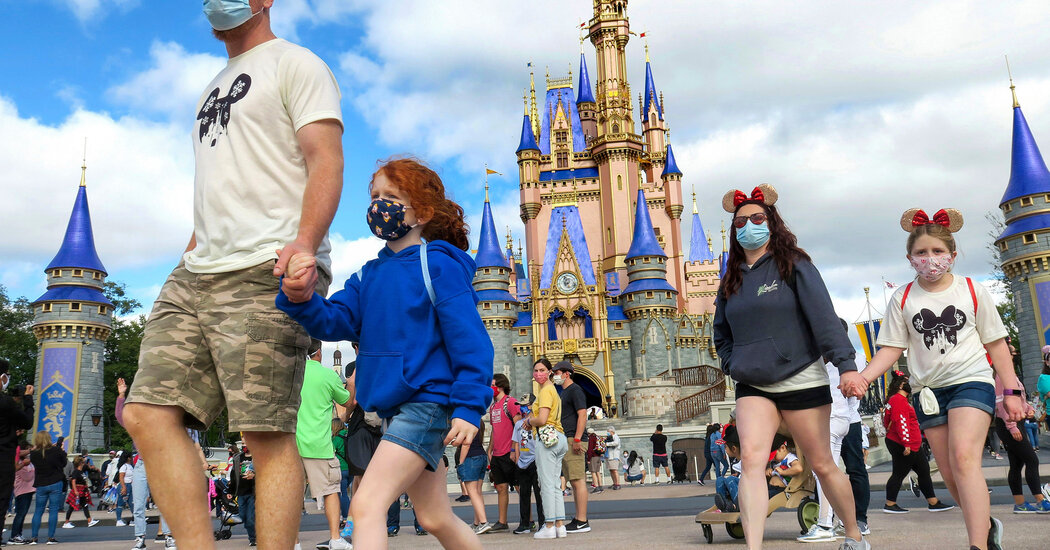
Disney has put on pause a coronavirus vaccine mandate for employees of its Florida theme park after the State Legislature and the governor made it illegal for employers to require all workers get the shots, a company spokesperson confirmed Saturday.Walt Disney World could have been facing fines under the policy now on hold, illustrating how even one of the most iconic tourism brands in the state has to deal with the headwinds of political debate over the pandemic response.The Republican-controlled Florida Legislature delivered the bill blocking Covid-19 mandates on Wednesday and Gov. Ron DeSantis signed it into law on Thursday, casting the measures as an effort to protect workers who could lose their jobs for lack of compliance.Governor DeSantis, also a Republican, has been at the forefront of the political fight to curtail mask and vaccine mandates, saying the push against those restrictions counters overreach from the federal government. “Nobody should lose their job due to heavy-handed COVID mandates and we had a responsibility to protect the livelihoods of the people of Florida,” the governor said in a statement.The Biden administration has ordered vaccinations for workers in large companies and members of the federal work force, but the effort has met resistance across the country. Florida is among states that have challenged federal mandates in court.The new Florida law prohibits employers from enforcing strict vaccine mandates, allowing employees to choose exemptions that include health or religious concerns, pregnancy or anticipated pregnancy, and having had the virus and recovered from it. Unvaccinated workers could instead undergo periodic testing or wear protective equipment, at the employers’ cost. Fines for violation could cost $10,000 a day per employee violation for businesses with fewer than 99 employees or up to $50,000 per employee violation for larger businesses.Government entities and school districts are also restricted by the Covid mandate ban.Disney World had struck a deal with employees to require theme park workers be fully vaccinated against Covid to keep their jobs, and the company defended that rule in a statement Saturday. “We believe that our approach to mandatory vaccines has been the right one as we’ve continued to focus on the safety and well-being of our Cast Members and Guests,” the statement said in part.More than 90 percent of active cast members in Florida had verified they were vaccinated, the company said, before it sent a memo to employees halting the mandate.Walt Disney’s website tells visitors it has been “very intentional and gradual” in operating safely, recommending guests exercise caution: wearing face coverings, checking for symptoms and getting the shots. “We encourage people to get vaccinated,” it says.Todd Gregory

Read more →

Tracing mechanisms of large exon splicing during vertebrate evolution

In vertebrates, large exons often skip splicing events and are evolutionarily conserved. Scientists from Nagoya University, Japan, led by Associate Professor Akio Masuda, have recently identified the mechanism behind regulated splicing of large constitutive exons which are rich in disordered regions, and their potential involvement in the assembly of transcription factors. They also explained how dual-regulation by two distinct groups of splicing factors ensures phase-separation of large exon-containing transcription factors.
Splicing events, in which non-coding sections of an RNA transcript (an RNA copy of a gene sequence) are spliced out before the RNA is translated into a protein, are crucial for gene expression regulation and protein diversity. In vertebrates, however, large exons, the coding sections of the RNA transcript, are not easily recognized by splicing factors, leading to “exon skipping.”
Interestingly, this is countered by the presence of “intrinsically disordered regions” (IDRs) in large exons, which contain cis-enhancers (non-coding DNA regions which regulate transcription of nearby genes) that aid in their splicing. For years, scientists have been intrigued by the mechanism by which large exons redeem their presence and retention in the course of vertebrate evolution. While there are several reports on the cis-regulation of large exons, studies on trans- regulation (regulation of the expression of distant genes) still lag behind.
In a new study published in the The EMBO Journal, Dr. Masuda and his team examined how transcription factors selectively splice large exons and whether this process is conserved across vertebrate species. They examined numerous RNA-binding proteins (RBPs) for their ability to bind to large constitutive exons (LCEs), or exons present in all proteins with the same function within a gene, and found that LCEs encode for the amino acids, proline and serine, that act as binding sites for “serine/arginine-rich splicing factor” (SRSF3) — a protein-encoding gene — and an RBP called “heterogeneous ribonuclear protein” (hnRNPs), with both regulating the splicing but in opposing ways.
The team used high-throughput data from RNA-sequencing of mouse and human cells depleted of SRSF3 and identified nearly 3000 LCEs that recruited SRSFs (S3-LCEs). They observed that SRSFs preferred to bind to “cytidine-rich motifs” on these exons, which aided the splicing process. Excited by this discovery, they set out to identify a splicing silencer to counter SRSF3 activity, and discovered a group of hnRNPs that inhibited S3-LCE splicing. However, the suppression was minimal and could be masked by SRSF3. “We showed that SRSF3 overrides the splicing-suppressive activity of hnRNP K on large exons,” says Dr. Masuda.
The team then looked at a subset of transcription factors that contained S3-LCEs and discovered that these exons were essential for mediator complex assembly (multiprotein complexes interacting with transcription factors). “S3-LCEs are enriched in genes for components of transcription machineries,” explains Dr. Masuda. “It is interesting that they frequently encode for IDRs in transcription factors,” he adds.
Motivated by this observation, the team resolved to investigate further. Using a combination of imaging and phase-separation techniques, they showed that the absence of SRSF3 resulted in the loss of transcription factor IDRs and disrupted their assembly. “It is possible that layered splicing regulation by hnRNP K and SRSF3 ensures proper phase-separation of these S3-LCE-containing transcription factors in vertebrates,” explains Dr. Masuda.
He believes that their findings can have important implications in the course of vertebrate evolution. “Our study shows how regulated splicing has prevented the elimination of large exons in the course of evolution,” he concludes.
Story Source:
Materials provided by Nagoya University. Note: Content may be edited for style and length.

Read more →

Covid: WHO says it is very worried about Europe surge

SharecloseShare pageCopy linkAbout sharingImage source, ReutersThe World Health Organization (WHO) is “very worried” about the spread of Covid-19 within Europe as the continent battles a fresh wave of infections. Speaking to the BBC, regional director Dr Hans Kluge warned that some 500,000 deaths could be recorded by March unless urgent action is taken.Dr Kluge said introducing measures like mask wearing could immediately help. The warning comes as several nations report record-high infection rates and introduce full and partial lockdowns. Dr Kluge said factors like the winter season, insufficient vaccine coverage and the regional dominance of the more transmissible Delta variant were behind the spread. He called for increased vaccine uptake and the implementation of basic public health measures and new medical treatments to help fight the rise. “Covid-19 has become once again the number one cause of mortality in our region,” he told the BBC, adding “we know what needs to be done” in order to fight the disease. Dr Kluge said mandatory vaccination measures should be seen as a “last resort” but that it would be “very timely” to have a “legal and societal debate” about the issue. “Before that there are other means like the Covid pass,” he said, adding that this is “not a restriction of liberty, rather it is a tool to keep our individual freedom.”Austria on Friday became the first European country to announce that Covid-19 vaccination would become a legal requirement. The new rules are set to come into force in February.The announcement alongside that of a new national lockdown was made in response to record case numbers and low vaccination levels.Many other European countries are also imposing new measures as cases rise.Countries including the Czech Republic and Slovakia have also announced fresh restrictions on unvaccinated people as record infection rates are recorded across the continent.Covid map: Where are cases the highest? Covid vaccines: How fast is worldwide progress?Overnight, violent rioting erupted in Rotterdam in the Netherlands over new Covid-19 measures. Hundreds of protesters had gathered to show their anger at government plans for a more restrictions, and a ban on fireworks on New Year’s Eve. German Health Minister Jens Spahn has described the situation there as a “national emergency” and refused to rule another national lockdown out. The UK recorded 44,242 new coronavirus cases on Friday.The government has consistently said it has no plans for another lockdown, but has said it could bring in extra Covid measures in England to protect the NHS – known as Plan B – which include mandatory Covid passports for some indoor venues, compulsory face coverings in certain indoor settings and advice to work from home.

Read more →

When Can the Covid Masks Finally Come Off?

Although the end of mask mandates is in sight, restrictions should remain in place through the holidays, experts say.Amid the turmoil of the last two years — a period that included a deadly pandemic, mass layoffs, an ugly presidential election and an attack on the United States Capitol — some of the fiercest political debates in America have been waged over a nearly weightless piece of fabric: the face mask.American officials were slow to embrace face masks as a strategy for slowing the spread of the coronavirus. When they finally did, masks became a potent symbol of the pandemic — a common-sense public health measure turned political flashpoint and a visible reminder that life was anything but normal.Now, with the summer’s Delta surge in the rearview mirror and the vaccination of school-age children underway, many Americans are wondering when the masks might finally come off.“The best science does support mask-wearing as a valid strategy to reduce Covid-19,” said Dr. Stephen Luby, an infectious disease expert and epidemiologist at Stanford University. “The issue is: Well, how long do we do this, and in how many contexts?” He added, “Do we all wear masks the rest of our lives?”Some public officials are already mapping out an endgame. On Tuesday, Mayor Muriel Bowser of Washington, D.C., announced that indoor mask requirements would be loosened. The next day, Florida lawmakers passed a bill banning school mask mandates, which some districts had already abandoned.Eric Adams, New York City’s mayor-elect, “wants to drop the mask mandate in schools when health officials determine it’s safe,” his spokesman said in an email.That time has not yet come, experts said.“Cases are starting to rise again, and we have not yet conquered this virus,” said Anne Rimoin, an epidemiologist at the University of California, Los Angeles. “We may be tired of Covid and Covid restrictions and public health measures, but this virus is certainly not done with us yet.”The Centers for Disease Control and Prevention recommends that even fully vaccinated people wear masks in public indoor spaces where community transmission of the virus is “substantial or high.” Currently, roughly 85 percent of U.S. counties meet that threshold, which is defined as at least 50 new cases weekly per 100,000 residents.It will be safer to ease mask requirements early next year, scientists said, after more children have been fully vaccinated and the holiday travel season has passed. And voluntary mask-wearing will continue to be helpful in certain circumstances, as well as in future cold and flu seasons, they noted.“I don’t think we’re going to want to put all our masks away,” Dr. Luby said.Masking upSignage encouraging masking in Manhattan Beach, Calif. David Walter Banks for The New York TimesSeveral lines of evidence support the effectiveness of face masks as a public health intervention.Laboratory studies have shown that even basic cloth masks can block more than 50 percent of small aerosols; surgical masks and N95 respirators are even better. And real-world research suggests that statewide and schoolwide mask mandates curb the spread of the virus.A randomized trial, conducted by Dr. Luby and his colleagues in 600 villages in Bangladesh, demonstrated that a mask-wearing intervention, including the distribution of free masks and a multipronged messaging campaign, led to substantial increases in mask-wearing and declines in Covid cases. (The study has not yet been published in a scientific journal.)All of these studies have limitations, but together they, and many similar analyses, add up to a clear conclusion.“There is an overwhelming amount of evidence that masks help slow transmission,” said Linsey Marr, an expert in airborne viruses at Virginia Tech.Face masks are not without drawbacks. “They impede communication,” Dr. Marr said. “They can be uncomfortable.”Some people with disabilities may not be able to wear masks, and there is still debate over how to weigh the benefits and downsides of masking young children, who are much less likely than adults to become seriously ill from the virus. (The C.D.C. says that children under 2 should not wear masks, while the World Health Organization recommends against requiring masks for children under 6.)But given that most people tolerate masks well and that mask-wearing is far less disruptive than other mitigation measures like lockdowns, face masks are a key tool in managing the pandemic, experts said.“I think mask-wearing is, in many ways, one of the interventions that you probably want to relax last,” said Richard Stutt, an infectious disease modeler at the University of Cambridge. “Mask-wearing is very, very low cost in comparison to most other interventions.”Exit strategyTravelers in Union Station in Washington. Some believe it could be safe to loosen mask requirements early next year — after more children have been vaccinated and the holiday travel season has passed.Stefani Reynolds for The New York TimesBut mask mandates were never intended to last forever, and this fall, as cases dropped and vaccine eligibility expanded, some public officials began considering how to end them.This month, the Los Angeles County Department of Public Health announced its criteria, including specific vaccination and transmission benchmarks, for lifting some of its indoor masking requirements.Gov. Phil Murphy of New Jersey recently said he hoped to lift the state’s school mask mandate “sooner than later” and floated the idea of eliminating the requirement in phases, beginning with high schools, whose teenage students have been eligible for vaccination for months.But loosening mask requirements now would be premature, experts said, especially as we head into the winter, when people spend more time indoors, holiday travel brings far-flung people together and respiratory viruses circulate easily.“Now is not the time that I would reduce mask mandates,” Dr. Luby said.Dr. Marr recommended not lifting school mask mandates until after the winter holidays had passed and more school-age children had had the chance to get both of their shots. If community transmission levels are low or moderate a few weeks after school resumes in January, then, “Yeah, let’s get rid of the masks,” she said.Seema Lakdawala, a respiratory virus expert at the University of Pittsburgh, imagined a similar timeline: “Maybe in February, we can say goodbye to masks.”Other experts were reluctant to provide a date. Dr. Rimoin said she would like to see a more sustained reduction in cases and deaths before easing mask requirements. “We’re still seeing 1,000 people dying a day from this virus,” she said. “It’s not just a matter of comfort and ease — I mean, this is a matter of life or death for many people.”A face mask futureA mask vendor in Jackson Heights, Queens.Marian Carrasquero for The New York TimesEasing mask restrictions will need to be a local decision, scientists stressed, based on a complex set of factors including local transmission and vaccination rates, and the vulnerability of the population in question.“If a region or particular community is having an outbreak, then I think it would make a lot of sense for people within that community to be wearing masks even if, nationally, things are fairly under control,” Dr. Stutt said.And mask-wearing is not all-or-nothing. Even after mandates are lifted, it will make sense for some people — older adults or those who are immunocompromised, for instance — to wear masks in certain circumstances and settings. And people should be prepared to put masks back on in the event of future surges, scientists said.Experts also expressed hope that new mask-wearing norms might outlast the pandemic. Face masks could help reduce transmission of other respiratory viruses, and experts said that they planned to continue wearing masks in some environments, such as on planes and buses, during future flu seasons.“Before the pandemic there was a stigma associated with wearing masks in this country, but I think it’s become normalized in a lot of places,” Dr. Marr said. (Still, she acknowledged, “I think others will never wear a mask again.”)Dr. Lakdawala expressed hope that as other pandemic restrictions eased, people might find a brief period of mask-wearing, in certain high-risk situations, less onerous.“Hopefully as people become more comfortable with vaccination and realize that they can see their friends and family and they can go and do their normal activities in a safe way, wearing a mask on a bus for the 20 minutes you need to ride it to work isn’t seen as a burden,” she said. “It’s seen as a way to protect yourself and your family.”

Read more →

Career Coaching Today: Forget the Corporate Ladder and Find Yourself

The pandemic created a great reckoning among workers. Here to serve them is a raft of newfangled career coaches.Ana Sarnoski quit her job in the development office at the University of Florida in 2019, shortly after she gave birth to her second daughter. The frequent travel and the expectation that she attend events on nights and weekends were getting to be too much. Once the pandemic hit, she found herself missing the income, and the self-confidence that came with it. She started to wonder what her return to working life would look like given her disinclination to return to a job like her former one.Ms. Sarnoski considered hiring a traditional career coach, the kind that could help her identify her ambitions and break them down into quantifiable goals and actionable steps. Ultimately, though, she reached out to Lindsay Morlock, a New Jersey-based spiritual coach who has seen a barrage of work-related questions that “speak to something much deeper than a career.” Ms. Morlock said that her business had quadrupled over the past 18 months, and in September she quit her job as chief operating officer of a fund-raising consulting firm in order to coach full-time.Working with Ms. Sarnoski over Zoom, Ms. Morlock led full-moon breath-work sessions and palm readings of hand prints that Ms. Sarnoski had mailed to Ms. Morlock. “According to Lindsay, your hands are basically the blueprint to your life purpose, and you just need somebody to read them,” said Ms. Sarnoski, 40. Per her hands, her life purpose was not to return to the fund-raising cocktail party circuit but “to be a healer,” specifically of service to new mothers who are vulnerable to the spiral of postpartum depression. “It was mind-blowing to me,” said Ms. Sarnoski, who enrolled in a Pilates teacher training program and recently launched a custom healing macramé business called Guided Knots.The pandemic, and the layoffs, closings and remote work that followed, set off countless professional identity crises. In September, 4.4 million people quit their jobs — a record. Women were elbowed out of the work force in particular and have been undergoing a monumental reassessment.Here to serve the needs of the great reckoning of the remote-working class is a raft of newfangled career coaches. These professionals are far more like personal dream-catchers than data crunchers, relying on the powers of journaling, body work and stream-of-consciousness voice memos. Career coaches are tilting away from talk of performance and parachutes and who moved whose cheese and are helping clients navigate a career ladder that, for many, seems to have turned sideways.“I don’t believe in five-year plans — I’m much more into a vision or intention,” Alyssa Nobriga, a Los Angeles coach, said of her work with individuals. Her clientele includes Hollywood actors, and she also runs a training program for 200 other coaches that sells out in a heartbeat.All this soul-searching landed on an already-thriving industry: Between 2015 and 2019, the number of professional coaches worldwide increased by 33 percent globally, according to a 2020 report from the International Coaching Federation, a nonprofit dedicated to the profession. There are an estimated 71,000 professional coaches worldwide and 23,000 based in North America.The $2.85 billion coaching industry is unregulated, and the work that it entails is rather loosely defined. Coaches, who charge widely varying rates, are increasingly borrowing jargon and techniques from the therapist’s tool kit, but it’s not therapy — a distinction coaching experts and mental health professionals both make clear.Dr. Anandhi Narasimhan, a Los Angeles psychiatrist, said she understands that coaching has the potential to help patients, but she worries about coaches without medical training navigating difficult issues. “Sometimes you need mental health care, and that’s different from finding your inner truth,” she said.“Therapy helps people address unfinished business, like trauma and habits we have trouble breaking,” said Terrence Maltbia, the faculty director of the coaching certificate program at Columbia. “In coaching, there has always been an element of helping people discover their purpose, but the pandemic has amplified that aspect of it.”This paradigm shift is seeping into corporate domains where seeking one’s true purpose in life hasn’t always been seen as a priority. Katie Burke, the chief people officer of HubSpot, a Boston-based software company, said her company’s human resources department encourages employees to tap into their innermost desires and move around — and not necessarily up — the chain of command.“If you’re trying to think about how to prevent people from finding their passion,” she said, “you’re fundamentally doing it the wrong way.”What Coaches DoThe questions Rana Rosen asks her clients are both practical (“What’s the next micro-step?”) and geared at “unlocking knots” and “finding your deeper truth,” such as: “Tell me who you’re jealous of,” or, “Tell me what you do when you’re distracted?”Ms. Rosen and the company she founded, “Henceforth,” are highly sought out by media professionals, some of whom are looking to escape the contracting industry. Magazine editors pass around her phone number as if it were a buzzy restaurant’s secret reservation hotline. (For her part, Ms. Rosen chalks up her popularity to her “knack for seeing people’s essence.”)The two most popular programs that Ms. Rosen, who recently moved from New York to Dover, Del., offers are “Align” ($555), which she calls “a concise deep dive,” and “Potent,” (ongoing, $333 per month), which includes more access to Ms. Rosen and the regular exchange of text and voice memos.In conversations with more than a dozen career coaches, every one said that the pandemic had profoundly shifted what clients were looking for. Ms. Rosen said she had seen a newfound sense of resilience in many workers. “I’m finding people are more open to taking the perceived risk of finding work they like and care about,” she said.While clients seek out the help of coaches in order to make radical changes, the road to that destination can be winding, often pleasantly so.Georgia Irwin, a coach, at her home in Ladbroke Grove in West London. “If a client’s values are closely linked to productivity, then we will align their goals accordingly, but usually this isn’t the case,” she said.Mary Turner for The New York Times“As a coach, I’m not interested in productivity for productivity’s sake,” said Georgia Irwin, who studied English literature at the University of Edinburgh and was, until she retrained as a coach two years ago, a communications and brand consultant. She said she works to understand her clients’ principles and core skills. “If a client’s values are closely linked to productivity, then we will align their goals accordingly, but usually this isn’t the case.”Dara Dubinet, a former raw food expert and jewelry designer turned life-direction specialist, encourages her clients to follow their “North node.” Her field of expertise, astrogeography, uses the date, time and place of a client’s birth to help identify their North node, which, she says, is their destiny. For $265, a lost soul can purchase access to her Complete Life Tools program and watch a bundle of personalized videos about their planetary energies and life’s purpose and direction. The aim is to help clients stop “being so South node” (in their comfort zone) and move away from habits that don’t serve them well.Shirin Eskandani has seen a threefold rise in career-related queries over the past year. Ms. Eskandani, a Brooklynite, switched over to the world of coaching four years ago, after finally achieving her lifelong dream of singing at the Metropolitan Opera. “I got to the pinnacle and I was totally burned out,” she said. A life coach helped her tap back into her love of singing, but she was more excited about her newfound love of the coaching process.Now Ms. Eskandani is a full-time coach, generally working with clients over six-month spans. The sessions start at 90 minutes and scale back to 60 minutes, which is a fairly common structure in the coaching world. Slightly less conventional, however, are her favorite methods, which include the emotional freedom technique (E.F.T., better known as therapeutic tapping), guided meditations and breath work. She also sends some clients to a Reiki practitioner.Listening to what their body can tell them about their career path is something Urszula Lipsztajn of Squamish, British Columbia, also encourages her clients to do.“Things either contract or expand us,” she said. “I will remind them to be aware and pay attention to their bodies. They might say, ‘I was in a room with a lot of people and I felt expansive and excited.’ And then, ‘I was in a room with my boss’s lieutenant, and I contracted. Oh my gosh, now I know I need to leave my job. I don’t want to be here.’ ”What People WantWhen Caroline Webb started work as an executive coach, the work was focused largely on moving up in the corporate world: “The field was perceived to be about climbing up the ladder, and performance,” said Ms. Webb, an economist and former McKinsey executive who wrote the best-selling book “How to Have a Good Day.”“The narrative has shifted,” she said. “One of the biggest priorities today is helping people see not just what job they might want but how they want to work differently.”The once-dominant approach of establishing goals and goal posts, mostly around promotions and pay structures, has given way to an emphasis on self-reflection and inner truth-finding.Dara Dubinet in Sedona, Ariz. For $265, a lost soul can purchase access to her Complete Life Tools program and watch a bundle of personalized videos about their planetary energies and life’s purpose and direction.John Burcham for The New York Times“Covid really took the Band-Aid off the certainty that people were living with,” said David Dowd, the founder of Creativity Expansion Wrks, who poo-poos the word “change” (it’s “evolve”) and has been working as a Manhattan-based career coach for 50 years. “What worked isn’t working anymore,” he said.The quest to be a super performer might also be losing some relevance. “If you think about what humans are better at than robots, it’s empathy, creativity, wisdom and inspiration,” said Ms. Webb. When she works with C-suite executives, the focus tends to be less on turbocharging a specific outcome than helping them develop compassion and leadership and stress-management skills — “this idea that you’re a human being first.”The coaching industry sprung up in earnest the late 1970s, an outcropping of the Human Potential Movement, which emerged in Germany in the 1960s and gave rise to Werner Erhard’s EST school, known for its confrontational and often combative techniques. The apogee of results-focused coaching was illustrated by alpha-coach Tony Robbins’s appearance on the cover of Fortune Magazine in 2014.With executives under pressure to be more compassionate and inclusive, the field is expressing a softer side and splintering out into untold specialties. “Now, there’s career coaches, there’s health and wellness coaches, there’s leadership coaches, executive coaches, life spirit coaches, spiritual coaches, dating coaches, health and wellness coaches, coaches who specialize in workers with A.D.H.D.,” said William Pullen of the Institute for Transformational Leadership at Georgetown University. “And awareness of coaching has increased — more and more people are looking to coaches for support and help.”There’s also a new cachet factor. “Twenty years ago coaching was seen as remedial, a sign the candidate was coming up short,” said Michael Useem, a professor of management at the University of Pennsylvania’s Wharton School of Business. “That’s completely flipped upside down. It’s seen as a privilege.”‘The Khaki Pants Whisperer’Just before the pandemic, Eva Talmadge, a 40-year-old freelance book editor who’d recently moved to Washington for her husband’s work, decided that she wanted to find a steady job. She was lonely, and she missed water-cooler chatter and benefits. “What I needed was the khaki pants whisperer,” she said.Ms. Talmadge ended up reaching out to Denise Fowler, a Virginia coach whose Career Happiness Coaching website flaunts professional bona fides (including an affiliation with George Washington University) and a picture of a balloon with a happy face — a combination of the old five-year-plan type practicality with the newer focus on purpose and authenticity.Ms. Fowler helped Ms. Talmadge to rewrite her LinkedIn bio and résumé and to translate her skills for the particular needs of the D.C. nonprofit and think-tank world.Following Ms. Fowler’s advice, Ms. Talmadge rewrote her online materials to come across as chattier. (“Now my LinkedIn page reads: ‘Hey,’” Ms. Talmadge said.) Ms. Fowler also diagnosed other problems: “She said that Times New Roman was the baggy khaki font of resumes, so it’s now in Garamond.”But the coach’s best piece of advice turned out to be the simplest and most spiritual one — to be open. Not long after dressing up her résumé, Ms. Talmadge overcame her reticence to brazenly network and told an email list of independent editors that she was actively looking for work.A few weeks later, a member reached out about a gig editing for a Berlin-based think tank. Ms. Talmadge proofread her Garamond-font résumé one last time and sent it off to the organization. That’s where she works now.

Read more →

C.D.C. Panel Endorses Covid Vaccine Booster Shots for All Adults

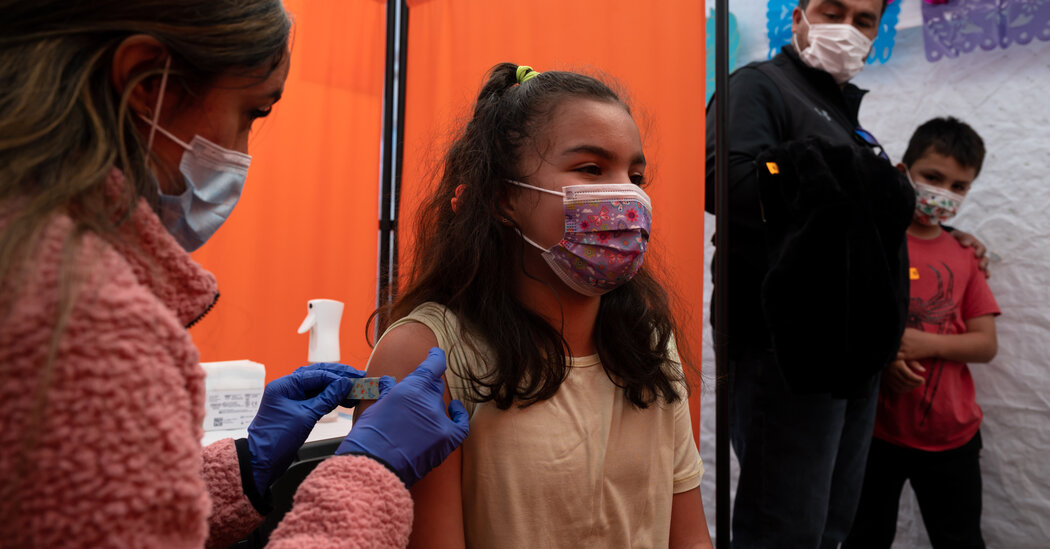
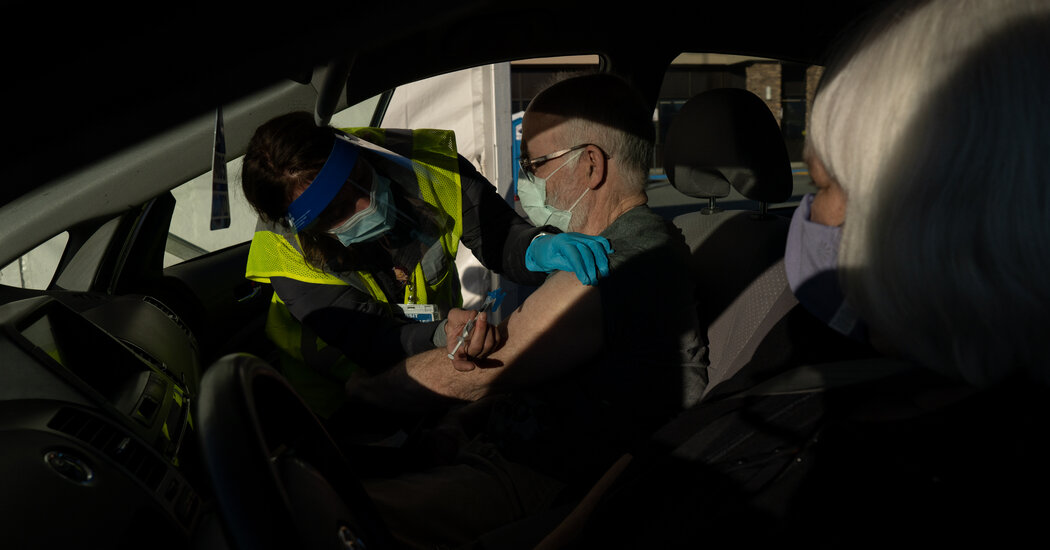
As infections rise, Americans over 18 will be permitted to get extra doses. But it’s not clear boosters really are needed by so many people, or that the shots will turn back the pandemic.Faced with rising infections and an anticipated surge in holiday travel, scientific advisers to the Centers for Disease Control and Prevention on Friday endorsed booster shots of the coronavirus vaccines for all Americans over 18.If formally adopted by the agency, the recommendation will fulfill President Biden’s pledge in August to make the extra doses available to all adults, capping months of scientific debate over whether most people really needed boosters. The shots are already available at many drugstores, doctors’ offices and vaccination centers.The C.D.C. advisers said that Americans over age 50, as well as those 18 and older living in long-term care facilities, “should” get booster shots of the Pfizer-BioNTech or Moderna vaccines. All other adults over age 18 “may” get booster doses, the panel decided. Recipients of Johnson & Johnson’s one-dose vaccine already were cleared to get a booster at least two months after the initial shot.Earlier on Friday, the Food and Drug Administration authorized booster shots for all Americans over age 18. But the C.D.C. usually sets the clinical guidelines adopted by the medical profession. The agency’s director, Dr. Rochelle Walensky, is expected to approve the panel’s recommendation later on Friday. Many experts worried that extra doses were not needed by most adults to prevent serious illness and death, and that a push for boosters could constrain global vaccine supplies even as people in many poor countries have not received their first doses.But infection rates are rising again in the United States and soaring in much of Europe. After recording more than 14,000 new infections on Thursday, Austria will go into a nationwide lockdown on Monday and impose a coronavirus vaccination mandate in February, the first such mandate in a Western democracy.Health officials in many of these countries, and now in the United States, see booster shots as a way of shoring up defenses against a tenacious enemy and gaining the upper hand in the pandemic. France, for example, has mandated booster shots for those over age 65 who wish to get a health pass permitting access to public venues.“Look what other countries are doing now about adopting a booster campaign virtually for everybody,” Dr. Anthony S. Fauci, the Biden administration’s top Covid adviser, said at a conference on Tuesday. “I think if we do that, and we do it in earnest, I think by the spring we can have pretty good control of this.”In the United States, infections have increased by 33 percent on average over the past two weeks, to 94,000 a day. The C.D.C.’s decision landed just as Americans prepare to spend the holidays with family and friends, gatherings likely to accelerate the trend.The shots may help forestall at least some infections, particularly in older adults and those with certain health conditions. But many experts, including some who advise federal agencies, are skeptical that boosters alone can turn the tide.The extra shots are unlikely to offer much benefit to adults under 65, who remain protected from severe illness and hospitalization by the initial immunization, the experts said. “Overall protection remains high for severe disease and hospitalization,” said Dr. Sara Oliver, an epidemiologist at the C.D.C., told the scientific advisers meeting on Friday. Moreover, more than 100 million Americans have not received even the first dose of a coronavirus vaccine. In the United States, as in Europe, deep pockets of vaccine-resistant adults are likely to prolong the pandemic, however well protected their neighbors may be.Many Americans seem unmoved by the sudden push for boosters. More than 85 percent of the adult population became eligible when the C.D.C. added depression and other mental illnesses to the list of conditions that qualify people for an extra vaccine dose. But only about 18 percent of those ages 18 and older have chosen to get one. And those may not be the people most in need of extra protection.Production of the Pfizer-BioNTech Covid vaccine in Puurs, Belgium.Pfizer, via Associated PressThe most effective strategy for the administration would be to rush booster doses to residents of nursing homes and long-term care facilities, said Dr. Celine Gounder, an infectious disease specialist at Bellevue Hospital Center. These are the adults mostly likely to benefit.At the moment, fully vaccinated white people are more likely to have obtained booster shots, compared with other racial and ethnic groups, according to data compiled by the Kaiser Family Foundation. At the scientific panel meeting, several experts noted that overly complicated eligibility criteria may be confusing many Americans and taxing health care providers. Americans who have opted for boosters “tend to be of higher socioeconomic status and more highly educated, and have more access in general to medical care,” Dr. Gounder said. “That’s not necessarily who’s actually at risk of severe disease, hospitalization or death, and so I think you’re going to have limited public health impact.”The Biden administration intends to provide booster shots in long-term care facilities and nursing homes, and work with community health centers to reach people with limited access to health care, said Ian Sams, a spokesman at the Department of Health and Human Services.There is reason to think more people may choose to get boosters in the coming weeks. While extra shots of the Pfizer-BioNTech vaccine have been available since late September, boosters of the Moderna and Johnson & Johnson vaccines were authorized roughly four weeks ago.And every week, more Americans will become eligible as they pass the six-month mark since their initial immunizations. At a vaccine clinic in Chelsea, Mass., people waited after receiving their shots earlier this month.Brian Snyder/ReutersAlthough federal officials have opted to double down on booster shots as the best hope for ending the pandemic, the scientific questions about their efficacy are far from settled.Dr. Fauci and other officials contend that protection from the vaccines is now waning over time, in all age groups, even against severe illness and hospitalization..css-1xzcza9{list-style-type:disc;padding-inline-start:1em;}.css-3btd0c{font-family:nyt-franklin,helvetica,arial,sans-serif;font-size:1rem;line-height:1.375rem;color:#333;margin-bottom:0.78125rem;}@media (min-width:740px){.css-3btd0c{font-size:1.0625rem;line-height:1.5rem;margin-bottom:0.9375rem;}}.css-3btd0c strong{font-weight:600;}.css-3btd0c em{font-style:italic;}.css-1kpebx{margin:0 auto;font-family:nyt-franklin,helvetica,arial,sans-serif;font-weight:700;font-size:1.125rem;line-height:1.3125rem;color:#121212;}#NYT_BELOW_MAIN_CONTENT_REGION .css-1kpebx{font-family:nyt-cheltenham,georgia,’times new roman’,times,serif;font-weight:700;font-size:1.375rem;line-height:1.625rem;}@media (min-width:740px){#NYT_BELOW_MAIN_CONTENT_REGION .css-1kpebx{font-size:1.6875rem;line-height:1.875rem;}}@media (min-width:740px){.css-1kpebx{font-size:1.25rem;line-height:1.4375rem;}}.css-1gtxqqv{margin-bottom:0;}.css-19zsuqr{display:block;margin-bottom:0.9375rem;}.css-12vbvwq{background-color:white;border:1px solid #e2e2e2;width:calc(100% – 40px);max-width:600px;margin:1.5rem auto 1.9rem;padding:15px;box-sizing:border-box;}@media (min-width:740px){.css-12vbvwq{padding:20px;width:100%;}}.css-12vbvwq:focus{outline:1px solid #e2e2e2;}#NYT_BELOW_MAIN_CONTENT_REGION .css-12vbvwq{border:none;padding:10px 0 0;border-top:2px solid #121212;}.css-12vbvwq[data-truncated] .css-rdoyk0{-webkit-transform:rotate(0deg);-ms-transform:rotate(0deg);transform:rotate(0deg);}.css-12vbvwq[data-truncated] .css-eb027h{max-height:300px;overflow:hidden;-webkit-transition:none;transition:none;}.css-12vbvwq[data-truncated] .css-5gimkt:after{content:’See more’;}.css-12vbvwq[data-truncated] .css-6mllg9{opacity:1;}.css-qjk116{margin:0 auto;overflow:hidden;}.css-qjk116 strong{font-weight:700;}.css-qjk116 em{font-style:italic;}.css-qjk116 a{color:#326891;-webkit-text-decoration:underline;text-decoration:underline;text-underline-offset:1px;-webkit-text-decoration-thickness:1px;text-decoration-thickness:1px;-webkit-text-decoration-color:#326891;text-decoration-color:#326891;}.css-qjk116 a:visited{color:#326891;-webkit-text-decoration-color:#326891;text-decoration-color:#326891;}.css-qjk116 a:hover{-webkit-text-decoration:none;text-decoration:none;}Israeli health officials are seeing a drop in immunity “not only against infection, but against hospitalizations, and to some extent death,” Dr. Fauci recently told “The Daily” podcast. The trend, he added, “is starting to now involve all age groups — it isn’t just the elderly.”But other experts disagree, pointing to studies showing that the vaccines remain highly effective against severe illness in adults under 65. The apparent waning of protection against infection may only result from vaccinated people taking fewer precautions, they say, and to the arrival of the more contagious Delta variant.Even if they did not provide much additional protection to most adults, booster shots still would be helpful if they helped curb transmission of the virus. Federal health officials have argued as much, citing dropping case numbers in Israel following its booster campaign.But in the United States, for reasons not fully understood, infections began falling in September, said Dr. Paul Offit, director of the Vaccine Education Center at Children’s Hospital of Philadelphia and an adviser to the F.D.A. “We were having a decrease here as well before we ever started booster doses,” he said.A booster shot should prevent people from becoming infected and limit their infectiousness to some extent. Still, some household studies indicate that vaccinated people are about half as likely as unvaccinated people to transmit the Delta variant, but the protective effect seems to decline over the following weeks. The administration’s time and effort would be better spent getting primary shots to the unvaccinated, said Virginia Pitzer, an epidemiologist at the Yale School of Public Health. “In most places,” she said, “unvaccinated people are still the ones who are driving a lot of the transmission.”A medical worker tended to a Covid patient at the Sheba Medical Center in Ramat Gan, Israel, in October.Nir Elias/ReutersMost experts agree that booster shots benefit adults over 65 and people with weak immune systems. But in the weeks since boosters were authorized, only 32 percent of older people have received extra vaccine doses.“I’m seeing a lot of people who would benefit from a third or booster dose who have not yet had their dose,” said Dr. Camille Kotton, an infectious disease physician at Massachusetts General Hospital and an adviser to the C.D.C.“Some of it is fatigue, some of it is not understanding the new guidance,” she added. “It’s very hard to understand for whom a booster dose is recommended at this point.”In Mississippi, Judy Spencer, 76, said she was in good health and did not plan to get a booster, as she had already received two doses of the Moderna vaccine. “I took the shot, I’m glad I did, but I’m through with it,” she said.Boosters and shots for children were administered at the Unidos En Salud community vaccination and testing site in San Francisco.Mike Kai Chen for The New York TimesThe picture for adults under 65 is muddled, and some experts balked at the prospect of extra shots because it was unclear whether the benefit would outweigh the potential risks. Men and boys under 30, in particular, are at slightly increased risk of developing rare and mild heart problems linked to the Pfizer-BioNTech and Moderna vaccines.Experts said the low rate of boosters to date could be at least partly blamed on the administration’s muddled messaging. In earlier recommendations, the C.D.C. specified groups of people who should get boosters because of their age, occupations or underlying medical risks.“C.D.C. speaks Latin,” Ned Lamont, the governor of Connecticut, said at a news conference on Thursday. “I can’t figure out who’s eligible, who’s not eligible.” Dr. Ashish Jha, dean of the Brown University School of Public Health, said, “It’s been very frustrating to watch the national conversation on boosters.”

Read more →

Study: Stillbirths Higher Among Pregnant Women with Covid

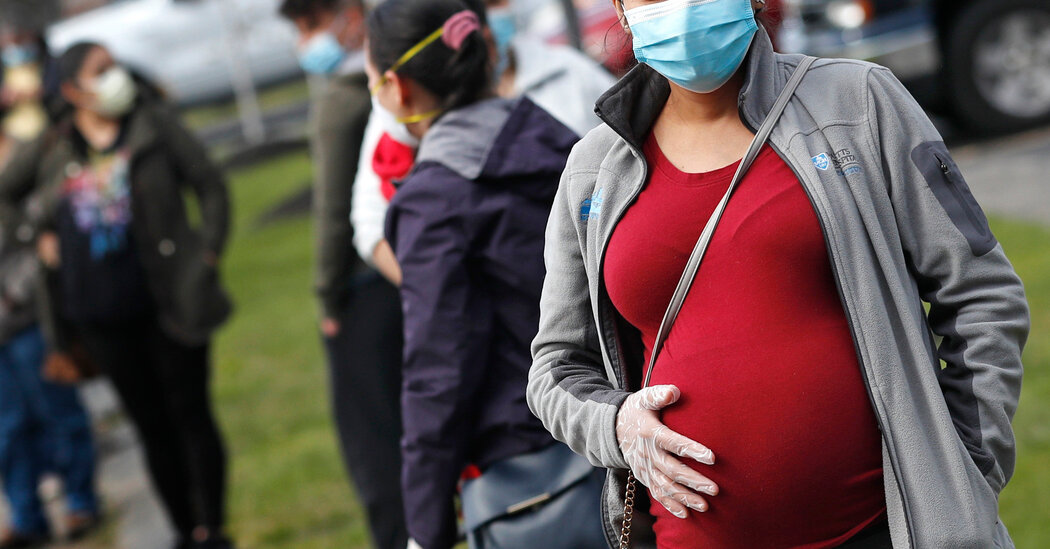
Pregnant women who had Covid-19 when they delivered their babies were almost twice as likely to have a stillbirth as healthy women who did not have Covid, according to a new Centers for Disease Control study released Friday that examined more than 1.2 million deliveries in the U.S. between March 2020 and September 2021.While stillbirths were rare overall, representing fewer than 1 percent of all births, 1.26 percent of the 21,653 women with Covid experienced a stillbirth, compared with 0.64 percent of women without Covid. Even after adjustments were made to control for differences between the groups, women with Covid were 1.9 times as likely as healthy women to have a stillbirth.The risk of stillbirth has been even higher for women with Covid since the Delta variant has been dominant: while the risk of stillbirth for women with Covid was 1.5 times as high as that of healthy women before July, when Delta became dominant, it was 4 times as high between July and September. As many as 2.7 percent of deliveries to women with Covid were stillbirths during the period studied while Delta was dominant.“There had been reports suggesting an increased risk, but stillbirths are hard to study, because luckily they are uncommon,” said Dr. Denise Jamieson, chief of gynecology and obstetrics at Emory Healthcare. “This is some of the strongest evidence of the increased risk, and probably the strongest data pointing to the risks specifically tied to Delta.”“The take home message is the importance of vaccination for pregnant women, particularly at this point in the pandemic with Delta circulating,” she said.The C.D.C. strongly encourages pregnant and breastfeeding women and women planning or trying to become pregnant to be vaccinated against Covid, but resistance has been strong, even though pregnancy is on the C.D.C.’s list of health conditions that increase the risk of severe disease.Studies have shown that pregnant patients who are symptomatic are more than twice as likely as other symptomatic patients to require admission to intensive care or interventions like mechanical ventilation, and they may be more likely to die. They are also more likely to experience a preterm birth.Another C.D.C. study issued Wednesday described the cases of 15 pregnant women in Mississippi who died of Covid during their pregnancy or shortly afterward, including six who died before the Delta variant became dominant and nine who died between July and October, while Delta was dominant.Of the women who died, nine were Black women, three were white women and three were Hispanic women. The median age was 30. Fourteen of the women had underlying medical conditions, and none were vaccinated. Five of the deaths occurred before vaccinations were available.The study concluded that the risk of death for a pregnant woman with Covid is nine deaths per 1,000 infections, while the risk of death from Covid for other women of reproductive age is only 2.5 deaths per 1,000 infections.A third study by C.D.C. researchers found that pregnant women with Covid faced a more than 60 percent higher risk of being admitted to intensive care, needing a ventilator or special equipment to breathe, and even of dying during the period that Delta was dominant, compared to pregnant women during the period before the variant was dominant.

Read more →

A stealthy way to combat tumors

Under the right circumstances, the body’s T cells can detect and destroy cancer cells. However, in most cancer patients, T cells become disarmed once they enter the environment surrounding a tumor.
Scientists are now trying to find ways to help treat patients by jumpstarting those lackluster T cells. Much of the research in this field, known as cancer immunotherapy, has focused on finding ways to stimulate those T cells directly. MIT researchers have now uncovered a possible new way to indirectly activate those T cells, by recruiting a population of helper immune cells called dendritic cells.
In a new study, the researchers identified a specific subset of dendritic cells that have a unique way of activating T cells. These dendritic cells can cloak themselves in tumor proteins, allowing them to impersonate cancer cells and trigger a strong T cell response.
“We knew that dendritic cells are incredibly important for the antitumor immune response, but we didn’t know what really constitutes the optimal dendritic cell response to a tumor,” says Stefani Spranger, the Howard S. and Linda B. Stern Career Development Professor at MIT and a member of MIT’s Koch Institute for Integrative Cancer Research.
The results suggest that finding ways to stimulate that specific population of dendritic cells could help to enhance the effectiveness of cancer immunotherapy, she says. In a study of mice, the researchers showed that stimulating these dendritic cells slowed the growth of melanoma and colon tumors.
Spranger is the senior author of the study, which appears today in the journal Immunity. The lead author of the paper is MIT graduate student Ellen Duong.

Read more →

Delta-like SARS-CoV-2 variants are most likely to increase pandemic severity

A SARS-CoV-2 variant with traits similar to that of the Delta variant — enhanced transmissibility and an ability to infect people who had previous infections/vaccination — will cause a more severe pandemic with more infections and breakthrough infections/reinfections than variants with either trait alone, according to a mathematical model created by researchers at Harvard T.H. Chan School of Public Health.
Their work, which was published online November 19, 2021 in Cell, could help researchers and public health officials interpret the significance of novel and existing variants and design tailored public health responses for various scenarios based on a variant’s characteristics.
“Thus far, evidence of immune escape — the ability of a variant to evade the immune system and cause reinfections or breakthrough infections — has been a red flag,” said Mary Bushman, co-author of the Cell paper and a postdoctoral research fellow in the Department of Epidemiology at Harvard Chan School. “Our findings say it’s maybe more of a yellow flag — this is not such a big deal on its own. But when it’s combined with enhanced transmissibility, then it can be a really big deal.”
As the COVID pandemic has progressed, variants of the initial wild-type SARS-CoV-2 virus have emerged. Some have quickly become a dominant strain and increased the number of infections, like the Alpha and Delta variants, while others, like Beta, failed to take hold or significantly affect the pandemic’s trajectory. To understand the effects that certain factors would have on a pandemic, Bushman created a model that simulates how pandemics fueled by hypothetical variants would affect populations that are using various combinations of masking with physical distancing, and vaccinations.
The analysis simulated a SARS-CoV-2 pandemic with several different hypothetical variants including combinations of the two traits: enhanced transmissibility, similar to the Alpha variant; partial immune escape, similar to the Beta variant; enhanced transmissibility with partial immune escape, similar to the Delta variant; and a variant with neither trait. The analysis also factored in how certain variables, such as masking/physical distancing or vaccinations, would affect the pandemic’s trajectory. For each of the scenarios, the researchers analyzed the total number of infections as well as the number/percentage of infections averted by vaccination.
Bushman and their team determined that a variant with enhanced transmissibility alone would likely be more dangerous than a variant that could partially evade the immune system. Yet a variant with both traits could cause more infections, reinfections, and breakthrough infections than a variant with either trait alone.
According to the model, vaccination is also predicted to be highly beneficial in the case of Delta-like variants because vaccinations would prevent a greater number of cases that a more transmissible virus would potentially cause, and because the milder nature of breakthrough infections should substantially reduce overall mortality.
“It’s really important that people realize the emergence of variants like Delta make high levels of vaccination all the more crucial,” said Bill Hanage, associate professor of epidemiology and co-author of the Cell paper. “Even if we cannot eliminate the virus, we can ensure that people face it with the best preparation, and a more transmissible virus means there will be more infections in the absence of vaccination, so more people stand to benefit from it.”
Other Harvard Chan School co-authors of the study included Rebecca Kahn, Bradford Taylor, and Marc Lipsitch.
This research was supported by the National Institute of Allergy and Infectious Diseases of the National Institutes of Health (R01AI128344), U.S. National Cancer Institute SeroNet (U01CA261277), and the U.S. Centers for Disease Control and Prevention (200-2016-91779).

Read more →