A Cure for Type 1 Diabetes? For One Man, It Seems to Have Worked.
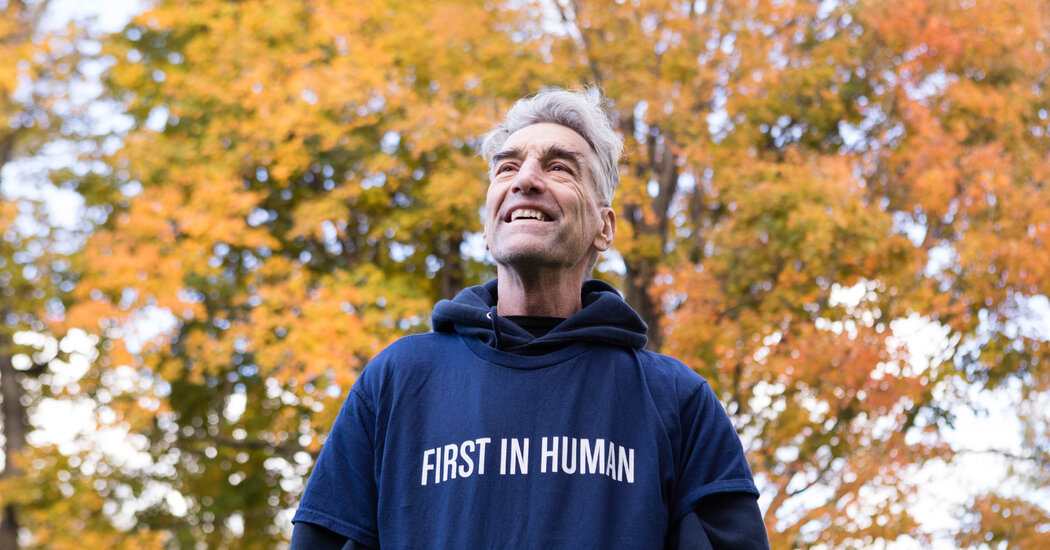
A new treatment using stem cells that produce insulin has surprised experts and given them hope for the 1.5 million Americans living with the disease.Brian Shelton’s life was ruled by Type 1 diabetes.When his blood sugar plummeted, he would lose consciousness without warning. He crashed his motorcycle into a wall. He passed out in a customer’s yard while delivering mail. Following that episode, his supervisor told him to retire, after a quarter century in the Postal Service. He was 57.His ex-wife, Cindy Shelton, took him into her home in Elyria, Ohio. “I was afraid to leave him alone all day,” she said.Early this year, she spotted a call for people with Type 1 diabetes to participate in a clinical trial by Vertex Pharmaceuticals. The company was testing a treatment developed over decades by a scientist who vowed to find a cure after his baby son and then his teenage daughter got the devastating disease.Mr. Shelton was the first patient. On June 29, he got an infusion of cells, grown from stem cells but just like the insulin-producing pancreas cells his body lacked.Now his body automatically controls its insulin and blood sugar levels.Mr. Shelton, now 64, may be the first person cured of the disease with a new treatment that has experts daring to hope that help may be coming for many of the 1.5 million Americans suffering from Type 1 diabetes.“It’s a whole new life,” Mr. Shelton said. “It’s like a miracle.”Diabetes experts were astonished but urged caution. The study is continuing and will take five years, involving 17 people with severe cases of Type 1 diabetes. It is not intended as a treatment for the more common Type 2 diabetes.“We’ve been looking for something like this to happen literally for decades,” said Dr. Irl Hirsch, a diabetes expert at the University of Washington who was not involved in the research. He wants to see the result, not yet published in a peer-reviewed journal, replicated in many more people. He also wants to know if there will be unanticipated adverse effects and if the cells will last for a lifetime or if the treatment would have to be repeated.But, he said, “bottom line, it is an amazing result.”Dr. Peter Butler, a diabetes expert at U.C.L.A. who also was not involved with the research, agreed while offering the same caveats.“It is a remarkable result,” Dr. Butler said. “To be able to reverse diabetes by giving them back the cells they are missing is comparable to the miracle when insulin was first available 100 years ago.”And it all started with the 30-year quest of a Harvard University biologist, Doug Melton.‘A Terrible, Terrible Disease’Dr. Melton had never thought much about diabetes until 1991 when his 6-month-old baby boy, Sam, began shaking, vomiting and panting.“He was so sick, and the pediatrician didn’t know what it was,” Dr. Melton said. He and his wife Gail O’Keefe rushed their baby to Boston Children’s Hospital. Sam’s urine was brimming with sugar — a sign of diabetes.The disease, which occurs when the body’s immune system destroys the insulin-secreting islet cells of the pancreas, often starts around age 13 or 14. Unlike the more common and milder Type 2 diabetes, Type 1 is quickly lethal unless patients get injections of insulin. No one spontaneously gets better.“It’s a terrible, terrible disease,” said Dr. Butler at U.C.L.A.Dr. Doug Melton, a biologist at Harvard University, did not think much about diabetes until his 6-month-old son started showing symptoms.Kayana Szymczak for The New York TimesPatients are at risk of going blind — diabetes is the leading cause of blindness in this country. It is also the leading cause of kidney failure. People with Type 1 diabetes are at risk of having their legs amputated and of death in the night because their blood sugar plummets during sleep. Diabetes greatly increases their likelihood of having a heart attack or stroke. It weakens the immune system — one of Dr. Butler’s fully vaccinated diabetes patients recently died from Covid-19.Added to the burden of the disease is the high cost of insulin, whose price has risen each year.The only cure that has ever worked is a pancreas transplant or a transplant of the insulin-producing cell clusters of the pancreas, known as islet cells, from an organ donor’s pancreas. But a shortage of organs makes such an approach an impossibility for the vast majority with the disease.“Even if we were in utopia, we would never have enough pancreases,” said Dr. Ali Naji, a transplant surgeon at the University of Pennsylvania who pioneered islet cell transplants and is now a principal investigator for the trial that treated Mr. Shelton.Blue CluesFor Dr. Melton and Ms. O’Keefe, caring for an infant with the disease was terrifying. Ms. O’Keefe had to prick Sam’s fingers and feet to check his blood sugar four times a day. Then she had to inject him with insulin. For a baby that young, insulin was not even sold in the proper dose. His parents had to dilute it.“Gail said to me, ‘If I’m doing this you have to figure out this damn disease,” Dr. Melton recalled. In time, their daughter Emma, four years older than Sam, would develop the disease too, when she was 14.Dr. Melton had been studying frog development but abandoned that work, determined to find a cure for diabetes. He turned to embryonic stem cells, which have the potential to become any cell in the body. His goal was to turn them into islet cells to treat patients.One problem was the source of the cells — they came from unused fertilized eggs from a fertility clinic. But in August 2001, President George W. Bush barred using federal money for research with human embryos. Dr. Melton had to sever his stem cell lab from everything else at Harvard. He got private funding from the Howard Hughes Medical Institute, Harvard and philanthropists to set up a completely separate lab with an accountant who kept all its expenses separate, down to the light bulbs.Over the 20 years it took the lab of 15 or so people to successfully convert stem cells into islet cells, Dr. Melton estimates the project cost about $50 million.Mr. Shelton’s diabetes treatment supplies. He said his new drugs, which suppress his immune system, are far less onerous than the constant blood sugar monitoring and insulin intake.Amber Ford for The New York TimesThe challenge was figure out what sequence of chemical messages would turn stem cells into insulin-secreting islet cells. The work involved unraveling normal pancreatic development, figuring out how islets are made in the pancreas and conducting endless experiments to steer embryonic stem cells to becoming islets. It was slow going.After years when nothing worked, a small team of researchers, including Felicia Pagliuca, a postdoctoral researcher, was in the lab one night in 2014, doing one more experiment.“We weren’t very optimistic,” she said. They had put a dye into the liquid where the stem cells were growing. The liquid would turn blue if the cells made insulin.Her husband had already called asking when was she coming home. Then she saw a faint blue tinge that got darker and darker. She and the others were ecstatic. For the first time, they had made functioning pancreatic islet cells from embryonic stem cells.The lab celebrated with a little party and a cake. Then they had bright blue wool caps made for themselves with five circles colored red, yellow, green, blue and purple to represent the stages the stem cells had to pass through to become functioning islet cells. They’d always hoped for purple but had until then kept getting stuck at green.The next step for Dr. Melton, knowing he’d need more resources to make a drug that could get to market, was starting a company.Moments of TruthHis company Semma was founded in 2014, a mix of Sam and Emma’s names.One challenge was to figure out how to grow islet cells in large quantities with a method others could repeat. That took five years.The company, led by Bastiano Sanna, a cell and gene therapy expert, tested its cells in mice and rats, showing they functioned well and cured diabetes in rodents.At that point, the next step — a clinical trial in patients — needed a large, well financed and experienced company with hundreds of employees. Everything had to be done to the exacting standards of the Food and Drug Administration — thousands of pages of documents prepared, and clinical trials planned.Chance intervened. In April 2019, at a meeting at Massachusetts General Hospital, Dr. Melton ran into a former colleague, Dr. David Altshuler, who had been a professor of genetics and medicine at Harvard and the deputy director of the Broad Institute. Over lunch, Dr. Altshuler, who had become the chief scientific officer at Vertex Pharmaceuticals, asked Dr. Melton what was new.Dr. Melton took out a small glass vial with a bright purple pellet at the bottom.“These are islet cells that we made at Semma,” he told Dr. Altshuler.Vertex Pharmaceuticals’ headquarters in Boston.Bill Sikes/Associated PressVertex focuses on human diseases whose biology is understood. “I think there might be an opportunity,” Dr. Altshuler told him.Meetings followed and eight weeks later, Vertex acquired Semma for $950 million. With the acquisition, Dr. Sanna became an executive vice president at Vertex.The company will not announce a price for its diabetes treatment until it is approved. But it is likely to be expensive. Like other companies, Vertex has enraged patients with high prices for drugs that are difficult and expensive to make.Vertex’s challenge was to make sure the production process worked every time and that the cells would be safe if injected into patients. Employees working under scrupulously sterile conditions monitored vessels of solutions containing nutrients and biochemical signals where stem cells were turning into islet cells.Less than two years after Semma was acquired, the F.D.A. allowed Vertex to begin a clinical trial with Mr. Shelton as its initial patient.Like patients who get pancreas transplants, Mr. Shelton has to take drugs that suppress his immune system. He says they cause him no side effects, and he finds them far less onerous or risky than constantly monitoring his blood sugar and taking insulin. He will have to continue taking them to prevent his body fro rejecting the infused cells.But Dr. John Buse, a diabetes expert at the University of North Carolina who has no connection to Vertex, said the immunosuppression gives him pause. “We need to carefully evaluate the trade-off between the burdens of diabetes and the potential complications from immunosuppressive medications.”Mr. Shelton’s treatment, known as an early phase safety trial, called for careful follow-up and required starting with half the dose that would be used later in the trial, noted Dr. James Markmann, Mr. Shelton’s surgeon at Mass General who is working with Vertex on the trial. No one expected the cells to function so well, he said.“The result is so striking,” Dr. Markmann said, “It’s a real leap forward for the field.”Mr. Shelton recalls shedding tears when he checked his blood sugar levels after having a meal following his procedure.Amber Ford for The New York TimesLast month, Vertex was ready to reveal the results to Dr. Melton. He did not expect much.“I was prepared to give them a pep talk,” he said.Dr. Melton, normally a calm man, was jittery during what felt like a moment of truth. He had spent decades and all of his passion on this project. By the end of the Vertex team’s presentation, a huge smile broke out on his face; the data were for real.He left Vertex and went home for dinner with Sam, Emma and Ms. O’Keefe. When they sat down to eat, Dr. Melton told them the results.“Let’s just say there were a lot of tears and hugs.”For Mr. Shelton the moment of truth came a few days after the procedure, when he left the hospital. He measured his blood sugar. It was perfect. He and Ms. Shelton had a meal. His blood sugar remained in the normal range.Mr. Shelton wept when he saw the measurement.“The only thing I can say is ‘thank you.’”

Read more →
Families Cheer, Some Doctors Worry as Nursing Homes Open Doors Wide to Visitors

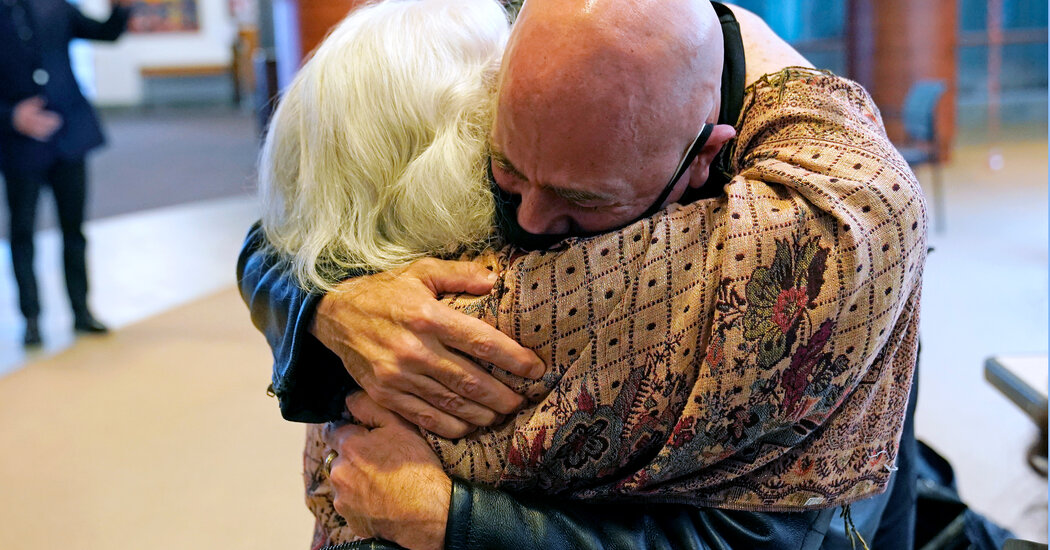
The federal government recently lifted most visitation restrictions at nursing homes. But concerns linger that a full reopening could leave residents vulnerable to another coronavirus surge.For nearly 20 months, the roughly 1.3 million Americans living in nursing homes and their families grappled with strict visitation policies that, while designed to keep vulnerable residents safe from the coronavirus, caused distress for separated loved ones and had serious health consequences for many suddenly isolated seniors.Initially, visitors were barred entirely. Later, facilities enforced a variety of rules: Some prohibited visitors from residents’ rooms, allowed visitors only outdoors and during brief scheduled windows, or permitted only one at a time.Many of these restrictions were based on rules, known as “guidance,” mandated by the Centers for Medicare and Medicaid Services, the federal agency that closed facilities to visitors in March 2020. It has issued several revisions since.Now all that has changed. On Nov. 12, the federal agency removed virtually all such restrictions and advised the country’s nursing homes to allow visitation “for all residents at all times.” The agency noted that 86 percent of U.S. nursing home residents and 74 percent of employees were fully vaccinated, and that Covid-19 cases had fallen drastically.The update means no more limits on the frequency, time, duration, location or number of visitors. Access to residents’ rooms, unless a roommate is unvaccinated or immunocompromised, is allowed, and advance scheduling is not required.The federal policy still encouraged vaccination and emphasized infection control measures, including masks and distancing policies established by the Centers for Disease Control and Prevention.“It makes an important statement,” said Lori Smetanka, the executive director of the National Consumer Voice for Quality Long-Term Care, an advocacy group that had pushed for such change. Previously, “facilities were given a lot of discretion,” she said. “Whereas this is pretty clear: It puts rights back in residents’ hands.”While facilities can ask visitors about their vaccination status and encourage testing, they can’t require either vaccination or tests for entrance. Even during a Covid outbreak, under the new guidance nursing homes must allow visitors inside, albeit with masks. Visitors who decline to disclose whether they are vaccinated must also wear masks.The rules cover only nursing homes, which are federally regulated, but they may have a spillover effect. “I think many states will apply this to other settings, like assisted living,” Ms. Smetanka said. California, for instance, has already responded by loosening some assisted living rules.In nursing homes, with their frail and disabled residents, “there can be precautions, but cutting off residents from their families was unethical and it was bad care,” said David Grabowski, a health care researcher at Harvard Medical School. “These are not social visits.”With nursing homes short-staffed well before the pandemic, family visitors frequently helped feed, wash and dress their loved ones. They provided not only reassurance and stimulation, but also the ability to monitor the facility’s safety and quality. A study on which Dr. Grabowski was a co-author, for instance, showed that nursing home residents with dementia received better care at the end of life if a family member visited regularly.When the pandemic cut off such contact, for more than a year in many cases, families reported disturbing health declines. A study of Connecticut nursing home residents, for instance, found substantial increases in depression and unintended weight loss during the lockdown; incontinence increased and cognition declined.Gloria DeSoto, 92, met with family members through glass at the Hebrew Home last year.Seth Wenig/Associated PressTrish Huckin spent nearly a year battling administrators at her 96-year-old mother’s nursing home in Pinckney, Mich., before she was allowed inside to make so-called compassionate care visits. Even then, “the restrictions were ridiculous,” she said. The facility allowed her three one-hour visits a week in a public area, only by appointment. If she couldn’t make one of the prearranged times, she could not reschedule.When the facility finally eased restrictions, Ms. Huckin — with her wife, a hospital nurse — was finally able to see her mother, who has dementia, in her room. They discovered that in addition to losing weight and becoming depressed, her mother had developed a bedsore and early pneumonia.Claudia Hutchinson has also seen her sister, who resides at a facility outside Philadelphia, grow depressed and lose weight and mobility since her visits were restricted to an hour or less outdoors. “If we’d been allowed inside, she wouldn’t have had this downward spiral,” she said. “She wouldn’t be on hospice care.”Some doctors and families now worry that the pendulum has swung too far, that fully reopening will leave an already vulnerable population prey to another surge. Covid infections are rising in nursing homes; flu cases are up nationally as well.The day the new federal guidance was announced, a Connecticut nursing home reported the deaths of eight residents with serious underlying health issues from a late September outbreak.“To have people tromping in and out during an outbreak, we know that’s not a good idea,” said Dr. Karl Steinberg, a California geriatrician and the president of the Society for Post-Acute and Long-Term Care Medicine, which represents health care workers in long-term care.As a medical director or attending physician at three nursing homes, he saw the pandemic’s early toll: “It was a blood bath.” He wished the latest federal guidance had left administrators more flexibility. Medicare might also have waited until after the holidays, he noted, and until booster shots were more widely distributed.Despite the removal of federal restrictions, some administrators think state and local health regulations may supersede the new federal guidance, potentially blunting its impact.“The standard rule is that a facility has to follow the most restrictive rule,” said Dr. Noah Marco, the chief medical officer at the large Los Angeles Jewish Home. He is cautiously optimistic that in a few weeks the state and county will loosen their policies, too. But for now, the facility continues to require advance scheduling, limit visit length and permit each resident only one visitor at a time indoors.Since the new federal policy was announced, “our staff has constantly been on the phone,” Dr. Marco said. “We’ve had family members who’ve heard about this and are saying, ‘Yippee!’ We’ve had to say, ‘We’re so sorry, but not so fast.’”A representative for the Centers for Medicare and Medicaid Services said that state or local health departments might need to reinstate restrictions “due to severe safety reasons,” but only in “isolated situations.” The representative added, “local governments should generally not seek to add rules and regulations which limit a nursing home resident’s right to receive visitors.”The new federal policy — bolstered by the Biden administration’s mandate that all nursing home staff members be fully vaccinated by Jan. 4 — is likely to loosen more extreme local and state policies.Alison Hirschel, the managing attorney at the Michigan Elder Justice Initiative, has been advising a woman whose relative, in her 70s, suffered a brain injury after an accident and entered a nursing home a few months ago.“She was very distressed,” Ms. Hirschel said of the advisee, who lives out of state. “She had to drive seven hours for a visit, and the visit was limited to 15 minutes — and only on weekdays during business hours.”Then, a day after the liberalized federal policy was announced, Michigan issued new guidance that allowed visits at all times, with no limits on the length of the visit or the number of visitors. “This really is a complete game changer,” Ms. Hirschel said.

Read more →

New 'Omicron' Variant Stokes Concern but Vaccines May Still Work

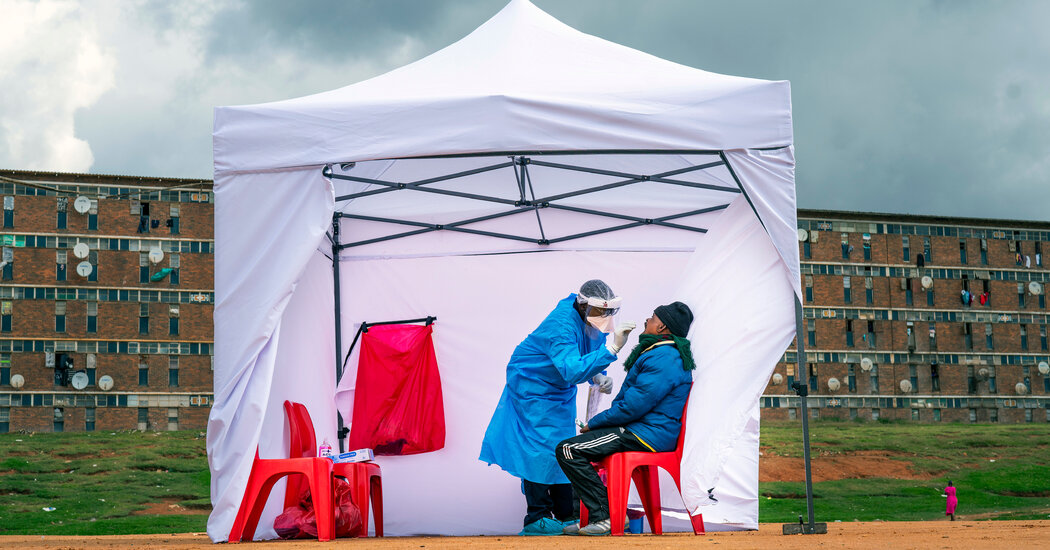
The Omicron variant carries worrisome mutations that may let it evade antibodies, scientists said. But it will take more research to know how it fares against vaccinated people.Scientific experts at the World Health Organization warned on Friday that a new coronavirus variant discovered in southern Africa was a “variant of concern,” the most serious category the agency uses for such tracking.The designation, announced after an emergency meeting of the health body, is reserved for dangerous variants that may spread quickly, cause severe disease or decrease the effectiveness of vaccines or treatments. The last coronavirus variant to receive this label was Delta, which took off this summer and now accounts for virtually all Covid cases in the United States.The W.H.O. said the new version, named Omicron, carries a number of genetic mutations that may allow it to spread quickly, perhaps even among the vaccinated.Independent scientists agreed that Omicron warranted urgent attention, but also pointed out that it would take more research to determine the extent of the threat. Although some variants of concern, like Delta, have lived up to initial worries, others have had a limited impact.“Epidemiologists are trying to say, ‘Easy, tiger,’” said William Hanage, an epidemiologist at the Harvard T.H. Chan School of Public Health. “This could be bad. This could be very bad. But we don’t know enough to roll that tape forward.”Dr. Hanage and other researchers said that vaccines will most likely protect against Omicron, but further studies are needed to determine how much of the shots’ effectiveness may be reduced.As the coronavirus replicates inside people, new mutations constantly arise. Most provide the virus with no new advantage. When worrisome mutations do emerge, the World Health Organization uses Greek letters to name the variants. The first “variant of concern,” Alpha, appeared in Britain in late 2020, soon followed by Beta in South Africa.Omicron first came to light in Botswana, where researchers at the Botswana Harvard H.I.V. Reference Laboratory in Gaborone sequenced the genes of coronaviruses from positive test samples. They found some samples sharing about 50 mutations not found in such a combination before. So far, six people have tested positive for Omicron in Botswana, according to an international database of variants.Around the same time, researchers in South Africa stumbled across Omicron in a cluster of cases in the province of Gauteng. As of Friday, they have listed 58 Omicron samples on the variant database. But at a news conference on Thursday, Tulio de Oliveira, the director of the Centre for Epidemic Response & Innovation in South Africa, said that “close to two or three hundred” genetic sequences of Omicron cases would be released in the next few days.The W.H.O. called for increased surveillance of the variant and laboratory experiments to better understand its biology.“This variant did surprise us,” Dr. de Oliveira said at the news conference. “But the full significance is still uncertain.”Dr. de Oliveira and his colleagues asked the W.H.O. to hold an emergency meeting about the variant on Friday for two reasons: the mutations in Omicron and what appears to be an alarming spread in South Africa.The researchers found more than 30 mutations on a protein, called spike, on the surface of the coronavirus. The spike protein is the chief target of antibodies that the immune system produces to fight a Covid-19 infection. So many mutations raised concerns that Omicron’s spike might be able to evade antibodies produced by either a previous infection or a vaccine.Dr. de Oliveira and his colleagues determined a quick way to gauge how quickly Omicron was spreading in South Africa. Although sequencing the entire genome of a virus is slow, the scientists figured out how to identify Omicron with a standard nasal swab test known as P.C.R.The tests are fast because they look for just two of the coronavirus’s 29 genes — the spike gene and another gene called nucleocapsid. Thanks to its new mutations, Omicron does not test positive for the spike gene. So researchers could simply look for samples that tested positive for nucleocapsid, but negative for spike.It turned out that spike-negative samples were surging across South Africa, suggesting that Omicron had a competitive advantage over Delta, which until now had been the dominant variant in the country.“It gives us concern that this variant may already be circulating quite widely in the country,” Richard Lessells, an infectious disease specialist at the University of KwaZulu-Natal in Durban, South Africa, said at Thursday’s news conference.Dr. de Oliveira warned that South Africa, where less than one-quarter of the population is fully vaccinated, could see a surge of hospitalizations unless the country prevented Omicron from multiplying further in superspreading events. “We really would like to be wrong on some of these predictions,” he said.Countries in Europe as well as the United States and Canada have been among those banning flights arriving from South Africa and several other African nations. But Omicron has already been spotted in Hong Kong and Belgium, and may well be in other countries outside of Africa as well.Theodora Hatziioannou, a virologist at Rockefeller University in New York, said that Omicron’s distinctive mutations raise the possibility that it first evolved inside the body of someone with H.I.V., whose immune systems may have been too weak to quickly fight it off. “Your responses are just not as good,” Dr. Hatziioannou said.Instead of getting cleared away in a matter of days, the virus may have lingered in that person for months, spending the time gaining the ability to evade antibodies. “This virus has seen a lot of antibodies,” Dr. Hatziioannou said.Dr. Hatziioannou and her colleagues have been able to produce mutant spike proteins in their laboratory that make viruses highly resistant to Covid-19 antibodies. She said that Omicron has many mutations in the same regions of the spike protein pinpointed in their own research. “The overlap is pretty striking,” she said.That overlap has Dr. Hatziioannou concerned that Omicron will be able to evade some of the antibodies that people have acquired either from vaccines or from Covid-19 infections. Some monoclonal antibody treatments won’t work against Omicron either, she predicted, because the variant’s spike protein is protected from them.Still, vaccines are expected to provide some protection against Omicron because they stimulate not only antibodies but immune cells that can attack infected cells, Dr. Hatziioannou said. Mutations to the spike protein do not blunt that immune-cell response.And booster shots could potentially broaden the range of antibodies people make, enabling them to fight against new variants like Omicron. “We will see, because these studies are only now ongoing,” she said.For now, there’s no evidence that Omicron causes more severe disease than previous variants. And it’s also not clear yet how quickly Omicron can spread from person to person.Some earlier variants, such as Beta and Mu, had evolved a strong ability to evade immune defenses. But they never became a serious threat to the world because they proved to be poor at transmitting.Some mutations in Omicron suggest that it may indeed transmit well. Three mutations alter a region of the spike protein called the furin cleavage site, which is already known to help the spike protein attach more effectively to cells.But Dr. Hanage said he was not yet convinced by the South African data that Omicron was running rampant across the country. “I think it’s too early to be definitive,” he said.He found it hard to see how a variant could sweep so quickly across South Africa, even while the overall rate of daily new infections in the country remains very low. He speculated that early tests might have been hampered by some technical flaw that could be uncovered in the next few days. “It feels to me like part of the puzzle is missing,” he said.It might turn out that the apparent spread of Omicron was actually just a coincidence, as has been seen with some previous variants. If a new variant happens to get swept along during a surge of cases, it will look highly contagious when it isn’t.Even so, Dr. Hanage considered a travel lockdown to be a prudent measure that could buy governments a little time to make plans for dealing with Omicron if it lives up to the worst predictions. Health leaders could use the delay to put in stronger measures for preventing transmission or boosting vaccinations, for example. “But just doing it and then thinking it’ll be enough is not a long-term plan,” he said.Even if Omicron does prove more transmissible than other variants, Dr. Hanage said that vaccines would most likely remain vital weapons against it, both by slowing down its spread and making it more likely that people who do get sick only have mild Covid-19 instead of needing to go to the hospital.Omicron is “certainly enough to take seriously, but it’s not apocalyptic,” Dr. Hanage said. “It’s not a magic virus. Magic viruses are not a thing.”

Read more →

Crisis Cafe: The young community serving up mental health support

Young people’s mental health has been in the spotlight during the Covid-19 pandemic and, for teenagers, the pandemic has put isolation, virus anxiety and educational pressures on top of the usual stresses. However, Newry’s Crisis Cafe is a place where young people can share their issues and support their peers – all while grabbing coffee and a bun.Grainne Graham, one of the co-directors of the cafe, says it is somewhere that offers clinical mental health support in a non-clinical space.One of its regular users said “there’s an understanding when you walk through the doors that everyone’s going through something similar”.”Everybody knows you’ve come here for the same reasons and we all support each other, it’s a beautiful community.”

Read more →

Covid variant: UK put safety first over Africa travel – Shapps

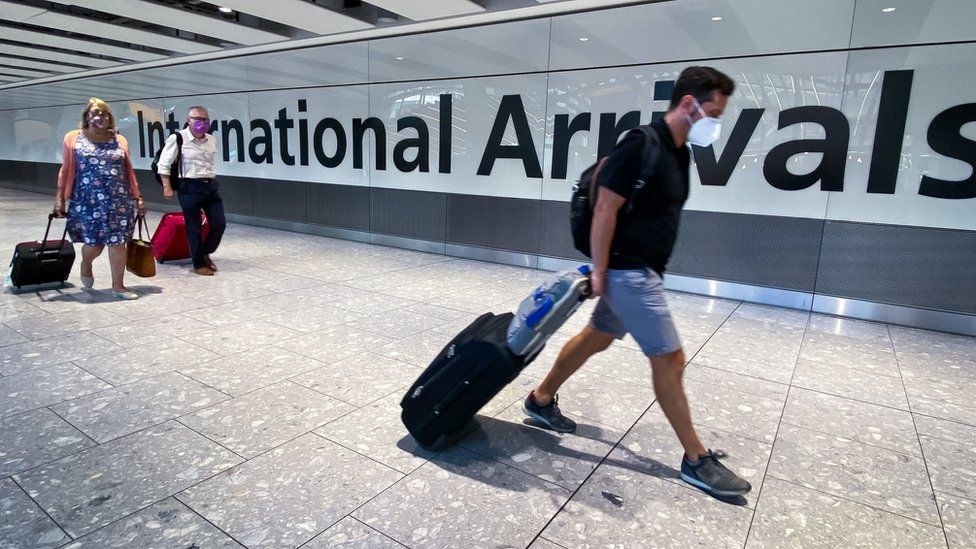
SharecloseShare pageCopy linkAbout sharingImage source, PA MediaThe UK cannot take a risk over a new coronavirus variant identified in South Africa which may be able to evade the protection of vaccines, the transport secretary has said.Grant Shapps told the BBC the UK “acted immediately” with a “safety first” approach by placing six countries on its red list to restrict travel.Susan Hopkins, the UK Health Security Agency’s chief medical adviser, said it was the “most worrying” variant yet.No cases have been confirmed in the UK.From midday travellers from South Africa, Namibia, Zimbabwe, Botswana, Lesotho and Eswatini will have to self-isolate for 10 days, with those arriving after 04:00 GMT on Sunday required to quarantine in a hotel.All flights from the six countries are also being suspended until the hotel quarantine system is in operation.What do we know about this new variant?What are the latest changes to UK travel rules?Airlines’ share prices plunge on new Covid variantSouth Africa, Hong Kong and Botswana have identified just 59 cases of the variant, known as B.1.1.529, so far, while Israeli media also reports one case has been identified from a traveller.Mr Shapps paid tribute to South Africa’s fast and transparent response, and said of the UK’s decision to restrict travel: “This is a safety-first approach.”He said the UK “acted immediately” because “we can’t take risks when it comes to something that could defeat the vaccine”, as scientists fear may be possible.People who have returned from the six countries in Africa in the last 10 days will be contacted and asked to take a PCR test, but Mr Shapps said, with only a small number of cases identified worldwide, they do not expect to detect any in the UK.”We know from lots of experience now that you can never stop these things but early action buys you more time,” Mr Shapps said.Scientists say the variant has 50 mutations overall and more than 30 on the spike protein, which is the target of most vaccines and the key the virus uses to unlock the doorway into our body’s cells. Prof James Naismith, director of the Rosalind Franklin Institute at Oxford University, said: “It’s bad news, but it’s not doomsday.”The variant would “almost certainly” make vaccines less effective, but they would still work to some extent. New drugs to treat Covid-19 would not be affected by the variant, he suggested.One scientist told me this was the worst variant they’d seen – look at it on paper and it’s not hard to see why. It is the most heavily mutated variant so far and is now radically different to the form that emerged in Wuhan, China. That means vaccines, which were designed using the original, may not be as effective. And some of its mutations are known to increase the ability of coronaviruses to spread. But there have been many variants that looked bad on paper before, but haven’t taken off. There are early signs this virus is spreading in South Africa and may already be in every province in the country. But the big questions – how much does it evade vaccines, is it more severe, does it spread faster that Delta – are unanswerable for now. Read more from James.It had not been proven that the variant was more transmissible, but it has mutations consistent with the Delta variant and appeared to spread more quickly than other variants, Prof Naismith told BBC Radio 4’s Today programme.”The travel ban will slow it down,” he said. “It will get here but it will give us a few more weeks.”Dr Hopkins said scientists needed to learn more about the variant before they could be certain but it appeared that “there’s mutations which increase infectivity, mutations that evade the immune response – both from vaccines and from natural immunity – and mutations that cause increased transmissibility”.But she said the variant could be detected easily with genomic sequencing and it was “reassuring” it had not been seen in the UK yet.From midday non-UK and Irish residents will be banned from entering England if they have been in the six countries in the past 10 days.Any British or Irish resident arriving from the countries after 04:00 GMT on Sunday will have to quarantine in a hotel, with those returning before that being asked to isolate at home.Germany, Italy, Israel and Singapore are among the countries that have also implemented travel restrictions on southern African countries after the emergence of the variant, while the European Commission has said it will propose to halt air travel from the region across the EU.But African experts questioned the effectiveness of the measures. Dr John Nkengasong from the Africa Centres for Disease Control said imposing travel restrictions “has never helped reduce the spread of any variant across the world”.The announcements prompted a slump in airline shares, with the share price of British Airways’ owner IAG dropping by 15%.Travel expert Simon Calder told BBC Breakfast it was a “disaster” for the aviation industry as it tried to recover.TRAPPED AS THE WATERS ROSE: What happened when Hurricane Ida hit New York City’BEING A SURGEON SHOWS YOU LIFE IS PRECIOUS’: The doctors pushing science – and the human body – to its limits

Read more →

Texas Abortion Law Complicates Care for Risky Pregnancies

Doctors in Texas say they cannot head off life-threatening medical crises in pregnant women if abortions cannot be offered or even discussed.A few weeks after Texas adopted the most restrictive abortion law in the nation, Dr. Andrea Palmer delivered terrible news to a Fort Worth patient who was midway through her pregnancy.The fetus had a rare neural tube defect. The brain would not develop, and the infant would die at birth or shortly afterward. Carrying the pregnancy to term would be emotionally grueling and would also raise the mother’s risk of blood clots and severe postpartum bleeding, the doctor warned.But the patient was past six weeks’ gestation, and under the new law, an abortion was not an option in Texas because the woman was not immediately facing a life-threatening medical crisis or risk of permanent disability.“So we look at them like a ticking time bomb and wait for the complications to develop,” Dr. Palmer said of her patients.In this case, the woman had the means to travel, and she obtained an abortion in another state, an option unavailable to many low-income and working class women.Texas’ new measure was intended to impose stringent limits on abortion. But it is also affecting women who have no desire for termination but are experiencing medically risky pregnancies. Many doctors say they are unable to discuss the procedure as an option until the patient’s condition deteriorates and her life is at risk.Abortion is permitted in Texas after six weeks only when a woman is facing a life-threatening or disabling medical emergency linked to her pregnancy. The law makes no exceptions for nonviable pregnancies in which the fetus has no chance of survival.The measure deputizes private citizens — even those with no connection to the patient, doctor or health center — to sue anyone who performs an abortion once cardiac activity can be detected in the embryo. This can occur as early as two weeks after a missed period, when most women do not yet know they are pregnant.Anyone who “aids and abets” the procedure can also be sued, and the law promises plaintiffs $10,000 and legal fees if they win the lawsuit. The Supreme Court is expected to rule soon on whether abortion providers and the Biden administration may challenge the law notwithstanding its novel structure. In September, the justices turned down an emergency request to block the law.Many physicians say they cannot intervene in complex pregnancies that may not pose an immediate threat to the patient but can rapidly spin out of control. Some hesitate to counsel patients about the option of termination, or refer them to doctors in other states, for fear their advice could be interpreted as aiding an abortion.Supporters of the law say their goal is to save the life of every embryo, regardless of the circumstances of conception.“We never advocate taking a life of an unborn child unless it is necessary to protect the life of a woman,” said Joe Pojman, executive director of the Texas Alliance for Life.Even in cases of rape or incest, “we don’t advocate for taking the life of an unborn child for the crime of the father,” he said.The law’s supporters say that it provides sufficient leeway for physicians to act if a mother’s life or bodily functions are compromised, and they insist those cases are rare.Dr. Ingrid Skop, an obstetrician in San Antonio who belongs to the American Association of Pro-Life Obstetricians and Gynecologists, said that even a girl as young as 9 or 10, impregnated by a father or a brother, could carry a baby to term without health risks.“If she is developed enough to be menstruating and become pregnant, and reached sexual maturity, she can safely give birth to a baby,” Dr. Skop said.Dr. Ingrid Skop, a San Antonio obstetrician and member of the American Association of Pro-Life Obstetricians and Gynecologists, during a House Oversight Committee hearing in September. Jacquelyn Martin/Associated PressBut studies show that pregnant teenagers are more prone than older women to developing a dangerous condition called pre-eclampsia, and they are more likely to have preterm deliveries, small babies and stillbirths. Very young rape victims tend to seek prenatal care late, and they are more likely to have small babies that score poorly on tests of heart rate and muscle tone given immediately after birth.With regard to pregnancy-related complications for women of any age, Dr. Skop said, the new law allows doctors to act when necessary and to justify their treatments in court if they are sued.“It is disingenuous to allege that this law prevents obstetricians from following the medical standard of care,” she said.Many physicians disagree, pointing out that the law can disrupt care for pregnant women who have underlying health problems that are not immediately life-threatening, such as pulmonary hypertension or certain types of cancer.“It’s one of the most egregious invasions of the physician-patient relationship that we’ve ever seen,” said Dr. Rick Snyder, a cardiologist in Dallas who is chair of the board of trustees of the Texas Medical Association.The law does not make an exception for pregnant women who learn that the fetus has chromosomal abnormalities or anomalies that will cause the baby to die soon after birth. Such testing is done late in pregnancy, beyond the six-week limit, noted Crescenda Uhles, a genetic counselor in Dallas.“I have a code of ethics to uphold, and that is making sure I discuss with my patients all of their options, regardless of what is available in their area,” Ms. Uhles said. Depending on the medical circumstances, one of those options may be abortion.The hospital where she works “pays me to have these conversations with patients, but there’s not necessarily any guarantee they would have my back should someone decide to list my name on a lawsuit,” she said.Crescenda Uhles, a genetic counselor in Dallas, said the Texas law puts people like her in a bind when advising patients.Ilana Panich-Linsman for The New York TimesThe Texas law, which is also called Senate Bill 8, carves out an exception for termination in “a medical emergency,” which is defined in the state’s health code as “a life-threatening physical condition” caused or aggravated by pregnancy that “places the woman in danger of death or a serious risk of substantial impairment of a major bodily function.”But there is professional judgment involved in making these determinations, and some physicians in Texas now fear these opinions will be second-guessed in a courtroom. “One person’s emergency may not be another person’s emergency,” said Dr. Robert Carpenter Jr., an obstetrician in Houston.The new law does not apply to removing ectopic pregnancies that implant outside the uterus, which are not considered abortions under state law. But some health conditions can jeopardize a woman’s health in the long term but not necessarily constitute an immediate threat to her life.Dr. John Thoppil, an obstetrician in Austin, doesn’t perform abortions, providing prenatal care and delivering babies. But the new Texas law has profoundly affected his ability to practice.Ilana Panich-Linsman for The New York TimesDr. John Thoppil, an obstetrician in Austin who is president of the Texas Association of Obstetricians and Gynecologists, said that shortly after the new law went into effect in September, a patient who relied on an intrauterine device for birth control became pregnant.An IUD can make menstruation irregular, and she did not realize she had conceived until after the six-week mark. The pregnancy made it impossible to remove the device, Dr. Thoppil said.With it in place, his patient faces a pregnancy rife with potential medical problems. Yet under the new law, Dr. Thoppil felt he could not counsel her on terminating the pregnancy.“You can’t even mention what someone’s choices would be, because of fear that talking about options would be considered aiding and abetting someone getting an abortion,” he said.Some supporters of the law say that it does not forbid a doctor to counsel a woman about abortion or refer her to an abortion provider outside Texas. But the language is ambiguous, and travel can be expensive and onerous for pregnant women, especially if they are unwell.Pregnancies can be complicated by any number of medical conditions. The American College of Cardiology and the American Heart Association, for example, advise women with certain congenital heart conditions to avoid pregnancy altogether, as they are at higher risk of illness or death shortly after giving birth.The associations say these women should be given the option of termination if they become pregnant. For doctors treating such patients, the Texas law “creates quite a conundrum,” Dr. Snyder said.“If I offer the patient the standard of care, I could be sued for aiding and abetting,” he said. “If I don’t provide my patient the standard of care, which they are due, I could be sued.”For example, in rare cases an infection can make the amniotic sac rupture before the fetus is viable. Initially, the patient may not be in danger, and under the law physicians may be prohibited from taking action, even though the baby will not survive.But the woman’s condition can quickly deteriorate, which is why physicians often prefer to offer an abortion. “I have seen cases where the woman has gone from completely normal to septic shock in less than an hour,” Dr. Carpenter said. “You don’t get a lot of time to respond, and if you don’t respond quickly enough, your patient expires.”In Poland, protests over that country’s abortion laws erupted this year after a 30-year-old pregnant woman died of septic shock. Her water had broken midway through the pregnancy, but her doctors, fearing prosecution if they violated the abortion ban, did not begin treating her until the fetus’s heart stopped on its own.Dr. Ghazaleh Moayedi, an obstetrician/gynecologist and abortion provider in Texas, said the new law leaves unclear whether a physician can act when a woman has a spontaneous miscarriage and is bleeding heavily, but the fetus has not passed.Nitashia Johnson for The New York TimesA more common scenario also raises difficult questions, said Dr. Ghazaleh Moayedi, an obstetrician and gynecologist in Texas who provides abortions. Sometimes, she said, a woman has a spontaneous miscarriage and is heavily bleeding, but the fetus has not passed and cardiac activity can still be detected.The only way to stop the heavy bleeding is to end the pregnancy and contract the uterus, Dr. Moayedi said. Time is of the essence. “Every OB-GYN has cared for someone who has died from a hemorrhage,” she said. “If someone is hemorrhaging while miscarrying, how long do I have to wait?”Even if the mother’s life is saved, Dr. Moayedi added, she could require an emergency hysterectomy, or removal of the uterus, which would leave her infertile.Other complications that occur when a woman is carrying twins or multiples can be resolved by a “selective reduction,” or abortion, of one of the fetuses so that the other has a better chance to live. Not doing so can, in some circumstances, kill all of the fetuses. Selective reductions are forbidden under the new state law.In other cases, a pregnant woman’s medical needs may conflict with those of her fetus.Just a few months before the Texas legislature passed the new law, Dr. Robert Gunby Jr., an obstetrician in Dallas, was caring for a pregnant newlywed who suddenly started losing weight. She was diagnosed with an aggressive lymphoma, a cancer of the immune system.An oncologist urged the woman to start treatment immediately, but the chemotherapy regimen would have been toxic to the fetus.“First she said, ‘I can’t, I want this baby so badly,’” Dr. Gunby recalled. “But it was the only choice they had to save this young woman.” She eventually agreed, and the treatment was begun as soon as an abortion was performed.Dr. Palmer, the obstetrician in Fort Worth, said that one of her patients was trying to get pregnant after the new law went into effect, and she had consensual sex with her partner.A few days later, she went out to celebrate a friend’s birthday and was raped on her way home. She took a pregnancy test soon after she missed her period and found out that she had conceived. But she did not know who the biological father was.The earliest time that any genetic testing could be done would be at seven weeks, Dr. Palmer said, so the patient decided to terminate her pregnancy before the six-week mark, in Texas. She knew she did not have the flexibility to be able to travel out of state for an abortion later on.Like other physicians, Dr. Palmer said she was uncertain whether counseling that patient about all of her options, including terminating the pregnancy outside Texas, would have been considered “aiding and abetting.”“The law is murky, but here’s the bottom line,” she said. “I am still going to tell my patients the information they need.”

Read more →

Role of disordered protein interactions in gene expression

A team led by researchers at Baylor College of Medicine and the Czech Academy of Sciences has uncovered a new piece of the puzzle of how gene expression is orchestrated. Published in the journal Science, the findings reveal a novel mechanism that coordinates the assembly of components inside cells that control gene expression. The mechanism not only is essential for normal cell function, but also has been implicated in cancer, neurodegeneration and HIV infection, and could suggest new ways to treat these conditions.
“Most previous studies have focused on particular cellular components that turn genes completely on or off,” said co-corresponding author Dr. H. Courtney Hodges, assistant professor of molecular and cellular biology and in the Center for Precision Environmental Health at Baylor. “Our work reveals a new perspective — that the proteins that regulate the rate of gene expression also can work collectively to finely tune expression levels in many different settings. We identified a mechanism that brings these proteins together and plays widespread roles in health and disease.”
In previous work with colleagues at KU Leuven in Belgium, the team had studied protein interactions in leukemia and HIV infection, specifically those mediated by protein regions called TFIIS N-terminal domains (TNDs). In the current study, the researchers extended the study of TNDs and found them in many other proteins.
“Everywhere we looked, we found these domains, in particular in the machinery that regulates transcription elongation, one of the first steps of gene expression in all human cells. Transcription elongation is a complex cellular process that involves many different proteins working together,” said first author Dr. Katerina Cermakova, a postdoctoral fellow in the Hodges lab. “We discovered that TNDs are the most enriched structural element in all transcription elongation factors. Once you look for them, you find that all the important protein complexes involved in transcription elongation have a TND or bind a protein that has one.”
Previous work suggested to the researchers that TNDs act like a docking platform for other protein regions, specifically for small portions of unstructured proteins known as TND-interacting motifs (TIMs).
Proteins have segments with a well-organized 3-D structure, but many also have segments that lack such organization. These disordered or unstructured regions are often functional.

Read more →

Covid vaccines safe in pregnancy, data shows

SharecloseShare pageCopy linkAbout sharingImage source, Getty ImagesThe UK’s Health Security Agency says its analysis of English data shows Covid vaccines are safe in pregnancy, reinforcing international evidence.The agency found similar rates of stillbirths and preterm births for vaccinated and unvaccinated mothers.Its report shows no fully vaccinated pregnant women were admitted to intensive care with the virus between February and September 2021. But just 22% of women who gave birth in August had had at least one jab. Since mid-April, mothers-to-be have been offered the Pfizer-BioNTech or Moderna jab, with the second dose recommended eight weeks after the first. Between January and August, the stillbirth rate was about:3.35 per 1,000 vaccinated women3.6 per 1,000 unvaccinated womenThe proportion of babies of low birth weight was 5.28% among vaccinated women 5.36% among unvaccinated womenThe proportion of premature births was:6.51% among vaccinated women5.99% among unvaccinated womenBut women first eligible for vaccination were more likely to be older or have an underlying medical condition – putting them at higher risk of premature births, researchers say.Meanwhile, studies suggest about one in five women admitted to hospital with the virus have their babies delivered early and some of these babies need special intensive care. And evidence suggests the risks of stillbirths are higher if a woman has Covid in pregnancy. UKHSA immunisation head said the new information on safety was reassuring. “Every pregnant woman who has not yet been vaccinated should feel confident to go and get the jab and that this will help to prevent the serious consequences of catching Covid in pregnancy,” she said.Vaccine coverage is increasing – but the report also shows the proportion of mothers to have had at least one jab at the time of birth was about:17.5% among white women13.5% among Asian women5.5% among black womenAnd:7.8% in poor areas26.5% in richer areasPregnancy, breastfeeding, fertility and coronavirus (COVID-19) vaccination – NHSThe BBC is not responsible for the content of external sites.

Read more →

Why the Retail Industry Is Fighting Vaccine Mandates

The Biden administration has called on major companies to help fight the pandemic. Big chains want to get past the holiday staffing crunch first.The holiday shopping season has arrived, and retailers are ringing it in by doing everything from cutting prices to stocking showrooms to lure back customers who stayed at home last year. What the biggest of them are not doing is the one thing the White House and many public health experts have asked them to: mandate that their workers be vaccinated.As other industries with workers in public-facing roles, like airlines and hospitals, have moved toward requiring vaccines, retailers have dug in their heels, citing concerns about a labor shortage. And a portion of one of the country’s largest work forces will remain unvaccinated, just as shoppers are expected to flock to stores.At the heart of the retailers’ resistance is a worry about having enough people to work. In a tight labor market, retailers have been offering perks like higher wages and better hours to prospective employees in hopes of having enough people to staff their stores and distribution centers. The National Retail Federation, the industry’s largest trade group, has estimated that retailers will hire up to 665,000 seasonal workers this year.Walmart, the nation’s biggest private employer, declined to comment on its plans for vaccinations or testing.Eze Amos for The New York TimesMacy’s, for example, said it planned to hire 76,000 full- and part-time employees this season. The retailer has offered referral bonuses of up to $500 for each friend or relative whom employees recruit to join it. Macy’s asked corporate staff this fall to be vaccinated or test negative for Covid-19 to enter its offices. But store workers are a different story.“We have a lot of stores that have a lot of openings, and any ruling that we have to mandate those colleagues be vaccinated prior to Christmas is just going to exacerbate our labor shortage going into a really critical period for us,” Jeff Gennette, Macy’s chief executive, said in an interview.The industry showed how strongly it feels about the issue this month when the Biden administration directed companies with 100 or more workers to mandate vaccines or weekly tests by Jan. 4. Five days after that announcement, the National Retail Federation sued to stop the effort.“We all agree with the premise that vaccines are good and vaccines save lives,” Stephanie Martz, the chief administrative officer of the N.R.F., said in an interview Monday.“But by the same token, you can’t just say, ‘OK, make it so.’”The order is now held up in litigation, challenged by a number of lawsuits from a broad coalition of opponents, and could make its way to the Supreme Court. Court filings by the administration warn that blocking the rule would “likely cost dozens or even hundreds of lives per day.”Mr. Gennette, who sits on the board of the federation, said Macy’s would “love to see” the order put in place in the first quarter, which typically begins in February for the industry. That echoes the federation, which has said it wants to move the deadline back several months.“I support it — I would just love to have it on a timetable that works for us,” Mr. Gennette said. “We need more time.”Jeff Gennette, Macy’s chief executive, said he believed in the importance of employee vaccinations but didn’t want them required until after the holidays.Jeenah Moon for The New York TimesMany health experts say employee mandates are the only way to help the country emerge from the pandemic, as rampant misinformation and politicization of the coronavirus have helped suppress vaccination rates. The vaccination rate for those 12 and older in the United States is about 69 percent, with rates in some pockets of the country as low as 40 percent. Average daily case reports have increased more than 20 percent over the past two weeks.“It’s a pretty big ask, there’s no one denying that,” Crystal Watson, a senior scholar at the Center for Health Security at Johns Hopkins University, said of requiring vaccinations for retail employees. “But we’ve also tried a lot of other things to help people get vaccinated — and I think a mandate right now is what we need to get over that barrier.”Walmart, the nation’s biggest private employer, declined to comment on the federation’s lawsuit or its plans for vaccinations or testing. A spokeswoman for Target said the company had “started taking the necessary steps to meet the requirements of the new Covid-19 rules for large companies as soon as the details were announced.”Spokespeople for several retailers on the federation’s board, including Kohl’s, Dick’s Sporting Goods and Saks, declined to comment for this article.Concern about challenges in hiring workers is a major cause of retailers’ hesitancy.Jim Wilson/The New York Times“I think employers are embarrassed and ashamed by what they are objecting to and therefore use the N.R.F. as a cover,” said Stuart Appelbaum, president of the Retail, Wholesale and Department Store Union.He added: “If you had a choice of going to a workplace, or as a customer to go to a store, that said, ‘All our employees are vaccinated or tested,’ or another store that says, ‘We have no idea who’s vaccinated or tested,’ which would you choose? And that’s why, let’s say, Acme Department Store doesn’t want to advertise that it’s promoting bad public policy.”Many employers in industries, like retail, that have mandated vaccines at corporate offices have not required them for frontline workers, sharing concerns about challenges in hiring. But those workers, including about four million at stores, are among the most vulnerable. They interact frequently with the public and are less likely to be vaccinated themselves. Mandates at Tyson, United Airlines and several health care companies indicate that when faced with the prospect of losing their job, employees most frequently choose inoculation.“We know vaccine requirements work,” said Kevin Munoz, a spokesman for the White House. “The federal government, the country’s largest employer, has successfully implemented its requirement in a way that has boosted vaccinations and avoids any disruptions to operations.”.css-1xzcza9{list-style-type:disc;padding-inline-start:1em;}.css-3btd0c{font-family:nyt-franklin,helvetica,arial,sans-serif;font-size:1rem;line-height:1.375rem;color:#333;margin-bottom:0.78125rem;}@media (min-width:740px){.css-3btd0c{font-size:1.0625rem;line-height:1.5rem;margin-bottom:0.9375rem;}}.css-3btd0c strong{font-weight:600;}.css-3btd0c em{font-style:italic;}.css-1kpebx{margin:0 auto;font-family:nyt-franklin,helvetica,arial,sans-serif;font-weight:700;font-size:1.125rem;line-height:1.3125rem;color:#121212;}#NYT_BELOW_MAIN_CONTENT_REGION .css-1kpebx{font-family:nyt-cheltenham,georgia,’times new roman’,times,serif;font-weight:700;font-size:1.375rem;line-height:1.625rem;}@media (min-width:740px){#NYT_BELOW_MAIN_CONTENT_REGION .css-1kpebx{font-size:1.6875rem;line-height:1.875rem;}}@media (min-width:740px){.css-1kpebx{font-size:1.25rem;line-height:1.4375rem;}}.css-1gtxqqv{margin-bottom:0;}.css-16ed7iq{width:100%;display:-webkit-box;display:-webkit-flex;display:-ms-flexbox;display:flex;-webkit-align-items:center;-webkit-box-align:center;-ms-flex-align:center;align-items:center;-webkit-box-pack:center;-webkit-justify-content:center;-ms-flex-pack:center;justify-content:center;padding:10px 0;background-color:white;}.css-pmm6ed{display:-webkit-box;display:-webkit-flex;display:-ms-flexbox;display:flex;-webkit-align-items:center;-webkit-box-align:center;-ms-flex-align:center;align-items:center;}.css-pmm6ed > :not(:first-child){margin-left:5px;}.css-5gimkt{font-family:nyt-franklin,helvetica,arial,sans-serif;font-size:0.8125rem;font-weight:700;-webkit-letter-spacing:0.03em;-moz-letter-spacing:0.03em;-ms-letter-spacing:0.03em;letter-spacing:0.03em;text-transform:uppercase;color:#333;}.css-5gimkt:after{content:’Collapse’;}.css-rdoyk0{-webkit-transition:all 0.5s ease;transition:all 0.5s ease;-webkit-transform:rotate(180deg);-ms-transform:rotate(180deg);transform:rotate(180deg);}.css-eb027h{max-height:5000px;-webkit-transition:max-height 0.5s ease;transition:max-height 0.5s ease;}.css-6mllg9{-webkit-transition:all 0.5s ease;transition:all 0.5s ease;position:relative;opacity:0;}.css-6mllg9:before{content:”;background-image:linear-gradient(180deg,transparent,#ffffff);background-image:-webkit-linear-gradient(270deg,rgba(255,255,255,0),#ffffff);height:80px;width:100%;position:absolute;bottom:0px;pointer-events:none;}.css-1g3vlj0{font-family:nyt-franklin,helvetica,arial,sans-serif;font-size:1rem;line-height:1.375rem;color:#333;margin-bottom:0.78125rem;}@media (min-width:740px){.css-1g3vlj0{font-size:1.0625rem;line-height:1.5rem;margin-bottom:0.9375rem;}}.css-1g3vlj0 strong{font-weight:600;}.css-1g3vlj0 em{font-style:italic;}.css-1g3vlj0{margin-bottom:0;margin-top:0.25rem;}.css-19zsuqr{display:block;margin-bottom:0.9375rem;}.css-12vbvwq{background-color:white;border:1px solid #e2e2e2;width:calc(100% – 40px);max-width:600px;margin:1.5rem auto 1.9rem;padding:15px;box-sizing:border-box;}@media (min-width:740px){.css-12vbvwq{padding:20px;width:100%;}}.css-12vbvwq:focus{outline:1px solid #e2e2e2;}#NYT_BELOW_MAIN_CONTENT_REGION .css-12vbvwq{border:none;padding:10px 0 0;border-top:2px solid #121212;}.css-12vbvwq[data-truncated] .css-rdoyk0{-webkit-transform:rotate(0deg);-ms-transform:rotate(0deg);transform:rotate(0deg);}.css-12vbvwq[data-truncated] .css-eb027h{max-height:300px;overflow:hidden;-webkit-transition:none;transition:none;}.css-12vbvwq[data-truncated] .css-5gimkt:after{content:’See more’;}.css-12vbvwq[data-truncated] .css-6mllg9{opacity:1;}.css-qjk116{margin:0 auto;overflow:hidden;}.css-qjk116 strong{font-weight:700;}.css-qjk116 em{font-style:italic;}.css-qjk116 a{color:#326891;-webkit-text-decoration:underline;text-decoration:underline;text-underline-offset:1px;-webkit-text-decoration-thickness:1px;text-decoration-thickness:1px;-webkit-text-decoration-color:#326891;text-decoration-color:#326891;}.css-qjk116 a:visited{color:#326891;-webkit-text-decoration-color:#326891;text-decoration-color:#326891;}.css-qjk116 a:hover{-webkit-text-decoration:none;text-decoration:none;}Still, companies mandating vaccines have faced protests or lawsuits. In some states litigation has been passed to impede it. Disney, for instance, paused a mandate for employees at Disney World in Florida after it became illegal for employers in the state to require workers to get the shot.The panic and precautions tied to Covid-19 have played out at retail stores throughout the pandemic and ensnared their workers.First, there was the divide between essential and nonessential businesses, which prompted chains like Guitar Center and Dillard’s to argue that they needed to stay open — and keep their employees coming in — despite the worsening public health crisis. Workers have been at the forefront of disputes around mask mandates and then mask enforcement. Retail chains like REI have been criticized for failing to inform employees about Covid cases in stores. Grocery store workers were not given priority access to vaccines in many states.Target’s chief executive attributed strong staffing numbers to perks and safety measures.Amr Alfiky/The New York Times“We’ve seen, throughout the pandemic, self-serving messages from employers who are putting profitability above their own employees’ health and safety,” Mr. Appelbaum said. “They have a misguided idea that it’s better for profits to take certain actions.”Business has boomed for some of the largest retailers, like Target and Walmart, throughout the pandemic. And while they are still facing rising prices and supply chain strain, executives have indicated recently that pressure on staffing has waned.“We feel really good about our staffing going into the holiday season,” Brian Cornell, Target’s chief executive, told CNBC last week. He added that the company’s retention numbers were “some of the strongest in our history,” which he attributed to perks and safety measures.Retailers are betting that consumers will be comfortable shopping in stores, where foot traffic is already higher than in 2020, regardless of the industry’s efforts to fight the new vaccination and testing requirements. And for those who are concerned about the lack of vaccinations, the companies have bolstered their e-commerce operations and curbside pickup offerings in the past year, though in-store shopping often leads to more purchases and fewer returns.When asked what Macy’s would tell concerned customers about shopping in stores, Mr. Gennette said: “What I would say is we encourage every one of our colleagues to be vaccinated and every colleague wears a mask in our stores and warehouses to protect themselves and others.”Last week, a number of health groups and experts, including the American Medical Association and the American College of Physicians, put out a statement imploring companies to move forward with the Labor Department rules.“The hope was to provide some perspective for business leaders to remind them this is not a political issue,” said Dr. Ashish K. Jha, dean of the Brown University School of Public Health, who was one of the signatories. Dr. Jha said it was important for companies in all industries to follow the rule, noting that retailers play a particular role, given the nature of their employee base. He said those measures should be put in place during the holiday season — not after — especially as that is when case numbers are expected to rise.“Do they really want to be superspreader places during the holiday season and be responsible for their employees getting sick and for their employees spreading it to customers?” Dr. Jha said.

Read more →

Immunocompromised Families Greet Child's Vaccine With Relief

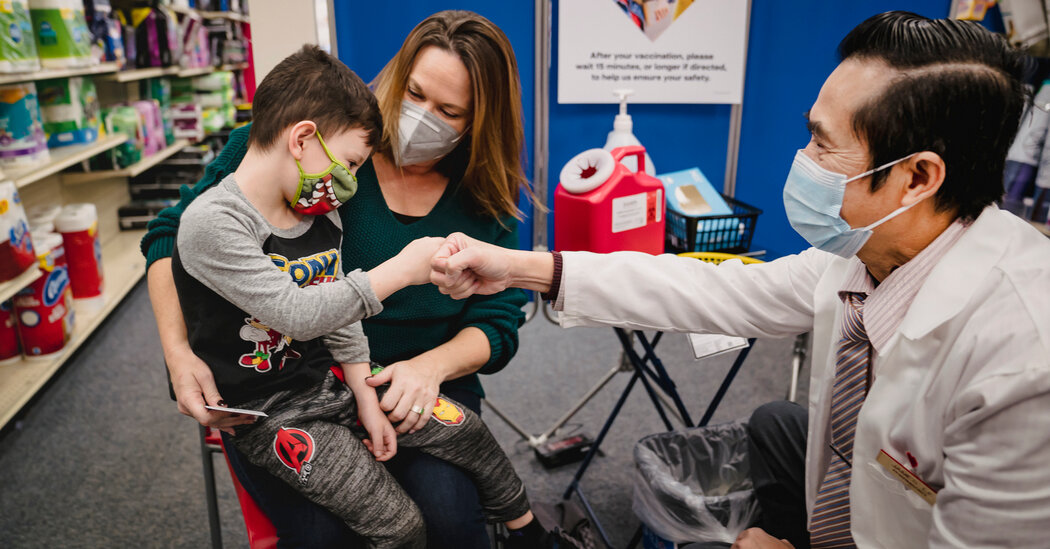
Many families with immuno-compromised or vulnerable relatives are racing to get vaccines for their 5-to-11-year-olds — and finally experiencing a long-awaited sense of relief.When the pandemic came for Georgia, Lauren Rymer had to make a snap choice: her mother’s safety or what she believed was best for her young child.She locked down her family for the better part of last year, living with her mother, Sharon Mooneyhan, who has multiple sclerosis, and protecting her by keeping her son Jack, 5, out of kindergarten to avoid routine household exposure to Covid. “I didn’t want my mom to miss out on being with her only grandchild,” Ms. Rymer said.So school was scrapped for mushroom hunts in the forest between her work Zoom calls, Legos and an intergenerational exploration of a backyard chicken coop. The upside was that she and her mother would not have to live in fear of a life-ending snuggle at bedtime.Last week Jack, now 6, donned a superhero costume and hit the local CVS in Lawrenceville, Ga., to get a Covid shot, his first step toward a return to school, and a full life beyond their suburban Atlanta home.“This vaccine is much bigger than a shot in the arm,” Ms. Rymer said. “It’s a huge weight off my shoulders.”Millions of American parents have spent the better part of the last two years anxiously viewing their youngest family members through a dual lens: as the small souls crushed by the isolation of lockdowns or periodic quarantines and also as potentially fearsome vectors of infection dwelling in their midst. With another wave of Covid sweeping through parts of the country, the worry has not subsided altogether for so many families.But for some, like the Rymers, finally getting children vaccinated this past month put a major piece of a protection puzzle in place for severely vulnerable adults who are immunocompromised, fighting cancer or coping with other diseases. That sense of relief has intensified with the holiday season here and all the trimmings and trepidation that accompany this year’s family gatherings.Dr. Elizabeth Pietralczyk, who takes drugs that suppress her immune system, fought back tears as she described the terror she felt of becoming ill and trying to hide her fears from her daughter, Sybil, 6.Coloring pages and child-friendly virus information at Lurie Children’s Hospital of Chicago’s pop-up vaccine clinic.Taylor Glascock for The New York Times“The biggest thing for me was that I didn’t want her to get sick and then if something happened to me, have her feel she was responsible,” said Dr. Pietralczyk, a family physician who is the sole wage earner in her household.Sybil got her first shot recently, lifting the canopy of anxiety that hung over the family of four.“I felt like I was letting go of a breath I didn’t know I was holding,” Dr. Pietralczyk said.Parents and children have flocked to vaccination sites after school, lining up outside places like the American Museum of Natural History in New York. According to the Centers for Disease Control and Prevention, nearly 13 percent, or slightly more than 3.5 million of the nation’s 28 million children from ages 5 through 11 had already received their first dose by Tuesday, in the month since that age group was granted eligibility.“Coping with fear and uncertainty, especially over an extended period, is so hard on our brains,” said Lindsey Leininger, a health policy researcher and clinical professor at the Tuck School of Business at Dartmouth. “It’s akin to a major tax on cognitive function. Adults with health issues who have small children have been living with heightened levels of fear and uncertainty for almost two years.”The central goal of vaccinating children against the coronavirus has largely been for their own health and, more broadly, to ease the strain on school and day care systems that are in a perpetual cycle of shutdowns, testing and reopenings as children become infected. For some families with several generations under one roof, or worrying about a family member with a severe illness, the vaccine for young children is a crucial barricade of protection for the most vulnerable adults. It’s a hug recovery program, with giant stakes.“This community has a lot of multigenerational families,” said Nancy Valentin, the director of health equity at the Northwest Center, a nonprofit in Chicago. “If you walk into one single-family home, you’re going to see different folks living there, whether it’s like grandparents or if people are having a hard time paying for rent — they’ll just blend families in one house.”MariCarmen Zavala and her 8-year-old son, Louis Perez, on their way to get him his first shot. “He will help protect the ones who are not,” Ms. Zavala said.Taylor Glascock for The New York TimesThe organization recently ran a vaccine clinic in the heavily Polish and Latino communities, where some have hesitated to get their children vaccinated. MariCarmen Zavala brought her 8-year-old son, Louis Perez.“It’s really important for me to get the vaccine for him so that my son is able to do the activities that he likes to do,” she said. “My two sisters-in-law don’t want to vaccinate their children based on the misinformation they hear. So he will help protect the ones who are not.”In Ely, Minn., two of Michelle Greener’s children, Sophie, 10 and Liv, 11, share a rare disease — Ehlers-Danlos syndrome — with her husband, and she has a 16-year-old she adopted when the girl’s mother, the family babysitter, died in 2019. That child, Emma, is severely disabled and at very high risk for complications from Covid.Ms. Greener, 38, takes care of all three while her husband goes to his manufacturing job. First she was vaccinated, and the outside world belonged largely to her alone. Then, a shot for her husband: another worry down. Next came Emma, who had emergency surgery during the pandemic. Ms. Greener stayed with her in the Twin Cities, and limited contact with her younger children, who at the time were too young to be vaccinated.“The day they approved the vaccine for 12 and up is the very day I drove two hours down to Duluth,” said Ms. Greener, whose house is so distant that she spends nights staring at the northern lights. “I cried all the way in and cried all the way out.” One child had reacted poorly to another vaccine in the past.“That was very emotional, a little stressful not knowing how my younger daughter would handle it,” Ms. Greener said of Liv. “I eat and breathe medical, that’s all I’ve done — all I think about is how I am going to keep these kids alive. Now we have done everything we can do to keep Emma alive. At this point, I am just dependent on the rest of the world.”Michelle Greener, center top, with her children, from left, Sophie, Emma and Liv, and her husband, Troy Greener, in Ely, Minn. Tara Kay PhotographyImmunized children have also become a force shield for families in places where overall vaccination rates are low. “I definitely have my concerns because of the area I am in,” said Lauren Patterson, 36, a government worker in Atlanta with lupus and other medical conditions. She is a single mother to Zora, 5. Only half the state of Georgia is fully vaccinated.“When I found out they were giving vaccines for 5-to-11-year-olds I immediately started scouring sources to get her an appointment,” she said. “I had always had to tell her this virus could hurt mommy or even kill mommy. So the pain is double when you have to comfort their feels but at the same time reinforce the harsh reality. We couldn’t kiss good night for so long. Having that mom guilt that is prevalent for all of us was so strong.”Dr. Pietralczyk said the issue was much the same in Alaska, where she lives. It has one of the lowest vaccination rates in the nation and its caseloads have risen with the Delta surge. She watched warily when her children wandered across the street to the neighbors.“The whole family came down with Covid,” she said. “I don’t know if they are vaccinated. I didn’t want her to play with them but I also didn’t want it to be a stigma in the relationship by prying into their personal life. That was a stressful two weeks.”For Ms. Rymer, the bottomless patience of her employer became her anchor, and the concentrated time with just her son and mother were gifts.Now, she is happy to leave those days in the rearview mirror.“Our circle has been small enough that we have been the most important people in Jack’s world,” said her mother, Ms. Mooneyhan. “But I know that the maturing and the worldliness you get from other people your age around you outweighs my selfish grandmother ideas.“I am excited about his circle getting wider again.”Ms. Rymer and Jack at home.Nicole Craine for The New York Times

Read more →