As World Shuts Borders to Stop Omicron, Japan Offers a Cautionary Tale
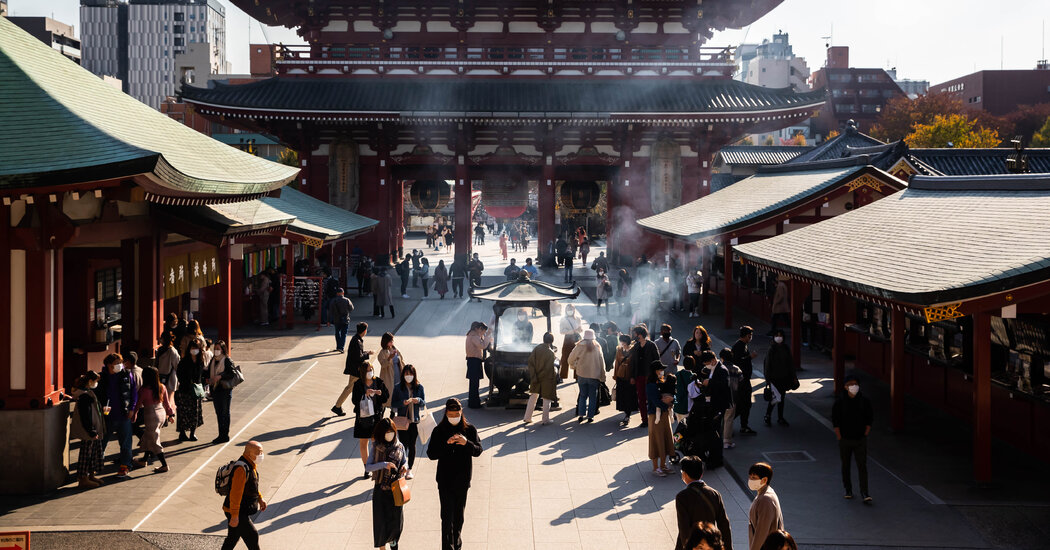
Japan, which has been very cautious throughout the pandemic, is again barring all nonresident foreigners. There is an economic and human cost.TOKYO — With the emergence of the new Omicron variant of the coronavirus late last week, countries across the globe rushed to close their borders to travelers from southern Africa, even in the absence of scientific information about whether such measures were necessary or likely to be effective in stopping the virus’s spread.Japan has gone further than most other countries so far, announcing on Monday that the world’s third-largest economy would be closed off to travelers from everywhere.It is a familiar tactic for Japan. The country has barred tourists since early in the pandemic, even as most of the rest of the world started to travel again. And it had only tentatively opened this month to business travelers and students, despite recording the highest vaccination rate among the world’s large wealthy democracies and after seeing its coronavirus caseloads plunge by 99 percent since August.Now, as the doors slam shut again, Japan provides a sobering case study of the human and economic cost of those closed borders. Over the many months that Japan has been isolated, thousands of life plans have been suspended, leaving couples, students, academic researchers and workers in limbo.Ayano Hirose has not been able to see her fiancé in person for the past 19 months, since he left Japan for his native Indonesia, just two weeks after her parents blessed their marriage plans.As Japan has remained closed to most outsiders, Ms. Hirose and her fiancé, Dery Nanda Prayoga, saw no clear path to a reunion. Indonesia had started allowing some visitors, but the logistical challenges were steep. So the couple has made do with multiple daily video calls. When they run out of things to talk about, they play billiards on Facebook Messenger or watch Japanese variety shows together online.Ayano Hirose has not been able to see her Indonesian fiancé for the past 19 months.Shiho Fukada for The New York Times“We don’t want to suffer in pain at the thought of not being able to reunite in the near future,” said Ms. Hirose, 21, who has written letters to the foreign and justice ministries asking for an exemption to allow Mr. Dery to come to Japan. “So we will think positively and continue to hold out hope.”As the United States, Britain and most of Europe reopened over the summer and autumn to vaccinated travelers, Japan and other countries in the Asia-Pacific region opened their borders only a crack, even after achieving some of the world’s highest vaccination rates. Now, with the emergence of the Omicron variant, Japan, along with Australia, Thailand, Sri Lanka, Singapore, Indonesia and South Korea, are quickly battening down again.China, which has barred international tourists since the start of the pandemic, is so far still issuing visas for work or diplomatic purposes, although limited flight options and lengthy quarantines have deterred travelers. Taiwan has prohibited nearly all nonresidents from entering since early in the pandemic. Australia, which only recently started allowing citizens and visa holders to travel abroad, said on Monday that it would delay a relaxation of its border restrictions. Sri Lanka, Singapore, South Korea, Indonesia and Thailand have all barred travelers from southern Africa, where the variant was first reported.Although the true threat of the new variant is not yet clear, Prime Minister Fumio Kishida of Japan told reporters on Monday that he had decided to revoke the relaxations for business travelers and international students in order to “avoid the worst-case scenario.”The government’s decision to close again reflects its desire to preserve its successes battling the virus and to prevent the kind of strain on the health care system that it experienced over the summer during an outbreak of the Delta variant.Shuttered stores in Tokyo last week.Shiho Fukada for The New York TimesJapan is recording only about 150 coronavirus cases a day, and before the emergence of the Omicron variant, business leaders had been calling for a more aggressive reopening.“At the beginning of the pandemic, Japan did what most countries around the world did — we thought we needed proper border controls,” Yoshihisa Masaki, director of communications at Keidanren, Japan’s largest business lobbying group, said in an interview earlier this month.But as cases diminished, he said, the continuation of firm border restrictions threatened to stymie economic progress. “It will be like Japan being left behind in the Edo Period,” Mr. Masaki said, referring to Japan’s isolationist era between the 17th and mid-19th centuries.Japan had already lagged countries in Southeast Asia, where the economies are dependent on tourism revenues and governments tiptoed out in front in the push to reopen. Thailand had recently reopened to tourists from 63 countries, and Cambodia had just started to welcome vaccinated visitors with minimal restrictions. Other countries, like Malaysia, Vietnam and Indonesia, were allowing tourists from certain countries to arrive in restricted areas.Wealthier Asian countries like Japan resisted the pressure to reopen. With the exception of its decision to hold the Summer Olympics, Japan has been cautious throughout the pandemic. It was early to shut its borders and close schools. It rolled out its vaccination campaign only after conducting its own clinical trials. And dining and drinking hours remained restricted in many prefectures until September.A vaccination drive in a pachinko parlor in Osaka last month. Japan has been reluctant to reverse its successes battling the virus.Carl Court/Getty ImagesForeign companies could not bring in executives or other employees to replace those who were moving back home or to another international posting, said Michael Mroczek, a lawyer in Tokyo who is president of the European Business Council.In a statement on Monday, the council said business travelers or new employees should be allowed to enter provided they follow strict testing and quarantine measures.“Trust should be put in Japan’s success on the vaccination front,” the council said. “And Japan and its people are now firmly in a position to reap the economic rewards.”Business leaders said they wanted science to guide future decisions. “Those of us who live and work in Japan appreciate that the government’s policies so far have substantially limited the impact of the pandemic here,” said Christopher LaFleur, former American ambassador to Malaysia and special adviser to the American Chamber of Commerce in Japan.But, he said, “I think we really need to look to the science over the coming days” to see whether a complete border shutdown is justified.Carla Dittmer has been waking up every day at 1 a.m. at her home in Hanstedt, Germany, to join a Japanese class in Tokyo online.Shiho Fukada for The New York TimesStudents, too, have been thrown into uncertainty. An estimated 140,000 or more have been accepted to universities or language schools in Japan and have been waiting months to enter the country to begin their courses of study.Carla Dittmer, 19, had hoped to move from Hanstedt, a town south of Hamburg, Germany, to Japan over the summer to study Japanese. Instead, she has been waking up every morning at 1 to join an online language class in Tokyo.“I do feel anxious and, frankly speaking, desperate sometimes, because I have no idea when I would be able to enter Japan and if I will be able to keep up with my studies,” Ms. Dittmer said. “I can understand the need of caution, but I hope that Japan will solve that matter with immigration precautions such as tests and quarantine rather than its walls-up policy.”The border closures have economically flattened many regions and industries that rely on foreign tourism.When Japan announced its reopening to business travelers and international students earlier this month, Tatsumasa Sakai, 70, the fifth-generation owner of a shop that sells ukiyo-e, or woodblock prints, in Asakusa, a popular tourist destination in Tokyo, hoped that the move was a first step toward further reopening.“Since the case numbers were going down, I thought that we could have more tourists and Asakusa could inch toward coming back to life again,” he said. “I guess this time, the government is just taking precautionary measures, but it is still very disappointing.”Public health experts are divided as to how much more Japan should relax its border controls, with some urging caution and others saying it can be done safely with an effective quarantine system.Shiho Fukada for The New York TimesMr. Dery and Ms. Hirose also face a long wait. Mr. Dery, who met Ms. Hirose when they were both working at an automotive parts maker, returned to Indonesia in April 2020 after his Japanese work visa expired. Three months before he departed, he proposed to Ms. Hirose during an outing to the DisneySea amusement park near Tokyo.Ms. Hirose had booked a flight to Jakarta for that May so that the couple could marry, but by then, the borders were closed in Indonesia.“Our marriage plan fell apart,” Mr. Dery, 26, said by telephone from Jakarta. “There’s no clarity on how long the pandemic would last.”Just last week, Mr. Dery secured a passport and was hoping to fly to Japan in February or March.Upon hearing of Japan’s renewed border closures, he said he was not surprised. “I was hopeful,” he said. “But suddenly the border is about to close again.”“I don’t know what else to do,” he added. “This pandemic seems endless.”Reporting was contributed by Hisako Ueno and Makiko Inoue in Tokyo;

Read more →
Stamping Bar Codes on Cells to Solve Medical Mysteries

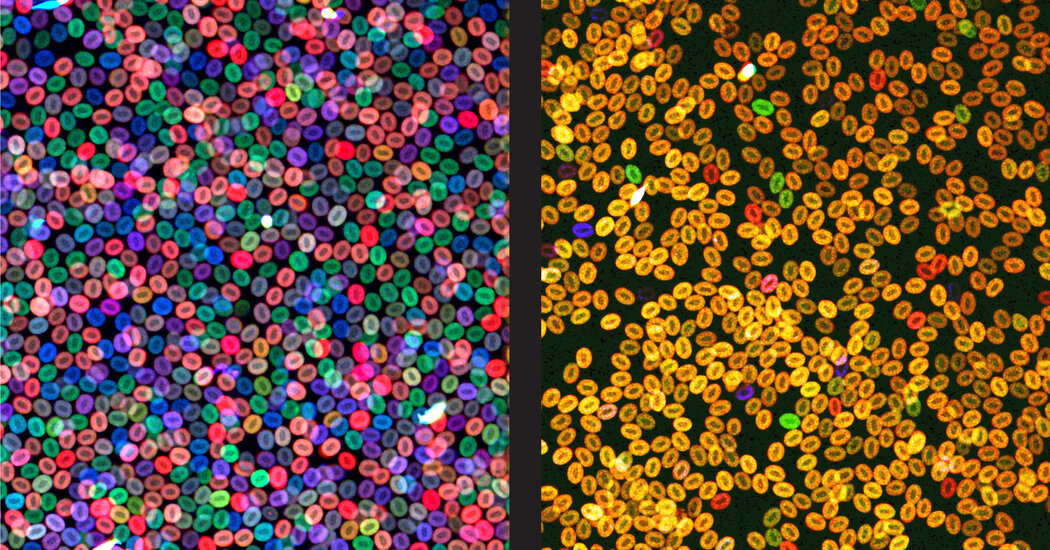
By tracking every cell in an organism, scientists are working out why certain cancer treatments fail, which could lead to improved medicine.No one really knew why some patients with a white blood cell cancer called chronic lymphocytic leukemia, or CLL, relapsed after treatment and got a second cancer. Were some cancer cells just resistant?An unexpected answer to this mystery has been found using a new technique that researchers call bar coding: The treatment does not always target the right cells.Scientists discovered that the cancer does not always originate in the mature bone marrow cells where it is found and where textbooks say it originates. Instead, for some patients, the mother lode of the cancer can be primitive bone marrow cells, the stem cells, that give rise to all of the body’s white and red blood cells. Those cells, not affected by the chemotherapy treatment, can spawn new cancer cells, causing a relapse.The discovery is one early fruit of the bar coding method, which is aiding the study of the origins of cancer and other diseases. The results are too new to have led to patient therapies. But they are leading to provocative discoveries that are expected to inspire novel methods for treating diseases.The method works by marking individual cells with a stamp that is passed on to all of a cell’s progeny. Researchers can look at a cell, note its bar code and trace its lineage back to its parents, grandparents, great-grandparents — all the way back to its origins — because each cell that arose from the original bar coded cell has the same stamp.The idea for bar coding during embryonic development originated with Dr. Jay Shendure and his colleagues at the University of Washington, and this class of methods was anointed the breakthrough of the year by Science magazine in 2018. Now there is a variety of methods for bar coding ranging from embryo cells to cancer cells to mature cells.For example, Dr. Shendure and another group of colleagues at the University of Pennsylvania are using bar codes in mice with pancreatic cancer to study the spread of cancer cells in their bodies.In the case of CLL above, Dr. Vijay Sankaran at Boston Children’s Hospital and his colleagues bar coded human cancer cells by taking advantage of innocuous, naturally occurring mutations that mark individual cells and are inherited by their progeny.Bar coding, Dr. Sankaran said, “starts to give us a view of cancer that we never had before.”The technique also revealed a surprising result to Dr. Leonard Zon of Harvard Medical School. He wanted to study clonal hematopoiesis of uncertain potential, or CHIP, a common but poorly understood condition that is common in older people and increases the risk for cancer and heart disease. CHIP occurs when the progeny of a single blood stem cell take over all or a large part of the bone marrow, squeezing out other stem cells.To investigate, Dr. Zon marked individual marrow stem cells with different colors in tiny, transparent zebrafish. The result resembled what happens in patients — by the time the fish were adults, half of their blood cells were a single color, meaning they were derived from a single stem cell.But how did one cell take over?The answer was a surprise. The dominant cells secreted toxic inflammatory proteins. Those proteins suppressed the growth of other stem cells and injured the environment where the marrow cells grow. But the stem cell parents survived and kept generating new toxin-secreting progeny.The group also found a gene in the mutant cells that allowed them to be resistant to the inflammation. When they blocked that gene, the mutant cells could no longer take over.Fernando Camargo, a stem cell biologist at Boston Children’s, addressed a different problem — why are standard cancer treatments that transplant healthy bone marrow stem cells from donors so difficult, often leaving patients vulnerable to severe infections?When he and his colleagues bar coded marrow cells in mice by genetically marking them with the gene-editing technique known as CRISPR, he discovered that the cells everyone called stem cells were not the main contributors to blood production.“We always assumed those are the same cells that normally give rise to all of your blood,” Dr. Camargo said.Instead, a different set of cells, which he calls progenitor cells, give rise to most blood in living animals. In a stem cell transplant, both progenitor cells and the putative stem cells are transplanted, but the progenitor cells quickly die off in the new environment.Now the question is: Why don’t the progenitor cells survive transplant? It could be that the strong doses of radiation and chemotherapy that clear out the marrow for a transplant make the marrow inhospitable. Or it could be that the progenitor cells, injected with stem cells into blood, can’t find their way to the marrow.Dr. Camargo is left shaking his head.“We thought we knew everything about blood stem cells,” he said. “Obviously, we didn’t.”

Read more →

Covid: JCVI scientists to announce decision on booster rollout

SharecloseShare pageCopy linkAbout sharingImage source, Getty ImagesThe UK’s vaccine advisory body is set to announce later if it will back an expansion of the Covid booster scheme.Nine cases of the Omicron variant have been found in the UK so far and Number 10 has set out measures to contain it.Prof Anthony Harnden, deputy chairman of the Joint Committee on Vaccination and Immunisation (JCVI), said it would be “sensible” to cut time between doses and extend boosters to the under-40s.Regulations on face masks and isolation rules are due before Parliament later.The JCVI only advises the government and the final decision on measures to combat Covid always lies with the politicians – but Prime Minister Boris Johnson has said he intends to wait for the recommendations from the scientific experts who make up the committee. Meanwhile, an urgent meeting of health ministers from the G7 group of nations will be held later “to discuss the developments on Omicron”, the Department for Health said.How can over-40s get a Covid booster now?How worrying is the new Covid variant?How are England’s Covid rules changing because of Omicron?Early evidence suggests the new Omicron variant – initially reported to the World Health Organization from South Africa on Wednesday – has a higher reinfection risk.The Scottish government announced on Monday morning that six cases of the variant had been identified in Scotland, with four in Lanarkshire and two in the Greater Glasgow and Clyde area.Some of the cases identified in Scotland have had no travel history and caught the virus variant in the community, Deputy First Minister John Swinney told BBC’s Good Morning Scotland.The first UK cases – picked up from analysis of recent positive Covid tests from all around the country – were confirmed on Saturday in Essex and Nottingham. The third case identified on Sunday came from a visitor who spent time in the Westminster area of London, although the person is no longer in the UK, the Health Security Agency said.The agency said it was “very likely” more cases would be found in the coming days.You might be wondering what’s the point of a booster if the current vaccines turn out to be less effective against Omicron?We don’t know if that will be the case, but mutations in Omicron mean the jabs may not perform as well.The vaccines will have taught your body to spot the original coronavirus that emerged in Wuhan in China.The mutations on Omicron are like it putting on a disguise to slip past your body’s guard.But boosting is the equivalent of hiring more guards to compensate. You’ll have more crucial components of the immune system such as antibodies and T cells circulating in the body to increase the chances of seeing through the virus’s disguise.If Omicron does prove to be a problem then boosting is the quickest way of enhancing people’s protection as it will take about 100 days to update the vaccines if (and it is a major if) that turns out to be necessary.Because there are also high levels of cases of the dominant Delta variant, Health Secretary Sajid Javid said at the weekend he would be asking the JCVI to consider backing the rollout of booster jabs to a wider population than at present.Prof Harnden, from the JCVI, told BBC Radio 4’s Broadcasting House programme on Sunday there was a “strong argument” for extending boosters to all adults. “Accelerating the booster programme both by extending the age range and by reducing the interval between the second dose and the booster dose would be a sensible strategy,” he said.Wales is Omicron-free, for now, says top doctorOmicron: Will new measures against variant work?Shoppers asked to respect new mandatory mask rulesCurrently, booster jabs have been restricted to those aged 40 and over, front-line health or social workers, and those with health issues.Asked in the Radio 4 interview whether everyone over 18 should expect an invitation to get a booster jab, Prof Harnden responded that the offer would come “earlier than we have previously envisaged”. At the moment, people aged 16 and 17 can book a second dose of the Pfizer jab – to be administered at least 12 weeks after their first. All 12 to 15-year-olds are currently being offered a single Pfizer dose.Prof Harnden told BBC Breakfast on Monday there was “an argument” for reducing the interval between doses for 16 and 17 -year olds and to look at whether 12 to 15-year-olds should get a second jab.The government announced at the weekend that face coverings will become compulsory in shops and on public transport in England, and pupils in Year 7 and above, plus school staff and visitors, are being advised to wear face coverings in communal areas.UK arrivals will have to take a PCR test from Tuesday and self-isolate until they receive a negative result.The PM announced the “temporary and precautionary” measures at a Downing Street news conference on Saturday, adding they would be reviewed in three weeks.Under the rules due to come in on Tuesday: Everyone entering the UK (other than those coming from the Common Travel Area that covers the Channel Islands and Ireland) will have to take a PCR test by the end of the second full day after their arrival and self-isolate until they receive a negative resultAll contacts of suspected Omicron cases must self-isolate, regardless of whether or not they are fully vaccinatedFace coverings will be made compulsory on public transport (bringing England into line with the other UK nations) and in shops – but pubs and restaurants will remain exempt.The government agreed last year to give MPs a vote before introducing new pandemic measures.This means the latest measures, due to be laid before Parliament later on Monday, need a majority in the Commons before they will go ahead.Historically the PM has faced opposition to coronavirus restrictions from among his own backbenchers.Conservative MP Steve Baker, deputy chairman of the Covid Recovery Group, told the Daily Telegraph the measures “will cause chaos” in schools as, under the rules, children will likely be forced into self isolation.”The government needs to explain when all of this will be brought to an end,” Mr Baker said.Meanwhile, in a virtual address to the SNP conference, Scottish First Minister Nicola Sturgeon will urge people to “pull together” over the winter months to stop spread of the Omicron variant.By doing so, she is due to say, there is a greater chance of a more normal Christmas.Have you had a Covid vaccine booster? Will you be having one? Please get in touch by emailing haveyoursay@bbc.co.uk.Please include a contact number if you are willing to speak to a BBC journalist. You can also get in touch in the following ways:WhatsApp: +44 7756 165803Tweet: @BBC_HaveYourSayUpload pictures or videoPlease read our terms & conditions and privacy policy

If you are reading this page and can’t see the form you will need to visit the mobile version of the BBC website to submit your question or comment or you can email us at HaveYourSay@bbc.co.uk. Please include your name, age and location with any submission.

Read more →

Omicron: Is India ready for a third wave?

SharecloseShare pageCopy linkAbout sharingImage source, Getty ImagesAs we approach the third year of the pandemic, epidemiologist Chandrakant Lahariya writes about what India should learn from its fight against Covid-19. Anyone travelling through India’s northern states would be forgiven for thinking that the pandemic is over.In the smaller towns, few people wear masks, fewer practise social distancing and Covid-19 rarely comes up in conversations. The only visible reminders are the billboards thanking politicians for tackling the virus. In the national capital, Delhi, most people are masked because of rules that demand it. But the city is once again in full swing, from crowded markets and busy restaurants to packed social calendars.Low case counts (India has been recording around 10,000 new Covid cases daily) and the ongoing vaccination drive (nearly 80% of the 940 million eligible adults have received at least one dose so far) seem to have dimmed the memory of a brutal second wave in April and May this year.How India descended into Covid-19 chaosIndians turn to crowdfunding to pay Covid billsBut the fact is the pandemic is not over. Cases are rising in Europe again, prompting the World Health Organization (WHO) to say it is “very worried”.The emergence of a new variant, initially named B.1.1.529 and now Omicron by the WHO, is another cause for concern – although more research is needed to determine how dangerous it is.So the inevitable question to ask is: Will there be a third wave of Covid-19 ? And if so, is India prepared?It’s likely India may not see a major rise in cases because studies suggest the majority of Indians have antibodies against the currently predominant Delta variant, and four-fifth of all adults have also been partially vaccinated. But that isn’t enough cause for cheer.The recent reports of a dengue virus outbreak – an endemic disease – in many Indian states is proof that the health system is still not equipped to detect and tackle emerging and re-emerging diseases.Image source, Getty ImagesAnd therein lies the problem. When the pandemic arrived in early 2020, the hope was that the stringent lockdown would afford an opportunity for the government to strengthen an understaffed and under-funded public health system. Top political leaders and senior health policy makers repeatedly said that was the objective of the first lockdown.But a year on, a second Covid wave devastated India as hospitals ran out of beds, medicines and oxygen. Medical bills soared in a fragmented market with spotty insurance coverage, and people borrowed money or sold family assets to pay up.Soon after, in July 2021, the government did announce a second Covid-19 package to strengthen health infrastructure. But some argued that the amount set aside was too little, and there was no visible urgency to put it to action. The Indian women widowed by Covid-19India’s national health policy, announced in 2017, had proposed raising government spending on health to 2.5% of GDP by 2025. But spending has only marginally increased since – it accounted for just 1.3% of GDP in the fiscal year ending 2022 – and is clearly not on track to reach the target. The government has often claimed that its Ayushman Bharat Pradhan Mantri Jan Arogya Yojana is one of the world’s largest public health insurance schemes. But several news reports suggest that the scheme barely helped those who desperately needed it. The challenge ahead is even bigger and goes well beyond the pandemic. While much of the health system was focused on tackling Covid-19, other essential services took a hit. It’s one of the reasons many Indian states have struggled to deal with the dengue outbreak. Image source, Getty ImagesThe WHO said in October that the pandemic reversed “years of global progress in tackling tuberculosis” as people struggled to access treatment. India accounted for 41% of the total global drop in reporting the disease between 2019 and 2020, the WHO said.People suffering from non-communicable diseases have also found it difficult to get the care they needed. So, what should India do?First, the government should commission independent experts to conduct an impartial assessment of its pandemic response.Second, India needs to recommit to strengthening its health systems. If the promises made on this front in the last five years by both federal and state governments can be fulfilled, the country would have a far stronger health system.Third, all policymakers, medical experts and technical experts should be trained in science communication to avoid panic and misinformation.Fourth, India’s pandemic response has to be integrated into primary healthcare services.Fifth, India needs to immediately fill vacancies at all levels in the health workforce and draw up a detailed plan for equitable distribution across urban and rural areas, giving priority to underserved regions. Complacency and fatigue at different levels have led to a slowdown in the adoption of Covid-appropriate behaviour, vaccination uptake in adults and even genome surveillance. The emergence of Omicron should be used as an opportunity to reassess pandemic preparedness across the country – including enhanced and targeted Covid testing, genomic sequencing and accelerated vaccine coverage in adults. Image source, Getty ImagesBut a note of caution – the emergence of a new variant should not lead to hurried decisions on vaccine dose intervals, boosters or even the functioning of schools, which have only now begun to reopen after more than a year. Those decisions should be determined only by a calm assessment of scientific evidence.India may or may not face another major Covid wave, but other outbreaks and epidemics will continue to be a reality after this pandemic – as they were before it. If a country is prepared for preventing and controlling any disease outbreak, it’s also prepared for a pandemic. So, let’s prepare for responding to every outbreak.The struggle to control the dengue outbreak in 15 Indian states is proof that India is not ready yet.Action is needed now, and one can only hope that someone is listening.Chandrakant Lahariya, a physician epidemiologist, is a public policy and health systems specialist, based in Delhi.This video can not be playedTo play this video you need to enable JavaScript in your browser.

Read more →

As U.S. Hunts for Chinese Spies, University Scientists Warn of Backlash

A chilling effect has taken hold on American campuses, contributing to an outflow of academic talent that may hurt the United States while benefiting Beijing.The F.B.I. agents spent nearly two years tailing the professor, following him to work, to the grocery store, and even keeping his college-age son under surveillance. They told the university where he held a tenured position that he was a Chinese operative, prompting the school to cooperate with their investigation and later fire him.But the F.B.I. was unable to find evidence of espionage, according to an agent’s testimony in court.Federal prosecutors pressed charges anyway, accusing Anming Hu of concealing his ties with a university in Beijing and defrauding the government in connection with research funds he had received from NASA. The trial ended in a hung jury. One juror called the case “ridiculous.” In September, a judge took the rare step of acquitting the Chinese-born scientist on all counts.“It was the darkest time of my life,” Dr. Hu said in his first in-depth interview since being acquitted.Universities in the United States once welcomed the best and brightest scientific talents from around the world. But government officials have become increasingly suspicious that scientists like Dr. Hu are exploiting the openness of American institutions to steal sensitive taxpayer-funded research at the behest of the Chinese government. It’s had a chilling effect across campuses that scientists and university administrators say has slowed research and contributed to a flow of talent out of the United States that may benefit Beijing.In interviews with several scientists of Chinese descent working in American universities, a picture emerged of a community on edge. Some described being humiliated by mandatory training on foreign interference that featured only examples of ethnic Chinese scientists, and unexplained delays for visa renewals. They were all concerned that seemingly anything — a collaboration with another scientist from China, a slip-up on a disclosure form — could provide an opening for federal investigators to come knocking.The trial of Dr. Hu, who worked at the University of Tennessee at Knoxville, is being held up as a clear example of government overreach. He was under house arrest for 18 months during the investigation with no job or income, reliant on GoFundMe donations for his legal defense fees. Neighbors and church friends delivered groceries and took out his garbage. While the university has since offered to reinstate his job, Dr. Hu, a naturalized Canadian citizen, said his immigration status remains in limbo.“My basic human rights were invaded, my reputation was destroyed, my heart was deeply hurt, my family was hurt,” he said. “This is not fairness.”Anming Hu at home in Knoxville, Tenn. The Chinese-born scientist and professor has spent the last few years fighting accusations that he acted as a spy for China.Shawn Poynter for The New York TimesA recent study conducted by the University of Arizona and the Committee of 100, an organization of prominent Chinese Americans, surveyed scientists of both Chinese and non-Chinese descent working at academic institutions in the United States on issues of race and ethnicity in science and research. Around half of the Chinese scientists surveyed — including some American citizens — said they felt they were being surveilled by the U.S. government. Some have blamed a law enforcement program called the China Initiative, which was started during the Trump administration and has continued under President Biden.The program is aimed at preventing the Chinese government’s theft of American trade secrets and other acts of espionage. But scholars, scientists, civil rights groups and lawmakers have asked whether it has gone too far in targeting academics, especially since most research done at universities is unclassified and eventually published.Nearly 2,000 academics at institutions including Stanford University, the University of California, Berkeley and Princeton University have signed open letters to Attorney General Merrick Garland expressing concerns that the initiative disproportionately targets researchers of Chinese descent and urging that the program be terminated.“So much of our intellectual technological power is from immigrants,” said Steven Chu, one of the signers, a Nobel Prize-winning physicist at Stanford University and a former U.S. secretary of energy. “We’re shooting ourselves not in the foot but in something close to the head.”Dr. Hu was the first academic charged under the China Initiative to stand trial. So far the F.B.I. has brought 12 prosecutions at universities or research institutions in three years, but none have involved charges of economic espionage or theft of trade secrets or intellectual property. Most involved allegations like wire fraud, lying to federal investigators and failure to disclose ties with China.Behind the recent scrutiny of academics is a problem years in the making.Over the past two decades, as federal funding for basic scientific research at universities stagnated, scientists sought alternative sources of money. Eager to expand their global footprint, American universities promoted collaborations with international peers, including in China. Beijing, which has set its sights on becoming a science and technology superpower, was happy to oblige.Researchers took advantage of growing opportunities in China, including talent recruitment programs, lucrative consulting contracts, honorary titles and grants.But the Chinese government sometimes used these relationships to steal or incentivize the transfer of intellectual property from American companies. As the Trump administration intensified scrutiny of espionage by China, it expanded the dragnet to include academic collaboration, prompting federal agencies that provide funding — and some universities — to step up enforcement of policies on the disclosure of foreign ties and conflicts of interest.In recent months, academics have signed open letters to Attorney General Merrick Garland, center, urging that the China Initiative program be terminated.Stefani Reynolds for The New York Times“There’s no room for xenophobia or ethnic profiling,” said Anna Puglisi, a senior fellow at Georgetown University’s Center for Security and Emerging Technology. “But what gets lost in the discussion is the bigger question that we need to be asking, which is: ‘Do we have the system in place to mitigate the behavior and central government policies of a nation state that are specifically set up to target the seams in our system?’”To some, the intensified scrutiny amounted to overreach.Many scientists have expressed frustration over what they say are shifting and overlapping disclosure guidelines from universities and funding agencies that make it hard to avoid getting caught in the F.B.I.’s web. During Dr. Hu’s trial, for example, it emerged that both NASA and the University of Tennessee at Knoxville had provided unclear rules on how he should disclose foreign ties.Understand U.S.-China RelationsCard 1 of 6A tense era in U.S.-China ties.

Read more →

Will the Vaccines Stop Omicron? Scientists Are Racing to Find Out.

A “Frankenstein mix” of mutations raises concerns, but the variant may remain vulnerable to current vaccines. If not, revisions will be necessary.As nations severed air links from southern Africa amid fears of another global surge of the coronavirus, scientists scrambled on Sunday to gather data on the new Omicron variant, its capabilities and — perhaps most important — how effectively the current vaccines will protect against it.The early findings are a mixed picture. The variant may be more transmissible and better able to evade the body’s immune responses, both to vaccination and to natural infection, than prior versions of the virus, experts said in interviews.The vaccines may well continue to ward off severe illness and death, although booster doses may be needed to protect most people. Still, the makers of the two most effective vaccines, Pfizer-BioNTech and Moderna, are preparing to reformulate their shots if necessary.“We really need to be vigilant about this new variant and preparing for it,” said Jesse Bloom, an evolutionary biologist at the Fred Hutchinson Cancer Research Center in Seattle.“Probably in a few weeks, we’ll have a better sense of how much this variant is spreading and how necessary it might be to push forward with a variant vaccine,” Dr. Bloom said.Even as scientists began vigorous scrutiny of the new variant, countries around the world curtailed travel to and from nations in southern Africa, where Omicron was first identified. Despite the restrictions, the virus has been found in a half-dozen European countries, including the United Kingdom, as well as Australia, Israel and Hong Kong.Already, Omicron accounts for most of the 2,300 new daily cases in the province of Gauteng, South Africa, President Cyril Ramaphosa announced on Sunday. Nationally, new infections have more than tripled in the past week, and test positivity has increased to 9 percent from 2 percent.Scientists have reacted more quickly to Omicron than to any other variant. In just 36 hours from the first signs of trouble in South Africa on Tuesday, researchers analyzed samples from 100 infected patients, collated the data and alerted the world, said Tulio de Oliveira, a geneticist at the Nelson R. Mandela School of Medicine in Durban.Within an hour of the first alarm, scientists in South Africa also rushed to test coronavirus vaccines against the new variant. Now, dozens of teams worldwide — including researchers at Pfizer-BioNTech and Moderna — have joined the chase.They won’t know the results for two weeks, at the earliest. But the mutations that Omicron carries suggest that the vaccines most likely will be less effective, to some unknown degree, than they were against any previous variant. Cape Town International Airport in South Africa on Sunday. Many countries restricted travel from the country over the weekend.Nic Bothma/EPA, via Shutterstock“Based on lots of work people have done on other variants and other mutations, we can be pretty confident these mutations are going to cause an appreciable drop in antibody neutralization,” Dr. Bloom said, referring to the body’s ability to attack an invading virus.South African doctors are seeing an increase in reinfections in people who already had a bout of Covid-19, suggesting that the variant can overcome natural immunity, said Dr. Richard Lessells, an infectious diseases physician at the University of KwaZulu-Natal.Omicron has about 50 mutations, including more than 30 in the spike, a viral protein on its surface that the vaccines train the body to recognize and attack.Some of these mutations have been seen before. Some were thought to have powered the Beta variant’s ability to sidestep vaccines, while others most likely turbocharged Delta’s extreme contagiousness.“My best guess is that this combines both of those elements,” Penny Moore, a virologist at the National Institute for Communicable Diseases in South Africa, said of the new variant.But Omicron also has 26 unique spike mutations, compared with 10 in Delta and six in Beta. Many of them seem likely to render the variant more difficult for the immune system to recognize and thwart.“There are many we’ve never studied before, but just looking at the location on the spike, they are in regions that we know are immuno-dominant,” Dr. Moore said, referring to parts of the spike protein that interact with the body’s immune defenses.Dr. Moore’s team is perhaps the furthest along in testing how well the vaccines hold up against Omicron. She and her colleagues are preparing to test blood from fully immunized people against a synthetic version of the Omicron variant.Creating such a “pseudovirus” — a viral stand-in that contains all of the mutations — takes time, but results may be available in about 10 days.To more closely mimic what people are likely to encounter, another team led by Alex Sigal, a virologist at the Africa Health Research Institute, is growing live Omicron, which will be tested against the blood of fully immunized people, as well as those who were previously infected.Those results may take longer but should provide a fuller picture of the vaccines’ performance, Dr. Sigal said.If the vaccines prove to be much less potent against Omicron, they may need to be tweaked to enhance their effectiveness. Preparing for the worst, Moderna, Pfizer-BioNTech and Johnson & Johnson are planning to test an artificial version of Omicron against their vaccines.The mRNA vaccines in particular — Moderna’s and Pfizer-BioNTech’s — were built with technology that should permit rapid modification. Pfizer’s scientists “can adapt the current vaccine within six weeks and ship initial batches within 100 days in the event of an escape variant” that eludes the immune system, said Jerica Pitts, a spokeswoman for Pfizer.Moderna’s work began on Tuesday, immediately after its scientists learned of Omicron — the fastest the company has ever responded to a variant, said Dr. Stephen Hoge, Moderna’s president.Even without data on Omicron’s spread, it was obvious the variant would be a formidable threat to vaccines, he said.“This thing is a Frankenstein mix of all of the greatest hits,” Dr. Hoge said, referring to the variant’s many concerning mutations. “It just triggered every one of our alarm bells.”Moderna could update its current vaccine in about two months and have clinical results in about three months if necessary, he said.Both companies also plan to test whether booster shots will bolster the immune system enough to fend off the new variant. Boosters of the Pfizer-BioNTech and Moderna vaccines have been shown to raise antibody levels significantly.But those antibodies may not be broadly effective against every iteration of the virus, and may not be enough to neutralize Omicron entirely, said Michel Nussenzweig, an immunologist at Rockefeller University in New York.People who recover from Covid and then receive even one dose of a vaccine tend to produce a broader range of antibodies, capable of recognizing more versions of the virus, than do people who are only vaccinated.A Pfizer research and development facility in Chesterfield, Mo. A revised version of its coronavirus vaccine could be ready in six weeks if needed, a spokeswoman said. Whitney Curtis for The New York Times“It’s clear that hybrid immunity, the kind that people get when they are both infected and vaccinated, is superior, and that is very, very likely to take care of this thing, too,” Dr. Nussenzweig said.“After two doses of vaccine, we did not see that. But we’re hoping that after three doses, maybe there’ll be some catching up,” he said..css-1xzcza9{list-style-type:disc;padding-inline-start:1em;}.css-3btd0c{font-family:nyt-franklin,helvetica,arial,sans-serif;font-size:1rem;line-height:1.375rem;color:#333;margin-bottom:0.78125rem;}@media (min-width:740px){.css-3btd0c{font-size:1.0625rem;line-height:1.5rem;margin-bottom:0.9375rem;}}.css-3btd0c strong{font-weight:600;}.css-3btd0c em{font-style:italic;}.css-1kpebx{margin:0 auto;font-family:nyt-franklin,helvetica,arial,sans-serif;font-weight:700;font-size:1.125rem;line-height:1.3125rem;color:#121212;}#NYT_BELOW_MAIN_CONTENT_REGION .css-1kpebx{font-family:nyt-cheltenham,georgia,’times new roman’,times,serif;font-weight:700;font-size:1.375rem;line-height:1.625rem;}@media (min-width:740px){#NYT_BELOW_MAIN_CONTENT_REGION .css-1kpebx{font-size:1.6875rem;line-height:1.875rem;}}@media (min-width:740px){.css-1kpebx{font-size:1.25rem;line-height:1.4375rem;}}.css-1gtxqqv{margin-bottom:0;}.css-1g3vlj0{font-family:nyt-franklin,helvetica,arial,sans-serif;font-size:1rem;line-height:1.375rem;color:#333;margin-bottom:0.78125rem;}@media (min-width:740px){.css-1g3vlj0{font-size:1.0625rem;line-height:1.5rem;margin-bottom:0.9375rem;}}.css-1g3vlj0 strong{font-weight:600;}.css-1g3vlj0 em{font-style:italic;}.css-1g3vlj0{margin-bottom:0;margin-top:0.25rem;}.css-19zsuqr{display:block;margin-bottom:0.9375rem;}.css-12vbvwq{background-color:white;border:1px solid #e2e2e2;width:calc(100% – 40px);max-width:600px;margin:1.5rem auto 1.9rem;padding:15px;box-sizing:border-box;}@media (min-width:740px){.css-12vbvwq{padding:20px;width:100%;}}.css-12vbvwq:focus{outline:1px solid #e2e2e2;}#NYT_BELOW_MAIN_CONTENT_REGION .css-12vbvwq{border:none;padding:10px 0 0;border-top:2px solid #121212;}.css-12vbvwq[data-truncated] .css-rdoyk0{-webkit-transform:rotate(0deg);-ms-transform:rotate(0deg);transform:rotate(0deg);}.css-12vbvwq[data-truncated] .css-eb027h{max-height:300px;overflow:hidden;-webkit-transition:none;transition:none;}.css-12vbvwq[data-truncated] .css-5gimkt:after{content:’See more’;}.css-12vbvwq[data-truncated] .css-6mllg9{opacity:1;}.css-qjk116{margin:0 auto;overflow:hidden;}.css-qjk116 strong{font-weight:700;}.css-qjk116 em{font-style:italic;}.css-qjk116 a{color:#326891;-webkit-text-decoration:underline;text-decoration:underline;text-underline-offset:1px;-webkit-text-decoration-thickness:1px;text-decoration-thickness:1px;-webkit-text-decoration-color:#326891;text-decoration-color:#326891;}.css-qjk116 a:visited{color:#326891;-webkit-text-decoration-color:#326891;text-decoration-color:#326891;}.css-qjk116 a:hover{-webkit-text-decoration:none;text-decoration:none;}Dr. Nussenzweig and his colleagues are preparing to test Omicron against the mRNA vaccines, as well as the vaccines made by Johnson & Johnson and AstraZeneca. They hope to have results within a month.Omicron-specific vaccines created in just weeks would be a miraculous feat. But the prospect of producing and distributing them raises daunting questions.If new versions are required to protect people everywhere, companies should make them available to the African countries that most need them and can least afford them, Dr. de Oliveira said.“South Africa at least has managed to procure their own vaccines,” he said. But poorer countries like Sudan, Mozambique, Eswatini and Lesotho will need low-cost options.Pfizer did not respond to a question about low-cost vaccines for African nations. Dr. Hoge, of Moderna, said the company already had an agreement with the African Union to deliver 110 million doses at $3.50 per half dose of vaccine.Dr. Hoge said he recognized that 110 million was less than 10 percent of Africa’s population. But, he noted, “we’re also the smallest of all manufacturers out there, and so 10 percent hopefully is useful.”Despite the frustration that South African scientists have expressed about vaccine inequity and punishing travel restrictions, they have been inundated with requests for genetic sequences of Omicron from Italy, Germany, Australia and New Zealand, as well as labs in North America.The more teams involved, the better, said Dr. Moore, who received about 50 requests just on Saturday. As the virus moves across the globe, it is likely to keep changing. “Getting the right combination of mutations in itself is a moving target,” she said.Researchers everywhere want to avoid drawing conclusions prematurely, a mistake they made when the Beta variant surfaced. Preliminary tests of that variant took only one known mutation into account and underestimated its ability to evade the immune system, Dr. Moore recalled. (Fortunately, the variant also turned out to be less contagious.)To get a full picture of the effectiveness of the vaccines against Omicron, scientists must look not just at antibody levels but also at immune cells that can recognize and destroy infected cells. Immune cells called T cells are crucial for preventing an infection from progressing to serious illness and death.Some of Omicron’s mutations occur in parts of the virus targeted by T cells, meaning the variant may be more difficult for T cells to recognize.Already, a computer simulation has predicted that those mutations may alter about six of the hundreds of regions that T cells can recognize, said Wendy Burgers, an immunologist at the University of Cape Town.That may not seem like much. But people make varying sets of T cells, so depending on which targets the mutations knock out, some people may barely be affected by Omicron — and others may be left vulnerable.Dr. Burgers is hoping to obtain blood from 50 people infected with the variant to gauge how the mutations will play out across a population. Once the samples are in hand, results will be available after “probably a week of very late nights and analysis,” she said.Even if the vaccines hold up against Omicron, new versions will probably be needed at some point, and perhaps soon. The virus is acquiring mutations much faster than expected, Dr. Bloom said.Seasonal influenza is the often cited example of a virus that mutates quickly, requiring regular updates to vaccines. But the coronavirus is “at least comparable and possibly even faster than that,” Dr. Bloom said. “There’s always going to be new variants arising.”Lynsey Chutel

Read more →

U.S. Governors Respond to Omicron Variant

On Friday, Gov. Kathy Hochul of New York declared a state of emergency partly in response to the emerging Omicron variant of the coronavirus. Most governors did not comment publicly on the threat over the weekend, but some said they were monitoring developments without taking any new steps.Gov. Ned Lamont of Connecticut issued a statement on Sunday saying local health officials were paying close attention to the Omicron variant.“Our team at the Connecticut Department of Public Health, led by Commissioner Manisha Juthani, is following these developments closely,” he said in the statement. “While there have been no cases of the Omicron variant reported here in Connecticut or the United States to date, we still must be vigilant. Given the number of countries where Omicron has already been detected, it may already be present in the U.S.”Other state leaders took the same tone, urging caution as well as highlighting the resources they had already put in place through the pandemic.Mr. Lamont pointed to the network of labs sequencing genomes in his state and reminded residents to wear masks in indoor public spaces.Gov. Gavin Newsom of California said on Twitter on Sunday that the state was “monitoring the new variant from Southern Africa closely.” He did not announce any new steps but said that the coronavirus vaccine and booster shot were essential.The Los Angeles County Department of Public Health echoed that message and said in a statement, “More studies are needed to determine whether the Omicron variant is more contagious, more deadly or resistant to vaccine and treatments than other Covid-19 strains.” The department added that people in Los Angeles should adhere to existing mask requirements.“While we are still learning much about Omicron, we know enough about Covid to take steps now that can reduce transmission as we prepare to better understand the additional strategies that may needed to mitigate this new variant of concerns,” the statement said.Health leaders in the United States have said that it is all but inevitable that the variant will reach the country and called this a time for caution but not panic.“We’re going to get better information about this,” Dr. Francis Collins, director of the National Institutes of Health, said on the CNN program “State of the Union.” “But there’s no reason to panic. But it is a great reason to go get boosted.”Some leaders sought to reassure residents. Gov. Dan McKee of Rhode Island said that its health department was not aware of any cases in the state linked to the variant, although he said that the state would continue to be on the lookout..css-1xzcza9{list-style-type:disc;padding-inline-start:1em;}.css-3btd0c{font-family:nyt-franklin,helvetica,arial,sans-serif;font-size:1rem;line-height:1.375rem;color:#333;margin-bottom:0.78125rem;}@media (min-width:740px){.css-3btd0c{font-size:1.0625rem;line-height:1.5rem;margin-bottom:0.9375rem;}}.css-3btd0c strong{font-weight:600;}.css-3btd0c em{font-style:italic;}.css-1kpebx{margin:0 auto;font-family:nyt-franklin,helvetica,arial,sans-serif;font-weight:700;font-size:1.125rem;line-height:1.3125rem;color:#121212;}#NYT_BELOW_MAIN_CONTENT_REGION .css-1kpebx{font-family:nyt-cheltenham,georgia,’times new roman’,times,serif;font-weight:700;font-size:1.375rem;line-height:1.625rem;}@media (min-width:740px){#NYT_BELOW_MAIN_CONTENT_REGION .css-1kpebx{font-size:1.6875rem;line-height:1.875rem;}}@media (min-width:740px){.css-1kpebx{font-size:1.25rem;line-height:1.4375rem;}}.css-1gtxqqv{margin-bottom:0;}.css-1g3vlj0{font-family:nyt-franklin,helvetica,arial,sans-serif;font-size:1rem;line-height:1.375rem;color:#333;margin-bottom:0.78125rem;}@media (min-width:740px){.css-1g3vlj0{font-size:1.0625rem;line-height:1.5rem;margin-bottom:0.9375rem;}}.css-1g3vlj0 strong{font-weight:600;}.css-1g3vlj0 em{font-style:italic;}.css-1g3vlj0{margin-bottom:0;margin-top:0.25rem;}.css-19zsuqr{display:block;margin-bottom:0.9375rem;}.css-12vbvwq{background-color:white;border:1px solid #e2e2e2;width:calc(100% – 40px);max-width:600px;margin:1.5rem auto 1.9rem;padding:15px;box-sizing:border-box;}@media (min-width:740px){.css-12vbvwq{padding:20px;width:100%;}}.css-12vbvwq:focus{outline:1px solid #e2e2e2;}#NYT_BELOW_MAIN_CONTENT_REGION .css-12vbvwq{border:none;padding:10px 0 0;border-top:2px solid #121212;}.css-12vbvwq[data-truncated] .css-rdoyk0{-webkit-transform:rotate(0deg);-ms-transform:rotate(0deg);transform:rotate(0deg);}.css-12vbvwq[data-truncated] .css-eb027h{max-height:300px;overflow:hidden;-webkit-transition:none;transition:none;}.css-12vbvwq[data-truncated] .css-5gimkt:after{content:’See more’;}.css-12vbvwq[data-truncated] .css-6mllg9{opacity:1;}.css-qjk116{margin:0 auto;overflow:hidden;}.css-qjk116 strong{font-weight:700;}.css-qjk116 em{font-style:italic;}.css-qjk116 a{color:#326891;-webkit-text-decoration:underline;text-decoration:underline;text-underline-offset:1px;-webkit-text-decoration-thickness:1px;text-decoration-thickness:1px;-webkit-text-decoration-color:#326891;text-decoration-color:#326891;}.css-qjk116 a:visited{color:#326891;-webkit-text-decoration-color:#326891;text-decoration-color:#326891;}.css-qjk116 a:hover{-webkit-text-decoration:none;text-decoration:none;}“The best way to keep RI safe: Get vaccinated. Get your booster,” he said on Twitter.On Saturday, his office issued a statement to the Providence-based news outlet GoLocalProv, saying that the state’s health laboratories already perform genomic surveillance on samples, “which would identify the Omicron variant.”In New York, under Ms. Hochul’s executive order, all state agencies are authorized “to take appropriate action to assist local governments and individuals” in containing and responding to cases. Although the measures are a far cry from early pandemic rules, they were the nation’s first attempt to accelerate preparation for the arrival of Omicron.“We continue to see warning signs of spikes this upcoming winter, and while the new Omicron variant has yet to be detected in New York State, it’s coming,” Ms. Hochul said in a release.Two governors of more conservative-leaning states addressed concerns about the variant, too, but maintained their position that vaccine mandates were off the table for now.Gov. Asa Hutchinson of Arkansas said on “State of the Union” that while a new variant “is a great concern,” encouraging vaccinations would work better than forcing them.Gov. Tate Reeves of Mississippi made similar statements on NBC’s “Meet the Press.” “We’re certainly monitoring this new variant,” he said. “We don’t have all the data that we need to make decisions at this time.”

Read more →

Covid: 13 test positive for Omicron after S Africa-Netherlands flights

SharecloseShare pageCopy linkAbout sharingImage source, ReutersThe new coronavirus variant Omicron has been detected in 13 people who arrived in the Dutch capital Amsterdam on two flights from South Africa.They are among 61 passengers who tested positive for coronavirus.It comes as tighter restrictions come into force in the Netherlands, amid record Covid cases and concerns over the new variant.This includes early closing times for hospitality and cultural venues, and limits on home gatherings. Omicron was first reported to the World Health Organization (WHO) by South Africa on Wednesday, and early evidence suggests it has a higher re-infection risk. It has been categorised by the WHO as a “variant of concern”.But after many countries around the world restrict travel from southern African countries over the variant, South African President Cyril Ramaphosa called for the bans to be urgently lifted.In an address to the nation on Sunday he said the moves were unjustified and not based on science.The Dutch National Institute for Public Health announced the 13 Omicron cases on Sunday, but noted that its investigation had “not yet been completed”, meaning the new variant could still be found in more test samples.Dutch Health Minister Hugo de Jonge made an “urgent request” for people who have returned from southern Africa to get tested for Covid “as soon as possible”.”It is not unthinkable that there are more cases in the Netherlands,” he told reporters. Cases of the heavily mutated variant have now been reported in a number of countries around the world, including several in Europe, such as the UK, Germany and Italy. ANALYSIS: How worrying is the new Covid variant?BACKGROUND: Covid variants: Do we need new vaccines?FEATURE: South Africans fear impact of new variant measuresThe flights by Dutch national carrier KLM from Johannesburg arrived on Friday morning. The 600 passengers on board were held for several hours after arriving while they were tested for the virus.New York Times correspondent Stephanie Nolen, who was on one of the flights, tweeted that the passengers were not even brought water while they remained on the plane.Passengers travelling from South Africa to the UK via Amsterdam told the BBC that they were held on the tarmac at Schiphol airport for four hours, before eventually disembarking.The passengers who were confirmed to have Covid-19 have since been quarantined at a hotel near Schiphol airport.Those that tested negative have been asked to isolate at home for five days and take further tests. Officials said those in transit would be allowed to continue their journeys, though there were reports on Saturday that some passengers had not received written proof of a negative test and were therefore unable to board onward flights.Dutch health authorities were also trying to contact and test thousands of other passengers who had travelled from seven southern African countries – South Africa, Botswana, Eswatini, Lesotho, Mozambique, Namibia or Zimbabwe – since Monday.The Netherlands is one of many countries around the world to have now imposed travel restrictions on countries in southern Africa in response to the new variant.Some have also gone further, with Israel set to bar entry to all foreign nationals and Morocco banning all inbound international flights for two weeks from Monday. Switzerland has ordered that passengers from other countries where the variant has been detected, including the UK and the Netherlands, provide proof of a negative coronavirus test and quarantine for 10 days. Dr Angelique Coetzee, chair of the South African Medical Association, told the BBC countries could be “panicking unnecessarily” and the symptoms she had seen from the new variant were “extremely mild”.Meanwhile, the Netherlands is one of several European countries struggling to contain record numbers of coronavirus infections.It has a shortage of intensive care beds, operations are being cancelled and hundreds of people are dying of Covid every week, the BBC’s Anna Holligan in The Hague says.An extended partial lockdown came into force on Sunday morning and will remain in place for at least the next three weeks. Bars, restaurants and shops – whose opening hours have already been restricted for several weeks – are required to close earlier than before, and there is a limit on the number of guests allowed in homes.People are also being encouraged to work from home where possible, but nurseries, schools and universities across the country remain open.Thousands of people protested after the measures were announced.The Netherlands has had nearly 20,000 confirmed Covid-related deaths since the pandemic started.This video can not be playedTo play this video you need to enable JavaScript in your browser.

Read more →

Does Omicron Cause Only Mild Illness? Too Early to Tell, Experts Say

In the rush to understand the threat posed by the Omicron variant, the worrisome new version of the coronavirus, some experts are pointing hopefully to early signs that it may cause only mild illness, without some of the trademark symptoms of Covid.But it is far too early to assume that the variant will not cause severe illness, too, warned Dr. Richard Lessells, who coordinates clinical and epidemiological data for the South African Covid Variant Research Consortium.Many of the early infections in South Africa were spotted among younger people more likely to experience mild illness, he said. The picture may change as the virus spreads through the larger population. At the moment, the variant has been spotted in at least a dozen countries, including Britain and the Netherlands. Many others are closely monitoring cases. Omicron has not yet surfaced in the United States, according to the Centers for Disease Control and Prevention.Omicron has dozens of new mutations, including many that may enable the virus to be more contagious and to sidestep immune defenses. But Dr. Angelique Coetzee, who chairs the South African Medical Association, noted on Saturday that the nation’s hospitals were not overrun by patients infected with the new variant, and that most were not fully immunized.Moreover, most patients she had seen did not lose their sense of taste and smell, and had only a slight cough, she told reporters.But that may not be as reassuring as it sounds. Most of South Africa’s cases were initially found in the Gauteng province, mostly among younger people at universities and higher education institutions, said Dr. Lessells, who is also an infectious disease physician at the University of KwaZulu-Natal.“We would of course expect the vast majority of those to be mild cases anyway, regardless of vaccination status,” he said.In addition, cases overall have also been rising only in the last two weeks, Dr. Lessells noted: “There’s even barely enough time for infections to have had time to progress to severe disease and hospitalization.”Should Omicron cause severe illness, that will become apparent if there is a significant rise in hospitalizations over the next week or two, he added.Scientists have not yet analyzed infections in fully immunized people, but they are already seeing some cases of reinfection that suggest the variant can overcome natural immunity, Dr. Lessells said.He and his colleagues plan to review the latest data on Monday to spot trends and to plan for Omicron’s spread.

Read more →