What Can One Life Tell Us About the Battle Against H.I.V.?

Hindsight is a series from the Headway team looking back at predictions and promises from the past.The story of the past two decades of the fight against H.I.V. can be told through the life of Juliet Awuor Otieno. She was 18 years old and living in Nairobi, Kenya, in 2001, when she learned she was pregnant. On a visit to the doctor, she was tested for H.I.V.“I was given the results in a paper that looks like a receipt that was stamped ‘POSITIVE,’” she recalled. “I cried for 30 minutes. People didn’t want to be associated with H.I.V. I also did not want to be associated with H.I.V.”That year, United Nations projections indicated that as many as 150 million people worldwide would have been infected with H.I.V. by 2021. But that disastrous fate did not come to pass. The Joint United Nations Program on H.I.V./AIDS, known as U.N.AIDS, estimates that around 79 million people have been infected with H.I.V. since the epidemic began — still a calamitous number, but just over half of the feared total.How did the turnaround begin?In Kenya in 2001, as in many parts of the world, an H.I.V. diagnosis came with the horror of imminent death. Antiretroviral therapy, or ART — a daily regimen that prevents the virus from multiplying in the body — had proven its general effectiveness but was costly. In 2000, according to Doctors Without Borders, a year’s worth of treatment would cost a single patient $10,000 to 15,000.Ms. Otieno, a reproductive health advocate, was put on an antibiotic, Septrin, to avoid the opportunistic infections that can accompany H.I.V. “I was not even told about ART — I did not know about ART,” she said. She was ashamed of being H.I.V.-positive and fearful that her family would learn of her status, so she tossed most of the Septrin in the trash. Her baby boy, born in 2002, most likely contracted H.I.V. from her and died from pneumonia when he was 5 months old. She developed toxoplasmosis, a parasitic infection, the following year; her right side is still partially paralyzed.Juliet Awuor OtienoStelome StudiosDuring this harrowing time for Ms. Otieno, H.I.V./AIDS was fast gaining attention as a global human rights issue, setting into motion changes that would begin to turn around the H.I.V. pandemic for the world — and for Ms. Otieno herself. Activists pressured pharmaceutical companies to remove patent protection on antiretroviral drugs to reduce the drugs’ prices and called on manufacturers of generic medicines to create affordable versions. In 2003, a year’s treatment cost a patient in a low- or middle-income country $1,200. By 2018, it cost less than $100.Governments and international organizations began to commit more seriously to fighting H.I.V./AIDS. In January 2002, the Global Fund to Fight AIDS, Tuberculosis and Malaria was established with $1.9 billion in pledges from Group of 8 nations. The next year, President George W. Bush announced the creation of the President’s Emergency Plan for AIDS Relief, or PEPFAR, which began with a budget of $15 billion for five years and was intended to bolster treatment and prevention in the hardest-hit countries, particularly in sub-Saharan Africa. In 2003, the World Health Organization announced the “3 by 5” initiative, which aimed to get three million people on antiretroviral treatment by 2005. (The goal was not met, but it helped to spur international agencies into action.)“PEPFAR changed the landscape of H.I.V. services, bringing treatment to where the burden was,” said Annette Reinisch, a senior disease adviser at the Global Fund.“It sounds easy to say that more people are on ART today, but there’s a big system behind that,” said Lucie Cluver, a researcher at the University of Oxford and the University of Cape Town who specializes in H.I.V. and children. “You have to get a pill from a pharmaceutical company to a tiny clinic on a hill, to get someone who knows enough and can engage the person who needs to take it every single day. There are all these logistical and procurement processes, all this stigma. These achievements reflect a level of complexity that is daunting when you think about it.”In 2001, South Africans call on the government to provide anti-H.I.V. drugs to pregnant women.Joao SilvaAt a lie-in protest at an international conference in Vienna in 2010, activists demand funds for fighting H.I.V./AIDS.Samuel Kubani/Agence France-Presse — Getty ImagesWithin a decade of the U.N.’s warning, H.I.V., which had been a lethal infection for millions of people around the world, had become a manageable chronic disease for many.In January 2005, at a Doctors Without Borders clinic in a Nairobi slum, Ms. Otieno learned that antiretroviral treatment was available in Kenya. A counselor warned her that the drugs could have side effects like rashes and vomiting, and that if she skipped any doses, she could develop worse infections. Support from loved ones was crucial. Ms. Otieno, realizing she had a second chance at life, decided to take her treatment seriously. After years of keeping her status a secret, she disclosed the truth to her mother.Are we winning the battle today?The global fight against H.I.V./AIDS continues. In 2011, UNAIDS announced an ambitious campaign called Getting to Zero. Public health officials committed to the goal of zero new infections, zero discrimination and zero AIDS-related deaths by 2030.But as the world has learned from Covid-19, lethal viruses have many ways of fighting back. In contrast to efforts to fight the virus that causes Covid, an H.I.V. vaccine has eluded decades of effort. Many experts doubt the ambitious new targets will be reached by 2030. The virus still carries tremendous stigma, especially in places with laws that restrict homosexuality or policies that promote abstinence. Pediatric H.I.V. remains a difficult challenge. Covid has also diverted resources from H.I.V. treatment and prevention.In July 2021, Ms. Otieno gave birth to a healthy baby boy. She continues to keep the virus under control through ART. Looking ahead, she says her work is focused on maintaining funding for H.I.V. services so that people can continue to get treatment; if long-term care doesn’t remain affordable for the millions living with H.I.V. as a chronic disease, many people may fall off ART and become more infectious. Advocates are also pushing for advancements in preventive measures like pre-exposure prophylaxis, or PrEP — a daily pill to stave off infection — and trying to eradicate H.I.V. stigma.“We cannot be triumphant,” Ms. Cluver said. “It would be a mistake to say we’re winning. But we’ve made substantial inroads into reducing what could have been even worse.”What does this story tell you about progress?This Headway story and the others in this series are the first entries in an ongoing conversation about progress — how we define it and how we make it. With this series, we’re trying to capture some of your insights from how events have played out in hindsight. Share your thoughts in response to our prompts below, or write us at DearHeadway@nytimes.com.

Headway is an initiative from The New York Times exploring the world’s challenges through the lens of progress.The Headway initiative is funded through grants from the Ford Foundation, the William and Flora Hewlett Foundation and the Stavros Niarchos Foundation (SNF), with Rockefeller Philanthropy Advisors serving as a fiscal sponsor. The Woodcock Foundation is a funder of Headway’s public square.

Read more →


The Toddler Was Bowlegged, Her Gait Awkward. What Was It?

What the orthopedist saw on the X-rays surprised him.The 17-month-old girl waddled down the hall of the nursing home in her furry pumpkin costume, gripping her Halloween booty. Masaru Furukawa, the child’s next-door neighbor in Spring Green, Wis., as well as her primary-care doctor, had taken his two young children trick-or-treating there, too. Watching his patient, the doctor was struck by her awkward side-to-side gait and bowed legs. “May I take a video of your daughter?” he asked the child’s mother. He wanted to send it to a friend, he explained — a pediatric orthopedist who specialized in children with funny walks.The mother immediately agreed. She’d been worried about her child’s legs for months. Indeed, when she took her daughter to see Furukawa for her nine- and 12-month well-child visits, she asked about the girl’s crooked legs. Furukawa acknowledged that her legs were quite bowed. With most children this age, if you put their feet next to each other so that the ankles touched, their knees would touch as well, or at least be just a couple of finger-breadths apart. Her knees were so far apart you could fit a softball in the space. But, he reassured the mother, bowed legs — even those as curved as this little girl’s — were not uncommon in this age group, and they should straighten out once she started to walk. (She was cruising, or walking by holding onto things, but not walking on her own at that point.)That afternoon at the nursing home was the first time Furukawa had seen the toddler walk any distance. Her gait was slow and awkward. Of course, the doctor explained to the child’s mother, they’re called toddlers because they toddle as they learn to walk and run, but she had been walking for a few months now, and he would expect her to be doing a little better. This was probably normal, but he trained with a pediatric orthopedist at American Family Children’s Hospital in Madison, Blaise Nemeth, who was an expert in children with gait issues. Furukawa knew that doctors from all over the Midwest consulted Nemeth about patients with bone problems.Ghostly BonesAfter seeing the video of the little girl in her pumpkin costume, Nemeth texted Furukawa: Looks OK to me. Still, he suggested getting an X-ray. It would probably be normal, but this way they would have a baseline so they could see if there was any change over the coming year.Nemeth was wrong; the images were far from normal. In a normal X-ray, bones look bright white. Hers were a pale gray — so pale they looked almost translucent. And at the ends of each of the long bones in the thigh and calf, the part of the bone that lengthens, called the growth plate, the expected crisp, clear line was fuzzy. It looked as if the picture were out of focus in those spots alone.Furukawa recognized the pattern immediately. This was rickets, a deficiency of one or more of the basic vitamins or minerals that make bones strong — usually vitamin D and calcium, or less frequently, phosphate. Vitamin D allows bodies to absorb calcium and phosphate, the two essential building blocks of strong bones. Historically, a lack of vitamin D in the diet was, and in some places in the world remains, the most common cause of rickets. It’s rare in the United States now because so many of the foods sold here are fortified with vitamin D. And so, these days rickets is mostly seen in babies breastfed for more than six months without getting vitamin D supplementation. Although this child was very small for her age, she didn’t look malnourished. And her mother reported that she was a good eater, routinely consuming foods rich in both vitamin D and calcium.The blood tests Furukawa ordered only deepened the mystery. The girl’s calcium level was in the normal range, but her phosphate — a mineral essential for bone building — was exceedingly low. He turned to the medical literature to try to figure out why. If the deficiency wasn’t from too little coming in through the diet, then it had to be an issue with how much was going out, through the kidneys. There were, Furukawa recalled, inherited forms of hypophosphatemia — low phosphate levels — but most of these would affect the parents as well, and neither of her parents seemed to have any issues with bone development. What else could it be? Stumped, Furukawa reached out to the kidney specialists at UW Health in Madison. The first doctor he spoke with was also puzzled. Finally she said, “This is a problem for Neil.”Photo illustration by Ina JangAn Inherited Problem?Dr. Neil Paloian was a pediatric nephrologist who ran the multidisciplinary bone clinic at UW Health in Madison. Every two weeks he and Nemeth, along with a geneticist and nutritionist, saw children who had abnormalities in the way their bodies grew bones. The girl was first seen in the clinic in early December. She was sitting on her mother’s lap when the team of doctors and other clinicians filed into the room. She observed them with interest at first, but when Paloian started asking her mother questions, she slipped off the lap to play with the toys that littered the room.Paloian and Nemeth had reviewed the X-ray and labs. Like Furukawa, they weren’t sure exactly what was causing the little girl to lose so much phosphate that her bones were bending. From talking to the parents, it was clear that it wasn’t a problem of nutrition. And while there are other diseases that can cause this kind of phosphate wasting, children with those disorders usually look sick. This child, though small and bowlegged, looked quite healthy, and her exam was otherwise normal. They would need to get more tests, Paloian explained to the anxious parents. This could be an inherited disease known as X-linked hypophosphatemia. It was a rare disease, but they saw a lot of it in their specialty clinic. In order to prove that that’s what their daughter had, she would need genetic testing. And no matter what she had, it was essential that they get her phosphate levels as close to normal as possible. To do that, the child would have to take packets of phosphate three or four times a day. It tasted pretty bad, the doctor conceded, but it was the only way to strengthen her bones.X-linked hypophosphatemia, as the name suggests, is a disease that is inherited on the X chromosome. In this disorder, there’s an error in the chromosome, which causes the kidneys to dump phosphate in the urine. Normally for a patient to have this, she would have to inherit it from one of her parents. Yet neither of this girl’s parents had any history of a bone problem. The abnormality can arise from a spontaneous mutation, but that is extremely rare. The genetic test came back positive; the child had X-linked hypophosphatemia. Her parents were tested as well. Neither of them had it. The girl was the first in her family but may not be the last. Her children, should she choose to have them, would have a 50-50 chance of inheriting this abnormal gene.A New DrugTreatment was not easy. The supplemental phosphate tasted awful. And she had to take it several times a day. Every day. The blood levels of the essential mineral began to rise, but her legs stayed bowed. That was the best you could do with this treatment. Replacing the missing mineral was enough to slow the disease but not to reverse the damage.Two years after this child got her diagnosis, the Food and Drug Administration approved an orphan drug designed specifically for this disorder, called burosumab. Taken twice a month, the medication increases serum phosphate levels by reducing the amount lost through the kidneys.Like so many of these new biopharmaceuticals, burosumab is expensive — roughly $150,000 a year. Lucky for her, her parents’ insurance was willing to pay for most of it. The drug has been amazing. She is 6 now, and though she remains one of the smallest in her class, her legs look normal to all but the most expert eye. Even more important: She can run and jump and have an active life. Her newest passion is gymnastics.Lisa Sanders, M.D., is a contributing writer for the magazine. Her latest book is “Diagnosis: Solving the Most Baffling Medical Mysteries.” If you have a solved case to share, write her at Lisa.Sandersmd
@gmail.com.

Read more →

First Omicron Case Detected in U.S.

The first United States case of the Omicron variant of the coronavirus was reported in California on Wednesday, prompting Biden administration officials to renew their urgent calls for Americans to get fully vaccinated and, if eligible, a booster shot. The patient, a traveler who returned to California from South Africa on Nov. 22, is in isolation, and aggressive contact tracing is underway, the Centers for Disease Control and Prevention said in a statement, adding that the individual was fully vaccinated and had mild symptoms that were improving. Close contacts of the individuals had tested negative, the agency said.The World Health Organization has warned that the risk posed by the variant, a new iteration of the coronavirus first detected in southern Africa, is “very high.” More than 20 countries have found the variant so far.Public health officials around the world have said for days that they expected the new, mutated form of the virus would quickly find its way to the United States despite its imposition of a travel ban on international travelers from eight southern African nations, a move several other countries have also taken.But confirmation of the variant’s presence nonetheless was a jolt to President Biden’s efforts to make good on his campaign promise to bring the pandemic to a swift and conclusive end. At the White House on Wednesday, Mr. Biden said that “we’re learning more every single day,” and he vowed that the administration would “fight this variant with science and speed, not chaos and confusion.”Shortly afterward, Dr. Anthony S. Fauci, the president’s top medical adviser, told reporters that confirmation of the new variant in the United States should persuade unvaccinated Americans to get shots immediately.“We have 60 million people in this country who are not vaccinated who are eligible to be vaccinated,” Dr. Fauci said. “Let’s get them vaccinated. Let’s get the people vaccinated, boosted. Let’s get the children vaccinated.”Dr. Fauci expressed optimism that the country would eventually emerge from the grip of the pandemic, saying that “there’s no doubt that this will end.” But he also urged caution, saying there was much that health officials still did not know about the new variant.Omicron carries more than 50 genetic mutations that in theory may make it both more contagious and less vulnerable to the body’s immune defenses than previous variants. More than 30 of the mutations are in the virus’s spike, a protein on its surface. Vaccines train the body’s immune defenses to target and attack the spike.Available vaccines may still offer substantial protection against severe illness and death following infection with the variant, and federal officials are calling on vaccinated people to get booster shots. The makers of the two most effective vaccines, Pfizer-BioNTech and Moderna, are preparing to reformulate their shots if necessary, but that will take time.In California, Gov. Gavin Newsom said the infected person had not been hospitalized. The governor said the individual started feeling mild symptoms on Nov. 25, was tested on Sunday and got a positive result on Monday. Within a day, scientists at the University of California, San Francisco, had determined that it was Omicron.California health officials said the state was increasing coronavirus testing at airports, focusing on arrivals from countries identified by the C.D.C. as potential sources of the virus. Mr. Newsom said the state would not be intensifying public health restrictions, at least in the short term, but that “we should assume that it’s in other states as well.”The Coronavirus Pandemic: Key Things to KnowCard 1 of 5The Omicron variant.

Read more →

UK approves another antibody treatment for Covid

SharecloseShare pageCopy linkAbout sharingImage source, Getty ImagesThe UK has approved another antibody treatment for people with Covid that cuts the risk of severe illness. It’s called sotrovimab, and scientists say preliminary checks suggest it should work well even against new variants such as Omicron. The drug, given in a drip into a vein, binds to the virus to stop it entering our cells. In a clinical trial, a single dose reduced the risk of hospitalisation and death by 79% in high risk adults. It is the second drug of its kind – a monoclonal antibody treatment – that UK regulators have approved.Ronapreve antibody treatment for Covid approved in UKBoth sotrovimab and the other approved antibody treatment, ronapreve, are most effective when taken during the early stages of infection. The Medicines and Healthcare products Regulatory Agency (MHRA) recommends they are used within five days of someone getting symptoms. Dr June Raine, MHRA chief executive, said: “This is yet another therapeutic that has been shown to be effective at protecting those most vulnerable to Covid-19, and signals another significant step forward in our fight against this devastating disease.”Drug company GSK, which made sotrovimab (Xevudy), says it has run some early tests in the lab to see how well the treatment fares against the new, heavily mutated Covid variant Omicron that is now spreading around the world. More checks are needed, but researchers say the drug targets a part of the spike protein of the virus that has not yet undergone big changes or mutations, meaning it should work well. What treatments do we have against Covid?Aside from vaccines that are designed to help prevent infections happening in the first place, as well as cut the risk of getting very ill, there are a few different types of treatments for Covid.They fall into three main categories:Antibodies that can target the virus, taken from either survivors’ blood plasma or made in a lab (such as sotrovimab and ronapreve)Antiviral pills, such as molnupiravir, that directly affect the coronavirus’s ability to thrive inside the bodyDrugs, such as dexamethasone, that calm the immune system Most people who have Covid do not need any treatment and will recover within a few weeks. You may be able to look after yourself at home. Some of the same things you do to feel better if you have the flu – resting, drinking enough fluids and taking paracetamol or ibuprofen – can help.If you become more unwell then you should seek medical help. People who think they may have Covid should get a test and self-isolate to help stop the virus spreading. How worrying is the new Omicron variant?Do variants mean we need new vaccines?What progress are we making on Covid treatments?MHRABiorxivThe BBC is not responsible for the content of external sites.

Read more →

Pfizer boss: Annual Covid jabs for years to come

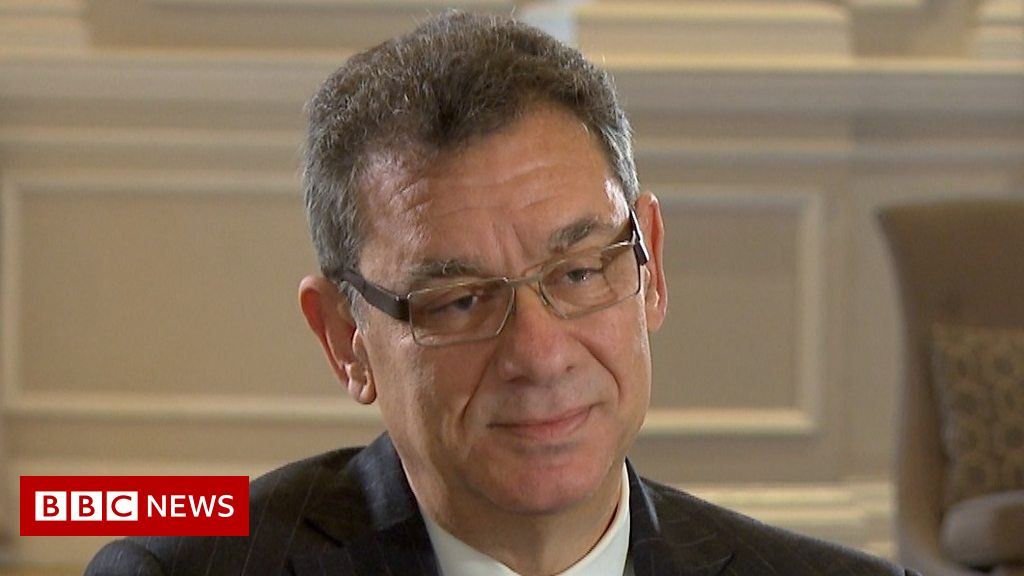
SharecloseShare pageCopy linkAbout sharingThis video can not be playedTo play this video you need to enable JavaScript in your browser.People will be likely to need to have annual Covid vaccinations for many years to come, the head of Pfizer has told the BBCDr Albert Bourla said he thought this would be needed to maintain a “very high level of protection”.The UK has now secured an extra 114 million doses of Pfizer and Moderna vaccines to be delivered over the next two years.A year ago the UK was the first country to approve the Pfizer-BioNTech vaccine.How worrying is the new Covid variant?Will our vaccines still work against Covid variants?Pfizers’s chief executive was speaking to the BBC before the emergence of the Omicron variant, first identified in South Africa and also before the announcement that the UK government had signed contracts to buy the 54 million additional Pfizer-BioNTech and 60 million Moderna doses for 2022 and 2023.These deals include access to modified vaccines if needed to combat Omicron and future variants of concern, the Department of Health has said.Dr Bourla said Pfizer had already made updated vaccines in response to the Beta, also first identified in South Africa, and Delta, first identified in India, variants but that they had not been needed. The company is now working on an updated jab in response to the Omicron variant that could be ready in 100 days.He said vaccines had helped save millions of lives during the pandemic, and without them the “fundamental structure of our society would be threatened”By the end of the year Pfizer expects to have supplied three billion doses of its messenger ribonucleic-acid (mRNA) vaccine with four billion planned for next year. There had been a global race to protect people protected, Dr Bourla said, but in 2022, countries would have “as many doses as they need”.Share priceSeveral global health charities see the money Pfizer, BioNTech and Moderna are making out of the pandemic as immoral.Pfizer will generate at least $35bn of Covid vaccine sales this year and has seen its share price soar.But while most people in the world have now had at least one Covid jab, in parts of Africa it is less than one person in 20. Image source, Getty ImagesDr Bourla was unapologetic about making a profit, saying “the bottom line is millions of lives were saved.” He continued; “We have saved the global economy trillions of dollars. “It is a strong incentive for innovation for the next pandemic. “But people will see that if they step up to the game, to bring something that saves lives and saves money, there is also a financial reward.”He denied profiteering – saying the jab was the “cost of a takeaway meal” for richer countries but sold at no profit to low-income ones – but accepted rich countries such as the UK had placed orders early and availability had initially been limited.Having to be stored at -70C, the Pfizer vaccine has been tricky to deploy in countries with limited health services. But within a month or so, Pfizer says it will roll out a new formulation of the vaccine that can be stored for three months in a fridge, which Dr Bourla said, would make a “huge difference” for sub-Saharan African countries.Pfizer has also developed an antiviral pill, Paxlovid, which in trials cut hospital admissions and deaths by nearly 90%. It should be approved in the US shortly and the UK government has agreed to buy enough for 250,000 patients. ‘Severe symptoms’Pfizer is also conducting Covid-vaccine trials in the under-fives.And in October, the United States Food and Drug Administration approved the Pfizer jab for five to 11-year-olds. Immunising that age group in the UK and Europe would be a very good idea, Dr Bourla said.”Covid in schools is thriving,” he said.”This is disturbing, significantly, the educational system, and there are kids that will have severe symptoms. “So there is no doubt in my mind that the benefits, completely, are in favour of doing it.”The mRNA vaccines, from Pfizer and Moderna have now taken over almost completely from the UK developed Oxford-AstraZeneca jab.’Right thing’And Dr Bourla had a strong message for those who did not want to have vaccines.”For those that are just afraid, the only emotion of human beings stronger than fear is love,” he said.”So I am using always this argument that the decision to get another vaccine is not going to influence only your health, it is going to affect the health of others and particularly the health of the people you love the most, because they are the ones that you will interact with. “So take the courage to overcome your fears and do the right thing.”He has recently been the target of some bizarre fake news stories, alleging the US Federal Bureau of Investigation had arrested him for fraud and his wife had died as a result of side-effects from the Pfizer vaccine – both untrue.”In the first news, that I was arrested by the FBI, of course I laughed,” he said. “On the second news, that my wife died, with a picture of her, I was really [angry]. “I worried about my kids, so I tried to call them and I could not get my son on the phone. “What we had to go through, it is nothing compared to the lives that will be lost because of the rubbish that those people published, because people will really think that my wife died because of the vaccine… and she is fine – she is wonderful.”TREATMENTS: What progress are we making to help people?COVID IN SCHOOL: What are the risks?VACCINE: When will I get the jab?NEW VARIANTS: How worried should we be?COVID IMMUNITY: Can you catch it twice?PfizerThe BBC is not responsible for the content of external sites.

Read more →

Covid: Trigger of rare blood clots with AstraZeneca jab found by scientists

SharecloseShare pageCopy linkAbout sharingImage source, Getty ImagesScientists believe they have found “the trigger” that leads to extremely rare blood clots after the Oxford-AstraZeneca Covid vaccine. The team – in Cardiff and the US – have shown in exquisite detail how a protein in the blood is attracted to a key component of the vaccine. They think this kicks off a chain reaction, involving the immune system, that can culminate in dangerous clots.The vaccine is thought to have saved about a million lives from Covid. However, concerns about rare blood clots shaped how the vaccine has been used around the world including an alternative being offered to the under-40s in the UK. It also started a scientific detective hunt to figure out what was going on and if it could be prevented. The Cardiff team were given emergency government funding to find the answers.AstraZeneca’s own scientists also joined the research project after earlier results from the team were published.A spokeswoman for AstraZeneca stressed that clots were more likely to occur because of a Covid infection than the vaccine, and that the complete explanation for why they occur had not yet been established. “Although the research is not definitive, it offers interesting insights and AstraZeneca is exploring ways to leverage these findings as part of our efforts to remove this extremely rare side effect,” she added.There were two initial clues for the researchers investigating the rare blood clots:The greater risk of clots was seen only with some of the vaccine technologies People with clots had unusual antibodies that were attacking a protein in their blood called platelet factor fourThe vaccines used in the UK all try to deliver a snippet of the Covid-virus’s genetic code into the body to train the immune system. Some package that code up inside spheres of fat, while the AstraZeneca one used an adenovirus (specifically a common cold virus from chimpanzees) as its microscopic postman. The researchers thought the adenovirus might be linked to the rare clots occurring in some people. So they used a technique called cryo-electron microscopy to take images of the adenovirus in molecular-level detail. Nobel prize awarded for imaging moleculesTheir study, published in the journal Science Advances, reveals the outer surface of the adenovirus attracts the platelet factor four protein to it like a magnet. Prof Alan Parker, one of the researchers at Cardiff University, told BBC News: “The adenovirus has an extremely negative surface, and platelet factor four is extremely positive and the two things fit together quite well.” He added: “We’ve been able to prove the link between the key smoking guns of adenoviruses and platelet factor four. “What we have is the trigger, but there’s a lot of steps that have to happen next.”Image source, ASUThe researchers think the next stage is “misplaced immunity”, but this needs to be confirmed in further research.It is thought the body starts to attack platelet factor four after confusing it for part of the foreign adenovirus to which it is stuck. So antibodies are released into the blood, which clump together with platelet factor four and trigger the formation of dangerous blood clots. However, this requires a series of unlucky events, which could explain why the clots are so rare. These clots, known as vaccine-induced immune thrombotic thrombocytopenia, have been linked to 73 deaths out of nearly 50 million doses of AstraZeneca given in the UK. “You could never have predicted it would have happened and the chances are vanishingly small, so we need to remember the bigger picture of the number of lives this vaccine has saved,” said Prof Parker.AstraZeneca said the vaccine is thought to have saved more than a million lives around the world and prevented 50 million cases of Covid. The University of Oxford declined to comment on the research. Dr Will Lester, a consultant haematologist at University Hospitals Birmingham NHS Trust, praised the “very detailed” research saying it helps explain the “most likely initial step” in clotting. He added: “Many questions still remain unanswered, including whether some people may be more susceptible than others and why the thrombosis (clotting) is most commonly in the veins of the brain and liver, but this may come with time and further research.”The Cardiff team hope their findings can be used to improve adenovirus-based vaccines in the future to reduce the risk of these rare events. Follow James on Twitter

Read more →

Pfizer CEO Albert Bourla: My wife's vaccine death is fake news

Watch our exclusive interview with the CEO of Pfizer Albert Bourla, as he hits out at the “rubbish” that has been published about him and his wife – including a fake story that she had died from the vaccine.Speaking to the BBC’s medical editor Fergus Walsh, Mr Bourla also defends the billions of dollars the company is set to make from the vaccine this year.

Read more →

Novel immune cell population may trigger inflammation in multiple sclerosis and other brain disorders

A group of immune cells that normally protect against inflammation in the gastrointestinal tract may have the opposite effect in multiple sclerosis (MS) and other brain inflammation-related conditions, according to a new study by Weill Cornell Medicine and NewYork-Presbyterian researchers. The results suggest that countering the activity of these cells could be a new therapeutic approach for such conditions.
The researchers, who reported their finding Dec. 1 in Nature, were studying a set of immune cells called group 3 innate lymphoid cells (ILC3s), which help the immune system tolerate beneficial microbes and suppress inflammation in the intestines and other organs throughout the body. They discovered a unique subset of these ILC3s that circulate in the bloodstream and can infiltrate the brain — and, to their surprise, do not quench inflammation but instead ignite it.
The scientists called this subset inflammatory ILC3s, and found them in the central nervous system of mice with a condition modeling MS. Instead of constraining the immune response, this subset of ILC3s spurred another group of immune cells called T cells to attack myelinated nerve fibers, leading to MS-like disease symptoms. The researchers detected similar inflammatory ILC3s in the peripheral blood and cerebrospinal fluid of MS patients.
“This work has the potential to inform our understanding of, and potential treatments for, a broad variety of conditions involving T-cell infiltration of the brain,” said senior author Dr. Gregory Sonnenberg, associate professor of microbiology and immunology in medicine in the Division of Gastroenterology and Hepatology and a member of the Jill Roberts Institute for Research in Inflammatory Bowel Disease at Weill Cornell Medicine.
MS affects more than two million people worldwide. Other conditions that feature chronic brain inflammation afflict tens of millions more and include Alzheimer’s and Parkinson’s diseases. There is also evidence that neuroinflammation develops naturally with aging and is a major factor in age-related cognitive decline, and more recently inflammatory T-cell responses in the brain have been linked to neurological symptoms associated with SARS-CoV-2 infection.
The researchers have shown in recent work that ILC3s residing in the gut act as sentinels and immune regulators, suppressing inflammation — including inflammatory T-cell activity — and warding off cancer. In the new study, they examined the roles of ILC3s in the brain, and found, contrary to their expectation, that ILC3s are not normally present in the brain under healthy conditions but can infiltrate the brain from the bloodstream during inflammation. When they do infiltrate the central nervous system, they have pro-inflammatory rather than anti-inflammatory effects.

Read more →

Potential mechanism behind rare vaccine-related clotting disorder

An international team of scientists believe they may have found a molecular mechanism behind the extremely rare blood clots linked to adenovirus COVID-19 vaccines.
Scientists led by a team from Arizona State University, Cardiff University and others worked with AstraZeneca to investigate vaccine-induced immune thrombotic thrombocytopenia (VITT), also known as thrombosis with thrombocytopenia syndrome (TTS), a life-threatening condition seen in a very small number of people after receiving the Oxford-AstraZeneca or Johnson & Johnson vaccines.
“The mechanism which results in this condition, termed vaccine-induced immune thrombotic thrombocytopenia (VITT), was unknown,” said Abhishek Singharoy, an Arizona State University scientist and corresponding author of the study who teamed up to lead an international effort to tease out the details. So, a team quickly assembled to try to understand the problem more clearly.
Together, they worked to solve the structural biology of the vaccine, and see the molecular details that may be at play, utilizing ASU’s new cryo-EM facilities, and a state-of-the-art Titan Krios machine at ASU’s Eyring Materials Center at Arizona State University.
ASU scientists included several from the School of Molecular Sciences and Biodesign Institute: Ryan J. Boyd, Daipayan Sarkar, John Vant, Eric Wilson, Chloe D. Truong, Petra Fromme, Po-Lin Chiu, Dewight Williams and Josh Vermaas (ASU alumnus now at Michigan State University). Mitesh Borad, Bolni M. Nagalo and Alexander T. Baker were also part of the Arizona-based team.
The global team used state-of-the-art cryo-EM technology to analyze the AstraZeneca vaccine in minute detail to understand whether the ultra-rare side effect could be linked to the viral vector which is used in many vaccines, including those from Oxford/AstraZeneca and Johnson & Johnson.

Read more →