CRISPRing the microbiome is just around the corner

To date, CRISPR enzymes have been used to edit the genomes of one type of cell at a time: They cut, delete or add genes to a specific kind of cell within a tissue or organ, for example, or to one kind of microbe growing in a test tube.
Now, the University of California, Berkeley, group that invented the CRISPR-Cas9 genome editing technology nearly 10 years ago has found a way to add or modify genes within a community of many different species simultaneously, opening the door to what could be called “community editing.”
While this technology is still exclusively applied in lab settings, it could be used both to edit and to track edited microbes within a natural community, such as in the gut or on the roots of a plant where hundreds or thousands of different microbes congregate. Such tracking becomes necessary as scientists talk about genetically altering microbial populations: inserting genes into microbes in the gut to fix digestive problems, for example, or altering the microbial environment of crops to make them more resilient to pests.
Without a way to track the gene insertions — using a barcode, in this case — such inserted genes could end up anywhere, since microbes routinely share genes among themselves.
“Breaking and changing DNA within isolated microorganisms has been essential to understanding what that DNA does,” said UC Berkeley postdoctoral fellow Benjamin Rubin. “This work helps bring that fundamental approach to microbial communities, which are much more representative of how these microbes live and function in nature.”
While the ability to “shotgun” edit many types of cells or microbes at once could be useful in current industry-scale systems — bioreactors for culturing cells in bulk, for example, the more immediate application may be as a tool in understanding the structure of complex communities of bacteria, archaea and fungi, and gene flow within these diverse populations.

Read more →

Microfluidics show promise as safer, simpler treatment option for severe neonatal jaundice

Research by the Oregon State University College of Engineering has led to a promising potential therapy for neonatal jaundice that’s more safe, simple and convenient than the blood transfusions currently given to babies suffering from the most dangerous forms of the condition.
The study led by Adam Higgins, associate professor of bioengineering, suggests microfluidics and high-intensity light can correct a dangerous bloodstream buildup of bilirubin. Bilirubin is the pigment that’s responsible for the yellow skin color associated with jaundice and, at high enough levels, puts the afflicted infant at risk of sometimes irreversible neurological damage or even death.
Findings were published in Biomicrofluidics.
Neonatal jaundice is a common condition among newborns, whose bodies are busy breaking down the red blood cells used in the uterus and making new ones as the infant transitions to breathing ambient air once outside the womb.
Blood’s red color stems from a protein called hemoglobin that carries oxygen, and as those red blood cells are broken down, the liver modifies hemoglobin into bilirubin. When an infant’s immature liver can’t keep up with all of the bilirubin it’s producing, the pigment leaks into the bloodstream before settling in the skin, causing a yellowish appearance.
About two-thirds of all newborns experience some level of jaundice, typically a mild case. Much of the time it clears up on its own or with minimal treatment, such as getting more water into the infant’s body.

Read more →

Chemoimmunotherapy dramatically improved survival of high-risk neuroblastoma patients

Survival rates increased about 20% for children with high-risk neuroblastoma enrolled in a St. Jude Children’s Research Hospital clinical trial that included a novel monoclonal antibody produced onsite. The findings appeared today in the Journal of Clinical Oncology.
Neuroblastoma is a cancer of immature nerve cells in the sympathetic nervous system. The tumor is diagnosed in about 700 individuals annually in the U.S., mostly children 5 years old or younger. Despite aggressive therapy, nearly half of patients with high-risk neuroblastoma die of their disease.
Results of a St. Jude phase II clinical trial reported significantly higher survival rates for newly diagnosed patients whose treatment included the humanized monoclonal antibody hu14.18K322A along with standard therapy for high-risk disease. Three-year disease-free survival was 73.7% for the 64 children enrolled in the study. The overall survival was 86%.
“I have treated high-risk neuroblastoma for 30 years, and I have never seen results like this in high-risk patients,” said first and corresponding author Wayne Furman, M.D., of the Department of Oncology. “This is the best result published to date for patients with high-risk neuroblastoma, period.”
If the findings are confirmed in a larger, multi-center clinical trial, the chemoimmunotherapy detailed in this research could become standard treatment for patients with high-risk disease, Furman said.
An anti-GD2 monoclonal antibody with a difference
Hu14.18322A was designed in the laboratory to bind GD2 antibodies on the surface of neuroblastoma tumor cells. The binding rallies immune cells to attack and kill tumor cells. The monoclonal antibody used in this study was made at the Children’s GMP, LLC., on the St. Jude campus, using a process that was refined by scientists at the manufacturing facility.

Read more →

Covid vaccine: Why our black and South Asian friends and family still won't have a jab

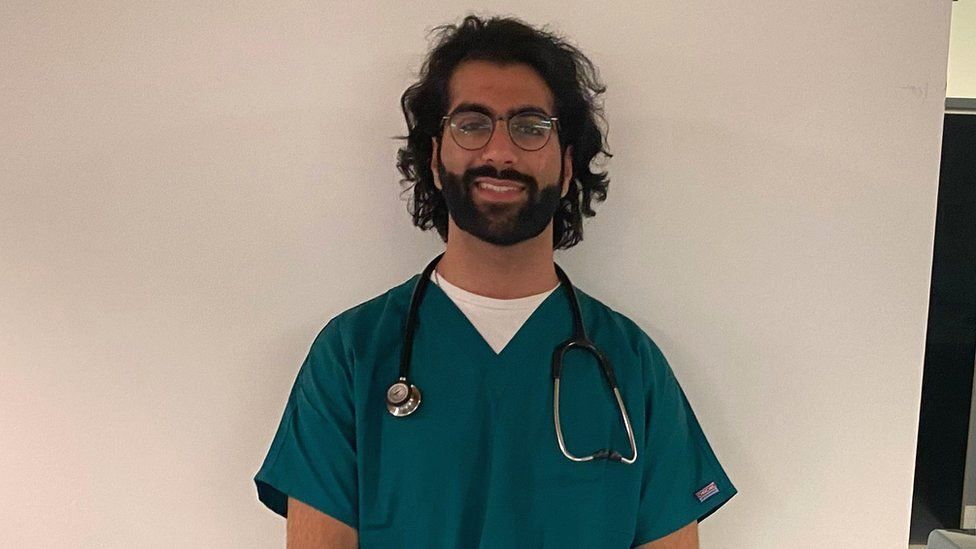
SharecloseShare pageCopy linkAbout sharingImage source, Zain AhmadThe risk of catching and becoming very sick from Covid remains high for black and South Asian people – and it’s partly because fewer have decided to get vaccinated against coronavirus.That’s what a recent study found – so what’s behind the lower rate of uptake among black and Asian people?Radio 1 Newsbeat’s been speaking to some people about why vaccine hesitancy might be higher in their ethnic groups.It’s as the UK government is making a huge push to get more people vaccinated.That’s because of a new variant of coronavirus, Omicron, which may spread more easily.We’re still finding out how serious Omicron is, and we don’t know if it makes people more ill than other versions of the virus.’Frustrating’ conversationsZain Ahmad, who is British-Pakistani, has had his first and second doses and is getting his booster jab this week.But the 20-year-old medical student says “a lot” of his South Asian friends back home in Buckinghamshire don’t want the vaccine because they “are not sure about the evidence or the safety”.The vaccines approved for use in the UK have met strict safety standards and scientists have repeatedly said the serious complications of Covid itself are a far greater risk to people than any rare complications associated with vaccines.Zain thinks more South Asian people might have the jab if there was better education and clearer messaging around the benefits of it, as well as better trust of the government and the healthcare system.”There is a lot of health inequality in this country and South Asians, among other groups, have been adversely affected. Does this group feel they can trust the healthcare system the same as their white British peers? I don’t know.”Covid risk remains higher for some ethnic groupsWatchdog probes racial inequalities in healthcareCovid ‘has thrived on racial discrimination’The government has said it will use the report findings to help tackle health disparities, which have been raised an issue throughout the pandemic.Last year an inquiry was launched to find out why people in the UK from black, Asian and other ethnic minority groups were twice as likely as white people to be infected by coronavirus, and more likely to need intensive care and to die from the virus.And the British Medical Association says racial disparities have a “significant impact” on people’s health in general.Zain says he’s tried to help educate friends to encourage them to take the vaccine, but that beliefs “can be quite deeply embedded into someone’s mind”.”Even though I’m studying about vaccines and how beneficial they are at controlling diseases like Covid… sometimes you can’t convince people, and that’s their right to choose,” he says.”Those conversations are quite hard, they’re frustrating, but they’re not as easy as saying someone is right and wrong – there’s more to it than that.”‘There’s no trust’The issue of trust is the main reason roughly a third of Cameron Cole’s black friends and family haven’t had the jab yet.That figure matches up to research which has found black people are the least likely to have the vaccine in England. Some 95% of white people aged 50 and over have been jabbed, compared with 87% of South Asian people and 73% of black people, the research says.Cameron, who is black Caribbean, has had the jab but can understand why some of his loved ones have chosen not to have it yet.”If they did feel trust in what they’re being told by the powers that be, then they’ll do it,” the 28-year-old from south London says.”The government, somehow, needs to regain the trust of its people.”Image source, Cameron ColeCameron, a project manager in construction, says the distrust also makes his unvaccinated family and friends more likely to believe misinformation and conspiracy theories they see on social media.”People make their minds up for themselves and always edge towards the rubbish that they hear on YouTube because it goes against what the powers that be are saying.”This video can not be playedTo play this video you need to enable JavaScript in your browser.Group chat ‘tension’Sharnie May Crooks, who is black Caribbean, says about 20% of her family has had the vaccine.The standout reason stopping her from having the jab is a concern about the possibility of unknown long-term effects, even though reports of serious side-effects are very rare. “There’s definitely a lot of tension when it comes to discussing it, because obviously we completely disagree on each other’s stances,” Sharnie May says.”The tension comes when we send different news reports and statistics into the family group chat – it’s usually just all the unvaccinated people speaking and all the vaccinated people not saying anything.”Image source, Sharnie May CrooksSharnie May says some people who she goes to uni with in Warwick have called her selfish for not having the vaccine but that she feels her view should be respected.”Instead of pointing the finger at the people who are unvaccinated, maybe we should point the finger at the fact that this vaccine is just not good enough,” she says, referencing that people who have been vaccinated can still catch and pass on Covid.Covid vaccines suppress infections and reduce the risk of severe illness. They were never expected to completely stop the spread of the disease.The Pfizer-BioNTech vaccine has 93% effectiveness against symptomatic infection of the Delta variant of the virus – which is the most common one in the UK at the moment – two weeks after the second dose, compared with 71% for the Oxford-AstraZeneca jab.First data points to Omicron re-infection riskEthnic Covid-jab gap ‘not due to area or education”Vaccine passports make me reluctant to get a jab’Sharnie May says people will become “more reluctant” to get the jab the more they feel it’s being “forced upon them”. “Everyone as human beings, we like to feel as though we have a choice.”Follow Newsbeat on Instagram, Facebook, Twitter and YouTube.Listen to Newsbeat live at 12:45 and 17:45 weekdays – or listen back here.

Read more →

'I had to move across America when I became allergic to the sun'

SharecloseShare pageCopy linkAbout sharingImage source, Michael SladekWhen Carrie Schmitt’s life-threatening heat allergy left her unable to get out of bed she had to give up her job and move across America in search of cooler weather. It also lead her to becoming an artist, as Emily Oomen explores.On a hot Ohio day in 2003, Carrie was out walking with her young son. As they explored, she started to feel unwell and her legs began to swell.As they grew to nearly three times their normal size, she called the emergency services and was rushed to hospital with anaphylactic shock.The doctors treating her were puzzled. Initially, they suspected the reaction must be down to a bee sting or pollen, but Carrie was tested for both and wasn’t allergic to either. As she recovered she was discharged, but over the next few months, she kept having reactions. After many tests and consultations, doctors finally settled on a diagnosis: Cholinergic and solar urticaria – Carrie was allergic to heat and the sun. Carrie, a lover of sunny weather, was devastated. “It was like a death of my old life,” she says. What is Urticaria?● Urticaria, also known as hives, is an itchy rash that appears on the skin.● It can be caused by the immune system mistakenly attacking healthy tissue.● One in seven people with chronic urticaria experience depression or anxiety as a result of the condition● In many cases, no obvious cause can be found.Source: NHSCarrie’s allergy had become so severe she could no longer walk up stairs or do any fast movements such as sweeping the floors.If her body sensed heat it would go into anaphylactic shock. Dr. Mansi Kanuga, an allergy specialist at the Mayo Clinic, says there are a “variety of theories” about the cause of cholinergic and solar urticaria, but “the specific underlying mechanism is not well understood”.She says: “These disorders probably result from heightened sensitivity by allergy cells (known as mast cells) to environmental conditions or stimuli.”Mast cells are part of the immune system and help fight infection. When they detect an allergen they release histamine.Carrie’s specialist believes Carrie’s allergies may be tied to the birth of her son. Carrie lost a lot of weight while nursing him, and, unlike her other two babies, her son had a voracious appetite and nursed almost constantly. Her body became depleted of nutrients to the point where her hair began to fall out. She says, doctors believe her body may have felt like it was being attacked and mistakenly tagged heat as the enemy. As Carrie tried to get her head around the diagnosis she became increasingly frustrated. The only safe place for her became bed, which she was unable to leave for months.She says she was lucky, her husband at the time had a good job and health insurance and was able to look after the children, but she struggled to come to terms with her condition. She often thought: “I can’t lay here for 50 years. This cannot be my life.”One day, a voice popped into my head and said: ‘Now that your life is over, why don’t you do what you want and paint?'” Carrie had always loved art but had given it up as a teenager, swayed by others to pursue a more secure career.Image source, Carrie SchmittPrior to her heat allergy, she had worked as a medical writer at Cincinnati Children’s Hospital where she wrote for medical journals, textbooks and the hospital’s website.But when she painted, “it just took me to this other realm where my physical condition didn’t matter,” she says. “I couldn’t wait to wake up in the morning and paint. It’s all I wanted to do. I developed a really beautiful relationship with creativity because it saved me.” Carrie was able to sit up in bed and balance her sketchbook on her knees and surround herself with all the materials she needed.She describes herself as an “intuitive painter”, letting the painting emerge without a plan, which she says creates something “bigger than I could imagine”. Her paintings are colourful and feature a lot of flowers, harking back to her family’s history as gardeners. While Carrie started to paint, she was also trying different treatments. Cholinergic and solar urticaria is often managed by minimising exposures to triggers such as hot baths and direct sunlight. Antihistamines can also be useful in reducing itching and hives.But Carrie found her allergy didn’t respond well to traditional treatments and started to explore more holistic approaches including advanced allergy therapeutics (AAT).AAT involves placing pads on the body and applying gentle pressure. It is similar to acupuncture, but no needles are involved. Dr. Kanuga says, at the moment, AAT is not a studied approach to the management of allergies.Carrie was sceptical as a result, but said after the treatments the improvement was “so immediate, it shocked me”.She was able to get out of bed and walk, she could drive again and take the stairs. She would occasionally get a rash, but the reactions were reduced.There was another, more drastic, treatment her doctors suggested she could benefit from, but it would be life-changing – move from Ohio, where temperatures can reach highs of 38C (100F), to a more temperate climate. Carrie decided to take the plunge and moved to rainy Seattle where highs are generally around 21C (70F). With the cooler environment, Carrie began to see gradual improvements in her condition until she was able to do yoga and paint beyond her bedroom.Image source, Michael SladekShe began searching for a studio, but after coming up against Seattle’s exorbitant property prices she bought a school bus, painted it pink, named it Rosie and turned it into an art space. “It turned out to be one of the best blessings in my life,” Carrie says. While Carrie has more freedom in Seattle, she still must be careful with Washington’s increasingly warm summers and wildfires. When the summers are too hot, she must find shelter in air-conditioned hotel rooms or cabins on cooler islands.She admits managing the condition can be difficult at times. She misses out on her children’s sports games when it is too hot and she relies on her family to help with groceries and household chores that require too much movement. But there are positives too. It has led her to write her memoir – The Story of Every Flower – about her artwork and she is teaching art classes online in the hope of inspiring others to embrace creativity at difficult times. “I feel like it can be your ally, or your friend, or your beloved,” she says. “It’s always there.”For more disability news, follow BBC Ouch on Twitter, Facebook and listen to our podcasts, which also have transcripts

Read more →

Welcoming President Biden

On December 2, President Joe Biden visited NIH for a briefing on the importance of vaccines and booster shots. They remain vital this holiday season to slowing the spread of the SARS-CoV-2 coronavirus, the cause of COVID-19, and saving lives. It was my honor to greet the President, though with a careful fist bump, and I got to speak with him briefly before he delivered his remarks about the White House’s strategy for fighting COVID-19 this winter. Credit: NIH

Post Link

Welcoming President Biden

NIH Blog Post Date

Monday, December 6, 2021

Read more →

Researchers crack the synthetic code of rare molecules sought after in drug development

A research team at Lund University in Sweden has succeeded in producing two molecules that are otherwise only formed by microorganisms from extremely contaminated wastewater in an abandoned mine in South Korea. The method, which took four years to develop, could pave the way for new types of drugs. The study is published in Journal of the American Chemical Society.
Glionitrin A and B are two molecules with properties that make them useful in drug development. However, researchers who want to use these molecules have faced an uphill battle for almost a decade.
Glionitrin A and B are natural products, and are produced a fungus found in extremely contaminated acidic wastewater from an abandoned South Korean mine. Since the fungus only creates the molecules when triggered by specific bacteria from the same sewage, it has proved difficult to produce .
“We have been working on this problem for four years. Every time we thought we had a solution, the molecules revealed unexpected properties that sent us back to the drawing board,” says Daniel Strand, chemistry researcher at Lund University.
Despite the complex nature of the problem, the solution proved to be both simpler and more effective than the researchers thought. By developing a new so-called asymmetric organocatalytic reaction, Daniel Strand and his colleagues succeeded in the most inaccessible parts of the molecules.
“we thought the problem was solved, the molecule had one last surprise. It turned out that the real structure was the mirror image of we initially thought was glionitrin A. So, all this time we had chased a molecule that ,” says Daniel Strand.
Complex natural products with unique properties such as glionitrin A and B are important tools in develop.
Glionitrin A has shown antibiotic properties against resistant bacteria, while glionitrin B makes cancer cells less to migrate. Being able to produce the molecules synthetically helps researchers not only understand how they work, but also improve their properties.
“There is a great need for new types of antibiotics, especially those that can contribute to the fight against resistant bacteria. We expect our results to inspire further development basic synthetic chemistry but also to be used in drug development,” concludes Daniel Strand.
Story Source:
Materials provided by Lund University. Note: Content may be edited for style and length.

Read more →

Long-range four-stranded DNA structures found to play a role in rare aging disease

A special form of four-stranded DNA, recently seen in human cells, has been found to interact with a gene that causes Cockayne Syndrome when faulty.
As well as the classic double-helix, researchers have recently discovered a whole host of other DNA strand configurations, including quadruple-helix DNA, which forms knot-like structures called G-quadruplexes.
While many of these new DNA configurations have only been observed in cells in dishes, G-quadruplexes have recently been observed in living human cells. However, their possible functions in cells have not been discovered.
Now, researchers from the Molecular Science Research Hub at Imperial College London have observed a protein called Cockayne Syndrome B (CSB) preferentially interacting with one specific type of G-quadruplex. These special G-quadruplexes arise when distant parts of DNA interact, something that researchers thought was impossible to form within cells.
Normally functioning CSB proteins do not cause any ill effects, but mutations of the gene that produce CSB protein can cause the fatal premature ageing disorder Cockayne Syndrome, which kills many sufferers before adulthood.
The team found that CSB proteins with mutations that cause Cockayne Syndrome are no longer able to interact with the long-range G-quadruplexes. While we don’t yet know why this might be, the team’s results, published today in theJournal of the American Chemical Society, suggest that these long-range DNA G-quadruplexes are specifically linked with the functional role of CSB.

Read more →

Protein variant identified that renders chemotherapy ineffective in gastric cancer

A new protein variant underlies the ability of gastric cancers to resist an otherwise effective family of chemotherapy drugs, according to a study by a multidisciplinary team at Weill Cornell Medicine. The results suggest a treatment strategy that could improve the prognoses of many patients with cancer.
The study, published Oct. 20 in Developmental Cell, combined clinical insight, laboratory experiments and sophisticated computational analysis to determine how some tumor cells resist a family of chemotherapy drugs called taxanes. Taxane treatment works by interfering with proteins that make up the cell’s internal skeleton, but the variant protein, called CLIP-170S, allows cancer cells to dodge that interference.
“We identified a novel variant that is clinically prevalent and is expressed in more than 60 percent of patients with gastric cancer and operates with a mechanism that’s different from previously discovered ones,” said co-senior author Dr. Paraskevi Giannakakou, professor of pharmacology in medicine and director of research in the Division of Hematology and Medical Oncology, and associate director for education in the Sandra and Edward Meyer Cancer Center at Weill Cornell Medicine.
Taxanes, based on compounds originally discovered in yew trees, are first-line treatments for many cancers. Unfortunately, taxane-resistant cells often arise and survive the treatment, leaving patients with few options and poor prognoses. The problem is especially bad in gastric cancer.
“Most patients with gastric cancer live less than a year, and if we could figure out a way to make the taxanes more effective, we could have a bigger impact on patients,” said co-senior author Dr. Manish Shah, director of the Gastrointestinal Oncology Program and chief of the Solid Tumor Oncology Service in the Division of Hematology and Medical Oncology at Weill Cornell Medicine and NewYork-Presbyterian/Weill Cornell Medical Center and the Bartlett Family Professor of Gastrointestinal Oncology and member of the Meyer Cancer Center at Weill Cornell Medicine. About 80 percent of gastric cancer patients develop taxane-resistant tumors, he said.
While years of research has revealed multiple ways cancer cells can resist taxane-mediated killing, those results have done little to change the clinical statistics.

Read more →

SARS-CoV-2 infects sustentacular cells in the olfactory epithelium of COVID-19 patients, study finds

It is now widely known that COVID-19 is associated with the transient or long-term loss of olfaction (the sense of smell) but the mechanisms remain obscure. An unresolved question is whether the olfactory nerve can provide SARS-CoV-2 with a route of entry to the brain. Scientists at the Max Planck Research Unit for Neurogenetics in Frankfurt in collaboration with physicians and scientists at the University Hospitals Leuven (Leuven, Belgium) and a major hospital in Bruges, Belgium, together with scientists at NanoString Technologies Inc. in Seattle, USA, report that SARS-CoV-2 does not appear to infect the sensory neurons of the olfactory epithelium in COVID-19 patients. Moreover, the team failed to find evidence for infection of olfactory bulb neurons. Instead, the sustentacular cells, also known as supporting cells, are the main target cell type for the virus in the olfactory epithelium. Since SARS-CoV2 spares olfactory sensory neurons and olfactory bulb neurons, it does not appear to be a neurotropic virus.
To infect a cell, SARS-CoV-2 must bind to a receptor on the cell membrane, and the classic entry receptor is ACE2. Earlier studies had shown that ACE2 is expressed by sustentacular cells in the human olfactory epithelium but not by olfactory sensory neurons, the nerve cells that are stimulated by odorants in the inhaled air and that transmit electrical signals to the olfactory bulb. There is no literature about the functions of sustentacularcells in the olfactory epithelium of humans. Studies in laboratory animals suggest that sustentacular cells provide olfactory sensory neurons with a variety of supportive functions, including structural and metabolic support. Both cell types are continuously regenerated from stem cells within the olfactory epithelium throughout the life of an individual.
As the olfactory mucosa is hidden deep within the nasal cavity, tissue sample procurement is not a practical option in patients while they are suffering from COVID-19. Hence, the physicians developed a novel protocol for harvesting tissue samples from deceased COVID-19 patients. As a control, tissue samples were taken from patients who had died from other causes and who were not infected with SARS-CoV-2 at the time of death. The workflow started with the notification of a team of ear, nose, & throat physicians about the death of a COVID-19 patient in an intensive care unit or ward. Using an endoscope, the physicians collected samples from the respiratory and olfactory mucosae and both olfactory bulbs. They were able to do so within 60 to 90 minutes after the death of the patient. “Thanks to this short postmortem interval, the tissue samples were in pristine condition for molecular biology studies,” says Laura Van Gerven, an ear, nose, & throat surgeon in Leuven and co-principal investigator of the project called ANOSMIC-19.
Analysis using RNAscope
The team of scientists in Frankfurt was led by Mona Khan. They used specially designed probes to stain sections of the tissue samples and analyze them under a confocal microscope. The ultrasensitive analytical method, also known as RNAscope, makes it possible to visualize various types of RNA molecules of SARS-CoV-2 within single cells. The scientists were able to assign the infected cells to specific cell types by simultaneously visualizing, in distinct colors, RNA molecules that are characteristic of various cell types, in combination with classical cell staining methods using antibodies. “Our results show that SARS-CoV-2 infects sustentacularcells in the olfactory epithelium of COVID-19 patients and replicates vigorously within these cells,” says Peter Mombaerts, director of the Max Planck Research Unit for Neurogenetics.
Applying a novel approach of whole-transcriptome analysis using Digital Spatial Profiler from NanoString Technologies Inc., analysis of sections of the olfactory mucosa of a COVID-19 patient revealed that infection of sustentacularcells does not alter the expression of olfactory receptor genes in nearby olfactory sensory neurons.
Viral RNA in the leptomeninges
Viral RNA could not be detected in olfactory bulb neurons either. Interestingly, in a third of cases, the researchers detected viral RNA in the meninges surrounding the olfactory bulb, the so-called leptomeninges. In these anatomical locations, the viral RNA may not be present in cells that had been infected with the virus but may stem from virus particles that may have entered the leptomeninges by hitchhiking on the olfactory nerve or via the blood stream. Alternatively, the viral RNA in the leptomeninges may simply represent viral RNA molecules that were floating around in the blood and not packaged in viral particles.
Thus, the results do not support previous suggestions that SARS-CoV-2 can infect nerve cells in humans. In other words, SARS-CoV-2 does not appear to be a neurotropic virus. The multidisciplinary team postulates that transient olfactory dysfunction in COVID-19 is triggered ty transient insufficient support from sustentacular cells to olfactory sensory neurons. The virus would thus affect olfactory sensory neurons indirectly but without infecting them directly. The pathological consequences of infection of sustentacular cells could vary from patient to patient. The researchers speculate that the immune system may be unable to provide sustentacular cells with full protection from infection, due to their location at the surface of the nasal mucosa. They further speculate that some vaccinated or recovered patients may still lose their sense of smell after exposure to SARS-CoV-2.
Story Source:
Materials provided by Max-Planck-Gesellschaft. Note: Content may be edited for style and length.

Read more →