New Covid Pills Offer Hope as Omicron Looms

Merck and Pfizer will soon debut prescription pills to treat Covid-19. And more drugs are on the way.As the world worries that the Omicron coronavirus variant may cause a surge of cases and weaken vaccines, drug developers have some encouraging news: Two new Covid-19 pills are coming soon, and are expected to work against all versions of the virus.The Food and Drug Administration is expected to soon authorize a pill made by Merck and Ridgeback Biotherapeutics, called molnupiravir, which reduces the risk of hospitalization and death from Covid-19 by 30 percent if taken within five days of the onset of symptoms.Another antiviral pill, developed by Pfizer, may perform even better. An interim analysis showed that the drug was 85 percent effective when taken within five days of the start of symptoms. The F.D.A. could authorize it by year’s end.Since the start of the pandemic, scientists have hoped for convenient options like these: pills that could be prescribed by any doctor and picked up at a local drugstore.And these two pills may be just the beginning. With the threat of Omicron and other variants looming, scientists say we will need an arsenal of drugs to deploy against new foes — especially if those variants erode the protection of existing vaccines.Researchers across the world are designing new drugs from scratch, precisely targeting weak points in the molecular structure of the coronavirus. And others are testing whether pills work better in combination than when taken on their own.“Viruses are wily creatures, and you’ve got to stay ahead of them,” said Dr. Anthony Fauci, the government’s top infectious disease expert. “I think it would be naïve to think that if you get one or two good drugs, you don’t need any more — not when you have a virus that has already killed 760,000 Americans.”First PillsWorkers in Freiburg, Germany, manufacturing Pfizer’s new antiviral drug, Paxlovid.PfizerThe scramble for Covid-19 pills started last year in the early days of the pandemic. At pharmaceutical companies and academic labs, researchers screened thousands of existing drugs to see if any worked against SARS-CoV-2, the virus that causes Covid-19.This strategy was a long shot, but a success would have led to an antiviral pill more quickly than trying to make an entirely new drug. What followed was a brutal wave of failures. Antivirals that worked in Petri dishes failed when tested in animals, and those that worked in animals failed in clinical trials.Even drugs that made it into clinical trials often proved disappointing. A flu drug called favipiravir delivered promising results in early trials, leading Canada-based Appili Therapeutics to begin a late-stage trial on more than 1,200 volunteers. But on Nov. 12, the company announced that the pill did not speed up recovery from the disease.“Not everything in research is a big success,” Dr. Fauci said.Merck’s new drug, molnupiravir, was studied in 2019 by a nonprofit company linked with Emory University as a treatment for Venezuelan equine encephalitis virus — a little-known pathogen feared as a potential bioweapon. When molnupiravir encounters a virus’s genes, it wreaks havoc, leading to a batch of new mutations. New viruses are often left unable to replicate.In October, Merck announced the initial results of its molnupiravir trial: The drug reduced the risk of hospitalization and death by about 50 percent. Eager to curb the toll of Covid-19, the U.S. government has bought approximately 3.1 million courses of molnupiravir for about $2.2 billion.But in the final analysis of the trial, the drug’s effectiveness dropped to 30 percent. At a Nov. 30 meeting of an F.D.A. advisory committee, experts discussed the potential for the drug to cause mutations not just in viruses, but in people’s own DNA. The committee voted to recommend authorizing molnupiravir, but only by a slim majority. And even the committee members who voted in favor of the drug expressed strong reservations, given the potential side effects.Now, Pfizer’s drug is next to enter the spotlight. Its origins reach back nearly two decades, to when Pfizer researchers were searching for a drug that could fight the coronavirus that caused SARS. They decided to build a molecule that could block an essential viral protein, known as a protease. Proteases act like molecular scissors, cutting long molecules into pieces that help build new viruses.The drug, originally called PF-00835231, lodged in the protease like a piece of gum crammed between scissor blades. PF-00835231 proved effective against SARS when given intravenously to rats.The SARS epidemic ended before the Pfizer could launch a clinical trial. But after the Covid-19 pandemic hit last year, researchers at the company pulled the drug off the shelf to try against SARS-CoV-2.They modified it to work against the protease of the new coronavirus and tinkered with the molecule so it would work as a pill. Paxlovid, as Pfizer has branded the drug, came out of clinical trials last month with terrific initial results: 85 percent effectiveness if taken within five days of the onset of symptoms. It remains to be seen if the number stays that high in the final analysis.Shortly after announcing the interim results, Pfizer applied for F.D.A. authorization of Paxlovid and reached a deal with the U.S. government to provide up to 10 million courses of the drug for $5.3 billion.As the F.D.A. reviews the company’s application, it will consider not just the effectiveness of Paxlovid, but also its potential side effects. Unlike molnupiravir, Paxlovid does not introduce mutations, so it probably won’t raise the same red flags.“Given that it works through a different mechanism unrelated to our genetic material, it is less likely to cause changes in our DNA,” said Sara Cherry, a virologist at the Perelman School of Medicine at the University of Pennsylvania. But, she added, “protease inhibitors have different liabilities.”Our own cells make proteases, which we use to whittle down our own proteins, enabling them to perform new jobs. While many protease-inhibitor drugs have proved safe, some of them can also lock onto our proteases instead of the proteases made by viruses. Still, the short course of pills needed to stop Covid-19 may reduce any such risk from a drug like Paxlovid.Dr. Cherry said the advent of two antiviral drugs for Covid was “super exciting,” especially as Omicron spreads across the world. The pills will be particularly welcome, she said, if Omicron — or another new variant — turns out to reduce the effectiveness of vaccines. The worrisome mutations in Omicron are in the virus’s outer spike protein, which has nothing to do with the pills’ viral targets.“That will definitely help us as a stopgap, if we really do need to change the vaccines,” Dr. Cherry said.Winning CombinationsDr. Anthony Fauci in 1985. Fauci, who oversaw the development of combination therapy for H.I.V., said that researchers will be able to quickly test combinations of pills to treat Covid-19 in clinical trials.NIAIDIf history is any guide, the first antiviral pills to show promise won’t be the best. The first pill for H.I.V., a cancer drug called AZT, caused serious side effects and led to the evolution of AZT-resistant versions of the virus.Years later, pills that target H.I.V.’s proteases proved to be less toxic and more effective than AZT. Scientists also found that combining the pills sometimes made them more effective. What’s more, it was harder for viruses to evolve resistance to the drug cocktails.The Coronavirus Pandemic: Key Things to KnowCard 1 of 4The Omicron variant.

Read more →
In Chicago, a New Approach to Gay and Bisexual Men With Prostate Cancer

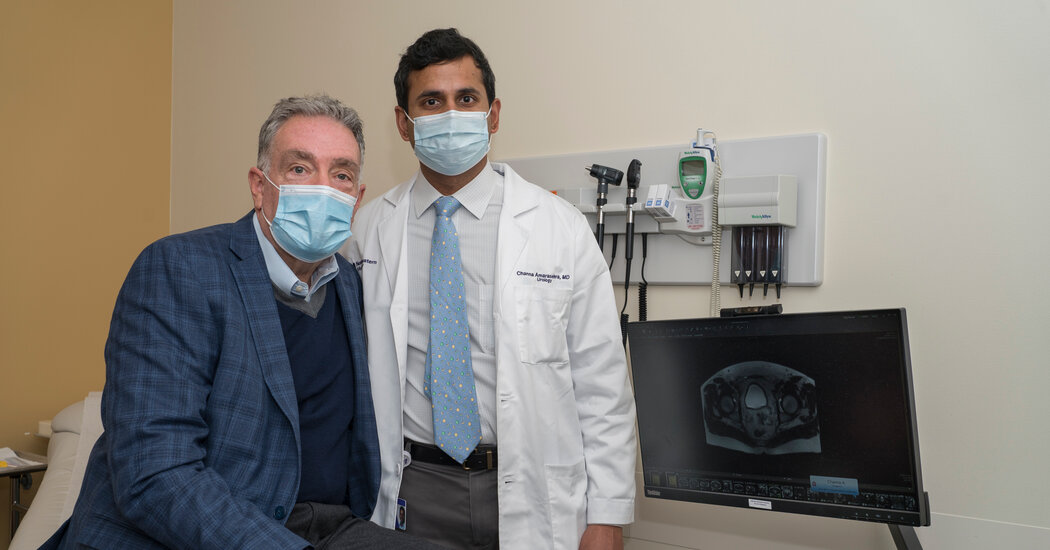
A new clinic focuses on patients left grappling with the aftermath of treatment in ways that are rarely appreciated by doctors.CHICAGO — Matthew Curtin learned he had prostate cancer after a routine physical examination in October 2019, when test results indicated there was a problem. A biopsy confirmed the news, and doctors told him that surgery to remove his prostate was the best option.The surgery went well, and, two years later, there is no indication that the cancer has returned. But for Mr. Curtin, 66, diagnosis and surgery were only the beginning of a “clinical and psychological and emotional adventure” — one he felt that many urologists were not equipped to handle, because he was gay and the majority of doctors and their patients were not.Post-treatment symptoms are similar for all prostate cancer patients, including urinary incontinence, erectile dysfunction, diminished libido and loss of ejaculate. But researchers are finding that those changes may echo through the lives of gay and bisexual men in unexpected, and sometimes more difficult, ways.The obstacles can be physical and emotional, and may be reflected in patients’ relationships with their partners. And they may present a challenge to medical professionals more attuned to the relationship needs of straight men.Mr. Curtin said he was about three months into treatment when he was struck that “there is a lot going on here — the emotional and psychological effect — that is not being treated.”His doctor’s first response, Mr. Curtin said, was, “My office isn’t prepared for this.”Mr. Curtin’s search for a different approach led him to Dr. Channa Amarasekera, director of the Gay and Bisexual Men’s Urology Program at Northwestern Medicine in Chicago. The program, which began taking patients only in August, is the first of its kind in the United States, and Dr. Amarasekera, who has focused his career on urologic care for gay and bisexual men and other sexual minorities, is the program’s first leader.It is an emerging field of study driven in part by the increasing number of prostate cancer patients who identify as gay or bisexual. “Historically, the medical system has sort of operated in a don’t-ask-don’t-tell environment, and that’s been problematic,” Dr. Amarasekera said. “Fortunately, that’s changing. Patients are increasingly open about who they are.”The gay and bisexual men in their 50s and 60s who are now entering the prime demographic for prostate cancer also lived through the worst of the AIDS epidemic. That experience has left many of them more experienced in dealing with the medical establishment and more distrustful of it.A colored magnetic resonance imaging scan of a patient with prostate cancer. The enlarged prostate is visible in pink, and the cancerous tumor is the dark green patch on the prostate.Science Picture Library/Science Source“It’s important now to reassure patients who came of age through that time that things are different, and they can expect better care,” Dr. Amarasekera said.The problem, experts in the field say, is that the research about gay and bisexual men and prostate cancer is still woefully inadequate.“Historically, most of the research on gay health was focused on H.I.V., and in young gay men, because that was the biggest killer,” said Simon Rosser, a professor of epidemiology and community health at the University of Minnesota, who led a study in 2017 of gay and bisexual men with prostate cancer.“It’s only now that as the AIDS generation grew older, and aged into health problems like prostate cancer, that specialists are starting to see gay patients. But they have not trained in sexual minorities and health care,” Dr. Rosser said.Dr. Edward Schaeffer, chair of the urology department at the Feinberg School of Medicine at Northwestern University and chief of urology at Northwestern Memorial Hospital, said he sensed the importance of a new approach about three years ago.“I felt it was a big unmet need,” said Dr. Schaeffer, whose work has focused mostly on the disparities among men with prostate cancer, particularly between Black men and others. So he created the program with Dr. Amarasekera.Dr. Amarasekera studied urologists’ training and found that many reported receiving less than five hours of instruction on the treatment of gay and bisexual patients. He also surveyed gay patients, who overall said their sexual satisfaction was not adequately taken under consideration during treatment for prostate cancer.“It’s important to collect data on how treatment affects sexual function differently for gay and bisexual men, who have different sexual repertoires than straight men,” he said. “If you lack the tools to measure aspects of sexual function that are specific to gay and bisexual men, you lose an opportunity to track their progress.”Mr. Curtin with Dr. Channa Amarasekera at Northwestern Medicine.Youngrae Kim for The New York TimesMany of the men Dr. Amarasekera sees at the program’s two clinics — one in downtown Chicago and the other in the historically gay Northalsted neighborhood — are unprepared to face yet another health crisis. One of them is a 59-year-old lawyer in Chicago who is H.I.V.-positive, and who said he was not fully warned about how the removal of his prostate would affect his body.“There is a wasting,” said the lawyer, who asked not to be quoted by name because not all of his family members were aware of his H.I.V. status. “There’s a feminization of the body, shrinking of the genitals.”The health care system, he said, “marginalizes gay men, particularly when it comes to sexual health, and the prostate is so linked to sexual health in gay men. It’s a sexual organ, and it’s been removed.”“A previous urologist simply said, ‘Go forward and enjoy your life, and bye,’” the lawyer said.Gary Dowsett, emeritus professor at the Australian Research Centre in Sex, Health and Society at La Trobe University in Melbourne, Australia, said such treatment, while not meant to be callous, is not uncommon. It’s just that many urologists don’t realize that the prostate is “kind of a male ‘G spot,’” and gay men more often are aware of it.“If they do not understand the role of the prostate in sexual pleasure, it’s rarely a priority discussion,” said Dr. Dowsett, a prostate cancer survivor himself, said of urologists. “The focus is usually on continence and erections, as if sex starts and ends there.”Jane Ussher, a professor at the Western Sydney University School of Medicine in Australia, has been studying the effects of cancer in gay men for 20 years.“Partial erectile dysfunction has a particular impact” on gay patients, she said, and they “report significantly greater concern about loss of ejaculate than heterosexual men. Visible ejaculate is eroticized in sex between men, and also signifies partner satisfaction — a sign of good sex.”Dr. Schaeffer and Dr. Amarasekera said the information gathered through the Northwestern program would benefit urology as a whole. After all, straight men, too, often are distressed by the sexual consequences of treatment and feel that they were not adequately warned.“When you don’t ask the right questions or counsel patients about the potential impacts of treatment relevant to them, you are essentially not allowing them to make an informed decision,” Dr. Amarasekera said.“This can lead to resentment, and understandably so, if they experience side effects from treatment,” he said.Robotic surgery for prostate removal. There is not enough research into how treatments impact the lives of Black or gay men, experts said. Jim Varney/Science SourceDr. Schaeffer said he hoped the program’s approach to gay men’s urologic health would “take off in big cities and then spread.”“One of my asks of Dr. Amarasekera is to focus on building the blueprint, to have it duplicated across the country,” he said.Dr. Amarasekera said he wanted to create a space that was free of judgment. “Prostate cancer can transform men in nonphysical ways, eroding their spirit,” he said. Sometimes doctors must veer from the standard script in the treatment of straight men, he added: “You have to meet your patients where they need to be.”Prostate cancer patients are not the program’s sole focus. “I see it expanding and being a place for gay men to seek urologic care in general,” Dr. Amarasekera said.Tom Samolinski, 63, does not have prostate cancer, but he sought out the program after suffering for years with urinary problems that had never been resolved. With Dr. Amarasekera, he said, “I felt heard on issues that I haven’t been able to verbalize.”Dr. Amarasekera “considered my whole person, and my whole personhood encompassed my being gay,” he added.That idea also inspired Perry McKay, a Chicago philanthropist whose donation helped get the Northwestern program off the ground. “My belief is that if you always do what you’ve always done, you’ll get what you’ve always got,” he said.“This is an opportunity to communicate, train and educate urologists on how to provide better care tailored to the specific needs of gay and bisexual men,” he added.Dr. Rosser agreed. “In the gay community, we don’t talk about prostate cancer,” he said.“We need specialists to ask about sexual orientation and to talk to gay men about the effects of treatment,” Dr. Rosser said. “And we need to tell every gay patient that it’s important to come out to your specialist. Your future sex life depends on it.”Gene Otto, who is the co-host of a support group in Palm Springs, Calif., for gay and bisexual men with prostate cancer, sees a growing need as well. One gay patient in his group, he said, was given literature geared toward women whose husbands had prostate cancer.“Their whole concept — they’re dealing with heterosexual men and their wives more than homosexual men,” Mr. Otto said.The Chicago lawyer who is being treated by Dr. Amarasekera said his experience with the program “goes a long way to address the mistrust that many gay men feel toward medical institutions.”He is still together with the man he began dating right before his diagnosis, and they are planning a wedding. Sex remains a “tremendous pleasure,” he said.That’s the outcome Dr. Amarasekera wants for all his patients.“After treatment, many men with prostate cancer focus on the warmth in their relationships rather than the heat,” he said. “We’re here to say: ‘Yes, it’s important to pay attention to the warmth. But the heat isn’t over. We can still get you back.’”

Read more →

Self-administered cognition test predicts early signs of dementia sooner

Many people experience forgetfulness as they age, but it’s often difficult to tell if these memory issues are a normal part of aging or a sign of something more serious. A new study finds that a simple, self-administered test developed by researchers at The Ohio State University Wexner Medical Center, College of Medicine and College of Public Health can identify the early, subtle signs of dementia sooner than the most commonly used office-based standard cognitive test.
This earlier detection by the Self-Administered Gerocognitive Examination (SAGE test) is critical to effective treatment, especially as new therapeutics for dementia and Alzheimer’s disease are being developed and approved.
“New disease modifying therapies are available and others are currently being evaluated in clinical trials, and we know that the earlier cognitive impairment is detected, the more treatment choices a patient has and the better the treatments work,” said Dr. Douglas Scharre, director of the Division of Cognitive Neurology at Ohio State Wexner Medical Center and lead author of the study published in the journal Alzheimer’s Research & Therapy.
While the test does not definitively diagnose problems like Alzheimer’s, it allows doctors to get a baseline of their patients’ cognitive functioning, and repeat testing allows them to follow their memory and thinking abilities over time. “Often primary care physicians may not recognize subtle cognitive deficits during routine office visits,” Scharre said.
The eight-year study followed 665 consecutive patients in Ohio State’s Center for Cognitive and Memory Disorders. Researchers found that the SAGE test accurately identified patients with mild cognitive impairment who eventually progressed to a dementia diagnosis at least six months earlier than the most commonly used testing method called the Mini-Mental State Examination (MMSE).
Among the 164 patients with baseline mild cognitive impairment, 70 patients converted to dementia. This is a 43% conversion rate over three to four years which is similar to rates from other academic center-based studies, Scharre said. The distribution of dementia diagnoses included 70% Alzheimer’s disease dementia, 7% Lewy body dementia, and 9% pure or mixed vascular dementia.
The test can be taken anywhere whenever there are cognitive concerns. It takes only about 10-15 minutes to complete, and the four interchangeable forms are designed to reduce learning effects from recurrent testing over time. The cognitive domains tested with the 11-item test include orientation, language, calculations, memory, abstraction, executive function, and constructional abilities. The MMSE does not test abstractions or executive function abilities.
“Any time you or your family member notices a change in your brain function or personality you should take this test,” Scharre said. “If that person takes the test every six months and their score drops two or three points over a year and a half, that is a significant difference, and their doctor can use that information to get a jump on identifying the causes of the cognitive loss and to make treatment decisions.”
Scharre has worked closely with BrainTest Inc SEZC to develop a scientifically validated digital version of the SAGE test called BrainTest that can be taken anywhere on a tablet or touch screen computer. This digital version will also be integrated with the Ohio State Wexner Medical Center’s electronic medical records system to better facilitate self-testing, storing and reviewing results for patients and their health care providers.
“Based on cognitive score changes, clinicians and families may decide it is time to act on safety and supervision needs. This might include, for example, medication oversight, financial assistance, driving limitations, setting up durable Powers of Attorney and other legal arrangements/trusts, change in living arrangements, and enhanced caregiving support,” Scharre said.
More than 6 million Americans have Alzheimer’s disease, and those numbers are expected to rise to more than 13 million by 2050. Deaths from Alzheimer’s and other dementias have increased 16% during the COVID-19 pandemic, according to the Alzheimer’s Association.
Further information on test: https://wexnermedical.osu.edu/brain-spine-neuro/memory-disorders/sage

Read more →

Half of all drinkers risk exceeding legal driving limit by underestimating how drunk they are, study suggests

As many as a half of all drinkers underestimated how drunk they were, judging themselves still safe to drive despite having exceeded the legal driving limit, in new research published today.
Worldwide, drunk driving is a major problem, despite decades of health promotion activities. Road traffic injuries have become the leading killer of people aged five to 29 years, and recently, the World Health Organization has said that alcohol-related traffic accidents are one of the major causes. In 2019, between 210 and 250 people were killed in accidents in Britain where at least one driver was over the drink-drive limit, the highest level since 2009.
Drinking alcohol causes significant impairment to our motor function, and the more we drink, the worse this becomes. Drunk drivers may struggle to keep their vehicle in lane and have slow reaction times, as well as being more likely to take risks.
In research published today in the Harm Reduction Journal, a team of researchers from Witten/Herdecke University and the University of Cambridge studied how accurately participants were able to estimate their fitness to drive after drinking alcohol.
Ninety students (average age 24 years old) took part in an experiment on two separate days. Participants were split into two groups: a study group and a control group. Both groups consumed either beer or wine or both until they reached a maximum breath alcohol concentration (BrAC) of 0.11%.
The research was carried out in Germany, where the legal driving limit is a BrAC of 0.05% (in England and Wales, the level is 0.08%). In the study group, participants were told at the start that when they reached a BrAC of 0.05%, they would be switched from beer to wine or vice versa (though it was not explicitly explained that this was the legal driving limit).

Read more →

Neurotoxin from a black widow spider examined

Phobias are often irrational by nature – especially in the case of spiders, as these creatures are usually more afraid of humans than vice-versa. But: some species are a force to be reckoned with – for example, the Latrodectus spider, more commonly known as the Black Widow. It catches its prey by using venom – to be precise, latrotoxins (LaTXs), a subclass of neurotoxins, or nerve poisons. A bite from a Black Widow can be fatal for humans. The exact structure of the nerve poison was previously unclear, but Prof. Christos Gatsogiannis from the Institute of Medical Physics and Biophysics at Münster University investigated the substance – not only because of its uniqueness, but also with a view to possible medical applications. Using cryo-EM, and in collaboration with Gatsogiannis’ former colleagues at the Max Planck Institute in Dortmund and with researchers at Jacobs University Bremen, the team of Münster researchers succeeded in explaining the first structure of a latrotoxin. The team’s findings have now been published in the Nature Communications journal.
Neurotoxins are probably known to many non-specialists – in the form of botox, which is often used in cosmetic surgery. The Black Widow’s poison, however, has anything but a “beautifying” effect: LaTX was developed by nature primarily in order to immobilise insects – or simply kill them straight off. In the process, the toxins dock onto specific receptors on the surface of nerve cells and cause neurotransmitters to be released, for example through a calcium channel. As a result of the constant inflow of calcium ions into the cell, transmitters are given off which lead to seizures.
This mechanism is what distinguishes the latrotoxins from all other variants of the so-called pore-forming toxins. “Despite wide-ranging studies carried out over many years, we didn’t know the structure of these toxins,” says Gatsogiannis. “For this reason weren’t able to understand the precise active mechanism.” Help was provided in the form of cryo-electron microscopy, or cryo-EM for short. By means of this three-dimensional method, biomolecules can now be “photographed” down to atomic resolution. In the process, the protein complexes in liquid ethane are frozen at minus 196 degrees, in milliseconds, into a thin layer of amorphous ice, a form of solid water. Hundreds and thousands of images are then captured which show different views of the proteins and, in this way, enable the structure of the neurotoxin to be recognised.
Using cryo-EM, and in collaboration with researchers at the Max Planck Institute in Dortmund and at Jacobs University Bremen, the team of Münster researchers succeeded in explaining the first structure of a latrotoxin. “The general structure of LaTX is unique and is different in every possible way from all other known toxins,” says Gatsogiannis. The new insights are fundamental for understanding the molecular mechanism of the LaTX family, and they pave the way for possible medical applications – as well as for the development of an efficient antidote. In addition, these insights into insect-specific toxins might open up new opportunities for pesticides. For future research, however, it is essential to understand how exactly the toxin is inserted into the membrane, i.e. into the surface of the cell. “At the moment we are studying the structure of all members of the latrotoxin family – in particular how they exactly recognise the specific receptors on the surface of the cell, and how these sensors function,” Gatsogiannis explains.
The biggest obstacle to these plans is the fact that cryo-EM is not yet available in the Münster area. Prof. Gatsogiannis and his team want to change this: “The practical importance for medical research is immense,” says Dr. Minghao Chen, the lead author of the study now published, “as ‘function’ is directly linked to ‘structure’ in a biological context. But the method is highly complex and requires an ultramodern infrastructure.” The research team plans to introduce this innovative method soon in Münster University’s new research building, the Center for Soft Nanoscience (SoN).
Story Source:
Materials provided by University of Münster. Note: Content may be edited for style and length.

Read more →

Link between long-term exposure to air pollution and fatty liver disease shown

Metabolic-associated fatty liver disease (MAFLD) is a growing global health challenge and poses a substantial economic burden. A large-scale epidemiologic studyin China has identified links between long-term exposure to ambient air pollution and MAFLD. These links are exacerbated by unhealthy lifestyles and the presence of central obesity, report scientists in the Journal of Hepatology, the official journal of the European Association for the Study of the Liver, published by Elsevier.
The incidence of MAFLD has increased steadily since the 1980s, currently affecting a quarter of the global population and a majority of patients with adult-onset diabetes and poses a substantial global burden. In Asia, MAFLD increased to 40% between 2012 and 2017. Formerly known as nonalcoholic fatty liver disease (NAFLD), it may progress to end-stage liver diseases such as cirrhosis and liver cancer, liver transplantation and liver-related death.
Accumulating animal studies have shown that breathing air pollutants may increase the risk of MAFLD. For instance, fine particulate matter exposure may trigger a nonalcoholic steatohepatitis (NASH)-like phenotype, impair hepatic glucose metabolism, and promote hepatic fibrogenesis.
“The MAFLD epidemic corresponds to environmental and lifestyle changes that have occurred alongside rapid industrialization worldwide, especially in many Asian countries,” explained lead investigator Xing Zhao, PhD, West China School of Public Health and West China Fourth Hospital, Sichuan University, Chengdu, Sichuan, China. “A growing number of studies have suggested that ambient air pollution, which is the biggest environmental problem caused by industrialization, may increase the risk of metabolic disorders such as insulin resistance and dyslipidemia, and related diseases such as type 2 diabetes mellitus and metabolic syndrome. However, epidemiologic evidence for the association was limited, so we conducted this research to improve our understanding of the effects of air pollution on human health and also to help reduce the burden of MAFLD.”
Investigators conducted an epidemiologic study on the potential role of ambient air pollution in the risk of MAFLD in approximately 90,000 adults in China based on the baseline survey of the China Multi-Ethnic Cohort (CMEC), a prospective cohort that enrolled nearly 100,000 participants in southwest China from 2018 to 2019. The CMEC collected participant information including sociodemographics, lifestyle habits, and health-related history through verbal interviews performed by trained staff and subsequently assessed anthropometrics, biosamples (blood, urine, and saliva), and imaging data.
Researchers found that long-term exposure to ambient air pollution may increase the odds of MAFLD, especially in individuals who are male, smokers, and alcohol drinkers, and those who consume a high fat diet. Unhealthy lifestyle behaviors and an excess accumulation of fat in the abdominal area may exacerbate the harmful effects.
“Our findings add to the growing evidence of ambient pollution’s damaging effects on metabolic function and related organs,” commented Dr. Zhao and his co-investigators. “However, physical activity did not seem to modify the associations between air pollution and MAFLD. We suggest that future studies explore whether the timing, intensity, and form of physical activity can mitigate the harmful effects of air pollution.
The investigators propose that air pollution should be recognized as a modifiable risk factor for MAFLD. Populations at high risk should be aware of the air quality in the areas where they live and plan their activities to minimize their exposures to air pollution.
In an accompanying editorial, Massimo Colombo, MD, San Raffaele Hospital, Liver Center, Milan, Italy, and Robert Barouki, MD, PhD, University of Paris, Inserm Unit T3S, Paris, France, noted that the assessment of the major determinants of mortality worldwide by WHO showed that global pollution topped the list, ranking higher than smoking, alcohol consumption, and major infectious diseases, and that air pollution, the most critical component of global pollution, is likely to be responsible for millions of deaths per year worldwide.
“A better characterization of the liver exposome is expected to improve prevention and precautionary counseling,” commented Dr. Colombo and Dr. Barouki. “Indeed, whereas physical activity together with a healthy diet stand as a primary pillar in the fight against metabolic syndrome associated morbidities, including MAFLD, the findings that ambient pollution could exacerbate MAFLD risk might offer new clues to refining the counseling of these patients, for instance by restricting exposure of risk populations to open air settings at high level of pollution, as is recommended for patients suffering from severe asthma. It also constitutes an additional incentive for decision makers to speed up the efforts to conform with the WHO guidelines and limits on air pollution, as many cities in Europe and worldwide are still well above those limits.”

Read more →

Stress makes life’s clock tick faster: Chilling out slows it down

Scientists in recent years have developed ways to measure biological age by tracking chemical changes in DNA that occur naturally as people age but occur at different times in different people. These so-called “epigenetic clocks” have proved to be better predictors of lifespan and health than chronological age.
In a new study, Yale researchers used one such clock, appropriately named “GrimAge,” to ask two questions: How much does chronic stress accelerate that biological clock? And are there ways to slow it down and extend a healthy lifespan?
According to their findings, published in the journal Translational Psychiatry, stress does indeed make life’s clock tick faster — but that individuals can help manage the effects by strengthening their emotion regulation and self-control.
Rajita Sinha, the Foundations Fund Professor of Psychiatry at Yale, a professor of neuroscience and professor at the Yale Child Study Center, and one of the authors of the study, has spent decades studying stress and the myriad and pernicious ways that it erodes our mental and physical health.
Prolonged stress, for instance, increases the risk of heart disease, addiction, mood disorders, and post-traumatic stress disorder, said Sinha, who is also director of the Yale Interdisciplinary Stress Center. It can influence metabolism, accelerating obesity-related disorders such as diabetes. Stress also saps our ability to regulate emotions and to think clearly.
A Yale team led by Sinha and Zachary Harvanek, a resident in the Yale Department of Psychiatry, decided to explore whether stress also accelerates aging in a relatively young and healthy population. Other co-authors included Ke Xu, an associate professor of psychiatry, and Nia Fogelman, an associate research scientist in psychiatry at Yale.
For their study, they enrolled 444 people, ages 19 to 50, who provided blood samples used to evaluate the age-related chemical changes captured by GrimAge as well as other markers of health. The participants also answered questions designed to reveal stress levels and psychological resilience.
Even after accounting for demographic and behavioral factors such as smoking, body mass index, race, and income, the researchers found that those who scored high on measures related to chronic stress exhibited accelerated aging markers and physiological changes such as increased insulin resistance.
However, stress didn’t affect everyone’s health to the same degree. Subjects who scored high on two psychological resilience measures — emotion regulation and self-control — were more resilient to the effects of stress on aging and insulin resistance, respectively. “These results support the popular notion that stress makes us age faster,” Harvanek said, “but they also suggest a promising way to possibly minimize these adverse consequences of stress through strengthening emotion regulation and self-control.”
In other words, the more psychologically resilient the subject, the higher the likelihood they would live a longer and healthier life, he said.
“We all like to feel like we have some agency over our fate,” Sinha said. “So it is a cool thing to reinforce in people’s minds that we should make an investment in our psychological health.”
Story Source:
Materials provided by Yale University. Original written by Bill Hathaway. Note: Content may be edited for style and length.

Read more →

Visualizing cell structures in three dimensions in mere minutes

Viral pathogens like the SARS-CoV-2 coronavirus change the interior structure of the cells they infect. These changes occur at the level of individual cell components — the organelles — and can provide information on how viral diseases develop. Extremely powerful imaging techniques are needed to visualise them, but such methods are very data- and time-intensive. A German-American research team under the direction of Dr Venera Weinhardt at the Centre for Organismal Studies (COS) of Heidelberg University recently optimised a special X-ray process — known as soft X-ray tomography — to deliver high-resolution three-dimensional images of entire cells and their molecular structure in just a few minutes.
“Scanning electron microscopes are preferred in cell imaging because they provide extremely sharp nanoscale images,” explains Venera Weinhardt, a post-doc at the COS and the Lawrence Berkeley National Laboratory in Berkeley (USA). “But this technology takes a good week to scan an individual cell. It also generates an enormous amount of data that is daunting to analyse and interpret. Using soft X-ray tomography, we get usable results within five to ten minutes.” High throughput is extremely important for studying numerous cells, according to molecular virologist Prof. Dr Ralf Bartenschlager, whose department at Heidelberg University Hospital is collaborating with Dr Weinhardt on imaging cellular changes associated with viral infections. In tissue, the scientist adds, often only some of the cells are infected. Only those cells provide information on the changes that result directly from the infection. Looking for these cells with a scanning electron microscope, however, is not possible.
The procedure known as soft X-ray tomography (SXT) has already been used to successfully detect single virus particles — called virions — of different types of viruses and their associated changes in cells. Now the researchers used the technology to study cell cultures infected with SARS-CoV-2 from lung and kidney tissue. Soft X-rays allowed them to image complete cells and their structure in three dimensions in five to ten minutes. The researchers were further able to detect clusters of SARS-CoV-2 particles on cell surfaces as well as identify virus-associated changes in the cell’s interior. Structures were revealed that possibly enable the replication and spread of the virus.
According to Dr Weinhardt, the team’s success largely hinged on the technology allowing them to study fixed cells, i.e. cells that had been chemically treated to deactivate the virus. Typically, in soft X-ray tomography, like in electron tomography, flat lattice structures are used as holders. When they are tilted, the thickness of the samples can change, making some cell structures appear blurry. “Blind” spots also occur because the flat shape of the holder prevents the cells from being scanned at all angles. Another dilemma is that the samples can adhere to the lattice or spread out, requiring multiple tomograms to visualise the entire cell. “To get around this problem, we switched over to cylindrical thin-wall glass capillaries to hold the samples. During microscopy, the samples can be rotated a full 360 degrees and scanned from all angles,” explains the researcher. The team is now working on further refining sample preparation techniques, automating the analysis of the 3D image data, and developing a laboratory version of a soft X-ray microscope.
Funding for the research in Heidelberg was provided by the German Research Foundation (DFG), the European Research Council (ERC) and the “Horizon 2020” Framework Programme of the European Union. The results of the research were published in the journal “Cell Reports Methods.”
Story Source:
Materials provided by Heidelberg University. Note: Content may be edited for style and length.

Read more →

New marker for better assessing the severity of COVID-19

Biomedical scientists at LMU have found a new marker in the blood of Covid-19 patients. It furnishes insights into the course and development of the disease and could lead to better diagnoses.
Many people infected with SARS-CoV-2 are either asymptomatic or feel only slightly unwell. Nevertheless, the infections can produce the clinical picture of Covid-19, including inflammations and changes to blood coagulation. Moreover, doctors have observed disorders of the immune system in Covid-19 patients, with low lymphocyte counts in the blood.
“We already knew there was a connection between components of blood coagulation and the immune response,” says Prof. Thomas Brocker, who researches at LMU’s Biomedical Center Munich. “But the causes and the mechanisms were largely unknown.”
In the Journal of Extracellular Vesicles, Brocker and colleagues have now reported about the role of phosphatidylserine in Covid-19. A molecule normally found in cell walls, it could be significant for pathophysiological mechanisms relating to the immune system and blood coagulation. And potentially it could also be suitable as a new biomarker for predicting the severity of the disease by means of a blood test.
Study with blood samples from LMU’s Covid-19 register
Brocker’s laboratory had previously developed a test that detects phosphatidylserine in or on blood cells. In the present study, the researchers investigated blood samples from 54 patients from LMU’s Covid-19 register (CORKUM) between April 2020 and February 2021. All patients had Covid-19 to various degrees of severity. In addition, the researchers analyzed samples from 35 healthy and 12 recovered donors. The focus of the study was on peripheral blood mononuclear cells such as lymphocytes and monocytes.
All immune cells were analyzed using the phosphatidylserine test and separated by means of flow cytometry, a physical technique. The instrument created microscopic images of each cell simultaneously. On the basis of the image files, the researchers were able to recognize whether phosphatidylserine was present — and where it was located. This revealed that the immune cells did not carry the signal inside them. “Lymphocytes from the blood of Covid-19 patients were surface-loaded with fragments of blood platelets, which we were able to demonstrate based on the signal,” says Brocker. Blood platelets in turn accelerate coagulation. “And so phosphatidylserine could function as a signal transducer for dysregulated inflammatory processes or coagulation disorders in patients with Covid-19; that is to say, it could trigger typical Covid-19 changes,” conjectures the LMU scientist.
A new marker for Covid-19
The measurements also revealed a connection between the severity of Covid-19 and phosphatidylserine. Elevated values during the active phase of Covid-19 correlated strongly with the severity of the disease and could ultimately lead to better diagnoses. “As a marker, phosphatidylserine outperformed established lab markers for inflammatory processes in the body, for leukocytes, and for coagulation factors that are currently used for the clinical evaluation of Covid-19,” says Brocker. Various laboratory parameters are presently used for classification and form the basis of the WHO scale from zero points (healthy) to eight points (dead from Covid-19).
Brocker’s system is still designed for research laboratories, as very few hospitals have flow cytometers with imaging capabilities. Therefore, the LMU researchers now want to determine whether ordinary flow cytometers — of the kind that many hospitals have in their laboratories — are also suitable for measurement.
Story Source:
Materials provided by Ludwig-Maximilians-Universität München. Note: Content may be edited for style and length.

Read more →

Wildfire smoke poses neurological hazards

Woodsmoke from massive wildfires burning in California shrouded much of the West last summer, making it harder for people suffering from respiratory illnesses to breathe.
Those respiratory consequences can be dangerous — even life-threatening — but Matthew Campen, PhD, a professor in The University of New Mexico College of Pharmacy, sees another hazard hidden in the smoke.
In research published online this week in the journal Toxicological Sciences, Campen and his colleagues report that inhaled microscopic particles from woodsmoke work their way into the bloodstream and reach the brain, and may put people at risk for neurological problems ranging from premature aging and various forms of dementia to depression and even psychosis.
“These are fires that are coming through small towns and they’re burning up cars and houses,” Campen says. Microplastics and metallic particles of iron, aluminum and magnesium are lofted into the sky, sometimes traveling thousands of miles.
In the research study conducted last year at Laguna Pueblo, 41 miles west of Albuquerque and roughly 600 miles from the source of wildland fires, Campen and his team found that mice exposed to smoke-laden air for nearly three weeks under closely monitored conditions showed age-related changes in their brain tissue.
The findings highlight the hidden dangers of woodsmoke that might not be dense enough to trigger respiratory symptoms, Campen says.
As smoke rises higher in the atmosphere heavier particles fall out, he says. “It’s only these really small ultra-fine particles that travel a thousand miles to where we are. They’re more dangerous because the small particles get deeper into your lung and your lung has a harder time removing them as a result.”
When the particles burrow into lung tissue, it triggers the release of inflammatory immune molecules into the bloodstream, which carries them into the brain, where they start to degrade the blood-brain barrier, Campen says. That causes the brain’s own immune protection to kick in.
“It looks like there’s a breakdown of the blood-brain barrier that’s mild, but it still triggers a response from the protective cells in the brain — astrocytes and microglia — to sheathe it off and protect the rest of the brain from the factors in the blood,” he says.
“Normally the microglia are supposed to be doing other things, like helping with learning and memory,” Campen adds. The researchers found neurons showed metabolic changes suggesting that wildfire smoke exposure may add to the burden of aging-related impairments.
The research team included colleagues from the College of Pharmacy and the UNM Departments of Neurosciences, Geography & Environmental Studies, and Earth and Planetary Sciences, as well as researchers at Arizona State University, Michigan State University and Virginia Commonwealth University.
Story Source:
Materials provided by University of New Mexico Health Sciences Center. Original written by Michael Haederle. Note: Content may be edited for style and length.

Read more →