MRI’s may be initial window into CTE diagnosis in living; approach may shave years off diagnosis

While chronic traumatic encephalopathy (CTE) cannot yet be diagnosed during life, a new study provides the best evidence to date that a commonly used brain imaging technique, magnetic resonance imaging (MRI),may expedite the ability to diagnose CTE with confidence in the living.
Researchers have found that participants diagnosed with CTE post-mortem had shrinkage in regions of the brain associated with CTE, as well as other abnormalities, compared with healthy controls. “Specifically, those with CTE had shrinkage in the frontal and temporal lobes of the brain, the regions most impacted by CTE” explained corresponding author Jesse Mez, MD, MS, director of the Boston University (BU) Alzheimer’s Disease Center Clinical Core and a BU CTE Center Investigator.
CTE is a progressive brain disease associated with repetitive head impacts. It has been diagnosed after death in American football players and other contact sport athletes as well as members of the armed services and victims of physical abuse.
To learn how to diagnose neurodegenerative diseases like Alzheimer’s disease, scientists usually study a population during life and confirm a diagnosis after death, which can take decades. To shorten this timeline, Mez and colleagues worked backwards, reviewing the medical records of deceased brain donors and analyzing MRIs obtained during life an average of four years prior to death.
They compared the MRIs of 55 men diagnosed with CTE to 31 male healthy controls with normal cognition at the time of their scan. “MRI is commonly used to diagnose progressive brain diseases that are similar to CTE such as Alzheimer’s disease. Findings from this study show us what we can expect to see on MRI in CTE. This is very exciting because it brings us that much closer to detecting CTE in living people,” said first author Michael Alosco, PhD, associate professor of neurology at BU School of Medicine, co-director of the BU Alzheimer’s Disease Center Clinical Core, and a lead BU CTE Center investigator.
“While this finding is not yet ready for the clinic, it shows we are making rapid progress, and we encourage patients and families to continue to participate in research so we can find answers even faster,” adds Mez.
Alosco also added, “there is more to do as we still need to understand whether the patterns we saw on MRI are specific to CTE, that is, do they differentiate CTE from Alzheimer’s disease and other causes of dementia.”
Story Source:
Materials provided by Boston University School of Medicine. Note: Content may be edited for style and length.

Read more →

Impaired-driver sensor could pave the way for safer vehicles

The bipartisan infrastructure bill recently signed into law by President Joe Biden includes a requirement for automakers to install driver monitoring systems that detect intoxicated or impaired drivers. Current systems rely on cameras, which have limitations. Now, researchers reporting in ACS Applied Electronic Materials have made heat-resistant, pressure-detecting sensors that, when attached to seats, can tell whether a driver is drowsy or has a sudden illness, signaling a future smart car to take action.
Most current drowsiness detection systems use an exterior, forward-looking camera to monitor lane position or sudden, exaggerated corrections. Others use an interior camera to check a driver’s face or eyes for signs of nodding off. Camera-based systems, while useful, have drawbacks. For example, an exterior camera could be blocked by mud, and an interior camera could be less effective at night. Scientists have previously explored using piezoelectric sensors — self-powered materials that accumulate an electrical charge in response to pressure — for monitoring a driver’s posture, which changes when a person falls asleep, has a sudden health emergency or is intoxicated. However, existing piezoelectric sensors cannot withstand high temperatures, a requirement for electrical and electronic equipment in vehicles. Toshimi Nagase and colleagues wanted to develop flexible, heat-resistant piezoelectric sheet sensors that could be embedded in a vehicle’s seat to monitor the driver’s posture.
The researchers prepared zinc oxide-based films directly on a polyimide surface and then screen-printed a silver paste on both sides to obtain a piezoelectric sheet. They connected a coaxial cable to detect changes in electrical charge with pressure and then folded the sheet in half around the cable. The sensor sheet resisted heating up to 250 F, with no changes in its properties. After showing that the sensor could discriminate changes in mechanical load, the team placed a sensor in the back of a chair. By detecting a seated person’s slight body movements, the sensor allowed the researchers to calculate the person’s respiration and pulse rates. Two other sensors attached to the seat of a chair could sense when a person leaned left or right with their upper body, which could indicate drowsiness.
The researchers say that in the future, a monitoring system based on the sensors might detect changes in vital signs or body posture, triggering a self-driving car to find a safe location and then stop. The vehicle could also contact emergency healthcare providers, depending on the situation. To get to that point, the next step is to test the piezoelectric sensors in a car, where vehicle motions and vibrations will contribute to background noise in the measurements, the team says.
Story Source:
Materials provided by American Chemical Society. Note: Content may be edited for style and length.

Read more →

Trends in binge drinking among older men and women in the United States

Binge drinking has increased in recent years among older U.S. men but not among older women, according to a study published in the Journal of the American Geriatrics Society.
The study included 18,794 adults aged 65 years and older who participated in the 2015-2019 National Survey on Drug Use and Health. Binge drinking was defined as consuming 5 or more drinks on the same occasion for men and 4 or more drinks for women.
Binge drinking among older men increased from 12.8% in 2015 to 15.7% in 2019 but remained stable among older women (7.6% to 7.3%). Having a college degree was associated with a higher risk of binge drinking among women but a lower risk among men. Men who were separated or divorced were also at higher risk, but women were not. Both men and women who reported use of tobacco or cannabis in the past month were at higher risks of binge drinking.
“Our study brings the most up-to-date findings on trends in binge drinking in older age, especially the unnoticed importance of understanding the unique demographic characteristics of binge drinking that differ in men and women given gender norms and expectations of societies that are consistently evolving. For example, we noted an increased frequency in education among binge drinking older women. Women with more education may have more opportunities to drink and may be less constricted by gender norms against women consuming alcohol,” said lead author Tala Al-Rousan, MD, MPH, of the University of California, San Diego. “Moreover, our findings would encourage health providers who care for older men and women with chronic conditions who are at risk of binge drinking to offer tailored messages that are targeted at certain chronic conditions.”
Story Source:
Materials provided by Wiley. Note: Content may be edited for style and length.

Read more →

How the body uses fat to fight infection

New research from the University of East Anglia and Quadram Institute reveals how our immune cells use the body’s fat stores to fight infection.
The research, published today in the journal Nature Communications, could help develop new approaches to treating people with bacterial infections.
The research team say their work could one day help treat infections in vulnerable and older people.
The team studied Salmonella — a bacterial infection which causes diarrhoea, vomiting, abdominal pain, fever and sepsis.
The UEA team collaborated with the Quadram Institute and colleagues at the Earlham Institute, to track fatty acid movement and consumption in live stem cells.
They went on to analyse the immune response to Salmonella bacterial infection, by analysing liver damage.

Read more →

Wearable sensor measures airborne nicotine exposure from e-cigarettes

Some studies have shown that nicotine, an addictive substance in electronic cigarettes, increases the risk of cardiovascular and respiratory disorders. But to get a full understanding of its potential health effects, a real-time nicotine monitoring device is needed. Such a device could also help vapers — as well as non-vapers who encounter second-hand smoke — measure their exposure. Now, researchers report in ACS Sensors that they have developed a battery-free, wearable device that could accomplish this task.
E-cigarettes are designed to heat and aerosolize a mixture of nicotine, glycerine, propylene glycol and flavoring additives, which the user then inhales. In the body, this mixture can affect multiple organs, including the respiratory system, where it alters airflow, increases oxidative stress and impairs immunity. In addition, nicotine exposure can lead to lung cancer. But assessing that exposure under real-world conditions has been difficult. Current assays for measuring ambient nicotine levels are carried out in laboratory settings and require large sample volumes and days to weeks of sampling. Portable nicotine sensors are being developed as an alternative, but the two that have been reported are impractical because they rely either on the presence of sweat or sunlight to function. So Madhu Bhaskaran, Md. Ataur Rahman and Philipp Gutruf set out to design a lightweight, wearable sensor capable of detecting nicotine in real time and sending the data wirelessly to electronic devices such as a smartphone.
The team chose vanadium dioxide (VO2) on a polyimide substrate as the basis for their sensor. They showed that nicotine can bond covalently to a thin film of VO2, thereby altering the film’s conductivity to an extent that depends on nicotine concentration. The device detects the change in conductivity, amplifies the signal and then transmits it wirelessly to a smartphone. When applied to skin, the battery-free sensor can measure the wearer’s exposure to vaporized nicotine in open air. The researchers say this approach expands the use of wearable electronics for real-time monitoring of hazardous substances in the environment.
Story Source:
Materials provided by American Chemical Society. Note: Content may be edited for style and length.

Read more →

CRISPR/Cas9 gene editing boosts effectiveness of ultrasound cancer therapy

Sonodynamic therapy uses ultrasound in combination with drugs to release harmful reactive oxygen species (ROS) at the site of a tumor. However, the treatment isn’t very effective because cancer cells can activate antioxidant defense systems to counteract it. Now, researchers reporting in ACS Central Science have breached these defenses with CRISPR/Cas9 gene editing, allowing sonodynamic therapy to effectively shrink tumors in a mouse model of liver cancer.
Hepatocellular carcinoma, the most common form of liver cancer, has a poor prognosis, and surgical treatment by removing part of the liver or transplanting a healthy liver is not suitable for patients with more advanced disease. Because ultrasound can penetrate deep within tissues, sonodynamic therapy could be an effective, non-invasive way to treat hepatocellular carcinoma. But currently, cancer cells can quickly overcome the therapy by activating a gene called nuclear factor erythroid 2-related factor 2 (NFE2L2), which deploys the cells’ detoxification and antioxidant enzyme defenses. CRISPR/Cas9 gene-editing technology has been used to knock down gene expression in the lab. So, Wei Feng, Huixiong Xu, Yu Chen and colleagues wondered if they could increase sonodynamic therapy’s effectiveness by using this technology to reduce NFE2L2 expression.
As a first step, the researchers encapsulated the CRISPR/Cas9 system and an ROS precursor molecule in lipid nanoparticles. Then, they treated hepatocellular carcinoma cells in a petri dish with the nanoparticles. The lipid nanoparticles were taken up by the cells’ lysosomes. Ultrasound treatment caused ROS formation, which ruptured lysosomes and allowed the CRISPR/Cas9 system to enter the nucleus and knock down NFE2L2 gene expression. The ROS also damaged other cellular components. As a result, significantly more cancer cells died from the sonodynamic therapy than without NFE2L2 gene editing.
Next, the team injected the nanoparticle treatment into mice with implanted human hepatocellular carcinoma tumors. After 15 days of the combined nanoparticle and ultrasound treatment, all of the tumors in the mice disappeared and didn’t come back. Mice treated with sonodynamic therapy alone had fewer tumors than untreated mice, but the addition of the CRISPR/Cas9 system significantly improved the therapy’s effectiveness. Because gene editing occurs only in tumor tissues under ultrasound irradiation, it won’t cause gene mutations in healthy tissues, the researchers say.
Story Source:
Materials provided by American Chemical Society. Note: Content may be edited for style and length.

Read more →

Wastewater helps decipher the popularity of new synthetic drugs

Over the years, hundreds of new synthetic drugs that mimic the effects of illegal and legal substances have emerged. The underground nature of each drug’s development and distribution makes its international popularity hard to track. Now, using wastewater from the days near the 2021 New Year holiday, researchers in ACS’ Environmental Science & Technology Letters report an increased international usage of some synthetic drugs, including eutylone and 3-methylmethcathinone (3-MMC) compared to the previous year.
New synthetic drugs, also known as new psychoactive substances (NPS), include drugs made in clandestine labs without consistent methods or ingredients, as well as pharmaceuticals that are diverted into the illegal NPS market. Abuse of these substances can lead to overdose and death. NPS are tracked by forensic toxicologists, drug enforcement authorities and public health officials, but their global pervasiveness is still elusive because each agency obtains and stores their information in different ways, and not every user or dealer is identified. In contrast, wastewater epidemiology — a comprehensive survey of community-level drug consumption or disease presence — can provide widespread, consistent and near real-time information. And because everyone goes to the restroom at some point, all users are monitored with this analysis. Previously, Richard Bade, Cobus Gerber and colleagues used this technique to find out how popular various NPS were during the 2019-2020 New Year period in eight countries. However, with the regular variability of NPS distribution and the COVID-19 pandemic’s restrictions, the researchers wanted to track which drugs were prevalent during the more recent New Year holiday, adding additional sites and countries.
In the days surrounding Jan. 1, 2021, the researchers collected raw wastewater samples from 25 treatment plants in 10 countries across Asia, Oceana, Europe and North America. With liquid chromatography-mass spectrometry, they searched for 27 unmetabolized NPS. Eleven of these compounds were detected, with only one site in Fiji having no measurable amount for any of the substances. The team found that most of the compounds were synthetic cathinones, also known as “bath salts.” Within this class of NPS, methcathinone, eutylone and 3-MMC were detected most often and had the highest per capita levels in wastewater. However, methcathinone also can result from the degradation of two legal decongestants, ephedrine and pseudoephedrine, so the researchers were hesitant to link it only to illicit drug consumption. Finally, when the researchers compared the 2020-2021 New Year period to the prior year’s holiday, eutylone and 3-MMC had an increased international presence. They report that 3-MMC was found for the first time in New Zealand, despite international travel restrictions. By expanding the number of sites and countries investigated, the researchers say they have provided new insights into the constantly shifting global NPS consumption patterns.
The authors acknowledge funding from South Australia Health; European Union’s Justice Programme — Drugs Policy Initiatives; Generalitat Valenciana; and the Chemical, Bioengineering, Environmental, and Transport Systems (CBET) Division of the U.S. National Science Foundation.
Two of the study’s authors are co-founders of a company that provides commercial wastewater epidemiology services, and one of the authors is the founder of a wastewater testing nonprofit project.
Story Source:
Materials provided by American Chemical Society. Note: Content may be edited for style and length.

Read more →

We’re Getting Close to ‘Universal’ Vaccines. It Hasn’t Been Easy.

A new class of flu vaccines could eventually save millions of lives — and perhaps stop the next pandemic — if scientists can overcome the remaining obstacles.On Nov. 19, 2019, Anthony Fauci, the director of the National Institute of Allergy and Infectious Diseases, happened to be describing to me recent research that was on his mind. “A real hot topic” at that moment, he said, was the development of a universal influenza vaccine. He meant a vaccine suitable for all ages that would be at least 75 percent effective for a year or more against Influenza A viruses — the type that causes pandemics but that also, along with Influenza B, annually infects as many as a billion people worldwide and kills somewhere between 290,000 to 650,000 of them. A push to develop such a vaccine began in earnest about a decade earlier and was gaining momentum. “That’s something that I’m spending a lot of time on,” he said. “Also, a lot of scientists are struggling in a positive way to make advances.” It was, he went on, “somewhat embarrassing” that a new and updated flu vaccine had to be made every year. “We really need to do much, much better to get a better vaccine. One that covers all of the possible iterations of influenza.”Last month, two years and a coronavirus pandemic later, I asked him if in late 2019 he would have guessed that an influenza virus would be the cause of the next pandemic. “Yes, of course,” he said. “They would say, ‘What’s your worst nightmare?’ and I would say, ‘It would be the emergence of a brand-new virus likely jumping from an animal species to a human that’s respiratory-borne, and that most likely would be influenza.’” And “the next one might be,” he added.Novel influenza viruses that leap from birds or pigs to people have caused four pandemics in a little over a century; the one in 1918 is believed to have killed 50 million people. When enough of the global population gained some immunity to those viruses through exposure or vaccination, they faded away or became seasonal. (Many believe SARS-CoV-2 will eventually become endemic as well, circulating at low levels like the coronaviruses that cause the common cold.)Part of the reason the influenza virus has proved impossible to eradicate has to do with its structure. The surface of all influenza strains is studded with proteins, the most important of which, for Influenza A and B, are hemagglutinin (HA) and neuraminidase (NA). (The nomenclature of viral strains like H1N1 describes their varying combinations.) The HA proteins have a thin stalk and a rounded head, like a lollipop. The head is the part of the protein that binds to our cells, whereas the stalk contains the machinery to fuse the viral and cell membranes, making possible the transfer of genetic material. The HA head tends to be the structure our immune system — on its own or prompted by a vaccine — recognizes as an invader and for which it produces neutralizing antibodies.But while viruses like measles are relatively stable, the genes of flu viruses frequently mutate, which constantly changes the shape of the HA head. So vaccines have to change regularly, too. (More rarely, an animal influenza virus that contains a new HA or HA-NA combination gains the ability to infect people, spurring a pandemic.) The production and distribution process for a new vaccine takes about six months, however, during which time the circulating strains may shape-shift again. If the vaccines end up matching a given season’s viruses closely, they are up to 60 percent effective at preventing illness, the C.D.C. estimates; when they don’t, their effectiveness has been as low as 10 percent. But for roughly half a century — annual flu vaccinations started in 1960 — a better solution seemed largely out of reach.Illustration by Álvaro BernisThen, around 2008, multiple research groups found something surprising in human blood samples: antibodies that could defend against two HA subtypes. “They were H1 antibodies that recognized H5 bird flu, and everyone said, ‘Wait, that’s not supposed to happen,’” James Crowe, the director of the Vanderbilt Vaccine Center, recalls. It turned out that those antibodies were bound to the stalk of the HA proteins, as opposed to the head — and the stalk appears to mutate less than the head between HA-NA strains. “That started the whole revolution of the universal flu vaccine,” Crowe says. “We thought the surface of the flu virus was infinitely variable. But actually, there are some places that rarely change drastically.” Multiple groups now have universal vaccines in various stages of clinical trials. Some of them, including one that the National Institutes of Health is testing for safety in people this flu season, produce more stalk antibodies than traditional vaccines.Even if a vaccine is broadly effective against different flu strains, it’s unclear how long that protection might last. (A shot that lasts just two or three years would have a big public-health benefit.) There is evidence that, in fact, the immune system can generate a lifelong defense against influenza — but there’s a catch. People appear to be “imprinted” somehow with the HA proteins they encounter in childhood, says Aubree Gordon, an associate professor of epidemiology at the University of Michigan School of Public Health. People respond to flu viruses and vaccines differently based on their past exposure. “It’s not only what you’ve recently been exposed to which is important,” she says. “But we think your very first exposures are incredibly important for determining your response for the rest of your life.”People imprinted with one HA subtype have a response ready for similar viruses. But when they are infected with one that’s less alike, they may still make antibodies partly geared toward the earlier virus, rendering them less beneficial. A 2016 paper in Science found that your birth year, more than your age, determines your risk of severe disease from a given influenza permutation. As an example, the 1918 pandemic was disproportionately lethal for young people, possibly because the HA proteins for the virus were different from those of the flu viruses circulating during their childhoods; the same cohort fared much better during the 1968 pandemic, caused by a virus that may have matched their early exposure. It’s still a mystery how this imprinting works, but figuring that out will very likely be key to getting a universal flu vaccine that works well for most people, according to Fauci. “There are still a lot of unknowns,” he says.The success of the Covid-19 vaccines has given many of us the false sense that vaccines are relatively easy to come by for any infectious disease. “I think we’re all spoiled now with SARS-CoV-2,” says Florian Krammer, a virologist at the Icahn School of Medicine at Mount Sinai. “The normal speed of vaccine development takes years.” What’s more, already having working vaccines can impede progress toward better ones. Faced with a novel virus spreading rapidly through a population during a pandemic, researchers can give one group a placebo and another a vaccine and see the different outcomes relatively quickly. But many would consider it unethical to ask people not to get a proven flu vaccine so they can serve as a control group in a trial. To see if a new flu vaccine effectively covers multiple flu iterations, researchers will need to inoculate many people with it or an existing shot for multiple influenza seasons and then wait for a year in which the seasonal vaccine performs poorly and the experimental one does well.Clinical trials are expensive too. The coronavirus has shown how the urgency of a pandemic can accelerate them by marshaling all available resources; but it has also pulled virologists’ time and resources away from influenza. “If you had Operation Warp Speed for universal flu vaccines,” Krammer says, “you might already have one.” As it is, Fauci hopes one of the candidates now in trials could be ready in five years — “if we’re lucky,” he told me recently. “If we’re not lucky, 10.”The emergence of the omicron coronavirus variant “is a clarion call for finding a pan-coronavirus vaccine” as well, says Michael Osterholm, the director of the Center for Infectious Disease Research and Policy at the University of Minnesota. Indeed, work on one is already underway. But the potential threat omicron poses should also, he adds, be “a wake-up call to the world about why these vaccines are so important.” After all, he notes, more flu pandemics are coming, too: “And so we don’t want to wake up one morning and say, ‘Oh, I wish we had done a lot more on the flu vaccine.’”Kim Tingley is a contributing writer for the magazine.

Read more →

Covishield: India vaccine maker halves production

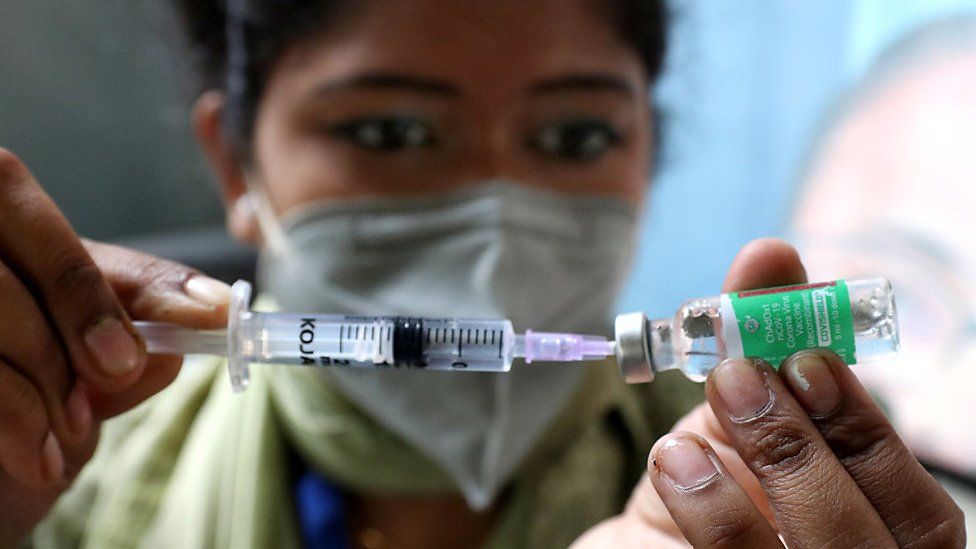
SharecloseShare pageCopy linkAbout sharingImage source, Getty ImagesThe world’s largest vaccine maker will halve the production of its Covid-19 vaccine because it has no fresh orders, its top-ranking executive has said.India’s Serum Institute is sitting on a stockpile of half a billion doses of Covishield, the local version of AstraZeneca’s Vaxzevria jab, the firm’s CEO Adar Poonawalla told CNBC-TV18.The jab accounts for 90% of the 1.3 billion doses given so far in India.India has fully vaccinated half of its eligible adults since January.”I am in a dilemma which I never imagined to be in. I am producing 250 million doses [of Covishield] a month but the good news is India has covered a large part of the population and we will have completed all our orders to the ministry of health in a week’s time,” Mr Poonawalla said .”We have no other orders at hand. So I am going to be reducing the production by at least 50% to begin with on a monthly basis until orders again pick up either in India and the world.”Some 85% of Indians have been administered one dose. However, tens of millions of people are still to receive their second dose. India administers more than one billion Covid jabsOne way India could absorb the excess capacity of vaccines is by reducing the time between two doses of Covishield from 12-16 weeks to eight weeks, Partha Mukhopadhyay, a researcher at the Delhi-based think-tank Centre for Policy Research, told the BBC.”Also India has vaccinated about 83 million of the roughly 130 million adults above 60 years so far. We still have a gap in terms of vaccine coverage among our most vulnerable people,” he said.Then there is the question of providing booster doses, which the government is yet to decide on. Serum Institute halted vaccine exports in April to cater to domestic demand as infections shot up in India. The firm is the largest single supplier to Covax, the international scheme to ensure equal access to Covid-19 vaccines. India resumed Covid vaccine exports from October. Mr Poonawalla said Covax was placing orders “but that’s very slow and the uptick will pick up in the second quarter”.He said he was in touch with the leaders of countries which needed more vaccines, but many of them would “sadly” not be able to lift from India unless they improved their logistics and cold storage facilities.”All these other nations cannot vaccinate at 7 or 8 million beneficiaries a day like India has done. They don’t have that kind of infrastructure. Hopefully by this time next year they would have hopefully reached 60-70% of the target for double vaccination,” Mr Poonawalla said.In October, more than 160 former world leaders and global figures called on the UK and other rich countries to immediately airlift millions of surplus Covid vaccines to less developed nations.You might also be interested in: This video can not be playedTo play this video you need to enable JavaScript in your browser.

Read more →

Covid: Vaccines should work against Omicron variant, WHO says

SharecloseShare pageCopy linkAbout sharingImage source, Getty ImagesExisting vaccines should still protect people who contract the Omicron variant from severe Covid cases, a World Health Organization (WHO) official says.It comes as the first lab tests of the new variant in South Africa suggest it can partially evade the Pfizer jab.Researchers say there was a “very large drop” in how well the vaccine’s antibodies neutralised the new strain.But the WHO’s Dr Mike Ryan said there was no sign Omicron would be better at evading vaccines than other variants.”We have highly effective vaccines that have proved effective against all the variants so far, in terms of severe disease and hospitalisation, and there’s no reason to expect that it wouldn’t be so” for Omicron, Dr Ryan, the WHO’s emergencies director, told AFP news agency.He said initial data suggested Omicron did not make people sicker than the Delta and other strains. “If anything, the direction is towards less severity,” he said.Omicron: Is it milder despite dodging immunity?Do vaccines work against Omicron?The new South African study – which has not yet been peer-reviewed – found the Pfizer/BioNTech vaccine may be up to 40 times less effective against Omicron than the original Covid strain. But Omicron’s ability to escape vaccine antibodies is “incomplete”, said Prof Alex Sigal, a virologist at the Africa Health Research Institute, who led the research. He said the results, based on blood tests from 12 people, were “better than I expected of Omicron”.Prof Sigal said vaccination, combined with previous infection, could still neutralise against the variant. That suggests boosters may bring a significant benefit.Scientists believe previous infection, followed by vaccination or a booster, is likely to increase the neutralisation level and will probably protect people against severe disease.More data on how well the Pfizer jab works against Omicron is expected to be released in the coming days.There is no significant data yet on how the Moderna, Johnson & Johnson and other jabs hold up against the new variant.Omicron is the most heavily mutated version of coronavirus found so far. It was first identified in South Africa, where there is now a surge in the number of people catching Covid multiple times.UK Prime Minister Boris Johnson’s spokesman said early signs suggested Omicron could be more transmissible than the current Delta strain.But Omicron’s ability to cause severe disease is not yet clear.Dr Anthony Fauci, the top US infectious diseases expert, said early evidence suggests Omicron could be more transmissible but less severe.There have been more than 267 million cases and more than five million deaths around the globe since the pandemic started in 2020, according to data from Johns Hopkins University.What do South Africa lab tests tell us about Omicron?Some drop-off is not surprising. The amount seen in this small study is in the ballpark of what scientists were expecting given the substantial mutations that Omicron has compared with original Covid that the vaccines were designed to fight. What these early lab results still can’t tell us is what it truly means in terms of how well existing vaccines work in protecting people around the globe. Neutralising antibodies – which latch on to the virus to stop it infecting our cells – are just one part of the immune response to Covid. Jabs, or past infection, also trigger T cells that help protect us against the virus. The picture will become clearer in the coming weeks as we gather more data from around the world on how many people are catching Omicron, how sick they are getting and whether they were vaccinated or not.This video can not be playedTo play this video you need to enable JavaScript in your browser.

Read more →