Treatments in weeks, not months: Scientists develop ambitious pandemic response plan

An international team of scientists has created a plan for an accelerated pipeline for developing drug cocktails to battle the COVID-19 pandemic. The pipeline could speed new and better treatments that the newly diagnosed and recently exposed could take at home to prevent serious illness.
The “proactive drug development strategy” could also offer a first line of defense against future pandemics, the researchers say. The approach would allow scientists to be ready with an arsenal of drugs that could be quickly moved into clinical trials when a dangerous new infection appears, whether a coronavirus or another pathogen. The goal: Make effective treatments available in weeks, not months or years.
“We need to proactively develop drug cocktails against virus families as a whole — for example, all coronaviruses — to be ready on day one if a new virus or variant emerges. The cocktail should be low cost, easy to transport and distribute, and easy to self-administer — therefore available to people across the globe,” said researcher Judith M. White, PhD, a professor emeritus at the University of Virginia School of Medicine. “We hope that this concept of ‘smart drug cocktails’ — smart because of the choice of drugs for testing and computer modeling of their effectiveness in humans — will be the basis for a robust, coordinated effort against coronaviruses and other pathogenic viruses, such as Zika and Lassa fever viruses, just to name a few.”
Fast, Safe, Effective Pandemic Response
The new strategy comes from White, of UVA’s Departments of Cell Biology and Microbiology, Immunology and Cancer Biology; and colleagues in Seattle, at the University of Washington and the Fred Hutchinson Cancer Research Center; the University of Maryland; and MRI Global, as well as collaborators in Estonia, Finland and Norway. The scientists believe that prioritizing the development of drug cocktails — treatments that combine two or more medicines — would reduce the burden on healthcare systems and help prevent disease spread by limiting a virus’ ability to adapt to its hosts. This type of combination approach is already the norm for treating viruses such as HIV.
The researchers outline a five-point plan to accelerate the identification and administration of effective drug cocktails: Prioritize drugs that people could take at home, either by mouth or inhalation, after exposure or when symptoms first appear. Focus on drug combinations, rather than individual drugs, to reduce the chance viruses will become drug resistant. Prioritize drugs that are already approved or in advanced clinical trials, to accelerate how quickly their safety and effectiveness can be assured. Focus on drugs that can be given to people at doses that will yield anti-viral effects without toxic side effects. Use advanced computer models to identify useful drug combinations and speed development.To demonstrate the potential of computer modeling for this purpose, Joshua T. Schiffer, MD, of Fred Hutch, developed a model to assess the potential clinical effectiveness of drug pairs for treating COVID-19. Pairing drugs, the researchers say, could make for treatments that are more effective than individual drugs alone. Identifying drugs with this type of “synergy,” they say, could potentially turn two medicines of only modest benefit into a potent treatment.
Read more →

Covid Omicron: Biden buys 500m test kits to tackle surge

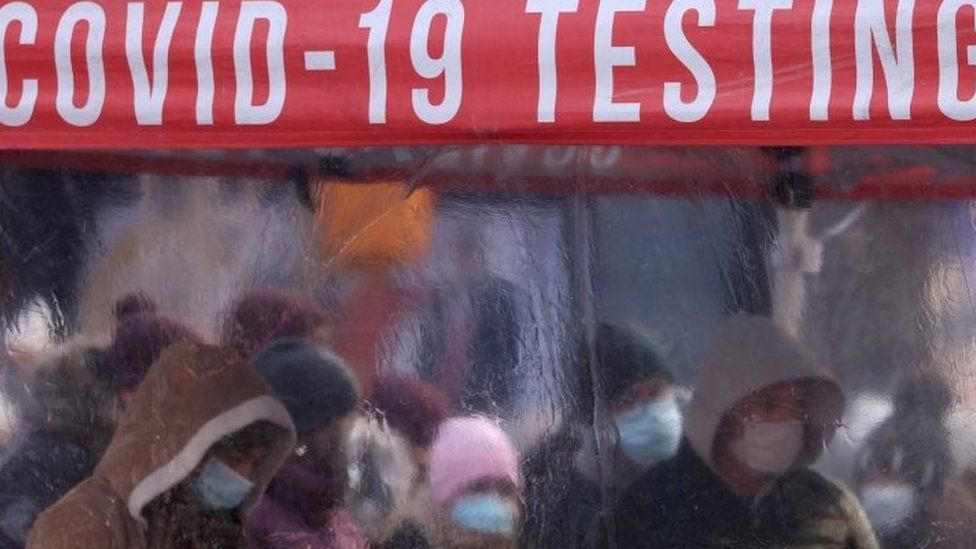
SharecloseShare pageCopy linkAbout sharingImage source, ReutersUS President Joe Biden’s administration is to make 500 million rapid tests for Covid available free, amid new measures to tackle the surging Omicron variant.Mr Biden will address the nation later, telling people to protect themselves as the holiday season gets under way.There will be more vaccines and more support for hospitals, but no need for a lockdown, a senior official said.Omicron has become the dominant strain in the US, accounting for nearly three-quarters of all new cases.It was first identified in southern Africa last month but has now spread around the globe.Although 73% of adult Americans are fully vaccinated against Covid, the administration remains concerned about those who have not had jabs.The senior official said: “If you are unvaccinated, you are at high risk of getting sick. This variant is highly transmissible and the unvaccinated are eight times more likely to be hospitalised and 14 times more likely to die from Covid.”The White House said the measures Mr Biden was announcing would “mitigate the impact unvaccinated individuals have on our health care system”.The key measures will be:500 million at-home rapid tests (antigen/flow) will be bought and delivered free to all Americans who request them from January. Kits can currently cost $7-$15 (£5-£11) over-the-counter and availability can be sketchy in some areas1,000 military medical personnel will be deployed to hospitals nationwide over the next two months, five times the current amountThe launch of new federal testing sites nationwide, with the first in New York City – which has seen a massive surge in Omicron – by Christmas Expanded hospital capacity and distribution of critical suppliesMr Biden will say in his address later that even vaccinated Americans are going to be infected by the new variant, but that they will become far less sick than the unvaccinated.He will stress the need for mask wearing, particularly when travelling, and caution while celebrating.How worrying is the new Covid variant?How do you detect Omicron?Covid map: Where are cases the highest? Omicron has created concern in a number of US cities, with people in New York, Washington and elsewhere queuing up for tests ahead of meeting up with family members.Covid-19 cases in the US are up 57% since the start of this month, Reuters reports.But the Biden administration insists it has “the tools to get through this wave”, the official said, adding: “There is no need to lock down our schools, nor our economy.”The purchase of 500 million tests contrasts with a comment by White House press secretary Jen Psaki just two weeks ago.She asked: “Should we just send one to every American? Then what happens if every American has one test? How much does that cost, and then what happens after that?”This video can not be playedTo play this video you need to enable JavaScript in your browser.

Read more →

To Fight Omicron, Biden Plans Aid From Military and 500 Million Tests

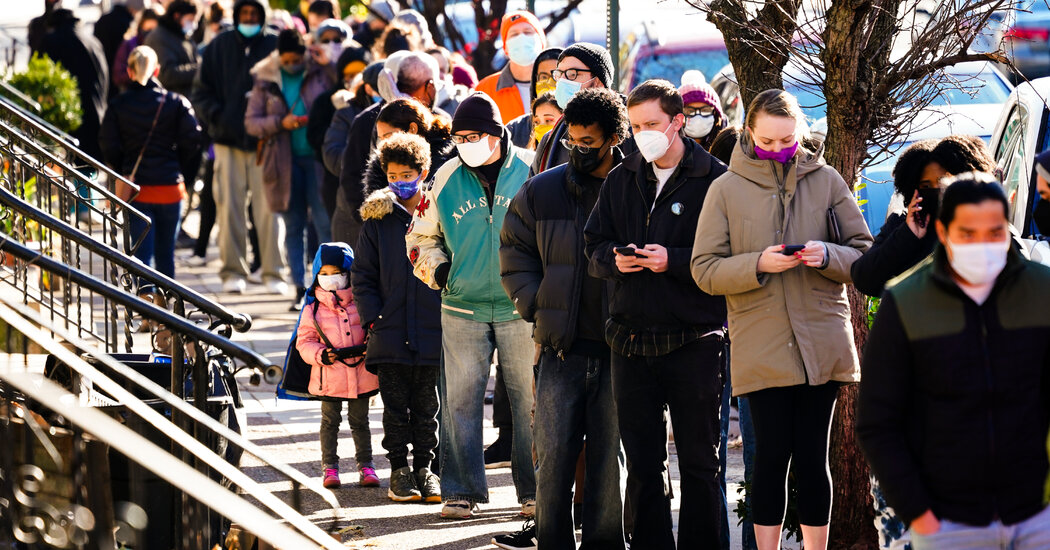
The president is set to unveil his initiatives, which also include creating new federal testing sites and deploying federal vaccinators, in a speech on Tuesday.WASHINGTON — President Biden will announce new steps on Tuesday to confront a staggering surge in coronavirus cases, including readying 1,000 military medical professionals to help at overburdened hospitals, setting up new federal testing sites, deploying hundreds of federal vaccinators and buying 500 million rapid tests to distribute free to the public.The measures, outlined to reporters Monday night by two senior administration officials who spoke on condition of anonymity, come as coronavirus caseloads are rapidly rising around the country, particularly in the Northeast, fueled by the highly infectious new Omicron variant — just as Americans prepare to gather for Christmas.The 500 million tests that the administration intends to purchase will not be available until January, the senior officials said, adding that the government intends to create a website where people can request that tests be sent to their homes, free of charge. It was not immediately clear where the tests would come from.The plan for new federal testing sites will debut in New York City, where several new sites will be running before Christmas. And Mr. Biden intends to invoke the Defense Production Act, officials said, to accelerate production of tests.The plan has a more urgent tone than the winter pandemic strategy that Mr. Biden announced three weeks ago at the National Institutes of Health, just days after the new variant was discovered in South Africa. At the time, he promised that the 150 million Americans with private health insurance would be able to get reimbursed for at-home Covid-19 tests starting in mid-January, said his administration would improve access to booster shots and imposed new testing requirements for international travelers.But that plan — and Mr. Biden’s broader response to the Omicron variant — has drawn criticism from public health experts, who say the president has focused too heavily on vaccination as his central strategy. Many have called on him to be more aggressive about testing as a means of slowing the variant’s spread — including possibly sending rapid tests to the homes of every American, free of charge.Since Mr. Biden announced his winter strategy, the Omicron variant has exploded; the Centers for Disease Control and Prevention reported on Monday that it has raced ahead of other variants and is now the dominant version of the coronavirus in the United States, accounting for 73 percent of new infections last week.“We have to acknowledge the reality that unfortunately, with a heavy heart, the virus is in charge and we need to take back control, and the only way to do that as a society is to test and isolate, test and isolate, repeat, repeat, repeat,” said Mara Aspinall, an expert in medical diagnostics at Arizona State University.Mr. Biden was himself exposed to the coronavirus late last week but has tested negative, White House officials said on Monday. With Americans already jittery about their holiday plans, he will try to reassure the nation while reminding people, yet again, that their best defense against Covid-19 is to get vaccinated and, for those who are eligible, to get booster shots.The White House is trying to avoid talk of lockdowns at all costs, and, to the consternation of some, has stopped short of urging people to cancel travel plans, avoid public transportation and the like.“This is not a speech about locking the country down,” Jen Psaki, the White House press secretary, told reporters earlier on Monday. “This is a speech outlining and being directly clear with the American people about the benefits of being vaccinated, the steps we’re going to take to increase access, increase testing, and the risks posed to unvaccinated individuals.”But Mr. Biden will also acknowledge that the shape of the pandemic is shifting, the officials said. Breakthrough Omicron infections are common, though scientists believe that the vaccines will still provide protection against the worst outcomes. Many fully vaccinated and boosted people who are getting infected are experiencing mild symptoms or none at all.Mr. Biden will say that if people are vaccinated and follow other public health guidelines, including wearing masks in public places, “they should feel comfortable celebrating Christmas and the holidays” with their families, one of the officials said.But beneath those notes of assurance from the president is deep concern among his advisers — and public health experts — about the ability of the nation’s hospitals, which are already under great strain, to withstand an Omicron surge. Even if the variant ends up causing less severe disease and a relatively low percentage of those infected need to be hospitalized, experts say, the explosion in cases means it is still possible that hospitals will become overwhelmed.“That’s the big concern,” said Dr. Marcus Plescia, the chief medical officer of the Association of State and Territorial Health Officials. “If there are a lot of people getting sick, even if only a small portion of them are getting severely ill, that could still be a huge number of people.”Mr. Biden intends to direct his defense secretary, Lloyd J. Austin III, to “ready an additional 1,000 service members — military doctors, nurses, paramedics and other medical personnel — to deploy to hospitals during January and February, as needed,” according to a fact sheet prepared by the White House.At the same time, Mr. Biden will announce that six federal emergency response teams, with more than 100 health professionals and paramedics, will deploy immediately to six states: Michigan, Indiana, Wisconsin, Arizona, New Hampshire and Vermont. Already, 300 federal medical workers have been deployed since Omicron was discovered in late November.A Federal Emergency Management Agency contractor administering a coronavirus booster shot on Monday in Federal Way, Wash. FEMA plans to stand up new pop-up vaccination clinics.Ted S. Warren/Associated PressMr. Biden will also direct the Federal Emergency Management Agency to work with hospitals across the country to make plans to expand capacity. FEMA will also stand up new pop-up vaccination clinics, the officials said, to handle hundreds of additional vaccinations per week.The Coronavirus Pandemic: Key Things to KnowCard 1 of 5The Omicron variant.

Read more →

WHO urges cancelling some holiday events over Omicron fears

SharecloseShare pageCopy linkAbout sharingThis video can not be playedTo play this video you need to enable JavaScript in your browser.The World Health Organization has urged people to cancel some of their holiday plans to protect public health, as the Omicron variant spreads globally.”An event cancelled is better than a life cancelled,” said WHO head Dr Tedros Adhanom Ghebreyesus, adding that “difficult decisions” must be made.A number of countries have acted to try to halt the spread of the variant, including imposing travel curbs.In the US, Omicron is now dominant, accounting for 73% of new infections.President Joe Biden is expected to address the nation on Tuesday but the White House said he was not planning on “locking the country down”.The country’s top infectious disease expert, Dr Anthony Fauci, earlier warned that Christmas travel would increase the spread of Omicron even among the fully vaccinated.Americans are now advised against travel to more than 80 nations that appear on the Centers for Disease Control and Prevention’s Very High list for Covid-19, including almost all of Europe.France and Germany are among the nations imposing travel curbs to tackle Omicron, while the Netherlands has introduced a strict lockdown over the Christmas period.In the UK, Prime Minister Boris Johnson said on Monday that the government needed to “reserve the possibility” of bringing in new rules in England as Omicron cases surged, but did not announce further restrictions. New Year’s Eve celebrations in London’s Trafalgar Square have been cancelled “in the interests of public safety”, Mayor Sadiq Khan said.And on Tuesday, New Zealand postponed its phased reopening to international travel until the end of February at least.How worrying is the new Covid variant?How do you detect Omicron?Covid map: Where are cases the highest? Omicron – first detected in South Africa in November – has been classed as a “variant of concern” by the WHO.Speaking at a briefing on Monday, Dr Tedros said there was now evidence that the variant was “spreading significantly faster” than the previous dominant version, Delta.The WHO has also said it would be “unwise” to conclude from early evidence that Omicron was a milder variant.Dr Tedros said that “all of us are sick of this pandemic. All of us want to spend time with friends and family. All of us want to get back to normal”.But he said that everyone, “leaders and individuals”, had to make difficult decisions to protect people, including by cancelling or delaying events.”It’s better to cancel now and celebrate later than to celebrate now and grieve later,” Dr Tedros said.He also said that the pandemic could be ended in 2022 – if 70% of the population of every country of the world was vaccinated by the middle of next year.He also said that China, where the outbreak is believed to have started in 2019, must provide more data on the origins, to help with future policy on tackling pandemics.

Read more →

SpaceX Reports 132 Coronavirus Cases at Headquarters in California

At least 132 employees at SpaceX’s Southern California headquarters tested positive for the coronavirus, according to information posted on a Los Angeles County website. It was the highest number of cases currently reported among private companies in the county.The outbreak erupted as a wave of infections spread throughout the country, driven mainly by the Omicron virus variant, and also as the private space company founded and led by Elon Musk is conducting a rapid series of rocket launches at sites in California and Florida.Some 6,000 employees at the company’s headquarters in Hawthorne, Calif., build and manufacture SpaceX’s Falcon 9 rockets and Crew Dragon capsules. The rockets are the dominant launch vehicle used by private companies and governments to put satellites in orbit, and the capsules are NASA’s primary vehicle for carrying astronauts to the International Space Station. The company’s mission control room, where engineers are frequently shown during live video streams of launches, seated behind computer monitors wearing masks, is also in Hawthorne.The outbreak at the headquarters, reported earlier by The Los Angeles Times based on data posted Sunday by Los Angeles County’s public health department, comes during a busy time for the company.SpaceX broke a company record on Sunday for the quickest turnaround time between two missions, launching a Turkish satellite to space from Kennedy Space Center in Florida just 18 hours after launching 52 of the company’s Starlink internet satellites to orbit on Saturday from Vandenberg Space Force Base in California. Another mission from Florida is scheduled Tuesday morning, sending a cargo capsule full of supplies and research to the space station for NASA, though local weather appears unfavorable.SpaceX did not return a request for comment. During an earlier phase of the coronavirus pandemic, Mr. Musk, SpaceX’s founder and chief executive, balked at restrictions in California meant to curb the spread of the coronavirus. In May last year, Mr. Musk, also the chief executive of Tesla, the electric carmaker, defied a public health order by resuming production at the company’s Fremont factory despite county restrictions that would have prevented employees from working.On the day after Thanksgiving this year, Mr. Musk stoked fears of bankruptcy for SpaceX in emails sent to employees, urging them to work through engineering challenges related to the development of Starship, the company’s next-generation rocket.The pandemic has frequently disrupted spaceflight activities, costing NASA nearly $3 billion from delays, according to an internal report, and a European-Russian mission to Mars had to be postponed until 2022 early in 2020. Nonetheless, SpaceX has sustained its operations throughout the pandemic, including resuming astronaut launches from American soil in May 2020.Mr. Musk himself tested positive for the virus in November 2020 and was precluded from attending a launch of four astronauts to space for NASA from the Kennedy Space Center.

Read more →

SpaceX Reports 132 Covid Cases at Headquarters in California

At least 132 employees at SpaceX’s Southern California headquarters tested positive for the coronavirus, according to information posted on a Los Angeles County website. It was the highest number of cases currently reported among private companies in the county.The outbreak erupted as a wave of infections spread throughout the country, driven mainly by the Omicron virus variant, and also as the private space company founded and led by Elon Musk is conducting a rapid series of rocket launches at sites in California and Florida.Some 6,000 employees at the company’s headquarters in Hawthorne, Calif., build and manufacture SpaceX’s Falcon 9 rockets and Crew Dragon capsules. The rockets are the dominant launch vehicle used by private companies and governments to put satellites in orbit, and the capsules are NASA’s primary vehicle for carrying astronauts to the International Space Station. The company’s mission control room, where engineers are frequently shown during live video streams of launches, seated behind computer monitors wearing masks, is also in Hawthorne.The outbreak at the headquarters, reported earlier by The Los Angeles Times based on data posted Sunday by Los Angeles County’s public health department, comes during a busy time for the company.SpaceX broke a company record on Sunday for the quickest turnaround time between two missions, launching a Turkish satellite to space from Kennedy Space Center in Florida just 18 hours after launching 52 of the company’s Starlink internet satellites to orbit on Saturday from Vandenberg Space Force Base in California. Another mission from Florida is scheduled Tuesday morning, sending a cargo capsule full of supplies and research to the space station for NASA, though local weather appears unfavorable.SpaceX did not return a request for comment. During an earlier phase of the coronavirus pandemic, Mr. Musk, SpaceX’s founder and chief executive, balked at restrictions in California meant to curb the spread of the coronavirus. In May last year, Mr. Musk, also the chief executive of Tesla, the electric carmaker, defied a public health order by resuming production at the company’s Fremont factory despite county restrictions that would have prevented employees from working.On the day after Thanksgiving this year, Mr. Musk stoked fears of bankruptcy for SpaceX in emails sent to employees, urging them to work through engineering challenges related to the development of Starship, the company’s next-generation rocket.The pandemic has frequently disrupted spaceflight activities, costing NASA nearly $3 billion from delays, according to an internal report, and a European-Russian mission to Mars had to be postponed until 2022 early in 2020. Nonetheless, SpaceX has sustained its operations throughout the pandemic, including resuming astronaut launches from American soil in May 2020.Mr. Musk himself tested positive for the virus in November 2020 and was precluded from attending a launch of four astronauts to space for NASA from the Kennedy Space Center.

Read more →

Omicron: South African scientists probe link between variants and untreated HIV

SharecloseShare pageCopy linkAbout sharingImage source, Getty ImagesSouth African scientists – hailed for their discovery of Omicron – are investigating the “highly plausible hypothesis” that the emergence of new Covid-19 variants could be linked, in some cases, to mutations taking place inside infected people whose immune systems have already been weakened by other factors, including, though not limited to, untreated HIV.Researchers have already observed that Covid-19 can linger for many months in patients who are HIV positive but who have, for varying reasons, not been taking the medicines that would enable them to lead healthy lives.”Normally your immune system would kick a virus out fairly quickly, if fully functional,” said Professor Linda-Gayle Bekker, who heads the Desmond Tutu HIV Foundation in Cape Town.”In someone where immunity is suppressed, then we see virus persisting. And it doesn’t just sit around, it replicates. And as it replicates it undergoes potential mutations. And in somebody where immunity is suppressed that virus may be able to continue for many months – mutating as it goes,” she added.But, as they push ahead with their research, the scientists are anxious to avoid further stigmatising people living with HIV, both in South Africa – home to the world’s largest HIV epidemic – and globally.”It’s important to stress that people who are on anti-retroviral medication – that does restore their immunity,” Professor Bekker said.Two cases of particular interest have now been detected in South African hospitals. One woman continued to test positive for Covid-19 for almost eight months, earlier this year, while the virus underwent more than 30 genetic shifts.Professor Tulio de Oliveira, who leads the team that confirmed the discovery of Omicron, noted that “10 to 15″ similar cases had been found in other parts of the world, including the UK.”It’s a very rare event. But it is a plausible explanation that individuals that are immuno-suppressed… can basically be a source of virus evolution,” he said.South African scientists have faced criticism – and even death threats on social media – after their recent discovery of the Omicron variant triggered swift, controversial and economically damaging travel bans from Western nations. They are keen to pre-empt any suggestion that their country, or the continent, should be singled out for producing new variants.The link between immuno-suppressed patients and new Covid variants is “a highly plausible hypothesis”, said Professor Salim Karim, a leading HIV specialist and former chair of the South African government’s Covid19 advisory committee. “But it’s not proven. We’ve seen five variants come from four different continents. So, to scapegoat Africa is simply outrageous. “It’s saying that we’re not worried about immuno-compromised people from the rest of the world. We’re just worried if they’re black and from Africa,” Professor Karim added. Image source, AFPScientists also note that there are many other reasons, globally, why people’s immune systems might be compromised. The emergence, for instance, of the Alpha variant has been linked to a patient receiving treatment for cancer in the UK.”Diabetes, cancer, hunger, auto-immune diseases, chronic TB, obesity – we have a huge population of people with suppressed immunity for other reasons,” said Professor Marc Mendelson, head of infectious diseases at Cape Town’s Groote Schuur hospital.In South Africa, nearly eight million people are living with HIV. But about one third of them are not currently taking medication. In Masiphumelele, a crowded township squeezed between rocky hillsides and the Atlantic Ocean, south of Cape Town, a quarter of the adult population in the township is estimated to have HIV.”There’s lots of issues. Some [people] don’t want to get tested. Some don’t want to know. There’s stigma around HIV,” said a community liaison worker, Asiphe Ntshongontshi, 25, explaining why, despite a hugely effective health programme both here and nationwide, a significant number of people were not taking drug prescriptions.There is currently no evidence that any of the current Covid variants of concern have emerged in Africa, although the sudden arrival in southern Africa of a variant as transmissible as Omicron has fuelled speculation that it may be linked to someone local with a compromised immune system.Scientists tracking the virus say they hope that concern about a potential link with HIV will spur greater global action at a time when the fight against HIV has been neglected, in some areas, because of the pandemic.”It’s a worldwide problem – this need to understand how viral infections thrive in our global community. And the best resource we have [for tackling it] at the moment is vaccination. That message has to go out loud and clear,” Prof Bekker said.While Africa still lags far behind the rest of the world in Covid vaccinations, researchers in South Africa say it is important to focus particular attention on people with weakened immune systems, who might need four or even five booster shots for the vaccines to trigger an appropriate immune response.”If we want to slow down the risk of creating new variants, we have to take up this challenge in every country around the world. That’s to try to ensure immune-compromised individuals are fully vaccinated and that they have detectable immune responses to vaccines. “And if not, they must be given extra doses until they develop an immune response. That’s our best protection from the possibility that immune-compromised people are developing variants,” Professor Karim said.This video can not be playedTo play this video you need to enable JavaScript in your browser.

Read more →

Alcohol consumption during the COVID-19 pandemic projected to cause more liver disease and deaths

Alcohol sales and consumption increased during the start of the COVID-19 pandemic, but the effect of the increase in consumption on population health is not fully understood. In new research published in Hepatology, a team led by investigators at Massachusetts General Hospital (MGH) projected rates of liver disease and associated deaths due to increased alcohol consumption during the COVID-19 pandemic.
Using data from a national survey of U.S. adults on their drinking habits that found that excessive drinking (such as binge drinking) increased by 21% during the COVID-19 pandemic, the scientists simulated the drinking trajectories and liver disease trends in all U.S. adults. They estimated that a one-year increase in alcohol consumption during the COVID-19 pandemic will result in 8,000 additional deaths from alcohol-related liver disease, 18,700 cases of liver failure, and 1,000 cases of liver cancer by 2040. In the short term, alcohol consumption changes due to COVID-19 are expected to cause 100 additional deaths and 2,800 additional cases of liver failure by 2023.
The researchers noted that a sustained increase in alcohol consumption for more than one year could result in 19-35% additional mortality.
“Our findings highlight the need for individuals and policymakers to make informed decisions to mitigate the impact of high-risk alcohol drinking during the COVID-19 pandemic in the U.S.,” says senior author Jagpreet Chhatwal, PhD, associate director of MGH’s Institute for Technology Assessment and an assistant professor of radiology at Harvard Medical School.
“While we have projected the expected impact of societal drinking changes associated with the COVID-19 pandemic without any interventions, we hope that our research can help jumpstart needed conversations at every level of society about how we can respond to the many behavioral changes, coping mechanisms, and choices that have short- and long-term implications for the health of individuals, families and communities in America,” adds lead author Jovan Julien, MS, a data analyst at the MGH Institute for Technology Assessment and a PhD candidate at the Georgia Institute of Technology.
“The COVID-19 pandemic has had many unintended consequences with unknown long-term impact. Our modeling study provides a framework for quantifying the long-term impact of increased alcohol consumption associated with COVID-19 and initiating conversations for potential interventions,” notes co-author Turgay Ayer, PhD, the George Family Foundation Early Career Professor of Systems Engineering at Georgia Institute of Technology.
Co-authors include Elliot B. Tapper, MD, Carolina Barbosa, PhD, and William Dowd, BA.
Story Source:
Materials provided by Massachusetts General Hospital. Note: Content may be edited for style and length.

Read more →

Study compares COVID-19 vaccines' ability to stimulate immune protection against the coronavirus

A team of scientists at Massachusetts General Hospital (MGH) has conducted one of the first comparisons of how effectively each of the three COVID-19 vaccines authorized or approved in the United States stimulates a protective immune response against the virus. This study, published in the Journal of Infectious Diseases, also includes an analysis of data from several other studies on how well each vaccine guards against breakthrough cases of COVID-19, or infections that occur in people who have received the inoculations.
COVID-19 vaccines work by “teaching” the body’s immune system to detect the presence of the coronavirus and respond by producing protective antibodies that neutralize it, known as immunogenicity. The three COVID-19 vaccines available in the U.S. are informally known by the names of their manufacturers: Moderna, Pfizer, and Johnson & Johnson/Janssen. Moderna and Pfizer are administered as two-dose regimens, while Johnson & Johnson requires only one dose. Although there are differences in dose and mechanism of delivery between the three vaccines, each targets the “spike” protein on the SARS-CoV-2 strain of COVID-19 that was originally isolated in Wuhan, China.
“We wanted to know how much anti-spike antibody people make when they receive each vaccine,” says the study’s senior author, John Iafrate, MD, PhD, vice chair of Pathology at MGH. To find out, Iafrate and his colleagues studied blood samples from 215 healthy adults from Chelsea, Massachusetts, and the MGH Vaccine and Immunotherapy Center, which is directed by Mark Poznansky, MD, PhD. Each adult had received one or two doses of vaccine at least one week earlier. The researchers also analyzed blood samples from a group of adults who were unvaccinated and not infected with COVID-19, and another group of adults who were unvaccinated and recovering from infections.
A laboratory analysis of these blood samples found that two doses of the Moderna and Pfizer vaccines produced roughly similar concentrations of antibodies, which were greater than 100-fold higher than the amount produced by the single-dose Johnson & Johnson vaccine. The study also found that people who had recovered from COVID-19 infections had antibody concentrations similar to those who had received a single dose of Moderna and Pfizer, which were more than 10 times higher than antibody levels produced by a dose of Johnson & Johnson.
A separate analysis conducted with Gaurav Gaiha, MD, of the Ragon Institute of MGH, MIT and Harvard found that the Johnson & Johnson vaccine was somewhat more effective at stimulating production of a different type of immune cell, known as CD4 T cells. However, those levels were still lower than those induced by the Moderna and Pfizer vaccines.
Next, the team collaborated with Alejandro Balazs, PhD, and members of his lab at the Ragon Institute to examine the vaccines’ ability to neutralize three variants (or mutated versions) of COVID-19 that have evolved and spread throughout the world, known by the names Beta, Delta and Gamma. They found that Beta is the variant most likely to escape surveillance by the immune system. That suggests to Balazs that the Delta and Gamma variants must possess some other qualities, such as the ability to replicate rapidly, that have helped them spread. All three variants have rendered antibodies raised by the existing vaccines less effective. How effectively the three vaccines neutralize the Omicron variant, which was identified in late November, is currently under investigation.
To gain insight into how well each vaccine protects recipients from being infected with breakthrough cases of COVID-19, the paper’s lead author, Vivek Naranbhai, PhD, MBChB, analyzed data from studies conducted in California, the District of Columbia, and Oklahoma, as well as Iceland and South Korea. By merging these findings (a statistical method called a meta-analysis), they found that people inoculated with the Moderna vaccine had the lowest risk for breakthrough infections. Compared to adults who received the Moderna vaccine, Pfizer vaccine recipients were 1.53 times more likely to become infected with COVID-19, while those who received the Johnson & Johnson vaccine were 2.54 times more likely.
“Our data strongly indicate that a single dose of Johnson & Johnson results in a weaker antibody response than the other vaccine regimens,” says Iafrate. “These findings certainly support making booster shots available for that population.” At this time, the Centers for Disease Control and Prevention recommends boosters for people aged 18 and older who have received any three of the primary vaccine regimens, and for people aged 16 and 17 who received the Pfizer primary vaccine.
This work was supported by the Peter and Ann Lambertus Family Foundation.
Iafrate is also a professor of Pathology at Harvard Medical School (HMS). Naranbhai is a hematology-oncology fellow in the MGH Department of Medicine. Balazs is also an assistant professor at HMS. Gaiha is also an assistant professor of Medicine at HMS. Poznansky is also a professor of medicine at HMS.

Read more →

First genetic risk factors identified for sudden unexplained death in children after age one

A new study found that changes in specific genes may contribute each year to the roughly 400 sudden unexplained deaths in children (SUDC) aged one year and older — and separately from sudden infant death syndrome (SIDS).
Children younger than 1 year old who die suddenly are diagnosed with SIDS, and older children with SUDC. But the conditions likely have many factors in common, say the study authors. Although SIDS causes 3 times as many deaths as SUDC each year, it receives more than 20 times the research funding. Parents who lost a child older than age 1 have had few options to support their search for answers, and no research organization to join.
For this reason, study author Laura Gould, after losing her daughter, Maria, to SUDC at the age of 15 months in 1997, asked NYU Langone Health neurologist Orrin Devinsky, MD , to co-found the SUDC Registry and Research Collaborative (SUDCRRC). Since 2014, registry staff have worked with bereaved parents to enroll their families in the registry, which collects and analyzes genetic specimens from parents and their deceased child. Such molecular autopsies are not currently part of the standard cause-of-death investigations conducted by most medical examiner’s and coroner’s offices.
Published online December 20 in the Proceedings of the National Academy of Sciences, the new study is the first to identify genetic differences present in a large group of SUDC cases, most of which involved children who died between the ages of 1 and 4.
Led by researchers from the NYU Grossman School of Medicine, the study analyzed the DNA codes of 124 sets of parents, and of the child that each couple lost to SUDC. They found that nearly 9 percent — or 11 of the 124 children — had DNA code changes in genes that regulate calcium function. Calcium-based signals are important for brain cell and heart muscle function. When such signals are abnormal, they may cause arrhythmias (abnormal heart rhythms) or seizures, both of which increase the risk of sudden death.
The researchers discovered that most of these DNA changes were new. The mutations were not inherited, instead arising randomly in the children of parents who did not have that genetic change, says Gould. Thus, if SUDC occurs in one child, it is unlikely to occur again if the same couple has another child. This provides some reassurance to families who want to have another child.

Read more →