Radioactive radiation could damage biological tissue also via a previously unnoticed mechanism

When cells are exposed to ionizing radiation, more destructive chain reactions may occur than previously thought. An international team led by researchers from the Max Planck Institute for Nuclear Physics in Heidelberg has for the first time observed intermolecular Coulombic decay in organic molecules. This is triggered by ionizing radiation such as from radioactivity or from space. The effect damages two neighbouring molecules and ultimately leads to the breaking of bonds — like the ones in DNA and proteins. The finding not only improves the understanding of radiation damage but could also help in the search for more effective substances to support radiation therapy.
Sometimes radioactive damage cannot be great enough — especially when it comes to destroying tumour tissue with ionizing radiation. In radiation therapy, substances that specifically enhance the damage of the radiation in the tumour tissue are used. “The intermolecular Coulombic decay we found could help make such sensitizers more effective,” says Alexander Dorn, who heads a research group at the Max Planck Institute for Nuclear Physics and was instrumental in the current study. His team’s observations could also improve our understanding of how artificial or natural ionizing radiation damages the genetic material of healthy tissue.
Excess energy leads to a Coulomb explosion
The DNA double helix of the genome resembles a rope ladder with rungs of nucleic base pairs. “Because experiments with the free nucleic bases are difficult, we initially studied pairs of benzene molecules as a model system,” explains Dorn. These hydrocarbon rings are connected in a similar way to the nucleic bases stacked on top of each other in a strand of DNA. The researchers bombarded the benzene pairs with electrons, thereby imitating radioactive radiation to a certain extent. When an electron hit a benzene molecule, it was ionized and charged with a lot of energy. The team has now observed that the molecule transferred some of this energy to its partner molecule. This energy boost was enough to ionize the second molecule as well. Both molecules were thus positively charged. Of course, that didn’t last long. The two molecular ions repelled each other and flew apart in a Coulomb explosion.
Until now, scientists had assumed that ionizing radiation damages biomolecules mainly indirectly. The high-energy radiation also ionizes the water of which a cell is largely composed and which surrounds biomolecules such as DNA. The ionized water molecules — especially hydroxide ions — then attack the DNA. And if an electron of the beta radiation or a gamma quantum does hit a DNA molecule directly, the excess energy normally is dissipated by processes in the molecule itself. It thus remains intact. Or at least that was the assumption up to now. In any case, the weak bonds between different molecules or different parts of the molecule — as they exist in DNA and proteins — should not be affected by this either. However, in their reaction microscope, the researchers observed that radioactive radiation can indeed break such bonds. This instrument allows them not only to detect the two separating benzene molecules and measure their energy but also to characterize the electrons emitted.
Fatal consequences of multiple DNA breaks
“It is not yet clear how the intermolecular Coulombic decay affects the DNA strand,” says Dorn. If a single strand in the DNA ladder breaks, the consequences should not be too serious. However, the mechanism observed also releases several electrons that can “blow up” further pairs of molecules. And if both strands of DNA are broken in the immediate vicinity, this could have fatal consequences.
In order to better assess the effect of the radiation on the genetic material, Dorn’s team will now also bombard pairs of nucleic acids with electrons under the reaction microscope. “This is experimentally challenging because we have to heat the nucleic bases in order to vaporize them,” explains Dorn. “But they must not get too hot either — so that they are not destroyed.” Nuclear doctors can also follow the trail to more effective sensitizers that the Heidelberg team has blazed with the observation of intermolecular Coulombic decay. The mechanism could therefore be relevant for both cases of radiation damage: those that need to be avoided as far as possible and those that should be as great as possible.
Story Source:
Materials provided by Max-Planck-Gesellschaft. Note: Content may be edited for style and length.

Read more →

‘Battle of the sexes’ begins in womb as father and mother’s genes tussle over nutrition

Cambridge scientists have identified a key signal that the fetus uses to control its supply of nutrients from the placenta, revealing a tug-of-war between genes inherited from the father and from the mother. The study, carried out in mice, could help explain why some babies grow poorly in the womb.
As the fetus grows, it needs to communicate its increasing needs for food to the mother. It receives its nourishment via blood vessels in the placenta, a specialised organ that contains cells from both baby and mother.
Between 10% and 15% of babies grow poorly in the womb, often showing reduced growth of blood vessels in the placenta. In humans, these blood vessels expand dramatically between mid and late gestation, reaching a total length of approximately 320 kilometres at term.
In a study published today in Developmental Cell, a team led by scientists at the University of Cambridge used genetically engineered mice to show how the fetus produces a signal to encourage growth of blood vessels within the placenta. This signal also causes modifications to other cells of the placenta to allow for more nutrients from the mother to go through to the fetus.
Dr Ionel Sandovici, the paper’s first author, said: “As it grows in the womb, the fetus needs food from its mum, and healthy blood vessels in the placenta are essential to help it get the correct amount of nutrients it needs.
“We’ve identified one way that the fetus uses to communicate with the placenta to prompt the correct expansion of these blood vessels. When this communication breaks down, the blood vessels don’t develop properly and the baby will struggle to get all the food it needs.”
The team found that the fetus sends a signal known as IGF2 that reaches the placenta through the umbilical cord. In humans, levels of IGF2 in the umbilical cord progressively increase between 29 weeks of gestation and term: too much IGF2 is associated with too much growth, while not enough IGF2 is associated with too little growth. Babies that are too large or too small are more likely to suffer or even die at birth, and have a higher risk to develop diabetes and heart problems as adults.

Read more →

Immune response to seasonal coronaviruses may offer protection against COVID-19

A research group led by Shin-ichiro Fujii of the RIKEN Center for Integrative Medical Sciences have found that individuals with a certain HLA type may be able to mount a killer T cell response to COVID-19, thanks to the T cells responding to a portion of the virus’s spike protein that is also present in seasonal coronaviruses that cause the common cold. This work, published in Communications Biology, could help explain the different responses between populations, and could potentially be used as a way to develop a new type of vaccine against the disease.
Up until now, most of researchers have focused on the antibody response to the virus, which prevents initial infection. However, once the virus infects cells, to eliminate viruses quickly, effector lymphocytes — NK cells or memory T cells — become critical. Based on the consideration that NK cell response should be relatively similar across people, they decided to focus on memory killer T cells, which lead an attack against viruses that they “remember.”
The authors chose to look at individuals with HLA type A24, a type that is relatively common in Japanese and some populations in other countries including several Asian countries. According to Fujii, this choice was made because it was easy to find individuals with this HLA type, as others are much less common, and also because they felt it might offer insights into why some populations in Asia have appeared to be less susceptible to the infections.
The group began by using in silico analysis to look for parts of the SARS-CoV-2 spike protein that can bind highly with HLA-A24. As a result, they identified six potential epitopes — sequences of amino acids that immune cells respond to. They then looked at the reaction of peripheral immune cells in people with the HLA-A24 type who had not been infected with SARS-CoV-2, to see whether they had memory killer T cells that would respond to antigens from the virus. In fact, around 80 percent uninfected healthy donors with the A24 type HLA did show a reaction for a single peptide — a sequence they called the QYI epitope — which they identified. Finally, they found that QYI-specific memory killer T cells from donors with the A24 serotype showed cross-reactivity against the relevant epitopes, which are relatively conserved from human coronaviruses including seasonal coronaviruses.
The group then looked at the response in patients with blood cancers, who are known to be particularly susceptible to serious COVID-19. The response was much smaller than those from non-exposed healthy individuals. Importantly, however, the group discovered that even in patients with blood cancers, there is a “hotspot,” located in the spike protein of the virus — a sequence of 27 amino acids around the QYI epitope — and that T cells responding to this can still mount a vigorous immune response. For the hotspot, 100 percent of healthy people and 65 percent of blood cancer patients responded. According to Fujii, “This leads to the hope of developing vaccines that could boost the immune response even in immunocompromised patients.
The real goal of this work, says Fujii, is not to find differences between population but rather to find ways to prevent people from dying of the disease. “The real hope,” he says, “is that we will be able to develop vaccines that can stimulate a strongly targeted reaction by T cells against the infection. We have demonstrated that this could be possible in this particular HLA group, but now need to look at other types.”
Story Source:
Materials provided by RIKEN. Note: Content may be edited for style and length.

Read more →

Jury in Holmes Trial Set to Deliberate for Fourth Day

A jury of eight men and four women deliberated for three days last week with no verdict in the case of the Theranos founder.SAN JOSE, Calif. — Jurors are set to start a fourth day of deliberations on Monday in the fraud trial of Elizabeth Holmes, the founder of the failed blood testing start-up Theranos.Ms. Holmes, 37, faces 11 counts of wire fraud and conspiracy to commit wire fraud over charges that she lied about Theranos’s technology as she sought investments and business for her start-up. If convicted, she faces up to 20 years in prison for each count of wire fraud.A jury of eight men and four women deliberated on Monday, Tuesday and Thursday last week without reaching a verdict. On Thursday, they asked to hear recordings of a call Ms. Holmes had with investors, in which she allegedly made misleading claims about Theranos’s partnerships with pharmaceutical companies and the military.

Read more →

Many Common Medications Can Raise Your Blood Pressure

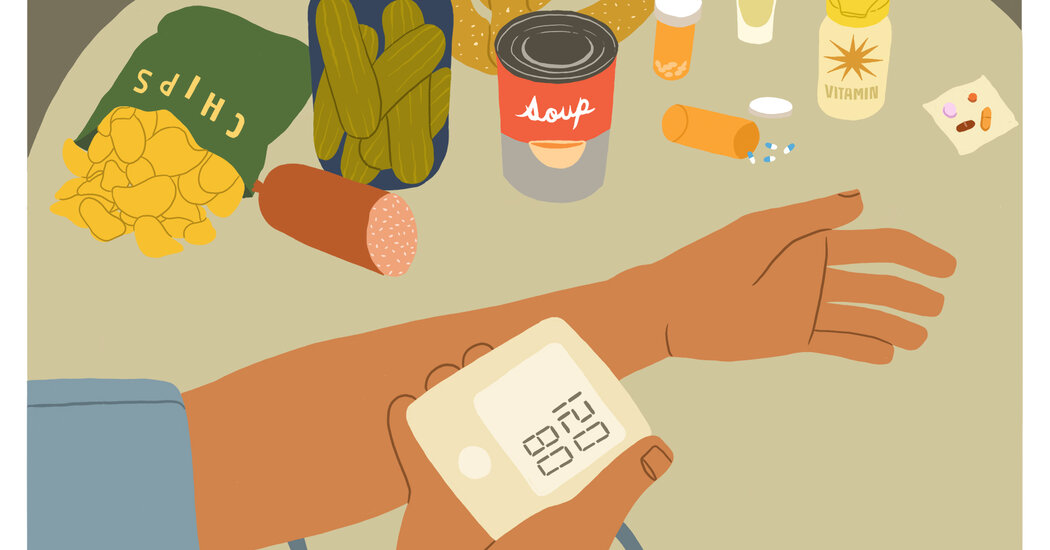
Popular pain relievers and antidepressants, as well as alcohol and herbal supplements, are among the many substances that can contribute to hypertension.High blood pressure remains a leading cause of death and disability in America today. Nearly half of adults have high blood pressure, and only a quarter of them have their blood pressure under control, putting them at increased risk of heart attack, stroke, dementia, kidney disease and other ills.Before the coronavirus pandemic, high blood pressure caused or contributed to more than half a million deaths a year in the United States, according to the Centers for Disease Control and Prevention. Those numbers have most likely increased, as blood pressure readings have shot up during the pandemic.You may have long thought your blood pressure was within normal limits. But in 2017, based on better long-term data, experts lowered the numbers that constitute a healthy blood pressure, resulting in a greater proportion of the population with this risky condition. The former upper limit of “normal” blood pressure, once believed to be 140 over 90 millimeters of mercury, was recognized as too high to prevent serious health problems over time. The current upper limit of normal is 130 over 80, and a blood pressure consistently above 120 over 80 is now considered problematic.There are many reasons for the nation’s high rate of uncontrolled hypertension, the medical term for high blood pressure. Being overweight and, for many, excessive consumption of salt lead the list, followed by inconsistent use of medically prescribed remedies and a failure to adopt lifestyle measures that can reduce elevated blood pressure.Now, a new study has highlighted another problem often unknown to patients and overlooked by doctors that can complicate treatment of hypertension and swell the ranks of those with uncontrolled high blood pressure: the large number of medications and supplements people take, some of which can raise blood pressure and undermine the benefits of otherwise effective treatment.The study involved 27,599 adults, 35.4 percent of whom had uncontrolled hypertension, who were part of the National Health and Nutrition Examination Surveys. The periodic surveys, which are known as NHANES and track the health of a representative sample of Americans, found that many people took medications and other substances that could raise an otherwise normal blood pressure or limit the effectiveness of treatment prescribed to lower an elevated blood pressure.Among adults in the survey, 17.5 percent whose hypertension was not adequately controlled were taking prescription drugs that can raise blood pressure, the researchers reported. And 18.5 percent of survey participants with hypertension that was effectively treated were also taking such drugs, suggesting that some of these people might not otherwise need blood pressure treatment.The study was published online in November in JAMA Internal Medicine. Its senior author, Dr. Timothy S. Anderson, a primary care doctor at Beth Israel Deaconess Medical Center in Boston, said he and his colleagues hoped to alert more doctors and patients to the ways medications or other substances might be contributing to increased blood pressure. Increased awareness would be especially helpful before patients were prescribed drugs to lower blood pressure or given more potent drugs to enhance the effectiveness of current treatment.For some medical conditions unrelated to hypertension, switching to a different drug might bring a patient’s elevated blood pressure back down to normal. For example, the study authors suggested, women on an estrogen-containing oral contraceptive, which can raise blood pressure, might be switched to a progestin-only or nonhormonal contraceptive. Similarly, those taking a nonsteroidal anti-inflammatory drug, or NSAID, to control pain might use acetaminophen instead.There’s a long list of prescribed medications, as well as over-the-counter drugs and recreational substances and supplements, that can interfere with effective treatment for hypertension. In addition to estrogen-containing drugs and NSAIDS, the list includes widely used medicines like antidepressants and oral steroids such as cortisone; substances like nicotine, alcohol and cocaine; herbal supplements like licorice or ginseng; and, of course, salt. Caffeine, too, can raise blood pressure over the short-term in some people.When doctors fail to ask patients what else they may be taking, using or consuming that can affect blood pressure — or if patients neglect to mention all of the over-the-counter and herbal remedies and prescription drugs they take — patients may be prescribed an unnecessary or more potent blood pressure drug that may have bothersome side effects.Dr. Anderson said that doctors were “taught to screen patients initially for other drugs being taken that can raise blood pressure, but patients are not necessarily rechecked for such drug use over time.” He said that it was important for doctors to take good medical histories, including what might have changed in patients’ lives since their blood pressures were last under control.“Maybe there was a change in diet that caused a quick rise in blood pressure,” Dr. Anderson said. “For example, some patients are very salt-sensitive,” he said. “Along with age and weight, it’s the strongest predictor of high blood pressure over time.” Changing just one frequently consumed high-salt food, like pizza, cured meats or canned soup, may be enough to lower the risk of hypertension.Complicating matters is that people’s reactions to various substances, like the commonly prescribed S.S.R.I. antidepressants, are “very idiosyncratic,” he explained. “A particular S.S.R.I. may have a high impact on blood pressure in some patients but not others.”For patients with hypertension who need to take a drug that can raise blood pressure, Dr. Anderson advised using a home blood pressure monitor. A sudden rise in blood pressure after starting a new drug can help alert the prescribing doctor to the need to switch to an alternative remedy if one is available.Even if you’ve had normal blood pressure for five or more decades, there’s a 90 percent chance that you’ll develop hypertension as you get older, which makes it all the more important to modify risks like dietary salt and excess weight while you’re still healthy. Even a modest weight loss of 10 pounds can both reduce the risk of developing hypertension and lower blood pressure in overweight people who already have this condition.Another common predictor is a sedentary lifestyle. Adopting a habit of regular physical activity can help people maintain a normal blood pressure throughout life. Other effective measures to control hypertension include quitting smoking and limiting consumption of alcohol. “Even a modest reduction in smoking and drinking can have a positive impact on blood pressure,” Dr. Anderson said.Before you start medication for hypertension, show your doctor a list of all the drugs — prescribed and otherwise — you take, and disclose any problematic substances, especially high amounts of dietary salt, you regularly use or ingest.

Read more →

How Disgust Explains Everything

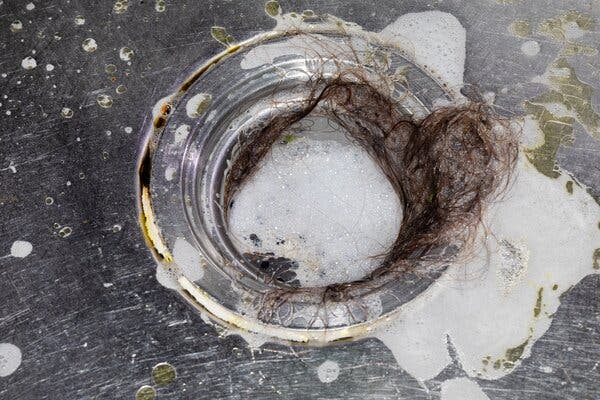
Listen to This ArticleAudio Recording by AudmTo hear more audio stories from publications like The New York Times, download Audm for iPhone or Android.Two distinguished academics walk into a restaurant in Manhattan. It is their first meeting — their first date, in fact — and the year is 2015. The man wears a down jacket against the icy winter evening. The woman has a shock of glossy white hair. The restaurant is on a cozy corner of the West Village and has foie gras on the menu. What the man doesn’t know is that the interior of his down jacket has suffered a structural failure, and the filling has massed along the bottom hem, forming a conspicuous bulge at his waist. As they greet each other, the woman perceives the bulge and asks herself: Is my date wearing a colostomy bag?They sit down to eat, but the woman is distracted. As they chat about their lives — former spouses, work, interests — the woman has “colostomy bag” on her mind. Is it or isn’t it? The two academics are of an age where such an intervention is, well, not exactly common, but not out of the realm of possibility. At the end of their dinner, the man takes the train back to Philadelphia, where he lives, and the woman returns to her apartment on the Upper West Side. Despite the enigma of the man’s midsection, the date is a success.It wasn’t until their third date that the question got resolved: no colostomy bag. “I was testing her,” Paul Rozin, one of the academics, later joked, “to see if she would put up with me.” (He wasn’t testing her. He was unaware of the bulge.) “I was worried,” said Virginia Valian, the other academic.It was fitting that an imaginary colostomy bag played a starring role in the couple’s first encounter. Paul Rozin is known for many things — he is an eminent psychologist who taught at the University of Pennsylvania for 52 years, and he has gathered honors and fellowships and published hundreds of influential papers and served on editorial boards and as chairman of the university’s department of psychology — but he is best known for his work on the topic of disgust. In the early 1980s, Rozin noticed that there was surprisingly little data available on this universal aspect of life. Odd, he thought, that of the six so-called basic emotions — anger, surprise, fear, enjoyment, sadness, disgust — the last had hardly been studied.Once you are attuned to disgust, it is everywhere. On your morning commute, you may observe a tragic smear of roadkill on the highway or shudder at the sight of a rat browsing garbage on the subway tracks. At work, you glance with suspicion at the person who neglects to wash his filthy hands after a trip to the toilet. At home, you change your child’s diaper, unclog the shower drain, empty your cat’s litter box, pop a zit, throw out the fuzzy leftovers in the fridge. If you manage to complete a single day without experiencing any form of disgust, you are either a baby or in a coma.Disgust shapes our behavior, our technology, our relationships. It is the reason we wear deodorant, use the bathroom in private and wield forks instead of eating with our bare hands. I floss my teeth as an adult because a dentist once told me as a teenager that “Brushing your teeth without flossing is like taking a shower without removing your shoes.” (Do they teach that line in dentistry school, or did he come up with it on his own? Either way, 14 words accomplished what a decade of parental nagging hadn’t.) Unpeel most etiquette guidelines, and you’ll find a web of disgust-avoidance techniques. Rules governing the emotion have existed in every culture at every time in history. And although the “input” of disgust — that is, what exactly is considered disgusting — varies from place to place, its “output” is narrow, with a characteristic facial expression (called the “gape face”) that includes a lowered jaw and often an extended tongue; sometimes it’s a wrinkled nose and a retraction of the upper lip (Jerry does it about once per episode of “Seinfeld”). The gape face is often accompanied by nausea and a desire to run away or otherwise gain distance from the offensive thing, as well as the urge to clean oneself.The more you read about the history of the emotion, the more convinced you might be that disgust is the energy powering a whole host of seemingly unrelated phenomena, from our never-ending culture wars to the existence of kosher laws to 4chan to mermaids. Disgust is a bodily experience that creeps into every corner of our social lives, a piece of evolutionary hardware designed to protect our stomachs that expanded into a system for protecting our souls.Maisie Cousins for The New York TimesDarwin was the first modern observer to drop a pebble into the scummy pond of disgust studies. In “The Expression of the Emotions in Man and Animals,” he describes a personal encounter that took place in Tierra del Fuego, where Darwin was dining on a portion of cold preserved meat at a campsite. As he ate, a “naked savage” came over and poked Darwin’s meat with a finger, showing “utter disgust at its softness.” Darwin, in turn, was disgusted at having his snack fingered by a stranger. Darwin inferred that the other man was repelled by the unusual texture of the meat, but he was less confident about the origins of his own response. The hands of the “savage,” after all, did not appear to be dirty. What was it about the poking that rendered Darwin’s food inedible? Was it the man’s nakedness? His foreignness? And why, Darwin wondered — moving on to a remembered scenario — was the sight of soup smeared in a man’s beard disgusting, even though there was “of course nothing disgusting in the soup itself”?The most important disgust accounts following Darwin come from a pair of Hungarian men born two years apart, Aurel Kolnai (born in 1900) and Andras Angyal (1902). I haven’t found any evidence that they knew each other, but it seems improbable that Angyal, whose disgust paper came out in 1941, didn’t draw from his countryman’s paper, which appeared in 1929. Strangely enough, the Angyal paper contains no reference to Kolnai. One possibility is that Angyal failed to cite his sources. A second possibility is that he was truly unaware of the earlier paper, in which case you have to wonder whether there was something so abnormally disgusting about Central Europe of the early 20th century that two strangers born there were driven to lengthy investigations of a subject no one else took seriously.A third possibility is that Angyal started reading Kolnai’s paper and gave up midway through in frustration. While brilliant, Kolnai’s writing has the density of osmium. His paper is rife with scare quotes and clauses layered in baklava-like profusion. Nonetheless, Kolnai was the first to arrive at a number of insights that are now commonly accepted in the field. He pointed to the paradox that disgusting things often hold a “curious enticement” — think of the Q-tip you inspect after withdrawing it from a waxy ear canal, or the existence of reality-TV shows about plastic surgery, or “Fear Factor.” He identified the senses of smell, taste, sight and touch as the primary sites of entry and pointed out that hearing isn’t a strong vector for disgust. “One would search in vain for any even approximately equivalent parallel in the aural sphere to something like a putrid smell, the feel of a flabby body or of a belly ripped open.”For Kolnai, the exemplary disgust object was the decomposing corpse, which illustrated to him that disgust originated not in the fact of decay but the process of it. Think of the difference between a corpse and a skeleton. Although both present evidence that death has occurred, a corpse is disgusting where a skeleton is, at worst, highly spooky. (Hamlet wouldn’t pick up a jester’s rotting head and talk to it.) Kolnai argued that the difference had to do with the dynamic nature of a decomposing corpse: the fact that it changed color and form, produced a shifting array of odors and in other ways suggested the presence of life within death.Angyal argued that disgust wasn’t strictly sensory. We might experience colors and sounds and tastes and odors as unpleasant, but they could never be disgusting on their own. As an illustration, he related a story about walking through a field and passing a shack from which a pungent smell, which he took for that of a decaying animal, pierced his nostrils. His first reaction was intense disgust. In the next moment, he discovered that he had made a mistake, and the smell was actually glue. “The feeling of disgust immediately disappeared, and the odor now seemed quite agreeable,” he wrote, “probably because of some rather pleasant associations with carpentry.” Of course, glue back then probably did come from dead animals, but the affront had been neutralized by nothing more than Angyal’s shifting mental associations.Disgust, Angyal contended, wasn’t merely smelling a bad smell; it was a visceral fear of being soiled by the smell. The closer the contact, the stronger the reaction. Angyal’s study is even more delightful when viewed in the context of its preface, which explains that the material is based on observations and conversations “not collected in any formal manner,” and that the method, “if it may be called such,” lacked objectivity and control. Reading the paper 80 years later, as a replication crisis in the sciences continues to unfold, Angyal’s humility takes on a refreshing flavor. I’m just a guy noticing some stuff, he seems to say. Let’s see where this leads.I first met Rozin at a Vietnamese restaurant on the Upper West Side in midsummer. He arrived in a bucket hat the color of Tang and a navy shirt with pinstripes. After ordering, we sat at a blond wood table and ate rice crepes piled with diverse vegetable elements. Rozin had ordered a green-papaya salad to share, and while spearing papaya he noted that “this, right now, is a form of social bonding — eating from the same bowl.” (He and a team did a study on it.) A fun thing about hanging out with a research psychologist is that he can usefully annotate all sorts of immediate lived phenomena, and in the case of Rozin, he may even have hypothesized the explanations himself. Our crepes, to take an example, were the width of basketballs — enough to feed six, easily — and yet we each polished off the jumbo portion. “Unit bias” is the heuristic that Rozin and his co-authors coined to describe the effect back in 2006. The idea is that humans tend to assume a provided unit of some entity is the proper and optimal amount to consume. This is why movie popcorn and king-size candy bars are treacherous, and possibly one reason French people — with their traditionally small portions — remain thin.Rozin, who is now 85, was born in the Flatbush neighborhood of Brooklyn to Jewish parents who, though they hadn’t attended college themselves, were cultured and artistic and pleased to discover that their son was a brainiac. He tested into a public school for gifted children, left high school early and received a full scholarship to the University of Chicago, where he matriculated just after his 16th birthday. Upon graduating, he took a joint Ph.D. at Harvard in biology and psychology, completed a postdoc at the Harvard School of Public Health and in 1963 joined the faculty of the University of Pennsylvania, where his initial experiments centered on behavior in rats and goldfish. As he quickly worked his way up from assistant professor to associate professor to full professor, Rozin decided that he was tired of animal studies and wanted to focus on bigger game.Around 1970, he turned his attention to the acquisition of reading. In Philadelphia — as in many American cities — there was a problem with kids’ learning to read. Eager to discover why, Rozin parked himself in elementary-school classes and observed something strange: A large number of children were unable to read by second grade, but those same children were always fluent in spoken English. They could name thousands of objects, and they could point to Rozin and ask, “Why is this strange man lurking in my classroom?” Compared with the vast dictionary of words filed neatly in their brains, mastering an alphabet of 26 letters would seem to be a piece of cake. Instead, it was a crisis. With a collaborator, Rozin devised an experimental curriculum that moved children through degrees of linguistic abstraction by teaching them Chinese logographs followed by a Japanese syllabary, and only then applying the same logic to English. Rozin says the system worked like a dream, but the school’s response was tepid.“The bureaucracy, the politics — I was overwhelmed,” he said. Nothing about the process of pitching and marketing and lobbying appealed to him. He calculated that it would take years to sell administrators on the curriculum and train teachers to deliver it. Instead, he and a colleague wrote several papers with the findings and walked away. “It’s the right way to teach reading,” he said nearly 50 years later, with a shrug. “As far as I know, nothing happened with it.” At the time, he wondered if maybe some other researchers would run with the idea. But Rozin was done. His mind was elsewhere, percolating on the subject he would become best known for.Rozin’s interest in disgust, he said, started with meat. Although he is now pescatarian “with some exceptions” (bacon), he was still a full-spectrum omnivore when he started puzzling over meat. Despite being one of the world’s favorite food categories — both nutritionally complete and widely considered tasty — meat is also the most tabooed food across many cultures. Rozin wasn’t interested in the health implications of meat or in its economic or environmental significance. That stuff had been studied. What he zeroed in on was a kind of affective negativity around meat. When people disliked it, they really disliked it. A rotten cut of beef evoked an entirely different reaction than a rotten apple. Why? Or rather, what? What was the difference between accidentally biting into a moldy Granny Smith and a moldy steak? A bad apple might be icky and distasteful, but befouled meat caused a related, but totally distinct, sensation cluster of contamination, queasiness and defilement.‘Now I’m going to take this sterilized, dead cockroach, it’s perfectly safe, and drop it in this juice glass.’It was the Angyal paper that really got Rozin’s neurons firing, and on its foundation he began to construct the theory that would go on to inform — and this is no exaggeration — every subsequent attempt at defining and understanding disgust over the following decades. In Rozin’s view, the emotion was all about food. It began with the fact that humans have immense dietary flexibility. Unlike koalas, who eat almost nothing but eucalyptus leaves, humans must gaze at a vast range of eating options and figure out what to put in our mouths. (The phrase “omnivore’s dilemma” is one of Rozin’s many coinages. Michael Pollan later borrowed it.) Disgust, he argued, evolved as one of the great determinants of what to eat: If a person had zero sense of disgust, she would probably eat something gross and die. On the other hand, if a person was too easily disgusted, she would probably fail to consume enough calories and would also die. It was best to be somewhere in the middle, approaching food with a healthful blend of neophobia (fear of the new) and neophilia (love of the new). It was Rozin’s contention that all forms of disgust grew from our revulsion at the prospect of ingesting substances that we shouldn’t, like worms or feces.The focus on food makes intuitive sense. After all, we register disgust in the form of nausea or vomiting — nausea being the body’s cue to stop eating and vomiting our way of hitting the “undo” button on whatever we just ate. But if disgust were solely a biological phenomenon, it would look the same across all cultures, and it does not. Nor does it explain why we experience disgust when confronted with topics like bestiality or incest, or the smell of a stinky armpit, or the idea of being submerged in a pit of cockroaches. None of these have anything to do with food. Rozin’s next project was to figure out what linked all of these disgust elicitors. What could they possibly have in common that caused a unified response?Maisie Cousins for The New York TimesIn 1986, Rozin and two colleagues published a landmark paper called “Operation of the Laws of Sympathetic Magic in Disgust and Other Domains,” which argued that the emotion was a more complicated phenomenon than Darwin or the Hungarians or even Rozin himself had ventured. The paper was based on a series of simple but illuminating experiments. In one, a participant was invited to sit at a table in a tidy lab room. The experimenter, seated next to the participant, unwrapped brand-new disposable cups and placed them in front of the subject. The experimenter then opened a new carton of juice and poured a bit into the two cups. The participant was asked to sip from each cup. So far, so good. Next, the experimenter produced a tray with a sterilized dead cockroach in a plastic cup. “Now I’m going to take this sterilized, dead cockroach, it’s perfectly safe, and drop it in this juice glass,” the experimenter told the participant. The roach was dropped into one cup of juice, stirred with a forceps and then removed. As a control, the experimenter did the same with a piece of plastic, dipping it into the other cup. Now the participants were asked which cup they’d rather sip from. The results were overwhelming (and, frankly, predictable): Almost nobody wanted the “roached” juice. A brief moment of contact with an offensive — but not technically harmful — object had ruined it.In another experiment, participants were asked to eat a square of chocolate fudge presented on a paper plate. Soon after, two additional pieces of the same fudge were produced: one in the form of “a disc or muffin” and the other shaped like a “surprisingly realistic piece of dog feces.” The subjects were asked to take a bite of their preferred piece. Again, nearly no one wanted the aversive stimuli, which is how psychologists refer to “nasty stuff.” (When asked about the outliers who opted for the nasty stuff, Rozin waved a hand and said, “There’s always a macho person.”).css-1xzcza9{list-style-type:disc;padding-inline-start:1em;}.css-3btd0c{font-family:nyt-franklin,helvetica,arial,sans-serif;font-size:1rem;line-height:1.375rem;color:#333;margin-bottom:0.78125rem;}@media (min-width:740px){.css-3btd0c{font-size:1.0625rem;line-height:1.5rem;margin-bottom:0.9375rem;}}.css-3btd0c strong{font-weight:600;}.css-3btd0c em{font-style:italic;}.css-1kpebx{margin:0 auto;font-family:nyt-franklin,helvetica,arial,sans-serif;font-weight:700;font-size:1.125rem;line-height:1.3125rem;color:#121212;}#NYT_BELOW_MAIN_CONTENT_REGION .css-1kpebx{font-family:nyt-cheltenham,georgia,’times new roman’,times,serif;font-weight:700;font-size:1.375rem;line-height:1.625rem;}@media (min-width:740px){#NYT_BELOW_MAIN_CONTENT_REGION .css-1kpebx{font-size:1.6875rem;line-height:1.875rem;}}@media (min-width:740px){.css-1kpebx{font-size:1.25rem;line-height:1.4375rem;}}.css-1gtxqqv{margin-bottom:0;}.css-1g3vlj0{font-family:nyt-franklin,helvetica,arial,sans-serif;font-size:1rem;line-height:1.375rem;color:#333;margin-bottom:0.78125rem;}@media (min-width:740px){.css-1g3vlj0{font-size:1.0625rem;line-height:1.5rem;margin-bottom:0.9375rem;}}.css-1g3vlj0 strong{font-weight:600;}.css-1g3vlj0 em{font-style:italic;}.css-1g3vlj0{margin-bottom:0;margin-top:0.25rem;}.css-19zsuqr{display:block;margin-bottom:0.9375rem;}.css-12vbvwq{background-color:white;border:1px solid #e2e2e2;width:calc(100% – 40px);max-width:600px;margin:1.5rem auto 1.9rem;padding:15px;box-sizing:border-box;}@media (min-width:740px){.css-12vbvwq{padding:20px;width:100%;}}.css-12vbvwq:focus{outline:1px solid #e2e2e2;}#NYT_BELOW_MAIN_CONTENT_REGION .css-12vbvwq{border:none;padding:10px 0 0;border-top:2px solid #121212;}.css-12vbvwq[data-truncated] .css-rdoyk0{-webkit-transform:rotate(0deg);-ms-transform:rotate(0deg);transform:rotate(0deg);}.css-12vbvwq[data-truncated] .css-eb027h{max-height:300px;overflow:hidden;-webkit-transition:none;transition:none;}.css-12vbvwq[data-truncated] .css-5gimkt:after{content:’See more’;}.css-12vbvwq[data-truncated] .css-6mllg9{opacity:1;}.css-qjk116{margin:0 auto;overflow:hidden;}.css-qjk116 strong{font-weight:700;}.css-qjk116 em{font-style:italic;}.css-qjk116 a{color:#326891;-webkit-text-decoration:underline;text-decoration:underline;text-underline-offset:1px;-webkit-text-decoration-thickness:1px;text-decoration-thickness:1px;-webkit-text-decoration-color:#326891;text-decoration-color:#326891;}.css-qjk116 a:visited{color:#326891;-webkit-text-decoration-color:#326891;text-decoration-color:#326891;}.css-qjk116 a:hover{-webkit-text-decoration:none;text-decoration:none;}These results might seem obvious, but the experiments were designed rather craftily to elicit a disgust response rather than any of the other typical food-rejection responses, which include distaste (rejecting something because it looks or smells bad, like broccoli if you’re a broccoli hater) or danger (rejecting something because it might harm you, like a poisonous mushroom or a nonsterilized cockroach) or inappropriateness (rejecting something because it is not considered food, like tree bark or sand). Disgust was unlike the other three responses in one peculiar fashion: It could be motivated primarily by ideational factors — by what a person knew, or thought she knew, about the object at hand.Until this point, sympathetic magic had been a term psychologists used to account for magical belief systems in traditional cultures, such as hunter-gatherer societies. Sympathetic magic features a handful of iron laws. One is the law of contagion, or “Once in contact, always in contact.” The sterilized roach juice demonstrated this law; if you stuck the “roached” juice in a freezer and offered it to participants a year later, they still wouldn’t drink it. A second is the law of similarity, or “Things that appear similar are similar. Appearance equals reality.” That would be the dog-doo fudge.Rozin and his colleagues went on to invent other scenarios to test their theories. Would people drink apple juice if it was served in a brand-new bedpan? Would they sip a favorite soup if it had been stirred by a used but “thoroughly washed” fly swatter? Would they touch a new, unused tampon to their lips? Would they wear an actual vintage Nazi hat with a swastika on it?The 1986 paper was the equivalent of a sculptor’s cutting down a statue’s raw form from a mammoth block of marble, and the papers Rozin published in its aftermath were the chisel-maneuvering that revealed a detailed anatomy underneath. In work published the next year, he observed that some of our disgust responses might be adaptations designed to avoid pathogens. Under this logic, a person who swerves to avoid the blast radius of a sick person’s sneeze is likely to survive and produce offspring who will themselves avoid sneeze radii.Rozin also elaborated what he called the “animal reminder” theory, which posits that disgust is a way to strenuously ignore the mountain of evidence that humans are, in fact, mammals who eat, excrete, bleed, rut and die just like every other mammal. Our hygiene laws require that we avoid playing with our own feces, as dogs do. Our sexual laws require that we refrain from having sex with our siblings, like cats, or copulating with the dead, like certain snakes, or cannibalizing our children, like rabbits. Adhering to such purity rules goes a long way toward minimizing awareness that our bodily temple is only a meat suit. One of Rozin’s most intriguing theories is that disgust operates as a foreshadowing of our own deaths. Every encounter with moldy meat is a sneak preview of the fact that we will all, at some point, become moldy meat ourselves.Maisie Cousins for The New York TimesBoth the reality-puncturing and social elements of disgust make it ripe for comedy. Take this monologue from a 1995 “Seinfeld” episode:Jerry: “Now, I was thinking the other day about hair — and that the weird thing about it is that people will touch other people’s hair. You will actually kiss another human being, right on the head. But, if one of those hairs should somehow be able to get out of that skull, and go off on its own, it is now the vilest, most disgusting thing that you can encounter. The same hair. People freak out. There was a hair in the egg salad!”Seinfeld’s point about rogue hairs also goes for fingernails, dandruff and other anatomical flotsam, whether it be our own (grosser the longer we’ve been separated from it) or someone else’s (always gross). What we consider innocuous when attached to the body or housed snugly within it — snot, spit, pee — becomes a pollutant only when it bursts free from its container.In 1994, Rozin and two co-authors came up with a 32-item disgust scale to measure a person’s sensitivity to the emotion. By this time, he was proposing seven domains of disgust: food, animals, body products, sexual deviance, what he called “body-envelope violations” (i.e., gore), poor hygiene and contact with death. The first portion of the test consisted of true-or-false statements like “I might be willing to try eating monkey meat, under some circumstances” and “It would not upset me at all to watch a person with a glass eye take the eye out of the socket.” The second portion asked that a person rate how disgusting she might find certain experiences, such as “You discover that a friend of yours changes underwear only once a week” or “You are walking barefoot on concrete, and you step on an earthworm.”At 7.5, Rozin’s own score was much lower than the average of 17. This was borne out in our interactions. At dinner one night, Rozin pulled out his iPhone to share photos of a meal that one of his sons, an amateur chef, had prepared: deep-fried tarantulas, crickets in chili sauce, mealworms sautéed in olive oil. Dessert was a plate of imitation turds molded from chocolate cake. “One of them was coiled,” Rozin said of the cakes, zooming in. “It was a lot of fun.”Later that night, the topic of funerals came around. Rozin explained that he hadn’t yet decided what to do with himself, so to speak, after his own death. “Historically, most cannibals ate their ancestors,” he said. “I mean, they ate them after they died; they didn’t kill them.” He acknowledged that ritual cannibalism held little appeal to the average person, but he thought the underlying concept had a certain beauty. “When my ex-wife died, she was cremated, and we were burying her ashes under a tree in the backyard,” he said. “And I felt I had to eat some.”“Why?” I asked, as Rozin buttered a piece of baguette.“To assimilate some of the person I loved very much,” Rozin replied, as though it were obvious. “This is good bread, by the way.”One constant of disgust discourse over the past two centuries is that people have loved to claim that their period is the most disgusting period that ever existed. Obviously this can’t be true. It’s unthinkable that any era since the advent of modern sanitation could be more disgusting than the thousands of years preceding it. Yes, it is now easy to buy vomit-flavored jelly beans at your local Walmart and to watch internet videos of people being decapitated. But these are elective activities. The scenarios that perhaps carry the highest disgust payload — like caring for the sick — now largely occur in institutions, not homes. Garbage is sealed in odor-resistant bags. Our waste vanishes seconds after its production, whisked down an invisible network of pipes to tanks and treatment facilities.“Part of disgust is the very awareness of being disgusted, the consciousness of itself,” the scholar William Ian Miller wrote in 1997. “Disgust necessarily involves particular thoughts, characteristically very intrusive and unriddable thoughts about the repugnance of that which is its object.” In other words, you can’t be disgusted without knowing that you’re disgusted. Relatedly, there’s no unambiguous evidence that nonhuman animals experience disgust. Distaste, yes. Dislike, yes. But the capacity to be disgusted is, as Miller put it, “human and humanizing.” Those with ultrahigh thresholds are those whom “we think of as belonging to somewhat different categories: protohuman like children, subhuman like the mad or suprahuman like saints.” The 14th-century saint Catherine of Siena is famous for drinking the pus of a woman’s open sore in an act of holy self-abasement.The theorist Sianne Ngai has written about disgust as a social feeling. A person in the thick of it will often want her experience confirmed by other people. (As in: “Oh, my God, this cheese smells disgusting. Here, smell it.”) More recently, researchers have shown that disgust is an accurate predictor of political orientation, with conservatives displaying a far higher disgust response than liberals. In a 2014 study, participants were shown a range of images — some disgusting, some not — while having their brain responses monitored. With great success, researchers could predict a person’s political orientation based on analysis of this f.M.R.I. data.Rozin’s most famous student is Jonathan Haidt, the social psychologist and co-author of “The Coddling of the American Mind,” who received his Ph.D. from the University of Pennsylvania and collaborated with Rozin on a number of papers. “I came to see him because I was studying moral psychology, and I hadn’t really thought about disgust,” Haidt told me over the phone. “But when I started reading ethnographies, I saw they almost all had purity and pollution norms. Tons of rules — about menstruation, how you handle corpses, sexual taboos, food taboos.” Western societies, he noticed, were the global exception in their lower regulation of disgust-related activities. But then, this wasn’t entirely true, Haidt realized; within America, there were plenty of groups that legislated bodily practices related to disgust, like Orthodox Jews and Catholics and, to a lesser degree, social conservatives. It was only among Western secular progressives that disgust remained somewhat lawless.Maisie Cousins for The New York TimesHaidt continued to zero in on the political uses of the word, noticing that Americans often listed as “disgusting” such things as racism, brutality, hypocrisy and ambulance-chasing lawyers. “Liberals say that conservatives are disgusting. Conservatives say that welfare cheaters are disgusting,” he wrote in a paper with Rozin and two others in 1997. What was that about? Was the use of “disgust” for such a wide range of activities simply a metaphoric quirk of the English language? Did the pundits who sat around all day expressing disgust on TV have to keep a vomiting bucket next to their desks, or were they just being linguistically imprecise?Neither, exactly. When Haidt and Rozin looked at other languages, they found that many contained words with a compound meaning equivalent to “disgust” — single words that could be applied to both legislation and diarrhea. German had ekel. Japanese had ken’o. Bengali had ghenna. Hebrew had go-al. When an Israeli woman was asked what situations made her feel go-al, she cited “a horrible accident and you see body parts all over the place” and a person “who just picked his nose and ate it later.” But she also said that “If you really dislike a politician, you would use the word go-al.”If the initial function of disgust was like a piece of caution tape plastered over our mouths, the tape had — over time — wound itself around our other holes (to regulate sexual activity) and our minds (to regulate moral activity). This potency of the emotion is such that a single anecdote can taint an entire presidential campaign. You may remember a 2019 story about how Senator Amy Klobuchar once ate a salad with a comb. According to the article, an aide purchased a salad for Klobuchar at an airport. Later, when the senator wanted to eat her salad on the plane, she discovered that there were no utensils available. After berating the aide, Klobuchar retrieved a comb from her purse and (somehow) ate her salad with it. When finished, she handed the comb to her aide with orders to clean it.The comb story was part of a larger narrative about the senator’s treatment of her staff, which Klobuchar bravely tried to spin into evidence of her exactitude. You have to admire the effort, but the senator’s defense was useless. Nobody came away thinking that her mistake was in having high expectations. Her mistake was in doing something gross in front of multiple witnesses. That image was indelible. You couldn’t read the story without imagining the comb, a hair perhaps still caught in its teeth, plunging into an oily airport salad. Like all disgusting stories, it had a contaminating effect. Now the anecdote was in you, the voter. The taste of the comb was upon your own tongue, and you had no choice but to resent Klobuchar for putting it there.The episode belongs to a list of disgust-related political scandals: the pubic hair on the Coke can, the stain on the blue Gap dress. On a recent weekend I passed a truck in Queens with a giant bumper sticker that said, “Any Burning or Disrespecting of the American Flag and the driver of this truck will get out and knock you the [expletive] OUT.” This was a perfect Haidt litmus test. A liberal might walk past the truck and think some version of: This guy — and it’s definitely a guy — has an anger problem. A conservative might walk past the truck and think: This guy — and it’s definitely a guy — must really love our country. As Haidt put it: “There are people for whom a flag is merely a piece of cloth, but for most people, a flag is not a piece of cloth. It has a sacred essence.” If a person views the American flag as a rectangle of fabric, it is unfathomable to be disgusted by its hypothetical desecration. If a person views the flag as a sacred symbol, it is unfathomable to not feel this way.These two types of human — which broadly map onto “liberal” and “conservative,” or “relatively disgust-insensitive” and “relatively disgust-sensitive” — live in separate moral matrices. If it seems bizarre that disgust sensitivity and politics should be so closely correlated, it’s important to remember that disgust sensitivity is really measuring our feelings about purity and pollution. And these, in turn, contribute to our construction of moral systems, and it is our moral systems that guide our political orientations.To ward off disgust, we enact purity rites, like rinsing the dirt from our lettuce or “canceling” a semipublic figure who posted a racist tweet when she was a teenager. We monitor the borders of mouth, body and nation. In “Mein Kampf,” Adolf Hitler described Jews as like “a maggot in a rotting body” and “a noxious bacillus.” Another category of humankind consistently deemed repulsive is women; to take one of several zillion illustrations, one reason long skirts were a dominant fashion in Western Europe for centuries, according to the fashion historian Anne Hollander, was to conceal the bottom half of the body and by extension its sexual organs. Mermaids aren’t just a folkloric figure but the expression, Hollander argues, of a horrified disgust at the lower female anatomy, which is seen as amphibiously moist and monstrous.But purification rites may also be healthful (washing your hands) or ritually significant (baptism). We will never disentangle ourselves from the instinct to purify, even as we name different reasons for doing it: justice, patriotism, progress, tradition, freedom, public health, God, science. Beneath it all will be a confused omnivore, stumbling upon a dewy mushroom in the forest — with no clue what will happen if she eats it.One of Rozin’s greatest coinages is “benign masochism,” which describes any experience that is pleasurable not despite being unpleasant but because of its unpleasantness. Horror movies, roller coasters, deep tissue massage, bungee jumping, hot chili peppers, frigid showers and tragic novels all fit into the category. I can think of some additional edge cases, like acupuncture or the films of John Waters. Rozin pointed out, during dinner one night, that “many people like to look at their own [expletive] after they make it in the toilet. There is a fascination. All the humor. It’s probably related to benign masochism.”The idea is that these experiences offer a similar excitement, in that they cause fear or pain or repulsion without posing any real existential threat. Our ability to withstand “safe” menaces yields a gratifying sense of mastery. It’s a meta-experience: When you gobble a ghost pepper or cue up “The Exorcist,” you get to experience yourself experiencing something, and you extract enjoyment from your ability to forge a gap between what should feel bad but instead, through sheer will, feels fun.As with disgust, benign masochism is a uniquely human experience. There’s no evidence that dolphins or coyotes or elephants indulge in it. The paper Rozin and a team wrote about it took me several days to comprehend and served as an example of the subject at hand: an immense irritant with only abstract and hard-won rewards. Chili peppers make you sweat; tragic novels make you cry; academic papers embalm you in a formaldehyde of words and then give you a splendid phrase to use for the rest of your life.My personal mother lode of benign masochism — and perhaps yours, in the near future — is the F.D.A.’s “Food Defect Levels Handbook,” which is designed for food manufacturers but is available online for anyone to browse, which I do often. It outlines the amount of disgusting matter in a given food that will trigger enforcement action — meaning that any less is just fine. Commercially produced peanut butter, the site will tell you, is allowed to contain anything fewer than 30 insect fragments and one rodent hair per 100 grams. A can of mushrooms may house fewer than 20 maggots. Fewer than a quarter of salt-cured olives in a package may be moldy. A clever entrepreneur could establish a weight-loss program entirely on the basis of alerting people to the larvae and dry rot and beetle eggs that adulterate their favorite foods. But who wants to live that way? The best bulwark against disgust — the only bulwark against so much of life’s wretchedness — is, in the end, denial.Molly Young is a contributing writer for the magazine and a book critic for The New York Times.

Read more →

ICU Liberty Singers: Online choir's first meeting was 'happiest day'

An online choir of intensive care unit staff has met in real life for the very first time – almost a year after attempting to reach Christmas number one.The 100-strong group covered The Police’s Every Breath You Take in December 2020 to raise money to support the mental health of ICU staff, who had spent much of the year battling coronavirus.Choir director, Kari Olsen-Porthouse, from Nottinghamshire, reflected: “We didn’t make the top 40 and we didn’t really care. We’d made something lovely out of a situation that was utterly awful.”Watch what happened when ICU Liberty Singers – which includes nurses, doctors and health professionals – had its first in-person get-together last month.Available to UK viewers only.Video journalist: Alex ThorpFollow BBC East Midlands on Facebook, on Twitter, or on Instagram. Send your story ideas to eastmidsnews@bbc.co.uk.

Read more →

‘Magic’ Weight-Loss Pills and Covid Cures: Dr. Oz Under the Microscope

The celebrity physician, a candidate in Pennsylvania’s Republican primary for Senate, has a long history of dispensing dubious medical advice on his daytime show and on Fox News.A wealth of evidence now shows that the malaria drugs hydroxychloroquine and chloroquine were not effective at treating Covid-19 and carried potential risks.But in the early months of the pandemic, Dr. Mehmet Oz, the celebrity physician with a daytime TV show, positioned himself as one of the chief promoters of the drugs on Fox News. In the same be-the-best-you tone that he used to promote miracle weight-loss cures on “The Dr. Oz Show,” he elevated limited studies that he said showed wondrous promise.His “jaw dropped,” he said, while reviewing one tiny study from France, calling it “a game changer.” In all, Dr. Oz promoted chloroquine and hydroxychloroquine in more than 25 appearances on Fox in March and April 2020.When a Veterans Affairs study showed that Covid-19 patients treated with hydroxychloroquine were more likely to die than untreated patients, that advocacy came to an abrupt halt.“We are better off waiting for the randomized trials” that Dr. Anthony S. Fauci, the nation’s leading infectious disease expert, had been asking for, Dr. Oz told Fox viewers.As Dr. Oz jumped last month into the Republican primary for Senate in Pennsylvania, where his celebrity gives him an important advantage in a crucial race, he tied his candidacy to the politics of the pandemic. He appealed to conservatives’ anger at mandates and shutdowns, and at the “people in charge” who, he said, “took away our freedom.”But the entry into the race of the Cleveland-born heart surgeon, a son of Turkish immigrants who has been the host of “The Dr. Oz Show” since 2009, also brought renewed scrutiny to the blemishes on his record as one of America’s most famous doctors: his long history of dispensing dubious medical advice.In ebullient language, he has often made sweeping claims based on thin evidence, which in multiple cases, like that of hydroxychloroquine, unraveled when studies he relied on were shown to be flawed.Over the years, Dr. Oz, 61, has faced a bipartisan scolding before a Senate committee over claims he made about weight-loss pills, as well as the opposition of some of his physician peers, including a group of 10 doctors who sought his firing from Columbia University’s medical faculty in 2015, arguing that he had “repeatedly shown disdain for science and for evidence-based medicine.” Dr. Oz questioned his critics’ motives and Columbia took no action, saying it did not regulate faculty members’ participation in public discourse.He has warned parents that apple juice contained unsafe levels of arsenic, advice that the Food and Drug Administration called “irresponsible and misleading.” In 2013, he warned women that carrying cellphones in their bras could cause breast cancer, a claim without scientific merit. In 2014, the British Medical Journal analyzed 80 recommendations on Dr. Oz’s show, and concluded that fewer than half were supported by evidence.Two researchers who worked on “The Dr. Oz Show” for a year during a break from medical school in the 2010s said in interviews that the show’s producers had originated most of its topics, often getting their ideas from the internet. But the researchers, whose job was to vet medical claims on the show, said that they had little power to push back, and that they regularly questioned the show’s ethics to one another and discussed quitting in protest.“Our jobs seemed to be endless fighting with producers and being overruled,” said one of the former researchers, both of whom are now physicians and insisted on anonymity because they said they feared that publicly criticizing him could jeopardize their careers.According to the former researchers, the show’s producers conjured an imaginary, typical viewer named “Shirley,” a woman whose children were grown and who had time to focus on herself. The standard advice for many ailments covered on the show — obesity, sluggishness, back pain — was exercise, the researchers said. But there was a quota on how often exercise could be mentioned.Shirley watched daytime TV and didn’t want to exercise, the researchers said they were told.Dr. Oz’s on-air medical advice on both his show and Fox News has taken on greater significance as he enters the political realm. His promotion of hydroxychloroquine grabbed President Donald J. Trump’s attention and contributed to early misinformation about the virus on the right.“Information can harm — that’s the key thing we need to appreciate here,” said Harald Schmidt, an assistant professor of medical ethics and health policy at the University of Pennsylvania. “His track record is pretty concerning. What we’ve seen so far does not instill confidence that this will help reasonable politics.”Dr. Oz, kneeling, rose to fame as a medical expert on Oprah Winfrey’s show.Jemal Countess/ Getty ImagesDr. Oz declined to to be interviewed for this article. His campaign manager, Casey Contres, said in a statement that the doctor had always put patients first and fought the “established grain” in medicine.“Dr. Oz believes it was truly unfortunate that Covid-19 became political and an excuse for the government and many in the corporate media to control the means of communication to suspend debate,” Mr. Contres added. “From the start, therapeutics meant to help with Covid-19 were regularly discounted by the medical establishment, and many great ideas were squashed and discredited.”Over the years, when pressed about offering unproven medical advice, Dr. Oz said his goal was to “empower” Americans to take control of their health. Grilled by senators in 2014 about false claims he made for weight-loss products, he said, “My job on the show, I feel, is to be a cheerleader for the audience.”He also said it was his right to use unscientific language. “When I feel as a host of a show that I can’t use words that are flowery,” he told the senators, “I feel like I’ve been disenfranchised, like my power’s been taken away.”In using the politics of the pandemic to shape his campaign for an open seat — one pivotal to Senate control in the midterms — Dr. Oz may be in tune with primary voters in Pennsylvania. The race has drawn candidates echoing Mr. Trump’s lie that the 2020 election was stolen, including Jeff Bartos, a developer, and Carla Sands, a former ambassador. David McCormick, a hedge-fund executive married to a former Trump administration official, is expected to join the field soon.The criticism Dr. Oz has received over the years for spreading misinformation has done little to tarnish his celebrity, as measured by his long-running TV program, whose distributor announced that the show would end in January when its host departs.Still, misinformation about the coronavirus emanating from the Trump White House and conservative news sites helped politicize the nation’s response to the pandemic, with deadly consequences in many Republican areas of the country.Although Dr. Oz spoke strongly in favor of masks and vaccines on Fox, his championing of unproven treatments early on sharply contradicted infectious-disease experts like Dr. Fauci who urged caution.In Pennsylvania, as around the country, counties that voted by large margins for Mr. Trump in 2020 have had lower vaccination rates and higher death rates from Covid than counties that voted heavily for President Biden.Yet at one point early in the pandemic, he said that reopening schools was an “appetizing opportunity” that might cause the deaths of “only” 2 to 3 percent of the population. He later walked back the statement.“I can’t believe he took the same oath that I did when we graduated,” said Dr. Val Arkoosh, an anesthesiologist and county official in the Philadelphia suburbs who is running in the Democratic primary for Senate. “That oath is about first doing no harm and always putting your patients first. I just think he’s a quack, to be honest.”In reply to Dr. Arkoosh, Mr. Contres said that Dr. Oz had performed thousands of heart surgeries and had “helped countless patients live a better life.”Dr. Oz testifying before the Senate subcommittee on consumer protection in 2014, when senators pressed him on claims he had made about weight-loss pills.Tom Williams/CQ Roll CallIn Dr. Oz’s 2014 appearance before the Senate subcommittee on consumer protection, Claire McCaskill, then a Democratic senator from Missouri, quoted a bit of his TV sales patter back to him: “You may think magic is make-believe, but this little bean has scientists saying they’ve found the magic weight-loss cure for every body type — it’s green coffee extract.”Dr. Oz admitted to the senators that his claims often “don’t have the scientific muster to present as fact.” A study he had cited about green-coffee bean extract was later retracted and described by federal regulators as “hopelessly flawed.” The supplier of the extract paid $3.5 million to settle charges by the Federal Trade Commission.Dr. David Gorski, a surgery professor at Wayne State University and longtime critic of alternative medicine, said Dr. Oz’s emergence as a Fox News authority on the coronavirus was no surprise him.“He could have gone the route of trying to be more reasonable and careful, vetting information, trying to reassure people where the science was still unsettled,” Dr. Gorski said. “But of course, that wouldn’t be Dr. Oz’s brand.”Early in the pandemic, on March 20, 2020, Dr. Oz appeared on several Fox News shows trumpeting what he called “massive, massive news” — a small study by a divisive French researcher, Dr. Didier Raoult, who claimed a 100 percent cure rate after treating coronavirus patients with hydroxychloroquine and azithromycin, or Z-Pak. At the time, with Covid-19 cases and deaths rising rapidly, hydroxychloroquine, an anti-malarial treatment, was being studied in multiple countries and adopted by hospitals without much evidence. Mr. Trump hyped it repeatedly at White House news conferences as part of his effort to minimize the crisis. Dr. Oz communicated with Trump advisers about speeding the drug’s approval to treat Covid. On March 28, the F.D.A. authorized its emergency use. On Fox, Dr. Oz noted that the Raoult study, with just 36 participants, was not a clinical trial, but his enthusiasm overran his caution. The study was the “most impressive bit of news on this entire pandemic front,” he gushed. On April 1, as Dr. Oz called on Gov. Andrew M. Cuomo of New York to lift restrictions on hydroxychloroquine, a public health expert, Dr. Ashish Jha of Brown University, cautioned Fox viewers that “the facts are just not in” on the drug.There was much confusion in the early days of the crisis about how the virus spread and how to slow it, with some expert views reversed by new information. The Raoult study quickly fell apart. Only six patients had received the two-drug combination, all with mild or early infections. One who was reported “virologically cured” on Day 6 was found to have the virus two days later. Six other patients treated only with hydroxychloroquine were omitted from the final results, including one who died and three others who were transferred to intensive care.On April 3, the board of the research journal that initially published the study said it did not meet the “expected standard.” In June 2020, the F.D.A. revoked emergency authorization of hydroxychloroquine to treat Covid-19. That November, the National Institutes of Health concluded that the drug held no benefit in treating Covid-19.By then, Dr. Oz’s once-daily appearances on Fox had tapered off. He was rarely seen on the network this year. But he returned to Sean Hannity’s show on Nov. 30 to announce his candidacy, seizing the opportunity to push back at critics of his medical career.“Doctors are about solutions,” he said. “But instead, people with good ideas are shamed, they’re silenced, they’re bullied, they’re canceled.”Susan C. Beachy

Read more →

Why Older Women Face Greater Financial Hardship Than Older Men

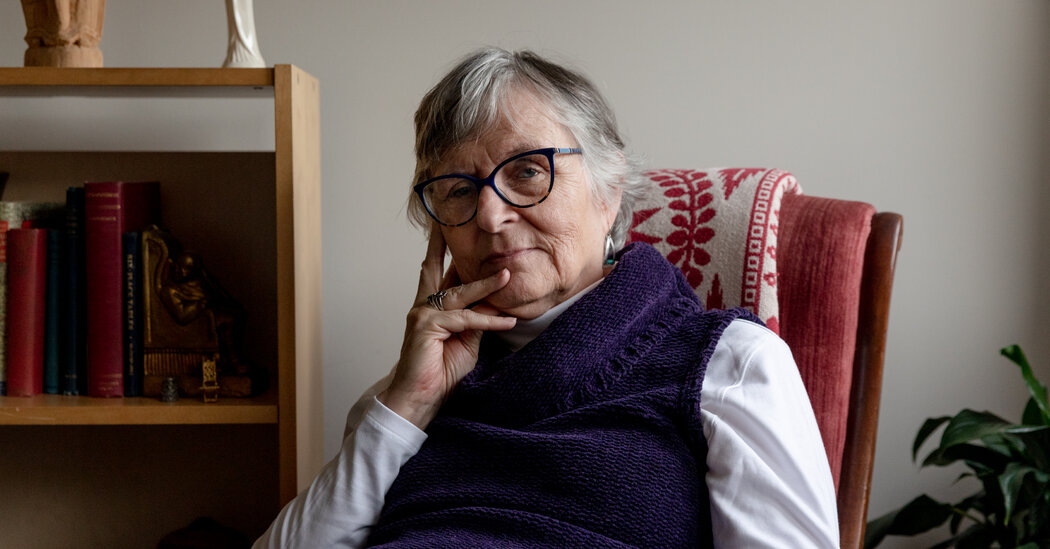
In a troubling picture, American women are looking at a rockier road to secure retirement than their male counterparts.Susan Hartt describes herself as an incorrigible optimist, drawn to change and challenge. After a long, successful career in marketing and public relations, she had reason to feel financially confident in her older years.But three years ago, a bank foreclosed on her modest house in Hamden, Conn. “I don’t think I’ve ever been as anxious in my life,” she recalled.Ms. Hartt, 79, had encountered a combination of adversities. After a late-life divorce she called “amicable and equitable,” she had no retirement plan; it had seemed unnecessary because her husband had a “substantial” 401(k). Successive jobs had grown less lucrative, and her freelance work dried up during the recession.Soon, temporarily living in an apartment owned by friends, she was selling off possessions — a collection of stained-glass lamps, first-edition books, her piano — partly to downsize, but also to raise money.A recent AARP survey found that almost 30 percent of women over age 65 reported feeling very or somewhat worried about their current financial situations (compared with 20 percent of men that age).Despite gains in education, employment and earnings in recent decades, American women still face a rockier road to secure retirement than men. Yet they live longer and are more apt to encounter illness, disability and the eventual need for expensive long-term care. It’s a troubling picture.“Women are considerably more likely to experience poverty in retirement than men,” said Richard Johnson, an economist at the Urban Institute in Washington, D.C.In 2020, according to Dr. Johnson’s analysis, 10 percent of women over 65 lived in poverty, compared with 8 percent of men, with far higher rates for women who were older, of color or unmarried. The poverty rate for unmarried Black women over 65, for instance, topped 20 percent.Even women who don’t sink below the federal poverty line — $12,413 last year for a one-person household — face economic precariousness. A quarter of working women over 55 are at risk of being among the working poor, defined as those who earn below two-thirds of the median hourly wage, or $15.29 an hour last year. Only 15 percent of men fell into that category, according to researchers at The New School in New York.Small wonder that a quarter of women over 65 consider an unexpected $1,000 expense “a major setback,” as the AARP survey showed.Anne Turley, 68, a veteran film and video editor, is getting by after some scary years of underemployment. She relies on about $1,200 in monthly Social Security benefits that she claimed early, at 62; a reverse mortgage on her house in Los Angeles; and the rent from a small studio in her backyard.But she recently needed a new hot-water heater and about $4,000 of dental work. “Every month is ‘How do I pay this?’ ‘How can I find money for that?’” she said.Economists attribute much of the retirement gender gap to “the motherhood penalty.” Women who raise children have fewer and lower-paid years in the work force than men or childless women, and “they never completely make up for the deficits,” said Matthew Rutledge, a research fellow at the Center for Retirement Research at Boston College.Social Security calculates benefits based on workers’ highest-earning years, he pointed out, and mothers are apt to have some zero-earning years that bring the average down, along with years of part-time work. Social Security offsets only part of the penalty.But much of the discrepancy in financial stability at older ages stems from a major demographic shift: Women now spend much less of their adulthoods in marriages.That is partly because women are increasingly marrying later, or not at all. But “gray divorces” — among people over 50 — doubled between 1990 and 2010, even as divorces declined in younger cohorts, said I-Fen Lin, a sociologist at Bowling Green State University in Ohio.Gray divorce now accounts for one in three U.S. divorces, Dr. Lin said. Although her research shows the rate holding steady, the number of divorced older people keeps growing as the population ages.Divorces in late middle age may improve women’s emotional well-being — they initiate them more often than men — but frequently devastate their financial health.Marriage combines incomes, reduces living costs and works “to smooth out the fluctuations, the job losses, the periods of disability, the years you took off to care for an elderly parent,” Dr. Rutledge said. “It’s almost like getting an insurance policy.”Losing that insurance takes a financial toll on women at any age, but after 50 “there’s less time to recoup,” Dr. Lin explained. “It’s hard to get back into the labor force, if you’re not working. And you don’t have as many years left to work and recover.” Moreover, older working women face both age and gender discrimination.Cynthia Palazzo, 61, spent most of her married years raising three sons in Akron, Ohio. When she and her husband started a manufacturing company, she was paid for her work there but never opened a retirement account, because “all our money was going back into the business.”When she divorced after nearly 30 years, Ms. Palazzo felt lucky to land a $17-an-hour job in medical billing and then, after being laid off in June, to quickly find another. With spousal support, “I’m OK now,” she said.But she bought a condo, and “it freaks me out that I’m going to have a mortgage until I’m 80,” she said. “I basically started life over at 54.”After gray divorce, women’s standard of living fell by 45 percent, Dr. Lin and her co-author found, while men’s decreased by just 21 percent. Repartnering, either through remarriage or cohabitation, helped divorced older women regain their financial footing, but only 22 percent of women repartnered, compared with 37 percent of men. (In Ms. Palazzo’s case: “Not going to happen.”)Changes in Social Security eligibility and benefits could reduce some of this inequity. The benefit for a divorced spouse, for instance, is half what a widowed spouse can claim. Caregiver credits could partially compensate for years spent in child rearing or elder care.“The basic rules were written in the 1930s,” Dr. Rutledge said. “They don’t recognize women’s increased employment. They don’t recognize that people don’t stay married for good.” Mandated retirement savings programs (Australia has one) would also help workers whose employers don’t offer them.It’s possible to see progress in these patterns. “It’s good news that women are working and living independently, emerging as independent economic actors,” said Teresa Ghilarducci, an economist at The New School, noting that younger women were narrowing the gender gap in earnings and savings.But many women currently approaching retirement may struggle, especially if they’re single like Ms. Hartt. She now lives frugally on a $2,500 monthly Social Security benefit. She drives a leaky 2001 Nissan she will be unable to replace when it dies. “Because I have no family and no savings, what worries me is if I were to become disabled, physically or mentally,” she said.One piece of luck: In September 2020, she moved into a cheerful apartment in a Section 8 subsidized housing complex in New Haven, for seniors and people with disabilities. The rent comes to $670 a month, including utilities.“I feel safe,” she said. “I’m at a kind of peace.” And because she hasn’t fully squelched her optimism, she buys a few lottery tickets each week.

Read more →

Covid: One of the sickest patients home for Christmas

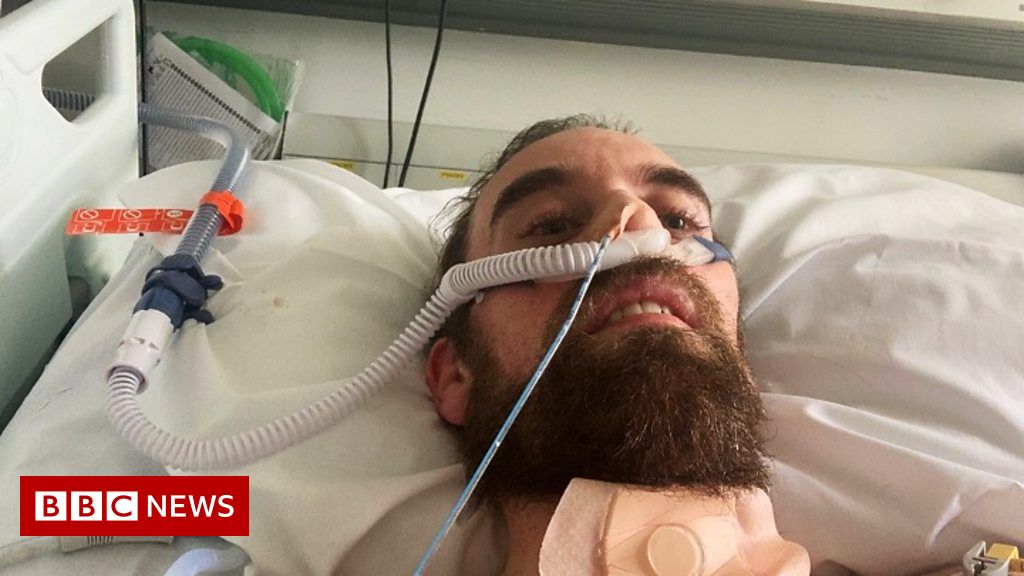
Andrew Watts was described as one of the sickest Covid patients that doctors at Queen Elizabeth Hospital had seen.The 40-year-old black cab driver from Bexley, south-east London, began feeling ill last Christmas and returned a positive lateral flow test result on Boxing Day.Mr Watts was admitted to the Woolwich hospital with pneumonia and spent eight months in the intensive care unit. He was in an induced coma for more than five weeks and had five episodes of life-threatening lung collapse.Medics told his family that they might have to consider turning off the life support machine.Andrew said he was badly affected by the virus because he was in remission from lymph cancer after successful chemotherapy treatment.His lungs improved over the next few months and he came off the ventilator in June 2021.This Christmas he is recovering at home, where he has been reflecting on his experiences over the past year.Video by Jamie Moreland

Read more →