Starting later this week, some at-risk Americans become eligible for a 4th Covid shot.
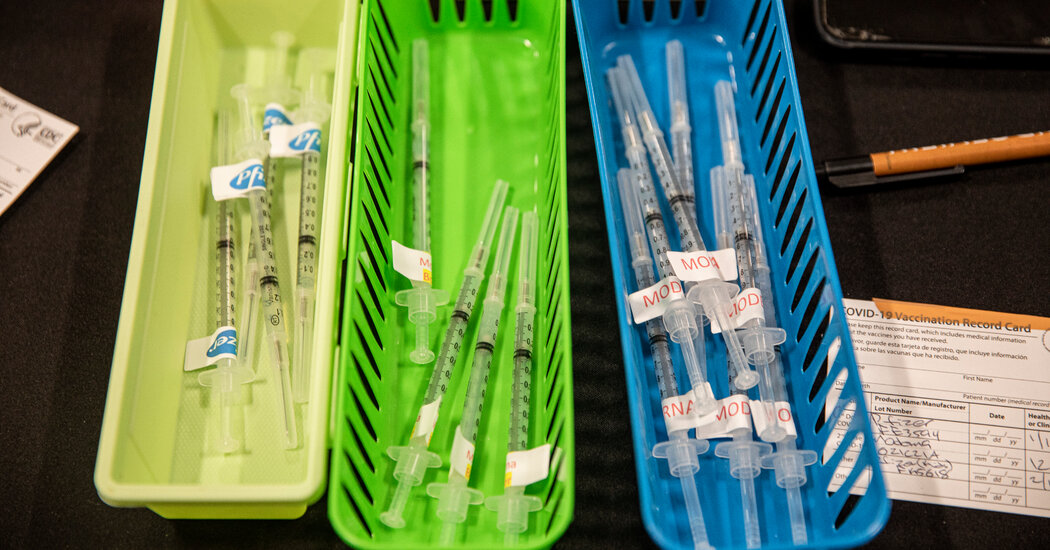
Some people with a weakened immune system can get a fourth dose of the coronavirus vaccine as early as this coming week, according to new recommendations from the Centers for Disease Control and Prevention.The C.D.C. endorsed a third dose of the Pfizer-BioNTech and Moderna vaccines for moderately or severely immunocompromised people on Aug. 13, but said this would be considered a part of the primary immunization, not a booster shot.In October, the agency said those immunocompromised people could receive a booster shot — a fourth dose of vaccine, six months after their third dose. These guidelines were consistent with its recommendation for other adults.Last week, hoping to stem the surge of infections with the highly contagious Omicron variant, the C.D.C. shortened that interval to five months for a booster shot for Pfizer-BioNTech or Moderna recipients.For immunocompromised people who received a single shot of the coronavirus vaccine made by Johnson & Johnson, the C.D.C. does not recommend additional primary doses, but advises that they get a booster shot of the Moderna or Pfizer-BioNTech vaccines two months after the first dose.Some people are born with absent or faulty immune systems, and in others, treatments for some diseases like cancer diminish the potency of immune defenses. The C.D.C. estimates there are about seven million immunocompromised individuals in the country.Many of them produce few to no antibodies in response to a vaccine or an infection, leaving them susceptible to the virus. When they do become infected, they may suffer prolonged illness, with death rates as high as 55 percent.It is unclear what proportion of those people are protected by additional doses. Still, with the Omicron variant surging in the country, some immunocompromised people sought out fourth or even fifth shots of the vaccines even before the C.D.C. changed its guidelines. While receiving multiple doses of vaccines in a short period is unlikely to be harmful, it may produce diminishing returns, according to some experts.The C.D.C. has said that any American 12 and older can receive a Pfizer-BioNTech booster — those 18 and older can alternatively receive a Moderna booster — five months after completing their initial shots with those vaccines. Israel has already begun offering fourth doses to high-risk groups including older adults. But the Biden administration has not yet said whether it plans to follow suit.When asked on Friday about the possibility of a fourth shot for the general population, Dr. Rochelle Walensky, director of the C.D.C., said that focus remained on Americans eligible for their third shots.She added that U.S. officials remained in close touch with Israel experts about their data. “We will be following our own data carefully as well, to see how these boosters are working in terms of waning effectiveness, not just for infection but, importantly, for severe disease,” she said.

Read more →


King's College boss says unvaccinated staff could lose jobs

The chief executive of King’s College Hospital, Dr Clive Kay, has said unvaccinated staff could face redeployment or lose their jobs.He told the BBC he could not force individuals to get jabbed but would encourage them to do so.It comes after a consultant expressed his concerns about the vaccine and his job safety to Health Secretary Sajid Javid.

Read more →

Covid isolation period still under review – Zahawi

Education Secretary and former vaccines minister Nadhim Zahawi has said any plans to cut the Covid self-isolation period to five days are still under review. People who test positive for Covid are required to self-isolate for seven days, but several sectors are experiencing staffing pressure.He told the BBC any reduction in isolation would have to be decided by experts who deem it appropriate.

Read more →

Covid: Thousands protest in France against proposed new vaccine pass

SharecloseShare pageCopy linkAbout sharingImage source, Getty ImagesFrench authorities say more than 105,000 people have taken part in protests across the country against the introduction of a new coronavirus pass. A new draft law would in effect ban unvaccinated people from public life. Demonstrators in the capital, Paris, held placards emblazoned with phrases like “no to vaccine passes”.Interior Ministry officials said 34 people were arrested and some 10 police officers were injured after the protests turned violent in some places. The bill, which passed its first reading in the lower house of France’s parliament on Thursday, would remove the option of showing a negative Covid-19 test to gain access to a host of public venues. Instead, people would have to be fully vaccinated to visit a range of spaces, including bars and restaurants. The government says it expects the new rules to come into force on 15 January, although the opposition-dominated Senate could delay the process.But demonstrators on Saturday accused the government of trampling on their freedoms and treating citizens unequally.Others targeted their anger at the president, Emmanuel Macron, over comments he made earlier this week in relation to unvaccinated citizens, telling Le Parisian newspaper that he wanted to “piss them off”. One protester, hospital administrator Virginie Houget, told the Reuters news agency that Mr Macron’s remarks were “the last straw”. And in Paris, where some 18,000 people marched against the new law, demonstrators responded to his coarse language by chanting: “We’ll piss you off”.French MPs get death threats over Covid-19 pass Covid vaccination centres vandalised in FranceTV images showed altercations between protesters and police turning violent in some places. In Montpellier officers used teargas during clashes with the demonstrators.Turnout for the protests was estimated to be about four times higher than the last major demonstrations on 18 December, when some 25,500 people marched across the country.But despite the vocal protests, opposition to the new measures is not widespread and recent polling suggests the vast majority of people back the vaccine pass. France is one of the most highly vaccinated countries in Europe, with more than 90% of over-12s eligible for the shot fully vaccinated. Meanwhile, new coronavirus infections are rising rapidly across France as the new Omicron variant takes hold. The country recorded more than 300,000 new cases for the second time in a week on Friday and admissions to intensive care wards are rising steadily, putting healthcare systems under strain. Some hospitals have reported that some 85% of ICU patients are not vaccinated against Covid-19.

Read more →

Covid: Visualising 150,000 UK coronavirus deaths

150,000 people in the UK have now died with Covid-19.It is a bleak, sobering figure after nearly two years of daily coronavirus statistics.But the problem with statistics, is that a person can forget that behind every number is a person.Here, Health and Science Reporter Laura Foster tries to help us understand the impact Covid-19 has had on the UK.

Read more →

New York Plans to Install ‘Vending Machines’ With Anti-Overdose Drugs

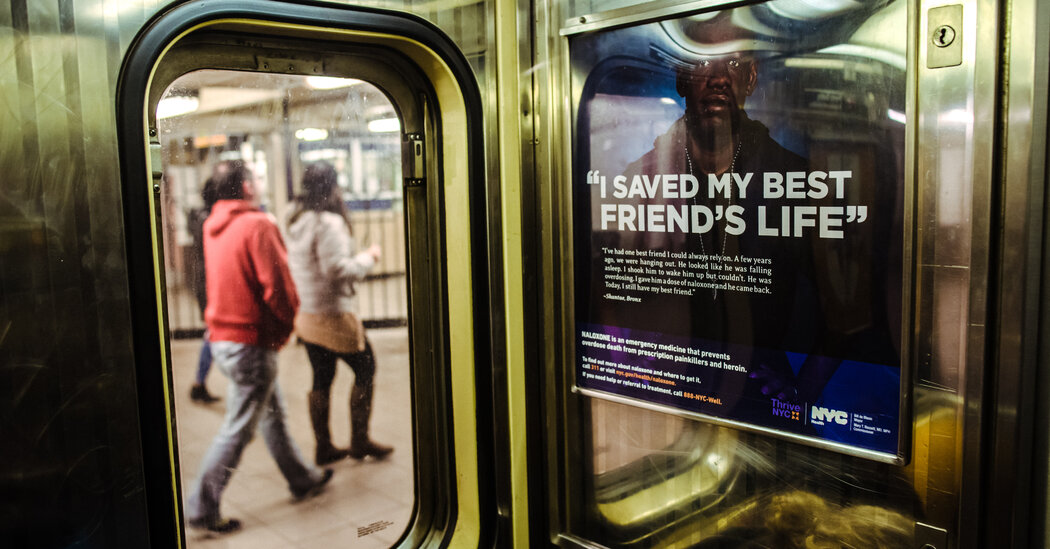
In addition to naloxone, a medication used to reverse opioid overdoses, the machines will distribute free syringes, toiletries and safe-sex kits.New York City health officials have announced a plan to install 10 “public health vending machines” that would dispense sterile syringes, an anti-overdose medication and other “harm reduction” supplies to help neighborhoods that have been hit hard by drug overdoses.The vending machines, which are planned for neighborhoods in all five boroughs, will also carry toiletries and safe-sex kits, according to Michael McRae, acting executive deputy commissioner of the city’s health department. All items in the vending machines will be free, he said, adding that the department hoped to have the vending machines on the street this year.“This is really about expanding access to health and wellness services,” he said of the initiative, a $730,000 pilot program seeking up to six contractors.The main purpose of the vending machines is to curb overdoses across the city by increasing the availability of naloxone, a drug that works to quickly reverse the effects of an opioid overdose. “Every four hours there’s an overdose here,” Dr. McRae said. “This is something that doesn’t allow for people to die every hour.”As they have across the country, opioid deaths in New York City, have risen significantly during the coronavirus pandemic. There were 2,062 overdose deaths in the city in 2020, according to data published last year by the New York City Department of Health and Mental Hygiene — the highest total since reporting on overdose deaths began in 2000 and over 500 more than in 2019.“Overdose deaths in New York City are not equally distributed citywide, with some groups and neighborhoods disproportionately experiencing increases,” the nonprofit Fund for Public Health in New York said last month in a request for proposals from organizations interested in taking the lead on the project. The fund, which issued the request on behalf of the Department of Health and Mental Hygiene, set a Jan. 20 deadline for proposals. The health department will award the contracts on Jan. 31.According to 2020 health department data, overdose deaths among white New Yorkers had decreased during the preceding three years, while rates among Black New Yorkers had increased in the previous year, and rates among Latinos had increased for five consecutive years.Residents in impoverished Black and Latino neighborhoods like Mott Haven in the South Bronx and East Harlem in Manhattan reported the highest rates of unintentional overdose deaths in 2020.“Structural racism in drug policy and enforcement has been linked to decreased access to services, poorer health outcomes and increased overdose risk,” the request said.The solicitation for proposals identified several neighborhoods as priorities for the machines, including Central Harlem and Union Square in Manhattan, Far Rockaway in Queens, Stapleton in Staten Island and East New York in Brooklyn.Access to clean needles is important to prevent the spread of H.I.V. and hepatitis C as well as skin and soft tissue infections, Mike Selick, an associate director at the National Harm Reduction Coalition, said on Thursday.“We know that syringe access is effective; this is just another form of it,” he said in an interview. Syringe access programs are a proven way to slash H.I.V. infection rates by limiting the reuse of contaminated needles, according the Centers for Disease Control and Prevention.Proposals like New York’s are “about making the material, the health equipment and the health supplies accessible to the people who need it the most, where they’re already at, on their schedule and on their timeline, and without the stigma or shame,” Sheila P. Vakharia, deputy director for research and academic engagement at the Drug Policy Alliance, said on Thursday.In New York State, people can already get up to 10 clean syringes at pharmacies participating in the state’s Expanded Syringe Access Program. But according to Dr. Vakharia, many drug users would rather avoid a face-to-face interaction with a pharmacist, and many pharmacies are closed late at night, when drug use is more prevalent and people need safe supplies the most.The same for goes for access to naloxone, she added. “It’s a medication that should be readily available and accessible to people when they need it the most, and it doesn’t hurt if we can make” it more readily available, she said.Critics of the proposal have said that the vending machines fail to address the most critical issues around addiction.“I agree we cannot ignore the devastating data on drug addiction and overdoses without doing more,” Councilman David Carr, a Staten Island Republican who represents one of the neighborhoods prioritized in the plan, said in an email on Thursday.“But I feel it is irresponsible to simply place vending machines filled with syringes and Narcan in neighborhoods, without providing addicts the support and real assistance they need,” he added, referring to a brand-name version of naloxone.But advocates of the plan maintain that installing the vending machines is “the smart thing to do.”“We don’t want it to be easier to get dirty needles,” Mr. Selick, of the National Harm Reduction Coalition, said. “We don’t want it to be easier to get drugs on the street than it is to get the help and the supplies and the good information that you need to know.”

Read more →

Covid May Raise the Risk of Diabetes in Children, Study Says

Children who have recovered from Covid-19 appear to be at significantly increased risk of developing Type 1 or Type 2 diabetes, researchers at the Centers for Disease Control and Prevention reported on Friday.A heightened risk of diabetes has already been seen among adults who recovered from Covid, according to some studies. Researchers in Europe have reported an increase in the number of children being diagnosed with Type 1 diabetes since the pandemic started. But the C.D.C. study is among the first to examine large insurance claim databases in the United States to estimate the prevalence of new diabetes diagnoses in children under age 18 who had Covid or were known to be infected with the coronavirus. The study used two claim databases from U.S. health plans to look at diabetes diagnoses made in youngsters under 18 over the course of a year or more, starting in March 1, 2020, comparing those who had Covid with those who did not. The researchers found increases in diabetes in both data sets, though the relative rates were quite different: they found a 2.6-fold increase in new diabetes cases among children in one, and a smaller 30 percent increase in another.“Even a 30 percent increase is a big increase in risk,” said Sharon Saydah, a researcher at the C.D.C. and lead author of the study. The differences likely result from different ways of classifying children as having Covid, she added. Dr. Saydah said it was not yet clear whether post-Covid diabetes would be a chronic condition in these children, or a transient condition that resolves. Most of the children were only followed about four and a half months.The finding underscores the importance of vaccinating all eligible children against Covid, she added, and using measures like masking and distancing, especially to protect the youngest, who cannot yet be vaccinated.“It’s really important for clinicians, pediatricians and parents to be aware of the signs and symptoms of diabetes, so they can get their kids diagnosed,” Dr. Saydah said. Increased thirst, frequent urination, unintentional weight loss and fatigue are among the telltale symptoms.She noted that weight gain and sedentary behavior, which have increased during the pandemic, are also risk factors for diabetes.Many of the children in the study were only diagnosed after having an episode of diabetic ketoacidosis, a life-threatening complication that occurs when the body doesn’t have enough insulin to allow blood sugar into cells to use for energy.Dr. Saydah and her colleagues did not distinguish between types of diabetes, including both Type 1 and Type 2 in their analysis. The increases were seen both among those who had been ill with Covid, and those who were asymptomatic but tested positive.Another study, also released on Friday by the C.D.C., found that two doses of the Pfizer-BioNTech vaccine protected hospitalized youngsters between the ages of 12 and 18 against severe multisystem inflammatory syndrome, or MIS-C, which can develop two to six weeks after infection with the virus. The study looked at 24 hospitals in 20 states between July and Dec. 9, 2021, during the period when the Delta variant was dominant. It concluded that vaccination had an efficacy rate of 91 percent against MIS-C, and noted that among 38 hospitalized patients aged 12 to 18 who required life support, all were unvaccinated.

Read more →

Tangled messages: Tracing neural circuits to chemotherapy's 'constellation of side effects'

Severe and persistent disability often undermines the life-saving benefits of cancer treatment. Pain and fatigue — together with sensory, motor, and cognitive disorders — are chief among the constellation of side effects that occur with the platinum-based agents used widely in chemotherapy treatments worldwide.
A new study by Georgia Tech researchers in the lab of Timothy C. Cope has found a novel pathway for understanding why these debilitating conditions happen for cancer patients and why scientists should focus on all of the possible neural processes that deliver sensory or motor problems to a patient’s brain — including the central nervous system — and not just the “peripheral degeneration of sensory neurons” that occurs away from the center of the body.
The new findings “Neural circuit mechanisms of sensorimotor disability in cancer treatment” are published in the Proceedings of the National Academy of Sciences (PNAS) and could impact development of effective treatments that are not yet available for restoring a patient’s normal abilities to receive and process sensory input as part of post cancer treatment, in particular.
Stephen N. (Nick) Housley, a postdoctoral researcher in the School of Biological Sciences, the Integrated Cancer Research Center, and the Parker H. Petit Institute for Bioengineering and Bioscience at Georgia Tech, is the study’s lead author. Co-authors include Paul Nardelli, research scientist and Travis Rotterman, postdoctoral fellow (both of the School of Biological Sciences), along with Timothy Cope, who serves as a professor with joint appointments in the School of Biological Sciences at Georgia Tech and in the Coulter Department of Biomedical Engineering at Emory University and Georgia Tech.
Neurologic consequences
“Chemotherapy undoubtedly negatively influences the peripheral nervous system, which is often viewed as the main culprit of neurologic disorders during cancer treatment,” shares Housley. However, he says, for the nervous system to operate normally, both the peripheral and central nervous system must cooperate.

Read more →

Study sets framework for precision surveillance of colorectal cancer

A team of Vanderbilt researchers has revealed some of the mechanisms by which polyps develop into colorectal cancer, setting the framework for improved surveillance for the cancer utilizing precision medicine.
Their study, published Dec. 14 in Cell, describes findings from a single-cell transcriptomic and imaging atlas of the two most common colorectal polyps found in humans: conventional adenomas and serrated polyps. They determined that adenomas arise from expansion of stem cells that are driven by activation of WNT signaling, which contributes to the development of cancer, while serrated polyps derive into cancer through a different process called gastric metaplasia. The finding about metaplasia, an abnormal change of cells into cells that are non-native to the tissue, was surprising, the researchers said.
“Cellular plasticity through metaplasia is now recognized as a key pathway in cancer initiation, and there were pioneering contributions to this area by investigators here at Vanderbilt,” said Ken Lau, PhD, associate professor of Cell and Developmental Biology, one of the study’s corresponding authors. “We now have provided evidence of this process and its downstream consequences in one of the largest single-cell transcriptomic studies of human participants from a single center to date.”
The researchers did an integrative analysis of 128 datasets of tissue samples from 62 tumors. They performed single-cell RNA sequencing, multiplex immunofluorescence and multiplex immunohistochemistry on the samples, which were collected from diverse sex, racial and age groups.
The cells from serrated polyps did not exhibit WNT pathway activation nor a stem cell signature. Moreover, the researchers observed that these cells had highly expressed genes not normally found in the colon, leading them to hypothesize that metaplasia plays a role in how serrated polyps become cancerous. The researchers observed in the serrated-specific cells highly expressed genes not normally found in the colon but are expressed in the stomach, including MUC5AC, AQP5, TACSTD2 (TROP2), TFF2, MUC17 and MSLN.
“We propose a new paradigm in which damage to the proximal colon, possibly from microbiota, initiates a metaplastic cascade that may eventually select for survival/proliferative pathways, such as activating mutations in BRAF,” the researchers wrote in the paper.
Bob Chen, a Vanderbilt University graduate student, and Cherie’ Scurrah, PhD, are the paper’s co-first authors.
The study provided a number of other findings of clinical significance. For instance, sessile serrated lesions can be challenging to identify, and the study suggest biomarkers that may confirm their diagnosis. The study revealed much about the mechanisms of sessile serrated lesions in regulating the tumor immune landscape.
“The findings in our atlas lay the foundation for opening novel strategies for interception of cancer progression, including better surveillance protocols, chemoprevention and pre-biotic and pro-biotic therapies” said Martha Shrubsole, PhD, research professor in the Division of Epidemiology, and a corresponding author.
The Vanderbilt research was supported by the Human Tumor Atlas Network grant from the Cancer Moonshot initiative of the National Cancer Institute and other funding from the National Cancer Institute, the Congressionally Directed Medical Research Program of the U.S. Department of Defense, Cancer UK, Janssen, and the Nicholas Tierney GI Cancer Memorial Fund.
“This massive effort is only made possible through the close collaboration of a multidisciplinary team, integrating expertise from the Vanderbilt University Basic Sciences, the Vanderbilt University Medical Center Epithelial Biology Center, Vanderbilt Epidemiology Center and Vanderbilt-Ingram Cancer Center,” said Robert Coffey, Jr., MD, Ingram Professor of Cancer Research, professor of Medicine and Cell and Developmental Biology, and a corresponding author.
Other Vanderbilt authors who contributed to the study include Eliot McKinley, Alan Simmons, Marisol Ramirez-Solano, Xiangzhu Zhu, Nicholas Markham, Cody Heiser, Paige Vega, Andrea Rolong, Hyeyon Kim, Quanhu Sheng, Yuan Zhou, Austin Southard-Smith, Yanwen Xu, James Ro, Angela Jones, Frank Revetta, Lynne Berry, Hiroaki Niitsu, Mirazul Islam, Jeremy Goettel, Wei Zheng, Kay Washington, Qiuyin Cai, James Goldenring, Jeffrey Franklin, Timothy Su, Won Jae Huh, Simon Vandekar, Joseph Roland and Qi Liu.

Read more →

Five People in the U.S. Died From Rabies in 2021, the Highest Number in a Decade

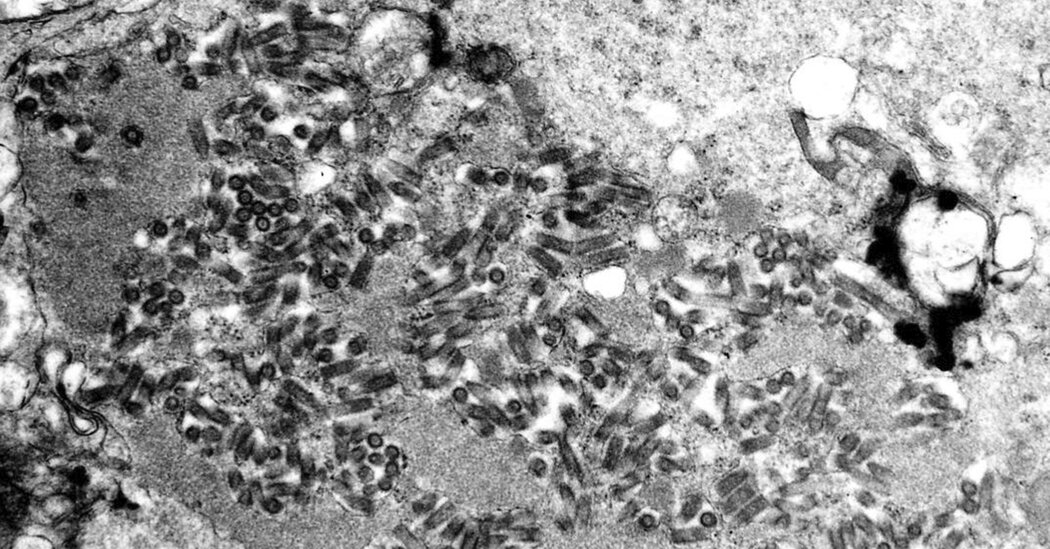
Three of the deaths involved direct contact with bats, the C.D.C. said.Five people in the United States died from rabies last year, the highest number in a decade, the Centers for Disease Control and Prevention said Thursday.Three of those deaths, including that of a child, involved direct contact with bats and occurred over a five-week period starting in late September. The deaths occurred in Idaho, Illinois and Texas, and all three victims experienced symptoms three to seven weeks after contact with bats. They died two to three weeks after symptoms began, according to a C.D.C. report.Rabies is caused by a virus that is usually transmitted through the saliva of an infected animal through a bite. It has one of the highest mortality rates of any disease, but death is preventable: Vaccines taken before symptoms appear are nearly 100 percent effective. Still, rabies causes about 59,000 deaths around the world each year, 40 percent of which occur in Africa and Asia, according to the World Health Organization.Most of the deaths occur in countries where public health resources are inadequate. In the United States, death from rabies is exceedingly rare — in 2019 and 2020, there were no reported cases or deaths. The C.D.C. said the uptick in rabies cases could be because of a lack of awareness about the risks, since the number of rabid bats that have been reported to the National Rabies Surveillance System has been stable since 2007.Four of the five people who died in late 2021 did not receive the vaccine, according to the C.D.C. Two of the patients did not take vaccines because they did not know about the risk of rabies from their exposures, either because they did not notice a bite or scratch or because they did not recognize the risks of getting rabies from bats, the C.D.C. said.“We have come a long way in the United States toward reducing the number of people who become infected each year with rabies,” said Ryan Wallace, a veterinarian and rabies expert at the C.D.C., “but this recent spate of cases is a sobering reminder that contact with bats poses a real health risk.”Once the virus reaches the brain, it can cause convulsions, fear of water, excessive salivation and other symptoms. Eventually the infection causes coma and death.Once symptoms start, rabies is nearly always fatal.In one case, an 80-year-old man in Illinois who had a bat roost in his home awoke in August to find a bat on his neck, according to a statement from the Illinois Department of Public Health. The bat was captured and tested positive for rabies, but the man declined to take a vaccine because of a longstanding fear of vaccines. About a month after contact with the rabid bat, the man started experiencing neck pain, headaches, difficulty controlling his arms, finger numbness and difficulty speaking, before dying.In another case, a child in Texas picked up a bat with his bare hands and then released it. A third person died in New York after he was bitten by a dog in the Philippines. He started developing symptoms after he returned to the United States, and the C.D.C. was not able to determine why he did not receive a vaccine.A fourth person from Minnesota who died from rabies last year received the vaccine but his weakened immune system did not respond to it, the C.D.C. said.In the early 1900s, more than 100 people in the United States died of rabies every year. That number fell to one or two per year since 1960 as pet vaccination, animal control programs and public health surveillance improved, and the rabies vaccine became more available. In 2018, three people died from rabies, the second highest number in the past few years. In 2011, six people died from rabies.In many countries, the greatest risks of rabies are from stray, unvaccinated dogs. In the United States, however, about 70 percent of rabies infections are from exposure to bats. The C.D.C. urges people to avoid contact with bats. If contact occurs, people should talk to their doctors or local public health officials to determine whether rabies vaccines are needed. Bat bites or scratches can be very small and in some cases not visible.When it is unclear whether there was contact with a bat, such as in cases where bats enter homes while people were sleeping or if children were left unattended, it is essential that people immediately call local health officials for guidance. About 60,000 people receive rabies vaccines each year, according to a C.D.C. estimate.

Read more →