Unraveling the complexity of vitamin B12 diseases

A team of researchers at Baylor College of Medicine and collaborating institutions has shed new light into the complexity of vitamin B12 diseases. The scientists studied two rare inherited vitamin B12 conditions that affect the same gene but are clinically distinct from the most common genetic vitamin B12 disorder. This work suggested that, in addition to the gene affected in the common vitamin B12 disease, other genes also were affected, making a more complex syndrome. This study searched for those genes and their function.
Working with mouse models, the team found that the genes involved in the more complex forms of the condition not only cause the expected typical vitamin B12 disease but also affect the generation of ribosomes, the protein-building machinery of the cell. The findings, published in the journal Nature Communications, support reevaluating how to treat these patients in the future and have implications for genetic counseling.
“Vitamin B12, or cobalamin, is a dietary nutrient essential for normal human development and health and is found in animal-based foods but not in vegetables. Mutations in the genes encoding the proteins responsible for the metabolic processes involving vitamin B12 result in rare human inborn errors of cobalamin metabolism,” said co-corresponding author Dr. Ross A. Poché, associate professor of molecular physiology and biophysics at Baylor.
Patients with the most common inherited vitamin B12 disease, called cblC, suffer from a multisystem disease that can include intrauterine growth restriction, hydrocephalus (the build-up of fluid in the cavities deep within the brain), severe cognitive impairment, intractable epilepsy, retinal degeneration, anemia and congenital heart malformations. Previous work had shown that mutations in the MMACHC gene cause cblC disease.
It also was known that some patients presenting with a combination of typical and non-typical cblC characteristics do not have mutations in the MMACHC gene, but rather in genes that code for for proteins called RONIN (also known as THAP11) and HCFC1. The resulting changes in these proteins lead to reduced MMACHC gene expression and a more complex cblC-like disease.
In this study, Poché and his colleagues looked for other genes that also might be affected by HCFC1 and RONIN gene mutations.

Read more →

Breakthrough into the cause of male infertility

Scientists at Newcastle University have identified a new genetic mechanism that can cause severe forms of male infertility.
This breakthrough in understanding the underlying cause of male infertility offers hope of better treatment options for patients in the future.
The study, published today in Nature Communications, shows that new mutations, not inherited from father or mother, play a major role in this medical condition.
Experts have found that mutations occurring during the reproduction process, when the DNA of both parents is replicated, can result in infertility in men later in life.
Improving understanding
It is hoped that this new knowledge will help to provide more answers in the future about the cause and best treatment options available to infertile couples.

Read more →

Scientists discover how key protein drives our immune response against viruses

Scientists have just slotted into place a big piece of the puzzle that explains how our blood cells mount their first line of defence against viruses. They hope this discovery will help them one day better control the response to either boost it or calm it down as appropriate.
The scientists behind the discovery include Andrew Bowie, Professor of Innate Immunology at Trinity College Dublin, who is based in the Trinity Biomedical Sciences Institute, and Drs Lili Gu and David Casserly (formerly at Trinity as postdoctoral and PhD researchers respectively).
Their findings, which provide a target for new therapies that could improve anti-viral responses in some patients and reduce autoimmune problems in others when immune responses run out of control, have just been published in leading journal Nature Communications.
Interferons and MDNA — a major piece of the puzzle
“Interferons” are key proteins that tell our immune systems when viruses, germs or cancer cells are in our bodies. Type I interferons are produced when the innate immune system senses the presence of a virus. In such circumstances interferons trigger a complex chain of events in which other cells are kicked into gear to “interfere with” and fight those invaders .
Scientists don’t fully understand how certain links in that chain of events are controlled — making it difficult to stimulate or suppress an immune response with therapeutic interventions — but this new research has provided key new insights into the process.

Read more →

Uganda schools reopen after almost two years of Covid closure

SharecloseShare pageCopy linkAbout sharingChildren in Uganda have expressed their joy at finally returning to school nearly two years after they were closed because of Covid.”I am really excited because it’s been a long time without seeing our teachers. And we have missed out a lot,” Joel Tumusiime told the BBC.”I am glad to be back at school,” echoed another, Mercy Angel Kebirungi.But after one of the world’s longest school closures, authorities warned at least 30% of students may never return.Some have started work, while others have become pregnant or married early, the country’s national planning authority said. About 15 million students have been affected by the closure, the government says.”We can’t let this happen again. We must keep schools open for every child, everywhere,” the UN children’s agency, Unicef, warned on Twitter.Africa Live: For more on this and other stories around the continentThe Ugandan ex-teacher whose children may never return to schoolSome classes reopened in October 2020 temporarily, but closed again in May and June of the following year.While schools were closed, there have been some lessons via the radio, TV and newspapers while some schools have provided printed materials, but these have not reached everyone.Wealthier Ugandans have also been able to access online classes and home tutors.But many children have not been to school for about 22 months.One pupil explained how she continued learning during the long hiatus.”My parents never had the time to study with me. When schools were closed, I was able to read, but on my own. Sometimes I would meet with friends to study,” said Christine Teburwa. Like Joel and Mercy, she is in Primary Five, meaning they are between nine and 11 years old.Pupils who have not had any education since March 2020 will resume classes a year above where they were before the pandemic.However, some parents in the capital, Kampala, questioned this.”My children have not been learning at all. I wish they could be allowed to continue from where they stopped,” Rachael Nalumansi said.”Before the first lockdown our children had only been in school for two weeks. So it is a bit concerning that they are now promoting them to the next class,” Vanetta Bangi said. For those students who have not accessed any form of studying during the pandemic, the curriculum will be abridged to focus on core areas and give them a chance to catch up.Lessons were already underway at some schools I visited on Monday morning while at others, students were still cleaning classrooms and re-organising their desks. Others were still registering with the school administration.Boarding school students in Kampala and the nearby districts will start throughout the week, to avoid congestion on public transport.Despite authorities instructing that health and safety measures like masks and social distancing should be in place, not all institutions have the space or facilities to ensure that these steps are properly followed. Some have huge numbers of students and very few classrooms.But it is not only learners who will struggle, many parents’ incomes were also hit by the pandemic, and some will find it difficult to raise money for tuition fees and other school requirements. The phased reopening of schools, which started in November with universities and higher education institutions, was pegged to the vaccination of over 550,000 teachers, their support staff, and students aged 18 and above. Uganda, which has had some of the world’s strictest lockdowns, is now moving to fully reopen the economy despite being at the start of its third wave of the pandemic driven by the Omicron variant. This video can not be playedTo play this video you need to enable JavaScript in your browser.BBC World Service – Africa Today – Downloads

Read more →

Covid-19: Common cold may give some protection, study suggests

SharecloseShare pageCopy linkAbout sharingImage source, Getty ImagesNatural defences against a common cold could offer some protection against Covid-19, too, research suggests.The small-scale study, published in Nature Communications, involved 52 individuals who lived with someone who had just caught Covid-19.Those who had developed a “memory bank” of specific immune cells after a cold – to help prevent future attacks – appeared less likely to get Covid.Experts say no-one should rely on this defence alone, and vaccines remain key.But they believe their findings could provide useful insight into how a body’s defence system fights the virus.Covid-19 is caused by a type of coronavirus, and some colds are caused by other coronaviruses – so scientists have wondered whether immunity against one might help with the other. But the experts caution that it would be a “grave mistake” to think that anyone who had recently had a cold was automatically protected against Covid-19 – as not all are caused by coronaviruses. The Imperial College London team wanted to understand better why some people catch Covid after being exposed to the virus and others do not.’New vaccine approach’They focused their study on a crucial part of the body’ s immune system – T-cells.Some of these T-cells kill any cells infected by a specific threat – for example, a cold virus. And, once the cold has gone, some T-cells remain in the body as a memory bank, ready to mount a defence when they next encounter the virus.In September 2020, researchers studied 52 people who had not yet been vaccinated but who lived with people who had just tested positive for Covid-19.Half the group went on to get Covid during the 28-day study period and half did not. A third of the people who did not catch Covid were found to have high levels of specific memory T-cells in their blood. These were likely to have been created when the body had been infected with another closely-related human coronavirus – most frequently, a common cold, they say. Researchers accept other variables – such as ventilation and how infectious their household contact was – would have an impact on whether people caught the virus, too. Dr Simon Clarke, at the University of Reading, said although this was a relatively small study, it added to the understanding of how our immune system fights the virus and could help with future vaccines.He added: “These data should not be over-interpreted. It seems unlikely that everyone who has died or had a more serious infection, has never had a cold caused by a coronavirus. “And it could be a grave mistake to think that anyone who has recently had a cold is protected against Covid-19, as coronaviruses only account for 10-15% of colds.”Professor Ajit Lalvani, senior author of the study, agreed vaccines were key to protection. He added: “Learning from what the body does right could help inform the design of new vaccines.”Current vaccines specifically target spike proteins that sit on the outside of the virus, but those spike proteins can change with new variants. But the body’s T-cells target internal virus proteins, which do not change as much from variant to variant, meaning vaccines harnessing the work of T-cells more closely could provide broader, longer-lasting protection against Covid, he said. Nature.websiteThe BBC is not responsible for the content of external sites.

Read more →

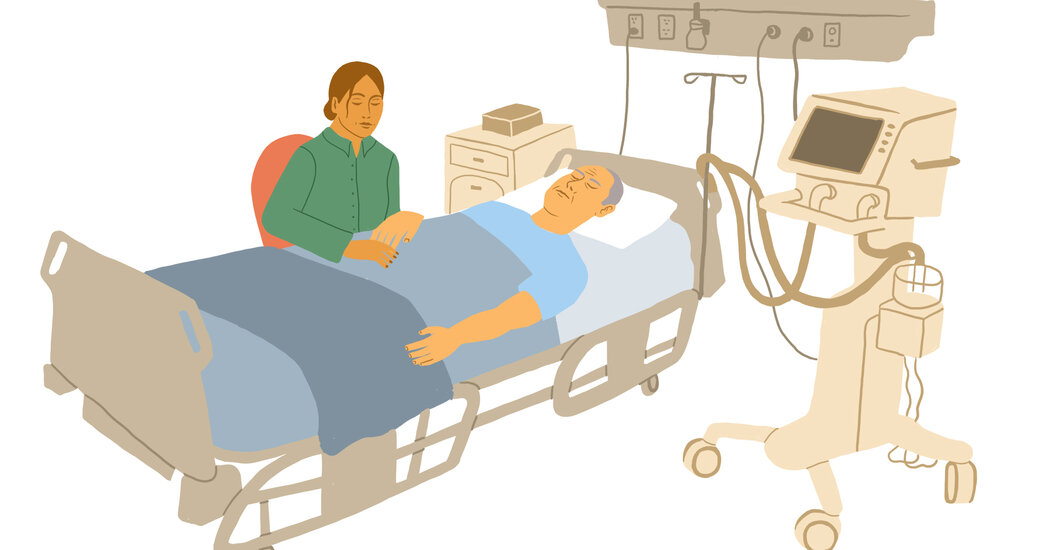
How Families Can Navigate the I.C.U.

A new book offers guidance on how family members can support a critically ill loved one who ends up in the hospital’s intensive care unit.In the last two years, the letters I.C.U. have become almost as familiar to the listening and reading public as PBS and NBC, as intensive care units across the country have been overwhelmed with people suffering from severe Covid-19. Meanwhile, medical personnel continue to struggle to care for patients with serious injuries, diseases or surgical complications who also require critical care.Intensive care can be a difficult and traumatizing experience for patients whose lives depend on it. And, according to the author of an extraordinarily thorough and helpful new book, the families and friends of patients who require prolonged stays in an I.C.U. often suffer along with them. Their fears skyrocket and unanswered questions abound. What is happening to my loved one? What are all these tubes, machines, flashing lights and warning bells? Who is in charge here? Whom can I talk to?In her new book, “The I.C.U. Guide for Families: Understanding Intensive Care and How You Can Support Your Loved One,” Dr. Lara Goitein, who spent 12 years as an intensive care physician, provides comprehensive yet easy-to-understand answers to myriad questions like these and many others you might not think to ask. Ideally, families would have this book at the ready when needed, like a first-aid manual, because the initial days in an I.C.U. are often the most stressful and disconcerting.“It helps to be educated and know how you can contribute,” said Dr. Goitein, a pulmonary and critical care physician in Santa Fe. The goal, she said, is to assure the best possible outcome for patients and their loved ones, all of whom can experience a version of post-traumatic stress disorder following a long stay in an I.C.U.Juli Barde of Portland, Ore., whose husband Rick, then 59, was in an I.C.U. for six weeks early in the pandemic with near-fatal Covid, said she stayed with him for four or five hours every day to provide comfort and be his advocate. “I watched carefully and learned a lot,” Ms. Barde told me. “With three tubes in his trachea, he couldn’t speak for himself, so I had to speak for him. I can read his facial expressions and knew what was going to bother him.” And when careless nursing care led to a serious complication, Ms. Barde was there to call for a replacement nurse and report the incident to a supervisor.Of course, few families can spend half their waking hours in an I.C.U. But by understanding what is happening, recognizing the signs of improvement and deterioration in a patient’s condition and knowing when it’s appropriate to intervene on the patient’s behalf can result in better care all around. That’s what makes Dr. Goitein’s book so valuable and destined to remain on my bookshelf until my dying day.The ability to hope for the best but prepare for the worst is likely the biggest challenge families face when a loved one is in an I.C.U. with a condition from which recovery is uncertain. Although 80 to 90 percent of I.C.U. patients — many of whom are very sick — are eventually able to transfer out of intensive care and leave the hospital, families need a realistic picture of what survival will be like.For patients who were treated in an I.C.U., Dr. Goitein said, “many improve over the first year, and some need help for symptoms that persist for a year or longer. But most of those who make it through that first year, by three years they are independent.”Patients’ future prospects depend greatly on the reason they required I.C.U. care in the first place, as well as their age, prior physical condition, emotional health and resilience and their ability to pursue needed rehabilitation. Among those who required prolonged life support, only a minority go directly home after being discharged from the hospital, Dr. Goitein reported. A fifth are transferred to an inpatient rehabilitation facility, another fifth go to a skilled nursing facility and more than a third require long-term acute care.“Most people focus on very small hopes, and they expect the patient to survive, go home and be the same person he was before,” Dr. Goitein said. “But a long, difficult battle with illness can result in psychiatric as well as physical disability. It’s more stressful than people estimate.”For patients who needed more than two days of mechanical ventilation in the I.C.U., family caregivers typically spend an average of more than five hours a day giving care during the first half-year after hospital discharge, she said. How well the family copes often depends on how carefully they plan and prepare before the patient comes home. Are there grab bars in the bathroom? Will a walker or wheelchair fit through doorways? Can the patient communicate readily with the caregiver?After a long stay in an I.C.U., it’s not uncommon for patients to experience what doctors call “post-intensive care syndrome,” or PICS. “Overall, about half of survivors will have at least one cognitive, psychiatric or physical problem that persists for weeks, months or even years after discharge,” Dr. Goitein wrote. These may include problems with memory, concentration and problem-solving. Emotional consequences like depression, anxiety, post-traumatic stress disorder and sleep disturbances sometimes persist for years. Overcoming I.C.U.-induced physical weakness can take several years, and regaining independence in activities of daily living, like getting dressed and preparing meals, can require fierce determination and infinite patience on the part of both patient and caregiver.An excellent resource for patients and their families following I.C.U. care is Thrive, an online initiative of the Society for Critical Care Medicine. The site maintains a partial list of clinics that provide specialized care for patients after an I.C.U. stay.It’s also important for families to know when “enough is enough,” Dr. Goitein said. For patients who’ve been on prolonged life support in the I.C.U., it can be very challenging for families to come to terms with their failure to improve and inability to wean them off the machines keeping them technically alive.Ideally, well before a life-threatening crisis, patients will have completed an advance directive and assigned a trusted health care proxy or agent, who has a clear understanding of their wishes and can speak for them when they cannot speak for themselves. What are the patients’ values? What makes their life meaningful? What level of disability would they consider intolerable?The proxy’s job, Dr. Goitein said, “is to put their own desires and beliefs aside and choose what the patient would have wanted for himself,” in effect respecting the autonomy of a terminally ill person who is no longer able to communicate their wishes. When family members disagree, she said, discussion with the doctor in charge may facilitate a decision.

Read more →

How to Mindfully Manage Your Food Cravings

For the Eat Well Challenge, mindfulness techniques like “urge surfing” can help curb overeating without banning favorite foods.Food cravings are a normal part of the human experience; studies show that more than 90 percent of people have them. (In fact, who are those unicorns who’ve never had cravings?)But how we deal with cravings can vary widely. Some people eat what they want and don’t worry about it, whereas others feel controlled by cravings and end up bingeing on favorite foods.When people surrender to a food craving, they often blame it on a lack of self control. But cravings are caused by a complex interplay of neurons in the brain’s reward center, appetite hormones, behavioral conditioning and easy access to tasty, pleasurable foods that reinforce the craving cycle.The power of cravings can be fueled by the senses, like the smell of fresh bread when we walk by a bakery, as well as situations and emotions. After a stressful day at work, for example, we might seek comfort by pulling up to a fast-food window. Good times can trigger cravings, too, like wanting popcorn or candy at the movies. And studies show that so-called “hyperpalatable” foods that offer a tantalizing combination of fat, sugar, salt and carbohydrates can interfere with brain signals so that we keep craving them even when we’re full.So what’s the solution for people who struggle with cravings?It turns out many people are dealing with cravings the wrong way by trying to restrict, avoid and distract themselves from tempting foods. They skip dessert when everyone else is eating it, walk away if a colleague brings doughnuts to the office and try to ignore their craving for the ice cream in the freezer.But increasingly, studies show that constant restriction and attempts at distraction can actually backfire for people who struggle with cravings and binge eating. Now scientists are studying surprising new strategies to cope with cravings based on brain science. These include accepting that food cravings are normal and inevitable and using mindfulness techniques to acknowledge and become more aware of your cravings and wait them out, rather than trying to ignore them.“It’s about understanding that these kinds of cravings are a natural part of being a person; we’re engineered this way,” said Evan Forman, a psychology professor at Drexel University in Philadelphia and the director of the university’s Center for Weight, Eating and Lifestyle Science. “You don’t have to make cravings go away, but you also don’t have to eat because of them. It’s accepting rather than pushing away or suppressing them.”How Dieting Can Make Cravings WorseOne of the earliest studies to show a link between food restriction and cravings was conducted in the 1940s by the diet researcher Ancel Keys. In what is often referred to as a “starvation study,” Dr. Keys asked 36 men, who had been eating about 3,500 daily calories, to cut their food intake to about 1,600 calories a day. (By today’s standards, that calorie count is just another diet.) The restriction triggered a notable psychological change in the men, who became preoccupied with food.“They stopped doing anything except laying in their beds, talking and thinking about foods,” said Traci Mann, who heads the health and eating laboratory at the University of Minnesota. She notes that the men even planned food-related careers like opening a grocery store or restaurant, and they stayed preoccupied with food long after the study ended. “These are men in the 1940s who probably never cooked a meal in their entire life,” Dr. Mann noted. “And they started cutting recipes out of the newspaper.”More recently, Dr. Mann and her colleagues used a tempting box of chocolates to study the effect of food restriction. The research included 142 chocolate lovers, half of whom were told to eat their regular diet while the other half went on a restricted diet. In a seemingly cruel twist, everyone in the study was given a box of chocolates and instructed not to eat it until after the 10-day study. But to make sure every participant was consistently tempted by the chocolate, the participants had to open the box daily to find specific instructions.After 10 days, everyone was asked to send a photo of their chocolate box. The dieters had pilfered significantly more of the chocolates than those who weren’t counting calories.“The dieters’ control over their eating failed,” Dr. Mann said. “There are lots of studies that look at the thinking processes that dieters have, and you see the same thing. Dieters are more likely to notice food, have a harder time removing their attention from food and they crave food more.”Currently, Dr. Mann is studying how quickly obsessive food thoughts begin after a person starts restrictive dieting. “We’re still crunching the data,” Dr. Mann said. “But it seems to start up pretty quickly, within about 10 days.”Acceptance vs. DistractionAt Drexel University, Dr. Forman conducted a similar study, but this time with transparent boxes of Hershey’s Kisses that subjects were required to carry at all times for two days. The researchers added a twist, advising some participants to ignore their cravings while instructing another group to notice and accept their cravings as something normal. A control group received no advice. At the end of the study, about 30 percent of participants in the control group had eaten the candy compared to 9 percent of people in the group instructed to ignore cravings. But among the participants taught to acknowledge and accept cravings, nobody ate the chocolate.In 2019, Dr. Forman published the follow-up results of a larger randomized controlled trial of 190 people, which found that participants who practiced acceptance and mindfulness strategies were twice as likely to have maintained a 10 percent weight loss after three years compared to those who focused primarily on resisting temptations and suppressing thoughts of food.“Surprisingly, there was a large benefit in people’s quality of life that was somewhat unexpected,” Dr. Forman said. “It benefited their well-being and emotional state, too.”How to Cope With CravingsFor this week’s Eat Well Challenge, try these acceptance and mindfulness techniques to focus on food cravings. (Times subscribers can sign up for the Eat Well Challenge through the Well newsletter and receive extra advice by texting the word “Hi” to 917-810-3302 for a link to join.)Practice “urge surfing.”Cravings are ephemeral, and some research suggests they peak around 5 minutes. “Urge surfing” means “riding the wave” of your thoughts, feelings and cravings rather than acting on them, and it’s a successful strategy often used to treat substance use. Follow these four steps.Identify your craving. Use the phrase, “I’m having the urge to eat …” and fill in the blank,.Observe it. Notice how you feel as you crave the food. Do you feel it in your stomach? Are you distracted? Anxious? Do you feel the need to move or keep visiting the kitchen?Be open. Don’t try to suppress or get rid of your craving. Accept the experience.Pay attention to what happens next. Notice the urge as it rises, crests, falls and subsides. Note the intensity of a craving. “I’m having the urge to eat potato chips. It started as a 5, but now it’s a 7.” “Our cravings inevitably rise and fall, just like waves in an ocean,” Dr. Forman said. “Trying to fight that wave will never work. It doesn’t work if you are wishing for the craving to go away. You are accepting that it’s there, and even that it’s supposed to be there, and you are coexisting — surfing — with it.”Ask: How little is enough?There’s nothing wrong with eating a food you crave unless it becomes a problem for you. Dr. Judson Brewer, an associate professor at the Brown University School of Public Health, who created a mindfulness app called Eat Right Now, told the story of a patient who routinely ate a full bag of potato chips while watching a favorite TV show with her daughter.Instead of discouraging her from eating the chips, Dr. Brewer advised her to pay attention to every single chip she ate and to notice how many chips it took to feel satisfied. Just a few weeks later, the woman reported she had slowly reduced her chip habit, and now her craving was satisfied after the second potato chip.“She could eat two and be done,” Dr. Brewer said.Dr. Brewer said mindfulness can help people cope with food cravings without having to give up a favorite food entirely. “It’s not that we can’t ever have a chocolate chip cookie,” Dr. Brewer said. “But when I eat one, I really pay attention. I enjoy it, and I ask myself, ‘Do I need more?’”Find a bigger, better offer.Another strategy to deal with a craving is to focus on how a food tastes and makes you feel, and then replace a problem food with a higher-quality food that satisfies the same urges. Dr. Brewer calls this “finding a bigger, better offer.”Dr. Brewer said he used to be “addicted” to gummy candy. To break the craving, he began to focus on how the candy really tasted, and noticed it was sickly sweet. He looked for a better food to feed his craving and chose blueberries, which he discovered gave him even more pleasure than the candy.“Cutting ourselves off is not the way to go,” Dr. Brewer said. “We don’t want to live this austere life of not enjoying foods that taste good.”On Mondays in January, the Eat Well Challenge will focus on the latest science to help you reshape your eating habits. Sign up for the Well newsletter to receive it in your inbox. You can also sign up for weekly texts with coaching and tips. Text the word “Hi” (or any word) to 917-810-3302 for a link to join. Message and data rates may apply.

Read more →

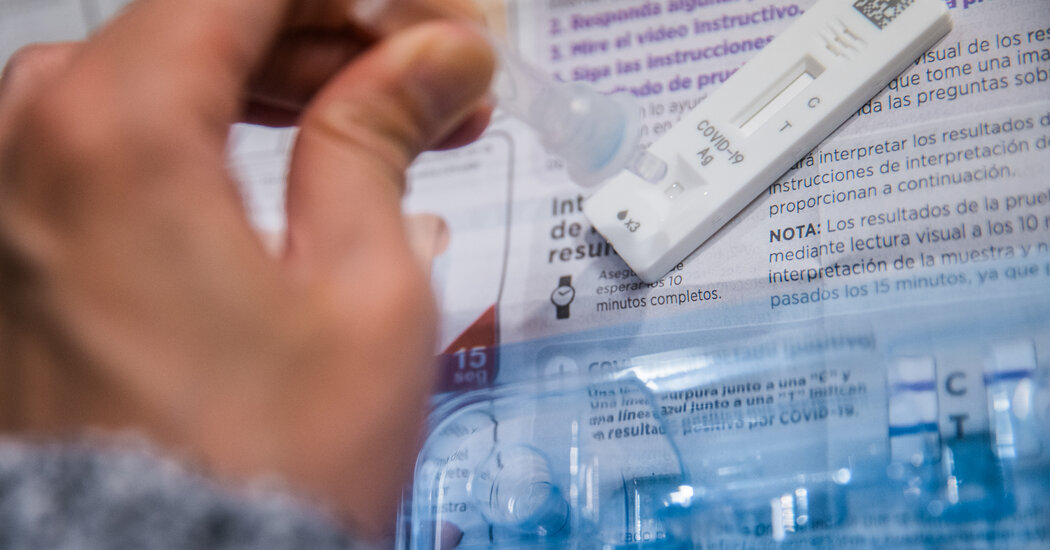
Covid Test Misinformation Spikes Along With Spread of Omicron

The added demand for testing and the higher prevalence of breakthrough cases have created an “opportune moment” to exploit.On Dec. 29, The Gateway Pundit, a far-right website that often spreads conspiracy theories, published an article falsely implying that the Centers for Disease Control and Prevention had withdrawn authorization of all P.C.R. tests for detecting Covid-19. The article collected 22,000 likes, comments and shares on Facebook and Twitter.On TikTok and Instagram, videos of at-home Covid-19 tests displaying positive results after being soaked in drinking water and juice have gone viral in recent weeks, and were used to push the false narrative that coronavirus rapid tests don’t work. Some household liquids can make a test show a positive result, health experts say, but the tests remain accurate when used as directed. One TikTok video showing a home test that came out positive after being placed under running water was shared at least 140,000 times.Identifying information has been redacted.And on YouTube, a video titled “Rapid antigen tests debunked” was posted on Jan. 1 by the Canadian far-right website Rebel News. It generated over 40,000 views, and its comments section was a hotbed of misinformation. “The straight up purpose of this test is to keep the case #’s as high as possible to maintain fear & incentive for more restrictions,” said one comment with more than 200 likes. “And of course Profit.”Misinformation about Covid-19 tests has spiked across social media in recent weeks, researchers say, as coronavirus cases have surged again worldwide because of the highly infectious Omicron variant.The burst of misinformation threatens to further stymie public efforts to keep the health crisis under control. Previous spikes in pandemic-related falsehoods focused on the vaccines, masks and the severity of the virus. The falsehoods help undermine best practices for controlling the spread of the coronavirus, health experts say, noting that misinformation remains a key factor in vaccine hesitancy.The categories include falsehoods that P.C.R. tests don’t work; that the counts for flu and Covid-19 cases have been combined; that P.C.R. tests are vaccines in disguise; and that at-home rapid tests have a predetermined result or are unreliable because different liquids can turn them positive.These themes jumped into the thousands of mentions in the last three months of 2021, compared with just a few dozen in the same time period in 2020, according to Zignal Labs, which tracks mentions on social media, on cable television and in print and online outlets.The added demand for testing due to Omicron and the higher prevalence of breakthrough cases has given purveyors of misinformation an “opportune moment” to exploit, said Kolina Koltai, a researcher at the University of Washington who studies online conspiracy theories. The false narratives “support the whole idea of not trusting the infection numbers or trusting the death count,” she said.The Gateway Pundit did not respond to a request for comment. TikTok pointed to its policies that prohibit misinformation that could cause harm to people’s physical health. YouTube said it was reviewing the videos shared by The New York Times in line with its Covid-19 misinformation policies on testing and diagnostics. Twitter said that it had applied a warning to The Gateway Pundit’s article in December for violating its coronavirus misinformation policy and that tweets containing false information about widely accepted testing methods would also violate its policy. But the company said it does not take action on personal anecdotes.Facebook said it had worked with its fact-checking partners to label many of the posts with warnings that directed people toward fact checks of the false claims, and reduced their prominence on its users’ feeds.“The challenges of the pandemic are constantly changing, and we’re consistently monitoring for emerging false claims on our platforms,” Aaron Simpson, a Facebook spokesman, said in an email.No medical test is perfect, and legitimate questions about the accuracy of Covid-19 tests have abounded throughout the pandemic. There has always been a risk of a false positive or a false negative result. The Food and Drug Administration says there is a potential for antigen tests to return false positive results when users do not follow the instructions. Those tests are generally accurate when used correctly but in some cases can appear to show a positive result when exposed to other liquids, said Dr. Glenn Patriquin, who published a study about false positives in antigen tests using various liquids in a publication of the American Society for Microbiology.“Using a fluid with a different chemical makeup than what was designed means that result lines might appear unpredictably,” said Dr. Patriquin, an assistant professor of pathology at Dalhousie University in Nova Scotia.Complicating matters, there have been some defective products. Last year, the Australian company Ellume recalled about two million of the at-home testing products that it had shipped to the United States.But when used correctly, coronavirus tests are considered reliable at detecting people carrying high levels of the virus. Experts say our evolving knowledge of tests should be a distinct issue from lies about testing that have spread widely on social media — though it does make debunking those lies more challenging.“Science is inherently uncertain and changes, which makes tackling misinformation exceedingly difficult,” Ms. Koltai said.The Coronavirus Pandemic: Key Things to KnowCard 1 of 6The global surge.

Read more →

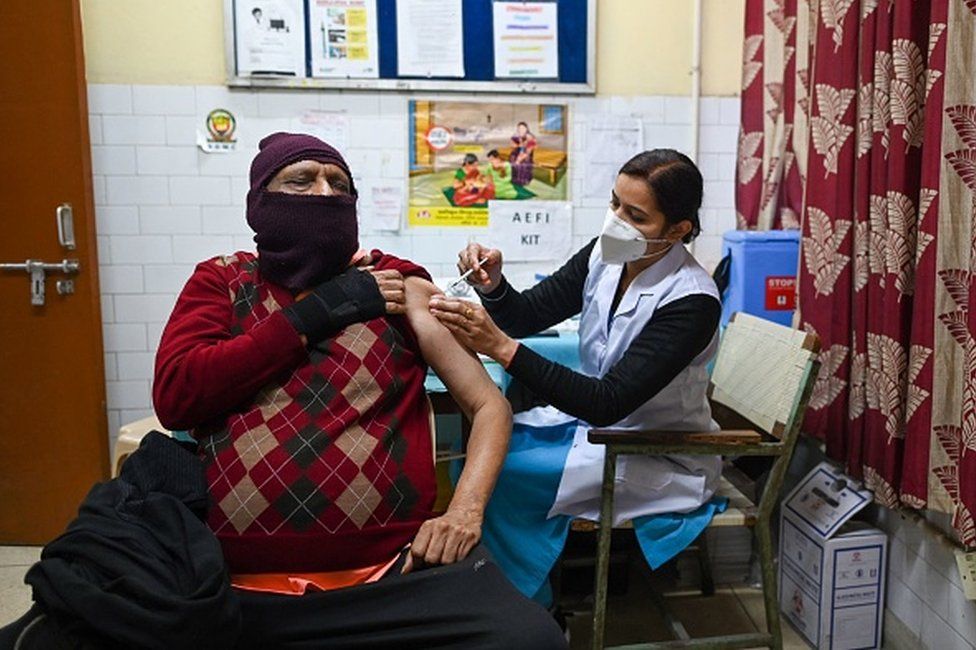
India begins booster shots as Covid-19 cases surge

SharecloseShare pageCopy linkAbout sharingImage source, AFPIndia has begun giving booster doses of the Covid-19 vaccine to priority groups amid a surge in infections.Health and frontline workers and people above 60 years old with comorbidities are currently eligible to take the jab.The drive began as India battles a spike in Covid cases fuelled by the Omicron variant of the coronavirus.Early studies from other countries have suggested that a booster vaccine may provide more protection against Omicron.India records first death with Omicron variantThe highly transmissive Omicron variant was first discovered in South Africa in November. Since then, several countries have expanded their booster programmes or shortened the gap between jabs to shore up protection against the variant.In India, the booster shot – dubbed a “precaution dose” by Prime Minister Narendra Modi – will be the same vaccine that was given to a person for their first and second doses. India has been mainly administering two locally-manufactured vaccines, Covishield and Covaxin, since its vaccination drive began in January 2021.On Sunday, India reported more than 179,000 new infections for the past 24 hours, driven by a steep rise in cases in big cities such as the national capital Delhi and financial centre Mumbai.On the same day, Mr Modi chaired a review meeting with top officials, and asked for “technical support” to be provided to states reporting more cases.The government had begun administering vaccines to 15-18-year-olds last week – it has said that 31% of Indians in this age group have been given the first dose so far.Is India ready for a third wave of Covid-19?More than 91% adults have been partially vaccinated so far, while 66% have received both doses.But experts say that still leaves millions of unvaccinated people – many with underlying health problems that could increase the severity of the infection – at risk.The spread of Omicron has also increased worries – India has confirmed a total of 4,003 cases of Omicron, with Maharashtra state reporting the highest (1,126), followed by Rajasthan (529) and Delhi (513).The country has so far recorded more than 35 million Covid cases and about 483,000 deaths from the virus.Last year, a devastating second wave overwhelmed the country’s health system, leading to a shortage in oxygen, hospital beds and critical drugs.You may also be interested in:This video can not be playedTo play this video you need to enable JavaScript in your browser.

Read more →